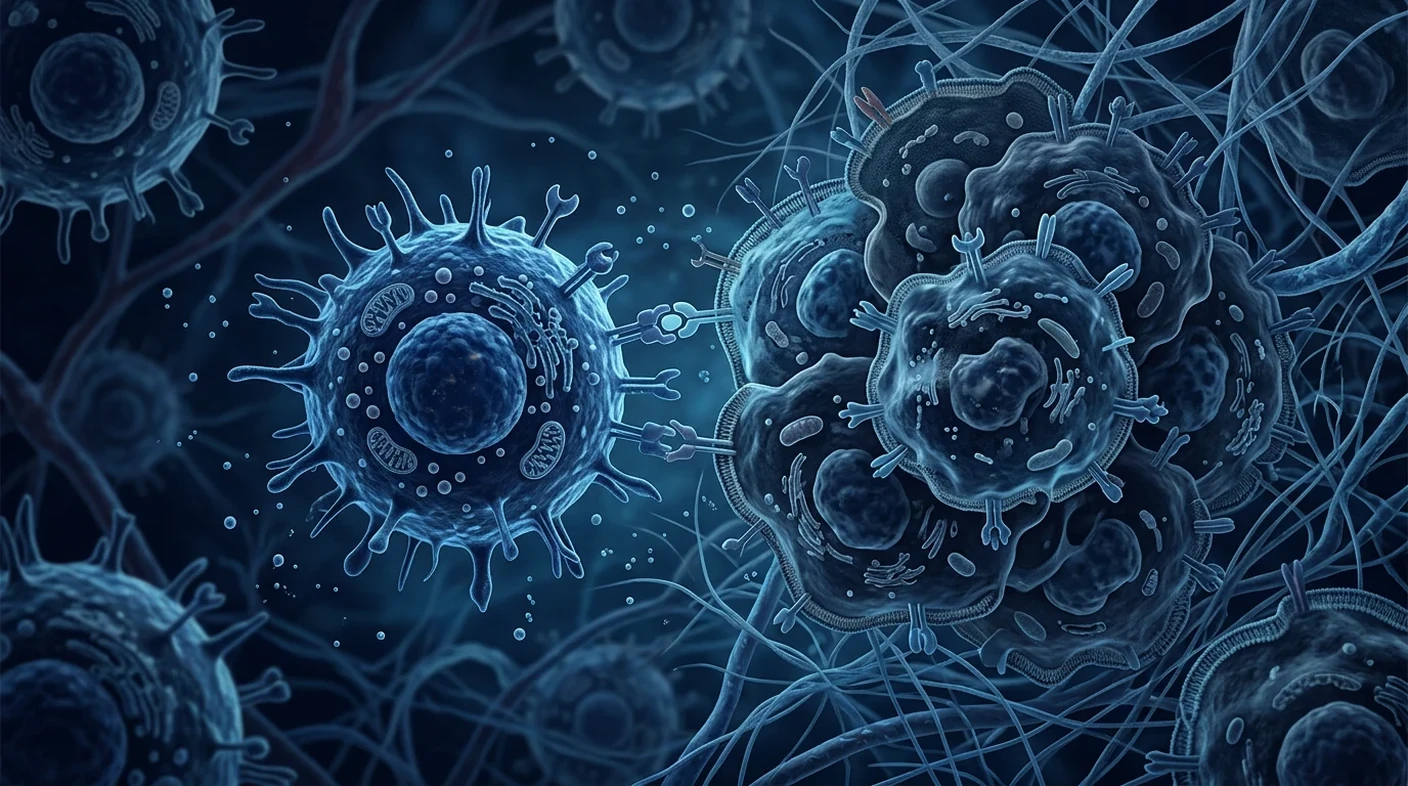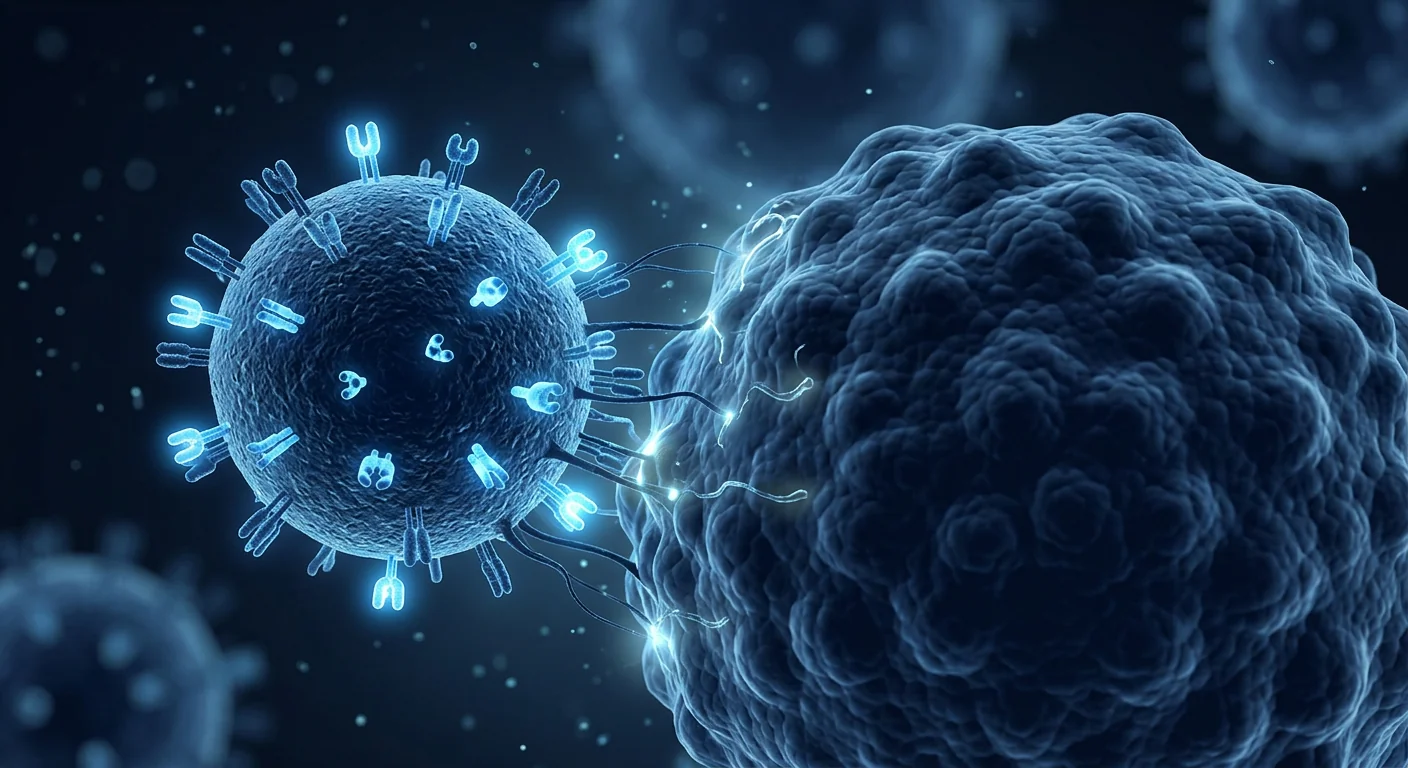
NK cell therapy for leukaemia and lymphoma is an investigational form of adoptive immunotherapy in which natural killer cells — from the patient, a donor, cord blood or a stem-cell line — are expanded in a laboratory and infused to attack blood cancer cells. Blood cancers are where NK-cell therapy has its strongest human data, and even there the field is still dominated by early-phase trials rather than approved products.
Why blood cancers came first. Leukaemia and lymphoma cells circulate in blood, marrow and lymphoid tissue, so an infused NK cell does not have to cross a dense tumour stroma to meet its target. That single anatomical fact explains most of the gap between haematologic and solid-tumour results.
The founding observation is transplant biology. Long before anyone manufactured NK cells as a product, transplant physicians noticed that certain donor–recipient mismatches produced fewer leukaemia relapses [1]. That clue is still the intellectual backbone of the field.
What this article does. It separates what is mechanistically plausible, what has been observed in patients, and what remains unproven — because in blood-cancer immunotherapy those three categories are frequently blurred in marketing language.
How natural killer cells recognise leukaemia and lymphoma cells
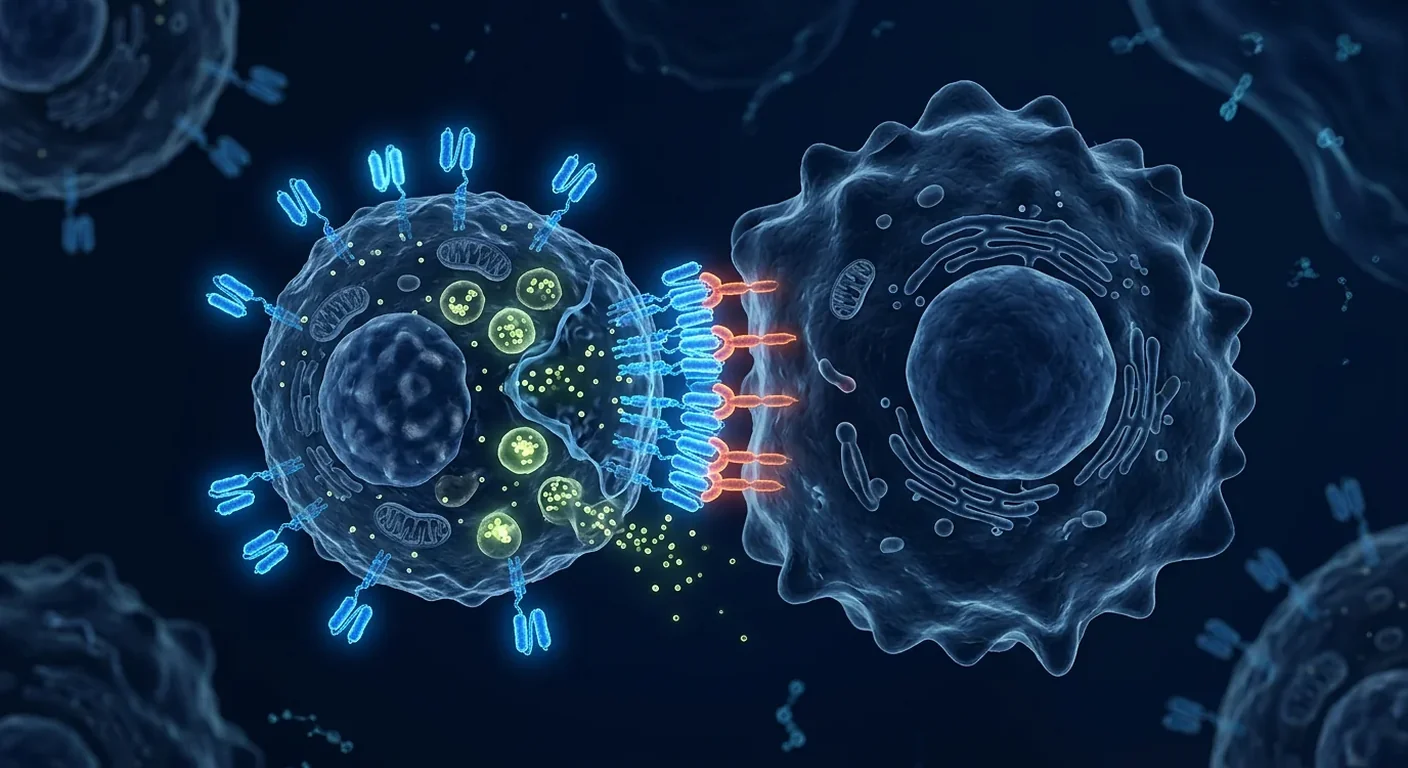
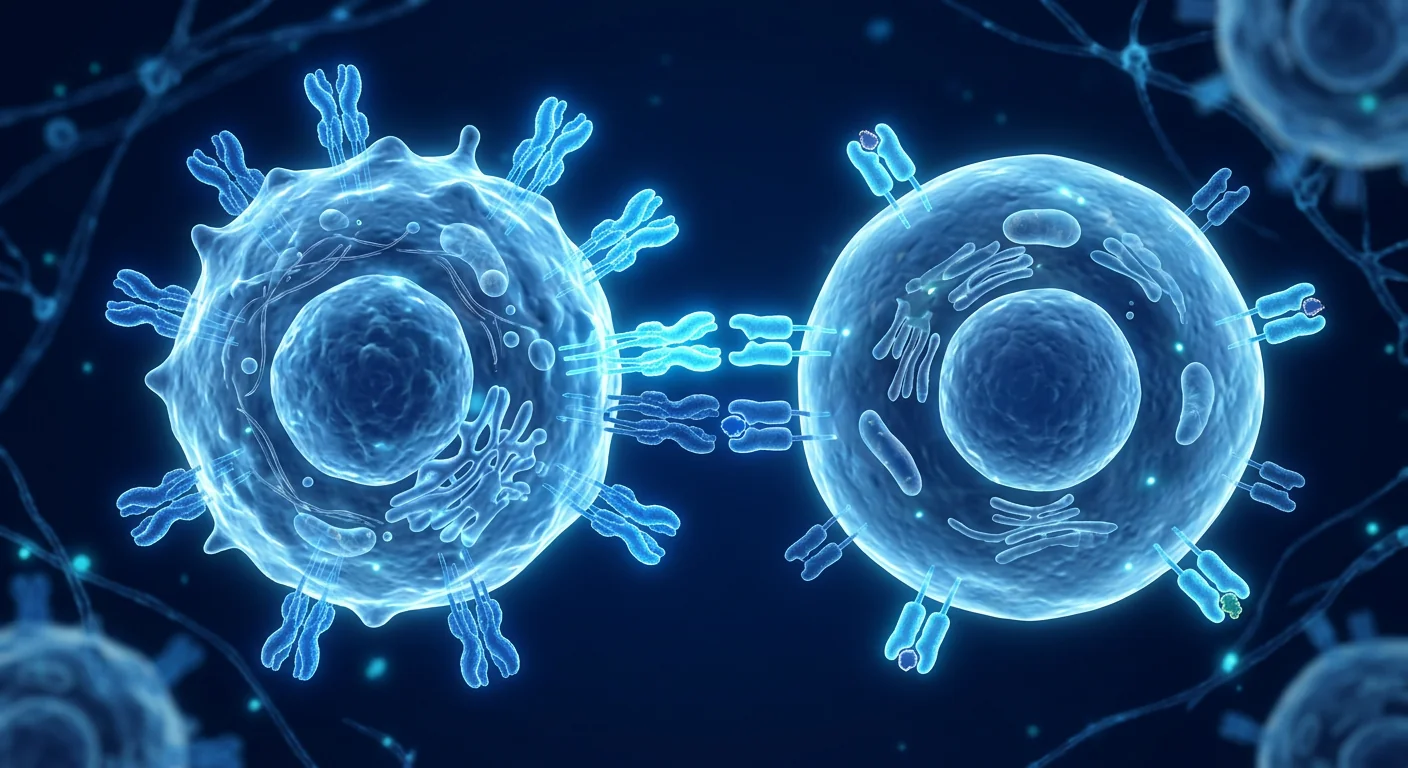
NK cells kill without prior sensitisation, using a balance of activating and inhibitory receptors rather than a single antigen-specific receptor [2]. This is the core difference from T cells, and it matters enormously in blood cancers.
Missing-self recognition. Inhibitory killer-cell immunoglobulin-like receptors (KIR) read HLA class I molecules on a target cell. Malignant cells that downregulate HLA class I — a common immune-escape strategy — become less able to switch NK cells off, a principle first demonstrated in lymphoma models in the 1980s [3].
Stress-ligand recognition. Transformed cells also upregulate stress ligands such as MICA/MICB and ULBPs that engage the activating receptor NKG2D, and ligands for NKp30, NKp44 and NKp46 [4]. Killing follows when activating signals outweigh inhibitory ones.
Antibody-dependent killing. Through CD16 (FcγRIIIa), NK cells also execute antibody-dependent cellular cytotoxicity — the mechanism that partly underlies rituximab activity in B-cell lymphoma and that many NK combination protocols try to exploit [5].
The transplant evidence: donor NK alloreactivity and leukaemia relapse
The strongest historical signal for NK activity against leukaemia comes from haploidentical stem-cell transplantation, not from infused NK products. In a landmark analysis, acute myeloid leukaemia patients transplanted from donors whose NK cells were predicted to be alloreactive — because the recipient lacked the HLA ligand for a donor inhibitory KIR — had markedly lower relapse rates [1].
How to read that result honestly. It is retrospective donor-selection data from a transplant setting with lymphodepletion, engraftment and graft-versus-leukaemia effects operating together. It establishes that NK biology influences leukaemia control; it does not establish that an infused NK product reproduces that effect [6].
Why the distinction matters to patients. Clinics sometimes cite transplant relapse data as though it were evidence for an outpatient NK infusion. The biology is shared; the clinical context is not.
What adoptive NK cell infusion trials have shown in leukaemia
Adoptive transfer of haploidentical NK cells with lymphodepleting chemotherapy can produce in-vivo expansion and complete remissions in a minority of patients with refractory acute myeloid leukaemia. In the foundational study, a subset of poor-prognosis AML patients achieved complete remission after NK infusion supported by interleukin-2 [7].
Regulatory T cells were a limiting factor. A later trial adding an IL-2 diphtheria-toxin fusion protein to deplete regulatory T cells improved NK expansion and remission rates compared with historical controls [8]. This is a recurring theme: the host environment, not just the product, determines what the cells can do.
Paediatric feasibility. A pilot study in children with AML in first complete remission showed that haploidentical NK infusion after immunosuppressive conditioning was feasible and tolerable, with no graft-versus-host disease attributed to the NK product [9].
Expanded and cytokine-supported products. Trials using membrane-bound IL-21-expanded donor NK cells after haploidentical transplant, and recombinant IL-15 support, have reported feasibility with distinct toxicity profiles — including a cytokine-release signal with systemic IL-15 [10][11].
Myelodysplastic syndrome and high-risk clones. A Swedish study reported complete remissions with reduction of high-risk clones in some patients with MDS and AML after haploidentical NK-cell therapy, while emphasising the small sample size [12].
Memory-like NK cells: the most interesting recent development
Cytokine-induced memory-like NK cells are NK cells briefly pre-activated with IL-12, IL-15 and IL-18, which then display enhanced and durable responses when re-stimulated. In a first-in-human study, memory-like NK cells produced clinical responses in patients with relapsed or refractory AML [13].
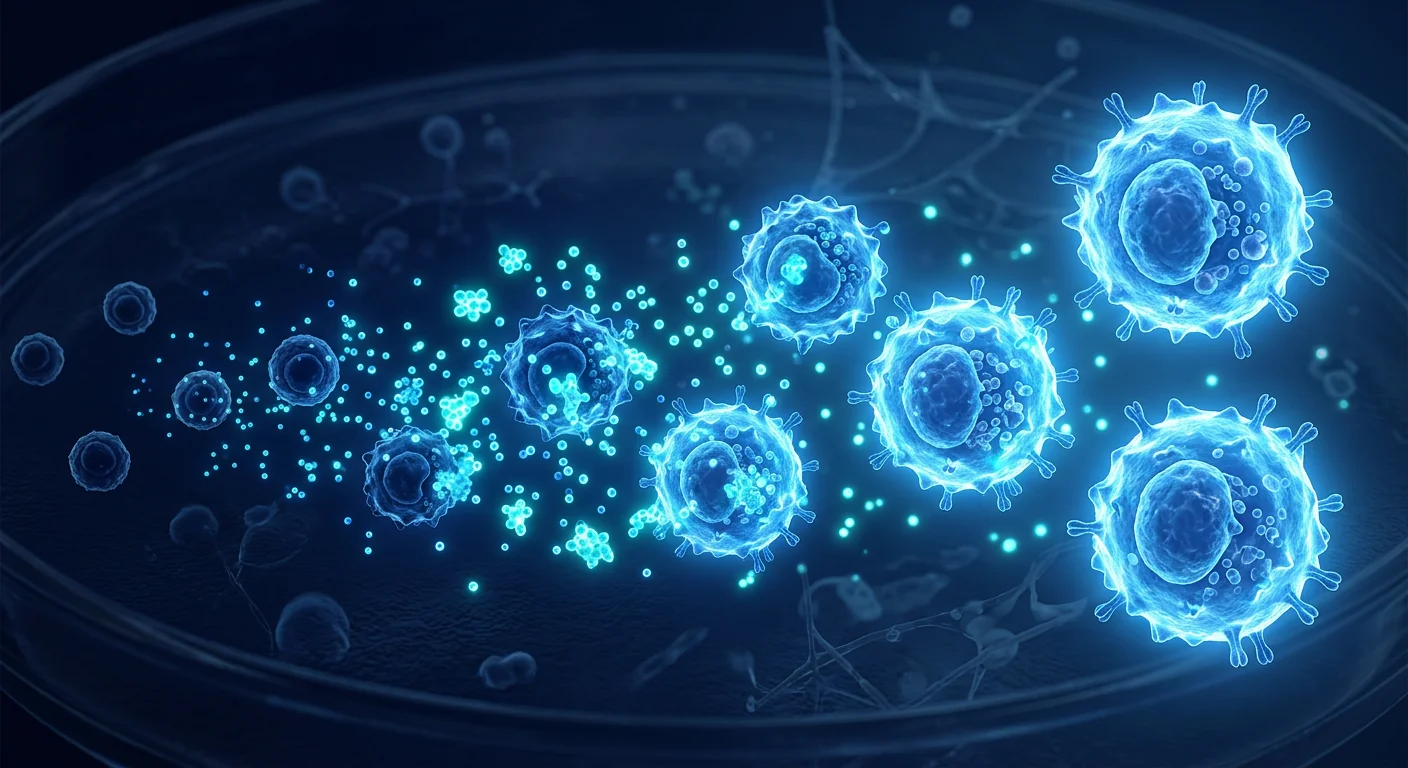
Why it matters mechanistically. Short cytokine exposure reprogrammes NK cells epigenetically and metabolically, producing longer persistence and stronger interferon-gamma responses than standard activation [14].
Where the evidence stops. Later multidimensional analyses identified donor and product features associated with response, but these are correlative findings from small cohorts, not validated predictive biomarkers [15]. No randomised trial has yet shown a survival benefit.
CAR-NK cells in lymphoma and CLL
CAR-NK cells are NK cells engineered with a chimeric antigen receptor, most often targeting CD19 for B-cell malignancies. In a phase 1/2 study of cord-blood-derived CD19 CAR-NK cells in relapsed or refractory CD19-positive lymphoid tumours, responses were seen without cytokine release syndrome, neurotoxicity or graft-versus-host disease of the severity typically associated with CAR-T therapy [16].
The larger follow-up tempered expectations. An expanded phase 1/2 report confirmed a favourable safety profile but showed that response depended strongly on disease type, prior therapy and product characteristics, with a substantial proportion of patients not responding [17].
Off-the-shelf logic. Because NK cells do not cause classical graft-versus-host disease, allogeneic and iPSC-derived products can in principle be manufactured in advance and banked — the main practical argument for NK over autologous CAR-T [18].
The trade-off. NK cells persist for days to weeks rather than years, so durability is the field's central unsolved problem. If you want the receptor-level comparison, see our explainer on NK cell therapy versus CAR-T.
Which blood cancers are actually being studied
NK-cell trials in haematology are concentrated in a small number of diagnoses, and the depth of evidence differs sharply between them. Grouping them all as "blood cancer" hides that difference.
| Disease | Typical NK approach studied | Depth of evidence |
|---|---|---|
| Acute myeloid leukaemia (AML) | Haploidentical NK infusion, memory-like NK, post-transplant NK | Most developed; several phase 1/2 trials with remissions reported [7][13] |
| Myelodysplastic syndrome (MDS) | Haploidentical NK infusion | Small cohorts, some clonal reduction reported [12] |
| B-cell lymphoma / CLL | CD19 CAR-NK, ADCC combinations | Phase 1/2 with response and safety data, non-responders common [16][17] |
| Acute lymphoblastic leukaemia (ALL) | CAR-NK, donor NK after transplant | Earlier stage; less published NK-specific outcome data |
| Multiple myeloma | NK with immunomodulatory drugs and antibodies | Exploratory; combination-dependent [6] |
Read the table as a map of research activity, not of effectiveness. A disease appearing in more trials means more investigators think the biology is plausible — it does not mean the treatment works for that diagnosis.
Relapsed and refractory disease dominates. Nearly all participants in these studies had already failed standard therapy, which is exactly why response rates cannot be generalised to newly diagnosed patients.
What an NK-cell protocol actually involves
An NK-cell trial is a multi-week clinical process, not a single appointment, and understanding the sequence makes the risks legible.
- Eligibility and disease assessment. Marrow biopsy, cytogenetics, molecular markers and performance status determine whether a patient can safely be enrolled.
- Cell sourcing. Apheresis from a haploidentical donor, a cord-blood unit, or an established cell line — each with different HLA and KIR implications [1].
- Manufacturing. Selection, expansion (often with IL-2, IL-15 or membrane-bound IL-21 feeder systems) and release testing for purity, viability, sterility and residual T cells [10].
- Lymphodepleting conditioning. Usually fludarabine with cyclophosphamide, to reduce competing lymphocytes and create cytokine space for the infused cells [7].
- Infusion and cytokine support. IL-2 or IL-15 may be given to support in-vivo expansion, with its own toxicity profile [11].
- Monitoring and response assessment. Counts, chimerism, persistence assays and marrow re-evaluation at protocol-defined intervals.
The conditioning step is the one patients underestimate. It is genuine chemotherapy with genuine risk of cytopenias and infection, and it is the reason a serious NK protocol belongs in a haematology unit rather than a wellness clinic.
Safety in blood-cancer settings
NK-cell products have so far shown a different and generally milder toxicity profile than CAR-T cells, but "milder" is not "safe by default". Most serious events in these trials come from the conditioning chemotherapy and cytokine support rather than the NK cells themselves.
- Lymphodepletion toxicity: cytopenias, infection risk and transfusion dependence from fludarabine/cyclophosphamide conditioning.
- Cytokine-related effects: fever and cytokine release syndrome have been reported particularly with systemic IL-15 support [11], graded with standard consensus criteria [19].
- Graft-versus-host disease: not typically attributed to purified NK products, though T-cell contamination is a manufacturing concern [9].
- Disease progression during manufacture: a real risk in rapidly proliferating leukaemia when a product takes weeks to make.
Safety details are covered further in our article on NK cell therapy safety and side effects.
Honest limitations
The limitations here are structural, not cosmetic, and they apply to every clinic offering NK cells for blood cancer.
- Almost all data are phase 1/2. Single-arm early-phase trials cannot separate treatment effect from patient selection.
- Persistence is short. Without cytokine support, infused NK cells are often undetectable within weeks [7].
- Products are not interchangeable. Source, expansion method, dose and cryopreservation status differ so much between trials that cross-study comparison is unreliable [6].
- Response predictors are unvalidated. KIR-ligand mismatch, NK dose and product phenotype are associated with outcome in some studies and not others [15].
- Context cannot be transplanted. Results obtained with intensive conditioning in a transplant unit do not transfer to a standalone outpatient infusion.
Questions to ask before considering NK cell therapy for a blood cancer
These questions separate a regulated research pathway from an unaccountable commercial offer.
- Is this a registered clinical trial, and what is the trial identifier?
- What is the cell source — autologous, haploidentical donor, cord blood or iPSC-derived? See NK cell sources compared.
- Is the product manufactured under GMP conditions, and what release criteria apply? See NK manufacturing and quality control.
- Is lymphodepleting conditioning planned, and who manages the resulting cytopenias?
- What specifically is being promised — a measured endpoint, or a feeling of "immune boosting"?
- Which haematologist retains responsibility for the underlying disease?
Frequently asked questions
Is NK cell therapy an approved treatment for leukaemia?
No. NK-cell products remain investigational for leukaemia and lymphoma and are not approved standard therapy in Thailand, the US or the EU. Access is normally through clinical trials.
Does NK cell therapy work better in blood cancers than in solid tumours?
The available human data are stronger in blood cancers, largely because circulating malignant cells are physically accessible to infused NK cells. That is a relative statement about evidence, not proof of efficacy.
How is NK cell therapy different from CAR-T therapy?
CAR-T cells are usually autologous, persist for months to years and carry a higher risk of severe cytokine release syndrome and neurotoxicity. NK cells can be allogeneic and off-the-shelf with a milder toxicity signal, but persist far more briefly [16].
Can NK cell therapy replace chemotherapy or transplantation?
No. In every published trial NK cells were given alongside or after standard treatment, most often with lymphodepleting conditioning, and never as a validated replacement for curative-intent therapy.
Why do trial results vary so much between centres?
Because the products differ. Cell source, expansion cytokines, dose, purity, fresh-versus-cryopreserved delivery and conditioning regimen all change what is actually infused [6].
What should a patient in Bangkok do with this information?
Keep the haematologist in charge of the cancer treatment plan, ask whether a registered trial exists for the specific diagnosis, and treat any clinic promising remission from an NK infusion alone as a red flag.
References
- Ruggeri L, Capanni M, Urbani E, et al. Effectiveness of donor natural killer cell alloreactivity in mismatched hematopoietic transplants. Science. 2002;295(5562):2097-2100. doi:10.1126/science.1068440 ↩
- Vivier E, Tomasello E, Baratin M, Walzer T, Ugolini S. Functions of natural killer cells. Nature Immunology. 2008;9(5):503-510. doi:10.1038/ni1582 ↩
- Kärre K, Ljunggren HG, Piontek G, Kiessling R. Selective rejection of H-2-deficient lymphoma variants suggests alternative immune defence strategy. Nature. 1986;319(6055):675-678. doi:10.1038/319675a0 ↩
- Guillerey C, Huntington ND, Smyth MJ. Targeting natural killer cells in cancer immunotherapy. Nature Immunology. 2016;17(9):1025-1036. doi:10.1038/ni.3518 ↩
- Wang W, Erbe AK, Hank JA, Morris ZS, Sondel PM. NK cell-mediated antibody-dependent cellular cytotoxicity in cancer immunotherapy. Frontiers in Immunology. 2015;6:368. doi:10.3389/fimmu.2015.00368 ↩
- Myers JA, Miller JS. Exploring the NK cell platform for cancer immunotherapy. Nature Reviews Clinical Oncology. 2021;18(2):85-100. doi:10.1038/s41571-020-0426-7 ↩
- Miller JS, Soignier Y, Panoskaltsis-Mortari A, et al. Successful adoptive transfer and in vivo expansion of human haploidentical NK cells in patients with cancer. Blood. 2005;105(8):3051-3057. doi:10.1182/blood-2004-07-2974 ↩
- Bachanova V, Cooley S, Defor TE, et al. Clearance of acute myeloid leukemia by haploidentical natural killer cells is improved using IL-2 diphtheria toxin fusion protein. Blood. 2014;123(25):3855-3863. doi:10.1182/blood-2013-10-532531 ↩
- Rubnitz JE, Inaba H, Ribeiro RC, et al. NKAML: a pilot study to determine the safety and feasibility of haploidentical natural killer cell transplantation in childhood acute myeloid leukemia. Journal of Clinical Oncology. 2010;28(6):955-959. doi:10.1200/JCO.2009.24.4590 ↩
- Ciurea SO, Schafer JR, Bassett R, et al. Phase 1 clinical trial using mbIL21 ex vivo-expanded donor-derived NK cells after haploidentical transplantation. Blood. 2017;130(16):1857-1868. doi:10.1182/blood-2017-05-785659 ↩
- Cooley S, He F, Bachanova V, et al. First-in-human trial of rhIL-15 and haploidentical natural killer cell therapy for advanced acute myeloid leukemia. Blood Advances. 2019;3(13):1970-1980. doi:10.1182/bloodadvances.2018028332 ↩
- Björklund AT, Carlsten M, Sohlberg E, et al. Complete remission with reduction of high-risk clones following haploidentical NK-cell therapy against MDS and AML. Clinical Cancer Research. 2018;24(8):1834-1844. doi:10.1158/1078-0432.CCR-17-3196 ↩
- Romee R, Rosario M, Berrien-Elliott MM, et al. Cytokine-induced memory-like natural killer cells exhibit enhanced responses against myeloid leukemia. Science Translational Medicine. 2016;8(357):357ra123. doi:10.1126/scitranslmed.aaf2341 ↩
- Gang M, Wong P, Berrien-Elliott MM, Fehniger TA. Memory-like natural killer cells for cancer immunotherapy. Seminars in Hematology. 2020;57(4):185-193. doi:10.1053/j.seminhematol.2020.11.003 ↩
- Berrien-Elliott MM, Cashen AF, Cubitt CC, et al. Multidimensional analyses of donor memory-like NK cells reveal new associations with response after adoptive immunotherapy for leukemia. Cancer Discovery. 2020;10(12):1854-1871. doi:10.1158/2159-8290.CD-20-0312 ↩
- Liu E, Marin D, Banerjee P, et al. Use of CAR-transduced natural killer cells in CD19-positive lymphoid tumors. New England Journal of Medicine. 2020;382(6):545-553. doi:10.1056/NEJMoa1910607 ↩
- Marin D, Li Y, Basar R, et al. Safety, efficacy and determinants of response of allogeneic CD19-specific CAR-NK cells in CD19+ B cell tumors: a phase 1/2 trial. Nature Medicine. 2024;30(3):772-784. doi:10.1038/s41591-023-02785-8 ↩
- Cichocki F, Bjordahl R, Gaidarova S, et al. iPSC-derived NK cells maintain high cytotoxicity and enhance in vivo tumor control in concert with T cells and anti-PD-1 therapy. Science Translational Medicine. 2020;12(568):eaaz5618. doi:10.1126/scitranslmed.aaz5618 ↩
- Lee DW, Santomasso BD, Locke FL, et al. ASTCT consensus grading for cytokine release syndrome and neurologic toxicity associated with immune effector cells. Biology of Blood and Marrow Transplantation. 2019;25(4):625-638. doi:10.1016/j.bbmt.2018.12.758 ↩
用于白血病和淋巴瘤的 NK 细胞治疗,是一种仍处于研究阶段的过继性免疫治疗:将来自患者本人、供者、脐带血或干细胞系的自然杀伤细胞在实验室扩增后回输,用以攻击血液肿瘤细胞。血液肿瘤是 NK 细胞治疗人体数据最充分的领域,但即便如此,该领域仍以早期临床试验为主,尚无获批产品。
为什么血液肿瘤走在前面。白血病与淋巴瘤细胞存在于血液、骨髓和淋巴组织中,回输的 NK 细胞无需穿越致密的实体瘤间质即可接触靶细胞。这一解剖学事实,基本解释了血液肿瘤与实体瘤疗效差距的来源。
最初的观察来自移植生物学。在 NK 细胞被制成产品之前,移植医生已注意到某些供受者错配可降低白血病复发率[1]。这一线索至今仍是该领域的理论基础。
本文的目的。区分三件事:机制上合理的推论、在患者身上确实观察到的结果,以及尚未被证实的部分——在血液肿瘤免疫治疗的宣传中,这三者常被混为一谈。
NK 细胞如何识别白血病与淋巴瘤细胞
NK 细胞无需预先致敏即可杀伤靶细胞,依靠激活性与抑制性受体的平衡,而非单一抗原特异性受体[2]。这是它与 T 细胞的核心区别,在血液肿瘤中尤为重要。
“缺失自我”识别。抑制性杀伤细胞免疫球蛋白样受体(KIR)识别靶细胞表面的 HLA I 类分子。恶性细胞常通过下调 HLA I 类分子逃避免疫,反而更难关闭 NK 细胞的杀伤功能,这一原理最早在淋巴瘤模型中被证明[3]。
应激配体识别。转化细胞会上调 MICA/MICB、ULBPs 等应激配体,与激活性受体 NKG2D 结合,并表达 NKp30、NKp44、NKp46 的配体[4]。当激活信号超过抑制信号时,杀伤即被触发。
抗体依赖性杀伤。NK 细胞通过 CD16(FcγRIIIa)介导抗体依赖性细胞毒作用,这也是利妥昔单抗在 B 细胞淋巴瘤中部分疗效的机制,许多 NK 联合方案正试图利用这一通路[5]。
移植证据:供者 NK 同种反应性与白血病复发
NK 抗白血病作用最有力的历史证据来自单倍体造血干细胞移植,而非回输的 NK 产品。一项里程碑式分析显示,当受者缺乏供者抑制性 KIR 对应的 HLA 配体、即供者 NK 被预测具有同种反应性时,急性髓系白血病患者的复发率显著降低[1]。
如何诚实解读该结果。这是移植情境下的回顾性供者选择数据,其中清淋、植入与移植物抗白血病效应同时作用。它说明 NK 生物学影响白血病控制,但并不证明回输 NK 产品能复制同样的效果[6]。
为何这一区别对患者重要。部分机构会引用移植复发数据,仿佛这就是门诊 NK 输注的疗效证据。生物学机制相通,临床情境却完全不同。
白血病中过继性 NK 输注试验的结果
在清淋化疗支持下回输单倍体 NK 细胞,可在少数难治性急性髓系白血病患者中实现体内扩增与完全缓解。在奠基性研究中,部分预后不良的 AML 患者在白介素-2 支持的 NK 输注后获得完全缓解[7]。
调节性 T 细胞是限制因素。后续试验加入 IL-2 白喉毒素融合蛋白以清除调节性 T 细胞,NK 扩增与缓解率较历史对照改善[8]。这体现了一个反复出现的主题:决定疗效的不只是产品,还有宿主环境。
儿科可行性。一项针对首次完全缓解期儿童 AML 的先导研究显示,免疫抑制预处理后回输单倍体 NK 细胞可行且耐受良好,未见归因于 NK 产品的移植物抗宿主病[9]。
扩增型与细胞因子支持型产品。使用膜结合 IL-21 扩增的供者 NK 细胞用于单倍体移植后,以及重组 IL-15 支持的试验,均报告了可行性与各自不同的毒性特征——其中全身性 IL-15 出现细胞因子释放相关信号[10][11]。
骨髓增生异常综合征与高危克隆。一项瑞典研究报告,部分 MDS 与 AML 患者在单倍体 NK 细胞治疗后获得完全缓解并伴高危克隆减少,但研究同时强调样本量很小[12]。
记忆样 NK 细胞:近期最值得关注的进展
细胞因子诱导的记忆样 NK 细胞,是先以 IL-12、IL-15 与 IL-18 短暂预激活的 NK 细胞,再次受刺激时表现出更强、更持久的反应。在首次人体研究中,记忆样 NK 细胞使部分复发或难治性 AML 患者产生临床反应[13]。
机制意义。短暂的细胞因子暴露会在表观遗传与代谢层面重塑 NK 细胞,使其持续时间更长、干扰素-γ 反应更强[14]。
证据的边界。后续多维分析识别出与疗效相关的供者与产品特征,但这些是小队列中的相关性发现,并非经过验证的预测性生物标志物[15]。目前尚无随机试验证明生存获益。
CAR-NK 细胞在淋巴瘤与慢性淋巴细胞白血病中的应用
CAR-NK 是经嵌合抗原受体改造的 NK 细胞,针对 B 细胞恶性肿瘤时最常靶向 CD19。在一项脐带血来源 CD19 CAR-NK 细胞治疗复发难治 CD19 阳性淋巴系肿瘤的 1/2 期研究中,观察到疗效,且未出现 CAR-T 治疗常见严重程度的细胞因子释放综合征、神经毒性或移植物抗宿主病[16]。
更大规模随访让预期回归理性。扩展的 1/2 期报告确认了良好的安全性,但显示疗效高度依赖疾病类型、既往治疗与产品特性,相当比例的患者未获缓解[17]。
“现货型”产品的逻辑。由于 NK 细胞通常不引起经典移植物抗宿主病,异体与 iPSC 来源产品理论上可预先制备并冻存,这是 NK 相对于自体 CAR-T 的主要实际优势[18]。
代价所在。NK 细胞的体内存续时间为数天至数周,而非数年,持久性仍是该领域尚未解决的核心问题。受体层面的比较可参见我们的文章:NK 细胞治疗与 CAR-T 的比较。
实际正在研究的血液肿瘤类型
血液学领域的 NK 细胞试验集中在少数几个诊断上,且各诊断之间的证据深度差异很大。把它们统称为“血液肿瘤”会掩盖这种差异。
| 疾病 | 所研究的典型 NK 方案 | 证据深度 |
|---|---|---|
| 急性髓系白血病(AML) | 单倍体 NK 输注、记忆样 NK、移植后 NK | 发展最充分;多项 1/2 期试验报告缓解[7][13] |
| 骨髓增生异常综合征(MDS) | 单倍体 NK 输注 | 小队列,部分报告克隆减少[12] |
| B 细胞淋巴瘤 / 慢淋 | CD19 CAR-NK、ADCC 联合方案 | 1/2 期有疗效与安全性数据,无应答者常见[16][17] |
| 急性淋巴细胞白血病(ALL) | CAR-NK、移植后供者 NK | 阶段更早;NK 特异性疗效数据较少 |
| 多发性骨髓瘤 | NK 与免疫调节药物、抗体联合 | 探索性;依赖联合方案[6] |
请把此表看作研究活跃度地图,而非疗效地图。某种疾病出现在更多试验中,说明更多研究者认为其生物学机制合理,并不代表治疗对该诊断有效。
研究人群以复发难治为主。这些研究中几乎所有受试者都已在标准治疗中失败,因此缓解率不能推广至初诊患者。
NK 细胞方案的实际流程
NK 细胞试验是持续数周的临床过程,而非一次门诊输注;了解流程才能看清风险所在。
- 入组资格与疾病评估。骨髓活检、细胞遗传学、分子标志物与体能状态决定患者能否安全入组。
- 细胞来源。单倍体供者单采、脐带血单位或既有细胞系——各自的 HLA 与 KIR 意义不同[1]。
- 制备。筛选、扩增(常用 IL-2、IL-15 或膜结合 IL-21 饲养系统)以及纯度、活率、无菌与残留 T 细胞的放行检测[10]。
- 清淋预处理。通常为氟达拉滨联合环磷酰胺,以减少竞争性淋巴细胞并为回输细胞创造细胞因子空间[7]。
- 输注与细胞因子支持。可给予 IL-2 或 IL-15 支持体内扩增,但其本身具有毒性[11]。
- 监测与疗效评估。按方案时点进行血细胞计数、嵌合状态、存续检测与骨髓复查。
患者最容易低估的是预处理环节。那是真正的化疗,伴随真实的血细胞减少与感染风险,也正因如此,严肃的 NK 方案应在血液科病房进行,而非养生诊所。
血液肿瘤情境下的安全性
迄今 NK 细胞产品的毒性特征与 CAR-T 不同且总体较轻,但“较轻”不等于“默认安全”。这些试验中的多数严重事件来自预处理化疗与细胞因子支持,而非 NK 细胞本身。
- 清淋相关毒性:氟达拉滨/环磷酰胺预处理导致的血细胞减少、感染风险与输血依赖。
- 细胞因子相关反应:尤其在全身性 IL-15 支持下报告过发热与细胞因子释放综合征[11],按标准共识标准分级[19]。
- 移植物抗宿主病:一般不归因于纯化的 NK 产品,但 T 细胞残留仍是制备环节需关注的问题[9]。
- 制备期间疾病进展:在增殖迅速的白血病中,产品制备需数周,这是真实存在的风险。
更多安全性内容见:NK 细胞治疗的安全性与副作用。
诚实的局限性
以下局限是结构性的,适用于每一家提供血液肿瘤 NK 细胞治疗的机构。
- 数据几乎全部为 1/2 期。单臂早期试验无法区分治疗效应与患者选择偏倚。
- 存续时间短。缺乏细胞因子支持时,回输的 NK 细胞常在数周内无法检出[7]。
- 产品之间不可互换。细胞来源、扩增方法、剂量与冻存状态在各试验间差异巨大,跨研究比较并不可靠[6]。
- 疗效预测因素未经验证。KIR 配体错配、NK 剂量与产品表型在部分研究中与疗效相关,在另一些研究中则否[15]。
- 情境不可移植。在移植病房强化预处理下获得的结果,不能照搬到独立的门诊输注。
考虑血液肿瘤 NK 细胞治疗前应询问的问题
这些问题能区分受监管的研究路径与不负责任的商业推销。
- 这是否为注册临床试验?试验编号是什么?
- 细胞来源是什么——自体、单倍体供者、脐带血还是 iPSC?参见NK 细胞来源比较。
- 产品是否在 GMP 条件下制备?放行标准为何?参见NK 制备与质量控制。
- 是否计划清淋预处理?由谁负责处理随之而来的血细胞减少?
- 承诺的究竟是什么——可测量的终点,还是“增强免疫力”的感觉?
- 哪位血液科医生对原发疾病负责?
常见问题
NK 细胞治疗是白血病的获批疗法吗?
不是。NK 细胞产品用于白血病与淋巴瘤仍属研究阶段,在泰国、美国和欧盟均非获批标准治疗,通常只能通过临床试验获得。
NK 细胞治疗在血液肿瘤中是否优于实体瘤?
现有人体数据在血液肿瘤中更充分,主要因为循环中的恶性细胞更易被回输的 NK 细胞接触。这是关于证据多寡的相对表述,并非疗效证明。
NK 细胞治疗与 CAR-T 有何不同?
CAR-T 通常为自体来源,体内存续数月至数年,严重细胞因子释放综合征与神经毒性风险更高;NK 细胞可为异体“现货”产品,毒性信号较轻,但存续时间短得多[16]。
NK 细胞治疗能取代化疗或移植吗?
不能。在所有已发表试验中,NK 细胞均与标准治疗联合或在其后使用,多数伴随清淋预处理,从未被验证可替代根治性治疗。
为什么各中心的试验结果差异如此之大?
因为产品本身不同。细胞来源、扩增细胞因子、剂量、纯度、新鲜或冻存状态以及预处理方案,都会改变实际输注的内容[6]。
曼谷的患者应如何使用这些信息?
让血液科医生主导癌症治疗计划,询问针对该具体诊断是否存在注册试验,并对任何仅凭 NK 输注就承诺缓解的机构保持警惕。
参考文献
- Ruggeri L, et al. Effectiveness of donor natural killer cell alloreactivity in mismatched hematopoietic transplants. Science. 2002;295:2097-2100. doi:10.1126/science.1068440
- Vivier E, et al. Functions of natural killer cells. Nature Immunology. 2008;9:503-510. doi:10.1038/ni1582
- Kärre K, et al. Selective rejection of H-2-deficient lymphoma variants. Nature. 1986;319:675-678. doi:10.1038/319675a0
- Guillerey C, et al. Targeting natural killer cells in cancer immunotherapy. Nature Immunology. 2016;17:1025-1036. doi:10.1038/ni.3518
- Wang W, et al. NK cell-mediated antibody-dependent cellular cytotoxicity in cancer immunotherapy. Frontiers in Immunology. 2015;6:368. doi:10.3389/fimmu.2015.00368
- Myers JA, Miller JS. Exploring the NK cell platform for cancer immunotherapy. Nature Reviews Clinical Oncology. 2021;18:85-100. doi:10.1038/s41571-020-0426-7
- Miller JS, et al. Successful adoptive transfer and in vivo expansion of human haploidentical NK cells in patients with cancer. Blood. 2005;105:3051-3057. doi:10.1182/blood-2004-07-2974
- Bachanova V, et al. Clearance of acute myeloid leukemia by haploidentical natural killer cells is improved using IL-2 diphtheria toxin fusion protein. Blood. 2014;123:3855-3863. doi:10.1182/blood-2013-10-532531
- Rubnitz JE, et al. NKAML: a pilot study of haploidentical natural killer cell transplantation in childhood AML. Journal of Clinical Oncology. 2010;28:955-959. doi:10.1200/JCO.2009.24.4590
- Ciurea SO, et al. Phase 1 clinical trial using mbIL21 ex vivo-expanded donor-derived NK cells after haploidentical transplantation. Blood. 2017;130:1857-1868. doi:10.1182/blood-2017-05-785659
- Cooley S, et al. First-in-human trial of rhIL-15 and haploidentical natural killer cell therapy for advanced acute myeloid leukemia. Blood Advances. 2019;3:1970-1980. doi:10.1182/bloodadvances.2018028332
- Björklund AT, et al. Complete remission with reduction of high-risk clones following haploidentical NK-cell therapy against MDS and AML. Clinical Cancer Research. 2018;24:1834-1844. doi:10.1158/1078-0432.CCR-17-3196
- Romee R, et al. Cytokine-induced memory-like natural killer cells exhibit enhanced responses against myeloid leukemia. Science Translational Medicine. 2016;8:357ra123. doi:10.1126/scitranslmed.aaf2341
- Gang M, et al. Memory-like natural killer cells for cancer immunotherapy. Seminars in Hematology. 2020;57:185-193. doi:10.1053/j.seminhematol.2020.11.003
- Berrien-Elliott MM, et al. Multidimensional analyses of donor memory-like NK cells reveal new associations with response after adoptive immunotherapy for leukemia. Cancer Discovery. 2020;10:1854-1871. doi:10.1158/2159-8290.CD-20-0312
- Liu E, et al. Use of CAR-transduced natural killer cells in CD19-positive lymphoid tumors. New England Journal of Medicine. 2020;382:545-553. doi:10.1056/NEJMoa1910607
- Marin D, et al. Safety, efficacy and determinants of response of allogeneic CD19-specific CAR-NK cells in CD19+ B cell tumors: a phase 1/2 trial. Nature Medicine. 2024;30:772-784. doi:10.1038/s41591-023-02785-8
- Cichocki F, et al. iPSC-derived NK cells maintain high cytotoxicity and enhance in vivo tumor control. Science Translational Medicine. 2020;12:eaaz5618. doi:10.1126/scitranslmed.aaz5618
- Lee DW, et al. ASTCT consensus grading for cytokine release syndrome and neurologic toxicity associated with immune effector cells. Biology of Blood and Marrow Transplantation. 2019;25:625-638. doi:10.1016/j.bbmt.2018.12.758
علاج الخلايا القاتلة الطبيعية لابيضاض الدم واللمفوما هو شكل بحثي من العلاج المناعي بالنقل التبنّي، تُوسَّع فيه الخلايا القاتلة الطبيعية — من المريض نفسه أو من متبرع أو من دم الحبل السري أو من خطوط خلايا جذعية — داخل المختبر ثم تُحقن لمهاجمة خلايا سرطان الدم. سرطانات الدم هي المجال الذي تتوافر فيه أقوى البيانات البشرية لهذا العلاج، ومع ذلك ما زال الميدان محكوماً بتجارب المرحلة المبكرة لا بمنتجات معتمدة.
لماذا تقدّمت سرطانات الدم أولاً. تنتشر خلايا ابيضاض الدم واللمفوما في الدم والنخاع والأنسجة اللمفاوية، فلا تحتاج الخلية القاتلة الطبيعية المحقونة إلى عبور سدى ورم صلب كثيف للوصول إلى هدفها. هذه الحقيقة التشريحية وحدها تفسّر معظم الفارق بين نتائج أورام الدم والأورام الصلبة.
الملاحظة المؤسِّسة جاءت من بيولوجيا الزرع. قبل أن يُصنَّع أي منتج من الخلايا القاتلة الطبيعية، لاحظ أطباء الزرع أن بعض حالات عدم التوافق بين المتبرع والمتلقي ترافقت مع انتكاسات أقل لابيضاض الدم[1]. وما زال هذا الدليل يشكّل العمود الفكري للمجال.
ما يفعله هذا المقال. يفصل بين ما هو معقول آلياً، وما لوحظ فعلاً لدى المرضى، وما بقي غير مثبت — لأن هذه الفئات الثلاث كثيراً ما تختلط في اللغة التسويقية للعلاج المناعي لسرطانات الدم.
كيف تتعرّف الخلايا القاتلة الطبيعية على خلايا ابيضاض الدم واللمفوما
تقتل الخلايا القاتلة الطبيعية دون تحسيس مسبق، معتمدةً على توازن بين مستقبلات منشِّطة ومثبِّطة بدلاً من مستقبل واحد نوعي للمستضد[2]. هذا هو الفارق الجوهري عن الخلايا التائية، وهو بالغ الأهمية في سرطانات الدم.
التعرّف على «الذات المفقودة». تقرأ المستقبلات المثبِّطة الشبيهة بالغلوبولين المناعي (KIR) جزيئات HLA من الصنف الأول على سطح الخلية الهدف. والخلايا الخبيثة التي تخفّض تعبير HLA من الصنف الأول — وهي استراتيجية هروب مناعي شائعة — تصبح أقل قدرة على إطفاء الخلية القاتلة الطبيعية، وهو مبدأ أُثبت أولاً في نماذج اللمفوما[3].
التعرّف على روابط الإجهاد. ترفع الخلايا المتحولة تعبير روابط الإجهاد مثل MICA/MICB وULBPs التي ترتبط بالمستقبل المنشِّط NKG2D، إضافةً إلى روابط NKp30 وNKp44 وNKp46[4]. ويحدث القتل حين تتفوّق الإشارات المنشِّطة على المثبِّطة.
القتل المعتمد على الأجسام المضادة. عبر CD16 (FcγRIIIa) تنفّذ الخلايا القاتلة الطبيعية السمية الخلوية المعتمدة على الأجسام المضادة، وهي الآلية التي يقوم عليها جزئياً أثر ريتوكسيماب في لمفوما الخلايا البائية، وتسعى بروتوكولات كثيرة إلى استثمارها[5].
أدلة الزرع: التفاعل الخيفي للخلايا القاتلة الطبيعية وانتكاس ابيضاض الدم
تأتي أقوى إشارة تاريخية لنشاط هذه الخلايا ضد ابيضاض الدم من زرع الخلايا الجذعية الفرداني، لا من المنتجات المحقونة. ففي تحليل مفصلي، كان معدل الانتكاس أقل بوضوح لدى مرضى ابيضاض الدم النقوي الحاد الذين تلقّوا الزرع من متبرعين يُتوقع أن تكون خلاياهم القاتلة الطبيعية متفاعلة خيفياً[1].
كيف تُقرأ هذه النتيجة بأمانة. إنها بيانات اختيار متبرعين بأثر رجعي ضمن سياق زرع تعمل فيه معاً كلٌّ من استنزاف اللمفاويات والتطعيم وتأثير الطعم ضد الابيضاض. تثبت أن بيولوجيا هذه الخلايا تؤثر في السيطرة على المرض، لكنها لا تثبت أن منتجاً محقوناً يعيد إنتاج الأثر نفسه[6].
لماذا يهم هذا التمييز المرضى. تستشهد بعض العيادات ببيانات انتكاس الزرع وكأنها دليل على حقنة عيادية خارجية. البيولوجيا مشتركة، أما السياق السريري فليس كذلك.
ما أظهرته تجارب حقن الخلايا القاتلة الطبيعية في ابيضاض الدم
يمكن للنقل التبنّي لخلايا قاتلة طبيعية فردانية مع كيماوي مستنزف للمفاويات أن يُحدث توسّعاً داخل الجسم وهدأة تامة لدى أقلية من مرضى ابيضاض الدم النقوي الحاد المقاوم. وفي الدراسة التأسيسية، حققت مجموعة فرعية من مرضى الإنذار السيئ هدأة تامة بعد الحقن المدعوم بالإنترلوكين-2[7].
الخلايا التائية التنظيمية كانت عاملاً مقيِّداً. تجربة لاحقة أضافت بروتيناً اندماجياً من الإنترلوكين-2 وذيفان الخناق لاستنزاف الخلايا التنظيمية، فتحسّن التوسّع ومعدلات الهدأة مقارنةً بشواهد تاريخية[8]. وهذا موضوع متكرر: البيئة المضيفة، لا المنتج وحده، تحدد ما تستطيع الخلايا فعله.
الجدوى لدى الأطفال. أظهرت دراسة رائدة لدى أطفال في هدأة تامة أولى أن الحقن الفرداني بعد تهيئة مثبِّطة للمناعة ممكن ومحتمَل، دون داء طعم ضد مضيف يُنسب إلى المنتج[9].
المنتجات الموسَّعة والمدعومة بالسيتوكينات. أبلغت تجارب استخدمت خلايا متبرع موسَّعة بـ IL-21 المرتبط بالغشاء بعد الزرع الفرداني، وأخرى بدعم IL-15 المؤتلف، عن الجدوى وعن ملامح سمّية مختلفة — منها إشارة تحرّر سيتوكينات مع IL-15 الجهازي[10][11].
متلازمة خلل التنسج النقوي والنسائل عالية الخطورة. أفادت دراسة سويدية بهدأات تامة مع تراجع النسائل عالية الخطورة لدى بعض المرضى بعد العلاج الفرداني، مع التأكيد على صغر حجم العينة[12].
الخلايا القاتلة الطبيعية شبيهة الذاكرة: أهم تطور حديث
الخلايا شبيهة الذاكرة المستحثة بالسيتوكينات هي خلايا قاتلة طبيعية نُشِّطت مسبقاً لفترة قصيرة بـ IL-12 وIL-15 وIL-18، فتُظهر استجابات أقوى وأطول عند إعادة التحفيز. وفي أول دراسة بشرية، أحدثت استجابات سريرية لدى مرضى ابيضاض دم نقوي حاد منتكس أو مقاوم[13].
لماذا يهم ذلك آلياً. يعيد التعرّض القصير للسيتوكينات برمجة الخلايا وراثياً فوقياً وأيضياً، فتدوم أطول وتنتج استجابة إنترفيرون-غاما أقوى من التنشيط المعتاد[14].
أين تتوقف الأدلة. حدّدت تحليلات لاحقة سمات للمتبرع والمنتج ترتبط بالاستجابة، لكنها نتائج ارتباطية من مجموعات صغيرة وليست مؤشرات حيوية تنبؤية مُتحقَّقاً منها[15]. ولم تُظهر أي تجربة عشوائية بعد فائدة في البقيا.
خلايا CAR-NK في اللمفوما وابيضاض الدم اللمفاوي المزمن
خلايا CAR-NK هي خلايا قاتلة طبيعية مهندَسة بمستقبل مستضدي خيمري، يستهدف غالباً CD19 في الأورام البائية. وفي دراسة مرحلة 1/2 لخلايا CAR-NK مشتقة من دم الحبل السري في أورام لمفاوية إيجابية لـ CD19 منتكسة أو مقاومة، لوحظت استجابات دون متلازمة تحرّر سيتوكينات أو سمّية عصبية أو داء طعم ضد مضيف بالشدة المرتبطة عادةً بعلاج CAR-T[16].
المتابعة الأوسع خفّضت سقف التوقعات. أكد تقرير موسَّع من المرحلة 1/2 ملمح الأمان الجيد، لكنه أظهر اعتماد الاستجابة بقوة على نوع المرض والعلاجات السابقة وخصائص المنتج، مع نسبة كبيرة من المرضى غير المستجيبين[17].
منطق المنتج الجاهز. لأن هذه الخلايا لا تسبب عادةً داء طعم ضد مضيف كلاسيكياً، يمكن نظرياً تصنيع منتجات خيفية أو مشتقة من خلايا جذعية محفَّزة مسبقاً وتخزينها — وهي الحجة العملية الأساسية مقارنةً بـ CAR-T الذاتي[18].
المقايضة. تبقى هذه الخلايا أياماً إلى أسابيع لا سنوات، فالديمومة هي المشكلة المركزية غير المحلولة. وللمقارنة على مستوى المستقبلات، راجع مقالنا حول علاج الخلايا القاتلة الطبيعية مقابل CAR-T.
ما سرطانات الدم التي تُدرَس فعلاً
تتركّز تجارب الخلايا القاتلة الطبيعية في أمراض الدم ضمن عدد محدود من التشخيصات، ويختلف عمق الأدلة بينها اختلافاً حاداً. وجمعها كلها تحت مسمى «سرطان الدم» يخفي هذا الفارق.
| المرض | النهج المدروس | عمق الأدلة |
|---|---|---|
| ابيضاض الدم النقوي الحاد | حقن فرداني، خلايا شبيهة الذاكرة، حقن بعد الزرع | الأكثر تطوراً؛ عدة تجارب مرحلة 1/2 مع هدأات[7][13] |
| متلازمة خلل التنسج النقوي | حقن فرداني | مجموعات صغيرة مع تراجع نسائل في بعضها[12] |
| لمفوما الخلايا البائية / ابيضاض لمفاوي مزمن | CAR-NK ضد CD19، توليفات ADCC | مرحلة 1/2 ببيانات استجابة وأمان، مع كثرة غير المستجيبين[16][17] |
| ابيضاض الدم اللمفاوي الحاد | CAR-NK، خلايا متبرع بعد الزرع | مرحلة أبكر؛ بيانات نتائج أقل |
| الورم النقوي المتعدد | توليفات مع أدوية معدِّلة للمناعة وأجسام مضادة | استكشافي؛ يعتمد على التوليفة[6] |
اقرأ الجدول كخريطة نشاط بحثي لا كخريطة فعالية. ظهور مرض في تجارب أكثر يعني أن باحثين أكثر يرون البيولوجيا معقولة، لا أن العلاج ناجع في ذلك التشخيص.
يهيمن المرض المنتكس والمقاوم. فقد فشل العلاج القياسي لدى معظم المشاركين، ولذلك لا يمكن تعميم معدلات الاستجابة على المرضى حديثي التشخيص.
ما الذي ينطوي عليه بروتوكول الخلايا القاتلة الطبيعية فعلياً
التجربة عملية سريرية تمتد أسابيع لا موعداً واحداً، وفهم تسلسلها يجعل المخاطر مرئية.
- الأهلية وتقييم المرض. خزعة نخاع ووراثيات خلوية وواسمات جزيئية وحالة أداء تحدد إمكانية التسجيل الآمن.
- مصدر الخلايا. فصادة من متبرع فرداني أو وحدة دم حبل سري أو خط خلوي قائم — ولكلٍّ دلالات مختلفة لـ HLA وKIR[1].
- التصنيع. الانتقاء والتوسيع (غالباً بـ IL-2 أو IL-15 أو أنظمة IL-21 المرتبط بالغشاء) واختبارات الإفراج للنقاء والحيوية والعقامة والخلايا التائية المتبقية[10].
- التهيئة المستنزفة للمفاويات. عادةً فلودارابين مع سيكلوفوسفاميد لتقليل اللمفاويات المنافسة وإتاحة مجال سيتوكيني[7].
- الحقن والدعم السيتوكيني. قد يُعطى IL-2 أو IL-15 لدعم التوسّع داخل الجسم، بما له من سمّية خاصة[11].
- المراقبة وتقييم الاستجابة. تعدادات وكيمرية واختبارات ديمومة وإعادة تقييم النخاع في مواعيد محددة بالبروتوكول.
خطوة التهيئة هي ما يستهين به المرضى. فهي علاج كيماوي حقيقي بخطر حقيقي لنقص الخلايا والعدوى، ولهذا ينتمي أي بروتوكول جادّ إلى وحدة أمراض دم لا إلى عيادة عافية.
الأمان في سياق سرطانات الدم
أظهرت هذه المنتجات حتى الآن ملمح سمّية مختلفاً وأخف عموماً من خلايا CAR-T، لكن «أخف» لا تعني «آمن تلقائياً». ومعظم الأحداث الخطيرة في هذه التجارب تأتي من كيماوي التهيئة ودعم السيتوكينات لا من الخلايا نفسها.
- سمّية استنزاف اللمفاويات: نقص الخلايا الدموية وخطر العدوى والاعتماد على نقل الدم بعد الفلودارابين/السيكلوفوسفاميد.
- آثار متعلقة بالسيتوكينات: أُبلغ عن حمى ومتلازمة تحرّر سيتوكينات خاصةً مع IL-15 الجهازي[11]، وتُصنَّف بمعايير التوافق القياسية[19].
- داء الطعم ضد المضيف: لا يُنسب عادةً إلى المنتجات المنقّاة، رغم أن تلوّث الخلايا التائية يظل هاجساً تصنيعياً[9].
- تقدّم المرض أثناء التصنيع: خطر حقيقي في ابيضاض دم سريع التكاثر حين يستغرق المنتج أسابيع.
تفاصيل الأمان في مقالنا: أمان علاج الخلايا القاتلة الطبيعية وآثاره الجانبية.
حدود صريحة
هذه الحدود بنيوية لا تجميلية، وتنطبق على كل جهة تعرض هذا العلاج لسرطان الدم.
- كل البيانات تقريباً من المرحلة 1/2. التجارب أحادية الذراع لا تفصل أثر العلاج عن انتقاء المرضى.
- الديمومة قصيرة. بدون دعم سيتوكيني، غالباً ما تصبح الخلايا المحقونة غير قابلة للكشف خلال أسابيع[7].
- المنتجات غير قابلة للتبادل. يختلف المصدر وطريقة التوسيع والجرعة وحالة التجميد كثيراً بين التجارب، فتصبح المقارنة بينها غير موثوقة[6].
- مؤشرات الاستجابة غير مُتحقَّق منها. يرتبط عدم توافق روابط KIR والجرعة والنمط الظاهري بالنتيجة في بعض الدراسات دون غيرها[15].
- السياق لا يُنقل. نتائج مُحصَّلة بتهيئة مكثفة داخل وحدة زرع لا تنتقل إلى حقنة عيادية مستقلة.
أسئلة يجب طرحها قبل التفكير في هذا العلاج لسرطان الدم
هذه الأسئلة تفصل مساراً بحثياً منظماً عن عرض تجاري غير خاضع للمساءلة.
- هل هذه تجربة سريرية مسجّلة، وما رقم تعريفها؟
- ما مصدر الخلايا — ذاتي أم متبرع فرداني أم دم حبل سري أم خلايا جذعية محفَّزة؟ راجع مقارنة مصادر الخلايا.
- هل يُصنَّع المنتج وفق شروط GMP، وما معايير الإفراج؟ راجع التصنيع وضبط الجودة.
- هل يُخطَّط لتهيئة مستنزفة للمفاويات، ومن يدير نقص الخلايا الناتج؟
- ما الذي يُوعد به تحديداً — نقطة نهاية قابلة للقياس أم شعور بـ«تقوية المناعة»؟
- أي طبيب أمراض دم يتحمل مسؤولية المرض الأساسي؟
الأسئلة الشائعة
هل علاج الخلايا القاتلة الطبيعية معتمد لابيضاض الدم؟
لا. تبقى هذه المنتجات بحثية لابيضاض الدم واللمفوما وليست علاجاً قياسياً معتمداً في تايلاند أو الولايات المتحدة أو الاتحاد الأوروبي، والوصول يكون عادةً عبر التجارب السريرية.
هل يعمل هذا العلاج في سرطانات الدم أفضل من الأورام الصلبة؟
البيانات البشرية المتاحة أقوى في سرطانات الدم، أساساً لأن الخلايا الخبيثة الدائرة متاحة فيزيائياً للخلايا المحقونة. وهذه عبارة نسبية عن الأدلة لا إثبات للفعالية.
ما الفرق بينه وبين علاج CAR-T؟
خلايا CAR-T ذاتية غالباً وتدوم أشهراً إلى سنوات مع خطر أعلى لمتلازمة تحرّر السيتوكينات والسمّية العصبية الشديدة، بينما يمكن أن تكون الخلايا القاتلة الطبيعية خيفية وجاهزة بملمح سمّية أخف، لكنها تدوم مدة أقصر بكثير[16].
هل يمكن أن يحل محل الكيماوي أو الزرع؟
لا. في كل تجربة منشورة أُعطيت هذه الخلايا إلى جانب العلاج القياسي أو بعده، غالباً مع تهيئة مستنزفة، ولم تُثبت أبداً كبديل للعلاج بقصد الشفاء.
لماذا تتباين نتائج التجارب كثيراً بين المراكز؟
لأن المنتجات نفسها مختلفة. المصدر وسيتوكينات التوسيع والجرعة والنقاء والتسليم الطازج مقابل المجمَّد ونظام التهيئة كلها تغيّر ما يُحقن فعلاً[6].
ماذا يفعل مريض في بانكوك بهذه المعلومات؟
يُبقي طبيب أمراض الدم مسؤولاً عن خطة العلاج، ويسأل عن وجود تجربة مسجّلة لتشخيصه تحديداً، ويعتبر أي جهة تَعِد بهدأة من حقنة منفردة علامة تحذير.
المراجع
- Ruggeri L, et al. Effectiveness of donor natural killer cell alloreactivity in mismatched hematopoietic transplants. Science. 2002;295:2097-2100. doi:10.1126/science.1068440
- Vivier E, et al. Functions of natural killer cells. Nature Immunology. 2008;9:503-510. doi:10.1038/ni1582
- Kärre K, et al. Selective rejection of H-2-deficient lymphoma variants. Nature. 1986;319:675-678. doi:10.1038/319675a0
- Guillerey C, et al. Targeting natural killer cells in cancer immunotherapy. Nature Immunology. 2016;17:1025-1036. doi:10.1038/ni.3518
- Wang W, et al. NK cell-mediated antibody-dependent cellular cytotoxicity in cancer immunotherapy. Frontiers in Immunology. 2015;6:368. doi:10.3389/fimmu.2015.00368
- Myers JA, Miller JS. Exploring the NK cell platform for cancer immunotherapy. Nature Reviews Clinical Oncology. 2021;18:85-100. doi:10.1038/s41571-020-0426-7
- Miller JS, et al. Successful adoptive transfer and in vivo expansion of human haploidentical NK cells in patients with cancer. Blood. 2005;105:3051-3057. doi:10.1182/blood-2004-07-2974
- Bachanova V, et al. Clearance of acute myeloid leukemia by haploidentical natural killer cells is improved using IL-2 diphtheria toxin fusion protein. Blood. 2014;123:3855-3863. doi:10.1182/blood-2013-10-532531
- Rubnitz JE, et al. NKAML: a pilot study of haploidentical natural killer cell transplantation in childhood AML. Journal of Clinical Oncology. 2010;28:955-959. doi:10.1200/JCO.2009.24.4590
- Ciurea SO, et al. Phase 1 clinical trial using mbIL21 ex vivo-expanded donor-derived NK cells after haploidentical transplantation. Blood. 2017;130:1857-1868. doi:10.1182/blood-2017-05-785659
- Cooley S, et al. First-in-human trial of rhIL-15 and haploidentical natural killer cell therapy for advanced acute myeloid leukemia. Blood Advances. 2019;3:1970-1980. doi:10.1182/bloodadvances.2018028332
- Björklund AT, et al. Complete remission with reduction of high-risk clones following haploidentical NK-cell therapy against MDS and AML. Clinical Cancer Research. 2018;24:1834-1844. doi:10.1158/1078-0432.CCR-17-3196
- Romee R, et al. Cytokine-induced memory-like natural killer cells exhibit enhanced responses against myeloid leukemia. Science Translational Medicine. 2016;8:357ra123. doi:10.1126/scitranslmed.aaf2341
- Gang M, et al. Memory-like natural killer cells for cancer immunotherapy. Seminars in Hematology. 2020;57:185-193. doi:10.1053/j.seminhematol.2020.11.003
- Berrien-Elliott MM, et al. Multidimensional analyses of donor memory-like NK cells reveal new associations with response after adoptive immunotherapy for leukemia. Cancer Discovery. 2020;10:1854-1871. doi:10.1158/2159-8290.CD-20-0312
- Liu E, et al. Use of CAR-transduced natural killer cells in CD19-positive lymphoid tumors. New England Journal of Medicine. 2020;382:545-553. doi:10.1056/NEJMoa1910607
- Marin D, et al. Safety, efficacy and determinants of response of allogeneic CD19-specific CAR-NK cells in CD19+ B cell tumors: a phase 1/2 trial. Nature Medicine. 2024;30:772-784. doi:10.1038/s41591-023-02785-8
- Cichocki F, et al. iPSC-derived NK cells maintain high cytotoxicity and enhance in vivo tumor control. Science Translational Medicine. 2020;12:eaaz5618. doi:10.1126/scitranslmed.aaz5618
- Lee DW, et al. ASTCT consensus grading for cytokine release syndrome and neurologic toxicity associated with immune effector cells. Biology of Blood and Marrow Transplantation. 2019;25:625-638. doi:10.1016/j.bbmt.2018.12.758