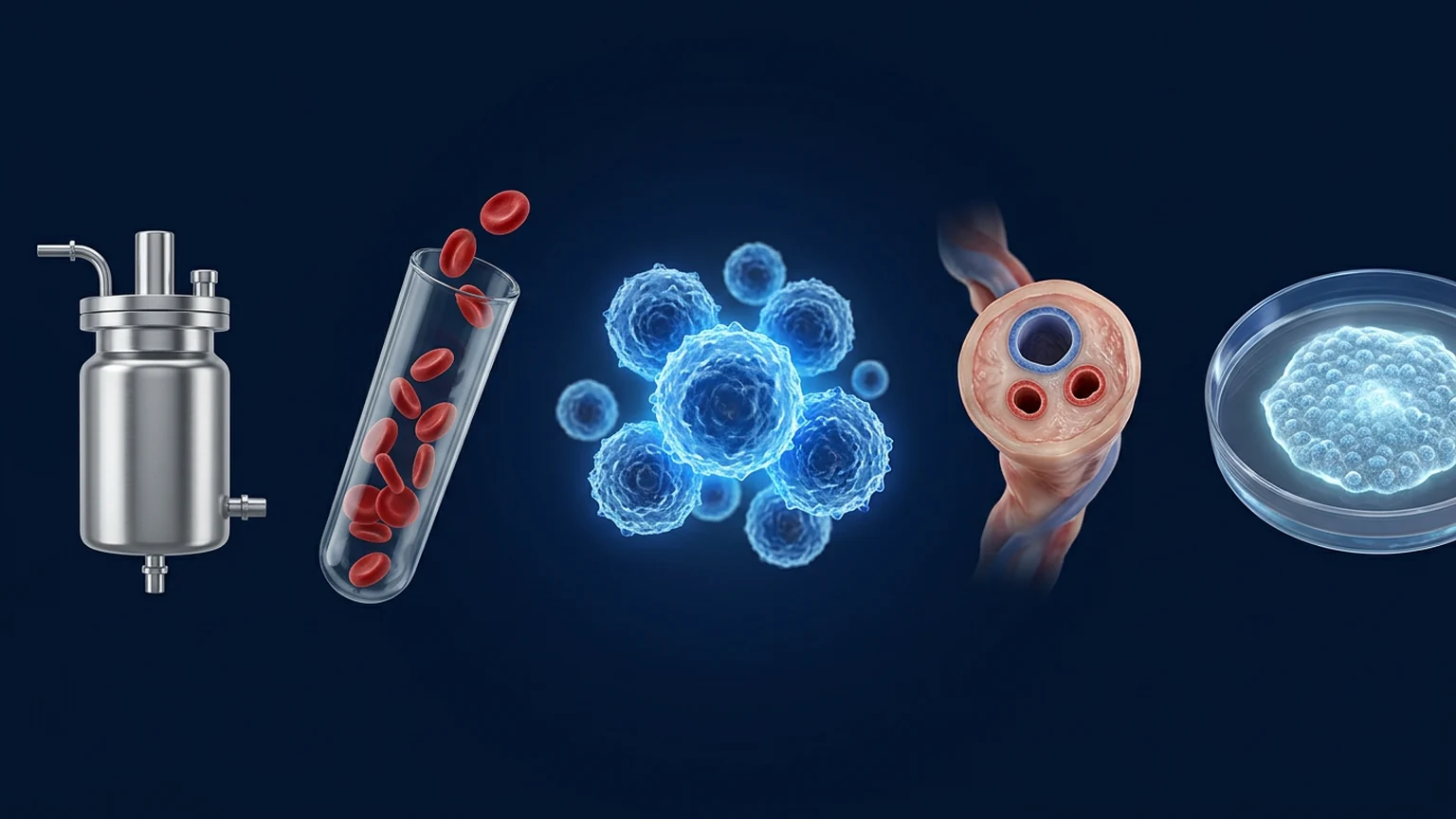
NK cell manufacturing is the controlled conversion of biological starting material into a defined cellular product. The process usually includes donor or patient screening, collection, NK-cell enrichment, activation, expansion, optional engineering, formulation, quality testing, storage or transport, and formal batch release. Every step can change what the final cells are able to do [1].
Manufacturing is part of the medicine. Unlike a simple chemical tablet, living cells respond to culture time, nutrients, temperature, handling, cytokines, feeder systems, freezing, and delay. Two bags with the same cell count may differ in purity, receptor profile, metabolic fitness, killing activity, and contamination risk.
GMP does not prove efficacy. Good Manufacturing Practice is a quality system designed to make production controlled, documented, traceable, and reproducible. It reduces avoidable manufacturing risk, but it cannot show that an investigational NK-cell protocol improves survival or controls a particular cancer. Clinical benefit must be established separately in appropriately designed trials [2].
What is the goal of NK cell manufacturing?
The goal is to deliver the intended viable NK-cell dose with verified identity, purity, safety, and biological activity. A manufacturer must define the product before producing it: primary autologous NK, healthy-donor allogeneic NK, cord-blood-derived NK, NK-92, or iPSC-derived NK; unmodified or engineered; fresh or cryopreserved; single-dose or banked.
The intended mechanism also matters. A product designed for direct cytotoxicity may prioritize natural activating receptors, degranulation, and serial killing. A product intended to work with a monoclonal antibody may require reliable CD16-mediated antibody-dependent cellular cytotoxicity. A CAR-NK product needs target-specific activity plus controls for the vector, transgene, editing, and potentially cytokine or safety-switch expression.
Product definition comes first
A cell count without source, phenotype, purity, viability, potency, dose basis, and release status is not an adequate product description. “Billions of NK cells” is a quantity claim—not evidence of identity, function, manufacturing consistency, or clinical benefit.
Step 1: donor qualification and starting-material collection
Manufacturing begins with a qualified source and a documented chain of identity. For autologous products, the patient supplies leukapheresis or peripheral blood. For allogeneic products, a screened donor, cord-blood unit, master cell bank, or iPSC clone supplies the starting material. Eligibility testing, medical history, infectious-disease testing, collection records, labeling, transport conditions, and custody must follow the applicable protocol and jurisdiction.
Starting material quality varies. Prior chemotherapy, corticosteroids, infection, systemic inflammation, age, collection volume, transport time, and donor biology can affect NK-cell yield and function. A clean manufacturing run cannot fully reverse poor starting biology. Therefore, acceptance criteria may include total nucleated cells, viability, timing, temperature, sample integrity, and disease-specific exclusions.
Identity errors are rare but potentially catastrophic. Barcode controls, independent checks, segregation, electronic audit trails, and reconciliation of labels should link collection, intermediate cultures, test samples, final containers, and recipient. For donor-derived products, chain of custody is necessary alongside chain of identity.
Step 2: enrichment and removal of unwanted cells
Enrichment increases the NK-cell fraction and controls contaminants that could alter safety or activity. Common strategies include CD3 depletion followed by CD56 selection, direct CD56 enrichment, or platform-specific differentiation from progenitors. Each approach trades recovery, purity, processing time, and equipment complexity.
Residual T cells are especially important in allogeneic primary products because they can contribute to graft-versus-host risk. B cells, monocytes, dead cells, platelets, and red-cell contamination may also affect culture or testing. More aggressive purification can improve purity but reduce NK-cell recovery. Published GMP workflows show that large-scale enrichment and expansion are feasible, while also demonstrating that process choices affect yield and phenotype [3][4].
Closed and automated systems can reduce open manipulations and operator variability, but “closed” is not synonymous with sterile, successful, or clinically effective. Connections, sampling, raw materials, software, equipment maintenance, and human decisions still require qualification and control.

Step 3: activation and expansion
Activation and expansion generate enough functional NK cells for the planned dose, but they also reshape the product. Cytokines such as IL-2 and IL-15 can support proliferation and activation. Feeder systems may express membrane-bound IL-15 or IL-21 and co-stimulatory molecules such as 4-1BBL. Cord-blood progenitors and iPSCs require differentiation as well as expansion [5].
Feeder-based approaches can produce large fold-expansion and strong cytotoxicity [6][7]. Their controls must address feeder identity, irradiation or growth arrest, qualification, residual feeder cells, and adventitious agents. Feeder-free processes may simplify some risks but can produce different yield, receptor patterns, or functionality. Neither category is inherently superior.
Culture duration, cell density, gas exchange, agitation, nutrient depletion, pH, cytokine schedule, and harvest timing can influence exhaustion, differentiation, metabolism, CD16 shedding, homing receptors, and serial-killing capacity. A very high expansion number can hide biological drift. Manufacturers therefore establish in-process limits rather than waiting for the final day to discover failure.
Memory-like activation
Cytokine-induced memory-like NK cells are commonly generated through a defined preactivation involving IL-12, IL-15, and IL-18, followed by a rest or expansion phase. Early studies support enhanced recall-like function in selected leukemia settings, but the term describes a specific biological program—not a generic label for any activated NK product [8].
Step 4: optional genetic engineering
Engineering adds a defined capability and an additional manufacturing risk layer. CARs can redirect recognition; engineered CD16 can strengthen antibody combinations; cytokine support may improve persistence; checkpoint edits may reduce inhibition; and safety switches may allow product elimination. Viral vectors, non-viral systems, or genome editing each need separate controls.
Release considerations can include transduction or editing efficiency, target-specific potency, vector copy number, replication-competent virus testing, off-target assessment, genomic integrity, transgene identity, and expression stability. For iPSC-derived products, the master clone and differentiation process require characterization, and residual pluripotent cells must be controlled. For NK-92, irradiation and loss of proliferative capacity are critical because it is a continuously growing tumor-derived cell line.
Step 5: harvest, washing, and formulation
Harvest converts the culture into a clinically usable formulation while removing process-related materials. Cells are separated from culture medium, concentrated, washed, counted, and placed into a defined infusion or freezing solution. Residual cytokines, serum components, beads, nucleases, antibiotics, feeder cells, and cryoprotectants may need limits or validated removal.
Formulation affects cell concentration, aggregation, container compatibility, stability, and delivery time. Very concentrated suspensions may settle or clump. Tubing and bags can adsorb cells. Delays can change viability and potency. A validated hold-time study should define acceptable temperature, mixing, transport, and maximum time between formulation and administration.
Fresh versus cryopreserved NK-cell products
Fresh products reduce freeze–thaw exposure, while cryopreserved products support inventory and repeat dosing; neither format guarantees better clinical performance. Cryopreservation can change viable-cell recovery, cytotoxicity, receptor expression, migration, proliferation, and persistence. Effects depend on cell source, activation state, formulation, DMSO concentration, cooling, storage, thawing, washing, and post-thaw rest [9].
Optimized platforms can retain substantial function after thaw [10], and NK-92 manufacturing studies demonstrate how media, container, density, and freezing conditions affect recovery [11]. Still, pre-freeze values cannot substitute for post-thaw viable recovery and potency. A high viability percentage alone does not prove killing function.
| Format | Operational advantage | Quality question |
|---|---|---|
| Fresh | No deliberate freeze–thaw step; potentially faster functional use | Is potency stable through transport and the full administration window? |
| Cryopreserved | Inventory, centralized testing, scheduling, and repeat-dose logistics | What are post-thaw recovery, potency, cryoprotectant limits, and stability? |
Which quality-control tests matter?
Quality control should test identity, purity, quantity, viability, safety, and potency at clinically relevant time points. Specifications are product-specific. A CD16-rich peripheral-blood product, an iPSC-derived CAR-NK product, and irradiated NK-92 should not share a copied checklist.
- Identity: commonly CD45-positive, CD3-negative, with CD56 and/or CD16 plus platform-specific markers.
- Purity: limits for T cells, B cells, monocytes, feeder cells, undifferentiated cells, and other unwanted populations.
- Viable dose: absolute viable NK cells in the final product, not only percentage viability.
- Microbial safety: sterility strategy, mycoplasma, endotoxin, and applicable adventitious-agent testing.
- Potency: cytotoxicity, degranulation, cytokine release, ADCC, or target-specific killing justified by the intended mechanism.
- Genetic controls: construct identity, expression, copy number, editing outcomes, and relevant genomic or viral safety tests.
- Physical quality: appearance, aggregates, volume, cell concentration, container integrity, and shipping conditions.

Why potency testing is harder than counting cells
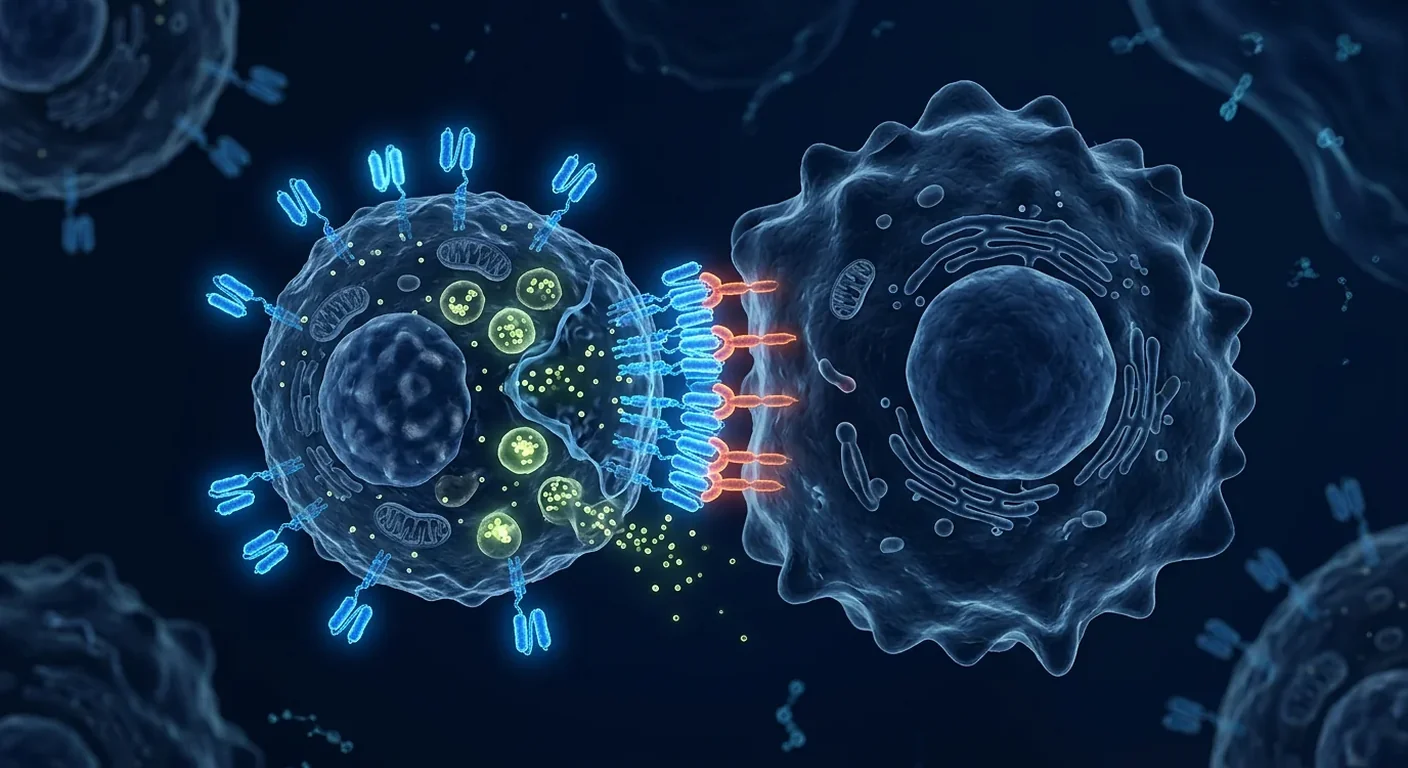
A potency assay asks whether the product performs a relevant biological function, not merely whether cells are present. Flow cytometry can confirm phenotype but may not predict tumor killing. A cytotoxicity assay measures target-cell death under specified conditions, while CD107a degranulation, interferon-gamma release, serial killing, ADCC, or CAR-specific assays examine different functions.
Assays must be qualified or validated for their stage and purpose, with controlled target cells, effector-to-target ratios, time points, acceptance criteria, and reference standards. Results can vary with target-cell sensitivity and operator technique. A convenient assay that does not reflect the intended mechanism may provide false reassurance.
For products intended for antibody combination, CD16 expression and ADCC may matter. For CAR-NK, antigen-specific killing and transgene expression are central. For irradiated NK-92, potency should be measured after irradiation at the clinically relevant interval [12]. Potency specifications should connect manufacturing consistency to a plausible mechanism, while clinical trials determine whether that mechanism benefits patients.
Release testing, exceptions, and batch disposition
Batch release is a documented decision that the specific lot meets predefined criteria. A qualified reviewer examines manufacturing records, deviations, in-process controls, environmental monitoring, final tests, labels, shipping readiness, and any pending results. The person releasing a batch should have authority to reject it even when treatment scheduling creates pressure.
Some sterility tests take longer than a fresh product’s usable window. A risk-based release strategy may use rapid methods, validated aseptic processing, environmental data, interim results, and post-release follow-up, subject to regulatory authorization. This is not permission to ignore sterility. The strategy must be defined before the batch is made, and a plan must exist for a later positive result.
Out-of-specification results should trigger a documented investigation, not informal retesting until a passing number appears. Deviations need impact assessment. Releasing a nonconforming batch for exceptional clinical circumstances is a formal medical and quality decision under applicable rules, not a marketing or scheduling decision.
Comparability and manufacturing changes
A process change requires evidence that the product remains comparable. Changing cytokine supplier, culture vessel, feeder bank, automation software, freezing medium, site, assay, or shipping route can alter critical quality attributes. Comparability studies examine side-by-side identity, purity, viability, phenotype, potency, safety, and stability.
Scale-up is not simply a larger flask. Oxygen transfer, mixing, surface area, nutrient gradients, sampling, harvest stress, and hold times change with equipment. Automation may improve consistency and reduce open handling, but it also introduces software, sensors, disposable-set integrity, alarms, and operator training as new failure modes. Published automated workflows support feasibility, not interchangeability across products [15].
How should patients evaluate an NK-cell manufacturing claim in Bangkok?
Patients should ask for traceable facts about the exact product rather than relying on “GMP,” “high purity,” or cell-count slogans. In Bangkok or elsewhere, a responsible program should explain the cell source, manufacturing site, regulatory or trial status, fresh versus frozen format, testing panel, dose basis, release authority, adverse-event pathway, and how the product integrates with established oncology care.
- What is the exact source: patient, adult donor, cord blood, NK-92, or iPSC?
- Is the product expanded, genetically modified, cryopreserved, or irradiated?
- Which identity, purity, sterility, endotoxin, mycoplasma, viability, and potency criteria must pass?
- Is the stated dose based on viable NK cells at administration?
- What trial registration or regulatory basis applies to this indication?
- Who releases the batch, and what happens if a test fails or is pending?
- Which established treatments continue, and who manages complications?
Early transfer studies and clinical programs show that NK-cell manufacture and infusion are feasible [13][16]. Feasibility is not proof that every manufactured product works for every tumor. Product-specific evidence, disease context, conditioning, combinations, and trial design remain decisive.
Frequently asked questions
Does GMP mean NK-cell therapy is proven to work?
No. GMP addresses controlled and documented manufacturing. Efficacy and benefit–risk for a disease require product-specific clinical evidence and regulatory evaluation.
What purity should an NK-cell product have?
There is no universal number for every platform. The specification should be justified for the source and risk, with particular attention to residual T cells in allogeneic products and platform-specific contaminants.
Is 90% viability enough to release a batch?
Not by itself. Release normally considers viable dose, identity, purity, microbial safety, potency, appearance, deviations, and stability; post-thaw products should be evaluated at the relevant post-thaw point.
Why are feeder cells used?
Engineered feeder cells can provide strong activation and expansion signals. Their use adds requirements for qualification, growth arrest or irradiation, residual-cell control, and microbial safety.
Can a clinic manufacture NK cells on the same day?
Minimally processed collection and true ex vivo expansion are different. Expansion generally requires days to weeks, while banked allogeneic products may be available faster after thaw and release.
Are NK-cell products approved for solid tumors?
Most NK and CAR-NK approaches for solid tumors remain investigational. Patients should verify the exact product, indication, trial registration, and local regulatory status rather than generalizing from blood-cancer studies.
Limitations and medical disclaimer
Manufacturing knowledge cannot predict an individual clinical outcome. Published processes differ in source, donor selection, activation, feeders, cytokines, engineering, freezing, assays, dose, conditioning, cancer type, and combinations. Results from one platform should not be transferred to another without comparability and clinical evidence. iPSC-derived systems offer scalable engineering potential but remain product-specific and investigational [14].
This article is educational and does not recommend an NK-cell product or replace oncology advice. NK-cell therapies described here are largely investigational, especially for solid tumors. Patients should not delay guideline-recommended diagnosis or treatment to pursue an unverified cell therapy. Discuss clinical-trial eligibility, alternatives, risks, and manufacturing documentation with a qualified oncologist and treatment team.
References
- Shimasaki N, Jain A, Campana D. NK cells for cancer immunotherapy. Nature Reviews Drug Discovery. 2020;19:200–218. doi:10.1038/s41573-019-0052-1 ↩
- Myers JA, Miller JS. Exploring the NK cell platform for cancer immunotherapy. Nature Reviews Clinical Oncology. 2021;18:85–100. doi:10.1038/s41571-020-0426-7 ↩
- Lapteva N, Durett AG, Sun J, et al. Large-scale ex vivo expansion and characterization of natural killer cells for clinical applications. Cytotherapy. 2012;14:1131–1143. doi:10.3109/14653249.2012.700767 ↩
- Torelli GF, Rozera C, Santodonato L, et al. A good manufacturing practice method to ex vivo expand natural killer cells for clinical use. Blood Transfusion. 2015;13:464–471. doi:10.2450/2015.0231-14 ↩
- Spanholtz J, Preijers F, Tordoir M, et al. Clinical-grade generation of active NK cells from cord blood hematopoietic progenitor cells using a closed-system culture process. PLoS ONE. 2011;6:e20740. doi:10.1371/journal.pone.0020740 ↩
- Fujisaki H, Kakuda H, Shimasaki N, et al. Expansion of highly cytotoxic human natural killer cells for cancer cell therapy. Cancer Research. 2009;69:4010–4017. doi:10.1158/0008-5472.CAN-08-3712 ↩
- Denman CJ, Senyukov VV, Somanchi SS, et al. Membrane-bound IL-21 promotes sustained ex vivo proliferation of human natural killer cells. PLoS ONE. 2012;7:e30264. doi:10.1371/journal.pone.0030264 ↩
- Romee R, Rosario M, Berrien-Elliott MM, et al. Cytokine-induced memory-like natural killer cells exhibit enhanced responses against myeloid leukemia. Science Translational Medicine. 2016;8:357ra123. doi:10.1126/scitranslmed.aaf2341 ↩
- Saultz JN, Otegbeye F. Optimizing the cryopreservation and post-thaw recovery of natural killer cells is critical for off-the-shelf platforms. Frontiers in Immunology. 2023;14:1304689. doi:10.3389/fimmu.2023.1304689 ↩
- Oyer JL, Croom-Perez TJ, Dieffenthaller TA, et al. Cryopreserved PM21-particle-expanded natural killer cells maintain cytotoxicity and effector functions in vitro and in vivo. Frontiers in Immunology. 2022;13:861681. doi:10.3389/fimmu.2022.861681 ↩
- Lee S, et al. Successful expansion and cryopreservation of human natural killer cell line NK-92 for clinical manufacturing. PLoS ONE. 2024;19:e0294857. doi:10.1371/journal.pone.0294857 ↩
- Klingemann H, Boissel L, Toneguzzo F. Natural killer cells for immunotherapy—advantages of the NK-92 cell line over blood NK cells. Frontiers in Immunology. 2016;7:91. doi:10.3389/fimmu.2016.00091 ↩
- Liu E, Marin D, Banerjee P, et al. Use of CAR-transduced natural killer cells in CD19-positive lymphoid tumors. New England Journal of Medicine. 2020;382:545–553. doi:10.1056/NEJMoa1910607 ↩
- Goldenson BH, Hor P, Kaufman DS. iPSC-derived natural killer cell therapies—expansion and targeting. Frontiers in Immunology. 2022;13:841107. doi:10.3389/fimmu.2022.841107 ↩
- Oberschmidt O, Morgan M, Huppert V, et al. Development of automated separation, expansion, and quality control protocols for clinical-scale manufacturing of primary human NK cells and CAR engineering. Human Gene Therapy Methods. 2019;30:102–120. doi:10.1089/hgtb.2019.039 ↩
- Miller JS, Soignier Y, Panoskaltsis-Mortari A, et al. Successful adoptive transfer and in vivo expansion of human haploidentical NK cells in patients with cancer. Blood. 2005;105:3051–3057. doi:10.1182/blood-2004-07-2974 ↩
NK 细胞制造是把生物起始材料转化为定义明确的细胞产品的受控过程。通常包括供者或患者筛查、采集、NK 富集、激活、扩增、可选工程改造、制剂、质量检测、储运和正式批次放行。每一步都可能改变最终细胞的功能 [1]。
制造本身就是药物的一部分。活细胞会响应培养时间、营养、温度、操作、细胞因子、饲养系统和冻融。相同细胞数的两袋产品,在纯度、受体、代谢状态、杀伤活性和污染风险上可能完全不同。GMP 用于控制、记录和追溯生产,但不等于已经证明某种癌症疗效 [2]。
NK 细胞制造的目标是什么?
目标是在给药时提供身份、纯度、安全性、活性和活细胞剂量均经验证的产品。生产前必须界定平台:自体或异体外周血、脐血、NK-92 或 iPSC 来源;未改造或工程化;新鲜或冻存;单批或细胞库。
拟定机制决定检测重点。直接杀伤产品关注激活受体、脱颗粒和连续杀伤;抗体联合产品关注 CD16 介导的 ADCC;CAR-NK 还需验证靶向活性、载体、转基因、编辑及安全开关。
先定义产品
只有细胞数量而没有来源、表型、纯度、活率、效力、剂量依据和放行状态,并不是完整产品说明。“数十亿 NK”只是数量,不证明功能或临床获益。
步骤一:供者资格与起始材料采集
制造从合格来源和完整身份链开始。自体产品来自患者白细胞单采或外周血;异体产品来自筛查供者、脐血单位、主细胞库或 iPSC 克隆。感染筛查、病史、标签、运输和保管必须符合方案及当地法规。
既往化疗、激素、感染、炎症、年龄、采集量和运输时间都会影响产量与功能。制造不能完全纠正不良起始生物学。条码、双人核对、隔离和审计记录应贯穿采集、培养、检测、最终容器与受者。
步骤二:富集与去除非目标细胞
富集提高 NK 比例并控制可能影响安全的污染细胞。常见策略包括 CD3 去除后 CD56 选择、直接 CD56 富集,或由祖细胞定向分化。方法之间存在回收率、纯度、时间和设备的权衡。
异体产品中的残留 T 细胞尤其重要,因为可能增加移植物抗宿主风险。更强纯化可提高纯度但降低回收。临床级流程证明规模化操作可行,也显示工艺选择会改变产量和表型 [3][4]。封闭自动化减少开放操作,却仍需控制接口、取样、原料、软件和人员。
步骤三:激活与扩增
激活和扩增产生计划剂量,同时也会重塑产品。IL-2、IL-15 可支持增殖;饲养系统可表达膜结合 IL-15/IL-21 和 4-1BBL。脐血祖细胞与 iPSC 还需分化 [5]。
饲养细胞方法可获得较高扩增和杀伤活性 [6][7],但必须验证饲养细胞身份、照射或生长阻断、残留及外源因子。培养时间、密度、气体、pH、营养和收获时点都会影响衰竭、代谢、CD16 与归巢受体。高扩增倍数可能掩盖生物漂移。
记忆样激活
细胞因子诱导的记忆样 NK 通常用 IL-12、IL-15 和 IL-18 进行特定预激活。早期白血病研究显示增强反应,但该术语只适用于定义明确的程序,不是任何“激活 NK”的通用标签 [8]。
步骤四:可选基因工程
工程改造增加功能,也增加制造风险层。CAR 可重定向识别,高亲和 CD16 可加强抗体联合,细胞因子支持可能改善持续性,检查点编辑可降低抑制,安全开关可用于清除产品。
放行可包括转导或编辑效率、靶向效力、载体拷贝、复制型病毒、脱靶、基因组完整性和表达稳定性。iPSC 产品需控制主克隆、分化和残留多能细胞;NK-92 因为是持续增殖的肿瘤来源细胞系,必须验证照射与失去增殖能力。
步骤五:收获、清洗与制剂
收获将培养物转为可临床使用的制剂,并清除工艺残留。细胞被浓缩、清洗、计数并置于输注液或冻存液。残留细胞因子、血清、磁珠、核酸酶、抗生素、饲养细胞和冷冻保护剂均可能需要限度。
制剂影响浓度、聚集、容器相容性和稳定期。高浓度可能沉降或结团,管路与袋体可能吸附细胞,延迟会降低功能。验证应明确温度、混匀、运输和最长给药时间。
新鲜与冻存 NK 产品
新鲜产品避免刻意冻融;冻存产品便于库存和重复给药,但两者都不自动保证更好疗效。冻存可能改变回收、杀伤、受体、迁移、增殖和持续性,取决于来源、状态、DMSO、降温、储存、复苏和复苏后休整 [9]。
优化平台可在复苏后保留较强功能 [10],NK-92 研究也显示培养液、容器、密度和冻存条件影响回收 [11]。冻存前结果不能代替复苏后的活细胞与效力数据。
| 形式 | 优势 | 关键问题 |
|---|---|---|
| 新鲜 | 无计划冻融 | 运输和给药窗口内效力是否稳定? |
| 冻存 | 库存、集中检测和重复剂量 | 复苏后回收、效力和稳定性如何? |
哪些质量检测重要?
质量控制应在临床相关时点检测身份、纯度、数量、活率、安全和效力。规格必须针对产品,不能把外周血 NK、iPSC-CAR-NK 与照射 NK-92 套用同一清单。
- 身份:CD45、CD3 阴性、CD56/CD16 及平台标志物。
- 纯度:T、B、单核、饲养和未分化细胞限度。
- 活细胞剂量:最终绝对活 NK 数,而非仅活率百分比。
- 微生物安全:无菌、支原体、内毒素及外源因子。
- 效力:杀伤、脱颗粒、细胞因子、ADCC 或靶向活性。
- 遗传控制:构建体、表达、拷贝、编辑和病毒安全。
为什么效力检测比计数更困难?
效力检测回答产品是否执行相关功能,而非仅仅是否存在细胞。流式表型不能完全预测杀伤;靶细胞死亡、CD107a 脱颗粒、干扰素-γ、连续杀伤、ADCC 和 CAR 特异性分别检测不同功能。
检测必须规定靶细胞、效靶比、时间、接受标准和参考物。抗体联合应关注 CD16 与 ADCC;CAR-NK 应关注抗原特异杀伤;照射 NK-92 应在照射后临床时点检测 [12]。效力连接制造与机制,临床试验才判断患者获益。
批次放行与偏差
批次放行是确认特定批次符合预设标准的正式决定。授权人员审查生产记录、偏差、环境监测、最终结果、标签和运输。即使治疗排期紧张,也应有拒绝批次的权力。
部分无菌检测长于新鲜产品寿命,可在获准的风险框架中结合快速方法、无菌工艺验证、中期结果和事后追踪,但不能忽略无菌。超标结果应调查原因,不应反复检测直到“通过”。例外放行属于正式医疗与质量决定。
可比性与工艺变更
更改工艺必须证明产品仍具可比性。更换细胞因子、培养器、饲养库、软件、冻存液、场地、检测或运输路线都可能改变关键质量属性。放大也不是使用更大的瓶子;氧传递、混合、营养梯度、取样和收获应力都会变化。自动化可降低人工差异,也引入软件、传感器和耗材风险 [15]。
曼谷患者如何评估制造宣传?
患者应索取确切产品的可追溯事实,而不是只接受“GMP”“高纯度”或数量口号。无论在曼谷还是其他地区,都应说明来源、生产地、监管或试验状态、新鲜/冻存、检测组合、剂量依据、放行人和不良事件路径。
- 来源是患者、成人供者、脐血、NK-92 还是 iPSC?
- 是否扩增、改造、冻存或照射?
- 身份、纯度、无菌、内毒素、支原体、活率和效力标准是什么?
- 剂量是否基于给药时活 NK 数?
- 该适应证的试验注册或监管依据是什么?
- 检测失败或待定时如何处理?
- 哪些标准治疗继续,由谁管理并发症?
早期研究证明生产和输注可行 [13][16],但可行不等于每种产品对每种肿瘤有效。
常见问题
GMP 是否表示 NK 治疗已证实有效?
不是。GMP 管理受控生产;疾病疗效需要产品特异临床证据与监管评估。
NK 产品纯度应是多少?
没有适用于所有平台的统一数字。规格应根据来源和风险论证,尤其关注异体产品残留 T 细胞。
90% 活率足以放行吗?
不足。还需考虑绝对活剂量、身份、纯度、微生物安全、效力、偏差和稳定性。
为何使用饲养细胞?
它可提供强扩增信号,但需验证身份、照射或生长阻断、残留和微生物安全。
能当天制造 NK 吗?
采集与真正体外扩增不同。扩增通常需数天至数周;冻存异体现货可更快准备。
实体瘤 NK 产品获批了吗?
多数 NK/CAR-NK 实体瘤方案仍属研究性,应核对确切产品、适应证、试验与当地状态。
局限与医疗免责声明
制造知识不能预测个人结局。研究在来源、供者、激活、饲养、细胞因子、工程、冻存、检测、剂量、预处理和癌种上差异很大。一个平台的结果不能直接外推。iPSC-NK 具有规模化潜力,但仍是产品特异且研究性的技术 [14]。
本文仅供教育,不推荐任何 NK 产品,也不替代肿瘤科意见。尤其在实体瘤中,大多数方案仍处研究阶段。不要为未经验证的细胞疗法延误指南推荐的诊断和治疗。
References
- Shimasaki N, Jain A, Campana D. NK cells for cancer immunotherapy. Nature Reviews Drug Discovery. 2020;19:200–218. doi:10.1038/s41573-019-0052-1 ↩
- Myers JA, Miller JS. Exploring the NK cell platform for cancer immunotherapy. Nature Reviews Clinical Oncology. 2021;18:85–100. doi:10.1038/s41571-020-0426-7 ↩
- Lapteva N, Durett AG, Sun J, et al. Large-scale ex vivo expansion and characterization of natural killer cells for clinical applications. Cytotherapy. 2012;14:1131–1143. doi:10.3109/14653249.2012.700767 ↩
- Torelli GF, Rozera C, Santodonato L, et al. A good manufacturing practice method to ex vivo expand natural killer cells for clinical use. Blood Transfusion. 2015;13:464–471. doi:10.2450/2015.0231-14 ↩
- Spanholtz J, Preijers F, Tordoir M, et al. Clinical-grade generation of active NK cells from cord blood hematopoietic progenitor cells using a closed-system culture process. PLoS ONE. 2011;6:e20740. doi:10.1371/journal.pone.0020740 ↩
- Fujisaki H, Kakuda H, Shimasaki N, et al. Expansion of highly cytotoxic human natural killer cells for cancer cell therapy. Cancer Research. 2009;69:4010–4017. doi:10.1158/0008-5472.CAN-08-3712 ↩
- Denman CJ, Senyukov VV, Somanchi SS, et al. Membrane-bound IL-21 promotes sustained ex vivo proliferation of human natural killer cells. PLoS ONE. 2012;7:e30264. doi:10.1371/journal.pone.0030264 ↩
- Romee R, Rosario M, Berrien-Elliott MM, et al. Cytokine-induced memory-like natural killer cells exhibit enhanced responses against myeloid leukemia. Science Translational Medicine. 2016;8:357ra123. doi:10.1126/scitranslmed.aaf2341 ↩
- Saultz JN, Otegbeye F. Optimizing the cryopreservation and post-thaw recovery of natural killer cells is critical for off-the-shelf platforms. Frontiers in Immunology. 2023;14:1304689. doi:10.3389/fimmu.2023.1304689 ↩
- Oyer JL, Croom-Perez TJ, Dieffenthaller TA, et al. Cryopreserved PM21-particle-expanded natural killer cells maintain cytotoxicity and effector functions in vitro and in vivo. Frontiers in Immunology. 2022;13:861681. doi:10.3389/fimmu.2022.861681 ↩
- Lee S, et al. Successful expansion and cryopreservation of human natural killer cell line NK-92 for clinical manufacturing. PLoS ONE. 2024;19:e0294857. doi:10.1371/journal.pone.0294857 ↩
- Klingemann H, Boissel L, Toneguzzo F. Natural killer cells for immunotherapy—advantages of the NK-92 cell line over blood NK cells. Frontiers in Immunology. 2016;7:91. doi:10.3389/fimmu.2016.00091 ↩
- Liu E, Marin D, Banerjee P, et al. Use of CAR-transduced natural killer cells in CD19-positive lymphoid tumors. New England Journal of Medicine. 2020;382:545–553. doi:10.1056/NEJMoa1910607 ↩
- Goldenson BH, Hor P, Kaufman DS. iPSC-derived natural killer cell therapies—expansion and targeting. Frontiers in Immunology. 2022;13:841107. doi:10.3389/fimmu.2022.841107 ↩
- Oberschmidt O, Morgan M, Huppert V, et al. Development of automated separation, expansion, and quality control protocols for clinical-scale manufacturing of primary human NK cells and CAR engineering. Human Gene Therapy Methods. 2019;30:102–120. doi:10.1089/hgtb.2019.039 ↩
- Miller JS, Soignier Y, Panoskaltsis-Mortari A, et al. Successful adoptive transfer and in vivo expansion of human haploidentical NK cells in patients with cancer. Blood. 2005;105:3051–3057. doi:10.1182/blood-2004-07-2974 ↩
تصنيع خلايا NK هو تحويل مضبوط للمادة البيولوجية الأولية إلى منتج خلوي محدد. يشمل عادة فحص المتبرع أو المريض، والجمع، والإثراء، والتنشيط، والتوسيع، والهندسة الاختيارية، والصياغة، واختبارات الجودة، والنقل أو التخزين، ثم الإفراج الرسمي عن الدفعة. ويمكن لكل خطوة أن تغير وظيفة الخلايا النهائية [1].
التصنيع جزء من الدواء. فالخلايا الحية تستجيب لمدة الزراعة والمغذيات والحرارة والمناولة والسيتوكينات والخلايا المغذية والتجميد. وقد تختلف حقيبتان لهما العدد نفسه في النقاوة والمستقبلات واللياقة الأيضية والقتل وخطر التلوث. يضبط GMP العملية ويوثقها، لكنه لا يثبت فعالية سريرية لسرطان معين [2].
ما هدف تصنيع خلايا NK؟
الهدف هو تقديم جرعة حية بهوية ونقاوة وسلامة ونشاط بيولوجي موثقة. يجب تعريف المنصة مسبقاً: خلايا ذاتية أو خيفية من الدم، أو من الحبل السري، أو NK-92، أو مشتقة من iPSC؛ معدلة أو غير معدلة؛ طازجة أو محفوظة؛ جرعة فردية أو مخزونة.
تحدد آلية العمل الاختبارات. فالقتل المباشر يحتاج مستقبلات تنشيط وإزالة حبيبات وقتلاً متسلسلاً، والجمع مع الأجسام المضادة يحتاج CD16 وADCC، أما CAR-NK فتحتاج فعالية نوعية للهدف وضوابط للناقل والتحرير والجين ومفتاح الأمان.
تعريف المنتج أولاً
عدد الخلايا من دون المصدر والنمط والنقاوة والحيوية والفعالية وأساس الجرعة وحالة الإفراج ليس وصفاً كافياً. «مليارات خلايا NK» ادعاء كمية، لا دليل وظيفة أو فائدة.
الخطوة الأولى: تأهيل المصدر والجمع
يبدأ التصنيع بمصدر مؤهل وسلسلة هوية موثقة. تأتي المنتجات الذاتية من فصادة المريض أو دمه، والخيفية من متبرع مفحوص أو دم حبل أو بنك رئيسي أو نسخة iPSC. يجب أن تتبع العدوى والتاريخ الطبي والوسم والنقل والحيازة البروتوكول والقانون المحلي.
يؤثر العلاج الكيميائي والستيرويدات والعدوى والالتهاب والعمر وحجم الجمع ووقت النقل في المحصول والوظيفة. ولا تستطيع عملية جيدة دائماً إصلاح مادة أولية ضعيفة. تربط الباركودات والفحص المستقل والسجلات بين الجمع والثقافة والعينات والحاوية والمتلقي.
الخطوة الثانية: الإثراء وإزالة الخلايا غير المرغوبة
يرفع الإثراء نسبة NK ويضبط الملوثات المؤثرة في السلامة. تشمل الطرق إزالة CD3 ثم اختيار CD56، أو إثراء CD56 مباشرة، أو التفريق من الأسلاف. ولكل منها مقايضة بين الاسترداد والنقاوة والزمن والتعقيد.
بقايا الخلايا التائية مهمة في المنتجات الخيفية لاحتمال خطر الطعم ضد المضيف. التنقية الأقوى قد تحسن النقاوة وتخفض الاسترداد. تثبت مسارات GMP إمكانية التوسيع السريري، وتبين أن الاختيار يغير المحصول والنمط [3][4]. تقلل الأنظمة المغلقة العمل المفتوح لكنها لا تلغي ضبط الوصلات والعينات والمواد والبرمجيات والبشر.
الخطوة الثالثة: التنشيط والتوسيع
ينتج التنشيط والتوسيع العدد المطلوب، لكنهما يعيدان تشكيل المنتج. يدعم IL-2 وIL-15 التكاثر، وقد تعرض الخلايا المغذية IL-15 أو IL-21 غشائياً و4-1BBL. وتحتاج أسلاف الحبل وiPSC إلى التفريق أيضاً [5].
يمكن للأنظمة المغذية تحقيق توسع وقتل قويين [6][7]، لكنها تحتاج ضبط الهوية والتشعيع أو وقف النمو والبقايا والعوامل الدخيلة. تؤثر مدة الثقافة والكثافة والغاز وpH والمغذيات والحصاد في الإرهاق والاستقلاب وCD16 ومستقبلات الهجرة. وقد يخفي رقم توسع كبير انجرافاً بيولوجياً.
التنشيط الشبيه بالذاكرة
تستخدم خلايا NK الشبيهة بالذاكرة برنامجاً محدداً من IL-12 وIL-15 وIL-18. تدعم دراسات مبكرة استجابة أفضل في سياقات ابيضاض الدم، لكن المصطلح لا ينطبق على أي منتج «منشط» [8].
الخطوة الرابعة: الهندسة الجينية الاختيارية
تضيف الهندسة قدرة محددة وطبقة خطر تصنيع إضافية. يمكن لـCAR إعادة توجيه التعرف، وCD16 محسن تقوية الأجسام المضادة، ودعم السيتوكين تحسين البقاء، والتحرير تقليل التثبيط، ومفتاح الأمان إزالة المنتج.
قد تشمل اختبارات الإفراج كفاءة النقل أو التحرير، والفعالية الهدفية، وعدد نسخ الناقل، والفيروس القادر على التكاثر، والآثار خارج الهدف، والسلامة الجينومية. تحتاج منتجات iPSC ضبط النسخة والتفريق وبقايا الخلايا متعددة القدرات؛ ويتطلب NK-92 تشعيعاً موثقاً وفقدان التكاثر لأنه خط ورمي مستمر.
الخطوة الخامسة: الحصاد والغسل والصياغة
يحوّل الحصاد الثقافة إلى صيغة قابلة للإعطاء ويزيل مواد العملية. تُركز الخلايا وتغسل وتعد وتوضع في محلول التسريب أو التجميد. قد يلزم تحديد بقايا السيتوكينات والمصل والخرز والنوكلياز والمضادات والخلايا المغذية والواقي البارد.
تؤثر الصياغة في التركيز والتكتل والحاوية والثبات. قد تترسب الخلايا المركزة أو تتكتل وتمتصها الأنابيب والأكياس، ويغير التأخير الحيوية والفعالية. يجب أن تحدد دراسات الثبات الحرارة والخلط والنقل والمدة القصوى.
المنتج الطازج مقابل المحفوظ بالتبريد
يتجنب الطازج خطوة التجميد والإذابة، بينما يدعم المجمد المخزون والجرعات المتكررة؛ ولا يضمن أيهما نتيجة أفضل. قد يغير التجميد الاسترداد والقتل والمستقبلات والهجرة والتكاثر والبقاء بحسب المصدر والحالة وDMSO والتبريد والتخزين والإذابة والراحة [9].
تحتفظ منصات محسنة بوظيفة معتبرة بعد الإذابة [10]، وتوضح دراسات NK-92 أثر الوسط والحاوية والكثافة [11]. لكن بيانات ما قبل التجميد لا تستبدل الجرعة الحية والفعالية بعد الإذابة.
| الشكل | الميزة | سؤال الجودة |
|---|---|---|
| طازج | لا تجميد مقصود | هل تبقى الفعالية مستقرة في النقل ونافذة الإعطاء؟ |
| مجمد | مخزون وفحص مركزي وجرعات متكررة | ما الاسترداد والفعالية والثبات بعد الإذابة؟ |
ما اختبارات الجودة المهمة؟
يجب فحص الهوية والنقاوة والكمية والحيوية والسلامة والفعالية في وقت ذي صلة سريرية. المواصفات خاصة بالمنتج، ولا يجوز نسخ قائمة واحدة لخلايا الدم وiPSC-CAR-NK وNK-92 المشععة.
- الهوية: CD45، وغياب CD3، وCD56/CD16 وعلامات المنصة.
- النقاوة: حدود T وB والوحيدات والمغذيات والخلايا غير المتمايزة.
- الجرعة الحية: العدد المطلق لخلايا NK الحية، لا النسبة وحدها.
- السلامة الميكروبية: التعقيم والميكوبلازما والسموم والعوامل الدخيلة.
- الفعالية: القتل أو إزالة الحبيبات أو السيتوكينات أو ADCC أو القتل الهدف.
- الجينات: هوية البنية والتعبير والنسخ والتحرير والسلامة الفيروسية.
لماذا اختبار الفعالية أصعب من عد الخلايا؟
يسأل اختبار الفعالية هل يؤدي المنتج وظيفة ذات صلة، لا هل توجد الخلايا فقط. لا يتنبأ النمط الظاهري وحده بالقتل؛ وتقيس وفاة الهدف وCD107a وإنترفيرون غاما والقتل المتسلسل وADCC وCAR وظائف مختلفة.
يجب ضبط الخلايا الهدف والنسبة والزمن ومعايير القبول والمرجع. يحتاج الجمع مع الأجسام المضادة CD16 وADCC، ويحتاج CAR-NK قتلاً نوعياً، ويجب قياس NK-92 بعد التشعيع في الزمن السريري [12]. تربط الفعالية التصنيع بالآلية، بينما تحدد التجارب فائدة المرضى.
الإفراج عن الدفعة والانحرافات
الإفراج قرار موثق بأن دفعة بعينها حققت المعايير المسبقة. يراجع مسؤول مؤهل السجلات والانحرافات والبيئة والنتائج والوسم والنقل، ويجب أن يملك سلطة الرفض رغم ضغط المواعيد.
تستغرق بعض اختبارات التعقيم أطول من صلاحية المنتج الطازج، وقد تسمح خطة معتمدة بأساليب سريعة وعمل معقم ونتائج مؤقتة ومتابعة، لكنها لا تعني تجاهل التعقيم. يجب التحقيق في النتائج خارج المواصفة بدلاً من إعادة الفحص حتى النجاح.
القابلية للمقارنة وتغيير العملية
يتطلب تغيير العملية دليلاً على بقاء المنتج قابلاً للمقارنة. تغيير السيتوكين أو الوعاء أو بنك المغذيات أو البرنامج أو وسط التجميد أو الموقع أو الاختبار أو النقل قد يغير صفات الجودة. والتوسيع الحجمي يغير الأكسجين والخلط والمغذيات والعينات والحصاد. تقلل الأتمتة التفاوت البشري لكنها تضيف مخاطر البرمجيات والحساسات والأطقم [15].
كيف يقيّم المريض ادعاءات التصنيع في بانكوك؟
ينبغي طلب حقائق قابلة للتتبع عن المنتج الدقيق، لا الاكتفاء بعبارات GMP أو «نقاوة عالية» أو أعداد الخلايا. يجب توضيح المصدر والموقع والحالة التنظيمية أو البحثية، والطازج أو المجمد، والفحوص، وأساس الجرعة، وسلطة الإفراج، ومسار المضاعفات.
- هل المصدر المريض أو متبرع أو حبل أو NK-92 أو iPSC؟
- هل الخلايا موسعة أو مهندسة أو مجمدة أو مشععة؟
- ما معايير الهوية والنقاوة والتعقيم والسموم والميكوبلازما والحيوية والفعالية؟
- هل الجرعة مبنية على خلايا NK الحية وقت الإعطاء؟
- ما التسجيل أو الأساس التنظيمي لهذا الاستطباب؟
- من يفرج عن الدفعة وماذا يحدث عند فشل اختبار؟
- ما العلاجات القياسية المستمرة ومن يعالج المضاعفات؟
تثبت الدراسات المبكرة إمكانية التصنيع والتسريب [13][16]، لكن الإمكانية لا تثبت نجاح كل منتج لكل ورم.
أسئلة شائعة
هل يعني GMP أن علاج NK مثبت؟
لا. يضبط GMP التصنيع؛ أما الفعالية فتحتاج دليلاً سريرياً خاصاً بالمنتج وتقييماً تنظيمياً.
ما النقاوة المطلوبة؟
لا يوجد رقم عالمي لكل المنصات. يجب تبرير المواصفة بحسب المصدر والخطر، خصوصاً بقايا T في المنتجات الخيفية.
هل حيوية 90% تكفي؟
لا. يشمل الإفراج الجرعة الحية والهوية والنقاوة والسلامة الميكروبية والفعالية والانحرافات والثبات.
لماذا تستخدم الخلايا المغذية؟
توفر إشارات توسع قوية، لكنها تتطلب تأهيلاً ووقف نمو وضبط البقايا والسلامة الميكروبية.
هل يمكن تصنيع NK في يوم واحد؟
الجمع ليس توسعاً حقيقياً. يستغرق التوسيع أياماً إلى أسابيع، وقد يكون المنتج الخيفي المخزون أسرع بعد الإذابة والإفراج.
هل NK معتمدة للأورام الصلبة؟
تبقى معظم مقاربات NK وCAR-NK للأورام الصلبة تجريبية؛ يجب التحقق من المنتج والاستطباب والتجربة والحالة المحلية.
القيود وإخلاء المسؤولية الطبية
لا تتنبأ معلومات التصنيع بنتيجة الفرد. تختلف الدراسات في المصدر والمتبرع والتنشيط والمغذيات والسيتوكينات والهندسة والتجميد والفحوص والجرعة والتهيئة والسرطان. لا يجوز نقل نتائج منصة إلى أخرى. تحمل iPSC-NK قابلية للتوسع لكنها تظل تقنية خاصة بكل منتج وتجريبية [14].
المقال تعليمي ولا يوصي بمنتج ولا يستبدل رأي اختصاصي الأورام. معظم العلاجات، خصوصاً للأورام الصلبة، تجريبية. لا تؤخر التشخيص أو العلاج الموصى به لصالح منتج خلوي غير متحقق.
References
- Shimasaki N, Jain A, Campana D. NK cells for cancer immunotherapy. Nature Reviews Drug Discovery. 2020;19:200–218. doi:10.1038/s41573-019-0052-1 ↩
- Myers JA, Miller JS. Exploring the NK cell platform for cancer immunotherapy. Nature Reviews Clinical Oncology. 2021;18:85–100. doi:10.1038/s41571-020-0426-7 ↩
- Lapteva N, Durett AG, Sun J, et al. Large-scale ex vivo expansion and characterization of natural killer cells for clinical applications. Cytotherapy. 2012;14:1131–1143. doi:10.3109/14653249.2012.700767 ↩
- Torelli GF, Rozera C, Santodonato L, et al. A good manufacturing practice method to ex vivo expand natural killer cells for clinical use. Blood Transfusion. 2015;13:464–471. doi:10.2450/2015.0231-14 ↩
- Spanholtz J, Preijers F, Tordoir M, et al. Clinical-grade generation of active NK cells from cord blood hematopoietic progenitor cells using a closed-system culture process. PLoS ONE. 2011;6:e20740. doi:10.1371/journal.pone.0020740 ↩
- Fujisaki H, Kakuda H, Shimasaki N, et al. Expansion of highly cytotoxic human natural killer cells for cancer cell therapy. Cancer Research. 2009;69:4010–4017. doi:10.1158/0008-5472.CAN-08-3712 ↩
- Denman CJ, Senyukov VV, Somanchi SS, et al. Membrane-bound IL-21 promotes sustained ex vivo proliferation of human natural killer cells. PLoS ONE. 2012;7:e30264. doi:10.1371/journal.pone.0030264 ↩
- Romee R, Rosario M, Berrien-Elliott MM, et al. Cytokine-induced memory-like natural killer cells exhibit enhanced responses against myeloid leukemia. Science Translational Medicine. 2016;8:357ra123. doi:10.1126/scitranslmed.aaf2341 ↩
- Saultz JN, Otegbeye F. Optimizing the cryopreservation and post-thaw recovery of natural killer cells is critical for off-the-shelf platforms. Frontiers in Immunology. 2023;14:1304689. doi:10.3389/fimmu.2023.1304689 ↩
- Oyer JL, Croom-Perez TJ, Dieffenthaller TA, et al. Cryopreserved PM21-particle-expanded natural killer cells maintain cytotoxicity and effector functions in vitro and in vivo. Frontiers in Immunology. 2022;13:861681. doi:10.3389/fimmu.2022.861681 ↩
- Lee S, et al. Successful expansion and cryopreservation of human natural killer cell line NK-92 for clinical manufacturing. PLoS ONE. 2024;19:e0294857. doi:10.1371/journal.pone.0294857 ↩
- Klingemann H, Boissel L, Toneguzzo F. Natural killer cells for immunotherapy—advantages of the NK-92 cell line over blood NK cells. Frontiers in Immunology. 2016;7:91. doi:10.3389/fimmu.2016.00091 ↩
- Liu E, Marin D, Banerjee P, et al. Use of CAR-transduced natural killer cells in CD19-positive lymphoid tumors. New England Journal of Medicine. 2020;382:545–553. doi:10.1056/NEJMoa1910607 ↩
- Goldenson BH, Hor P, Kaufman DS. iPSC-derived natural killer cell therapies—expansion and targeting. Frontiers in Immunology. 2022;13:841107. doi:10.3389/fimmu.2022.841107 ↩
- Oberschmidt O, Morgan M, Huppert V, et al. Development of automated separation, expansion, and quality control protocols for clinical-scale manufacturing of primary human NK cells and CAR engineering. Human Gene Therapy Methods. 2019;30:102–120. doi:10.1089/hgtb.2019.039 ↩
- Miller JS, Soignier Y, Panoskaltsis-Mortari A, et al. Successful adoptive transfer and in vivo expansion of human haploidentical NK cells in patients with cancer. Blood. 2005;105:3051–3057. doi:10.1182/blood-2004-07-2974 ↩