NK cell therapy combinations are treatment protocols that pair transferred natural killer cells with antibodies, checkpoint blockade, cytokines, or conventional cancer drugs so that each component compensates for a specific weakness of the cells alone. Almost every serious NK-cell programme in oncology is now a combination programme, because monotherapy results in solid tumours have been modest [1][2].
Where NK cells run out of capability. Transferred NK cells reliably reach the bloodstream, but three problems recur across trials: they persist for days to a few weeks rather than months, they are suppressed inside the tumour microenvironment, and they need target recognition signals that many solid tumours actively hide.
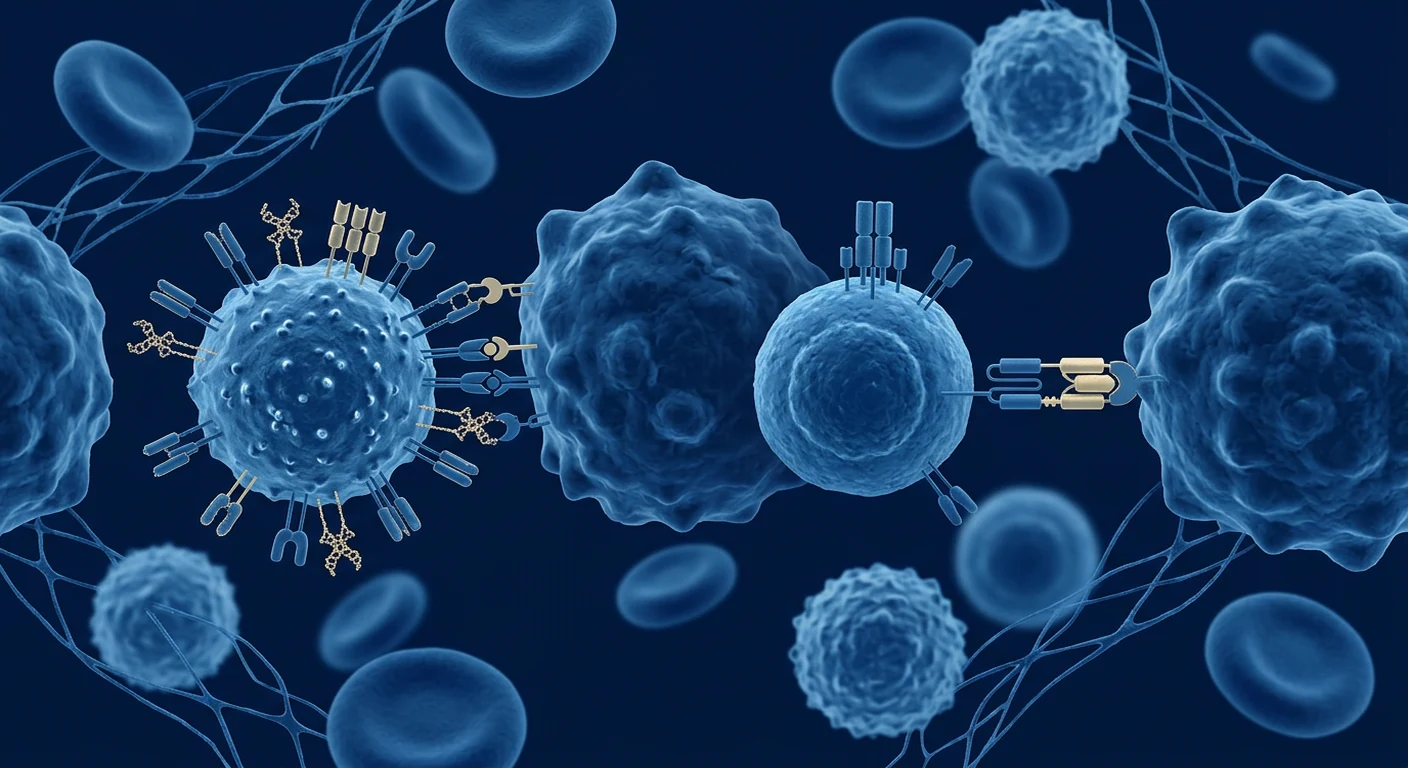
Combination logic addresses those three gaps. Antibodies supply a recognition signal. Cytokines supply survival and proliferation. Checkpoint or receptor blockade removes an inhibitory brake. Chemotherapy and targeted drugs change the tumour so that it becomes visible to an immune effector at all.
None of this is settled clinical practice. Outside defined haematology transplant contexts, NK-cell combinations for cancer are studied within registered clinical trials. This article describes what has been published, what remains uncertain, and which questions a patient in Bangkok should ask before accepting any combination offer.
What a combination does and does not prove
Adding a second agent to an NK-cell infusion increases biological plausibility, and it also increases toxicity, cost, and the number of variables in a small single-arm trial. A protocol with four components and eight treated patients cannot demonstrate that any single component contributed the observed effect.
Why is NK cell therapy combined with other treatments?
NK cells are combined with other agents because adoptive NK-cell monotherapy has shown limited persistence and limited single-agent activity, particularly in solid tumours. The early haploidentical NK trials established feasibility and safety, and they also showed that infused cells expand only when supported by lymphodepletion and cytokine signalling [12].
Three biological limits drive combination design. First, survival: NK cells depend on IL-15-family signalling and decline quickly without it. Second, recognition: NK cytotoxicity requires a balance of activating ligands over inhibitory HLA class I signals, and tumours can shift that balance. Third, the microenvironment: hypoxia, adenosine, TGF-beta, and regulatory T cells suppress NK function locally even when circulating counts look adequate [1].
Combination approaches therefore fall into recognisable families: antibody-based targeting, engager molecules, inhibitory-receptor and checkpoint blockade, cytokine support, drug-induced tumour sensitisation, and pairing with transplant or other cell products. The rest of this article takes each in turn.
How do antibodies make NK cells work better?
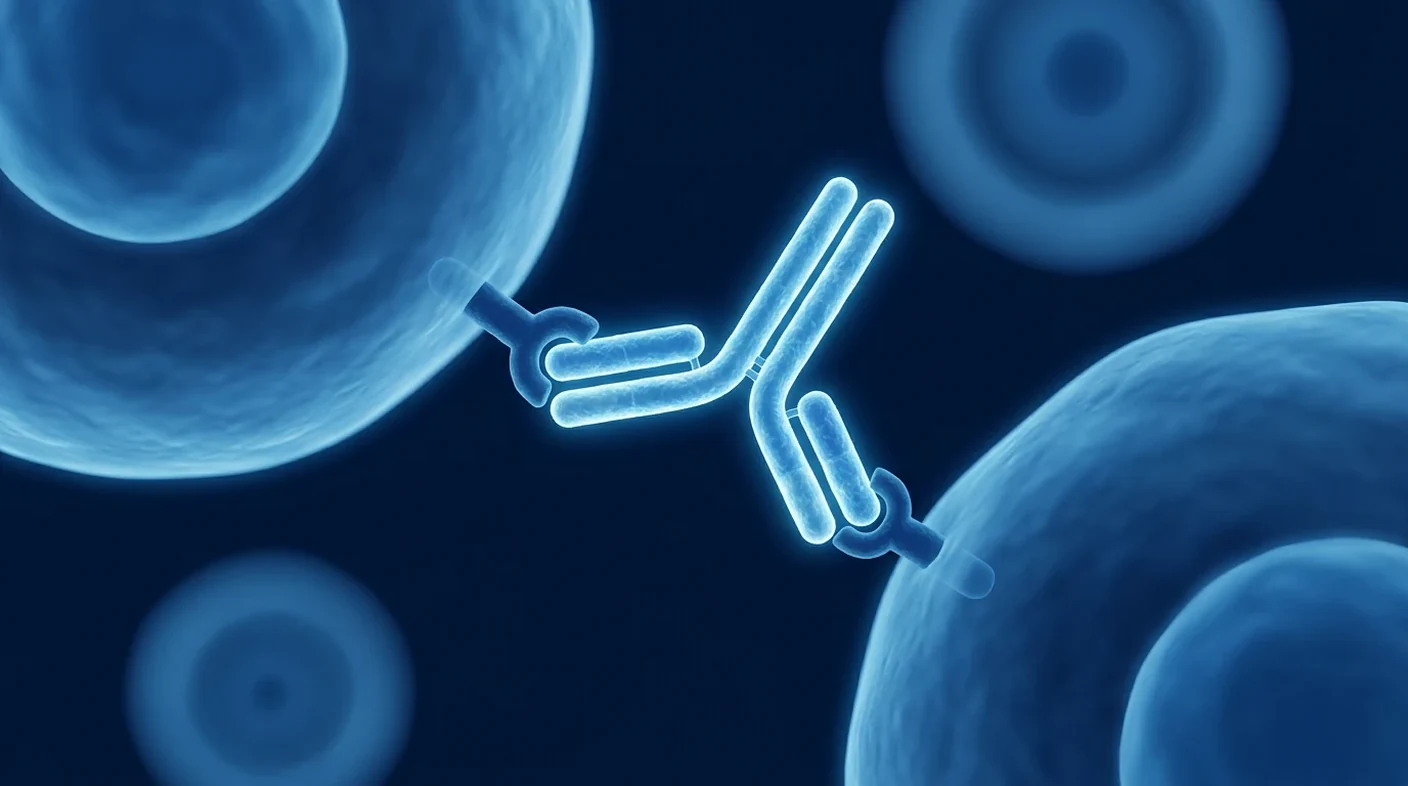
Monoclonal antibodies redirect NK cells through antibody-dependent cellular cytotoxicity (ADCC): the antibody binds a tumour antigen, its Fc tail engages CD16 on the NK cell, and the NK cell kills a target it would otherwise ignore. ADCC is one of the best-characterised mechanisms in NK biology and one of the reasons NK cells matter to the effectiveness of several already-approved antibodies [3].
The strongest clinical precedent for deliberately recruiting NK function is not a cell-therapy trial at all. In high-risk neuroblastoma, adding the anti-GD2 antibody dinutuximab with GM-CSF and interleukin-2 to standard maintenance therapy improved event-free and overall survival in a randomised trial [4]. That result validated the principle that antibody plus immune-effector support can change outcomes — although the effector cells there were the patient's own, not infused.
Extending that logic to adoptive transfer is biologically coherent and clinically unproven. Trials pairing infused NK cells with rituximab, trastuzumab, cetuximab, or anti-GD2 antibodies are ongoing across several centres, and reported series remain small and early phase. Two practical caveats matter for patients: CD16 is shed from the NK surface after activation, which blunts repeated ADCC, and antibody dosing schedules must be aligned with the window in which the transferred cells are actually present.
What do NK-cell engagers add beyond conventional antibodies?
NK-cell engagers are engineered multi-specific molecules that bind an activating NK receptor and a tumour antigen simultaneously, creating a forced synapse rather than relying on Fc engagement alone. Trifunctional NKp46-based engagers triggered NK-cell activity and controlled tumour growth in preclinical models more effectively than the corresponding antibodies [5].
The design space has expanded rapidly: bispecific and trispecific killer engagers, IL-15-armed constructs, and CD16-directed formats that resist receptor shedding are all in development, and reviews now describe them as a distinct next-generation class rather than antibody variants [6].
For a patient, the honest position is that engagers are a promising and largely early-phase category. Where they appear in a proposed protocol, the relevant questions are whether the specific molecule has published human data, whether it is being given under a registered trial, and who monitors for cytokine-mediated toxicity, since forced synapse formation can drive systemic cytokine release.
Can checkpoint inhibitors be combined with NK cell therapy?
Checkpoint blockade can be combined with NK-cell therapy, but the relevant checkpoints for NK cells are not identical to the PD-1/PD-L1 axis that dominates T-cell immunotherapy. NK cells are restrained primarily by inhibitory receptors that read HLA class I — including KIR and the HLA-E receptor NKG2A — so blocking those receptors is the more direct NK-focused strategy.
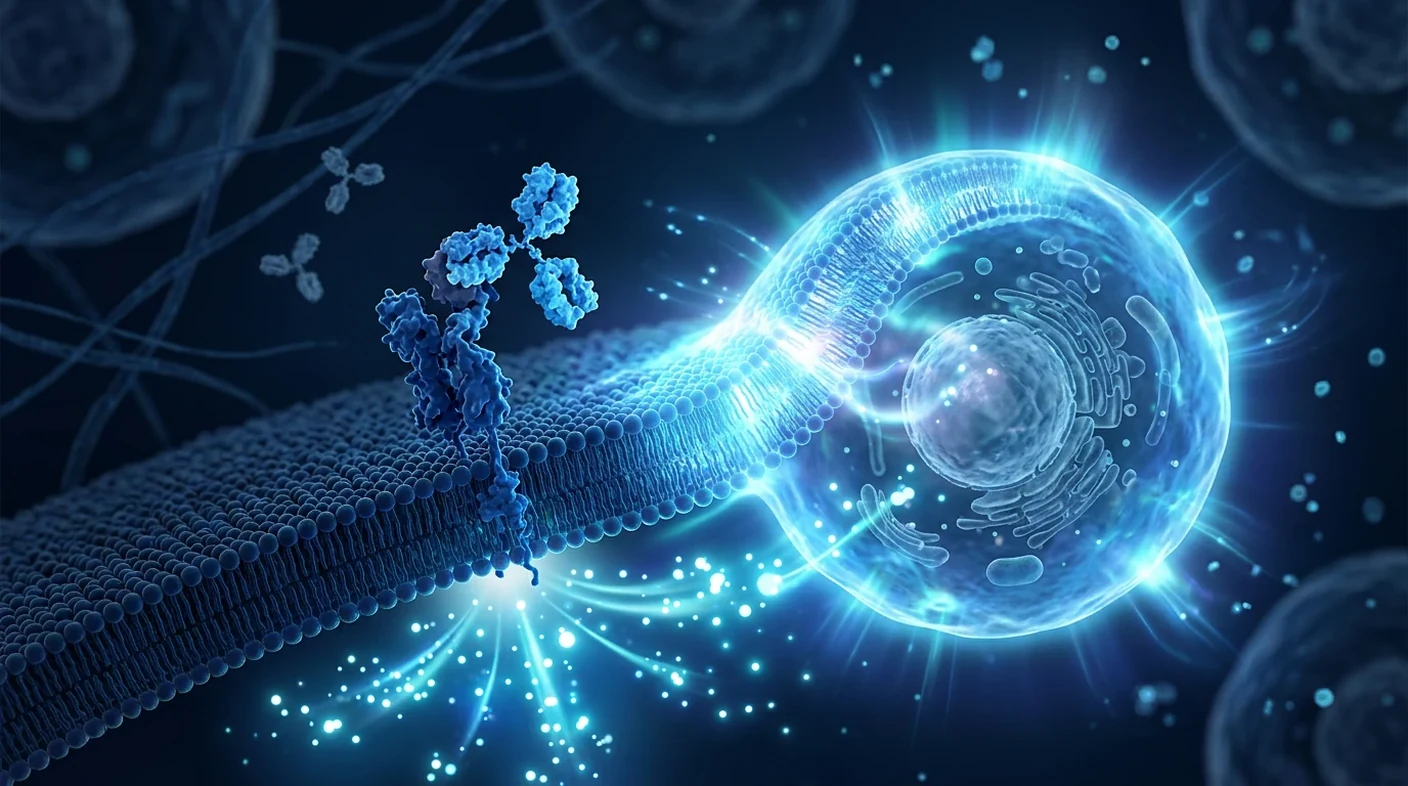
Anti-NKG2A antibody was shown to act as a checkpoint inhibitor that promotes anti-tumour immunity by unleashing both NK and CD8 T cells [7]. Blocking inhibitory KIR has also been tested clinically: the anti-KIR antibody IPH2101 was evaluated in a phase 1 trial in AML patients in complete remission, establishing tolerability and full KIR occupancy at defined doses, without demonstrating efficacy in that setting [8].
The same principle appears in donor selection rather than drug form. KIR-ligand mismatch between donor and recipient produced measurable alloreactivity and reduced relapse in mismatched haematopoietic transplantation — effectively a biological form of checkpoint release [16]. Gene editing takes the idea further: quadruple gene-engineered NK cells combining multi-antigen targeting with resistance to inhibitory signalling have been reported preclinically [17].
PD-1/PD-L1 inhibitors remain relevant in combination protocols, but usually because they act on the broader immune contexture, not because NK cells are the primary PD-1-expressing population. A programme that describes pembrolizumab or nivolumab as "activating your NK cells" is oversimplifying the immunology.
Cytokine support: IL-2, IL-15 and memory-like programming
Cytokines are the most consistently used NK-cell combination partner, because transferred NK cells do not persist without survival signals — and cytokines carry their own dose-limiting toxicity. Systemic interleukin-2 supports NK expansion but also expands regulatory T cells and causes fever, capillary leak, and hypotension at therapeutic doses.
An IL-2 diphtheria toxin fusion protein was used specifically to deplete regulatory T cells, improving NK-cell expansion and leukaemia clearance in a haploidentical NK trial [13]. Recombinant human IL-15 was then tested in a first-in-human study, which characterised NK and CD8 T-cell redistribution and activation along with dose-limiting cytokine toxicity [9], and a subsequent first-in-human trial combined rhIL-15 with haploidentical NK cells in relapsed or refractory AML [10].
A different approach programmes the cells before infusion. Brief exposure to IL-12, IL-15 and IL-18 generates cytokine-induced memory-like NK cells with enhanced and more durable responses against myeloid leukaemia [11]. This shifts the cytokine burden out of the patient and into the manufacturing process — a meaningful safety advantage when it is achievable, and a reason to ask what happened to the cells before they arrived. Our companion articles on NK cell manufacturing and quality control and NK cell sources cover that upstream process in detail.
Chemotherapy, targeted drugs and immunomodulators
Conventional cancer drugs enter NK combination protocols in two distinct roles: creating immunological space before infusion, and sensitising tumour cells to NK-mediated killing. These are different objectives with different risk profiles, and conflating them is a common source of confusion.
Lymphodepleting chemotherapy — usually fludarabine with cyclophosphamide — belongs to the first role. It improves NK persistence and accounts for a substantial share of the toxicity commonly attributed to "NK therapy" itself, as discussed in our NK cell therapy safety guide.
The second role has specific pharmacological evidence. Bortezomib treatment combined with regulatory T-cell depletion enhanced the antitumour effects of adoptively transferred NK cells in preclinical models, by sensitising tumour cells to NK-mediated apoptosis [18]. Lenalidomide's immunostimulatory effect on NK-cell function was shown to be dependent on the presence of T cells, which is a useful caution against assuming a drug acts on NK cells in isolation [19]. More broadly, certain cytotoxic agents and radiotherapy induce immunogenic cell death, changing how dying tumour cells are perceived by the immune system [20].
Important caveat: chemotherapy is also lymphotoxic. Timing determines whether a drug sensitises the tumour or destroys the cells that were just infused. Any credible combination protocol specifies the interval between agents and the reasoning behind it.
Combining NK cells with transplant and engineered cell products
The oldest and best-evidenced NK combination is not a drug pairing at all — it is NK alloreactivity within allogeneic haematopoietic stem cell transplantation. Donor NK alloreactivity in KIR-ligand-mismatched transplants reduced relapse and improved outcomes in acute myeloid leukaemia, establishing NK biology as clinically consequential well before adoptive NK products existed [16].
Engineered products layer combinations into the cell itself. Cord-blood-derived CD19 CAR-NK cells co-expressing IL-15 and a safety switch produced responses in CD19-positive lymphoid tumours without CRS or neurotoxicity at the doses studied [14], and a later phase 1/2 experience with allogeneic CD19 CAR-NK cells reported efficacy and examined determinants of response [15]. Both are best understood as internalised combinations: targeting, cytokine support, and a control mechanism built into one product. Our CAR-NK explainer covers that architecture.
What combination evidence actually exists today?
The evidence base is strongest for antibody-plus-endogenous-effector strategies in specific haematological and paediatric indications, and weakest for multi-agent combinations with infused NK cells in solid tumours. A realistic summary looks like this.
| Combination | Evidence maturity | Main caveat |
|---|---|---|
| Antibody + endogenous NK (ADCC) | Randomised data in defined indications [4] | Not the same as infused-NK data |
| Haplo NK + cytokine support | Multiple phase 1/2 trials [10][13] | Small, single-arm, cytokine toxicity |
| Memory-like NK programming | Early-phase clinical [11] | Mostly myeloid leukaemia to date |
| Inhibitory-receptor / NKG2A blockade | Phase 1 and translational [7][8] | Tolerability shown, efficacy unproven |
| NK engagers | Preclinical to early clinical [5][6] | Molecule-specific, cytokine risk |
| CAR-NK with built-in IL-15 | Phase 1/2 in B-cell malignancy [14][15] | Haematological targets, limited follow-up |
| Drug-induced tumour sensitisation | Largely preclinical [18][19] | Timing and lymphotoxicity unresolved |
Two structural weaknesses run through all of it. Single-arm designs cannot separate the contribution of each component, and heterogeneous products mean that results from one platform do not transfer to another.
How should patients in Bangkok evaluate a combination offer?
Patients considering NK-cell combination therapy in Bangkok or elsewhere should ask for the rationale, evidence, and monitoring plan for each individual component, not for the package as a whole. A combination is not automatically stronger than a single agent; it is automatically more complex.
- Which components are proposed, and what is the specific published rationale for each in my cancer type?
- Is this given under a registered clinical trial, and what is the registration number?
- What toxicities are expected from each component, and how do they interact?
- How is cytokine release syndrome graded and managed, and by which protocol [21]?
- What is the timing rationale between chemotherapy, antibody, cytokine, and cell infusion?
- Which guideline-recommended treatments continue in parallel, and who coordinates them?
- Which hospital provides intensive care escalation, and how far is it from the infusion site?
If a programme cannot answer these in writing, the appropriate conclusion is not that the therapy is worthless but that the specific offer has not been documented to a standard that supports an informed decision.
Frequently asked questions
In short: combining NK cells with antibodies, cytokines, or receptor blockade has a coherent biological rationale and a thin clinical evidence base outside specific haematological settings, and every added component adds risk as well as potential benefit.
Is combination NK cell therapy more effective than NK cells alone?
It has stronger biological rationale, but that is not the same as demonstrated superiority. Very few trials have compared NK monotherapy directly against the same product in combination, so claims of greater effectiveness generally rest on mechanism and cross-trial comparison rather than randomised evidence.
Can NK cell therapy be combined with immunotherapy such as pembrolizumab?
Such combinations are being studied. However, the checkpoints most directly relevant to NK cells are inhibitory receptors like KIR and NKG2A rather than PD-1, so a PD-1 inhibitor should not be described as an NK-cell activator [7].
Does chemotherapy destroy infused NK cells?
It can, which is why timing is central. Lymphodepletion before infusion is intended to help the cells persist, whereas chemotherapy given during the window when transferred cells are active may reduce them. The interval should be specified in the protocol.
Are NK combinations safer than CAR-T combinations?
Early-phase NK reports have generally described lower rates of severe cytokine release syndrome and severe neurotoxicity than autologous CAR-T, but combinations reintroduce risk through cytokines, antibodies, and chemotherapy. Safety is product-and-protocol-specific, not category-wide.
Can NK cell therapy be combined with radiotherapy?
It is under investigation. The rationale is that radiotherapy can induce immunogenic cell death and alter tumour antigen presentation [20], but sequencing, dose, and field size are unresolved variables in human studies.
Are these combinations approved treatments?
For most cancer indications they are not. Outside specific transplant contexts and approved antibody regimens, NK-cell combinations are investigational and should be accessed through registered trials or regulated pathways.
Limitations and medical disclaimer
The limitations here are structural, not incidental. Most NK combination data come from small single-arm early-phase studies with short follow-up; products differ in source, activation, and engineering; combination designs make attribution of benefit to any one component impossible; preclinical sensitisation results frequently fail to reproduce in humans; and solid-tumour results remain markedly weaker than haematological ones.
This article is educational. It does not recommend any NK-cell product or combination, does not describe a VELAR treatment protocol, and does not replace individual oncology advice. The therapies discussed are largely investigational. Patients should not delay or substitute guideline-recommended cancer diagnosis and treatment in order to pursue an unverified cell therapy, and should discuss eligibility, alternatives, monitoring, and documented risks with a qualified oncologist.
References
- Shimasaki N, Jain A, Campana D. NK cells for cancer immunotherapy. Nature Reviews Drug Discovery. 2020;19:200–218. doi:10.1038/s41573-019-0052-1 ↩
- Myers JA, Miller JS. Exploring the NK cell platform for cancer immunotherapy. Nature Reviews Clinical Oncology. 2021;18:85–100. doi:10.1038/s41571-020-0426-7 ↩
- Wang W, Erbe AK, Hank JA, Morris ZS, Sondel PM. NK cell-mediated antibody-dependent cellular cytotoxicity in cancer immunotherapy. Frontiers in Immunology. 2015;6:368. doi:10.3389/fimmu.2015.00368 ↩
- Yu AL, Gilman AL, Ozkaynak MF, et al. Anti-GD2 antibody with GM-CSF, interleukin-2, and isotretinoin for neuroblastoma. New England Journal of Medicine. 2010;363:1324–1334. doi:10.1056/NEJMoa0911123 ↩
- Gauthier L, Morel A, Anceriz N, et al. Multifunctional natural killer cell engagers targeting NKp46 trigger protective tumor immunity. Cell. 2019;177:1701–1713. doi:10.1016/j.cell.2019.04.041 ↩
- Demaria O, Gauthier L, Debroas G, Vivier E. Natural killer cell engagers in cancer immunotherapy: next generation of immuno-oncology treatments. European Journal of Immunology. 2021;51:1934–1942. doi:10.1002/eji.202048953 ↩
- André P, Denis C, Soulas C, et al. Anti-NKG2A mAb is a checkpoint inhibitor that promotes anti-tumor immunity by unleashing both T and NK cells. Cell. 2018;175:1731–1743. doi:10.1016/j.cell.2018.10.014 ↩
- Vey N, Bourhis JH, Boissel N, et al. A phase 1 trial of the anti-inhibitory KIR mAb IPH2101 for AML in complete remission. Blood. 2012;120:4317–4323. doi:10.1182/blood-2012-06-437558 ↩
- Conlon KC, Lugli E, Welles HC, et al. Redistribution, hyperproliferation, activation of natural killer cells and CD8 T cells, and cytokine production during first-in-human clinical trial of recombinant human interleukin-15. Journal of Clinical Oncology. 2015;33:74–82. doi:10.1200/JCO.2014.57.3329 ↩
- Cooley S, He F, Bachanova V, et al. First-in-human trial of rhIL-15 and haploidentical natural killer cell therapy for advanced acute myeloid leukemia. Blood Advances. 2019;3:1970–1980. doi:10.1182/bloodadvances.2018028332 ↩
- Romee R, Rosario M, Berrien-Elliott MM, et al. Cytokine-induced memory-like natural killer cells exhibit enhanced responses against myeloid leukemia. Science Translational Medicine. 2016;8:357ra123. doi:10.1126/scitranslmed.aaf2341 ↩
- Miller JS, Soignier Y, Panoskaltsis-Mortari A, et al. Successful adoptive transfer and in vivo expansion of human haploidentical NK cells in patients with cancer. Blood. 2005;105:3051–3057. doi:10.1182/blood-2004-07-2974 ↩
- Bachanova V, Cooley S, DeFor TE, et al. Clearance of acute myeloid leukemia by haploidentical natural killer cells is improved using IL-2 diphtheria toxin fusion protein. Blood. 2014;123:3855–3863. doi:10.1182/blood-2013-10-532531 ↩
- Liu E, Marin D, Banerjee P, et al. Use of CAR-transduced natural killer cells in CD19-positive lymphoid tumors. New England Journal of Medicine. 2020;382:545–553. doi:10.1056/NEJMoa1910607 ↩
- Marin D, Li Y, Basar R, et al. Safety, efficacy and determinants of response of allogeneic CD19-specific CAR-NK cells in CD19+ B cell tumors: a phase 1/2 trial. Nature Medicine. 2024;30:772–784. doi:10.1038/s41591-023-02785-8 ↩
- Ruggeri L, Capanni M, Urbani E, et al. Effectiveness of donor natural killer cell alloreactivity in mismatched hematopoietic transplants. Science. 2002;295:2097–2100. doi:10.1126/science.1068440 ↩
- Cichocki F, Bjordahl R, Goodridge JP, et al. Quadruple gene-engineered natural killer cells enable multi-antigen targeting for durable antitumor activity against multiple myeloma. Nature Communications. 2022;13:7341. doi:10.1038/s41467-022-35127-2 ↩
- Lundqvist A, Yokoyama H, Smith A, Berg M, Childs R. Bortezomib treatment and regulatory T-cell depletion enhance the antitumor effects of adoptively infused NK cells. Blood. 2009;113:6120–6127. doi:10.1182/blood-2008-11-190421 ↩
- Hsu AK, Quach H, Tai T, et al. The immunostimulatory effect of lenalidomide on NK-cell function is profoundly inhibited by concurrent dexamethasone therapy. Blood. 2011;117:1605–1613. doi:10.1182/blood-2010-04-278432 ↩
- Galluzzi L, Buqué A, Kepp O, Zitvogel L, Kroemer G. Immunogenic cell death in cancer and infectious disease. Nature Reviews Immunology. 2017;17:97–111. doi:10.1038/nri.2016.107 ↩
- Lee DW, Santomasso BD, Locke FL, et al. ASTCT consensus grading for cytokine release syndrome and neurologic toxicity associated with immune effector cells. Biology of Blood and Marrow Transplantation. 2019;25:625–638. doi:10.1016/j.bbmt.2018.12.758 ↩
NK 细胞联合治疗是指把输注的自然杀伤细胞与抗体、免疫检查点阻断、细胞因子或常规抗癌药物配合使用,让每一种成分弥补细胞单独使用时的某一项弱点。目前肿瘤领域几乎所有严肃的 NK 细胞项目都是联合方案,因为单药方案在实体瘤中的结果一直有限 [1][2]。
NK 细胞能力的边界在哪里。输注的 NK 细胞确实能够进入血液循环,但三个问题反复出现:存续时间通常只有数天到数周而非数月;在肿瘤微环境中受到抑制;以及需要识别信号,而许多实体瘤会主动隐藏这些信号。
联合方案的逻辑正是针对这三个缺口。抗体提供识别信号;细胞因子提供存活与增殖支持;检查点或受体阻断解除抑制性刹车;化疗与靶向药物则改变肿瘤本身,使其能够被免疫效应细胞“看见”。
这些都还不是成熟的临床常规。除特定血液病移植情境外,用于癌症的 NK 细胞联合方案均在注册临床试验框架内研究。本文说明已发表的证据、仍不确定之处,以及曼谷的患者在接受任何联合方案前应当提出的问题。
联合方案能证明什么、不能证明什么
在 NK 细胞输注基础上增加第二种药物提高了生物学合理性,同时也增加了毒性、成本以及小样本单臂试验中的变量数量。一个含四种成分、仅治疗八名患者的方案,无法证明其中任何单一成分产生了所观察到的效果。
为什么要把 NK 细胞与其他治疗联合使用?
之所以联合,是因为过继性 NK 细胞单药治疗表现出的存续时间有限、单药活性有限,在实体瘤中尤其明显。早期单倍体 NK 试验确立了可行性与安全性,同时也显示输注细胞只有在清淋预处理和细胞因子信号支持下才会扩增 [12]。
三个生物学限制驱动着联合方案设计。第一是存活:NK 细胞依赖 IL-15 家族信号,缺乏时会迅速衰减。第二是识别:NK 细胞的杀伤需要活化配体相对于抑制性 HLA I 类信号占优,而肿瘤可以改变这一平衡。第三是微环境:缺氧、腺苷、TGF-beta 与调节性 T 细胞会在局部抑制 NK 功能,即使外周计数看起来正常 [1]。
因此联合方案可归为若干可辨识的类别:基于抗体的靶向、衔接子分子、抑制性受体与检查点阻断、细胞因子支持、药物诱导的肿瘤致敏,以及与移植或其他细胞产品的配合。以下逐一说明。
抗体如何让 NK 细胞发挥更好作用?
单克隆抗体通过抗体依赖性细胞介导的细胞毒作用(ADCC)重新定向 NK 细胞:抗体结合肿瘤抗原,其 Fc 段结合 NK 细胞上的 CD16,NK 细胞随即杀伤原本会被忽略的靶细胞。ADCC 是 NK 生物学中研究最充分的机制之一,也是若干已获批抗体疗效依赖 NK 细胞的原因 [3]。
刻意调动 NK 功能的最有力临床先例并非细胞治疗试验。在高危神经母细胞瘤中,将抗 GD2 抗体 dinutuximab 与 GM-CSF 和白介素-2 加入标准维持治疗,在随机试验中改善了无事件生存与总生存 [4]。该结果验证了抗体加免疫效应支持可以改变结局这一原则——不过其中的效应细胞是患者自身的,而非输注而来。
把这一逻辑延伸到过继输注在生物学上合理,但临床上尚未证实。将输注 NK 细胞与利妥昔单抗、曲妥珠单抗、西妥昔单抗或抗 GD2 抗体配合的试验正在多个中心进行,已报告的病例系列仍属小样本、早期阶段。两个实际注意点与患者相关:CD16 在活化后会从 NK 表面脱落,削弱重复 ADCC;抗体给药时间必须与输注细胞实际存在的窗口对齐。
NK 细胞衔接子比常规抗体多提供什么?
NK 细胞衔接子是经工程改造的多特异性分子,可同时结合一个 NK 活化受体和一个肿瘤抗原,从而强制形成免疫突触,而不仅依赖 Fc 结合。在临床前模型中,基于 NKp46 的三功能衔接子触发 NK 活性并控制肿瘤生长的效果优于相应抗体 [5]。
该设计空间迅速扩展:双特异性与三特异性杀伤细胞衔接子、携带 IL-15 的构建体,以及抗 CD16 脱落的形式均在开发中,综述已将其描述为一个独立的新一代类别,而非抗体的变体 [6]。
对患者而言,诚实的表述是:衔接子是一个有前景但大体处于早期阶段的类别。若某方案中出现衔接子,应询问该具体分子是否有已发表的人体数据、是否在注册试验中给药,以及由谁监测细胞因子介导的毒性,因为强制形成突触可能驱动全身性细胞因子释放。
免疫检查点抑制剂可以与 NK 细胞治疗联合吗?
检查点阻断可以与 NK 细胞治疗联合,但对 NK 细胞真正相关的检查点,并不等同于主导 T 细胞免疫治疗的 PD-1/PD-L1 轴。NK 细胞主要受读取 HLA I 类分子的抑制性受体(包括 KIR 和识别 HLA-E 的 NKG2A)约束,因此阻断这些受体是更直接的 NK 导向策略。
研究显示,抗 NKG2A 抗体是一种检查点抑制剂,可同时解除 NK 细胞与 CD8 T 细胞的抑制而促进抗肿瘤免疫 [7]。阻断抑制性 KIR 也已进入临床:抗 KIR 抗体 IPH2101 在完全缓解期急性髓系白血病患者中开展了 1 期试验,确立了耐受性与特定剂量下的 KIR 完全占位,但未在该情境中证明疗效 [8]。
同一原理也体现在供者选择而非药物形式上。供受者 KIR 配体错配在错配造血干细胞移植中产生了可测量的同种反应性并降低复发——实际上是一种生物学形式的检查点解除 [16]。基因编辑进一步推进了这一思路:结合多抗原靶向与抗抑制信号的四基因工程 NK 细胞已有临床前报告 [17]。
PD-1/PD-L1 抑制剂在联合方案中仍然相关,但通常是因为它们作用于更广泛的免疫环境,而非因为 NK 细胞是主要表达 PD-1 的群体。把帕博利珠单抗或纳武利尤单抗描述为“激活您的 NK 细胞”,是对免疫学的过度简化。
细胞因子支持:IL-2、IL-15 与记忆样编程
细胞因子是使用最一致的 NK 联合搭档,因为输注的 NK 细胞没有存活信号就无法持续——而细胞因子本身具有剂量限制性毒性。全身性白介素-2 支持 NK 扩增,但同时扩增调节性 T 细胞,并在治疗剂量下引起发热、毛细血管渗漏与低血压。
一项单倍体 NK 试验使用 IL-2 白喉毒素融合蛋白专门清除调节性 T 细胞,从而改善了 NK 扩增与白血病清除 [13]。随后重组人 IL-15 进行了首次人体研究,描述了 NK 与 CD8 T 细胞的再分布与活化,同时出现剂量限制性细胞因子毒性 [9];此后又有一项首次人体试验将 rhIL-15 与单倍体 NK 细胞联合用于复发难治性急性髓系白血病 [10]。
另一条路径是在输注前对细胞进行编程。短暂暴露于 IL-12、IL-15 与 IL-18 可生成细胞因子诱导的记忆样 NK 细胞,对髓系白血病表现出更强、更持久的反应 [11]。这把细胞因子负担从患者体内转移到制备过程——在可行时是有意义的安全优势,也是应当询问细胞在到达之前经历了什么的理由。相关内容可参阅我们的 NK 细胞制造与质量控制 与 NK 细胞来源 两篇文章。
化疗、靶向药物与免疫调节剂
常规抗癌药物在 NK 联合方案中承担两种截然不同的角色:在输注前创造免疫空间,以及使肿瘤细胞对 NK 杀伤更敏感。这是两个目标不同、风险特征不同的用途,混为一谈是常见的误解来源。
清淋化疗——通常为氟达拉滨联合环磷酰胺——属于第一种角色。它改善 NK 存续,同时也占据了通常被归因于“NK 治疗”本身的相当一部分毒性,详见我们的 NK 细胞治疗安全性指南。
第二种角色有具体的药理学证据。在临床前模型中,硼替佐米治疗联合调节性 T 细胞清除,通过使肿瘤细胞对 NK 介导的凋亡更敏感,增强了过继输注 NK 细胞的抗肿瘤作用 [18]。来那度胺对 NK 功能的免疫刺激作用被证明依赖于 T 细胞的存在,这提醒我们不应假设某种药物是孤立地作用于 NK 细胞 [19]。更广义地说,某些细胞毒药物与放疗可诱导免疫原性细胞死亡,改变免疫系统对垂死肿瘤细胞的识别方式 [20]。
重要提醒:化疗同样具有淋巴毒性。给药时机决定了一种药物是使肿瘤致敏,还是摧毁刚刚输注的细胞。任何可信的联合方案都会明确各药物之间的间隔及其依据。
NK 细胞与移植及工程细胞产品的联合
最早也是证据最充分的 NK 联合并非药物配伍,而是异基因造血干细胞移植中的 NK 同种反应性。在 KIR 配体错配的移植中,供者 NK 同种反应性降低了急性髓系白血病的复发并改善结局,早在过继性 NK 产品出现之前就确立了 NK 生物学的临床意义 [16]。
工程化产品则把联合内置于细胞本身。共表达 IL-15 与安全开关的脐血来源 CD19 CAR-NK 细胞在 CD19 阳性淋巴系肿瘤中产生了缓解,且在所研究剂量下未观察到细胞因子释放综合征或神经毒性 [14];随后一项异基因 CD19 CAR-NK 细胞的 1/2 期研究报告了疗效并分析了反应决定因素 [15]。两者都可理解为内化的联合:靶向、细胞因子支持与控制机制集成于一个产品。相关架构见我们的 CAR-NK 细胞治疗解析。
目前究竟存在哪些联合证据?
证据在特定血液病与儿科适应证中的“抗体加内源性效应细胞”策略上最强,而在实体瘤中输注 NK 细胞的多药联合上最弱。可以这样如实概括。
| 联合方式 | 证据成熟度 | 主要保留意见 |
|---|---|---|
| 抗体 + 内源性 NK(ADCC) | 特定适应证的随机数据 [4] | 与输注 NK 的数据不等同 |
| 单倍体 NK + 细胞因子支持 | 多项 1/2 期试验 [10][13] | 样本小、单臂、细胞因子毒性 |
| 记忆样 NK 编程 | 早期临床 [11] | 迄今多为髓系白血病 |
| 抑制性受体 / NKG2A 阻断 | 1 期与转化研究 [7][8] | 已显示耐受性,疗效未证实 |
| NK 衔接子 | 临床前至早期临床 [5][6] | 分子特异,细胞因子风险 |
| 内置 IL-15 的 CAR-NK | B 细胞恶性肿瘤 1/2 期 [14][15] | 血液系统靶点,随访有限 |
| 药物诱导肿瘤致敏 | 大体属临床前 [18][19] | 时机与淋巴毒性未解决 |
其中贯穿两个结构性弱点:单臂设计无法区分各成分的贡献;产品高度异质,一个平台的结果无法迁移到另一个平台。
曼谷的患者应如何评估一份联合方案?
在曼谷或其他地方考虑 NK 细胞联合治疗的患者,应针对每一个单独成分索取其依据、证据与监测计划,而不是笼统看待整个组合。联合并不自动比单药更强,但一定更复杂。
- 方案包含哪些成分?针对我的癌症类型,每一成分有哪些具体的已发表依据?
- 是否在注册临床试验下给予?注册号是多少?
- 每一成分预期有哪些毒性?它们之间如何相互作用?
- 细胞因子释放综合征如何分级与处理?依据哪套方案 [21]?
- 化疗、抗体、细胞因子与细胞输注之间的时间安排依据是什么?
- 哪些指南推荐的治疗会并行继续?由谁负责协调?
- 哪家医院提供重症监护升级?距离输注地点多远?
如果一个项目无法以书面形式回答这些问题,适当的结论不是该疗法毫无价值,而是这份具体方案尚未被记录到足以支持知情决定的标准。
常见问题
简言之:把 NK 细胞与抗体、细胞因子或受体阻断联合具有连贯的生物学依据,但在特定血液病情境之外临床证据仍然薄弱,而且每增加一个成分都会同时增加风险与潜在获益。
联合 NK 细胞治疗比单用 NK 细胞更有效吗?
它的生物学依据更强,但这与已证明的优效性不同。极少有试验直接比较同一产品的单药与联合方案,因此“更有效”的说法通常建立在机制推理和跨试验比较之上,而非随机证据。
NK 细胞治疗可以与帕博利珠单抗等免疫治疗联合吗?
此类联合正在研究中。但对 NK 细胞最直接相关的检查点是 KIR 与 NKG2A 等抑制性受体,而非 PD-1,因此不应把 PD-1 抑制剂描述为 NK 细胞激活剂 [7]。
化疗会破坏输注的 NK 细胞吗?
有可能,因此时机至关重要。输注前的清淋是为了帮助细胞存续,而在输注细胞活跃窗口期给予化疗则可能减少它们。方案中应明确规定间隔时间。
NK 联合方案比 CAR-T 联合方案更安全吗?
早期 NK 报告普遍描述重度细胞因子释放综合征与重度神经毒性的发生率低于自体 CAR-T,但联合方案通过细胞因子、抗体与化疗重新引入风险。安全性取决于具体产品与方案,而非整个类别。
NK 细胞治疗可以与放疗联合吗?
正在研究中。其依据是放疗可诱导免疫原性细胞死亡并改变肿瘤抗原呈递 [20],但在人体研究中,顺序、剂量与照射范围仍是未解决的变量。
这些联合方案已获批准了吗?
对多数癌症适应证而言尚未获批。除特定移植情境与已获批的抗体方案外,NK 细胞联合方案仍属研究性,应通过注册试验或受监管途径获得。
局限性与医学免责声明
这里的局限是结构性的,而非偶然的。多数 NK 联合数据来自随访较短的小样本单臂早期试验;产品在来源、活化与工程改造上各不相同;联合设计使得无法把获益归因于任何单一成分;临床前致敏结果常常无法在人体中重现;实体瘤结果明显弱于血液系统肿瘤。
本文仅供教育之用。它不推荐任何 NK 细胞产品或联合方案,不描述 VELAR 的治疗方案,也不替代个体化的肿瘤科意见。文中讨论的疗法大多仍属研究性。患者不应为追求未经验证的细胞疗法而延误或替代指南推荐的癌症诊断与治疗,并应与合格的肿瘤科医生讨论适应性、替代方案、监测安排与已记录的风险。
References
- Shimasaki N, Jain A, Campana D. NK cells for cancer immunotherapy. Nature Reviews Drug Discovery. 2020;19:200–218. doi:10.1038/s41573-019-0052-1
- Myers JA, Miller JS. Exploring the NK cell platform for cancer immunotherapy. Nature Reviews Clinical Oncology. 2021;18:85–100. doi:10.1038/s41571-020-0426-7
- Wang W, Erbe AK, Hank JA, Morris ZS, Sondel PM. NK cell-mediated antibody-dependent cellular cytotoxicity in cancer immunotherapy. Frontiers in Immunology. 2015;6:368. doi:10.3389/fimmu.2015.00368
- Yu AL, Gilman AL, Ozkaynak MF, et al. Anti-GD2 antibody with GM-CSF, interleukin-2, and isotretinoin for neuroblastoma. New England Journal of Medicine. 2010;363:1324–1334. doi:10.1056/NEJMoa0911123
- Gauthier L, Morel A, Anceriz N, et al. Multifunctional natural killer cell engagers targeting NKp46 trigger protective tumor immunity. Cell. 2019;177:1701–1713. doi:10.1016/j.cell.2019.04.041
- Demaria O, Gauthier L, Debroas G, Vivier E. Natural killer cell engagers in cancer immunotherapy: next generation of immuno-oncology treatments. European Journal of Immunology. 2021;51:1934–1942. doi:10.1002/eji.202048953
- André P, Denis C, Soulas C, et al. Anti-NKG2A mAb is a checkpoint inhibitor that promotes anti-tumor immunity by unleashing both T and NK cells. Cell. 2018;175:1731–1743. doi:10.1016/j.cell.2018.10.014
- Vey N, Bourhis JH, Boissel N, et al. A phase 1 trial of the anti-inhibitory KIR mAb IPH2101 for AML in complete remission. Blood. 2012;120:4317–4323. doi:10.1182/blood-2012-06-437558
- Conlon KC, Lugli E, Welles HC, et al. Redistribution, hyperproliferation, activation of natural killer cells and CD8 T cells, and cytokine production during first-in-human clinical trial of recombinant human interleukin-15. Journal of Clinical Oncology. 2015;33:74–82. doi:10.1200/JCO.2014.57.3329
- Cooley S, He F, Bachanova V, et al. First-in-human trial of rhIL-15 and haploidentical natural killer cell therapy for advanced acute myeloid leukemia. Blood Advances. 2019;3:1970–1980. doi:10.1182/bloodadvances.2018028332
- Romee R, Rosario M, Berrien-Elliott MM, et al. Cytokine-induced memory-like natural killer cells exhibit enhanced responses against myeloid leukemia. Science Translational Medicine. 2016;8:357ra123. doi:10.1126/scitranslmed.aaf2341
- Miller JS, Soignier Y, Panoskaltsis-Mortari A, et al. Successful adoptive transfer and in vivo expansion of human haploidentical NK cells in patients with cancer. Blood. 2005;105:3051–3057. doi:10.1182/blood-2004-07-2974
- Bachanova V, Cooley S, DeFor TE, et al. Clearance of acute myeloid leukemia by haploidentical natural killer cells is improved using IL-2 diphtheria toxin fusion protein. Blood. 2014;123:3855–3863. doi:10.1182/blood-2013-10-532531
- Liu E, Marin D, Banerjee P, et al. Use of CAR-transduced natural killer cells in CD19-positive lymphoid tumors. New England Journal of Medicine. 2020;382:545–553. doi:10.1056/NEJMoa1910607
- Marin D, Li Y, Basar R, et al. Safety, efficacy and determinants of response of allogeneic CD19-specific CAR-NK cells in CD19+ B cell tumors: a phase 1/2 trial. Nature Medicine. 2024;30:772–784. doi:10.1038/s41591-023-02785-8
- Ruggeri L, Capanni M, Urbani E, et al. Effectiveness of donor natural killer cell alloreactivity in mismatched hematopoietic transplants. Science. 2002;295:2097–2100. doi:10.1126/science.1068440
- Cichocki F, Bjordahl R, Goodridge JP, et al. Quadruple gene-engineered natural killer cells enable multi-antigen targeting for durable antitumor activity against multiple myeloma. Nature Communications. 2022;13:7341. doi:10.1038/s41467-022-35127-2
- Lundqvist A, Yokoyama H, Smith A, Berg M, Childs R. Bortezomib treatment and regulatory T-cell depletion enhance the antitumor effects of adoptively infused NK cells. Blood. 2009;113:6120–6127. doi:10.1182/blood-2008-11-190421
- Hsu AK, Quach H, Tai T, et al. The immunostimulatory effect of lenalidomide on NK-cell function is profoundly inhibited by concurrent dexamethasone therapy. Blood. 2011;117:1605–1613. doi:10.1182/blood-2010-04-278432
- Galluzzi L, Buqué A, Kepp O, Zitvogel L, Kroemer G. Immunogenic cell death in cancer and infectious disease. Nature Reviews Immunology. 2017;17:97–111. doi:10.1038/nri.2016.107
- Lee DW, Santomasso BD, Locke FL, et al. ASTCT consensus grading for cytokine release syndrome and neurologic toxicity associated with immune effector cells. Biology of Blood and Marrow Transplantation. 2019;25:625–638. doi:10.1016/j.bbmt.2018.12.758
العلاجات التوليفية بالخلايا القاتلة الطبيعية هي بروتوكولات تجمع الخلايا القاتلة الطبيعية المنقولة مع أجسام مضادة أو حصار نقاط التفتيش أو سيتوكينات أو أدوية سرطان تقليدية، بحيث يعوّض كل مكوّن ضعفاً محدداً في الخلايا وحدها. ومعظم البرامج الجدّية للخلايا القاتلة الطبيعية في علم الأورام أصبحت توليفية، لأن نتائج العلاج الأحادي في الأورام الصلبة كانت متواضعة [1][2].
حيث تنتهي قدرة الخلايا القاتلة الطبيعية. تصل الخلايا المنقولة إلى الدورة الدموية بشكل موثوق، لكن ثلاث مشكلات تتكرر في التجارب: بقاؤها أياماً إلى أسابيع قليلة بدلاً من أشهر، وكبتها داخل البيئة المجهرية للورم، وحاجتها إلى إشارات تعرّف تخفيها كثير من الأورام الصلبة بشكل نشط.
منطق التوليف يعالج هذه الفجوات الثلاث. الأجسام المضادة توفر إشارة التعرّف، والسيتوكينات توفر البقاء والتكاثر، وحصار نقاط التفتيش أو المستقبلات يرفع مكابح الكبت، والعلاج الكيميائي والأدوية الموجهة تغيّر الورم نفسه ليصبح مرئياً للخلايا المؤثرة أصلاً.
لا شيء من هذا ممارسة سريرية مستقرة. فخارج سياقات زرع النخاع المحددة، تُدرس التوليفات الخلوية القاتلة الطبيعية للسرطان داخل تجارب سريرية مسجلة. يوضح هذا المقال ما نُشر فعلاً، وما يبقى غير مؤكد، والأسئلة التي ينبغي لمريض في بانكوك طرحها قبل قبول أي عرض توليفي.
ما يثبته التوليف وما لا يثبته
إضافة عامل ثانٍ إلى تسريب الخلايا القاتلة الطبيعية ترفع المعقولية الحيوية، وترفع أيضاً السمية والتكلفة وعدد المتغيرات في تجربة صغيرة أحادية الذراع. وبروتوكول بأربعة مكونات وثمانية مرضى معالجين لا يمكنه إثبات أن مكوناً واحداً بعينه أنتج الأثر الملاحظ.
لماذا تُدمج الخلايا القاتلة الطبيعية مع علاجات أخرى؟
تُدمج الخلايا القاتلة الطبيعية مع عوامل أخرى لأن العلاج الأحادي بالنقل التبنّي أظهر بقاءً محدوداً ونشاطاً أحادياً محدوداً، خصوصاً في الأورام الصلبة. فقد أثبتت التجارب المبكرة للخلايا نصف المتطابقة الجدوى والسلامة، وأظهرت كذلك أن الخلايا المسرّبة لا تتكاثر إلا بدعم من الاستنزاف اللمفي وإشارات السيتوكين [12].
ثلاثة قيود حيوية تحكم تصميم التوليفات. أولاً البقاء: تعتمد هذه الخلايا على إشارات عائلة IL-15 وتتراجع سريعاً بدونها. ثانياً التعرّف: تتطلب السمية الخلوية توازناً يرجّح الربائط المفعِّلة على إشارات HLA من الصنف الأول الكابتة، والورم قادر على إزاحة هذا التوازن. ثالثاً البيئة المجهرية: نقص الأكسجين والأدينوزين وTGF-beta والخلايا التائية التنظيمية تكبت الوظيفة موضعياً حتى عندما تبدو التعدادات الدائرة كافية [1].
ولذلك تنتظم التوليفات في عائلات واضحة: الاستهداف بالأجسام المضادة، وجزيئات الربط، وحصار المستقبلات الكابتة ونقاط التفتيش، والدعم بالسيتوكين، والتحسيس الدوائي للورم، والاقتران بالزرع أو بمنتجات خلوية أخرى. ويتناول ما يلي كل عائلة بدورها.
كيف تجعل الأجسام المضادة الخلايا القاتلة الطبيعية أكثر فعالية؟
تعيد الأجسام المضادة وحيدة النسيلة توجيه الخلايا القاتلة الطبيعية عبر السمية الخلوية المعتمدة على الأجسام المضادة (ADCC): يرتبط الجسم المضاد بمستضد ورمي، ويرتبط ذيله Fc بمستقبل CD16 على الخلية، فتقتل الخلية هدفاً كانت ستتجاهله. وADCC من أفضل الميكانيزمات توصيفاً في هذا المجال، وأحد أسباب أهمية هذه الخلايا لفعالية عدة أجسام مضادة معتمدة [3].
أقوى سابقة سريرية لاستدعاء وظيفة هذه الخلايا عن قصد ليست تجربة علاج خلوي أصلاً. ففي أورام الخلايا العصبية الصمّاء عالية الخطورة، أدت إضافة الجسم المضاد dinutuximab المضاد لـ GD2 مع GM-CSF والإنترلوكين-2 إلى علاج الصيانة القياسي إلى تحسين البقاء الخالي من الأحداث والبقاء الكلي في تجربة معشّاة [4]. وقد أثبتت هذه النتيجة مبدأ أن الجسم المضاد مع دعم الخلايا المؤثرة يمكن أن يغيّر النتائج — مع أن الخلايا المؤثرة هناك كانت خلايا المريض نفسه لا خلايا مسرّبة.
وتوسيع هذا المنطق إلى النقل التبنّي متماسك حيوياً وغير مثبت سريرياً. فالتجارب التي تقرن الخلايا المسرّبة بريتوكسيماب أو تراستوزوماب أو سيتوكسيماب أو أجسام مضادة لـ GD2 جارية في عدة مراكز، والسلاسل المنشورة تبقى صغيرة ومبكرة الطور. وثمة تحفظان عمليان يهمّان المريض: يُنزع CD16 من سطح الخلية بعد التفعيل، ما يضعف تكرار ADCC؛ وينبغي مواءمة جدول جرعات الجسم المضاد مع النافذة التي تكون فيها الخلايا المنقولة موجودة فعلاً.
ما تضيفه جزيئات ربط الخلايا القاتلة الطبيعية فوق الأجسام المضادة التقليدية؟
جزيئات الربط هي جزيئات متعددة النوعية مهندسة ترتبط بمستقبل مفعِّل وبمستضد ورمي في الوقت نفسه، فتفرض تشكّل مشبك مناعي بدل الاعتماد على ارتباط Fc وحده. وقد أثارت جزيئات ربط ثلاثية الوظيفة قائمة على NKp46 نشاط الخلايا وضبطت نمو الورم في نماذج قبل سريرية بفعالية أعلى من الأجسام المضادة المقابلة [5].
وقد توسّع مجال التصميم سريعاً: جزيئات ربط ثنائية وثلاثية النوعية، وبنى مسلّحة بـ IL-15، وصيغ موجهة لـ CD16 تقاوم نزع المستقبل، وكلها تحت التطوير، وتصفها المراجعات الآن كفئة مستقلة من الجيل التالي لا كمتغيرات على الأجسام المضادة [6].
والموقف الصادق للمريض هو أن جزيئات الربط فئة واعدة ومبكرة الطور في معظمها. وحيث تظهر في بروتوكول مقترح، فالأسئلة المناسبة هي: هل للجزيء المحدد بيانات بشرية منشورة، وهل يُعطى في تجربة مسجلة، ومن يراقب السمية الوسيطة بالسيتوكينات، لأن فرض تشكّل المشبك قد يحرّض تحرراً سيتوكينياً جهازياً.
هل يمكن دمج مثبطات نقاط التفتيش مع العلاج بالخلايا القاتلة الطبيعية؟
يمكن دمج حصار نقاط التفتيش، لكن نقاط التفتيش المهمة للخلايا القاتلة الطبيعية ليست مطابقة لمحور PD-1/PD-L1 المهيمن على العلاج المناعي التائي. فهذه الخلايا مكبوتة أساساً بمستقبلات كابتة تقرأ HLA من الصنف الأول — بما فيها KIR ومستقبل HLA-E المعروف بـ NKG2A — ولذلك فحصار تلك المستقبلات هو الاستراتيجية الأكثر مباشرة.
وقد تبيّن أن الجسم المضاد لـ NKG2A يعمل كمثبط نقطة تفتيش يعزز المناعة ضد الورم عبر تحرير الخلايا القاتلة الطبيعية والخلايا التائية CD8 معاً [7]. كما اختُبر حصار KIR الكابت سريرياً: فقد قُيّم الجسم المضاد IPH2101 في تجربة الطور الأول لدى مرضى اللوكيميا النقوية الحادة في هدأة تامة، فأثبت التحمل والإشغال الكامل لـ KIR بجرعات محددة، دون إثبات فعالية في ذلك السياق [8].
ويظهر المبدأ نفسه في اختيار المتبرع لا في صورة دواء. فقد أنتج عدم تطابق ربيطة KIR بين المتبرع والمتلقي تفاعلية غيرية قابلة للقياس وخفّض الانتكاس في الزرع غير المتطابق — وهو فعلياً شكل حيوي من تحرير نقطة التفتيش [16]. ويدفع التعديل الجيني الفكرة أبعد: فقد أُبلغ قبل سريرياً عن خلايا قاتلة طبيعية مهندسة رباعية الجينات تجمع الاستهداف متعدد المستضدات مع مقاومة الإشارات الكابتة [17].
وتبقى مثبطات PD-1/PD-L1 ذات صلة بالبروتوكولات التوليفية، لكن عادةً لأنها تعمل على السياق المناعي الأوسع، لا لأن الخلايا القاتلة الطبيعية هي الفئة الرئيسية المعبّرة عن PD-1. والبرنامج الذي يصف بيمبروليزوماب أو نيفولوماب بأنه «يفعّل خلاياك القاتلة الطبيعية» يبسّط المناعة تبسيطاً مخلاً.
الدعم السيتوكيني: IL-2 وIL-15 والبرمجة شبه الذاكرية
السيتوكينات هي الشريك التوليفي الأكثر استخداماً باستمرار، لأن الخلايا المنقولة لا تبقى دون إشارات بقاء — وللسيتوكينات سميتها المحدِّدة للجرعة. فالإنترلوكين-2 الجهازي يدعم التكاثر لكنه يوسّع أيضاً الخلايا التائية التنظيمية ويسبب الحمى والتسرّب الشعري وانخفاض الضغط بالجرعات العلاجية.
وقد استُخدم بروتين اندماجي من IL-2 وذيفان الخُنّاق لاستنزاف الخلايا التائية التنظيمية تحديداً، فتحسّن التكاثر وتصفية اللوكيميا في تجربة للخلايا نصف المتطابقة [13]. ثم اختُبر IL-15 البشري المأشوب في دراسة أولى على الإنسان وصفت إعادة توزيع وتفعيل الخلايا القاتلة الطبيعية والتائية CD8 مع سمية سيتوكينية محدِّدة للجرعة [9]، وتلتها تجربة أولى على الإنسان جمعت rhIL-15 مع خلايا نصف متطابقة في اللوكيميا النقوية الحادة الناكسة أو المقاومة [10].
ويتبع نهج مختلف برمجة الخلايا قبل التسريب. فالتعريض القصير لـ IL-12 وIL-15 وIL-18 يولّد خلايا شبه ذاكرية محرَّضة بالسيتوكين ذات استجابات أقوى وأطول ضد اللوكيميا النقوية [11]. وهذا ينقل العبء السيتوكيني من المريض إلى عملية التصنيع — وهي ميزة سلامة حقيقية عند إمكانها، وسبب للسؤال عمّا حدث للخلايا قبل وصولها. ويغطي مقالانا عن تصنيع الخلايا القاتلة الطبيعية وضبط جودتها ومصادر الخلايا القاتلة الطبيعية تلك المرحلة بالتفصيل.
العلاج الكيميائي والأدوية الموجهة ومعدّلات المناعة
تدخل أدوية السرطان التقليدية البروتوكولات التوليفية في دورين متمايزين: خلق مساحة مناعية قبل التسريب، وتحسيس الخلايا الورمية للقتل بواسطة الخلايا القاتلة الطبيعية. وهما هدفان مختلفان بمواصفات خطر مختلفة، وخلطهما مصدر شائع للالتباس.
ينتمي العلاج الكيميائي المستنزف للمفاويات — عادةً فلودارابين مع سيكلوفوسفاميد — إلى الدور الأول. فهو يحسّن البقاء ويستأثر بجزء كبير من السمية التي تُنسب عادةً إلى «العلاج بالخلايا القاتلة الطبيعية» نفسه، كما نوضح في دليل سلامة العلاج بالخلايا القاتلة الطبيعية.
وللدور الثاني أدلة دوائية محددة. فقد عزّز العلاج بالبورتيزوميب مع استنزاف الخلايا التائية التنظيمية الآثار المضادة للورم للخلايا المسرّبة تبنّياً في نماذج قبل سريرية، عبر تحسيس الخلايا الورمية للاستماتة الوسيطة بها [18]. وقد تبيّن أن الأثر المنبّه للمناعة لليناليدوميد على وظيفة هذه الخلايا يعتمد على وجود الخلايا التائية، وهو تحذير مفيد من افتراض أن دواءً ما يعمل على الخلايا القاتلة الطبيعية بمعزل عن غيرها [19]. وعلى نطاق أوسع، تحرّض بعض العوامل السامة للخلايا والعلاج الإشعاعي موتاً خلوياً مناعي المنشأ، فيغيّر كيف يدرك الجهاز المناعي الخلايا الورمية المحتضرة [20].
وثمة تحفظ مهم: العلاج الكيميائي سام للمفاويات أيضاً. فالتوقيت هو ما يحدد إن كان الدواء يحسّس الورم أم يدمّر الخلايا التي سُرّبت للتو. وأي بروتوكول توليفي موثوق يحدد الفاصل الزمني بين العوامل ومبرّره.
دمج الخلايا القاتلة الطبيعية مع الزرع والمنتجات الخلوية المهندسة
أقدم التوليفات وأقواها دليلاً ليست اقتران دواء أصلاً، بل التفاعلية الغيرية لهذه الخلايا داخل زرع الخلايا الجذعية المكوّنة للدم الغيري. فقد خفّضت تفاعلية المتبرع الغيرية في الزرع غير المتطابق لربيطة KIR الانتكاس وحسّنت النتائج في اللوكيميا النقوية الحادة، فأرست الأهمية السريرية لهذه الخلايا قبل وجود منتجات النقل التبنّي بوقت طويل [16].
وتضع المنتجات المهندسة التوليف داخل الخلية نفسها. فقد أنتجت خلايا CAR القاتلة الطبيعية المشتقة من دم الحبل والموجهة لـ CD19، والمعبّرة أيضاً عن IL-15 ومفتاح سلامة، استجابات في أورام لمفية موجبة لـ CD19 دون تحرر سيتوكيني أو سمية عصبية بالجرعات المدروسة [14]، وأبلغت تجربة طور 1/2 لاحقة لخلايا CAR غيرية موجهة لـ CD19 عن الفعالية ومحددات الاستجابة [15]. ويُفهم كلاهما كتوليف مُدخَل داخلياً: استهداف ودعم سيتوكيني وآلية تحكم في منتج واحد. ويغطي شرح علاج CAR-NK تلك البنية.
ما الأدلة التوليفية الموجودة فعلاً اليوم؟
الأدلة أقوى ما تكون لاستراتيجيات «الجسم المضاد مع الخلايا المؤثرة الذاتية» في مؤشرات دموية وأطفالية محددة، وأضعف ما تكون للتوليفات متعددة العوامل مع الخلايا المسرّبة في الأورام الصلبة. والتلخيص الواقعي كالآتي.
| التوليف | مستوى نضج الدليل | التحفظ الرئيسي |
|---|---|---|
| جسم مضاد + خلايا ذاتية (ADCC) | بيانات معشّاة في مؤشرات محددة [4] | لا يعادل بيانات الخلايا المسرّبة |
| خلايا نصف متطابقة + دعم سيتوكيني | عدة تجارب طور 1/2 [10][13] | صغيرة وأحادية الذراع وسمية سيتوكينية |
| البرمجة شبه الذاكرية | سريرية مبكرة الطور [11] | معظمها لوكيميا نقوية حتى الآن |
| حصار المستقبلات الكابتة / NKG2A | طور أول وترجمية [7][8] | التحمل مثبت والفعالية غير مثبتة |
| جزيئات الربط | قبل سريرية إلى سريرية مبكرة [5][6] | خاصة بالجزيء وخطر سيتوكيني |
| CAR-NK مع IL-15 مدمج | طور 1/2 في أورام الخلايا البائية [14][15] | أهداف دموية ومتابعة محدودة |
| تحسيس الورم دوائياً | قبل سريرية في معظمها [18][19] | التوقيت والسمية اللمفية غير محلولين |
ويسري ضعفان بنيويان في كل ذلك: التصاميم أحادية الذراع لا تفصل مساهمة كل مكوّن، وتباين المنتجات يعني أن نتائج منصة لا تنتقل إلى أخرى.
كيف ينبغي لمرضى بانكوك تقييم عرض توليفي؟
على من يدرس علاجاً توليفياً بالخلايا القاتلة الطبيعية في بانكوك أو غيرها أن يطلب المبرر والدليل وخطة الرصد لكل مكوّن على حدة، لا للحزمة كوحدة. فالتوليف ليس أقوى تلقائياً من العامل الواحد؛ لكنه أكثر تعقيداً تلقائياً.
- ما المكوّنات المقترحة، وما المبرر المنشور المحدد لكل منها في نوع سرطاني؟
- هل يُعطى هذا في تجربة سريرية مسجلة، وما رقم التسجيل؟
- ما السميات المتوقعة من كل مكوّن، وكيف تتفاعل معاً؟
- كيف يُصنّف تحرر السيتوكينات ويُدار، ووفق أي بروتوكول [21]؟
- ما مبرر التوقيت بين العلاج الكيميائي والجسم المضاد والسيتوكين وتسريب الخلايا؟
- ما العلاجات الموصى بها في الأدلة التي تستمر بالتوازي، ومن ينسّقها؟
- أي مستشفى يوفّر التصعيد إلى الرعاية الحرجة، وكم يبعد عن موقع التسريب؟
وإذا لم يستطع برنامج الإجابة عن هذه الأسئلة كتابةً، فالاستنتاج المناسب ليس أن العلاج بلا قيمة، بل أن هذا العرض بعينه لم يُوثَّق بمستوى يدعم قراراً مستنيراً.
الأسئلة الشائعة
باختصار: لدمج الخلايا القاتلة الطبيعية مع الأجسام المضادة أو السيتوكينات أو حصار المستقبلات مبرر حيوي متماسك وقاعدة أدلة سريرية رقيقة خارج سياقات دموية محددة، وكل مكوّن إضافي يضيف خطراً كما يضيف نفعاً محتملاً.
هل العلاج التوليفي أكثر فعالية من الخلايا القاتلة الطبيعية وحدها؟
مبرره الحيوي أقوى، لكن ذلك لا يعني تفوقاً مثبتاً. فقليلة جداً هي التجارب التي قارنت العلاج الأحادي مباشرة بالمنتج نفسه في توليف، ولذلك تستند ادعاءات الفعالية الأعلى عادةً إلى الميكانيزم والمقارنة بين التجارب لا إلى أدلة معشّاة.
هل يمكن دمجه مع علاج مناعي مثل بيمبروليزوماب؟
تُدرس مثل هذه التوليفات. لكن نقاط التفتيش الأكثر صلة مباشرة بهذه الخلايا هي مستقبلات كابتة مثل KIR وNKG2A لا PD-1، ولذلك لا ينبغي وصف مثبط PD-1 كمفعِّل للخلايا القاتلة الطبيعية [7].
هل يدمّر العلاج الكيميائي الخلايا المسرّبة؟
قد يفعل، ولذلك التوقيت محوري. فالاستنزاف اللمفي قبل التسريب يهدف إلى مساعدة الخلايا على البقاء، أما العلاج الكيميائي المُعطى خلال نافذة نشاط الخلايا المنقولة فقد يقلّلها. وينبغي تحديد الفاصل في البروتوكول.
هل التوليفات القاتلة الطبيعية أكثر أماناً من توليفات CAR-T؟
وصفت التقارير المبكرة عموماً معدلات أدنى للتحرر السيتوكيني الشديد والسمية العصبية الشديدة مقارنةً بـ CAR-T الذاتي، لكن التوليفات تعيد إدخال الخطر عبر السيتوكينات والأجسام المضادة والعلاج الكيميائي. فالسلامة خاصة بالمنتج والبروتوكول لا بالفئة كلها.
هل يمكن دمجه مع العلاج الإشعاعي؟
هو قيد الدراسة. والمبرر أن الإشعاع قد يحرّض موتاً خلوياً مناعي المنشأ ويغيّر عرض المستضدات الورمية [20]، لكن التتابع والجرعة وحجم الحقل متغيرات غير محلولة في الدراسات البشرية.
هل هذه التوليفات علاجات معتمدة؟
ليست كذلك في معظم مؤشرات السرطان. فخارج سياقات زرع محددة وأنظمة أجسام مضادة معتمدة، تبقى هذه التوليفات تجريبية وينبغي الوصول إليها عبر تجارب مسجلة أو مسارات منظّمة.
القيود وإخلاء المسؤولية الطبية
القيود هنا بنيوية لا عرضية. فمعظم بيانات التوليف تأتي من دراسات صغيرة أحادية الذراع مبكرة الطور بمتابعة قصيرة؛ وتختلف المنتجات في المصدر والتفعيل والهندسة؛ وتصاميم التوليف تجعل نسب النفع إلى مكوّن واحد مستحيلة؛ ونتائج التحسيس قبل السريرية كثيراً ما لا تتكرر في الإنسان؛ وتبقى نتائج الأورام الصلبة أضعف بوضوح من الدموية.
هذا المقال تعليمي. لا يوصي بأي منتج أو توليف للخلايا القاتلة الطبيعية، ولا يصف بروتوكول علاج في VELAR، ولا يحل محل مشورة أورامية فردية. والعلاجات المذكورة تجريبية في معظمها. لا ينبغي للمرضى تأخير أو استبدال التشخيص والعلاج الموصى بهما في الأدلة سعياً وراء علاج خلوي غير متحقق منه، وعليهم مناقشة الأهلية والبدائل والرصد والمخاطر الموثقة مع اختصاصي أورام مؤهل.
References
- Shimasaki N, Jain A, Campana D. NK cells for cancer immunotherapy. Nature Reviews Drug Discovery. 2020;19:200–218. doi:10.1038/s41573-019-0052-1
- Myers JA, Miller JS. Exploring the NK cell platform for cancer immunotherapy. Nature Reviews Clinical Oncology. 2021;18:85–100. doi:10.1038/s41571-020-0426-7
- Wang W, Erbe AK, Hank JA, Morris ZS, Sondel PM. NK cell-mediated antibody-dependent cellular cytotoxicity in cancer immunotherapy. Frontiers in Immunology. 2015;6:368. doi:10.3389/fimmu.2015.00368
- Yu AL, Gilman AL, Ozkaynak MF, et al. Anti-GD2 antibody with GM-CSF, interleukin-2, and isotretinoin for neuroblastoma. New England Journal of Medicine. 2010;363:1324–1334. doi:10.1056/NEJMoa0911123
- Gauthier L, Morel A, Anceriz N, et al. Multifunctional natural killer cell engagers targeting NKp46 trigger protective tumor immunity. Cell. 2019;177:1701–1713. doi:10.1016/j.cell.2019.04.041
- Demaria O, Gauthier L, Debroas G, Vivier E. Natural killer cell engagers in cancer immunotherapy: next generation of immuno-oncology treatments. European Journal of Immunology. 2021;51:1934–1942. doi:10.1002/eji.202048953
- André P, Denis C, Soulas C, et al. Anti-NKG2A mAb is a checkpoint inhibitor that promotes anti-tumor immunity by unleashing both T and NK cells. Cell. 2018;175:1731–1743. doi:10.1016/j.cell.2018.10.014
- Vey N, Bourhis JH, Boissel N, et al. A phase 1 trial of the anti-inhibitory KIR mAb IPH2101 for AML in complete remission. Blood. 2012;120:4317–4323. doi:10.1182/blood-2012-06-437558
- Conlon KC, Lugli E, Welles HC, et al. Redistribution, hyperproliferation, activation of natural killer cells and CD8 T cells, and cytokine production during first-in-human clinical trial of recombinant human interleukin-15. Journal of Clinical Oncology. 2015;33:74–82. doi:10.1200/JCO.2014.57.3329
- Cooley S, He F, Bachanova V, et al. First-in-human trial of rhIL-15 and haploidentical natural killer cell therapy for advanced acute myeloid leukemia. Blood Advances. 2019;3:1970–1980. doi:10.1182/bloodadvances.2018028332
- Romee R, Rosario M, Berrien-Elliott MM, et al. Cytokine-induced memory-like natural killer cells exhibit enhanced responses against myeloid leukemia. Science Translational Medicine. 2016;8:357ra123. doi:10.1126/scitranslmed.aaf2341
- Miller JS, Soignier Y, Panoskaltsis-Mortari A, et al. Successful adoptive transfer and in vivo expansion of human haploidentical NK cells in patients with cancer. Blood. 2005;105:3051–3057. doi:10.1182/blood-2004-07-2974
- Bachanova V, Cooley S, DeFor TE, et al. Clearance of acute myeloid leukemia by haploidentical natural killer cells is improved using IL-2 diphtheria toxin fusion protein. Blood. 2014;123:3855–3863. doi:10.1182/blood-2013-10-532531
- Liu E, Marin D, Banerjee P, et al. Use of CAR-transduced natural killer cells in CD19-positive lymphoid tumors. New England Journal of Medicine. 2020;382:545–553. doi:10.1056/NEJMoa1910607
- Marin D, Li Y, Basar R, et al. Safety, efficacy and determinants of response of allogeneic CD19-specific CAR-NK cells in CD19+ B cell tumors: a phase 1/2 trial. Nature Medicine. 2024;30:772–784. doi:10.1038/s41591-023-02785-8
- Ruggeri L, Capanni M, Urbani E, et al. Effectiveness of donor natural killer cell alloreactivity in mismatched hematopoietic transplants. Science. 2002;295:2097–2100. doi:10.1126/science.1068440
- Cichocki F, Bjordahl R, Goodridge JP, et al. Quadruple gene-engineered natural killer cells enable multi-antigen targeting for durable antitumor activity against multiple myeloma. Nature Communications. 2022;13:7341. doi:10.1038/s41467-022-35127-2
- Lundqvist A, Yokoyama H, Smith A, Berg M, Childs R. Bortezomib treatment and regulatory T-cell depletion enhance the antitumor effects of adoptively infused NK cells. Blood. 2009;113:6120–6127. doi:10.1182/blood-2008-11-190421
- Hsu AK, Quach H, Tai T, et al. The immunostimulatory effect of lenalidomide on NK-cell function is profoundly inhibited by concurrent dexamethasone therapy. Blood. 2011;117:1605–1613. doi:10.1182/blood-2010-04-278432
- Galluzzi L, Buqué A, Kepp O, Zitvogel L, Kroemer G. Immunogenic cell death in cancer and infectious disease. Nature Reviews Immunology. 2017;17:97–111. doi:10.1038/nri.2016.107
- Lee DW, Santomasso BD, Locke FL, et al. ASTCT consensus grading for cytokine release syndrome and neurologic toxicity associated with immune effector cells. Biology of Blood and Marrow Transplantation. 2019;25:625–638. doi:10.1016/j.bbmt.2018.12.758