Few terms in modern medicine carry more promise — or more misunderstanding — than stem cell therapy. Behind the headlines is a precise, well-defined branch of regenerative medicine built on decades of peer-reviewed research. At its centre sits a remarkable cell type: the Mesenchymal Stem Cell, or MSC. This guide is an evidence-based introduction to what MSCs actually are, how clinical therapy works, what conditions it can address, and the standards that separate world-class care from marketing claims.
What are Mesenchymal Stem Cells?
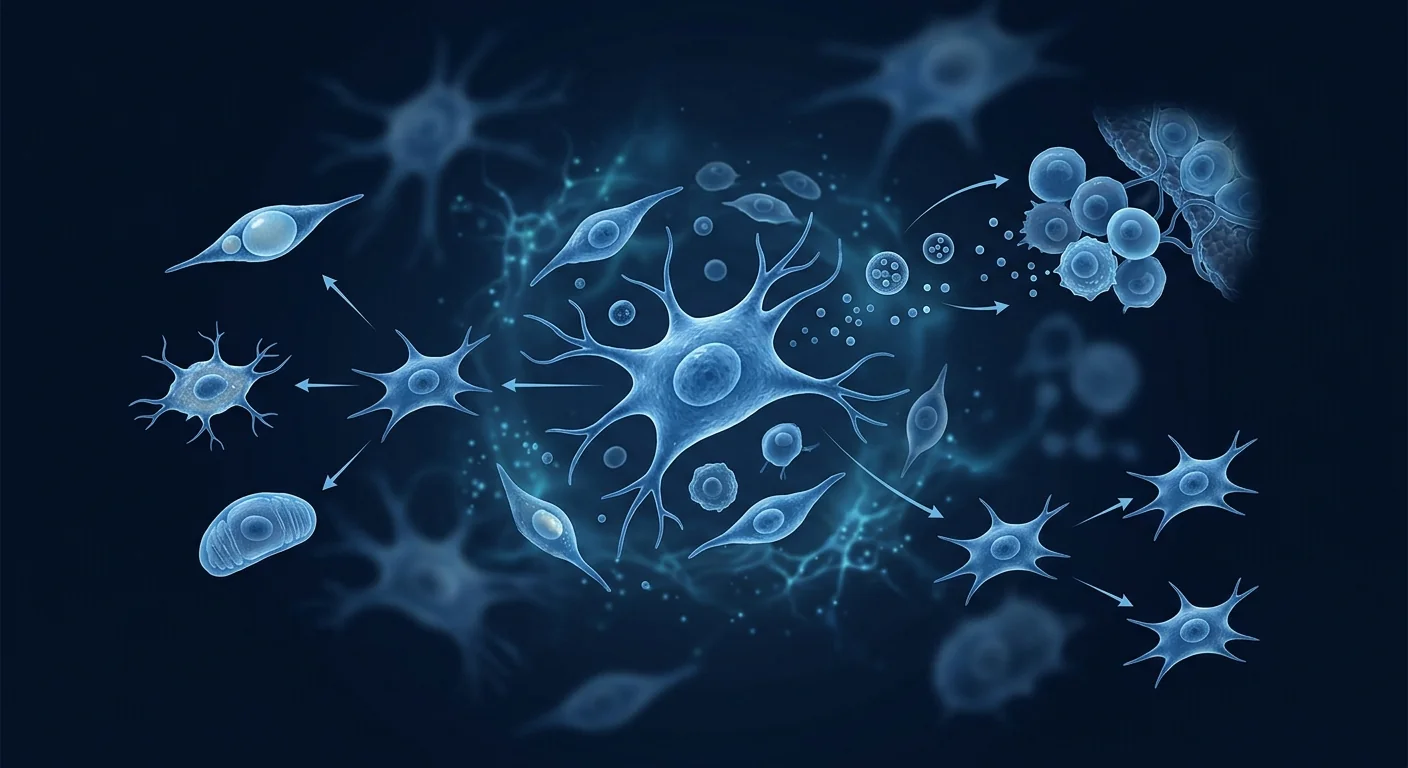
Mesenchymal Stem Cells are a type of multipotent adult stem cell — meaning they can differentiate into several specific cell types, including bone, cartilage, fat, and connective tissue. But their therapeutic value extends far beyond differentiation. MSCs secrete a sophisticated cocktail of growth factors, cytokines, and exosomes that regulate inflammation, modulate the immune system, and trigger repair pathways in surrounding tissue. This is known as their paracrine effect, and it is the dominant mechanism behind most of the clinical benefits seen today.[1][2][3][4]
The International Society for Cell & Gene Therapy (ISCT) defines an MSC by three minimum criteria: it must adhere to plastic in standard culture, express a specific surface-marker profile (CD73, CD90, CD105 positive at ≥95%; CD34, CD45, HLA-DR negative), and demonstrate the capacity to differentiate into bone, cartilage, and fat lineages in vitro.
Where do clinical MSCs come from?
MSCs can be isolated from several adult tissues, including bone marrow and adipose (fat) tissue. However, the most consistent, ethical, and biologically youthful source used in modern clinical practice is the umbilical cord — specifically a tissue called Wharton's jelly, the gelatinous substance surrounding the umbilical vessels.
Wharton's jelly–derived MSCs offer several advantages over bone marrow or adipose sources:
- Higher proliferation rate — they expand faster in culture, enabling consistent dose preparation
- Stronger paracrine signalling — younger cells produce a richer growth-factor profile
- Low immunogenicity — making them suitable for allogeneic ("donor-to-patient") use
- Ethically obtained — collected from healthy, consented full-term donations that would otherwise be discarded
The original donor is screened comprehensively for infectious diseases (HIV, HBV, HCV, syphilis, CMV) and the cord tissue is processed under sterile conditions before MSC isolation begins.
How does MSC therapy actually work?
Once isolated, MSCs undergo a controlled expansion process in cGMP-aligned bioreactors within ISO Class 5 (Class-100) cleanrooms. Each cell line is verified at multiple checkpoints — confirming identity, viability, sterility, and the absence of contamination — before being released fresh, never frozen, as clinical doses.
When delivered to the patient, MSCs do not simply replace damaged cells. Instead, they perform several coordinated actions:
1. Anti-inflammatory action
MSCs sense local inflammatory cytokines (notably IL-6 and TNF-α) and respond by releasing factors like TSG-6, PGE2, and IDO that dampen excessive inflammation — a critical mechanism in autoimmune, joint, and chronic inflammatory conditions.
2. Immunomodulation
Through direct contact and paracrine signalling, MSCs can shift the immune balance — suppressing overactive T-cells and B-cells, promoting regulatory T-cell (Treg) populations, and re-establishing immune homeostasis without broad immunosuppression.
3. Tissue regeneration support
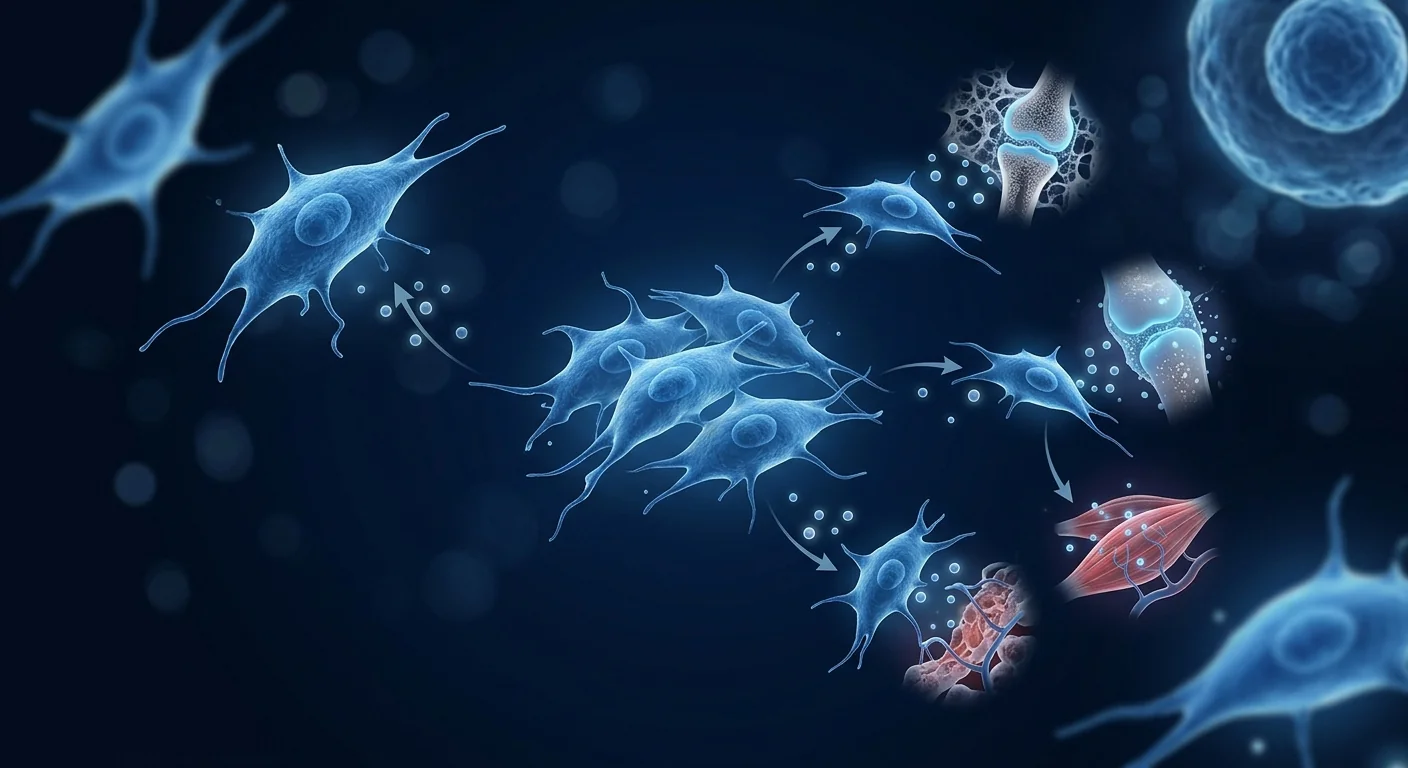
MSCs release growth factors (VEGF, FGF, HGF, IGF-1) that stimulate local stem-cell niches, enhance vascularization, and support the body's own repair pathways. This is particularly relevant in cartilage, tendon, and soft-tissue injury.
4. Mitochondrial transfer
Emerging research shows MSCs can transfer healthy mitochondria to stressed neighbouring cells via tunneling nanotubes — a remarkable mechanism that may explain part of their effect on metabolic and age-related decline.
The Key Insight
MSC therapy is not a "stem cell replacement" treatment — it is a biological signal. Clinical-grade MSCs deliver a coordinated, dose-dependent regenerative message that the body translates into reduced inflammation, restored balance, and accelerated repair.
What conditions can MSC therapy address?
MSC therapy is being studied — and applied clinically — across a broad spectrum of conditions where regulated inflammation, immune modulation, or tissue repair would benefit the patient. Common clinical applications include:
- Orthopedic conditions — knee and hip osteoarthritis, tendon and ligament injuries, post-surgical recovery
- Autoimmune disease — rheumatoid arthritis, lupus, multiple sclerosis, inflammatory bowel disease
- Anti-aging and longevity — programs targeting cellular senescence, mitochondrial decline, and biological-age biomarkers
- Sports and athletic recovery — accelerated soft-tissue repair, reduced inflammation
- Chronic systemic inflammation — underlying many metabolic and vascular conditions
- Aesthetic and dermatological renewal — collagen support, skin regeneration
For each indication, the protocol — including dose, route of delivery (intravenous infusion vs. local injection), frequency, and adjunct therapies — is tailored to the patient's medical history and clinical goals.
Is MSC therapy safe?
This is the most important question — and the evidence is reassuring when therapy is delivered properly. MSC therapy has one of the strongest safety profiles in the regenerative medicine field, with thousands of peer-reviewed clinical studies and trials documenting low rates of serious adverse events when clinical-grade cells are used under qualified medical supervision.
However, safety is not automatic. It depends on three pillars:
- Cell quality — clinical-grade, ISCT-verified MSCs cultivated in a controlled GMP-aligned environment
- Process integrity — sterility, mycoplasma, HIV, HBV, HCV and endotoxin testing on every release lot
- Clinical oversight — qualified physician assessment, dosing, monitoring, and follow-up
This is why patients should ask hard questions about the source of cells, the laboratory's certifications, and the clinical credentials of the team delivering the therapy. The difference between a regulated, certified protocol and an unregulated injection is the difference between medicine and risk.
What can a patient realistically expect?
A typical journey at a regulated clinic begins with a comprehensive medical consultation and bio-marker assessment over one to two visits. Once the protocol is designed, treatment is usually delivered as an outpatient infusion or precision injection, lasting 60 to 90 minutes per session. Most patients return to normal activity the same day.
Improvements are not instant. The body's regenerative pathways take time. Most patients begin to notice changes — reduced pain, improved mobility, better energy or sleep — between the four and twelve-week mark. Bio-marker improvements often align with these clinical observations. Structured follow-up at the 1, 3, and 6-month milestones helps quantify the response and inform any protocol adjustments.
Real regenerative therapy is a partnership between cellular biology and time. The role of the clinic is to deliver the highest-quality biological signal, then allow the body to do what it has always known how to do — heal.
— VELAR Clinical Team
The VELAR approach
At VELAR Center in Bangkok, every MSC protocol is built on three non-negotiables: clinically proven sources (ethically obtained Wharton's jelly), internationally certified laboratory standards (ISO 9001:2015, ISO/IEC 17025:2017, OECD GLP), and experienced physician-led delivery. Every dose is end-to-end traceable, accompanied by a Certificate of Analysis, and matched to the patient through comprehensive bio-marker assessment.
This is what separates regenerative medicine done well from regenerative medicine done quickly. It is the slower path — but it is the only path that produces the safety, consistency, and outcomes patients deserve.
References
- Uccelli A, Moretta L, Pistoia V. Mesenchymal stem cells in health and disease. Nature Reviews Immunology. 2008;8(9):726-736. doi:10.1038/nri2395 ↩
- Shi Y, Wang Y, Li Q, et al. Immunoregulatory mechanisms of mesenchymal stem and stromal cells in inflammatory diseases. Nature Reviews Nephrology. 2018;14(8):493-507. doi:10.1038/s41581-018-0023-5 ↩
- Spees JL, Lee RH, Gregory CA. Mechanisms of mesenchymal stem/stromal cell function. Stem Cell Research & Therapy. 2016;7(1):125. doi:10.1186/s13287-016-0363-7 ↩
- Galipeau J, Sensébé L. Mesenchymal stromal cells: clinical challenges and therapeutic opportunities. Cell Stem Cell. 2018;22(6):824-833. doi:10.1016/j.stem.2018.05.004 ↩
- Pittenger MF, Discher DE, Péault BM, Phinney DG, Hare JM, Caplan AI. Mesenchymal stem cell perspective: cell biology to clinical progress. NPJ Regenerative Medicine. 2019;4:22. doi:10.1038/s41536-019-0083-6 ↩
- Caplan AI. Mesenchymal stem cells: time to change the name! Stem Cells Translational Medicine. 2017;6(6):1445-1451. doi:10.1002/sctm.17-0051 ↩
- Dominici M, Le Blanc K, Mueller I, et al. Minimal criteria for defining multipotent mesenchymal stromal cells. Cytotherapy. 2006;8(4):315-317. doi:10.1080/14653240600855905 ↩
- Lalu MM, McIntyre L, Pugliese C, et al. Safety of cell therapy with mesenchymal stromal cells (SafeCell). PLoS One. 2012;7(10):e47559. doi:10.1371/journal.pone.0047559 ↩
- Naji A, Eitoku M, Favier B, Deschaseaux F, Rouas-Freiss N, Suganuma N. Biological functions of mesenchymal stem cells. Cellular and Molecular Life Sciences. 2019;76(17):3323-3348. doi:10.1007/s00018-019-03125-1 ↩
- Bronckaers A, Hilkens P, Martens W, et al. Mesenchymal stem/stromal cells as a pharmacological approach to accelerate angiogenesis. Pharmacology & Therapeutics. 2014;143(2):181-196. doi:10.1016/j.pharmthera.2014.02.013 ↩
- Wang Y, Chen X, Cao W, Shi Y. Plasticity of mesenchymal stem cells in immunomodulation. Nature Immunology. 2014;15(11):1009-1016. doi:10.1038/ni.3002 ↩
- Weiss DJ, Bertoncello I, Borok Z, et al. Stem cells and cell therapies in lung biology and lung diseases. Proceedings of the American Thoracic Society. 2011;8(3):223-272. doi:10.1513/pats.201012-071DW ↩
参考文献
- Uccelli A, Moretta L, Pistoia V. Mesenchymal stem cells in health and disease. Nature Reviews Immunology. 2008;8(9):726-736. doi:10.1038/nri2395 ↩
- Shi Y, Wang Y, Li Q, et al. Immunoregulatory mechanisms of mesenchymal stem and stromal cells in inflammatory diseases. Nature Reviews Nephrology. 2018;14(8):493-507. doi:10.1038/s41581-018-0023-5 ↩
- Spees JL, Lee RH, Gregory CA. Mechanisms of mesenchymal stem/stromal cell function. Stem Cell Research & Therapy. 2016;7(1):125. doi:10.1186/s13287-016-0363-7 ↩
- Galipeau J, Sensébé L. Mesenchymal stromal cells: clinical challenges and therapeutic opportunities. Cell Stem Cell. 2018;22(6):824-833. doi:10.1016/j.stem.2018.05.004 ↩
- Pittenger MF, Discher DE, Péault BM, Phinney DG, Hare JM, Caplan AI. Mesenchymal stem cell perspective: cell biology to clinical progress. NPJ Regenerative Medicine. 2019;4:22. doi:10.1038/s41536-019-0083-6 ↩
- Caplan AI. Mesenchymal stem cells: time to change the name! Stem Cells Translational Medicine. 2017;6(6):1445-1451. doi:10.1002/sctm.17-0051 ↩
- Dominici M, Le Blanc K, Mueller I, et al. Minimal criteria for defining multipotent mesenchymal stromal cells. Cytotherapy. 2006;8(4):315-317. doi:10.1080/14653240600855905 ↩
- Lalu MM, McIntyre L, Pugliese C, et al. Safety of cell therapy with mesenchymal stromal cells (SafeCell). PLoS One. 2012;7(10):e47559. doi:10.1371/journal.pone.0047559 ↩
- Naji A, Eitoku M, Favier B, Deschaseaux F, Rouas-Freiss N, Suganuma N. Biological functions of mesenchymal stem cells. Cellular and Molecular Life Sciences. 2019;76(17):3323-3348. doi:10.1007/s00018-019-03125-1 ↩
- Bronckaers A, Hilkens P, Martens W, et al. Mesenchymal stem/stromal cells as a pharmacological approach to accelerate angiogenesis. Pharmacology & Therapeutics. 2014;143(2):181-196. doi:10.1016/j.pharmthera.2014.02.013 ↩
- Wang Y, Chen X, Cao W, Shi Y. Plasticity of mesenchymal stem cells in immunomodulation. Nature Immunology. 2014;15(11):1009-1016. doi:10.1038/ni.3002 ↩
- Weiss DJ, Bertoncello I, Borok Z, et al. Stem cells and cell therapies in lung biology and lung diseases. Proceedings of the American Thoracic Society. 2011;8(3):223-272. doi:10.1513/pats.201012-071DW ↩
现代医学中,鲜有词语像干细胞疗法那样既承载希望,又被广泛误解。在头条新闻背后,是一门精确、定义明确的再生医学分支,建立在数十年的同行评审研究之上。处于其核心的是一种非凡的细胞类型:间充质干细胞,简称 MSC。本指南是基于循证的介绍,说明 MSC 究竟是什么、临床疗法如何运作、可针对哪些病症,以及将世界级医疗与营销宣传区分开的标准。
什么是间充质干细胞?
间充质干细胞是一类多能成体干细胞——意味着它们可以分化为若干特定细胞类型,包括骨、软骨、脂肪与结缔组织。但其治疗价值远超分化本身。MSC 分泌一种由生长因子、细胞因子与外泌体组成的精密混合物,能够调节炎症、调控免疫系统,并触发周围组织的修复路径。这被称为它们的旁分泌效应,也是当今所见大多数临床效益背后的主导机制。
国际细胞与基因治疗学会(ISCT)通过三项最低标准定义 MSC:在标准培养中须贴附塑料表面,须表达特定的表面标志物谱(CD73、CD90、CD105 阳性 ≥95%;CD34、CD45、HLA-DR 阴性),并展示出在体外分化为骨、软骨与脂肪谱系的能力。
临床用 MSC 来自何处?
MSC 可从若干成体组织中分离获得,包括骨髓与脂肪组织。然而,在现代临床实践中所采用的最稳定、最符合伦理且生物学上最年轻的来源是脐带——具体而言是一种称为华通氏胶的组织,即包绕脐血管的胶状物质。
华通氏胶来源的 MSC 较骨髓或脂肪来源具有若干优势:
- 更高的增殖率——在培养中扩增速度更快,便于一致性剂量准备
- 更强的旁分泌信号——年轻细胞产生更丰富的生长因子谱
- 低免疫原性——适合用于异体(“供体到患者”)应用
- 伦理获取——采集自经知情同意的健康足月捐赠,本将被丢弃
原始捐赠者经过传染病的全面筛查(HIV、HBV、HCV、梅毒、CMV),脐带组织在 MSC 分离开始前于无菌条件下处理。
MSC 疗法实际如何运作?
分离后,MSC 在 ISO 5 级(百级)洁净室内的符合 cGMP 的生物反应器中进行可控扩增。每条细胞系在多个检查点经过验证——确认身份、活性、无菌性以及无污染——之后以新鲜、不经冷冻的方式放行为临床剂量。
当递送给患者时,MSC 不仅仅是替代受损细胞。相反,它们执行若干协调的动作:
1. 抗炎作用
MSC 感知局部炎症细胞因子(特别是 IL-6 和 TNF-α),并通过释放 TSG-6、PGE2 和 IDO 等因子作出响应,抑制过度炎症——这是自身免疫、关节与慢性炎症条件下的关键机制。
2. 免疫调节
通过直接接触与旁分泌信号传导,MSC 可以转移免疫平衡——抑制过度活跃的 T 细胞与 B 细胞,促进调节性 T 细胞(Treg)群体,并在不需广泛免疫抑制的情况下重建免疫稳态。
3. 组织再生支持
MSC 释放生长因子(VEGF、FGF、HGF、IGF-1),刺激局部干细胞生态位、增强血管化,并支持身体自身的修复路径。这在软骨、肌腱与软组织损伤中尤为相关。
4. 线粒体转移
新兴研究表明 MSC 可通过隧道纳米管将健康线粒体转移到受压邻近细胞——这一非凡机制可能解释了它们对代谢与年龄相关衰退作用的部分原因。
关键洞见
MSC 疗法不是“干细胞替代”治疗——它是一种生物信号。临床级 MSC 传递一种协调、剂量依赖的再生讯息,身体将其转化为炎症减少、平衡恢复与加速修复。
MSC 疗法可针对哪些病症?
MSC 疗法正在被研究——并临床应用——于一系列广泛的病症,凡是受调节的炎症、免疫调节或组织修复对患者有益的情形。常见的临床应用包括:
- 骨科疾病——膝与髋骨关节炎、肌腱与韧带损伤、术后恢复
- 自身免疫疾病——类风湿性关节炎、狼瘡、多发性硬化症、炎症性肠病
- 抗衰老与长寿——针对细胞衰老、线粒体衰退与生物年龄生物标志物的方案
- 运动与运动员恢复——加速软组织修复、减少炎症
- 慢性系统性炎症——许多代谢与血管疾病的根源
- 美学与皮肤焕新——胶原蛋白支持、皮肤再生
对每一项适应症,方案——包括剂量、给药途径(静脉输注与局部注射)、频率与辅助疗法——均根据患者的病史与临床目标量身定制。
MSC 疗法安全吗?
这是最重要的问题——而当疗法被适当递送时,证据令人安心。MSC 疗法在再生医学领域具有最强的安全性概况之一,数千项同行评审的临床研究与试验记录了在合格医疗监督下使用临床级细胞时严重不良事件的低发生率。
然而,安全性并非自动获得。它依赖于三大支柱:
- 细胞质量——临床级、ISCT 验证的 MSC,于受控的符合 GMP 环境中培育
- 过程完整性——每一放行批次的无菌性、支原体、HIV、HBV、HCV 与内毒素检测
- 临床监督——合格医师评估、剂量、监测与随访
这就是为什么患者应当对细胞来源、实验室认证以及递送疗法的团队的临床资质提出严格的问题。受监管、经认证的方案与未受监管的注射之间的差异,就是医学与风险之间的差异。
患者实际可以期待什么?
在受监管的诊所,典型的旅程从一到两次就诊的全面医疗咨询与生物标志物评估开始。一旦方案确定,治疗通常以门诊输注或精确注射的形式递送,每次 60 至 90 分钟。大多数患者当天即可恢复正常活动。
改善并非即刻发生。身体的再生路径需要时间。大多数患者会在第四至第十二周之间开始注意到变化——疼痛减少、活动能力改善、能量或睡眠改善。生物标志物的改善通常与这些临床观察一致。在 1、3 和 6 个月里程碑的结构化随访有助于量化反应并指导任何方案调整。
真正的再生疗法是细胞生物学与时间之间的伙伴关系。诊所的角色是递送最高质量的生物信号,然后让身体做它一直知道如何做的事——愈合。
——VELAR 临床团队
VELAR 的方法
在曼谷的 VELAR Center,每一项 MSC 方案都建立在三个不可妥协的基础之上:临床证实的来源(伦理获取的华通氏胶)、国际认证的实验室标准(ISO 9001:2015、ISO/IEC 17025:2017、OECD GLP),以及由经验丰富的医师主导的递送。每一份剂量从头到尾可追溯,附有分析证书,并通过全面的生物标志物评估与患者匹配。
这就是把做得好的再生医学与做得快的再生医学区分开的因素。这是一条更慢的路径——但它是唯一能产生患者应得的安全性、一致性与疗效的路径。
قليلة هي المصطلحات في الطب الحديث التي تحمل وعداً — أو سوء فهم — أكثر من علاج الخلايا الجذعية. خلف العناوين الرئيسية يقع فرع دقيق ومحدد جيداً من الطب التجديدي، مبني على عقود من البحث المُحكَّم. في قلبه تقع نوع خلية رائع: الخلية الجذعية الوسيطة، أو MSC. هذا الدليل هو مقدمة قائمة على الأدلة لما هي MSC فعلياً، وكيف يعمل العلاج السريري، وما الحالات التي يمكن أن يعالجها، والمعايير التي تفصل بين الرعاية ذات المستوى العالمي والادعاءات التسويقية.
ما هي الخلايا الجذعية الوسيطة؟
الخلايا الجذعية الوسيطة نوع من الخلايا الجذعية البالغة متعددة القدرات — أي يمكن أن تتمايز إلى عدة أنواع خلوية محددة، بما في ذلك العظم والغضروف والدهون والنسيج الضام. لكن قيمتها العلاجية تمتد إلى ما هو أبعد من التمايز. تُفرز MSC مزيجاً متطوراً من عوامل النمو والسيتوكينات والإكسوزومات التي تنظم الالتهاب وتعدل الجهاز المناعي وتطلق مسارات الإصلاح في النسيج المحيط. يُعرف ذلك بـتأثيرها شبه الإفرازي، وهو الآلية المهيمنة وراء معظم الفوائد السريرية الملاحظة اليوم.
تعرّف الجمعية الدولية للعلاج الخلوي والجيني (ISCT) الـ MSC بثلاثة معايير دنيا: يجب أن تلتصق بالبلاستيك في الزراعة القياسية، وتعبّر عن ملف علامات سطح محدد (CD73 وCD90 وCD105 إيجابية ≥95٪؛ CD34 وCD45 وHLA-DR سلبية)، وتظهر القدرة على التمايز إلى أنساب العظم والغضروف والدهون في المختبر.
من أين تأتي MSC السريرية؟
يمكن عزل MSC من عدة أنسجة بالغة، بما في ذلك نخاع العظم والأنسجة الدهنية. ومع ذلك، فإن المصدر الأكثر اتساقاً وأخلاقية وفتوة بيولوجية المستخدم في الممارسة السريرية الحديثة هو الحبل السري — وتحديداً نسيج يُسمى هلام وارتون، المادة الهلامية المحيطة بأوعية الحبل السري.
تقدم MSC المشتقة من هلام وارتون عدة مزايا مقارنة بمصادر نخاع العظم أو الأنسجة الدهنية:
- معدل تكاثر أعلى — تتوسع بشكل أسرع في الزراعة، مما يتيح إعداد جرعة متسقة
- إشارات شبه إفرازية أقوى — تنتج الخلايا الأصغر سناً ملف عوامل نمو أغنى
- مناعية منخفضة — مما يجعلها مناسبة للاستخدام الخيفي ("من المتبرع إلى المريض")
- تُحصَّل أخلاقياً — تُجمَع من تبرعات صحية كاملة الفترة بموافقة، كانت ستُهدر بخلاف ذلك
يخضع المتبرع الأصلي للفحص الشامل للأمراض المعدية (HIV، HBV، HCV، الزهري، CMV)، ويُعالَج نسيج الحبل السري في ظروف معقمة قبل بدء عزل MSC.
كيف يعمل علاج MSC فعلياً؟
بعد العزل، تخضع MSC لعملية توسع مُتحكَّم بها في مفاعلات حيوية متوافقة مع cGMP داخل غرف نظيفة من فئة ISO 5 (Class-100). يتم التحقق من كل خط خلوي عند نقاط فحص متعددة — لتأكيد الهوية والحيوية والعقامة وعدم وجود تلوث — قبل إطلاقها طازجة، دون تجميد، كجرعات سريرية.
عند التسليم للمريض، لا تكتفي MSC بـاستبدال الخلايا التالفة. بل تنفذ عدة إجراءات منسقة:
1. الإجراء المضاد للالتهاب
تستشعر MSC السيتوكينات الالتهابية الموضعية (لا سيما IL-6 وTNF-α) وتستجيب بإطلاق عوامل مثل TSG-6 وPGE2 وIDO التي تخمد الالتهاب المفرط — آلية حاسمة في حالات المناعة الذاتية والمفصلية والالتهابية المزمنة.
2. تعديل المناعة
من خلال الاتصال المباشر والإشارات شبه الإفرازية، يمكن لـ MSC تحويل التوازن المناعي — لقمع الخلايا التائية والبائية مفرطة النشاط، وتعزيز مجموعات الخلايا التائية التنظيمية (Treg)، وإعادة إنشاء التوازن المناعي دون تثبيط مناعي واسع.
3. دعم تجديد الأنسجة
تطلق MSC عوامل نمو (VEGF، FGF، HGF، IGF-1) التي تحفز محافظ الخلايا الجذعية الموضعية، وتعزز الأوعية الدموية، وتدعم مسارات الإصلاح الذاتية للجسم. هذا مهم بشكل خاص في إصابات الغضاريف والأوتار والأنسجة الرخوة.
4. نقل الميتوكوندريا
تُظهر الأبحاث الناشئة أن MSC يمكنها نقل ميتوكوندريا صحية إلى الخلايا المجاورة المُجهَدة عبر أنابيب نانوية نفقية — آلية رائعة قد تُفسر جزءاً من تأثيرها على التدهور الأيضي والمرتبط بالعمر.
الرؤية الأساسية
علاج MSC ليس علاج "استبدال للخلايا الجذعية" — إنه إشارة بيولوجية. تنقل MSC ذات الجودة السريرية رسالة تجديدية منسقة، تعتمد على الجرعة، يترجمها الجسم إلى تقليل الالتهاب واستعادة التوازن وتسريع الإصلاح.
ما الحالات التي يمكن أن يعالجها MSC؟
تتم دراسة علاج MSC — وتطبيقه سريرياً — عبر طيف واسع من الحالات حيث يستفيد المريض من الالتهاب المُنظَّم أو تعديل المناعة أو إصلاح الأنسجة. تشمل التطبيقات السريرية الشائعة:
- حالات العظام — هشاشة عظام الركبة والورك، إصابات الأوتار والأربطة، التعافي بعد الجراحة
- أمراض المناعة الذاتية — التهاب المفاصل الروماتويدي، الذئبة، التصلب المتعدد، أمراض الأمعاء الالتهابية
- مكافحة الشيخوخة وطول العمر — برامج تستهدف الشيخوخة الخلوية وتدهور الميتوكوندريا ومؤشرات العمر البيولوجي
- التعافي الرياضي — تسريع إصلاح الأنسجة الرخوة وتقليل الالتهاب
- الالتهاب الجهازي المزمن — الكامن وراء العديد من الحالات الأيضية والوعائية
- التجديد الجمالي والجلدي — دعم الكولاجين، تجديد البشرة
لكل دلالة، يُصمَّم البروتوكول — بما في ذلك الجرعة، طريقة التسليم (التسريب الوريدي مقابل الحقن الموضعي)، التكرار، والعلاجات المساعدة — وفقاً لتاريخ المريض الطبي وأهدافه السريرية.
هل علاج MSC آمن؟
هذا أهم سؤال — والأدلة مطمئنة عندما يُسلَّم العلاج بشكل صحيح. يتمتع علاج MSC بأحد أقوى ملفات الأمان في مجال الطب التجديدي، حيث تُوثّق آلاف الدراسات والتجارب السريرية المُحكَّمة معدلات منخفضة من الأحداث السلبية الخطيرة عند استخدام خلايا ذات جودة سريرية تحت إشراف طبي مؤهل.
ومع ذلك، الأمان ليس تلقائياً. يعتمد على ثلاثة أعمدة:
- جودة الخلايا — MSC ذات جودة سريرية، تم التحقق من هويتها وفق ISCT، مُزرَعة في بيئة متوافقة مع GMP
- سلامة العملية — اختبار العقامة والميكوبلازما وHIV وHBV وHCV والذيفان الداخلي على كل دفعة إصدار
- الإشراف السريري — تقييم الطبيب المؤهل، الجرعات، المراقبة، والمتابعة
هذا هو السبب في أنه ينبغي للمرضى طرح أسئلة صعبة حول مصدر الخلايا، اعتمادات المختبر، والمؤهلات السريرية للفريق الذي يقدم العلاج. الفرق بين بروتوكول مُنظَّم ومعتمد وبين حقنة غير مُنظَّمة هو الفرق بين الطب والمخاطرة.
ماذا يمكن أن يتوقع المريض واقعياً؟
تبدأ الرحلة النموذجية في عيادة مُنظَّمة باستشارة طبية شاملة وتقييم للمؤشرات الحيوية على مدار زيارة إلى زيارتين. بمجرد تصميم البروتوكول، يُسلَّم العلاج عادة كتسريب خارجي أو حقن دقيق، يستغرق 60 إلى 90 دقيقة لكل جلسة. يعود معظم المرضى إلى النشاط الطبيعي في نفس اليوم.
التحسينات ليست فورية. تستغرق مسارات التجدد في الجسم وقتاً. يبدأ معظم المرضى في ملاحظة التغيرات — تقليل الألم، تحسين الحركة، طاقة أو نوم أفضل — بين الأسبوع الرابع والثاني عشر. غالباً ما تتوافق تحسينات المؤشرات الحيوية مع هذه الملاحظات السريرية. تساعد المتابعة المنظمة في علامات 1 و3 و6 أشهر على قياس الاستجابة وتوجيه أي تعديلات على البروتوكول.
العلاج التجديدي الحقيقي شراكة بين البيولوجيا الخلوية والوقت. دور العيادة هو تقديم أعلى جودة من الإشارة البيولوجية، ثم السماح للجسم بفعل ما يعرف دائماً كيف يفعله — الشفاء.
— فريق VELAR السريري
منهج VELAR
في VELAR Center في بانكوك، يُبنى كل بروتوكول MSC على ثلاثة أمور غير قابلة للتفاوض: مصادر مُثبَتة سريرياً (هلام وارتون المُحصَّل أخلاقياً)، معايير مختبرية معتمدة دولياً (ISO 9001:2015، ISO/IEC 17025:2017، OECD GLP)، وتسليم بقيادة طبيب ذي خبرة. كل جرعة قابلة للتتبع من البداية إلى النهاية، مرفقة بشهادة تحليل، ومتطابقة مع المريض من خلال تقييم شامل للمؤشرات الحيوية.
هذا ما يفصل بين الطب التجديدي المُنفَّذ بشكل جيد والطب التجديدي المُنفَّذ بسرعة. إنه المسار الأبطأ — لكنه المسار الوحيد الذي ينتج الأمان والاتساق والنتائج التي يستحقها المرضى.