
When a patient walks out of a stem cell consultation, what they often remember is the conversation about outcomes. What they almost never see — but what most determines those outcomes — is everything that happens before the dose ever arrives in the clinic. The cells, the cultivation, the cleanroom, the testing. The chain of evidence that turns a donated tissue into a clinical-grade therapy. This article opens the laboratory door.
What does "GMP" actually mean?
GMP stands for Good Manufacturing Practice — an internationally recognized framework of quality systems, facility standards, and documentation requirements originally established for pharmaceutical manufacturing. When applied to cell therapy, GMP-aligned operation means that every step from raw material intake to final product release is performed under controlled, documented, auditable conditions. Nothing is left to memory or improvisation.[1][2][3][4]
True pharmaceutical GMP for cell products requires registration with national regulatory authorities and ongoing inspection. cGMP-aligned cell processing — increasingly the standard in advanced regenerative clinics — adopts the same quality systems, environmental controls, documentation, and validated equipment, applied to the production of clinical cellular products.
For patients, the practical translation is simple: a GMP-aligned facility produces cells of known identity, known purity, known potency, and known safety. Every batch, traceable. Every step, documented. Every release, signed.

Stage 1 — Tissue intake and donor screening
Every clinical-grade MSC begins life as donated tissue. At a GMP-aligned laboratory working with Wharton's jelly, that tissue arrives from a screened, consented donor whose umbilical cord — collected at a partner hospital after a healthy full-term delivery — is processed in dedicated sterile transport conditions.
Before tissue ever enters the cleanroom, the donor undergoes comprehensive screening including:
- Maternal medical history review
- Infectious disease testing (HIV-1/2, HBV, HCV, HTLV-I/II, syphilis, CMV)
- Risk-factor questionnaire aligned with international tissue banking standards
- Documentation of informed consent
If any element fails, the tissue is not used. Period. This is the first — and most important — quality gate.
Stage 2 — Sterile processing and MSC isolation
Inside the cleanroom, the umbilical cord is processed under a Class II biosafety cabinet by gowned, masked, and gloved operators. The Wharton's jelly is carefully separated from the cord vessels using a defined enzymatic and mechanical isolation protocol. The resulting cell suspension is washed, counted, characterized, and seeded into the initial culture vessels.
Every reagent used at this stage is itself certified GMP-grade — including the enzymes, buffers, and culture media. Every consumable is single-use, sterile, and traceable to manufacturing lot. Every operator action is recorded against a written, validated standard operating procedure.
Stage 3 — Closed-system bioreactor expansion
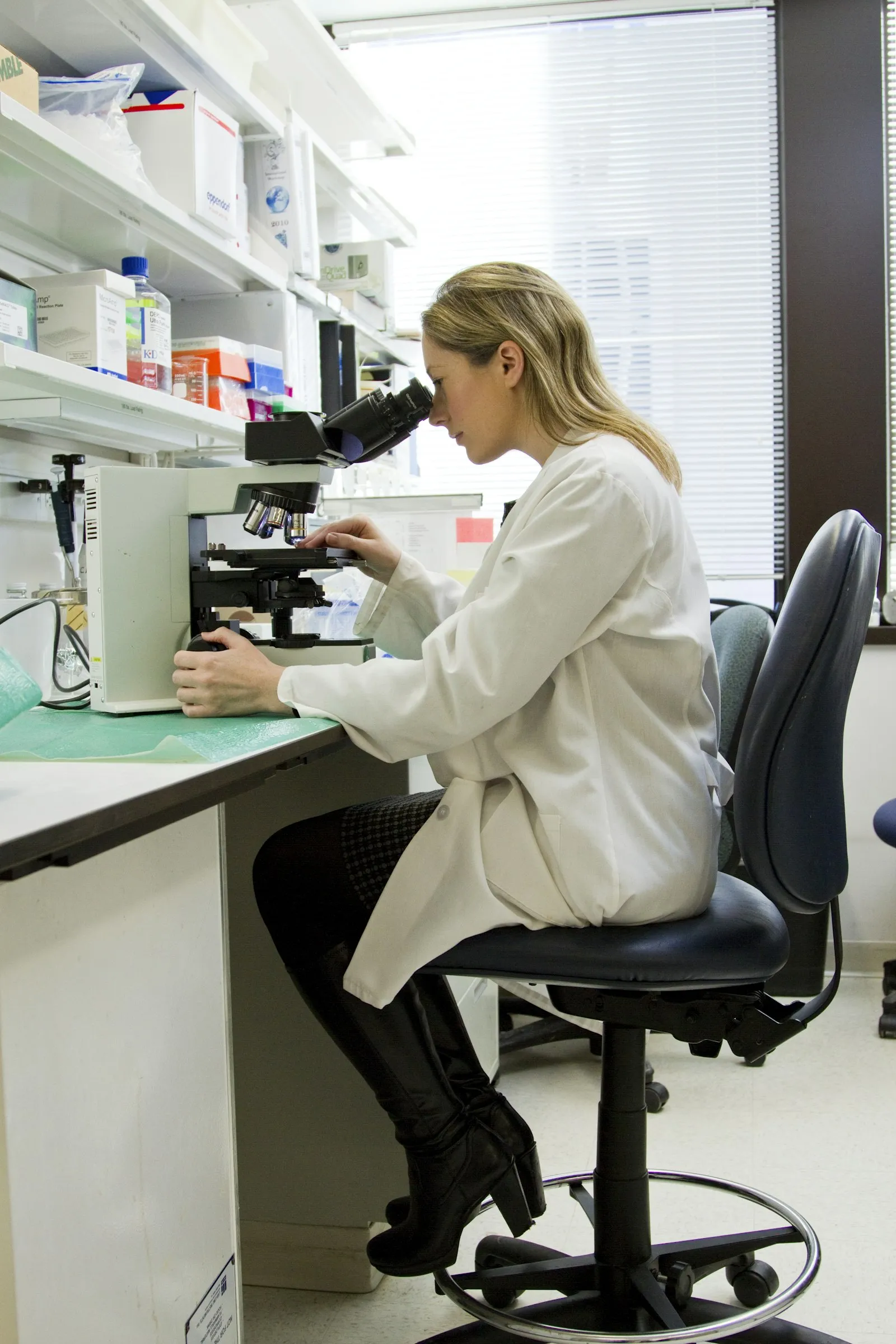
Once the initial culture is established, MSCs need to be expanded to clinical dose quantities — often hundreds of millions of cells per batch. In a modern GMP-aligned facility, this expansion happens in closed-system bioreactors: sealed cultivation vessels that allow controlled cell growth without exposing the culture to the environment between checks.
Closed-system technology is a major step beyond traditional open-flask culture. It dramatically reduces the risk of contamination, ensures consistent environmental conditions (pH, oxygen, temperature, glucose, CO₂), and produces cells of more uniform quality across batches.
Throughout expansion, samples are pulled at defined timepoints for in-process testing — confirming the cells are growing as expected, retaining identity markers, and remaining free of contamination.
Stage 4 — Identity, potency, and safety testing
Before any batch can be considered for clinical use, it must pass an extensive panel of release tests. Each lot is independently characterized across four critical dimensions.
Identity — Flow cytometry
The cells are stained with fluorescent antibodies and analysed by flow cytometry. To pass ISCT identity criteria, MSCs must show ≥95% positive expression of the surface markers CD73, CD90, and CD105 — and less than 2% expression of hematopoietic markers CD34, CD45, and HLA-DR. Any deviation outside specification means the batch is rejected.
Viability — Trypan blue / 7-AAD
Cell viability is measured immediately before final formulation. Clinical-grade dose specifications commonly require ≥90% viable cells at time of release; VELAR's release criterion is above 95%.
Sterility & safety
Each release lot undergoes:
- Sterility — bacterial and fungal culture
- Mycoplasma — real-time PCR detection
- Endotoxin — Limulus amebocyte lysate (LAL) test
- HIV, HBV and HCV — real-time PCR confirming these viruses are not detected
Potency
Functional assays demonstrate the cells' actual biological activity — for example, the ability to suppress activated T-cell proliferation in immunomodulation assays, or to differentiate appropriately in lineage-specific induction conditions.

Stage 5 — Fresh, never-frozen release
Once a batch passes release testing, it is prepared for administration fresh — VELAR delivers cells that are never frozen. Rather than cryopreserving and thawing, the cells are cultivated and formulated to be released on the treatment day itself, with no cryoprotectant such as DMSO. This preserves maximum potency and cell viability, and avoids the freeze–thaw stress that can reduce the fraction of live, functional cells.
Every step is monitored continuously. Processing and holding temperatures are recorded electronically and audited. Any deviation triggers an investigation. The specification for a clinical dose is >95% cell viability at delivery, measured immediately before clinical use.
Because doses are prepared fresh for a scheduled treatment day, they move from the laboratory to the clinic under a validated, temperature-controlled chain-of-custody — with continuous temperature data logging that travels with the dose — and are administered without any freezing or thawing step.
Stage 6 — Release and documentation
The final gate before any batch reaches a patient is release. The complete batch record is reviewed against specification, including all test results, environmental monitoring, deviations (if any), and chain-of-custody documentation. Only when every element meets specification does the batch receive a signed Certificate of Analysis (CoA) and become available for clinical use.
The Certificate of Analysis is the patient's most important document. It records the batch number, donor source identifier (anonymized), production and release dates, identity test results, viability, sterility test outcomes, potency confirmation, and the signature of the person who released it. If your clinic cannot produce this document for the dose used in your treatment, that is itself a quality signal.
The phrase "clinical-grade" only means anything when it is backed by the documents you can hold in your hand. Demand them.
— VELAR Clinical Team
Why this matters to you, the patient
Behind every advance in regenerative medicine lies one immutable truth: the quality of the result depends on the quality of the input. A clinical protocol designed by world-class physicians cannot rescue a substandard cell product. Conversely, a properly cultivated, certified, and traceable MSC dose gives the body the strongest possible biological signal to work with.
Every certification, every cleanroom protocol, every flow cytometry plot, every sterility test, every signed batch record — all of it exists for one purpose: to ensure that what enters your body is exactly, verifiably, what it is supposed to be. That is the difference between regulated medicine and unregulated risk. It is the standard you should expect — and demand — from any clinic offering cellular therapy.
The VELAR laboratory standard
VELAR Center operates within a network of GMP-aligned cell processing facilities operating under ISO 9001:2015 (Quality Management Systems), ISO/IEC 17025:2017 (Testing & Calibration) and OECD GLP (Good Laboratory Practice). Every Wharton's jelly–derived MSC dose is identity-verified by flow cytometry, tested across a full sterility and pathogen panel, released fresh under a validated, temperature-controlled chain-of-custody, and accompanied by a Certificate of Analysis from production through delivery to the patient.
This is the chain of evidence behind every dose at VELAR — and the commitment behind every patient outcome.
References
- Uccelli A, Moretta L, Pistoia V. Mesenchymal stem cells in health and disease. Nature Reviews Immunology. 2008;8(9):726-736. doi:10.1038/nri2395 ↩
- Shi Y, Wang Y, Li Q, et al. Immunoregulatory mechanisms of mesenchymal stem and stromal cells in inflammatory diseases. Nature Reviews Nephrology. 2018;14(8):493-507. doi:10.1038/s41581-018-0023-5 ↩
- Spees JL, Lee RH, Gregory CA. Mechanisms of mesenchymal stem/stromal cell function. Stem Cell Research & Therapy. 2016;7(1):125. doi:10.1186/s13287-016-0363-7 ↩
- Galipeau J, Sensébé L. Mesenchymal stromal cells: clinical challenges and therapeutic opportunities. Cell Stem Cell. 2018;22(6):824-833. doi:10.1016/j.stem.2018.05.004 ↩
- Pittenger MF, Discher DE, Péault BM, Phinney DG, Hare JM, Caplan AI. Mesenchymal stem cell perspective: cell biology to clinical progress. NPJ Regenerative Medicine. 2019;4:22. doi:10.1038/s41536-019-0083-6 ↩
- Caplan AI. Mesenchymal stem cells: time to change the name! Stem Cells Translational Medicine. 2017;6(6):1445-1451. doi:10.1002/sctm.17-0051 ↩
- Dominici M, Le Blanc K, Mueller I, et al. Minimal criteria for defining multipotent mesenchymal stromal cells. Cytotherapy. 2006;8(4):315-317. doi:10.1080/14653240600855905 ↩
- Lalu MM, McIntyre L, Pugliese C, et al. Safety of cell therapy with mesenchymal stromal cells (SafeCell). PLoS One. 2012;7(10):e47559. doi:10.1371/journal.pone.0047559 ↩
- Naji A, Eitoku M, Favier B, Deschaseaux F, Rouas-Freiss N, Suganuma N. Biological functions of mesenchymal stem cells. Cellular and Molecular Life Sciences. 2019;76(17):3323-3348. doi:10.1007/s00018-019-03125-1 ↩
- Bronckaers A, Hilkens P, Martens W, et al. Mesenchymal stem/stromal cells as a pharmacological approach to accelerate angiogenesis. Pharmacology & Therapeutics. 2014;143(2):181-196. doi:10.1016/j.pharmthera.2014.02.013 ↩
- Wang Y, Chen X, Cao W, Shi Y. Plasticity of mesenchymal stem cells in immunomodulation. Nature Immunology. 2014;15(11):1009-1016. doi:10.1038/ni.3002 ↩
- Weiss DJ, Bertoncello I, Borok Z, et al. Stem cells and cell therapies in lung biology and lung diseases. Proceedings of the American Thoracic Society. 2011;8(3):223-272. doi:10.1513/pats.201012-071DW ↩
参考文献
- Uccelli A, Moretta L, Pistoia V. Mesenchymal stem cells in health and disease. Nature Reviews Immunology. 2008;8(9):726-736. doi:10.1038/nri2395 ↩
- Shi Y, Wang Y, Li Q, et al. Immunoregulatory mechanisms of mesenchymal stem and stromal cells in inflammatory diseases. Nature Reviews Nephrology. 2018;14(8):493-507. doi:10.1038/s41581-018-0023-5 ↩
- Spees JL, Lee RH, Gregory CA. Mechanisms of mesenchymal stem/stromal cell function. Stem Cell Research & Therapy. 2016;7(1):125. doi:10.1186/s13287-016-0363-7 ↩
- Galipeau J, Sensébé L. Mesenchymal stromal cells: clinical challenges and therapeutic opportunities. Cell Stem Cell. 2018;22(6):824-833. doi:10.1016/j.stem.2018.05.004 ↩
- Pittenger MF, Discher DE, Péault BM, Phinney DG, Hare JM, Caplan AI. Mesenchymal stem cell perspective: cell biology to clinical progress. NPJ Regenerative Medicine. 2019;4:22. doi:10.1038/s41536-019-0083-6 ↩
- Caplan AI. Mesenchymal stem cells: time to change the name! Stem Cells Translational Medicine. 2017;6(6):1445-1451. doi:10.1002/sctm.17-0051 ↩
- Dominici M, Le Blanc K, Mueller I, et al. Minimal criteria for defining multipotent mesenchymal stromal cells. Cytotherapy. 2006;8(4):315-317. doi:10.1080/14653240600855905 ↩
- Lalu MM, McIntyre L, Pugliese C, et al. Safety of cell therapy with mesenchymal stromal cells (SafeCell). PLoS One. 2012;7(10):e47559. doi:10.1371/journal.pone.0047559 ↩
- Naji A, Eitoku M, Favier B, Deschaseaux F, Rouas-Freiss N, Suganuma N. Biological functions of mesenchymal stem cells. Cellular and Molecular Life Sciences. 2019;76(17):3323-3348. doi:10.1007/s00018-019-03125-1 ↩
- Bronckaers A, Hilkens P, Martens W, et al. Mesenchymal stem/stromal cells as a pharmacological approach to accelerate angiogenesis. Pharmacology & Therapeutics. 2014;143(2):181-196. doi:10.1016/j.pharmthera.2014.02.013 ↩
- Wang Y, Chen X, Cao W, Shi Y. Plasticity of mesenchymal stem cells in immunomodulation. Nature Immunology. 2014;15(11):1009-1016. doi:10.1038/ni.3002 ↩
- Weiss DJ, Bertoncello I, Borok Z, et al. Stem cells and cell therapies in lung biology and lung diseases. Proceedings of the American Thoracic Society. 2011;8(3):223-272. doi:10.1513/pats.201012-071DW ↩
当患者结束一次干细胞咨询时,他们记住的往往是关于治疗效果的对话。然而他们几乎从未看见——也最决定那些效果的——是剂量到达诊所之前发生的一切。细胞、培育、洁净室、检测。把捐赠组织转化为临床级疗法的整条证据链。本文打开实验室的大门。
“GMP”究竟是什么意思?
GMP 代表 良好生产规范(Good Manufacturing Practice)——这是国际公认的质量体系、设施标准与文档要求框架,最初为制药行业制定。当应用于细胞治疗时,符合 GMP 的运营意味着从原料接收到最终产品放行的每一步都在可控、可记录、可审计的条件下进行。任何环节都不依赖记忆或临时决定。
真正用于细胞产品的制药级 GMP 须经国家监管机构注册并接受持续检查。符合 cGMP 的细胞处理——目前已成为先进再生医学诊所的标准——采用同样的质量体系、环境控制、文档与经过验证的设备,应用于临床细胞产品的生产。
对患者而言,实际意义很简单:一座符合 GMP 的设施所生产的细胞具有已知身份、已知纯度、已知效力与已知安全性。每一批次可追溯,每一步骤有记录,每一次放行有签名。
第一阶段——组织接收与捐赠者筛查
每一份临床级 MSC 都始于捐赠组织。在使用华通氏胶的符合 GMP 的实验室中,这类组织来自经过筛查并知情同意的捐赠者——脐带在合作医院于足月健康分娩后采集,并以专用无菌运输条件处理。
组织进入洁净室之前,捐赠者须通过全面筛查,包括:
- 母体病史回顾
- 传染病检测(HIV-1/2、HBV、HCV、HTLV-I/II、梅毒、CMV)
- 符合国际组织库标准的风险因素问卷
- 知情同意书的存档
任何一项不通过,组织即不予使用。绝无例外。这是第一道——也是最重要的——质量关卡。
第二阶段——无菌处理与 MSC 分离
在洁净室内,脐带由穿戴洁净服、口罩与手套的操作员在 II 级生物安全柜下进行处理。华通氏胶通过既定的酶法与机械分离方案与脐血管小心分开。所得的细胞悬液经过洗涤、计数、表征,并接种到初始培养容器中。
本阶段使用的每一种试剂——包括酶、缓冲液与培养基——本身均经认证为 GMP 级。每一件耗材均为一次性、无菌且可追溯到制造批号。每一项操作员动作均依据书面、经验证的标准操作规程予以记录。
第三阶段——封闭系统生物反应器扩增
初始培养建立后,MSC 须扩增至临床剂量级别——通常每批次数亿个细胞。在现代符合 GMP 的设施中,这一扩增在封闭系统生物反应器中进行:密闭的培养容器允许在两次检查之间不暴露培养物于环境的情况下,实现可控细胞生长。
封闭系统技术较传统开放培养瓶有重大进步。它显著降低污染风险,确保环境条件(pH、氧气、温度、葡萄糖、CO₂)的一致性,并使各批次细胞质量更为均一。
在扩增过程中,按既定时间点抽样进行过程内检测——确认细胞按预期生长、保留身份标志物,并保持无污染。
第四阶段——身份、效力与安全性检测
任何批次在被考虑用于临床之前,必须通过一整套放行检测。每一批次均独立从四个关键维度进行表征。
身份——流式细胞术
细胞用荧光抗体染色并通过流式细胞术分析。要符合 ISCT 身份标准,MSC 须显示表面标志物 CD73、CD90 与 CD105 的阳性表达 ≥95%——并且造血标志物 CD34、CD45 与 HLA-DR 的表达低于 2%。任何超出规格的偏差即意味着批次拒收。
活性——台盼蓝 / 7-AAD
细胞活性在最终配方前立即测定。临床级剂量规格通常要求放行时活细胞 ≥90%;VELAR 的放行标准为高于 95%。
无菌性与安全性
每一放行批次须接受:
- 无菌性——细菌与真菌培养检测
- 支原体——实时 PCR 检测
- 内毒素——鲎试剂(LAL)检测
- HIV、HBV 与 HCV——实时 PCR 确认未检出
效力
功能性试验展示细胞的实际生物活性——例如在免疫调节试验中抑制活化 T 细胞增殖的能力,或在谱系特异诱导条件下适当分化的能力。
第五阶段——新鲜、绝不冷冻的放行
批次通过放行检测后,即以新鲜方式准备用于给药——VELAR 提供绝不冷冻的细胞。细胞并非经冷冻与解冻,而是经培育与配制后于治疗当天放行,不使用 DMSO 等冷冻保护剂。这样可保持最大效力与细胞活性,并避免冻融应力降低存活、有功能细胞的比例。
每一步均持续受到监控。处理与暂存温度以电子方式记录并接受审计。任何偏差均触发调查。临床剂量的规格为交付时细胞活性 >95%,于临床使用前立即测定。
由于剂量是为既定治疗日新鲜准备的,因此从实验室到诊所全程在经验证、温度受控的链条监管下运送——并随剂量记录连续的温度数据——且在给药时无任何冷冻或解冻步骤。
第六阶段——放行与文档
批次到达患者之前的最后一关是放行。完整的批次记录须对照规格逐项审查,包括所有检测结果、环境监测、偏差(若有)与链条监管文档。只有当每一项均符合规格,批次才会获得签署的分析证书(CoA)并可供临床使用。
分析证书是患者最重要的文件。它记录批号、捐赠来源标识符(匿名化)、生产与放行日期、身份检测结果、活性、无菌检测结果、效力确认,以及放行该批次的负责人的签名。如果您的诊所无法为您治疗所用的剂量提供这份文件,那本身就是一项质量信号。
“临床级”这一说法只有在您能握在手中的文件作为支撑时才有意义。请向他们索要。
——VELAR 临床团队
这对您——患者——为什么重要
每一项再生医学的进步背后,都隐藏着一个不可改变的真理:结果的质量取决于输入的质量。世界级医师设计的临床方案无法挽救劣质的细胞产品。反之,经过适当培育、认证、可追溯的 MSC 剂量,赋予身体最强的生物信号以发挥作用。
每一项认证、每一道洁净室程序、每一张流式细胞图、每一次无菌检测、每一份签署的批次记录——所有这一切都为了一个目的:确保进入您身体的,正是它应该是的、可被验证的东西。这就是受监管的医学与不受监管的风险之间的差异。这是您应当向任何提供细胞治疗的诊所所期望——并要求——的标准。
VELAR 的实验室标准
VELAR Center 在符合 GMP 的细胞处理设施网络内运营,这些设施遵循 ISO 9001:2015(质量管理体系)、ISO/IEC 17025:2017(检测与校准)与 OECD GLP(良好实验室规范)标准。每一份华通氏胶来源的 MSC 剂量均通过流式细胞术验证身份,经过完整的无菌与病原体面板检测,在经验证、温度受控的链条监管下以新鲜方式放行,并自生产至交付患者全程附有分析证书。
这就是 VELAR 每一份剂量背后的证据链——也是每一项患者疗效背后的承诺。
عندما يخرج المريض من استشارة الخلايا الجذعية، فإن ما يتذكره غالباً هو الحديث عن النتائج. أما ما لا يراه تقريباً أبداً — وما يحدد تلك النتائج أكثر من غيره — فهو كل ما يحدث قبل وصول الجرعة إلى العيادة. الخلايا، الزراعة، الغرفة النظيفة، الاختبارات. سلسلة الأدلة التي تحوّل النسيج المتبرع به إلى علاج بجودة سريرية. هذا المقال يفتح باب المختبر.
ماذا تعني "GMP" فعلياً؟
GMP اختصار لعبارة الممارسات التصنيعية الجيدة (Good Manufacturing Practice) — وهي إطار معترف به دولياً يضم أنظمة الجودة، معايير المنشآت، ومتطلبات التوثيق، وقد وُضع أصلاً للتصنيع الدوائي. عند تطبيقه على العلاج الخلوي، فإن العملية المتوافقة مع GMP تعني أن كل خطوة من استلام المواد الخام إلى إصدار المنتج النهائي تُنفَّذ في ظروف خاضعة للرقابة، مُوثَّقة، وقابلة للتدقيق. لا شيء يُترك للذاكرة أو الارتجال.
إن GMP الدوائي الحقيقي لمنتجات الخلايا يتطلب التسجيل لدى السلطات التنظيمية الوطنية والتفتيش المستمر. أما المعالجة الخلوية المتوافقة مع cGMP — التي أصبحت بشكل متزايد المعيار في عيادات الطب التجديدي المتقدمة — فتعتمد نفس أنظمة الجودة، الضوابط البيئية، التوثيق والمعدات المعتمدة، تطبيقاً على إنتاج المنتجات الخلوية السريرية.
بالنسبة للمرضى، الترجمة العملية بسيطة: المنشأة المتوافقة مع GMP تنتج خلايا ذات هوية معروفة، نقاء معروف، فعالية معروفة، وسلامة معروفة. كل دفعة قابلة للتتبع. كل خطوة مُوثَّقة. كل إصدار موقَّع.
المرحلة 1 — استلام النسيج وفحص المتبرع
كل MSC ذو جودة سريرية يبدأ حياته كنسيج متبرع به. في مختبر متوافق مع GMP يعمل بهلام وارتون، يصل ذلك النسيج من متبرع تم فحصه ووافق، حيث يُجمع الحبل السري في مستشفى شريك بعد ولادة طبيعية كاملة الفترة، ويُعالَج في ظروف نقل معقمة مخصصة.
قبل أن يدخل النسيج الغرفة النظيفة، يخضع المتبرع لفحص شامل يشمل:
- مراجعة التاريخ الطبي للأم
- اختبار الأمراض المعدية (HIV-1/2، HBV، HCV، HTLV-I/II، الزهري، CMV)
- استبيان عوامل الخطر المتوافق مع معايير بنوك الأنسجة الدولية
- توثيق الموافقة المستنيرة
إذا فشل أي عنصر، لا يُستخدم النسيج. نقطة. هذه هي البوابة الأولى — والأكثر أهمية — للجودة.
المرحلة 2 — المعالجة المعقمة وعزل MSC
داخل الغرفة النظيفة، يُعالج الحبل السري تحت خزانة سلامة بيولوجية من الفئة الثانية بواسطة عاملين يرتدون الزي والأقنعة والقفازات. يُفصَل هلام وارتون بعناية عن أوعية الحبل باستخدام بروتوكول عزل إنزيمي وميكانيكي محدد. يُغسَل التعليق الخلوي الناتج، ويُحصَى، ويُوصَّف، ويُلقَّح في أوعية الزراعة الأولية.
كل كاشف يُستخدم في هذه المرحلة هو نفسه معتمد بدرجة GMP — بما في ذلك الإنزيمات والمحاليل المنظِّمة وأوساط الزراعة. كل مستهلك أحادي الاستخدام، معقَّم، وقابل للتتبع إلى دفعة التصنيع. كل إجراء للعامل مُسجَّل وفق إجراء تشغيل قياسي مكتوب ومعتمد.
المرحلة 3 — التوسع في المفاعل الحيوي بنظام مغلق
بعد إنشاء الزراعة الأولية، يجب توسيع MSC إلى كميات الجرعات السريرية — غالباً مئات الملايين من الخلايا لكل دفعة. في منشأة حديثة متوافقة مع GMP، يحدث هذا التوسع في مفاعلات حيوية بنظام مغلق: أوعية زراعة محكمة الإغلاق تتيح نمو الخلايا بشكل متحكَّم به دون تعريض الزراعة للبيئة بين الفحوصات.
تكنولوجيا النظام المغلق هي خطوة كبيرة تتجاوز زراعة القارورة المفتوحة التقليدية. فهي تقلل بشكل كبير من خطر التلوث، وتضمن ظروف بيئية متسقة (pH، الأكسجين، الحرارة، الجلوكوز، CO₂)، وتنتج خلايا بجودة أكثر اتساقاً عبر الدفعات.
طوال التوسع، تُسحب عينات في نقاط زمنية محددة لاختبارات أثناء العملية — للتأكيد على أن الخلايا تنمو كما هو متوقع، وتحتفظ بعلامات الهوية، وتظل خالية من التلوث.
المرحلة 4 — اختبارات الهوية والفعالية والسلامة
قبل أن تُعتبر أي دفعة صالحة للاستخدام السريري، يجب أن تجتاز لوحة شاملة من اختبارات الإصدار. تُوصَّف كل دفعة بشكل مستقل عبر أربعة أبعاد حاسمة.
الهوية — قياس التدفق الخلوي
تُصبَغ الخلايا بأجسام مضادة فلورية وتُحلَّل بقياس التدفق الخلوي. لاجتياز معايير ISCT للهوية، يجب أن تُظهِر MSC تعبيراً إيجابياً ≥95٪ لعلامات السطح CD73 وCD90 وCD105 — وأقل من 2٪ لعلامات النسب المكونة للدم CD34 وCD45 وHLA-DR. أي انحراف خارج المواصفات يعني رفض الدفعة.
الحيوية — Trypan blue / 7-AAD
تُقاس حيوية الخلايا قبل التركيب النهائي مباشرة. تتطلب مواصفات الجرعة بجودة سريرية عادة ≥90٪ من الخلايا الحية في وقت الإصدار؛ أما معيار الإطلاق لدى VELAR فهو أعلى من 95٪.
العقامة والسلامة
تخضع كل دفعة إصدار لـ:
- العقامة — زراعة بكتيرية وفطرية
- الميكوبلازما — كشف بتفاعل PCR اللحظي
- الذيفان الداخلي — اختبار Limulus amebocyte lysate (LAL)
- HIV وHBV وHCV — تفاعل PCR اللحظي لتأكيد عدم اكتشافها
الفعالية
تُظهِر الفحوصات الوظيفية النشاط البيولوجي الفعلي للخلايا — على سبيل المثال، القدرة على قمع تكاثر الخلايا التائية المنشَّطة في فحوصات تعديل المناعة، أو التمايز بشكل مناسب في ظروف التحريض الخاصة بالنسب.
المرحلة 5 — إطلاق طازج غير مجمّد إطلاقًا
بمجرد اجتياز الدفعة لاختبار الإصدار، تُحضَّر للإعطاء طازجة — تُقدِّم VELAR خلايا غير مجمّدة إطلاقًا. فبدلاً من الحفظ بالتبريد والإذابة، تُزرَع الخلايا وتُركَّب لتُطلَق في يوم العلاج نفسه، دون أي مادة حافظة للتبريد مثل DMSO. وهذا يحافظ على أقصى فعالية وحيوية للخلايا، ويتجنّب إجهاد التجميد–الإذابة الذي قد يقلّل نسبة الخلايا الحية الوظيفية.
تُراقَب كل خطوة باستمرار. تُسجَّل درجات حرارة المعالجة والحفظ إلكترونياً وتُدقَّق. أي انحراف يطلق تحقيقاً. مواصفة الجرعة السريرية هي حيوية خلايا >95٪ عند التسليم، تُقاس قبل الاستخدام السريري مباشرة.
بما أن الجرعات تُحضَّر طازجة ليوم علاج مُحدَّد، فإنها تنتقل من المختبر إلى العيادة ضمن سلسلة عهدة معتمدة وخاضعة للتحكم في درجة الحرارة — مع تسجيل بيانات الحرارة المستمر الذي يرافق الجرعة — وتُعطى دون أي خطوة تجميد أو إذابة.
المرحلة 6 — الإصدار والتوثيق
البوابة الأخيرة قبل وصول أي دفعة إلى مريض هي الإصدار. يُراجَع سجل الدفعة الكامل وفق المواصفات، بما في ذلك جميع نتائج الاختبارات، المراقبة البيئية، الانحرافات (إن وُجدت)، ووثائق سلسلة العهدة. عندما يستوفي كل عنصر المواصفات فقط، تتلقى الدفعة شهادة تحليل (CoA) موقَّعة وتصبح متاحة للاستخدام السريري.
شهادة التحليل هي أهم وثيقة للمريض. إنها تسجل رقم الدفعة، معرّف مصدر المتبرع (مُجهَّل الهوية)، تواريخ الإنتاج والإصدار، نتائج اختبار الهوية، الحيوية، نتائج اختبار العقامة، تأكيد الفعالية، وتوقيع المسؤول الذي أصدرها. إذا لم تستطع عيادتك إنتاج هذه الوثيقة للجرعة المستخدمة في علاجك، فهذا في حد ذاته إشارة جودة.
عبارة "بجودة سريرية" لا تعني شيئاً إلا حين تدعمها الوثائق التي يمكنك إمساكها بيدك. اطلبوها.
— فريق VELAR السريري
لماذا يهمك هذا، أيها المريض
وراء كل تقدم في الطب التجديدي تكمن حقيقة واحدة لا تتغير: جودة النتيجة تعتمد على جودة المُدخَل. بروتوكول سريري مصمم من قبل أطباء عالميين لا يستطيع إنقاذ منتج خلوي دون المستوى. وعلى العكس، جرعة MSC مُزرَعة بشكل صحيح، معتمدة، وقابلة للتتبع، تمنح الجسم أقوى إشارة بيولوجية ممكنة للعمل بها.
كل اعتماد، كل بروتوكول للغرفة النظيفة، كل رسم لقياس التدفق الخلوي، كل اختبار للعقامة، كل سجل دفعة موقَّع — كل ذلك موجود لغرض واحد: للتأكد من أن ما يدخل جسمك هو بالضبط، وقابل للتحقق، ما يُفترض به أن يكون. هذا هو الفرق بين الطب المنظَّم والمخاطر غير المنظَّمة. إنه المعيار الذي يجب أن تتوقعه — وتطلبه — من أي عيادة تقدم العلاج الخلوي.
معيار مختبر VELAR
تعمل VELAR Center ضمن شبكة من منشآت معالجة الخلايا المتوافقة مع GMP والعاملة وفق ISO 9001:2015 (أنظمة إدارة الجودة)، ISO/IEC 17025:2017 (الاختبار والمعايرة)، وOECD GLP (الممارسات المختبرية الجيدة). يتم التحقق من هوية كل جرعة MSC مشتقة من هلام وارتون بقياس التدفق الخلوي، وتُختبَر عبر لوحة عقامة ومسببات أمراض كاملة، وتُطلَق طازجة ضمن سلسلة عهدة معتمدة وخاضعة للتحكم في درجة الحرارة، وترافقها شهادة تحليل من الإنتاج حتى التسليم للمريض.
هذه هي سلسلة الأدلة وراء كل جرعة في VELAR — والالتزام وراء كل نتيجة للمريض.