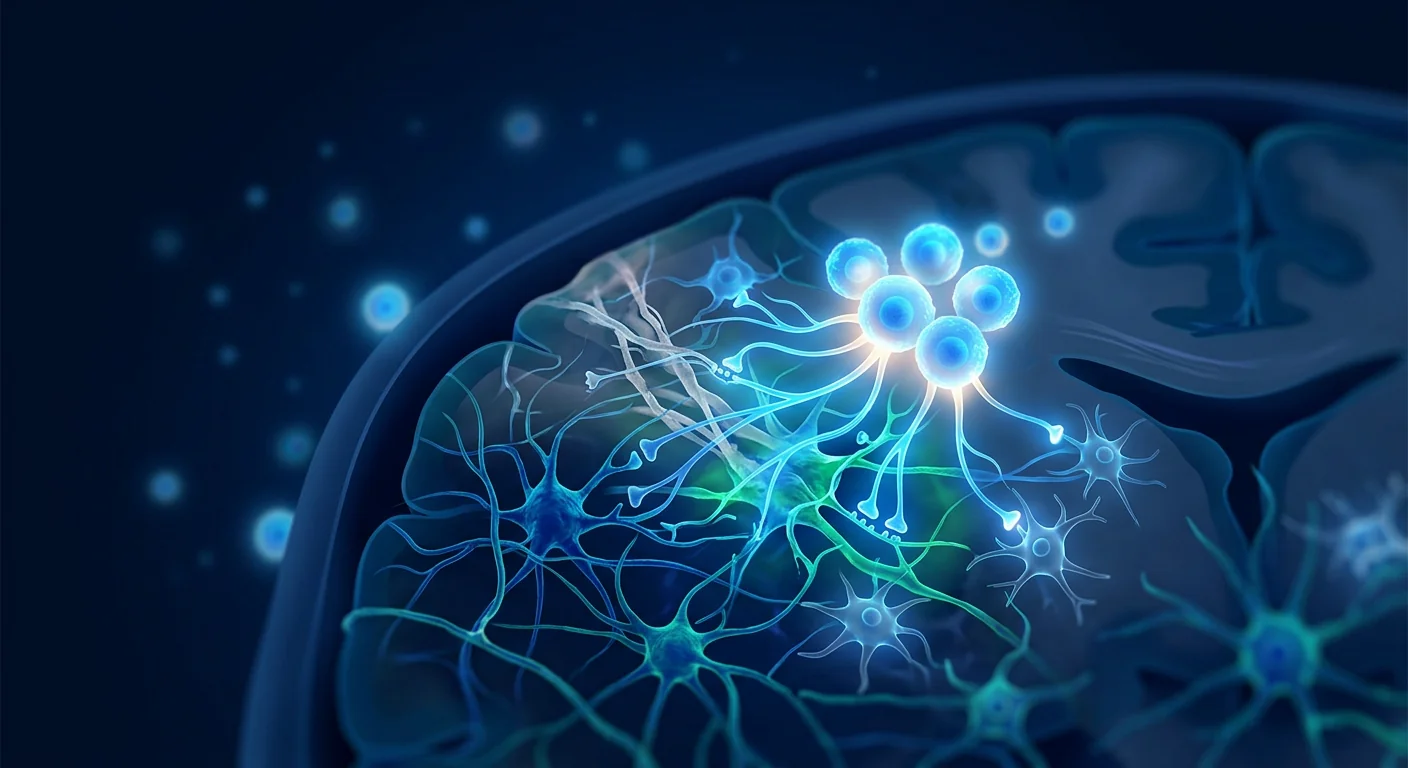
Every stroke begins in a single moment — a clot, a haemorrhage, a sudden interruption of blood flow — and unfolds across days, months, and years of consequence [1]. Conventional acute care has improved dramatically: faster door-to-needle times, advanced thrombectomy, structured rehabilitation. Yet for the patient who has stabilised but still struggles to move, speak, or think clearly, the medical system has remarkably few tools that target the biology of recovery itself. Mesenchymal Stem Cell therapy is one of the few interventions actively studied in that gap.
What actually happens in the brain after a stroke?
The first wave of injury is ischaemic: cells in the affected territory lose their oxygen and energy supply, and the most vulnerable neurons begin to die within minutes. This is the part of the injury current emergency care is designed to address. But the brain's response to that initial insult is what shapes the next six to twelve months — and it is largely an inflammatory story.
In the hours and days after a stroke, the brain mounts a powerful inflammatory response. Microglia activate, blood-brain barrier integrity drops, and pro-inflammatory cytokines (IL-1β, IL-6, TNF-α) accumulate [2]. This response is necessary for clearance of damaged tissue — but if it persists or extends beyond the original lesion, it accelerates secondary neuronal loss in surrounding tissue (the penumbra) that might otherwise have been salvageable. Stroke recovery, therefore, is not just about repairing what's already lost; it is about protecting what's still at risk.
Why Mesenchymal Stem Cells fit this problem
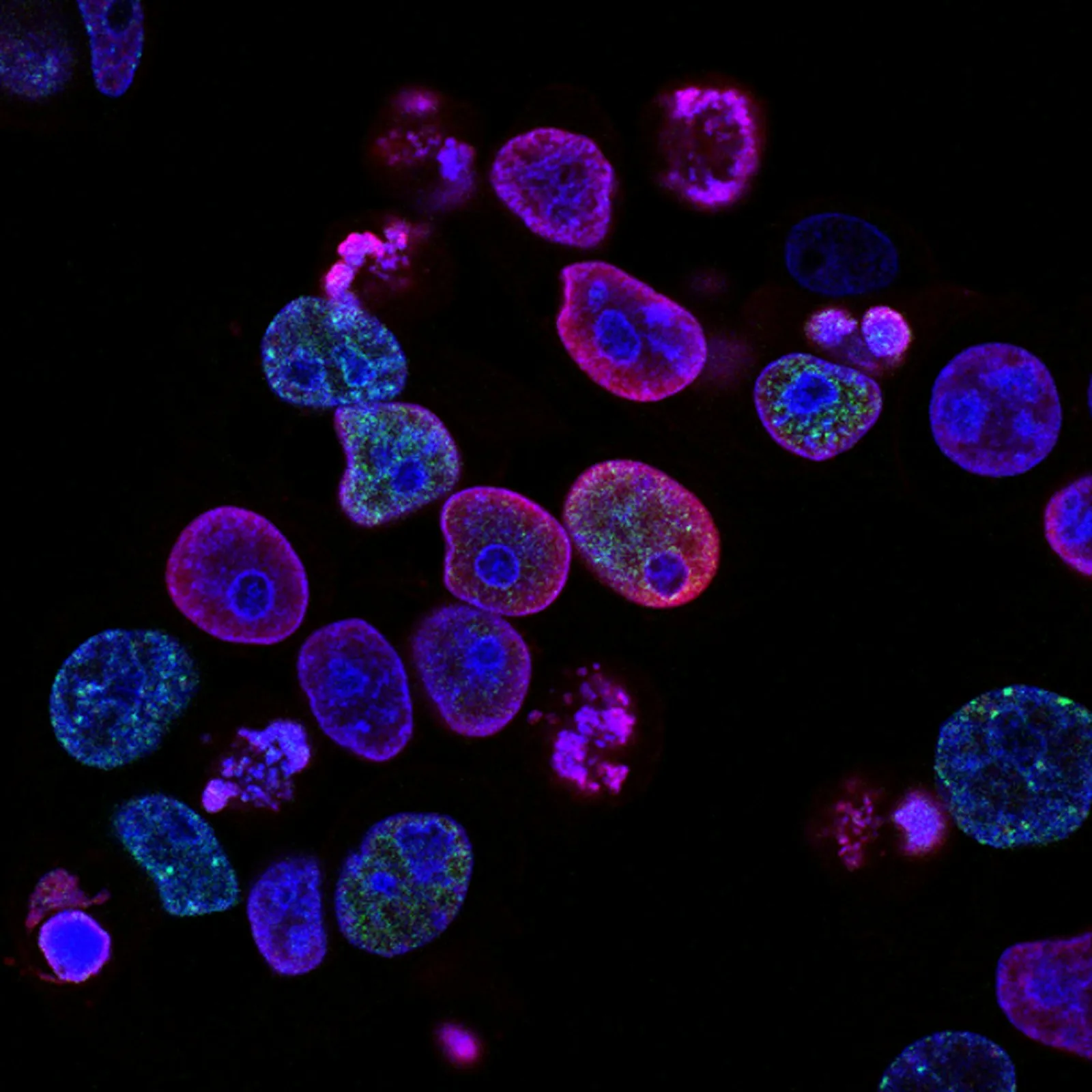
MSCs are not a "neuron replacement" therapy — and any clinic claiming otherwise is overselling. What MSCs actually do is enter the injured environment and respond to it. Their effect on stroke biology operates across four overlapping pathways:
1. Anti-inflammatory recalibration
MSCs sense the elevated cytokine milieu of an injured brain and release factors such as TSG-6, PGE2, and IDO that interrupt the chronic inflammatory cascade. The goal is not immune suppression — it is restoration of balance, allowing necessary clearance to complete without causing prolonged collateral damage to the penumbra.
2. Protection of vulnerable neurons
The penumbra contains neurons that are stressed but not yet dead. MSCs secrete neurotrophic factors — BDNF, NGF, VEGF, IGF-1 — that improve survival of these at-risk cells. In animal stroke models, this translates into measurably smaller final infarct volumes when MSCs are introduced in the early subacute phase [3][4].
3. Vascular repair and angiogenesis
VEGF and other angiogenic signals released by MSCs encourage formation of new blood vessels at the injury margin. Improved local perfusion supports the recovery of borderline tissue and creates a more favourable environment for neuroplasticity.
4. Support for the brain's intrinsic plasticity
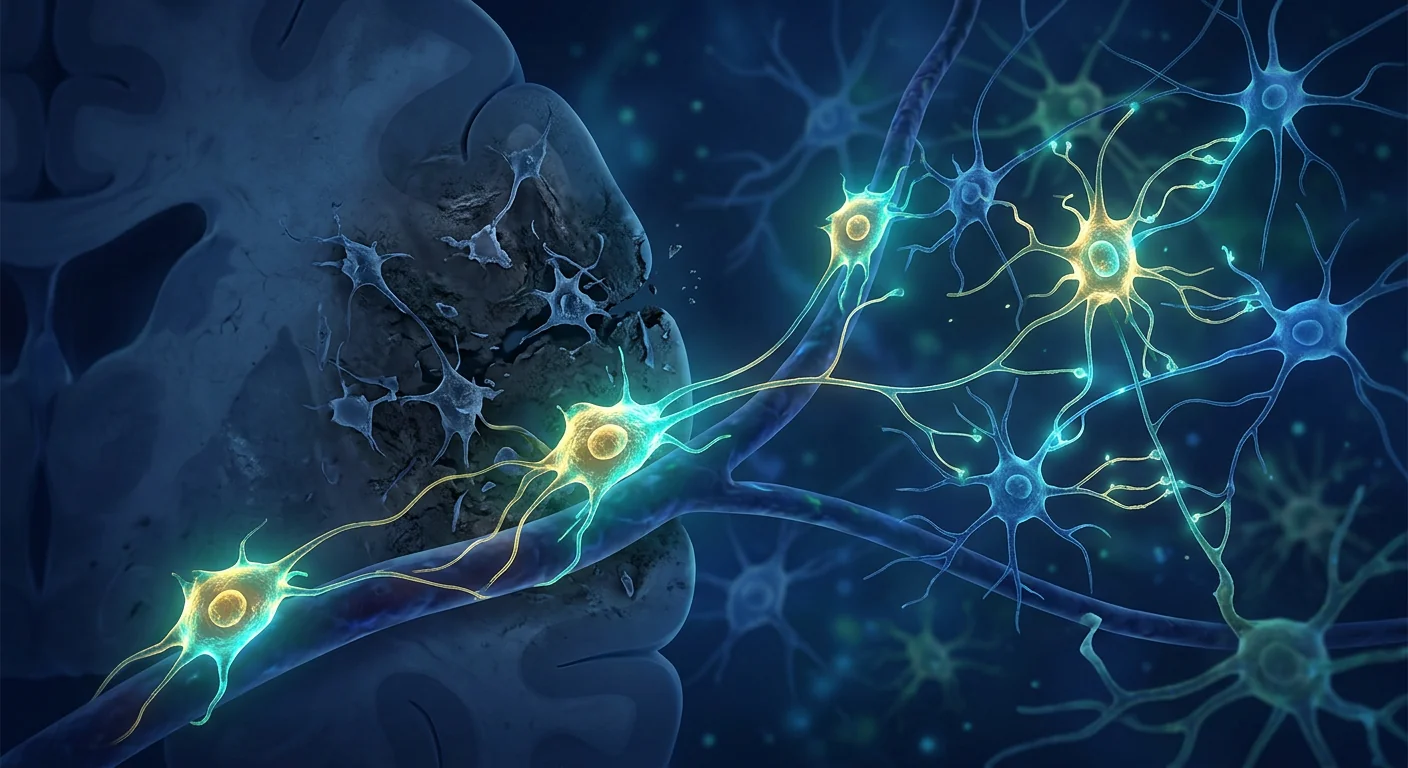
Recovery from stroke is fundamentally a story of neuroplasticity — the brain rewiring around the lost tissue. MSC paracrine signalling supports the cellular environment in which plasticity occurs: synapse formation, axonal sprouting, and remyelination [5]. MSC therapy is therefore best understood as an amplifier of rehabilitation rather than a substitute for it.
What MSC therapy does NOT do
MSC therapy does not regrow lost brain tissue. It does not replace dead neurons with new ones. It does not restore decades of cumulative damage. What it can support is a more favourable biological environment for the recovery work that the brain and rehabilitation team are already doing — particularly in the months when the penumbra is still salvageable and plasticity is most active.
Who is most likely to benefit?
Honest evidence suggests that the strongest signal for MSC therapy in stroke comes from patients who are:
- Past the acute emergency phase (typically 4–12 weeks post-stroke), medically stable, and engaged in active rehabilitation
- Within the first year after the stroke, when neuroplasticity remains most responsive
- Able to tolerate intravenous infusion safely (no contraindicating cardiovascular instability)
- Receiving structured physiotherapy, occupational therapy, and speech therapy — MSC effects amplify what rehabilitation creates
Patients with the deepest deficits — for example, late-stage haemorrhagic stroke with cavitation more than two years prior — are far less likely to see meaningful change from any regenerative intervention, including MSCs. A reputable clinic will set this expectation honestly during consultation rather than promising recovery that is not biologically realistic.
What treatment looks like in practice
A stroke-focused MSC programme at a regulated clinical centre typically follows a defined sequence:
Step 1: Comprehensive medical and neurological assessment
Detailed history, neurological examination, current imaging (MRI/MRA), inflammatory and metabolic biomarker panels, cardiovascular evaluation, and review of current medications. Anticoagulation status matters — MSC infusion requires careful coordination with the patient's stroke neurologist.
Step 2: Personalised protocol design
The clinical team determines dose, frequency, and route of delivery. Most stroke protocols use intravenous infusion across a series of sessions over 8–12 weeks. Local intrathecal delivery is reserved for specific indications and requires additional safety review.
Step 3: Structured rehabilitation alongside cellular therapy
This is the part many clinics skip — and it is the part that most affects outcome. Without ongoing physiotherapy, occupational therapy, and (where applicable) speech therapy, the biological signal that MSCs provide has nowhere to land. Reputable centres co-design rehabilitation alongside MSC sessions.
Step 4: Outcome tracking
Validated stroke outcome measures (modified Rankin Scale, NIH Stroke Scale, Fugl-Meyer assessment) are repeated at 4, 12, and 24-week milestones. Inflammatory bio-markers and (where indicated) repeat imaging help quantify whether the protocol is producing measurable change.
Realistic expectations
Response varies substantially by stroke type, severity, time since onset, baseline rehabilitation engagement, and MSC quality. Some patients see noticeable improvements in motor function, fatigue, and cognitive clarity within a few months. Others build benefit gradually. A minority show limited response. None of this is unusual — and an honest clinic will discuss the variability before, not after, treatment commitment.
Safety considerations specific to stroke
Three safety considerations deserve particular attention in stroke patients:
- Cardiovascular stability — patients with poorly controlled blood pressure or atrial fibrillation require optimisation before infusion
- Anticoagulation coordination — many stroke patients are on antiplatelet or anticoagulant therapy; MSC infusion timing must be managed with the prescribing physician
- Cell quality — only ISCT-defined, sterility-tested, viability-confirmed clinical-grade MSCs should be used. The cost of cutting corners on cell source is highest in vulnerable patients
For the right stroke patient — past the acute phase, engaged in active rehabilitation, with realistic goals — MSC therapy is one of the few interventions that targets the biology of recovery rather than its symptoms. It is not a miracle. It is, when applied honestly, a meaningful additional tool.
— VELAR Clinical Team
The VELAR approach to stroke recovery
Stroke-focused protocols at VELAR Center begin with comprehensive medical and neurological evaluation, in coordination with the patient's stroke neurologist or rehabilitation physician. Each programme uses clinical-grade Wharton's jelly–derived MSCs (≥95% identity verification, >95% viability at delivery) delivered intravenously across a structured 8–12 week protocol, paired with ongoing rehabilitation support and validated outcome tracking at the 1, 3, 6, and 12-month milestones.
If you or a family member is exploring regenerative options after stroke, the most important first step is an honest assessment: where in the recovery timeline are you, what rehabilitation is currently in place, and what realistic outcomes are achievable? The right answers determine whether MSC therapy is the right addition to the plan.
每一次中风都开始于一个瞬间——一个血栓、一次出血、一个突如其来的血流中断——然后展开为数日、数月、数年的后果。常规急救已大幅改善:更快的入院给药时间、先进的取栓术、结构化的康复治疗。但对于已经稳定却仍然挣扎着移动、说话或思考的患者,医疗体系令人惊讶地缺少能够针对恢复生物学本身的工具。间充质干细胞疗法是少数在那一缺口中被积极研究的干预之一。
中风之后大脑里实际发生什么?
第一波损伤是缺血性的:受影响区域内的细胞失去氧气与能量供应,最脆弱的神经元在数分钟内开始死亡。这是当前急救设计要应对的部分。但大脑对最初打击的反应才塑造了之后的六到十二个月——而那大部分是一个炎症的故事。
中风后的数小时到数日内,大脑发起强大的炎症反应。小胶质细胞激活,血脑屏障的完整性下降,促炎细胞因子(IL-1β、IL-6、TNF-α)累积。这一反应对清除受损组织是必要的——但若它持续或扩散到原始病灶之外,便会加速周围组织(即缺血半暗带)中本可挽救的神经元的二次损失。因此,中风恢复不只是修复已失去的;它还在于保护仍处于风险中的。
为什么间充质干细胞契合这一问题
MSC 不是一种“神经元替代”疗法——任何宣称如此的诊所都言过其实。MSC 实际上做的是进入受损环境并对其作出反应。其对中风生物学的影响通过四条相互重叠的路径运作:
1. 抗炎再校准
MSC 感知受损大脑升高的细胞因子环境,释放 TSG-6、PGE2 与 IDO 等因子,打断慢性炎症级联。目标不是免疫抑制——而是平衡的恢复,让必要的清除得以完成而不对半暗带造成长期附带损害。
2. 保护脆弱的神经元
半暗带内含有受压但尚未死亡的神经元。MSC 分泌神经营养因子——BDNF、NGF、VEGF、IGF-1——改善这些处于风险中细胞的存活率。在动物中风模型中,当 MSC 在亚急性早期被引入时,这转化为可测量地更小的最终梗死体积。
3. 血管修复与血管生成
MSC 释放的 VEGF 与其他血管生成信号鼓励损伤边缘形成新血管。改善的局部灌注支持边缘组织的恢复,并为神经可塑性创造更有利的环境。
4. 支持大脑固有的可塑性
从中风中恢复从根本上是神经可塑性的故事——大脑围绕着失去的组织重新连接。MSC 旁分泌信号支持可塑性发生的细胞环境:突触形成、轴突萌芽与髓鞘再生。因此,MSC 疗法最好被理解为康复的放大器,而非其替代品。
MSC 疗法所不能做的事
MSC 疗法不能重新生长失去的脑组织。它不能用新神经元替代死去的神经元。它不能逆转数十年累积的损伤。它能支持的,是大脑与康复团队已经在做的恢复工作的更有利的生物环境——尤其是在半暗带仍可挽救、可塑性最活跃的几个月里。
谁最有可能受益?
诚实的证据表明,对中风 MSC 疗法反应最强的来自以下患者:
- 已度过急性紧急期(通常中风后 4–12 周),医学上稳定,并积极参与康复
- 在中风后第一年内,神经可塑性仍最具反应性
- 能够安全耐受静脉输注(无禁忌的心血管不稳定)
- 正在接受结构化的物理治疗、职业治疗与言语治疗——MSC 效应放大康复所创造的
缺陷最深的患者——例如,已发生空洞化两年以上的晚期出血性中风——较不可能从任何再生干预中看到有意义的变化,包括 MSC。信誉良好的诊所将在咨询期间诚实地设定这一预期,而非承诺生物上不切实际的恢复。
实际的治疗过程
受监管临床中心的针对中风的 MSC 项目通常遵循一个明确的序列:
第一步:全面医疗与神经病学评估
详细病史、神经病学检查、当前影像(MRI/MRA)、炎症与代谢生物标志物面板、心血管评估,以及当前用药回顾。抗凝状况很重要——MSC 输注需要与患者的中风神经病学专家仔细协调。
第二步:个性化方案设计
临床团队确定剂量、频率与递送途径。大多数中风方案在 8–12 周内使用一系列静脉输注。局部鞘内递送保留给特定适应症,并需要额外的安全审查。
第三步:与细胞治疗并行的结构化康复
这是许多诊所跳过的部分——也是最影响疗效的部分。没有持续的物理治疗、职业治疗与(在适用时)言语治疗,MSC 提供的生物信号便无处着陆。信誉良好的中心与 MSC 会话同时设计康复。
第四步:疗效追踪
经验证的中风疗效衡量(改良 Rankin 量表、NIH 中风量表、Fugl-Meyer 评估)在 4、12 与 24 周里程碑重复。炎症生物标志物与(在适当时)重复影像学有助于量化方案是否产生可测量的变化。
实际预期
反应因中风类型、严重程度、发作以来的时间、基线康复参与度以及 MSC 质量而显著不同。一些患者在数月内即注意到运动功能、疲劳与认知清晰度的明显改善。其他人则逐渐建立受益。少数显示有限反应。这些都不是异常——诚实的诊所会在治疗承诺之前讨论这种可变性。
中风特有的安全性考量
三项安全性考量在中风患者中尤其值得关注:
- 心血管稳定性——血压控制不佳或心房颤动的患者在输注前需要优化
- 抗凝协调——许多中风患者正在接受抗血小板或抗凝治疗;MSC 输注时间必须与开处方医师协调
- 细胞质量——只应使用 ISCT 定义的、经无菌性检测、活性确认的临床级 MSC。在脆弱患者身上偷工减料的代价最高
对合适的中风患者——已度过急性期、积极参与康复、目标实际——MSC 疗法是少数针对恢复生物学而非其症状的干预之一。它不是奇迹。当被诚实应用时,它是一项有意义的额外工具。
——VELAR 临床团队
VELAR 的中风恢复方法
VELAR Center 针对中风的方案从全面的医疗与神经病学评估开始,与患者的中风神经病学专家或康复医师协调。每个项目使用临床级华通氏胶来源 MSC(身份验证 ≥95%、交付时活性 >95%)通过结构化的 8–12 周方案静脉递送,搭配持续的康复支持与在 1、3、6 和 12 个月里程碑的经验证疗效追踪。
如果您或家人正在探索中风后的再生选项,最重要的第一步是诚实的评估:您处于恢复时间线的哪个位置,目前有什么康复在进行,以及实际可达成的疗效是什么?正确的答案决定 MSC 疗法是否是该计划的合适补充。
تبدأ كل سكتة دماغية في لحظة واحدة — جلطة، نزيف، توقف مفاجئ في تدفق الدم — ثم تتكشف عبر أيام وأشهر وسنوات من العواقب. لقد تحسنت الرعاية الحادة التقليدية بشكل كبير: أوقات أسرع من الباب إلى الإبرة، استئصال الخثرة المتقدم، إعادة تأهيل منظمة. ومع ذلك، بالنسبة للمريض الذي استقر لكنه لا يزال يكافح للحركة أو الكلام أو التفكير بوضوح، يمتلك النظام الطبي عدداً قليلاً بشكل ملحوظ من الأدوات التي تستهدف بيولوجيا التعافي ذاتها. علاج الخلايا الجذعية الوسيطة من بين قلة من التدخلات التي تُدرَس بنشاط في تلك الفجوة.
ماذا يحدث فعلياً في الدماغ بعد السكتة الدماغية؟
الموجة الأولى من الإصابة هي إقفارية: تفقد الخلايا في المنطقة المتأثرة إمدادها من الأكسجين والطاقة، وتبدأ أكثر العصبونات هشاشة في الموت في غضون دقائق. هذا هو الجزء الذي صُممت له الرعاية الطارئة الحالية. لكن استجابة الدماغ لتلك الإهانة الأولية هي ما يشكل الستة إلى الاثني عشر شهراً التالية — وهي إلى حد كبير قصة التهابية.
في الساعات والأيام التالية للسكتة الدماغية، يطلق الدماغ استجابة التهابية قوية. تتنشط الخلايا الدبقية الصغيرة، تنخفض سلامة الحاجز الدموي الدماغي، وتتراكم السيتوكينات المؤيدة للالتهاب (IL-1β، IL-6، TNF-α). هذه الاستجابة ضرورية لإزالة الأنسجة المتضررة — لكن إذا استمرت أو امتدت إلى ما وراء الآفة الأصلية، فإنها تسرّع الفقدان العصبي الثانوي في الأنسجة المحيطة (الحدود البريّة) التي كان يمكن إنقاذها لولا ذلك. لذلك، التعافي من السكتة الدماغية لا يتعلق فقط بإصلاح ما فُقد بالفعل؛ بل يتعلق بـحماية ما لا يزال في خطر.
لماذا تتلاءم الخلايا الجذعية الوسيطة مع هذه المشكلة
MSC ليست علاج "استبدال للعصبونات" — وأي عيادة تدّعي خلاف ذلك تبالغ في البيع. ما تفعله MSC فعلياً هو الدخول إلى البيئة المصابة والاستجابة لها. تأثيرها على بيولوجيا السكتة الدماغية يعمل عبر أربعة مسارات متداخلة:
1. إعادة معايرة مضادة للالتهاب
تستشعر MSC وسط السيتوكينات المرتفع للدماغ المصاب وتطلق عوامل مثل TSG-6 وPGE2 وIDO تقاطع الشلال الالتهابي المزمن. الهدف ليس قمع المناعة — بل استعادة التوازن، مما يسمح بإكمال الإزالة الضرورية دون التسبب في ضرر جانبي مطول للحدود البرية.
2. حماية العصبونات الهشة
تحتوي الحدود البرية على عصبونات مُجهَدة لكن لم تمت بعد. تفرز MSC عوامل عصبية مغذية — BDNF وNGF وVEGF وIGF-1 — تحسن بقاء هذه الخلايا المعرضة للخطر. في نماذج السكتة الدماغية الحيوانية، يُترجَم هذا إلى أحجام احتشاء نهائية أصغر بشكل قابل للقياس عند إدخال MSC في المرحلة شبه الحادة المبكرة.
3. الإصلاح الوعائي وتولد الأوعية الدموية
تشجع VEGF والإشارات المولدة للأوعية الأخرى التي تطلقها MSC على تكوين أوعية دموية جديدة عند هامش الإصابة. التروية الموضعية المحسّنة تدعم تعافي الأنسجة الحدودية وتخلق بيئة أكثر ملاءمة للمرونة العصبية.
4. دعم المرونة الجوهرية للدماغ
التعافي من السكتة الدماغية هو في جوهره قصة المرونة العصبية — الدماغ يعيد توصيل نفسه حول النسيج المفقود. تدعم إشارات MSC شبه الإفرازية البيئة الخلوية التي تحدث فيها المرونة: تكوين المشابك، نمو المحاور، وإعادة النخلنة. لذا يُفهَم علاج MSC على أنه مُضخم لإعادة التأهيل وليس بديلاً عنها.
ما لا يفعله علاج MSC
علاج MSC لا يعيد إنماء النسيج الدماغي المفقود. لا يستبدل العصبونات الميتة بأخرى جديدة. لا يعكس عقوداً من الضرر المتراكم. ما يستطيع دعمه هو بيئة بيولوجية أكثر ملاءمة لعمل التعافي الذي يقوم به بالفعل الدماغ وفريق إعادة التأهيل — لا سيما في الأشهر التي لا تزال فيها الحدود البرية قابلة للإنقاذ والمرونة في أنشط حالاتها.
من الأكثر احتمالاً للاستفادة؟
تشير الأدلة الصادقة إلى أن أقوى إشارة لعلاج MSC في السكتة الدماغية تأتي من المرضى الذين:
- تجاوزوا المرحلة الطارئة الحادة (عادة 4–12 أسبوعاً بعد السكتة الدماغية)، مستقرون طبياً، ومنخرطون في إعادة تأهيل نشطة
- في غضون السنة الأولى بعد السكتة الدماغية، حين تظل المرونة العصبية أكثر استجابة
- قادرون على تحمل التسريب الوريدي بأمان (دون عدم استقرار قلبي وعائي مانع)
- يتلقون علاجاً طبيعياً منظماً، علاجاً مهنياً، وعلاج النطق — تأثيرات MSC تُضخم ما تخلقه إعادة التأهيل
المرضى الذين لديهم أعمق العجز — على سبيل المثال، السكتة الدماغية النزفية المتأخرة مع تجويف منذ أكثر من عامين — أقل احتمالاً بكثير لرؤية تغيير ذي معنى من أي تدخل تجديدي، بما في ذلك MSC. ستضع العيادة ذات السمعة الجيدة هذا التوقع بصدق أثناء الاستشارة بدلاً من الوعد بتعافٍ غير واقعي بيولوجياً.
كيف يبدو العلاج عملياً
برنامج MSC المتمحور حول السكتة الدماغية في مركز سريري مُنظَّم يتبع عادة تسلسلاً محدداً:
الخطوة 1: تقييم طبي وعصبي شامل
تاريخ مفصل، فحص عصبي، تصوير حالي (MRI/MRA)، لوحات المؤشرات الحيوية الالتهابية والأيضية، تقييم قلبي وعائي، ومراجعة الأدوية الحالية. حالة منع التخثر مهمة — يتطلب تسريب MSC تنسيقاً دقيقاً مع طبيب الأعصاب المعالج للسكتة لدى المريض.
الخطوة 2: تصميم بروتوكول شخصي
يحدد الفريق السريري الجرعة والتكرار وطريقة التسليم. تستخدم معظم بروتوكولات السكتة الدماغية سلسلة من التسريبات الوريدية على مدى 8–12 أسبوعاً. التسليم النخاعي الموضعي محجوز لدلالات محددة ويتطلب مراجعة سلامة إضافية.
الخطوة 3: إعادة تأهيل منظمة جنباً إلى جنب مع العلاج الخلوي
هذا هو الجزء الذي تتخطاه عديد العيادات — وهو الجزء الذي يؤثر أكثر على النتيجة. بدون علاج طبيعي، علاج مهني، و(حيث ينطبق) علاج نطق مستمر، الإشارة البيولوجية التي تقدمها MSC لا تجد مكاناً لتستقر. تصمم المراكز ذات السمعة الجيدة إعادة التأهيل بالتوازي مع جلسات MSC.
الخطوة 4: تتبع النتائج
تُكرَّر مقاييس نتائج السكتة الدماغية المعتمدة (مقياس Rankin المعدل، مقياس NIH للسكتة الدماغية، تقييم Fugl-Meyer) في علامات 4 و12 و24 أسبوعاً. تساعد المؤشرات الحيوية الالتهابية و(حيث يكون مُشاراً إليه) إعادة التصوير على قياس ما إذا كان البروتوكول ينتج تغييراً قابلاً للقياس.
التوقعات الواقعية
تختلف الاستجابة بشكل كبير حسب نوع السكتة الدماغية، شدتها، الوقت منذ بدايتها، الانخراط الأساسي في إعادة التأهيل، وجودة MSC. يرى بعض المرضى تحسينات ملحوظة في الوظيفة الحركية، الإرهاق، والوضوح المعرفي في غضون أشهر قليلة. يبني آخرون الفائدة تدريجياً. تُظهر أقلية استجابة محدودة. لا شيء من هذا غير معتاد — وستناقش العيادة الصادقة التباين قبل الالتزام بالعلاج، لا بعده.
اعتبارات السلامة الخاصة بالسكتة الدماغية
ثلاثة اعتبارات للسلامة تستحق اهتماماً خاصاً في مرضى السكتة الدماغية:
- الاستقرار القلبي الوعائي — يحتاج المرضى الذين يعانون من ضغط دم غير مُسيطَر عليه أو رجفان أذيني إلى التحسين قبل التسريب
- تنسيق منع التخثر — كثير من مرضى السكتة الدماغية يتلقون علاجاً مضاداً للصفائح أو منعاً للتخثر؛ يجب إدارة توقيت تسريب MSC مع الطبيب الذي يصف العلاج
- جودة الخلايا — يجب استخدام MSC ذات الجودة السريرية المعرّفة من ISCT والمختبرة من حيث العقامة والمؤكدة الحيوية فقط. تكلفة اختصار الطريق على مصدر الخلايا هي الأعلى لدى المرضى الهشين
للمريض المناسب من السكتة الدماغية — تجاوز المرحلة الحادة، منخرط في إعادة تأهيل نشطة، بأهداف واقعية — علاج MSC هو أحد التدخلات القليلة التي تستهدف بيولوجيا التعافي بدلاً من أعراضه. ليست معجزة. لكنها، حين تُطبَّق بصدق، أداة إضافية ذات معنى.
— فريق VELAR السريري
منهج VELAR لتعافي السكتة الدماغية
تبدأ بروتوكولات VELAR Center المتمحورة حول السكتة الدماغية بتقييم طبي وعصبي شامل، بالتنسيق مع طبيب الأعصاب المعالج للسكتة أو طبيب إعادة التأهيل لدى المريض. يستخدم كل برنامج MSC ذات الجودة السريرية المشتقة من هلام وارتون (تحقق من الهوية ≥95٪، حيوية عند التسليم >95٪) تُسلَّم وريدياً عبر بروتوكول منظم لمدة 8–12 أسبوعاً، مقترنة بدعم إعادة تأهيل مستمر وتتبع نتائج معتمد في علامات 1 و3 و6 و12 شهراً.
إذا كنت أنت أو أحد أفراد عائلتك يستكشف خيارات تجديدية بعد السكتة الدماغية، فإن أهم خطوة أولى هي تقييم صادق: أين أنت في الجدول الزمني للتعافي، ما إعادة التأهيل القائمة حالياً، وما النتائج الواقعية القابلة للتحقيق؟ الإجابات الصحيحة تحدد ما إذا كان علاج MSC هو الإضافة الصحيحة للخطة.