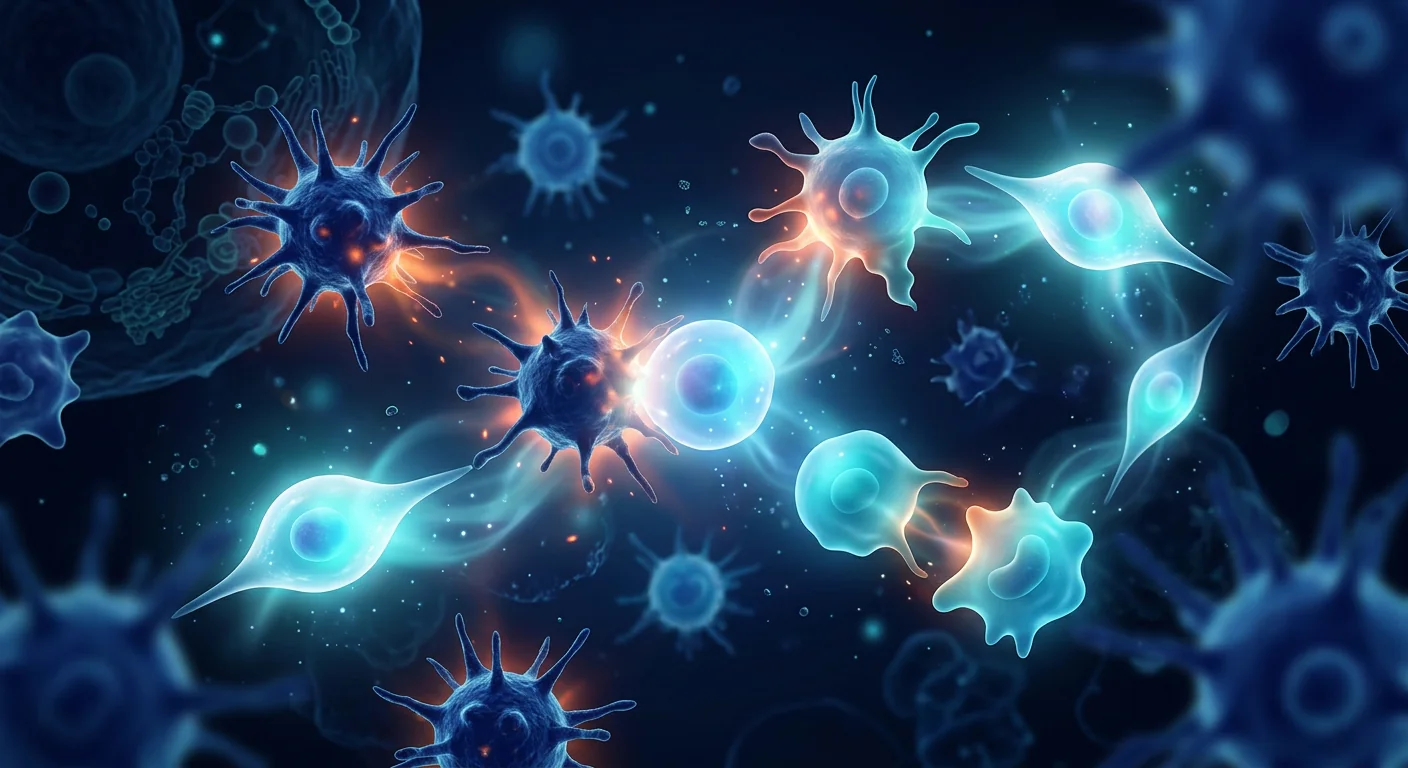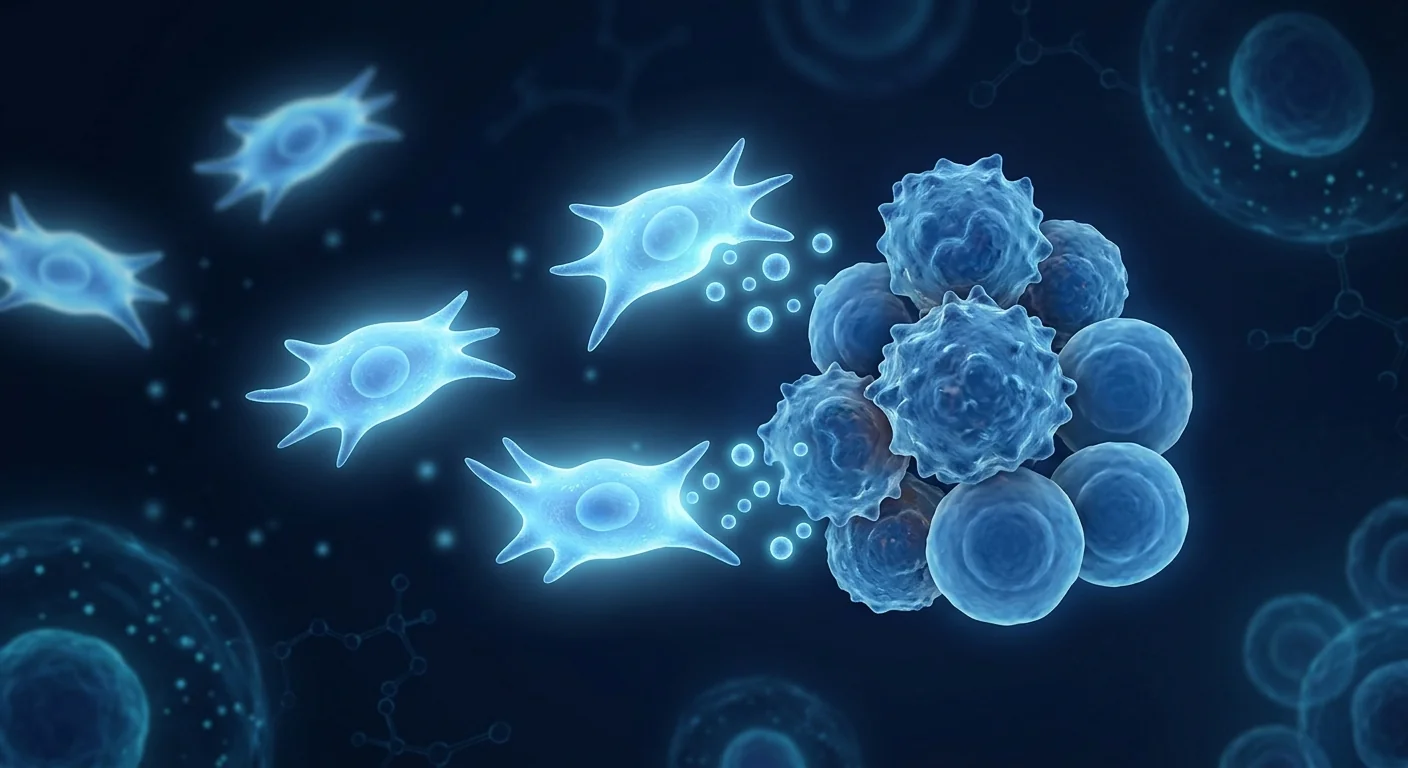
Autoimmune disease affects an estimated 5–8% of the global population, with women disproportionately impacted. The defining characteristic is the same across conditions as different as rheumatoid arthritis, systemic lupus erythematosus, and multiple sclerosis: the immune system mistakes the body's own tissues for foreign invaders and attacks them. Conventional treatment has long centred on immunosuppression — broadly suppressing immune activity to slow the damage. Mesenchymal Stem Cell therapy operates on a different premise: restoring the immune system's regulatory balance rather than disabling it.
Why autoimmune disease is so difficult to treat
The immune system is not a single organ — it's an intricately balanced network of T-cells, B-cells, regulatory cells, cytokines, and signalling pathways. In healthy function, it discriminates precisely between self and non-self, attacking pathogens while sparing the body's own tissues. In autoimmune disease, this discrimination breaks down. Specific T-cell or B-cell populations become inappropriately activated, drive inflammation against host tissue, and recruit further immune attack.[1][2][3][4]
Conventional therapies — corticosteroids, methotrexate, biologic TNF inhibitors, B-cell depleting agents — work by globally dampening immune activity. They reduce damage but at significant cost: increased infection risk, side-effect burden, long-term medication dependence. The goal of newer regenerative approaches is to restore balance rather than impose suppression.
How MSCs interact with the immune system
Mesenchymal Stem Cells possess a remarkable property: they sense the inflammatory environment around them and respond with a coordinated, multi-pathway immunomodulatory effect. This is not generalized suppression — it's targeted recalibration.
Direct cell-to-cell signalling
MSCs express low levels of HLA Class I and Class II molecules, which means they evade rapid immune detection while themselves engaging with T-cells, B-cells, and natural killer cells. Through direct contact and surface-receptor interactions, MSCs can suppress overactive effector T-cells and promote the expansion of regulatory T-cells (Tregs) — the cells responsible for keeping immune responses in check.
Paracrine secretion
MSCs release a sophisticated cocktail of soluble factors:
- TSG-6 — broadly anti-inflammatory, suppresses neutrophil activation
- PGE2 (prostaglandin E2) — drives macrophage polarization toward the regulatory M2 phenotype
- IDO (indoleamine 2,3-dioxygenase) — tryptophan-depleting enzyme that suppresses T-cell proliferation
- IL-10 — broadly immunoregulatory cytokine
- TGF-β — promotes Treg differentiation
Macrophage reprogramming
Macrophages exist on a spectrum from inflammatory M1 to regulatory M2 phenotype. MSCs shift the local population toward M2 — supporting tissue repair and reducing the inflammatory environment that drives autoimmune attack.

Conditions with the most clinical evidence
While stem cell therapy is being studied across many autoimmune conditions, the evidence base is strongest in several specific areas:
Rheumatoid Arthritis (RA)
Multiple peer-reviewed studies have shown MSC therapy can reduce disease activity scores (DAS28), inflammatory markers (CRP, ESR), and joint swelling in patients with established RA, particularly those with insufficient response to conventional DMARDs. MSCs may be administered intravenously or directly into affected joints.
Systemic Lupus Erythematosus (SLE)
Lupus is one of the most-studied autoimmune indications for MSC therapy. Clinical research — particularly from groups in China and the US — has documented improvements in serological markers, organ involvement, and disease activity in refractory lupus patients receiving allogeneic MSC infusion.
Multiple Sclerosis (MS)
MSC therapy is being actively investigated for both relapsing-remitting and progressive MS, with research focused on its capacity to reduce neuroinflammation and potentially support neural protection. Outcome measures in clinical research include relapse rate, disability progression (EDSS), and MRI lesion burden.
Inflammatory Bowel Disease (Crohn's, UC)
One of the strongest evidence bases for MSC therapy is in perianal fistulizing Crohn's disease, where local MSC injection has shown durable healing in patients refractory to conventional therapy. Systemic IBD treatment with MSCs is also under active study.
Other conditions
Active investigation continues across psoriasis, Sjögren's syndrome, type 1 diabetes, autoimmune hepatitis, and graft-versus-host disease — with varying levels of evidence.
Important Distinction
MSC therapy for autoimmune disease is not a cure and does not replace conventional medical management in most cases. It is best understood as an adjunctive regenerative protocol that can support disease control, reduce flare frequency, and in some patients, allow lower doses of conventional immunosuppression — always under coordinated medical supervision.
What an autoimmune protocol looks like
An autoimmune-focused MSC programme at a regulated clinic typically involves:
- Comprehensive immunology assessment — disease activity scoring, autoantibody panels, inflammatory markers, organ-specific evaluation, current medication review
- Coordination with the patient's primary rheumatologist or specialist — MSC therapy works alongside, not in place of, conventional management
- Personalized MSC dosing — typically intravenous infusion, with local injection where indicated. Protocols are usually structured as a series of 2–4 sessions across 6–12 weeks
- Quarterly bio-marker tracking — including inflammatory markers, autoantibody trends, and disease-specific scoring
- Coordinated medication review — over time, where clinically appropriate, conventional medications may be tapered with the rheumatologist's involvement
Realistic outcomes
Response varies significantly. Some patients experience meaningful, sustained improvement; others see modest benefit; a minority do not respond. The variables include disease type, disease duration, severity, current medications, MSC quality, and dosing protocol. A reputable clinic will discuss this honest variability during consultation rather than promising guaranteed results.
For autoimmune patients, the question is not whether MSC therapy is a magic answer — it is whether, as part of a coordinated medical strategy, it can shift the trajectory of disease activity in a meaningful way. For many patients, the evidence increasingly suggests it can.
— VELAR Clinical Team
The VELAR autoimmune approach
Autoimmune protocols at VELAR Center are designed in coordination with each patient's existing rheumatology or specialist team. Each programme uses clinical-grade Wharton's jelly–derived MSCs (≥95% identity, >95% viability at delivery) delivered via a personalized infusion protocol, with comprehensive bio-marker tracking before, during, and after the cycle. Treatment is positioned as adjunctive — supporting, not replacing, the broader medical management of autoimmune disease.
References
- Uccelli A, Moretta L, Pistoia V. Mesenchymal stem cells in health and disease. Nature Reviews Immunology. 2008;8(9):726-736. doi:10.1038/nri2395 ↩
- Shi Y, Wang Y, Li Q, et al. Immunoregulatory mechanisms of mesenchymal stem and stromal cells in inflammatory diseases. Nature Reviews Nephrology. 2018;14(8):493-507. doi:10.1038/s41581-018-0023-5 ↩
- Spees JL, Lee RH, Gregory CA. Mechanisms of mesenchymal stem/stromal cell function. Stem Cell Research & Therapy. 2016;7(1):125. doi:10.1186/s13287-016-0363-7 ↩
- Galipeau J, Sensébé L. Mesenchymal stromal cells: clinical challenges and therapeutic opportunities. Cell Stem Cell. 2018;22(6):824-833. doi:10.1016/j.stem.2018.05.004 ↩
- Pittenger MF, Discher DE, Péault BM, Phinney DG, Hare JM, Caplan AI. Mesenchymal stem cell perspective: cell biology to clinical progress. NPJ Regenerative Medicine. 2019;4:22. doi:10.1038/s41536-019-0083-6 ↩
- Caplan AI. Mesenchymal stem cells: time to change the name! Stem Cells Translational Medicine. 2017;6(6):1445-1451. doi:10.1002/sctm.17-0051 ↩
- Dominici M, Le Blanc K, Mueller I, et al. Minimal criteria for defining multipotent mesenchymal stromal cells. Cytotherapy. 2006;8(4):315-317. doi:10.1080/14653240600855905 ↩
- Lalu MM, McIntyre L, Pugliese C, et al. Safety of cell therapy with mesenchymal stromal cells (SafeCell). PLoS One. 2012;7(10):e47559. doi:10.1371/journal.pone.0047559 ↩
- Naji A, Eitoku M, Favier B, Deschaseaux F, Rouas-Freiss N, Suganuma N. Biological functions of mesenchymal stem cells. Cellular and Molecular Life Sciences. 2019;76(17):3323-3348. doi:10.1007/s00018-019-03125-1 ↩
- Bronckaers A, Hilkens P, Martens W, et al. Mesenchymal stem/stromal cells as a pharmacological approach to accelerate angiogenesis. Pharmacology & Therapeutics. 2014;143(2):181-196. doi:10.1016/j.pharmthera.2014.02.013 ↩
- Wang Y, Chen X, Cao W, Shi Y. Plasticity of mesenchymal stem cells in immunomodulation. Nature Immunology. 2014;15(11):1009-1016. doi:10.1038/ni.3002 ↩
- Weiss DJ, Bertoncello I, Borok Z, et al. Stem cells and cell therapies in lung biology and lung diseases. Proceedings of the American Thoracic Society. 2011;8(3):223-272. doi:10.1513/pats.201012-071DW ↩
参考文献
- Uccelli A, Moretta L, Pistoia V. Mesenchymal stem cells in health and disease. Nature Reviews Immunology. 2008;8(9):726-736. doi:10.1038/nri2395 ↩
- Shi Y, Wang Y, Li Q, et al. Immunoregulatory mechanisms of mesenchymal stem and stromal cells in inflammatory diseases. Nature Reviews Nephrology. 2018;14(8):493-507. doi:10.1038/s41581-018-0023-5 ↩
- Spees JL, Lee RH, Gregory CA. Mechanisms of mesenchymal stem/stromal cell function. Stem Cell Research & Therapy. 2016;7(1):125. doi:10.1186/s13287-016-0363-7 ↩
- Galipeau J, Sensébé L. Mesenchymal stromal cells: clinical challenges and therapeutic opportunities. Cell Stem Cell. 2018;22(6):824-833. doi:10.1016/j.stem.2018.05.004 ↩
- Pittenger MF, Discher DE, Péault BM, Phinney DG, Hare JM, Caplan AI. Mesenchymal stem cell perspective: cell biology to clinical progress. NPJ Regenerative Medicine. 2019;4:22. doi:10.1038/s41536-019-0083-6 ↩
- Caplan AI. Mesenchymal stem cells: time to change the name! Stem Cells Translational Medicine. 2017;6(6):1445-1451. doi:10.1002/sctm.17-0051 ↩
- Dominici M, Le Blanc K, Mueller I, et al. Minimal criteria for defining multipotent mesenchymal stromal cells. Cytotherapy. 2006;8(4):315-317. doi:10.1080/14653240600855905 ↩
- Lalu MM, McIntyre L, Pugliese C, et al. Safety of cell therapy with mesenchymal stromal cells (SafeCell). PLoS One. 2012;7(10):e47559. doi:10.1371/journal.pone.0047559 ↩
- Naji A, Eitoku M, Favier B, Deschaseaux F, Rouas-Freiss N, Suganuma N. Biological functions of mesenchymal stem cells. Cellular and Molecular Life Sciences. 2019;76(17):3323-3348. doi:10.1007/s00018-019-03125-1 ↩
- Bronckaers A, Hilkens P, Martens W, et al. Mesenchymal stem/stromal cells as a pharmacological approach to accelerate angiogenesis. Pharmacology & Therapeutics. 2014;143(2):181-196. doi:10.1016/j.pharmthera.2014.02.013 ↩
- Wang Y, Chen X, Cao W, Shi Y. Plasticity of mesenchymal stem cells in immunomodulation. Nature Immunology. 2014;15(11):1009-1016. doi:10.1038/ni.3002 ↩
- Weiss DJ, Bertoncello I, Borok Z, et al. Stem cells and cell therapies in lung biology and lung diseases. Proceedings of the American Thoracic Society. 2011;8(3):223-272. doi:10.1513/pats.201012-071DW ↩
自身免疫性疾病影响估计 5–8% 的全球人口,其中女性受影响比例较高。其定义性特征在如类风湿性关节炎、系统性红斑狼疮与多发性硬化症等截然不同的疾病中相同:免疫系统将身体自身的组织误认为外来入侵者并加以攻击。常规治疗长期以来集中于免疫抑制——广泛抑制免疫活动以减缓损害。间充质干细胞疗法基于不同的前提:恢复免疫系统的调节平衡,而非将其禁用。
为什么自身免疫性疾病如此难治
免疫系统不是单一器官——它是一个由 T 细胞、B 细胞、调节细胞、细胞因子与信号传导路径组成的精细平衡的网络。在健康功能下,它精确地区分自我与非自我,攻击病原体,同时保留身体自身的组织。在自身免疫性疾病中,这种区分崩溃。特定的 T 细胞或 B 细胞群体被不当激活,对宿主组织驱动炎症,并招募进一步的免疫攻击。
常规疗法——皮质类固醇、甲氨蝶呤、生物 TNF 抑制剂、B 细胞耗竭剂——通过全面减弱免疫活动起作用。它们减少损害,但代价显著:感染风险增加、副作用负担、长期药物依赖。较新再生方法的目标是恢复平衡,而非强加抑制。
MSC 如何与免疫系统互动
间充质干细胞具有一项非凡的特性:它们感知周围的炎症环境,并以协调、多路径的免疫调节效应作出响应。这不是普遍化的抑制——而是有针对性的重新校准。
直接的细胞间信号传导
MSC 表达低水平的 HLA Ⅰ 类与 Ⅱ 类分子,这意味着它们逃避快速的免疫检测,同时与 T 细胞、B 细胞和自然杀伤细胞互动。通过直接接触与表面受体互动,MSC 可以抑制过度活跃的效应 T 细胞,并促进调节性 T 细胞(Treg)的扩增——这些是负责保持免疫反应受控的细胞。
旁分泌
MSC 释放一种由可溶性因子组成的精密混合物:
- TSG-6——广泛抗炎,抑制中性粒细胞激活
- PGE2(前列腺素 E2)——驱动巨噬细胞极化向调节性 M2 表型
- IDO(吲哚胺 2,3-双加氧酶)——色氨酸耗竭酶,抑制 T 细胞增殖
- IL-10——广泛免疫调节细胞因子
- TGF-β——促进 Treg 分化
巨噬细胞重编程
巨噬细胞存在于从炎症 M1 到调节 M2 表型的谱系上。MSC 将局部群体转向 M2——支持组织修复并减少驱动自身免疫攻击的炎症环境。
临床证据最强的病症
虽然干细胞疗法正在跨多种自身免疫性疾病进行研究,但在几个特定领域证据基础最强:
类风湿性关节炎(RA)
多项同行评审研究表明,MSC 疗法可降低疾病活动评分(DAS28)、炎症标志物(CRP、ESR)以及已确诊 RA 患者的关节肿胀,特别是对常规 DMARD 反应不足的患者。MSC 可静脉给药或直接注入受影响的关节。
系统性红斑狼疮(SLE)
狼疮是 MSC 疗法研究最多的自身免疫适应症之一。临床研究——特别是来自中国和美国的小组——记录了接受异体 MSC 输注的难治性狼疮患者血清学标志物、器官受累和疾病活动的改善。
多发性硬化症(MS)
MSC 疗法正在被积极研究用于复发缓解型与进展型 MS,研究重点是其减少神经炎症与可能支持神经保护的能力。临床研究中的疗效衡量包括复发率、残疾进展(EDSS)以及 MRI 病灶负担。
炎症性肠病(克罗恩病、UC)
MSC 疗法最强的证据基础之一是肛周瘘管克罗恩病,其中局部 MSC 注射在对常规治疗难治的患者中显示出持久的愈合。MSC 全身性 IBD 治疗也在积极研究中。
其他病症
对牛皮癣、干燥综合征、1 型糖尿病、自身免疫性肝炎与移植物抗宿主病的积极研究持续进行——证据水平各异。
重要区分
用于自身免疫性疾病的 MSC 疗法不是治愈,在大多数情况下也不替代常规医学管理。最好将其理解为可支持疾病控制、减少发作频率,并在某些患者中允许较低剂量常规免疫抑制的辅助再生方案——始终在协调的医疗监督下。
自身免疫方案是什么样子
在受监管诊所,专注自身免疫的 MSC 项目通常包括:
- 全面免疫学评估——疾病活动评分、自身抗体面板、炎症标志物、器官特异性评估、当前用药回顾
- 与患者主治风湿病学家或专科医师的协调——MSC 疗法与常规管理并行,而非替代
- 个性化 MSC 给药——通常静脉输注,必要时局部注射。方案通常结构为 6–12 周内 2–4 次会话的系列
- 季度生物标志物追踪——包括炎症标志物、自身抗体趋势与疾病特异性评分
- 协调用药回顾——随着时间推移,在临床适当的情况下,常规药物可在风湿病学家的参与下逐渐减量
实际疗效
反应差异显著。一些患者经历有意义的、持续的改善;其他人看到适度受益;少数无反应。变量包括疾病类型、疾病持续时间、严重程度、当前用药、MSC 质量与给药方案。信誉良好的诊所会在咨询期间讨论这一诚实的可变性,而非承诺保证结果。
对自身免疫患者而言,问题不在于 MSC 疗法是否是神奇答案——而在于作为协调医疗策略的一部分,它是否能以有意义的方式改变疾病活动的轨迹。对许多患者而言,证据越来越表明它可以。
——VELAR 临床团队
VELAR 的自身免疫方法
VELAR Center 的自身免疫方案与每位患者现有的风湿病学或专科团队协调设计。每个项目使用临床级华通氏胶来源 MSC(身份 ≥95%、交付时活性 >95%),通过个性化输注方案递送,配以周期前、期间与之后的全面生物标志物追踪。治疗被定位为辅助性——支持而非替代自身免疫性疾病的更广泛医学管理。
تصيب أمراض المناعة الذاتية ما يُقدَّر بـ 5–8٪ من سكان العالم، مع تأثير غير متناسب على النساء. الخاصية المحددة هي نفسها عبر حالات مختلفة جداً مثل التهاب المفاصل الروماتويدي والذئبة الحمامية الجهازية والتصلب المتعدد: يخطئ الجهاز المناعي في تمييز أنسجة الجسم نفسها كغزاة أجانب ويهاجمها. لطالما تمحور العلاج التقليدي حول التثبيط المناعي — قمع النشاط المناعي بشكل واسع لإبطاء الضرر. يعمل علاج الخلايا الجذعية الوسيطة على فرضية مختلفة: استعادة التوازن التنظيمي للجهاز المناعي بدلاً من تعطيله.
لماذا يصعب علاج أمراض المناعة الذاتية
الجهاز المناعي ليس عضواً واحداً — إنه شبكة متوازنة بدقة من الخلايا التائية والبائية والتنظيمية والسيتوكينات ومسارات الإشارات. في الوظيفة الصحية، يميز بدقة بين الذات وغير الذات، مهاجماً مسببات الأمراض مع الحفاظ على أنسجة الجسم نفسها. في أمراض المناعة الذاتية، ينهار هذا التمييز. تُنشَّط مجموعات معينة من الخلايا التائية أو البائية بشكل غير مناسب، وتدفع الالتهاب ضد نسيج المضيف، وتُجنِّد المزيد من الهجوم المناعي.
العلاجات التقليدية — الكورتيكوستيرويدات، الميثوتريكسات، مثبطات TNF البيولوجية، عوامل استنزاف الخلايا البائية — تعمل من خلال تخميد النشاط المناعي عالمياً. تقلل الضرر لكن بتكلفة كبيرة: زيادة خطر العدوى، عبء الآثار الجانبية، الاعتماد طويل الأمد على الأدوية. هدف المناهج التجديدية الأحدث هو استعادة التوازن بدلاً من فرض القمع.
كيف تتفاعل MSC مع الجهاز المناعي
تتمتع الخلايا الجذعية الوسيطة بخاصية رائعة: تستشعر البيئة الالتهابية حولها وتستجيب بتأثير مُعدِّل للمناعة منسق ومتعدد المسارات. هذا ليس قمعاً عاماً — إنه إعادة معايرة مستهدفة.
الإشارة المباشرة بين الخلايا
تُعبِّر MSC عن مستويات منخفضة من جزيئات HLA الفئة I والفئة II، مما يعني أنها تتفادى الكشف المناعي السريع بينما تتفاعل بنفسها مع الخلايا التائية والبائية والقاتلة الطبيعية. من خلال الاتصال المباشر وتفاعلات مستقبلات السطح، يمكن لـ MSC قمع الخلايا التائية المؤثرة مفرطة النشاط وتعزيز توسع الخلايا التائية التنظيمية (Tregs) — الخلايا المسؤولة عن إبقاء الاستجابات المناعية تحت السيطرة.
الإفراز شبه الإفرازي
تطلق MSC مزيجاً متطوراً من العوامل القابلة للذوبان:
- TSG-6 — مضاد للالتهاب على نطاق واسع، يقمع تنشيط العدلات
- PGE2 (البروستاجلاندين E2) — يدفع استقطاب البلاعم نحو نمط M2 التنظيمي
- IDO (إندولامين 2,3-ثنائي أكسجيناز) — إنزيم مُستنزِف للتربتوفان يقمع تكاثر الخلايا التائية
- IL-10 — سيتوكين مُنظِّم للمناعة على نطاق واسع
- TGF-β — يعزز تمايز Treg
إعادة برمجة البلاعم
توجد البلاعم على طيف من النمط الالتهابي M1 إلى التنظيمي M2. تحول MSC المجموعة المحلية نحو M2 — مما يدعم إصلاح الأنسجة ويقلل البيئة الالتهابية التي تدفع الهجوم المناعي الذاتي.
الحالات ذات أقوى الأدلة السريرية
بينما تتم دراسة علاج الخلايا الجذعية عبر العديد من حالات المناعة الذاتية، فإن قاعدة الأدلة أقوى في عدة مجالات محددة:
التهاب المفاصل الروماتويدي (RA)
أظهرت دراسات مُحكَّمة متعددة أن علاج MSC يمكن أن يقلل من درجات نشاط المرض (DAS28) والمؤشرات الالتهابية (CRP، ESR) وتورم المفاصل لدى المرضى المصابين بـ RA المُؤكَّد، خاصة أولئك الذين لديهم استجابة غير كافية لـ DMARDs التقليدية. يمكن إعطاء MSC وريدياً أو مباشرة في المفاصل المتأثرة.
الذئبة الحمامية الجهازية (SLE)
الذئبة من أكثر الدلالات المناعية الذاتية المدروسة لعلاج MSC. وثَّقت الأبحاث السريرية — لا سيما من مجموعات في الصين والولايات المتحدة — تحسينات في المؤشرات المصلية، إصابة الأعضاء، ونشاط المرض لدى مرضى الذئبة المقاومين الذين يتلقون تسريب MSC الخيفي.
التصلب المتعدد (MS)
يُحقَّق بنشاط في علاج MSC لكلٍّ من MS الانتكاسي-المهداني والتقدمي، حيث يركز البحث على قدرته على تقليل الالتهاب العصبي ودعم الحماية العصبية المحتملة. تشمل مقاييس النتائج في الأبحاث السريرية معدل الانتكاس، تقدم الإعاقة (EDSS)، وعبء الآفات في MRI.
أمراض الأمعاء الالتهابية (كرون، UC)
إحدى أقوى قواعد الأدلة لعلاج MSC هي في مرض كرون الناسوري حول الشرج، حيث أظهرت الحقن الموضعية لـ MSC شفاءً دائماً لدى المرضى المقاومين للعلاج التقليدي. علاج IBD الجهازي بـ MSC أيضاً قيد الدراسة النشطة.
حالات أخرى
تستمر التحقيقات النشطة عبر الصدفية، متلازمة سجوجرن، السكري من النوع الأول، التهاب الكبد المناعي الذاتي، ومرض الطعم ضد المضيف — بمستويات متباينة من الأدلة.
تمييز مهم
علاج MSC لأمراض المناعة الذاتية ليس علاجاً شافياً ولا يحل محل الإدارة الطبية التقليدية في معظم الحالات. من الأفضل فهمه كـبروتوكول تجديدي مساعد يمكن أن يدعم السيطرة على المرض، ويقلل من تكرار النوبات، ولدى بعض المرضى، يسمح بجرعات أقل من التثبيط المناعي التقليدي — دائماً تحت إشراف طبي منسق.
كيف يبدو بروتوكول المناعة الذاتية
برنامج MSC المتمحور حول المناعة الذاتية في عيادة مُنظَّمة يشمل عادة:
- تقييم مناعي شامل — درجات نشاط المرض، لوحات الأجسام المضادة الذاتية، المؤشرات الالتهابية، التقييم الخاص بالأعضاء، مراجعة الأدوية الحالية
- التنسيق مع طبيب الروماتيزم أو الأخصائي الأساسي للمريض — يعمل علاج MSC جنباً إلى جنب مع الإدارة التقليدية، وليس بدلاً منها
- جرعات MSC شخصية — تسريب وريدي عادة، مع حقن موضعي حيث يكون مُشاراً إليه. تُنظَّم البروتوكولات عادة كسلسلة من 2–4 جلسات عبر 6–12 أسبوعاً
- تتبع المؤشرات الحيوية الفصلي — بما في ذلك المؤشرات الالتهابية، اتجاهات الأجسام المضادة الذاتية، والدرجات الخاصة بالمرض
- مراجعة الأدوية المنسقة — مع مرور الوقت، حيث يكون مناسباً سريرياً، يمكن خفض جرعات الأدوية التقليدية بمشاركة طبيب الروماتيزم
النتائج الواقعية
تختلف الاستجابة بشكل كبير. يختبر بعض المرضى تحسناً ذا معنى ومستداماً؛ يرى آخرون فائدة متواضعة؛ أقلية لا تستجيب. تشمل المتغيرات نوع المرض، مدته، شدته، الأدوية الحالية، جودة MSC، وبروتوكول الجرعات. ستناقش العيادة ذات السمعة الجيدة هذا التباين الصادق أثناء الاستشارة بدلاً من الوعد بنتائج مضمونة.
بالنسبة لمرضى المناعة الذاتية، السؤال ليس ما إذا كان علاج MSC إجابة سحرية — بل ما إذا كان، كجزء من استراتيجية طبية منسقة، يمكنه تحويل مسار نشاط المرض بطريقة ذات معنى. بالنسبة للعديد من المرضى، تشير الأدلة بشكل متزايد إلى أنه يستطيع.
— فريق VELAR السريري
منهج VELAR للمناعة الذاتية
تُصمَّم بروتوكولات المناعة الذاتية في VELAR Center بالتنسيق مع فريق الروماتيزم أو الأخصائي الحالي لكل مريض. يستخدم كل برنامج MSC ذات الجودة السريرية المشتقة من هلام وارتون (هوية ≥95٪، حيوية عند التسليم >95٪) تُسلَّم عبر بروتوكول تسريب شخصي، مع تتبع شامل للمؤشرات الحيوية قبل الدورة وأثناءها وبعدها. يُوضَع العلاج كمساعد — يدعم، ولا يحل محل، الإدارة الطبية الأوسع لأمراض المناعة الذاتية.