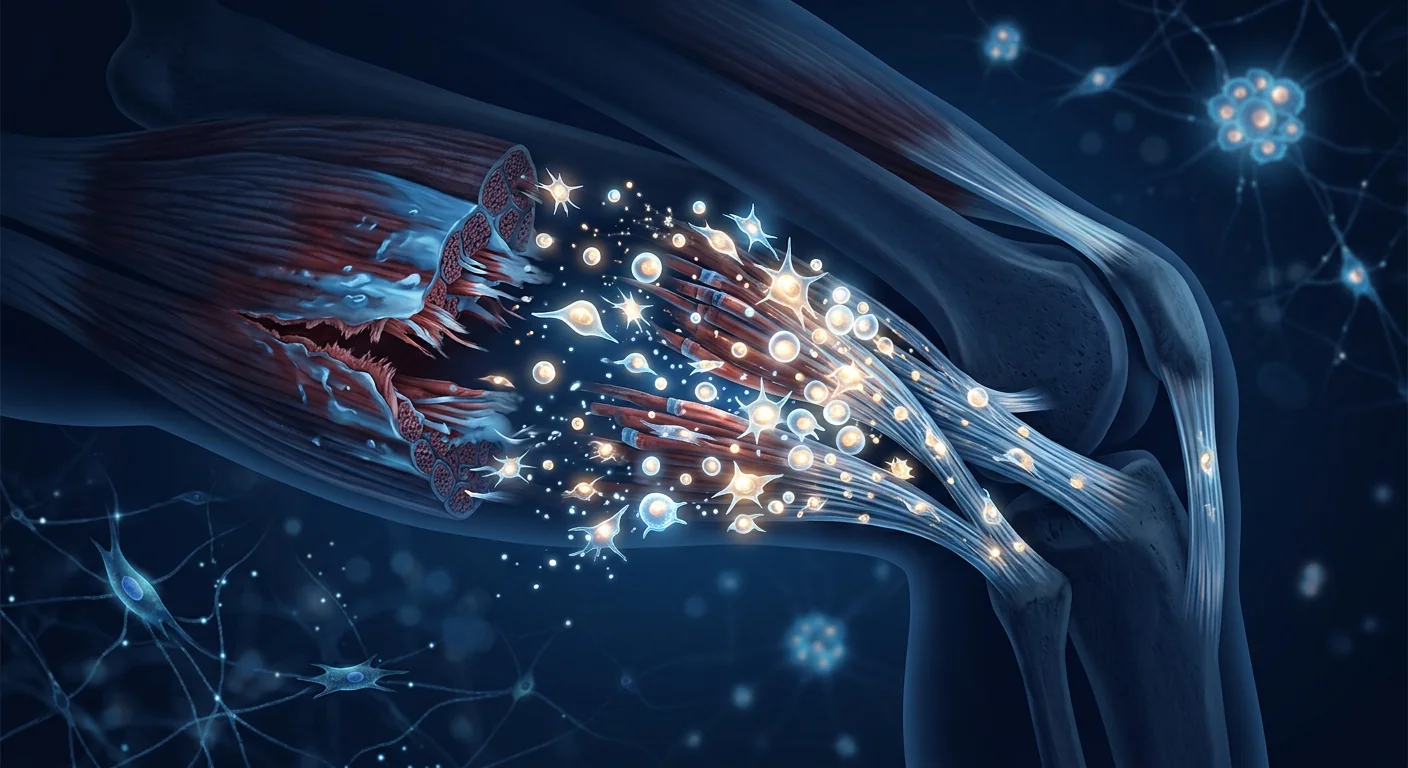
Sports injuries occupy a unique space in medicine. Unlike degenerative conditions that unfold over decades, they often strike in a single moment — a sharp turn on the football pitch, a misjudged landing after a basketball rebound, a sudden acceleration during a sprint. Yet the biology of recovery is anything but instantaneous. Tendons, ligaments, muscle, and cartilage — the tissues most commonly injured in sport — are among the slowest-healing structures in the body, and their natural repair is frequently incomplete. This is where Mesenchymal Stem Cell therapy is beginning to attract attention: not as a replacement for traditional sports medicine, but as a complementary biological tool that may support more complete, more durable tissue recovery.
What types of sports injuries can stem cell therapy address?
Stem cell therapy is not a single answer for every injury. Its potential role depends on the tissue type, the severity of the injury, and the athlete's overall health status. Early research and clinical experience suggest that MSC therapy may be most relevant to four broad categories of sports injury:[1][2][3][4]
Tendon injuries (tendinopathy and partial tears)
Tendons — the fibrous cords that connect muscle to bone — are notoriously slow to heal. Conditions like Achilles tendinopathy, patellar tendinopathy (jumper's knee), tennis elbow (lateral epicondylitis), and rotator cuff tendinopathy are common in athletes across many sports. Tendons have a poor native blood supply, which limits the delivery of the body's own repair cells. Preclinical studies suggest that MSCs, when delivered to the site of tendon injury, may support the repair process by releasing growth factors that stimulate local tenocyte activity and by modulating the chronic inflammatory environment that characterises tendinopathy.
Ligament injuries (sprains and partial tears)
Ligament injuries — particularly to the anterior cruciate ligament (ACL), medial collateral ligament (MCL), and ankle ligaments — are among the most feared in sport. Complete ruptures typically require surgical reconstruction, but partial tears and grade I–II sprains may benefit from biological augmentation. Early research suggests that MSC therapy, sometimes combined with platelet-rich plasma (PRP), may support ligament healing by promoting collagen organisation and reducing the inflammatory response that can lead to scar tissue formation rather than functional repair.
Muscle injuries (strains and contusions)
Muscle injuries are the most common sports injury overall, accounting for up to 30–55% of all athletic injuries depending on the sport. While most mild strains heal with rest and physiotherapy, higher-grade injuries — particularly those involving the myotendinous junction — can result in scar tissue that reduces muscle elasticity and increases the risk of re-injury. There is growing interest in whether MSC therapy, delivered early in the healing window, can modulate the fibrotic response and encourage regeneration of functional muscle tissue rather than disorganised scar.
Cartilage damage (focal chondral defects)
Articular cartilage — the smooth, load-bearing surface that lines joints — has almost no capacity for spontaneous repair. In young athletes, a single traumatic event can create a focal cartilage defect that, left untreated, may progress to early osteoarthritis. MSC therapy delivered to the joint, either via injection or in combination with surgical techniques like microfracture, has been studied as a means of supporting cartilage repair. While the evidence base is still developing, several clinical studies have reported improvements in pain and function in patients with focal cartilage lesions treated with MSCs.
How MSC therapy works for sports injuries
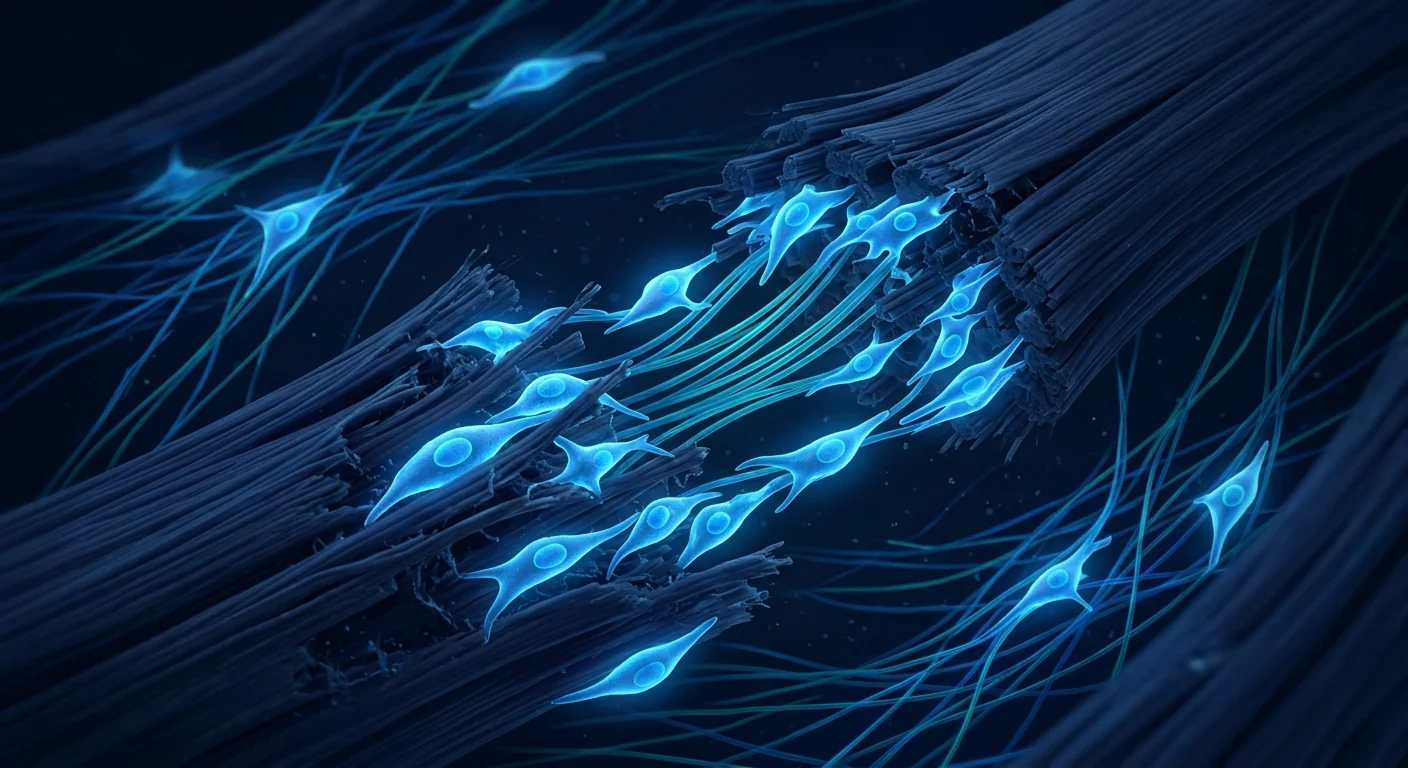
When clinical-grade Mesenchymal Stem Cells are introduced to an injured tissue — whether by direct injection into a tendon or ligament, or systemically via intravenous infusion — they engage the local environment through several coordinated mechanisms:
1. Anti-inflammatory signalling
Injured tissue releases a cascade of inflammatory cytokines — particularly IL-1β, IL-6, and TNF-α — that, while necessary for the initial healing response, can become chronic and counterproductive. MSCs respond to this high-cytokine environment by secreting anti-inflammatory mediators including TSG-6, prostaglandin E2 (PGE2), and indoleamine 2,3-dioxygenase (IDO). This helps shift the injury site from a state of persistent inflammation toward one of organised repair.
2. Paracrine support of local repair cells
MSCs do not primarily work by differentiating into replacement tissue themselves — a common misconception. Instead, they act as cellular "orchestrators," releasing a rich cocktail of growth factors (TGF-β, VEGF, IGF-1, HGF, FGF-2) that signal the body's own resident repair cells — tenocytes in tendons, fibroblasts in ligaments, satellite cells in muscle — to proliferate, migrate, and produce new extracellular matrix.
3. Modulation of fibrosis
One of the most clinically relevant aspects of MSC biology for sports medicine is the potential to modulate the balance between regeneration and fibrosis. When muscle or tendon heals under normal conditions, a degree of scar tissue is inevitable. MSCs appear to influence this process by regulating TGF-β1 signalling pathways and promoting a matrix metalloproteinase (MMP) environment that favours organised collagen deposition over disorganised scar.
4. Support for angiogenesis
Many sports injuries occur in tissues with intrinsically poor blood supply — tendons and ligaments being prime examples. MSCs secrete vascular endothelial growth factor (VEGF) and other angiogenic factors that support the formation of new microvessels, improving oxygen and nutrient delivery to the healing tissue.
What MSC therapy does NOT do
It is important to set honest expectations. MSC therapy does not instantly repair a torn tendon or ligament. It does not replace the need for appropriate rest, physiotherapy, and graded return-to-sport protocols. It does not guarantee a return to pre-injury performance levels. What early evidence suggests it may do is support the body's own repair mechanisms, reduce the inflammatory burden, and potentially improve the quality of tissue healing — particularly in injuries where natural repair is known to be slow or incomplete.
Types of stem cells used in sports medicine
Not all stem cell preparations are the same, and the source matters considerably. Two main categories are relevant to sports injury treatment:
Wharton's jelly–derived MSCs (allogeneic)
These are mesenchymal stem cells extracted from the Wharton's jelly of donated umbilical cord tissue following healthy full-term births. They are expanded under GMP conditions to clinical-grade doses and administered fresh to patients without requiring a matching donor. Wharton's jelly MSCs are particularly attractive for sports medicine because they are young, highly proliferative, and have strong immunomodulatory properties. They also avoid the need for a surgical harvesting procedure from the patient, which is a meaningful consideration for an athlete who is already dealing with an injury. At a clinical-grade facility, these cells are characterised by ≥95% expression of MSC surface markers (CD73, CD90, CD105) and >95% viability at delivery.
Autologous MSCs (bone marrow or adipose-derived)
These are stem cells harvested from the patient's own bone marrow (typically from the iliac crest) or adipose tissue (via liposuction), then processed and concentrated before being re-injected at the injury site. The advantage is that they are the patient's own cells, eliminating any theoretical risk of immune rejection. The disadvantages include the need for an additional harvesting procedure, variable cell quality depending on patient age and health, and the time required for processing — which may mean a delay between harvest and treatment.
Both approaches are used in clinical practice. The choice between them depends on the specific injury, the patient's preferences, and the clinical team's assessment. Many sports medicine clinics favour allogeneic Wharton's jelly MSCs for their consistency, potency, and the absence of a second procedure.
Recovery timeline: what athletes typically experience
Cellular therapy is not a pharmaceutical — it does not produce an immediate effect. Most athletes who undergo MSC therapy for a sports injury describe the recovery in three broad phases:
It is critical to understand that the stem cell treatment is one component of a broader recovery programme. The most successful outcomes are consistently reported by patients who combine MSC therapy with disciplined physiotherapy, appropriate nutrition, and — perhaps most difficult for athletes — the patience to allow biological healing to run its course rather than rushing back to sport. Many patients report that the most noticeable difference from previous injury recoveries is a sense of more complete healing — less residual stiffness, better tissue quality on imaging, and greater confidence in the injured area.
How MSC therapy compares with traditional treatments
Athletes with significant tendon, ligament, or cartilage injuries have historically faced a limited menu of options:
| Treatment | Mechanism | Strengths | Limitations |
|---|---|---|---|
| Rest + physiotherapy | Natural healing + graded loading | Non-invasive; first-line for mild injuries | Slow; incomplete repair in higher-grade injuries |
| Corticosteroid injections | Anti-inflammatory | Rapid pain relief | May weaken tendon/ligament tissue; short-term solution |
| PRP (Platelet-Rich Plasma) | Growth factor delivery | Autologous; well-studied in tendinopathy | Variable concentration; dependency on patient's own platelet quality |
| Surgery | Structural repair | Definitive for complete tears | Invasive; long rehabilitation; risk of complications |
| MSC therapy | Immunomodulation + paracrine support | Addresses biology of poor healing; may improve tissue quality | Still investigational for many indications; cost; variable protocols |
In practice, these approaches are often used in combination rather than as mutually exclusive alternatives. An athlete with a partial rotator cuff tear might undergo MSC injection followed by a structured physiotherapy programme, with PRP used as an adjunct. A runner with chronic Achilles tendinopathy that has not responded to six months of conservative treatment might consider MSC therapy before exploring surgical options. The decision is individual, and a responsible clinic will help the patient understand where MSC therapy fits within the full treatment landscape.
Who is a candidate for MSC sports injury therapy?
Candidacy is determined through a comprehensive assessment that includes medical history, injury-specific imaging (typically MRI or diagnostic ultrasound), and a functional evaluation. The patients who appear to derive the most benefit tend to share several characteristics:
- Partial tendon or ligament tears (not complete ruptures requiring surgical reconstruction)
- Chronic tendinopathy that has not responded adequately to 3–6 months of conservative treatment
- Grade II muscle strains or recurrent muscle injuries at the same site
- Focal cartilage defects with intact surrounding cartilage
- Realistic expectations about recovery timelines and the role of rehabilitation
- Commitment to a structured physiotherapy programme alongside the biological treatment
Patients with complete tendon or ligament ruptures, advanced joint degeneration, active infection, or certain autoimmune conditions are typically not considered suitable candidates. A reputable clinic will be transparent about who is — and is not — likely to benefit.
Scientific evidence and clinical studies
The evidence base for MSC therapy in sports medicine is growing but remains at an intermediate stage of maturity. Most published studies are small to moderate in size, and many lack the randomised controlled design that represents the gold standard in medical research. However, several systematic reviews and meta-analyses have reported encouraging signals:
In the area of tendon repair, a 2022 systematic review of MSC therapy for tendinopathy found that the majority of published studies reported improvements in pain scores and functional outcomes, with a favourable safety profile. For cartilage defects, a meta-analysis of studies using MSC therapy alongside microfracture reported improved MRI outcomes and functional scores compared to microfracture alone at 24-month follow-up. In the ligament space, preclinical models of MSC-augmented ACL repair have shown improved histological scores and biomechanical properties, though human data remains limited.
It is fair to characterise the current evidence as promising but not definitive. Patients considering MSC therapy for a sports injury should understand that they are accessing a treatment at the frontier of regenerative medicine — one supported by plausible biological mechanisms and a growing body of clinical data, but not yet established as standard of care for most sports injury indications.
Limitations and honest risks
Transparency about what is not known is as important as clarity about what is. The honest limitations of MSC therapy for sports injuries include:
- Variability in protocols. There is no standardised dose, delivery method, or cell source across clinics. Outcomes may vary significantly between providers.
- Limited high-quality evidence. While the biological rationale is strong, large-scale randomised controlled trials are still needed for most sports injury indications.
- Not a replacement for surgery. Complete tendon or ligament ruptures still require surgical reconstruction. MSC therapy is not an alternative to necessary surgery.
- Cost. MSC therapy represents a significant financial investment and is typically not covered by insurance for sports injury indications.
- Variable response. Not every patient responds. Some experience substantial improvement, some moderate, and some limited benefit. A reputable clinic will be transparent about typical response rates.
- Regulatory variability. The regulatory status of MSC therapy differs between countries. Patients should confirm that their provider operates within the applicable regulatory framework.
The most significant preventable risk in this field is not the therapy itself — it is unregulated providers offering non-clinical-grade cells with unverified sterility, identity, or potency. Patients should always verify: the source and characterisation of the cells, the laboratory's certifications and quality systems, and the availability of a Certificate of Analysis for the specific dose being administered.
Cost considerations in Thailand
Thailand has emerged as a significant destination for regenerative medicine, combining clinical expertise with costs that are typically lower than equivalent treatment in North America, Europe, or Australia. For MSC therapy directed at sports injuries, costs in Thailand generally range from approximately USD 4,000 to USD 12,000 per treatment session, depending on the complexity of the protocol, the cell source, the number of injection sites, and whether systemic infusion is combined with local injection. This compares favourably with prices in the United States, where similar protocols can range from USD 8,000 to USD 25,000 or more.
Patients travelling from abroad should factor in additional costs including flights, accommodation, and the time required for the treatment and initial recovery period — typically a stay of 3–7 days in Bangkok. Many international patients combine treatment with a short recovery holiday, taking advantage of Bangkok's hospitality infrastructure. It is important to note that these are elective treatments not covered by most international health insurance plans, and patients should budget accordingly.
Frequently asked questions
How soon after a sports injury can I receive MSC therapy?
Timing matters. For acute injuries, most clinicians recommend waiting until the initial inflammatory phase has subsided — typically 1–3 weeks post-injury — before administering MSC therapy. For chronic injuries such as long-standing tendinopathy, there is no specific waiting period, and treatment can proceed once candidacy is confirmed through assessment and imaging.
Will I need more than one treatment session?
Many patients achieve satisfactory results from a single treatment session, particularly when combined with a structured rehabilitation programme. Some injuries — particularly chronic tendinopathy or more extensive cartilage damage — may benefit from a second session 3–6 months after the first. The decision is made based on follow-up assessment and functional progress, not on a predetermined schedule.
Can MSC therapy help me avoid surgery?
For partial tears and chronic tendinopathy, many patients report that MSC therapy helped them avoid or delay surgery. However, this is not guaranteed. Complete tendon or ligament ruptures, severe joint instability, and advanced cartilage loss still require surgical management. MSC therapy is best understood as a tool that may reduce the need for surgery in appropriately selected cases, not as a universal surgical alternative.
Is there any downtime after the procedure?
Most patients can walk out of the clinic on the same day and resume light daily activities within 24–48 hours. However, the treated area should be rested from sport-specific loading for a period determined by the clinical team — typically 2–6 weeks depending on the injury and tissue type. A graduated return-to-sport protocol is essential; rushing back too early can undermine the biological repair process.
Are there any side effects?
When delivered with clinical-grade cells and proper technique, MSC therapy has a strong safety profile. The most common side effects are local and temporary: mild soreness, swelling, or stiffness at the injection site for 24–72 hours. Systemic side effects such as low-grade fever or fatigue are occasionally reported and typically resolve within 24 hours. Serious adverse events are rare in published literature when clinical-grade cells are used under appropriate medical supervision.
How do I know if a clinic is legitimate?
Look for several markers of quality: the clinic should be transparent about the source and characterisation of its cells, provide a Certificate of Analysis on request, operate under a licensed medical facility with appropriate regulatory oversight, have a clinical team led by qualified physicians with experience in regenerative medicine, and be willing to tell you honestly if you are not a good candidate. A clinic that promises guaranteed results or claims to treat every condition with the same protocol should be approached with caution.
For the right athlete — with a partial tendon or ligament injury, realistic expectations, and a commitment to rehabilitation — MSC therapy represents a meaningful addition to the sports medicine toolkit. It is not about bypassing the body's own healing process, but about supporting it more effectively.
— VELAR Clinical Team
The VELAR approach to sports injury recovery
Sports injury protocols at VELAR Center begin with a comprehensive assessment that includes injury-specific imaging, functional evaluation, and a candidacy discussion that is honest about what MSC therapy can and cannot realistically achieve for your specific injury. Each patient's protocol uses clinical-grade Wharton's jelly–derived MSCs (≥95% MSC marker expression, >95% viability at delivery), delivered via image-guided injection, IV infusion, or a combined protocol depending on the injury type and location. Every session is paired with a structured rehabilitation plan designed in collaboration with your physiotherapist or sports medicine team, and progress is monitored at 1, 3, and 6-month milestones.
If you are an athlete considering regenerative therapy for a sports injury, the most important first step is an honest assessment of your specific injury, your candidacy, and a clear understanding of what realistic recovery looks like — including the rehabilitation work that will be required alongside the biological treatment.
References
- Uccelli A, Moretta L, Pistoia V. Mesenchymal stem cells in health and disease. Nature Reviews Immunology. 2008;8(9):726-736. doi:10.1038/nri2395 ↩
- Shi Y, Wang Y, Li Q, et al. Immunoregulatory mechanisms of mesenchymal stem and stromal cells in inflammatory diseases. Nature Reviews Nephrology. 2018;14(8):493-507. doi:10.1038/s41581-018-0023-5 ↩
- Spees JL, Lee RH, Gregory CA. Mechanisms of mesenchymal stem/stromal cell function. Stem Cell Research & Therapy. 2016;7(1):125. doi:10.1186/s13287-016-0363-7 ↩
- Galipeau J, Sensébé L. Mesenchymal stromal cells: clinical challenges and therapeutic opportunities. Cell Stem Cell. 2018;22(6):824-833. doi:10.1016/j.stem.2018.05.004 ↩
- Pittenger MF, Discher DE, Péault BM, Phinney DG, Hare JM, Caplan AI. Mesenchymal stem cell perspective: cell biology to clinical progress. NPJ Regenerative Medicine. 2019;4:22. doi:10.1038/s41536-019-0083-6 ↩
- Caplan AI. Mesenchymal stem cells: time to change the name! Stem Cells Translational Medicine. 2017;6(6):1445-1451. doi:10.1002/sctm.17-0051 ↩
- Dominici M, Le Blanc K, Mueller I, et al. Minimal criteria for defining multipotent mesenchymal stromal cells. Cytotherapy. 2006;8(4):315-317. doi:10.1080/14653240600855905 ↩
- Lalu MM, McIntyre L, Pugliese C, et al. Safety of cell therapy with mesenchymal stromal cells (SafeCell). PLoS One. 2012;7(10):e47559. doi:10.1371/journal.pone.0047559 ↩
- Naji A, Eitoku M, Favier B, Deschaseaux F, Rouas-Freiss N, Suganuma N. Biological functions of mesenchymal stem cells. Cellular and Molecular Life Sciences. 2019;76(17):3323-3348. doi:10.1007/s00018-019-03125-1 ↩
- Bronckaers A, Hilkens P, Martens W, et al. Mesenchymal stem/stromal cells as a pharmacological approach to accelerate angiogenesis. Pharmacology & Therapeutics. 2014;143(2):181-196. doi:10.1016/j.pharmthera.2014.02.013 ↩
- Wang Y, Chen X, Cao W, Shi Y. Plasticity of mesenchymal stem cells in immunomodulation. Nature Immunology. 2014;15(11):1009-1016. doi:10.1038/ni.3002 ↩
- Weiss DJ, Bertoncello I, Borok Z, et al. Stem cells and cell therapies in lung biology and lung diseases. Proceedings of the American Thoracic Society. 2011;8(3):223-272. doi:10.1513/pats.201012-071DW ↩
参考文献
- Uccelli A, Moretta L, Pistoia V. Mesenchymal stem cells in health and disease. Nature Reviews Immunology. 2008;8(9):726-736. doi:10.1038/nri2395 ↩
- Shi Y, Wang Y, Li Q, et al. Immunoregulatory mechanisms of mesenchymal stem and stromal cells in inflammatory diseases. Nature Reviews Nephrology. 2018;14(8):493-507. doi:10.1038/s41581-018-0023-5 ↩
- Spees JL, Lee RH, Gregory CA. Mechanisms of mesenchymal stem/stromal cell function. Stem Cell Research & Therapy. 2016;7(1):125. doi:10.1186/s13287-016-0363-7 ↩
- Galipeau J, Sensébé L. Mesenchymal stromal cells: clinical challenges and therapeutic opportunities. Cell Stem Cell. 2018;22(6):824-833. doi:10.1016/j.stem.2018.05.004 ↩
- Pittenger MF, Discher DE, Péault BM, Phinney DG, Hare JM, Caplan AI. Mesenchymal stem cell perspective: cell biology to clinical progress. NPJ Regenerative Medicine. 2019;4:22. doi:10.1038/s41536-019-0083-6 ↩
- Caplan AI. Mesenchymal stem cells: time to change the name! Stem Cells Translational Medicine. 2017;6(6):1445-1451. doi:10.1002/sctm.17-0051 ↩
- Dominici M, Le Blanc K, Mueller I, et al. Minimal criteria for defining multipotent mesenchymal stromal cells. Cytotherapy. 2006;8(4):315-317. doi:10.1080/14653240600855905 ↩
- Lalu MM, McIntyre L, Pugliese C, et al. Safety of cell therapy with mesenchymal stromal cells (SafeCell). PLoS One. 2012;7(10):e47559. doi:10.1371/journal.pone.0047559 ↩
- Naji A, Eitoku M, Favier B, Deschaseaux F, Rouas-Freiss N, Suganuma N. Biological functions of mesenchymal stem cells. Cellular and Molecular Life Sciences. 2019;76(17):3323-3348. doi:10.1007/s00018-019-03125-1 ↩
- Bronckaers A, Hilkens P, Martens W, et al. Mesenchymal stem/stromal cells as a pharmacological approach to accelerate angiogenesis. Pharmacology & Therapeutics. 2014;143(2):181-196. doi:10.1016/j.pharmthera.2014.02.013 ↩
- Wang Y, Chen X, Cao W, Shi Y. Plasticity of mesenchymal stem cells in immunomodulation. Nature Immunology. 2014;15(11):1009-1016. doi:10.1038/ni.3002 ↩
- Weiss DJ, Bertoncello I, Borok Z, et al. Stem cells and cell therapies in lung biology and lung diseases. Proceedings of the American Thoracic Society. 2011;8(3):223-272. doi:10.1513/pats.201012-071DW ↩
运动损伤在医学中占据独特的位置。与数十年逐渐发展的退行性疾病不同,它们往往在瞬间发生——足球场上的一次急转、篮球反弹后的一次误判落地、冲刺中的一次突然加速。然而,恢复的生物学过程绝非瞬间完成。肌腱、韧带、肌肉和软骨——运动中最常受伤的组织——是人体中愈合最慢的结构,且其自然修复往往不完全。这正是间充质干细胞疗法开始引起关注的地方:不是作为传统运动医学的替代品,而是作为一种补充性生物学工具,可能支持更完整、更持久的组织恢复。
干细胞疗法可应对哪些类型的运动损伤?
干细胞疗法并非适用于所有损伤的万能答案。其潜在作用取决于组织类型、损伤严重程度以及运动员的整体健康状况。早期研究和临床经验表明,MSC疗法可能与四大类运动损伤最为相关:
肌腱损伤(肌腱病和部分撕裂)
肌腱——连接肌肉与骨骼的纤维索——以愈合缓慢著称。跟腱病、髌腱病(跳跃膝)、网球肘(肱骨外上髁炎)以及肩袖肌腱病在许多运动项目的运动员中都很常见。肌腱自身的血液供应较差,这限制人体自身修复细胞的输送。临床前研究表明,当MSC被递送到肌腱损伤部位时,可通过释放刺激局部肌腱细胞活性的生长因子,以及调节慢性肌腱病特征性的炎症环境,来支持修复过程。
韧带损伤(扭伤和部分撕裂)
韧带损伤——尤其是前交叉韧带(ACL)、内侧副韧带(MCL)和踝关节韧带损伤——是运动中最令人恐惧的损伤之一。完全断裂通常需要手术重建,但部分撕裂和I–II级扭伤可能从生物学增强中获益。早期研究表明,MSC疗法有时与富血小板血浆(PRP)联合使用,可通过促进胶原蛋白组织化和减少炎症反应来支持韧带愈合,从而减少瘢痕组织形成而非功能性修复。
肌肉损伤(拉伤和挫伤)
肌肉损伤是总体上最常见的运动损伤,根据不同运动项目,占所有运动损伤的30%至55%。虽然大多数轻度拉伤可通过休息和物理治疗痊愈,但较高级别的损伤——尤其是涉及肌肌腱连接处的损伤——可能导致瘢痕组织,降低肌肉弹性并增加再次受伤的风险。人们对在愈合窗口早期应用的MSC疗法是否能够调节纤维化反应,并促进功能性肌肉组织而非杂乱瘢痕的再生,越来越感兴趣。
软骨损伤(局灶性软骨缺损)
关节软骨——覆盖关节的光滑承重表面——几乎不具备自发修复能力。对于年轻运动员,单次创伤事件就可能造成局灶性软骨缺损,若不加以治疗,可能进展为早期骨关节炎。通过注射或结合微骨折等外科技术将MSC疗法递送到关节中,已被研究作为支持软骨修复的手段。虽然证据基础仍在发展,但若干临床研究报告了在局灶性软骨病变患者中接受MSC治疗后疼痛和功能的改善。
MSC疗法如何应对运动损伤
当临床级间充质干细胞被引入受伤组织——无论是直接注射到肌腱或韧带中,还是通过静脉输注全身给药——它们通过若干协调机制与局部环境互动:
1. 抗炎信号传导
受伤组织释放炎症细胞因子级联——特别是IL-1β、IL-6和TNF-α——这些因子虽然在初始愈合反应中是必要的,但可能变为慢性并适得其反。MSC通过分泌包括TSG-6、前列腺素E2(PGE2)和吲哚胺2,3-双加氧酶(IDO)在内的抗炎介质来响应高细胞因子环境。这有助于将损伤部位从持续炎症状态转变为组织化修复状态。
2. 对局部修复细胞的旁分泌支持
MSC并非主要通过自身分化为替代组织来发挥作用——这是一个常见的误解。相反,它们充当细胞"协调者",释放丰富的生长因子组合(TGF-β、VEGF、IGF-1、HGF、FGF-2),向身体自身的常驻修复细胞——肌腱中的肌腱细胞、韧带中的成纤维细胞、肌肉中的卫星细胞——发出信号,促进其增殖、迁移并产生新的细胞外基质。
3. 纤维化调节
MSC生物学对运动医学最具临床意义的一个方面是调节再生与纤维化之间平衡的潜力。当肌肉或肌腱在正常条件下愈合时,某种程度的瘢痕组织是不可避免的。MSC似乎通过调节TGF-β1信号通路并促进有利于有序胶原蛋白沉积而非杂乱瘢痕的基质金属蛋白酶(MMP)环境,来影响这一过程。
4. 血管生成支持
许多运动损伤发生在血液供应先天较差的组织中——肌腱和韧带就是典型例子。MSC分泌血管内皮生长因子(VEGF)和其他血管生成因子,支持新微血管的形成,改善氧气和营养向愈合组织的输送。
MSC疗法不能做什么
设定诚实的预期至关重要。MSC疗法不能立即修复撕裂的肌腱或韧带。它不能替代适当的休息、物理治疗和分级重返运动方案。它不能保证回到受伤前的运动表现水平。早期证据表明它可能做到的是:支持身体自身的修复机制,减轻炎症负担,并可能改善组织愈合质量——特别是在已知自然修复缓慢或不完全的损伤中。
运动医学中使用的干细胞类型
并非所有干细胞制剂都相同,来源至关重要。与运动损伤治疗相关的两大类如下:
华通氏胶来源MSC(同种异体)
这些是从健康足月分娩后捐赠的脐带组织的华通氏胶中提取的间充质干细胞。它们在GMP条件下扩增至临床级剂量,并以新鲜状态无需匹配供体即可为患者施用。华通氏胶MSC对运动医学特别有吸引力,因为它们年轻、高度增殖,并具有强大的免疫调节特性。它们还避免了从患者身上进行手术采集程序的需要,这对已经受伤的运动员来说是一个有意义的考虑因素。在临床级设施中,这些细胞的特征是MSC表面标志物(CD73、CD90、CD105)表达≥95%,交付时活性>95%。
自体MSC(骨髓或脂肪来源)
这些是从患者自身骨髓(通常从髂嵴)或脂肪组织(通过抽脂)采集的干细胞,经处理和浓缩后重新注射到损伤部位。优势在于它们是患者自身的细胞,消除了任何免疫排斥的理论风险。劣势包括需要额外的采集程序、细胞质量因患者年龄和健康状况而异,以及处理所需的时间——这可能意味着采集与治疗之间的延迟。
两种方法均在临床实践中使用。选择取决于具体损伤、患者偏好和临床团队评估。许多运动医学诊所倾向于使用同种异体华通氏胶MSC,因为其一致性、效能且无需第二次程序。
恢复时间表:运动员通常经历什么
细胞疗法不是药物——它不会立即产生效果。大多数接受MSC疗法治疗运动损伤的运动员描述恢复分为三个大致阶段:
关键是要理解干细胞治疗是更广泛恢复计划的一个组成部分。最成功的疗效持续由那些将MSC疗法与规律的物理治疗、适当的营养,以及——对运动员来说可能最困难的——允许生物学愈合自然进行而非仓促重返运动的耐心相结合的患者报告。许多患者报告,与以往受伤恢复最明显的区别是愈合更彻底的感觉——残余僵硬更少、影像学上组织质量更好,以及受伤部位的信心更大。
MSC疗法与传统治疗方法的比较
有显著肌腱、韧带或软骨损伤的运动员历来面临有限的治疗选择:
| 治疗方法 | 机制 | 优势 | 局限性 |
|---|---|---|---|
| 休息+物理治疗 | 自然愈合+分级负荷 | 非侵入性;轻度损伤一线治疗 | 缓慢;较高级别损伤修复不完全 |
| 皮质类固醇注射 | 抗炎 | 快速缓解疼痛 | 可能削弱肌腱/韧带组织;短期解决方案 |
| PRP(富血小板血浆) | 生长因子递送 | 自体来源;在肌腱病中研究充分 | 浓度可变;依赖患者自身血小板质量 |
| 手术 | 结构性修复 | 对完全撕裂有确定性 | 侵入性;康复期长;有并发症风险 |
| MSC疗法 | 免疫调节+旁分泌支持 | 解决愈合不良的生物学问题;可能改善组织质量 | 许多适应症仍处于研究阶段;费用;方案可变 |
在实践中,这些方法通常组合使用而非相互排斥。有部分肩袖撕裂的运动员可能接受MSC注射,然后进行结构化的物理治疗计划,PRP作为辅助。对保守治疗六个月无反应的慢性跟腱病的跑步者,可能在探索手术选择之前考虑MSC疗法。决定是个体化的,负责任的诊所将帮助患者理解MSC疗法在整个治疗格局中的定位。
谁是MSC运动损伤疗法的候选者?
候选资格通过全面评估确定,包括病史、损伤特异性影像学检查(通常为MRI或诊断超声)和功能评估。似乎获益最多的患者往往共享若干特征:
- 部分肌腱或韧带撕裂(非需要手术重建的完全断裂)
- 对3–6个月保守治疗未充分反应的慢性肌腱病
- II级肌肉拉伤或同一部位的反复肌肉损伤
- 具有完整周围软骨的局灶性软骨缺损
- 对恢复时间表和康复作用的现实期望
- 承诺在生物治疗的同时进行结构化物理治疗
完全肌腱或韧带断裂、晚期关节退变、活动性感染或某些自身免疫性疾病的患者通常不被视为合适候选者。信誉良好的诊所将透明地说明谁可能——以及谁可能不——获益。
科学证据与临床研究
MSC疗法在运动医学中的证据基础正在增长,但仍处于中等成熟阶段。大多数已发表的研究规模为小到中等,许多缺乏代表医学研究金标准的随机对照设计。然而,若干系统综述和荟萃分析报告了令人鼓舞的信号:
在肌腱修复领域,一项2022年关于MSC疗法治疗肌腱病的系统综述发现,大多数已发表研究报告了疼痛评分和功能结局的改善,且安全性良好。对于软骨缺损,一项将MSC疗法与微骨折联合使用的研究荟萃分析报告,在24个月随访时,与单独微骨折相比,MRI结局和功能评分有所改善。在韧带领域,MSC增强ACL修复的临床前模型显示了改善的组织学评分和生物力学特性,但人体数据仍有限。
将当前证据描述为有希望但非决定性是公允的。考虑MSC疗法治疗运动损伤的患者应理解,他们正在获取再生医学前沿的治疗——一种有合理生物学机制和不断增长的临床数据支持,但尚未被确立为大多数运动损伤适应症标准治疗的治疗方法。
局限性与诚实风险
对未知的透明度与对已知的清晰度同等重要。MSC疗法治疗运动损伤的诚实局限性包括:
- 方案的可变性。不同诊所之间没有标准化的剂量、递送方法或细胞来源。疗效可能因提供者不同而有显著差异。
- 高质量证据有限。虽然生物学原理坚实,但大多数运动损伤适应症仍需大规模随机对照试验。
- 不能替代手术。完全肌腱或韧带断裂仍需手术重建。MSC疗法不能替代必要的手术。
- 费用。MSC疗法是一项重大的财务投资,通常不在运动损伤适应症的保险覆盖范围内。
- 反应不一。并非每位患者都会产生反应。有的体验到显著改善,有的中等,有的获益有限。信誉良好的诊所将透明地说明典型反应率。
- 监管差异。MSC疗法的监管状态因国家而异。患者应确认其提供者在适用的监管框架内运营。
该领域最重大的可预防风险并非疗法本身——而是未受监管的提供者使用无菌性、身份或效力未经验证的非临床级细胞。患者应始终核实:细胞的来源和特征、实验室的认证和质量体系,以及所施用特定剂量的分析证书的可用性。
在泰国的费用考量
泰国已成为再生医学的重要目的地,将临床专业知识与通常低于北美、欧洲或澳大利亚同等治疗的费用相结合。对于针对运动损伤的MSC疗法,泰国的费用通常在大约4,000至12,000美元每次治疗之间,取决于方案复杂性、细胞来源、注射部位数量以及是否将全身输注与局部注射结合。这与美国的价格相比具有优势,在那里类似方案的费用范围约为8,000至25,000美元或更高。
从国外前来的患者应计入额外费用,包括机票、住宿以及治疗和初始恢复期所需的时间——通常是在曼谷停留3–7天。许多国际患者将治疗与短期恢复休假相结合,利用曼谷的酒店基础设施。需要注意,这些都是选择性的治疗,不在大多数国际健康保险计划的覆盖范围内,患者应据此做好预算。
常见问题
运动损伤后多久可以接受MSC疗法?
时机很重要。对于急性损伤,大多数临床医生建议等待初始炎症期消退——通常是受伤后1–3周——再施用MSC疗法。对于慢性损伤,如长期肌腱病,没有特定的等待期,一旦通过评估和影像学检查确认候选资格即可进行治疗。
我需要不止一次治疗吗?
许多患者从单次治疗中就获得满意效果,尤其是与结构化康复计划相结合时。部分损伤——特别是慢性肌腱病或更广泛的软骨损伤——可能在首次治疗后3–6个月从第二次治疗中获益。决定基于随访评估和功能进展,而非预定时间表。
MSC疗法能帮助我避免手术吗?
对于部分撕裂和慢性肌腱病,许多患者报告MSC疗法帮助他们避免或延迟了手术。然而,这并非保证。完全肌腱或韧带断裂、严重关节不稳定和晚期软骨丧失仍需手术管理。MSC疗法最好被理解为一种可能减少适当选择病例中手术需求的工具,而非通用的手术替代方案。
程序后有恢复期吗?
大多数患者可在当天走出诊所,并在24–48小时内恢复轻度日常活动。然而,治疗区域应在临床团队确定的时间内避免运动专项负荷——通常为2–6周,取决于损伤和组织类型。分级重返运动方案至关重要;过早仓促返回可能破坏生物学修复过程。
有什么副作用?
当以临床级细胞和适当技术递送时,MSC疗法具有良好的安全性。最常见的副作用是局部和暂时的:注射部位24–72小时的轻度酸痛、肿胀或僵硬。全身副作用如低热或疲劳偶有报告,通常在24小时内消退。在已发表的文献中,当临床级细胞在适当医疗监督下使用时,严重不良事件罕见。
如何判断诊所是否正规?
寻找若干质量标志:诊所应透明地说明其细胞的来源和特征,应要求提供分析证书,在有适当监管监督的持牌医疗设施内运营,拥有由具有再生医学经验的有资质医师领导的临床团队,并愿意诚实地告诉您您是否不是合适的候选者。承诺保证结果或声称以相同方案治疗每种状况的诊所应谨慎对待。
对于合适的运动员——具有部分肌腱或韧带损伤、现实的期望以及康复的承诺——MSC疗法代表了运动医学工具箱中一个有意义的补充。它不是绕过身体自身的愈合过程,而是更有效地支持它。
——VELAR 临床团队
VELAR的运动损伤恢复方法
VELAR Center的运动损伤方案从全面评估开始,包括损伤特异性影像学检查、功能评估,以及关于MSC疗法对您的具体损伤能现实地实现什么和不能实现什么的诚实候选资格讨论。每位患者的方案使用临床级华通氏胶来源MSC(MSC标志物表达≥95%,交付时活性>95%),根据损伤类型和位置通过影像引导注射、IV输注或联合方案递送。每次治疗搭配结构化康复计划,与您的物理治疗师或运动医学团队合作设计,并在1、3和6个月里程碑监测进展。
如果您是正在考虑运动损伤再生疗法的运动员,最重要的第一步是对您具体损伤的诚实评估、您的候选资格,以及对现实恢复的清晰理解——包括在生物治疗之外所需的康复工作。
تحتل الإصابات الرياضية مكانة فريدة في الطب. على عكس الحالات التنكسية التي تتطور على مدى عقود، فإنها غالباً ما تحدث في لحظة واحدة — التفاف حاد في ملعب كرة القدم، هبوط خاطئ بعد ارتداد كرة السلة، تسارع مفاجئ أثناء العدو. ومع ذلك، فإن بيولوجيا التعافي ليست لحظية بأي حال. الأوتار والأربطة والعضلات والغضاريف — الأنسجة الأكثر إصابة في الرياضة — هي من بين أبطأ الهياكل شفاءً في الجسم، وغالباً ما يكون إصلاحها الطبيعي غير مكتمل. هنا بدأ علاج الخلايا الجذعية الوسيطة في جذب الانتباه: ليس كبديل للطب الرياضي التقليدي، بل كأداة بيولوجية تكميلية قد تدعم تعافياً أكثر اكتمالاً وأكثر ديمومة للأنسجة.
ما أنواع الإصابات الرياضية التي يمكن أن يعالجها العلاج بالخلايا الجذعية؟
العلاج بالخلايا الجذعية ليس إجابة واحدة لكل إصابة. يعتمد دوره المحتمل على نوع النسيج، وشدة الإصابة، والحالة الصحية العامة للرياضي. تشير الأبحاث المبكرة والخبرة السريرية إلى أن علاج MSC قد يكون أكثر صلة بأربع فئات واسعة من الإصابات الرياضية:
إصابات الأوتار (اعتلال الأوتار والتمزقات الجزئية)
الأوتار — الحبال الليفية التي تربط العضلات بالعظام — بطيئة الشفاء بشكل ملحوظ. حالات مثل اعتلال وتر العرقوب، واعتلال الوتر الرضفي (ركبة القافز)، ومرفق التنس (التهاب اللقيمة الوحشي)، واعتلال أوتار الكفة المدورة شائعة لدى الرياضيين في العديد من الرياضات. تمتلك الأوتار إمداداً دموياً ذاتياً ضعيفاً، مما يحد من وصول خلايا الإصلاح الخاصة بالجسم. تشير الدراسات ما قبل السريرية إلى أن MSC، عند توصيلها إلى موقع إصابة الوتر، قد تدعم عملية الإصلاح من خلال إطلاق عوامل نمو تحفز نشاط الخلايا الوترية المحلية وعن طريق تعديل البيئة الالتهابية المزمنة التي تميز اعتلال الأوتار.
إصابات الأربطة (الالتواءات والتمزقات الجزئية)
إصابات الأربطة — خاصة الرباط الصليبي الأمامي (ACL)، والرباط الجانبي الإنسي (MCL)، وأربطة الكاحل — هي من بين أكثر الإصابات إثارة للخوف في الرياضة. تتطلب التمزقات الكاملة عادةً إعادة بناء جراحي، لكن التمزقات الجزئية والالتواءات من الدرجة الأولى والثانية قد تستفيد من التعزيز البيولوجي. تشير الأبحاث المبكرة إلى أن علاج MSC، أحياناً بالاشتراك مع البلازما الغنية بالصفائح (PRP)، قد يدعم شفاء الأربطة من خلال تعزيز تنظيم الكولاجين وتقليل الاستجابة الالتهابية التي يمكن أن تؤدي إلى تكوين نسيج ندبي بدلاً من الإصلاح الوظيفي.
إصابات العضلات (التمزقات والكدمات)
إصابات العضلات هي أكثر الإصابات الرياضية شيوعاً بشكل عام، حيث تمثل ما يصل إلى 30–55% من جميع الإصابات الرياضية اعتماداً على الرياضة. بينما تلتئم معظم التمزقات الخفيفة بالراحة والعلاج الطبيعي، فإن الإصابات ذات الدرجة الأعلى — خاصة تلك التي تشمل الموصل الوترى العضلي — يمكن أن تؤدي إلى نسيج ندبي يقلل من مرونة العضلات ويزيد من خطر إعادة الإصابة. هناك اهتمام متزايد بما إذا كان علاج MSC، المُعطى في وقت مبكر من نافذة الشفاء، يمكن أن يُعدل الاستجابة الليفية ويشجع تجديد نسيج عضلي وظيفي بدلاً من الندبة غير المنظمة.
تلف الغضاريف (العيوب الغضروفية البؤرية)
الغضروف المفصلي — السطح الأملس الحامل للوزن الذي يبطن المفاصل — لا يمتلك تقريباً أي قدرة على الإصلاح التلقائي. لدى الرياضيين الشباب، يمكن لحدث رضحي واحد أن يُحدث عيباً غضروفياً بؤرياً، إذا تُرك دون علاج، قد يتطور إلى التهاب مفاصل مبكر. تمت دراسة علاج MSC المُوصّل إلى المفصل، إما عن طريق الحقن أو بالاشتراك مع تقنيات جراحية مثل الكسر الدقيق، كوسيلة لدعم إصلاح الغضروف. بينما لا تزال قاعدة الأدلة في طور التطور، فقد أبلغت عدة دراسات سريرية عن تحسنات في الألم والوظيفة لدى المرضى الذين يعانون من آفات غضروفية بؤرية عولجوا بـ MSC.
كيف يعمل علاج MSC للإصابات الرياضية
عندما تُدخل الخلايا الجذعية الوسيطة ذات الجودة السريرية إلى نسيج مصاب — سواء عن طريق الحقن المباشر في وتر أو رباط، أو جهازياً عبر التسريب الوريدي — فإنها تتفاعل مع البيئة المحلية من خلال عدة آليات منسقة:
1. الإشارات المضادة للالتهاب
يُطلق النسيج المصاب سلسلة من السيتوكينات الالتهابية — خاصة IL-1β وIL-6 وTNF-α — التي، بينما هي ضرورية للاستجابة الشفائية الأولية، يمكن أن تصبح مزمنة وذات نتائج عكسية. تستجيب MSC لبيئة السيتوكينات العالية بإفراز وسطاء مضادين للالتهاب بما في ذلك TSG-6، والبروستاغلاندين E2 (PGE2)، وإندوليامين 2,3-ديوكسيجيناز (IDO). يساعد هذا في نقل موقع الإصابة من حالة التهاب مستمر نحو حالة إصلاح منظم.
2. الدعم شبه الإفرازي لخلايا الإصلاح المحلية
لا تعمل MSC بشكل أساسي من خلال التمايز إلى نسيج بديل بنفسها — وهو مفهوم خاطئ شائع. بدلاً من ذلك، تعمل "كمنسقات" خلوية، وتطلق مزيجاً غنياً من عوامل النمو (TGF-β وVEGF وIGF-1 وHGF وFGF-2) التي تُشير إلى خلايا الإصلاح المقيمة في الجسم — الخلايا الوترية في الأوتار، والأرومات الليفية في الأربطة، والخلايا الساتلة في العضلات — للتكاثر والهجرة وإنتاج مصفوفة جديدة خارج الخلية.
3. تعديل التليف
أحد أكثر جوانب بيولوجيا MSC صلة سريرياً بالطب الرياضي هو إمكانية تعديل التوازن بين التجدد والتليف. عندما يلتئم العضل أو الوتر في ظل ظروف طبيعية، فإن درجة من النسيج الندبي أمر لا مفر منه. يبدو أن MSC تؤثر على هذه العملية من خلال تنظيم مسارات إشارات TGF-β1 وتعزيز بيئة ميتالوبروتيناز المصفوفة (MMP) التي تفضل ترسب الكولاجين المنظم على الندبة غير المنظمة.
4. دعم تكوين الأوعية الدموية
تحدث العديد من الإصابات الرياضية في أنسجة ذات إمداد دموي ضعيف ذاتياً — الأوتار والأربطة أمثلة رئيسية. تفرز MSC عامل نمو بطانة الأوعية الدموية (VEGF) وعوامل مولدة للأوعية أخرى تدعم تكوين أوعية دقيقة جديدة، مما يحسن توصيل الأكسجين والمغذيات إلى النسيج الملتئم.
ما لا يفعله علاج MSC
من المهم وضع توقعات صادقة. علاج MSC لا يُصلح فوراً وتراً أو رباطاً ممزقاً. إنه لا يحل محل الحاجة إلى الراحة المناسبة، والعلاج الطبيعي، وبروتوكولات العودة المتدرجة إلى الرياضة. إنه لا يضمن العودة إلى مستويات الأداء قبل الإصابة. ما تشير إليه الأدلة المبكرة أنه قد يفعله هو دعم آليات الإصلاح الخاصة بالجسم، وتقليل العبء الالتهابي، وربما تحسين جودة شفاء الأنسجة — خاصة في الإصابات حيث يُعرف أن الإصلاح الطبيعي بطيء أو غير مكتمل.
أنواع الخلايا الجذعية المستخدمة في الطب الرياضي
ليست كل مستحضرات الخلايا الجذعية متشابهة، والمصدر مهم بشكل كبير. فئتان رئيسيتان ذات صلة بعلاج الإصابات الرياضية:
MSC المشتقة من هلام وارتون (خيفية)
هذه خلايا جذعية وسيطة مستخرجة من هلام وارتون لأنسجة الحبل السري المتبرع بها بعد الولادات الكاملة الصحية. يتم توسيعها تحت ظروف GMP إلى جرعات ذات جودة سريرية، وإعطائها طازجة للمرضى دون الحاجة إلى متبرع مطابق. MSC هلام وارتون جذابة بشكل خاص للطب الرياضي لأنها شابة، وشديدة التكاثر، ولديها خصائص تعديل مناعي قوية. كما أنها تتجنب الحاجة إلى إجراء حصاد جراحي من المريض، وهو اعتبار مهم للرياضي الذي يتعامل بالفعل مع إصابة. في منشأة ذات جودة سريرية، تتميز هذه الخلايا بتعبير ≥95% من علامات سطح MSC (CD73، CD90، CD105) وحيوية عند التسليم >95%.
MSC الذاتية (مشتقة من نخاع العظم أو الدهون)
هذه خلايا جذعية تُحصد من نخاع عظم المريض نفسه (عادة من العرف الحرقفي) أو النسيج الدهني (عن طريق شفط الدهون)، ثم تُعالج وتُركّز قبل إعادة حقنها في موقع الإصابة. الميزة هي أنها خلايا المريض نفسه، مما يلغي أي خطر نظري للرفض المناعي. تشمل العيوب الحاجة إلى إجراء حصاد إضافي، وجودة خلايا متغيرة حسب عمر المريض وصحته، والوقت المطلوب للمعالجة — مما قد يعني تأخيراً بين الحصاد والعلاج.
يُستخدم كلا النهجين في الممارسة السريرية. يعتمد الاختيار بينهما على الإصابة المحددة، وتفضيلات المريض، وتقييم الفريق السريري. تفضل العديد من عيادات الطب الرياضي MSC الخيفية من هلام وارتون لاتساقها، وفعاليتها، وغياب إجراء ثانٍ.
الجدول الزمني للتعافي: ما يختبره الرياضيون عادة
العلاج الخلوي ليس دواءً صيدلانياً — إنه لا ينتج تأثيراً فورياً. يصف معظم الرياضيين الذين يخضعون لعلاج MSC لإصابة رياضية التعافي في ثلاث مراحل واسعة:
من الضروري فهم أن علاج الخلايا الجذعية هو مكون واحد من برنامج تعافٍ أوسع. يتم الإبلاغ عن أنجح النتائج باستمرار من قبل المرضى الذين يجمعون بين علاج MSC والعلاج الطبيعي المنضبط، والتغذية المناسبة، و— ربما الأكثر صعوبة للرياضيين — الصبر للسماح للشفاء البيولوجي بأن يأخذ مجراه بدلاً من التسرع في العودة إلى الرياضة. يُبلغ العديد من المرضى أن الفرق الأكثر وضوحاً عن حالات التعافي من الإصابات السابقة هو إحساس بشفاء أكثر اكتمالاً — تيبس متبقٍ أقل، جودة أنسجة أفضل في التصوير، وثقة أكبر في المنطقة المصابة.
كيف يُقارن علاج MSC بالعلاجات التقليدية
واجه الرياضيون الذين يعانون من إصابات كبيرة في الأوتار أو الأربطة أو الغضاريف تاريخياً قائمة محدودة من الخيارات:
| العلاج | الآلية | نقاط القوة | القيود |
|---|---|---|---|
| الراحة + العلاج الطبيعي | شفاء طبيعي + تحميل متدرج | غير جراحي؛ الخط الأول للإصابات الخفيفة | بطيء؛ إصلاح غير مكتمل في الإصابات عالية الدرجة |
| حقن الكورتيكوستيرويد | مضاد للالتهاب | تخفيف سريع للألم | قد يضعف نسيج الوتر/الرباط؛ حل قصير المدى |
| PRP (البلازما الغنية بالصفائح) | توصيل عوامل النمو | ذاتي؛ مدروس جيداً في اعتلال الأوتار | تركيز متغير؛ اعتماد على جودة صفائح المريض |
| الجراحة | إصلاح هيكلي | حاسم للتمزقات الكاملة | جراحي؛ إعادة تأهيل طويلة؛ خطر المضاعفات |
| علاج MSC | تعديل مناعي + دعم شبه إفرازي | يعالج بيولوجيا ضعف الشفاء؛ قد يحسن جودة الأنسجة | لا يزال قيد البحث للعديد من الدواعي؛ التكلفة؛ بروتوكولات متغيرة |
في الممارسة العملية، غالباً ما تُستخدم هذه النُهج مجتمعة بدلاً من كونها بدائل متنافية. قد يخضع رياضي يعاني من تمزق جزئي في الكفة المدورة لحقن MSC يتبعه برنامج علاج طبيعي منظم، مع استخدام PRP كمساعد. قد يفكر عداء يعاني من اعتلال وتر العرقوب المزمن الذي لم يستجب لستة أشهر من العلاج المحافظ في علاج MSC قبل استكشاف الخيارات الجراحية. القرار فردي، وستساعد العيادة المسؤولة المريض على فهم أين يقع علاج MSC ضمن مشهد العلاج الكامل.
من هو المرشح لعلاج MSC للإصابات الرياضية؟
تُحدد الأهلية من خلال تقييم شامل يتضمن التاريخ الطبي، والتصوير الخاص بالإصابة (عادة MRI أو الموجات فوق الصوتية التشخيصية)، والتقييم الوظيفي. يميل المرضى الذين يبدو أنهم يستفيدون أكثر إلى مشاركة عدة خصائص:
- تمزقات جزئية في الأوتار أو الأربطة (ليست تمزقات كاملة تتطلب إعادة بناء جراحي)
- اعتلال أوتار مزمن لم يستجب بشكل كافٍ لـ 3–6 أشهر من العلاج المحافظ
- تمزقات عضلية من الدرجة الثانية أو إصابات عضلية متكررة في نفس الموقع
- عيوب غضروفية بؤرية مع غضروف محيط سليم
- توقعات واقعية حول جداول التعافي ودور إعادة التأهيل
- التزام ببرنامج علاج طبيعي منظم إلى جانب العلاج البيولوجي
المرضى الذين يعانون من تمزقات كاملة في الأوتار أو الأربطة، أو تدهور مفصلي متقدم، أو عدوى نشطة، أو حالات مناعية ذاتية معينة لا يُعتبرون عادة مرشحين مناسبين. ستكون العيادة ذات السمعة الجيدة شفافة بشأن من يحتمل — ومن لا يحتمل — أن يستفيد.
الأدلة العلمية والدراسات السريرية
قاعدة الأدلة لعلاج MSC في الطب الرياضي تنمو لكنها لا تزال في مرحلة متوسطة من النضج. معظم الدراسات المنشورة صغيرة إلى متوسطة الحجم، ويفتقر الكثير منها إلى التصميم العشوائي المضبوط الذي يمثل المعيار الذهبي في البحث الطبي. ومع ذلك، فقد أبلغت عدة مراجعات منهجية وتحليلات تلوية عن إشارات مشجعة:
في مجال إصلاح الأوتار، وجدت مراجعة منهجية عام 2022 لعلاج MSC لاعتلال الأوتار أن غالبية الدراسات المنشورة أبلغت عن تحسنات في درجات الألم والنتائج الوظيفية، مع ملف أمان مناسب. بالنسبة لعيوب الغضاريف، أبلغ تحليل تلوي للدراسات التي تستخدم علاج MSC إلى جانب الكسر الدقيق عن تحسن نتائج MRI والدرجات الوظيفية مقارنة بالكسر الدقيق وحده عند متابعة 24 شهراً. في مجال الأربطة، أظهرت النماذج ما قبل السريرية لإصلاح ACL المعزز بـ MSC تحسنات في الدرجات النسيجية والخصائص الميكانيكية الحيوية، على الرغم من أن البيانات البشرية لا تزال محدودة.
من الإنصاف وصف الأدلة الحالية بأنها واعدة لكنها غير حاسمة. يجب على المرضى الذين يفكرون في علاج MSC لإصابة رياضية أن يفهموا أنهم يحصلون على علاج في طليعة الطب التجديدي — علاج تدعمه آليات بيولوجية معقولة ومجموعة متنامية من البيانات السريرية، لكنه لم يُثبت بعد كمعيار للرعاية لمعظم دواعي الإصابات الرياضية.
القيود والمخاطر الصادقة
الشفافية حول ما هو غير معروف لا تقل أهمية عن الوضوح حول ما هو معروف. تشمل القيود الصادقة لعلاج MSC للإصابات الرياضية:
- تباين البروتوكولات. لا توجد جرعة أو طريقة توصيل أو مصدر خلايا موحد عبر العيادات. قد تختلف النتائج بشكل كبير بين المزودين.
- أدلة عالية الجودة محدودة. بينما الأساس المنطقي البيولوجي قوي، لا تزال هناك حاجة لتجارب عشوائية مضبوطة واسعة النطاق لمعظم دواعي الإصابات الرياضية.
- ليس بديلاً عن الجراحة. لا تزال تمزقات الأوتار أو الأربطة الكاملة تتطلب إعادة بناء جراحي. علاج MSC ليس بديلاً عن الجراحة الضرورية.
- التكلفة. يمثل علاج MSC استثماراً مالياً كبيراً ولا تغطيه عادة التأمين لدواعي الإصابات الرياضية.
- استجابة متغيرة. ليس كل مريض يستجيب. يختبر البعض تحسناً كبيراً، والبعض متوسطاً، والبعض فائدة محدودة. ستكون العيادة ذات السمعة الجيدة شفافة بشأن معدلات الاستجابة النموذجية.
- تباين تنظيمي. يختلف الوضع التنظيمي لعلاج MSC بين البلدان. يجب على المرضى التأكد من أن مزودهم يعمل ضمن الإطار التنظيمي المطبق.
أكبر خطر يمكن منعه في هذا المجال ليس العلاج نفسه — بل المزودون غير المنظمين الذين يقدمون خلايا غير سريرية الجودة بعقامة أو هوية أو فعالية غير متحققة. يجب على المرضى دائماً التحقق من: مصدر الخلايا وتوصيفها، واعتمادات المختبر وأنظمة الجودة، وتوفر شهادة تحليل للجرعة المحددة التي تُعطى.
اعتبارات التكلفة في تايلاند
برزت تايلاند كوجهة مهمة للطب التجديدي، حيث تجمع بين الخبرة السريرية والتكاليف التي تكون عادة أقل من العلاج المكافئ في أمريكا الشمالية أو أوروبا أو أستراليا. بالنسبة لعلاج MSC الموجه للإصابات الرياضية، تتراوح التكاليف في تايلاند عموماً من حوالي 4,000 إلى 12,000 دولار أمريكي لكل جلسة علاج، اعتماداً على تعقيد البروتوكول، ومصدر الخلايا، وعدد مواقع الحقن، وما إذا كان التسريب الجهازي مقترناً بالحقن الموضعي. هذا يُقارن بشكل إيجابي مع الأسعار في الولايات المتحدة، حيث يمكن أن تتراوح البروتوكولات المماثلة من 8,000 إلى 25,000 دولار أمريكي أو أكثر.
يجب على المرضى المسافرين من الخارج أن يأخذوا في الاعتبار التكاليف الإضافية بما في ذلك الرحلات الجوية، والإقامة، والوقت المطلوب للعلاج وفترة التعافي الأولية — عادة إقامة من 3–7 أيام في بانكوك. يجمع العديد من المرضى الدوليين بين العلاج وإجازة تعافٍ قصيرة، مستفيدين من بنية الضيافة التحتية في بانكوك. من المهم ملاحظة أن هذه علاجات اختيارية لا تغطيها معظم خطط التأمين الصحي الدولية، ويجب على المرضى وضع ميزانية وفقاً لذلك.
أسئلة متكررة
كم من الوقت بعد الإصابة الرياضية يمكنني تلقي علاج MSC؟
التوقيت مهم. بالنسبة للإصابات الحادة، يوصي معظم الأطباء بالانتظار حتى تهدأ المرحلة الالتهابية الأولية — عادة 1–3 أسابيع بعد الإصابة — قبل إعطاء علاج MSC. بالنسبة للإصابات المزمنة مثل اعتلال الأوتار طويل الأمد، لا توجد فترة انتظار محددة، ويمكن متابعة العلاج بمجرد تأكيد الأهلية من خلال التقييم والتصوير.
هل سأحتاج إلى أكثر من جلسة علاج؟
يحقق العديد من المرضى نتائج مرضية من جلسة علاج واحدة، خاصة عند اقترانها ببرنامج إعادة تأهيل منظم. قد تستفيد بعض الإصابات — خاصة اعتلال الأوتار المزمن أو تلف الغضاريف الأكثر اتساعاً — من جلسة ثانية بعد 3–6 أشهر من الأولى. يُتخذ القرار بناءً على تقييم المتابعة والتقدم الوظيفي، وليس على جدول محدد مسبقاً.
هل يمكن أن يساعدني علاج MSC في تجنب الجراحة؟
بالنسبة للتمزقات الجزئية واعتلال الأوتار المزمن، يُبلغ العديد من المرضى أن علاج MSC ساعدهم في تجنب أو تأخير الجراحة. ومع ذلك، هذا ليس مضموناً. لا تزال تمزقات الأوتار أو الأربطة الكاملة، وعدم استقرار المفصل الشديد، وفقدان الغضروف المتقدم تتطلب تدبيراً جراحياً. يُفهم علاج MSC بشكل أفضل كأداة قد تقلل من الحاجة إلى الجراحة في الحالات المختارة بشكل مناسب، وليس كبديل جراحي شامل.
هل هناك فترة توقف بعد الإجراء؟
يمكن لمعظم المرضى الخروج من العيادة في نفس اليوم واستئناف الأنشطة اليومية الخفيفة في غضون 24–48 ساعة. ومع ذلك، يجب إراحة المنطقة المعالجة من التحميل الخاص بالرياضة لفترة يحددها الفريق السريري — عادة 2–6 أسابيع حسب الإصابة ونوع النسيج. بروتوكول العودة المتدرجة إلى الرياضة أساسي؛ التسرع في العودة مبكراً جداً يمكن أن يقوض عملية الإصلاح البيولوجي.
هل هناك أي آثار جانبية؟
عند التوصيل بخلايا ذات جودة سريرية وتقنية مناسبة، يتمتع علاج MSC بملف أمان قوي. الآثار الجانبية الأكثر شيوعاً هي موضعية ومؤقتة: ألم خفيف، أو تورم، أو تيبس في موقع الحقن لمدة 24–72 ساعة. تُبلغ أحياناً عن آثار جانبية جهازية مثل حمى منخفضة الدرجة أو إرهاق وعادة ما تزول في غضون 24 ساعة. الأحداث السلبية الخطيرة نادرة في الأدبيات المنشورة عند استخدام خلايا ذات جودة سريرية تحت إشراف طبي مناسب.
كيف أعرف إذا كانت العيادة شرعية؟
ابحث عن عدة علامات للجودة: يجب أن تكون العيادة شفافة بشأن مصدر خلاياها وتوصيفها، وتقدم شهادة تحليل عند الطلب، وتعمل تحت منشأة طبية مرخصة بإشراف تنظيمي مناسب، ولديها فريق سريري بقيادة أطباء مؤهلين ذوي خبرة في الطب التجديدي، وتكون مستعدة لإخبارك بصدق إذا لم تكن مرشحاً جيداً. يجب التعامل بحذر مع العيادة التي تعد بنتائج مضمونة أو تدعي علاج كل حالة بنفس البروتوكول.
للرياضي المناسب — بإصابة جزئية في وتر أو رباط، وتوقعات واقعية، والتزام بإعادة التأهيل — يمثل علاج MSC إضافة ذات معنى إلى مجموعة أدوات الطب الرياضي. لا يتعلق الأمر بتجاوز عملية الشفاء الخاصة بالجسم، بل بدعمها بشكل أكثر فعالية.
— فريق VELAR السريري
منهج VELAR لتعافي الإصابات الرياضية
تبدأ بروتوكولات الإصابات الرياضية في VELAR Center بتقييم شامل يتضمن تصويراً خاصاً بالإصابة، وتقييماً وظيفياً، ومناقشة أهلية صادقة حول ما يمكن وما لا يمكن أن يحققه علاج MSC بشكل واقعي لإصابتك المحددة. يستخدم بروتوكول كل مريض MSC ذات الجودة السريرية المشتقة من هلام وارتون (تعبير علامات MSC ≥95%، حيوية عند التسليم >95%)، تُعطى عبر الحقن الموجه بالصورة، أو التسريب الوريدي، أو بروتوكول مشترك حسب نوع الإصابة وموقعها. تُقرن كل جلسة بخطة إعادة تأهيل منظمة مصممة بالتعاون مع أخصائي العلاج الطبيعي أو فريق الطب الرياضي الخاص بك، ويُراقب التقدم عند علامات 1 و3 و6 أشهر.
إذا كنت رياضياً تفكر في العلاج التجديدي لإصابة رياضية، فإن أهم خطوة أولى هي تقييم صادق لإصابتك المحددة، وأهليتك، وفهم واضح لكيف يبدو التعافي الواقعي — بما في ذلك عمل إعادة التأهيل المطلوب إلى جانب العلاج البيولوجي.