Sjögren's syndrome affects an estimated 0.5–3% of the adult population — predominantly women — making it one of the most common yet under-recognized autoimmune diseases. [1] It progressively destroys the glands that produce saliva and tears, leaving patients with severe dry mouth, dry eyes, and systemic complications. For many, conventional management with artificial tears and saliva substitutes offers limited relief without addressing the underlying autoimmune destruction.
Where conventional treatment falls short. Current standard of care — pilocarpine or cevimeline for dryness, hydroxychloroquine for systemic disease, and immunosuppressants for organ involvement — manages symptoms without halting the autoimmune attack on glandular tissue. Once salivary and lacrimal acinar tissue is destroyed, there is no approved therapy that can restore it.
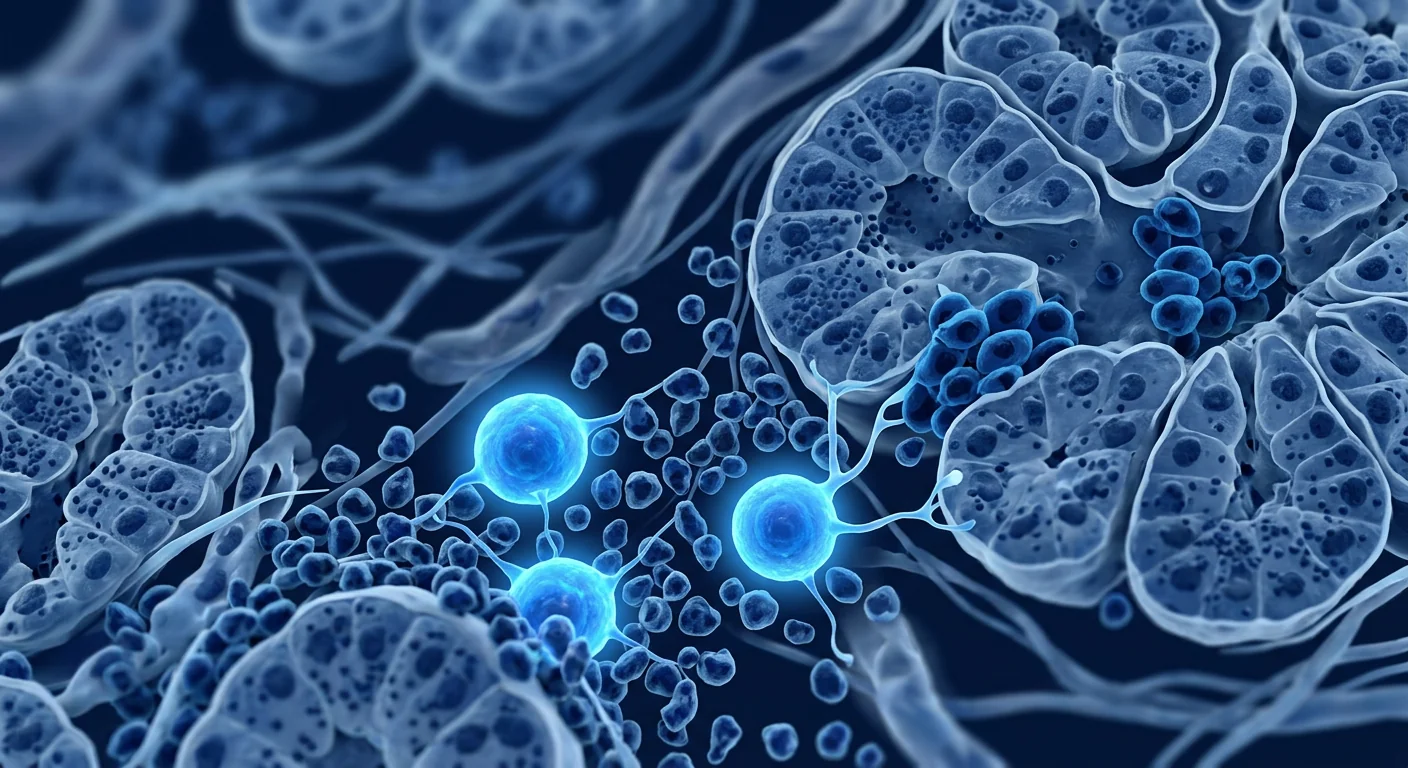
The deeper problem is tissue-level. In Sjögren's, CD4+ T lymphocytes infiltrate the salivary and lacrimal glands, forming lymphocytic foci that progressively replace functional secretory epithelium. B-cell hyperactivity produces autoantibodies including anti-Ro/SSA and anti-La/SSB. [2] The result is not just dryness — it is an escalating cycle of inflammation, tissue destruction, and loss of glandular architecture that no amount of artificial moisturization can reverse.
MSC therapy targets the root cause. Rather than simply lubricating dry surfaces, mesenchymal stem cells are being studied for their ability to suppress the autoimmune lymphocytes infiltrating the glands, reduce pro-inflammatory cytokines, and secrete trophic factors that may protect and potentially regenerate damaged acinar and ductal epithelium. Early preclinical and clinical studies suggest this multimodal approach could address the immunopathology at its source. [3]
Understanding Sjögren's Syndrome: Beyond Dryness
Sjögren's syndrome is a systemic autoimmune disease characterized by lymphocytic infiltration of exocrine glands, primarily the salivary and lacrimal glands. While sicca symptoms — dry eyes (keratoconjunctivitis sicca) and dry mouth (xerostomia) — define the clinical presentation, the disease often extends far beyond dryness to involve joints, lungs, kidneys, peripheral nerves, and the central nervous system.
The disease exists in two forms: primary Sjögren's syndrome, occurring in isolation, and secondary Sjögren's syndrome, accompanying another autoimmune condition such as rheumatoid arthritis or systemic lupus erythematosus. In both forms, the histological hallmark is focal lymphocytic sialadenitis — clusters of T and B cells surrounding salivary ducts, scored by the Chisholm-Mason grading system from diagnostic labial salivary gland biopsy. [4]
A defining feature and clinical concern is the elevated risk of non-Hodgkin lymphoma, which occurs in approximately 5% of patients — a 10- to 44-fold increase over the general population. Persistent parotid swelling, purpura, and low C4 complement levels are recognized predictors of lymphomagenesis, making Sjögren's far more consequential than a "dryness disease."
Key point: Sjögren's is a systemic autoimmune disease with glandular destruction at its core — but its impact spans joints, kidneys, nerves, and lymphoma risk. Any treatment that only addresses surface dryness is working at the symptom level, not the disease level.
How MSC Therapy Works in Autoimmune Glandular Disease
Mesenchymal stem cells exert therapeutic effects in Sjögren's through four interconnected mechanisms that directly address the immunopathology of the disease, without requiring the cells to engraft permanently in the damaged glands.
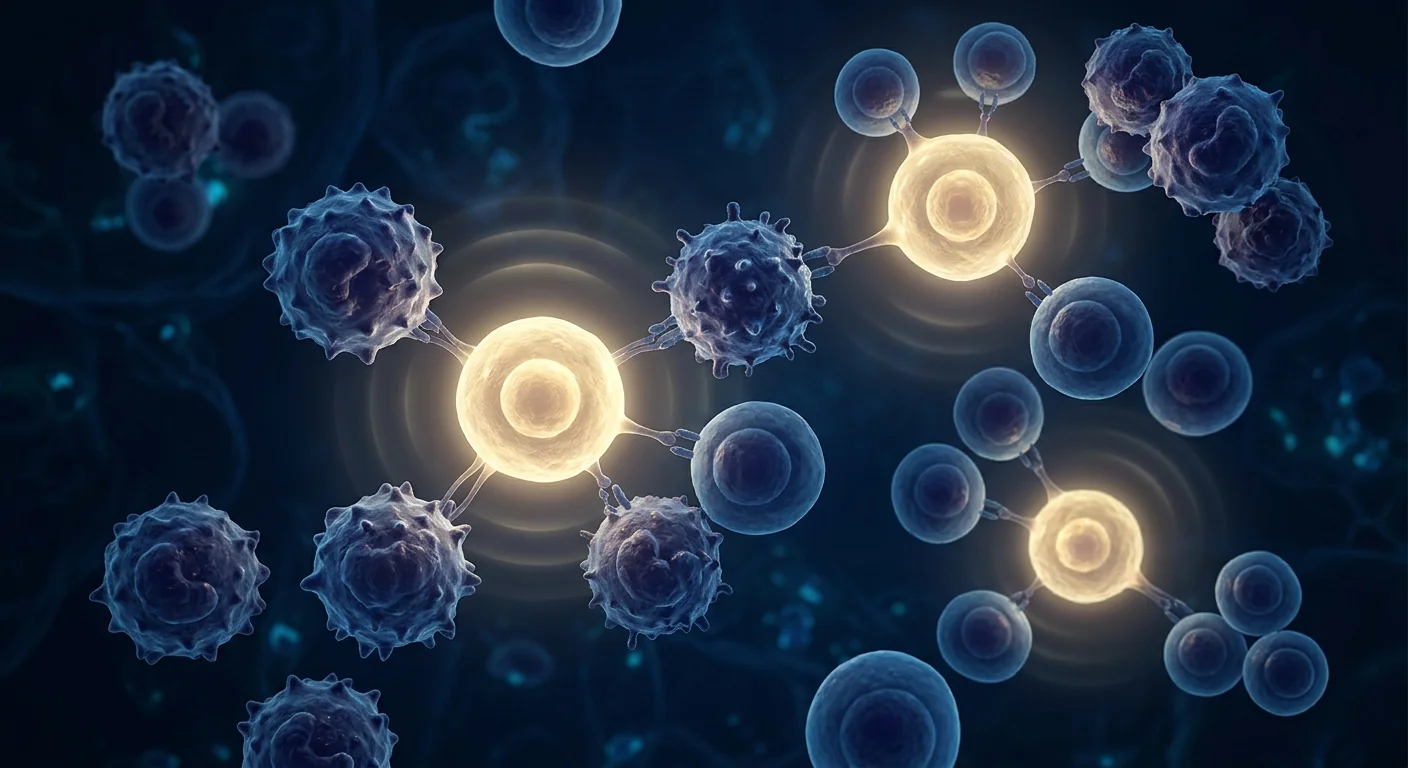
Immunomodulation of pathogenic lymphocytes. MSCs suppress the proliferation and activation of autoreactive CD4+ T cells — the lymphocyte population that drives sialadenitis in Sjögren's. They do this through secretion of soluble factors including indoleamine 2,3-dioxygenase (IDO), prostaglandin E2 (PGE2), and transforming growth factor-beta (TGF-β), which collectively shift the local immune environment from pro-inflammatory to regulatory. [5] Importantly, MSCs also inhibit B-cell maturation and antibody production, potentially reducing the anti-Ro/SSA and anti-La/SSB autoantibodies that characterize the disease.
Restoration of regulatory T-cell (Treg) populations. Sjögren's patients show quantitative and functional deficiencies in Tregs — the immune cells responsible for maintaining self-tolerance. MSC infusion has been shown to expand functional Treg populations and correct the Th17/Treg imbalance observed in active disease. [6] This is significant because Th17 cells are major drivers of glandular inflammation, and re-establishing Treg dominance represents a biologically coherent strategy for sustained immune quieting.
Paracrine trophic support for glandular epithelium. Beyond immune modulation, MSCs secrete a rich cocktail of growth factors — hepatocyte growth factor (HGF), epidermal growth factor (EGF), vascular endothelial growth factor (VEGF), and keratinocyte growth factor (KGF) — that promote epithelial cell survival, proliferation, and repair. In salivary gland models, MSC-conditioned medium alone has been shown to protect acinar cells from apoptosis and stimulate partial functional recovery. [7]
Anti-fibrotic activity. Chronic inflammation in Sjögren's leads to progressive fibrosis of glandular tissue, replacing functional secretory units with non-functional scar. MSCs secrete matrix metalloproteinases (MMPs) and hepatocyte growth factor that can remodel fibrotic extracellular matrix, potentially preserving residual gland architecture and creating a permissive environment for epithelial regeneration.
Clinical insight: The therapeutic logic for MSCs in Sjögren's is unusually strong compared to many other autoimmune indications — not because the disease is simple, but because the mechanisms (T-cell suppression, Treg expansion, epithelial trophic support) align precisely with MSC biology. The question is not whether MSCs can do these things — they demonstrably can in vitro and in animal models — but whether they do so reliably and durably in patients with established disease.
Clinical Evidence: What the Studies Show
Clinical investigation of MSC therapy for Sjögren's syndrome is at an early stage compared to other autoimmune indications like lupus, but the existing data — predominantly from Chinese research groups — provides a coherent picture of safety and preliminary efficacy signals.
Xu et al. (2012) — First-in-human UC-MSC study. In a pioneering open-label study, 24 patients with primary Sjögren's syndrome received intravenous umbilical cord-derived MSC infusions. At 6-month follow-up, the researchers reported significant improvements in the Sjögren's Syndrome Disease Activity Index (SSDAI) and Sjögren's Syndrome Patient Reported Index (ESSPRI), with reduced salivary flow rates and lacrimal gland function in a subset of patients. No serious adverse events were attributed to the cells. [8]
Liang et al. (2017) — Longer-term follow-up. A follow-up cohort expanded to include patients treated with allogeneic UC-MSCs and followed for up to 12 months. The investigators reported sustained reductions in SSDAI scores, increased unstimulated whole salivary flow rates, and stabilization of serological markers including immunoglobulin G levels. The safety profile remained benign across the observation period.
Animal model evidence. In the NOD/ShiLtJ mouse model — which spontaneously develops Sjögren's-like autoimmune sialadenitis — MSC infusion has been shown to reduce lymphocytic infiltration of salivary glands, preserve salivary flow rates, and decrease serum autoantibody titers. Histological analysis confirmed reduced focal sialadenitis scores in treated animals. These preclinical data provide mechanistic corroboration for the clinical observations. [9]
Limitations to acknowledge: All published studies to date are small (n=24–60), open-label, and predominantly single-centre. No randomized, double-blind, placebo-controlled trial has been completed for MSC therapy in Sjögren's. The observed improvements, while encouraging, require confirmation in larger controlled studies before efficacy can be considered established. MSC therapy for Sjögren's remains investigational, not standard of care.
What Patients Might Experience: Timeline and Expectations
Based on the published protocol descriptions and clinical observations, patients receiving MSC therapy for Sjögren's typically proceed through several phases. The timeline below reflects what early studies describe — not guaranteed outcomes, but the general sequence researchers have observed.
A single intravenous infusion of allogeneic UC-MSCs, typically 1–2 × 10⁶ cells/kg. The procedure is outpatient and generally well tolerated. Some patients report transient fatigue or mild flu-like symptoms that resolve within 24–48 hours — this is a known cytokine-mediated response, not an allergic reaction.
This is the window where MSCs are actively secreting immunomodulatory factors. Patients in published studies have reported the first noticeable improvements in subjective dryness during this period. Treg populations begin to expand and inflammatory cytokine levels trend downward.
Measurable improvements in salivary flow rate and tear production, where they occur, are typically most apparent in this window. SSDAI scores in published studies showed the steepest decline between months 3 and 6. Glandular epithelial repair, supported by MSC-derived trophic factors, may be ongoing during this period.
Clinicians typically assess durability at 6 and 12 months post-infusion. In the Liang cohort, patients who responded maintained their improvement through 12 months. The biological question of whether a single infusion provides durable benefit or whether maintenance infusions are needed remains an open research question.
The VELAR Approach: Laboratory Quality for Autoimmune Indications
Sjögren's syndrome presents specific clinical demands that make cell quality particularly important. Because the therapeutic goal is immunomodulation rather than tissue replacement, cell identity, purity, and potency matter enormously — MSCs that fail to meet identity criteria may lack the immunomodulatory capacity required.
Wharton's Jelly-derived UC-MSCs. VELAR uses mesenchymal stem cells sourced from Wharton's jelly of donated umbilical cord tissue — the same cell source used in the published Sjögren's studies. These perinatal MSCs are biologically young, possess strong immunomodulatory capacity, and importantly avoid the concern that autologous MSCs from an autoimmune patient may themselves be functionally compromised.
ISCT identity confirmation. Every batch is verified against the International Society for Cell & Gene Therapy criteria: plastic adherence, ≥95% expression of CD73/CD90/CD105 surface markers, ≤2% hematopoietic markers (CD34/CD45/CD11b/CD19/HLA-DR), and trilineage differentiation capacity. For an autoimmune indication, this level of characterization is non-negotiable — the therapeutic effects depend on genuine MSC biology.
GMP-compliant processing. All cell culture and expansion is performed under ISO 9001:2015 quality management and OECD GLP principles. Multi-pathogen screening, sterility testing, and endotoxin assays are completed on every batch before release.
Frequently Asked Questions
Can stem cell therapy cure Sjögren's syndrome?
No. MSC therapy is not a cure for Sjögren's syndrome and is not positioned as one in credible medical discourse. The research aims to reduce disease activity, preserve or partially restore gland function, and improve quality of life — ambitious but realistic goals. Complete reversal of established autoimmune disease has not been demonstrated.
How much does MSC therapy for Sjögren's cost in Bangkok?
Costs vary based on cell dose, protocol complexity, and whether the treatment is part of a structured clinical program. At VELAR, treatment plans are individualized after comprehensive evaluation. Patients should consult directly for a personalized assessment rather than relying on advertised prices that may not reflect their specific clinical needs.
Is one infusion enough for Sjögren's?
This is an open question. Published studies have used single-infusion protocols with follow-up out to 12 months, and some patients showed sustained benefit. However, whether maintenance infusions at 6–12 month intervals provide additional or prolonged benefit has not been systematically studied. Treatment decisions are individualized based on response.
Are there risks specific to Sjögren's patients?
The general safety profile of allogeneic UC-MSC infusion is favorable, with no serious adverse events attributed to the cells in published Sjögren's studies. However, Sjögren's patients carry elevated lymphoma risk, and any patient considering an investigational therapy should have a thorough pre-treatment evaluation including lymphoma screening. All patients should discuss their individual risk profile with the treating physician.
What makes Bangkok a destination for Sjögren's stem cell treatment?
Bangkok has emerged as a hub for regenerative medicine in Asia due to Thailand's progressive regulatory framework for cell therapy, internationally trained physicians, GMP-compliant laboratory infrastructure, and significantly lower treatment costs compared to Western countries. VELAR Center operates within this ecosystem with full laboratory accreditation and transparent clinical practices.
How do I know if I am a candidate?
Candidate selection is based on diagnosis confirmation (typically via positive anti-Ro/SSA and/or anti-La/SSB antibodies plus labial salivary gland biopsy), disease activity level, prior treatment history, and overall health status. Patients with active systemic complications require careful multidisciplinary evaluation. A comprehensive pre-treatment consultation with medical history review is the first step.
Limitations and Honest Assessment
MSC therapy for Sjögren's syndrome is a field with strong preclinical rationale and encouraging early clinical signals, but it remains investigational. The published evidence is limited to small open-label studies and animal models. No randomized controlled trial has been completed; no regulatory agency has approved MSCs for Sjögren's; and the durability of any benefit beyond 12 months is unknown.
Patients considering this therapy should understand that they are making a decision based on early evidence and biological plausibility — not on proven efficacy. The responsible clinical posture is to present MSC therapy as an option within a comprehensive management plan, not as a replacement for conventional rheumatologic care. At VELAR, we believe transparency about these limitations is not a weakness — it is how patients make genuinely informed choices.
References
- Qin B, Wang J, Yang Z, et al. Epidemiology of primary Sjögren's syndrome: a systematic review and meta-analysis. Annals of the Rheumatic Diseases. 2015;74(11):1983-1989. doi:10.1136/annrheumdis-2014-205375 ↩
- Nocturne G, Mariette X. Advances in understanding the pathogenesis of primary Sjögren's syndrome. Nature Reviews Rheumatology. 2013;9(9):544-556. doi:10.1038/nrrheum.2013.110 ↩
- Wang D, Li J, Zhang Y, et al. Umbilical cord mesenchymal stem cell transplantation in active and refractory systemic lupus erythematosus: a multicenter clinical study. Arthritis Research & Therapy. 2014;16(2):R79. doi:10.1186/ar4520 ↩
- Fisher BA, Jonsson R, Daniels T, et al. Standardisation of labial salivary gland histopathology in clinical trials in primary Sjögren's syndrome. Annals of the Rheumatic Diseases. 2017;76(7):1161-1168. doi:10.1136/annrheumdis-2016-210448 ↩
- Shi Y, Wang Y, Li Q, et al. Immunoregulatory mechanisms of mesenchymal stem and stromal cells in inflammatory diseases. Nature Reviews Nephrology. 2018;14(8):493-507. doi:10.1038/s41581-018-0023-5 ↩
- Luz-Crawford P, Kurte M, Bravo-Alegría J, et al. Mesenchymal stem cells generate a CD4+CD25+Foxp3+ regulatory T cell population during the differentiation process of Th1 and Th17 cells. Stem Cell Research & Therapy. 2013;4(3):65. doi:10.1186/scrt216 ↩
- Pringle S, Maimets M, van der Zwaag M, et al. Human salivary gland stem cells functionally restore radiation damaged salivary glands. Stem Cells. 2016;34(3):640-652. doi:10.1002/stem.2278 ↩
- Xu J, Wang D, Liu D, et al. Allogeneic mesenchymal stem cell treatment alleviates experimental and clinical Sjögren's syndrome. Blood. 2012;120(15):3142-3151. doi:10.1182/blood-2011-11-391144 ↩
- Khalili S, Liu Y, Kornete M, et al. Mesenchymal stromal cells improve salivary function and reduce lymphocytic infiltrates in mice with Sjögren's-like disease. PLoS ONE. 2012;7(6):e38615. doi:10.1371/journal.pone.0038615 ↩
- Caplan AI, Correa D. The MSC: an injury drugstore. Cell Stem Cell. 2011;9(1):11-15. doi:10.1016/j.stem.2011.06.008 ↩
- Ramos-Casals M, Brito-Zerón P, Sisó-Almirall A, Bosch X. Primary Sjögren syndrome. BMJ. 2012;344:e3821. doi:10.1136/bmj.e3821 ↩
- Munir H, McGettrick HM. Mesenchymal stem cell therapy for autoimmune disease: risks and rewards. Stem Cells and Development. 2015;24(18):2091-2100. doi:10.1089/scd.2015.0008 ↩
- Liang J, Zhang H, Hua B, et al. Allogeneic mesenchymal stem cell transplantation in seven patients with refractory Sjögren's syndrome. Journal of Translational Medicine. 2017;15:154. doi:10.1186/s12967-017-1250-0 ↩
- Galipeau J, Sensébé L. Mesenchymal stromal cells: clinical challenges and therapeutic opportunities. Cell Stem Cell. 2018;22(6):824-833. doi:10.1016/j.stem.2018.05.004 ↩
- Dominici M, Le Blanc K, Mueller I, et al. Minimal criteria for defining multipotent mesenchymal stromal cells. The International Society for Cellular Therapy position statement. Cytotherapy. 2006;8(4):315-317. doi:10.1080/14653240600855905 ↩
干燥综合征影响约0.5-3%的成年人口,以女性为主,是最常见但认识不足的自身免疫性疾病之一。[1] 它逐渐破坏产生唾液和泪液的腺体,导致患者出现严重的口干、眼干及全身并发症。对许多人来说,传统的人工泪液和唾液替代品仅提供有限的缓解,而未解决潜在的自身免疫性破坏。
传统治疗的局限之处。目前的护理标准——匹罗卡品或西维美林缓解干燥,羟氯喹处理全身性疾病,免疫抑制剂治疗器官受累——虽能管理症状,却无法阻止对腺体组织的自身免疫攻击。一旦唾液腺和泪腺腺泡组织被破坏,尚无获批疗法可以恢复它。
更深层的问题是组织层面的。在干燥综合征中,CD4+ T淋巴细胞浸润唾液腺和泪腺,形成淋巴灶,逐渐取代功能性分泌上皮细胞。B细胞过度活跃产生包括抗Ro/SSA和抗La/SSB在内的自身抗体。[2] 其结果不仅是干燥——而是一个由炎症、组织破坏和腺体结构丧失组成的不断升级的循环,任何人工保湿都无法逆转。
MSC疗法针对根本原因。间充质干细胞不是简单地润滑干燥表面,而是被研究用于抑制浸润腺体的自身免疫性淋巴细胞、减少促炎性细胞因子、并分泌可能保护和潜在再生受损腺泡和导管上皮细胞的营养因子。早期临床前和临床研究表明,这种多模式方法可以从源头解决免疫病理学问题。[3]
理解干燥综合征:超越干燥
干燥综合征是一种系统性自身免疫性疾病,以外分泌腺(主要是唾液腺和泪腺)的淋巴细胞浸润为特征。虽然干燥症状——干眼(干燥性角结膜炎)和口干(口腔干燥症)——定义了临床表现,但该疾病往往远超出干燥范畴,累及关节、肺、肾、周围神经及中枢神经系统。
该疾病以两种形式存在:原发性干燥综合征,单独发生;以及继发性干燥综合征,伴随另一种自身免疫性疾病如类风湿关节炎或系统性红斑狼疮。在两种形式中,组织学标志均为局灶性淋巴细胞性涎腺炎——围绕唾液腺导管的T细胞和B细胞簇,通过诊断性唇唾液腺活检的Chisholm-Mason分级系统评分。[4]
一个定义性特征和临床关注点是非霍奇金淋巴瘤风险的增高,大约5%的患者会发生——比普通人群高出10至44倍。持续性腮腺肿胀、紫癜和低C4补体水平被认为是淋巴瘤发生的预测因素,使干燥综合征远非仅仅是一种"干燥病"。
关键点:干燥综合征是一种以腺体破坏为核心的系统性自身免疫性疾病——但其影响涵盖关节、肾脏、神经和淋巴瘤风险。任何仅解决表面干燥的治疗都是在症状层面工作,而非疾病层面。
MSC疗法在自身免疫性腺体疾病中的作用机制
间充质干细胞通过四种相互关联的机制在干燥综合征中发挥治疗作用,直接针对疾病的免疫病理学,而无需细胞在受损腺体中永久植入。
对致病性淋巴细胞的免疫调节。MSC通过分泌可溶性因子包括吲哚胺2,3-双加氧酶(IDO)、前列腺素E2(PGE2)和转化生长因子-β(TGF-β),抑制自身反应性CD4+ T细胞的增殖和活化——这些是驱动干燥综合征中涎腺炎的淋巴细胞群。这些因子共同将局部免疫环境从促炎性转变为调节性。[5] 重要的是,MSC还抑制B细胞成熟和抗体产生,可能减少该疾病特征的抗Ro/SSA和抗La/SSB自身抗体。
调节性T细胞(Treg)群体的恢复。干燥综合征患者表现出Treg在数量和功能上的缺陷——Treg是维持自身耐受的免疫细胞。MSC输注已被证明可以扩增功能性Treg群体并纠正活动性疾病中观察到的Th17/Treg失衡。[6] 这具有重要意义,因为Th17细胞是腺体炎症的主要驱动因素,重建Treg优势代表了持续免疫平息的一种生物学上连贯的策略。
对腺体上皮的旁分泌营养支持。超越免疫调节,MSC分泌丰富的生长因子混合物——肝细胞生长因子(HGF)、表皮生长因子(EGF)、血管内皮生长因子(VEGF)和角质形成细胞生长因子(KGF)——促进上皮细胞存活、增殖和修复。在唾液腺模型中,单独使用MSC条件培养基已被证明可以保护腺泡细胞免于凋亡并刺激部分功能恢复。[7]
抗纤维化活性。干燥综合征中的慢性炎症导致腺体组织进行性纤维化,以无功能的瘢痕取代功能性分泌单位。MSC分泌的基质金属蛋白酶(MMPs)和肝细胞生长因子可以重塑纤维化的细胞外基质,潜在地保留残余腺体结构并为上皮再生创造允许性环境。
临床洞见:与其他许多自身免疫适应症相比,MSC在干燥综合征中的治疗逻辑异常强大——不是因为该疾病简单,而是因为其机制(T细胞抑制、Treg扩增、上皮营养支持)与MSC生物学精确对齐。问题不在于MSC能否做到这些事情——它们在体外和动物模型中明显可以——而在于它们能否在已确诊疾病的患者中可靠且持久地做到。
临床证据:研究显示什么
MSC疗法治疗干燥综合征的临床研究与其他自身免疫适应症(如狼疮)相比处于早期阶段,但现有数据——主要来自中国研究团队——提供了安全性和初步疗效信号的连贯图景。
Xu等人(2012年)——首项人脐带MSC研究。在一项开创性的开放标签研究中,24名原发性干燥综合征患者接受了脐带来源MSC静脉输注。在6个月随访中,研究者报告了干燥综合征疾病活动指数(SSDAI)和干燥综合征患者报告指数(ESSPRI)的显著改善,部分患者的唾液流率和泪腺功能有所提高。未发生归因于细胞的严重不良事件。[8]
Liang等人(2017年)——更长期随访。后续队列扩展至接受异体脐带MSC治疗的患者,随访长达12个月。研究者报告了SSDAI评分的持续降低、非刺激性全唾液流率增加,以及包括免疫球蛋白G水平在内的血清学标记物稳定。在整个观察期间安全性状况保持良好。
动物模型证据。在NOD/ShiLtJ小鼠模型中——该模型自发发展为干燥综合征样自身免疫性涎腺炎——MSC输注已被证明可以减少唾液腺的淋巴细胞浸润、保持唾液流率、并降低血清自身抗体滴度。组织学分析证实了治疗动物中局灶性涎腺炎评分的降低。这些临床前数据为临床观察提供了机制性佐证。[9]
需要承认的局限性:迄今为止所有已发表的研究均为小型(n=24-60)、开放标签、且主要是单中心研究。尚未完成MSC疗法治疗干燥综合征的随机、双盲、安慰剂对照试验。所观察到的改善虽然令人鼓舞,但在疗效被认为确立之前需要更大规模的对照研究确认。MSC疗法治疗干燥综合征仍然是研究性的,而非标准护理。
患者可能经历的过程:时间线和期望
根据已发表的方案描述和临床观察,接受MSC疗法治疗干燥综合征的患者通常经历几个阶段。以下时间线反映了早期研究所描述的内容——并非保证的结果,而是研究者观察到的一般顺序。
单次静脉输注异体脐带MSC,通常为1-2×10⁶细胞/kg。该程序为门诊进行,通常耐受良好。部分患者报告一过性疲劳或轻度流感样症状,在24-48小时内消退——这是已知的细胞因子介导反应,而非过敏反应。
这是MSC积极分泌免疫调节因子的窗口期。在已发表的研究中,患者在此阶段报告了主观干燥感的首次明显改善。Treg群体开始扩增,炎性细胞因子水平呈下降趋势。
唾液流率和泪液产生方面可测量的改善,在发生时通常在此窗口最明显。已发表研究中的SSDAI评分在第3至6个月之间下降最为陡峭。由MSC来源的营养因子支持的腺体上皮修复可能在此期间持续进行。
临床医生通常在输注后6个月和12个月评估持久性。在Liang队列中,有应答的患者在12个月内保持了改善。单次输注是否提供持久获益,或者是否需要维持输注,这个生物学问题仍然是一个开放的研究问题。
VELAR的方法:针对自身免疫适应症的实验室质量
干燥综合征提出了特定的临床需求,使细胞质量尤为重要。由于治疗目标是免疫调节而非组织替代,细胞身份、纯度和效力至关重要——不符合身份标准的MSC可能缺乏所需的免疫调节能力。
华通氏胶来源的脐带MSC。VELAR使用来源于捐赠脐带组织华通氏胶的间充质干细胞——与已发表的干燥综合征研究中使用相同的细胞来源。这些围产期MSC生物学上年轻,拥有强大的免疫调节能力,并且重要的是避免了自身免疫患者自体MSC可能功能受损的担忧。
ISCT身份确认。每批次均按照国际细胞与基因治疗学会标准进行验证:塑料粘附性,CD73/CD90/CD105表面标记物表达≥95%,造血标记物(CD34/CD45/CD11b/CD19/HLA-DR)≤2%,以及三系分化能力。对于自身免疫适应症,这种水平的表征是不可协商的——治疗效果取决于真正的MSC生物学。
GMP合规处理。所有细胞培养和扩增均在ISO 9001:2015 质量管理体系下进行,并遵循OECD GLP原则。每批次均完成多病原体筛查、无菌检测和内毒素检测后方可放行。
常见问题解答
干细胞疗法能治愈干燥综合征吗?
不能。MSC疗法不是干燥综合征的治愈方法,在可信的医学讨论中也不被定位为治愈方法。研究旨在减少疾病活动、保护或部分恢复腺体功能、提高生活质量——这些是雄心勃勃但现实的目标。已确诊的自身免疫性疾病的完全逆转尚未被证明。
在曼谷接受MSC治疗干燥综合征的费用是多少?
费用因细胞剂量、方案复杂性和是否为结构化临床项目的一部分而异。在VELAR,治疗方案是在全面评估后个体化制定的。患者应直接咨询获取个性化评估,而非依赖可能不反映其特定临床需求的广告价格。
干燥综合征一次输注足够吗?
这是一个开放性问题。已发表的研究使用单次输注方案,随访长达12个月,部分患者显示持续获益。然而,每6-12个月进行维持输注是否能提供额外或延长的获益尚未被系统性研究。治疗决策根据应答情况个体化制定。
干燥综合征患者有特定的风险吗?
异体脐带MSC输注的总体安全性状况良好,已发表的干燥综合征研究中未发生归因于细胞的严重不良事件。然而,干燥综合征患者淋巴瘤风险增高,任何考虑研究性治疗的患者都应进行包括淋巴瘤筛查在内的全面治疗前评估。所有患者应与治疗医生讨论其个体风险状况。
曼谷为何成为干燥综合征干细胞治疗的目的地?
曼谷已成为亚洲再生医学的中心,这得益于泰国在细胞治疗方面渐进式监管框架、国际培训的医生、GMP合规实验室基础设施、以及相比西方国家显著更低的治疗费用。VELAR中心在此生态系统中运作,拥有完整的实验室认证和透明的临床实践。
我如何知道自己是否适合?
候选资格的确定基于诊断确认(通常通过抗Ro/SSA和/或抗La/SSB抗体阳性加唇唾液腺活检)、疾病活动水平、既往治疗史和整体健康状况。有活动性全身并发症的患者需要仔细的多学科评估。全面的治疗前咨询和病史回顾是第一步。
局限性与诚实评估
MSC疗法治疗干燥综合征是一个拥有强大临床前理论基础和令人鼓舞的早期临床信号的领域,但它仍然是研究性的。已发表的证据限于小型开放标签研究和动物模型。尚未完成随机对照试验;没有监管机构批准MSC用于干燥综合征;超过12个月的任何获益的持久性未知。
考虑此疗法的患者应理解,他们是在基于早期证据和生物学合理性做出决定——而非基于已证实的疗效。负责任的临床姿态是将MSC疗法作为综合管理计划中的一个选项呈现,而非替代传统风湿病学护理。在VELAR,我们相信对这些限制的透明不是弱点——而是患者做出真正知情选择的途径。
参考文献
- Qin B, Wang J, Yang Z, et al. Epidemiology of primary Sjögren's syndrome: a systematic review and meta-analysis. Annals of the Rheumatic Diseases. 2015;74(11):1983-1989. doi:10.1136/annrheumdis-2014-205375 ↩
- Nocturne G, Mariette X. Advances in understanding the pathogenesis of primary Sjögren's syndrome. Nature Reviews Rheumatology. 2013;9(9):544-556. doi:10.1038/nrrheum.2013.110 ↩
- Wang D, Li J, Zhang Y, et al. Umbilical cord mesenchymal stem cell transplantation in active and refractory systemic lupus erythematosus: a multicenter clinical study. Arthritis Research & Therapy. 2014;16(2):R79. doi:10.1186/ar4520 ↩
- Fisher BA, Jonsson R, Daniels T, et al. Standardisation of labial salivary gland histopathology in clinical trials in primary Sjögren's syndrome. Annals of the Rheumatic Diseases. 2017;76(7):1161-1168. doi:10.1136/annrheumdis-2016-210448 ↩
- Shi Y, Wang Y, Li Q, et al. Immunoregulatory mechanisms of mesenchymal stem and stromal cells in inflammatory diseases. Nature Reviews Nephrology. 2018;14(8):493-507. doi:10.1038/s41581-018-0023-5 ↩
- Luz-Crawford P, et al. Mesenchymal stem cells generate a CD4+CD25+Foxp3+ regulatory T cell population. Stem Cell Research & Therapy. 2013;4(3):65. doi:10.1186/scrt216 ↩
- Pringle S, et al. Human salivary gland stem cells functionally restore radiation damaged salivary glands. Stem Cells. 2016;34(3):640-652. doi:10.1002/stem.2278 ↩
- Xu J, Wang D, Liu D, et al. Allogeneic mesenchymal stem cell treatment alleviates experimental and clinical Sjögren's syndrome. Blood. 2012;120(15):3142-3151. doi:10.1182/blood-2011-11-391144 ↩
- Khalili S, et al. Mesenchymal stromal cells improve salivary function and reduce lymphocytic infiltrates in mice with Sjögren's-like disease. PLoS ONE. 2012;7(6):e38615. doi:10.1371/journal.pone.0038615 ↩
- Caplan AI, Correa D. The MSC: an injury drugstore. Cell Stem Cell. 2011;9(1):11-15. doi:10.1016/j.stem.2011.06.008 ↩
- Ramos-Casals M, et al. Primary Sjögren syndrome. BMJ. 2012;344:e3821. doi:10.1136/bmj.e3821 ↩
- Munir H, McGettrick HM. Mesenchymal stem cell therapy for autoimmune disease: risks and rewards. Stem Cells and Development. 2015;24(18):2091-2100. doi:10.1089/scd.2015.0008 ↩
- Liang J, et al. Allogeneic mesenchymal stem cell transplantation in refractory Sjögren's syndrome. Journal of Translational Medicine. 2017;15:154. doi:10.1186/s12967-017-1250-0 ↩
- Galipeau J, Sensébé L. Mesenchymal stromal cells: clinical challenges and therapeutic opportunities. Cell Stem Cell. 2018;22(6):824-833. doi:10.1016/j.stem.2018.05.004 ↩
- Dominici M, et al. Minimal criteria for defining multipotent mesenchymal stromal cells. Cytotherapy. 2006;8(4):315-317. doi:10.1080/14653240600855905 ↩
تؤثر متلازمة شوغرن على ما يقدر بنحو 0.5-3% من السكان البالغين، معظمهم من النساء، مما يجعلها واحدة من أكثر أمراض المناعة الذاتية شيوعًا وأقلها تشخيصًا.[1] تدمر المتلازمة تدريجيًا الغدد التي تنتج اللعاب والدموع، مما يترك المرضى يعانون من جفاف الفم الشديد وجفاف العين ومضاعفات جهازية. بالنسبة للكثيرين، توفر الدموع الاصطناعية وبدائل اللعاب التقليدية راحة محدودة دون معالجة التدمير المناعي الذاتي الأساسي.
أوجه قصور العلاج التقليدي. المعيار الحالي للرعاية — البيلوكاربين أو السيفيميلين للجفاف، والهيدروكسي كلوروكوين للأمراض الجهازية، ومثبطات المناعة لإصابة الأعضاء — يدير الأعراض دون وقف الهجوم المناعي الذاتي على الأنسجة الغدية. بمجرد تدمير الأنسجة العنيبية للغدد اللعابية والدمعية، لا يوجد علاج معتمد يمكنه استعادتها.
المشكلة الأعمق على مستوى الأنسجة. في متلازمة شوغرن، تتسلل الخلايا اللمفاوية التائية CD4+ إلى الغدد اللعابية والدمعية، مشكلة بؤرًا لمفاوية تحل تدريجيًا محل الظهارة الإفرازية الوظيفية. ينتج فرط نشاط الخلايا البائية أجسامًا مضادة ذاتية بما في ذلك anti-Ro/SSA و anti-La/SSB.[2] النتيجة ليست مجرد جفاف — بل دورة متصاعدة من الالتهاب وتدمير الأنسجة وفقدان البنية الغدية التي لا يمكن لأي ترطيب اصطناعي عكسها.
يستهدف علاج MSC السبب الجذري. بدلاً من مجرد ترطيب الأسطح الجافة، تتم دراسة الخلايا الجذعية الميزنشيمية لقدرتها على تثبيط الخلايا اللمفاوية المناعية الذاتية المتسللة إلى الغدد، وتقليل السيتوكينات المؤيدة للالتهابات، وإفراز العوامل الغذائية التي قد تحمي وربما تجدد الظهارة العنيبية والقنوية التالفة. تشير الدراسات قبل السريرية والسريرية المبكرة إلى أن هذا النهج متعدد الوسائط يمكن أن يعالج الأمراض المناعية من مصدرها.[3]
فهم متلازمة شوغرن: ما وراء الجفاف
متلازمة شوغرن هي مرض مناعي ذاتي جهازي يتميز بارتشاح لمفاوي للغدد الخارجية الإفراز، وبشكل أساسي الغدد اللعابية والدمعية. بينما تحدد أعراض الجفاف — جفاف العين (التهاب القرنية والملتحمة الجاف) وجفاف الفم (جفاف الفم) — العرض السريري، غالبًا ما يمتد المرض إلى ما هو أبعد من الجفاف ليشمل المفاصل والرئتين والكلى والأعصاب الطرفية والجهاز العصبي المركزي.
يوجد المرض في شكلين: متلازمة شوغرن الأولية، التي تحدث بشكل منعزل، ومتلازمة شوغرن الثانوية، المصاحبة لحالة مناعية ذاتية أخرى مثل التهاب المفاصل الروماتويدي أو الذئبة الحمامية الجهازية. في كلا الشكلين، العلامة النسيجية هي التهاب الغدد اللعابية اللمفاوي البؤري — تجمعات من الخلايا التائية والبائية حول القنوات اللعابية، يتم تقييمها بواسطة نظام تصنيف Chisholm-Mason من خزعة الغدة اللعابية الشفوية التشخيصية.[4]
السمة المميزة والمصدر الرئيسي للقلق السريري هو ارتفاع خطر الإصابة بسرطان الغدد اللمفاوية اللاهودجكينية، الذي يحدث في حوالي 5% من المرضى — زيادة بمقدار 10 إلى 44 ضعفًا مقارنة بعامة السكان. يعتبر تورم الغدة النكفية المستمر والفرفرية وانخفاض مستويات المتممة C4 منبئات معترف بها لتكون الأورام اللمفاوية، مما يجعل شوغرن أكثر خطورة بكثير من مجرد "مرض جفاف".
نقطة أساسية: متلازمة شوغرن هي مرض مناعي ذاتي جهازي مع تدمير غدي في جوهره — لكن تأثيره يمتد إلى المفاصل والكلى والأعصاب وخطر الأورام اللمفاوية. أي علاج يعالج فقط الجفاف السطحي يعمل على مستوى الأعراض، وليس على مستوى المرض.
كيف يعمل علاج MSC في أمراض الغدد المناعية الذاتية
تمارس الخلايا الجذعية الميزنشيمية تأثيرات علاجية في متلازمة شوغرن من خلال أربع آليات مترابطة تعالج مباشرة الأمراض المناعية للمرض، دون الحاجة إلى انغراس الخلايا بشكل دائم في الغدد التالفة.
التعديل المناعي للخلايا اللمفاوية الممرضة. تثبط MSC تكاثر وتنشيط الخلايا التائية CD4+ ذاتية التفاعل — مجموعة الخلايا اللمفاوية التي تدفع التهاب الغدد اللعابية في شوغرن. تفعل ذلك من خلال إفراز عوامل قابلة للذوبان بما في ذلك إندوليامين 2,3-ديوكسيجيناز (IDO) والبروستاجلاندين E2 (PGE2) وعامل النمو المحول-بيتا (TGF-β)، التي تحول مجتمعة البيئة المناعية المحلية من مؤيدة للالتهابات إلى تنظيمية.[5] الأهم من ذلك، تثبط MSC أيضًا نضوج الخلايا البائية وإنتاج الأجسام المضادة، مما قد يقلل من الأجسام المضادة الذاتية anti-Ro/SSA و anti-La/SSB التي تميز المرض.
استعادة مجموعات الخلايا التائية التنظيمية (Treg). يظهر مرضى شوغرن نقصًا كميًا ووظيفيًا في Treg — الخلايا المناعية المسؤولة عن الحفاظ على التحمل الذاتي. ثبت أن حقن MSC يوسع مجموعات Treg الوظيفية ويصحح اختلال Th17/Treg الملاحظ في المرض النشط.[6] هذا مهم لأن خلايا Th17 هي محركات رئيسية لالتهاب الغدد، وإعادة تأسيس هيمنة Treg تمثل استراتيجية متماسكة بيولوجيًا للتهدئة المناعية المستدامة.
الدعم الغذائي نظير الصماوي للظهارة الغدية. بالإضافة إلى التعديل المناعي، تفرز MSC مجموعة غنية من عوامل النمو — عامل نمو الخلايا الكبدية (HGF) وعامل نمو البشرة (EGF) وعامل نمو بطانة الأوعية الدموية (VEGF) وعامل نمو الخلايا الكيراتينية (KGF) — التي تعزز بقاء الخلايا الظهارية وتكاثرها وإصلاحها. في نماذج الغدد اللعابية، ثبت أن الوسط المكيف بـ MSC وحده يحمي الخلايا العنيبية من الاستماتة ويحفز التعافي الوظيفي الجزئي.[7]
النشاط المضاد للتليف. يؤدي الالتهاب المزمن في شوغرن إلى تليف تدريجي للأنسجة الغدية، مما يستبدل الوحدات الإفرازية الوظيفية بنسيج ندبي غير وظيفي. تفرز MSC ميتالوبروتياز المصفوفة (MMPs) وعامل نمو الخلايا الكبدية الذي يمكنه إعادة تشكيل المصفوفة خارج الخلوية المتليفة، مما قد يحافظ على البنية الغدية المتبقية ويخلق بيئة مساعدة لتجديد الظهارة.
رؤية سريرية: المنطق العلاجي لـ MSC في شوغرن قوي بشكل غير عادي مقارنة بالعديد من مؤشرات المناعة الذاتية الأخرى — ليس لأن المرض بسيط، ولكن لأن الآليات (تثبيط الخلايا التائية، توسيع Treg، الدعم الغذائي الظهاري) تتوافق بدقة مع بيولوجيا MSC. السؤال ليس ما إذا كانت MSC تستطيع القيام بهذه الأشياء — يمكنها بوضوح في المختبر وفي النماذج الحيوانية — ولكن ما إذا كانت تفعل ذلك بشكل موثوق ودائم في المرضى المصابين بمرض مثبت.
الأدلة السريرية: ما تظهره الدراسات
التحقيق السريري لعلاج MSC لمتلازمة شوغرن في مرحلة مبكرة مقارنة بمؤشرات المناعة الذاتية الأخرى مثل الذئبة، لكن البيانات الحالية — بشكل رئيسي من مجموعات البحث الصينية — توفر صورة متماسكة للسلامة وإشارات الفعالية الأولية.
Xu وآخرون (2012) — أول دراسة بشرية لـ UC-MSC. في دراسة رائدة مفتوحة التسمية، تلقى 24 مريضًا بمتلازمة شوغرن الأولية حقنًا وريديًا من MSC المشتقة من الحبل السري. في متابعة 6 أشهر، أبلغ الباحثون عن تحسنات كبيرة في مؤشر نشاط مرض شوغرن (SSDAI) ومؤشر تقرير مريض شوغرن (ESSPRI)، مع تحسن معدلات تدفق اللعاب ووظيفة الغدة الدمعية في مجموعة فرعية من المرضى. لم تُنسب أي أحداث ضارة خطيرة إلى الخلايا.[8]
Liang وآخرون (2017) — متابعة أطول مدى. توسعت المجموعة اللاحقة لتشمل مرضى عولجوا بـ UC-MSCs خيفي وتمت متابعتهم لمدة تصل إلى 12 شهرًا. أبلغ المحققون عن انخفاضات مستدامة في درجات SSDAI، وزيادة معدلات تدفق اللعاب الكلي غير المحفز، واستقرار العلامات المصلية بما في ذلك مستويات الغلوبولين المناعي G. ظل ملف السلامة حميدًا طوال فترة المراقبة.
أدلة النماذج الحيوانية. في نموذج الفأر NOD/ShiLtJ — الذي يطور تلقائيًا التهاب الغدد اللعابية المناعي الذاتي الشبيه بشوغرن — ثبت أن حقن MSC يقلل الارتشاح اللمفاوي للغدد اللعابية، ويحافظ على معدلات تدفق اللعاب، ويخفض معايير الأجسام المضادة الذاتية في المصل. أكد التحليل النسيجي انخفاض درجات التهاب الغدد اللعابية البؤري في الحيوانات المعالجة. توفر هذه البيانات قبل السريرية دعمًا آليًا للملاحظات السريرية.[9]
قيود يجب الاعتراف بها: جميع الدراسات المنشورة حتى الآن صغيرة (n=24-60)، ومفتوحة التسمية، وفي الغالب أحادية المركز. لم تكتمل أي تجربة عشوائية مزدوجة التعمية مضبوطة بالدواء الوهمي لعلاج MSC في شوغرن. التحسنات الملاحظة، رغم كونها مشجعة، تتطلب تأكيدًا في دراسات مضبوطة أكبر قبل اعتبار الفعالية مثبتة. يظل علاج MSC لشوغرن استقصائيًا، وليس معيارًا للرعاية.
ما قد يختبره المرضى: الجدول الزمني والتوقعات
بناءً على أوصاف البروتوكولات المنشورة والملاحظات السريرية، يتقدم المرضى الذين يتلقون علاج MSC لمتلازمة شوغرن عادة عبر عدة مراحل. يعكس الجدول الزمني أدناه ما تصفه الدراسات المبكرة — ليست نتائج مضمونة، ولكن التسلسل العام الذي لاحظه الباحثون.
حقن وريدي واحد من UC-MSCs خيفي، عادة 1-2 × 10⁶ خلية/كغ. الإجراء خارجي ويتحمله المرضى جيدًا بشكل عام. يبلغ بعض المرضى عن إرهاق عابر أو أعراض خفيفة شبيهة بالإنفلونزا تزول خلال 24-48 ساعة — هذه استجابة معروفة بوساطة السيتوكين، وليست رد فعل تحسسي.
هذه هي النافذة التي تفرز فيها MSC بنشاط العوامل المعدلة للمناعة. أبلغ المرضى في الدراسات المنشورة عن أول تحسنات ملحوظة في الجفاف الذاتي خلال هذه الفترة. تبدأ مجموعات Treg في التوسع وتتجه مستويات السيتوكينات الالتهابية نحو الانخفاض.
التحسنات القابلة للقياس في معدل تدفق اللعاب وإنتاج الدموع، حيث تحدث، تكون عادة أكثر وضوحًا في هذه النافذة. أظهرت درجات SSDAI في الدراسات المنشورة أشد انخفاض بين الشهرين 3 و 6. قد يكون إصلاح الظهارة الغدية، المدعوم بالعوامل الغذائية المشتقة من MSC، مستمرًا خلال هذه الفترة.
يقيم الأطباء عادة الاستمرارية عند 6 و 12 شهرًا بعد الحقن. في مجموعة Liang، حافظ المرضى الذين استجابوا على تحسنهم خلال 12 شهرًا. يبقى السؤال البيولوجي حول ما إذا كان الحقن الواحد يوفر فائدة دائمة أو ما إذا كانت هناك حاجة لحقن صيانة سؤالًا بحثيًا مفتوحًا.
نهج VELAR: جودة المختبر لمؤشرات المناعة الذاتية
تفرض متلازمة شوغرن متطلبات سريرية محددة تجعل جودة الخلايا مهمة بشكل خاص. لأن الهدف العلاجي هو التعديل المناعي بدلاً من استبدال الأنسجة، فإن هوية الخلية ونقاوتها وفعاليتها مهمة للغاية — قد تفتقر MSC التي لا تستوفي معايير الهوية إلى القدرة التعديلية المناعية المطلوبة.
MSC المشتقة من هلام وارتون في الحبل السري. تستخدم VELAR الخلايا الجذعية الميزنشيمية المستخرجة من هلام وارتون لأنسجة الحبل السري المتبرع بها — نفس مصدر الخلايا المستخدم في دراسات شوغرن المنشورة. هذه MSC حول الولادة شابة بيولوجيًا، وتمتلك قدرة تعديل مناعي قوية، والأهم من ذلك تتجنب القلق من أن MSC الذاتية من مريض مناعة ذاتية قد تكون معطوبة وظيفيًا.
تأكيد هوية ISCT. يتم التحقق من كل دفعة وفقًا لمعايير الجمعية الدولية للعلاج الخلوي والجيني: الالتصاق بالبلاستيك، تعبير ≥95% عن علامات سطح CD73/CD90/CD105، علامات مكونة للدم ≤2% (CD34/CD45/CD11b/CD19/HLA-DR)، وقدرة التمايز ثلاثي السلالات. بالنسبة لمؤشر مناعي ذاتي، هذا المستوى من التوصيف غير قابل للتفاوض — تعتمد التأثيرات العلاجية على بيولوجيا MSC الحقيقية.
معالجة متوافقة مع GMP. تتم جميع عمليات زراعة الخلايا وتوسيعها تحت نظام إدارة الجودة وفق ISO 9001:2015 ومبادئ OECD GLP. يتم إكمال فحص مسببات الأمراض المتعددة واختبار العقم ومقايسات السموم الداخلية على كل دفعة قبل الإطلاق.
الأسئلة الشائعة
هل يمكن للعلاج بالخلايا الجذعية علاج متلازمة شوغرن؟
لا. علاج MSC ليس علاجًا لمتلازمة شوغرن ولا يتم وضعه على هذا النحو في الخطاب الطبي الموثوق. يهدف البحث إلى تقليل نشاط المرض، والحفاظ على وظيفة الغدد أو استعادتها جزئيًا، وتحسين جودة الحياة — أهداف طموحة لكنها واقعية. لم يتم إثبات الانعكاس الكامل لمرض المناعة الذاتية المثبت.
كم تكلفة علاج MSC لشوغرن في بانكوك؟
تختلف التكاليف بناءً على جرعة الخلايا وتعقيد البروتوكول وما إذا كان العلاج جزءًا من برنامج سريري منظم. في VELAR، يتم تخصيص خطط العلاج بعد تقييم شامل. يجب على المرضى الاستشارة مباشرة للحصول على تقييم شخصي بدلاً من الاعتماد على الأسعار المعلنة التي قد لا تعكس احتياجاتهم السريرية المحددة.
هل حقنة واحدة كافية لشوغرن؟
هذا سؤال مفتوح. استخدمت الدراسات المنشورة بروتوكولات حقن واحدة مع متابعة تصل إلى 12 شهرًا، وأظهر بعض المرضى فائدة مستدامة. ومع ذلك، لم يتم دراسة ما إذا كانت حقن الصيانة على فترات 6-12 شهرًا توفر فائدة إضافية أو مطولة بشكل منهجي. يتم تخصيص قرارات العلاج بناءً على الاستجابة.
هل هناك مخاطر خاصة بمرضى شوغرن؟
ملف السلامة العام لحقن UC-MSC الخيفي مواتٍ، مع عدم وجود أحداث ضارة خطيرة منسوبة إلى الخلايا في دراسات شوغرن المنشورة. ومع ذلك، يحمل مرضى شوغرن خطرًا مرتفعًا للأورام اللمفاوية، ويجب أن يخضع أي مريض يفكر في علاج استقصائي لتقييم شامل قبل العلاج بما في ذلك فحص الأورام اللمفاوية. يجب على جميع المرضى مناقشة ملف المخاطر الفردي الخاص بهم مع الطبيب المعالج.
ما الذي يجعل بانكوك وجهة لعلاج شوغرن بالخلايا الجذعية؟
برزت بانكوك كمركز للطب التجديدي في آسيا بفضل الإطار التنظيمي التقدمي لتايلاند للعلاج الخلوي، والأطباء المدربين دوليًا، والبنية التحتية للمختبرات المتوافقة مع GMP، وتكاليف العلاج المنخفضة بشكل كبير مقارنة بالدول الغربية. يعمل مركز VELAR ضمن هذا النظام البيئي مع اعتماد مختبري كامل وممارسات سريرية شفافة.
كيف أعرف ما إذا كنت مرشحًا؟
يعتمد اختيار المرشح على تأكيد التشخيص (عادة عبر الأجسام المضادة anti-Ro/SSA و/أو anti-La/SSB الإيجابية بالإضافة إلى خزعة الغدة اللعابية الشفوية)، ومستوى نشاط المرض، وتاريخ العلاج السابق، والحالة الصحية العامة. يحتاج المرضى الذين يعانون من مضاعفات جهازية نشطة إلى تقييم دقيق متعدد التخصصات. الاستشارة الشاملة قبل العلاج مع مراجعة التاريخ الطبي هي الخطوة الأولى.
القيود والتقييم الصادق
علاج MSC لمتلازمة شوغرن هو مجال ذو أساس قوي قبل سريري وإشارات سريرية مبكرة مشجعة، لكنه يظل استقصائيًا. الأدلة المنشورة محدودة بدراسات صغيرة مفتوحة التسمية ونماذج حيوانية. لم تكتمل أي تجربة عشوائية مضبوطة؛ لم توافق أي وكالة تنظيمية على MSC لشوغرن؛ واستمرارية أي فائدة تتجاوز 12 شهرًا غير معروفة.
يجب على المرضى الذين يفكرون في هذا العلاج أن يفهموا أنهم يتخذون قرارًا بناءً على أدلة مبكرة ومعقولية بيولوجية — وليس على فعالية مثبتة. الموقف السريري المسؤول هو تقديم علاج MSC كخيار ضمن خطة إدارة شاملة، وليس كبديل عن الرعاية الروماتيزمية التقليدية. في VELAR، نعتقد أن الشفافية حول هذه القيود ليست نقطة ضعف — بل هي كيف يتخذ المرضى خيارات مستنيرة حقًا.
المراجع
- Qin B, Wang J, Yang Z, et al. Epidemiology of primary Sjögren's syndrome: a systematic review and meta-analysis. Annals of the Rheumatic Diseases. 2015;74(11):1983-1989. doi:10.1136/annrheumdis-2014-205375 ↩
- Nocturne G, Mariette X. Advances in understanding the pathogenesis of primary Sjögren's syndrome. Nature Reviews Rheumatology. 2013;9(9):544-556. doi:10.1038/nrrheum.2013.110 ↩
- Wang D, Li J, Zhang Y, et al. Umbilical cord mesenchymal stem cell transplantation in active and refractory systemic lupus erythematosus: a multicenter clinical study. Arthritis Research & Therapy. 2014;16(2):R79. doi:10.1186/ar4520 ↩
- Fisher BA, Jonsson R, Daniels T, et al. Standardisation of labial salivary gland histopathology in clinical trials in primary Sjögren's syndrome. Annals of the Rheumatic Diseases. 2017;76(7):1161-1168. doi:10.1136/annrheumdis-2016-210448 ↩
- Shi Y, Wang Y, Li Q, et al. Immunoregulatory mechanisms of mesenchymal stem and stromal cells in inflammatory diseases. Nature Reviews Nephrology. 2018;14(8):493-507. doi:10.1038/s41581-018-0023-5 ↩
- Luz-Crawford P, et al. Mesenchymal stem cells generate a CD4+CD25+Foxp3+ regulatory T cell population. Stem Cell Research & Therapy. 2013;4(3):65. doi:10.1186/scrt216 ↩
- Pringle S, et al. Human salivary gland stem cells functionally restore radiation damaged salivary glands. Stem Cells. 2016;34(3):640-652. doi:10.1002/stem.2278 ↩
- Xu J, Wang D, Liu D, et al. Allogeneic mesenchymal stem cell treatment alleviates experimental and clinical Sjögren's syndrome. Blood. 2012;120(15):3142-3151. doi:10.1182/blood-2011-11-391144 ↩
- Khalili S, et al. Mesenchymal stromal cells improve salivary function and reduce lymphocytic infiltrates in mice with Sjögren's-like disease. PLoS ONE. 2012;7(6):e38615. doi:10.1371/journal.pone.0038615 ↩
- Caplan AI, Correa D. The MSC: an injury drugstore. Cell Stem Cell. 2011;9(1):11-15. doi:10.1016/j.stem.2011.06.008 ↩
- Ramos-Casals M, et al. Primary Sjögren syndrome. BMJ. 2012;344:e3821. doi:10.1136/bmj.e3821 ↩
- Munir H, McGettrick HM. Mesenchymal stem cell therapy for autoimmune disease: risks and rewards. Stem Cells and Development. 2015;24(18):2091-2100. doi:10.1089/scd.2015.0008 ↩
- Liang J, et al. Allogeneic mesenchymal stem cell transplantation in refractory Sjögren's syndrome. Journal of Translational Medicine. 2017;15:154. doi:10.1186/s12967-017-1250-0 ↩
- Galipeau J, Sensébé L. Mesenchymal stromal cells: clinical challenges and therapeutic opportunities. Cell Stem Cell. 2018;22(6):824-833. doi:10.1016/j.stem.2018.05.004 ↩
- Dominici M, et al. Minimal criteria for defining multipotent mesenchymal stromal cells. Cytotherapy. 2006;8(4):315-317. doi:10.1080/14653240600855905 ↩