Rheumatoid arthritis (RA) is a chronic, systemic autoimmune disease in which the immune system mistakes the lining of the joints for a threat and attacks it. The result is persistent inflammation, pain, stiffness and swelling, and — over time — progressive erosion of cartilage and bone that can permanently deform the joints. Modern treatment has transformed the outlook for many people, yet it does not work for everyone and does not cure the disease. It is in that remaining gap that stem cell research has found a foothold. Understanding what is realistic, though, means separating the genuine science from the promises that too often surround it.
What goes wrong in rheumatoid arthritis
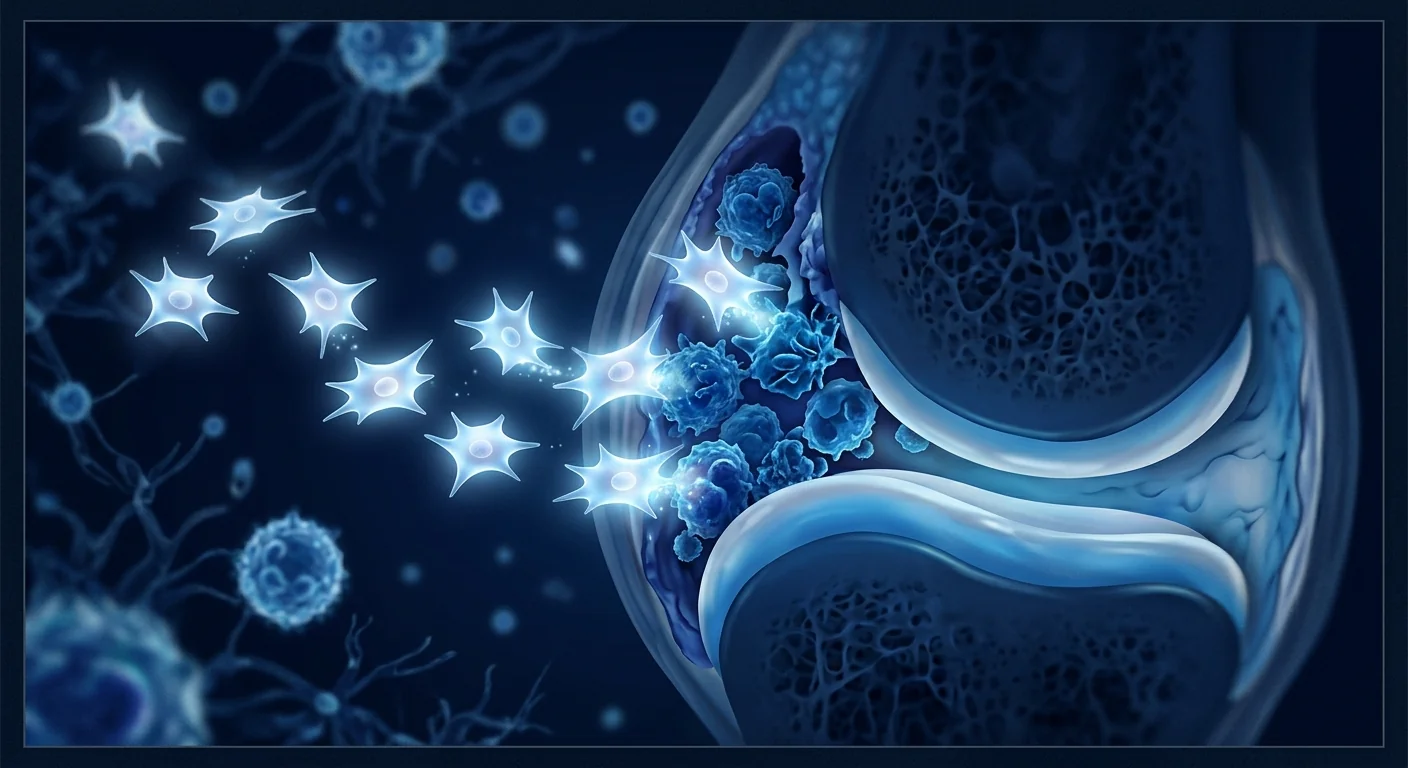
At the heart of RA is a breakdown in immune self-tolerance. Instead of ignoring the body's own tissues, immune cells target the synovium — the thin membrane that lines each joint. That membrane becomes inflamed and thickened, forming an aggressive tissue called pannus that invades and gradually destroys the adjacent cartilage and bone. Because the process is systemic, RA can also affect tendons, the eyes, blood vessels and other organs, and is associated with fatigue and increased cardiovascular risk.[1][2][3][4]
Driving this attack is a cascade of inflammatory signalling molecules. Cytokines such as TNF-α, IL-6 and IL-17 sustain the inflammation and recruit more immune cells into the joint. Underlying much of this is an imbalance in the immune system's own thermostat: a relative excess of pro-inflammatory Th17 cells and a shortfall of regulatory T-cells (Tregs), the cells that normally rein in an overactive response. Once this loop is established, it tends to perpetuate itself — which is why a therapy able to recalibrate immune balance, rather than simply blunt it, is such an attractive idea.
Why mesenchymal stem cells are a candidate
The cells most studied in RA are mesenchymal stem cells (MSCs), typically sourced from bone marrow, adipose tissue or umbilical cord. They are of interest for two reasons: a reassuring safety record across many trials, and a biological profile that maps closely onto the RA problem. MSCs are not expected to rebuild eroded joints directly. Their proposed value is immunomodulatory and paracrine — they sense an inflamed environment and respond by releasing signalling molecules that quiet it.
In laboratory and animal studies, MSCs have been shown to suppress the activity of the over-reactive T-cells that drive RA, encourage the expansion of regulatory T-cells, and lower levels of the key inflammatory cytokines — TNF-α, IL-6 and IL-17. In other words, rather than broadly suppressing immunity the way some drugs do, MSCs appear to nudge the system back toward the Treg–Th17 balance that a healthy joint depends on. In pre-clinical models of inflammatory arthritis, these effects have translated into reduced joint inflammation and, in some studies, less structural damage. Whether the same holds true, and lasts, in humans is precisely the open question.
What the human trials actually show
The clinical evidence in RA is genuine but early. Most of it comes from small, early-phase pilot studies — a number of them using umbilical-cord-derived MSCs infused intravenously in patients whose disease had not responded well to standard drugs. Reports from several such trials, many conducted in China, have been broadly consistent on two points: the infusions were generally well tolerated, with no serious short-term safety signals, and some patients showed improvement in disease-activity scores such as the DAS28 alongside reductions in inflammatory markers. A few studies have suggested these effects may persist for months after treatment.
Those signals are encouraging, but they must be read with care. The trials are small, frequently not placebo-controlled, and vary widely in cell source, dose and follow-up. Without large, randomised, blinded comparisons, it is impossible to know how much of the reported benefit reflects the therapy itself rather than expectation, concurrent medication or the natural fluctuation of a relapsing–remitting disease. These are valuable studies for establishing safety and finding early signals — not confirmation that MSC therapy reliably works.
The honest headline
As of today, no stem cell therapy is an approved, proven treatment that cures rheumatoid arthritis or guarantees remission. The credible work is happening in early-phase clinical trials that have mainly established safety and produced encouraging but preliminary signals of benefit. Any clinic presenting MSC therapy as a certain cure, or as a replacement for proven medications, is going well beyond the evidence.
How RA outcomes are actually measured
Optimistic stories rarely mention how rigorously benefit must be demonstrated in RA. Rheumatologists rely on standardised, objective measures. The DAS28 (Disease Activity Score across 28 joints) combines tender and swollen joint counts, a blood inflammation marker and the patient's own assessment into a single number that tracks disease activity over time. The ACR20/50/70 response criteria describe the proportion of patients achieving at least a 20%, 50% or 70% improvement across a defined set of measures. Laboratory markers such as CRP (C-reactive protein) and ESR (erythrocyte sedimentation rate) provide an objective read on systemic inflammation. A therapy that genuinely works should move these in a controlled comparison — and that is the bar MSC therapy has not yet cleared.
What the evidence supports — and what it doesn't
The fair summary is nuanced. Across multiple early-phase studies, MSC therapy for RA has generally appeared safe and well tolerated, which is a real and necessary first step, and there are biologically plausible mechanisms with occasional measurable improvements in disease-activity scores. What is missing is the harder evidence: large, randomised, controlled trials showing that a specific cell product produces a consistent, reproducible and durable improvement over standard care. Until that exists, the responsible description is investigational — a field with sound rationale and encouraging early data, but not yet established efficacy.
- It is not a replacement for DMARDs or biologics. Methotrexate and the biologic agents remain the evidence-based foundation of RA care; MSC therapy is being studied as a potential addition for difficult cases, not a substitute for treatments that are proven to protect joints.
- Durability is unproven. Even where early improvement is reported, it is unclear how long any benefit lasts, whether repeat infusions are needed, and how the effect compares with continuing standard therapy over years.
- Protocols are not standardised. Cell source, dose, timing and patient selection differ from study to study, so results are hard to compare and no single validated protocol yet exists.
Rheumatoid arthritis is exactly the kind of chronic, relapsing condition where false hope does real harm. The most respectful thing we can offer is the truth about where the science stands — and the patience to let rigorous trials answer the questions that anecdotes cannot.
— VELAR Clinical Team
How to evaluate any offer responsibly
If you or someone you love is considering stem cell options for RA, the diligence is the same that protects against any over-promised treatment. Ask whether the approach is part of a registered clinical trial with ethical oversight. Ask what cell type and source are used, how outcomes such as DAS28, ACR response and CRP are measured, and on what published evidence the claims rest. Be deeply sceptical of guaranteed remission, success-rate percentages without a cited source, or any suggestion that you should stop your prescribed DMARDs or biologics in favour of an experimental therapy. A trustworthy provider will describe MSC therapy for RA as emerging research — and will never let hope outrun the data.
The VELAR perspective
At VELAR Center, our regenerative work is grounded in conditions where the evidence is more established, and we follow the immunomodulatory cell-therapy research in autoimmune disease closely without overstating it. Rheumatoid arthritis is a compelling target precisely because MSCs act on the immune imbalance that drives it — but we believe the only honest way to discuss it is plainly: the rationale is sound, the early safety data are reassuring, the improvements reported are promising but preliminary, and it remains investigational and complementary to, not a replacement for, proven care. As the controlled evidence matures, we will let that evidence — not enthusiasm — shape anything we ever say about it. If you want an honest conversation about what regenerative medicine can and cannot do today, that is exactly where a responsible consultation begins.
References
- Uccelli A, Moretta L, Pistoia V. Mesenchymal stem cells in health and disease. Nature Reviews Immunology. 2008;8(9):726-736. doi:10.1038/nri2395 ↩
- Shi Y, Wang Y, Li Q, et al. Immunoregulatory mechanisms of mesenchymal stem and stromal cells in inflammatory diseases. Nature Reviews Nephrology. 2018;14(8):493-507. doi:10.1038/s41581-018-0023-5 ↩
- Spees JL, Lee RH, Gregory CA. Mechanisms of mesenchymal stem/stromal cell function. Stem Cell Research & Therapy. 2016;7(1):125. doi:10.1186/s13287-016-0363-7 ↩
- Galipeau J, Sensébé L. Mesenchymal stromal cells: clinical challenges and therapeutic opportunities. Cell Stem Cell. 2018;22(6):824-833. doi:10.1016/j.stem.2018.05.004 ↩
- Pittenger MF, Discher DE, Péault BM, Phinney DG, Hare JM, Caplan AI. Mesenchymal stem cell perspective: cell biology to clinical progress. NPJ Regenerative Medicine. 2019;4:22. doi:10.1038/s41536-019-0083-6 ↩
- Caplan AI. Mesenchymal stem cells: time to change the name! Stem Cells Translational Medicine. 2017;6(6):1445-1451. doi:10.1002/sctm.17-0051 ↩
- Dominici M, Le Blanc K, Mueller I, et al. Minimal criteria for defining multipotent mesenchymal stromal cells. Cytotherapy. 2006;8(4):315-317. doi:10.1080/14653240600855905 ↩
- Lalu MM, McIntyre L, Pugliese C, et al. Safety of cell therapy with mesenchymal stromal cells (SafeCell). PLoS One. 2012;7(10):e47559. doi:10.1371/journal.pone.0047559 ↩
- Naji A, Eitoku M, Favier B, Deschaseaux F, Rouas-Freiss N, Suganuma N. Biological functions of mesenchymal stem cells. Cellular and Molecular Life Sciences. 2019;76(17):3323-3348. doi:10.1007/s00018-019-03125-1 ↩
- Bronckaers A, Hilkens P, Martens W, et al. Mesenchymal stem/stromal cells as a pharmacological approach to accelerate angiogenesis. Pharmacology & Therapeutics. 2014;143(2):181-196. doi:10.1016/j.pharmthera.2014.02.013 ↩
- Wang Y, Chen X, Cao W, Shi Y. Plasticity of mesenchymal stem cells in immunomodulation. Nature Immunology. 2014;15(11):1009-1016. doi:10.1038/ni.3002 ↩
- Weiss DJ, Bertoncello I, Borok Z, et al. Stem cells and cell therapies in lung biology and lung diseases. Proceedings of the American Thoracic Society. 2011;8(3):223-272. doi:10.1513/pats.201012-071DW ↩
参考文献
- Uccelli A, Moretta L, Pistoia V. Mesenchymal stem cells in health and disease. Nature Reviews Immunology. 2008;8(9):726-736. doi:10.1038/nri2395 ↩
- Shi Y, Wang Y, Li Q, et al. Immunoregulatory mechanisms of mesenchymal stem and stromal cells in inflammatory diseases. Nature Reviews Nephrology. 2018;14(8):493-507. doi:10.1038/s41581-018-0023-5 ↩
- Spees JL, Lee RH, Gregory CA. Mechanisms of mesenchymal stem/stromal cell function. Stem Cell Research & Therapy. 2016;7(1):125. doi:10.1186/s13287-016-0363-7 ↩
- Galipeau J, Sensébé L. Mesenchymal stromal cells: clinical challenges and therapeutic opportunities. Cell Stem Cell. 2018;22(6):824-833. doi:10.1016/j.stem.2018.05.004 ↩
- Pittenger MF, Discher DE, Péault BM, Phinney DG, Hare JM, Caplan AI. Mesenchymal stem cell perspective: cell biology to clinical progress. NPJ Regenerative Medicine. 2019;4:22. doi:10.1038/s41536-019-0083-6 ↩
- Caplan AI. Mesenchymal stem cells: time to change the name! Stem Cells Translational Medicine. 2017;6(6):1445-1451. doi:10.1002/sctm.17-0051 ↩
- Dominici M, Le Blanc K, Mueller I, et al. Minimal criteria for defining multipotent mesenchymal stromal cells. Cytotherapy. 2006;8(4):315-317. doi:10.1080/14653240600855905 ↩
- Lalu MM, McIntyre L, Pugliese C, et al. Safety of cell therapy with mesenchymal stromal cells (SafeCell). PLoS One. 2012;7(10):e47559. doi:10.1371/journal.pone.0047559 ↩
- Naji A, Eitoku M, Favier B, Deschaseaux F, Rouas-Freiss N, Suganuma N. Biological functions of mesenchymal stem cells. Cellular and Molecular Life Sciences. 2019;76(17):3323-3348. doi:10.1007/s00018-019-03125-1 ↩
- Bronckaers A, Hilkens P, Martens W, et al. Mesenchymal stem/stromal cells as a pharmacological approach to accelerate angiogenesis. Pharmacology & Therapeutics. 2014;143(2):181-196. doi:10.1016/j.pharmthera.2014.02.013 ↩
- Wang Y, Chen X, Cao W, Shi Y. Plasticity of mesenchymal stem cells in immunomodulation. Nature Immunology. 2014;15(11):1009-1016. doi:10.1038/ni.3002 ↩
- Weiss DJ, Bertoncello I, Borok Z, et al. Stem cells and cell therapies in lung biology and lung diseases. Proceedings of the American Thoracic Society. 2011;8(3):223-272. doi:10.1513/pats.201012-071DW ↩
类风湿关节炎(RA)是一种慢性、系统性的自身免疫疾病,免疫系统将关节的内膜误认为威胁并加以攻击。其结果是持续的炎症、疼痛、僵硬与肿胀,并随时间推移导致软骨与骨的进行性侵蚀,可能使关节永久变形。现代治疗已改变了许多人的预后,但并非对所有人有效,也无法治愈该病。正是在这一残留的缺口中,干细胞研究找到了立足点。然而,要理解什么是现实的,就必须把真正的科学与常常环绕其周围的承诺区分开来。
类风湿关节炎的关节出了什么问题
RA 的核心是免疫自我耐受的崩溃。免疫细胞非但没有忽视机体自身的组织,反而以滑膜——衬于每个关节内层的薄膜——为攻击目标。该膜发炎并增厚,形成一种称为血管翳的侵袭性组织,侵入并逐渐破坏相邻的软骨与骨。由于此过程是系统性的,RA 还可累及肌腱、眼睛、血管及其他器官,并与疲劳和心血管风险升高相关。
驱动这一攻击的是一连串炎症信号分子。TNF-α、IL-6 与 IL-17 等细胞因子维持炎症并将更多免疫细胞招募进关节。其背后很大程度上是免疫系统自身"恒温器"的失衡:促炎的 Th17 细胞相对过多,而通常负责抑制过度反应的调节性 T 细胞(Treg)相对不足。一旦这一循环确立,便倾向于自我延续——这正是为何一种能够重新校准免疫平衡、而非仅仅将其钝化的疗法如此诱人。
为何间充质干细胞是候选
在 RA 中研究最多的细胞是间充质干细胞(MSC),通常取自骨髓、脂肪组织或脐带。它们受关注有两个原因:在众多试验中令人放心的安全记录,以及与 RA 问题高度契合的生物学特性。人们并不期望 MSC 直接重建被侵蚀的关节。其被提出的价值在于免疫调节与旁分泌——它们感知发炎的环境,并以释放使其平静的信号分子来回应。
在实验室与动物研究中,MSC 已被证明能抑制驱动 RA 的过度反应 T 细胞的活性,促进调节性 T 细胞的扩增,并降低关键炎症细胞因子——TNF-α、IL-6 与 IL-17——的水平。换言之,MSC 并不像某些药物那样广泛抑制免疫,而似乎将系统推回健康关节所依赖的 Treg–Th17 平衡。在炎症性关节炎的临床前模型中,这些效应转化为关节炎症减轻,并在一些研究中带来更少的结构损伤。这是否同样适用于人体、又能否持久,正是悬而未决的问题。
人体试验究竟显示了什么
RA 的临床证据真实但尚早。其中大部分来自小型的早期试点研究——其中不少使用脐带来源的 MSC,静脉输注于对标准药物反应不佳的患者。多项此类试验(其中许多在中国进行)的报告在两点上大体一致:输注通常耐受良好,无严重的短期安全信号;部分患者在 DAS28 等疾病活动度评分上出现改善,并伴随炎症标志物的下降。少数研究提示,这些效应在治疗后可能持续数月。
这些信号令人鼓舞,但必须审慎解读。这些试验规模小,往往并非安慰剂对照,且在细胞来源、剂量与随访方面差异很大。若无大型、随机、盲法的比较,就无法确知所报告的获益有多少反映疗法本身,而非期望、同期用药或复发—缓解型疾病的自然波动。这些研究对于确立安全性与发现早期信号有价值——而非确认 MSC 疗法可靠有效。
诚实的标题
截至今日,没有任何干细胞疗法是已获批准、经证实能够治愈类风湿关节炎或保证缓解的治疗。可信的工作正在早期临床试验中进行,这些试验主要确立了安全性,并产生了令人鼓舞但仍属初步的获益信号。任何将 MSC 疗法呈现为确定治愈、或作为已证实药物之替代品的诊所,都已远远超出了证据。
RA 的结果究竟如何衡量
乐观的故事很少提及在 RA 中必须多么严格地证明获益。风湿科医生依赖标准化、客观的衡量指标。DAS28(28 个关节的疾病活动度评分)将压痛与肿胀关节计数、一项血液炎症标志物与患者自评合并为单一数字,用以追踪疾病活动度随时间的变化。ACR20/50/70 应答标准描述在一组既定指标上达到至少 20%、50% 或 70% 改善的患者比例。CRP(C 反应蛋白)与 ESR(红细胞沉降率)等实验室标志物提供对全身炎症的客观读数。一种真正有效的疗法应当在对照比较中改变这些指标——而这正是 MSC 疗法尚未跨越的门槛。
证据支持什么——又不支持什么
公允的总结是细致入微的。在多项早期研究中,RA 的 MSC 疗法总体上显得安全且耐受良好,这是真实且必要的第一步,且存在生物学上合理的机制以及偶尔可测量的疾病活动度评分改善。所缺失的是更有力的证据:大型、随机、有对照的试验,证明某种特定细胞产品能相较标准治疗产生一致、可重复且持久的改善。在此之前,负责任的描述是研究性的——一个理据充分、早期数据令人鼓舞、但尚未确立疗效的领域。
- 它不是 DMARD 或生物制剂的替代品。甲氨蝶呤与生物制剂仍是 RA 治疗基于证据的基石;MSC 疗法正作为疑难病例的潜在补充加以研究,而非替代已证实能保护关节的治疗。
- 持久性尚未证实。即便报告了早期改善,任何获益能持续多久、是否需要重复输注,以及与多年持续标准治疗相比效果如何,仍不清楚。
- 方案尚未标准化。细胞来源、剂量、时机与患者选择因研究而异,故结果难以比较,也尚无单一经过验证的方案。
类风湿关节炎恰恰是那种虚假希望会造成真实伤害的慢性复发性疾病。我们能给予的最尊重的态度,是关于科学现状的真相——以及让严谨试验回答轶事无法回答之问题的耐心。
— VELAR 临床团队
如何负责任地评估任何提议
如果您或您所爱之人正在考虑 RA 的干细胞选择,所需的审慎与防范任何被过度承诺之治疗的审慎相同。询问该方法是否属于受伦理监督的注册临床试验。询问使用何种细胞类型与来源、如何衡量 DAS28、ACR 应答与 CRP 等结果,以及这些声称建立在何种已发表证据之上。对保证的缓解、没有引用来源的成功率百分比,或任何建议您停用处方 DMARD 或生物制剂而改用实验性疗法的说法,都要深度怀疑。值得信赖的提供者会将 RA 的 MSC 疗法描述为新兴研究——且绝不会让希望超越数据。
VELAR 的观点
在 VELAR 中心,我们的再生工作立足于证据更为确立的适应症,我们密切关注自身免疫疾病中免疫调节细胞疗法的研究而不夸大其词。类风湿关节炎之所以是引人注目的目标,正因为 MSC 作用于驱动它的免疫失衡——但我们相信讨论它唯一诚实的方式就是直白:理据充分,早期安全数据令人放心,所报告的改善令人期待但仍属初步,而它仍处于研究阶段,是对已证实治疗的补充而非替代。随着对照证据的成熟,我们将让证据——而非热情——塑造我们对它所说的一切。如果您想就再生医学今天能做什么、不能做什么进行一次诚实的对话,那正是负责任咨询的起点。
المراجع
- Uccelli A, Moretta L, Pistoia V. Mesenchymal stem cells in health and disease. Nature Reviews Immunology. 2008;8(9):726-736. doi:10.1038/nri2395 ↩
- Shi Y, Wang Y, Li Q, et al. Immunoregulatory mechanisms of mesenchymal stem and stromal cells in inflammatory diseases. Nature Reviews Nephrology. 2018;14(8):493-507. doi:10.1038/s41581-018-0023-5 ↩
- Spees JL, Lee RH, Gregory CA. Mechanisms of mesenchymal stem/stromal cell function. Stem Cell Research & Therapy. 2016;7(1):125. doi:10.1186/s13287-016-0363-7 ↩
- Galipeau J, Sensébé L. Mesenchymal stromal cells: clinical challenges and therapeutic opportunities. Cell Stem Cell. 2018;22(6):824-833. doi:10.1016/j.stem.2018.05.004 ↩
- Pittenger MF, Discher DE, Péault BM, Phinney DG, Hare JM, Caplan AI. Mesenchymal stem cell perspective: cell biology to clinical progress. NPJ Regenerative Medicine. 2019;4:22. doi:10.1038/s41536-019-0083-6 ↩
- Caplan AI. Mesenchymal stem cells: time to change the name! Stem Cells Translational Medicine. 2017;6(6):1445-1451. doi:10.1002/sctm.17-0051 ↩
- Dominici M, Le Blanc K, Mueller I, et al. Minimal criteria for defining multipotent mesenchymal stromal cells. Cytotherapy. 2006;8(4):315-317. doi:10.1080/14653240600855905 ↩
- Lalu MM, McIntyre L, Pugliese C, et al. Safety of cell therapy with mesenchymal stromal cells (SafeCell). PLoS One. 2012;7(10):e47559. doi:10.1371/journal.pone.0047559 ↩
- Naji A, Eitoku M, Favier B, Deschaseaux F, Rouas-Freiss N, Suganuma N. Biological functions of mesenchymal stem cells. Cellular and Molecular Life Sciences. 2019;76(17):3323-3348. doi:10.1007/s00018-019-03125-1 ↩
- Bronckaers A, Hilkens P, Martens W, et al. Mesenchymal stem/stromal cells as a pharmacological approach to accelerate angiogenesis. Pharmacology & Therapeutics. 2014;143(2):181-196. doi:10.1016/j.pharmthera.2014.02.013 ↩
- Wang Y, Chen X, Cao W, Shi Y. Plasticity of mesenchymal stem cells in immunomodulation. Nature Immunology. 2014;15(11):1009-1016. doi:10.1038/ni.3002 ↩
- Weiss DJ, Bertoncello I, Borok Z, et al. Stem cells and cell therapies in lung biology and lung diseases. Proceedings of the American Thoracic Society. 2011;8(3):223-272. doi:10.1513/pats.201012-071DW ↩
التهاب المفاصل الروماتويدي (RA) مرض مناعي ذاتي مزمن وجهازي يخطئ فيه الجهاز المناعي فيعدّ بطانة المفاصل تهديداً فيهاجمها. والنتيجة التهاب وألم وتيبّس وتورّم مستمر، ومع الوقت تآكل تدريجي للغضروف والعظم قد يشوّه المفاصل بشكل دائم. وقد غيّر العلاج الحديث مآل كثير من المرضى، لكنه لا ينفع الجميع ولا يشفي المرض. وفي هذه الفجوة المتبقية بالذات وجدت أبحاث الخلايا الجذعية موطئ قدم. لكن فهم ما هو واقعي يتطلب فصل العلم الحقيقي عن الوعود التي كثيراً ما تحيط به.
ما الخلل الذي يصيب المفصل في التهاب المفاصل الروماتويدي
في صميم RA انهيار في التحمّل الذاتي المناعي. فبدلاً من تجاهل أنسجة الجسم نفسه، تستهدف الخلايا المناعية الغشاء الزليلي — الغشاء الرقيق الذي يبطّن كل مفصل. فيلتهب هذا الغشاء ويثخن، مكوّناً نسيجاً عدوانياً يُسمى السَّبَل يغزو ويدمّر تدريجياً الغضروف والعظم المجاورين. ولأن العملية جهازية، فقد يصيب RA أيضاً الأوتار والعينين والأوعية الدموية وأعضاء أخرى، ويرتبط بالإرهاق وارتفاع الخطر القلبي الوعائي.
ويحرّك هذا الهجوم سلسلة من جزيئات الإشارة الالتهابية. فسيتوكينات مثل TNF-α وIL-6 وIL-17 تُديم الالتهاب وتستقدم مزيداً من الخلايا المناعية إلى المفصل. ويكمن وراء كثير من ذلك اختلال في "منظِّم حرارة" الجهاز المناعي نفسه: فائض نسبي من خلايا Th17 المحرّضة للالتهاب، ونقص في الخلايا التائية التنظيمية (Tregs) التي تكبح عادةً الاستجابة المفرطة. ومتى ترسّخت هذه الحلقة، مالت إلى إدامة نفسها — ولهذا يكون علاج قادر على إعادة ضبط التوازن المناعي، لا مجرد تخميده، فكرة جذّابة جداً.
لماذا الخلايا الجذعية الوسيطة مرشّحة
أكثر الخلايا دراسةً في RA هي الخلايا الجذعية الوسيطة (MSCs)، التي تُؤخذ عادةً من نخاع العظم أو النسيج الدهني أو الحبل السري. وهي محل اهتمام لسببين: سجل أمان مطمئن عبر تجارب كثيرة، وملمح بيولوجي يتطابق إلى حد بعيد مع مشكلة RA. ولا يُتوقع من MSCs أن تعيد بناء المفاصل المتآكلة مباشرةً. فقيمتها المقترحة مناعية تعديلية وشبه صمّاوية — إذ تستشعر البيئة الملتهبة وتستجيب بإطلاق جزيئات إشارية تهدّئها.
في الدراسات المختبرية والحيوانية، تبيّن أن MSCs تخفف نشاط الخلايا التائية المفرطة التفاعل التي تحرّك RA، وتشجّع توسّع الخلايا التائية التنظيمية، وتخفض مستويات السيتوكينات الالتهابية الرئيسية — TNF-α وIL-6 وIL-17. بعبارة أخرى، بدلاً من تثبيط المناعة على نطاق واسع كما تفعل بعض الأدوية، يبدو أن MSCs تدفع الجهاز نحو توازن Treg–Th17 الذي يعتمد عليه المفصل السليم. وفي النماذج قبل السريرية لالتهاب المفاصل الالتهابي، ترجمت هذه التأثيرات إلى التهاب مفصلي أقل، وفي بعض الدراسات إلى ضرر بنيوي أقل. وهل ينطبق ذلك نفسه، ويدوم، لدى البشر؟ هذا تحديداً هو السؤال المفتوح.
ماذا تُظهر التجارب البشرية فعلياً
الأدلة السريرية في RA حقيقية لكنها مبكرة. ومعظمها من دراسات تجريبية صغيرة مبكرة الطور — استخدم عدد منها MSCs مشتقة من الحبل السري حُقنت وريدياً في مرضى لم يستجب مرضهم جيداً للأدوية القياسية. وكانت تقارير عدة تجارب من هذا النوع، أُجري كثير منها في الصين، متسقة عموماً في نقطتين: تحمّل المرضى الحقن جيداً دون إشارات أمان قصيرة المدى خطيرة، وأظهر بعض المرضى تحسناً في درجات نشاط المرض مثل DAS28 مع انخفاض في مؤشرات الالتهاب. وأشارت دراسات قليلة إلى أن هذه التأثيرات قد تستمر أشهراً بعد العلاج.
هذه الإشارات مشجّعة، لكن يجب قراءتها بحذر. فالتجارب صغيرة، وكثيراً ما لا تكون مضبوطة بالغُفل، وتتباين كثيراً في مصدر الخلايا والجرعة والمتابعة. ومن دون مقارنات كبيرة وعشوائية ومعمّاة، يستحيل معرفة كم من الفائدة المبلَّغ عنها يعكس العلاج نفسه بدلاً من التوقع أو الدواء المتزامن أو التذبذب الطبيعي لمرض ناكس-هادئ. وهذه دراسات قيّمة لإرساء الأمان واستكشاف الإشارة — لا لتأكيد أن علاج MSC ينجح بموثوقية.
العنوان الصادق
حتى اليوم، لا يوجد علاج بالخلايا الجذعية معتمد ومُثبت يشفي التهاب المفاصل الروماتويدي أو يضمن الهدأة. العمل الموثوق يجري في تجارب سريرية مبكرة الطور أرست الأمان أساساً وأنتجت إشارات فائدة مشجّعة لكن أولية. وأي عيادة تقدّم علاج MSC كشفاء أكيد، أو كبديل عن أدوية مثبتة، تتجاوز الأدلة بكثير.
كيف تُقاس نتائج RA فعلياً
نادراً ما تذكر القصص المتفائلة مدى الصرامة المطلوبة لإثبات الفائدة في RA. ويعتمد أطباء الروماتيزم على مقاييس موحّدة وموضوعية. فـDAS28 (درجة نشاط المرض عبر 28 مفصلاً) يجمع عدد المفاصل المؤلمة والمتورمة، ومؤشر التهاب دموي، وتقييم المريض نفسه في رقم واحد يتتبع نشاط المرض عبر الزمن. وتصف معايير الاستجابة ACR20/50/70 نسبة المرضى الذين يحققون تحسناً لا يقل عن 20% أو 50% أو 70% عبر مجموعة محدّدة من المقاييس. وتوفّر مؤشرات مخبرية مثل CRP (البروتين التفاعلي C) وESR (سرعة ترسّب كريات الدم الحمراء) قراءة موضوعية للالتهاب الجهازي. والعلاج الفعّال حقاً يُفترض أن يحرّك هذه في مقارنة مضبوطة — وهذا هو الحد الذي لم يتجاوزه علاج MSC بعد.
ما تدعمه الأدلة — وما لا تدعمه
الخلاصة المنصفة دقيقة. عبر دراسات متعددة مبكرة الطور، بدا علاج MSC في RA بوجه عام آمناً وجيد التحمّل، وهي خطوة أولى حقيقية وضرورية، وثمة آليات معقولة بيولوجياً مع تحسّنات قابلة للقياس أحياناً في درجات نشاط المرض. والمفقود هو الدليل الأقوى: تجارب كبيرة وعشوائية ومضبوطة تثبت أن منتجاً خلوياً محدداً يحقق تحسناً متسقاً وقابلاً للتكرار ودائماً مقارنةً بالرعاية القياسية. وإلى أن يتوفر ذلك، فالوصف المسؤول هو بحثي تجريبي — مجال ذو أساس منطقي سليم وبيانات مبكرة مشجّعة، لكن من دون فاعلية راسخة بعد.
- ليس بديلاً عن مثبّطات الروماتيزم DMARDs أو العلاجات البيولوجية. يظل الميثوتريكسات والعوامل البيولوجية الأساس القائم على الأدلة في رعاية RA؛ ويُدرَس علاج MSC كإضافة محتملة للحالات الصعبة، لا كبديل عن علاجات ثبت أنها تحمي المفاصل.
- الاستدامة غير مثبتة. حتى حيث يُبلَّغ عن تحسّن مبكر، يبقى غير واضح كم تدوم أي فائدة، وهل تلزم حقن متكررة، وكيف يقارن الأثر بمواصلة العلاج القياسي على مدى سنوات.
- البروتوكولات غير موحّدة. يختلف مصدر الخلايا والجرعة والتوقيت واختيار المرضى من دراسة إلى أخرى، فيصعب مقارنة النتائج ولا يوجد بعد بروتوكول واحد مُثبت.
التهاب المفاصل الروماتويدي هو بالضبط نوع الحالات المزمنة الناكسة التي يسبب فيها الأمل الزائف ضرراً حقيقياً. وأكثر ما يمكننا تقديمه احتراماً هو الحقيقة عن موضع العلم — والصبر لندع التجارب الصارمة تجيب عن الأسئلة التي لا تستطيع الروايات الإجابة عنها.
— الفريق السريري في VELAR
كيف تقيّم أي عرض بمسؤولية
إذا كنت أنت أو شخص تحبه يفكر في خيارات الخلايا الجذعية لـ RA، فالعناية المطلوبة هي نفسها التي تحمي من أي علاج مبالغ في الوعد به. اسأل عما إذا كان النهج جزءاً من تجربة سريرية مسجّلة تخضع لإشراف أخلاقي. اسأل عن نوع الخلايا المستخدم ومصدرها، وكيف تُقاس نتائج مثل DAS28 واستجابة ACR وCRP، وعلى أي دليل منشور تستند الادعاءات. وكن شديد الشك تجاه الهدأة المضمونة، أو نسب نجاح بلا مصدر مذكور، أو أي اقتراح بأن توقف ما وُصف لك من DMARDs أو علاجات بيولوجية لصالح علاج تجريبي. سيصف المزوّد الموثوق علاج MSC لـ RA بوصفه بحثاً ناشئاً — ولن يدع الأمل يتجاوز البيانات أبداً.
منظور VELAR
في مركز VELAR، يرتكز عملنا التجديدي على حالات تكون فيها الأدلة أكثر رسوخاً، ونتابع عن كثب أبحاث العلاج الخلوي المناعي التعديلي في الأمراض المناعية الذاتية من دون المبالغة فيها. التهاب المفاصل الروماتويدي هدف مقنع تحديداً لأن MSCs تعمل على الاختلال المناعي الذي يحرّكه — لكننا نؤمن بأن الطريقة الصادقة الوحيدة لمناقشته هي الصراحة: الأساس المنطقي سليم، وبيانات الأمان المبكرة مطمئنة، والتحسّنات المبلَّغ عنها واعدة لكن أولية، وهو يظل بحثياً تجريبياً ومكمّلاً للرعاية المثبتة لا بديلاً عنها. ومع نضوج الأدلة المضبوطة، سندع تلك الأدلة — لا الحماس — تشكّل أي شيء نقوله عنه يوماً. وإذا أردت حواراً صادقاً عما يستطيع الطب التجديدي وما لا يستطيع فعله اليوم، فهذا تحديداً حيث تبدأ الاستشارة المسؤولة.