Systemic lupus erythematosus (SLE), commonly called lupus, is a chronic autoimmune disease in which the immune system loses tolerance to the body's own tissues and attacks them — skin, joints, blood cells, and in its more serious forms the kidneys, heart and nervous system. Conventional treatment with immunosuppressants and corticosteroids controls the disease for many patients, but a meaningful subset have refractory or severe lupus that does not respond well, or who pay a heavy price in drug toxicity. It is this gap that has drawn researchers to mesenchymal stem cell (MSC) therapy — not as a tissue replacement, but as a way to recalibrate a malfunctioning immune system. Understanding what is realistic, however, means separating the genuine science from the marketing that too often surrounds it.
Why lupus is a problem of immune regulation
Lupus is fundamentally a disorder of immune dysregulation. In a healthy person, regulatory mechanisms keep the immune system from attacking self-tissue. In SLE those brakes fail: autoreactive B cells produce antibodies against the body's own DNA and proteins, T-helper subsets become overactive, and inflammatory cytokines circulate at elevated levels. The resulting immune complexes deposit in tissues — classically in the kidney, producing lupus nephritis, one of the most serious manifestations of the disease. The damage is therefore not from a single injury but from a sustained, self-perpetuating immune assault.[1][2][3][4]
This is precisely why the rationale for cell therapy in lupus differs from regenerative uses elsewhere. The goal is not to rebuild an organ but to restore immune balance — to dampen the autoimmune attack and re-establish the tolerance the body has lost. That reframing is essential to reading the research honestly.
How MSCs are thought to act in lupus
Immunomodulation
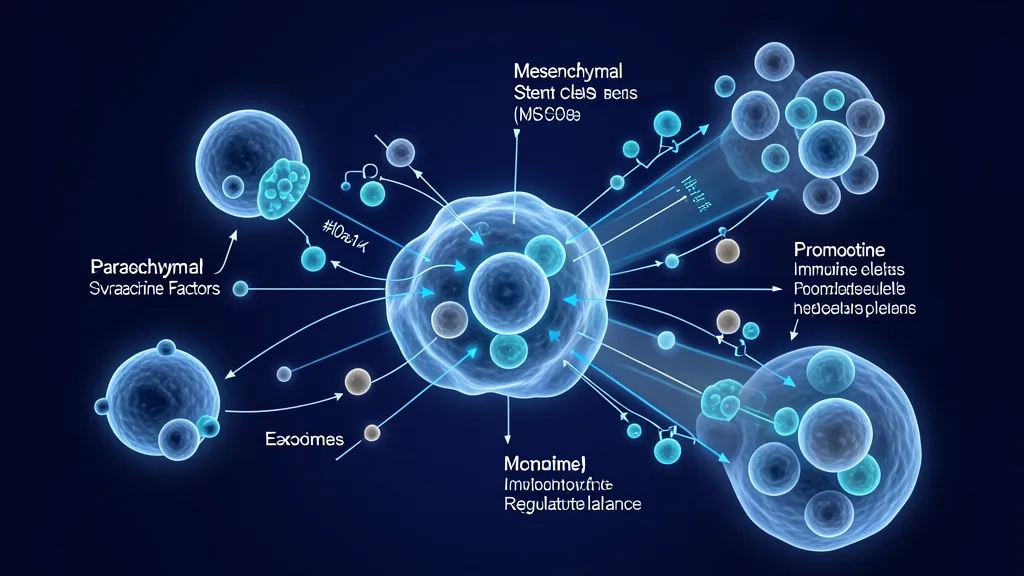
Mesenchymal stem cells — most often sourced from umbilical cord, bone marrow or adipose tissue — have a well-documented ability to interact with immune cells. In laboratory and animal studies they secrete factors that suppress the proliferation of autoreactive T and B cells, shift inflammatory cytokine profiles toward a more regulated state, and influence dendritic cells and macrophages. In lupus, this broad immunomodulatory behaviour, rather than any structural regeneration, is the proposed mechanism of benefit.
Regulatory T-cell modulation
A recurring theme in the research is the effect of MSCs on regulatory T cells (Tregs) — the immune cells that normally enforce self-tolerance and are often deficient or dysfunctional in lupus. Studies of MSC transplantation in SLE have reported increases in circulating Tregs and a rebalancing of the Th17/Treg axis. If MSCs can durably help restore this regulatory population, it would offer a biologically coherent explanation for any immune quieting observed — though demonstrating that this drives clinical outcomes remains an active question.
Why allogeneic, not autologous
An important and distinctive point in lupus is the choice of cell source. In many conditions, a patient's own (autologous) cells are preferred. In SLE, however, there is evidence that the patient's own bone-marrow MSCs may themselves be defective or senescent — part of the disease biology rather than a neutral repair tool. This is a key reason researchers have favoured allogeneic MSCs from healthy donors, particularly umbilical cord-derived MSCs (UC-MSCs), which are young, abundant, and have low immunogenicity.
What the clinical trials have shown
The most influential clinical work comes from research groups in Nanjing, China — including Sun L, Wang D and colleagues — who have studied allogeneic UC-MSC and bone-marrow MSC transplantation in patients with severe and treatment-refractory lupus. These early-phase and pilot studies reported that the infusions were generally well tolerated and, in a number of participants, were associated with reduced disease activity, including improvements in patients with lupus nephritis. Some reports described falling autoantibody levels and reduced proteinuria over follow-up.
These findings are genuinely interesting, but they must be read with care. Much of the early evidence comes from open-label or uncontrolled cohorts, and at least one randomised, double-blind, placebo-controlled trial did not confirm a clear added benefit over standard immunosuppression — a reminder that initial enthusiasm in single-arm studies often softens under rigorous testing.
How disease activity is measured
Optimistic stories rarely mention how rigorously response has to be measured. In lupus, the standard tool is the SLEDAI (SLE Disease Activity Index), which scores active disease across organ systems. For kidney involvement, researchers track proteinuria, serum creatinine and renal response criteria. A real reduction in SLEDAI, sustained over time and against a comparison group, is meaningful; an isolated improvement in an uncontrolled study is only a starting signal — because lupus naturally relapses and remits, and patients in trials usually continue conventional therapy as well.
The honest headline
As of today, MSC therapy is not an approved, proven cure for lupus. The credible work is happening in clinical trials, largely focused on severe or refractory disease that has failed standard treatment, and the evidence is still being established. Any clinic presenting stem cell therapy as a reliable cure for lupus is going well beyond what the data support.

What the evidence supports — and what it doesn't
The fair summary is nuanced. Across multiple early-phase studies, allogeneic MSC transplantation for severe lupus has generally appeared safe and feasible, and emerging evidence suggests it may reduce disease activity in some patients with refractory disease — a real and necessary foundation. What is missing is the harder evidence: large, randomised, controlled trials consistently demonstrating that MSC therapy produces a reproducible, durable benefit beyond optimised standard care. Until that exists, the responsible description is investigational — a field with biological plausibility and encouraging early signals, but not yet established efficacy.
- Refractory disease is the focus. The research centres on patients whose lupus has not responded to conventional immunosuppression — not on lupus that is already well controlled.
- Durability is uncertain. Lupus relapses and remits naturally; whether any MSC-associated improvement is sustained, and whether repeat infusions are needed, is not yet resolved.
- Controlled data are still maturing. Promising open-label results have not been uniformly confirmed in blinded, placebo-controlled trials, which is exactly why caution is warranted.
Lupus is exactly the kind of condition where false hope does real harm. The most respectful thing we can offer is the truth about where the science stands — and the patience to let rigorous trials answer the questions that anecdotes cannot.
— VELAR Clinical Team
How to evaluate any offer responsibly
If you or someone you love is considering stem cell options for lupus, the diligence is the same that protects against any over-promised treatment. Ask whether the approach is part of a registered clinical trial with ethical oversight. Ask what cell type and source are used, whether the cells are allogeneic, how disease activity is measured (SLEDAI, renal markers), and on what published evidence the claims rest. Be deeply sceptical of guaranteed results, success-rate percentages without a cited source, or any framing that positions an experimental therapy as a routine cure or a reason to stop prescribed medication. A trustworthy provider will describe MSC therapy for lupus as emerging research — and will never let hope outrun the data.
The VELAR perspective
At VELAR Center, our regenerative work is grounded in conditions where the evidence is more established, and we follow autoimmune cell-therapy research closely without overstating it. Lupus remains a difficult, serious disease, and we believe the only honest way to discuss MSC therapy for it is plainly: the immunomodulatory rationale is sound, the early-phase trials in refractory disease are worth watching, and it is still investigational. MSC therapy is not a replacement for the rheumatology care that keeps lupus controlled. As the controlled evidence matures, we will let that evidence — not enthusiasm — shape anything we ever say about it. If you want an honest conversation about what regenerative medicine can and cannot do today, that is exactly where a responsible consultation begins.
References
- Uccelli A, Moretta L, Pistoia V. Mesenchymal stem cells in health and disease. Nature Reviews Immunology. 2008;8(9):726-736. doi:10.1038/nri2395 ↩
- Shi Y, Wang Y, Li Q, et al. Immunoregulatory mechanisms of mesenchymal stem and stromal cells in inflammatory diseases. Nature Reviews Nephrology. 2018;14(8):493-507. doi:10.1038/s41581-018-0023-5 ↩
- Spees JL, Lee RH, Gregory CA. Mechanisms of mesenchymal stem/stromal cell function. Stem Cell Research & Therapy. 2016;7(1):125. doi:10.1186/s13287-016-0363-7 ↩
- Galipeau J, Sensébé L. Mesenchymal stromal cells: clinical challenges and therapeutic opportunities. Cell Stem Cell. 2018;22(6):824-833. doi:10.1016/j.stem.2018.05.004 ↩
- Pittenger MF, Discher DE, Péault BM, Phinney DG, Hare JM, Caplan AI. Mesenchymal stem cell perspective: cell biology to clinical progress. NPJ Regenerative Medicine. 2019;4:22. doi:10.1038/s41536-019-0083-6 ↩
- Caplan AI. Mesenchymal stem cells: time to change the name! Stem Cells Translational Medicine. 2017;6(6):1445-1451. doi:10.1002/sctm.17-0051 ↩
- Dominici M, Le Blanc K, Mueller I, et al. Minimal criteria for defining multipotent mesenchymal stromal cells. Cytotherapy. 2006;8(4):315-317. doi:10.1080/14653240600855905 ↩
- Lalu MM, McIntyre L, Pugliese C, et al. Safety of cell therapy with mesenchymal stromal cells (SafeCell). PLoS One. 2012;7(10):e47559. doi:10.1371/journal.pone.0047559 ↩
- Naji A, Eitoku M, Favier B, Deschaseaux F, Rouas-Freiss N, Suganuma N. Biological functions of mesenchymal stem cells. Cellular and Molecular Life Sciences. 2019;76(17):3323-3348. doi:10.1007/s00018-019-03125-1 ↩
- Bronckaers A, Hilkens P, Martens W, et al. Mesenchymal stem/stromal cells as a pharmacological approach to accelerate angiogenesis. Pharmacology & Therapeutics. 2014;143(2):181-196. doi:10.1016/j.pharmthera.2014.02.013 ↩
- Wang Y, Chen X, Cao W, Shi Y. Plasticity of mesenchymal stem cells in immunomodulation. Nature Immunology. 2014;15(11):1009-1016. doi:10.1038/ni.3002 ↩
- Weiss DJ, Bertoncello I, Borok Z, et al. Stem cells and cell therapies in lung biology and lung diseases. Proceedings of the American Thoracic Society. 2011;8(3):223-272. doi:10.1513/pats.201012-071DW ↩
参考文献
- Uccelli A, Moretta L, Pistoia V. Mesenchymal stem cells in health and disease. Nature Reviews Immunology. 2008;8(9):726-736. doi:10.1038/nri2395 ↩
- Shi Y, Wang Y, Li Q, et al. Immunoregulatory mechanisms of mesenchymal stem and stromal cells in inflammatory diseases. Nature Reviews Nephrology. 2018;14(8):493-507. doi:10.1038/s41581-018-0023-5 ↩
- Spees JL, Lee RH, Gregory CA. Mechanisms of mesenchymal stem/stromal cell function. Stem Cell Research & Therapy. 2016;7(1):125. doi:10.1186/s13287-016-0363-7 ↩
- Galipeau J, Sensébé L. Mesenchymal stromal cells: clinical challenges and therapeutic opportunities. Cell Stem Cell. 2018;22(6):824-833. doi:10.1016/j.stem.2018.05.004 ↩
- Pittenger MF, Discher DE, Péault BM, Phinney DG, Hare JM, Caplan AI. Mesenchymal stem cell perspective: cell biology to clinical progress. NPJ Regenerative Medicine. 2019;4:22. doi:10.1038/s41536-019-0083-6 ↩
- Caplan AI. Mesenchymal stem cells: time to change the name! Stem Cells Translational Medicine. 2017;6(6):1445-1451. doi:10.1002/sctm.17-0051 ↩
- Dominici M, Le Blanc K, Mueller I, et al. Minimal criteria for defining multipotent mesenchymal stromal cells. Cytotherapy. 2006;8(4):315-317. doi:10.1080/14653240600855905 ↩
- Lalu MM, McIntyre L, Pugliese C, et al. Safety of cell therapy with mesenchymal stromal cells (SafeCell). PLoS One. 2012;7(10):e47559. doi:10.1371/journal.pone.0047559 ↩
- Naji A, Eitoku M, Favier B, Deschaseaux F, Rouas-Freiss N, Suganuma N. Biological functions of mesenchymal stem cells. Cellular and Molecular Life Sciences. 2019;76(17):3323-3348. doi:10.1007/s00018-019-03125-1 ↩
- Bronckaers A, Hilkens P, Martens W, et al. Mesenchymal stem/stromal cells as a pharmacological approach to accelerate angiogenesis. Pharmacology & Therapeutics. 2014;143(2):181-196. doi:10.1016/j.pharmthera.2014.02.013 ↩
- Wang Y, Chen X, Cao W, Shi Y. Plasticity of mesenchymal stem cells in immunomodulation. Nature Immunology. 2014;15(11):1009-1016. doi:10.1038/ni.3002 ↩
- Weiss DJ, Bertoncello I, Borok Z, et al. Stem cells and cell therapies in lung biology and lung diseases. Proceedings of the American Thoracic Society. 2011;8(3):223-272. doi:10.1513/pats.201012-071DW ↩
系统性红斑狼疮(SLE,通常简称狼疮)是一种慢性自身免疫疾病,免疫系统对自身组织失去耐受并加以攻击——皮肤、关节、血细胞,而在更严重的形式中还包括肾脏、心脏与神经系统。常规的免疫抑制剂与皮质类固醇治疗对许多患者能控制病情,但仍有相当一部分患者属于难治性或重症狼疮,疗效不佳,或为药物毒性付出沉重代价。正是这一空缺把研究人员引向了间充质干细胞(MSC)疗法——并非作为组织替代,而是作为一种重新校准失调免疫系统的方式。然而,要理解什么是现实的,就必须把真正的科学与常常环绕其周围的营销区分开来。
为什么狼疮是免疫调节的问题
狼疮本质上是一种免疫失调。在健康人体内,调节机制使免疫系统不攻击自身组织。在 SLE 中,这些「刹车」失灵:自身反应性 B 细胞产生针对自身 DNA 与蛋白质的抗体,辅助性 T 细胞亚群过度活跃,炎性细胞因子在血中维持高水平。由此形成的免疫复合物沉积于组织——典型地沉积在肾脏,产生狼疮性肾炎,这是该病最严重的表现之一。因此,损伤并非来自单一创伤,而是来自持续、自我延续的免疫攻击。
这正是狼疮细胞疗法的理论依据有别于其他再生用途的原因。目标不是重建器官,而是恢复免疫平衡——抑制自身免疫攻击,重建身体已丧失的耐受。这种重新定位对于诚实地解读研究至关重要。
MSC 在狼疮中被认为如何起作用
免疫调节
间充质干细胞——最常取自脐带、骨髓或脂肪组织——具有与免疫细胞相互作用的充分记载的能力。在实验室与动物研究中,它们分泌的因子能抑制自身反应性 T 与 B 细胞的增殖,使炎性细胞因子谱转向更受调控的状态,并影响树突状细胞与巨噬细胞。在狼疮中,正是这种广泛的免疫调节行为,而非任何结构性再生,被提出为获益机制。
调节性 T 细胞的调控
研究中反复出现的主题是 MSC 对调节性 T 细胞(Treg)的影响——这类免疫细胞通常负责维持自身耐受,而在狼疮中往往缺乏或功能失常。SLE 中 MSC 移植的研究报告了循环 Treg 的增加以及 Th17/Treg 轴的再平衡。如果 MSC 能持久地帮助恢复这一调节性细胞群,将为所观察到的任何免疫平息提供一个生物学上自洽的解释——但要证明这驱动了临床结果,仍是一个有待解答的问题。
为什么用异体而非自体
狼疮中一个重要而独特的要点是细胞来源的选择。在许多疾病中,更倾向于使用患者自身的(自体)细胞。然而在 SLE 中,有证据表明患者自身的骨髓 MSC 本身可能有缺陷或衰老——属于疾病生物学的一部分,而非中性的修复工具。这是研究人员偏好来自健康供者的异体 MSC,尤其是脐带来源 MSC(UC-MSC)的一个关键原因——它们年轻、丰富且免疫原性低。
临床试验显示了什么
最有影响力的临床工作来自中国南京的研究团队——包括孙凌云(Sun L)、王丹(Wang D)及同事——他们研究了异体 UC-MSC 与骨髓 MSC 移植用于重症及难治性狼疮患者。这些早期与试点研究报告,输注总体耐受良好,且在若干受试者中与疾病活动度的下降相关,包括狼疮性肾炎患者的改善。一些报告描述了随访期间自身抗体水平下降与蛋白尿减少。
这些发现确实引人关注,但必须谨慎解读。许多早期证据来自开放标签或无对照的队列,而至少有一项随机、双盲、安慰剂对照试验并未证实其相对标准免疫抑制存在明确的额外获益——这提醒我们,单臂研究中最初的热情在严格检验下往往会减弱。
疾病活动度如何衡量
乐观的故事很少提及反应必须被多么严格地衡量。在狼疮中,标准工具是 SLEDAI(SLE 疾病活动指数),它对各器官系统的活动性病变进行评分。对于肾脏受累,研究人员追踪蛋白尿、血清肌酐与肾脏反应标准。SLEDAI 的真正下降,若随时间持续并相对于对照组,才有意义;无对照研究中的孤立改善仅是一个起始信号——因为狼疮本就自然复发与缓解,且试验中的患者通常仍在继续常规治疗。
诚实的标题
截至今日,MSC 疗法并非已获批准、经证实的狼疮治愈手段。可信的工作正在临床试验中进行,主要聚焦于对标准治疗无效的重症或难治性疾病,证据仍在确立之中。任何将干细胞疗法呈现为可靠治愈狼疮的诊所,都已远远超出了数据所能支持的范围。
证据支持什么——又不支持什么
公允的总结是细致入微的。在多项早期研究中,异体 MSC 移植用于重症狼疮总体上显得安全且可行,新兴证据提示它或许能降低部分难治性疾病患者的疾病活动度——这是真实且必要的基础。所缺失的是更有力的证据:大型、随机、有对照的试验,一致地证明 MSC 疗法能产生超越优化标准治疗的可重复、持久的获益。在此之前,负责任的描述是研究性的——一个具有生物学合理性与令人鼓舞的早期信号、但尚未确立疗效的领域。
- 难治性疾病是重点。研究集中于狼疮对常规免疫抑制无反应的患者——而非已得到良好控制的狼疮。
- 持久性尚不确定。狼疮本就自然复发与缓解;任何与 MSC 相关的改善是否持续、是否需要重复输注,尚未解决。
- 对照数据仍在成熟。有前景的开放标签结果尚未在盲法、安慰剂对照试验中得到一致证实,这正是需要谨慎的原因。
狼疮恰恰是那种虚假希望会造成真实伤害的疾病。我们能给予的最尊重的态度,是关于科学现状的真相——以及让严谨试验回答轶事无法回答之问题的耐心。
— VELAR 临床团队
如何负责任地评估任何提议
如果您或您所爱之人正在考虑狼疮的干细胞选择,所需的审慎与防范任何被过度承诺之治疗的审慎相同。询问该方法是否属于受伦理监督的注册临床试验。询问使用何种细胞类型与来源、细胞是否为异体、如何衡量疾病活动度(SLEDAI、肾脏标志物),以及这些声称建立在何种已发表证据之上。对保证的结果、没有引用来源的成功率百分比,或任何将实验性疗法定位为常规治愈、或作为停用处方药理由的表述,都要深度怀疑。值得信赖的提供者会将狼疮的 MSC 疗法描述为新兴研究——且绝不会让希望超越数据。
VELAR 的观点
在 VELAR 中心,我们的再生工作立足于证据更为确立的适应症,我们密切关注自身免疫细胞疗法研究而不夸大其词。狼疮仍是一种困难而严重的疾病,我们相信讨论其 MSC 疗法唯一诚实的方式就是直白:免疫调节的理论依据是合理的,针对难治性疾病的早期试验值得关注,而它仍处于研究阶段。MSC 疗法并不能替代使狼疮得到控制的风湿病学诊疗。随着对照证据的成熟,我们将让证据——而非热情——塑造我们对它所说的一切。如果您想就再生医学今天能做什么、不能做什么进行一次诚实的对话,那正是负责任咨询的起点。
المراجع
- Uccelli A, Moretta L, Pistoia V. Mesenchymal stem cells in health and disease. Nature Reviews Immunology. 2008;8(9):726-736. doi:10.1038/nri2395 ↩
- Shi Y, Wang Y, Li Q, et al. Immunoregulatory mechanisms of mesenchymal stem and stromal cells in inflammatory diseases. Nature Reviews Nephrology. 2018;14(8):493-507. doi:10.1038/s41581-018-0023-5 ↩
- Spees JL, Lee RH, Gregory CA. Mechanisms of mesenchymal stem/stromal cell function. Stem Cell Research & Therapy. 2016;7(1):125. doi:10.1186/s13287-016-0363-7 ↩
- Galipeau J, Sensébé L. Mesenchymal stromal cells: clinical challenges and therapeutic opportunities. Cell Stem Cell. 2018;22(6):824-833. doi:10.1016/j.stem.2018.05.004 ↩
- Pittenger MF, Discher DE, Péault BM, Phinney DG, Hare JM, Caplan AI. Mesenchymal stem cell perspective: cell biology to clinical progress. NPJ Regenerative Medicine. 2019;4:22. doi:10.1038/s41536-019-0083-6 ↩
- Caplan AI. Mesenchymal stem cells: time to change the name! Stem Cells Translational Medicine. 2017;6(6):1445-1451. doi:10.1002/sctm.17-0051 ↩
- Dominici M, Le Blanc K, Mueller I, et al. Minimal criteria for defining multipotent mesenchymal stromal cells. Cytotherapy. 2006;8(4):315-317. doi:10.1080/14653240600855905 ↩
- Lalu MM, McIntyre L, Pugliese C, et al. Safety of cell therapy with mesenchymal stromal cells (SafeCell). PLoS One. 2012;7(10):e47559. doi:10.1371/journal.pone.0047559 ↩
- Naji A, Eitoku M, Favier B, Deschaseaux F, Rouas-Freiss N, Suganuma N. Biological functions of mesenchymal stem cells. Cellular and Molecular Life Sciences. 2019;76(17):3323-3348. doi:10.1007/s00018-019-03125-1 ↩
- Bronckaers A, Hilkens P, Martens W, et al. Mesenchymal stem/stromal cells as a pharmacological approach to accelerate angiogenesis. Pharmacology & Therapeutics. 2014;143(2):181-196. doi:10.1016/j.pharmthera.2014.02.013 ↩
- Wang Y, Chen X, Cao W, Shi Y. Plasticity of mesenchymal stem cells in immunomodulation. Nature Immunology. 2014;15(11):1009-1016. doi:10.1038/ni.3002 ↩
- Weiss DJ, Bertoncello I, Borok Z, et al. Stem cells and cell therapies in lung biology and lung diseases. Proceedings of the American Thoracic Society. 2011;8(3):223-272. doi:10.1513/pats.201012-071DW ↩
الذئبة الحمامية الجهازية (SLE)، التي تُعرف عادةً بالذئبة، مرض مناعي ذاتي مزمن يفقد فيه الجهاز المناعي تحمّله لأنسجة الجسم نفسه ويهاجمها — الجلد والمفاصل وخلايا الدم، وفي صوره الأشد الكلى والقلب والجهاز العصبي. يسيطر العلاج التقليدي بمثبطات المناعة والكورتيكوستيرويدات على المرض لدى كثير من المرضى، لكن هناك فئة معتبرة مصابة بذئبة عنيدة أو شديدة لا تستجيب جيداً، أو تدفع ثمناً باهظاً من سُميّة الأدوية. وهذه الفجوة بالذات هي ما جذب الباحثين إلى العلاج بالخلايا الجذعية الوسيطة (MSC) — لا كبديل للنسيج، بل كوسيلة لإعادة معايرة جهاز مناعي مختل. لكن فهم ما هو واقعي يتطلب فصل العلم الحقيقي عن التسويق الذي كثيراً ما يحيط به.
لماذا الذئبة مشكلة تنظيم مناعي
الذئبة في جوهرها اضطراب في التنظيم المناعي. ففي الشخص السليم، تمنع آليات تنظيمية الجهاز المناعي من مهاجمة النسيج الذاتي. وفي الذئبة الجهازية تفشل هذه الكوابح: تنتج الخلايا البائية ذاتية التفاعل أجساماً مضادة ضد الحمض النووي وبروتينات الجسم نفسه، وتفرط مجموعات الخلايا التائية المساعدة في النشاط، وتدور السيتوكينات الالتهابية بمستويات مرتفعة. وتترسب المعقدات المناعية الناتجة في الأنسجة — وعلى نحو نمطي في الكلية، مُنتِجةً التهاب الكلية الذئبي، أحد أخطر تجليات المرض. فالضرر إذن ليس من إصابة واحدة، بل من هجوم مناعي مستمر يديم نفسه بنفسه.
وهذا تحديداً سبب اختلاف مبرر العلاج الخلوي في الذئبة عن الاستخدامات التجديدية في مواضع أخرى. فالهدف ليس إعادة بناء عضو، بل استعادة التوازن المناعي — كبح الهجوم المناعي الذاتي وإعادة بناء التحمّل الذي فقده الجسم. وهذه إعادة التأطير ضرورية لقراءة الأبحاث بصدق.
كيف يُعتقد أن الخلايا الجذعية الوسيطة تعمل في الذئبة
التعديل المناعي
للخلايا الجذعية الوسيطة — التي تُؤخذ غالباً من الحبل السري أو نخاع العظم أو النسيج الدهني — قدرة موثقة جيداً على التفاعل مع الخلايا المناعية. ففي دراسات المختبر والحيوان تفرز عوامل تثبّط تكاثر الخلايا التائية والبائية ذاتية التفاعل، وتحوّل أنماط السيتوكينات الالتهابية نحو حالة أكثر تنظيماً، وتؤثر في الخلايا التغصنية والبلاعم. وفي الذئبة، فإن هذا السلوك المعدِّل للمناعة الواسع، لا أي تجديد بنيوي، هو الآلية المقترحة للفائدة.
تعديل الخلايا التائية التنظيمية
من المواضيع المتكررة في الأبحاث تأثير الخلايا الجذعية الوسيطة في الخلايا التائية التنظيمية (Tregs) — وهي الخلايا المناعية التي تفرض عادةً التحمّل الذاتي، وكثيراً ما تكون ناقصة أو مختلة الوظيفة في الذئبة. وقد أبلغت دراسات زرع الخلايا الجذعية الوسيطة في الذئبة عن زيادات في الخلايا التائية التنظيمية الدائرة وإعادة توازن محور Th17/Treg. ولو استطاعت هذه الخلايا أن تساعد على نحو دائم في استعادة هذه المجموعة التنظيمية، لقدّم ذلك تفسيراً متماسكاً بيولوجياً لأي تهدئة مناعية تُلاحَظ — وإن ظل إثبات أن هذا يقود النتائج السريرية سؤالاً قائماً.
لماذا الخلايا الخيفية لا الذاتية
من النقاط المهمة والمميزة في الذئبة اختيار مصدر الخلايا. ففي حالات كثيرة تُفضَّل خلايا المريض نفسه (الذاتية). أما في الذئبة الجهازية فهناك أدلة على أن خلايا نخاع العظم الجذعية الوسيطة لدى المريض نفسه قد تكون معيبة أو هرِمة — جزءاً من بيولوجيا المرض لا أداة إصلاح محايدة. وهذا سبب رئيسي لتفضيل الباحثين الخلايا الجذعية الوسيطة الخيفية من متبرعين أصحاء، ولا سيما الخلايا المشتقة من الحبل السري (UC-MSC)، فهي فتيّة ووفيرة ومنخفضة الاستمناع.
ماذا أظهرت التجارب السريرية
يأتي أكثر العمل السريري تأثيراً من فرق بحثية في نانجينغ بالصين — منها Sun L وWang D وزملاؤهما — التي درست زرع الخلايا الجذعية الوسيطة الخيفية من الحبل السري ونخاع العظم في مرضى ذئبة شديدة وعنيدة على العلاج. وأبلغت هذه الدراسات المبكرة والاستطلاعية أن الحقن كان جيد التحمل عموماً، وارتبط في عدد من المشاركين بانخفاض نشاط المرض، بما في ذلك تحسن لدى مرضى التهاب الكلية الذئبي. ووصفت بعض التقارير انخفاض مستويات الأجسام المضادة الذاتية وتراجع البيلة البروتينية خلال المتابعة.
هذه النتائج مثيرة للاهتمام فعلاً، لكن يجب قراءتها بعناية. فكثير من الأدلة المبكرة يأتي من حشود مفتوحة التسمية أو غير مضبوطة، وثمة على الأقل تجربة واحدة عشوائية مزدوجة التعمية ومضبوطة بدواء وهمي لم تؤكد فائدة إضافية واضحة على تثبيط المناعة المعياري — تذكيرٌ بأن الحماس الأولي في الدراسات أحادية الذراع كثيراً ما يخفت تحت الاختبار الصارم.
كيف يُقاس نشاط المرض
نادراً ما تذكر القصص المتفائلة مدى الصرامة المطلوبة في قياس الاستجابة. وفي الذئبة، الأداة المعيارية هي SLEDAI (مؤشر نشاط مرض الذئبة)، الذي يسجّل المرض النشط عبر أجهزة الجسم. ولإصابة الكلى، يتتبع الباحثون البيلة البروتينية والكرياتينين المصلي ومعايير الاستجابة الكلوية. والانخفاض الحقيقي في SLEDAI، إذا دام مع الوقت وقُورن بمجموعة ضابطة، ذو معنى؛ أما التحسن المعزول في دراسة غير مضبوطة فهو إشارة بداية فقط — لأن الذئبة تنتكس وتهدأ بطبيعتها، وعادةً ما يواصل مرضى التجارب العلاج التقليدي أيضاً.
العنوان الصادق
حتى اليوم، علاج الخلايا الجذعية الوسيطة ليس شفاءً معتمداً ومُثبتاً للذئبة. العمل الموثوق يجري في تجارب سريرية، يتركز غالباً على المرض الشديد أو العنيد الذي فشل العلاج المعياري معه، ولا تزال الأدلة قيد الترسّخ. وأي عيادة تقدّم العلاج بالخلايا الجذعية كشفاء موثوق للذئبة تتجاوز ما تدعمه البيانات بكثير.
ما تدعمه الأدلة — وما لا تدعمه
الخلاصة المنصفة دقيقة. عبر دراسات متعددة مبكرة الطور، بدا زرع الخلايا الجذعية الوسيطة الخيفية للذئبة الشديدة بوجه عام آمناً وقابلاً للتطبيق، وتشير أدلة ناشئة إلى أنه قد يخفض نشاط المرض لدى بعض مرضى المرض العنيد — وهو أساس حقيقي وضروري. والمفقود هو الدليل الأقوى: تجارب كبيرة وعشوائية ومضبوطة تثبت باتساق أن علاج الخلايا الجذعية الوسيطة يحقق فائدة قابلة للتكرار ودائمة تتجاوز الرعاية المعيارية المُحسَّنة. وإلى أن يتوفر ذلك، فالوصف المسؤول هو بحثي تجريبي — مجال ذو معقولية بيولوجية وإشارات مبكرة مشجعة، لكن من دون فاعلية راسخة بعد.
- المرض العنيد هو محور التركيز. تتمحور الأبحاث حول المرضى الذين لم تستجب ذئبتهم لتثبيط المناعة التقليدي — لا الذئبة المسيطر عليها جيداً بالفعل.
- الديمومة غير مؤكدة. الذئبة تنتكس وتهدأ بطبيعتها؛ وما إذا كان أي تحسن مرتبط بالخلايا الجذعية الوسيطة مستداماً، وما إذا كانت هناك حاجة لحقن متكررة، لم يُحسم بعد.
- البيانات المضبوطة لا تزال تنضج. النتائج الواعدة مفتوحة التسمية لم تُؤكَّد على نحو موحد في تجارب معمّاة مضبوطة بدواء وهمي، وهذا تحديداً ما يستدعي الحذر.
الذئبة هي بالضبط نوع الحالات التي يسبب فيها الأمل الزائف ضرراً حقيقياً. وأكثر ما يمكننا تقديمه احتراماً هو الحقيقة عن موضع العلم — والصبر لندع التجارب الصارمة تجيب عن الأسئلة التي لا تستطيع الروايات الإجابة عنها.
— الفريق السريري في VELAR
كيف تقيّم أي عرض بمسؤولية
إذا كنت أنت أو شخص تحبه يفكر في خيارات الخلايا الجذعية للذئبة، فالعناية المطلوبة هي نفسها التي تحمي من أي علاج مبالغ في الوعد به. اسأل عما إذا كان النهج جزءاً من تجربة سريرية مسجّلة تخضع لإشراف أخلاقي. اسأل عن نوع الخلايا ومصدرها، وما إذا كانت الخلايا خيفية، وكيف يُقاس نشاط المرض (SLEDAI، مؤشرات الكلى)، وعلى أي دليل منشور تستند الادعاءات. وكن شديد الشك تجاه النتائج المضمونة، أو نسب نجاح بلا مصدر مذكور، أو أي صياغة تضع علاجاً تجريبياً في موضع الشفاء الروتيني أو سبباً لإيقاف دواء موصوف. سيصف المزوّد الموثوق علاج الخلايا الجذعية الوسيطة للذئبة بوصفه بحثاً ناشئاً — ولن يدع الأمل يتجاوز البيانات أبداً.
منظور VELAR
في مركز VELAR، يرتكز عملنا التجديدي على حالات تكون فيها الأدلة أكثر رسوخاً، ونتابع عن كثب أبحاث العلاج الخلوي المناعي الذاتي من دون المبالغة فيها. تظل الذئبة مرضاً صعباً وخطيراً، ونؤمن بأن الطريقة الصادقة الوحيدة لمناقشة علاج الخلايا الجذعية الوسيطة لها هي الصراحة: المبرر المعدِّل للمناعة سليم، والتجارب المبكرة في المرض العنيد جديرة بالمتابعة، وهي لا تزال بحثية تجريبية. وعلاج الخلايا الجذعية الوسيطة ليس بديلاً عن رعاية أمراض الروماتيزم التي تُبقي الذئبة مسيطراً عليها. ومع نضوج الأدلة المضبوطة، سندع تلك الأدلة — لا الحماس — تشكّل أي شيء نقوله عنها يوماً. وإذا أردت حواراً صادقاً عما يستطيع الطب التجديدي وما لا يستطيع فعله اليوم، فهذا تحديداً حيث تبدأ الاستشارة المسؤولة.