Osteoporosis is a systemic skeletal disease in which bone mass falls and the internal micro-architecture of bone deteriorates, leaving the skeleton fragile and prone to fracture — most seriously at the hip and spine, and commonly at the wrist [1]. It is quiet by nature: many people never know their bones have thinned until a fall or even an ordinary movement produces a break. Standard care can meaningfully lower that risk, yet because the cells that form bone are themselves stem cells, regenerative medicine is a natural place to ask whether cell therapy might one day help. Answering that honestly means separating a sound biological rationale from the human evidence that does — and does not — yet exist.
What goes wrong in osteoporotic bone
Bone is not inert scaffolding; it is living tissue in constant renewal. Throughout life, cells called osteoclasts resorb old or damaged bone while osteoblasts lay down new bone in its place — a balanced cycle known as remodelling. Osteoporosis develops when that balance tips: resorption outpaces formation, and the skeleton loses more bone than it rebuilds. Aging drives this shift, and in women the loss of estrogen after menopause accelerates it sharply, which is why postmenopausal osteoporosis is so common.
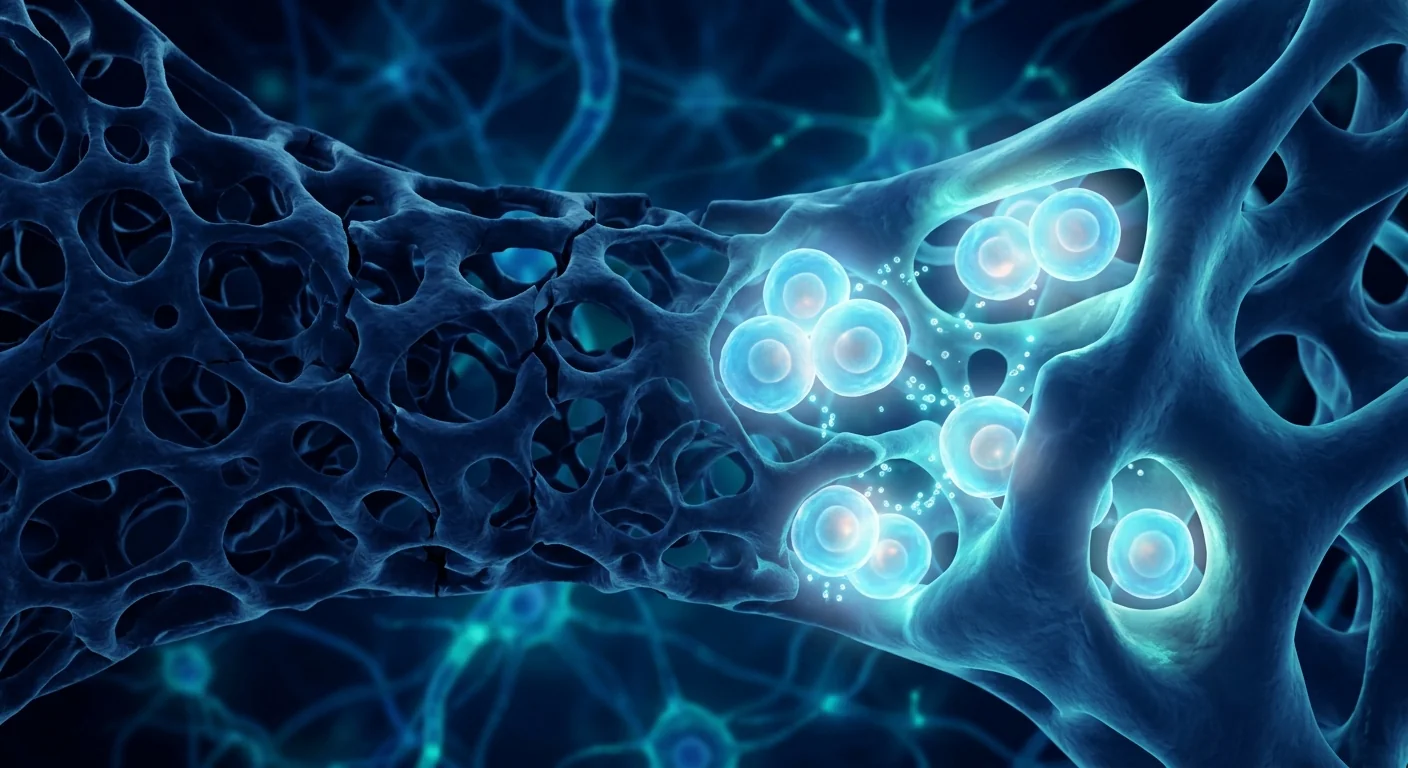
Osteoblasts arise from mesenchymal stem cells (MSCs) living in the bone marrow — the same progenitor pool that can also become fat cells. In osteoporosis, this stem-cell balance appears to shift: the marrow MSCs tend to favour becoming adipocytes (fat) over osteoblasts (bone), and their bone-building capacity declines [2][3]. The result is not just too much resorption but too little formation at the very source. Once trabecular architecture is lost, it does not simply grow back on its own — which is exactly why a therapy aimed at the stem-cell root of bone formation is such an appealing, if unproven, idea.
Why mesenchymal stem cells are a candidate
The logic connecting MSCs to osteoporosis is unusually direct. Because MSCs are the natural precursors of osteoblasts, restoring or boosting their osteogenic function is a biologically plausible way to tilt remodelling back toward bone formation [4]. If the marrow's stem-cell pool is skewing toward fat and away from bone, then supplying healthy, osteogenically competent cells — or coaxing the resident ones back toward the bone lineage — is a rational strategy on paper.
Beyond becoming bone cells directly, MSCs are also thought to act through paracrine signalling — secreting growth factors and immune-modulating molecules that influence the local remodelling environment [5]. In principle these signals could support the survival and activity of bone-forming cells and temper the inflammatory and resorptive pressures that erode bone with age. It is important to be precise, though: these are proposed mechanisms grounded in laboratory biology, not established clinical effects. The rationale is sound; the human proof is what remains outstanding.
What the evidence actually shows
The evidence for stem cell therapy in systemic osteoporosis is overwhelmingly preclinical. In animal models — including mice and rats engineered or treated to mimic bone loss — systemic infusion of MSCs, and especially genetically enhanced MSCs designed to build bone more aggressively, has in several studies improved bone density and quality [6][7]. These experiments give the field its optimism and its direction. But animal results, however encouraging, have a long and unreliable record of not translating directly to people.
Direct human clinical evidence for treating systemic osteoporosis with stem cells is, by contrast, very limited and early [8]. There is no large, randomised, controlled trial demonstrating that infusing MSCs meaningfully raises bone density or lowers fracture risk in osteoporotic patients. It is essential to distinguish this from a related but separate field: the local orthopedic use of cells to help heal a specific fracture or fill a bone defect. That application — cells placed at a defined site to support repair — is a different, more studied problem, and progress there should not be read as evidence that a systemic cure for osteoporosis exists.
The honest headline
As of today, stem cell therapy is not an approved or proven treatment for osteoporosis, and it is not an alternative to established bone medication. The biology is rational and the animal data are encouraging, but human proof for treating systemic osteoporosis is lacking. Any clinic presenting stem cells as a reliable cure for thinning bones is going well beyond the evidence.
How bone outcomes are actually measured
The cornerstone is DXA (dual-energy X-ray absorptiometry), which measures bone mineral density and expresses it as a T-score — how far a person's density sits above or below that of a healthy young adult. Fracture risk is estimated with tools such as FRAX, which combines bone density with clinical factors like age and prior fractures [9]. Ultimately, the outcome that matters most is fracture incidence itself: does a treatment actually reduce broken bones over time? A therapy that genuinely works should move these measures in a controlled comparison — and for stem cells in systemic osteoporosis, that controlled human evidence does not yet exist.
What the evidence supports — and what it doesn't
The fair summary is nuanced. There is a coherent biological rationale, real preclinical signals, and a plausible mechanism rooted in the fact that MSCs give rise to osteoblasts. What is missing is the harder evidence: large, randomised, controlled human trials showing that a specific cell product produces a consistent, reproducible rise in bone density and — most importantly — fewer fractures. Until that exists, the responsible description is investigational.
- Preclinical promise is not clinical proof. Improved bone density in engineered mouse models is genuinely encouraging, but it is a starting point for human trials, not a substitute for them.
- Systemic disease is not the same as a local defect. Using cells to help heal one fracture site is a more studied, better-defined task than reversing whole-skeleton bone loss — the two should never be conflated.
- It complements, it does not replace. Proven care — calcium and vitamin D, weight-bearing exercise, and pharmacotherapy such as bisphosphonates, denosumab, teriparatide or romosozumab — has strong fracture-prevention evidence; cell therapy is nowhere near replacing it.
Osteoporosis is exactly the kind of silent, fracture-defining condition where false hope can cost someone a hip. The most respectful thing we can offer is the truth about where the science stands — and the discipline to keep proven, fracture-preventing treatment at the centre of care.
— VELAR Clinical Team
How to evaluate any offer responsibly
If you or someone you love is considering stem cell options for osteoporosis, the diligence is the same that protects against any over-promised treatment. Ask whether the approach is part of a registered clinical trial with ethical oversight. Ask what cell type and source are used, how bone outcomes such as DXA T-score, FRAX risk and fracture incidence would be measured, and on what published human evidence the claims rest. Be deeply sceptical of guaranteed results, success-rate percentages without a cited source, or any framing that positions an experimental therapy as a substitute for proven bone medication. A trustworthy provider will describe stem cells for osteoporosis as emerging research — and will never let hope outrun the data or displace treatment that is known to prevent fractures.
The VELAR perspective
At VELAR Center, our regenerative work is grounded in conditions where the evidence is more established, and we follow bone and orthopedic cell-therapy research closely without overstating it. Osteoporosis is a compelling target precisely because its biology points so directly at stem cells — yet the honest position today is plain: the rationale is sound, the preclinical data are encouraging, human proof for systemic disease is lacking, and it remains investigational and no substitute for proven medication. As controlled human evidence matures, we will let that evidence — not enthusiasm — shape anything we ever say about it. If you want an honest conversation about what regenerative medicine can and cannot do for bone health today, that is exactly where a responsible consultation begins.
References
- Compston JE, McClung MR, Leslie WD. Osteoporosis. The Lancet. 2019;393(10169):364-376. doi:10.1016/S0140-6736(18)32112-3 ↩
- Bianco P, Robey PG. Stem cells in tissue engineering. Nature. 2001;414(6859):118-121. doi:10.1038/35102181 ↩
- Li X, Zhang C, Gui X, et al. PALLADIN regulates osteogenic differentiation of bone marrow mesenchymal stem cells and protects against bone loss in ovariectomized mice. Scientific Reports. 2026;16:14918. doi:10.1038/s41598-026-61118-0 ↩
- Kiernan J, Davies JE, Stanford WL. Concise review: Musculoskeletal stem cells to treat age-related osteoporosis. Stem Cells Translational Medicine. 2017;6(10):1930-1939. doi:10.1002/sctm.17-0054 ↩
- Spees JL, Lee RH, Gregory CA. Mechanisms of mesenchymal stem/stromal cell function. Stem Cell Research & Therapy. 2016;7(1):125. doi:10.1186/s13287-016-0363-7 ↩
- Ardah MT, Abdulsahib WK, Naji HA, et al. The role of the mesenchymal stem cell therapy in bone regeneration of osteoporosis: clinical translation and limitations. International Immunopharmacology. 2026;150:117039. doi:10.1016/j.intimp.2026.117039 ↩
- Hiruthyaswamy SP, Rao DR, Velavan P, et al. Platelet-derived biomaterials in osteoporosis: mechanisms, evidence and translational prospects. Journal of Biological Engineering. 2026;20:54. doi:10.1186/s13036-026-00715-z ↩
- Khan N, Ahmadova Z, Zeng B, et al. Stem Cells and their Key Derivatives in Degenerative Musculoskeletal Diseases. Stem Cell Reviews and Reports. 2026;22(3):412-428. doi:10.1007/s12015-026-11080-1 ↩
- Kanis JA, Cooper C, Rizzoli R, et al. European guidance for the diagnosis and management of osteoporosis in postmenopausal women. Osteoporosis International. 2019;30(1):3-44. doi:10.1007/s00198-018-4704-5 ↩
- Chen M, Wang J, Wei J, et al. Unlocking bone repair in osteoporosis by targeting the angiogenic niche. Frontiers in Endocrinology. 2026;17:1790054. doi:10.3389/fendo.2026.1790054 ↩
- Lim DJ, La JI. Bone quality and biologic enhancers for spinal fusion in osteoporosis: a narrative review. Asian Spine Journal. 2026;20(2):245-258. doi:10.31616/asj.2026.0186 ↩
- Kiernan J, Hu S, Grynpas MD, et al. Systemic mesenchymal stromal cell transplantation prevents functional bone loss in a mouse model of age-related osteoporosis. Stem Cells Translational Medicine. 2016;5(5):683-693. doi:10.5966/sctm.2015-0231 ↩
- Jiang F, Dong B, Wang Y, et al. Immunosenescence and Bone Homeostasis: From Mechanisms of Homeostasis Disruption to Therapeutic Opportunities. International Journal of Molecular Sciences. 2026;27(10):4322. doi:10.3390/ijms27104322 ↩
- Liu X, Yu W, Huang C, et al. Exosomes in bone health and disease: cellular crosstalk, systemic signaling, and AI-driven advances. Stem Cell Research & Therapy. 2026;17:292. doi:10.1186/s13287-026-05073-7 ↩
骨质疏松症是一种全身性骨骼疾病,骨量下降、骨骼内部微结构劣化,使骨骼变得脆弱、易于骨折——最严重的发生在髋部与脊柱,腕部也很常见。它天生"安静":许多人直到跌倒、甚至一个普通动作导致骨折,才知道自己的骨骼已经变薄。标准治疗能显著降低这种风险,然而,由于构建骨骼的细胞本身就是干细胞,再生医学自然成为人们探问细胞疗法或许某天能否有所帮助的领域。而要诚实地回答,就必须把合理的生物学理据,与目前确实存在——以及尚不存在——的人体证据区分开来。
骨质疏松的骨出了什么问题
骨并非惰性的支架,而是处于不断更新中的活组织。终其一生,被称为破骨细胞的细胞吸收陈旧或受损的骨,而成骨细胞在原处铺设新骨——这一平衡的循环称为骨重建。当这一平衡倾斜时,骨质疏松便发生了:吸收超过形成,骨骼失去的骨多于其重建的骨。衰老驱动这一转变,而在女性,绝经后雌激素的丧失使之急剧加速,这正是绝经后骨质疏松如此常见的原因。
这里还有一个对再生思维至关重要的更深层细胞故事。成骨细胞源自居于骨髓中的间充质干细胞(MSC)——这同一个祖细胞库也能变为脂肪细胞。在骨质疏松中,这一干细胞平衡似乎发生了转移:骨髓 MSC 倾向于变为脂肪细胞而非成骨细胞,其造骨能力随之下降。结果不仅是吸收过多,更是在源头处形成过少。一旦骨小梁结构丧失,它不会自行简单地长回——这正是为何一种针对骨形成之干细胞根源的疗法,会成为如此诱人却仍未证实的设想。
为何间充质干细胞是候选
将 MSC 与骨质疏松联系起来的逻辑异常直接。由于 MSC 是成骨细胞的天然前体,恢复或增强其成骨功能,是把骨重建重新拉回骨形成一侧的生物学上合理途径。如果骨髓的干细胞库正偏向脂肪、远离骨骼,那么提供健康、具备成骨能力的细胞——或诱导原有细胞重回骨系——在纸面上是合理的策略。
除了直接变为骨细胞之外,人们也认为 MSC 通过旁分泌信号发挥作用——分泌影响局部重建环境的生长因子与免疫调节分子。原则上,这些信号可支持成骨细胞的存活与活性,并缓和随年龄侵蚀骨骼的炎症与吸收压力。但必须说得精确:这些是植根于实验室生物学的被提出机制,而非已确立的临床效果。理据是充分的;有待完成的正是人体证明。
证据究竟显示了什么
在此,诚实最为重要。系统性骨质疏松干细胞疗法的证据绝大多数是临床前的。在动物模型中——包括经改造或处理以模拟骨丢失的小鼠与大鼠——全身输注 MSC,尤其是被设计得能更积极造骨的基因增强 MSC,在若干研究中改善了骨密度与质量。这些实验赋予该领域乐观与方向。但动物结果无论多么令人鼓舞,都有着长久而不可靠的、无法直接转化到人体的记录。
相比之下,用干细胞治疗系统性骨质疏松的直接人体临床证据则非常有限且早期。目前没有大型、随机、有对照的试验证明输注 MSC 能在骨质疏松患者中有意义地提高骨密度或降低骨折风险。必须将此与一个相关但独立的领域区分开来:用细胞帮助愈合特定骨折或填补骨缺损的局部骨科应用。那种应用——将细胞置于确定部位以支持修复——是一个不同的、研究更多的问题,其进展不应被解读为存在治疗骨质疏松的系统性治愈方案的证据。
诚实的标题
截至今日,干细胞疗法不是已获批准或经证实的骨质疏松治疗,也不是既有骨骼药物的替代品。其生物学是合理的,动物数据令人鼓舞,但治疗系统性骨质疏松的人体证明尚付阙如。任何将干细胞呈现为骨骼变薄之可靠治愈的诊所,都已远远超出了证据。
骨骼结果究竟如何衡量
乐观的声称很少提及在骨病中必须多么严格地证明获益。基石是DXA(双能 X 线吸收测定),它测量骨密度并以T 值表达——即一个人的密度高于或低于健康年轻成人的程度。骨折风险则用如FRAX之类的工具估算,它把骨密度与年龄、既往骨折等临床因素结合。归根结底,最重要的结果是骨折发生率本身:一种治疗是否真的随时间减少骨折?真正有效的疗法应当在对照比较中改变这些指标——而对于系统性骨质疏松的干细胞疗法,这种对照的人体证据尚不存在。
证据支持什么——又不支持什么
公允的总结是细致入微的。存在连贯的生物学理据、真实的临床前信号,以及植根于"MSC 产生成骨细胞"这一事实的合理机制。所缺失的是更有力的证据:大型、随机、有对照的人体试验,证明某种特定细胞产品能带来一致、可重复的骨密度上升,以及——最重要的——更少的骨折。在此之前,负责任的描述是研究性的。
- 临床前的前景不等于临床证明。在基因改造的小鼠模型中改善骨密度确实令人鼓舞,但那是人体试验的起点,而非其替代。
- 系统性疾病不同于局部缺损。用细胞帮助愈合一个骨折部位,是比逆转全骨骼骨丢失更受研究、定义更清晰的任务——二者绝不应混为一谈。
- 它是补充,而非替代。经证实的治疗——钙与维生素 D、负重运动,以及双膦酸盐、地舒单抗、特立帕肽或罗莫单抗等药物治疗——具有强有力的防骨折证据;细胞疗法远远谈不上取代它。
骨质疏松恰恰是那种以骨折为标志的沉默疾病,虚假希望可能让人付出一处髋骨的代价。我们能给予的最尊重的态度,是关于科学现状的真相——以及把经证实、能预防骨折的治疗置于照护核心的自律。
— VELAR 临床团队
如何负责任地评估任何提议
如果您或您所爱之人正在考虑骨质疏松的干细胞选择,所需的审慎与防范任何被过度承诺之治疗的审慎相同。询问该方法是否属于受伦理监督的注册临床试验。询问使用何种细胞类型与来源、如何衡量 DXA T 值、FRAX 风险与骨折发生率等骨骼结果,以及这些声称建立在何种已发表的人体证据之上。对保证的结果、没有引用来源的成功率百分比,或任何将实验性疗法定位为既有骨骼药物之替代品的表述,都要深度怀疑。值得信赖的提供者会将骨质疏松的干细胞疗法描述为新兴研究——且绝不会让希望超越数据,或取代已知能预防骨折的治疗。
VELAR 的观点
在 VELAR 中心,我们的再生工作立足于证据更为确立的适应症,我们密切关注骨骼与骨科细胞疗法研究而不夸大其词。骨质疏松是一个引人注目的目标,恰恰因为其生物学如此直接地指向干细胞——然而今天诚实的立场很直白:理据充分,临床前数据令人鼓舞,治疗系统性疾病的人体证明尚付阙如,它仍处于研究阶段,且绝非既有药物的替代。随着对照的人体证据成熟,我们将让证据——而非热情——塑造我们对它所说的一切。如果您想就再生医学今天能为骨骼健康做什么、不能做什么进行一次诚实的对话,那正是负责任咨询的起点。
هشاشة العظام مرض هيكلي جهازي تنخفض فيه كتلة العظم وتتدهور البنية الدقيقة الداخلية للعظم، فيغدو الهيكل هشاً وعرضةً للكسر — وأخطرها في الورك والعمود الفقري، وشائعها في الرسغ. وهو صامت بطبعه: كثيرون لا يدركون أن عظامهم قد رقّت حتى تُحدث سقطة أو حتى حركة عادية كسراً. وتستطيع الرعاية القياسية أن تخفض هذا الخطر بصورة ملموسة، ومع ذلك، ولأن الخلايا التي تبني العظم هي بذاتها خلايا جذعية، يغدو الطب التجديدي موضعاً طبيعياً للتساؤل عمّا إذا كان العلاج الخلوي قد يفيد يوماً ما. والإجابة الصادقة عن ذلك تعني فصل الأساس البيولوجي السليم عن الأدلة البشرية الموجودة — وغير الموجودة — بعد.
ما الخلل الذي يصيب العظم في هشاشة العظام
العظم ليس سقالة خاملة، بل نسيج حي في تجدد مستمر. وطوال العمر، تمتص خلايا تُسمى ناقضات العظم العظمَ القديم أو التالف، بينما تضع بانيات العظم عظماً جديداً محله — دورة متوازنة تُعرف بإعادة التشكّل. وتنشأ هشاشة العظام حين يميل هذا التوازن: يفوق الامتصاصُ التكوينَ، فيفقد الهيكل من العظم أكثر مما يعيد بناءه. ويدفع التقدمُ في السن هذا التحول، وفي النساء يسرّع فقدُ الإستروجين بعد انقطاع الطمث ذلك بشدة، ولهذا كانت هشاشة العظام بعد سن اليأس شائعة جداً.
وثمة قصة خلوية أعمق هنا تهمّ التفكير التجديدي. فبانيات العظم تنشأ من الخلايا الجذعية الوسيطة (MSCs) القاطنة في نخاع العظم — وهي مجموعة السلائف ذاتها التي يمكنها أيضاً أن تصبح خلايا دهنية. وفي هشاشة العظام يبدو أن توازن الخلايا الجذعية هذا يميل: تنزع MSCs في النخاع إلى أن تصير خلايا دهنية بدل بانيات عظم، وتتراجع قدرتها على بناء العظم. والنتيجة ليست فرط امتصاص فحسب، بل قلة تكوين عند المنبع بالذات. ومتى فُقدت البنية التربيقية، فإنها لا تنمو من جديد تلقائياً — وهذا بالضبط ما يجعل علاجاً يستهدف الجذر الخلوي الجذعي لتكوين العظم فكرةً جذّابة وإن ظلت غير مثبتة.
لماذا الخلايا الجذعية الوسيطة مرشّح
المنطق الذي يربط MSCs بهشاشة العظام مباشر على نحو غير معتاد. فلأن MSCs هي السلائف الطبيعية لبانيات العظم، يكون استعادة وظيفتها المكوّنة للعظم أو تعزيزها سبيلاً معقولاً بيولوجياً لإعادة ترجيح إعادة التشكّل نحو تكوين العظم. وإذا كانت مجموعة الخلايا الجذعية في النخاع تميل نحو الدهن بعيداً عن العظم، فإن إمداد خلايا سليمة قادرة على بناء العظم — أو استمالة الخلايا المقيمة للعودة إلى سلالة العظم — استراتيجية معقولة على الورق.
وإلى جانب التحول إلى خلايا عظمية مباشرةً، يُعتقد أيضاً أن MSCs تعمل عبر الإشارات شبه الصمّاوية — بإفراز عوامل نمو وجزيئات معدِّلة للمناعة تؤثر في بيئة إعادة التشكّل المحلية. ومن حيث المبدأ يمكن لهذه الإشارات أن تدعم بقاء الخلايا المكوّنة للعظم ونشاطها، وأن تلطّف الضغوط الالتهابية والامتصاصية التي تنخر العظم مع التقدم في السن. لكن يجب أن نكون دقيقين: هذه آليات مقترحة راسخة في البيولوجيا المختبرية، لا آثار سريرية ثابتة. الأساس سليم؛ والبرهان البشري هو ما بقي معلّقاً.
ماذا تُظهر الأدلة فعلياً
هنا تبلغ الصراحة ذروة أهميتها. الأدلة على العلاج الخلوي في هشاشة العظام الجهازية قبل سريرية إلى حد ساحق. ففي النماذج الحيوانية — بما فيها فئران وجرذان هُندست أو عولجت لمحاكاة فقد العظم — أدى الحقن الجهازي لـ MSCs، وبخاصة MSCs المعزَّزة وراثياً المصمَّمة لبناء العظم بقوة أكبر، إلى تحسّن كثافة العظم وجودته في عدة دراسات. وهذه التجارب تمنح المجال تفاؤله واتجاهه. لكن النتائج الحيوانية، مهما كانت مشجّعة، لها سجل طويل غير موثوق في عدم الانتقال مباشرةً إلى البشر.
وفي المقابل، فإن الأدلة السريرية البشرية المباشرة على علاج هشاشة العظام الجهازية بالخلايا الجذعية محدودة ومبكرة جداً. فلا توجد تجربة كبيرة عشوائية مضبوطة تثبت أن حقن MSCs يرفع كثافة العظم أو يخفض خطر الكسر على نحو ذي معنى لدى مرضى هشاشة العظام. ومن الضروري تمييز ذلك عن مجال متصل لكنه منفصل: الاستخدام الموضعي في جراحة العظام لمساعدة كسر محدد على الالتئام أو ملء عيب عظمي. فهذا التطبيق — وضع خلايا في موضع محدد لدعم الإصلاح — مسألة مختلفة أكثر دراسةً، ولا ينبغي قراءة التقدم فيها دليلاً على وجود شفاء جهازي لهشاشة العظام.
العنوان الصادق
حتى اليوم، العلاج بالخلايا الجذعية ليس علاجاً معتمداً أو مثبتاً لهشاشة العظام، وليس بديلاً عن أدوية العظام الراسخة. البيولوجيا معقولة والبيانات الحيوانية مشجّعة، لكن البرهان البشري لعلاج هشاشة العظام الجهازية مفقود. وأي عيادة تقدّم الخلايا الجذعية كشفاء موثوق للعظام المترقّقة تتجاوز الأدلة بكثير.
كيف تُقاس نتائج العظم فعلياً
نادراً ما تذكر الادعاءات المتفائلة مدى الصرامة المطلوبة لإثبات الفائدة في مرض العظم. وحجر الأساس هو DXA (قياس امتصاص الأشعة السينية ثنائي الطاقة)، الذي يقيس كثافة العظم المعدنية ويعبّر عنها بـدرجة T — أي كم تعلو كثافة الشخص أو تنخفض عن كثافة شاب بالغ سليم. ويُقدَّر خطر الكسر بأدوات مثل FRAX، التي تجمع كثافة العظم مع عوامل سريرية كالعمر والكسور السابقة. وفي نهاية المطاف، أهم نتيجة هي معدل حدوث الكسور ذاته: هل يخفض العلاج فعلاً العظام المكسورة مع الوقت؟ والعلاج الفعّال حقاً يُفترض أن يحرّك هذه المقاييس في مقارنة مضبوطة — وبالنسبة للخلايا الجذعية في هشاشة العظام الجهازية، فإن هذا الدليل البشري المضبوط لا يوجد بعد.
ما تدعمه الأدلة — وما لا تدعمه
الخلاصة المنصفة دقيقة. ثمة أساس بيولوجي متماسك، وإشارات قبل سريرية حقيقية، وآلية معقولة راسخة في حقيقة أن MSCs تنشئ بانيات العظم. والمفقود هو الدليل الأقوى: تجارب بشرية كبيرة عشوائية مضبوطة تثبت أن منتجاً خلوياً محدداً يحقق ارتفاعاً متسقاً وقابلاً للتكرار في كثافة العظم، والأهم — كسوراً أقل. وإلى أن يتوفر ذلك، فالوصف المسؤول هو بحثي تجريبي.
- الوعد قبل السريري ليس برهاناً سريرياً. تحسّن كثافة العظم في نماذج الفئران المهندَسة مشجّع حقاً، لكنه نقطة انطلاق للتجارب البشرية لا بديل عنها.
- المرض الجهازي ليس كالعيب الموضعي. استخدام الخلايا لمساعدة موضع كسر واحد على الالتئام مهمّة أكثر دراسةً وأوضح تعريفاً من عكس فقد العظم في الهيكل كله — ولا ينبغي أبداً الخلط بينهما.
- إنه مكمّل لا بديل. الرعاية المثبتة — الكالسيوم وفيتامين D، والتمارين الحاملة للوزن، والعلاج الدوائي مثل البيسفوسفونات والدينوسوماب والتيريباراتيد أو الروموسوزوماب — لها أدلة قوية على الوقاية من الكسور؛ والعلاج الخلوي أبعد ما يكون عن استبدالها.
هشاشة العظام هي بالضبط نوع الحالات الصامتة المعرّفة بالكسر، حيث قد يكلّف الأمل الزائف أحدهم مفصل ورك. وأكثر ما يمكننا تقديمه احتراماً هو الحقيقة عن موضع العلم — والانضباط بإبقاء العلاج المثبت المانع للكسور في صميم الرعاية.
— الفريق السريري في VELAR
كيف تقيّم أي عرض بمسؤولية
إذا كنت أنت أو شخص تحبه يفكر في خيارات الخلايا الجذعية لهشاشة العظام، فالعناية المطلوبة هي نفسها التي تحمي من أي علاج مبالغ في الوعد به. اسأل عما إذا كان النهج جزءاً من تجربة سريرية مسجّلة تخضع لإشراف أخلاقي. اسأل عن نوع الخلايا المستخدم ومصدرها، وكيف ستُقاس نتائج العظم مثل درجة T بـDXA وخطر FRAX ومعدل حدوث الكسور، وعلى أي دليل بشري منشور تستند الادعاءات. وكن شديد الشك تجاه النتائج المضمونة، أو نسب نجاح بلا مصدر مذكور، أو أي صياغة تضع علاجاً تجريبياً في موضع بديل عن أدوية العظام المثبتة. سيصف المزوّد الموثوق الخلايا الجذعية لهشاشة العظام بوصفها بحثاً ناشئاً — ولن يدع الأمل يتجاوز البيانات أو يزيح علاجاً يُعرف أنه يمنع الكسور.
منظور VELAR
في مركز VELAR، يرتكز عملنا التجديدي على حالات تكون فيها الأدلة أكثر رسوخاً، ونتابع عن كثب أبحاث العلاج الخلوي للعظام وجراحة العظام من دون المبالغة فيها. وهشاشة العظام هدف مغرٍ تحديداً لأن بيولوجيتها تشير بشكل مباشر جداً إلى الخلايا الجذعية — ومع ذلك فالموقف الصادق اليوم صريح: الأساس سليم، والبيانات قبل السريرية مشجّعة، والبرهان البشري للمرض الجهازي مفقود، وهو لا يزال بحثياً تجريبياً ولا بديلاً عن الأدوية المثبتة. ومع نضوج الأدلة البشرية المضبوطة، سندع تلك الأدلة — لا الحماس — تشكّل أي شيء نقوله عنه يوماً. وإذا أردت حواراً صادقاً عمّا يستطيع الطب التجديدي وما لا يستطيع فعله لصحة العظام اليوم، فهذا تحديداً حيث تبدأ الاستشارة المسؤولة.