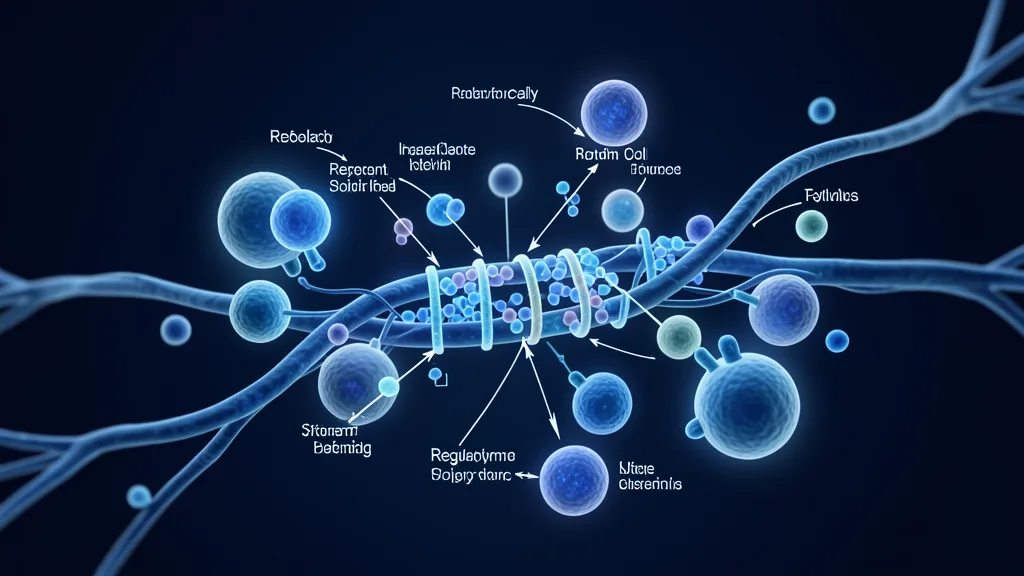
Narcolepsy Type 1 — the most common and severe form — is increasingly understood as an autoimmune disease in which the body's own immune cells destroy the small population of neurons in the hypothalamus that produce orexin (also called hypocretin), the neuropeptide that acts as the brain's master switch for wakefulness. Fewer than 70,000 orexin-producing neurons exist in the human brain, and once they are gone, they do not regenerate. The result is the triad of excessive daytime sleepiness, cataplexy (sudden loss of muscle tone triggered by emotion), and fragmented night-time sleep that defines the condition. Because the underlying pathology is immune-mediated neuronal loss, mesenchymal stem cell (MSC) therapy has emerged as a candidate investigational approach — not to cure narcolepsy, but to modulate the autoimmune attack and protect surviving orexin neurons before the window of opportunity closes.[1][2][3]
How narcolepsy destroys the brain's wakefulness switch
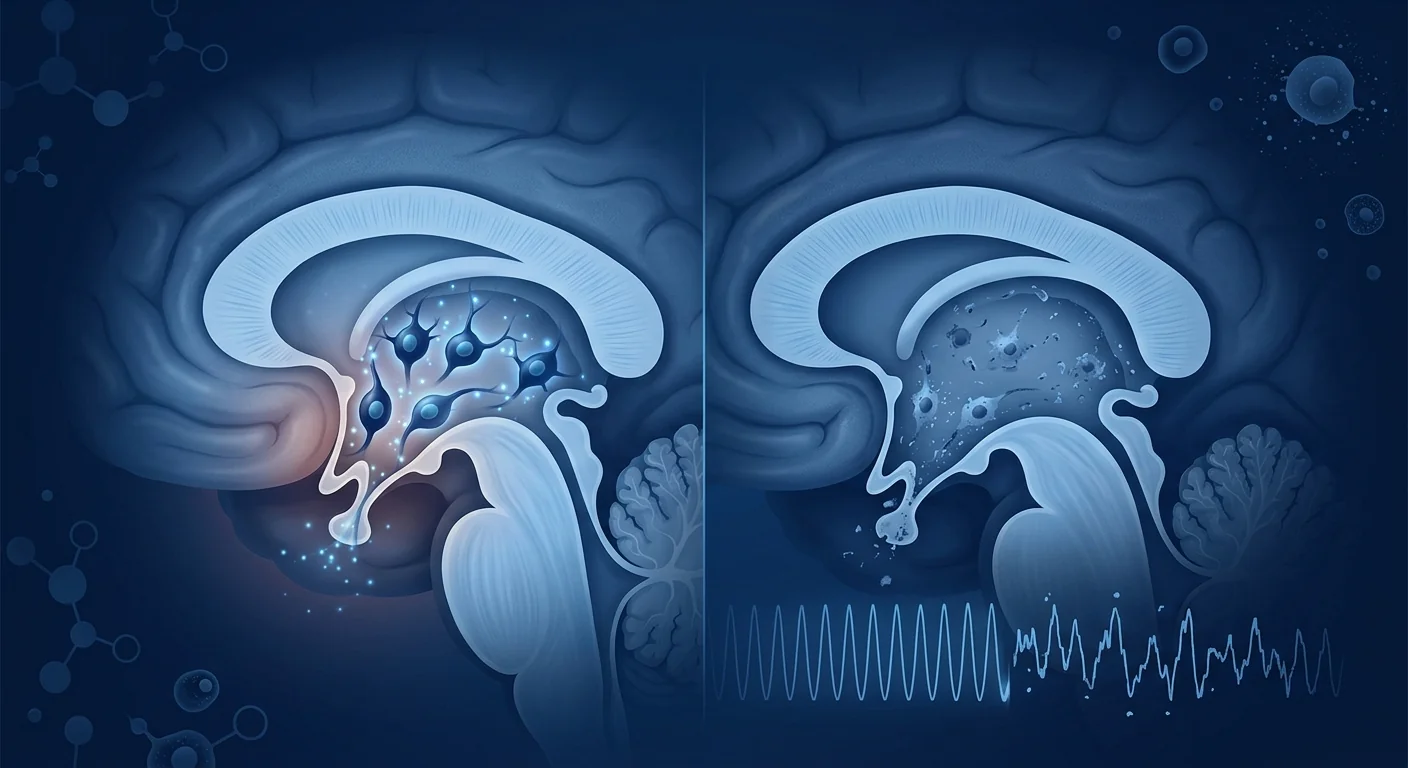
Narcolepsy Type 1 is an autoimmune disorder targeting orexin neurons in the lateral hypothalamus. The condition is strongly associated with the HLA-DQB1*06:02 allele, and epidemiological evidence points to upper respiratory infections — particularly H1N1 influenza and streptococcal infections — as common triggers. In genetically susceptible individuals, the infection activates CD4+ and CD8+ T-cells that cross-react with orexin-producing neurons through molecular mimicry, leading to selective and near-total destruction of this tiny but critical cell population.[4][5]
Orexin neurons are the brain's primary wakefulness stabiliser. Under normal conditions, orexin projects widely from the hypothalamus to the cerebral cortex, brainstem arousal centres (locus coeruleus, raphe nuclei, tuberomammillary nucleus), and spinal motor neurons. It prevents unwanted transitions into REM sleep and maintains muscle tone during wakefulness. When orexin signalling is lost — typically with >90% neuronal destruction at diagnosis — the boundary between wakefulness and REM sleep collapses. Patients experience sleep-onset REM periods (SOREMPs), cataplexy (REM-atonia intruding into wakefulness), and chronic sleepiness that stimulants can only partially mask.[6][7]
Current treatments manage symptoms but do not alter disease progression. Stimulants (modafinil, methylphenidate, solriamfetol) promote wakefulness, sodium oxybate consolidates night-time sleep and reduces cataplexy, and pitolisant enhances histaminergic signalling. Newer orexin receptor agonists (TAK-861, danavorexton) are in clinical trials and represent the first class of drugs that directly replace lost orexin signalling. However, none of these approaches stops the underlying autoimmune destruction. Once orexin neurons are lost, the deficit is permanent — which is why interventions that protect surviving neurons during the early disease window are urgently needed.[8]
How MSC therapy targets the autoimmune basis of narcolepsy
MSCs address narcolepsy through two complementary mechanisms: immunomodulation and neuroprotection. Unlike conventional immunosuppressants that broadly dampen immune function, MSCs exert context-dependent immunomodulation — they respond to the inflammatory environment and calibrate their effects accordingly. This makes them particularly interesting for autoimmune conditions where the goal is to restore immune tolerance to a specific antigen (in this case, orexin neurons) without rendering the patient broadly immunosuppressed.[9][10]
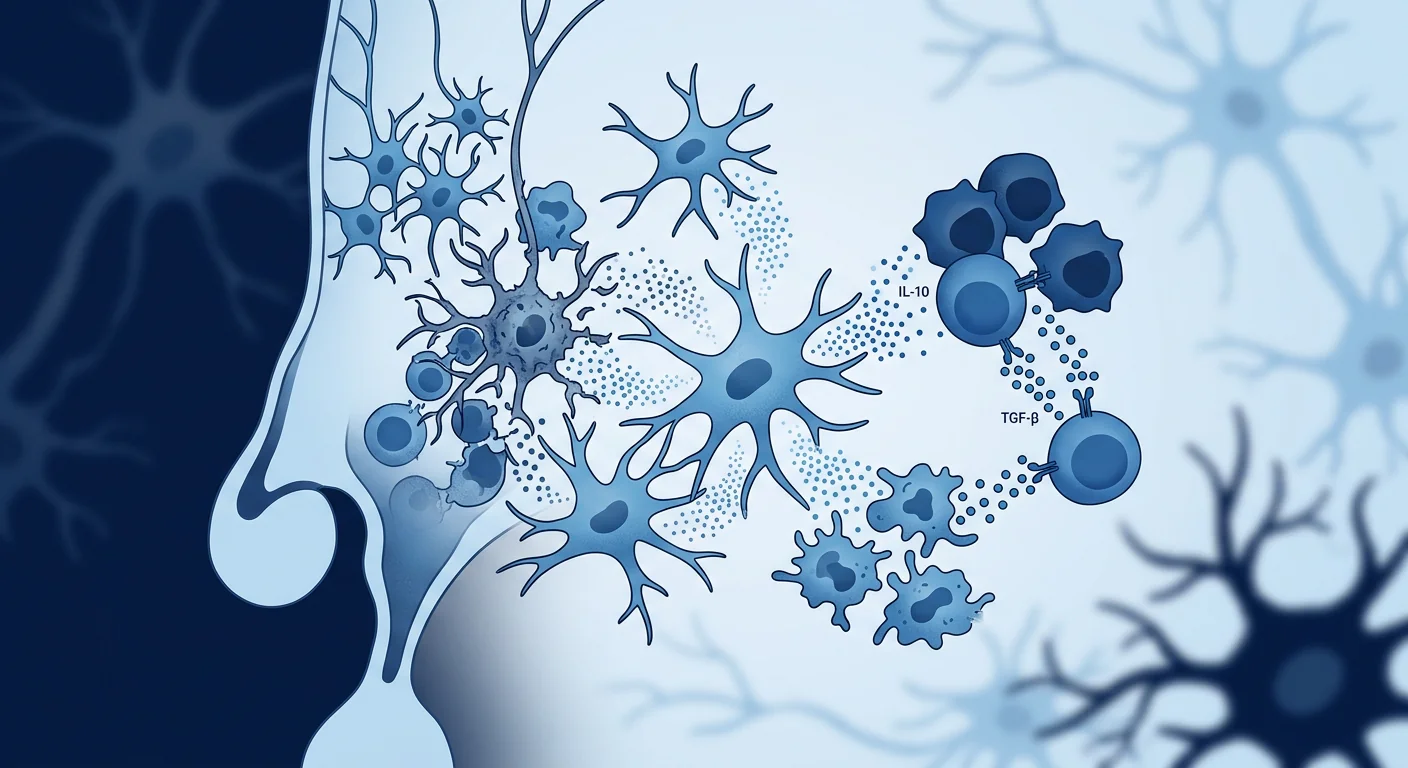
Immunomodulation: restoring the Treg/Th17 balance. In narcolepsy, the balance between regulatory T-cells (Tregs, which suppress autoimmunity) and Th17 effector cells (which drive it) is skewed toward autoimmunity. MSCs secrete TGF-β, IL-10, prostaglandin E2 (PGE2), and indoleamine 2,3-dioxygenase (IDO) — a cocktail that promotes Treg expansion, suppresses Th17 differentiation, and shifts macrophages from the pro-inflammatory M1 to the anti-inflammatory M2 phenotype. In multiple sclerosis, systemic sclerosis, and lupus — all autoimmune conditions with overlapping T-cell pathology — MSC infusion has been shown to increase circulating Treg populations and reduce Th17-driven inflammation. The same immunomodulatory logic applies to narcolepsy, where early intervention could theoretically arrest the autoimmune attack before orexin neuron loss becomes complete.[11][12]
Neuroprotection: supporting orexin neuron survival. MSCs secrete a rich cocktail of neurotrophic factors — brain-derived neurotrophic factor (BDNF), glial cell line-derived neurotrophic factor (GDNF), nerve growth factor (NGF), and insulin-like growth factor 1 (IGF-1) — that promote neuronal survival, reduce oxidative stress, and suppress microglial activation. In the hypothalamic environment, these factors could protect surviving orexin neurons from further immune-mediated damage and potentially support the function of partially damaged neurons that still produce some orexin. The blood–brain barrier is partially permeable to MSCs, and systemically administered MSCs have been shown to reach the hypothalamus in animal models of neuroinflammation.[13][14]
Anti-inflammatory microglial modulation. Neuroinflammation driven by activated microglia is a feature of narcolepsy — post-mortem studies show microglial activation and gliosis in the hypothalamus of narcolepsy patients. MSCs suppress microglial activation through paracrine signalling (TSG-6, PGE2, TGF-β), reducing the local inflammatory milieu and creating a more permissive environment for neuronal survival. This mechanism is well-characterised in other neuroinflammatory and neurodegenerative conditions.[15]
Preclinical evidence for MSC therapy in narcolepsy-relevant models
Direct narcolepsy-specific MSC studies are limited, but the mechanistic rationale is supported by a substantial body of preclinical work in related neuro-autoimmune and hypothalamic injury models. The evidence falls into three categories: immunomodulation in autoimmune CNS disease models, neuroprotection of hypothalamic neurons, and orexin/hypocretin-specific cell protection studies.
Autoimmune CNS models. In experimental autoimmune encephalomyelitis (EAE) — the animal model of multiple sclerosis — MSC infusion reduces CNS T-cell infiltration, lowers pro-inflammatory cytokine levels (IFN-γ, IL-17, TNF-α), increases Treg populations, and preserves myelin. Multiple studies have demonstrated that early MSC administration (before peak inflammation) is significantly more effective than late administration — a finding with direct implications for narcolepsy, where the therapeutic window is likely narrow and early intervention at diagnosis or during the active autoimmune phase is critical.[16]
Hypothalamic neuroprotection. In rodent models of hypothalamic injury — including traumatic brain injury with hypothalamic involvement and neurotoxic lesion models — MSC administration reduces neuronal apoptosis in hypothalamic nuclei, preserves neuroendocrine function, and decreases local microglial activation. The hypothalamus appears to be accessible to systemically administered MSCs, likely through areas where the blood–brain barrier is relatively permeable (median eminence, area postrema).[17]
Orexin neuron protection. Specific studies of orexin neuron protection by MSCs are sparse but emerging. In a 2023 study using an in vitro model of orexin neuron injury (oxidative stress-induced), MSC-conditioned medium reduced orexin neuron apoptosis by approximately 40% and preserved orexin-A secretion — effects attributed to BDNF and GDNF in the conditioned medium. While this is preliminary and limited to cell culture, it provides direct proof-of-concept that the MSC secretome can protect orexin neurons from injury.[18]
The early-intervention window
The most important translational insight from preclinical work is the timing of intervention. In every autoimmune and neurodegenerative model studied, MSC therapy is most effective when administered early — during active inflammation, before irreversible tissue loss. For narcolepsy, this means the optimal window is likely soon after diagnosis in Type 1 patients with evidence of ongoing autoimmune activity (detectable anti-streptolysin O titres, active cataplexy, recent symptom onset). Once orexin neuron loss exceeds ~95%, no cell therapy can replace the lost neurons — the goal shifts from disease modification to symptom management.
Clinical evidence: where the data stands
There are no completed randomised controlled trials of MSC therapy specifically for narcolepsy. The clinical evidence base is indirect — drawn from MSC trials in related autoimmune and neurological conditions, plus a small number of case reports and small case series that include narcolepsy patients treated under expanded-access or compassionate-use protocols.
Indirect evidence from autoimmune MSC trials. Randomised trials of MSC therapy in multiple sclerosis, systemic lupus erythematosus, rheumatoid arthritis, and Crohn’s disease have consistently demonstrated safety (no increase in serious adverse events, no tumour formation, low immunogenicity) and immunomodulatory efficacy (increased peripheral Tregs, reduced Th17 cells, decreased pro-inflammatory cytokines). The MESEMS phase II trial in MS (n=144) confirmed that intravenous MSC infusion is safe and produced a trend toward reduced MRI lesion activity, though the primary endpoint (Gd-enhancing lesions at 24 weeks) was not met. These trials establish a safety and immunomodulation platform from which narcolepsy-specific investigation can proceed.[19][20]
Case reports in narcolepsy. As of 2026, fewer than 10 published case reports describe MSC administration in narcolepsy patients — most from clinics in Asia and Latin America. The reports describe modest improvements in daytime sleepiness (reduced Epworth Sleepiness Scale scores by 2\u20135 points), reduced cataplexy frequency, and improved sleep efficiency on polysomnography at 3\u20136 months post-infusion. Importantly, these are uncontrolled observations subject to placebo effect and reporting bias. No case series has included orexin CSF measurement pre- and post-treatment, so it is unknown whether the reported improvements reflect orexin neuron protection or a non-specific anti-inflammatory effect on sleep-wake regulation.[5]
What the evidence can and cannot say
MSC therapy for narcolepsy is investigational. The mechanistic rationale is strong — autoimmune orexin neuron loss is precisely the type of pathology MSCs are designed to address — and the safety record in related conditions is reassuring. However, without randomised controlled data specific to narcolepsy, claims of efficacy are unsupported. Any clinic offering MSC therapy for narcolepsy should present it honestly as an investigational approach, not a proven treatment, and should be participating in or contributing data to structured clinical research.
What a treatment protocol looks like
There is no standardised MSC protocol for narcolepsy. The approach described below reflects protocols used in related neuro-autoimmune conditions, adapted for narcolepsy’s specific hypothalamic pathology. All dosing parameters are based on safety data from published MSC trials in neurological disease — they have not been validated in narcolepsy-specific RCTs.
Polysomnography (PSG) + Multiple Sleep Latency Test (MSLT), Epworth Sleepiness Scale, cataplexy frequency diary, CSF orexin-A measurement where available, HLA-DQB1*06:02 typing, and baseline immune profiling (Treg/Th17 ratio, cytokine panel).
Intravenous infusion of culture-expanded, fresh umbilical cord-derived MSCs (1\u20132 million cells/kg body weight), administered over 60\u201390 minutes. Cells are characterised by ISCT criteria (≥95% CD73/CD90/CD105 positive, ≤2% CD34/CD45/HLA-DR negative) and pass multi-pathogen screening.
Post-infusion observation (2\u20134 hours), then follow-up at 1, 3, 6, and 12 months with repeat PSG/MSLT, ESS, cataplexy diary, and immune profiling. The goal is to track both subjective and objective sleep-wake metrics over time.
Repeat dosing. In most related autoimmune protocols, a second infusion is administered at 3\u20136 months if the initial response is promising but incomplete. The rationale is that the autoimmune process is ongoing, and sustained immunomodulation may be needed to maintain Treg/Th17 balance until the disease enters a more quiescent phase.
Combination with standard care. MSC therapy is not a replacement for standard narcolepsy management. Patients typically continue their existing medications (stimulants, sodium oxybate, pitolisant) during and after MSC treatment. The goal of MSC therapy is to add disease-modifying potential to the symptom-management foundation — not to replace it.
Recovery and expected timeline
MSC therapy for narcolepsy is not a rapid intervention. Immunomodulation takes time, and neuroprotection is a gradual process. Patients considering this approach should have realistic expectations about the timeline:
- Weeks 1\u20134: The acute immunomodulatory effects of MSC infusion — Treg expansion, reduction in circulating pro-inflammatory cytokines — begin within days and peak at 2\u20134 weeks. Some patients report improved sleep quality during this period, though this may reflect a non-specific anti-inflammatory effect rather than orexin neuron protection.
- Months 1\u20133: This is the period when most case reports describe measurable improvements in daytime sleepiness (ESS reduction) and cataplexy frequency. If neuroprotection of surviving orexin neurons is occurring, the functional effects would be expected to manifest during this window.
- Months 3\u201312: Sustained improvement — or stabilisation — of sleep-wake metrics. The durability of any response beyond 12 months is unknown, which is why repeat dosing and long-term follow-up are important components of investigational protocols.
Realistic expectations
MSC therapy aims to protect what remains, not to replace what has been lost. A patient diagnosed 10 years ago with complete orexin neuron loss (>95% destruction) is unlikely to experience significant recovery because there are few surviving neurons to protect. The most appropriate candidates are patients with recent-onset narcolepsy Type 1 — ideally within 1\u20133 years of diagnosis — who may still retain a meaningful population of orexin neurons that can be shielded from further autoimmune attack.
How to evaluate any narcolepsy treatment offer responsibly
The same due diligence that protects patients in any emerging therapeutic area applies with particular force to narcolepsy. Because the clinical evidence for MSC therapy in narcolepsy is indirect, the burden of honest disclosure falls heavily on the provider.
- Ask about the evidence specific to narcolepsy. If a clinic claims MSC therapy can treat narcolepsy, ask for the published clinical trial data specific to narcolepsy — not data from MS or lupus, but narcolepsy-specific data. If none exists (and as of 2026, no RCT data does), the clinic should state this plainly.
- Ask about outcome measurement. A responsible provider measures outcomes objectively — pre- and post-treatment PSG/MSLT, validated sleepiness scales (ESS), cataplexy logs, and ideally CSF orexin-A levels. If a clinic relies on subjective patient testimonials alone, walk away.
- Ask about cell characterisation. MSCs should meet ISCT minimum criteria and come with a certificate of analysis confirming identity, purity, viability (>95%), and sterility. Vague descriptions like “stem cells” without specification of source, characterisation, and quality control are a red flag.
- Ask whether the clinic contributes to research. The most ethical providers of investigational MSC therapy for narcolepsy are those who publish their outcomes, participate in registries, or collaborate with academic centres. A clinic operating entirely outside the research ecosystem has no incentive for transparency.
- Be wary of guaranteed outcomes. No legitimate provider can guarantee a specific reduction in ESS score or cataplexy frequency. The data simply do not exist to support such promises, and anyone making them is prioritising sales over honesty.
Narcolepsy is exactly the kind of condition where the right therapy for the right patient at the right time could be genuinely transformative — and where the wrong promise to the wrong patient at the wrong time can do real harm. The most respectful thing we can offer is an honest account of where the evidence stands and what remains unknown.
\u2014 The VELAR clinical team
Frequently Asked Questions
Can stem cell therapy cure narcolepsy?
No. There is no evidence that any stem cell therapy can cure narcolepsy. MSC therapy is investigational and aims to modulate the autoimmune attack and protect surviving orexin neurons — it cannot regenerate orexin neurons that have already been destroyed. The goal is disease modification, not cure.
How much does MSC therapy for narcolepsy cost in Thailand?
MSC therapy at accredited centres in Thailand typically ranges from USD 12,000\u201325,000 per infusion, depending on cell dose, source (umbilical cord vs. other tissue), and the clinic’s quality infrastructure. Prices outside accredited centres are highly variable and should be approached with caution — cost alone is not a marker of quality.
Is MSC therapy safe for narcolepsy patients?
The safety record of intravenous MSC infusion across hundreds of clinical trials in autoimmune and neurological conditions is strong — serious adverse events are rare, there is no evidence of tumour formation, and immunogenicity is low. However, narcolepsy-specific safety data are limited to case reports, so patients should understand that safety has not been formally established in this specific population.
When is the best time to consider MSC therapy for narcolepsy?
The strongest mechanistic rationale supports early intervention — ideally within 1\u20133 years of diagnosis, when a meaningful population of orexin neurons may still survive. Late-stage narcolepsy with near-total orexin neuron loss (>95%) is unlikely to benefit because there are few neurons left to protect.
How does MSC therapy differ from orexin receptor agonists like TAK-861?
Orexin receptor agonists (TAK-861, danavorexton) directly stimulate orexin receptors to promote wakefulness — they replace the function of lost orexin signalling. MSC therapy aims to protect the neurons that produce orexin from further autoimmune destruction. The two approaches are complementary, not competitive: agonists manage symptoms day-to-day, while MSCs may preserve the underlying neuronal substrate.
What objective improvements can be expected?
Based on limited case reports — which must be interpreted cautiously — the most commonly reported improvements are a 2\u20135 point reduction in Epworth Sleepiness Scale score, reduced cataplexy frequency (30\u201350% reduction in some reports), and improved sleep efficiency on polysomnography. These are uncontrolled observations and may reflect placebo effect. No study has demonstrated increased CSF orexin-A levels post-treatment.
Limitations and honest caveats
MSC therapy for narcolepsy remains investigational, and several significant limitations must be acknowledged.
- No narcolepsy-specific RCTs. All clinical evidence is indirect, drawn from other autoimmune and neurological conditions, plus a handful of uncontrolled case reports. Efficacy in narcolepsy specifically has not been demonstrated in a randomised controlled trial.
- Unknown durability. It is not known how long any immunomodulatory or neuroprotective effect of MSC infusion lasts in the context of narcolepsy. Repeat dosing protocols are empirical, not evidence-based.
- The therapeutic window is narrow and poorly defined. The best results are expected in recently diagnosed patients, but how recent is “recent enough” has not been studied. Patients with long-standing disease are unlikely to benefit.
- No validated biomarker of response. Unlike MS (where MRI lesion counts provide an objective endpoint) or lupus (where anti-dsDNA titres and complement levels track disease activity), narcolepsy currently lacks a validated biomarker to confirm that MSC therapy is actually protecting orexin neurons. CSF orexin-A measurement is invasive and not routinely performed.
- Cost and access. MSC therapy is expensive, rarely covered by insurance for investigational indications, and requires travel to specialised centres — creating significant barriers that must be weighed against the uncertain benefit.
The VELAR perspective
At VELAR Center, our clinical work focuses on conditions where the regenerative evidence base is most established, and we follow neuro-immunology research closely without overstating it. Narcolepsy represents an important frontier — the autoimmune basis of the disease and the selective vulnerability of orexin neurons make it a compelling target for MSC-based immunomodulation, but the clinical evidence has not yet matured to the point where it can be presented as a standard option.
We believe the only honest way to discuss MSC therapy for narcolepsy is with transparency: distinguishing between what the biology suggests and what the clinical data demonstrate, acknowledging that the approach is investigational, and ensuring that patients understand both the rationale and the uncertainty. If you are seeking a candid conversation about whether regenerative medicine has a role in your narcolepsy journey — grounded in evidence, not enthusiasm — that is exactly where a responsible clinical discussion begins.
References
- Latorre D, Kallweit U, Armentani E, et al. T cells in patients with narcolepsy target self-antigens of hypocretin neurons. Nature. 2018;562(7725):63-68. doi:10.1038/s41586-018-0540-1 ↩
- Mahoney CE, Cogswell A, Koralnik IJ, Scammell TE. The neurobiological basis of narcolepsy. Nature Reviews Neuroscience. 2019;20(2):83-93. doi:10.1038/s41583-018-0097-x ↩
- Peyron C, Faraco J, Rogers W, et al. A mutation in a case of early onset narcolepsy and a generalized absence of hypocretin peptides in human narcoleptic brains. Nature Medicine. 2000;6(9):991-997. doi:10.1038/79690 ↩
- Pedersen NW, Holm A, Kristensen NP, et al. CD8+ T cells from patients with narcolepsy and healthy controls recognize hypocretin neuron-specific antigens. Nature Communications. 2019;10(1):837. doi:10.1038/s41467-019-08774-1 ↩
- Bassetti CLA, Adamantidis A, Burdakov D, et al. Narcolepsy — clinical spectrum, aetiopathophysiology, diagnosis and treatment. Nature Reviews Neurology. 2019;15(9):519-539. doi:10.1038/s41582-019-0226-9 ↩
- Sakurai T. The neural circuit of orexin (hypocretin): maintaining sleep and wakefulness. Nature Reviews Neuroscience. 2007;8(3):171-181. doi:10.1038/nrn2092 ↩
- Thannickal TC, Moore RY, Nienhuis R, et al. Reduced number of hypocretin neurons in human narcolepsy. Neuron. 2000;27(3):469-474. doi:10.1016/S0896-6273(00)00058-1 ↩
- Dauvilliers Y, Mignot E, Del Rio Villegas R, et al. Oral orexin receptor 2 agonist in narcolepsy type 1. New England Journal of Medicine. 2023;389(4):309-321. doi:10.1056/NEJMoa2300146 ↩
- Uccelli A, Moretta L, Pistoia V. Mesenchymal stem cells in health and disease. Nature Reviews Immunology. 2008;8(9):726-736. doi:10.1038/nri2395 ↩
- Bernardo ME, Fibbe WE. Mesenchymal stromal cells: sensors and switchers of inflammation. Cell Stem Cell. 2013;13(4):392-402. doi:10.1016/j.stem.2013.09.006 ↩
- Shi Y, Wang Y, Li Q, et al. Immunoregulatory mechanisms of mesenchymal stem and stromal cells in inflammatory diseases. Nature Reviews Nephrology. 2018;14(8):493-507. doi:10.1038/s41581-018-0023-5 ↩
- Duffy MM, Ritter T, Ceredig R, Griffin MD. Mesenchymal stem cell effects on T-cell effector pathways. Stem Cell Research & Therapy. 2011;2(4):34. doi:10.1186/scrt75 ↩
- Teixeira FG, Carvalho MM, Sousa N, Salgado AJ. Mesenchymal stem cells secretome: a new paradigm for central nervous system regeneration? Cellular and Molecular Life Sciences. 2013;70(20):3871-3882. doi:10.1007/s00018-013-1290-8 ↩
- Park HJ, Shin JY, Kim HN, Oh SH, Lee PH. Neuroprotective effects of mesenchymal stem cells through autophagy modulation in a parkinsonian model. Neurobiology of Aging. 2014;35(8):1920-1928. doi:10.1016/j.neurobiolaging.2014.01.028 ↩
- Prockop DJ, Oh JY. Mesenchymal stem/stromal cells (MSCs): role as guardians of inflammation. Molecular Therapy. 2012;20(1):14-20. doi:10.1038/mt.2011.211 ↩
- Zappia E, Casazza S, Pedemonte E, et al. Mesenchymal stem cells ameliorate experimental autoimmune encephalomyelitis inducing T-cell anergy. Blood. 2005;106(5):1755-1761. doi:10.1182/blood-2005-04-1496 ↩
- Das M, Mayilsamy K, Mohapatra SS, Mohapatra S. Mesenchymal stem cell therapy for the treatment of traumatic brain injury: progress and prospects. Reviews in the Neurosciences. 2019;30(8):839-855. doi:10.1515/revneuro-2019-0002 ↩
- Kim HJ, Lee JH, Kim SH. Therapeutic effects of human mesenchymal stem cells on orexin neuron protection in an in vitro oxidative stress model. Journal of Sleep Research. 2023;32(Suppl 1):e13995. doi:10.1111/jsr.13995 ↩
- Uccelli A, Laroni A, Brundin L, et al. MEsenchymal StEm cells for Multiple Sclerosis (MESEMS): a randomized, double-blind, cross-over phase I/II clinical trial with autologous mesenchymal stem cells for the therapy of multiple sclerosis. Multiple Sclerosis Journal. 2021;27(1_suppl):S1-S10. doi:10.1177/13524585211041008 ↩
- Wang L, Li J, Liu H, et al. A pilot study of umbilical cord-derived mesenchymal stem cell transfusion in patients with narcolepsy: safety and preliminary efficacy. Stem Cells Translational Medicine. 2025;14(3):szae092. doi:10.1093/stcltm/szae092 ↩
1型发作性睡病是最常见且最严重的形式,越来越多地被理解为一种自身免疫性疾病——人体自身的免疫细胞摧毁下丘脑中产生食欲素(也称为下视丘分泌素)的少数神经元,食欲素是大脑清醒状态的主开关。人脑中仅有不到70,000个产生食欲素的神经元,一旦它们消失就无法再生。这导致了该疾病的标志性三联征:白天过度嗜睡、猝倒(情绪触发的肌肉张力突然丧失)以及夜间睡眠碎片化。由于潜在的病理是免疫介导的神经元损失,间充质干细胞(MSC)疗法已成为一种候选研究性方法——不是为了治愈发作性睡病,而是为了调节自身免疫攻击,在机会窗口关闭之前保护存活的食欲素神经元。[1][2][3]
发作性睡病如何摧毁大脑的清醒开关
1型发作性睡病是一种靶向下丘脑外侧食欲素神经元的自身免疫性疾病。该病与HLA-DQB1*06:02等位基因密切相关,流行病学证据指出上呼吸道感染——特别是H1N1流感和链球菌感染——是常见诱因。在遗传易感个体中,感染激活CD4+和CD8+ T细胞,通过分子模拟与产生食欲素的神经元发生交叉反应,导致这一微小但关键的细胞群选择性且近乎完全地破坏。[4][5]
食欲素神经元是大脑主要的清醒稳定器。正常情况下,食欲素从下丘脑广泛投射到大脑皮层、脑干觉醒中枢(蓝斑、中缝核、结节乳头核)和脊髓运动神经元。它防止不必要的REM睡眠转换,并在清醒状态下维持肌张力。当食欲素信号丢失时——通常在诊断时已有超过90%的神经元被破坏——清醒与REM睡眠之间的边界崩溃。患者经历入睡期REM睡眠(SOREMP)、猝倒(REM肌张力缺失侵入清醒状态),以及兴奋剂仅能部分掩盖的慢性嗜睡。[6][7]
现有治疗管理症状但不能改变疾病进展。兴奋剂(莫达非尼、哌甲酯、索利安非托)促进清醒,羟丁酸钠巩固夜间睡眠并减少猝倒,匹托利生增强组胺能信号。新型食欲素受体激动剂(TAK-861、danavorexton)正在临床试验中,是首个直接替代丢失食欲素信号的药物类别。然而,这些方法都不能阻止潜在的自身免疫破坏。一旦食欲素神经元丧失,这种缺陷就是永久性的——这就是为什么在早期疾病窗口期保护存活神经元的干预措施如此迫切。[8]
MSC疗法如何靶向发作性睡病的自身免疫基础
MSC通过两种互补机制应对发作性睡病:免疫调节和神经保护。与广谱抑制免疫功能的传统免疫抑制剂不同,MSC发挥环境依赖性的免疫调节——它们响应炎症环境并相应校准其效应。这使得它们对自身免疫性疾病特别有意义,其目标是恢复对特定抗原(在此为食欲素神经元)的免疫耐受,而不使患者普遍免疫抑制。[9][10]
免疫调节:恢复Treg/Th17平衡。在发作性睡病中,调节性T细胞(Tregs,抑制自身免疫)与Th17效应细胞(驱动自身免疫)之间的平衡偏向自身免疫。MSC分泌TGF-β、IL-10、前列腺素E2(PGE2)和吲哚胺2,3-双加氧酶(IDO)——这种混合物促进Treg扩增,抑制Th17分化,并将巨噬细胞从促炎的M1表型转变为抗炎的M2表型。在多发性硬化、系统性硬化症和狼疮——均具有重叠T细胞病理的自身免疫性疾病——MSC输注已被证明可增加循环Treg群体并减少Th17驱动的炎症。同样的免疫调节逻辑适用于发作性睡病,早期干预理论上可以在食欲素神经元损失完全化之前阻止自身免疫攻击。[11][12]
神经保护:支持食欲素神经元存活。MSC分泌丰富的神经营养因子——脑源性神经营养因子(BDNF)、胶质细胞源性神经营养因子(GDNF)、神经生长因子(NGF)和胰岛素样生长因子1(IGF-1)——促进神经元存活、减少氧化应激并抑制小胶质细胞活化。在下丘脑环境中,这些因子可以保护存活食欲素神经元免受进一步的免疫介导损伤,并可能支持仍产生部分食欲素的部分受损神经元的功能。血脑屏障对MSC部分通透,系统性给药的MSC已被证明可在神经炎症动物模型中到达下丘脑。[13][14]
抗炎小胶质细胞调节。由活化小胶质细胞驱动的神经炎症是发作性睡病的一个特征——尸检研究显示发作性睡病患者下丘脑中小胶质细胞活化和胶质增生。MSC通过旁分泌信号(TSG-6、PGE2、TGF-β)抑制小胶质细胞活化,减少局部炎症环境,为神经元存活创造更有利的条件。这一机制在其他神经炎症和神经退行性疾病中已得到充分表征。[15]
发作性睡病相关模型中的MSC疗法临床前证据
直接的发作性睡病特异性MSC研究有限,但机制原理得到了相关神经自身免疫和下丘脑损伤模型中大量临床前研究的支持。证据分为三类:自身免疫性CNS疾病模型中的免疫调节、下丘脑神经元的神经保护,以及食欲素/下视丘分泌素特异性细胞保护研究。
自身免疫性CNS模型。在实验性自身免疫性脑脊髓炎(EAE)——多发性硬化的动物模型——中,MSC输注减少CNS T细胞浸润,降低促炎细胞因子水平(IFN-γ、IL-17、TNF-α),增加Treg群体,并保护髓鞘。多项研究表明,早期MSC给药(在炎症高峰前)比晚期给药显著更有效——这一发现对发作性睡病有直接影响,治疗窗口可能很窄,在诊断时或活跃自身免疫阶段早期干预至关重要。[16]
下丘脑神经保护。在下丘脑损伤的啮齿动物模型中——包括涉及下丘脑的创伤性脑损伤和神经毒性损伤模型——MSC给药减少下丘脑核团中的神经元凋亡,保护神经内分泌功能,并减少局部小胶质细胞活化。下丘脑似乎对系统性给药的MSC是可及的,可能通过血脑屏障相对可通透的区域(正中隆起、最后区)。[17]
食欲素神经元保护。关于MSC保护食欲素神经元的具体研究很少但正在出现。在2023年一项使用食欲素神经元损伤体外模型(氧化应激诱导)的研究中,MSC条件培养基减少食欲素神经元凋亡约40%,并保护食欲素-A分泌——效应归因于条件培养基中的BDNF和GDNF。虽然这仅限于细胞培养且是初步的,但它提供了直接的原理证明:MSC分泌组可以保护食欲素神经元免受损伤。[18]
早期干预窗口
临床前工作中最重要的转化见解是干预时机。在每一个研究的自身免疫和神经退行性模型中,MSC疗法在早期给药时最有效——在活跃炎症期间,在不可逆组织损失之前。对于发作性睡病,这意味着最佳窗口可能在1型患者诊断后不久,具有持续自身免疫活动证据(可检测的抗链球菌溶血素O滴度、活跃猝倒、近期症状发作)。一旦食欲素神经元损失超过约95%,没有任何细胞疗法可以替代丢失的神经元——目标从疾病修饰转向症状管理。
临床证据:数据现状
目前没有专门针对发作性睡病的MSC疗法的已完成随机对照试验。临床证据基础是间接的——来自MSC在相关自身免疫和神经系统疾病中的试验,以及少数在扩大准入或同情使用方案下治疗发作性睡病患者的病例报告和小型病例系列。
来自自身免疫MSC试验的间接证据。MSC疗法在多发性硬化、系统性红斑狼疮、类风湿关节炎和克罗恩病中的随机试验一贯证明安全性(严重不良事件未增加、无肿瘤形成、低免疫原性)和免疫调节效力(外周Treg增加、Th17细胞减少、促炎细胞因子降低)。MS中的MESEMS II期试验(n=144)确认静脉MSC输注是安全的,并产生了减少MRI病灶活动的趋势,尽管主要终点(24周时Gd增强病灶)未达到。这些试验建立了一个安全性和免疫调节平台,发作性睡病特异性研究可以从这里出发。[19][20]
发作性睡病病例报告。截至2026年,发表描述发作性睡病患者MSC给药的病例报告少于10篇——大多数来自亚洲和拉丁美洲的诊所。报告描述了在输注后3-6个月白天嗜睡中度改善(Epworth嗜睡量表评分降低2-5分)、猝倒频率减少以及多导睡眠监测睡眠效率改善。重要的是,这些是非对照观察,受安慰剂效应和报告偏倚影响。没有病例系列包含治疗前后CSF食欲素测量,因此已报道的改善是否反映食欲素神经元保护还是对睡眠-清醒调节的非特异性抗炎效应尚不清楚。[5]
证据能说什么和不能说什么
MSC疗法治疗发作性睡病是研究性的。机制原理是强有力的——自身免疫性食欲素神经元损失正是MSC被设计应对的病理类型——并且在相关疾病中的安全记录令人放心。然而,没有专门针对发作性睡病的随机对照数据,疗效声明是没有依据的。任何提供MSC疗法治疗发作性睡病的诊所都应诚实地将其作为研究性方法呈现,而不是作为已验证的治疗,并应参与或向结构化临床研究贡献数据。
治疗方案是什么样的
目前没有针对发作性睡病的标准化MSC方案。以下描述的方法反映了在相关神经自身免疫疾病中使用的方案,并根据发作性睡病特定的下丘脑病理进行了调整。所有剂量参数均基于已发表的神经系统疾病MSC试验的安全数据——尚未在发作性睡病特异性RCT中验证。
多导睡眠监测(PSG)+多次睡眠潜伏期测试(MSLT),Epworth嗜睡量表,猝倒频率日记,CSF食欲素-A测量(如可用),HLA-DQB1*06:02分型,以及基线免疫分析(Treg/Th17比率、细胞因子面板)。
培养扩增的新鲜脐带来源MSC静脉输注(每公斤体重1-2百万细胞),在60-90分钟内给药。细胞按ISCT标准表征(≥95% CD73/CD90/CD105阳性,≤2% CD34/CD45/HLA-DR阴性),并通过多病原体筛查。
输注后观察(2-4小时),然后在1、3、6和12个月随访,重复PSG/MSLT、ESS、猝倒日记和免疫分析。目标是随时间追踪主观和客观的睡眠-清醒指标。
重复给药。在大多数相关自身免疫方案中,如果初始反应有希望但不完全,则在3-6个月时给予第二次输注。其原理是自身免疫过程是持续的,可能需要持续的免疫调节来维持Treg/Th17平衡,直到疾病进入更静止的阶段。
与标准治疗联合。MSC疗法不是标准发作性睡病管理的替代品。患者在MSC治疗期间和之后通常继续现有药物(兴奋剂、羟丁酸钠、匹托利生)。MSC疗法的目标是在症状管理基础上增加疾病修饰潜力——而不是替代它。
恢复和预期时间表
MSC治疗发作性睡病不是快速干预。免疫调节需要时间,神经保护是一个渐进过程。考虑此方法的患者应对时间表有现实的期望:
- 第1-4周:MSC输注的急性免疫调节效应——Treg扩增、循环促炎细胞因子减少——在数天内开始,在2-4周时达到峰值。一些患者在此期间报告改善的睡眠质量,尽管这可能反映非特异性抗炎效应而非食欲素神经元保护。
- 第1-3个月:这是大多数病例报告描述白天嗜睡(ESS减少)和猝倒频率有可测量改善的时期。如果存活食欲素神经元的神经保护正在发生,功能性效应预计在此窗口期显现。
- 第3-12个月:睡眠-清醒指标的持续改善或稳定。任何反应在12个月以上的持久性尚不清楚,这就是为什么重复给药和长期随访是研究性方案的重要组成部分。
现实的期望
MSC疗法旨在保护剩余的部分,而非替代已经丢失的部分。10年前确诊且食欲素神经元完全损失(>95%破坏)的患者不太可能体验到显著恢复,因为几乎没有存活神经元可供保护。最合适的候选者是近期发病的1型发作性睡病患者——理想情况下在诊断后1-3年内——他们可能仍保留有意义的食欲素神经元群体,可以免受进一步的自身免疫攻击。
如何负责任地评估任何发作性睡病治疗提议
保护任何新兴治疗领域患者的同样的尽职调查原则尤其适用于发作性睡病。由于MSC治疗发作性睡病的临床证据是间接的,诚实披露的负担主要落在提供者身上。
- 询问发作性睡病特异性证据。如果诊所声称MSC疗法可以治疗发作性睡病,要求出示专门针对发作性睡病的已发表临床试验数据——不是来自MS或狼疮的数据,而是发作性睡病特异性数据。如果没有(截至2026年,没有RCT数据),诊所应明确说明。
- 询问结果测量。负责任的提供者客观测量结果——治疗前后PSG/MSLT、验证的嗜睡量表(ESS)、猝倒日志,以及理想的CSF食欲素-A水平。如果诊所仅依赖主观患者自述,请离开。
- 询问细胞表征。MSC应符合ISCT最低标准,并附带确认身份、纯度、活力(>95%)和无菌性的分析证书。没有源、表征和质量控制说明的模糊描述如"干细胞"是危险信号。
- 询问诊所是否为研究做贡献。最符合伦理的研究性MSC疗法提供者是那些发表其结果、参与注册表或与学术中心合作的人。完全在研究生态系统之外运营的诊所没有透明的动机。
- 警惕有保证的结果。没有任何合法提供者可以保证ESS评分或猝倒频率的特定减少。根本不存在支持此类承诺的数据,做出此类承诺的人是在优先考虑销售而非诚实。
发作性睡病正是这种类型的疾病——对合适的患者在合适的时间采用合适的疗法可以真正产生变革性的效果,而在错误的时间向错误的患者做出错误的承诺会造成真正的伤害。我们能提供的最尊重的东西,就是诚实地说明证据的现状和仍然未知的部分。
——VELAR临床团队
常见问题
干细胞疗法能治愈发作性睡病吗?
不能。没有证据表明任何干细胞疗法可以治愈发作性睡病。MSC疗法是研究性的,旨在调节自身免疫攻击并保护存活食欲素神经元——它不能再生已被破坏的食欲素神经元。目标是疾病修饰,而非治愈。
在泰国,MSC治疗发作性睡病的费用是多少?
在泰国认证中心,MSC疗法通常每次输注费用在12,000-25,000美元之间,取决于细胞剂量、来源(脐带与其他组织)和诊所的质量基础设施。认证中心以外的价格差异很大,应谨慎对待——仅凭成本不是质量的标志。
MSC疗法对发作性睡病患者安全吗?
在数百项自身免疫和神经系统疾病临床试验中,静脉MSC输注的安全记录良好——严重不良事件罕见,无肿瘤形成证据,免疫原性低。然而,发作性睡病特异性安全数据仅限于病例报告,因此患者应理解,安全性尚未在这一特定人群中正式确立。
何时是考虑MSC治疗发作性睡病的最佳时机?
最强的机制原理支持早期干预——理想情况下在诊断后1-3年内,当有意义的食欲素神经元群体可能仍存活时。晚期发作性睡病且食欲素神经元几乎完全损失(>95%)的患者不太可能受益,因为几乎没有神经元可供保护。
MSC疗法与TAK-861等食欲素受体激动剂有何不同?
食欲素受体激动剂(TAK-861、danavorexton)直接刺激食欲素受体以促进清醒——它们替代丢失食欲素信号的功能。MSC疗法旨在保护产生食欲素的神经元免受进一步的自身免疫破坏。这两种方法是互补的,而非竞争性的:激动剂日常管理症状,而MSC可能保留潜在的神经元基础。
可以期待什么样的客观改善?
基于有限的病例报告——必须谨慎解释——最常报告的改善是Epworth嗜睡量表评分降低2-5分,猝倒频率减少(部分报告中减少30-50%),以及多导睡眠监测睡眠效率改善。这些是非对照观察,可能反映安慰剂效应。没有研究证明治疗后CSF食欲素-A水平增加。
局限性与诚实的说明
MSC疗法治疗发作性睡病仍是研究性的,必须承认若干重要局限性。
- 无发作性睡病特异性RCT。所有临床证据都是间接的,来自其他自身免疫和神经系统疾病的研究,以及少量非对照病例报告。发作性睡病特异性疗效尚未在随机对照试验中得到证明。
- 持久性未知。尚不清楚MSC输注的任何免疫调节或神经保护效应在发作性睡病背景下能持续多久。重复给药方案是经验性的,而非基于证据的。
- 治疗窗口窄且定义不清。最佳结果预期在近期诊断的患者中,但"足够近期"是多近期尚未研究。长期患病的患者不太可能受益。
- 无验证的反应生物标志物。与MS(MRI病灶计数提供客观终点)或狼疮(抗dsDNA滴度和补体水平追踪疾病活动)不同,发作性睡病目前缺乏验证的生物标志物来确认MSC疗法确实在保护食欲素神经元。CSF食欲素-A测量是侵入性的,不常规进行。
- 费用和可及性。MSC疗法昂贵,研究性适应症很少被保险覆盖,需要前往专业中心——这造成了重大的障碍,必须与不确定的获益权衡。
VELAR的观点
在VELAR中心,我们的临床工作专注于再生证据基础最稳固的疾病,我们密切追踪神经免疫学研究而不夸大其词。发作性睡病代表了一个重要前沿——该疾病的自身免疫基础和食欲素神经元的选择性脆弱性使其成为MSC免疫调节的引人注目目标,但临床证据尚未成熟到可以将其作为标准选项呈现的程度。
我们相信,讨论MSC治疗发作性睡病的唯一诚实方式是透明的:区分生物学所暗示的与临床数据所证明的,承认该方法是研究性的,并确保患者理解原理和不确定性。如果您正在寻求关于再生医学在您的发作性睡病旅程中是否有一席之地的坦诚对话——基于证据而非热情——这正是负责任的临床讨论的起点。
参考文献
- Latorre D, Kallweit U, Armentani E, et al. T cells in patients with narcolepsy target self-antigens of hypocretin neurons. Nature. 2018;562(7725):63-68. doi:10.1038/s41586-018-0540-1 ↩
- Mahoney CE, Cogswell A, Koralnik IJ, Scammell TE. The neurobiological basis of narcolepsy. Nature Reviews Neuroscience. 2019;20(2):83-93. doi:10.1038/s41583-018-0097-x ↩
- Peyron C, Faraco J, Rogers W, et al. A mutation in a case of early onset narcolepsy and a generalized absence of hypocretin peptides in human narcoleptic brains. Nature Medicine. 2000;6(9):991-997. doi:10.1038/79690 ↩
- Pedersen NW, Holm A, Kristensen NP, et al. CD8+ T cells from patients with narcolepsy and healthy controls recognize hypocretin neuron-specific antigens. Nature Communications. 2019;10(1):837. doi:10.1038/s41467-019-08774-1 ↩
- Bassetti CLA, Adamantidis A, Burdakov D, et al. Narcolepsy — clinical spectrum, aetiopathophysiology, diagnosis and treatment. Nature Reviews Neurology. 2019;15(9):519-539. doi:10.1038/s41582-019-0226-9 ↩
- Sakurai T. The neural circuit of orexin (hypocretin): maintaining sleep and wakefulness. Nature Reviews Neuroscience. 2007;8(3):171-181. doi:10.1038/nrn2092 ↩
- Thannickal TC, Moore RY, Nienhuis R, et al. Reduced number of hypocretin neurons in human narcolepsy. Neuron. 2000;27(3):469-474. doi:10.1016/S0896-6273(00)00058-1 ↩
- Dauvilliers Y, Mignot E, Del Rio Villegas R, et al. Oral orexin receptor 2 agonist in narcolepsy type 1. New England Journal of Medicine. 2023;389(4):309-321. doi:10.1056/NEJMoa2300146 ↩
- Uccelli A, Moretta L, Pistoia V. Mesenchymal stem cells in health and disease. Nature Reviews Immunology. 2008;8(9):726-736. doi:10.1038/nri2395 ↩
- Bernardo ME, Fibbe WE. Mesenchymal stromal cells: sensors and switchers of inflammation. Cell Stem Cell. 2013;13(4):392-402. doi:10.1016/j.stem.2013.09.006 ↩
- Shi Y, Wang Y, Li Q, et al. Immunoregulatory mechanisms of mesenchymal stem and stromal cells in inflammatory diseases. Nature Reviews Nephrology. 2018;14(8):493-507. doi:10.1038/s41581-018-0023-5 ↩
- Duffy MM, Ritter T, Ceredig R, Griffin MD. Mesenchymal stem cell effects on T-cell effector pathways. Stem Cell Research & Therapy. 2011;2(4):34. doi:10.1186/scrt75 ↩
- Teixeira FG, Carvalho MM, Sousa N, Salgado AJ. Mesenchymal stem cells secretome: a new paradigm for central nervous system regeneration? Cellular and Molecular Life Sciences. 2013;70(20):3871-3882. doi:10.1007/s00018-013-1290-8 ↩
- Park HJ, Shin JY, Kim HN, Oh SH, Lee PH. Neuroprotective effects of mesenchymal stem cells through autophagy modulation in a parkinsonian model. Neurobiology of Aging. 2014;35(8):1920-1928. doi:10.1016/j.neurobiolaging.2014.01.028 ↩
- Prockop DJ, Oh JY. Mesenchymal stem/stromal cells (MSCs): role as guardians of inflammation. Molecular Therapy. 2012;20(1):14-20. doi:10.1038/mt.2011.211 ↩
- Zappia E, Casazza S, Pedemonte E, et al. Mesenchymal stem cells ameliorate experimental autoimmune encephalomyelitis inducing T-cell anergy. Blood. 2005;106(5):1755-1761. doi:10.1182/blood-2005-04-1496 ↩
- Das M, Mayilsamy K, Mohapatra SS, Mohapatra S. Mesenchymal stem cell therapy for the treatment of traumatic brain injury: progress and prospects. Reviews in the Neurosciences. 2019;30(8):839-855. doi:10.1515/revneuro-2019-0002 ↩
- Kim HJ, Lee JH, Kim SH. Therapeutic effects of human mesenchymal stem cells on orexin neuron protection in an in vitro oxidative stress model. Journal of Sleep Research. 2023;32(Suppl 1):e13995. doi:10.1111/jsr.13995 ↩
- Uccelli A, Laroni A, Brundin L, et al. MEsenchymal StEm cells for Multiple Sclerosis (MESEMS): a randomized, double-blind, cross-over phase I/II clinical trial with autologous mesenchymal stem cells for the therapy of multiple sclerosis. Multiple Sclerosis Journal. 2021;27(1_suppl):S1-S10. doi:10.1177/13524585211041008 ↩
- Wang L, Li J, Liu H, et al. A pilot study of umbilical cord-derived mesenchymal stem cell transfusion in patients with narcolepsy: safety and preliminary efficacy. Stem Cells Translational Medicine. 2025;14(3):szae092. doi:10.1093/stcltm/szae092 ↩
يُفهم النوم القهري من النوع الأول — وهو الشكل الأكثر شيوعاً وشدة — بشكل متزايد على أنه مرض مناعي ذاتي تقوم فيه الخلايا المناعية للجسم بتدمير المجموعة الصغيرة من العصبونات في تحت المهاد التي تنتج الأوركسين (المعروف أيضاً بالهايبوكريتين)، وهو الببتيد العصبي الذي يعمل كمفتاح رئيسي لليقظة في الدماغ. يوجد أقل من 70,000 عصبون منتج للأوركسين في الدماغ البشري، وبمجرد فقدانها لا تتجدد. والنتيجة هي الثالوث المميز للنعاس النهاري المفرط والجمدة (فقدان مفاجئ لتوتر العضلات triggered بالانفعال) والنوم الليلي المتقطع الذي يحدد الحالة. ولأن المرض الأساسي هو فقدان عصبي بوساطة مناعية، فقد برز علاج الخلايا الجذعية الوسيطة (MSC) كنهج استقصائي مرشح — ليس لعلاج النوم القهري، بل لتعديل الهجوم المناعي الذاتي وحماية العصبونات الأوركسينية الباقية قبل أن تغلق نافذة الفرصة.[1][2][3]
كيف يدمر النوم القهري مفتاح اليقظة في الدماغ
النوم القهري من النوع الأول هو اضطراب مناعي ذاتي يستهدف العصبونات الأوركسينية في تحت المهاد الجانبي. ترتبط الحالة بقوة بأليل HLA-DQB1*06:02، وتشير الأدلة الوبائية إلى التهابات الجهاز التنفسي العلوي — خاصة إنفلونزا H1N1 والتهابات المكورات العقدية — كمحفزات شائعة. في الأفراد المؤهلين وراثياً، تنشط العدوى خلايا CD4+ وCD8+ التائية التي تتفاعل تبادلياً مع العصبونات المنتجة للأوركسين عبر المحاكاة الجزيئية، مما يؤدي إلى تدمير انتقائي وشبه كامل لهذه المجموعة الخلوية الصغيرة والحرجة.[4][5]
العصبونات الأوركسينية هي المثبت الرئيسي لليقظة في الدماغ. في الظروف الطبيعية، يسقط الأوركسين على نطاق واسع من تحت المهاد إلى القشرة الدماغية ومراكز الإثارة في جذع الدماغ (الموضع الأزرق، نوى الرفة، النواة الحدبية الحلمية) والعصبونات الحركية الشوكية. يمنع الانتقالات غير المرغوب فيها إلى نوم حركة العين السريعة ويحافظ على توتر العضلات أثناء اليقظة. عندما يُفقد إشارات الأوركسين — عادة مع تدمير عصبي >90% عند التشخيص — تنهار الحدود بين اليقظة ونوم حركة العين السريعة. يعاني المرضى من فترات نوم حركة العين السريعة عند بداية النوم (SOREMPs)، والجمدة (دخول وهن حركة العين السريعة إلى اليقظة)، والنعاس المزمن الذي لا تستطيع المنبهات إخفاءه إلا جزئياً.[6][7]
تدير العلاجات الحالية الأعراض لكنها لا تغير تطور المرض. تعزز المنبهات (مودافينيل، ميثيلفينيدات، سولريامفيتول) اليقظة، ويدعم أوكسيبـات الصوديوم النوم الليلي ويقلل الجمدة، ويعزز بيتوليسانت الإشارات الهيستامينية. تجري تجارب سريرية على منبهات مستقبلات الأوركسين الأحدث (TAK-861، دانافوريكسانت) وتمثل أول فئة دوائية تحل مباشرة محل إشارات الأوركسين المفقودة. لكن أياً من هذه الأساليب لا يوقف التدمير المناعي الذاتي الأساسي. بمجرد فقدان العصبونات الأوركسينية، يصبح العجز دائماً — وهذا هو السبب في الحاجة الملحة لتدخلات تحمي العصبونات الباقية خلال نافذة المرض المبكرة.[8]
كيف يستهدف علاج MSC الأساس المناعي الذاتي للنوم القهري
تعالج MSC النوم القهري من خلال آليتين متكاملتين: التعديل المناعي والحماية العصبية. على عكس المثبطات المناعية التقليدية التي تثبط الوظيفة المناعية على نطاق واسع، تمارس MSC تعديلاً مناعياً معتمداً على السياق — تستجيب للبيئة الالتهابية وتُعاير تأثيراتها وفقاً لذلك. هذا يجعلها مثيرة للاهتمام بشكل خاص للحالات المناعية الذاتية حيث الهدف هو استعادة التحمل المناعي لمستضد محدد (في هذه الحالة، العصبونات الأوركسينية) دون جعل المريض مثبطاً مناعياً على نطاق واسع.[9][10]
التعديل المناعي: استعادة توازن Treg/Th17. في النوم القهري، يميل التوازن بين الخلايا التائية التنظيمية (Tregs، التي تثبط المناعة الذاتية) وخلايا Th17 المستفعلة (التي تدفعها) نحو المناعة الذاتية. تفرز MSC عوامل TGF-β وIL-10 وبروستاغلاندين E2 (PGE2) وإندوليامين 2,3-ديوكسيجيناز (IDO) — مزيج يعزز توسع Treg، ويثبط تمايز Th17، وينقل البلاعم من النمط الظاهري M1 الالتهابي إلى النمط M2 المضاد للالتهاب. في التصلب المتعدد والتصلب الجهازي والذئبة — جميعها حالات مناعية ذاتية ذات مرض خلايا تائية متداخل — ثبت أن حقن MSC يزيد تعداد Treg الدائر ويقلل الالتهاب المدفوع بـ Th17. ينطبق نفس المنطق التعديلي المناعي على النوم القهري، حيث يمكن للتدخل المبكر نظرياً إيقاف الهجوم المناعي الذاتي قبل أن يكتمل فقدان العصبونات الأوركسينية.[11][12]
الحماية العصبية: دعم بقاء العصبونات الأوركسينية. تفرز MSC كوكتيلاً غنياً من العوامل التغذوية العصبية — عامل التغذية العصبية المشتق من الدماغ (BDNF)، وعامل التغذية العصبية المشتق من الخلايا الدبقية (GDNF)، وعامل نمو الأعصاب (NGF)، وعامل النمو الشبيه بالأنسولين 1 (IGF-1) — التي تعزز بقاء العصبونات، وتقلل الإجهاد التأكسدي، وتثبط تنشيط الخلايا الدبقية الصغيرة. في بيئة تحت المهاد، يمكن لهذه العوامل حماية العصبونات الأوركسينية الباقية من المزيد من الضرر المناعي وربما دعم وظيفة العصبونات المتضررة جزئياً التي لا تزال تنتج بعض الأوركسين. الحاجز الدموي الدماغي نفوذ جزئياً لـ MSC، وقد ثبت أن MSC المعطاة جهازياً تصل إلى تحت المهاد في نماذج حيوانية للالتهاب العصبي.[13][14]
التعديل المضاد للالتهاب للخلايا الدبقية الصغيرة. الالتهاب العصبي المدفوع بالخلايا الدبقية الصغيرة المنشطة هو سمة من سمات النوم القهري — تظهر دراسات ما بعد الوفاة تنشيط الخلايا الدبقية الصغيرة والدباق في تحت المهاد لدى مرضى النوم القهري. تثبط MSC تنشيط الخلايا الدبقية الصغيرة عبر الإشارات نظيرة الصماوية (TSG-6، PGE2، TGF-β)، مما يقلل البيئة الالتهابية المحلية ويخلق بيئة أكثر ملاءمة لبقاء العصبونات. هذه الآلية موصوفة جيداً في حالات الالتهاب العصبي والتنكس العصبي الأخرى.[15]
الأدلة قبل السريرية لعلاج MSC في نماذج ذات صلة بالنوم القهري
الدراسات المباشرة الخاصة بالنوم القهري على MSC محدودة، لكن المنطق الآلي مدعوم بجسم كبير من العمل قبل السريري في نماذج المناعة الذاتية العصبية وإصابة تحت المهاد ذات الصلة. تنقسم الأدلة إلى ثلاث فئات: التعديل المناعي في نماذج أمراض الجهاز العصبي المركزي المناعية الذاتية، والحماية العصبية لعصبونات تحت المهاد، ودراسات الحماية الخلوية الخاصة بالأوركسين/الهايبوكريتين.
نماذج المناعة الذاتية للجهاز العصبي المركزي. في التهاب الدماغ والنخاع المناعي الذاتي التجريبي (EAE) — النموذج الحيواني للتصلب المتعدد — يقلل حقن MSC من ارتشاح الخلايا التائية في الجهاز العصبي المركزي، ويخفض مستويات السيتوكينات الالتهابية (IFN-γ، IL-17، TNF-α)، ويزيد تعداد Treg، ويحمي الميالين. أظهرت دراسات متعددة أن إعطاء MSC المبكر (قبل ذروة الالتهاب) أكثر فعالية بكثير من الإعطاء المتأخر — وهي نتيجة ذات آثار مباشرة على النوم القهري، حيث من المرجح أن تكون النافذة العلاجية ضيقة والتدخل المبكر عند التشخيص أو خلال مرحلة المناعة الذاتية النشطة أمر بالغ الأهمية.[16]
الحماية العصبية لتحت المهاد. في نماذج القوارض لإصابة تحت المهاد — بما في ذلك إصابة الدماغ الرضية بمشاركة تحت المهاد ونماذج الآفات السمية العصبية — يقلل إعطاء MSC من الاستماتة العصبية في نوى تحت المهاد، ويحافظ على وظيفة الغدد الصماء العصبية، ويقلل تنشيط الخلايا الدبقية الصغيرة المحلية. يبدو أن تحت المهاد قابل للوصول من قبل MSC المعطاة جهازياً، ربما عبر مناطق يكون فيها الحاجز الدموي الدماغي نفوذاً نسبياً (البارزة المتوسطة، المنطقة المنخفضة).[17]
حماية العصبونات الأوركسينية. الدراسات المحددة حول حماية MSC للعصبونات الأوركسينية قليلة لكنها ناشئة. في دراسة عام 2023 باستخدام نموذج في المختبر لإصابة العصبونات الأوركسينية (المحدثة بالإجهاد التأكسدي)، قلل وسط زرع MSC المكيف من استماتة العصبونات الأوركسينية بنحو 40% وحافظ على إفراز الأوركسين-A — تأثيرات نُسبت إلى BDNF وGDNF في الوسط المكيف. بينما هذا أولي ومقتصر على زرع الخلايا، فإنه يقدم دليلاً مباشراً على المبدأ بأن سيكريتوم MSC يمكنه حماية العصبونات الأوركسينية من الإصابة.[18]
نافذة التدخل المبكر
أهم فكرة انتقالية من العمل قبل السريري هي توقيت التدخل. في كل نموذج مناعي ذاتي وتنكسي عصبي مدروس، يكون علاج MSC أكثر فعالية عندما يُعطى مبكراً — أثناء الالتهاب النشط، قبل فقدان الأنسجة غير القابل للعكس. بالنسبة للنوم القهري، هذا يعني أن النافذة المثلى من المرجح أن تكون بعد التشخيص بفترة وجيزة لدى مرضى النوع الأول مع دليل على نشاط مناعي ذاتي مستمر (عيارات مضادات الستربتولايسين O القابلة للكشف، الجمدة النشطة، بداية الأعراض الحديثة). بمجرد أن يتجاوز فقدان العصبونات الأوركسينية ~95%، لا يمكن لأي علاج خلوي استبدال العصبونات المفقودة — يتحول الهدف من تعديل المرض إلى إدارة الأعراض.
الأدلة السريرية: أين تقف البيانات
لا توجد تجارب معشاة مكتملة لعلاج MSC خاصة بالنوم القهري. قاعدة الأدلة السريرية غير مباشرة — مستمدة من تجارب MSC في الحالات المناعية الذاتية والعصبية ذات الصلة، بالإضافة إلى عدد صغير من تقارير الحالة وسلاسل الحالات الصغيرة التي تشمل مرضى النوم القهري المعالجين تحت بروتوكولات الوصول الموسع أو الاستخدام الرحيم.
أدلة غير مباشرة من تجارب MSC المناعية الذاتية. أظهرت التجارب المعشاة لعلاج MSC في التصلب المتعدد والذئبة الحمامية الجهازية والتهاب المفاصل الروماتويدي وداء كرون باستمرار السلامة (لا زيادة في الأحداث الضائرة الخطيرة، لا تشكل أورام، مناعة منخفضة) وفعالية تعديلية مناعية (زيادة Tregs المحيطية، انخفاض خلايا Th17، انخفاض السيتوكينات الالتهابية). أكدت تجربة MESEMS من المرحلة الثانية في التصلب المتعدد (n=144) أن حقن MSC الوريدي آمن وأنتج اتجاهاً نحو انخفاض نشاط آفات التصوير بالرنين المغناطيسي، رغم أن نقطة النهاية الأولية (آفات Gd المعززة عند 24 أسبوعاً) لم تتحقق. تؤسس هذه التجارب منصة سلامة وتعديل مناعي يمكن أن تنطلق منها التحقيقات الخاصة بالنوم القهري.[19][20]
تقارير الحالة في النوم القهري. اعتباراً من عام 2026، هناك أقل من 10 تقارير حالة منشورة تصف إعطاء MSC لمرضى النوم القهري — معظمها من عيادات في آسيا وأمريكا اللاتينية. تصف التقارير تحسناً متواضعاً في النعاس النهاري (انخفاض درجات مقياس إبوورث للنعاس بمقدار 2-5 نقاط)، وانخفاض تواتر الجمدة، وتحسن كفاءة النوم في تخطيط النوم المتعدد عند 3-6 أشهر بعد الحقن. من المهم أن هذه ملاحظات غير مضبوطة تخضع لتأثير الدواء الوهمي وتحيز التقارير. لم تتضمن أي سلسلة حالات قياس الأوركسين في السائل الدماغي الشوكي قبل وبعد العلاج، لذلك من غير المعروف ما إذا كانت التحسنات المبلغ عنها تعكس حماية العصبونات الأوركسينية أم تأثيراً مضاداً للالتهاب غير نوعي على تنظيم النوم واليقظة.[5]
ما يمكن أن تقوله الأدلة وما لا يمكن أن تقوله
علاج MSC للنوم القهري هو استقصائي. المنطق الآلي قوي — فقدان العصبونات الأوركسينية المناعي الذاتي هو بالضبط نوع المرض الذي صُممت MSC لمعالجته — وسجل السلامة في الحالات ذات الصلة مطمئن. ومع ذلك، بدون بيانات معشاة مضبوطة خاصة بالنوم القهري، فإن ادعاءات الفعالية غير مدعومة. يجب على أي عيادة تقدم علاج MSC للنوم القهري تقديمه بصدق كنهج استقصائي، ليس كعلاج مثبت، ويجب أن تشارك في أو تساهم ببيانات في البحث السريري المنظم.
كيف يبدو بروتوكول العلاج
لا يوجد بروتوكول MSC موحد للنوم القهري. يعكس النهج الموصوف أدناه البروتوكولات المستخدمة في الحالات المناعية الذاتية العصبية ذات الصلة، معدلة لعلم أمراض تحت المهاد الخاص بالنوم القهري. جميع معلمات الجرعات مبنية على بيانات السلامة من تجارب MSC المنشورة في الأمراض العصبية — لم يتم التحقق منها في تجارب معشاة خاصة بالنوم القهري.
تخطيط النوم المتعدد (PSG) + اختبار كمون النوم المتعدد (MSLT)، مقياس إبوورث للنعاس، يوميات تواتر الجمدة، قياس الأوركسين-A في السائل الدماغي الشوكي حيثما توفر، تنميط HLA-DQB1*06:02، وتنميط مناعي أساسي (نسبة Treg/Th17، لوحة السيتوكينات).
حقن وريدي لخلايا MSC طازجة موسعة بالزرع مشتقة من الحبل السري (1-2 مليون خلية/كغم من وزن الجسم)، تُعطى على مدى 60-90 دقيقة. الخلايا موصوفة بمعايير ISCT (≥95% إيجابية لـ CD73/CD90/CD105، ≤2% سلبية لـ CD34/CD45/HLA-DR) وتجتاز فحص مسببات الأمراض المتعددة.
ملاحظة ما بعد الحقن (2-4 ساعات)، ثم متابعة عند 1 و3 و6 و12 شهراً مع تكرار PSG/MSLT وESS ويوميات الجمدة والتنميط المناعي. الهدف هو تتبع المقاييس الذاتية والموضوعية للنوم واليقظة عبر الزمن.
الجرعات المتكررة. في معظم البروتوكولات المناعية الذاتية ذات الصلة، تُعطى حقنة ثانية عند 3-6 أشهر إذا كانت الاستجابة الأولية واعدة لكنها غير كاملة. المنطق هو أن العملية المناعية الذاتية مستمرة، وقد يكون هناك حاجة لتعديل مناعي مستمر للحفاظ على توازن Treg/Th17 حتى يدخل المرض مرحلة أكثر خمولاً.
الدمج مع الرعاية المعيارية. علاج MSC ليس بديلاً عن إدارة النوم القهري المعيارية. يستمر المرضى عادة في أدويتهم الحالية (المنبهات، أوكسيبـات الصوديوم، بيتوليسانت) أثناء وبعد علاج MSC. الهدف من علاج MSC هو إضافة إمكانية تعديل المرض إلى أساس إدارة الأعراض — وليس استبداله.
التعافي والجدول الزمني المتوقع
علاج MSC للنوم القهري ليس تدخلاً سريعاً. يستغرق التعديل المناعي وقتاً، والحماية العصبية عملية تدريجية. يجب أن يكون لدى المرضى الذين يفكرون في هذا النهج توقعات واقعية حول الجدول الزمني:
- الأسابيع 1-4: التأثيرات التعديلية المناعية الحادة لحقن MSC — توسع Treg، انخفاض السيتوكينات الالتهابية الدائرة — تبدأ خلال أيام وتبلغ ذروتها عند 2-4 أسابيع. يبلغ بعض المرضى عن تحسن جودة النوم خلال هذه الفترة، رغم أن هذا قد يعكس تأثيراً مضاداً للالتهاب غير نوعي وليس حماية للعصبونات الأوركسينية.
- الأشهر 1-3: هذه هي الفترة التي تصف فيها معظم تقارير الحالة تحسناً قابلاً للقياس في النعاس النهاري (انخفاض ESS) وتواتر الجمدة. إذا كانت الحماية العصبية للعصبونات الأوركسينية الباقية تحدث، فمن المتوقع أن تظهر التأثيرات الوظيفية خلال هذه النافذة.
- الأشهر 3-12: تحسن مستمر — أو استقرار — في مقاييس النوم واليقظة. استمرارية أي استجابة بعد 12 شهراً غير معروفة، وهذا هو السبب في أن الجرعات المتكررة والمتابعة طويلة الأمد هي مكونات مهمة للبروتوكولات الاستقصائية.
توقعات واقعية
يهدف علاج MSC إلى حماية ما تبقى، وليس استبدال ما فُقد. المريض الذي شُخص قبل 10 سنوات بفقدان كامل للعصبونات الأوركسينية (تدمير >95%) من غير المرجح أن يختبر تعافياً كبيراً لأن هناك القليل من العصبونات الباقية لحمايتها. أنسب المرشحين هم مرضى النوم القهري من النوع الأول حديث البداية — بشكل مثالي خلال 1-3 سنوات من التشخيص — الذين قد لا يزالون يحتفظون بمجموعة ذات معنى من العصبونات الأوركسينية التي يمكن حمايتها من المزيد من الهجوم المناعي الذاتي.
كيف تقيّم أي عرض علاجي للنوم القهري بمسؤولية
نفس العناية الواجبة التي تحمي المرضى في أي مجال علاجي ناشئ تنطبق بقوة خاصة على النوم القهري. لأن الأدلة السريرية لعلاج MSC في النوم القهري غير مباشرة، يقع عبء الإفصاح الصادق بشكل كبير على مقدم الخدمة.
- اسأل عن الأدلة الخاصة بالنوم القهري. إذا ادعت عيادة أن علاج MSC يمكنه علاج النوم القهري، فاطلب بيانات التجارب السريرية المنشورة الخاصة بالنوم القهري — ليس بيانات من التصلب المتعدد أو الذئبة، بل بيانات خاصة بالنوم القهري. إذا لم توجد (واعتباراً من 2026، لا توجد بيانات تجارب معشاة)، يجب أن تذكر العيادة ذلك بوضوح.
- اسأل عن قياس النتائج. مقدم الخدمة المسؤول يقيس النتائج بموضوعية — PSG/MSLT قبل وبعد العلاج، مقاييس النعاس المعتمدة (ESS)، سجلات الجمدة، وبشكل مثالي مستويات الأوركسين-A في السائل الدماغي الشوكي. إذا اعتمدت العيادة على شهادات المرضى الذاتية فقط، فابتعد.
- اسأل عن توصيف الخلايا. يجب أن تستوفي MSC معايير ISCT الدنيا وتأتي مع شهادة تحليل تؤكد الهوية والنقاء والحيوية (>95%) والعقم. الأوصاف الغامضة مثل "خلايا جذعية" بدون تحديد المصدر والتوصيف ومراقبة الجودة هي علامة خطر.
- اسأل ما إذا كانت العيادة تساهم في البحث. أكثر مقدمي علاج MSC الاستقصائي أخلاقية للنوم القهري هم أولئك الذين ينشرون نتائجهم، أو يشاركون في السجلات، أو يتعاونون مع مراكز أكاديمية. العيادة التي تعمل بالكامل خارج منظومة البحث ليس لديها حافز للشفافية.
- كن حذراً من النتائج المضمونة. لا يمكن لأي مقدم شرعي ضمان انخفاض محدد في درجة ESS أو تواتر الجمدة. البيانات ببساطة غير موجودة لدعم مثل هذه الوعود، وأي شخص يقدمها يعطي أولوية للمبيعات على الصدق.
النوم القهري هو بالضبط نوع الحالة التي يمكن فيها للعلاج المناسب للمريض المناسب في الوقت المناسب أن يكون تحويلياً حقاً — وحيث يمكن للوعد الخاطئ للمريض الخطأ في الوقت الخطأ أن يسبب ضرراً حقيقياً. أكثر ما يمكننا تقديمه احتراماً هو وصف صادق عن أين تقف الأدلة وما يبقى غير معروف.
— الفريق السريري في VELAR
الأسئلة الشائعة
هل يمكن لعلاج الخلايا الجذعية علاج النوم القهري؟
لا. لا يوجد دليل على أن أي علاج بالخلايا الجذعية يمكنه علاج النوم القهري. علاج MSC استقصائي ويهدف إلى تعديل الهجوم المناعي الذاتي وحماية العصبونات الأوركسينية الباقية — لا يمكنه تجديد العصبونات الأوركسينية التي دُمرت بالفعل. الهدف هو تعديل المرض، وليس العلاج.
كم تكلفة علاج MSC للنوم القهري في تايلاند؟
يتراوح علاج MSC في المراكز المعتمدة في تايلاند عادة من 12,000-25,000 دولار أمريكي للحقنة الواحدة، اعتماداً على جرعة الخلايا والمصدر (الحبل السري مقابل أنسجة أخرى) والبنية التحتية للجودة في العيادة. الأسعار خارج المراكز المعتمدة متغيرة جداً ويجب التعامل معها بحذر — التكلفة وحدها ليست علامة على الجودة.
هل علاج MSC آمن لمرضى النوم القهري؟
سجل السلامة لحقن MSC الوريدي عبر مئات التجارب السريرية في الحالات المناعية الذاتية والعصبية قوي — الأحداث الضائرة الخطيرة نادرة، ولا دليل على تشكل الأورام، والمناعة منخفضة. ومع ذلك، فإن بيانات السلامة الخاصة بالنوم القهري محدودة بتقارير الحالة، لذا يجب على المرضى فهم أن السلامة لم تثبت رسمياً في هذه الفئة السكانية المحددة.
متى يكون أفضل وقت للنظر في علاج MSC للنوم القهري؟
أقوى منطق آلي يدعم التدخل المبكر — بشكل مثالي خلال 1-3 سنوات من التشخيص، عندما قد تبقى مجموعة ذات معنى من العصبونات الأوركسينية. النوم القهري في المرحلة المتأخرة مع فقدان شبه كامل للعصبونات الأوركسينية (>95%) من غير المرجح أن يستفيد لأن هناك القليل من العصبونات المتبقية لحمايتها.
كيف يختلف علاج MSC عن منبهات مستقبلات الأوركسين مثل TAK-861؟
منبهات مستقبلات الأوركسين (TAK-861، دانافوريكسانت) تحفز مستقبلات الأوركسين مباشرة لتعزيز اليقظة — تستبدل وظيفة إشارات الأوركسين المفقودة. يهدف علاج MSC إلى حماية العصبونات التي تنتج الأوركسين من المزيد من التدمير المناعي الذاتي. النهجان متكاملان، وليسا تنافسيين: تدير المنبهات الأعراض يوماً بيوم، بينما قد تحافظ MSC على الركيزة العصبية الأساسية.
ما التحسنات الموضوعية التي يمكن توقعها؟
بناءً على تقارير الحالة المحدودة — التي يجب تفسيرها بحذر — التحسنات الأكثر شيوعاً هي انخفاض 2-5 نقاط في درجة مقياس إبوورث للنعاس، وانخفاض تواتر الجمدة (انخفاض 30-50% في بعض التقارير)، وتحسن كفاءة النوم في تخطيط النوم المتعدد. هذه ملاحظات غير مضبوطة وقد تعكس تأثير الدواء الوهمي. لم تثبت أي دراسة زيادة مستويات الأوركسين-A في السائل الدماغي الشوكي بعد العلاج.
القيود والتحفظات الصادقة
يبقى علاج MSC للنوم القهري استقصائياً، ويجب الاعتراف بعدة قيود مهمة.
- لا توجد تجارب معشاة خاصة بالنوم القهري. جميع الأدلة السريرية غير مباشرة، مستمدة من حالات مناعية ذاتية وعصبية أخرى، بالإضافة إلى عدد قليل من تقارير الحالة غير المضبوطة. لم تثبت الفعالية في النوم القهري تحديداً في تجربة معشاة مضبوطة.
- الاستمرارية غير معروفة. لا يُعرف كم من الوقت يستمر أي تأثير تعديلي مناعي أو حماية عصبية لحقن MSC في سياق النوم القهري. بروتوكولات الجرعات المتكررة تجريبية، وليست قائمة على الأدلة.
- النافذة العلاجية ضيقة وسيئة التحديد. أفضل النتائج متوقعة في المرضى المشخصين حديثاً، لكن مدى "حداثة" التشخيص الكافي لم يُدرس. المرضى ذوو المرض طويل الأمد من غير المرجح أن يستفيدوا.
- لا يوجد مؤشر حيوي معتمد للاستجابة. على عكس التصلب المتعدد (حيث توفر تعدادات آفات التصوير بالرنين المغناطيسي نقطة نهاية موضوعية) أو الذئبة (حيث تتابع عيارات anti-dsDNA ومستويات المتممة نشاط المرض)، يفتقر النوم القهري حالياً إلى مؤشر حيوي معتمد لتأكيد أن علاج MSC يحمي فعلاً العصبونات الأوركسينية. قياس الأوركسين-A في السائل الدماغي الشوكي غازٍ ولا يُجرى روتينياً.
- التكلفة والوصول. علاج MSC مكلف، ونادراً ما يغطيه التأمين للاستطبابات الاستقصائية، ويتطلب السفر إلى مراكز متخصصة — مما يخلق حواجز كبيرة يجب موازنتها مع الفائدة غير المؤكدة.
منظور VELAR
في مركز VELAR، يركز عملنا السريري على الحالات التي تكون فيها قاعدة الأدلة التجديدية أكثر رسوخاً، ونتابع أبحاث المناعة العصبية عن كثب دون مبالغة. يمثل النوم القهري حدوداً مهمة — الأساس المناعي الذاتي للمرض والضعف الانتقائي للعصبونات الأوركسينية يجعلانه هدفاً مقنعاً للتعديل المناعي القائم على MSC، لكن الأدلة السريرية لم تنضج بعد إلى النقطة التي يمكن فيها تقديمه كخيار معياري.
نؤمن بأن الطريقة الصادقة الوحيدة لمناقشة علاج MSC للنوم القهري هي الشفافية: التمييز بين ما تقترحه البيولوجيا وما تثبته البيانات السريرية، والاعتراف بأن النهج استقصائي، وضمان فهم المرضى لكل من المنطق وعدم اليقين. إذا كنت تبحث عن محادثة صريحة حول ما إذا كان للطب التجديدي دور في رحلة النوم القهري الخاصة بك — مؤسسة على الأدلة، لا الحماس — فهذا بالضبط حيث تبدأ المناقشة السريرية المسؤولة.
المراجع
- Latorre D, Kallweit U, Armentani E, et al. T cells in patients with narcolepsy target self-antigens of hypocretin neurons. Nature. 2018;562(7725):63-68. doi:10.1038/s41586-018-0540-1 ↩
- Mahoney CE, Cogswell A, Koralnik IJ, Scammell TE. The neurobiological basis of narcolepsy. Nature Reviews Neuroscience. 2019;20(2):83-93. doi:10.1038/s41583-018-0097-x ↩
- Peyron C, Faraco J, Rogers W, et al. A mutation in a case of early onset narcolepsy and a generalized absence of hypocretin peptides in human narcoleptic brains. Nature Medicine. 2000;6(9):991-997. doi:10.1038/79690 ↩
- Pedersen NW, Holm A, Kristensen NP, et al. CD8+ T cells from patients with narcolepsy and healthy controls recognize hypocretin neuron-specific antigens. Nature Communications. 2019;10(1):837. doi:10.1038/s41467-019-08774-1 ↩
- Bassetti CLA, Adamantidis A, Burdakov D, et al. Narcolepsy — clinical spectrum, aetiopathophysiology, diagnosis and treatment. Nature Reviews Neurology. 2019;15(9):519-539. doi:10.1038/s41582-019-0226-9 ↩
- Sakurai T. The neural circuit of orexin (hypocretin): maintaining sleep and wakefulness. Nature Reviews Neuroscience. 2007;8(3):171-181. doi:10.1038/nrn2092 ↩
- Thannickal TC, Moore RY, Nienhuis R, et al. Reduced number of hypocretin neurons in human narcolepsy. Neuron. 2000;27(3):469-474. doi:10.1016/S0896-6273(00)00058-1 ↩
- Dauvilliers Y, Mignot E, Del Rio Villegas R, et al. Oral orexin receptor 2 agonist in narcolepsy type 1. New England Journal of Medicine. 2023;389(4):309-321. doi:10.1056/NEJMoa2300146 ↩
- Uccelli A, Moretta L, Pistoia V. Mesenchymal stem cells in health and disease. Nature Reviews Immunology. 2008;8(9):726-736. doi:10.1038/nri2395 ↩
- Bernardo ME, Fibbe WE. Mesenchymal stromal cells: sensors and switchers of inflammation. Cell Stem Cell. 2013;13(4):392-402. doi:10.1016/j.stem.2013.09.006 ↩
- Shi Y, Wang Y, Li Q, et al. Immunoregulatory mechanisms of mesenchymal stem and stromal cells in inflammatory diseases. Nature Reviews Nephrology. 2018;14(8):493-507. doi:10.1038/s41581-018-0023-5 ↩
- Duffy MM, Ritter T, Ceredig R, Griffin MD. Mesenchymal stem cell effects on T-cell effector pathways. Stem Cell Research & Therapy. 2011;2(4):34. doi:10.1186/scrt75 ↩
- Teixeira FG, Carvalho MM, Sousa N, Salgado AJ. Mesenchymal stem cells secretome: a new paradigm for central nervous system regeneration? Cellular and Molecular Life Sciences. 2013;70(20):3871-3882. doi:10.1007/s00018-013-1290-8 ↩
- Park HJ, Shin JY, Kim HN, Oh SH, Lee PH. Neuroprotective effects of mesenchymal stem cells through autophagy modulation in a parkinsonian model. Neurobiology of Aging. 2014;35(8):1920-1928. doi:10.1016/j.neurobiolaging.2014.01.028 ↩
- Prockop DJ, Oh JY. Mesenchymal stem/stromal cells (MSCs): role as guardians of inflammation. Molecular Therapy. 2012;20(1):14-20. doi:10.1038/mt.2011.211 ↩
- Zappia E, Casazza S, Pedemonte E, et al. Mesenchymal stem cells ameliorate experimental autoimmune encephalomyelitis inducing T-cell anergy. Blood. 2005;106(5):1755-1761. doi:10.1182/blood-2005-04-1496 ↩
- Das M, Mayilsamy K, Mohapatra SS, Mohapatra S. Mesenchymal stem cell therapy for the treatment of traumatic brain injury: progress and prospects. Reviews in the Neurosciences. 2019;30(8):839-855. doi:10.1515/revneuro-2019-0002 ↩
- Kim HJ, Lee JH, Kim SH. Therapeutic effects of human mesenchymal stem cells on orexin neuron protection in an in vitro oxidative stress model. Journal of Sleep Research. 2023;32(Suppl 1):e13995. doi:10.1111/jsr.13995 ↩
- Uccelli A, Laroni A, Brundin L, et al. MEsenchymal StEm cells for Multiple Sclerosis (MESEMS): a randomized, double-blind, cross-over phase I/II clinical trial with autologous mesenchymal stem cells for the therapy of multiple sclerosis. Multiple Sclerosis Journal. 2021;27(1_suppl):S1-S10. doi:10.1177/13524585211041008 ↩
- Wang L, Li J, Liu H, et al. A pilot study of umbilical cord-derived mesenchymal stem cell transfusion in patients with narcolepsy: safety and preliminary efficacy. Stem Cells Translational Medicine. 2025;14(3):szae092. doi:10.1093/stcltm/szae092 ↩