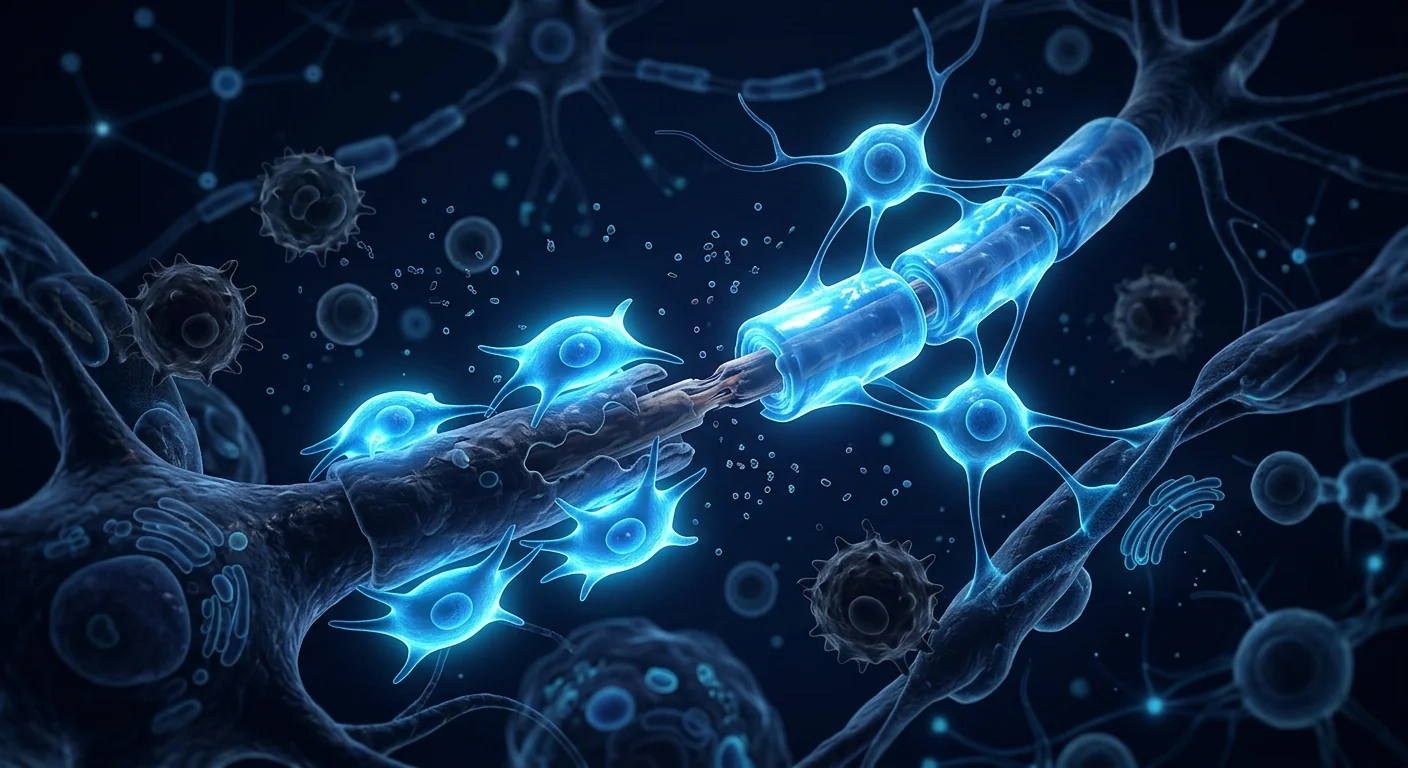
Multiple sclerosis (MS) is an autoimmune disease of the central nervous system in which the body's own immune cells attack myelin — the insulating sheath around nerve fibres in the brain and spinal cord. The resulting inflammation, demyelination and eventual axonal loss produce the relapses and accumulating disability that define the condition. Because MS is driven by a misdirected immune system, it has become one of the most compelling targets for stem cell therapy — but the two main cell-based strategies sit at very different stages of evidence, and conflating them does patients a disservice.
How multiple sclerosis damages the nervous system
In MS, autoreactive T and B lymphocytes cross the blood–brain barrier and trigger inflammatory lesions that strip myelin from axons. Early in the disease the nervous system can partially repair this damage and remyelinate, which is why early relapses are often followed by recovery. Over time, however, that capacity falters: oligodendrocytes — the cells that make myelin — are depleted, axons left bare are progressively lost, and disability accumulates. Clinically this plays out as relapsing-remitting MS (RRMS), the most common form, and the more steadily worsening secondary progressive and primary progressive forms, where neurodegeneration outpaces inflammation.[1][2][3][4]
The key implication for cell therapy is that MS is, at its root, an immune-mediated disease. The most successful interventions to date work by resetting or modulating the immune system rather than by physically rebuilding the brain — a crucial distinction that shapes which stem cell approaches actually have evidence behind them.
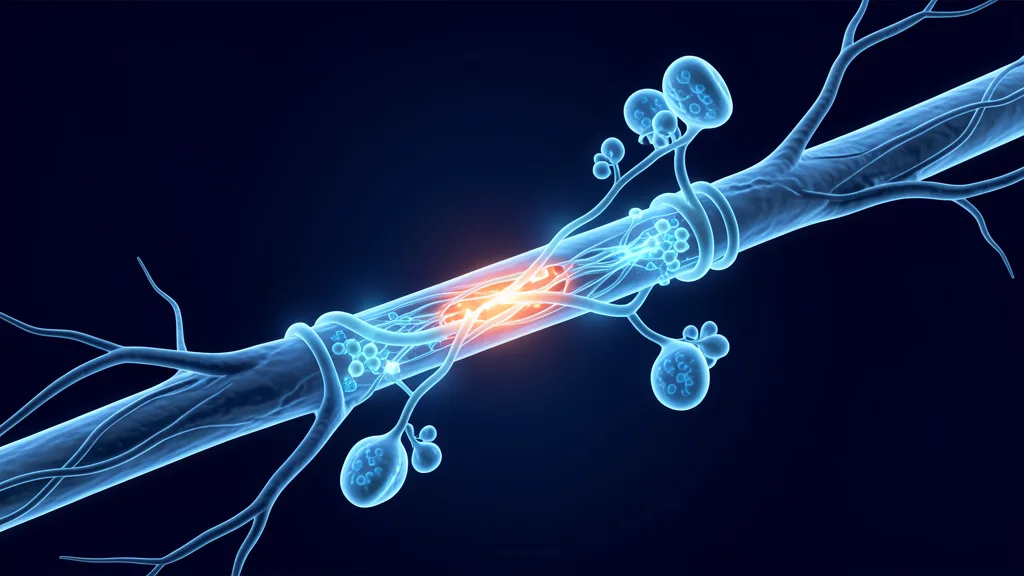
The two main stem cell strategies in MS
Autologous haematopoietic stem cell transplantation (aHSCT)
The most evidence-backed cell-based approach is autologous haematopoietic stem cell transplantation. The concept is to "reboot" the immune system: a patient's own blood-forming stem cells are collected, intensive immunosuppressive conditioning chemotherapy is used to deplete the autoreactive immune cells driving the disease, and the stored stem cells are then reinfused to reconstitute a less self-reactive immune system. The randomised MIST trial (Burt et al., JAMA, 2019) compared aHSCT with continued disease-modifying drug therapy in patients with highly active relapsing-remitting MS and found that transplantation prolonged time to disability progression and reduced relapses in that selected population. Large registry analyses from the European Society for Blood and Marrow Transplantation (EBMT) have reported durable reductions in disease activity, with the best outcomes in younger patients who have active inflammatory RRMS rather than advanced progressive disease.
It is important to frame this accurately. aHSCT is an intensive procedure with real risks, including those of the conditioning chemotherapy, and it is not a routine therapy for everyone with MS. But for a carefully selected group — typically younger patients with aggressive, highly active relapsing-remitting MS that continues to relapse despite standard disease-modifying drugs — it has moved from experimental toward an established treatment option offered at specialist transplant centres.
Mesenchymal stem cells (MSCs)
The second strategy uses mesenchymal stem cells, typically sourced from bone marrow, adipose tissue or umbilical cord. Unlike HSCT, MSCs are not used to ablate and rebuild the immune system. Their proposed value is paracrine and immunomodulatory: in laboratory and animal models they secrete anti-inflammatory and neurotrophic factors, dampen the activity of autoreactive immune cells, and may create a microenvironment more favourable to neuroprotection and remyelination. This biological rationale is genuinely attractive for a demyelinating disease. However, the human evidence is still at the clinical-trial stage: studies such as the international MSC-based trials have generally shown that MSC infusion is feasible and well tolerated, but they have not yet established a consistent, reproducible effect on disability that would make MSC therapy a proven treatment. For now, MSC therapy for MS is best described as investigational.
How outcomes are actually measured
Optimistic stories rarely mention how rigorously benefit has to be demonstrated in MS. The standard disability measure is the Expanded Disability Status Scale (EDSS), which scores neurological impairment from 0 (normal) to 10. Trials also track relapse rate and new or enlarging lesions on MRI. A meaningful result — for instance, sustained absence of relapses and stable or improved EDSS over years — is far more convincing than a single patient's report. Because RRMS naturally waxes and wanes, and because relapses can be followed by spontaneous recovery, randomised controlled trials are essential: without a comparison group it is impossible to separate a true treatment effect from the natural fluctuation of the disease.
The honest headline
For a select group of patients with highly active relapsing-remitting MS that resists standard drugs, autologous HSCT is now an established option supported by randomised and registry evidence. Mesenchymal stem cell therapy for MS, by contrast, remains investigational — biologically promising and in clinical trials, but not yet a proven treatment. Any clinic presenting either as a guaranteed cure for all forms of MS is going well beyond the evidence.

What the evidence supports — and what it doesn't
The fair summary is nuanced. For aHSCT in highly active RRMS, randomised data from MIST and large EBMT registry series support a durable reduction in relapses and disability progression in appropriately selected patients — a genuinely meaningful result. What the evidence does not support is the use of aHSCT as a routine therapy for everyone, or strong benefit in advanced progressive MS where neurodegeneration, not active inflammation, dominates. For MSC therapy, the evidence supports safety and feasibility but not yet established efficacy. The responsible description differs by approach: aHSCT is an established option for a defined population, while MSC therapy remains investigational.
- Disease phase matters. Cell-based immune approaches work best when active inflammation is driving the disease — typically relapsing-remitting MS — and far less well once progression is dominated by slow neurodegeneration.
- Remyelination is still emerging. The hope that transplanted cells will directly rebuild myelin is biologically plausible and an active research area, but in humans it is not yet a demonstrated, reliable effect.
- Patient selection is everything. The strongest aHSCT outcomes come from younger patients with aggressive, drug-resistant RRMS, which is why specialist assessment matters far more than a blanket offer.
Multiple sclerosis is exactly the kind of condition where the right treatment for the right patient can be transformative — and the wrong promise to the wrong patient can cause real harm. The most respectful thing we can offer is an honest account of which approach has evidence, for whom, and at what stage the rest remains.
— VELAR Clinical Team
How to evaluate any offer responsibly
If you or someone you love is considering stem cell options for MS, the diligence is the same that protects against any over-promised treatment. Ask which approach is being offered — aHSCT and MSC therapy are completely different things with very different evidence. Ask whether it is delivered at an established transplant or research centre with ethical oversight, what your MS subtype and disease activity are, and on what published evidence the claims rest. Be deeply sceptical of guaranteed results, success-rate percentages without a cited source, or any framing that positions experimental MSC therapy as a routine cure for all forms of MS. A trustworthy provider will describe aHSCT honestly as an intensive option for selected highly active RRMS, and MSC therapy as emerging research — and will never let hope outrun the data.
The VELAR perspective
At VELAR Center, our regenerative work is grounded in conditions where the evidence is more established, and we follow neurological cell-therapy research closely without overstating it. Multiple sclerosis is a clear example of why precision matters: for a defined group with highly active relapsing-remitting disease, autologous HSCT is a real, evidence-supported option delivered at specialist centres, while MSC-based therapy remains a promising but investigational avenue. We believe the only honest way to discuss MS is plainly — distinguishing the established from the experimental, and letting controlled evidence, not enthusiasm, shape anything we say. If you want an honest conversation about what regenerative medicine can and cannot do today, that is exactly where a responsible consultation begins.
References
- Uccelli A, Moretta L, Pistoia V. Mesenchymal stem cells in health and disease. Nature Reviews Immunology. 2008;8(9):726-736. doi:10.1038/nri2395 ↩
- Shi Y, Wang Y, Li Q, et al. Immunoregulatory mechanisms of mesenchymal stem and stromal cells in inflammatory diseases. Nature Reviews Nephrology. 2018;14(8):493-507. doi:10.1038/s41581-018-0023-5 ↩
- Spees JL, Lee RH, Gregory CA. Mechanisms of mesenchymal stem/stromal cell function. Stem Cell Research & Therapy. 2016;7(1):125. doi:10.1186/s13287-016-0363-7 ↩
- Galipeau J, Sensébé L. Mesenchymal stromal cells: clinical challenges and therapeutic opportunities. Cell Stem Cell. 2018;22(6):824-833. doi:10.1016/j.stem.2018.05.004 ↩
- Pittenger MF, Discher DE, Péault BM, Phinney DG, Hare JM, Caplan AI. Mesenchymal stem cell perspective: cell biology to clinical progress. NPJ Regenerative Medicine. 2019;4:22. doi:10.1038/s41536-019-0083-6 ↩
- Caplan AI. Mesenchymal stem cells: time to change the name! Stem Cells Translational Medicine. 2017;6(6):1445-1451. doi:10.1002/sctm.17-0051 ↩
- Dominici M, Le Blanc K, Mueller I, et al. Minimal criteria for defining multipotent mesenchymal stromal cells. Cytotherapy. 2006;8(4):315-317. doi:10.1080/14653240600855905 ↩
- Lalu MM, McIntyre L, Pugliese C, et al. Safety of cell therapy with mesenchymal stromal cells (SafeCell). PLoS One. 2012;7(10):e47559. doi:10.1371/journal.pone.0047559 ↩
- Naji A, Eitoku M, Favier B, Deschaseaux F, Rouas-Freiss N, Suganuma N. Biological functions of mesenchymal stem cells. Cellular and Molecular Life Sciences. 2019;76(17):3323-3348. doi:10.1007/s00018-019-03125-1 ↩
- Bronckaers A, Hilkens P, Martens W, et al. Mesenchymal stem/stromal cells as a pharmacological approach to accelerate angiogenesis. Pharmacology & Therapeutics. 2014;143(2):181-196. doi:10.1016/j.pharmthera.2014.02.013 ↩
- Wang Y, Chen X, Cao W, Shi Y. Plasticity of mesenchymal stem cells in immunomodulation. Nature Immunology. 2014;15(11):1009-1016. doi:10.1038/ni.3002 ↩
- Weiss DJ, Bertoncello I, Borok Z, et al. Stem cells and cell therapies in lung biology and lung diseases. Proceedings of the American Thoracic Society. 2011;8(3):223-272. doi:10.1513/pats.201012-071DW ↩
参考文献
- Uccelli A, Moretta L, Pistoia V. Mesenchymal stem cells in health and disease. Nature Reviews Immunology. 2008;8(9):726-736. doi:10.1038/nri2395 ↩
- Shi Y, Wang Y, Li Q, et al. Immunoregulatory mechanisms of mesenchymal stem and stromal cells in inflammatory diseases. Nature Reviews Nephrology. 2018;14(8):493-507. doi:10.1038/s41581-018-0023-5 ↩
- Spees JL, Lee RH, Gregory CA. Mechanisms of mesenchymal stem/stromal cell function. Stem Cell Research & Therapy. 2016;7(1):125. doi:10.1186/s13287-016-0363-7 ↩
- Galipeau J, Sensébé L. Mesenchymal stromal cells: clinical challenges and therapeutic opportunities. Cell Stem Cell. 2018;22(6):824-833. doi:10.1016/j.stem.2018.05.004 ↩
- Pittenger MF, Discher DE, Péault BM, Phinney DG, Hare JM, Caplan AI. Mesenchymal stem cell perspective: cell biology to clinical progress. NPJ Regenerative Medicine. 2019;4:22. doi:10.1038/s41536-019-0083-6 ↩
- Caplan AI. Mesenchymal stem cells: time to change the name! Stem Cells Translational Medicine. 2017;6(6):1445-1451. doi:10.1002/sctm.17-0051 ↩
- Dominici M, Le Blanc K, Mueller I, et al. Minimal criteria for defining multipotent mesenchymal stromal cells. Cytotherapy. 2006;8(4):315-317. doi:10.1080/14653240600855905 ↩
- Lalu MM, McIntyre L, Pugliese C, et al. Safety of cell therapy with mesenchymal stromal cells (SafeCell). PLoS One. 2012;7(10):e47559. doi:10.1371/journal.pone.0047559 ↩
- Naji A, Eitoku M, Favier B, Deschaseaux F, Rouas-Freiss N, Suganuma N. Biological functions of mesenchymal stem cells. Cellular and Molecular Life Sciences. 2019;76(17):3323-3348. doi:10.1007/s00018-019-03125-1 ↩
- Bronckaers A, Hilkens P, Martens W, et al. Mesenchymal stem/stromal cells as a pharmacological approach to accelerate angiogenesis. Pharmacology & Therapeutics. 2014;143(2):181-196. doi:10.1016/j.pharmthera.2014.02.013 ↩
- Wang Y, Chen X, Cao W, Shi Y. Plasticity of mesenchymal stem cells in immunomodulation. Nature Immunology. 2014;15(11):1009-1016. doi:10.1038/ni.3002 ↩
- Weiss DJ, Bertoncello I, Borok Z, et al. Stem cells and cell therapies in lung biology and lung diseases. Proceedings of the American Thoracic Society. 2011;8(3):223-272. doi:10.1513/pats.201012-071DW ↩
多发性硬化症(MS)是一种中枢神经系统的自身免疫性疾病,机体自身的免疫细胞攻击髓鞘——即包裹大脑与脊髓中神经纤维的绝缘鞘。由此产生的炎症、脱髓鞘以及最终的轴突丧失,造成了定义本病的复发与逐渐累积的残疾。由于 MS 是由方向错误的免疫系统所驱动,它已成为干细胞疗法最引人注目的靶点之一——但两种主要的细胞策略处于截然不同的证据阶段,将二者混为一谈是对患者的不负责任。
多发性硬化症如何损害神经系统
在 MS 中,自身反应性的 T 细胞与 B 淋巴细胞穿越血脑屏障,引发剥离轴突髓鞘的炎性病灶。在病程早期,神经系统能够部分修复这种损伤并重新髓鞘化,这正是早期复发后常伴随恢复的原因。然而随着时间推移,这种能力衰退:制造髓鞘的少突胶质细胞被耗竭,裸露的轴突被逐渐丧失,残疾随之累积。临床上表现为最常见的复发缓解型 MS(RRMS),以及更为持续恶化的继发进展型与原发进展型,在后者中神经退行超过了炎症。
对细胞疗法的关键启示是:MS 在根本上是一种免疫介导的疾病。迄今最成功的干预是通过重置或调节免疫系统起作用,而非通过物理性地重建大脑——这一关键区别决定了哪些干细胞方法真正拥有证据支持。
MS 中两种主要的干细胞策略
自体造血干细胞移植(aHSCT)
最有证据支持的细胞策略是自体造血干细胞移植。其理念是「重启」免疫系统:采集患者自身的造血干细胞,使用强效的免疫抑制预处理化疗清除驱动疾病的自身反应性免疫细胞,随后回输储存的干细胞,以重建一个较少自身反应的免疫系统。随机化的 MIST 试验(Burt 等,JAMA,2019)在高度活动的复发缓解型 MS 患者中,将 aHSCT 与继续使用疾病修饰药物相比较,发现移植延长了至残疾进展的时间并减少了该选定人群的复发。来自欧洲血液与骨髓移植学会(EBMT)的大型登记分析报告了疾病活动的持久降低,最佳结果出现在患有活动性炎性 RRMS 的较年轻患者中,而非晚期进展型疾病。
准确地界定这一点很重要。aHSCT 是一项具有真实风险的强效操作,包括预处理化疗本身的风险,它并非适用于所有 MS 患者的常规疗法。但对于一个经过审慎选择的群体——通常是患有侵袭性、高度活动的复发缓解型 MS、尽管使用标准疾病修饰药物仍持续复发的较年轻患者——它已从实验性走向在专科移植中心提供的确立的治疗选择。
间充质干细胞(MSC)
第二种策略使用间充质干细胞,通常取自骨髓、脂肪组织或脐带。与 HSCT 不同,MSC 并非用于清除并重建免疫系统。其被提出的价值在于旁分泌与免疫调节:在实验室与动物模型中,它们分泌抗炎与神经营养因子,抑制自身反应性免疫细胞的活性,并可能营造更有利于神经保护与重新髓鞘化的微环境。对于一种脱髓鞘疾病而言,这一生物学依据确实颇具吸引力。然而,人体证据仍处于临床试验阶段:诸如国际性的 MSC 试验总体显示 MSC 输注可行且耐受良好,但尚未确立对残疾的一致、可重复的效应,使 MSC 疗法成为经证实的治疗。就目前而言,MSC 治疗 MS 最恰当的描述是研究性的。
结果究竟如何衡量
乐观的故事很少提及在 MS 中获益必须被多么严格地证明。标准的残疾衡量工具是扩展残疾状态量表(EDSS),它将神经功能障碍从 0(正常)评分到 10。试验还追踪复发率以及 MRI 上新发或增大的病灶。有意义的结果——例如多年间持续无复发以及 EDSS 稳定或改善——远比单个患者的陈述更具说服力。由于 RRMS 自然地起伏波动,且复发后可能伴随自发恢复,随机对照试验至关重要:没有对照组,就无法将真正的治疗效应与疾病的自然波动区分开来。
诚实的标题
对于一小部分患有抵抗标准药物的高度活动复发缓解型 MS 的患者,自体 HSCT 如今是一项由随机与登记证据支持的确立选择。相比之下,针对 MS 的间充质干细胞疗法仍是研究性的——在生物学上有前景且处于临床试验中,但尚非经证实的治疗。任何将二者中的任一种呈现为对所有形式 MS 的保证治愈的诊所,都已远远超出了证据。
证据支持什么——又不支持什么
公允的总结是细致入微的。对于高度活动 RRMS 中的 aHSCT,来自 MIST 的随机数据与大型 EBMT 登记系列支持在适当选择的患者中持久降低复发与残疾进展——这是一个确有意义的结果。证据所不支持的,是将 aHSCT 用作所有人的常规疗法,或在以神经退行而非活动性炎症为主导的晚期进展型 MS 中有显著获益。对于 MSC 疗法,证据支持安全性与可行性,但尚未确立疗效。负责任的描述因方法而异:aHSCT 是面向特定人群的确立选择,而 MSC 疗法仍属研究性。
- 疾病分期很重要。基于细胞的免疫方法在活动性炎症驱动疾病时效果最佳——通常是复发缓解型 MS——而一旦进展由缓慢的神经退行主导,效果则差得多。
- 重新髓鞘化仍在浮现。移植细胞将直接重建髓鞘的期望在生物学上合理且是活跃的研究领域,但在人体中尚非已被证明的、可靠的效应。
- 患者选择至关重要。最强的 aHSCT 结果来自患有侵袭性、耐药 RRMS 的较年轻患者,这正是专科评估远比一概而论的提供更为重要的原因。
多发性硬化症恰恰是那种为合适的患者选择合适治疗可带来转变性效果、而向不合适的患者作出错误承诺会造成真实伤害的疾病。我们能给予的最尊重的态度,是诚实地说明哪种方法拥有证据、面向谁、以及其余部分尚处于何种阶段。
— VELAR 临床团队
如何负责任地评估任何提议
如果您或您所爱之人正在考虑 MS 的干细胞选择,所需的审慎与防范任何被过度承诺之治疗的审慎相同。询问所提供的是哪种方法——aHSCT 与 MSC 疗法是完全不同的事物,证据也大不相同。询问它是否在具有伦理监督的确立移植或研究中心进行、您的 MS 亚型与疾病活动度如何,以及这些声称建立在何种已发表证据之上。对保证的结果、没有引用来源的成功率百分比,或任何将实验性 MSC 疗法定位为对所有形式 MS 的常规治愈的表述,都要深度怀疑。值得信赖的提供者会诚实地将 aHSCT 描述为面向选定的高度活动 RRMS 的强效选择,并将 MSC 疗法描述为新兴研究——且绝不会让希望超越数据。
VELAR 的观点
在 VELAR 中心,我们的再生工作立足于证据更为确立的适应症,我们密切关注神经细胞疗法研究而不夸大其词。多发性硬化症清楚地说明了为何精确至关重要:对于患有高度活动复发缓解型疾病的特定群体,自体 HSCT 是在专科中心提供的真实、有证据支持的选择,而基于 MSC 的疗法仍是一条有前景但尚属研究性的途径。我们相信讨论 MS 唯一诚实的方式就是直白——区分已确立的与实验性的,并让对照证据、而非热情,塑造我们所说的一切。如果您想就再生医学今天能做什么、不能做什么进行一次诚实的对话,那正是负责任咨询的起点。
المراجع
- Uccelli A, Moretta L, Pistoia V. Mesenchymal stem cells in health and disease. Nature Reviews Immunology. 2008;8(9):726-736. doi:10.1038/nri2395 ↩
- Shi Y, Wang Y, Li Q, et al. Immunoregulatory mechanisms of mesenchymal stem and stromal cells in inflammatory diseases. Nature Reviews Nephrology. 2018;14(8):493-507. doi:10.1038/s41581-018-0023-5 ↩
- Spees JL, Lee RH, Gregory CA. Mechanisms of mesenchymal stem/stromal cell function. Stem Cell Research & Therapy. 2016;7(1):125. doi:10.1186/s13287-016-0363-7 ↩
- Galipeau J, Sensébé L. Mesenchymal stromal cells: clinical challenges and therapeutic opportunities. Cell Stem Cell. 2018;22(6):824-833. doi:10.1016/j.stem.2018.05.004 ↩
- Pittenger MF, Discher DE, Péault BM, Phinney DG, Hare JM, Caplan AI. Mesenchymal stem cell perspective: cell biology to clinical progress. NPJ Regenerative Medicine. 2019;4:22. doi:10.1038/s41536-019-0083-6 ↩
- Caplan AI. Mesenchymal stem cells: time to change the name! Stem Cells Translational Medicine. 2017;6(6):1445-1451. doi:10.1002/sctm.17-0051 ↩
- Dominici M, Le Blanc K, Mueller I, et al. Minimal criteria for defining multipotent mesenchymal stromal cells. Cytotherapy. 2006;8(4):315-317. doi:10.1080/14653240600855905 ↩
- Lalu MM, McIntyre L, Pugliese C, et al. Safety of cell therapy with mesenchymal stromal cells (SafeCell). PLoS One. 2012;7(10):e47559. doi:10.1371/journal.pone.0047559 ↩
- Naji A, Eitoku M, Favier B, Deschaseaux F, Rouas-Freiss N, Suganuma N. Biological functions of mesenchymal stem cells. Cellular and Molecular Life Sciences. 2019;76(17):3323-3348. doi:10.1007/s00018-019-03125-1 ↩
- Bronckaers A, Hilkens P, Martens W, et al. Mesenchymal stem/stromal cells as a pharmacological approach to accelerate angiogenesis. Pharmacology & Therapeutics. 2014;143(2):181-196. doi:10.1016/j.pharmthera.2014.02.013 ↩
- Wang Y, Chen X, Cao W, Shi Y. Plasticity of mesenchymal stem cells in immunomodulation. Nature Immunology. 2014;15(11):1009-1016. doi:10.1038/ni.3002 ↩
- Weiss DJ, Bertoncello I, Borok Z, et al. Stem cells and cell therapies in lung biology and lung diseases. Proceedings of the American Thoracic Society. 2011;8(3):223-272. doi:10.1513/pats.201012-071DW ↩
التصلب المتعدد (MS) مرض مناعي ذاتي يصيب الجهاز العصبي المركزي، تهاجم فيه الخلايا المناعية للجسم نفسه الميالين — الغمد العازل المحيط بالألياف العصبية في الدماغ والحبل الشوكي. وما ينتج عن ذلك من التهاب وإزالة للميالين وفقدان محوري في نهاية المطاف يُحدث الانتكاسات والإعاقة المتراكمة التي تُعرّف الحالة. ولأن التصلب المتعدد مدفوع بجهاز مناعي مضلَّل، فقد أصبح من أكثر الأهداف إقناعاً للعلاج بالخلايا الجذعية — لكن الاستراتيجيتين الخلويتين الرئيسيتين تقعان في مرحلتي أدلة مختلفتين تماماً، والخلط بينهما إجحاف بحق المرضى.
كيف يُتلف التصلب المتعدد الجهاز العصبي
في التصلب المتعدد، تعبر الخلايا اللمفاوية التائية والبائية ذاتية التفاعل الحاجز الدموي الدماغي وتُطلق آفات التهابية تجرّد المحاور من الميالين. وفي وقت مبكر من المرض يستطيع الجهاز العصبي إصلاح هذا الضرر جزئياً وإعادة تكوين الميالين، ولهذا كثيراً ما يتبع الانتكاسات المبكرة تعافٍ. لكن مع الوقت تتعثر هذه القدرة: تُستنزف الخلايا قليلة التغصن — صانعة الميالين — وتُفقد المحاور العارية تدريجياً، وتتراكم الإعاقة. وسريرياً يتبدى ذلك بوصفه التصلب المتعدد الانتكاسي الهاجع (RRMS)، وهو الشكل الأكثر شيوعاً، والشكلين الأكثر تدهوراً المطّرد التقدمي الثانوي والتقدمي الأولي، حيث يفوق التنكس العصبي الالتهاب.
والمضمون الأساسي للعلاج الخلوي هو أن التصلب المتعدد، في جوهره، مرض مناعي المنشأ. فأنجح التدخلات حتى الآن تعمل بإعادة ضبط الجهاز المناعي أو تعديله، لا بإعادة بناء الدماغ مادياً — وهو تمييز حاسم يحدد أي مناهج الخلايا الجذعية تملك فعلاً أدلة تدعمها.
الاستراتيجيتان الرئيسيتان للخلايا الجذعية في التصلب المتعدد
زرع الخلايا الجذعية المكوّنة للدم الذاتي (aHSCT)
أكثر المناهج الخلوية استناداً إلى الأدلة هو زرع الخلايا الجذعية المكوّنة للدم الذاتي. والفكرة هي «إعادة تشغيل» الجهاز المناعي: تُجمع الخلايا الجذعية المكوّنة للدم لدى المريض نفسه، ويُستخدم علاج كيميائي تحضيري مثبِّط للمناعة بشدة لاستنزاف الخلايا المناعية ذاتية التفاعل المحرّكة للمرض، ثم تُعاد الخلايا المخزَّنة لإعادة تكوين جهاز مناعي أقل تفاعلاً مع الذات. قارنت تجربة MIST العشوائية (بيرت وزملاؤه، JAMA، 2019) بين aHSCT ومواصلة العلاج بالأدوية المعدِّلة للمرض لدى مرضى التصلب المتعدد الانتكاسي الهاجع شديد النشاط، فوجدت أن الزرع أطال الزمن حتى تقدم الإعاقة وقلّل الانتكاسات لدى تلك الفئة المنتقاة. وأبلغت تحليلات السجلات الكبيرة من الجمعية الأوروبية لزرع الدم والنخاع (EBMT) عن انخفاضات دائمة في نشاط المرض، مع أفضل النتائج لدى المرضى الأصغر سناً المصابين بـ RRMS التهابي نشط لا بالمرض التقدمي المتقدم.
ومن المهم تأطير ذلك بدقة. فـ aHSCT إجراء مكثّف ذو مخاطر حقيقية، منها مخاطر العلاج الكيميائي التحضيري نفسه، وهو ليس علاجاً روتينياً لكل مصاب بالتصلب المتعدد. لكن لفئة منتقاة بعناية — عادةً المرضى الأصغر سناً المصابون بتصلب متعدد انتكاسي هاجع عدواني شديد النشاط يواصل الانتكاس رغم الأدوية المعدِّلة للمرض القياسية — انتقل من التجريبي نحو خيار علاجي راسخ يُقدَّم في مراكز الزرع المتخصصة.
الخلايا الجذعية الوسيطة (MSCs)
تستخدم الاستراتيجية الثانية الخلايا الجذعية الوسيطة، التي تُؤخذ عادةً من نخاع العظم أو النسيج الدهني أو الحبل السري. وخلافاً لـ HSCT، لا تُستخدم هذه الخلايا لاستئصال الجهاز المناعي وإعادة بنائه. فقيمتها المقترحة شبه صمّاوية ومعدِّلة للمناعة: ففي النماذج المختبرية والحيوانية تفرز عوامل مضادة للالتهاب وغذائية عصبية، وتخفف نشاط الخلايا المناعية ذاتية التفاعل، وقد تهيئ بيئة دقيقة أكثر مواتاةً للحماية العصبية وإعادة تكوين الميالين. وهذا المبرر البيولوجي جذاب فعلاً لمرض مزيل للميالين. غير أن الأدلة البشرية لا تزال في مرحلة التجارب السريرية: فالدراسات مثل التجارب الدولية القائمة على MSC أظهرت بوجه عام أن حقن هذه الخلايا مجدٍ ومتحمَّل جيداً، لكنها لم تُثبت بعد أثراً متسقاً وقابلاً للتكرار على الإعاقة يجعل علاج MSC علاجاً مثبتاً. وفي الوقت الراهن، يُوصف علاج MSC للتصلب المتعدد على أفضل وجه بأنه بحثي تجريبي.
كيف تُقاس النتائج فعلياً
نادراً ما تذكر القصص المتفائلة مدى الصرامة المطلوبة في إثبات الفائدة في التصلب المتعدد. والمقياس المعياري للإعاقة هو مقياس حالة الإعاقة الموسّع (EDSS)، الذي يسجّل القصور العصبي من 0 (طبيعي) إلى 10. وتتابع التجارب أيضاً معدل الانتكاس والآفات الجديدة أو المتضخمة في التصوير بالرنين المغناطيسي. والنتيجة ذات المعنى — مثل غياب الانتكاسات مستداماً واستقرار EDSS أو تحسنه عبر سنوات — أكثر إقناعاً بكثير من رواية مريض واحد. ولأن RRMS يتذبذب طبيعياً، ولأن الانتكاسات قد يتبعها تعافٍ تلقائي، فإن التجارب العشوائية المضبوطة ضرورية: فبدون مجموعة مقارنة يستحيل فصل الأثر العلاجي الحقيقي عن التذبذب الطبيعي للمرض.
العنوان الصادق
لفئة منتقاة من المرضى المصابين بتصلب متعدد انتكاسي هاجع شديد النشاط يقاوم الأدوية القياسية، صار زرع الخلايا الجذعية الذاتي (aHSCT) الآن خياراً راسخاً تدعمه أدلة عشوائية وسجلية. أما علاج الخلايا الجذعية الوسيطة للتصلب المتعدد فيظل بالمقابل بحثياً تجريبياً — واعداً بيولوجياً وقيد التجارب السريرية، لكنه ليس علاجاً مثبتاً بعد. وأي عيادة تقدّم أياً منهما كشفاء مضمون لكل أشكال التصلب المتعدد تتجاوز الأدلة بكثير.
ما تدعمه الأدلة — وما لا تدعمه
الخلاصة المنصفة دقيقة. بالنسبة لـ aHSCT في RRMS شديد النشاط، تدعم البيانات العشوائية من MIST وسلاسل سجلات EBMT الكبيرة انخفاضاً دائماً في الانتكاسات وتقدم الإعاقة لدى المرضى المنتقين على نحو ملائم — وهي نتيجة ذات معنى حقيقي. وما لا تدعمه الأدلة هو استخدام aHSCT علاجاً روتينياً للجميع، أو فائدة قوية في التصلب المتعدد التقدمي المتقدم حيث يهيمن التنكس العصبي لا الالتهاب النشط. أما علاج MSC فتدعم الأدلة أمانه وجدواه لكن دون فاعلية راسخة بعد. والوصف المسؤول يختلف باختلاف المنهج: aHSCT خيار راسخ لفئة محددة، بينما يظل علاج MSC بحثياً تجريبياً.
- طور المرض مهم. تعمل المناهج المناعية القائمة على الخلايا على أفضل وجه حين يقود الالتهاب النشط المرض — عادةً التصلب المتعدد الانتكاسي الهاجع — وأقل بكثير حين يهيمن على التقدم تنكس عصبي بطيء.
- إعادة تكوين الميالين لا تزال ناشئة. الأمل بأن تعيد الخلايا المزروعة بناء الميالين مباشرةً معقول بيولوجياً وهو مجال بحثي نشط، لكنه لدى البشر ليس بعد أثراً مُثبتاً موثوقاً.
- انتقاء المرضى هو كل شيء. تأتي أقوى نتائج aHSCT من المرضى الأصغر سناً المصابين بـ RRMS عدواني مقاوم للأدوية، ولهذا فإن التقييم المتخصص أهم بكثير من عرض شامل بلا تمييز.
التصلب المتعدد هو بالضبط نوع الحالات التي يمكن فيها للعلاج الصحيح للمريض الصحيح أن يكون تحويلياً — وللوعد الخاطئ للمريض الخطأ أن يُلحق ضرراً حقيقياً. وأكثر ما يمكننا تقديمه احتراماً هو بيان صادق عن أي منهج يملك أدلة، ولمن، وفي أي طور يبقى ما عداه.
— الفريق السريري في VELAR
كيف تقيّم أي عرض بمسؤولية
إذا كنت أنت أو شخص تحبه يفكر في خيارات الخلايا الجذعية للتصلب المتعدد، فالعناية المطلوبة هي نفسها التي تحمي من أي علاج مبالغ في الوعد به. اسأل عن المنهج المعروض — فـ aHSCT وعلاج MSC شيئان مختلفان تماماً بأدلة مختلفة جداً. اسأل عما إذا كان يُقدَّم في مركز زرع أو بحث راسخ يخضع لإشراف أخلاقي، وما نوع التصلب المتعدد لديك ودرجة نشاط المرض، وعلى أي دليل منشور تستند الادعاءات. وكن شديد الشك تجاه النتائج المضمونة، أو نسب نجاح بلا مصدر مذكور، أو أي صياغة تضع علاج MSC التجريبي في موضع الشفاء الروتيني لكل أشكال التصلب المتعدد. سيصف المزوّد الموثوق aHSCT بصدق بوصفه خياراً مكثّفاً لحالات منتقاة من RRMS شديد النشاط، وعلاج MSC بوصفه بحثاً ناشئاً — ولن يدع الأمل يتجاوز البيانات أبداً.
منظور VELAR
في مركز VELAR، يرتكز عملنا التجديدي على حالات تكون فيها الأدلة أكثر رسوخاً، ونتابع عن كثب أبحاث العلاج الخلوي العصبي من دون المبالغة فيها. والتصلب المتعدد مثال واضح على أهمية الدقة: فلفئة محددة مصابة بمرض انتكاسي هاجع شديد النشاط، يُعد زرع الخلايا الجذعية الذاتي خياراً حقيقياً مدعوماً بالأدلة يُقدَّم في مراكز متخصصة، بينما يظل العلاج القائم على MSC مساراً واعداً لكنه بحثي تجريبي. ونؤمن بأن الطريقة الصادقة الوحيدة لمناقشة التصلب المتعدد هي الصراحة — التمييز بين الراسخ والتجريبي، وترك الأدلة المضبوطة، لا الحماس، تشكّل كل ما نقوله. وإذا أردت حواراً صادقاً عما يستطيع الطب التجديدي وما لا يستطيع فعله اليوم، فهذا تحديداً حيث تبدأ الاستشارة المسؤولة.