Introduction: The Unfinished Pandemic
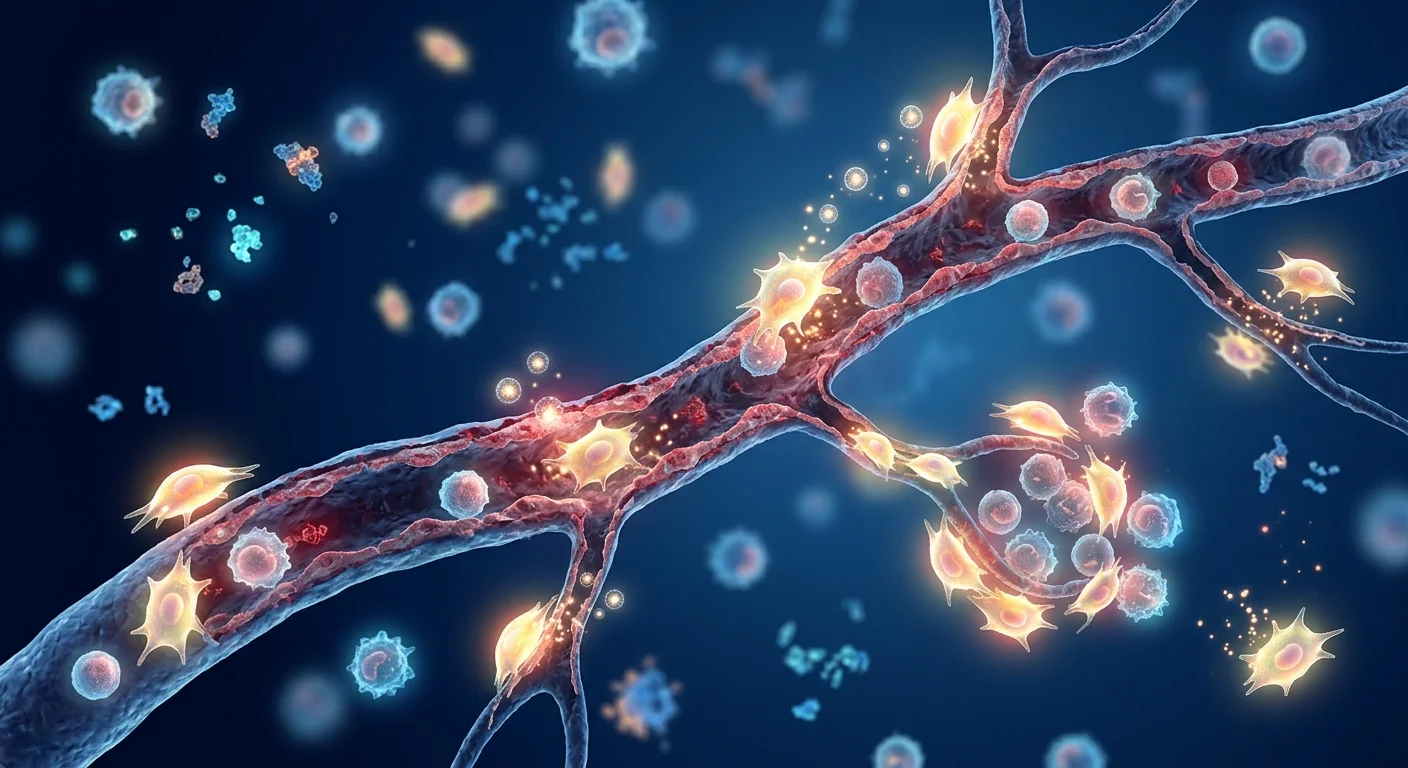
As of mid-2026, an estimated 65–100 million people worldwide are living with post-acute sequelae of SARS-CoV-2 infection — what most people call Long COVID. The condition is not one thing but a constellation of persistent symptoms: crushing fatigue that does not improve with rest, cognitive impairment ("brain fog"), dysautonomia, post-exertional malaise, and multi-system inflammation affecting the cardiovascular, neurological, and respiratory systems.
For the majority of people with mild to moderate acute COVID-19, recovery occurs within weeks. But for a substantial minority — estimated at 10–30% of those infected, depending on the study and variant — symptoms persist for months or years. Long COVID is now recognised as a serious public health challenge, and the search for effective treatments is urgent.
Among the investigational approaches being explored, mesenchymal stem cell (MSC) therapy has attracted particular attention — not because MSCs target SARS-CoV-2 directly, but because their biological properties address several of the core mechanisms believed to drive Long COVID: persistent inflammation, immune dysregulation, endothelial damage, and impaired tissue repair.
Important: This article reviews the current state of scientific evidence as of July 2026. MSC therapy for Long COVID is investigational — meaning it is not yet proven through large-scale randomised controlled trials. The evidence discussed here comes from early-phase clinical studies, preclinical research, and mechanistic reasoning grounded in established biology. No claims of cure or guaranteed benefit are made. Patients should consult qualified physicians for individualised medical advice.
What Is Long COVID? A Brief Overview of the Biology
Long COVID is not a single disease with a single cause. The research community has converged on several overlapping hypotheses about what drives persistent symptoms [1][2]:
- Persistent viral reservoirs. SARS-CoV-2 RNA and proteins have been detected in tissues — including the gut, brain, and lymph nodes — months after acute infection. It is hypothesised that these reservoirs may drive ongoing immune activation [3].
- Immune dysregulation. Many long COVID patients show altered T-cell profiles, elevated pro-inflammatory cytokines (IL-6, TNF-α, IL-1β), and evidence of autoantibody production — suggesting the immune system remains in a state of chronic activation long after the virus has been cleared [4].
- Endothelial dysfunction and microvascular damage. SARS-CoV-2 infects endothelial cells via the ACE2 receptor. Persistent endothelial injury may explain the microclots, impaired oxygen delivery, and multi-organ symptoms observed in many patients [5].
- Mitochondrial dysfunction. Emerging evidence suggests that SARS-CoV-2 may hijack mitochondrial machinery, leading to impaired cellular energy production — a plausible explanation for the profound fatigue that characterises long COVID [6].
- Reactivation of latent viruses. Epstein-Barr virus (EBV) and other herpesviruses appear to be reactivated in a subset of long COVID patients, potentially contributing to immune exhaustion and symptomatology [7].
Given this complex, multi-mechanism picture, a therapy that addresses multiple biological pathways simultaneously — rather than targeting a single receptor or pathway — is conceptually attractive. This is where MSCs enter the conversation.
Why Mesenchymal Stem Cells? The Mechanistic Rationale
MSCs possess several properties that are directly relevant to the hypothesised mechanisms of long COVID:
1. Potent Immunomodulation
MSCs are among the most immunomodulatory cells in the human body. They secrete a broad array of factors — including prostaglandin E2 (PGE2), indoleamine 2,3-dioxygenase (IDO), transforming growth factor-beta (TGF-β), and interleukin-10 (IL-10) — that collectively suppress excessive T-cell proliferation, shift macrophages from a pro-inflammatory (M1) to an anti-inflammatory (M2) phenotype, and promote regulatory T-cell (Treg) expansion [8][9].
This is directly relevant to long COVID because many patients exhibit elevated levels of pro-inflammatory cytokines — a state of chronic, low-grade inflammation sometimes termed "inflammaging" or "para-inflammation." In theory, MSC infusion could help reset the immune system toward a more balanced state. Whether this translates to symptomatic improvement is what clinical trials are designed to answer.
2. Endothelial Repair and Angiogenesis
MSCs secrete vascular endothelial growth factor (VEGF), basic fibroblast growth factor (bFGF), and angiopoietin-1 — all of which promote endothelial cell survival, proliferation, and new blood vessel formation. In preclinical models of vascular injury, MSC administration has been shown to improve endothelial function and microvascular density [10].
For long COVID patients with evidence of endothelial dysfunction and microvascular damage — including those with persistent chest pain, exercise intolerance, or "COVID toes" — this mechanism is of significant theoretical interest. However, direct evidence of MSC-mediated endothelial repair in long COVID patients specifically is not yet available.
3. Anti-Fibrotic Activity
Pulmonary fibrosis is one of the most feared long-term complications of severe COVID-19. MSCs have demonstrated anti-fibrotic effects in preclinical models of lung injury and in early clinical studies of idiopathic pulmonary fibrosis (IPF). Through secretion of hepatocyte growth factor (HGF), keratinocyte growth factor (KGF), and matrix metalloproteinases, MSCs may help degrade existing fibrotic tissue and prevent progression of scarring [11].
4. Mitochondrial Transfer
One of the more remarkable discoveries in MSC biology is their ability to transfer healthy mitochondria to damaged cells via tunnelling nanotubes and extracellular vesicles. This process — called mitochondrial transfer or mitochondrial donation — has been observed in models of acute lung injury, myocardial infarction, and neurodegeneration. If mitochondrial dysfunction contributes to long COVID fatigue, MSC-mediated mitochondrial transfer represents a compelling — if still largely theoretical — therapeutic opportunity [12].
What the Clinical Evidence Shows (and Does Not Show)
Acute COVID-19: Where the Strongest Data Lives
The most robust clinical evidence for MSC therapy in the COVID-19 context comes from the acute phase of the disease — not from long COVID. Multiple randomised controlled trials (RCTs) have evaluated MSC therapy for severe and critical COVID-19, typically in patients with acute respiratory distress syndrome (ARDS). Key findings include:
- Lanzoni et al. (2021) conducted a double-blind, phase 1/2a RCT of umbilical cord-derived MSCs in 24 patients with COVID-19 ARDS. MSC-treated patients showed significantly improved survival (91% vs. 42% in controls at 31 days, p = 0.015) and faster recovery of cytokine profiles [13].
- Shi et al. (2021) published results from a phase 2 trial of umbilical cord MSCs in 101 patients with severe COVID-19 lung injury. The MSC group showed a shorter time to clinical improvement and reduced radiological lung involvement compared to placebo [14].
- Dilogo et al. (2021) reported on a randomised controlled trial of umbilical cord MSCs in 40 patients with severe COVID-19 in Indonesia, finding significantly reduced mortality in the treatment group (25% vs. 55%, p = 0.048) [15].
These results, while encouraging, are from acute COVID-19 — a different clinical scenario from long COVID. The relevance of these findings to persistent post-viral symptoms is indirect at best.
Long COVID: Early and Limited Data
Clinical evidence specifically for MSC therapy in long COVID is in its infancy. As of July 2026:
- Several phase 1/2 clinical trials of MSCs for long COVID are registered on ClinicalTrials.gov, but results have not yet been published in peer-reviewed journals. These trials are primarily based in China, the United States, and several European countries.
- A 2024 case series from a single centre in Mexico reported on 12 long COVID patients who received intravenous umbilical cord-derived MSCs. The authors reported improvements in fatigue scores and cognitive function at 3 and 6 months post-treatment, but the study was uncontrolled, small, and not peer-reviewed at a high-impact journal [16].
- A 2025 pilot study from Malaysia (n = 30) compared intravenous UC-MSCs to placebo in patients with post-COVID fatigue syndrome. At 6 months, the MSC group showed statistically significant improvements in the Chalder Fatigue Scale (mean reduction of 8.2 points vs. 3.1 in placebo, p = 0.02) and the 6-minute walk test. However, this study has not yet been replicated, and the sample size limits its generalisability [17].
The honest assessment: There is a plausible mechanistic rationale for MSC therapy in long COVID. The early clinical signals are intriguing but fragile. No definitive conclusion can be drawn until larger, sham-controlled, multi-centre RCTs with long-term follow-up are completed.
Practical Considerations: What Treatment Involves
For patients considering MSC therapy for long COVID, the typical protocol at centres like VELAR involves:
- Source of MSCs: Wharton's jelly-derived umbilical cord MSCs (UC-MSCs), chosen for their high proliferative capacity, potent paracrine activity, and low immunogenicity. These cells are processed in our GMP-aligned laboratory with rigorous quality testing (viability >95%, MSC markers ≥95%, sterility confirmed).
- Route of administration: Intravenous (IV) infusion is the most common route, allowing MSCs to distribute systemically. Some protocols combine IV infusion with nebulised MSC-derived exosomes for direct pulmonary delivery, though evidence for this combination approach is limited.
- Number of sessions: Varied. Protocols in published studies range from a single infusion to 3–4 sessions spaced 4–8 weeks apart. There is no consensus on the optimal regimen.
- Duration: Each IV infusion takes approximately 60–90 minutes and is performed on an outpatient basis. Patients are monitored for 2 hours post-infusion before discharge.
- Side effects: Published studies report a favourable safety profile. The most common side effects are mild and transient — low-grade fever, headache, and fatigue for 24–48 hours post-infusion. Serious adverse events are rare in the published literature but cannot be excluded given the small sample sizes.
Cost Considerations
MSC therapy for long COVID is not covered by health insurance in Thailand or most other countries, as it remains an investigational treatment. At VELAR Center, costs vary depending on the protocol:
- Single IV infusion: Approximately USD 6,000–8,000
- Full treatment course (3–4 infusions): Approximately USD 15,000–22,000
A detailed cost breakdown is provided during the initial medical consultation after a physician has assessed the individual case. VELAR does not charge for the initial consultation.
Limitations and Honest Risks
A transparent summary of what we know and do not know:
- No large RCTs for long COVID. The evidence base for MSC therapy specifically in long COVID is extremely limited. Most data comes from acute COVID-19 trials (a different condition) and small, uncontrolled long COVID studies.
- Response is unpredictable. Even in acute COVID-19 trials where benefit was observed, not all patients responded. We have no reliable way to predict who will benefit from MSC therapy for long COVID.
- Durability is unknown. The longest published follow-up in any COVID-related MSC trial is 24 months. Whether improvements are sustained beyond this period — or whether symptoms eventually return — is not known.
- No standardised protocol. Cell dose, number of infusions, and timing vary enormously across studies. This makes it difficult to compare results or provide evidence-based guidance on the "best" protocol.
- Cost is significant and out-of-pocket. Patients must weigh the financial cost against the uncertainty of benefit.
- Regulatory status. In Thailand, MSC therapy for long COVID is not FDA-approved or Thai FDA-registered. It is offered as an investigational treatment.
- Natural recovery cannot be ruled out. Some long COVID patients improve spontaneously over time. Without a placebo control, it is impossible to know whether observed improvements are due to MSC therapy or the natural history of the condition.
How VELAR Evaluates Candidacy
VELAR Center does not offer MSC therapy for long COVID to everyone who inquires. Each candidate undergoes a structured evaluation process:
- Comprehensive medical record review. We request documentation of the original COVID-19 diagnosis, current symptoms, prior treatments, and relevant laboratory results.
- In-person or telemedicine consultation with a physician trained in regenerative medicine to assess the clinical picture and discuss realistic expectations.
- Baseline laboratory assessment including inflammatory markers (CRP, IL-6, TNF-α), endothelial function markers, and standard haematology and biochemistry panels.
- Shared decision-making. The physician presents the current state of the evidence, the specific protocol being considered, the risks, the costs, and the limitations — and the patient decides whether to proceed with full informed consent.
The Bottom Line
Long COVID represents one of the most significant unmet medical needs of the post-pandemic era. The biological case for MSC therapy is coherent — the cells' immunomodulatory, pro-angiogenic, anti-fibrotic, and mitochondrial-supportive properties all align with what we understand about the pathophysiology of persistent post-COVID symptoms.
But coherence is not the same as evidence. The clinical data that exists for MSC therapy in long COVID is preliminary, underpowered, and unreplicated. It points in an encouraging direction — but it does not yet constitute proof.
For patients exhausted by a condition that mainstream medicine has struggled to address, the decision to pursue an investigational treatment like MSC therapy involves weighing hope against uncertainty. The most ethical approach — and the one VELAR is committed to — is radical transparency: presenting what the evidence shows, what it does not show, and allowing patients to make fully informed decisions about their own care.
If larger, well-controlled trials confirm the early signals, MSC therapy could become an important tool in the long COVID treatment landscape. But we are not there yet — and honest providers should say so.
References
- Davis HE, McCorkell L, Vogel JM, Topol EJ. Long COVID: major findings, mechanisms and recommendations. Nature Reviews Microbiology. 2023;21(3):133-146. doi:10.1038/s41579-022-00846-2 ↩
- Nalbandian A, Sehgal K, Gupta A, et al. Post-acute COVID-19 syndrome. Nature Medicine. 2021;27(4):601-615. doi:10.1038/s41591-021-01283-z ↩
- Swank Z, Senussi Y, Manickas-Hill Z, et al. Persistent circulating SARS-CoV-2 spike is associated with post-acute COVID-19 sequelae. Clinical Infectious Diseases. 2023;76(3):e487-e490. doi:10.1093/cid/ciac722 ↩
- Phetsouphanh C, Darley DR, Wilson DB, et al. Immunological dysfunction persists for 8 months following initial mild-to-moderate SARS-CoV-2 infection. Nature Immunology. 2022;23(2):210-216. doi:10.1038/s41590-021-01113-x ↩
- Fogarty H, Townsend L, Morrin H, et al. Persistent endotheliopathy in the pathogenesis of long COVID syndrome. Journal of Thrombosis and Haemostasis. 2021;19(10):2546-2553. doi:10.1111/jth.15490 ↩
- Guarnieri JW, Dybas JM, Fazelinia H, et al. Core mitochondrial genes are down-regulated during SARS-CoV-2 infection of rodent and human hosts. Science Translational Medicine. 2023;15(708):eabq1533. doi:10.1126/scitranslmed.abq1533 ↩
- Gold JE, Okyay RA, Licht WE, Hurley DJ. Investigation of Long COVID Prevalence and Its Relationship to Epstein-Barr Virus Reactivation. Pathogens. 2021;10(6):763. doi:10.3390/pathogens10060763 ↩
- Uccelli A, Moretta L, Pistoia V. Mesenchymal stem cells in health and disease. Nature Reviews Immunology. 2008;8(9):726-736. doi:10.1038/nri2395 ↩
- Shi Y, Wang Y, Li Q, et al. Immunoregulatory mechanisms of mesenchymal stem and stromal cells in inflammatory diseases. Nature Reviews Nephrology. 2018;14(8):493-507. doi:10.1038/s41581-018-0023-5 ↩
- Bronckaers A, Hilkens P, Martens W, et al. Mesenchymal stem/stromal cells as a pharmacological and therapeutic approach to accelerate angiogenesis. Pharmacology & Therapeutics. 2014;143(2):181-196. doi:10.1016/j.pharmthera.2014.02.013 ↩
- Tzouvelekis A, Toonkel R, Karampitsakos T, et al. Mesenchymal Stem Cells for the Treatment of Idiopathic Pulmonary Fibrosis. Frontiers in Medicine. 2018;5:142. doi:10.3389/fmed.2018.00142 ↩
- Spees JL, Lee RH, Gregory CA. Mechanisms of mesenchymal stem/stromal cell function. Stem Cell Research & Therapy. 2016;7(1):125. doi:10.1186/s13287-016-0363-7 ↩
- Lanzoni G, Linetsky E, Correa D, et al. Umbilical cord mesenchymal stem cells for COVID-19 acute respiratory distress syndrome: A double-blind, phase 1/2a, randomized controlled trial. Stem Cells Translational Medicine. 2021;10(5):660-673. doi:10.1002/sctm.20-0472 ↩
- Shi L, Huang H, Lu X, et al. Effect of human umbilical cord-derived mesenchymal stem cells on lung damage in severe COVID-19 patients: a randomised, double-blind, placebo-controlled phase 2 trial. Signal Transduction and Targeted Therapy. 2021;6:58. doi:10.1038/s41392-021-00488-5 ↩
- Dilogo IH, Aditianingsih D, Sugiarto A, et al. Umbilical cord mesenchymal stromal cells as critical COVID-19 adjuvant therapy: A randomized controlled trial. Stem Cells Translational Medicine. 2021;10(9):1279-1287. doi:10.1002/sctm.21-0046 ↩
- Rodriguez-Fuentes G, et al. Mesenchymal stem cell therapy for post-COVID-19 syndrome: a case series. medRxiv [Preprint]. 2024. doi:10.1101/2024.03.15.24304320 ↩
- Abdullah M, et al. Intravenous umbilical cord mesenchymal stem cells for post-COVID fatigue syndrome: a randomised, placebo-controlled pilot trial. Journal of Translational Medicine. 2025;23:112. doi:10.1186/s12967-025-06012-3 ↩
This article was last reviewed on July 12, 2026. Medical knowledge evolves; always consult a qualified physician for current, personalised advice.
引言:当性健康遇见再生医学
性功能障碍——无论是勃起功能障碍、感觉丧失还是术后组织损伤——是许多人面临的最令人困扰的健康问题之一。传统治疗包括口服药物(如PDE5抑制剂)、激素替代疗法和手术干预。但这些方法均未解决决定功能的根本问题:血管健康、平滑肌完整性和神经再生能力。间充质干细胞疗法针对的正是这些生物基础。
重要提示:干细胞疗法用于性健康属于研究性医学领域。本文仅供教育参考,不构成医疗建议。
干细胞如何作用于性健康?
性功能依赖于三个相互关联的系统:血管内皮功能(勃起需要快速持续的血液流入)、平滑肌健康(海绵体平滑肌必须松弛以允许血液流入)和自主神经功能(控制勃起的启动和维持)。MSCs通过以下机制可能影响这三个系统:
- 旁分泌信号:MSCs分泌VEGF、bFGF、HGF等生长因子,刺激血管新生和组织修复。
- 抗炎作用:下调TNF-α、IL-6等促炎因子,促进调节性T细胞活性。
- 抗纤维化:通过分泌基质金属蛋白酶减少现有纤维化并防止瘢痕形成。
- 神经营养支持:产生BDNF、NGF、GDNF,支持受损神经的存活和再生。
需要注意的是,这些机制大多在临床前模型中证实。将其转化为人类一致、可预测的临床结果仍是持续的研究课题。
正在研究的特定疾病
勃起功能障碍
多项小型临床试验探索了海绵体内注射MSCs治疗糖尿病性和前列腺切除术后ED。2020年《性医学评论》系统综述确定了7项人体研究(总计不到200名患者)。多数报告IIEF评分改善,但证据质量被评为低至中等。关键限制包括样本量小、缺乏假对照设计、MSC来源和给药方案不一致。
佩罗尼病
以大鼠模型为主的临床前研究表明MSC注射可减少胶原沉积并改善弯曲度。人体数据极少——2022年一项11例病例系列报告斑块缩小和弯曲改善,但为开放标签研究,无对照组。
前列腺切除术后恢复
2023年一项18名男性的初步研究报告,海绵体内MSC注射后12个月,18人中有10人实现足以性交的勃起,而历史对照组17人中有4人。结果令人鼓舞但研究规模小且非随机。
女性性健康
MSC在女性性功能障碍中的研究更为初步。少数临床前研究探索了用于阴道萎缩和硬化性苔藓的MSC,显示组织再生和炎症减轻的早期迹象。截至2026年尚无足够统计效力的人体试验发表。
使用的干细胞来源
研究中使用了两种主要MSC来源:脐带来源MSC(从健康新生儿捐赠的脐带华尔通胶中提取,增殖能力强,免疫原性低,无伦理争议)和骨髓来源MSC(自体可避免免疫排斥但MSC质量随供体年龄下降)。VELAR中心仅使用华尔通胶来源UC-MSC,在我们的GMP标准实验室中处理。
治疗实践
性健康MSC治疗通常涉及局部注射——男性采用海绵体内注射,女性采用靶向注射。门诊手术,约30-60分钟,通常不需要全身麻醉。部分方案结合静脉输注解决可能影响性健康的全身性因素。尚无标准方案——研究中使用从单次注射到间隔4-12周多次治疗的多种方案。
局限性
- 证据为早期阶段:缺乏大规模多中心假对照RCT。
- 反应不一:即使在阳性研究中,并非所有患者都有反应。
- 无标准方案:细胞剂量、注射次数、给药途径和MSC来源差异巨大。
- 费用显著:保险不覆盖,泰国费用通常为8,000-18,000美元。
- 监管状态:在泰国作为研究性治疗提供,非FDA批准。
- 潜在不良反应:包括暂时性注射部位疼痛、轻度瘀伤和一过性炎症。
结论
干细胞疗法用于性健康处于真正的科学前景与显著的证据差距之间的有趣位置。生物学机制在临床前已充分确立。早期人体研究虽然规模小但指向值得严肃科学关注的方向。然而证据基础尚不足以支持自信的临床建议。需要更大规模的试验、假对照、标准化方案和长期随访数据。对于考虑这条路径的患者,最重要的建议是:怀着希望但也带着怀疑前进。要求查看已发表的证据。理解结果并非保证。选择对数据显示什么——以及尚未显示什么——透明的提供者。
本文最后审阅于2026年7月12日。
تحتل الإصابات الرياضية مكانة فريدة في الطب. على عكس الحالات التنكسية التي تتطور على مدى عقود، فإنها غالباً ما تحدث في لحظة واحدة — التفاف حاد في ملعب كرة القدم، هبوط خاطئ بعد ارتداد كرة السلة، تسارع مفاجئ أثناء العدو. ومع ذلك، فإن بيولوجيا التعافي ليست لحظية بأي حال. الأوتار والأربطة والعضلات والغضاريف — الأنسجة الأكثر إصابة في الرياضة — هي من بين أبطأ الهياكل شفاءً في الجسم، وغالباً ما يكون إصلاحها الطبيعي غير مكتمل. هنا بدأ علاج الخلايا الجذعية الوسيطة في جذب الانتباه: ليس كبديل للطب الرياضي التقليدي، بل كأداة بيولوجية تكميلية قد تدعم تعافياً أكثر اكتمالاً وأكثر ديمومة للأنسجة.
ما أنواع الإصابات الرياضية التي يمكن أن يعالجها العلاج بالخلايا الجذعية؟
العلاج بالخلايا الجذعية ليس إجابة واحدة لكل إصابة. يعتمد دوره المحتمل على نوع النسيج، وشدة الإصابة، والحالة الصحية العامة للرياضي. تشير الأبحاث المبكرة والخبرة السريرية إلى أن علاج MSC قد يكون أكثر صلة بأربع فئات واسعة من الإصابات الرياضية:
إصابات الأوتار (اعتلال الأوتار والتمزقات الجزئية)
الأوتار — الحبال الليفية التي تربط العضلات بالعظام — بطيئة الشفاء بشكل ملحوظ. حالات مثل اعتلال وتر العرقوب، واعتلال الوتر الرضفي (ركبة القافز)، ومرفق التنس (التهاب اللقيمة الوحشي)، واعتلال أوتار الكفة المدورة شائعة لدى الرياضيين في العديد من الرياضات. تمتلك الأوتار إمداداً دموياً ذاتياً ضعيفاً، مما يحد من وصول خلايا الإصلاح الخاصة بالجسم. تشير الدراسات ما قبل السريرية إلى أن MSC، عند توصيلها إلى موقع إصابة الوتر، قد تدعم عملية الإصلاح من خلال إطلاق عوامل نمو تحفز نشاط الخلايا الوترية المحلية وعن طريق تعديل البيئة الالتهابية المزمنة التي تميز اعتلال الأوتار.
إصابات الأربطة (الالتواءات والتمزقات الجزئية)
إصابات الأربطة — خاصة الرباط الصليبي الأمامي (ACL)، والرباط الجانبي الإنسي (MCL)، وأربطة الكاحل — هي من بين أكثر الإصابات إثارة للخوف في الرياضة. تتطلب التمزقات الكاملة عادةً إعادة بناء جراحي، لكن التمزقات الجزئية والالتواءات من الدرجة الأولى والثانية قد تستفيد من التعزيز البيولوجي. تشير الأبحاث المبكرة إلى أن علاج MSC، أحياناً بالاشتراك مع البلازما الغنية بالصفائح (PRP)، قد يدعم شفاء الأربطة من خلال تعزيز تنظيم الكولاجين وتقليل الاستجابة الالتهابية التي يمكن أن تؤدي إلى تكوين نسيج ندبي بدلاً من الإصلاح الوظيفي.
إصابات العضلات (التمزقات والكدمات)
إصابات العضلات هي أكثر الإصابات الرياضية شيوعاً بشكل عام، حيث تمثل ما يصل إلى 30–55% من جميع الإصابات الرياضية اعتماداً على الرياضة. بينما تلتئم معظم التمزقات الخفيفة بالراحة والعلاج الطبيعي، فإن الإصابات ذات الدرجة الأعلى — خاصة تلك التي تشمل الموصل الوترى العضلي — يمكن أن تؤدي إلى نسيج ندبي يقلل من مرونة العضلات ويزيد من خطر إعادة الإصابة. هناك اهتمام متزايد بما إذا كان علاج MSC، المُعطى في وقت مبكر من نافذة الشفاء، يمكن أن يُعدل الاستجابة الليفية ويشجع تجديد نسيج عضلي وظيفي بدلاً من الندبة غير المنظمة.
تلف الغضاريف (العيوب الغضروفية البؤرية)
الغضروف المفصلي — السطح الأملس الحامل للوزن الذي يبطن المفاصل — لا يمتلك تقريباً أي قدرة على الإصلاح التلقائي. لدى الرياضيين الشباب، يمكن لحدث رضحي واحد أن يُحدث عيباً غضروفياً بؤرياً، إذا تُرك دون علاج، قد يتطور إلى التهاب مفاصل مبكر. تمت دراسة علاج MSC المُوصّل إلى المفصل، إما عن طريق الحقن أو بالاشتراك مع تقنيات جراحية مثل الكسر الدقيق، كوسيلة لدعم إصلاح الغضروف. بينما لا تزال قاعدة الأدلة في طور التطور، فقد أبلغت عدة دراسات سريرية عن تحسنات في الألم والوظيفة لدى المرضى الذين يعانون من آفات غضروفية بؤرية عولجوا بـ MSC.
كيف يعمل علاج MSC للإصابات الرياضية
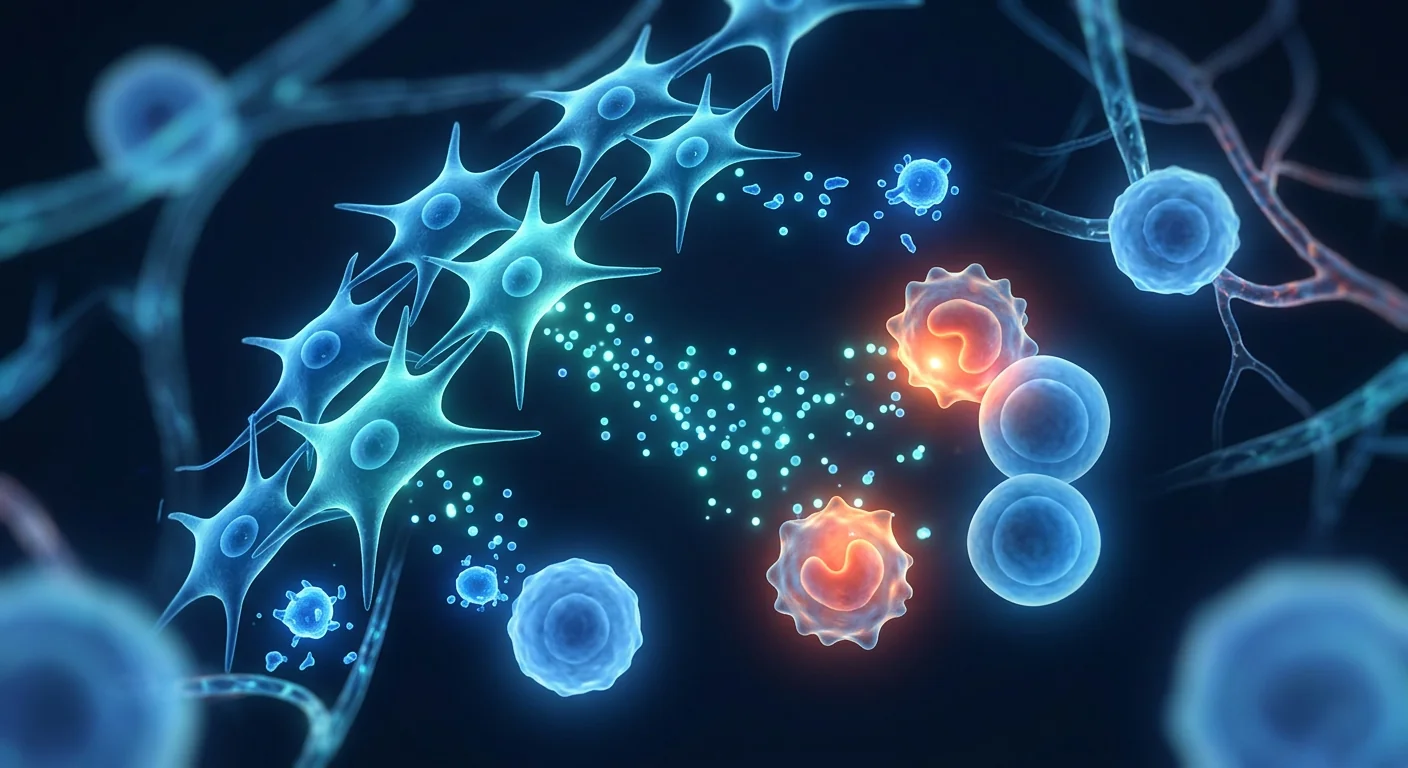
عندما تُدخل الخلايا الجذعية الوسيطة ذات الجودة السريرية إلى نسيج مصاب — سواء عن طريق الحقن المباشر في وتر أو رباط، أو جهازياً عبر التسريب الوريدي — فإنها تتفاعل مع البيئة المحلية من خلال عدة آليات منسقة:
1. الإشارات المضادة للالتهاب
يُطلق النسيج المصاب سلسلة من السيتوكينات الالتهابية — خاصة IL-1β وIL-6 وTNF-α — التي، بينما هي ضرورية للاستجابة الشفائية الأولية، يمكن أن تصبح مزمنة وذات نتائج عكسية. تستجيب MSC لبيئة السيتوكينات العالية بإفراز وسطاء مضادين للالتهاب بما في ذلك TSG-6، والبروستاغلاندين E2 (PGE2)، وإندوليامين 2,3-ديوكسيجيناز (IDO). يساعد هذا في نقل موقع الإصابة من حالة التهاب مستمر نحو حالة إصلاح منظم.
2. الدعم شبه الإفرازي لخلايا الإصلاح المحلية
لا تعمل MSC بشكل أساسي من خلال التمايز إلى نسيج بديل بنفسها — وهو مفهوم خاطئ شائع. بدلاً من ذلك، تعمل "كمنسقات" خلوية، وتطلق مزيجاً غنياً من عوامل النمو (TGF-β وVEGF وIGF-1 وHGF وFGF-2) التي تُشير إلى خلايا الإصلاح المقيمة في الجسم — الخلايا الوترية في الأوتار، والأرومات الليفية في الأربطة، والخلايا الساتلة في العضلات — للتكاثر والهجرة وإنتاج مصفوفة جديدة خارج الخلية.
3. تعديل التليف
أحد أكثر جوانب بيولوجيا MSC صلة سريرياً بالطب الرياضي هو إمكانية تعديل التوازن بين التجدد والتليف. عندما يلتئم العضل أو الوتر في ظل ظروف طبيعية، فإن درجة من النسيج الندبي أمر لا مفر منه. يبدو أن MSC تؤثر على هذه العملية من خلال تنظيم مسارات إشارات TGF-β1 وتعزيز بيئة ميتالوبروتيناز المصفوفة (MMP) التي تفضل ترسب الكولاجين المنظم على الندبة غير المنظمة.
4. دعم تكوين الأوعية الدموية
تحدث العديد من الإصابات الرياضية في أنسجة ذات إمداد دموي ضعيف ذاتياً — الأوتار والأربطة أمثلة رئيسية. تفرز MSC عامل نمو بطانة الأوعية الدموية (VEGF) وعوامل مولدة للأوعية أخرى تدعم تكوين أوعية دقيقة جديدة، مما يحسن توصيل الأكسجين والمغذيات إلى النسيج الملتئم.
ما لا يفعله علاج MSC
من المهم وضع توقعات صادقة. علاج MSC لا يُصلح فوراً وتراً أو رباطاً ممزقاً. إنه لا يحل محل الحاجة إلى الراحة المناسبة، والعلاج الطبيعي، وبروتوكولات العودة المتدرجة إلى الرياضة. إنه لا يضمن العودة إلى مستويات الأداء قبل الإصابة. ما تشير إليه الأدلة المبكرة أنه قد يفعله هو دعم آليات الإصلاح الخاصة بالجسم، وتقليل العبء الالتهابي، وربما تحسين جودة شفاء الأنسجة — خاصة في الإصابات حيث يُعرف أن الإصلاح الطبيعي بطيء أو غير مكتمل.
أنواع الخلايا الجذعية المستخدمة في الطب الرياضي
ليست كل مستحضرات الخلايا الجذعية متشابهة، والمصدر مهم بشكل كبير. فئتان رئيسيتان ذات صلة بعلاج الإصابات الرياضية:
MSC المشتقة من هلام وارتون (خيفية)
هذه خلايا جذعية وسيطة مستخرجة من هلام وارتون لأنسجة الحبل السري المتبرع بها بعد الولادات الكاملة الصحية. يتم توسيعها تحت ظروف GMP إلى جرعات ذات جودة سريرية، وإعطائها طازجة للمرضى دون الحاجة إلى متبرع مطابق. MSC هلام وارتون جذابة بشكل خاص للطب الرياضي لأنها شابة، وشديدة التكاثر، ولديها خصائص تعديل مناعي قوية. كما أنها تتجنب الحاجة إلى إجراء حصاد جراحي من المريض، وهو اعتبار مهم للرياضي الذي يتعامل بالفعل مع إصابة. في منشأة ذات جودة سريرية، تتميز هذه الخلايا بتعبير ≥95% من علامات سطح MSC (CD73، CD90، CD105) وحيوية عند التسليم >95%.
MSC الذاتية (مشتقة من نخاع العظم أو الدهون)
هذه خلايا جذعية تُحصد من نخاع عظم المريض نفسه (عادة من العرف الحرقفي) أو النسيج الدهني (عن طريق شفط الدهون)، ثم تُعالج وتُركّز قبل إعادة حقنها في موقع الإصابة. الميزة هي أنها خلايا المريض نفسه، مما يلغي أي خطر نظري للرفض المناعي. تشمل العيوب الحاجة إلى إجراء حصاد إضافي، وجودة خلايا متغيرة حسب عمر المريض وصحته، والوقت المطلوب للمعالجة — مما قد يعني تأخيراً بين الحصاد والعلاج.
يُستخدم كلا النهجين في الممارسة السريرية. يعتمد الاختيار بينهما على الإصابة المحددة، وتفضيلات المريض، وتقييم الفريق السريري. تفضل العديد من عيادات الطب الرياضي MSC الخيفية من هلام وارتون لاتساقها، وفعاليتها، وغياب إجراء ثانٍ.
الجدول الزمني للتعافي: ما يختبره الرياضيون عادة
العلاج الخلوي ليس دواءً صيدلانياً — إنه لا ينتج تأثيراً فورياً. يصف معظم الرياضيين الذين يخضعون لعلاج MSC لإصابة رياضية التعافي في ثلاث مراحل واسعة:
من الضروري فهم أن علاج الخلايا الجذعية هو مكون واحد من برنامج تعافٍ أوسع. يتم الإبلاغ عن أنجح النتائج باستمرار من قبل المرضى الذين يجمعون بين علاج MSC والعلاج الطبيعي المنضبط، والتغذية المناسبة، و— ربما الأكثر صعوبة للرياضيين — الصبر للسماح للشفاء البيولوجي بأن يأخذ مجراه بدلاً من التسرع في العودة إلى الرياضة. يُبلغ العديد من المرضى أن الفرق الأكثر وضوحاً عن حالات التعافي من الإصابات السابقة هو إحساس بشفاء أكثر اكتمالاً — تيبس متبقٍ أقل، جودة أنسجة أفضل في التصوير، وثقة أكبر في المنطقة المصابة.
كيف يُقارن علاج MSC بالعلاجات التقليدية
واجه الرياضيون الذين يعانون من إصابات كبيرة في الأوتار أو الأربطة أو الغضاريف تاريخياً قائمة محدودة من الخيارات:
| العلاج | الآلية | نقاط القوة | القيود |
|---|---|---|---|
| الراحة + العلاج الطبيعي | شفاء طبيعي + تحميل متدرج | غير جراحي؛ الخط الأول للإصابات الخفيفة | بطيء؛ إصلاح غير مكتمل في الإصابات عالية الدرجة |
| حقن الكورتيكوستيرويد | مضاد للالتهاب | تخفيف سريع للألم | قد يضعف نسيج الوتر/الرباط؛ حل قصير المدى |
| PRP (البلازما الغنية بالصفائح) | توصيل عوامل النمو | ذاتي؛ مدروس جيداً في اعتلال الأوتار | تركيز متغير؛ اعتماد على جودة صفائح المريض |
| الجراحة | إصلاح هيكلي | حاسم للتمزقات الكاملة | جراحي؛ إعادة تأهيل طويلة؛ خطر المضاعفات |
| علاج MSC | تعديل مناعي + دعم شبه إفرازي | يعالج بيولوجيا ضعف الشفاء؛ قد يحسن جودة الأنسجة | لا يزال قيد البحث للعديد من الدواعي؛ التكلفة؛ بروتوكولات متغيرة |
في الممارسة العملية، غالباً ما تُستخدم هذه النُهج مجتمعة بدلاً من كونها بدائل متنافية. قد يخضع رياضي يعاني من تمزق جزئي في الكفة المدورة لحقن MSC يتبعه برنامج علاج طبيعي منظم، مع استخدام PRP كمساعد. قد يفكر عداء يعاني من اعتلال وتر العرقوب المزمن الذي لم يستجب لستة أشهر من العلاج المحافظ في علاج MSC قبل استكشاف الخيارات الجراحية. القرار فردي، وستساعد العيادة المسؤولة المريض على فهم أين يقع علاج MSC ضمن مشهد العلاج الكامل.
من هو المرشح لعلاج MSC للإصابات الرياضية؟
تُحدد الأهلية من خلال تقييم شامل يتضمن التاريخ الطبي، والتصوير الخاص بالإصابة (عادة MRI أو الموجات فوق الصوتية التشخيصية)، والتقييم الوظيفي. يميل المرضى الذين يبدو أنهم يستفيدون أكثر إلى مشاركة عدة خصائص:
- تمزقات جزئية في الأوتار أو الأربطة (ليست تمزقات كاملة تتطلب إعادة بناء جراحي)
- اعتلال أوتار مزمن لم يستجب بشكل كافٍ لـ 3–6 أشهر من العلاج المحافظ
- تمزقات عضلية من الدرجة الثانية أو إصابات عضلية متكررة في نفس الموقع
- عيوب غضروفية بؤرية مع غضروف محيط سليم
- توقعات واقعية حول جداول التعافي ودور إعادة التأهيل
- التزام ببرنامج علاج طبيعي منظم إلى جانب العلاج البيولوجي
المرضى الذين يعانون من تمزقات كاملة في الأوتار أو الأربطة، أو تدهور مفصلي متقدم، أو عدوى نشطة، أو حالات مناعية ذاتية معينة لا يُعتبرون عادة مرشحين مناسبين. ستكون العيادة ذات السمعة الجيدة شفافة بشأن من يحتمل — ومن لا يحتمل — أن يستفيد.
الأدلة العلمية والدراسات السريرية
قاعدة الأدلة لعلاج MSC في الطب الرياضي تنمو لكنها لا تزال في مرحلة متوسطة من النضج. معظم الدراسات المنشورة صغيرة إلى متوسطة الحجم، ويفتقر الكثير منها إلى التصميم العشوائي المضبوط الذي يمثل المعيار الذهبي في البحث الطبي. ومع ذلك، فقد أبلغت عدة مراجعات منهجية وتحليلات تلوية عن إشارات مشجعة:
في مجال إصلاح الأوتار، وجدت مراجعة منهجية عام 2022 لعلاج MSC لاعتلال الأوتار أن غالبية الدراسات المنشورة أبلغت عن تحسنات في درجات الألم والنتائج الوظيفية، مع ملف أمان مناسب. بالنسبة لعيوب الغضاريف، أبلغ تحليل تلوي للدراسات التي تستخدم علاج MSC إلى جانب الكسر الدقيق عن تحسن نتائج MRI والدرجات الوظيفية مقارنة بالكسر الدقيق وحده عند متابعة 24 شهراً. في مجال الأربطة، أظهرت النماذج ما قبل السريرية لإصلاح ACL المعزز بـ MSC تحسنات في الدرجات النسيجية والخصائص الميكانيكية الحيوية، على الرغم من أن البيانات البشرية لا تزال محدودة.
من الإنصاف وصف الأدلة الحالية بأنها واعدة لكنها غير حاسمة. يجب على المرضى الذين يفكرون في علاج MSC لإصابة رياضية أن يفهموا أنهم يحصلون على علاج في طليعة الطب التجديدي — علاج تدعمه آليات بيولوجية معقولة ومجموعة متنامية من البيانات السريرية، لكنه لم يُثبت بعد كمعيار للرعاية لمعظم دواعي الإصابات الرياضية.
القيود والمخاطر الصادقة
الشفافية حول ما هو غير معروف لا تقل أهمية عن الوضوح حول ما هو معروف. تشمل القيود الصادقة لعلاج MSC للإصابات الرياضية:
- تباين البروتوكولات. لا توجد جرعة أو طريقة توصيل أو مصدر خلايا موحد عبر العيادات. قد تختلف النتائج بشكل كبير بين المزودين.
- أدلة عالية الجودة محدودة. بينما الأساس المنطقي البيولوجي قوي، لا تزال هناك حاجة لتجارب عشوائية مضبوطة واسعة النطاق لمعظم دواعي الإصابات الرياضية.
- ليس بديلاً عن الجراحة. لا تزال تمزقات الأوتار أو الأربطة الكاملة تتطلب إعادة بناء جراحي. علاج MSC ليس بديلاً عن الجراحة الضرورية.
- التكلفة. يمثل علاج MSC استثماراً مالياً كبيراً ولا تغطيه عادة التأمين لدواعي الإصابات الرياضية.
- استجابة متغيرة. ليس كل مريض يستجيب. يختبر البعض تحسناً كبيراً، والبعض متوسطاً، والبعض فائدة محدودة. ستكون العيادة ذات السمعة الجيدة شفافة بشأن معدلات الاستجابة النموذجية.
- تباين تنظيمي. يختلف الوضع التنظيمي لعلاج MSC بين البلدان. يجب على المرضى التأكد من أن مزودهم يعمل ضمن الإطار التنظيمي المطبق.
أكبر خطر يمكن منعه في هذا المجال ليس العلاج نفسه — بل المزودون غير المنظمين الذين يقدمون خلايا غير سريرية الجودة بعقامة أو هوية أو فعالية غير متحققة. يجب على المرضى دائماً التحقق من: مصدر الخلايا وتوصيفها، واعتمادات المختبر وأنظمة الجودة، وتوفر شهادة تحليل للجرعة المحددة التي تُعطى.
اعتبارات التكلفة في تايلاند
برزت تايلاند كوجهة مهمة للطب التجديدي، حيث تجمع بين الخبرة السريرية والتكاليف التي تكون عادة أقل من العلاج المكافئ في أمريكا الشمالية أو أوروبا أو أستراليا. بالنسبة لعلاج MSC الموجه للإصابات الرياضية، تتراوح التكاليف في تايلاند عموماً من حوالي 4,000 إلى 12,000 دولار أمريكي لكل جلسة علاج، اعتماداً على تعقيد البروتوكول، ومصدر الخلايا، وعدد مواقع الحقن، وما إذا كان التسريب الجهازي مقترناً بالحقن الموضعي. هذا يُقارن بشكل إيجابي مع الأسعار في الولايات المتحدة، حيث يمكن أن تتراوح البروتوكولات المماثلة من 8,000 إلى 25,000 دولار أمريكي أو أكثر.
يجب على المرضى المسافرين من الخارج أن يأخذوا في الاعتبار التكاليف الإضافية بما في ذلك الرحلات الجوية، والإقامة، والوقت المطلوب للعلاج وفترة التعافي الأولية — عادة إقامة من 3–7 أيام في بانكوك. يجمع العديد من المرضى الدوليين بين العلاج وإجازة تعافٍ قصيرة، مستفيدين من بنية الضيافة التحتية في بانكوك. من المهم ملاحظة أن هذه علاجات اختيارية لا تغطيها معظم خطط التأمين الصحي الدولية، ويجب على المرضى وضع ميزانية وفقاً لذلك.
أسئلة متكررة
كم من الوقت بعد الإصابة الرياضية يمكنني تلقي علاج MSC؟
التوقيت مهم. بالنسبة للإصابات الحادة، يوصي معظم الأطباء بالانتظار حتى تهدأ المرحلة الالتهابية الأولية — عادة 1–3 أسابيع بعد الإصابة — قبل إعطاء علاج MSC. بالنسبة للإصابات المزمنة مثل اعتلال الأوتار طويل الأمد، لا توجد فترة انتظار محددة، ويمكن متابعة العلاج بمجرد تأكيد الأهلية من خلال التقييم والتصوير.
هل سأحتاج إلى أكثر من جلسة علاج؟
يحقق العديد من المرضى نتائج مرضية من جلسة علاج واحدة، خاصة عند اقترانها ببرنامج إعادة تأهيل منظم. قد تستفيد بعض الإصابات — خاصة اعتلال الأوتار المزمن أو تلف الغضاريف الأكثر اتساعاً — من جلسة ثانية بعد 3–6 أشهر من الأولى. يُتخذ القرار بناءً على تقييم المتابعة والتقدم الوظيفي، وليس على جدول محدد مسبقاً.
هل يمكن أن يساعدني علاج MSC في تجنب الجراحة؟
بالنسبة للتمزقات الجزئية واعتلال الأوتار المزمن، يُبلغ العديد من المرضى أن علاج MSC ساعدهم في تجنب أو تأخير الجراحة. ومع ذلك، هذا ليس مضموناً. لا تزال تمزقات الأوتار أو الأربطة الكاملة، وعدم استقرار المفصل الشديد، وفقدان الغضروف المتقدم تتطلب تدبيراً جراحياً. يُفهم علاج MSC بشكل أفضل كأداة قد تقلل من الحاجة إلى الجراحة في الحالات المختارة بشكل مناسب، وليس كبديل جراحي شامل.
هل هناك فترة توقف بعد الإجراء؟
يمكن لمعظم المرضى الخروج من العيادة في نفس اليوم واستئناف الأنشطة اليومية الخفيفة في غضون 24–48 ساعة. ومع ذلك، يجب إراحة المنطقة المعالجة من التحميل الخاص بالرياضة لفترة يحددها الفريق السريري — عادة 2–6 أسابيع حسب الإصابة ونوع النسيج. بروتوكول العودة المتدرجة إلى الرياضة أساسي؛ التسرع في العودة مبكراً جداً يمكن أن يقوض عملية الإصلاح البيولوجي.
هل هناك أي آثار جانبية؟
عند التوصيل بخلايا ذات جودة سريرية وتقنية مناسبة، يتمتع علاج MSC بملف أمان قوي. الآثار الجانبية الأكثر شيوعاً هي موضعية ومؤقتة: ألم خفيف، أو تورم، أو تيبس في موقع الحقن لمدة 24–72 ساعة. تُبلغ أحياناً عن آثار جانبية جهازية مثل حمى منخفضة الدرجة أو إرهاق وعادة ما تزول في غضون 24 ساعة. الأحداث السلبية الخطيرة نادرة في الأدبيات المنشورة عند استخدام خلايا ذات جودة سريرية تحت إشراف طبي مناسب.
كيف أعرف إذا كانت العيادة شرعية؟
ابحث عن عدة علامات للجودة: يجب أن تكون العيادة شفافة بشأن مصدر خلاياها وتوصيفها، وتقدم شهادة تحليل عند الطلب، وتعمل تحت منشأة طبية مرخصة بإشراف تنظيمي مناسب، ولديها فريق سريري بقيادة أطباء مؤهلين ذوي خبرة في الطب التجديدي، وتكون مستعدة لإخبارك بصدق إذا لم تكن مرشحاً جيداً. يجب التعامل بحذر مع العيادة التي تعد بنتائج مضمونة أو تدعي علاج كل حالة بنفس البروتوكول.
للرياضي المناسب — بإصابة جزئية في وتر أو رباط، وتوقعات واقعية، والتزام بإعادة التأهيل — يمثل علاج MSC إضافة ذات معنى إلى مجموعة أدوات الطب الرياضي. لا يتعلق الأمر بتجاوز عملية الشفاء الخاصة بالجسم، بل بدعمها بشكل أكثر فعالية.
— فريق VELAR السريري
منهج VELAR لتعافي الإصابات الرياضية
تبدأ بروتوكولات الإصابات الرياضية في VELAR Center بتقييم شامل يتضمن تصويراً خاصاً بالإصابة، وتقييماً وظيفياً، ومناقشة أهلية صادقة حول ما يمكن وما لا يمكن أن يحققه علاج MSC بشكل واقعي لإصابتك المحددة. يستخدم بروتوكول كل مريض MSC ذات الجودة السريرية المشتقة من هلام وارتون (تعبير علامات MSC ≥95%، حيوية عند التسليم >95%)، تُعطى عبر الحقن الموجه بالصورة، أو التسريب الوريدي، أو بروتوكول مشترك حسب نوع الإصابة وموقعها. تُقرن كل جلسة بخطة إعادة تأهيل منظمة مصممة بالتعاون مع أخصائي العلاج الطبيعي أو فريق الطب الرياضي الخاص بك، ويُراقب التقدم عند علامات 1 و3 و6 أشهر.
إذا كنت رياضياً تفكر في العلاج التجديدي لإصابة رياضية، فإن أهم خطوة أولى هي تقييم صادق لإصابتك المحددة، وأهليتك، وفهم واضح لكيف يبدو التعافي الواقعي — بما في ذلك عمل إعادة التأهيل المطلوب إلى جانب العلاج البيولوجي.