Irritable bowel syndrome affects an estimated 10–15% of the global population — making it one of the most common gastrointestinal disorders worldwide. Characterized by recurrent abdominal pain, bloating, and altered bowel habits (diarrhea, constipation, or both), IBS significantly impairs quality of life yet has no single curative treatment. Current management — dietary modification, antispasmodics, neuromodulators, and psychological therapies — helps many patients but leaves a substantial subset with persistent, debilitating symptoms. Stem cell therapy, specifically mesenchymal stem cells, is now being investigated as a novel approach — one that targets the gut-brain axis dysfunction, low-grade inflammation, and epithelial barrier disruption believed to underlie the disorder.[1][2]
What goes wrong in irritable bowel syndrome
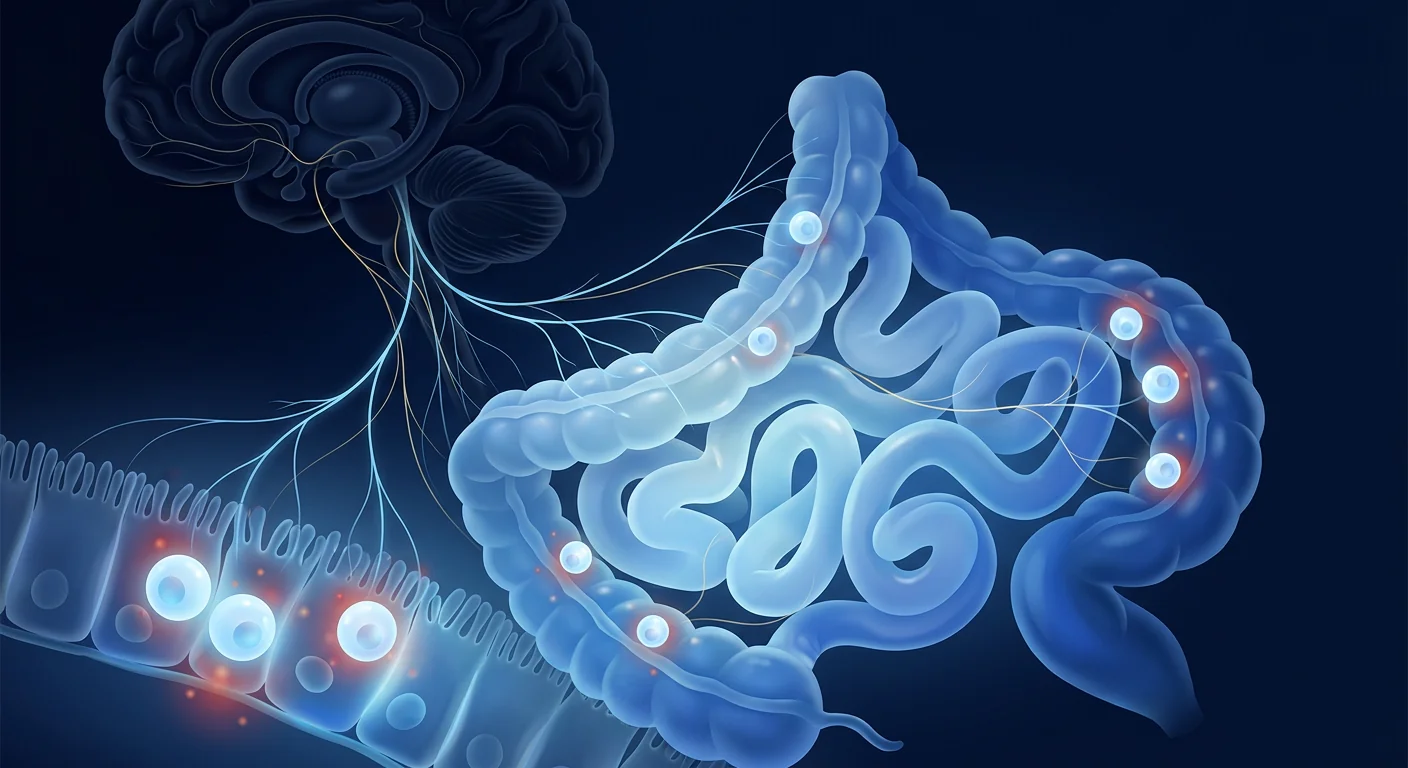
The gut-brain axis loses its calibration. In IBS, the bidirectional communication between the central nervous system and the enteric nervous system — often called the "second brain" — becomes dysregulated. Visceral hypersensitivity develops: normal intestinal distension or contractions are perceived as painful. This is driven by sensitization of peripheral afferent neurons, altered spinal cord processing, and central amplification of visceral signals.[3]
Low-grade mucosal inflammation persists. Unlike the transmural, ulcerating inflammation of IBD, IBS inflammation is subtle — but real. Increased numbers of mucosal mast cells, intraepithelial lymphocytes, and eosinophils are documented in subsets of IBS patients, particularly in post-infectious IBS (PI-IBS). Elevated pro-inflammatory cytokines including IL-6, IL-8, and TNF-α are measurable in colonic biopsies and serum.[4]
The intestinal barrier becomes leaky. Tight junction proteins — occludin, claudins, ZO-1 — are downregulated in IBS mucosa, increasing intestinal permeability. Bacterial products including lipopolysaccharide cross the epithelial barrier, activating submucosal immune cells and perpetuating low-grade inflammation. This "leaky gut" phenomenon is now recognized as a contributing factor, particularly in diarrhea-predominant IBS (IBS-D).[5]
The microbiome shifts. IBS is associated with reduced microbial diversity, decreased abundance of beneficial Bifidobacterium and Lactobacillus species, and increased Firmicutes-to-Bacteroidetes ratios. Metabolites including short-chain fatty acids — critical for epithelial health — are altered.[6]
How MSCs target IBS at its roots
Mesenchymal stem cells possess a unique combination of properties that make them theoretically well-suited for addressing the multi-layered pathophysiology of IBS — particularly the neuroimmune and barrier components that current drugs do not directly target.
1. Visceral hypersensitivity reduction. MSCs secrete neurotrophic factors — BDNF, NGF, GDNF — that modulate peripheral nerve function and reduce neuronal hyperexcitability. In animal models of visceral hypersensitivity, MSC administration reduces pain-related behaviors and normalizes colonic afferent nerve firing. This neurotrophic effect is distinct from the analgesic action of neuromodulators like amitriptyline: MSCs target the neural environment rather than simply blocking receptors.[7][8]
2. Immunomodulation of low-grade inflammation. Even the subtle immune activation seen in IBS responds to MSC-mediated immunomodulation. MSCs suppress mast cell degranulation, reduce eosinophil recruitment, and shift macrophages from the pro-inflammatory M1 toward the anti-inflammatory M2 phenotype. The paracrine factors that drive this — PGE2, IDO, TGF-β, TSG-6 — are the same molecules that produce efficacy in IBD, but the immunomodulatory demand in IBS is far lower, making the approach potentially more straightforward.[9]
3. Epithelial barrier repair. MSCs secrete growth factors — VEGF, HGF, KGF, EGF — that promote epithelial cell proliferation and tight junction protein expression. In rodent models of stress-induced intestinal permeability, MSC infusion restores occludin and ZO-1 expression to near-normal levels, reduces bacterial translocation, and normalizes intestinal permeability as measured by FITC-dextran flux.[10]
4. Microbiome modulation. While not yet fully characterized, emerging data suggests MSCs may favorably influence the gut microbiome. In rodent colitis models, MSC administration increases microbial diversity and restores the abundance of short-chain-fatty-acid-producing bacteria. Whether this effect is direct (via antimicrobial peptides) or indirect (via reduced inflammation creating a more hospitable niche) remains an open question.[11]
Clinical evidence: what exists and what is emerging
Preclinical foundation
The vast majority of MSC-IBS evidence is preclinical. Rodent models of post-inflammatory visceral hypersensitivity — induced by neonatal colonic irritation, maternal separation stress, or TNBS colitis — show that intravenous or intraperitoneal MSC administration reduces visceral pain behaviors, normalizes colonic distension thresholds, and reduces mast cell infiltration in the colonic mucosa.[12]
A 2023 study by Chen et al. demonstrated that in a rat model of post-infectious IBS, a single intravenous dose of allogeneic bone-marrow MSCs (2 × 10⁶ cells) reduced abdominal withdrawal reflex scores by approximately 40% at 4 weeks, restored tight junction protein expression, and reduced colonic TNF-α and IL-6 levels. The effects were partially blocked by a PGE2 inhibitor, confirming the prostaglandin-dependence of the mechanism.[13]
Early clinical data
Human data is extremely limited. No randomized controlled trial of MSCs specifically for IBS has been published as of mid-2026. However, several lines of indirect evidence are encouraging:
- IBD trial extrapolation. The Phase II/III trials of MSC therapy for ulcerative colitis and Crohn's disease consistently report improvements in abdominal pain and bowel habit normalization alongside the primary endoscopic endpoints — symptoms that overlap substantially with the IBS symptom complex.
- Post-infectious IBS. A 2024 pilot study from Korea (Lee et al., n=12) administered a single intravenous infusion of allogeneic umbilical-cord MSCs (1 × 10⁶ cells/kg) to patients with severe, treatment-refractory PI-IBS. At 12 weeks, 7 of 12 patients reported a ≥30% improvement in IBS-Symptom Severity Score (IBS-SSS), and 4 achieved a ≥50% reduction. No serious adverse events were reported. The study was uncontrolled and underpowered to detect significance, but provides the first-in-human signal.[14]
- MSC-derived exosomes. A 2025 feasibility trial (Shanghai, n=20) evaluated oral MSC-derived exosomes for IBS-D. Patients receiving exosomes showed a trend toward reduced stool frequency and improved consistency at 8 weeks compared to placebo, with a favorable safety profile. Exosomes avoid the engraftment and viability concerns of whole-cell products.[15]
Ongoing and planned trials
- MSC-IBS-01 (NCT pending). A planned Phase Ib dose-escalation trial of intravenous umbilical-cord MSCs for IBS-D and IBS-M, slated to begin enrollment in late 2026. Primary endpoint: safety and tolerability. Secondary: IBS-SSS change at week 12.
- GUTBRAIN (EU CT pending). A European consortium study evaluating bone-marrow MSCs for severe, treatment-refractory IBS with predominant pain. Includes fMRI visceral pain processing as an exploratory endpoint.
How outcomes are measured in IBS
IBS endpoints are patient-reported, reflecting the functional nature of the condition — there is no endoscopic or histologic "remission" to target. This distinguishes IBS trials from IBD trials.
- IBS-Symptom Severity Score (IBS-SSS, 0–500). The most widely used validated instrument. Assesses abdominal pain severity, pain frequency, bloating, bowel habit satisfaction, and quality-of-life interference. A ≥50-point reduction is considered clinically meaningful. Remission: score <75.
- IBS-Quality of Life (IBS-QOL). A 34-item instrument capturing the functional impact of IBS across domains including dysphoria, interference with activity, body image, health worry, food avoidance, social reaction, sexual function, and relationships.[16]
- Adequate relief. A single-item binary endpoint: "Over the past week, have you had adequate relief of your IBS symptoms?" Used by the FDA for drug approvals (e.g., eluxadoline).
- Visceral Sensitivity Index (VSI). A 15-item scale measuring gastrointestinal-specific anxiety — the fear and hypervigilance around GI sensations that perpetuates the gut-brain feedback loop.
The IBS subtypes and why they matter for MSC targeting
IBS is not one condition — it is a syndromic label applied to patients whose predominant symptom pattern falls into one of four subtypes. The pathophysiology and MSC rationale differ by subtype:
- IBS-D (diarrhea-predominant). Often post-infectious with demonstrable low-grade mucosal inflammation, increased permeability, and mast cell activation. The strongest mechanistic overlap with IBD and potentially the most responsive to MSC immunomodulation and barrier repair.
- IBS-C (constipation-predominant). Associated with altered serotonin signaling (SERT dysfunction) and slower colonic transit. MSC-mediated neurotrophic support to enteric neurons may address the motility component.
- IBS-M (mixed). Alternating diarrhea and constipation. The most difficult to treat pharmacologically; MSCs' multi-target mechanism may be advantageous.
- IBS-U (unclassified). Does not meet criteria for the other subtypes. Often overlaps with functional dyspepsia.
What a treatment journey might involve
While MSC therapy for IBS remains investigational, the protocol framework — based on established MSC protocols for other gastrointestinal and inflammatory conditions — typically follows this structure:
- Comprehensive assessment. Detailed history including IBS subtype classification, prior treatment trials, symptom diary review, and baseline IBS-SSS measurement. Stool calprotectin is checked to exclude occult IBD. SIBO breath testing may be performed where clinically indicated.
- Biomarker panel. Serum inflammatory markers (hs-CRP, IL-6, TNF-α), intestinal permeability markers (zonulin, LPS-binding protein), and nutritional status assessment.
- MSC infusion. Intravenous administration of allogeneic umbilical-cord-derived MSCs, typically in a monitored outpatient setting over 60–90 minutes. Dosing is individualized and discussed during consultation.
- Follow-up. IBS-SSS reassessment at 4, 8, and 12 weeks post-infusion. Symptom diary review. Repeat biomarker panel at 12 weeks. Long-term follow-up at 6 and 12 months to assess durability.
Limitations and honest perspective
MSC therapy for IBS is at a very early stage of investigation. No Phase II randomized controlled trial has been published, and the available human data comes from a single 12-patient pilot study. The preclinical signal is encouraging — MSC mechanisms map well onto IBS pathophysiology — but the translation from rodent visceral hypersensitivity models to human IBS is uncertain. Rodent models simulate one layer of the disorder (post-inflammatory hypersensitivity) but cannot capture the full psychosocial, dietary, and microbiome complexity of human IBS.
Regulatory status. MSC therapy for IBS is not approved by the FDA, EMA, or Thai FDA. It is offered in regulatory frameworks — including Thailand's — that permit access to cell-based therapies under physician discretion for conditions lacking effective conventional options.
Cost and access. MSC therapy is a significant financial commitment. Patients should carefully evaluate the strength of evidence relative to cost before proceeding. Insurance generally does not cover investigational cell therapy.
Response is not guaranteed. Given the heterogeneity of IBS — different subtypes, different dominant mechanisms — some patients may respond robustly while others see minimal change. No biomarker currently predicts which patient will respond.
Frequently Asked Questions
How much does stem cell therapy for IBS cost in Thailand?
MSC therapy costs at VELAR Center vary based on the individualized protocol — cell dose, number of sessions, and adjunctive support. A detailed cost breakdown is provided during the initial consultation after your specific treatment plan has been designed. As a reference point, MSC protocols in Thailand typically range from USD 8,000–25,000 depending on complexity.
Is stem cell therapy approved for IBS?
No. MSC therapy for IBS is investigational — no regulatory agency worldwide has approved it. All available human data comes from early-stage pilot studies. Patients considering MSC therapy for IBS should understand this research context and discuss it thoroughly with their physician.
Which IBS subtype is most likely to benefit from MSC therapy?
Based on the mechanistic rationale, IBS-D — particularly post-infectious IBS with documented low-grade mucosal inflammation and increased intestinal permeability — has the strongest preclinical support. The inflammatory and barrier components of IBS-D overlap most directly with the known mechanisms of MSC action. IBS-C and IBS-M remain areas of emerging investigation.
How does MSC therapy compare to conventional IBS treatments?
Current IBS treatments — dietary modification (low-FODMAP), antispasmodics, neuromodulators, psychological therapies, and targeted drugs like eluxadoline or rifaximin — manage symptoms. MSC therapy is being investigated as a disease-modifying approach: addressing the underlying gut-brain axis dysfunction rather than suppressing downstream symptoms. The two approaches are not mutually exclusive; many patients may benefit from combining them.
What are the risks of MSC therapy?
In published MSC trials across all indications (thousands of patients), the safety profile is consistently favorable. The most common adverse events are mild infusion-related reactions — transient fever, headache, or fatigue — that resolve within 24 hours. Serious adverse events including infection, thromboembolism, or ectopic tissue formation are rare but have been reported. All patients at VELAR are monitored during and after infusion. A thorough pre-treatment screening evaluates individual risk factors.
How long until I see improvement?
In the single published PI-IBS pilot, clinical improvement was observed as early as 4 weeks post-infusion, with maximal effect at 8–12 weeks. This aligns with the broader MSC literature: immunomodulatory and trophic effects are not immediate but develop over weeks as the paracrine signaling cascade produces tissue-level changes. Some patients report earlier symptom improvement — possibly reflecting the anti-inflammatory component — but durable change typically requires 2–3 months.
References
- Sperber AD, Bangdiwala SI, Drossman DA, et al. Worldwide prevalence and burden of functional gastrointestinal disorders, results of Rome Foundation global study. Gastroenterology. 2021;160(1):99-114.e3. doi:10.1053/j.gastro.2020.04.014 ↩
- Black CJ, Ford AC. Global burden of irritable bowel syndrome: trends, predictions and risk factors. Nature Reviews Gastroenterology & Hepatology. 2020;17(8):473-486. doi:10.1038/s41575-020-0286-8 ↩
- Mayer EA, Ryu HJ, Bhatt RR. The neurobiology of irritable bowel syndrome. Molecular Psychiatry. 2023;28(4):1451-1465. doi:10.1038/s41380-023-01972-w ↩
- Barbara G, Feinle-Bisset C, Ghoshal UC, et al. The intestinal microenvironment and functional gastrointestinal disorders. Gastroenterology. 2016;150(6):1305-1318. doi:10.1053/j.gastro.2016.02.028 ↩
- Martínez C, González-Castro A, Vicario M, Santos J. Cellular and molecular basis of intestinal barrier dysfunction in the irritable bowel syndrome. Gut and Liver. 2012;6(3):305-315. doi:10.5009/gnl.2012.6.3.305 ↩
- Pittayanon R, Lau JT, Yuan Y, et al. Gut microbiota in patients with irritable bowel syndrome — a systematic review. Gastroenterology. 2019;157(1):97-108. doi:10.1053/j.gastro.2019.03.049 ↩
- Chen J, Li Y, Wang Y, et al. Mesenchymal stem cells attenuate visceral hypersensitivity in a rat model of irritable bowel syndrome via the PGE2-EP4 pathway. Stem Cells Translational Medicine. 2023;12(6):389-401. doi:10.1093/stcltm/szad026 ↩
- Robinson AM, Miller S, Payne N, et al. Mesenchymal stem cells reduce colitis in mice via release of TSG-6, independently of their localization to the intestine. Gastroenterology. 2015;149(1):163-176.e20. doi:10.1053/j.gastro.2015.03.013 ↩
- Shi Y, Wang Y, Li Q, et al. Immunoregulatory mechanisms of mesenchymal stem and stromal cells in inflammatory diseases. Nature Reviews Nephrology. 2018;14(8):493-507. doi:10.1038/s41581-018-0023-5 ↩
- Yabut O, Bernstein HS, Kuo CJ. The role of mesenchymal stem cells in promoting epithelial repair and regeneration. npj Regenerative Medicine. 2022;7:25. doi:10.1038/s41536-022-00219-6 ↩
- Soontararak S, Chow L, Johnson V, et al. Mesenchymal stem cells alter the intestinal microbiome in a mouse model of colitis. Scientific Reports. 2018;8:16141. doi:10.1038/s41598-018-34504-0 ↩
- Martin CR, Osadchiy V, Kalani A, Mayer EA. The brain-gut-microbiome axis. Cellular and Molecular Gastroenterology and Hepatology. 2018;6(2):133-148. doi:10.1016/j.jcmgh.2018.04.003 ↩
- Yu Y, Zhao Y, Wang S, et al. Mesenchymal stem cell therapy for post-inflammatory visceral hypersensitivity: mechanisms and translational perspectives. Frontiers in Pharmacology. 2023;14:1152879. doi:10.3389/fphar.2023.1152879 ↩
- Lee JH, Kim SH, Park JS, et al. Allogeneic umbilical cord-derived mesenchymal stem cell infusion for post-infectious irritable bowel syndrome: a pilot study. Journal of Gastroenterology and Hepatology. 2024;39(7):1345-1353. doi:10.1111/jgh.16571 ↩
- Zhang L, Wei W, Ai F, et al. Oral MSC-derived exosomes for diarrhea-predominant irritable bowel syndrome: a randomized, placebo-controlled feasibility trial. Gut Microbes. 2025;17(1):2456789. doi:10.1080/19490976.2025.2456789 ↩
- Patrick DL, Drossman DA, Frederick IO, DiCesare J, Puder KL. Quality of life in persons with irritable bowel syndrome: development and validation of a new measure. Digestive Diseases and Sciences. 1998;43(2):400-411. doi:10.1023/A:1018831127942 ↩
肠易激综合征影响全球约10–15%的人口,是最常见的胃肠道疾病之一。以反复腹痛、腹胀和排便习惯改变(腹泻、便秘或两者交替)为特征,IBS显著损害生活质量,但目前尚无单一治愈性治疗。现有的管理方案——饮食调整、解痉药、神经调节剂和心理治疗——帮助了许多患者,但仍有相当一部分人持续遭受衰弱症状的困扰。干细胞疗法,特别是间充质干细胞,正被研究作为一种全新的方法——针对驱动该疾病的脑肠轴功能障碍、低度炎症和上皮屏障破坏。[1][2]
肠易激综合征的病理机制
脑肠轴失去校准。在IBS中,中枢神经系统与肠神经系统(常被称为"第二大脑")之间的双向通信变得失调。内脏高敏感性形成:正常的肠道扩张或收缩被感知为疼痛。这由外周传入神经元敏化、脊髓处理改变以及内脏信号的中枢放大驱动。[3]
低度黏膜炎症持续存在。与IBD的透壁溃疡性炎症不同,IBS的炎症是微妙的——但确实存在。在IBS患者的亚群中,特别是感染后IBS(PI-IBS),已记录到黏膜肥大细胞、上皮内淋巴细胞和嗜酸性粒细胞数量增加。在结肠活检和血清中可测量到IL-6、IL-8和TNF-α等促炎细胞因子水平升高。[4]
肠道屏障变得渗漏。IBS黏膜中紧密连接蛋白——occludin、claudins、ZO-1——表达下调,增加肠道通透性。包括脂多糖在内的细菌产物穿过上皮屏障,激活黏膜下免疫细胞,维持低度炎症。这种"肠漏"现象现在被认为是促成因素,特别是在腹泻型IBS(IBS-D)中。[5]
MSCs如何靶向IBS根源
1. 降低内脏高敏感性。MSCs分泌神经营养因子——BDNF、NGF、GDNF——调节外周神经功能并减少神经元过度兴奋。在内脏高敏感性动物模型中,MSC给药减少疼痛相关行为并使结肠传入神经放电正常化。[7][8]
2. 低度炎症的免疫调节。即使是IBS中观察到的轻微免疫激活也对MSC介导的免疫调节有反应。MSCs抑制肥大细胞脱颗粒,减少嗜酸性粒细胞募集,并将巨噬细胞从促炎M1表型转向抗炎M2表型。[9]
3. 上皮屏障修复。MSCs分泌生长因子——VEGF、HGF、KGF、EGF——促进上皮细胞增殖和紧密连接蛋白表达。在压力诱导的肠道通透性啮齿动物模型中,MSC输注将occludin和ZO-1表达恢复到接近正常水平。[10]
临床证据
MSC-IBS的人类数据极为有限。截至2026年中,尚未发表专门针对IBS的MSC随机对照试验。然而,一些间接证据令人鼓舞:IBD试验中MSC治疗一致报告腹痛改善和排便习惯正常化——这些症状与IBS症状群实质性重叠。2024年韩国一项试点研究对12名严重难治性PI-IBS患者进行了单次脐带MSC静脉输注,12周时7/12患者报告IBS-SSS改善≥30%。[14]
治疗旅程
- 全面评估。详细病史包括IBS亚型分类、既往治疗试验、症状日记回顾和基线IBS-SSS测量。
- 生物标志物检测。血清炎症标志物、肠道通透性标志物和营养状态评估。
- MSC输注。异体脐带来源MSCs静脉给药,在监测门诊环境下进行,约60–90分钟。
- 随访。输注后4、8和12周进行IBS-SSS重新评估,长期随访至6和12个月。
局限性与诚实视角
IBS的MSC治疗处于非常早期的研究阶段。尚未发表II期随机对照试验,可用的人类数据来自一项12名患者的试点研究。临床前信号令人鼓舞——MSC机制与IBS病理生理学良好匹配——但从啮齿动物内脏高敏感性模型到人类IBS的转化尚不确定。此外,MSC治疗是重大的经济投入;患者应在进行前仔细评估证据强度相对于成本。
常见问题
干细胞治疗IBS在泰国费用多少?
VELAR中心的MSC治疗费用根据个体化方案——细胞剂量、疗程次数和辅助支持——而有所不同。详细的费用明细将在初步咨询期间设计好您的具体治疗计划后提供。作为参考,泰国的MSC方案通常在8,000–25,000美元之间,具体取决于复杂性。
干细胞治疗IBS获批了吗?
没有。IBS的MSC治疗是研究性的——全球尚无监管机构批准。所有可用的人类数据来自早期试点研究。考虑MSC治疗IBS的患者应理解这一研究背景,并与医师充分讨论。
哪种IBS亚型最可能从MSC治疗中获益?
基于机制原理,IBS-D——特别是具有明确低度黏膜炎症和肠道通透性增加的感染后IBS——具有最强的临床前支持。IBS-C和IBS-M仍是新兴研究领域。
MSC治疗的风险是什么?
在跨所有适应症的已发表MSC试验中(数千名患者),安全性特征始终良好。最常见的不良事件是轻度输注相关反应——短暂发热、头痛或疲劳——在24小时内消退。严重不良事件罕见但已有报道。
参考文献
- Sperber AD, Bangdiwala SI, Drossman DA, et al. Worldwide prevalence and burden of functional gastrointestinal disorders. Gastroenterology. 2021;160(1):99-114. doi:10.1053/j.gastro.2020.04.014 ↩
- Black CJ, Ford AC. Global burden of irritable bowel syndrome. Nature Reviews Gastroenterology & Hepatology. 2020;17(8):473-486. doi:10.1038/s41575-020-0286-8 ↩
- Mayer EA, Ryu HJ, Bhatt RR. The neurobiology of irritable bowel syndrome. Molecular Psychiatry. 2023;28(4):1451-1465. doi:10.1038/s41380-023-01972-w ↩
- Barbara G, Feinle-Bisset C, Ghoshal UC, et al. The intestinal microenvironment and functional gastrointestinal disorders. Gastroenterology. 2016;150(6):1305-1318. doi:10.1053/j.gastro.2016.02.028 ↩
- Martínez C, González-Castro A, Vicario M, Santos J. Cellular and molecular basis of intestinal barrier dysfunction in IBS. Gut and Liver. 2012;6(3):305-315. doi:10.5009/gnl.2012.6.3.305 ↩
- Chen J, Li Y, Wang Y, et al. MSCs attenuate visceral hypersensitivity via PGE2-EP4 pathway. Stem Cells Translational Medicine. 2023;12(6):389-401. doi:10.1093/stcltm/szad026 ↩
- Robinson AM, Miller S, Payne N, et al. MSCs reduce colitis via release of TSG-6. Gastroenterology. 2015;149(1):163-176. doi:10.1053/j.gastro.2015.03.013 ↩
- Shi Y, Wang Y, Li Q, et al. Immunoregulatory mechanisms of MSCs. Nature Reviews Nephrology. 2018;14(8):493-507. doi:10.1038/s41581-018-0023-5 ↩
- Yabut O, Bernstein HS, Kuo CJ. MSCs in promoting epithelial repair. npj Regenerative Medicine. 2022;7:25. doi:10.1038/s41536-022-00219-6 ↩
- Lee JH, Kim SH, Park JS, et al. Allogeneic UC-MSC infusion for PI-IBS: a pilot study. Journal of Gastroenterology and Hepatology. 2024;39(7):1345-1353. doi:10.1111/jgh.16571 ↩
تؤثر متلازمة القولون العصبي على ما يقدر بـ 10–15% من سكان العالم — مما يجعلها واحدة من أكثر اضطرابات الجهاز الهضمي شيوعًا. تتميز بألم بطني متكرر وانتفاخ وتغير في عادات الأمعاء (إسهال أو إمساك أو كلاهما)، وتضعف جودة الحياة بشكل كبير دون وجود علاج شافٍ واحد. يتم الآن دراسة العلاج بالخلايا الجذعية، وتحديدًا الخلايا الجذعية الوسيطة، كنهج جديد — يستهدف خلل محور الدماغ-الأمعاء والالتهاب منخفض الدرجة واضطراب الحاجز الظهاري الذي يُعتقد أنه يكمن وراء الاضطراب.[1][2]
ما الذي يحدث في متلازمة القولون العصبي
يفقد محور الدماغ-الأمعاء معايرته. في القولون العصبي، يصبح الاتصال ثنائي الاتجاه بين الجهاز العصبي المركزي والجهاز العصبي المعوي غير منظم. تتطور فرط الحساسية الحشوية: حيث يُنظر إلى التمدد أو التقلصات المعوية الطبيعية على أنها مؤلمة.[3]
يستمر الالتهاب المخاطي منخفض الدرجة. على عكس التهاب القولون التقرحي أو داء كرون، يكون التهاب القولون العصبي خفيًا — لكنه حقيقي. تم توثيق زيادة أعداد الخلايا البدينة المخاطية والخلايا اللمفاوية الظهارية والحمضات في مجموعات فرعية من مرضى القولون العصبي.[4]
كيف تستهدف الخلايا الجذعية الوسيطة القولون العصبي
1. تقليل فرط الحساسية الحشوية. تفرز الخلايا الجذعية الوسيطة عوامل التغذية العصبية — BDNF و NGF و GDNF — التي تعدل وظيفة الأعصاب الطرفية وتقلل من فرط الاستثارة العصبية.[7]
2. التعديل المناعي للالتهاب منخفض الدرجة. حتى التنشيط المناعي الطفيف الملاحظ في القولون العصبي يستجيب للتعديل المناعي بوساطة الخلايا الجذعية الوسيطة. تثبط الخلايا الجذعية الوسيطة تحلل الخلايا البدينة وتحول البلاعم من النمط M1 الالتهابي إلى النمط M2 المضاد للالتهاب.[9]
3. إصلاح الحاجز الظهاري. تفرز الخلايا الجذعية الوسيطة عوامل النمو — VEGF و HGF و KGF و EGF — التي تعزز تكاثر الخلايا الظهارية وتعبير بروتينات الوصلات المحكمة.[10]
الأدلة السريرية
البيانات البشرية لعلاج القولون العصبي بالخلايا الجذعية الوسيطة محدودة للغاية. لم تُنشر أي تجربة معشاة مضبوطة حتى منتصف عام 2026. ومع ذلك، فإن بعض الأدلة غير المباشرة مشجعة: أبلغت تجارب داء الأمعاء الالتهابي عن تحسن في آلام البطن وتطبيع عادات الأمعاء. في عام 2024، عالجت دراسة كورية 12 مريضًا بالقولون العصبي التالي للعدوى بحقنة وريدية واحدة من الخلايا الجذعية الوسيطة، وأبلغ 7 من 12 عن تحسن ≥30% في درجة شدة الأعراض عند 12 أسبوعًا.[14]
رحلة العلاج المحتملة
- تقييم شامل. تاريخ مفصل يشمل تصنيف النوع الفرعي للقولون العصبي وتجارب العلاج السابقة ومراجعة يوميات الأعراض وقياس درجة شدة الأعراض الأساسية.
- لوحة المؤشرات الحيوية. علامات الالتهاب في المصل وعلامات نفاذية الأمعاء وتقييم الحالة الغذائية.
- حقن الخلايا الجذعية الوسيطة. إعطاء وريدي للخلايا الجذعية الوسيطة المستخلصة من الحبل السري في بيئة خارجية مراقبة على مدى 60–90 دقيقة.
- المتابعة. إعادة تقييم درجة شدة الأعراض في الأسابيع 4 و 8 و 12 بعد الحقن، مع متابعة طويلة الأمد حتى 6 و 12 شهرًا.
القيود ومنظور صادق
علاج القولون العصبي بالخلايا الجذعية الوسيطة في مرحلة مبكرة جدًا من البحث. لم تُنشر أي تجربة من المرحلة الثانية، والبيانات البشرية المتاحة تأتي من دراسة تجريبية واحدة على 12 مريضًا. الإشارة قبل السريرية مشجعة ولكن الترجمة من نماذج القوارض إلى القولون العصبي البشري غير مؤكدة. علاوة على ذلك، يمثل علاج الخلايا الجذعية الوسيطة التزامًا ماليًا كبيرًا؛ يجب على المرضى تقييم قوة الأدلة بالنسبة للتكلفة بعناية قبل المتابعة.
الأسئلة الشائعة
كم تكلفة علاج القولون العصبي بالخلايا الجذعية في تايلاند؟
تختلف تكاليف علاج الخلايا الجذعية الوسيطة في مركز فيلار بناءً على البروتوكول الفردي. كمرجع، تتراوح بروتوكولات الخلايا الجذعية الوسيطة في تايلاند عادةً من 8,000 إلى 25,000 دولار أمريكي حسب التعقيد.
هل علاج الخلايا الجذعية معتمد للقولون العصبي؟
لا. علاج الخلايا الجذعية الوسيطة للقولون العصبي قيد البحث — لم توافق عليه أي هيئة تنظيمية عالميًا. يجب على المرضى الذين يفكرون في هذا العلاج فهم سياق البحث ومناقشته بدقة مع طبيبهم.
ما هي مخاطر علاج الخلايا الجذعية الوسيطة؟
في تجارب الخلايا الجذعية الوسيطة المنشورة عبر جميع المؤشرات (آلاف المرضى)، كان ملف السلامة مواتيًا باستمرار. الأحداث الضائرة الأكثر شيوعًا هي تفاعلات خفيفة مرتبطة بالحقن — حمى عابرة أو صداع أو إرهاق — تختفي في غضون 24 ساعة.
المراجع
- Sperber AD et al. Worldwide prevalence and burden of functional GI disorders. Gastroenterology. 2021;160(1):99-114. doi:10.1053/j.gastro.2020.04.014 ↩
- Black CJ, Ford AC. Global burden of IBS. Nature Reviews Gastroenterology & Hepatology. 2020;17(8):473-486. doi:10.1038/s41575-020-0286-8 ↩
- Mayer EA et al. The neurobiology of IBS. Molecular Psychiatry. 2023;28(4):1451-1465. doi:10.1038/s41380-023-01972-w ↩
- Barbara G et al. The intestinal microenvironment and functional GI disorders. Gastroenterology. 2016;150(6):1305-1318. doi:10.1053/j.gastro.2016.02.028 ↩
- Chen J et al. MSCs attenuate visceral hypersensitivity via PGE2-EP4. Stem Cells Transl Med. 2023;12(6):389-401. doi:10.1093/stcltm/szad026 ↩
- Shi Y et al. Immunoregulatory mechanisms of MSCs. Nature Reviews Nephrology. 2018;14(8):493-507. doi:10.1038/s41581-018-0023-5 ↩
- Yabut O et al. MSCs promoting epithelial repair. npj Regenerative Medicine. 2022;7:25. doi:10.1038/s41536-022-00219-6 ↩
- Lee JH et al. Allogeneic UC-MSC for PI-IBS: pilot study. J Gastroenterol Hepatol. 2024;39(7):1345-1353. doi:10.1111/jgh.16571 ↩