Inflammatory bowel disease (IBD) affects millions of people and, for many, reshapes daily life around unpredictable flares. It comes in two main forms — Crohn's disease and ulcerative colitis — both driven by chronic, immune-mediated inflammation of the digestive tract. Modern therapy has advanced considerably, yet a proportion of patients still fail to respond durably, and complications persist. That unmet need has drawn serious attention to stem cell research. But this is a field where one story is genuinely approved and another is still experimental, and telling them apart is the whole point of an honest discussion.
What goes wrong in Crohn's and IBD
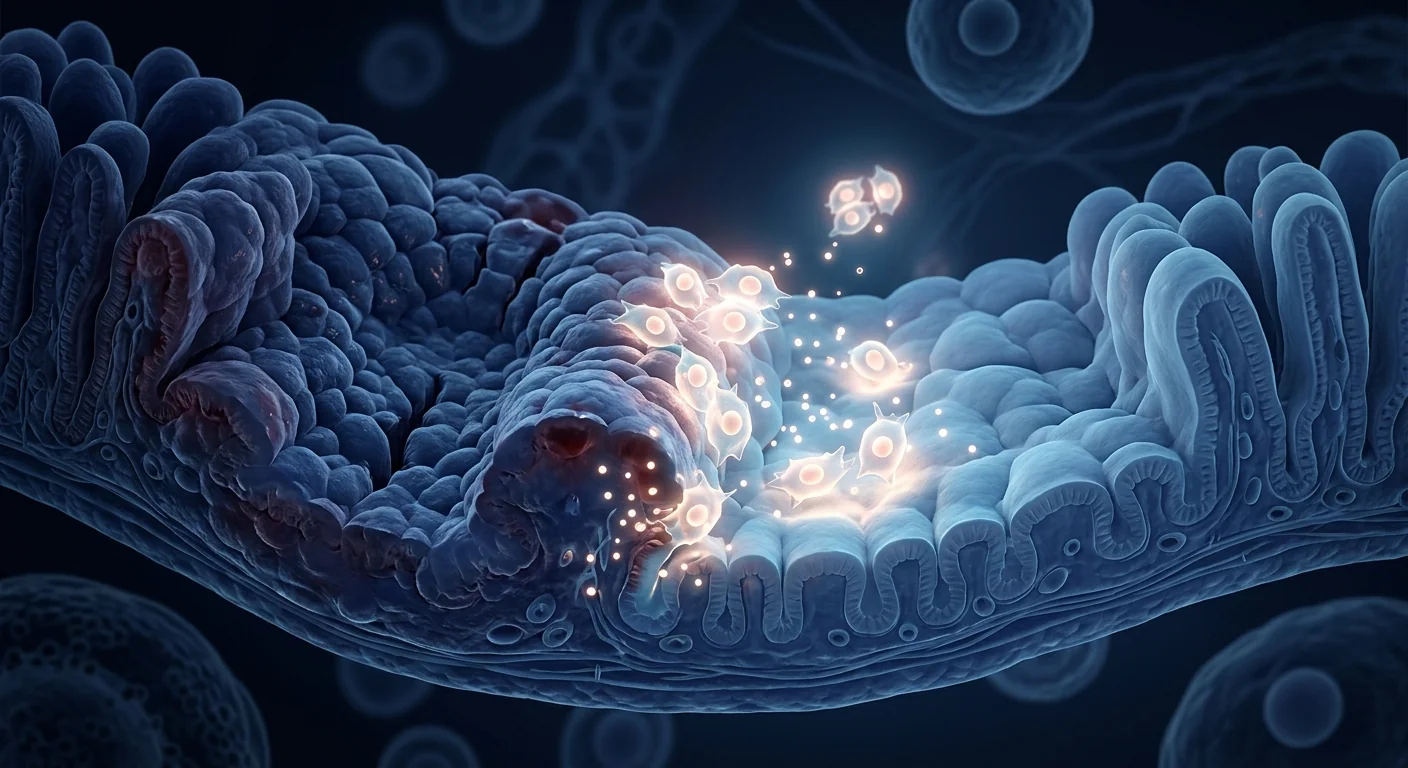
In IBD, the immune system mistakenly mounts a sustained inflammatory attack on the lining of the gut. In ulcerative colitis, this is confined to the colon and rectum and affects the innermost layer. In Crohn's disease, inflammation can appear anywhere from mouth to anus, often in patchy segments, and characteristically penetrates the full thickness of the bowel wall. That deep, transmural inflammation is why Crohn's so often causes complications such as strictures, abscesses, and perianal fistulas — abnormal tunnels between the bowel and the skin near the anus that are painful, prone to infection, and notoriously hard to heal.[1][2][3][4]
Standard care works through the immune system: aminosalicylates, corticosteroids for flares, immunomodulators such as azathioprine, and biologic drugs — anti-TNF agents like infliximab and adalimumab, anti-integrin and anti-IL-12/23 antibodies. Many patients do well on these. But some are refractory or lose response over time, and complex fistulas in particular can resist every conventional option. It is precisely these gaps that cell therapy has been tested against.
Why mesenchymal stem cells are studied here
The cells at the centre of IBD research are mesenchymal stem cells (MSCs), drawn from bone marrow, adipose (fat) tissue or umbilical cord. Their appeal is not that they rebuild the intestine, but that they are potent immunomodulators. MSCs sense an inflamed environment and respond by dampening the activity of over-active T cells and other pro-inflammatory immune cells, shifting the local balance toward regulation and repair, and secreting factors that support tissue healing.
This gives two distinct therapeutic logics. Delivered locally — injected directly into and around a fistula tract — MSCs may quiet the surrounding inflammation and promote closure of a wound that would not otherwise heal. Delivered systemically — infused into the bloodstream — the hope is that they might help recalibrate the immune activity driving inflammation across the bowel itself. These are not the same intervention, and the evidence behind each is very different.
What the evidence actually shows
Here the two stories must be kept firmly apart.
The approved local treatment (perianal fistulas). The strongest evidence supports a specific, local use. Darvadstrocel (development name Cx601, marketed as Alofisel) is an allogeneic, expanded adipose-derived MSC product injected directly into complex perianal fistula tracts in adults with Crohn's disease. It gained regulatory approval in the European Union in 2018 for this indication, on the strength of the randomised, double-blind, placebo-controlled ADMIRE-CD trial, which showed higher rates of combined fistula remission with the cell therapy than with placebo added to standard care. This is a genuine, evidence-based, regulator-approved therapy — but note carefully how narrow it is: it treats the fistula, locally, in Crohn's patients. It is not an infusion, and it does not treat the underlying bowel disease.
The investigational systemic approach (luminal IBD). Using MSC infusions to treat the intestinal inflammation of Crohn's or ulcerative colitis itself remains investigational. Early-phase studies have explored intravenous MSCs and generally report acceptable safety with some encouraging signals, but there is not yet the large, controlled evidence needed to call this an established treatment. Separately, haematopoietic stem cell transplantation (HSCT) — an intensive procedure that effectively resets the immune system — has been studied for severe, treatment-refractory Crohn's, but it carries substantial risks and is confined to specialist research settings, not routine care.
The honest headline
A stem cell therapy is approved in the EU for one specific problem — complex perianal fistulas in Crohn's disease — where cells are injected locally into the fistula. That is real. It is not the same as curing Crohn's or ulcerative colitis, and using MSC infusions to treat the underlying bowel disease remains investigational. Any clinic that blurs these two, or promises to cure IBD with a drip, is going beyond the evidence.
How IBD outcomes are actually measured
Serious research does not rely on how a patient feels on a good week. Crohn's disease activity is often scored with the Crohn's Disease Activity Index (CDAI), which combines symptoms and clinical findings. Increasingly, the standard is endoscopic healing — a camera confirming the gut lining has genuinely calmed, not just that symptoms eased. For fistulas specifically, outcomes are defined by fistula closure: whether the external openings have healed and imaging shows the tract has resolved. And objective inflammation is tracked with biomarkers such as faecal calprotectin (a stool marker of gut inflammation) and C-reactive protein (CRP) in the blood. A therapy that truly works should move these measures in a controlled comparison.
What the evidence supports — and what it doesn't
The fair summary is precise rather than sweeping. For complex perianal fistulas in Crohn's, local MSC therapy has controlled-trial evidence and regulatory approval in the EU. For the underlying luminal disease, the picture is far earlier: plausible mechanisms, generally reassuring early safety, but no large controlled proof that infused cells reliably heal the bowel. The responsible word for the systemic approach is investigational.
- Local and systemic are different questions. Approval for injecting cells into a fistula says nothing about whether an infusion can treat colitis or bowel-wide Crohn's — each has to be proven on its own.
- Durability and repeat dosing are unresolved. Even where fistula healing is achieved, how long benefit lasts and whether re-treatment is needed are still being studied, and results vary between patients.
- Cells complement, not replace, standard care. Cell therapy is being tested alongside biologics, surgery and medical optimisation — not as a substitute for proven treatment that keeps IBD in remission.
IBD is exactly the kind of relapsing, life-shaping disease where a false promise does lasting harm. The honest position is specific: one local, approved use with real evidence — and everything beyond it still being tested. Precision here is a form of respect.
— VELAR Clinical Team
How to evaluate any offer responsibly
If you or someone you love is weighing stem cell options for Crohn's or colitis, ask precise questions. Is the treatment the specific, approved local therapy for perianal fistulas, or an infusion being offered for the bowel disease itself — and if the latter, is it part of a registered clinical trial with ethical oversight? What cell type and source are used, and how are outcomes such as CDAI, endoscopic healing, fistula closure and faecal calprotectin measured and reported? Be deeply sceptical of any clinic that conflates the approved fistula product with a general "IBD cure," quotes success rates without a cited source, or promises to end Crohn's or colitis with a drip. A trustworthy provider will draw the line between approved and investigational clearly, and never let hope outrun the data.
The VELAR perspective
At VELAR Center, our regenerative work is anchored in conditions where the evidence is more established, and we follow gastroenterology cell-therapy research closely without overstating it. IBD illustrates why nuance matters: there is a genuine, approved, local use of MSCs for Crohn's-related fistulas, and there is a broader investigational effort to treat the disease systemically that has not yet earned the word "proven." We will keep those two clearly separate in anything we ever say, and we will let controlled evidence — not enthusiasm — lead. If you want an honest conversation about what regenerative medicine can and cannot do today, that is exactly where a responsible consultation begins.
References
- Uccelli A, Moretta L, Pistoia V. Mesenchymal stem cells in health and disease. Nature Reviews Immunology. 2008;8(9):726-736. doi:10.1038/nri2395 ↩
- Shi Y, Wang Y, Li Q, et al. Immunoregulatory mechanisms of mesenchymal stem and stromal cells in inflammatory diseases. Nature Reviews Nephrology. 2018;14(8):493-507. doi:10.1038/s41581-018-0023-5 ↩
- Spees JL, Lee RH, Gregory CA. Mechanisms of mesenchymal stem/stromal cell function. Stem Cell Research & Therapy. 2016;7(1):125. doi:10.1186/s13287-016-0363-7 ↩
- Galipeau J, Sensébé L. Mesenchymal stromal cells: clinical challenges and therapeutic opportunities. Cell Stem Cell. 2018;22(6):824-833. doi:10.1016/j.stem.2018.05.004 ↩
- Pittenger MF, Discher DE, Péault BM, Phinney DG, Hare JM, Caplan AI. Mesenchymal stem cell perspective: cell biology to clinical progress. NPJ Regenerative Medicine. 2019;4:22. doi:10.1038/s41536-019-0083-6 ↩
- Caplan AI. Mesenchymal stem cells: time to change the name! Stem Cells Translational Medicine. 2017;6(6):1445-1451. doi:10.1002/sctm.17-0051 ↩
- Dominici M, Le Blanc K, Mueller I, et al. Minimal criteria for defining multipotent mesenchymal stromal cells. Cytotherapy. 2006;8(4):315-317. doi:10.1080/14653240600855905 ↩
- Lalu MM, McIntyre L, Pugliese C, et al. Safety of cell therapy with mesenchymal stromal cells (SafeCell). PLoS One. 2012;7(10):e47559. doi:10.1371/journal.pone.0047559 ↩
- Naji A, Eitoku M, Favier B, Deschaseaux F, Rouas-Freiss N, Suganuma N. Biological functions of mesenchymal stem cells. Cellular and Molecular Life Sciences. 2019;76(17):3323-3348. doi:10.1007/s00018-019-03125-1 ↩
- Bronckaers A, Hilkens P, Martens W, et al. Mesenchymal stem/stromal cells as a pharmacological approach to accelerate angiogenesis. Pharmacology & Therapeutics. 2014;143(2):181-196. doi:10.1016/j.pharmthera.2014.02.013 ↩
- Wang Y, Chen X, Cao W, Shi Y. Plasticity of mesenchymal stem cells in immunomodulation. Nature Immunology. 2014;15(11):1009-1016. doi:10.1038/ni.3002 ↩
- Weiss DJ, Bertoncello I, Borok Z, et al. Stem cells and cell therapies in lung biology and lung diseases. Proceedings of the American Thoracic Society. 2011;8(3):223-272. doi:10.1513/pats.201012-071DW ↩
参考文献
- Uccelli A, Moretta L, Pistoia V. Mesenchymal stem cells in health and disease. Nature Reviews Immunology. 2008;8(9):726-736. doi:10.1038/nri2395 ↩
- Shi Y, Wang Y, Li Q, et al. Immunoregulatory mechanisms of mesenchymal stem and stromal cells in inflammatory diseases. Nature Reviews Nephrology. 2018;14(8):493-507. doi:10.1038/s41581-018-0023-5 ↩
- Spees JL, Lee RH, Gregory CA. Mechanisms of mesenchymal stem/stromal cell function. Stem Cell Research & Therapy. 2016;7(1):125. doi:10.1186/s13287-016-0363-7 ↩
- Galipeau J, Sensébé L. Mesenchymal stromal cells: clinical challenges and therapeutic opportunities. Cell Stem Cell. 2018;22(6):824-833. doi:10.1016/j.stem.2018.05.004 ↩
- Pittenger MF, Discher DE, Péault BM, Phinney DG, Hare JM, Caplan AI. Mesenchymal stem cell perspective: cell biology to clinical progress. NPJ Regenerative Medicine. 2019;4:22. doi:10.1038/s41536-019-0083-6 ↩
- Caplan AI. Mesenchymal stem cells: time to change the name! Stem Cells Translational Medicine. 2017;6(6):1445-1451. doi:10.1002/sctm.17-0051 ↩
- Dominici M, Le Blanc K, Mueller I, et al. Minimal criteria for defining multipotent mesenchymal stromal cells. Cytotherapy. 2006;8(4):315-317. doi:10.1080/14653240600855905 ↩
- Lalu MM, McIntyre L, Pugliese C, et al. Safety of cell therapy with mesenchymal stromal cells (SafeCell). PLoS One. 2012;7(10):e47559. doi:10.1371/journal.pone.0047559 ↩
- Naji A, Eitoku M, Favier B, Deschaseaux F, Rouas-Freiss N, Suganuma N. Biological functions of mesenchymal stem cells. Cellular and Molecular Life Sciences. 2019;76(17):3323-3348. doi:10.1007/s00018-019-03125-1 ↩
- Bronckaers A, Hilkens P, Martens W, et al. Mesenchymal stem/stromal cells as a pharmacological approach to accelerate angiogenesis. Pharmacology & Therapeutics. 2014;143(2):181-196. doi:10.1016/j.pharmthera.2014.02.013 ↩
- Wang Y, Chen X, Cao W, Shi Y. Plasticity of mesenchymal stem cells in immunomodulation. Nature Immunology. 2014;15(11):1009-1016. doi:10.1038/ni.3002 ↩
- Weiss DJ, Bertoncello I, Borok Z, et al. Stem cells and cell therapies in lung biology and lung diseases. Proceedings of the American Thoracic Society. 2011;8(3):223-272. doi:10.1513/pats.201012-071DW ↩
炎症性肠病(IBD)影响着数以百万计的人,对许多人而言,它使日常生活被难以预料的病情发作所重塑。它主要有两种形式——克罗恩病与溃疡性结肠炎——两者都由消化道慢性、免疫介导的炎症所驱动。现代疗法已大有进步,但仍有一部分患者无法获得持久疗效,并发症也依然存在。正是这一未被满足的需求,使干细胞研究受到严肃关注。然而在这个领域,有一条路径确已获批,另一条仍属实验性质,把二者区分清楚正是一场诚实讨论的关键所在。
克罗恩病与 IBD 究竟出了什么问题
在 IBD 中,免疫系统错误地对肠道内壁发动持续的炎症攻击。在溃疡性结肠炎中,这局限于结肠与直肠,并累及最内层。在克罗恩病中,炎症可出现在从口腔到肛门的任何部位,常呈斑片状,并且典型地穿透肠壁的全层。正是这种深达全层的炎症,使克罗恩病如此频繁地引发狭窄、脓肿以及肛周瘘管——肠道与肛门附近皮肤之间的异常通道,疼痛、易感染,且极难愈合。
标准治疗通过免疫系统起作用:氨基水杨酸类、用于发作期的皮质类固醇、如硫唑嘌呤的免疫调节剂,以及生物制剂——如英夫利昔单抗与阿达木单抗的抗 TNF 药物、抗整合素与抗 IL-12/23 抗体。许多患者对这些反应良好。但有些人难治或随时间失去应答,而复杂瘘管尤其可能对每一种常规选择都产生抵抗。正是这些缺口,成为细胞疗法接受检验的对象。
为何在此研究间充质干细胞
处于 IBD 研究核心的细胞是间充质干细胞(MSC),取自骨髓、脂肪组织或脐带。它们的吸引力不在于重建肠道,而在于它们是强效的免疫调节剂。MSC 感知发炎的环境,并以抑制过度活跃的 T 细胞及其他促炎免疫细胞的活性作出回应,将局部平衡转向调节与修复,并分泌支持组织愈合的因子。
这带来两种截然不同的治疗逻辑。局部给药——直接注入瘘管管道及其周围——MSC 可能平息周边炎症,促进本来无法愈合的创口闭合。全身给药——输注入血流——则期望它们或能帮助重新校准驱动整个肠道炎症的免疫活动。这并非同一种干预,二者背后的证据也大相径庭。
证据究竟显示了什么
在此,两个故事必须坚决区分开来。
已获批准的局部治疗(肛周瘘管)。最有力的证据支持一种特定的局部用途。达伐曲赛(研发名 Cx601,商品名 Alofisel)是一种异体扩增的脂肪来源 MSC 产品,直接注入克罗恩病成人患者的复杂肛周瘘管管道。它于 2018 年在欧盟就此适应症获得监管批准,其依据是随机、双盲、安慰剂对照的 ADMIRE-CD 试验——该试验显示,在标准治疗基础上加用该细胞疗法,其瘘管联合缓解率高于加用安慰剂。这是一项真实的、以证据为基础、经监管批准的疗法——但请仔细注意它的范围何等狭窄:它在局部治疗克罗恩病患者的瘘管,它不是输注,也不治疗潜在的肠道疾病。
研究性的全身方法(肠腔内 IBD)。使用 MSC 输注来治疗克罗恩病或溃疡性结肠炎本身的肠道炎症,仍属研究性。早期研究探索了静脉 MSC,总体上报告安全性可接受并有一些令人鼓舞的信号,但尚不具备将其称为确立治疗所需的大型对照证据。另外,造血干细胞移植(HSCT)——一种实际上重置免疫系统的强化程序——已被研究用于重度、难治性克罗恩病,但它伴随显著风险,仅限于专科研究场所,而非常规诊疗。
诚实的标题
一种干细胞疗法在欧盟就一个特定问题——克罗恩病的复杂肛周瘘管——获得批准,其做法是将细胞局部注入瘘管。这是真实的。它不等同于治愈克罗恩病或溃疡性结肠炎,而使用 MSC 输注来治疗潜在的肠道疾病仍属研究性。任何混淆这两者、或承诺用一次点滴治愈 IBD 的诊所,都已超出了证据。
IBD 结果究竟如何衡量
严肃的研究不依赖患者在状态好的一周里的感受。克罗恩病活动度常用克罗恩病活动指数(CDAI)评分,它综合了症状与临床发现。日益成为标准的是内镜下愈合——用摄像头确认肠道内壁确已平复,而不仅仅是症状缓解。对瘘管而言,结果以瘘管闭合来界定:外部开口是否已愈合,影像是否显示管道已消退。而客观炎症则以生物标志物追踪,如粪便钙卫蛋白(一种肠道炎症的粪便标志物)与血液中的C 反应蛋白(CRP)。一种真正有效的疗法,应当在对照比较中改变这些指标。
证据支持什么——又不支持什么
公允的总结是精确而非笼统。对于克罗恩病的复杂肛周瘘管,局部 MSC 疗法拥有对照试验证据,并在欧盟获得监管批准。对于潜在的肠腔疾病,情形则要早得多:机制合理、早期安全性总体令人放心,但没有大型对照证据证明输注的细胞能可靠地愈合肠道。对全身方法而言,负责任的措辞是研究性的。
- 局部与全身是不同的问题。批准将细胞注入瘘管,并不说明输注能否治疗结肠炎或全肠道的克罗恩病——每一项都必须各自得到证明。
- 持久性与重复给药尚未解决。即便实现了瘘管愈合,获益能维持多久、是否需要再次治疗,仍在研究之中,且结果因人而异。
- 细胞是对标准治疗的补充,而非替代。细胞疗法正与生物制剂、手术及药物优化并行接受检验——而非取代那些使 IBD 维持缓解的已获证实的治疗。
IBD 恰恰是那种复发性、重塑人生的疾病,虚假的承诺会造成持久的伤害。诚实的立场是具体的:一种局部的、已获批准的用途,有真实的证据——而超出它的一切仍在检验之中。此处的精确,本身就是一种尊重。
— VELAR 临床团队
如何负责任地评估任何提议
如果您或您所爱之人正在权衡克罗恩病或结肠炎的干细胞选择,请提出精确的问题。该治疗是针对肛周瘘管的特定、已获批准的局部疗法,还是为肠道疾病本身而提供的输注——若是后者,它是否属于受伦理监督的注册临床试验?使用何种细胞类型与来源,如何衡量并报告 CDAI、内镜下愈合、瘘管闭合与粪便钙卫蛋白等结果?对任何将已获批准的瘘管产品与笼统的“IBD 治愈”相混淆、引用没有来源的成功率、或承诺用点滴终结克罗恩病或结肠炎的诊所,都要深度怀疑。值得信赖的提供者会清晰地划出已获批准与研究性之间的界线,且绝不会让希望超越数据。
VELAR 的观点
在 VELAR 中心,我们的再生工作立足于证据更为确立的适应症,我们密切关注消化病学的细胞疗法研究而不夸大其词。IBD 说明了为何细致入微至关重要:MSC 用于克罗恩病相关瘘管确有一种真实的、已获批准的局部用途,而将该病作全身治疗的更宽泛研究努力,尚未赢得“已证实”这个词。我们在所说的一切中都会把这两者清晰区分,并让对照证据——而非热情——引路。如果您想就再生医学今天能做什么、不能做什么进行一次诚实的对话,那正是负责任咨询的起点。
المراجع
- Uccelli A, Moretta L, Pistoia V. Mesenchymal stem cells in health and disease. Nature Reviews Immunology. 2008;8(9):726-736. doi:10.1038/nri2395 ↩
- Shi Y, Wang Y, Li Q, et al. Immunoregulatory mechanisms of mesenchymal stem and stromal cells in inflammatory diseases. Nature Reviews Nephrology. 2018;14(8):493-507. doi:10.1038/s41581-018-0023-5 ↩
- Spees JL, Lee RH, Gregory CA. Mechanisms of mesenchymal stem/stromal cell function. Stem Cell Research & Therapy. 2016;7(1):125. doi:10.1186/s13287-016-0363-7 ↩
- Galipeau J, Sensébé L. Mesenchymal stromal cells: clinical challenges and therapeutic opportunities. Cell Stem Cell. 2018;22(6):824-833. doi:10.1016/j.stem.2018.05.004 ↩
- Pittenger MF, Discher DE, Péault BM, Phinney DG, Hare JM, Caplan AI. Mesenchymal stem cell perspective: cell biology to clinical progress. NPJ Regenerative Medicine. 2019;4:22. doi:10.1038/s41536-019-0083-6 ↩
- Caplan AI. Mesenchymal stem cells: time to change the name! Stem Cells Translational Medicine. 2017;6(6):1445-1451. doi:10.1002/sctm.17-0051 ↩
- Dominici M, Le Blanc K, Mueller I, et al. Minimal criteria for defining multipotent mesenchymal stromal cells. Cytotherapy. 2006;8(4):315-317. doi:10.1080/14653240600855905 ↩
- Lalu MM, McIntyre L, Pugliese C, et al. Safety of cell therapy with mesenchymal stromal cells (SafeCell). PLoS One. 2012;7(10):e47559. doi:10.1371/journal.pone.0047559 ↩
- Naji A, Eitoku M, Favier B, Deschaseaux F, Rouas-Freiss N, Suganuma N. Biological functions of mesenchymal stem cells. Cellular and Molecular Life Sciences. 2019;76(17):3323-3348. doi:10.1007/s00018-019-03125-1 ↩
- Bronckaers A, Hilkens P, Martens W, et al. Mesenchymal stem/stromal cells as a pharmacological approach to accelerate angiogenesis. Pharmacology & Therapeutics. 2014;143(2):181-196. doi:10.1016/j.pharmthera.2014.02.013 ↩
- Wang Y, Chen X, Cao W, Shi Y. Plasticity of mesenchymal stem cells in immunomodulation. Nature Immunology. 2014;15(11):1009-1016. doi:10.1038/ni.3002 ↩
- Weiss DJ, Bertoncello I, Borok Z, et al. Stem cells and cell therapies in lung biology and lung diseases. Proceedings of the American Thoracic Society. 2011;8(3):223-272. doi:10.1513/pats.201012-071DW ↩
يصيب داء الأمعاء الالتهابي (IBD) ملايين البشر، وهو لدى كثيرين يعيد تشكيل الحياة اليومية حول نوبات لا يمكن التنبؤ بها. وله شكلان رئيسيان — داء كرون والتهاب القولون التقرحي — يحرّكهما التهاب مزمن يتوسطه الجهاز المناعي في القناة الهضمية. وقد تقدّم العلاج الحديث كثيراً، ومع ذلك يظل قسم من المرضى دون استجابة دائمة، وتبقى المضاعفات قائمة. وهذه الحاجة غير الملبّاة هي ما لفتت اهتماماً جاداً إلى أبحاث الخلايا الجذعية. لكن هذا مجال فيه مسار معتمد فعلاً ومسار آخر لا يزال تجريبياً، والتمييز بينهما هو جوهر أي نقاش صادق.
ما الخلل الذي يصيب في داء كرون وداء الأمعاء الالتهابي
في IBD، يشنّ الجهاز المناعي خطأً هجوماً التهابياً مستمراً على بطانة الأمعاء. في التهاب القولون التقرحي، ينحصر ذلك في القولون والمستقيم ويصيب الطبقة الداخلية. وفي داء كرون، يمكن للالتهاب أن يظهر في أي موضع من الفم إلى الشرج، غالباً في مقاطع متفرقة، ويخترق على نحو مميّز كامل ثخانة جدار الأمعاء. وهذا الالتهاب العميق عبر الجدار هو سبب تسبّب داء كرون المتكرر بمضاعفات مثل التضيّقات والخرّاجات والنواسير حول الشرج — أنفاق شاذة بين الأمعاء والجلد قرب الشرج، مؤلمة، عرضة للعدوى، وعصيّة الالتئام سيئة السمعة.
يعمل العلاج القياسي عبر الجهاز المناعي: أدوية أمينوساليسيلات، والستيرويدات القشرية للنوبات، ومعدِّلات المناعة مثل أزاثيوبرين، والأدوية الحيوية — مضادات TNF مثل إنفليكسيماب وأداليموماب، ومضادات الإنتغرين ومضادات IL-12/23. ويستفيد كثير من المرضى من هذه. لكن بعضهم عصيّ على العلاج أو يفقد الاستجابة مع الوقت، والنواسير المعقّدة خاصةً قد تقاوم كل خيار تقليدي. وضد هذه الفجوات بالذات جرى اختبار العلاج الخلوي.
لماذا تُدرَس الخلايا الجذعية الوسيطة هنا
الخلايا في قلب أبحاث IBD هي الخلايا الجذعية الوسيطة (MSCs)، المأخوذة من نخاع العظم أو النسيج الدهني أو الحبل السري. وجاذبيتها ليست في إعادة بناء الأمعاء، بل في كونها معدِّلات مناعية قوية. تستشعر MSCs البيئة الملتهبة وتستجيب بكبح نشاط الخلايا التائية المفرطة وسائر الخلايا المناعية المحرّضة للالتهاب، فتحوّل التوازن المحلي نحو التنظيم والإصلاح، وتفرز عوامل تدعم التئام النسيج.
ويعطي هذا منطقَين علاجيين متمايزين. فحين تُعطى موضعياً — بالحقن مباشرةً داخل مسار الناسور وحوله — قد تُهدّئ MSCs الالتهاب المحيط وتعزّز إغلاق جرح ما كان ليلتئم لولا ذلك. وحين تُعطى جهازياً — بالتسريب في مجرى الدم — فالأمل أن تساعد على إعادة معايرة النشاط المناعي الذي يقود الالتهاب في الأمعاء نفسها. وليس هذان تدخّلاً واحداً، والدليل وراء كل منهما مختلف تماماً.
ماذا تُظهر الأدلة فعلياً
هنا يجب الفصل بحزم بين القصتين.
العلاج الموضعي المعتمد (النواسير حول الشرج). أقوى الأدلة يدعم استخداماً موضعياً محدداً. فـدارفادستروسيل (اسمه التطويري Cx601، ويُسوَّق باسم Alofisel) منتج MSC خيفي مُوسَّع مشتق من النسيج الدهني يُحقَن مباشرةً في مسارات النواسير المعقّدة حول الشرج لدى البالغين المصابين بداء كرون. وقد نال موافقة تنظيمية في الاتحاد الأوروبي عام 2018 لهذه الاستطباب، استناداً إلى تجربة ADMIRE-CD العشوائية المزدوجة التعمية المضبوطة بالغُفل، التي أظهرت معدلات أعلى لهدأة الناسور المركّبة مع العلاج الخلوي مقارنةً بالغُفل المضاف إلى الرعاية القياسية. هذا علاج حقيقي قائم على الأدلة ومعتمد تنظيمياً — لكن لاحظ بعناية كم هو ضيّق: فهو يعالج الناسور، موضعياً، لدى مرضى كرون. وهو ليس تسريباً، ولا يعالج داء الأمعاء الكامن.
المنهج الجهازي البحثي (داء الأمعاء اللمعي). يبقى استخدام تسريب MSC لعلاج التهاب الأمعاء في داء كرون أو التهاب القولون التقرحي نفسه بحثياً تجريبياً. وقد استكشفت دراسات مبكرة الطور MSC الوريدي، وتفيد عموماً بأمان مقبول مع بعض الإشارات المشجّعة، لكن لا تتوفر بعد الأدلة الكبيرة المضبوطة اللازمة لوصفه علاجاً راسخاً. وبمعزل عن ذلك، دُرِس زرع الخلايا الجذعية المكوّنة للدم (HSCT) — إجراء مكثّف يعيد فعلياً ضبط الجهاز المناعي — لداء كرون الشديد العصيّ على العلاج، لكنه يحمل مخاطر جسيمة وينحصر في مراكز بحثية متخصصة، لا في الرعاية الاعتيادية.
العنوان الصادق
ثمة علاج بالخلايا الجذعية معتمد في الاتحاد الأوروبي لمشكلة محددة واحدة — النواسير المعقّدة حول الشرج في داء كرون — تُحقَن فيه الخلايا موضعياً في الناسور. هذا حقيقي. وهو ليس شفاءً لداء كرون أو التهاب القولون التقرحي، ويبقى استخدام تسريب MSC لعلاج داء الأمعاء الكامن بحثياً تجريبياً. وأي عيادة تخلط بين الاثنين، أو تَعِد بشفاء IBD عبر تسريب، تتجاوز الأدلة.
كيف تُقاس نتائج IBD فعلياً
لا يعتمد البحث الجاد على شعور المريض في أسبوع جيد. فغالباً ما يُقيَّم نشاط داء كرون بـمؤشر نشاط داء كرون (CDAI) الذي يجمع الأعراض والموجودات السريرية. والمعيار المتزايد هو الالتئام التنظيري — إذ تؤكّد الكاميرا أن بطانة الأمعاء هدأت فعلاً، لا مجرد خفّة الأعراض. وبالنسبة للنواسير تحديداً، تُعرَّف النتائج بـإغلاق الناسور: هل التأمت الفتحات الخارجية وأظهر التصوير زوال المسار. ويُتابَع الالتهاب الموضوعي بمؤشرات حيوية مثل كالبروتكتين البرازي (مؤشر برازي لالتهاب الأمعاء) والبروتين التفاعلي C (CRP) في الدم. والعلاج الفعّال حقاً يُفترض أن يحرّك هذه المقاييس في مقارنة مضبوطة.
ما تدعمه الأدلة — وما لا تدعمه
الخلاصة المنصفة دقيقة لا شاملة. فبالنسبة إلى النواسير المعقّدة حول الشرج في داء كرون، يملك العلاج الموضعي بـ MSC أدلة من تجربة مضبوطة وموافقة تنظيمية في الاتحاد الأوروبي. أما داء الأمعاء اللمعي الكامن، فالصورة أبكر بكثير: آليات معقولة، وأمان مبكر مطمئن عموماً، لكن دون إثبات كبير مضبوط أن الخلايا المسرَّبة تلتئم بها الأمعاء على نحو موثوق. والكلمة المسؤولة للمنهج الجهازي هي بحثي تجريبي.
- الموضعي والجهازي سؤالان مختلفان. الموافقة على حقن الخلايا في ناسور لا تقول شيئاً عمّا إذا كان التسريب يعالج التهاب القولون أو داء كرون الممتد في الأمعاء — فكلٌّ يجب إثباته بذاته.
- الديمومة وإعادة الجرعة لم تُحسم. حتى حين يتحقق التئام الناسور، لا يزال يُدرَس كم تدوم الفائدة وهل يلزم إعادة العلاج، والنتائج تتفاوت بين المرضى.
- الخلايا مكمّلة للرعاية القياسية لا بديلة عنها. يُختبَر العلاج الخلوي إلى جانب الأدوية الحيوية والجراحة وتحسين العلاج الدوائي — لا بديلاً عن علاج مُثبت يبقي IBD في هدأة.
داء الأمعاء الالتهابي هو بالضبط نوع الأمراض الناكسة التي تعيد تشكيل الحياة، حيث يُحدث الوعد الزائف ضرراً باقياً. والموقف الصادق محدّد: استخدام موضعي واحد معتمد بأدلة حقيقية — وكل ما وراءه لا يزال قيد الاختبار. والدقة هنا شكل من أشكال الاحترام.
— الفريق السريري في VELAR
كيف تقيّم أي عرض بمسؤولية
إذا كنت أنت أو شخص تحبه يوازن بين خيارات الخلايا الجذعية لداء كرون أو التهاب القولون، فاطرح أسئلة دقيقة. هل العلاج هو العلاج الموضعي المحدد المعتمد للنواسير حول الشرج، أم تسريب يُعرَض لداء الأمعاء نفسه — وإن كان الأخير، فهل هو جزء من تجربة سريرية مسجّلة تخضع لإشراف أخلاقي؟ ما نوع الخلايا المستخدم ومصدره، وكيف تُقاس وتُبلَّغ نتائج مثل CDAI والالتئام التنظيري وإغلاق الناسور وكالبروتكتين البرازي؟ وكن شديد الشك تجاه أي عيادة تخلط بين منتج الناسور المعتمد و«شفاء IBD» العام، أو تذكر نسب نجاح بلا مصدر، أو تَعِد بإنهاء داء كرون أو التهاب القولون بتسريب. سيرسم المزوّد الموثوق الخط بوضوح بين المعتمد والبحثي، ولن يدع الأمل يتجاوز البيانات أبداً.
منظور VELAR
في مركز VELAR، يرتكز عملنا التجديدي على حالات تكون فيها الأدلة أكثر رسوخاً، ونتابع عن كثب أبحاث العلاج الخلوي في أمراض الجهاز الهضمي من دون المبالغة فيها. ويوضّح IBD لماذا التدقيق مهم: ثمة استخدام موضعي حقيقي معتمد لـ MSCs في النواسير المرتبطة بداء كرون، وثمة جهد بحثي أوسع لعلاج المرض جهازياً لم يكسب بعد كلمة «مُثبت». وسنُبقي هذين متمايزين بوضوح في كل ما نقوله، وسندع الأدلة المضبوطة — لا الحماس — تقود. وإذا أردت حواراً صادقاً عما يستطيع الطب التجديدي وما لا يستطيع فعله اليوم، فهذا تحديداً حيث تبدأ الاستشارة المسؤولة.