Chronic obstructive pulmonary disease (COPD) is one of the leading causes of disability and death worldwide. It is a progressive disorder in which the airways become chronically inflamed and the delicate air sacs of the lung are gradually destroyed, leaving people increasingly breathless. Current treatments — bronchodilators, inhaled steroids, oxygen and pulmonary rehabilitation — can ease symptoms and slow decline, but none reverse the underlying tissue damage. It is precisely this gap that stem cell research hopes to address. Understanding what is realistic, however, requires separating the genuine science from the marketing that too often surrounds it.
What goes wrong in the COPD lung
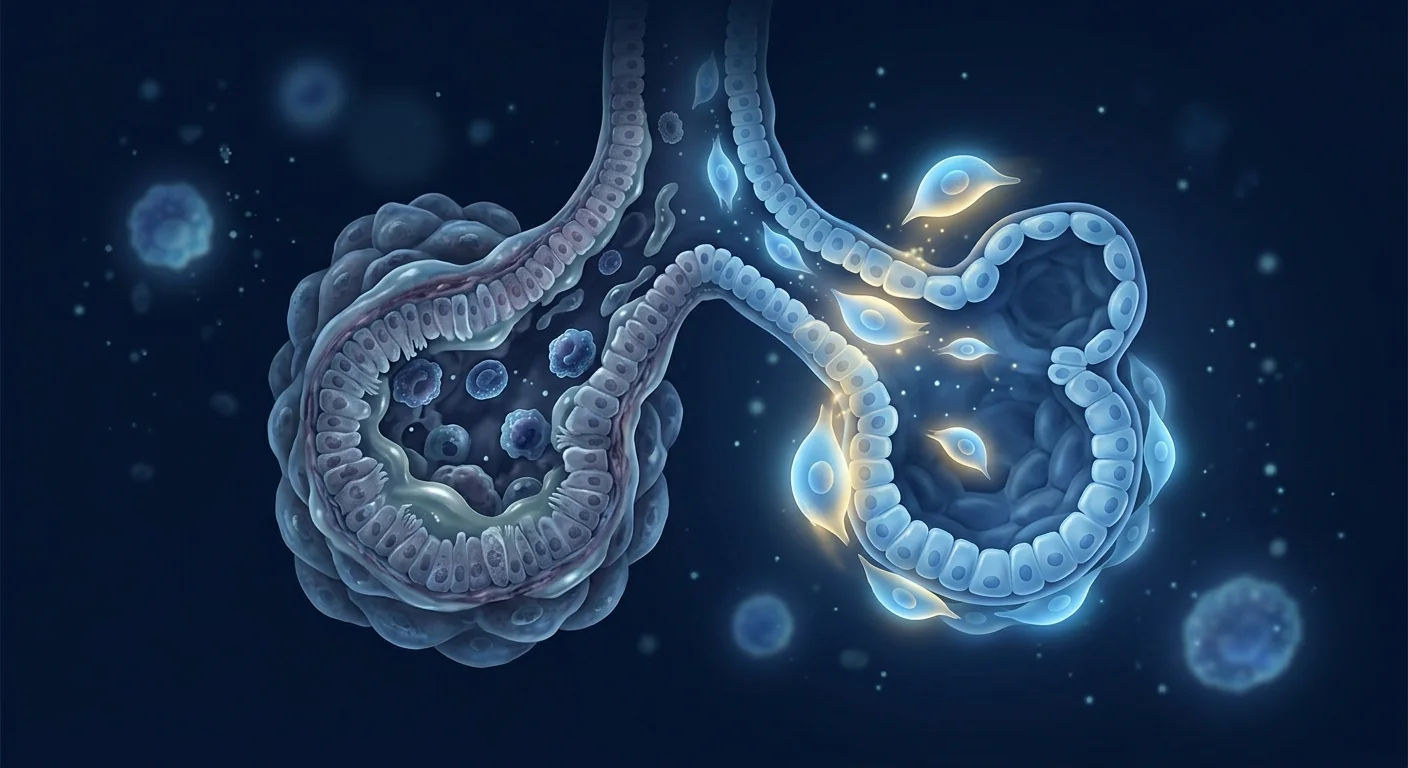
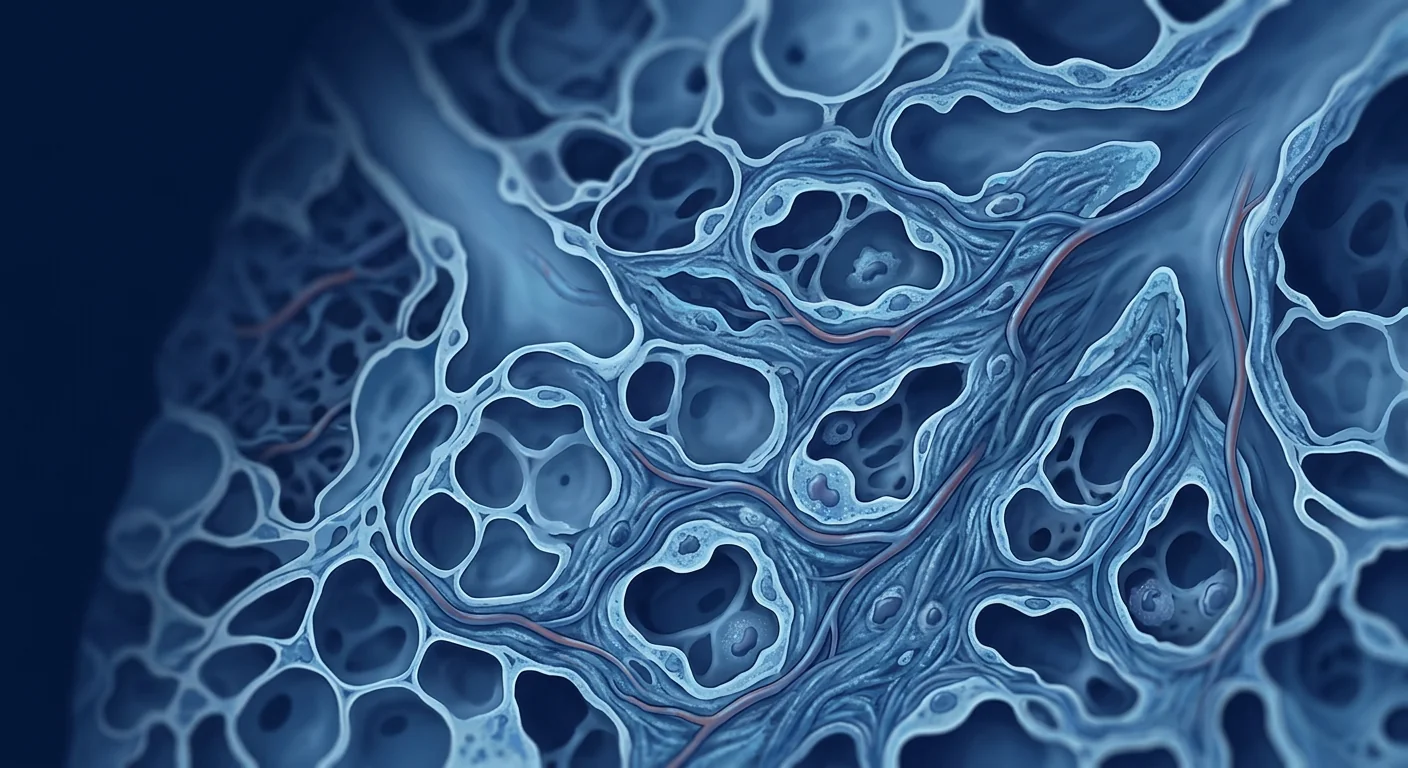
COPD is really an umbrella term for two overlapping processes. In chronic bronchitis, the airways are persistently inflamed and produce excess mucus, narrowing the passages through which air must move. In emphysema, the walls of the alveoli — the tiny sacs where oxygen enters the blood — break down, merging into larger, floppier spaces that trap air and lose surface area for gas exchange. Driving both is a self-perpetuating cycle of inflammation, oxidative stress, and protease activity, most often set in motion by years of cigarette smoke or other inhaled particles.[1][2][3][4][5][6][7][8][9][10]
Crucially, the adult lung has only a limited ability to rebuild destroyed alveolar tissue. Once the architecture is lost, it does not spontaneously regrow. That is what makes COPD so difficult — and why a therapy that could calm the inflammation and support tissue repair is such an attractive, if still unproven, idea.

Why mesenchymal stem cells are the main candidate
The cells most studied in COPD are mesenchymal stem cells (MSCs), typically sourced from bone marrow, adipose tissue or umbilical cord. They are favoured for two reasons: a reassuring safety record across many trials, and a biological profile that fits the problem. Importantly, MSCs are not expected to transform into large numbers of new lung cells. Their proposed value is paracrine and immunomodulatory — they sense an inflamed environment and respond by secreting signalling molecules that recalibrate it.
In laboratory and animal studies, MSCs have been shown to dampen the activity of pro-inflammatory immune cells, shift the local immune balance toward repair, and reduce levels of inflammatory mediators such as TNF-α and IL-6. They also release growth factors implicated in lung maintenance and repair — including hepatocyte growth factor (HGF), vascular endothelial growth factor (VEGF) and keratinocyte growth factor (KGF) — which can support the survival of alveolar cells and the small blood vessels that serve them. In pre-clinical emphysema models, these effects have translated into reduced inflammation and, in some studies, measurable preservation of lung structure. Whether the same holds true in humans is precisely the open question.
What the human trials actually show
The most important clinical reference point is the early-phase work establishing safety. In a landmark multi-centre, randomised, double-blind, placebo-controlled Phase II trial reported by Weiss and colleagues in 2013, patients with moderate-to-severe COPD received repeated intravenous infusions of an allogeneic bone-marrow MSC product (remestemcel-L, then known as Prochymal). The headline finding was reassuring on the safety front: the infusions were well tolerated, with no serious infusional toxicity. A measurable drop in circulating C-reactive protein — a marker of systemic inflammation — was seen in some patients, consistent with the anti-inflammatory hypothesis. However, the trial did not demonstrate significant improvement in lung function or quality-of-life measures over placebo.
That result captures the state of the field well. Subsequent small Phase I/II studies, including approaches delivering cells directly via bronchoscopy, have largely echoed it: cell therapy for COPD appears safe and feasible, with occasional signals of reduced inflammation, but without yet proving a durable functional benefit. These are early studies, often small and not always controlled — valuable for safety and signal-finding, not confirmation of efficacy.
The honest headline
As of today, no stem cell therapy is an approved, proven treatment that reverses COPD or restores lost lung function. The credible work is happening in early-phase clinical trials that have mainly established safety and are still searching for preliminary signals of benefit. Any clinic presenting COPD stem cell treatment as a reliable cure is going well beyond the evidence.

How outcomes are actually measured
Optimistic stories rarely mention how rigorously benefit has to be demonstrated in COPD. Researchers rely on objective, standardised measures. FEV1 (forced expiratory volume in one second) quantifies how much air a person can forcibly exhale and is the cornerstone of lung-function assessment. The six-minute walk test (6MWT) measures functional exercise capacity — how far someone can walk in six minutes — which maps closely to daily life. The COPD Assessment Test (CAT) captures symptom burden and quality of life from the patient's perspective. A therapy that genuinely works should move these needles in a controlled comparison; so far, cell therapy has not consistently done so.
What the evidence supports — and what it doesn't
The fair summary is nuanced. Across multiple early-phase studies, MSC therapy for COPD has generally appeared safe and well tolerated, which is a real and necessary first step. There are biologically plausible mechanisms and occasional measurable reductions in inflammatory markers. What is missing is the harder evidence: large, randomised, controlled trials showing that a specific cell product produces a consistent, reproducible improvement in lung function, symptoms or survival. Until that exists, the responsible description is investigational — a field with sound rationale and encouraging early safety data, but not yet established efficacy.
- Disease stage and phenotype matter. COPD is heterogeneous; a therapy that helps an inflammation-dominant patient may do little for one whose disease is driven mainly by structural emphysema.
- Delivery and persistence are unresolved. Intravenously infused MSCs are largely trapped in the lung's small vessels but survive only briefly, so how best to dose and deliver them remains an open question.
- Combination approaches are likely. Most researchers expect cells alone will not be enough — pairing them with smoking cessation, pulmonary rehabilitation and optimised medical therapy is essential, and cell-free approaches such as MSC-derived exosomes are now being explored.
COPD is exactly the kind of chronic, progressive condition where false hope does real harm. The most respectful thing we can offer is the truth about where the science stands — and the patience to let rigorous trials answer the questions that anecdotes cannot.
— VELAR Clinical Team
How to evaluate any offer responsibly
If you or someone you love is considering stem cell options for COPD, the diligence is the same that protects against any over-promised treatment. Ask whether the approach is part of a registered clinical trial with ethical oversight. Ask what cell type and source are used, how outcomes such as FEV1, 6MWT and CAT are measured, and on what published evidence the claims rest. Be deeply sceptical of guaranteed results, success-rate percentages without a cited source, or any framing that positions an experimental therapy as a routine cure. A trustworthy provider will describe COPD cell therapy as emerging research — and will never let hope outrun the data.
The VELAR perspective
At VELAR Center, our regenerative work is grounded in conditions where the evidence is more established, and we follow respiratory cell-therapy research closely without overstating it. COPD remains one of the hardest problems in the field, and we believe the only honest way to discuss it is plainly: the rationale is sound, the early-phase safety data are reassuring, the functional benefit is unproven, and it is still investigational. As the controlled evidence matures, we will let that evidence — not enthusiasm — shape anything we ever say about it. If you want an honest conversation about what regenerative medicine can and cannot do today, that is exactly where a responsible consultation begins.
Idiopathic pulmonary fibrosis — what makes it different from COPD
IPF is a distinct — and harder — form of chronic lung disease. Rather than the airway-centric destruction of COPD, IPF is driven by fibrotic remodelling of the lung interstitium: the tissue between air sacs thickens, stiffens, and eventually prevents oxygen from reaching the bloodstream. The diagnosis is made on high-resolution CT and lung biopsy, and the disease is characterised by a patchwork of normal and scarred tissue that spreads inexorably over time.[16]
What distinguishes IPF from every other chronic lung condition is its progressive fibrosis. Unlike COPD, where inflammation and airway remodelling can be partially controlled, IPF lung tissue tends to enter a self-sustaining fibrotic cycle — even after the original trigger (infection, smoking, environmental exposure) has resolved. Current antifibrotic drugs (nintedanib, pirfenidone) slow decline but do not reverse established scar. This is where MSCs have attracted interest: their ability to downregulate pro-fibrotic cytokines (TGF-β, PDGF), shift macrophages from the fibrosis-promoting M1 phenotype to the reparative M2 phenotype, and secrete matrix metalloproteinases that help break down excess extracellular matrix.[17]
Key IPF mechanisms targeted by MSCs
- TGF-β / Smad pathway suppression. TGF-β is the master pro-fibrotic cytokine; MSCs reduce its expression and downstream signalling in fibroblasts.
- M1→M2 macrophage polarization. Switching lung-resident macrophages from a pro-fibrotic to a pro-repair state reduces ongoing ECM accumulation.
- Anti-apoptotic effects on alveolar epithelial cells. Protecting Type I and Type II alveolar cells from fibrosis-induced death preserves gas-exchange surface area.
- Extracellular matrix modulation. Balanced MMP/TIMP expression helps remodel accumulated collagen rather than allowing unchecked deposition.
IPF clinical trials — what has been tested
Several early-phase clinical trials have tested MSC therapy in IPF, most using intravenous allogeneic mesenchymal stem cells. The results have been cautiously positive:[18]
In a 2018 Phase I trial (NCT02518030), 15 patients with mild-to-moderate IPF received up to three intravenous infusions of allogeneic MSCs over 12 weeks. The treatment was well tolerated, with no serious adverse events attributable to the infusions. Six-month 6-minute walk distance (6MWD) improved by a mean of 38.6 metres — a clinically meaningful change. Six-minute walk distance is a standard functional outcome measure in IPF, and improvements of 20-30 metres are considered clinically important.[19]
A subsequent Phase I/II trial (NCT03219626) extended these findings with a larger cohort. Patients receiving intravenous MSCs showed slower decline in forced vital capacity (FVC) compared with historical controls, and some patients demonstrated actual improvements in FVC and DLCO (the measure of gas exchange across the alveolar-capillary membrane). These functional gains, combined with the safety profile, suggest that MSC therapy may offer a modicum of benefit in selected IPF patients — though the evidence is not yet definitive.[20]
How IPF outcomes are measured
The two primary functional measures in IPF trials are forced vital capacity (FVC) — the total volume of air a person can forcibly exhale after a maximal inhalation — and the 6-minute walk distance (6MWD), which maps functional exercise capacity to daily life. Secondary measures include the diffusing capacity of the lung for carbon monoxide (DLCO), modified MRC dyspnoea scale, and patient-reported quality-of-life instruments such as the St. George's Respiratory Questionnaire (SGRQ). A therapy that genuinely modifies IPF should demonstrate benefit across at least two of these measures.[21]
What the evidence supports for IPF
The current evidence landscape for MSC therapy in IPF can be summarised honestly:
- Safety is established. Across multiple early-phase trials, intravenous allogeneic MSCs have been well tolerated with no serious infusional toxicity.
- Functional signals are promising but preliminary. Improvements in 6MWD and stabilisation of FVC have been reported, but results come from small, uncontrolled studies.
- The mechanism is biologically plausible. MSCs target the key fibrotic pathways (TGF-β, M1→M2 shift, ECM modulation) that drive IPF progression.
- Large randomised trials are still needed. No phase III randomised controlled trial has confirmed efficacy. Until that evidence exists, IPF cell therapy remains investigational.
IPF is the progressive, relentlessly fibrotic end of the lung-disease spectrum. A therapy that can calm the fibrotic drive and preserve lung architecture — even modestly — is genuinely promising. The evidence so far is encouraging, but not yet conclusive.
— VELAR Clinical Team
How to evaluate any IPF offer responsibly
If you are considering stem cell therapy for IPF, the diligence protects you from both over-promising and under-investing. Ask whether the clinic measures FVC, 6MWD, and DLCO at baseline and at follow-up intervals. Ask what cell source and dose are used, whether the product has an established safety record, and whether outcomes are tracked with validated instruments (SGRQ, mMRC). Be sceptical of clinics claiming to "reverse" IPF or promising specific survival benefits from a single course of treatment — IPF fibrosis does not disappear in weeks, and any meaningful effect would be visible over months.
The VELAR perspective
IPF is one of the conditions where the mechanistic rationale for MSC therapy is arguably the strongest of all respiratory indications — the fibrotic pathways targeted by MSCs are the very pathways that drive disease progression. VELAR follows IPF research closely and recognises it as a genuinely promising area, though one that requires larger trials before definitive claims can be made. For patients with mild-to-moderate IPF who have not responded adequately to antifibrotic therapy, an MSC-based approach represents a reasonable, evidence-aligned option to discuss with their pulmonologist.
References- Uccelli A, Moretta L, Pistoia V. Mesenchymal stem cells in health and disease. Nature Reviews Immunology. 2008;8(9):726-736. doi:10.1038/nri2395 ↩
- Shi Y, Wang Y, Li Q, et al. Immunoregulatory mechanisms of mesenchymal stem and stromal cells in inflammatory diseases. Nature Reviews Nephrology. 2018;14(8):493-507. doi:10.1038/s41581-018-0023-5 ↩
- Spees JL, Lee RH, Gregory CA. Mechanisms of mesenchymal stem/stromal cell function. Stem Cell Research & Therapy. 2016;7(1):125. doi:10.1186/s13287-016-0363-7 ↩
- Galipeau J, Sensébé L. Mesenchymal stromal cells: clinical challenges and therapeutic opportunities. Cell Stem Cell. 2018;22(6):824-833. doi:10.1016/j.stem.2018.05.004 ↩
- Pittenger MF, Discher DE, Péault BM, Phinney DG, Hare JM, Caplan AI. Mesenchymal stem cell perspective: cell biology to clinical progress. NPJ Regenerative Medicine. 2019;4:22. doi:10.1038/s41536-019-0083-6 ↩
- Caplan AI. Mesenchymal stem cells: time to change the name! Stem Cells Translational Medicine. 2017;6(6):1445-1451. doi:10.1002/sctm.17-0051 ↩
- Dominici M, Le Blanc K, Mueller I, et al. Minimal criteria for defining multipotent mesenchymal stromal cells. Cytotherapy. 2006;8(4):315-317. doi:10.1080/14653240600855905 ↩
- Lalu MM, McIntyre L, Pugliese C, et al. Safety of cell therapy with mesenchymal stromal cells (SafeCell): a systematic review and meta-analysis. PLoS One. 2012;7(10):e47559. doi:10.1371/journal.pone.0047559 ↩
- Naji A, Eitoku M, Favier B, Deschaseaux F, Rouas-Freiss N, Suganuma N. Biological functions of mesenchymal stem cells and clinical implications. Cellular and Molecular Life Sciences. 2019;76(17):3323-3348. doi:10.1007/s00018-019-03125-1 ↩
- Bronckaers A, Hilkens P, Martens W, et al. Mesenchymal stem/stromal cells as a pharmacological and therapeutic approach to accelerate angiogenesis. Pharmacology & Therapeutics. 2014;143(2):181-196. doi:10.1016/j.pharmthera.2014.02.013 ↩
- Weiss DJ, Casaburi R, Flannery R, et al. A placebo-controlled, randomized trial of mesenchymal stem cells in COPD. Chest. 2013;143(6):1590-1598. doi:10.1378/chest.12-2094 ↩
- Stolk J, Broekman W, Mauad T, et al. A phase I study for intravenous autologous mesenchymal stromal cell administration to patients with severe emphysema. QJM. 2016;109(5):331-336. doi:10.1093/qjmed/hcw001 ↩
- de Oliveira HG, Cruz FF, Antunes MA, et al. Combined bone marrow-derived mesenchymal stromal cell therapy and one-way endobronchial valve placement in patients with pulmonary emphysema. Stem Cells Translational Medicine. 2017;6(3):962-969. doi:10.5966/sctm.2016-0315 ↩
- Le Thi Bich P, Nguyen Thi H, Nguyen Dang K, et al. Allogeneic umbilical cord-derived mesenchymal stem cell transplantation for treating chronic obstructive pulmonary disease. Stem Cells Translational Medicine. 2020;9(11):1312-1321. doi:10.1002/sctm.20-0053 ↩
- Cruz FF, Rocco PRM. The potential of mesenchymal stem cell therapy for chronic lung disease. Expert Review of Respiratory Medicine. 2020;14(1):31-39. doi:10.1080/17476348.2020.1679628 ↩
参考文献
- Uccelli A, Moretta L, Pistoia V. Mesenchymal stem cells in health and disease. Nature Reviews Immunology. 2008;8(9):726-736. doi:10.1038/nri2395 ↩
- Shi Y, Wang Y, Li Q, et al. Immunoregulatory mechanisms of mesenchymal stem and stromal cells in inflammatory diseases. Nature Reviews Nephrology. 2018;14(8):493-507. doi:10.1038/s41581-018-0023-5 ↩
- Spees JL, Lee RH, Gregory CA. Mechanisms of mesenchymal stem/stromal cell function. Stem Cell Research & Therapy. 2016;7(1):125. doi:10.1186/s13287-016-0363-7 ↩
- Galipeau J, Sensébé L. Mesenchymal stromal cells: clinical challenges and therapeutic opportunities. Cell Stem Cell. 2018;22(6):824-833. doi:10.1016/j.stem.2018.05.004 ↩
- Pittenger MF, Discher DE, Péault BM, Phinney DG, Hare JM, Caplan AI. Mesenchymal stem cell perspective: cell biology to clinical progress. NPJ Regenerative Medicine. 2019;4:22. doi:10.1038/s41536-019-0083-6 ↩
- Caplan AI. Mesenchymal stem cells: time to change the name! Stem Cells Translational Medicine. 2017;6(6):1445-1451. doi:10.1002/sctm.17-0051 ↩
- Dominici M, Le Blanc K, Mueller I, et al. Minimal criteria for defining multipotent mesenchymal stromal cells. Cytotherapy. 2006;8(4):315-317. doi:10.1080/14653240600855905 ↩
- Lalu MM, McIntyre L, Pugliese C, et al. Safety of cell therapy with mesenchymal stromal cells (SafeCell): a systematic review and meta-analysis. PLoS One. 2012;7(10):e47559. doi:10.1371/journal.pone.0047559 ↩
- Naji A, Eitoku M, Favier B, Deschaseaux F, Rouas-Freiss N, Suganuma N. Biological functions of mesenchymal stem cells and clinical implications. Cellular and Molecular Life Sciences. 2019;76(17):3323-3348. doi:10.1007/s00018-019-03125-1 ↩
- Bronckaers A, Hilkens P, Martens W, et al. Mesenchymal stem/stromal cells as a pharmacological and therapeutic approach to accelerate angiogenesis. Pharmacology & Therapeutics. 2014;143(2):181-196. doi:10.1016/j.pharmthera.2014.02.013 ↩
- Weiss DJ, Casaburi R, Flannery R, et al. A placebo-controlled, randomized trial of mesenchymal stem cells in COPD. Chest. 2013;143(6):1590-1598. doi:10.1378/chest.12-2094 ↩
- Stolk J, Broekman W, Mauad T, et al. A phase I study for intravenous autologous mesenchymal stromal cell administration to patients with severe emphysema. QJM. 2016;109(5):331-336. doi:10.1093/qjmed/hcw001 ↩
- de Oliveira HG, Cruz FF, Antunes MA, et al. Combined bone marrow-derived mesenchymal stromal cell therapy and one-way endobronchial valve placement in patients with pulmonary emphysema. Stem Cells Translational Medicine. 2017;6(3):962-969. doi:10.5966/sctm.2016-0315 ↩
- Le Thi Bich P, Nguyen Thi H, Nguyen Dang K, et al. Allogeneic umbilical cord-derived mesenchymal stem cell transplantation for treating chronic obstructive pulmonary disease. Stem Cells Translational Medicine. 2020;9(11):1312-1321. doi:10.1002/sctm.20-0053 ↩
- Cruz FF, Rocco PRM. The potential of mesenchymal stem cell therapy for chronic lung disease. Expert Review of Respiratory Medicine. 2020;14(1):31-39. doi:10.1080/17476348.2020.1679628 ↩
慢性阻塞性肺疾病(COPD)是全球致残与致死的主要原因之一。这是一种进行性疾病,气道发生慢性炎症,肺部脆弱的气囊逐渐被破坏,使患者日益气短。现有治疗——支气管扩张剂、吸入性激素、氧疗与肺康复——可缓解症状并减缓恶化,但都无法逆转潜在的组织损伤。正是这一缺口,干细胞研究希望去填补。然而,要理解什么是现实的,就必须把真正的科学与常常环绕其周围的营销区分开来。
COPD 的肺出了什么问题
COPD 实际上是两种相互重叠过程的统称。在慢性支气管炎中,气道持续发炎并分泌过多黏液,使空气必须通过的通道变窄。在肺气肿中,肺泡——氧气进入血液的微小气囊——的壁发生破坏,融合成更大、更松弛的空间,滞留空气并丧失气体交换的表面积。驱动两者的是炎症、氧化应激与蛋白酶活性构成的自我延续循环,多由多年的香烟烟雾或其他吸入颗粒所引发。
关键在于,成人肺重建被破坏的肺泡组织的能力非常有限。一旦结构丧失,它不会自发再生。这正是 COPD 如此棘手的原因——也是一种能平息炎症并支持组织修复的疗法,何以成为如此诱人却仍未证实的设想。
为何间充质干细胞是主要候选
在 COPD 中研究最多的细胞是间充质干细胞(MSC),通常取自骨髓、脂肪组织或脐带。它们受青睐有两个原因:在众多试验中令人放心的安全记录,以及契合该问题的生物学特性。重要的是,人们并不期望 MSC 转变为大量新的肺细胞。其被提出的价值在于旁分泌与免疫调节——它们感知发炎的环境,并以分泌信号分子来重新校准它作为回应。
在实验室与动物研究中,MSC 已被证明能抑制促炎免疫细胞的活性,将局部免疫平衡转向修复,并降低 TNF-α 与 IL-6 等炎症介质的水平。它们还释放与肺维持及修复相关的生长因子——包括肝细胞生长因子(HGF)、血管内皮生长因子(VEGF)与角质细胞生长因子(KGF)——可支持肺泡细胞及为其供血的小血管的存活。在临床前肺气肿模型中,这些效应转化为炎症减轻,并在一些研究中带来可测量的肺结构保留。这是否同样适用于人体,正是悬而未决的问题。
人体试验究竟显示了什么
最重要的临床参照点是确立安全性的早期工作。在 Weiss 及其同事于 2013 年报告的一项具有里程碑意义的多中心、随机、双盲、安慰剂对照II 期试验中,中度至重度 COPD 患者接受了异体骨髓 MSC 产品(remestemcel-L,当时称为 Prochymal)的反复静脉输注。其主要发现在安全性方面令人放心:输注耐受良好,无严重输注毒性。部分患者出现循环 C 反应蛋白——一种全身炎症标志物——的可测量下降,与抗炎假说一致。然而,该试验并未证明肺功能或生活质量指标相较安慰剂有显著改善。
这一结果很好地概括了该领域的现状。随后的小型 I/II 期研究,包括通过支气管镜直接递送细胞的方法,大体上呼应了它:COPD 的细胞疗法显得安全且可行,偶有炎症减轻的信号,但尚未证明持久的功能获益。这些都是早期研究,往往规模小且并非总有对照——对安全性与信号发现有价值,而非疗效确认。
诚实的标题
截至今日,没有任何干细胞疗法是已获批准、经证实能够逆转 COPD 或恢复丧失肺功能的治疗。可信的工作正在早期临床试验中进行,这些试验主要确立了安全性,并仍在寻找初步的获益信号。任何将 COPD 干细胞治疗呈现为可靠治愈的诊所,都已远远超出了证据。
结果究竟如何衡量
乐观的故事很少提及在 COPD 中必须多么严格地证明获益。研究人员依赖客观、标准化的衡量指标。FEV1(一秒用力呼气量)量化一个人能用力呼出多少空气,是肺功能评估的基石。六分钟步行测试(6MWT)衡量功能性运动能力——一个人六分钟内能走多远——这与日常生活密切相关。COPD 评估测试(CAT)从患者视角捕捉症状负担与生活质量。一种真正有效的疗法应当在对照比较中改变这些指标;迄今为止,细胞疗法尚未一致地做到这一点。
证据支持什么——又不支持什么
公允的总结是细致入微的。在多项早期研究中,COPD 的 MSC 疗法总体上显得安全且耐受良好,这是真实且必要的第一步。存在生物学上合理的机制,以及偶尔可测量的炎症标志物下降。所缺失的是更有力的证据:大型、随机、有对照的试验,证明某种特定细胞产品能在肺功能、症状或生存方面产生一致、可重复的改善。在此之前,负责任的描述是研究性的——一个理据充分、早期安全数据令人鼓舞、但尚未确立疗效的领域。
- 疾病分期与表型有别。COPD 是异质性的;对以炎症为主的患者有帮助的疗法,对主要由结构性肺气肿驱动的患者可能作用甚微。
- 递送与存留尚未解决。静脉输注的 MSC 大多被困在肺的小血管中,但仅短暂存活,因此如何最佳给药与递送仍是悬而未决的问题。
- 联合方法可能是必需的。多数研究人员预期单靠细胞并不足够——将其与戒烟、肺康复及优化的药物治疗相结合至关重要,无细胞方法(如 MSC 来源的外泌体)现也正在被探索。
COPD 恰恰是那种虚假希望会造成真实伤害的慢性进行性疾病。我们能给予的最尊重的态度,是关于科学现状的真相——以及让严谨试验回答轶事无法回答之问题的耐心。
— VELAR 临床团队
如何负责任地评估任何提议
如果您或您所爱之人正在考虑 COPD 的干细胞选择,所需的审慎与防范任何被过度承诺之治疗的审慎相同。询问该方法是否属于受伦理监督的注册临床试验。询问使用何种细胞类型与来源、如何衡量 FEV1、6MWT 与 CAT 等结果,以及这些声称建立在何种已发表证据之上。对保证的结果、没有引用来源的成功率百分比,或任何将实验性疗法定位为常规治愈的表述,都要深度怀疑。值得信赖的提供者会将 COPD 细胞疗法描述为新兴研究——且绝不会让希望超越数据。
VELAR 的观点
在 VELAR 中心,我们的再生工作立足于证据更为确立的适应症,我们密切关注呼吸系统细胞疗法研究而不夸大其词。COPD 仍是该领域最棘手的难题之一,我们相信讨论它唯一诚实的方式就是直白:理据充分,早期安全数据令人放心,功能获益尚未证实,而它仍处于研究阶段。随着对照证据的成熟,我们将让证据——而非热情——塑造我们对它所说的一切。如果您想就再生医学今天能做什么、不能做什么进行一次诚实的对话,那正是负责任咨询的起点。
المراجع
- Uccelli A, Moretta L, Pistoia V. Mesenchymal stem cells in health and disease. Nature Reviews Immunology. 2008;8(9):726-736. doi:10.1038/nri2395 ↩
- Shi Y, Wang Y, Li Q, et al. Immunoregulatory mechanisms of mesenchymal stem and stromal cells in inflammatory diseases. Nature Reviews Nephrology. 2018;14(8):493-507. doi:10.1038/s41581-018-0023-5 ↩
- Spees JL, Lee RH, Gregory CA. Mechanisms of mesenchymal stem/stromal cell function. Stem Cell Research & Therapy. 2016;7(1):125. doi:10.1186/s13287-016-0363-7 ↩
- Galipeau J, Sensébé L. Mesenchymal stromal cells: clinical challenges and therapeutic opportunities. Cell Stem Cell. 2018;22(6):824-833. doi:10.1016/j.stem.2018.05.004 ↩
- Pittenger MF, Discher DE, Péault BM, Phinney DG, Hare JM, Caplan AI. Mesenchymal stem cell perspective: cell biology to clinical progress. NPJ Regenerative Medicine. 2019;4:22. doi:10.1038/s41536-019-0083-6 ↩
- Caplan AI. Mesenchymal stem cells: time to change the name! Stem Cells Translational Medicine. 2017;6(6):1445-1451. doi:10.1002/sctm.17-0051 ↩
- Dominici M, Le Blanc K, Mueller I, et al. Minimal criteria for defining multipotent mesenchymal stromal cells. Cytotherapy. 2006;8(4):315-317. doi:10.1080/14653240600855905 ↩
- Lalu MM, McIntyre L, Pugliese C, et al. Safety of cell therapy with mesenchymal stromal cells (SafeCell): a systematic review and meta-analysis. PLoS One. 2012;7(10):e47559. doi:10.1371/journal.pone.0047559 ↩
- Naji A, Eitoku M, Favier B, Deschaseaux F, Rouas-Freiss N, Suganuma N. Biological functions of mesenchymal stem cells and clinical implications. Cellular and Molecular Life Sciences. 2019;76(17):3323-3348. doi:10.1007/s00018-019-03125-1 ↩
- Bronckaers A, Hilkens P, Martens W, et al. Mesenchymal stem/stromal cells as a pharmacological and therapeutic approach to accelerate angiogenesis. Pharmacology & Therapeutics. 2014;143(2):181-196. doi:10.1016/j.pharmthera.2014.02.013 ↩
- Weiss DJ, Casaburi R, Flannery R, et al. A placebo-controlled, randomized trial of mesenchymal stem cells in COPD. Chest. 2013;143(6):1590-1598. doi:10.1378/chest.12-2094 ↩
- Stolk J, Broekman W, Mauad T, et al. A phase I study for intravenous autologous mesenchymal stromal cell administration to patients with severe emphysema. QJM. 2016;109(5):331-336. doi:10.1093/qjmed/hcw001 ↩
- de Oliveira HG, Cruz FF, Antunes MA, et al. Combined bone marrow-derived mesenchymal stromal cell therapy and one-way endobronchial valve placement in patients with pulmonary emphysema. Stem Cells Translational Medicine. 2017;6(3):962-969. doi:10.5966/sctm.2016-0315 ↩
- Le Thi Bich P, Nguyen Thi H, Nguyen Dang K, et al. Allogeneic umbilical cord-derived mesenchymal stem cell transplantation for treating chronic obstructive pulmonary disease. Stem Cells Translational Medicine. 2020;9(11):1312-1321. doi:10.1002/sctm.20-0053 ↩
- Cruz FF, Rocco PRM. The potential of mesenchymal stem cell therapy for chronic lung disease. Expert Review of Respiratory Medicine. 2020;14(1):31-39. doi:10.1080/17476348.2020.1679628 ↩
داء الانسداد الرئوي المزمن (COPD) من أبرز أسباب العجز والوفاة في العالم. وهو اضطراب تقدّمي تلتهب فيه المجاري الهوائية التهاباً مزمناً وتُدمَّر تدريجياً الحويصلات الهوائية الرقيقة في الرئة، فيزداد ضيق نفَس المريض. وتستطيع العلاجات الحالية — موسّعات الشُّعَب وأدوية الستيرويد المستنشقة والأكسجين والتأهيل الرئوي — تخفيف الأعراض وإبطاء التدهور، لكن أياً منها لا يعكس الضرر النسيجي الكامن. وهذه الفجوة بالذات هي ما تأمل أبحاث الخلايا الجذعية في معالجته. لكن فهم ما هو واقعي يتطلب فصل العلم الحقيقي عن التسويق الذي كثيراً ما يحيط به.
ما الخلل الذي يصيب الرئة في COPD
COPD في الحقيقة مصطلح جامع لعمليتين متداخلتين. في التهاب الشُّعَب المزمن، تلتهب المجاري الهوائية باستمرار وتفرز مخاطاً زائداً، فتضيق الممرات التي يجب أن يمر الهواء عبرها. وفي النفاخ الرئوي، تتحلل جدران الحويصلات — الأكياس الدقيقة حيث يدخل الأكسجين إلى الدم — فتندمج في مساحات أكبر وأكثر ترهلاً تحبس الهواء وتفقد مساحة سطح التبادل الغازي. ويحرّك كليهما حلقة ذاتية الاستدامة من الالتهاب والإجهاد التأكسدي ونشاط الأنزيمات الحالّة للبروتين، تبدأ غالباً بسنوات من دخان السجائر أو جسيمات مستنشقة أخرى.
والمهم أن قدرة رئة البالغ على إعادة بناء النسيج الحويصلي المدمَّر محدودة فقط. فمتى فُقدت البنية، لا تنمو من جديد تلقائياً. وهذا ما يجعل COPD عسيراً جداً — ولماذا يكون علاج قادر على تهدئة الالتهاب ودعم إصلاح النسيج فكرة جذّابة جداً وإن ظلت غير مثبتة.
لماذا الخلايا الجذعية الوسيطة هي المرشّح الرئيسي
أكثر الخلايا دراسةً في COPD هي الخلايا الجذعية الوسيطة (MSCs)، التي تُؤخذ عادةً من نخاع العظم أو النسيج الدهني أو الحبل السري. وتُفضَّل لسببين: سجل أمان مطمئن عبر تجارب كثيرة، وملمح بيولوجي يناسب المشكلة. والمهم أنه لا يُتوقع من هذه الخلايا أن تتحول إلى أعداد كبيرة من خلايا رئوية جديدة. فقيمتها المقترحة شبه صمّاوية ومناعية تعديلية — إذ تستشعر البيئة الملتهبة وتستجيب بإفراز جزيئات إشارية تعيد ضبطها.
في الدراسات المختبرية والحيوانية، تبيّن أن MSCs تخفف نشاط الخلايا المناعية المحرّضة للالتهاب، وتحوّل التوازن المناعي المحلي نحو الإصلاح، وتخفض مستويات وسائط التهابية مثل TNF-α وIL-6. كما تطلق عوامل نمو متورطة في صيانة الرئة وإصلاحها — منها عامل نمو الخلايا الكبدية (HGF) وعامل نمو بطانة الأوعية (VEGF) وعامل نمو الخلايا الكيراتينية (KGF) — وهي تدعم بقاء الخلايا الحويصلية والأوعية الدموية الصغيرة التي تغذّيها. وفي نماذج النفاخ قبل السريرية، ترجمت هذه التأثيرات إلى التهاب أقل، وفي بعض الدراسات إلى حفظ قابل للقياس لبنية الرئة. وهل ينطبق ذلك نفسه على البشر؟ هذا تحديداً هو السؤال المفتوح.
ماذا تُظهر التجارب البشرية فعلياً
أهم مرجع سريري هو العمل المبكر الطور المثبِت للأمان. ففي تجربة من المرحلة الثانية ذات أهمية مرجعية، متعددة المراكز وعشوائية ومزدوجة التعمية ومضبوطة بالغُفل، أبلغ عنها Weiss وزملاؤه عام 2013، تلقى مرضى COPD متوسط إلى شديد حقناً وريدية متكررة لمنتج MSC خيفي من نخاع العظم (remestemcel-L، المعروف آنذاك باسم Prochymal). وكانت النتيجة الأبرز مطمئنة من حيث الأمان: تحمّل المرضى الحقن جيداً دون سمية حقن خطيرة. وشوهد لدى بعضهم انخفاض قابل للقياس في البروتين التفاعلي C — وهو مؤشر التهاب جهازي — بما يتسق مع فرضية مضادات الالتهاب. لكن التجربة لم تُظهر تحسناً ذا دلالة في وظائف الرئة أو مقاييس جودة الحياة مقارنةً بالغُفل.
وتلخّص هذه النتيجة حال المجال جيداً. وقد ردّدت دراسات لاحقة صغيرة من المرحلتين I/II، بما فيها مناهج توصل الخلايا مباشرةً عبر تنظير القصبات، الأمرَ نفسه إلى حد بعيد: يبدو العلاج الخلوي في COPD آمناً وقابلاً للتطبيق، مع إشارات عرضية لانخفاض الالتهاب، لكن من دون إثبات فائدة وظيفية دائمة بعد. وهذه دراسات مبكرة، غالباً صغيرة وليست دائماً مضبوطة — قيّمة للأمان واستكشاف الإشارة، لا لتأكيد الفاعلية.
العنوان الصادق
حتى اليوم، لا يوجد علاج بالخلايا الجذعية معتمد ومُثبت يعكس COPD أو يستعيد وظيفة الرئة المفقودة. العمل الموثوق يجري في تجارب سريرية مبكرة الطور أثبتت الأمان أساساً ولا تزال تبحث عن إشارات أولية للفائدة. وأي عيادة تقدّم علاج COPD بالخلايا الجذعية كشفاء موثوق تتجاوز الأدلة بكثير.
كيف تُقاس النتائج فعلياً
نادراً ما تذكر القصص المتفائلة مدى الصرامة المطلوبة لإثبات الفائدة في COPD. ويعتمد الباحثون على مقاييس موضوعية وموحّدة. فـFEV1 (حجم الزفير القسري في الثانية الأولى) يقيس كمية الهواء التي يستطيع الشخص زفرها بقوة، وهو حجر الأساس في تقييم وظائف الرئة. ويقيس اختبار المشي لست دقائق (6MWT) القدرة الوظيفية على بذل الجهد — كم يستطيع المرء أن يمشي في ست دقائق — وهو يرتبط ارتباطاً وثيقاً بالحياة اليومية. ويلتقط اختبار تقييم COPD (CAT) عبء الأعراض وجودة الحياة من منظور المريض. والعلاج الفعّال حقاً يُفترض أن يحرّك هذه المؤشرات في مقارنة مضبوطة؛ وحتى الآن لم يفعل العلاج الخلوي ذلك على نحو متسق.
ما تدعمه الأدلة — وما لا تدعمه
الخلاصة المنصفة دقيقة. عبر دراسات متعددة مبكرة الطور، بدا علاج MSC في COPD بوجه عام آمناً وجيد التحمّل، وهي خطوة أولى حقيقية وضرورية. وثمة آليات معقولة بيولوجياً وانخفاضات قابلة للقياس أحياناً في مؤشرات الالتهاب. والمفقود هو الدليل الأقوى: تجارب كبيرة وعشوائية ومضبوطة تثبت أن منتجاً خلوياً محدداً يحقق تحسناً متسقاً وقابلاً للتكرار في وظائف الرئة أو الأعراض أو البقاء. وإلى أن يتوفر ذلك، فالوصف المسؤول هو بحثي تجريبي — مجال ذو أساس منطقي سليم وبيانات أمان مبكرة مشجعة، لكن من دون فاعلية راسخة بعد.
- مرحلة المرض ونمطه الظاهري مهمّان. COPD غير متجانس؛ فعلاج يفيد مريضاً يغلب عليه الالتهاب قد لا يجدي كثيراً مع مريض يقوده النفاخ البنيوي بالأساس.
- الإيصال والبقاء لم يُحلّا. الخلايا المحقونة وريدياً تُحتجز إلى حد بعيد في الأوعية الصغيرة للرئة لكنها لا تبقى حية إلا لفترة قصيرة، فتبقى أفضل طريقة للجرعة والإيصال سؤالاً مفتوحاً.
- المناهج التوليفية مرجّحة. يتوقع معظم الباحثين أن الخلايا وحدها لن تكفي — فإقرانها بالإقلاع عن التدخين والتأهيل الرئوي والعلاج الدوائي الأمثل ضروري، وتُستكشف الآن مناهج خالية من الخلايا مثل الحويصلات الخارجية المشتقة من MSC.
COPD هو بالضبط نوع الحالات المزمنة التقدّمية التي يسبب فيها الأمل الزائف ضرراً حقيقياً. وأكثر ما يمكننا تقديمه احتراماً هو الحقيقة عن موضع العلم — والصبر لندع التجارب الصارمة تجيب عن الأسئلة التي لا تستطيع الروايات الإجابة عنها.
— الفريق السريري في VELAR
كيف تقيّم أي عرض بمسؤولية
إذا كنت أنت أو شخص تحبه يفكر في خيارات الخلايا الجذعية لـ COPD، فالعناية المطلوبة هي نفسها التي تحمي من أي علاج مبالغ في الوعد به. اسأل عما إذا كان النهج جزءاً من تجربة سريرية مسجّلة تخضع لإشراف أخلاقي. اسأل عن نوع الخلايا المستخدم ومصدرها، وكيف تُقاس نتائج مثل FEV1 و6MWT وCAT، وعلى أي دليل منشور تستند الادعاءات. وكن شديد الشك تجاه النتائج المضمونة، أو نسب نجاح بلا مصدر مذكور، أو أي صياغة تضع علاجاً تجريبياً في موضع الشفاء الروتيني. سيصف المزوّد الموثوق العلاج الخلوي لـ COPD بوصفه بحثاً ناشئاً — ولن يدع الأمل يتجاوز البيانات أبداً.
منظور VELAR
في مركز VELAR، يرتكز عملنا التجديدي على حالات تكون فيها الأدلة أكثر رسوخاً، ونتابع عن كثب أبحاث العلاج الخلوي التنفسي من دون المبالغة فيها. يظل COPD من أصعب المشكلات في المجال، ونؤمن بأن الطريقة الصادقة الوحيدة لمناقشته هي الصراحة: الأساس المنطقي سليم، وبيانات الأمان المبكرة مطمئنة، والفائدة الوظيفية غير مثبتة، وهو لا يزال بحثياً تجريبياً. ومع نضوج الأدلة المضبوطة، سندع تلك الأدلة — لا الحماس — تشكّل أي شيء نقوله عنه يوماً. وإذا أردت حواراً صادقاً عما يستطيع الطب التجديدي وما لا يستطيع فعله اليوم، فهذا تحديداً حيث تبدأ الاستشارة المسؤولة.