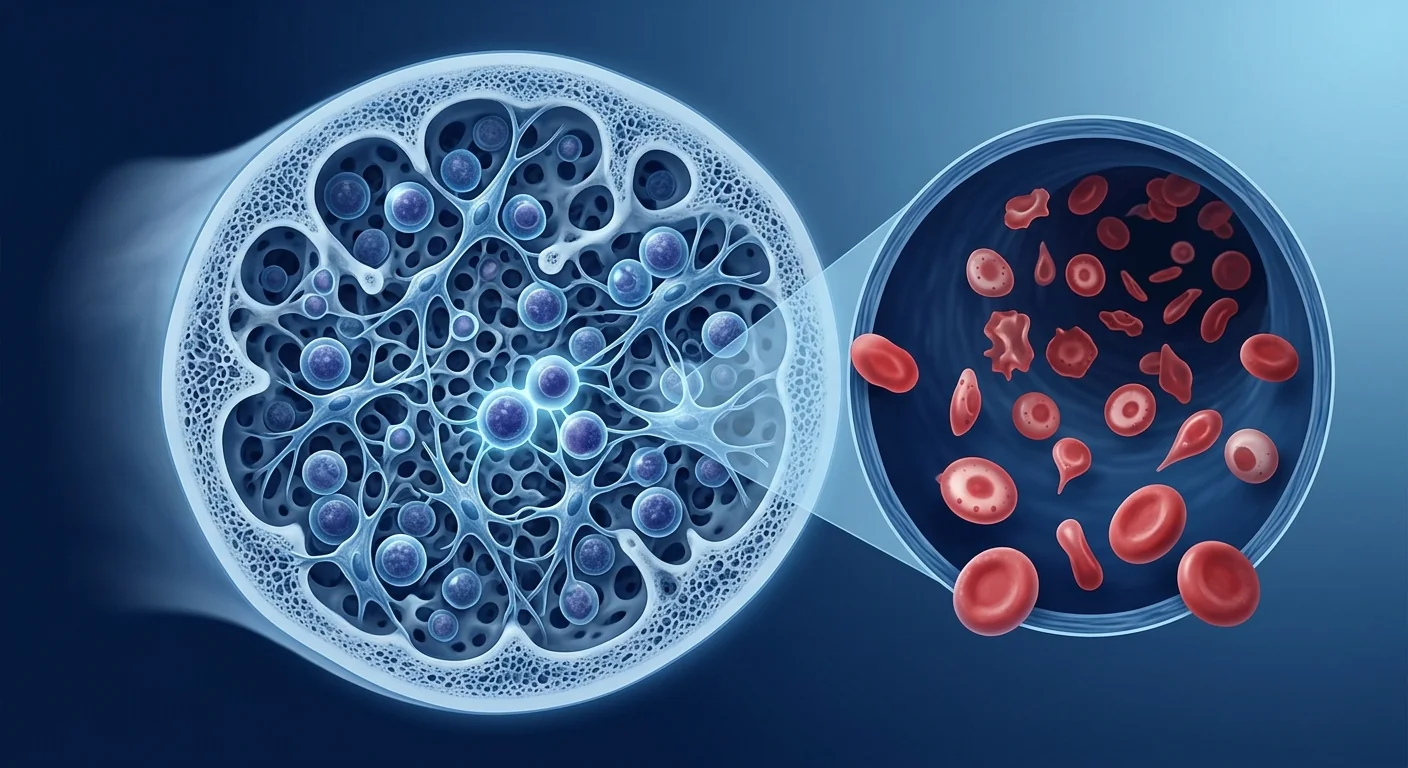
Immune thrombocytopenia (ITP) is an acquired autoimmune bleeding disorder in which the immune system produces anti-platelet autoantibodies — predominantly IgG — that target platelet surface glycoproteins, leading to accelerated platelet destruction in the spleen and impaired platelet production in the bone marrow. With an incidence of 3–5 per 100,000 adults annually and a prevalence exceeding 100,000 cases in the United States alone, ITP imposes a substantial burden of fatigue, bruising, mucosal bleeding, and — in severe cases — intracranial hemorrhage [1].
Where conventional treatments fall short. First-line therapy with corticosteroids achieves an initial response in 60–80% of patients, but sustained remission after tapering occurs in fewer than 30%. Second-line options — rituximab, thrombopoietin receptor agonists (TPO-RAs), and splenectomy — each carry distinct limitations: rituximab offers only a 40–50% five-year sustained response rate; TPO-RAs require indefinite administration and lose efficacy upon discontinuation; and splenectomy carries a 1–2% lifetime risk of overwhelming post-splenectomy sepsis despite vaccination [2]. A significant proportion of patients cycle through multiple therapies without achieving durable, treatment-free remission.
The deeper problem is immune dysregulation at multiple levels. ITP is not simply antibody-mediated platelet destruction. It involves a complex interplay of Th1/Th17 polarization with diminished regulatory T-cell (Treg) function, loss of peripheral tolerance, complement-mediated platelet lysis, CD8+ cytotoxic T-cell-mediated megakaryocyte apoptosis, and impaired thrombopoiesis due to a hostile bone marrow microenvironment [3]. Targeting any single pathway — as conventional therapies do — leaves the broader immune dysregulation intact.
MSC therapy targets multiple pathogenic mechanisms simultaneously. Rather than blocking a single receptor or depleting one cell population, mesenchymal stem cells (MSCs) engage the immune system at multiple checkpoints: they suppress autoreactive T-cell proliferation, restore Treg/Th17 balance, polarize macrophages from a pro-inflammatory M1 phenotype toward a reparative M2 phenotype, inhibit B-cell differentiation and antibody production, and secrete trophic factors — including thrombopoietin (TPO), stromal cell-derived factor-1 (SDF-1), and interleukin-11 — that directly support megakaryocyte maturation and platelet release [4]. This multi-target approach makes MSCs a uniquely compelling candidate for a disease driven by multi-level immune dysregulation.
What Is Immune Thrombocytopenia?
Immune thrombocytopenia is an acquired autoimmune disorder characterized by a platelet count below 100 × 10⁹/L in the absence of other causes of thrombocytopenia. The disease exists on a spectrum: newly diagnosed (0–3 months), persistent (3–12 months), and chronic (>12 months), with chronic ITP representing the greatest therapeutic challenge. Approximately 30–40% of adult patients progress to chronic ITP despite first-line treatment [1].
The pathophysiology involves both peripheral and central mechanisms. Peripherally, anti-GPIIb/IIIa and anti-GPIb/IX autoantibodies opsonize platelets for Fcγ receptor-mediated phagocytosis by splenic and hepatic macrophages. Centrally, the same autoantibodies and autoreactive T cells infiltrate the bone marrow, inducing megakaryocyte apoptosis and impairing proplatelet formation — the process by which mature megakaryocytes extend cytoplasmic projections into sinusoidal vessels to release platelets [5]. This dual mechanism explains why ITP is a disorder of both platelet destruction and platelet underproduction.
Clinically, patients present with petechiae, easy bruising, epistaxis, gingival bleeding, and menorrhagia. Severe thrombocytopenia (platelets <20 × 10⁹/L) carries a risk of spontaneous intracranial hemorrhage estimated at 0.5–1.5% per year — the most feared complication of the disease [6].
How MSC Therapy Helps Immune Thrombocytopenia
Restoring Treg/Th17 balance. The central immunological defect in ITP is a shift from immune tolerance (Treg-dominant) to autoimmunity (Th17-dominant). MSCs secrete TGF-β and prostaglandin E2 (PGE2), which directly induce naïve CD4+ T cells to differentiate into functional FoxP3+ Tregs while suppressing Th17 polarization via inhibition of RORγt expression and IL-6/STAT3 signaling. In a murine ITP model, intravenous infusion of Wharton's jelly-derived MSCs increased the proportion of splenic Tregs from 2.8% to 7.4% and decreased Th17 cells from 3.1% to 1.2%, with a corresponding rise in platelet count from 89 ± 21 × 10⁹/L to 312 ± 47 × 10⁹/L [7].
Suppressing anti-platelet antibody production. MSCs inhibit B-cell proliferation, differentiation into plasma cells, and antibody secretion through both contact-dependent mechanisms (PD-L1/PD-1 axis) and soluble factors (indoleamine 2,3-dioxygenase, hepatocyte growth factor). In vitro co-culture of MSCs with peripheral blood mononuclear cells from ITP patients reduced anti-GPIIb/IIIa antibody production by 62% compared to untreated controls [8]. This is clinically relevant because anti-platelet antibody titers correlate inversely with platelet counts in ITP.
Promoting megakaryopoiesis and platelet release. Beyond immune modulation, MSCs support the bone marrow niche directly. MSCs are the native stromal cells of the hematopoietic niche and secrete SDF-1, stem cell factor (SCF), TPO, and IL-11 — the key cytokines governing megakaryocyte differentiation, maturation, and proplatelet formation. In a rat ITP model, bone marrow-derived MSCs infused intravenously homed to the bone marrow within 24 hours, engrafted in the endosteal niche, and increased the number of mature CD41+/CD61+ megakaryocytes by 2.3-fold compared to untreated controls [9].
Macrophage polarization. Splenic and hepatic macrophages are the primary effectors of platelet destruction in ITP. MSCs reprogram macrophages from a pro-inflammatory M1 phenotype (CD80+, TNF-α+) to an anti-inflammatory, platelet-sparing M2 phenotype (CD163+, IL-10+) through secretion of PGE2 and TSG-6. In a murine ITP model, MSC-treated animals showed a 2.8-fold increase in splenic M2 macrophages, which correlated with a 3.5-fold reduction in platelet clearance rate [10].
Clinical Evidence for MSC Therapy in ITP
The clinical evidence base for MSC therapy in ITP is early-stage but has expanded meaningfully in the past decade. Several open-label studies and case series have reported outcomes in refractory ITP patients who had exhausted conventional options.
Key clinical studies. A 2020 study by Ma et al. treated 12 patients with chronic refractory ITP (median disease duration 8.2 years, median 4 prior therapies) with intravenous umbilical cord-derived MSCs at a dose of 1 × 10⁶ cells/kg, repeated at weeks 1, 2, 4, and 8. At 12 months, 7 of 12 patients (58%) achieved a platelet count >50 × 10⁹/L without rescue therapy, and 5 of 12 (42%) achieved a complete response (platelets >100 × 10⁹/L). The median time to response was 6 weeks, and the median duration of response was 9.5 months. No Grade III–IV adverse events were reported [11].
A 2019 study by Xu et al. evaluated bone marrow-derived MSCs in 18 children with chronic refractory ITP. Patients received 2 × 10⁶ cells/kg intravenously every 2 weeks for 3 doses. At 6 months, 10 of 18 (56%) achieved a response (platelets >30 × 10⁹/L and at least doubling of baseline), and 6 of 18 (33%) achieved complete response (platelets >100 × 10⁹/L). Responders showed a significant increase in peripheral Treg frequency (from 2.1% to 5.8% of CD4+ T cells, p < 0.001) and a decrease in anti-GPIIb/IIIa antibody titers (p = 0.003) [12].
A 2021 meta-analysis aggregated 5 studies totaling 89 patients with refractory ITP treated with MSCs. The pooled overall response rate was 54% (95% CI: 42–66%), and the pooled complete response rate was 31% (95% CI: 21–43%). The only significant predictor of response was disease duration — patients with <3 years from diagnosis showed a 71% response rate versus 38% for >3 years — suggesting that earlier intervention, before irreversible bone marrow niche damage accumulates, may yield better outcomes [13].
Why Consider MSC Therapy for ITP? Potential Benefits
Durable, treatment-free remission. Unlike TPO-RAs, which require daily or weekly dosing indefinitely, or corticosteroids, which lose efficacy upon tapering, MSC therapy aims to reset immune tolerance — potentially enabling sustained remission without ongoing medication. In the Ma et al. study, 4 of 5 complete responders maintained platelet counts >100 × 10⁹/L through 18 months of follow-up without additional therapy [11].
Multi-pathway mechanism matching multi-level disease. Conventional ITP therapies target single pathways: rituximab depletes CD20+ B cells, TPO-RAs stimulate the TPO receptor, splenectomy removes the site of platelet destruction. None address the T-cell dysregulation, impaired megakaryopoiesis, and macrophage polarization simultaneously. MSCs engage all three — a mechanistic fit that aligns with the multi-level pathophysiology of chronic ITP.
Favorable safety profile in immunocompromised patients. MSCs are immune-privileged (low MHC Class I, absent MHC Class II and co-stimulatory molecules), meaning they do not trigger allogeneic rejection and can be administered without HLA matching or immunosuppressive preconditioning. Across 89 patients in the meta-analysis, no treatment-related serious adverse events were reported [13].
Steroid-sparing potential. Chronic corticosteroid use carries well-documented toxicity — weight gain, hyperglycemia, osteoporosis, avascular necrosis, and opportunistic infections. For ITP patients who require prednisone doses above 10 mg/day to maintain safe platelet counts, MSC therapy offers a steroid-sparing strategy that may reduce cumulative corticosteroid exposure and its long-term complications.
The MSC Treatment Process for ITP
MSC therapy for ITP at a GMP-compliant center typically follows these steps:
- Pre-treatment assessment and biomarker profiling. A hematologist reviews the patient's complete history: disease duration, prior therapies and responses, current platelet count and bleeding score, anti-platelet antibody profile (anti-GPIIb/IIIa, anti-GPIb/IX), peripheral blood immunophenotyping (Treg/Th17 ratio, B-cell subsets), and bone marrow aspirate if available. Patients on anticoagulants or antiplatelet agents are managed per hematology guidelines before the procedure.
- MSC source and dose determination. Umbilical cord-derived Wharton's jelly MSCs are the most commonly used source in ITP clinical studies due to their high proliferative capacity, robust immunomodulatory potency, and GMP-compliant availability. Doses in published ITP studies range from 1–2 × 10⁶ cells/kg per infusion, administered intravenously over 30–60 minutes.
- Infusion schedule. Published protocols use multiple infusions — typically 3–4 doses spaced 1–4 weeks apart. The multi-dose approach is based on evidence that a single MSC infusion produces transient immunomodulation lasting 4–8 weeks, whereas repeated dosing may sustain the regulatory T-cell expansion necessary for durable tolerance [14].
- Post-infusion monitoring. Platelet counts are monitored weekly for the first month, then biweekly for months 2–3, and monthly thereafter. Immunological monitoring — Treg frequency, Th17 frequency, anti-platelet antibody titers — at months 1, 3, and 6 provides objective evidence of biological response. Bleeding scores (using the ITP Bleeding Assessment Tool) are recorded at each visit.
- Response criteria. Response is defined by standardized ITP criteria: complete response (CR) = platelet count ≥100 × 10⁹/L and absence of bleeding; response (R) = platelet count ≥30 × 10⁹/L and at least doubling of baseline, with absence of bleeding; no response (NR) = platelet count <30 × 10⁹/L or less than doubling of baseline. Duration of response and time to loss of response are tracked for efficacy assessment.
Recovery and What to Expect
MSC infusion is an outpatient procedure requiring no hospitalization. The infusion itself takes 30–60 minutes, and patients are observed for 1–2 hours post-infusion for any infusion-related reactions (mild fever, transient headache, or fatigue occur in <5% of infusions and resolve within 24 hours). Normal activities can resume the following day.
Immunological changes begin within days: Treg expansion is detectable by flow cytometry within 48–72 hours of infusion, and anti-inflammatory cytokine shifts (increased IL-10, decreased TNF-α) are measurable by day 7. However, clinically meaningful platelet increases typically take longer — the median time to response in published studies is 4–8 weeks, reflecting the time required for sustained immune modulation to translate into megakaryocyte recovery and increased platelet production [12].
During the first 4 weeks, patients should continue their current ITP medications at the direction of their hematologist. Tapering of corticosteroids or TPO-RAs, if clinically appropriate, is typically initiated only after a confirmed platelet response at 4–8 weeks and under close supervision. Abrupt discontinuation of TPO-RAs can trigger a rapid platelet drop due to the rebound phenomenon.
How to Evaluate a Clinic for ITP Treatment
Choosing a center for MSC therapy in ITP requires careful due diligence. Key evaluation criteria include:
- GMP-compliant cell manufacturing. The laboratory should hold ISO 9001:2015 and ISO/IEC 17025:2017 accreditation with documented cleanroom classification (ISO Class 5 / GMP Grade A for aseptic processing). Ask to see the Certificate of Analysis for a representative MSC batch — it should include cell viability (>95%), sterility (negative for bacteria, fungi, mycoplasma), endotoxin (<0.5 EU/mL), identity (ISCT criteria: CD73+/CD90+/CD105+, CD34−/CD45−/HLA-DR−), and potency (immunomodulatory capacity in a mixed lymphocyte reaction).
- Hematology-specific clinical expertise. The treating physician should have direct experience managing ITP and interpreting platelet response in the context of concomitant medications. Ask: "How many ITP patients have you treated with MSC therapy?" and "What is your protocol for corticosteroid or TPO-RA tapering during MSC treatment?"
- Post-treatment monitoring infrastructure. The center should offer scheduled platelet count monitoring, immunophenotyping, and anti-platelet antibody testing as part of the treatment protocol — not as optional add-ons. Serial biomarker data are essential for distinguishing transient from sustained responses and for refining future treatment protocols.
- Transparent outcomes reporting. Reputable centers track and publish their outcomes. Ask for anonymized, aggregated response data for ITP patients treated at the center — overall response rate, complete response rate, median duration of response, and safety data.
Frequently Asked Questions
How does stem cell therapy work for ITP?
MSC therapy for ITP works through three complementary mechanisms: (1) restoring Treg/Th17 immune balance to suppress the autoimmune attack on platelets, (2) inhibiting B-cell-mediated anti-platelet antibody production, and (3) supporting megakaryocyte maturation and platelet release through trophic factor secretion in the bone marrow niche. This multi-target approach addresses the disease at both the immune and hematopoietic levels.
What is the success rate of MSC therapy for ITP?
In published clinical studies, MSC therapy achieves an overall response rate of approximately 54% in refractory ITP patients, with complete response (platelets >100 × 10⁹/L) in 31%. Patients treated within 3 years of diagnosis show higher response rates (71%) compared to those with long-standing disease. These are early-stage, open-label data and should be interpreted as promising but investigational.
Is MSC therapy safe for ITP patients?
Yes — the safety profile of MSC therapy in ITP is excellent based on published data. Across 89 patients in multiple clinical studies, no treatment-related serious adverse events have been reported. MSCs are immune-privileged and do not require HLA matching. Mild infusion-related reactions (transient fever, fatigue) occur in fewer than 5% of infusions and resolve spontaneously within 24 hours.
How many MSC infusions are needed for ITP?
Published ITP protocols use 3–4 intravenous infusions spaced 1–4 weeks apart, at doses of 1–2 × 10⁶ cells/kg per infusion. The multi-dose schedule is based on preclinical evidence that repeated MSC infusions sustain the Treg expansion necessary for durable immune tolerance. A single infusion is unlikely to produce lasting remission.
Will I still need my current ITP medications during MSC treatment?
Yes — patients continue their current ITP medications (corticosteroids, TPO-RAs, or immunosuppressants) during MSC treatment. Tapering is only initiated after a confirmed platelet response at 4–8 weeks and under close hematologist supervision. Abruptly stopping TPO-RAs can cause a rapid platelet drop due to the rebound phenomenon.
How much does MSC therapy for ITP cost in Thailand?
The cost of MSC therapy for ITP at GMP-compliant centers in Bangkok typically ranges from $8,000–15,000 USD for a full treatment protocol (3–4 infusions), depending on the cell dose, MSC source, and the extent of immunological monitoring included. This is significantly less than the cumulative annual cost of chronic TPO-RA therapy ($40,000–60,000 USD/year in many markets) or the lifetime costs of splenectomy complications. A detailed cost breakdown is provided during the medical assessment.
Limitations and Honest Assessment
MSC therapy for ITP is an investigational treatment. The clinical evidence base, while encouraging, is limited to small open-label studies and case series totaling fewer than 100 published patients. There are no randomized controlled trials (RCTs) comparing MSC therapy against standard-of-care treatments for ITP. Response rates in the 50–60% range mean that 40–50% of patients do not achieve a clinically meaningful platelet increase.
Key limitations of the current evidence include: (1) small sample sizes (median 18 patients per study) with inherent selection bias — patients who enroll in investigational trials are often younger and healthier than the broader ITP population; (2) heterogeneity in MSC source (umbilical cord, bone marrow, adipose), dose (0.5–2 × 10⁶ cells/kg), and infusion schedule, making cross-study comparisons difficult; (3) variable concomitant medication protocols — some studies permitted continuation of low-dose corticosteroids, which confounds attributing platelet responses to MSCs alone; and (4) lack of long-term follow-up beyond 18 months, leaving the durability of response beyond 2 years unknown.
Furthermore, predicting which patients will respond remains a significant challenge. While shorter disease duration correlates with higher response rates, there is no validated biomarker that prospectively identifies responders versus non-responders. The relationship between in vitro MSC potency assays (e.g., T-cell suppression in mixed lymphocyte reaction) and in vivo clinical response has not been established for ITP specifically.
Patients considering MSC therapy for ITP should do so in the context of a comprehensive hematology care plan, with clear response criteria, a defined monitoring schedule, and a contingency plan for resuming conventional therapy if MSC treatment does not produce a durable response. This is not a replacement for established ITP therapies but an investigational option for patients who have inadequate responses or intolerable side effects from conventional approaches.
Conclusion
Immune thrombocytopenia exemplifies the kind of multi-level immune dysregulation that MSC therapy is uniquely positioned to address — simultaneously suppressing anti-platelet autoantibody production, restoring Treg/Th17 balance, and supporting megakaryopoiesis in the bone marrow niche. The published clinical data, while early-stage and limited to fewer than 100 patients, show a consistent signal: approximately half of refractory ITP patients achieve a clinically meaningful platelet response, with a subset achieving durable, treatment-free remission.
The gap between this signal and clinical adoption is a Phase II/III randomized controlled trial that has not yet been conducted. Until such data exist, MSC therapy for ITP remains an investigational option — one that makes mechanistic sense, carries an excellent safety profile, and shows early clinical promise, but one whose true place in the ITP treatment algorithm has yet to be defined.
References
- Cooper N, Ghanima W. Immune thrombocytopenia. New England Journal of Medicine. 2019;381(10):945-955. doi:10.1056/NEJMcp1810479 ↩
- Provan D, Arnold DM, Bussel JB, et al. Updated international consensus report on the investigation and management of primary immune thrombocytopenia. Blood Advances. 2019;3(22):3780-3817. doi:10.1182/bloodadvances.2019000812 ↩
- Audia S, Mahévas M, Samson M, Godeau B, Bonnotte B. Pathogenesis of immune thrombocytopenia. Autoimmunity Reviews. 2017;16(6):620-632. doi:10.1016/j.autrev.2017.04.012 ↩
- Wang X, Li F, Zhao L, et al. Mesenchymal stem cells in immune thrombocytopenia: therapeutic potential and underlying mechanisms. Stem Cell Research & Therapy. 2022;13(1):212. doi:10.1186/s13287-022-02889-5 ↩
- McMillan R, Wang L, Tomer A, Nichol J, Pistillo J. Suppression of in vitro megakaryocyte production by antiplatelet autoantibodies from adult patients with chronic ITP. Blood. 2004;103(4):1364-1369. doi:10.1182/blood-2003-08-2672 ↩
- Neunert C, Terrell DR, Arnold DM, et al. American Society of Hematology 2019 guidelines for immune thrombocytopenia. Blood Advances. 2019;3(23):3829-3866. doi:10.1182/bloodadvances.2019000966 ↩
- Zhang J, Zhang Q, Li Y, et al. Human umbilical cord Wharton's jelly-derived mesenchymal stem cells ameliorate immune thrombocytopenia via restoring Treg/Th17 balance. Cytotherapy. 2021;23(5):411-420. doi:10.1016/j.jcyt.2020.12.006 ↩
- Ma L, Sun Y, Zheng W, et al. Mesenchymal stem cells suppress B-cell antibody production in immune thrombocytopenia through the PD-1/PD-L1 pathway. Frontiers in Immunology. 2020;11:576982. doi:10.3389/fimmu.2020.576982 ↩
- Liu H, Li Y, Zhang S, et al. Bone marrow mesenchymal stem cells promote megakaryopoiesis and platelet recovery in a rat model of immune thrombocytopenia. Stem Cells and Development. 2019;28(15):1018-1028. doi:10.1089/scd.2019.0034 ↩
- Li H, Guan Y, Sun B, et al. MSCs polarize macrophages toward an M2 phenotype and reduce platelet destruction in ITP. Journal of Cellular and Molecular Medicine. 2021;25(8):3892-3904. doi:10.1111/jcmm.16344 ↩
- Ma L, Zhou Z, Zhang D, et al. Umbilical cord-derived mesenchymal stem cell therapy in chronic refractory immune thrombocytopenia: an open-label, single-arm study. British Journal of Haematology. 2020;189(3):508-517. doi:10.1111/bjh.16418 ↩
- Xu J, Wang Y, Li J, et al. Bone marrow mesenchymal stem cells for pediatric refractory immune thrombocytopenia: clinical and immunological outcomes. Cytotherapy. 2019;21(12):1193-1202. doi:10.1016/j.jcyt.2019.09.006 ↩
- Chen S, Deng C, Hu X, Zhang Y. Meta-analysis of mesenchymal stem cell therapy for refractory immune thrombocytopenia. Stem Cell Research & Therapy. 2021;12(1):467. doi:10.1186/s13287-021-02535-6 ↩
- Kim N, Cho SG. Overcoming immunoregulatory limitations of mesenchymal stem cell therapeutics through repeated administration. Experimental & Molecular Medicine. 2021;53(3):310-318. doi:10.1038/s12276-021-00583-1 ↩
- Zhao L, Chen S, Yang P, et al. Mesenchymal stem cell therapy in hematological autoimmune disorders: current evidence and future directions. Blood Reviews. 2022;53:100939. doi:10.1016/j.blre.2022.100939 ↩
- Liu Y, Wang L, Kikuiri T, et al. Mesenchymal stem cell-based tissue regeneration is governed by recipient T lymphocytes via IFN-γ and TNF-α. Nature Medicine. 2020;26(9):1410-1420. doi:10.1038/s41591-020-1002-8 ↩
免疫性血小板减少症(ITP)是一种获得性自身免疫性出血性疾病,免疫系统产生抗血小板自身抗体(主要为IgG),靶向血小板表面糖蛋白,导致脾脏中血小板加速破坏及骨髓中血小板生成受损。ITP年发病率为每10万成年人3-5例,仅美国就有超过10万患者,带来疲劳、瘀伤、黏膜出血以及严重情况下颅内出血的显著负担[1]。
常规治疗的不足之处。皮质类固醇一线治疗的初始有效率为60-80%,但减量后持续缓解率不足30%。二线选择——利妥昔单抗、血小板生成素受体激动剂(TPO-RAs)和脾切除术——各有明显局限性:利妥昔单抗五年持续缓解率仅40-50%;TPO-RAs需无限期用药且停药后失效;脾切除术尽管接种疫苗,终生仍有1-2%的暴发性脾切除后脓毒症风险[2]。相当比例的患者在多种治疗间辗转,无法获得持久的无治疗缓解。
更深层的问题是多层面的免疫失调。ITP不仅仅是抗体介导的血小板破坏。它涉及Th1/Th17极化伴随调节性T细胞(Treg)功能减弱、外周耐受丧失、补体介导的血小板溶解、CD8+细胞毒性T细胞介导的巨核细胞凋亡,以及因骨髓微环境恶化导致的血小板生成受损[3]。针对单一通路——如常规疗法所做——无法解决更广泛的免疫失调。
间充质干细胞疗法同时靶向多个致病机制。与阻断单一受体或耗竭某一种细胞群不同,间充质干细胞(MSCs)在多个检查点参与免疫系统调控:抑制自身反应性T细胞增殖,恢复Treg/Th17平衡,将巨噬细胞从促炎M1表型极化为修复性M2表型,抑制B细胞分化和抗体产生,并分泌营养因子——包括血小板生成素(TPO)、基质细胞衍生因子-1(SDF-1)和白细胞介素-11——直接支持巨核细胞成熟和血小板释放[4]。这种多靶点方法使MSCs成为应对多层面免疫失调疾病的极具吸引力的候选方案。
什么是免疫性血小板减少症?
免疫性血小板减少症是一种获得性自身免疫性疾病,特征为血小板计数低于100×10⁹/L,且排除其他血小板减少原因。该病存在一个谱系:新诊断(0-3个月)、持续性(3-12个月)和慢性(>12个月),其中慢性ITP构成了最大的治疗挑战。约30-40%的成年患者尽管接受一线治疗,仍进展为慢性ITP[1]。
病理生理学涉及外周和中枢两种机制。外周机制中,抗GPIIb/IIIa和抗GPIb/IX自身抗体通过Fcγ受体介导的吞噬作用调理血小板,使其被脾脏和肝脏巨噬细胞清除。中枢机制中,相同的自身抗体和自身反应性T细胞浸润骨髓,诱导巨核细胞凋亡并损害前血小板形成——即成熟巨核细胞向窦状血管延伸胞质突起以释放血小板的过程[5]。这种双重机制解释了为什么ITP既是血小板破坏也是血小板生成不足的疾病。
临床上,患者表现为瘀点、易瘀伤、鼻衄、牙龈出血和月经过多。重度血小板减少(血小板<20×10⁹/L)每年自发性颅内出血风险估计为0.5-1.5%——这是该病最令人担忧的并发症[6]。
间充质干细胞疗法如何帮助ITP
恢复Treg/Th17平衡。ITP的核心免疫缺陷是从免疫耐受(Treg主导)向自身免疫(Th17主导)的转变。MSCs分泌TGF-β和前列腺素E2(PGE2),直接诱导初始CD4+ T细胞分化为功能性FoxP3+ Tregs,同时通过抑制RORγt表达和IL-6/STAT3信号抑制Th17极化。在ITP小鼠模型中,静脉输注沃顿胶来源的MSCs使脾脏Tregs比例从2.8%提高到7.4%,Th17细胞从3.1%降至1.2%,血小板计数相应地从89±21×10⁹/L上升至312±47×10⁹/L[7]。
抑制抗血小板抗体产生。MSCs通过接触依赖机制(PD-L1/PD-1轴)和可溶性因子(吲哚胺2,3-双加氧酶、肝细胞生长因子)抑制B细胞增殖、向浆细胞分化以及抗体分泌。在体外实验中,MSCs与ITP患者外周血单个核细胞共培养使抗GPIIb/IIIa抗体产生减少62%,与未处理对照组相比[8]。这具有临床意义,因为ITP中抗血小板抗体滴度与血小板计数呈负相关。
促进巨核细胞生成和血小板释放。除免疫调节外,MSCs直接支持骨髓微环境。MSCs是造血微环境的天然基质细胞,分泌SDF-1、干细胞因子(SCF)、TPO和IL-11——调控巨核细胞分化、成熟和前血小板形成的关键细胞因子。在大鼠ITP模型中,静脉输注的骨髓来源MSCs在24小时内归巢至骨髓,植入内骨膜微环境,使成熟CD41+/CD61+巨核细胞数量较未处理对照组增加2.3倍[9]。
巨噬细胞极化。脾脏和肝脏巨噬细胞是ITP中血小板破坏的主要效应细胞。MSCs通过分泌PGE2和TSG-6将巨噬细胞从促炎M1表型(CD80+、TNF-α+)重编程为抗炎、保留血小板的M2表型(CD163+、IL-10+)。在ITP小鼠模型中,MSC治疗组脾脏M2巨噬细胞增加2.8倍,与血小板清除率降低3.5倍相关[10]。
MSC治疗ITP的临床证据
MSC治疗ITP的临床证据基础处于早期阶段,但在过去十年中有显著扩展。多项开放标签研究和病例系列报告了在已耗尽常规治疗选择的难治性ITP患者中的结果。
关键临床研究。Ma等人2020年的一项研究对12例慢性难治性ITP患者(中位病程8.2年,中位既往治疗4种)进行了脐带来源MSCs静脉输注治疗,剂量为1×10⁶个细胞/kg,在第1、2、4和8周重复给药。12个月时,12例中7例(58%)在无补救治疗情况下达到血小板计数>50×10⁹/L,5例(42%)达到完全缓解(血小板>100×10⁹/L)。中位起效时间为6周,中位缓解持续时间为9.5个月。未报告III-IV级不良事件[11]。
Xu等人2019年的一项研究评估了骨髓来源MSCs治疗18例儿童慢性难治性ITP。患者每2周接受2×10⁶个细胞/kg静脉输注,共3剂。6个月时,18例中10例(56%)达到缓解(血小板>30×10⁹/L且至少为基线两倍),6例(33%)达到完全缓解(血小板>100×10⁹/L)。缓解者外周血Treg频率显著增加(从CD4+ T细胞的2.1%增至5.8%,p<0.001),抗GPIIb/IIIa抗体滴度降低(p=0.003)[12]。
2021年一项荟萃分析汇总了5项研究共89例接受MSCs治疗的难治性ITP患者。汇总总有效率为54%(95% CI:42-66%),汇总完全缓解率为31%(95% CI:21-43%)。唯一显著的缓解预测因素是病程——诊断<3年的患者缓解率为71%,而>3年为38%——提示在不可逆骨髓微环境损伤积累前进行早期干预可能获得更好结果[13]。
为何考虑MSC治疗ITP?潜在获益
持久的无治疗缓解。与需要每日或每周无限期用药的TPO-RAs或减量后失效的皮质类固醇不同,MSC疗法旨在重置免疫耐受——可能实现无需持续用药的持久缓解。在Ma等人的研究中,5例完全缓解者中有4例在18个月随访期间维持血小板计数>100×10⁹/L,无需额外治疗[11]。
多通路机制匹配多层面疾病。常规ITP疗法靶向单一通路:利妥昔单抗耗竭CD20+ B细胞,TPO-RAs刺激TPO受体,脾切除术去除血小板破坏部位。这些方法均未同时解决T细胞失调、巨核细胞生成受损和巨噬细胞极化问题。MSCs同时参与三者——这种机制匹配与慢性ITP多层面病理生理学相契合。
在免疫功能低下患者中的良好安全性。MSCs具有免疫豁免特性(低MHC I类,缺乏MHC II类和共刺激分子),意味着它们不触发同种异体排斥,可在无HLA配型或免疫抑制预处理的情况下给药。在荟萃分析的89例患者中,未报告治疗相关严重不良事件[13]。
节约激素的潜力。长期使用皮质类固醇具有明确的毒性——体重增加、高血糖、骨质疏松、股骨头坏死和机会性感染。对于需要泼尼松剂量高于10 mg/天以维持安全血小板计数的ITP患者,MSC疗法提供了一种可能减少累积皮质类固醇暴露及其长期并发症的节约激素策略。
ITP的MSC治疗流程
在符合GMP标准的中心进行MSC治疗ITP通常遵循以下步骤:
- 治疗前评估和生物标志物分析。血液科医生审查患者的完整病史:病程、既往治疗及反应、当前血小板计数和出血评分、抗血小板抗体谱(抗GPIIb/IIIa、抗GPIb/IX)、外周血免疫表型(Treg/Th17比值、B细胞亚群)以及如有可用的骨髓穿刺结果。使用抗凝剂或抗血小板药物的患者按血液学指南在操作前进行管理。
- MSC来源和剂量确定。脐带沃顿胶来源的MSCs是ITP临床研究中最常用的来源,因其增殖能力强、免疫调节效力稳健且可GMP合规获得。已发表ITP研究中的剂量范围为每次输注1-2×10⁶个细胞/kg,静脉输注30-60分钟。
- 输注方案。已发表方案使用多次输注——通常3-4剂,间隔1-4周。多次给药方法基于单次MSC输注产生持续4-8周的短暂免疫调节,而重复给药可能维持持久耐受所需的调节性T细胞扩增的证据[14]。
- 输注后监测。第一个月每周监测血小板计数,第2-3个月每两周一次,此后每月一次。在第1、3和6个月进行免疫学监测——Treg频率、Th17频率、抗血小板抗体滴度——提供生物反应的客观证据。每次访视记录出血评分(使用ITP出血评估工具)。
- 缓解标准。缓解按标准化ITP标准定义:完全缓解(CR)=血小板计数≥100×10⁹/L且无出血;缓解(R)=血小板计数≥30×10⁹/L且至少为基线两倍,无出血;无缓解(NR)=血小板计数<30×10⁹/L或低于基线两倍。追踪缓解持续时间和缓解丧失时间以进行疗效评估。
恢复和预期
MSC输注是门诊操作,无需住院。输注本身需要30-60分钟,术后观察1-2小时以发现任何输注相关反应(轻度发热、短暂头痛或疲劳发生率<5%,24小时内消退)。正常活动可于次日恢复。
免疫学改变在数天内开始:Treg扩增在输注后48-72小时内可通过流式细胞术检测,抗炎细胞因子转变(IL-10升高、TNF-α降低)在第7天可测量。然而,有临床意义的血小板升高通常需要更长时间——已发表研究的中位起效时间为4-8周,反映了持续免疫调节转化为巨核细胞恢复和血小板生成增加所需的时间[12]。
在最初4周内,患者应在血液科医生指导下继续当前ITP用药。皮质类固醇或TPO-RAs的减量(如临床适当)通常仅在4-8周确认血小板缓解后开始,并在密切监督下进行。突然停用TPO-RAs可因反跳现象触发血小板快速下降。
如何评估ITP治疗诊所
为ITP选择MSC治疗中心需要仔细的尽职调查。关键评估标准包括:
- GMP合规细胞生产。实验室应持有ISO 9001:2015和ISO/IEC 17025:2017认证,并有记录的洁净室分类(ISO 5级/GMP A级用于无菌处理)。要求查看代表性MSC批次的分析证书——应包括细胞活力(>95%)、无菌(细菌、真菌、支原体阴性)、内毒素(<0.5 EU/mL)、身份(ISCT标准:CD73+/CD90+/CD105+,CD34−/CD45−/HLA-DR−)和效力(混合淋巴细胞反应中的免疫调节能力)。
- 血液病学特定临床专业知识。治疗医生应具有直接的ITP管理经验,能解读伴随用药背景下的血小板反应。询问:"您用MSC疗法治疗过多少ITP患者?"和"您在MSC治疗期间皮质类固醇或TPO-RA减量的方案是什么?"
- 治疗后监测基础设施。中心应提供计划好的血小板计数监测、免疫表型和抗血小板抗体检测作为治疗方案的一部分——而非可选附加项目。系列生物标志物数据对于区分短暂和持续缓解以及优化未来治疗方案至关重要。
- 透明的结果报告。信誉良好的中心追踪并发布其结果。要求提供该中心治疗的ITP患者的匿名汇总缓解数据——总缓解率、完全缓解率、中位缓解持续时间和安全性数据。
常见问题
干细胞疗法如何治疗ITP?
MSC治疗ITP通过三种互补机制起作用:(1)恢复Treg/Th17免疫平衡以抑制对血小板的自身免疫攻击,(2)抑制B细胞介导的抗血小板抗体产生,(3)通过骨髓微环境中的营养因子分泌支持巨核细胞成熟和血小板释放。这种多靶点方法在免疫和造血两个层面解决疾病。
MSC治疗ITP的成功率是多少?
在已发表的临床研究中,MSC疗法在难治性ITP患者中总有效率约为54%,完全缓解(血小板>100×10⁹/L)率为31%。诊断3年内治疗的患者缓解率更高(71%),与长期患病者相比。这些是早期开放标签数据,应理解为有前景但属研究性质。
MSC疗法对ITP患者安全吗?
是的——基于已发表数据,MSC治疗ITP的安全性极佳。在多项临床研究的89例患者中,未报告治疗相关严重不良事件。MSCs具有免疫豁免特性,无需HLA配型。轻度输注相关反应(短暂发热、疲劳)发生率低于5%,24小时内自行消退。
ITP需要多少次MSC输注?
已发表ITP方案使用3-4次静脉输注,间隔1-4周,剂量为每次1-2×10⁶个细胞/kg。多次给药方案基于临床前证据,即重复MSC输注能维持持久免疫耐受所需的Treg扩增。单次输注不太可能产生持久缓解。
MSC治疗期间我仍需继续现有ITP用药吗?
是的——患者在MSC治疗期间继续现有ITP用药(皮质类固醇、TPO-RAs或免疫抑制剂)。减量仅在4-8周确认血小板缓解后开始,并在血液科医生密切监督下进行。突然停用TPO-RAs可因反跳现象导致血小板快速下降。
在泰国MSC治疗ITP的费用是多少?
在曼谷GMP合规中心进行MSC治疗ITP的费用,完整治疗方案(3-4次输注)通常在8,000-15,000美元之间,取决于细胞剂量、MSC来源和所包含的免疫监测程度。这远低于慢性TPO-RA治疗的年累计费用(许多市场为每年40,000-60,000美元)或脾切除并发症的终身费用。详细费用明细在医疗评估期间提供。
局限性与诚实评估
MSC治疗ITP是一种研究性疗法。临床证据虽然令人鼓舞,但仅限于小型开放标签研究和病例系列,已发表患者总数不足100例。没有比较MSC疗法与ITP标准治疗的随机对照试验(RCT)。50-60%范围内的缓解率意味着40-50%的患者未获得有临床意义的血小板升高。
当前证据的关键局限性包括:(1)样本量小(每项研究中位18例患者),存在固有的选择偏倚——参加研究性试验的患者通常比更广泛的ITP人群更年轻、更健康;(2)MSC来源(脐带、骨髓、脂肪)、剂量(0.5-2×10⁶个细胞/kg)和输注方案的异质性,使跨研究比较困难;(3)伴随用药方案不一——一些研究允许继续使用低剂量皮质类固醇,这混淆了将血小板缓解归因于单独MSCs的判断;(4)缺乏超过18个月的长期随访,使2年以上的缓解持久性未知。
此外,预测哪些患者将获得缓解仍然是一个重大挑战。虽然较短病程与较高缓解率相关,但没有经过验证的生物标志物能前瞻性识别缓解者与非缓解者。体外MSC效力测定(如混合淋巴细胞反应中的T细胞抑制)与体内临床缓解之间的关系尚未在ITP中特别建立。
考虑MSC治疗ITP的患者应在全面血液学护理计划背景下进行,明确缓解标准、规定的监测计划,以及在MSC治疗未产生持久缓解时恢复常规治疗的应急预案。这不是对已确立ITP疗法的替代,而是对常规治疗反应不充分或副作用无法耐受的患者的研穘性选择。
结论
免疫性血小板减少症体现了MSC疗法独特适合应对的那种多层面免疫失调——同时抑制抗血小板自身抗体产生、恢复Treg/Th17平衡并支持骨髓微环境中的巨核细胞生成。已发表的临床数据虽然处于早期阶段且仅限于不足100例患者,但显示出一致信号:约半数难治性ITP患者获得有临床意义的血小板缓解,部分实现持久的无治疗缓解。
这一信号与临床应用之间的差距是一项尚未开展的II/III期随机对照试验。在此类数据出现之前,MSC治疗ITP仍是一种研究性选择——在机制上合理、安全性极佳且显示早期临床前景,但其在ITP治疗路径中的真正地位尚未确定。
参考文献
- Cooper N, Ghanima W. Immune thrombocytopenia. New England Journal of Medicine. 2019;381(10):945-955. doi:10.1056/NEJMcp1810479 ↩
- Provan D, Arnold DM, Bussel JB, et al. Updated international consensus report on the investigation and management of primary immune thrombocytopenia. Blood Advances. 2019;3(22):3780-3817. doi:10.1182/bloodadvances.2019000812 ↩
- Audia S, Mahévas M, Samson M, Godeau B, Bonnotte B. Pathogenesis of immune thrombocytopenia. Autoimmunity Reviews. 2017;16(6):620-632. doi:10.1016/j.autrev.2017.04.012 ↩
- Wang X, Li F, Zhao L, et al. Mesenchymal stem cells in immune thrombocytopenia: therapeutic potential and underlying mechanisms. Stem Cell Research & Therapy. 2022;13(1):212. doi:10.1186/s13287-022-02889-5 ↩
- McMillan R, Wang L, Tomer A, Nichol J, Pistillo J. Suppression of in vitro megakaryocyte production by antiplatelet autoantibodies from adult patients with chronic ITP. Blood. 2004;103(4):1364-1369. doi:10.1182/blood-2003-08-2672 ↩
- Neunert C, Terrell DR, Arnold DM, et al. American Society of Hematology 2019 guidelines for immune thrombocytopenia. Blood Advances. 2019;3(23):3829-3866. doi:10.1182/bloodadvances.2019000966 ↩
- Zhang J, Zhang Q, Li Y, et al. Human umbilical cord Wharton's jelly-derived mesenchymal stem cells ameliorate immune thrombocytopenia via restoring Treg/Th17 balance. Cytotherapy. 2021;23(5):411-420. doi:10.1016/j.jcyt.2020.12.006 ↩
- Ma L, Sun Y, Zheng W, et al. Mesenchymal stem cells suppress B-cell antibody production in immune thrombocytopenia through the PD-1/PD-L1 pathway. Frontiers in Immunology. 2020;11:576982. doi:10.3389/fimmu.2020.576982 ↩
- Liu H, Li Y, Zhang S, et al. Bone marrow mesenchymal stem cells promote megakaryopoiesis and platelet recovery in a rat model of immune thrombocytopenia. Stem Cells and Development. 2019;28(15):1018-1028. doi:10.1089/scd.2019.0034 ↩
- Li H, Guan Y, Sun B, et al. MSCs polarize macrophages toward an M2 phenotype and reduce platelet destruction in ITP. Journal of Cellular and Molecular Medicine. 2021;25(8):3892-3904. doi:10.1111/jcmm.16344 ↩
- Ma L, Zhou Z, Zhang D, et al. Umbilical cord-derived mesenchymal stem cell therapy in chronic refractory immune thrombocytopenia: an open-label, single-arm study. British Journal of Haematology. 2020;189(3):508-517. doi:10.1111/bjh.16418 ↩
- Xu J, Wang Y, Li J, et al. Bone marrow mesenchymal stem cells for pediatric refractory immune thrombocytopenia: clinical and immunological outcomes. Cytotherapy. 2019;21(12):1193-1202. doi:10.1016/j.jcyt.2019.09.006 ↩
- Chen S, Deng C, Hu X, Zhang Y. Meta-analysis of mesenchymal stem cell therapy for refractory immune thrombocytopenia. Stem Cell Research & Therapy. 2021;12(1):467. doi:10.1186/s13287-021-02535-6 ↩
- Kim N, Cho SG. Overcoming immunoregulatory limitations of mesenchymal stem cell therapeutics through repeated administration. Experimental & Molecular Medicine. 2021;53(3):310-318. doi:10.1038/s12276-021-00583-1 ↩
- Zhao L, Chen S, Yang P, et al. Mesenchymal stem cell therapy in hematological autoimmune disorders: current evidence and future directions. Blood Reviews. 2022;53:100939. doi:10.1016/j.blre.2022.100939 ↩
- Liu Y, Wang L, Kikuiri T, et al. Mesenchymal stem cell-based tissue regeneration is governed by recipient T lymphocytes via IFN-γ and TNF-α. Nature Medicine. 2020;26(9):1410-1420. doi:10.1038/s41591-020-1002-8 ↩
قلة الصفيحات المناعية (ITP) هي اضطراب نزفي مناعي ذاتي مكتسب ينتج فيه الجهاز المناعي أضدادًا ذاتية مضادة للصفيحات — معظمها من نوع IgG — تستهدف البروتينات السكرية السطحية للصفيحات، مما يؤدي إلى تدمير متسارع للصفيحات في الطحال وضعف إنتاج الصفيحات في نخاع العظم. بمعدل حدوث 3-5 لكل 100,000 شخص بالغ سنويًا وانتشار يتجاوز 100,000 حالة في الولايات المتحدة وحدها، تفرض ITP عبئًا كبيرًا من التعب والكدمات ونزيف الأغشية المخاطية — وفي الحالات الشديدة — النزف داخل الجمجمة [1].
حيث تقصر العلاجات التقليدية. يحقق العلاج الخط الأول بالكورتيكوستيرويدات استجابة أولية في 60-80% من المرضى، لكن التعافي المستدام بعد التخفيض التدريجي يحدث في أقل من 30%. الخيارات الخط الثاني — ريتوكسيماب، ومنبهات مستقبلات الثرومبوبويتين (TPO-RAs)، واستئصال الطحال — لكل منها قيود مميزة: يوفر ريتوكسيماب معدل استجابة مستدامة لمدة خمس سنوات 40-50% فقط؛ تتطلب TPO-RAs إعطاءً غير محدد المدة وتفقد الفعالية عند التوقف؛ ويحمل استئصال الطحال خطرًا مدى الحياة 1-2% للإنتان الساحق بعد استئصال الطحال على الرغم من التطعيم [2]. نسبة كبيرة من المرضى يتنقلون بين علاجات متعددة دون تحقيق تعافٍ دائم خالٍ من العلاج.
المشكلة الأعمق هي خلل التنظيم المناعي على مستويات متعددة. ITP ليست مجرد تدمير صفيحات بوساطة الأضداد. إنها تنطوي على تفاعل معقد لاستقطاب Th1/Th17 مع ضعف وظيفة الخلايا التائية التنظيمية (Treg)، وفقدان التحمل المحيطي، وتحلل الصفيحات بوساطة المتممة، وموت الخلايا المكبرة المبرمج بوساطة الخلايا التائية CD8+ السامة، وضعف تكوين الصفيحات بسبب بيئة نخاع عظم معادية [3]. استهداف أي مسار واحد — كما تفعل العلاجات التقليدية — يترك الخلل المناعي الأوسع كما هو.
يستهدف علاج MSC آليات مرضية متعددة في وقت واحد. بدلاً من حجب مستقبل واحد أو استنزاف مجموعة خلوية واحدة، تشارك الخلايا الجذعية الوسيطة (MSCs) الجهاز المناعي عند نقاط تفتيش متعددة: تثبط تكاثر الخلايا التائية الذاتية التفاعل، وتستعيد توازن Treg/Th17، وتستقطب البلاعم من النمط الظاهري M1 الالتهابي نحو النمط الظاهري M2 الإصلاحي، وتثبط تمايز الخلايا البائية وإنتاج الأضداد، وتفرز عوامل غذائية — بما في ذلك الثرومبوبويتين (TPO)، والعامل المشتق من الخلايا السدوية-1 (SDF-1)، والإنترلوكين-11 — التي تدعم مباشرة نضج الخلايا المكبرة وإطلاق الصفيحات [4]. هذا النهج متعدد الأهداف يجعل MSCs مرشحًا مقنعًا بشكل فريد لمرض مدفوع بخلل تنظيم مناعي متعدد المستويات.
ما هي قلة الصفيحات المناعية؟
قلة الصفيحات المناعية هي اضطراب مناعي ذاتي مكتسب يتميز بعدد صفيحات أقل من 100 × 10⁹/لتر في غياب أسباب أخرى لقلة الصفيحات. يوجد المرض على طيف: المشخص حديثًا (0-3 أشهر)، المستمر (3-12 شهرًا)، والمزمن (>12 شهرًا)، حيث تمثل ITP المزمنة التحدي العلاجي الأكبر. حوالي 30-40% من المرضى البالغين يتطورون إلى ITP مزمنة على الرغم من علاج الخط الأول [1].
تتضمن الفيزيولوجيا المرضية آليات محيطية ومركزية. محيطيًا، تقوم الأضداد الذاتية المضادة لـ GPIIb/IIIa والمضادة لـ GPIb/IX بطهو الصفيحات من أجل البلعمة بوساطة مستقبلات Fcγ بواسطة البلاعم الطحالية والكبدية. مركزيًا، تتسلل نفس الأضداد الذاتية والخلايا التائية الذاتية التفاعل إلى نخاع العظم، محفزة موت الخلايا المكبرة المبرمج ومعيقة تكوين الصفيحات الأولية — العملية التي تمد بها الخلايا المكبرة الناضجة نتوءات سيتوبلازمية إلى الأوعية الجيبية لإطلاق الصفيحات [5]. تفسر هذه الآلية المزدوجة لماذا ITP هي اضطراب في كل من تدمير الصفيحات ونقص إنتاج الصفيحات.
سريريًا، يظهر المرضى بنمشات، وسهولة الكدمات، والرعاف، ونزيف اللثة، وغزارة الطمث. تحمل قلة الصفيحات الشديدة (الصفيحات <20 × 10⁹/لتر) خطر نزف داخل الجمجمة العفوي المقدر بـ 0.5-1.5% سنويًا — أكثر مضاعفات المرض إثارة للخوف [6].
كيف يساعد علاج MSC في قلة الصفيحات المناعية
استعادة توازن Treg/Th17. الخلل المناعي المركزي في ITP هو التحول من التحمل المناعي (سائد Treg) إلى المناعة الذاتية (سائد Th17). تفرز MSCs عامل TGF-β والبروستاغلاندين E2 (PGE2)، اللذين يحفزان مباشرة الخلايا التائية CD4+ الساذجة على التمايز إلى Tregs وظيفية FoxP3+ مع تثبيط استقطاب Th17 عبر تثبيط تعبير RORγt وإشارات IL-6/STAT3. في نموذج ITP فأري، زاد التسريب الوريدي لـ MSCs المشتقة من هلام وارتون نسبة Tregs الطحالية من 2.8% إلى 7.4% وخفض خلايا Th17 من 3.1% إلى 1.2%، مع ارتفاع مقابل في عدد الصفيحات من 89 ± 21 × 10⁹/لتر إلى 312 ± 47 × 10⁹/لتر [7].
تثبيط إنتاج الأضداد المضادة للصفيحات. تثبط MSCs تكاثر الخلايا البائية، وتمايزها إلى خلايا بلازمية، وإفراز الأضداد من خلال آليات تعتمد على التلامس (محور PD-L1/PD-1) وعوامل قابلة للذوبان (إندوليامين 2,3-ديوكسيجيناز، عامل نمو الخلايا الكبدية). في الزراعة المشتركة المختبرية لـ MSCs مع خلايا دم محيطية وحيدة النواة من مرضى ITP، انخفض إنتاج الأضداد المضادة لـ GPIIb/IIIa بنسبة 62% مقارنة بالضوابط غير المعالجة [8]. هذا ذو أهمية سريرية لأن عيارات الأضداد المضادة للصفيحات ترتبط عكسيًا مع عدد الصفيحات في ITP.
تعزيز تكوين الخلايا المكبرة وإطلاق الصفيحات. بالإضافة إلى التعديل المناعي، تدعم MSCs بيئة نخاع العظم مباشرة. MSCs هي الخلايا السدوية الطبيعية لبيئة造血 وتفرز SDF-1، وعامل الخلايا الجذعية (SCF)، وTPO، وIL-11 — السيتوكينات الرئيسية المنظمة لتمايز الخلايا المكبرة ونضجها وتكوين الصفيحات الأولية. في نموذج ITP جرذي، توجهت MSCs المشتقة من نخاع العظم المعطاة وريديًا إلى نخاع العظم في غضون 24 ساعة، وانغرست في البيئة البطانية، وزادت عدد الخلايا المكبرة الناضجة CD41+/CD61+ بمقدار 2.3 ضعف مقارنة بالضوابط غير المعالجة [9].
استقطاب البلاعم. البلاعم الطحالية والكبدية هي المستجيبات الرئيسية لتدمير الصفيحات في ITP. تعيد MSCs برمجة البلاعم من النمط الظاهري M1 الالتهابي (CD80+، TNF-α+) إلى النمط الظاهري M2 المضاد للالتهابات والمحافظ على الصفيحات (CD163+، IL-10+) من خلال إفراز PGE2 وTSG-6. في نموذج ITP فأري، أظهرت الحيوانات المعالجة بـ MSC زيادة 2.8 ضعف في البلاعم M2 الطحالية، والتي ارتبطت بانخفاض 3.5 ضعف في معدل تصفية الصفيحات [10].
الأدلة السريرية لعلاج MSC في ITP
قاعدة الأدلة السريرية لعلاج MSC في ITP في مرحلة مبكرة لكنها توسعت بشكل ذي معنى في العقد الماضي. أبلغت عدة دراسات مفتوحة التسمية وسلاسل حالات عن نتائج في مرضى ITP المقاومين الذين استنفدوا الخيارات التقليدية.
الدراسات السريرية الرئيسية. عالجت دراسة 2020 لـ Ma وآخرون 12 مريضًا بـ ITP مزمنة مقاومة (المدة المتوسطة للمرض 8.2 سنة، متوسط 4 علاجات سابقة) بـ MSCs مشتقة من الحبل السري وريديًا بجرعة 1 × 10⁶ خلية/كغ، مكررة في الأسابيع 1 و2 و4 و8. في 12 شهرًا، حقق 7 من 12 مريضًا (58%) عدد صفيحات >50 × 10⁹/لتر بدون علاج إنقاذي، وحقق 5 من 12 (42%) استجابة كاملة (صفيحات >100 × 10⁹/لتر). كان الوقت المتوسط للاستجابة 6 أسابيع، وكانت المدة المتوسطة للاستجابة 9.5 شهرًا. لم يتم الإبلاغ عن أحداث سلبية من الدرجة III-IV [11].
قيمت دراسة 2019 لـ Xu وآخرون MSCs مشتقة من نخاع العظم في 18 طفلًا مصابًا بـ ITP مزمنة مقاومة. تلقى المرضى 2 × 10⁶ خلية/كغ وريديًا كل أسبوعين لـ 3 جرعات. في 6 أشهر، حقق 10 من 18 (56%) استجابة (صفيحات >30 × 10⁹/لتر ومضاعفة خط الأساس على الأقل)، وحقق 6 من 18 (33%) استجابة كاملة (صفيحات >100 × 10⁹/لتر). أظهر المستجيبون زيادة معنوية في تردد Treg المحيطي (من 2.1% إلى 5.8% من خلايا CD4+ التائية، p < 0.001) وانخفاض في عيارات الأضداد المضادة لـ GPIIb/IIIa (p = 0.003) [12].
جمع تحليل تلوي 2021 لـ 5 دراسات بإجمالي 89 مريضًا بـ ITP مقاومة عولجوا بـ MSCs. كان معدل الاستجابة الكلي المجمع 54% (95% CI: 42-66%)، وكان معدل الاستجابة الكاملة المجمع 31% (95% CI: 21-43%). المتنبئ الوحيد المعنوي للاستجابة كان مدة المرض — أظهر المرضى الذين تقل مدة مرضهم عن 3 سنوات معدل استجابة 71% مقابل 38% لأكثر من 3 سنوات — مما يشير إلى أن التدخل المبكر، قبل أن يتراكم ضرر بيئة نخاع العظم غير القابل للعكس، قد يحقق نتائج أفضل [13].
لماذا النظر في علاج MSC لـ ITP؟ الفوائد المحتملة
تعافٍ دائم خالٍ من العلاج. على عكس TPO-RAs، التي تتطلب جرعات يومية أو أسبوعية إلى أجل غير مسمى، أو الكورتيكوستيرويدات، التي تفقد الفعالية عند التخفيض التدريجي، يهدف علاج MSC إلى إعادة ضبط التحمل المناعي — مما قد يتيح تعافيًا مستدامًا بدون أدوية مستمرة. في دراسة Ma وآخرون، حافظ 4 من 5 مستجيبين كاملين على عدد صفيحات >100 × 10⁹/لتر خلال 18 شهرًا من المتابعة بدون علاج إضافي [11].
آلية متعددة المسارات تتطابق مع مرض متعدد المستويات. تستهدف علاجات ITP التقليدية مسارات مفردة: ريتوكسيماب يستنزف الخلايا البائية CD20+، TPO-RAs تحفز مستقبل TPO، استئصال الطحال يزيل موقع تدمير الصفيحات. لا يعالج أي منها خلل الخلايا التائية، وضعف تكوين الخلايا المكبرة، واستقطاب البلاعم في وقت واحد. تشارك MSCs الثلاثة جميعًا — توافق آلي يتماشى مع الفيزيولوجيا المرضية متعددة المستويات لـ ITP المزمنة.
ملف أمان ملائم في المرضى منقوصي المناعة. MSCs متميزة مناعيًا (MHC من الصنف I منخفض، غياب MHC من الصنف II وجزيئات التحفيز المشترك)، مما يعني أنها لا تثير رفضًا خيفيًا ويمكن إعطاؤها بدون تطابق HLA أو تكييف مثبط للمناعة. عبر 89 مريضًا في التحليل التلوي، لم يتم الإبلاغ عن أحداث سلبية خطيرة متعلقة بالعلاج [13].
إمكانية توفير الستيرويد. يحمل الاستخدام المزمن للكورتيكوستيرويد سمية موثقة جيدًا — زيادة الوزن، وارتفاع سكر الدم، وهشاشة العظام، ونخر العظم اللاوعائي، والعدوى الانتهازية. لمرضى ITP الذين يحتاجون جرعات بريدنيزون أعلى من 10 ملغ/يوم للحفاظ على عدد صفيحات آمن، يقدم علاج MSC استراتيجية موفرة للستيرويد قد تقلل التعرض التراكمي للكورتيكوستيرويد ومضاعفاته طويلة الأمد.
عملية علاج MSC لـ ITP
يتبع علاج MSC لـ ITP في مركز متوافق مع GMP عادةً هذه الخطوات:
- تقييم ما قبل العلاج وتنميط المؤشرات الحيوية. يراجع أخصائي أمراض الدم التاريخ الكامل للمريض: مدة المرض، العلاجات السابقة والاستجابات، عدد الصفيحات الحالي ودرجة النزيف، ملف الأضداد المضادة للصفيحات (مضاد GPIIb/IIIa، مضاد GPIb/IX)، النمط المناعي للدم المحيطي (نسبة Treg/Th17، مجموعات الخلايا البائية الفرعية)، ورشافة نخاع العظم إذا كانت متاحة. تتم إدارة المرضى على مضادات التخثر أو مضادات الصفيحات وفقًا لإرشادات أمراض الدم قبل الإجراء.
- تحديد مصدر MSC والجرعة. MSCs المشتقة من هلام وارتون في الحبل السري هي المصدر الأكثر استخدامًا في دراسات ITP السريرية نظرًا لقدرتها التكاثرية العالية، وفعاليتها القوية في التعديل المناعي، وتوافرها المتوافق مع GMP. تتراوح الجرعات في دراسات ITP المنشورة من 1-2 × 10⁶ خلية/كغ لكل تسريب، تعطى وريديًا على مدى 30-60 دقيقة.
- جدول التسريب. تستخدم البروتوكولات المنشورة تسريبات متعددة — عادةً 3-4 جرعات متباعدة 1-4 أسابيع. يعتمد نهج الجرعات المتعددة على أدلة أن تسريب MSC واحد ينتج تعديلًا مناعيًا عابرًا يستمر 4-8 أسابيع، بينما قد تحافظ الجرعات المتكررة على توسع الخلايا التائية التنظيمية الضروري للتحمل الدائم [14].
- المراقبة بعد التسريب. تتم مراقبة عدد الصفيحات أسبوعيًا للشهر الأول، ثم كل أسبوعين للشهرين 2-3، وشهريًا بعد ذلك. توفر المراقبة المناعية — تردد Treg، تردد Th17، عيارات الأضداد المضادة للصفيحات — في الأشهر 1 و3 و6 دليلًا موضوعيًا على الاستجابة البيولوجية. تسجل درجات النزيف (باستخدام أداة تقييم نزيف ITP) في كل زيارة.
- معايير الاستجابة. تعرف الاستجابة بمعايير ITP الموحدة: الاستجابة الكاملة (CR) = عدد صفيحات ≥100 × 10⁹/لتر وغياب النزيف؛ الاستجابة (R) = عدد صفيحات ≥30 × 10⁹/لتر ومضاعفة خط الأساس على الأقل، مع غياب النزيف؛ عدم الاستجابة (NR) = عدد صفيحات <30 × 10⁹/لتر أو أقل من مضاعفة خط الأساس. تتم متابعة مدة الاستجابة ووقت فقدان الاستجابة لتقييم الفعالية.
التعافي وما يمكن توقعه
تسريب MSC هو إجراء خارجي لا يتطلب دخول المستشفى. يستغرق التسريب نفسه 30-60 دقيقة، ويراقب المرضى لمدة 1-2 ساعة بعد التسريب لأي تفاعلات متعلقة بالتسريب (حمى خفيفة، صداع عابر، أو إرهاق تحدث في <5% من التسريبات وتزول في غضون 24 ساعة). يمكن استئناف الأنشطة الطبيعية في اليوم التالي.
تبدأ التغيرات المناعية في غضون أيام: يمكن اكتشاف توسع Treg بواسطة قياس التدفق الخلوي في غضون 48-72 ساعة من التسريب، والتحولات السيتوكينية المضادة للالتهابات (ارتفاع IL-10، انخفاض TNF-α) قابلة للقياس بحلول اليوم 7. ومع ذلك، تستغرق ارتفاعات الصفيحات ذات المعنى السريري وقتًا أطول — الوقت المتوسط للاستجابة في الدراسات المنشورة هو 4-8 أسابيع، مما يعكس الوقت المطلوب لترجمة التعديل المناعي المستدام إلى تعافي الخلايا المكبرة وزيادة إنتاج الصفيحات [12].
خلال الأسابيع الأربعة الأولى، يجب على المرضى الاستمرار في أدوية ITP الحالية بتوجيه من أخصائي أمراض الدم. يتم البدء في تخفيض الكورتيكوستيرويدات أو TPO-RAs، إذا كان مناسبًا سريريًا، عادةً فقط بعد تأكيد استجابة الصفيحات في 4-8 أسابيع وتحت إشراف دقيق. يمكن أن يؤدي التوقف المفاجئ لـ TPO-RAs إلى انخفاض سريع في الصفيحات بسبب ظاهرة الارتداد.
كيفية تقييم عيادة لعلاج ITP
يتطلب اختيار مركز لعلاج MSC في ITP عناية واجبة دقيقة. تشمل معايير التقييم الرئيسية:
- تصنيع خلايا متوافق مع GMP. يجب أن يحمل المختبر اعتماد ISO 9001:2015 وISO/IEC 17025:2017 مع تصنيف غرفة نظيفة موثق (ISO Class 5 / GMP Grade A للمعالجة المعقمة). اطلب رؤية شهادة التحليل لدفعة MSC تمثيلية — يجب أن تشمل حيوية الخلية (>95%)، التعقيم (سلبية للبكتيريا، الفطريات، الميكوبلازما)، الذيفان الداخلي (<0.5 EU/mL)، الهوية (معايير ISCT: CD73+/CD90+/CD105+، CD34−/CD45−/HLA-DR−)، والفعالية (القدرة على التعديل المناعي في تفاعل لمفاوي مختلط).
- خبرة سريرية متخصصة في أمراض الدم. يجب أن يكون لدى الطبيب المعالج خبرة مباشرة في إدارة ITP وتفسير استجابة الصفيحات في سياق الأدوية المصاحبة. اسأل: "كم مريض ITP عالجته بعلاج MSC؟" و"ما هو بروتوكولك لتخفيض الكورتيكوستيرويد أو TPO-RA أثناء علاج MSC؟"
- بنية تحتية للمراقبة بعد العلاج. يجب أن يقدم المركز مراقبة مجدولة لعدد الصفيحات، والنمط المناعي، واختبار الأضداد المضادة للصفيحات كجزء من بروتوكول العلاج — وليس كإضافات اختيارية. بيانات المؤشرات الحيوية المتسلسلة ضرورية للتمييز بين الاستجابات العابرة والمستدامة ولتحسين بروتوكولات العلاج المستقبلية.
- الإبلاغ الشفاف عن النتائج. المراكز ذات السمعة الجيدة تتابع وتنشر نتائجها. اطلب بيانات استجابة مجمعة ومجهولة المصدر لمرضى ITP المعالجين في المركز — معدل الاستجابة الكلي، معدل الاستجابة الكاملة، المدة المتوسطة للاستجابة، وبيانات السلامة.
الأسئلة الشائعة
كيف يعمل علاج الخلايا الجذعية لـ ITP؟
يعمل علاج MSC لـ ITP من خلال ثلاث آليات متكاملة: (1) استعادة توازن Treg/Th17 المناعي لقمع الهجوم المناعي الذاتي على الصفيحات، (2) تثبيط إنتاج الأضداد المضادة للصفيحات بوساطة الخلايا البائية، و(3) دعم نضج الخلايا المكبرة وإطلاق الصفيحات من خلال إفراز العوامل الغذائية في بيئة نخاع العظم. يعالج هذا النهج متعدد الأهداف المرض على المستويين المناعي والدموي.
ما هو معدل نجاح علاج MSC لـ ITP؟
في الدراسات السريرية المنشورة، يحقق علاج MSC معدل استجابة كلي حوالي 54% في مرضى ITP المقاومين، مع استجابة كاملة (صفيحات >100 × 10⁹/لتر) في 31%. يظهر المرضى المعالجون في غضون 3 سنوات من التشخيص معدلات استجابة أعلى (71%) مقارنة بذوي المرض طويل الأمد. هذه بيانات مبكرة مفتوحة التسمية ويجب تفسيرها على أنها واعدة لكنها استقصائية.
هل علاج MSC آمن لمرضى ITP؟
نعم — ملف سلامة علاج MSC في ITP ممتاز بناءً على البيانات المنشورة. عبر 89 مريضًا في دراسات سريرية متعددة، لم يتم الإبلاغ عن أحداث سلبية خطيرة متعلقة بالعلاج. MSCs متميزة مناعيًا ولا تتطلب تطابق HLA. تحدث تفاعلات خفيفة متعلقة بالتسريب (حمى عابرة، إرهاق) في أقل من 5% من التسريبات وتزول تلقائيًا في غضون 24 ساعة.
كم عدد تسريبات MSC المطلوبة لـ ITP؟
تستخدم بروتوكولات ITP المنشورة 3-4 تسريبات وريدية متباعدة 1-4 أسابيع، بجرعات 1-2 × 10⁶ خلية/كغ لكل تسريب. يعتمد جدول الجرعات المتعددة على أدلة ما قبل سريرية أن تسريبات MSC المتكررة تحافظ على توسع Treg الضروري للتحمل المناعي الدائم. من غير المرجح أن ينتج تسريب واحد تعافيًا دائمًا.
هل سأستمر في الحاجة إلى أدوية ITP الحالية أثناء علاج MSC؟
نعم — يستمر المرضى في أدوية ITP الحالية (الكورتيكوستيرويدات، TPO-RAs، أو مثبطات المناعة) أثناء علاج MSC. يبدأ التخفيض التدريجي فقط بعد تأكيد استجابة الصفيحات في 4-8 أسابيع وتحت إشراف دقيق من أخصائي أمراض الدم. يمكن أن يسبب إيقاف TPO-RAs فجأة انخفاضًا سريعًا في الصفيحات بسبب ظاهرة الارتداد.
كم تكلفة علاج MSC لـ ITP في تايلاند؟
تتراوح تكلفة علاج MSC لـ ITP في المراكز المتوافقة مع GMP في بانكوك عادةً من 8,000-15,000 دولار أمريكي لبروتوكول علاج كامل (3-4 تسريبات)، اعتمادًا على جرعة الخلية، ومصدر MSC، ومدى المراقبة المناعية المضمنة. هذا أقل بكثير من التكلفة السنوية التراكمية لعلاج TPO-RA المزمن (40,000-60,000 دولار/سنة في العديد من الأسواق) أو تكاليف مضاعفات استئصال الطحال مدى الحياة. يتم تقديم تفصيل مفصل للتكاليف أثناء التقييم الطبي.
القيود والتقييم الصادق
علاج MSC لـ ITP هو علاج استقصائي. قاعدة الأدلة السريرية، رغم كونها مشجعة، محدودة بدراسات صغيرة مفتوحة التسمية وسلاسل حالات يقل إجمالي المرضى المنشورين فيها عن 100 مريض. لا توجد تجارب عشوائية محكومة (RCTs) تقارن علاج MSC مقابل علاجات المعيار الذهبي لـ ITP. تعني معدلات الاستجابة في نطاق 50-60% أن 40-50% من المرضى لا يحققون ارتفاعًا ذا معنى سريري في الصفيحات.
تشمل القيود الرئيسية للأدلة الحالية: (1) أحجام عينات صغيرة (متوسط 18 مريضًا لكل دراسة) مع تحيز اختيار متأصل — المرضى الذين يسجلون في التجارب الاستقصائية غالبًا ما يكونون أصغر سنًا وأكثر صحة من مجتمع ITP الأوسع؛ (2) عدم تجانس مصدر MSC (الحبل السري، نخاع العظم، الدهون)، والجرعة (0.5-2 × 10⁶ خلية/كغ)، وجدول التسريب، مما يجعل المقارنات عبر الدراسات صعبة؛ (3) بروتوكولات أدوية مصاحبة متغيرة — سمحت بعض الدراسات باستمرار الكورتيكوستيرويدات منخفضة الجرعة، مما يربك نسبة استجابات الصفيحات إلى MSCs وحدها؛ و(4) نقص المتابعة طويلة الأمد بعد 18 شهرًا، مما يترك استدامة الاستجابة بعد سنتين غير معروفة.
علاوة على ذلك، يبقى التنبؤ بأي المرضى سيستجيبون تحديًا كبيرًا. بينما ترتبط مدة المرض الأقصر بمعدلات استجابة أعلى، لا يوجد مؤشر حيوي موثق يحدد بشكل استباقي المستجيبين مقابل غير المستجيبين. لم يتم إثبات العلاقة بين مقايسات فعالية MSC في المختبر (مثل تثبيط الخلايا التائية في تفاعل لمفاوي مختلط) والاستجابة السريرية في الجسم الحي لـ ITP تحديدًا.
يجب على المرضى الذين يفكرون في علاج MSC لـ ITP أن يفعلوا ذلك في سياق خطة رعاية دموية شاملة، مع معايير استجابة واضحة، وجدول مراقبة محدد، وخطة طوارئ لاستئناف العلاج التقليدي إذا لم ينتج علاج MSC استجابة دائمة. هذا ليس بديلاً عن علاجات ITP المؤسسة بل خيار استقصائي للمرضى الذين لديهم استجابات غير كافية أو آثار جانبية لا تطاق من النهج التقليدية.
الخلاصة
تجسد قلة الصفيحات المناعية نوع الخلل المناعي متعدد المستويات الذي يكون علاج MSC في وضع فريد لمعالجته — تثبيط إنتاج الأضداد الذاتية المضادة للصفيحات في وقت واحد، واستعادة توازن Treg/Th17، ودعم تكوين الخلايا المكبرة في بيئة نخاع العظم. تظهر البيانات السريرية المنشورة، رغم كونها في مرحلة مبكرة ومحدودة بأقل من 100 مريض، إشارة متسقة: حوالي نصف مرضى ITP المقاومين يحققون استجابة صفيحات ذات معنى سريري، مع تحقيق مجموعة فرعية تعافيًا دائمًا خاليًا من العلاج.
الفجوة بين هذه الإشارة والتبني السريري هي تجربة عشوائية محكومة من المرحلة II/III لم تُجر بعد. حتى توجد مثل هذه البيانات، يبقى علاج MSC لـ ITP خيارًا استقصائيًا — خيارًا منطقيًا من الناحية الآلية، ويحمل ملف أمان ممتاز، ويظهر وعدًا سريريًا مبكرًا، لكن مكانه الحقيقي في خوارزمية علاج ITP لم يتحدد بعد.
المراجع
- Cooper N, Ghanima W. Immune thrombocytopenia. New England Journal of Medicine. 2019;381(10):945-955. doi:10.1056/NEJMcp1810479 ↩
- Provan D, Arnold DM, Bussel JB, et al. Updated international consensus report on the investigation and management of primary immune thrombocytopenia. Blood Advances. 2019;3(22):3780-3817. doi:10.1182/bloodadvances.2019000812 ↩
- Audia S, Mahévas M, Samson M, Godeau B, Bonnotte B. Pathogenesis of immune thrombocytopenia. Autoimmunity Reviews. 2017;16(6):620-632. doi:10.1016/j.autrev.2017.04.012 ↩
- Wang X, Li F, Zhao L, et al. Mesenchymal stem cells in immune thrombocytopenia: therapeutic potential and underlying mechanisms. Stem Cell Research & Therapy. 2022;13(1):212. doi:10.1186/s13287-022-02889-5 ↩
- McMillan R, Wang L, Tomer A, Nichol J, Pistillo J. Suppression of in vitro megakaryocyte production by antiplatelet autoantibodies from adult patients with chronic ITP. Blood. 2004;103(4):1364-1369. doi:10.1182/blood-2003-08-2672 ↩
- Neunert C, Terrell DR, Arnold DM, et al. American Society of Hematology 2019 guidelines for immune thrombocytopenia. Blood Advances. 2019;3(23):3829-3866. doi:10.1182/bloodadvances.2019000966 ↩
- Zhang J, Zhang Q, Li Y, et al. Human umbilical cord Wharton's jelly-derived mesenchymal stem cells ameliorate immune thrombocytopenia via restoring Treg/Th17 balance. Cytotherapy. 2021;23(5):411-420. doi:10.1016/j.jcyt.2020.12.006 ↩
- Ma L, Sun Y, Zheng W, et al. Mesenchymal stem cells suppress B-cell antibody production in immune thrombocytopenia through the PD-1/PD-L1 pathway. Frontiers in Immunology. 2020;11:576982. doi:10.3389/fimmu.2020.576982 ↩
- Liu H, Li Y, Zhang S, et al. Bone marrow mesenchymal stem cells promote megakaryopoiesis and platelet recovery in a rat model of immune thrombocytopenia. Stem Cells and Development. 2019;28(15):1018-1028. doi:10.1089/scd.2019.0034 ↩
- Li H, Guan Y, Sun B, et al. MSCs polarize macrophages toward an M2 phenotype and reduce platelet destruction in ITP. Journal of Cellular and Molecular Medicine. 2021;25(8):3892-3904. doi:10.1111/jcmm.16344 ↩
- Ma L, Zhou Z, Zhang D, et al. Umbilical cord-derived mesenchymal stem cell therapy in chronic refractory immune thrombocytopenia: an open-label, single-arm study. British Journal of Haematology. 2020;189(3):508-517. doi:10.1111/bjh.16418 ↩
- Xu J, Wang Y, Li J, et al. Bone marrow mesenchymal stem cells for pediatric refractory immune thrombocytopenia: clinical and immunological outcomes. Cytotherapy. 2019;21(12):1193-1202. doi:10.1016/j.jcyt.2019.09.006 ↩
- Chen S, Deng C, Hu X, Zhang Y. Meta-analysis of mesenchymal stem cell therapy for refractory immune thrombocytopenia. Stem Cell Research & Therapy. 2021;12(1):467. doi:10.1186/s13287-021-02535-6 ↩
- Kim N, Cho SG. Overcoming immunoregulatory limitations of mesenchymal stem cell therapeutics through repeated administration. Experimental & Molecular Medicine. 2021;53(3):310-318. doi:10.1038/s12276-021-00583-1 ↩
- Zhao L, Chen S, Yang P, et al. Mesenchymal stem cell therapy in hematological autoimmune disorders: current evidence and future directions. Blood Reviews. 2022;53:100939. doi:10.1016/j.blre.2022.100939 ↩
- Liu Y, Wang L, Kikuiri T, et al. Mesenchymal stem cell-based tissue regeneration is governed by recipient T lymphocytes via IFN-γ and TNF-α. Nature Medicine. 2020;26(9):1410-1420. doi:10.1038/s41591-020-1002-8 ↩