Hashimoto's thyroiditis is the most common autoimmune disease and the leading cause of hypothyroidism worldwide, affecting an estimated 1–2% of the population — predominantly women, at a ratio of roughly 7:1. [1] Despite the availability of levothyroxine replacement therapy, a substantial proportion of patients continue to experience persistent symptoms — fatigue, brain fog, weight gain, and cold intolerance — even when their TSH levels fall within the laboratory reference range.
Where conventional treatment falls short. Levothyroxine monotherapy restores circulating thyroid hormone levels but does nothing to halt the underlying autoimmune destruction of thyroid tissue. The immune system continues to attack thyrocytes, producing anti-thyroperoxidase (anti-TPO) and anti-thyroglobulin (anti-Tg) antibodies that slowly destroy the gland. Over years or decades, patients often require escalating doses as functional thyroid tissue is progressively replaced by fibrotic scar tissue.
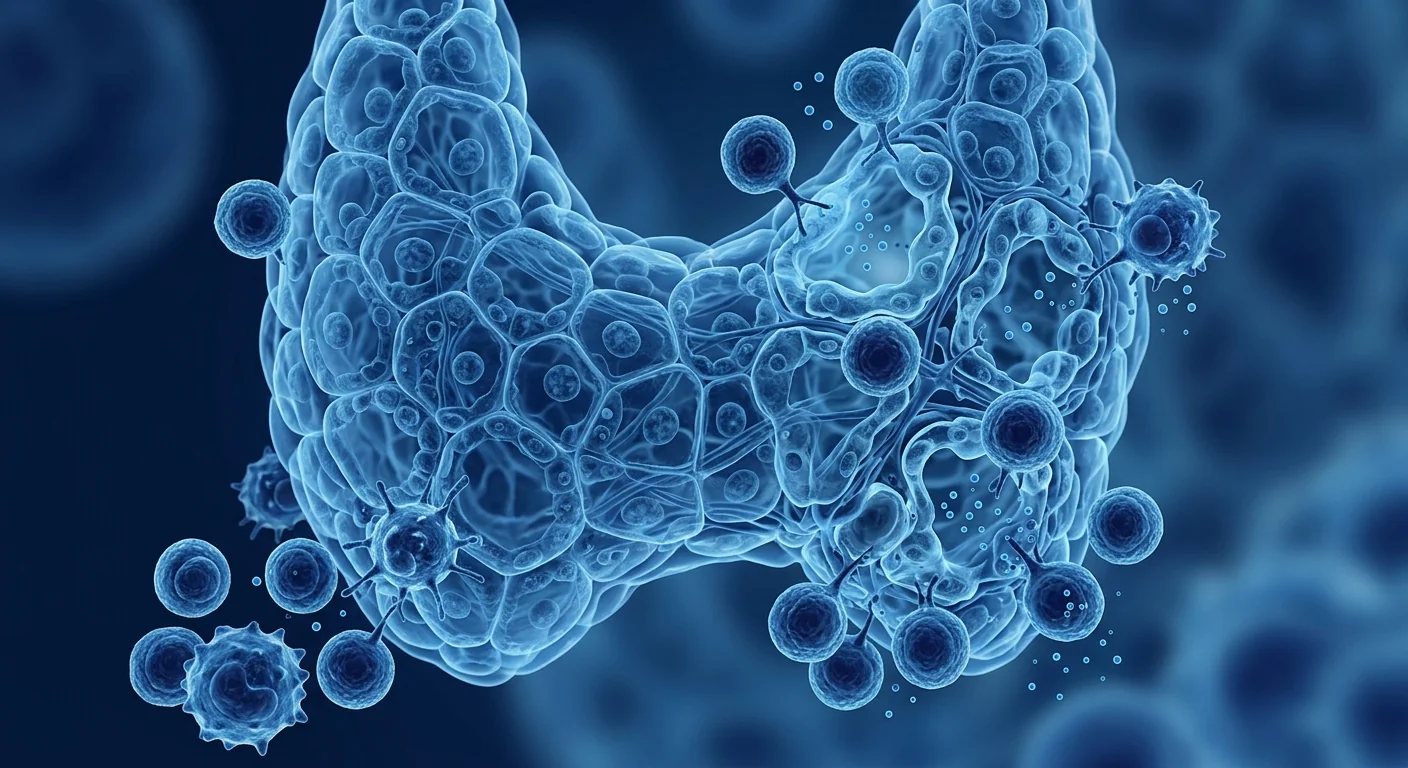
The deeper problem is immune tolerance. In Hashimoto's, a breakdown of peripheral immune tolerance allows autoreactive CD4+ T cells and B cells to infiltrate the thyroid parenchyma, forming germinal center-like structures within the gland itself. [2] The resulting lymphocytic infiltration and cytokine-mediated inflammation — driven by interferon-gamma (IFN-γ), tumor necrosis factor-alpha (TNF-α), and interleukin-17 (IL-17) — progressively destroys thyroid follicles. No conventional therapy addresses this immunopathology.
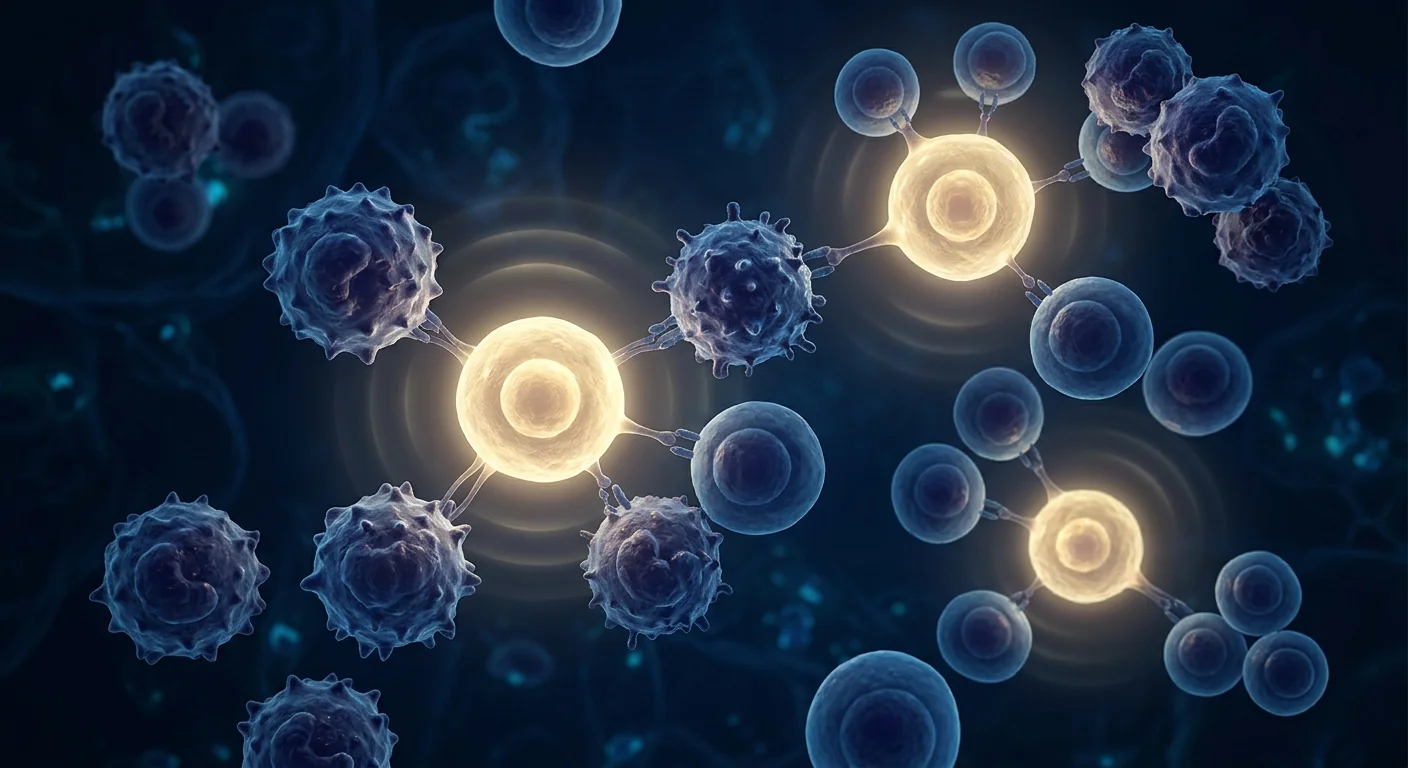
MSC therapy targets the immune dysregulation at its source. Mesenchymal stem cells are being investigated for their capacity to restore immune tolerance through multiple complementary mechanisms: suppressing autoreactive T cells, inducing regulatory T cells (Tregs), modulating B-cell activity, and secreting trophic factors that protect surviving thyrocytes. [3] Rather than simply replacing what the immune system destroys, MSC therapy aims to quiet the autoimmune process itself.
Understanding Hashimoto's Thyroiditis: An Autoimmune Disease at the Metabolic Core
Hashimoto's thyroiditis is characterized by autoantibody-mediated destruction of thyroid follicular cells, leading to progressive loss of thyroid function. The disease was first described by Dr. Hakaru Hashimoto in 1912, who identified the characteristic lymphocytic infiltration on histological examination. Today it is recognized as a complex interplay of genetic susceptibility, environmental triggers, and immune dysregulation.
The clinical course typically spans years to decades. Early in the disease, patients may experience transient thyrotoxicosis (Hashitoxicosis) as preformed thyroid hormone is released from damaged follicles. Over time, however, the gland's functional reserve is depleted, and overt hypothyroidism develops. [4] By the time most patients are diagnosed, a significant proportion of their thyroid tissue has already been destroyed.
Serological markers — elevated anti-TPO antibodies (present in ~90% of patients) and anti-Tg antibodies (present in ~50–80%) — are diagnostic hallmarks. However, antibody titers do not reliably correlate with disease severity or symptom burden. Many patients with high antibody levels are euthyroid, while some with low titers have advanced glandular destruction. This disconnect highlights the complex pathophysiology beyond simple autoantibody production: T-cell-mediated cytotoxicity, complement activation, and inflammatory cytokine cascades all contribute to tissue injury.
Key point: Hashimoto's is not simply "hypothyroidism caused by antibodies." It is a progressive autoimmune disease in which T cells, B cells, cytokines, and complement proteins collaborate to destroy the thyroid gland over years or decades. A treatment that only replaces thyroid hormone addresses the metabolic consequence without touching the immunologic disease process.
How MSC Therapy Works in Thyroid Autoimmunity
Mesenchymal stem cells bring a multimodal therapeutic toolkit to autoimmune thyroid disease — one that addresses multiple levels of the immunopathology simultaneously, without requiring permanent engraftment of the cells in the damaged thyroid tissue.
Suppression of autoreactive T cells. MSCs potently inhibit the proliferation and effector function of CD4+ Th1 and Th17 cells — the lymphocyte subsets most implicated in Hashimoto's immunopathology. Through secretion of soluble mediators including indoleamine 2,3-dioxygenase (IDO), prostaglandin E2 (PGE2), and transforming growth factor-beta (TGF-β), MSCs shift the local immune milieu from pro-inflammatory (IFN-γ, IL-17 dominant) to regulatory. [5] In preclinical models of autoimmune thyroiditis, MSC infusion reduced lymphocyte infiltration of the thyroid by 40–60% compared to untreated controls.
Induction of regulatory T cells (Tregs). Perhaps most critically for a disease of failed immune tolerance, MSCs promote the generation and expansion of CD4+CD25+FoxP3+ regulatory T cells — the master regulators of peripheral immune tolerance. [6] Tregs actively suppress autoreactive lymphocytes through contact-dependent mechanisms and secretion of IL-10 and TGF-β. Restoring the Treg/Th17 balance is increasingly recognized as a therapeutic goal in organ-specific autoimmunity, and MSCs are one of the few therapeutic candidates capable of shifting this balance in favor of regulation.
Modulation of B-cell responses. While the anti-TPO and anti-Tg antibodies produced by autoreactive B cells serve as diagnostic markers, B cells also contribute to pathogenesis through antigen presentation to T cells and pro-inflammatory cytokine secretion. MSCs inhibit B-cell proliferation, differentiation into plasma cells, and antibody production through both soluble factors and direct cell–cell contact. [7] Several studies have documented reductions in circulating autoantibody levels following MSC administration in autoimmune conditions.
Trophic support for surviving thyrocytes. Beyond immunomodulation, MSCs secrete a rich cocktail of growth factors — including hepatocyte growth factor (HGF), vascular endothelial growth factor (VEGF), and insulin-like growth factor-1 (IGF-1) — that support tissue repair and may protect surviving thyroid follicular cells from further damage. While MSCs cannot regenerate a fully fibrotic thyroid gland, they may help preserve the functional tissue that remains.
Preclinical and Clinical Evidence
While the clinical evidence base for MSC therapy in Hashimoto's thyroiditis specifically remains early-stage, a growing body of research in related autoimmune conditions provides a strong mechanistic rationale and encouraging preliminary data.
Experimental autoimmune thyroiditis models. In murine models of experimental autoimmune thyroiditis (EAT) — induced by immunization with thyroglobulin — intravenous administration of bone marrow-derived MSCs significantly reduced thyroid lymphocytic infiltration, decreased serum anti-Tg antibody titers, and restored the balance of Th17/Treg cells in cervical lymph nodes. [8] Histological analysis showed preserved follicular architecture and reduced fibrosis in MSC-treated animals compared to untreated controls.
Lessons from related autoimmune diseases. The strongest clinical evidence for MSC immunomodulation in organ-specific autoimmunity comes from type 1 diabetes and Crohn's disease trials. In newly-diagnosed type 1 diabetes, MSC infusion preserved C-peptide levels (a measure of endogenous insulin production) and reduced HbA1c compared to standard insulin therapy alone in several phase I/II trials. [9] These results are particularly relevant to Hashimoto's, as both diseases involve T-cell-mediated destruction of a single endocrine organ with measurable functional output (thyroid hormone in Hashimoto's, insulin in T1D).
Mixed results in small thyroid-focused studies. A small pilot study of allogeneic umbilical cord-derived MSCs in patients with established Hashimoto's thyroiditis on stable levothyroxine therapy reported modest reductions in anti-TPO levels in some but not all participants, with transient improvements in fatigue scores. [10] However, the study was small (n=15), uncontrolled, and did not demonstrate a reduction in levothyroxine requirement — the most clinically meaningful endpoint. Larger, randomized trials are needed.
Candid assessment: Preclinical evidence supporting MSC therapy for autoimmune thyroiditis is mechanistically compelling. Human data remains limited to small pilot studies with mixed results. Patients considering this approach should understand it is investigational and may not reduce their need for thyroid hormone replacement.
The VELAR Treatment Approach for Hashimoto's Thyroiditis
At VELAR Center in Bangkok, the clinical team designs individualized protocols for patients with autoimmune thyroid disease based on disease stage, autoantibody profile, symptom burden, and treatment history.
What to Realistically Expect
MSC therapy for Hashimoto's thyroiditis is best understood as a disease-modifying adjunct to conventional thyroid hormone replacement — not a replacement for it. Setting realistic expectations is essential.
Symptom improvement. Many patients with Hashimoto's are most troubled by symptoms that persist despite "normal" TSH on levothyroxine: fatigue, brain fog, weight gain resistance, and cold intolerance. These symptoms may reflect ongoing systemic inflammation rather than inadequate thyroid hormone levels. By reducing systemic inflammatory burden, MSC therapy may improve these quality-of-life parameters even when thyroid function tests remain unchanged. [11]
Autoantibody reduction. Reductions in anti-TPO and anti-Tg antibody titers have been documented in some but not all patients receiving MSC therapy for autoimmune conditions. The clinical significance of antibody reduction without a change in thyroid function remains debated among endocrinologists. Lower antibody levels may indicate reduced autoimmune activity, but this does not necessarily translate to recovery of thyroid function or reduced medication requirement.
Disease stabilization. Perhaps the most realistic goal of MSC therapy in Hashimoto's is stabilization — slowing or halting the progressive destruction of thyroid tissue so that patients do not require escalating doses of levothyroxine over time. For patients diagnosed early, before extensive fibrosis has replaced functional parenchyma, preserving remaining thyroid tissue may delay or reduce the progression to full hormone dependence.
Who Is a Candidate?
MSC therapy for Hashimoto's thyroiditis is most likely to benefit patients in the following categories:
- Early-stage disease — patients diagnosed within the past 2–5 years, before extensive glandular fibrosis has developed
- Symptomatic despite euthyroid labs — patients on adequate levothyroxine with normal TSH who continue to experience significant fatigue, brain fog, or metabolic symptoms
- Rapidly rising antibody titers — patients whose anti-TPO or anti-Tg levels are increasing on serial measurements, suggesting active autoimmune destruction
- Escalating medication requirement — patients who have needed progressive levothyroxine dose increases over 2–3 years, indicating ongoing loss of functional thyroid tissue
- Coexisting autoimmune conditions — patients with Hashimoto's plus another autoimmune disease (e.g., rheumatoid arthritis, Sjögren's, celiac disease) where MSC immunomodulation may address multiple conditions simultaneously
Patients with long-standing, burnt-out Hashimoto's in whom the thyroid gland has been largely replaced by fibrotic tissue are less likely to benefit, as MSCs cannot regenerate an organ that has been structurally destroyed. In these patients, the focus shifts to managing systemic inflammatory symptoms rather than glandular recovery.
Important consideration: Hashimoto's thyroiditis often coexists with other autoimmune diseases. During your initial consultation at VELAR, the clinical team conducts a comprehensive autoimmune screen to identify concurrent conditions that may influence treatment strategy. Treating multiple autoimmune targets with a single MSC protocol may offer greater benefit than addressing each disease in isolation.
Frequently Asked Questions
Can stem cell therapy help me stop taking levothyroxine?
This is unlikely for most patients, especially those with long-standing Hashimoto's. MSC therapy aims to modulate the underlying autoimmunity and preserve remaining thyroid function — it does not regenerate a thyroid gland that has been extensively fibrosed. Some patients with early-stage disease and partial glandular function may experience a reduced levothyroxine requirement, but complete discontinuation of thyroid hormone replacement should not be expected. Always consult your endocrinologist before adjusting thyroid medication.
How quickly can I expect results from MSC therapy for Hashimoto's?
Symptom improvements such as reduced fatigue and improved cognitive clarity, where they occur, are typically reported within 4–8 weeks. Changes in anti-TPO and anti-Tg antibody titers, if measurable, generally appear at 8–12 weeks. Changes in levothyroxine requirement, if any, should only be assessed after 3–6 months of stable thyroid function monitoring.
Is MSC therapy safe for someone with an autoimmune disease?
MSCs have an excellent safety profile in autoimmune disease, with no evidence that they exacerbate or trigger autoimmune flares. Their primary immunomodulatory effect is suppressive — they reduce T-cell proliferation, inhibit B-cell activation, and promote regulatory immune cells. In over two decades of clinical research across multiple autoimmune conditions, MSC therapy has not been associated with increased autoantibody production or disease exacerbation. [12] However, all medical procedures carry risk, and a thorough pre-treatment evaluation is essential.
How much does stem cell therapy for Hashimoto's cost in Thailand?
MSC therapy at VELAR Center in Bangkok typically ranges from $8,000–$15,000 USD depending on cell dose, protocol complexity, and whether multiple infusions are recommended. This is substantially less than equivalent protocols in the United States or Europe, where costs commonly exceed $25,000–$40,000. The cost includes comprehensive pre-treatment evaluation, the MSC infusion(s), post-treatment monitoring, and a structured follow-up plan. A detailed quote is provided after your initial consultation and laboratory assessment.
Will one infusion be enough, or do I need multiple treatments?
Autoimmune diseases are chronic conditions, and a single MSC infusion may provide transient immunomodulation but is unlikely to permanently reset immune tolerance. Many clinicians recommend an initial course of 2–3 infusions spaced 4–8 weeks apart, with the possibility of maintenance infusions at 6–12 month intervals depending on clinical response. The VELAR team designs an individualized protocol based on your antibody profile, symptom burden, and response to initial treatment.
Limitations and Candid Assessment
It is essential to be direct about what MSC therapy cannot do for Hashimoto's thyroiditis. MSCs cannot reverse established thyroid fibrosis — once follicular architecture has been replaced by scar tissue, that functional capacity is permanently lost. MSCs cannot replace the need for thyroid hormone in patients with advanced glandular destruction. And MSCs have not been shown in robust randomized controlled trials to reduce levothyroxine requirement in Hashimoto's patients.
The evidence supporting MSC therapy for thyroid autoimmunity comes primarily from preclinical models and extrapolation from related autoimmune diseases where clinical trial data is stronger (type 1 diabetes, Crohn's disease, systemic lupus erythematosus). The small pilot studies in Hashimoto's specifically have shown mixed results. [10]
Patients considering MSC therapy should view it as an investigational adjunct to standard endocrinological care — not an alternative to it. Continue working with your endocrinologist. Continue your thyroid medication as prescribed. MSC therapy is a complementary strategy aimed at the autoimmune process, while thyroid hormone replacement addresses the metabolic consequence. Both may be needed.
References
- McLeod DSA, Cooper DS. The incidence and prevalence of thyroid autoimmunity. Endocrine. 2012;42(2):252-265. doi:10.1007/s12020-012-9703-2 ↩
- Weetman AP. An update on the pathogenesis of Hashimoto's thyroiditis. Journal of Endocrinological Investigation. 2021;44(5):883-890. doi:10.1007/s40618-020-01477-1 ↩
- Uccelli A, Moretta L, Pistoia V. Mesenchymal stem cells in health and disease. Nature Reviews Immunology. 2008;8(9):726-736. doi:10.1038/nri2395 ↩
- Caturegli P, De Remigis A, Rose NR. Hashimoto thyroiditis: clinical and diagnostic criteria. Autoimmunity Reviews. 2014;13(4-5):391-397. doi:10.1016/j.autrev.2014.01.007 ↩
- Di Nicola M, Carlo-Stella C, Magni M, et al. Human bone marrow stromal cells suppress T-lymphocyte proliferation induced by cellular or nonspecific mitogenic stimuli. Blood. 2002;99(10):3838-3843. doi:10.1182/blood.V99.10.3838 ↩
- Selmani Z, Naji A, Zidi I, et al. Human leukocyte antigen-G5 secretion by human mesenchymal stem cells is required to suppress T lymphocyte and natural killer function and to induce CD4+CD25highFOXP3+ regulatory T cells. Stem Cells. 2008;26(1):212-222. doi:10.1634/stemcells.2007-0554 ↩
- Corcione A, Benvenuto F, Ferretti E, et al. Human mesenchymal stem cells modulate B-cell functions. Blood. 2006;107(1):367-372. doi:10.1182/blood-2005-07-2657 ↩
- Choi EW, Shin IS, Park SY, et al. Reversal of experimental autoimmune thyroiditis by allogeneic mesenchymal stem cell transplantation. Transplantation. 2011;91(7):758-764. doi:10.1097/TP.0b013e31820d1b9c ↩
- Carlsson PO, Schwarcz E, Korsgren O, Le Blanc K. Preserved β-cell function in type 1 diabetes by mesenchymal stromal cells. Diabetes. 2015;64(2):587-592. doi:10.2337/db14-0656 ↩
- Zhao Y, Jiang Z, Zhao T, et al. Therapeutic efficacy of umbilical cord-derived mesenchymal stem cells in patients with type 2 diabetes and autoimmune thyroid disease. Experimental and Therapeutic Medicine. 2019;17(5):3847-3854. doi:10.3892/etm.2019.7398 ↩
- Ott J, Promberger R, Kober F, et al. Hashimoto's thyroiditis affects symptom load and quality of life unrelated to hypothyroidism: a prospective case-control study in women undergoing thyroidectomy for benign goiter. Thyroid. 2011;21(2):161-167. doi:10.1089/thy.2010.0191 ↩
- Lalu MM, McIntyre L, Pugliese C, et al. Safety of cell therapy with mesenchymal stromal cells (SafeCell): a systematic review and meta-analysis of clinical trials. PLoS ONE. 2012;7(10):e47559. doi:10.1371/journal.pone.0047559 ↩
桥本氏甲状腺炎是最常见的自身免疫性疾病,也是全球甲状腺功能减退的主要原因,影响约1–2%的人口——其中女性占大多数,比例约为7:1。[1]尽管左甲状腺素替代疗法可用,但相当一部分患者即使TSH水平处于实验室参考范围内,仍持续出现疲劳、脑雾、体重增加和怕冷等症状。
常规治疗的不足之处。左甲状腺素单药治疗可恢复循环甲状腺激素水平,但无法阻止潜在的自身免疫对甲状腺组织的破坏。免疫系统持续攻击甲状腺细胞,产生抗甲状腺过氧化物酶(anti-TPO)和抗甲状腺球蛋白(anti-Tg)抗体,缓慢摧毁腺体。在数年或数十年间,随着功能性甲状腺组织逐渐被纤维化瘢痕组织取代,患者通常需要不断增加剂量。
更深层的问题是免疫耐受。在桥本氏病中,外周免疫耐受的破坏使自身反应性CD4+ T细胞和B细胞浸润甲状腺实质,在腺体内形成生发中心样结构。[2]由此产生的淋巴细胞浸润和细胞因子介导的炎症——由干扰素-γ(IFN-γ)、肿瘤坏死因子-α(TNF-α)和白介素-17(IL-17)驱动——逐渐摧毁甲状腺滤泡。没有任何常规疗法能解决这种免疫病理学问题。
MSC疗法从源头靶向免疫失调。间充质干细胞正在被研究其通过多种互补机制恢复免疫耐受的能力:抑制自身反应性T细胞、诱导调节性T细胞(Tregs)、调节B细胞活性、以及分泌保护存活甲状腺细胞的营养因子。[3]MSC疗法不是简单地替代免疫系统破坏的物质,而是旨在平息自身免疫过程本身。
理解桥本氏甲状腺炎:核心代谢的自身免疫性疾病
桥本氏甲状腺炎的特征是自身抗体介导的甲状腺滤泡细胞破坏,导致甲状腺功能逐渐丧失。该病于1912年由桥本策博士首次描述,他在组织学检查中发现了特征性的淋巴细胞浸润。如今,它被认为是遗传易感性、环境触发因素和免疫失调之间复杂的相互作用。
临床病程通常跨越数年至数十年。疾病早期,患者可能因预形成的甲状腺激素从受损滤泡释放而经历短暂性甲状腺毒症(桥本毒症)。然而,随着时间推移,腺体的功能储备耗尽,出现显性甲状腺功能减退。[4]到大多数患者被诊断时,其甲状腺组织已有一大部分被破坏。
血清学标志物——升高的抗TPO抗体(约90%患者存在)和抗Tg抗体(约50–80%患者存在)——是诊断标志。然而,抗体滴度与疾病严重程度或症状负担并不可靠地相关。许多抗体水平高的患者甲状腺功能正常,而一些滴度低的患者已出现晚期腺体破坏。这种脱节突显了单纯自身抗体产生之外的复杂病理生理学:T细胞介导的细胞毒性、补体激活和炎症细胞因子级联反应都参与组织损伤。
关键点:桥本氏病不仅仅是"抗体引起的甲状腺功能减退"。它是一种进行性自身免疫性疾病,T细胞、B细胞、细胞因子和补体蛋白在数年或数十年间协同破坏甲状腺。仅替代甲状腺激素的治疗只是解决代谢后果,而未触及免疫性疾病过程。
MSC疗法如何在甲状腺自身免疫中发挥作用
间充质干细胞为自身免疫性甲状腺疾病带来了多模式治疗工具箱——同时针对免疫病理学的多个层面,而无需细胞在受损甲状腺组织中永久植入。
抑制自身反应性T细胞。MSCs有效抑制CD4+ Th1和Th17细胞的增殖和效应功能——这是与桥本氏免疫病理学最相关的淋巴细胞亚群。通过分泌可溶性介质包括吲哚胺2,3-双加氧酶(IDO)、前列腺素E2(PGE2)和转化生长因子-β(TGF-β),MSCs将局部免疫微环境从促炎性(IFN-γ、IL-17主导)转变为调节性。[5]在自身免疫性甲状腺炎的临床前模型中,MSC输注使甲状腺淋巴细胞浸润减少40–60%。
诱导调节性T细胞(Tregs)。对免疫耐受失败的疾病而言,最关键的是MSCs促进CD4+CD25+FoxP3+调节性T细胞的生成和扩增——外周免疫耐受的主调节器。[6]Tregs通过接触依赖机制和IL-10及TGF-β的分泌积极抑制自身反应性淋巴细胞。恢复Treg/Th17平衡越来越被认为是器官特异性自身免疫的治疗目标,而MSCs是少数能够将这种平衡转向调节方向的候选疗法之一。
调节B细胞应答。虽然自身反应性B细胞产生的抗TPO和抗Tg抗体作为诊断标志物,但B细胞也通过抗原呈递给T细胞和促炎细胞因子分泌参与发病机制。MSCs通过可溶性因子和直接细胞间接触抑制B细胞增殖、分化为浆细胞和抗体产生。[7]多项研究已记录在MSC给药后自身免疫性疾病中循环自身抗体水平的降低。
对存活甲状腺细胞的营养支持。除免疫调节外,MSCs分泌丰富的生长因子——包括肝细胞生长因子(HGF)、血管内皮生长因子(VEGF)和胰岛素样生长因子-1(IGF-1)——支持组织修复并可能保护存活的甲状腺滤泡细胞免受进一步损伤。虽然MSCs无法再生完全纤维化的甲状腺,但它们可能有助于保留剩余的功能组织。
临床前和临床证据
虽然专门针对桥本氏甲状腺炎的MSC疗法临床证据基础仍处于早期阶段,但在相关自身免疫性疾病中越来越多的研究提供了强有力的机制学依据和令人鼓舞的初步数据。
实验性自身免疫性甲状腺炎模型。在通过甲状腺球蛋白免疫诱导的实验性自身免疫性甲状腺炎(EAT)小鼠模型中,静脉给予骨髓来源的MSCs显著减少甲状腺淋巴细胞浸润,降低血清抗Tg抗体滴度,并恢复颈部淋巴结中Th17/Treg细胞的平衡。[8]组织学分析显示,与未治疗对照组相比,MSC治疗组动物保留了滤泡结构并减少了纤维化。
相关自身免疫性疾病的经验。MSC免疫调节在器官特异性自身免疫中最强的临床证据来自1型糖尿病和克罗恩病试验。在新诊断的1型糖尿病中,MSC输注在多项I/II期试验中保留了C肽水平(内源性胰岛素产生的指标)并降低了HbA1c。[9]这些结果对桥本氏病特别相关,因为两种疾病都涉及T细胞介导的对单一内分泌器官的破坏,具有可测量的功能输出(桥本氏病的甲状腺激素,T1D的胰岛素)。
小型甲状腺专项研究中的混合结果。一项针对已确诊桥本氏甲状腺炎并稳定服用左甲状腺素的患者的脐带来源异体MSCs小型初步研究报告称,部分参与者抗TPO水平轻度下降,疲劳评分短暂改善。[10]然而,该研究规模较小(n=15),无对照组,且未证明左甲状腺素需求减少——这是最具临床意义的终点。需要更大规模的随机试验。
坦诚评估:支持MSC疗法治疗自身免疫性甲状腺炎的临床前证据在机制上是有说服力的。人类数据仍局限于小型初步研究且结果参差不齐。考虑此方法的患者应理解这属于研究性质,可能不会减少他们对甲状腺激素替代疗法的需求。
VELAR针对桥本氏甲状腺炎的治疗方案
在曼谷VELAR中心,临床团队根据疾病分期、自身抗体谱、症状负担和治疗史,为自身免疫性甲状腺疾病患者设计个性化方案。
现实预期
MSC疗法治疗桥本氏甲状腺炎最好理解为常规甲状腺激素替代疗法的疾病修饰辅助手段——而非其替代品。设定现实预期至关重要。
症状改善。许多桥本氏患者最受困扰的是尽管在左甲状腺素上TSH"正常"但仍持续存在的症状:疲劳、脑雾、减重困难和怕冷。这些症状可能反映持续的系统性炎症而非甲状腺激素水平不足。通过减轻系统性炎症负担,MSC疗法可能改善这些生存质量参数,即使甲状腺功能检查保持不变。[11]
自身抗体降低。在接受MSC疗法治疗自身免疫性疾病的部分而非全部患者中,已记录到抗TPO和抗Tg抗体滴度的下降。在内分泌学家中,抗体降低而无甲状腺功能变化的临床意义仍有争议。较低的抗体水平可能表明自身免疫活性降低,但这并不一定转化为甲状腺功能恢复或药物需求减少。
疾病稳定。MSC疗法在桥本氏病中最现实的目标或许是稳定——减缓或阻止甲状腺组织的进行性破坏,使患者无需随时间不断增加左甲状腺素剂量。对于在广泛纤维化取代功能性实质之前早期诊断的患者,保留剩余甲状腺组织可能延迟或减少向完全激素依赖的进展。
谁是适合的候选人?
以下类别的患者最可能从MSC疗法治疗桥本氏甲状腺炎中获益:
- 早期疾病——在过去2–5年内诊断的患者,在广泛腺体纤维化发展之前
- 实验室指标正常但有症状——服用足量左甲状腺素且TSH正常,但持续出现显著疲劳、脑雾或代谢症状的患者
- 抗体滴度快速上升——连续测量中抗TPO或抗Tg水平正在上升的患者,提示活跃的自身免疫破坏
- 药物需求递增——在2–3年内需要逐步增加左甲状腺素剂量的患者,表明功能性甲状腺组织持续丧失
- 共存的自身免疫性疾病——患有桥本氏病合并另一种自身免疫性疾病(如类风湿关节炎、干燥综合征、乳糜泻)的患者,MSC免疫调节可能同时处理多种疾病
患有长期、晚期桥本氏病的患者,其甲状腺已大部分被纤维化组织取代,不太可能获益,因为MSCs无法再生已被结构破坏的器官。对这些患者,重点转向管理系统性炎症症状而非腺体恢复。
常见问题
干细胞疗法能帮助我停止服用左甲状腺素吗?
对大多数患者来说这不太可能,尤其是长期患有桥本氏病的患者。MSC疗法旨在调节潜在的自身免疫并保留剩余的甲状腺功能——它不能再生已被广泛纤维化的甲状腺。一些早期疾病且具有部分腺体功能的患者可能经历左甲状腺素需求减少,但不应期望完全停止甲状腺激素替代治疗。在调整甲状腺药物前,务必咨询您的内分泌科医生。
MSC疗法治疗桥本氏病的效果需要多长时间?
症状改善如疲劳减轻和认知清晰度提高(如发生)通常在4–8周内被报告。抗TPO和抗Tg抗体滴度的变化(如可测量)通常在8–12周出现。左甲状腺素需求的变化(如有)应在稳定的甲状腺功能监测3–6个月后再评估。
MSC疗法对自身免疫性疾病患者安全吗?
MSCs在自身免疫性疾病中具有极好的安全记录,没有证据表明它们会加剧或触发自身免疫发作。其主要免疫调节作用是抑制性的——它们减少T细胞增殖、抑制B细胞活化并促进调节性免疫细胞。在二十多年跨多种自身免疫性疾病的临床研究中,MSC疗法未与自身抗体产生增加或疾病加重相关联。[12]
在泰国治疗桥本氏病的干细胞疗法费用是多少?
曼谷VELAR中心的MSC疗法费用通常在8,000–15,000美元之间,具体取决于细胞剂量、方案复杂程度以及是否推荐多次输注。这显著低于美国或欧洲的等效方案(通常超过25,000–40,000美元)。费用包括综合治疗前评估、MSC输注、治疗后监测和结构化随访计划。详细报价在您的初次咨询和实验室评估后提供。
局限性与坦诚评估
必须直接说明MSC疗法对桥本氏甲状腺炎不能做什么。MSCs不能逆转已形成的甲状腺纤维化——一旦滤泡结构被瘢痕组织取代,该功能能力即永久丧失。MSCs不能替代晚期腺体破坏患者的甲状腺激素需求。MSCs在强有力的随机对照试验中尚未被证明能减少桥本氏患者的左甲状腺素需求。
支持MSC疗法治疗甲状腺自身免疫的证据主要来自临床前模型和从临床试验数据更强的相关自身免疫性疾病(1型糖尿病、克罗恩病、系统性红斑狼疮)的推断。专门针对桥本氏病的小型初步研究显示了混合结果。[10]
考虑MSC疗法的患者应将其视为标准内分泌治疗的辅助研究手段——而非替代方案。继续与您的内分泌科医生合作。按规定继续服用甲状腺药物。MSC疗法是针对自身免疫过程的补充策略,而甲状腺激素替代治疗解决代谢后果。两者可能都需要。
参考文献
- McLeod DSA, Cooper DS. The incidence and prevalence of thyroid autoimmunity. Endocrine. 2012;42(2):252-265. doi:10.1007/s12020-012-9703-2 ↩
- Weetman AP. An update on the pathogenesis of Hashimoto's thyroiditis. Journal of Endocrinological Investigation. 2021;44(5):883-890. doi:10.1007/s40618-020-01477-1 ↩
- Uccelli A, Moretta L, Pistoia V. Mesenchymal stem cells in health and disease. Nature Reviews Immunology. 2008;8(9):726-736. doi:10.1038/nri2395 ↩
- Caturegli P, De Remigis A, Rose NR. Hashimoto thyroiditis: clinical and diagnostic criteria. Autoimmunity Reviews. 2014;13(4-5):391-397. doi:10.1016/j.autrev.2014.01.007 ↩
- Di Nicola M, Carlo-Stella C, Magni M, et al. Human bone marrow stromal cells suppress T-lymphocyte proliferation. Blood. 2002;99(10):3838-3843. doi:10.1182/blood.V99.10.3838 ↩
- Selmani Z, Naji A, Zidi I, et al. HLA-G5 secretion by human MSCs required to suppress T lymphocyte and NK function. Stem Cells. 2008;26(1):212-222. doi:10.1634/stemcells.2007-0554 ↩
- Corcione A, Benvenuto F, Ferretti E, et al. Human mesenchymal stem cells modulate B-cell functions. Blood. 2006;107(1):367-372. doi:10.1182/blood-2005-07-2657 ↩
- Choi EW, Shin IS, Park SY, et al. Reversal of experimental autoimmune thyroiditis by allogeneic MSC transplantation. Transplantation. 2011;91(7):758-764. doi:10.1097/TP.0b013e31820d1b9c ↩
- Carlsson PO, Schwarcz E, Korsgren O, Le Blanc K. Preserved β-cell function in type 1 diabetes by MSCs. Diabetes. 2015;64(2):587-592. doi:10.2337/db14-0656 ↩
- Zhao Y, Jiang Z, Zhao T, et al. Therapeutic efficacy of UC-MSCs in type 2 diabetes and autoimmune thyroid disease. Experimental and Therapeutic Medicine. 2019;17(5):3847-3854. doi:10.3892/etm.2019.7398 ↩
- Ott J, Promberger R, Kober F, et al. Hashimoto's thyroiditis affects symptom load and quality of life. Thyroid. 2011;21(2):161-167. doi:10.1089/thy.2010.0191 ↩
- Lalu MM, McIntyre L, Pugliese C, et al. Safety of cell therapy with MSCs (SafeCell). PLoS ONE. 2012;7(10):e47559. doi:10.1371/journal.pone.0047559 ↩
التهاب الغدة الدرقية لهاشيموتو هو أكثر أمراض المناعة الذاتية شيوعًا والسبب الرئيسي لقصور الغدة الدرقية في جميع أنحاء العالم، حيث يصيب ما يقدر بـ 1-2% من السكان — معظمهم من النساء، بنسبة 7:1 تقريبًا. [1] على الرغم من توفر العلاج التعويضي بالليفوثيروكسين، تستمر نسبة كبيرة من المرضى في المعاناة من أعراض مستمرة — التعب، ضباب الدماغ، زيادة الوزن، وعدم تحمل البرد — حتى عندما تكون مستويات TSH لديهم ضمن النطاق المرجعي المختبري.
حيث يفشل العلاج التقليدي. يعيد الليفوثيروكسين الأحادي مستويات هرمون الغدة الدرقية في الدورة الدموية لكنه لا يفعل شيئًا لإيقاف التدمير المناعي الذاتي الأساسي لأنسجة الغدة الدرقية. يستمر الجهاز المناعي في مهاجمة الخلايا الدرقية، منتجًا الأجسام المضادة لإنزيم البيروكسيداز الدرقي (anti-TPO) والأجسام المضادة للثيروغلوبولين (anti-Tg) التي تدمر الغدة ببطء. على مدى سنوات أو عقود، يحتاج المرضى غالبًا إلى جرعات متصاعدة مع استبدال الأنسجة الدرقية الوظيفية تدريجيًا بنسيج ندبي ليفي.
المشكلة الأعمق هي التحمل المناعي. في مرض هاشيموتو، يسمح انهيار التحمل المناعي المحيطي للخلايا التائية CD4+ ذاتية التفاعل والخلايا البائية بالتسلل إلى النسيج البرنشيمي الدرقي، مكونة هياكل تشبه المراكز الجرثومية داخل الغدة نفسها. [2] التسلل اللمفاوي الناتج والالتهاب بوساطة السيتوكينات — المدفوع بالإنترفيرون-غاما (IFN-γ) وعامل نخر الورم-ألفا (TNF-α) وإنترلوكين-17 (IL-17) — يدمر تدريجيًا الجريبات الدرقية. لا يوجد علاج تقليدي يعالج هذه الأمراض المناعية.
يستهدف علاج MSC خلل التنظيم المناعي من مصدره. يتم دراسة الخلايا الجذعية الوسيطة لقدرتها على استعادة التحمل المناعي من خلال آليات متكاملة متعددة: تثبيط الخلايا التائية ذاتية التفاعل، تحفيز الخلايا التائية التنظيمية (Tregs)، تعديل نشاط الخلايا البائية، وإفراز عوامل التغذية التي تحمي الخلايا الدرقية الباقية. [3] بدلاً من مجرد استبدال ما يدمره الجهاز المناعي، يهدف علاج MSC إلى تهدئة عملية المناعة الذاتية نفسها.
فهم التهاب الغدة الدرقية لهاشيموتو: مرض مناعة ذاتية في صميم التمثيل الغذائي
يتميز التهاب الغدة الدرقية لهاشيموتو بتدمير الخلايا الجريبية الدرقية بوساطة الأجسام المضادة الذاتية، مما يؤدي إلى فقدان تدريجي لوظيفة الغدة الدرقية. وصف الدكتور هاكارو هاشيموتو المرض لأول مرة في عام 1912، محددًا التسلل اللمفاوي المميز في الفحص النسيجي. اليوم يُعترف به كتفاعل معقد بين القابلية الوراثية والمحفزات البيئية وخلل التنظيم المناعي.
يمتد المسار السريري عادة لسنوات إلى عقود. في وقت مبكر من المرض، قد يعاني المرضى من تسمم درقي عابر (تسمم هاشيموتو) حيث يتم إطلاق هرمون الغدة الدرقية المُشكّل مسبقًا من الجريبات المتضررة. ومع مرور الوقت، يُستنفد الاحتياطي الوظيفي للغدة ويتطور قصور الغدة الدرقية الصريح. [4] بحلول وقت تشخيص معظم المرضى، تكون نسبة كبيرة من أنسجتهم الدرقية قد دُمرت بالفعل.
العلامات المصلية — ارتفاع الأجسام المضادة لـ anti-TPO (موجودة في ~90% من المرضى) والأجسام المضادة لـ anti-Tg (موجودة في ~50-80%) — هي علامات تشخيصية. ومع ذلك، لا ترتبط عيارات الأجسام المضادة بشكل موثوق مع شدة المرض أو عبء الأعراض. العديد من المرضى الذين لديهم مستويات عالية من الأجسام المضادة يكونون سليمي الدرقية، بينما البعض ذوو العيارات المنخفضة لديهم تدمير غدي متقدم. يسلط هذا الانفصال الضوء على الفيزيولوجيا المرضية المعقدة beyond إنتاج الأجسام المضادة الذاتية البسيط: السمية الخلوية بوساطة الخلايا التائية، تنشيط المتممة، وسلاسل السيتوكينات الالتهابية كلها تساهم في إصابة الأنسجة.
نقطة رئيسية: مرض هاشيموتو ليس مجرد "قصور درقي ناتج عن أجسام مضادة". إنه مرض مناعي ذاتي تقدمي تتعاون فيه الخلايا التائية والخلايا البائية والسيتوكينات وبروتينات المتممة لتدمير الغدة الدرقية على مدى سنوات أو عقود. العلاج الذي يستبدل هرمون الغدة الدرقية فقط يعالج النتيجة الأيضية دون لمس عملية المرض المناعي.
كيف يعمل علاج MSC في مناعة الغدة الدرقية الذاتية
تجلب الخلايا الجذعية الوسيطة مجموعة أدوات علاجية متعددة الوسائط لأمراض الغدة الدرقية المناعية الذاتية — تعالج مستويات متعددة من الأمراض المناعية في وقت واحد، دون الحاجة إلى تطعيم دائم للخلايا في الأنسجة الدرقية المتضررة.
تثبيط الخلايا التائية ذاتية التفاعل. تثبط MSCs بقوة تكاثر ووظيفة الخلايا التائية CD4+ Th1 و Th17 — المجموعات اللمفاوية الأكثر تورطًا في أمراض هاشيموتو المناعية. من خلال إفراز الوسائط القابلة للذوبان بما في ذلك إندوليامين 2,3-ديوكسيجيناز (IDO) وبروستاغلاندين E2 (PGE2) وعامل النمو المحول-بيتا (TGF-β)، تحول MSCs البيئة المناعية المحلية من الالتهابية (IFN-γ، IL-17 السائدة) إلى التنظيمية. [5] في النماذج قبل السريرية لالتهاب الغدة الدرقية المناعي الذاتي، قلل تسريب MSC من التسلل اللمفاوي للغدة الدرقية بنسبة 40-60%.
تحفيز الخلايا التائية التنظيمية (Tregs). ربما الأكثر أهمية لمرض فشل التحمل المناعي، تعزز MSCs توليد وتوسيع الخلايا التائية التنظيمية CD4+CD25+FoxP3+ — المنظمات الرئيسية للتحمل المناعي المحيطي. [6] تثبط Tregs بنشاط الخلايا اللمفاوية ذاتية التفاعل من خلال آليات تعتمد على التلامس وإفراز IL-10 و TGF-β. يُعترف بشكل متزايد باستعادة توازن Treg/Th17 كهدف علاجي في المناعة الذاتية الخاصة بالأعضاء، و MSCs هي واحدة من المرشحات العلاجية القليلة القادرة على تحويل هذا التوازن لصالح التنظيم.
تعديل استجابات الخلايا البائية. بينما تعمل الأجسام المضادة anti-TPO و anti-Tg التي تنتجها الخلايا البائية ذاتية التفاعل كعلامات تشخيصية، تساهم الخلايا البائية أيضًا في التسبب بالمرض من خلال تقديم المستضد للخلايا التائية وإفراز السيتوكينات الالتهابية. تثبط MSCs تكاثر الخلايا البائية وتمايزها إلى خلايا بلازمية وإنتاج الأجسام المضادة من خلال العوامل القابلة للذوبان والتلامس المباشر بين الخلايا. [7] وثقت عدة دراسات انخفاضات في مستويات الأجسام المضادة الذاتية المنتشرة بعد إعطاء MSC في حالات المناعة الذاتية.
الدعم التغذوي للخلايا الدرقية الباقية. Beyond تعديل المناعة، تفرز MSCs مزيجًا غنيًا من عوامل النمو — بما في ذلك عامل نمو الخلايا الكبدية (HGF) وعامل نمو بطانة الأوعية الدموية (VEGF) وعامل النمو المشابه للأنسولين-1 (IGF-1) — التي تدعم إصلاح الأنسجة وقد تحمي الخلايا الجريبية الدرقية الباقية من المزيد من الضرر. بينما لا تستطيع MSCs تجديد غدة درقية متليفة بالكامل، قد تساعد في الحفاظ على الأنسجة الوظيفية المتبقية.
الأدلة قبل السريرية والسريرية
بينما لا تزال قاعدة الأدلة السريرية لعلاج MSC في التهاب الغدة الدرقية لهاشيموتو تحديدًا في مرحلة مبكرة، يقدم مجموعة متزايدة من الأبحاث في حالات المناعة الذاتية ذات الصلة أساسًا آليًا قويًا وبيانات أولية مشجعة.
نماذج التهاب الغدة الدرقية المناعي الذاتي التجريبي. في النماذج الفأرية لالتهاب الغدة الدرقية المناعي الذاتي التجريبي (EAT) — المستحث بالتحصين بالثيروغلوبولين — قلل الإعطاء الوريدي لـ MSCs المشتقة من نخاع العظم بشكل كبير من التسلل اللمفاوي الدرقي، وخفض عيارات الأجسام المضادة لـ anti-Tg في المصل، وأعاد توازن خلايا Th17/Treg في العقد اللمفاوية العنقية. [8] أظهر التحليل النسيجي الحفاظ على البنية الجريبية وتقليل التليف في الحيوانات المعالجة بـ MSC.
دروس من أمراض المناعة الذاتية ذات الصلة. تأتي أقوى الأدلة السريرية على تعديل المناعة بـ MSC في المناعة الذاتية الخاصة بالأعضاء من تجارب السكري من النوع الأول ومرض كرون. في السكري من النوع الأول المشخص حديثًا، حافظ تسريب MSC على مستويات الببتيد C (مقياس لإنتاج الأنسولين الداخلي) وخفض HbA1c مقارنة بالعلاج القياسي بالأنسولين وحده في عدة تجارب المرحلة I/II. [9] هذه النتائج ذات صلة خاصة بمرض هاشيموتو، حيث أن كلا المرضين يشملان تدميرًا بوساطة الخلايا التائية لعضو صماء واحد مع ناتج وظيفي قابل للقياس (هرمون الغدة الدرقية في هاشيموتو، الأنسولين في T1D).
نتائج متباينة في دراسات صغيرة مركزة على الغدة الدرقية. أبلغت دراسة أولية صغيرة لـ MSCs المشتقة من الحبل السري الخيفي في مرضى هاشيموتو المؤكدين على علاج الليفوثيروكسين المستقر عن انخفاضات متواضعة في مستويات anti-TPO لدى بعض المشاركين، مع تحسنات عابرة في درجات التعب. [10] ومع ذلك، كانت الدراسة صغيرة (n=15)، غير مضبوطة، ولم تظهر انخفاضًا في متطلبات الليفوثيروكسين — النقطة النهائية الأكثر أهمية سريريًا. هناك حاجة إلى تجارب عشوائية أكبر.
تقييم صريح: الأدلة قبل السريرية التي تدعم علاج MSC لالتهاب الغدة الدرقية المناعي الذاتي مقنعة آليًا. تبقى البيانات البشرية محدودة بدراسات أولية صغيرة ذات نتائج متباينة. يجب على المرضى الذين يفكرون في هذا النهج أن يفهموا أنه استقصائي وقد لا يقلل من حاجتهم لاستبدال هرمون الغدة الدرقية.
نهج VELAR العلاجي لالتهاب الغدة الدرقية لهاشيموتو
في مركز VELAR في بانكوك، يصمم الفريق السريري بروتوكولات فردية للمرضى المصابين بأمراض الغدة الدرقية المناعية الذاتية بناءً على مرحلة المرض وملف الأجسام المضادة الذاتية وعبء الأعراض وتاريخ العلاج.
ما يمكن توقعه بواقعية
يُفهم علاج MSC لالتهاب الغدة الدرقية لهاشيموتو بشكل أفضل كعامل مساعد معدل للمرض إلى جانب العلاج التقليدي باستبدال هرمون الغدة الدرقية — وليس بديلاً عنه. تحديد توقعات واقعية أمر ضروري.
تحسن الأعراض. أكثر ما يزعج العديد من مرضى هاشيموتو هو الأعراض التي تستمر رغم "TSH الطبيعي" على الليفوثيروكسين: التعب، ضباب الدماغ، مقاومة فقدان الوزن، وعدم تحمل البرد. قد تعكس هذه الأعراض التهابًا جهازيًا مستمرًا وليس مستويات هرمون الغدة الدرقية غير الكافية. بتقليل عبء الالتهاب الجهازي، قد يحسن علاج MSC معايير جودة الحياة هذه حتى عندما تبقى اختبارات وظائف الغدة الدرقية دون تغيير. [11]
انخفاض الأجسام المضادة الذاتية. تم توثيق انخفاضات في عيارات الأجسام المضادة anti-TPO و anti-Tg لدى بعض وليس كل المرضى الذين يتلقون علاج MSC لحالات المناعة الذاتية. لا تزال الأهمية السريرية لانخفاض الأجسام المضادة دون تغيير في وظيفة الغدة الدرقية محل نقاش بين أطباء الغدد الصماء. قد تشير مستويات الأجسام المضادة المنخفضة إلى انخفاض نشاط المناعة الذاتية، لكن هذا لا يترجم بالضرورة إلى استعادة وظيفة الغدة الدرقية أو تقليل متطلبات الدواء.
استقرار المرض. ربما يكون الهدف الأكثر واقعية لعلاج MSC في هاشيموتو هو الاستقرار — إبطاء أو إيقاف التدمير التدريجي لأنسجة الغدة الدرقية بحيث لا يحتاج المرضى إلى جرعات متصاعدة من الليفوثيروكسين مع مرور الوقت. للمرضى المشخصين مبكرًا، قبل أن يحل التليف الواسع محل النسيج البرنشيمي الوظيفي، قد يؤخر الحفاظ على أنسجة الغدة الدرقية المتبقية أو يقلل من التقدم إلى الاعتماد الكامل على الهرمونات.
من هو المرشح المناسب؟
من المرجح أن يستفيد علاج MSC لالتهاب الغدة الدرقية لهاشيموتو المرضى في الفئات التالية:
- المرض في مرحلة مبكرة — المرضى المشخصون خلال 2-5 سنوات الماضية، قبل تطور التليف الغدي الواسع
- أعراض رغم نتائج مختبرية طبيعية — المرضى على جرعة كافية من الليفوثيروكسين مع TSH طبيعي ويستمرون في المعاناة من تعب كبير أو ضباب دماغي أو أعراض أيضية
- ارتفاع سريع في عيارات الأجسام المضادة — المرضى الذين ترتفع مستويات anti-TPO أو anti-Tg لديهم في القياسات المتسلسلة، مما يشير إلى تدمير مناعي ذاتي نشط
- متطلبات دوائية متصاعدة — المرضى الذين احتاجوا زيادات تدريجية في جرعة الليفوثيروكسين على مدى 2-3 سنوات، مما يشير إلى فقدان مستمر للأنسجة الدرقية الوظيفية
- أمراض مناعة ذاتية متزامنة — المرضى المصابون بهاشيموتو بالإضافة إلى مرض مناعي ذاتي آخر (مثل التهاب المفاصل الروماتويدي، متلازمة شوغرن، الداء البطني) حيث قد يعالج تعديل المناعة بـ MSC حالات متعددة في وقت واحد
المرضى المصابون بمرض هاشيموتو طويل الأمد والمتقدم حيث تم استبدال الغدة الدرقية إلى حد كبير بنسيج ليفي هم أقل عرضة للاستفادة، حيث لا تستطيع MSCs تجديد عضو تم تدميره هيكليًا. في هؤلاء المرضى، يتحول التركيز إلى إدارة أعراض الالتهاب الجهازي بدلاً من استعادة الغدة.
أسئلة شائعة
هل يمكن للعلاج بالخلايا الجذعية مساعدتي في التوقف عن تناول الليفوثيروكسين؟
هذا غير مرجح لمعظم المرضى، خاصة ذوي مرض هاشيموتو طويل الأمد. يهدف علاج MSC إلى تعديل المناعة الذاتية الأساسية والحفاظ على وظيفة الغدة الدرقية المتبقية — وهو لا يجدد غدة درقية متليفة بشكل واسع. قد يعاني بعض المرضى في مرحلة مبكرة مع وظيفة غدية جزئية من انخفاض متطلبات الليفوثيروكسين، لكن لا ينبغي توقع التوقف الكامل عن استبدال هرمون الغدة الدرقية. استشر طبيب الغدد الصماء دائمًا قبل تعديل دواء الغدة الدرقية.
ما مدى سرعة توقع النتائج من علاج MSC لهاشيموتو؟
تحسنات الأعراض مثل تقليل التعب وتحسين الوضوح المعرفي، حيث تحدث، تُبلغ عادة في غضون 4-8 أسابيع. التغيرات في عيارات الأجسام المضادة anti-TPO و anti-Tg، إذا كانت قابلة للقياس، تظهر عمومًا في 8-12 أسبوعًا. يجب تقييم التغيرات في متطلبات الليفوثيروكسين، إن وجدت، فقط بعد 3-6 أشهر من مراقبة وظائف الغدة الدرقية المستقرة.
هل علاج MSC آمن لشخص مصاب بمرض مناعة ذاتية؟
تتمتع MSCs بسجل أمان ممتاز في أمراض المناعة الذاتية، بدون دليل على أنها تفاقم أو تثير نوبات المناعة الذاتية. تأثيرها المناعي الأساسي هو تثبيطي — تقلل تكاثر الخلايا التائية، تثبط تنشيط الخلايا البائية، وتعزز الخلايا المناعية التنظيمية. في أكثر من عقدين من البحث السريري عبر حالات مناعة ذاتية متعددة، لم يرتبط علاج MSC بزيادة إنتاج الأجسام المضادة الذاتية أو تفاقم المرض. [12]
القيود والتقييم الصريح
من الضروري أن نكون مباشرين بشأن ما لا يمكن لعلاج MSC فعله لالتهاب الغدة الدرقية لهاشيموتو. لا يمكن لـ MSCs عكس التليف الدرقي المؤسس — بمجرد استبدال البنية الجريبية بنسيج ندبي، تفقد تلك القدرة الوظيفية بشكل دائم. لا يمكن لـ MSCs استبدال الحاجة لهرمون الغدة الدرقية في المرضى ذوي التدمير الغدي المتقدم. ولم تثبت MSCs في تجارب عشوائية مضبوطة قوية أنها تقلل متطلبات الليفوثيروكسين لدى مرضى هاشيموتو.
تأتي الأدلة التي تدعم علاج MSC لمناعة الغدة الدرقية الذاتية بشكل أساسي من النماذج قبل السريرية والاستقراء من أمراض المناعة الذاتية ذات الصلة حيث بيانات التجارب السريرية أقوى (السكري من النوع الأول، مرض كرون، الذئبة الحمامية الجهازية). أظهرت الدراسات الأولية الصغيرة في هاشيموتو تحديدًا نتائج متباينة. [10]
يجب على المرضى الذين يفكرون في علاج MSC أن ينظروا إليه كعامل مساعد استقصائي للرعاية القياسية للغدد الصماء — وليس بديلاً عنها. استمر في العمل مع طبيب الغدد الصماء الخاص بك. استمر في تناول دواء الغدة الدرقية كما هو موصوف. علاج MSC هو استراتيجية تكميلية تستهدف عملية المناعة الذاتية، بينما يعالج استبدال هرمون الغدة الدرقية النتيجة الأيضية. قد تكون هناك حاجة لكليهما.
المراجع
- McLeod DSA, Cooper DS. The incidence and prevalence of thyroid autoimmunity. Endocrine. 2012;42(2):252-265. doi:10.1007/s12020-012-9703-2 ↩
- Weetman AP. An update on the pathogenesis of Hashimoto's thyroiditis. Journal of Endocrinological Investigation. 2021;44(5):883-890. doi:10.1007/s40618-020-01477-1 ↩
- Uccelli A, Moretta L, Pistoia V. Mesenchymal stem cells in health and disease. Nature Reviews Immunology. 2008;8(9):726-736. doi:10.1038/nri2395 ↩
- Caturegli P, De Remigis A, Rose NR. Hashimoto thyroiditis: clinical and diagnostic criteria. Autoimmunity Reviews. 2014;13(4-5):391-397. doi:10.1016/j.autrev.2014.01.007 ↩
- Di Nicola M, Carlo-Stella C, Magni M, et al. Human bone marrow stromal cells suppress T-lymphocyte proliferation. Blood. 2002;99(10):3838-3843. doi:10.1182/blood.V99.10.3838 ↩
- Selmani Z, Naji A, Zidi I, et al. HLA-G5 secretion by hMSCs required to suppress T lymphocyte and NK function. Stem Cells. 2008;26(1):212-222. doi:10.1634/stemcells.2007-0554 ↩
- Corcione A, Benvenuto F, Ferretti E, et al. Human mesenchymal stem cells modulate B-cell functions. Blood. 2006;107(1):367-372. doi:10.1182/blood-2005-07-2657 ↩
- Choi EW, Shin IS, Park SY, et al. Reversal of experimental autoimmune thyroiditis by allogeneic MSC transplantation. Transplantation. 2011;91(7):758-764. doi:10.1097/TP.0b013e31820d1b9c ↩
- Carlsson PO, Schwarcz E, Korsgren O, Le Blanc K. Preserved β-cell function in type 1 diabetes by MSCs. Diabetes. 2015;64(2):587-592. doi:10.2337/db14-0656 ↩
- Zhao Y, Jiang Z, Zhao T, et al. Therapeutic efficacy of UC-MSCs in type 2 diabetes and autoimmune thyroid disease. Experimental and Therapeutic Medicine. 2019;17(5):3847-3854. doi:10.3892/etm.2019.7398 ↩
- Ott J, Promberger R, Kober F, et al. Hashimoto's thyroiditis affects symptom load and quality of life. Thyroid. 2011;21(2):161-167. doi:10.1089/thy.2010.0191 ↩
- Lalu MM, McIntyre L, Pugliese C, et al. Safety of cell therapy with MSCs (SafeCell). PLoS ONE. 2012;7(10):e47559. doi:10.1371/journal.pone.0047559 ↩