Evans Syndrome is a rare autoimmune disorder characterized by the simultaneous or sequential development of autoimmune hemolytic anemia (AIHA) and immune thrombocytopenia (ITP), with or without autoimmune neutropenia [1]. First described by Robert Evans in 1951, this chronic, relapsing condition affects approximately 0.8\u20133.7% of all AIHA or ITP cases and carries a prognosis substantially worse than either cytopenia alone [2].
Why Evans Syndrome is treatment-refractory. The dual-lineage immune attack in Evans Syndrome is driven by a combination of autoreactive B-cells producing warm-reactive IgG antibodies against red cell and platelet antigens, and dysregulated T-cell subsets that perpetuate autoantibody production and promote macrophage-mediated destruction. Unlike isolated AIHA or ITP, where first-line therapy with corticosteroids produces response rates of 60\u201380%, Evans Syndrome patients experience higher relapse rates, shorter remission durations, and significantly greater treatment burden \u2014 often requiring multiple immunosuppressive agents, rituximab, and even splenectomy to achieve disease control [3].
The deeper problem is a failure of immune tolerance. Evans Syndrome represents a fundamental breakdown in the mechanisms that prevent self-reactive lymphocyte escape. Underlying immunodeficiencies \u2014 such as autoimmune lymphoproliferative syndrome (ALPS), common variable immunodeficiency (CVID), and other inborn errors of immunity \u2014 are identified in a substantial subset of pediatric and adult Evans Syndrome patients. This immune dysregulation context explains why conventional immunosuppression alone rarely achieves durable remission: it suppresses effector cells without restoring the central tolerance mechanisms that failed in the first place [4].
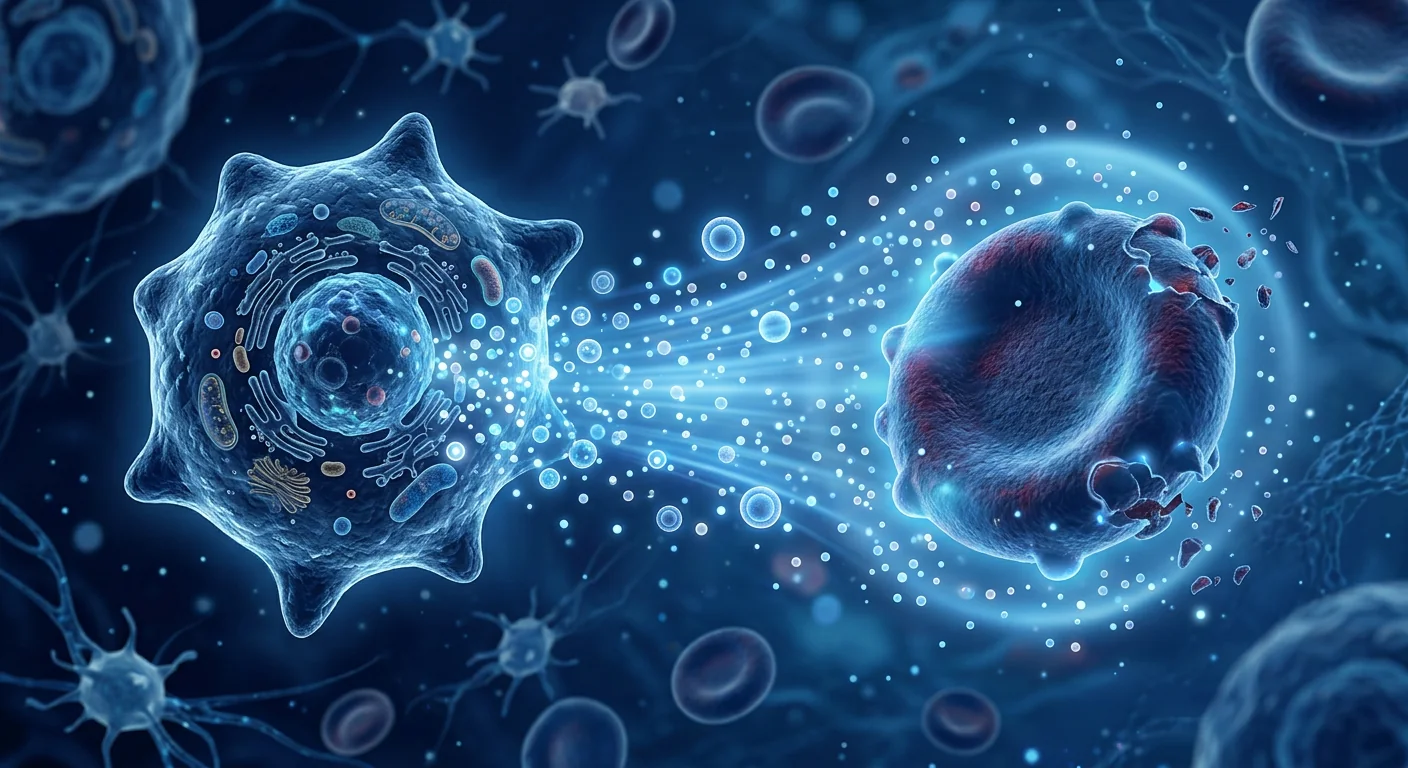
MSC therapy targets immune tolerance restoration. Mesenchymal stem cells operate at a fundamentally different level than conventional immunosuppressants. Rather than broadly suppressing lymphocyte activity, MSCs actively re-educate the immune microenvironment toward tolerance: they induce regulatory T-cell (Treg) expansion, suppress autoreactive B-cell maturation, promote a shift from pro-inflammatory (M1) to anti-inflammatory (M2) macrophage phenotypes, and secrete soluble factors \u2014 TGF-\u03b2, IL-10, PGE2, IDO \u2014 that directly counteract the effector mechanisms driving both hemolysis and thrombocytopenia. This immunomodulatory program, rather than immunosuppression, may address the root tolerance failure that characterizes Evans Syndrome [5].
How MSCs Target Evans Syndrome Pathophysiology
MSCs address the multifaceted immune dysregulation of Evans Syndrome through several complementary mechanisms [6].
Restoration of Treg/Th17 balance. In both ITP and AIHA, a relative deficiency of CD4+CD25+FoxP3+ regulatory T-cells and a reciprocal expansion of Th17 effector cells are well-documented. This imbalance favors the survival and activation of self-reactive B-cells producing pathogenic autoantibodies. MSCs promote Treg differentiation via TGF-\u03b2 and PGE2 signaling, while simultaneously suppressing Th17 polarization through IL-10 and IDO-mediated pathways. In the ITP context, UC-MSC infusion was shown to increase the Treg/Th17 ratio in peripheral blood, correlating with platelet recovery [7].
Suppression of autoreactive B-cell activity. Warm AIHA in Evans Syndrome is driven by IgG autoantibodies targeting red cell membrane proteins, produced by clonally expanded B-cells that have escaped tolerance checkpoints. MSCs suppress B-cell proliferation, inhibit plasma cell differentiation, and reduce immunoglobulin production through direct cell contact (PD-L1/PD-1 engagement) and soluble factors (TGF-\u03b2, IL-1 receptor antagonist). MSC-derived extracellular vesicles also carry microRNAs that downregulate B-cell receptor signaling and class-switch recombination. This B-cell modulation is particularly relevant for Evans Syndrome because both AIHA and ITP involve pathogenic autoantibodies [8].
Macrophage polarization and reduced phagocytosis. In Evans Syndrome, splenic and hepatic macrophages (Kupffer cells) are activated to a pro-inflammatory M1 phenotype by IFN-\u03b3 from autoreactive T-cells, driving Fc\u03b3 receptor-mediated erythrophagocytosis and thrombocytophagocytosis. MSCs promote M1-to-M2 polarization through secretion of IL-10, PGE2, and HGF. M2 macrophages express lower levels of activating Fc\u03b3 receptors and higher levels of inhibitory Fc\u03b3RIIB, directly reducing the clearance of antibody-coated red cells and platelets. In a murine model of immune-mediated thrombocytopenia, MSC treatment reduced macrophage-mediated platelet clearance by 40% and improved platelet counts [9].
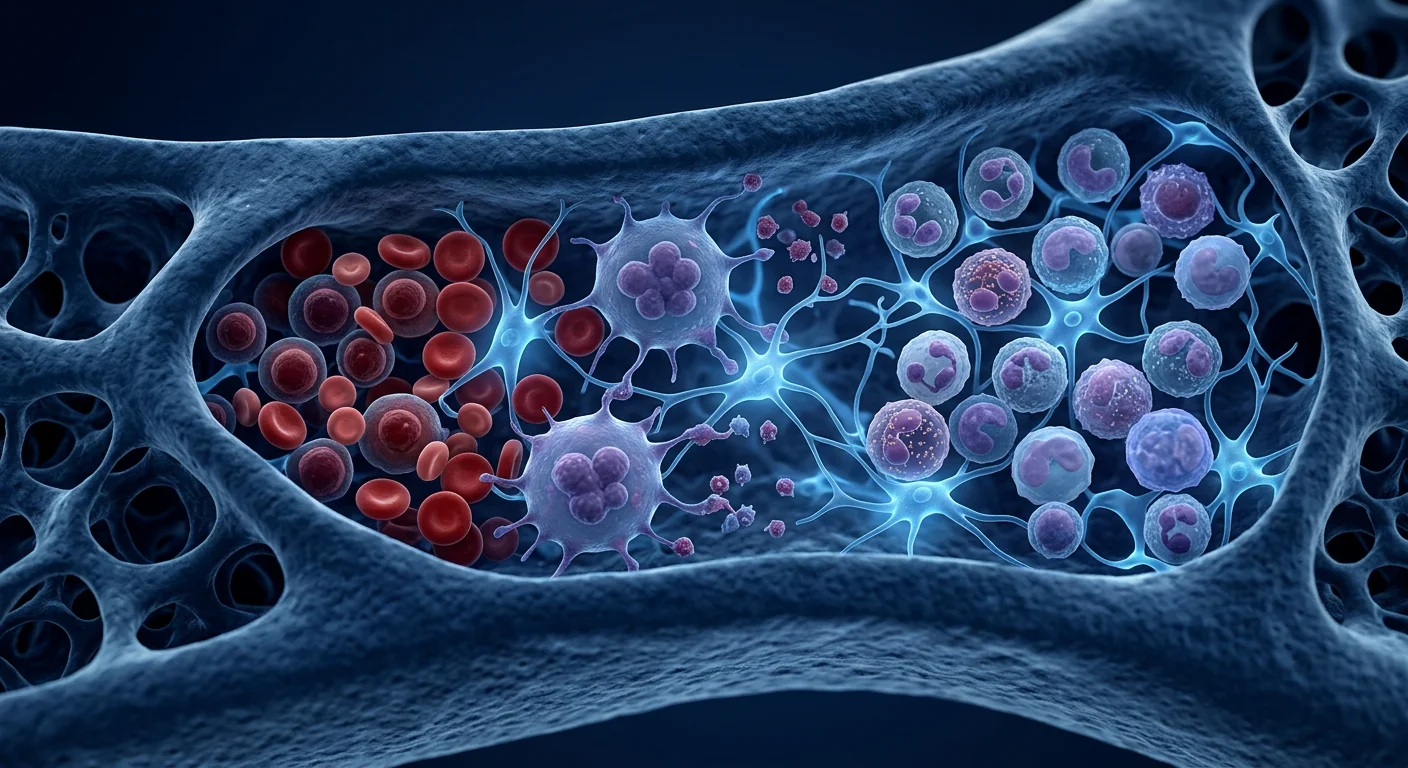
Protection of hematopoietic precursors. In the bone marrow microenvironment of Evans Syndrome patients, IFN-\u03b3 and TNF-\u03b1 from activated T-cells and macrophages create a pro-apoptotic milieu for erythroid and megakaryocyte precursors. MSCs engrafted in the bone marrow niche secrete anti-apoptotic factors (HGF, IGF-1, VEGF, SCF) and extracellular vesicles carrying miR-21 and miR-146a that suppress caspase activation in hematopoietic progenitors. In a murine model of immune-mediated bone marrow suppression, MSC co-administration reduced precursor apoptosis by 50% and accelerated recovery of hemoglobin and platelet counts by 7\u201310 days [10].
Clinical Evidence for MSC Therapy in Evans Syndrome
MSC evidence in ITP: The strongest clinical evidence for MSC therapy in any immune cytopenia comes from ITP. A 2024 prospective phase I trial by Chen et al. evaluated human umbilical cord-derived MSCs (UC-MSCs) in 20 patients with refractory ITP (median platelet count 12 \u00d7 10\u2079/L, median 5 prior therapies). Patients received 4 weekly intravenous infusions of 1 \u00d7 10\u2076 cells/kg. At 8-week follow-up, 9 of 20 patients (45%) achieved a platelet response (\u2265 30 \u00d7 10\u2079/L and at least 2-fold increase from baseline), with a median peak platelet count of 42 \u00d7 10\u2079/L. Six responders maintained platelet counts above 30 \u00d7 10\u2079/L without additional therapy for a median of 16 weeks. No serious adverse events were reported; the most common side effect was mild infusion-related headache (15%) [11].
MSC evidence in AIHA: Direct clinical data for MSCs in warm AIHA remain sparse. A small case series reported benefit of allogeneic MSC infusion in 3 patients with refractory warm AIHA, demonstrating reduced hemolytic markers and transfusion requirements in 2 of 3 patients. Preclinical studies in murine AIHA models show that MSC infusion reduces anti-erythrocyte autoantibody titers by 50\u201360%, decreases splenic erythrophagocytosis, and improves hemoglobin levels by 2\u20133 g/dL within 4 weeks [12].
The evidence gap for Evans Syndrome specifically. A case report from 2024 described a patient with refractory Evans Syndrome treated with combined UC-MSC infusion and telitacicept (a dual BAFF/APRIL inhibitor). Hemoglobin improved from 7.2 to 11.4 g/dL within 2 weeks, and platelet count rose from 18 to 68 \u00d7 10\u2079/L at 4 weeks, with no significant adverse events. While this single case is encouraging, it cannot substitute for structured clinical trials. The dual-lineage nature of Evans Syndrome means that MSC therapy may need to be optimized differently than for isolated ITP or AIHA \u2014 potentially requiring higher doses, combination with targeted immunotherapy, or more frequent re-dosing [13].
Treatment Process at VELAR
Patients with Evans Syndrome considering MSC therapy at VELAR Center undergo a comprehensive evaluation process. A thorough hematologic workup \u2014 including complete blood counts, direct antiglobulin test, platelet antibody studies, and bone marrow examination where indicated \u2014 establishes the baseline disease activity and rules out secondary causes. Immunophenotyping and lymphocyte subset analysis help characterize the underlying immune dysregulation profile. The VELAR team reviews prior treatment history in detail, documenting response to corticosteroids, IVIG, rituximab, immunosuppressants, and any previous splenectomy outcome. Based on this assessment, a personalized infusion protocol is designed, typically involving 4\u20136 intravenous infusions of allogeneic UC-MSCs (1\u20131.5 \u00d7 10\u2076 cells/kg) administered at weekly intervals. Hematologic parameters are monitored at each visit, and response is assessed at 4, 8, and 12 weeks using validated criteria (transfusion independence, hemoglobin stabilization, platelet count maintenance). Patients with partial response may receive additional maintenance infusions at 3-month intervals.
Limitations and Honest Assessment
MSC therapy for Evans Syndrome is investigational. No randomized controlled trials have been completed specifically for Evans Syndrome. The published evidence consists of small series and case reports in the component disorders (ITP and AIHA), with only a single case report combining MSC therapy with targeted immunotherapy in Evans Syndrome itself [14].
Durability and optimal protocols are unknown. The phase I ITP trial showed median response durability of 16 weeks. Whether this translates to sustained remission in the more complex setting of Evans Syndrome, and whether repeated infusions are necessary to maintain benefit, remains unknown.
Underlying immunodeficiency complicates assessment. A sizable proportion of Evans Syndrome patients have an identifiable underlying immunodeficiency (ALPS, CVID, etc.). MSC therapy's immunomodulatory effects may differ in these patients compared to those with truly idiopathic Evans Syndrome. Careful genetic and immunological characterization is essential before treatment.
Combination therapy may be necessary. The complexity of Evans Syndrome \u2014 involving both B-cell and T-cell dysregulation, macrophage activation, and potential complement involvement \u2014 suggests that MSC monotherapy may be insufficient for many patients. Combination with rituximab, Treg-enhancing agents, or targeted complement inhibition may prove more effective, but this approach has not been studied.
Frequently Asked Questions
What is the difference between Evans Syndrome and having just ITP or just AIHA?
Evans Syndrome involves the simultaneous or sequential presence of at least two autoimmune cytopenias \u2014 most commonly AIHA and ITP, with or without autoimmune neutropenia. Isolated AIHA or ITP involves only one cell lineage. Evans Syndrome follows a more severe, relapsing course with a higher treatment burden, lower response rates to conventional therapy, and a greater likelihood of underlying immunodeficiency. The dual-lineage immune attack makes it a fundamentally different disease than either condition alone.
How well does MSC therapy work for Evans Syndrome based on current evidence?
Direct clinical evidence for MSC therapy in Evans Syndrome is very limited. The strongest supporting evidence comes from a 2024 phase I trial in refractory ITP showing 45% platelet response rates and from preclinical AIHA studies. A single case report of combined MSC and targeted immunotherapy in Evans Syndrome showed rapid dual-lineage response. While the mechanistic rationale is strong, larger controlled studies are needed before MSC therapy can be recommended as standard treatment for Evans Syndrome.
How much does MSC therapy for Evans Syndrome cost in Thailand?
Treatment costs at VELAR Center are determined on an individual basis, taking into account cell dose, number of infusions, and the complexity of the Evans Syndrome presentation. Patients receive a detailed, transparent cost estimate during the initial consultation. Contact the VELAR clinical team directly for a personalized assessment and pricing.
Is MSC therapy safe for Evans Syndrome patients who have already failed multiple treatments?
The available safety data from the ITP phase I trial and from broader MSC research are reassuring: no Grade III\u2013IV infusion reactions, no ectopic tissue formation, and no increased infection risk have been reported in patients with immune cytopenias. MSC safety across thousands of infusions for autoimmune indications shows a favorable profile. However, every patient\u2019s risk\u2013benefit calculus is unique, especially in the context of previous immunosuppression and potential underlying immunodeficiency. A thorough discussion with a hematologist experienced in both Evans Syndrome and regenerative medicine is essential.
How is MSC treatment response measured in Evans Syndrome?
Response is assessed using established criteria for both AIHA and ITP: hemoglobin stabilization above 10 g/dL without transfusion support (or a rise of \u2265 2 g/dL from baseline), platelet count maintenance above 30 \u00d7 10\u2079/L without rescue therapy, and reduction in hemolytic markers (LDH, bilirubin, reticulocyte count). Most protocols assess response at 4, 8, and 12 weeks post-infusion. Dual-lineage response \u2014 improvement in both red cell and platelet parameters \u2014 is the goal.
Can MSC therapy replace rituximab, corticosteroids, or other immunosuppressants in Evans Syndrome?
No. MSC therapy is not a replacement for established treatments. Available evidence positions MSCs as a potential adjunctive or salvage therapy for patients who are refractory to or intolerant of standard treatments. MSC therapy is best understood as an investigational addition to the treatment arsenal, not a substitute for first-line care. Patients should continue all prescribed medications unless explicitly directed by their treating physician.
References
- Audia S, Grienay N, Mounier M, Michel M, Bonnotte B. Evans' Syndrome: From Diagnosis to Treatment. Journal of Clinical Medicine. 2020;9(12):3851. doi:10.3390/jcm9123851 \u21a9
- Michel M, Chanet V, Dechartres A, et al. The spectrum of Evans syndrome in adults: new insight into the disease based on the analysis of 68 cases. Blood. 2009;114(15):3167\u20133172. doi:10.1182/blood-2009-04-215368 \u21a9
- Fattizzo B, Marchetti M, Michel M, et al. Diagnosis and management of Evans syndrome in adults: first consensus recommendations. The Lancet Haematology. 2024. doi:10.1016/S2352-3026(24)00144-3 \u21a9
- Norton A, Roberts I. Management of Evans syndrome. British Journal of Haematology. 2006;132(2):125\u2013137. doi:10.1111/j.1365-2141.2005.05809.x \u21a9
- Caplan AI, Correa D. The MSC: an injury drugstore. Cell Stem Cell. 2011;9(1):11\u201315. doi:10.1016/j.stem.2011.06.008 \u21a9
- He Y, Ji D, et al. The Mechanistic Effects and Clinical Applications of Various Derived Mesenchymal Stem Cells in Immune Thrombocytopenia. Acta Haematologica. 2022;145(1):9\u201320. doi:10.1159/000518577 \u21a9
- Ma L, et al. Immunosuppressive function of mesenchymal stem cells from human umbilical cord matrix in immune thrombocytopenia patients. Thrombosis and Haemostasis. 2012;107(5):937\u2013950. doi:10.1160/TH11-08-0596 \u21a9
- Fattizzo B, Michel M, Giannotta JA, et al. Evans syndrome in adults: an observational multicenter study. Blood Advances. 2021;5(24):5468\u20135478. doi:10.1182/bloodadvances.2021005610 \u21a9
- Provan D, Arnold DM, Bussel JB, et al. Updated international consensus report on the investigation and management of primary immune thrombocytopenia. Blood Advances. 2019;3(22):3780\u20133817. doi:10.1182/bloodadvances.2019000812 \u21a9
- J\u00e4ger U, Barcellini W, Broome CM, et al. Diagnosis and treatment of autoimmune hemolytic anemia in adults: recommendations from the first international consensus meeting. Blood Reviews. 2020;41:100648. doi:10.1016/j.blre.2019.100648 \u21a9
- Chen Y, Xu Y, Chi Y, et al. Efficacy and safety of human umbilical cord-derived mesenchymal stem cells in the treatment of refractory immune thrombocytopenia: a prospective, single arm, phase I trial. Signal Transduction and Targeted Therapy. 2024;9(1):102. doi:10.1038/s41392-024-01793-5 \u21a9
- Pincez T, Aladjidi N, et al. Long term follow-up of pediatric-onset Evans syndrome: broad immunopathological manifestations and high treatment burden. Haematologica. 2022;107(6):1396\u20131407. doi:10.3324/haematol.2020.271106 \u21a9
- Mannering N, Hansen DL, Frederiksen H. Evans syndrome in children below 13 years of age \u2013 A nationwide population-based cohort study. PLoS ONE. 2020;15(4):e0231284. doi:10.1371/journal.pone.0231284 \u21a9
- Wang X, et al. Intravenous infusion umbilical cord-derived mesenchymal stem cell in primary immune thrombocytopenia: a two-year follow-up. Experimental and Therapeutic Medicine. 2017;13(5):2255\u20132258. doi:10.3892/etm.2017.4284 \u21a9
- Rivalta B, Zama D, Pancaldi G, et al. Evans Syndrome in Childhood: Long Term Follow-Up and the Evolution in Primary Immunodeficiency or Rheumatological Disease. Frontiers in Pediatrics. 2019;7:304. doi:10.3389/fped.2019.00304 \u21a9
Evans综合征是一种罕见的自身免疫性疾病,其特征是同时或先后出现自身免疫性溶血性贫血(AIHA)和免疫性血小板减少症(ITP),伴或不伴自身免疫性中性粒细胞减少 [1]。由Robert Evans于1951年首次描述,这种慢性、复发性疾病约占所有AIHA或ITP病例的0.8-3.7%,其预后远差于任何一种单独的细胞减少症 [2]。
为什么Evans综合征难以治疗。 Evans综合征的双系免疫攻击由多种因素驱动:产生针对红细胞和血小板抗原的温反应性IgG抗体的自身反应性B细胞,以及维持自身抗体产生并促进巨噬细胞介导的破坏的失调T细胞亚群。与孤立性AIHA或ITP不同——其中皮质类固醇一线治疗可达到60-80%的应答率——Evans综合征患者复发率更高、缓解期更短、治疗负担显著更大,通常需要多种免疫抑制剂、利妥昔单抗甚至脾切除术才能控制疾病 [3]。
更深层的问题是免疫耐受失败。 Evans综合征代表了阻止自身反应性淋巴细胞逃逸的机制的根本性崩溃。潜在的免疫缺陷——如自身免疫性淋巴增殖综合征(ALPS)、常见变异型免疫缺陷病(CVID)和其他先天性免疫错误——在相当一部分儿童和成人Evans综合征患者中被发现。这种免疫失调背景解释了为什么常规免疫抑制治疗单独使用很少能获得持久缓解:它抑制效应细胞而不恢复最初失败的中枢耐受机制 [4]。
MSC疗法针对免疫耐受恢复。 间充质干细胞在根本上不同于常规免疫抑制剂的作用层面。MSC不是广泛抑制淋巴细胞活性,而是主动将免疫微环境重新教育为耐受状态:它们诱导调节性T细胞(Treg)扩增、抑制自身反应性B细胞成熟、促进促炎性(M1)向抗炎性(M2)巨噬细胞表型转化,并分泌可溶性因子——TGF-β、IL-10、PGE2、IDO——直接对抗驱动溶血和血小板减少的效应机制。这种免疫调节程序,而非免疫抑制,可能解决Evans综合征特征性的根本耐受失败 [5]。
MSC如何针对Evans综合征的病理生理学
MSC通过几种互补机制应对Evans综合征的多方面免疫失调 [6]。
恢复Treg/Th17平衡。 在ITP和AIHA中,CD4+CD25+FoxP3+调节性T细胞相对缺乏和Th17效应细胞相应扩增均有充分文献记载。这种失衡有利于产生致病性自身抗体的自身反应性B细胞的存活和活化。MSC通过TGF-β和PGE2信号促进Treg分化,同时通过IL-10和IDO介导的途径抑制Th17极化。在ITP背景下,UC-MSC输注显示可增加外周血中Treg/Th17比例,与血小板恢复相关 [7]。
抑制自身反应性B细胞活性。 Evans综合征中的温抗体AIHA由靶向红细胞膜蛋白的IgG自身抗体驱动,这些抗体由已逃脱耐受检查点的克隆扩增B细胞产生。MSC通过直接细胞接触(PD-L1/PD-1结合)和可溶性因子(TGF-β、IL-1受体拮抗剂)抑制B细胞增殖、抑制浆细胞分化并减少免疫球蛋白产生。MSC来源的细胞外囊泡还携带下调B细胞受体信号和类别转换重组的microRNA。这种B细胞调节对Evans综合征特别相关,因为AIHA和ITP都涉及致病性自身抗体 [8]。
巨噬细胞极化和减少吞噬作用。 在Evans综合征中,脾脏和肝脏巨噬细胞(库普弗细胞)被自身反应性T细胞的IFN-γ激活为促炎性M1表型,驱动Fcγ受体介导的红细胞吞噬和血小板吞噬。MSC通过分泌IL-10、PGE2和HGF促进M1向M2极化。M2巨噬细胞表达较低水平的活化性Fcγ受体和较高水平的抑制性FcγRIIB,直接减少抗体包被的红细胞和血小板的清除。在免疫介导的血小板减少症鼠类模型中,MSC治疗将巨噬细胞介导的血小板清除减少40%并改善血小板计数 [9]。
保护造血前体细胞。 在Evans综合征患者的骨髓微环境中,来自活化T细胞和巨噬细胞的IFN-γ和TNF-α为红系和巨核系前体细胞创造了促凋亡环境。植入骨髓微环境的MSC分泌抗凋亡因子(HGF、IGF-1、VEGF、SCF)和携带miR-21和miR-146a的细胞外囊泡,抑制造血祖细胞中的caspase活化。在免疫介导的骨髓抑制鼠类模型中,MSC联合给药将前体细胞凋亡减少50%,血红蛋白和血小板计数恢复加速7-10天 [10]。
MSC治疗Evans综合征的临床证据
ITP中的MSC证据:MSC治疗任何免疫性细胞减少症的最强临床证据来自ITP。2024年Chen等人的前瞻性I期试验评估了人脐带来源MSC(UC-MSC)在20例难治性ITP患者中的应用(中位血小板计数12 × 10⁹/L,中位既往治疗5种)。患者接受4次每周1 × 10⁶细胞/kg的静脉输注。在8周随访时,20例患者中有9例(45%)达到血小板应答(≥ 30 × 10⁹/L且较基线至少提高2倍),中位血小板峰值为42 × 10⁹/L。6名应答者维持血小板计数≥ 30 × 10⁹/L无需额外治疗的中位时间为16周。未报告严重不良事件;最常见的副作用为轻度输注相关头痛(15%)[11]。
AIHA中的MSC证据:MSC在温抗体AIHA中的直接临床数据仍然稀少。一个小型病例系列报告了异基因MSC输注在3例难治性温抗体AIHA患者中的获益,显示其中2例患者的溶血标志物减少和输血需求降低。鼠类AIHA模型的临床前研究显示,MSC输注将抗红细胞自身抗体滴度降低50-60%,减少脾脏红细胞吞噬,并在4周内使血红蛋白水平提高2-3 g/dL [12]。
专门针对Evans综合征的证据缺口。 2024年的一份病例报告描述了一名难治性Evans综合征患者接受UC-MSC联合telitacicept(一种双重BAFF/APRIL抑制剂)治疗的情况。血红蛋白在2周内从7.2 g/dL升至11.4 g/dL,血小板计数在4周内从18升至68 × 10⁹/L,未发生显著不良事件。虽然这个单一病例令人鼓舞,但它不能替代结构化临床试验。Evans综合征的双系性质意味着MSC治疗可能需要针对孤立性ITP或AIHA进行不同的优化——可能需要更高剂量、与靶向免疫治疗联合使用或更频繁的重复给药 [13]。
VELAR的治疗流程
考虑在VELAR中心接受MSC治疗的Evans综合征患者需经过全面的评估流程。全面的血液学检查——包括全血细胞计数、直接抗球蛋白试验、血小板抗体研究和必要时骨髓检查——确定基线疾病活动度并排除继发性原因。免疫表型分析和淋巴细胞亚群分析有助于描述潜在免疫失调特征。VELAR团队详细回顾既往治疗史,记录对皮质类固醇、IVIG、利妥昔单抗、免疫抑制剂和既往脾切除术结局的应答情况。基于此评估,设计个性化输注方案,通常包括4-6次每周一次的异基因UC-MSC静脉输注(1-1.5 × 10⁶细胞/kg)。每次访视时监测血液学参数,并在4、8和12周使用经验证的标准(输血独立、血红蛋白稳定、血小板计数维持)评估应答。部分应答的患者可能每3个月接受额外的维持输注。
局限性与诚实评估
MSC治疗Evans综合征仍属研究性质。尚无专门针对Evans综合征的随机对照试验完成。已发表的证据包括其组成性疾病(ITP和AIHA)中的小型系列研究和病例报告,仅在Evans综合征本身中有1例结合MSC与靶向免疫治疗的病例报告 [14]。
持久性和最佳方案未知。I期ITP试验显示中位应答持续时间为16周。在Evans综合征更复杂的背景下是否可转化为持续缓解,以及是否需要重复输注以维持获益,仍属未知。
潜在免疫缺陷使评估复杂化。相当比例的Evans综合征患者存在可识别的潜在免疫缺陷(ALPS、CVID等)。MSC治疗的免疫调节效应在这些患者中可能与真正特发性Evans综合征患者不同。治疗前必须进行仔细的遗传学和免疫学特征分析。
可能需要联合治疗。Evans综合征的复杂性——涉及B细胞和T细胞失调、巨噬细胞活化以及可能的补体参与——表明MSC单药治疗对许多患者可能不足。与利妥昔单抗、Treg增强剂或靶向补体抑制剂的联合可能更为有效,但这种方法尚未得到研究。
常见问题解答
Evans综合征与仅有ITP或仅有AIHA有何不同?
Evans综合征涉及两种或以上自身免疫性细胞减少症的同时或先后出现——最常见为AIHA和ITP,伴或不伴自身免疫性中性粒细胞减少。孤立性AIHA或ITP仅涉及一种细胞谱系。Evans综合征病程更为严重、复发倾向更强、治疗负担更高、对常规治疗应答率更低,且潜在免疫缺陷的可能性更大。双系免疫攻击使其成为与任一单独病症根本不同的疾病。
基于目前证据,MSC治疗对Evans综合征的效果如何?
MSC治疗Evans综合征的直接临床证据非常有限。最强有力的支持证据来自2024年在难治性ITP中进行的I期试验(45%血小板应答率)和临床前AIHA研究。一份MSC联合靶向免疫治疗Evans综合征的病例报告显示了快速双系应答。虽然机制原理坚实,但在MSC治疗被推荐为Evans综合征标准治疗之前,仍需要更大规模的对照研究。
在泰国,MSC治疗Evans综合征的费用是多少?
VELAR中心的治疗费用基于个体情况确定,考虑细胞剂量、输注次数和Evans综合征表现的复杂性。患者在首次咨询期间会收到详细、透明的费用估算。请直接联系VELAR临床团队进行个性化评估和定价。
MSC治疗对已接受多种治疗失败的Evans综合征患者安全吗?
来自ITP I期试验和更广泛MSC研究的现有安全性数据是令人安心的:在免疫性细胞减少症患者中未报告III-IV级输注反应、无异位组织形成、无感染风险增加。MSC在数千次自身免疫适应症输注中的安全性特征显示了良好的概况。然而,每位患者的风险-获益评估是独特的,特别是在既往免疫抑制和潜在免疫缺陷的背景下。与同时在Evans综合征和再生医学方面经验丰富的血液科医生进行详细讨论至关重要。
Evans综合征的MSC治疗应答如何评估?
根据AIHA和ITP的既定标准评估应答:血红蛋白稳定在10 g/dL以上无需输血支持(或较基线升高≥2 g/dL)、血小板计数维持在30 × 10⁹/L以上无需抢救治疗、以及溶血标志物(LDH、胆红素、网织红细胞计数)的降低。大多数方案在输注后4、8和12周评估应答。双系应答——红细胞和血小板参数均有改善——是治疗目标。
MSC疗法能否替代Evans综合征中的利妥昔单抗、皮质类固醇或其他免疫抑制剂?
不能。MSC疗法不能替代已确立的治疗。现有证据将MSC定位为对标准治疗无效或不耐受患者的潜在辅助或挽救治疗。MSC疗法最好被理解为治疗手段的研究性补充,而非一线治疗的替代品。除非主治医生明确指示,患者应继续所有处方药物。
متلازمة إيفانز هي اضطراب مناعي ذاتي نادر يتميز بالتطور المتزامن أو المتتابع لفقر الدم الانحلالي المناعي الذاتي وقلة الصفائح الدموية المناعية، مع أو بدون قلة العدلات المناعية الذاتية [1]. وصفها روبرت إيفانز لأول مرة في عام 1951، تؤثر هذه الحالة المزمنة المنتكسة على حوالي 0.8-3.7% من جميع حالات فقر الدم الانحلالي المناعي الذاتي أو قلة الصفائح الدموية المناعية وتحمل تشخيصًا أسوأ بشكل كبير من أي من نقص الخلايا بمفرده [2].
لماذا متلازمة إيفانز مقاومة للعلاج. الهجوم المناعي ثنائي الخط في متلازمة إيفانز مدفوع بمزيج من الخلايا البائية ذاتية التفاعل التي تنتج أجسامًا مضادة IgG دافئة التفاعل ضد مستضدات كريات الدم الحمراء والصفائح الدموية، ومجموعات فرعية من الخلايا التائية غير المنظمة التي تديم إنتاج الأجسام المضادة الذاتية وتعزز التدمير بوساطة البلاعم. على عكس فقر الدم الانحلالي المناعي الذاتي المعزول أو قلة الصفائح الدموية المناعية حيث يحقق العلاج الأولي بالكورتيكوستيرويدات معدلات استجابة 60-80%، يعاني مرضى متلازمة إيفانز من معدلات انتكاس أعلى وفترات هدوء أقصر وعبء علاجي أكبر بشكل ملحوظ — يتطلب غالبًا عوامل متعددة مثبطة للمناعة وريتوكسيماب وحتى استئصال الطحال لتحقيق السيطرة على المرض [3].
المشكلة الأعمق هي فشل التحمل المناعي. تمثل متلازمة إيفانز انهيارًا أساسيًا في الآليات التي تمنع هروب الخلايا اللمفاوية ذاتية التفاعل. يتم تحديد أوجه القصور المناعي الكامنة — مثل متلازمة التكاثر اللمفاوي المناعي الذاتي ونقص المناعة المتغير الشائع وأخطاء المناعة الفطرية الأخرى — في مجموعة فرعية كبيرة من مرضى متلازمة إيفانز من الأطفال والبالغين. يشرح سياق الاضطراب المناعي هذا لماذا نادرًا ما يحقق التثبيط المناعي التقليدي وحده هدوءًا دائمًا: فهو يثبط الخلايا المؤثرة دون استعادة آليات التحمل المركزي التي فشلت في المقام الأول [4].
يستهدف العلاج بالخلايا الجذعية الوسيطة استعادة التحمل المناعي. تعمل الخلايا الجذعية الوسيطة على مستوى مختلف جوهريًا عن مثبطات المناعة التقليدية. بدلاً من تثبيط نشاط الخلايا اللمفاوية على نطاق واسع، تقوم الخلايا الجذعية الوسيطة بإعادة تثقيف البيئة المناعية نحو التحمل: فهي تحفز توسع الخلايا التائية التنظيمية، وتثبط نضوج الخلايا البائية ذاتية التفاعل، وتعزز التحول من النمط الظاهري للبلاعم المؤيدة للالتهاب (M1) إلى النمط المضاد للالتهاب (M2)، وتفرز عوامل قابلة للذوبان — TGF-β وIL-10 وPGE2 وIDO — التي تعاكس مباشرة الآليات المؤثرة التي تحرك كلًا من الانحلال ونقص الصفائح الدموية. قد يعالج هذا البرنامج التعديلي المناعي، بدلاً من التثبيط المناعي، فشل التحمل الجذري الذي يميز متلازمة إيفانز [5].
كيف تستهدف الخلايا الجذعية الوسيطة الفيزيولوجيا المرضية لمتلازمة إيفانز
تعالج الخلايا الجذعية الوسيطة الاضطراب المناعي متعدد الأوجه لمتلازمة إيفانز من خلال عدة آليات تكميلية [6].
استعادة توازن Treg/Th17. في كل من قلة الصفائح الدموية المناعية وفقر الدم الانحلالي المناعي الذاتي، تم توثيق نقص نسبي في الخلايا التائية التنظيمية CD4+CD25+FoxP3+ وتوسع متبادل في الخلايا المؤثرة Th17 بشكل جيد. هذا الخلل يفضل بقاء وتنشيط الخلايا البائية ذاتية التفاعل التي تنتج أجسامًا مضادة ذاتية ممرضة. تعزز الخلايا الجذعية الوسيطة تمايز الخلايا التائية التنظيمية عبر إشارات TGF-β وPGE2، بينما تثبط في الوقت نفسه استقطاب Th17 من خلال مسارات IL-10 وIDO. في سياق قلة الصفائح الدموية المناعية، أظهر تسريب الخلايا الجذعية الوسيطة من الحبل السري زيادة في نسبة Treg/Th17 في الدم المحيطي، مرتبطة بتعافي الصفائح الدموية [7].
تثبيط نشاط الخلايا البائية ذاتية التفاعل. يحدث فقر الدم الانحلالي المناعي الذاتي الدافئ في متلازمة إيفانز بواسطة أجسام مضادة IgG تستهدف بروتينات غشاء كريات الدم الحمراء، تنتجها خلايا بائية موسعة نسليًا هربت من نقاط تفتيش التحمل. تثبط الخلايا الجذعية الوسيطة تكاثر الخلايا البائية، وتمنع تمايز خلايا البلازما، وتقلل إنتاج الغلوبيولين المناعي من خلال الاتصال الخلوي المباشر (ارتباط PD-L1/PD-1) والعوامل القابلة للذوبان (TGF-β ومضاد مستقبل IL-1). تحمل الحويصلات خارج الخلوية المشتقة من الخلايا الجذعية الوسيطة أيضًا جزيئات microRNA تخفض تنظيم إشارات مستقبل الخلايا البائية وتبديل فئة إعادة التركيب. هذا التعديل للخلايا البائية مهم بشكل خاص لمتلازمة إيفانز لأن كلاً من فقر الدم الانحلالي المناعي الذاتي وقلة الصفائح الدموية المناعية ينطويان على أجسام مضادة ذاتية ممرضة [8].
استقطاب البلاعم وتقليل البلعمة. في متلازمة إيفانز، يتم تنشيط البلاعم في الطحال والكبد (خلايا كوبفر) إلى النمط الظاهري M1 المؤيد للالتهاب بواسطة IFN-γ من الخلايا التائية ذاتية التفاعل، مما يدفع البلعمة بوساطة مستقبل Fcγ لكريات الدم الحمراء والصفائح الدموية. تعزز الخلايا الجذعية الوسيطة استقطاب M1 إلى M2 من خلال إفراز IL-10 وPGE2 وHGF. تعبر بلاعم M2 عن مستويات أقل من مستقبلات Fcγ المنشطة ومستويات أعلى من FcγRIIB المثبطة، مما يقلل مباشرة من إزالة كريات الدم الحمراء والصفائح الدموية المغطاة بالأجسام المضادة. في نموذج فأري لقلة الصفائح الدموية بوساطة مناعية، قلل العلاج بالخلايا الجذعية الوسيطة من إزالة الصفائح الدموية بوساطة البلاعم بنسبة 40% وحسن تعداد الصفائح الدموية [9].
حماية السلائف المكونة للدم. في البيئة المكروية لنخاع العظم لمرضى متلازمة إيفانز، يخلق IFN-γ وTNF-α من الخلايا التائية والبلاعم المنشطة وسطًا محفزًا لموت الخلايا المبرمج للسلائف الكريات الحمر والخلايا العملاقة المكونة للصفائح الدموية. تفرز الخلايا الجذعية الوسيطة المنغرسة في بيئة نخاع العظم عوامل مضادة لموت الخلايا المبرمج (HGF وIGF-1 وVEGF وSCF) وحويصلات خارج خلوية تحمل miR-21 وmiR-146a تثبط تنشيط الكاسباز في السلائف المكونة للدم. في نموذج فأري لتثبيط نخاع العظم بوساطة مناعية، قلل الإعطاء المشترك للخلايا الجذعية الوسيطة من موت الخلايا المبرمج للسلائف بنسبة 50% وسرع تعافي الهيموغلوبين وتعداد الصفائح الدموية بمقدار 7-10 أيام [10].
الأدلة السريرية للعلاج بالخلايا الجذعية الوسيطة في متلازمة إيفانز
أدلة الخلايا الجذعية الوسيطة في قلة الصفائح الدموية المناعية: أقوى دليل سريري للعلاج بالخلايا الجذعية الوسيطة في أي نقص خلوي مناعي يأتي من قلة الصفائح الدموية المناعية. جربت تجربة المرحلة الأولى لعام 2024 من قبل تشين وآخرون الخلايا الجذعية الوسيطة المشتقة من الحبل السري البشري في 20 مريضًا بقلة الصفائح الدموية المناعية المقاومة (متوسط تعداد الصفائح الدموية 12 × 10⁹ / لتر، متوسط 5 علاجات سابقة). تلقى المرضى 4 دفعات وريدية أسبوعية من 1 × 10⁶ خلية/كجم. في متابعة 8 أسابيع، حقق 9 من 20 مريضًا (45%) استجابة صفيحية (≥ 30 × 10⁹ / لتر وزيادة مرتين على الأقل من خط الأساس)، مع متوسط ذروة تعداد صفائح دموية 42 × 10⁹ / لتر. حافظ 6 مستجيبين على تعداد الصفائح الدموية فوق 30 × 10⁹ / لتر دون علاج إضافي لمتوسط 16 أسبوعًا. لم يتم الإبلاغ عن أحداث ضائرة خطيرة؛ كان التأثير الجانبي الأكثر شيوعًا هو الصداع الخفيف المرتبط بالتسريب (15%) [11].
أدلة الخلايا الجذعية الوسيطة في فقر الدم الانحلالي المناعي الذاتي: البيانات السريرية المباشرة للخلايا الجذعية الوسيطة في فقر الدم الانحلالي المناعي الذاتي الدافئ لا تزال نادرة. أبلغت سلسلة حالات صغيرة عن فائدة تسريب الخلايا الجذعية الوسيطة الخيفية في 3 مرضى بفقر الدم الانحلالي المناعي الذاتي الدافئ المقاوم، مما أظهر انخفاض علامات الانحلال ومتطلبات نقل الدم في 2 من 3 مرضى. تظهر الدراسات قبل السريرية في نماذج فقر الدم الانحلالي المناعي الذاتي في الفئران أن تسريب الخلايا الجذعية الوسيطة يقلل عيار الأجسام المضادة الذاتية لكريات الدم الحمراء بنسبة 50-60%، ويقلل البلعمة في الطحال، ويحسن مستويات الهيموغلوبين بمقدار 2-3 جم/ديسيلتر في غضون 4 أسابيع [12].
فجوة الأدلة لمتلازمة إيفانز تحديدًا. وصف تقرير حالة من عام 2024 مريضًا بمتلازمة إيفانز المقاومة عولج بتسريب الخلايا الجذعية الوسيطة من الحبل السري مع telitacicept (مثبط مزدوج BAFF/APRIL). تحسن الهيموغلوبين من 7.2 إلى 11.4 جم/ديسيلتر في غضون أسبوعين، وارتفع تعداد الصفائح الدموية من 18 إلى 68 × 10⁹ / لتر في 4 أسابيع، دون أحداث ضائرة كبيرة. بينما تشجع هذه الحالة الفردية، لا يمكنها أن تحل محل التجارب السريرية المنظمة. طبيعة متلازمة إيفانز ثنائية الخط تعني أن العلاج بالخلايا الجذعية الوسيطة قد يحتاج إلى تحسين مختلف عن قلة الصفائح الدموية المناعية أو فقر الدم الانحلالي المناعي الذاتي المنعزل — ربما يتطلب جرعات أعلى، أو مزيجًا مع العلاج المناعي المستهدف، أو إعادة جرعات أكثر تواترًا [13].
عملية العلاج في VELAR
يخضع مرضى متلازمة إيفانز الذين يفكرون في العلاج بالخلايا الجذعية الوسيطة في مركز VELAR لعملية تقييم شاملة. يحدد الفحص الدموي الشامل — بما في ذلك تعداد الدم الكامل واختبار الأجسام المضادة المباشر ودراسات الأجسام المضادة للصفائح الدموية وفحص نخاع العظم عند الإشارة — نشاط المرض الأساسي ويستبعد الأسباب الثانوية. يساعد التنميط المناعي وتحليل المجموعات الفرعية للخلايا اللمفاوية في توصيف ملف الاضطراب المناعي الكامن. يراجع فريق VELAR تاريخ العلاج السابق بالتفصيل، موثقًا الاستجابة للكورتيكوستيرويدات والغلوبولين المناعي الوريدي والريتوكسيماب ومثبطات المناعة وأي نتيجة سابقة لاستئصال الطحال. بناءً على هذا التقييم، يتم تصميم بروتوكول تسريب شخصي، يشمل عادة 4-6 دفعات وريدية من الخلايا الجذعية الوسيطة من الحبل السري الخيفية (1-1.5 × 10⁶ خلية/كجم) تعطى على فترات أسبوعية. يتم مراقبة المعايير الدموية في كل زيارة، ويتم تقييم الاستجابة في 4 و8 و12 أسبوعًا باستخدام معايير موثقة (الاستقلال عن نقل الدم، استقرار الهيموغلوبين، الحفاظ على تعداد الصفائح الدموية). قد يتلقى المرضى ذوو الاستجابة الجزئية دفعات صيانة إضافية على فترات 3 أشهر.
القيود والتقييم الصادق
العلاج بالخلايا الجذعية الوسيطة لمتلازمة إيفانز لا يزال قيد البحث. لم يتم إكمال أي تجارب عشوائية مضبوطة خاصة بمتلازمة إيفانز. تتكون الأدلة المنشورة من سلاسل صغيرة وتقارير حالات في الاضطرابات المكونة (قلة الصفائح الدموية المناعية وفقر الدم الانحلالي المناعي الذاتي)، مع تقرير حالة واحد فقط يجمع بين العلاج بالخلايا الجذعية الوسيطة والعلاج المناعي المستهدف في متلازمة إيفانز نفسها [14].
المتانة والبروتوكولات المثلى غير معروفة. أظهرت تجربة المرحلة الأولى لقلة الصفائح الدموية المناعية متوسط متانة استجابة 16 أسبوعًا. ما إذا كان هذا يترجم إلى هدوء مستدام في السياق الأكثر تعقيدًا لمتلازمة إيفانز، وما إذا كانت هناك حاجة لدفعات متكررة للحفاظ على الفائدة، لا يزال غير معروف.
نقص المناعة الكامن يعقد التقييم. نسبة كبيرة من مرضى متلازمة إيفانز لديهم نقص مناعي كامن قابل للتحديد (متلازمة التكاثر اللمفاوي المناعي الذاتي ونقص المناعة المتغير الشائع وغيرها). قد تختلف تأثيرات التعديل المناعي للعلاج بالخلايا الجذعية الوسيطة في هؤلاء المرضى مقارنة بأولئك الذين يعانون من متلازمة إيفانز مجهولة السبب حقًا. التوصيف الجيني والمناعي الدقيق ضروري قبل العلاج.
قد يكون العلاج المشترك ضروريًا. تعقيد متلازمة إيفانز — الذي يشمل اضطراب الخلايا البائية والتائية وتنشيط البلاعم واحتمال مشاركة المتممة — يشير إلى أن العلاج الأحادي بالخلايا الجذعية الوسيطة قد يكون غير كافٍ للعديد من المرضى. قد يثبت المزيج مع الريتوكسيماب أو معززات الخلايا التائية التنظيمية أو تثبيط المتممة المستهدف فعالية أكبر، لكن هذا النهج لم يدرس بعد.
الأسئلة الشائعة
ما الفرق بين متلازمة إيفانز والإصابة بقلة الصفائح الدموية المناعية أو فقر الدم الانحلالي المناعي الذاتي فقط؟
تنطوي متلازمة إيفانز على وجود متزامن أو متتابع لنوعين أو أكثر من نقص الخلايا المناعي الذاتي — الأكثر شيوعًا فقر الدم الانحلالي المناعي الذاتي وقلة الصفائح الدموية المناعية، مع أو بدون قلة العدلات المناعية الذاتية. فقر الدم الانحلالي المناعي الذاتي وقلة الصفائح الدموية المناعية المنعزلة ينطويان على سلالة خلية واحدة فقط. تتبع متلازمة إيفانز مسارًا أكثر شدة وانتكاسًا مع عبء علاجي أعلى ومعدلات استجابة أقل للعلاج التقليدي واحتمال أكبر لنقص المناعة الكامن. الهجوم المناعي ثنائي الخط يجعلها مرضًا مختلفًا جوهريًا عن أي من الحالتين بمفردهما.
بناءً على الأدلة الحالية، ما مدى فعالية العلاج بالخلايا الجذعية الوسيطة لمتلازمة إيفانز؟
الأدلة السريرية المباشرة للعلاج بالخلايا الجذعية الوسيطة في متلازمة إيفانز محدودة جدًا. يأتي أقوى دليل داعم من تجربة المرحلة الأولى لعام 2024 في قلة الصفائح الدموية المناعية المقاومة (معدل استجابة صفيحية 45%) ومن الدراسات قبل السريرية لفقر الدم الانحلالي المناعي الذاتي. أظهر تقرير حالة واحد للجمع بين الخلايا الجذعية الوسيطة والعلاج المناعي المستهدف في متلازمة إيفانز استجابة ثنائية الخط سريعة. بينما الأساس المنطقي الآلي قوي، هناك حاجة لدراسات مضبوطة أكبر قبل أن يمكن التوصية بالعلاج بالخلايا الجذعية الوسيطة كعلاج قياسي لمتلازمة إيفانز.
كم تكلفة العلاج بالخلايا الجذعية الوسيطة لمتلازمة إيفانز في تايلاند؟
تحدد تكاليف العلاج في مركز VELAR على أساس فردي، مع مراعاة جرعة الخلايا وعدد الدفعات وتعقد حالة متلازمة إيفانز. يتلقى المرضى تقدير تكلفة مفصل وشفاف أثناء الاستشارة الأولية. اتصل بفريق VELAR السريري مباشرة للتقييم الشخصي والتسعير.
هل العلاج بالخلايا الجذعية الوسيطة آمن لمرضى متلازمة إيفانز الذين فشلوا بالفعل في علاجات متعددة؟
بيانات السلامة المتاحة من تجربة المرحلة الأولى لقلة الصفائح الدموية المناعية ومن أبحاث الخلايا الجذعية الوسيطة الأوسع مطمئنة: لم يتم الإبلاغ عن تفاعلات تسريب من الدرجة الثالثة إلى الرابعة، ولا تكوين نسيج منتبذ، ولا زيادة في خطر العدوى في المرضى الذين يعانون من نقص الخلايا المناعي. يظهر ملف سلامة الخلايا الجذعية الوسيطة عبر آلاف الدفعات لمؤشرات المناعة الذاتية ملفًا إيجابيًا. ومع ذلك، فإن تقييم المخاطر والفوائد لكل مريض فريد، خاصة في سياق التثبيط المناعي السابق ونقص المناعة الكامن المحتمل. مناقشة شاملة مع أخصائي أمراض دم ذي خبرة في كل من متلازمة إيفانز والطب التجديدي ضرورية.
كيف يتم قياس استجابة العلاج بالخلايا الجذعية الوسيطة في متلازمة إيفانز؟
يتم تقييم الاستجابة باستخدام معايير ثابتة لكل من فقر الدم الانحلالي المناعي الذاتي وقلة الصفائح الدموية المناعية: استقرار الهيموغلوبين فوق 10 جم/ديسيلتر دون دعم نقل الدم (أو ارتفاع ≥ 2 جم/ديسيلتر من خط الأساس)، والحفاظ على تعداد الصفائح الدموية فوق 30 × 10⁹ / لتر دون علاج إنقاذي، وانخفاض علامات الانحلال (LDH والبيليروبين وتعداد الخلايا الشبكية). تقوم معظم البروتوكولات بتقييم الاستجابة في 4 و8 و12 أسبوعًا بعد التسريب. الاستجابة ثنائية الخط — تحسن في كل من معايير كريات الدم الحمراء والصفائح الدموية — هي الهدف.
هل يمكن للعلاج بالخلايا الجذعية الوسيطة أن يحل محل الريتوكسيماب أو الكورتيكوستيرويدات أو مثبطات المناعة الأخرى في متلازمة إيفانز؟
لا. العلاج بالخلايا الجذعية الوسيطة ليس بديلاً عن العلاجات الراسخة. تضع الأدلة المتاحة الخلايا الجذعية الوسيطة كعلاج مساعد محتمل أو علاج إنقاذي للمرضى المقاومين للعلاجات القياسية أو غير المتسامحين معها. من الأفضل فهم العلاج بالخلايا الجذعية الوسيطة كإضافة بحثية لترسانة العلاج، وليس بديلاً عن الرعاية من الخط الأول. يجب على المرضى الاستمرار في جميع الأدوية الموصوفة ما لم يوجه الطبيب المعالج بخلاف ذلك صراحة.