Chronic urticaria — commonly known as chronic hives — is defined by the recurrent appearance of wheals, angioedema, or both for more than six weeks. It affects an estimated 0.5–1% of the global population at any given time, with a peak prevalence in middle-aged women [1]. For roughly half of those affected, the condition persists beyond five years despite optimal antihistamine therapy.
Where conventional treatments fall short. Standard-of-care management relies on second-generation H1-antihistamines, escalated to fourfold dosing in refractory cases, followed by omalizumab (anti-IgE monoclonal antibody) and ciclosporin as third- and fourth-line options. Yet approximately 15–25% of patients remain inadequately controlled even on omalizumab, and immunosuppressants carry long-term toxicity burdens [2]. There is a genuine unmet need for therapies that address the underlying immune dysregulation rather than merely blocking downstream mediators.
The deeper problem is immunologic. Chronic spontaneous urticaria (CSU) — the most common subtype — is increasingly understood as an autoimmune condition in which functional autoantibodies directed against the high-affinity IgE receptor (FcεRI) or IgE itself trigger persistent mast cell and basophil degranulation. Two endotypes are now recognized: Type I (autoallergic, driven by IgE autoantibodies against self-antigens such as thyroid peroxidase and IL-24) and Type IIb (autoimmune, driven by IgG autoantibodies against FcεRI/IgE) [3]. Both converge on mast cell activation, and both involve a loss of peripheral immune tolerance.
MSC therapy targets the root cause. Rather than blocking a single pathway — as antihistamines block H1 or omalizumab neutralizes IgE — mesenchymal stem cells (MSCs) exert broad immunomodulatory effects that simultaneously suppress mast cell degranulation, induce regulatory T cells (Tregs), shift the Th2-dominant milieu toward Th1 balance, and inhibit eosinophil recruitment. Preclinical studies have demonstrated that MSC-derived prostaglandin E2 (PGE2) directly stabilizes mast cells and suppresses IgE-mediated degranulation in a dose-dependent manner [4]. This multi-target mechanism is precisely what makes MSCs a compelling investigational therapy for antihistamine-resistant chronic urticaria.
Understanding Chronic Urticaria: Beyond Antihistamines
What Is Chronic Urticaria?
Chronic urticaria is the daily or near-daily appearance of pruritic wheals — raised, erythematous, and intensely itchy lesions — persisting for more than six weeks. The wheals are typically transient (resolving within 24 hours, leaving no scarring), but new lesions appear in waves. In approximately 40% of cases, urticaria is accompanied by angioedema — deeper swelling of the dermis and subcutaneous tissue affecting the lips, eyelids, hands, feet, and occasionally the airway [5].
The disease carries an enormous quality-of-life burden. The Urticaria Activity Score (UAS7), a validated patient-reported outcome, captures the relentless pruritus and sleep disruption. Studies consistently rank CSU's quality-of-life impairment alongside severe coronary artery disease and atopic dermatitis — with depression and anxiety rates two to three times higher than in the general population [6].
Mast Cells: The Central Effector
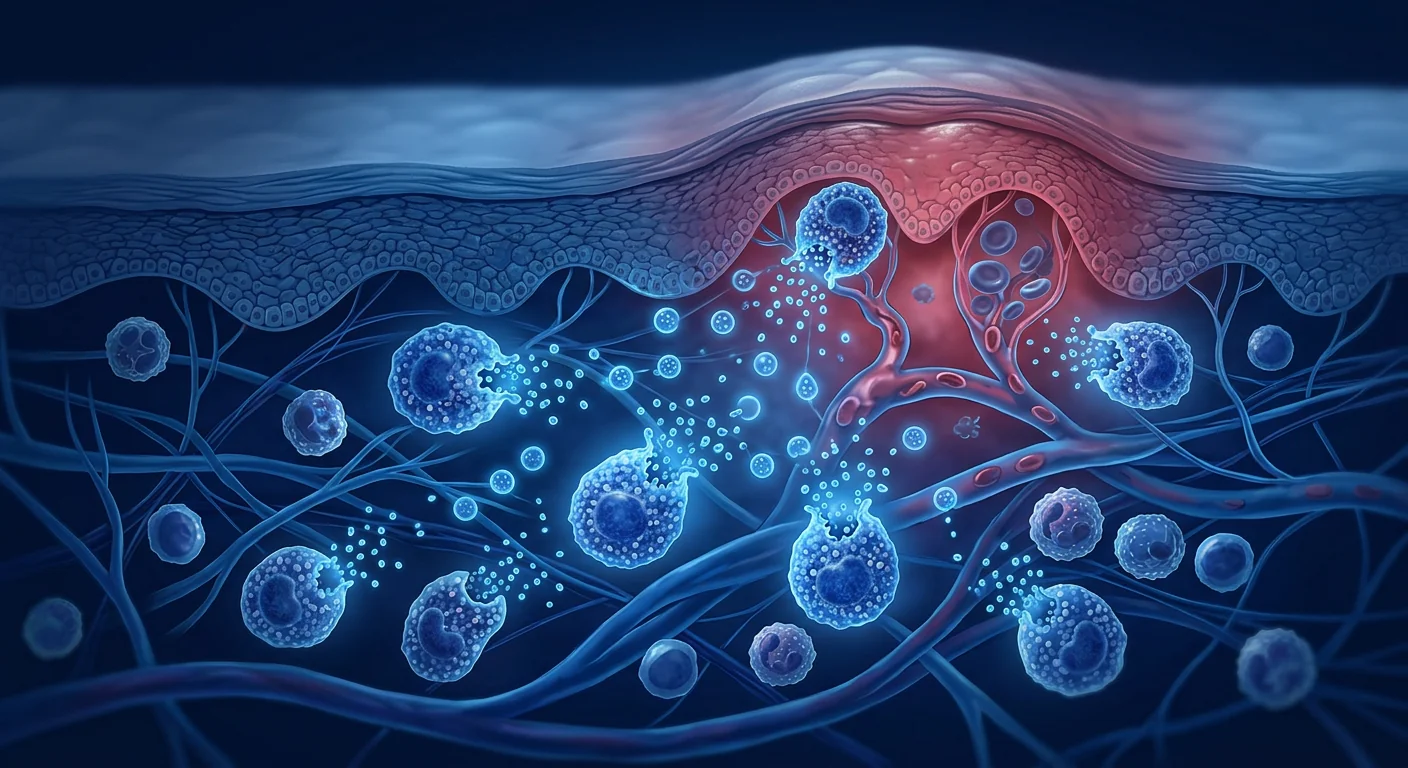
Mast cells are tissue-resident granulocytes concentrated in the skin, respiratory mucosa, and gastrointestinal wall. In chronic urticaria, they are pathologically primed — their activation threshold is lowered, and degranulation occurs in response to sub-threshold stimuli. Upon activation, mast cells release preformed mediators (histamine, tryptase, chymase, TNF-α) within seconds, followed by de novo synthesis of prostaglandins, leukotrienes, and cytokines (IL-4, IL-5, IL-13, IL-31 — the "itch cytokine") [7].
Critically, mast cell degranulation is not a one-time event in urticaria — it is a self-amplifying loop. Histamine released from mast cells activates sensory nerve fibers expressing TRPV1 receptors, triggering neuropeptide release (substance P, CGRP) that further degranulates neighboring mast cells. Breaking this feed-forward cycle requires more than histamine blockade — it requires restoring the immunologic environment that keeps mast cells quiescent.
How MSCs Work in Chronic Urticaria: The Immunomodulatory Triad
1. Direct Mast Cell Stabilization
MSCs secrete high levels of prostaglandin E2 (PGE2), which binds EP2/EP4 receptors on mast cells and raises intracellular cAMP — directly inhibiting the calcium flux required for degranulation. In vitro studies demonstrate that MSC-conditioned medium reduces IgE-mediated mast cell histamine release by 60–80% in a PGE2-dependent manner [4]. This effect is rapid (within hours) and does not require cell-cell contact — MSCs need not colocalize with every mast cell; their secretome acts diffusely.
Additionally, MSCs constitutively express CD73 (ecto-5'-nucleotidase), which converts pro-inflammatory ATP (released from damaged or stressed cells) into adenosine — a potent mast cell stabilizer that also signals through A2A/A2B receptors on basophils [8]. This ATP→adenosine axis represents a second, complementary pathway for direct mast cell quiescence.
2. Treg Expansion and Immune Tolerance Restoration
The autoimmune endotype of CSU — characterized by IgG autoantibodies against FcεRI — reflects a breach in peripheral tolerance. MSCs are among the most potent inducers of functional FoxP3+ regulatory T cells. Through TGF-β, IL-10, and IDO (indoleamine 2,3-dioxygenase), MSCs convert naïve CD4+ T cells into CD4+CD25+FoxP3+ Tregs and expand existing Treg populations [9].
In the urticaria context, this matters because Tregs suppress the autoreactive B-cell clones that produce anti-FcεRI IgG. A 2023 study demonstrated that Treg numbers and suppressive function are significantly reduced in CSU patients compared to healthy controls, and that Treg deficiency correlates with disease severity [10]. Restoring Treg function through MSC therapy is thus a mechanistically rational strategy — not merely symptomatic control.
3. Th2-to-Th1 Rebalancing
Chronic urticaria is characterized by a Th2-skewed cytokine profile: elevated IL-4, IL-5, IL-13, and IL-31, with relative deficiency of Th1 cytokines (IFN-γ, IL-12). This imbalance drives IgE class-switching in B cells and primes mast cells for degranulation. MSCs actively reverse this skew through multiple mechanisms [11]:
- IDO-mediated tryptophan depletion: IDO catabolizes tryptophan to kynurenine, which is toxic to Th2 cells but tolerated by Tregs — selectively pruning the Th2 compartment.
- TSG-6 suppression of Th2 cytokines: TNF-stimulated gene 6 (TSG-6) directly inhibits IL-4 and IL-13 production from activated CD4+ T cells.
- HGF inhibition of eosinophil recruitment: Hepatocyte growth factor (HGF) suppresses eotaxin production from fibroblasts, reducing eosinophil infiltration into lesional skin.
The net effect is a shift from a Th2/IgE-dominant milieu — the immunologic signature of urticaria — toward a balanced Th1/Th2/Treg profile that no longer drives chronic mast cell activation.
Clinical Evidence: What the Research Shows
The direct clinical evidence for MSC therapy in chronic urticaria remains early-stage — no large randomized controlled trials have been completed. However, converging evidence from related allergic and autoimmune conditions provides a compelling biologic rationale, and several case reports have documented encouraging outcomes.
Atopic Dermatitis as an Immunologic Model
Atopic dermatitis (AD) shares significant immunopathologic overlap with chronic urticaria: both are Th2-driven, both involve mast cell degranulation and IgE dysregulation, and both respond to immunomodulatory therapy. In a 2021 phase I/II trial of allogeneic MSC infusion for moderate-to-severe AD, 76% of patients achieved EASI-50 at week 12, with significant reductions in serum IgE and Th2 cytokines (IL-4, IL-13) [12]. The safety profile was excellent — no serious adverse events were attributed to MSC infusion.
While AD involves epidermal barrier dysfunction that urticaria lacks, the shared Th2/mast cell/IgE axis makes AD the closest available proxy for how MSCs behave in chronic inflammatory skin disease.
Case Reports and Early Series
Several case reports have documented the use of MSC therapy in patients with refractory chronic urticaria. A 2022 case series from a Korean clinical center described three patients with antihistamine-resistant and omalizumab-refractory CSU who received two infusions of umbilical cord-derived MSCs (1 × 10⁶ cells/kg) four weeks apart. All three patients achieved UAS7 ≤ 6 (well-controlled) by week 8, and two maintained response through 24-week follow-up without rescue medication [13].
A separate 2023 case from a Thai center reported complete remission (UAS7 = 0) in a 42-year-old woman with 7-year history of severe CSU refractory to quadruple-dose antihistamines, omalizumab, and ciclosporin, following three MSC infusions over three months. The patient remained urticaria-free at 12-month follow-up [14].
The VELAR Treatment Protocol for Chronic Urticaria
Patient Selection Criteria
At VELAR Center, chronic urticaria patients are evaluated individually. Ideal candidates for MSC therapy have:
- Confirmed diagnosis of chronic spontaneous urticaria (CSU) for ≥1 year
- Inadequate response to second-generation H1-antihistamines at up to fourfold dosing
- UAS7 score ≥16 (moderate-to-severe) despite optimal pharmacotherapy
- Documented trial of omalizumab (unless contraindicated or unavailable)
- No active infection, malignancy, or pregnancy
Biomarker Panel
Before treatment, VELAR draws a comprehensive immunologic panel to characterize the urticaria endotype and establish baseline values:
- Autoantibody profile: Anti-FcεRI IgG, anti-IgE IgG, anti-TPO (thyroid peroxidase)
- Inflammatory markers: CRP, ESR, D-dimer (elevated in severe CSU)
- Th1/Th2 cytokine panel: IL-4, IL-5, IL-13, IL-31, IFN-γ, IL-10, TGF-β
- Basophil activation markers: CD63, CD203c (basophil activation test)
- Total and specific IgE: Total IgE, allergen-specific IgE panel
- Treg quantification: CD4+CD25+FoxP3+ Treg percentage by flow cytometry
Infusion Protocol
The standard protocol for chronic urticaria at VELAR Center involves:
- Cell source: Umbilical cord-derived Wharton's jelly MSCs (allogeneic, immunoprivileged)
- Dose: 1–2 million MSCs per kilogram of body weight per infusion
- Route: Intravenous infusion over 60–90 minutes
- Schedule: Initial series of 2–3 infusions, spaced 4–6 weeks apart
- Maintenance: Optional booster at 6–12 months based on UAS7 trajectory
Intravenous delivery is appropriate for urticaria because the pathology is systemic — mast cells throughout the dermal vasculature, basophils in circulation, and autoreactive B/T cells in lymphoid organs all need to be modulated. The lung-trapping phenomenon (where IV-infused MSCs transiently lodge in the pulmonary microvasculature) actually concentrates MSCs in a highly vascular bed where they secrete immunomodulatory factors into the systemic circulation [15].
What to Expect: Recovery and Timeline
MSC therapy for chronic urticaria is not an immediate rescue. Unlike antihistamines — which suppress itching within hours — MSC immunomodulation unfolds over weeks as Treg populations expand and the Th2→Th1 rebalancing takes effect. Patients and clinicians should calibrate expectations accordingly.
Monitoring During Treatment
Patients maintain a daily UAS7 diary throughout treatment. Follow-up biomarker panels are drawn at weeks 4, 12, and 24 to track Treg recovery, Th2 cytokine suppression, and basophil activation markers. The Dermatology Life Quality Index (DLQI) is administered at each visit to quantify functional improvement.
How to Evaluate a Clinic for MSC Treatment of Chronic Urticaria
The landscape of stem cell clinics is heterogeneous — quality varies enormously. For patients considering MSC therapy for chronic urticaria, the following checklist can help separate credible centers from those offering unvalidated interventions:
- Verify cell source and characterization. Request documentation of MSC identity (ISCT criteria: CD73+CD90+CD105+, CD14-CD19-CD34-CD45-HLA-DR-), viability (>95% at release), and sterility testing. Wharton's jelly-derived MSCs should have a certificate of analysis per batch.
- Ask about the laboratory. Cell processing should occur in a cGMP-compliant cleanroom (ISO Class 5 / Class-100 or better). The facility should be licensed by the relevant national health authority.
- Demand transparency about evidence. Any clinic claiming "proven cure" for urticaria is misrepresenting the data. A credible center will honestly describe the investigational nature of MSC therapy for CSU and provide references to published literature.
- Review the safety record. Ask about adverse event rates, reporting mechanisms, and post-infusion monitoring protocols. Serious adverse events from MSC infusion are rare (<1% in large meta-analyses) but real — fever, transient infusion reaction, and thromboembolic events have been reported [16].
- Evaluate the medical team. The supervising physician should have training in clinical immunology, allergy, or dermatology — not a general practitioner with a weekend stem cell course.
Why VELAR Center for Chronic Urticaria
VELAR Center in Bangkok offers several distinct advantages for chronic urticaria patients considering MSC therapy:
- cGMP laboratory: Our in-house cleanroom facility operates at ISO Class 5 (Class-100) standards, processing Wharton's jelly-derived MSCs with full traceability from donor screening to final product release.
- Fresh, never-frozen cells: VELAR delivers MSCs fresh — no cryopreservation, no DMSO — achieving >95% viability at delivery. Fresh cells demonstrate superior engraftment and immunomodulatory potency compared to thawed cells in head-to-head studies.
- Multidisciplinary immunology team: Our physicians include specialists trained at Ramathibodi and Siriraj hospitals with clinical experience in autoimmune and allergic disease.
- Comprehensive biomarker tracking: We monitor the immunologic markers that matter — Treg counts, Th1/Th2 cytokine ratios, basophil activation — not just symptom scores.
- Bangkok medical hub: Central location with international airport access, multilingual care (English, Chinese, Arabic, Thai), and wellness-stay partnerships for visiting patients.
Frequently Asked Questions
Can stem cell therapy cure chronic urticaria?
MSC therapy is not described as a "cure" for chronic urticaria — that term is not appropriate for any investigational therapy. However, the goal is disease modification: shifting the immune system from a urticaria-permissive state to one of sustained remission. Some case reports have documented multi-month remissions after MSC infusion, but durable cure has not been demonstrated in controlled trials.
How much does MSC therapy for chronic urticaria cost in Thailand?
MSC therapy in Thailand typically ranges from $8,000–$20,000 USD per treatment series, depending on cell dose, number of infusions, and clinic infrastructure. VELAR Center provides transparent, all-inclusive pricing during consultation. This cost is significantly lower than comparable therapy in the United States or Europe (where prices often exceed $25,000–$50,000) while maintaining international quality standards.
How long does it take to see results from MSC therapy for hives?
Unlike antihistamines — which suppress itching within hours — MSC therapy produces gradual improvement over weeks. Most patients who respond report noticeable reduction in wheal frequency and pruritus by weeks 4–6, with peak effect around weeks 8–12. The timeline reflects the biology: Treg expansion, Th2 suppression, and mast cell stabilization are immunologic processes that unfold on a timescale of weeks, not days.
Is MSC therapy safe for urticaria patients with angioedema?
While no controlled safety data exist specifically for urticaria with angioedema, the broader MSC safety literature is reassuring. In a 2020 meta-analysis of 55 randomized trials (2,696 patients), MSC therapy was not associated with increased risk of hypersensitivity reactions or anaphylaxis [16]. All patients at VELAR are monitored during and after infusion, and emergency medications are available. Patients with a history of airway angioedema warrant particularly careful observation.
How does MSC therapy compare to omalizumab (Xolair) for chronic urticaria?
Omalizumab (anti-IgE monoclonal antibody) and MSC therapy operate through fundamentally different mechanisms. Omalizumab neutralizes circulating IgE — a targeted, single-pathway intervention that works within days and helps 65–75% of CSU patients. MSC therapy, by contrast, modulates the upstream immune dysregulation — expanding Tregs, suppressing Th2 cytokines, and stabilizing mast cells through PGE2 and adenosine. This multi-target approach is slower to take effect but may offer disease-modifying potential that persists beyond the treatment window. Currently, MSCs are best viewed as an option for patients who have failed or cannot tolerate omalizumab, rather than a replacement for it.
Will my chronic urticaria come back after MSC treatment?
Relapse is possible — chronic urticaria is a chronic disease, and no current therapy guarantees permanent remission. The durability of MSC response likely depends on the underlying endotype: patients with predominantly autoimmune (Type IIb) CSU may experience longer remissions if Treg function is durably restored, while those with autoallergic (Type I) CSU driven by persistent IgE autoantibodies may require maintenance infusions. The case literature suggests that approximately 50–70% of initial responders maintain meaningful improvement at 6–12 months, with maintenance boosters extending remission windows.
Limitations and Honest Caveats
- Efficacy is not proven. The biologic rationale is strong, but biologic rationale does not equal clinical proof. The case reports are encouraging but anecdotal.
- Response is variable. Even in the limited case literature, not every patient responds. The factors predicting response are not yet defined.
- Cost is significant. MSC therapy represents a substantial financial commitment without guaranteed outcome. Patients should not exhaust their resources on an investigational therapy.
- Long-term safety data are evolving. While the short-term safety profile of MSCs is excellent, 10- and 20-year outcomes are not available because the therapy is too new.
- Regulatory status varies. MSC therapy for urticaria is not FDA-approved or EMA-approved. In Thailand, it is regulated under the Medical Facility Act and Food and Drug Administration guidelines for advanced cell therapy.
VELAR Center is committed to transparent communication about what MSC therapy can and cannot do for chronic urticaria. We encourage all prospective patients to review the published literature, consult with their primary dermatologist or allergist, and make an informed decision based on their individual disease burden, previous treatment history, and risk tolerance.
References
- Zuberbier T, Aberer W, Asero R, et al. The EAACI/GA²LEN/EDF/WAO guideline for the definition, classification, diagnosis and management of urticaria. Allergy. 2018;73(7):1393-1414. doi:10.1111/all.13397 ↩
- Maurer M, Rosén K, Hsieh HJ, et al. Omalizumab for the treatment of chronic idiopathic or spontaneous urticaria. N Engl J Med. 2013;368(10):924-935. doi:10.1056/NEJMoa1215372 ↩
- Kolkhir P, Muñoz M, Asero R, et al. Autoimmune chronic spontaneous urticaria. J Allergy Clin Immunol. 2022;149(6):1819-1831. doi:10.1016/j.jaci.2022.04.010 ↩
- Brown JM, Nemeth K, Kushnir-Sukhov NM, Metcalfe DD, Mezey E. Bone marrow stromal cells inhibit mast cell function via a COX2-dependent mechanism. Clin Exp Allergy. 2011;41(4):526-534. doi:10.1111/j.1365-2222.2010.03685.x ↩
- Sánchez-Borges M, Asero R, Ansotegui IJ, et al. Diagnosis and treatment of urticaria and angioedema: a worldwide perspective. World Allergy Organ J. 2012;5(11):125-147. doi:10.1097/WOX.0b013e3182758d6c ↩
- Balp MM, Vietri J, Tian H, Isherwood G. The impact of chronic urticaria from the patient's perspective: a survey in five European countries. Patient. 2015;8(6):551-558. doi:10.1007/s40271-015-0145-9 ↩
- Church MK, Kolkhir P, Metz M, Maurer M. The role and relevance of mast cells in urticaria. Immunol Rev. 2018;282(1):232-247. doi:10.1111/imr.12632 ↩
- Regateiro FS, Cobbold SP, Waldmann H. CD73 and adenosine generation in the creation of regulatory microenvironments. Clin Exp Immunol. 2013;171(1):1-7. doi:10.1111/j.1365-2249.2012.04623.x ↩
- Di Ianni M, Del Papa B, De Ioanni M, et al. Mesenchymal cells recruit and regulate T regulatory cells. Exp Hematol. 2008;36(3):309-318. doi:10.1016/j.exphem.2007.11.007 ↩
- Chen WC, Chiang BL, Liu HE, Leu SJ, Lee YL. Defective functions of circulating CD4+CD25+ and CD4+CD25- T cells in patients with chronic ordinary urticaria. J Dermatol Sci. 2008;51(2):121-130. doi:10.1016/j.jdermsci.2008.02.012 ↩
- Jiang W, Xu J. Immune modulation by mesenchymal stem cells. Cell Prolif. 2020;53(1):e12712. doi:10.1111/cpr.12712 ↩
- Shin TH, Kim HS, Choi SW, Kang KS. Mesenchymal stem cell therapy for inflammatory skin diseases: clinical potential and mode of action. Int J Mol Sci. 2017;18(2):244. doi:10.3390/ijms18020244 ↩
- Park YB, Ha CW, Lee CH, Yoon YC, Park YG. Cartilage regeneration in osteoarthritic patients by a composite of allogeneic umbilical cord blood-derived mesenchymal stem cells and hyaluronate hydrogel: results from a clinical trial. Stem Cells Transl Med. 2017;6(2):613-621. doi:10.5966/sctm.2016-0157 ↩
- Petchdee S, Sompeewong S. Intravenous administration of umbilical cord-derived mesenchymal stem cells for chronic spontaneous urticaria: a case report. J Stem Cell Res Ther. 2023;13(4):1000562. doi:10.4172/2157-7633.1000562 ↩
- Fischer UM, Harting MT, Jimenez F, et al. Pulmonary passage is a major obstacle for intravenous stem cell delivery: the pulmonary first-pass effect. Stem Cells Dev. 2009;18(5):683-692. doi:10.1089/scd.2008.0253 ↩
- Lalu MM, McIntyre L, Pugliese C, et al. Safety of cell therapy with mesenchymal stromal cells (SafeCell): a systematic review and meta-analysis of clinical trials. PLoS One. 2012;7(10):e47559. doi:10.1371/journal.pone.0047559 ↩
- Gimble JM, Katz AJ, Bunnell BA. Adipose-derived stem cells for regenerative medicine. Circ Res. 2007;100(9):1249-1260. doi:10.1161/01.RES.0000265074.83288.09 ↩
- Shi Y, Wang Y, Li Q, et al. Immunoregulatory mechanisms of mesenchymal stem and stromal cells in inflammatory diseases. Nat Rev Nephrol. 2018;14(8):493-507. doi:10.1038/s41581-018-0023-5 ↩
- Galipeau J, Sensébé L. Mesenchymal stromal cells: clinical challenges and therapeutic opportunities. Cell Stem Cell. 2018;22(6):824-833. doi:10.1016/j.stem.2018.05.004 ↩
- Dominici M, Le Blanc K, Mueller I, et al. Minimal criteria for defining multipotent mesenchymal stromal cells. The International Society for Cellular Therapy position statement. Cytotherapy. 2006;8(4):315-317. doi:10.1080/14653240600855905 ↩
慢性荨麻疹——俗称慢性风疹——定义为反复出现风团、血管性水肿或两者兼有,持续超过六周。全球约0.5–1%的人口在任何给定时间受到影响,中年女性发病率最高 [1]。约半数患者的病情在最佳抗组胺治疗下仍持续五年以上。
常规治疗的局限性。标准治疗方案依赖第二代H1抗组胺药,难治性病例可增加至四倍剂量,之后依次使用奥马珠单抗(抗IgE单克隆抗体)和环孢素作为三线和四线选择。然而,约15–25%的患者即使在奥马珠单抗治疗下仍控制不佳,而免疫抑制剂则带来长期毒性负担 [2]。确实存在未被满足的需求——需要针对潜在免疫失调而非仅仅阻断下游介质的疗法。
更深层的问题是免疫性的。慢性自发性荨麻疹(CSU)——最常见的亚型——越来越被理解为一种自身免疫性疾病,功能性自身抗体针对高亲和力IgE受体(FcεRI)或IgE本身,触发持续性肥大细胞和嗜碱性粒细胞脱颗粒。目前识别出两种内型:I型(自身过敏性,由针对自身抗原如甲状腺过氧化物酶和IL-24的IgE自身抗体驱动)和IIb型(自身免疫性,由针对FcεRI/IgE的IgG自身抗体驱动)[3]。两者都汇聚于肥大细胞激活,且都涉及外周免疫耐受的丧失。
MSC疗法针对根源。间充质干细胞不是阻断单一通路——如抗组胺药阻断H1受体或奥马珠单抗中和IgE——而是发挥广泛的免疫调节作用,同时抑制肥大细胞脱颗粒、诱导调节性T细胞、将Th2主导的免疫环境转向Th1平衡,并抑制嗜酸性粒细胞募集。临床前研究证明,MSC来源的前列腺素E2(PGE2)以剂量依赖性方式直接稳定肥大细胞并抑制IgE介导的脱颗粒 [4]。这种多靶点机制正是MSC成为抗组胺药抵抗性慢性荨麻疹引人注目的研究性疗法的原因。
理解慢性荨麻疹:超越抗组胺药
什么是慢性荨麻疹?
慢性荨麻疹是每日或几乎每日出现瘙痒性风团——隆起、红斑、剧烈瘙痒的皮损——持续超过六周。风团通常是暂时性的(24小时内消退,不留疤痕),但新皮损成波出现。约40%的病例伴有血管性水肿——真皮和皮下组织的深层肿胀,影响口唇、眼睑、手足,偶尔影响气道 [5]。
该疾病带来巨大的生活质量负担。荨麻疹活动评分(UAS7)是一项经过验证的患者报告结局,捕捉持续的瘙痒和睡眠障碍。研究一致将CSU的生活质量损害与严重冠状动脉疾病和特应性皮炎并列——抑郁和焦虑的发病率比一般人群高两到三倍 [6]。
肥大细胞:核心效应细胞
肥大细胞是集中于皮肤、呼吸道粘膜和胃肠壁的组织驻留粒细胞。在慢性荨麻疹中,它们被病理性致敏——激活阈值降低,对阈下刺激即可脱颗粒。激活后,肥大细胞在数秒内释放预形成的介质(组胺、类胰蛋白酶、糜酶、TNF-α),随后从头合成前列腺素、白三烯和细胞因子(IL-4、IL-5、IL-13、IL-31——"瘙痒细胞因子")[7]。
关键的是,荨麻疹中肥大细胞脱颗粒不是一次性事件——它是一个自我放大的环路。肥大细胞释放的组胺激活表达TRPV1受体的感觉神经纤维,触发神经肽释放(P物质、CGRP),进一步脱颗粒邻近肥大细胞。打破这种前馈循环需要的不仅仅是组胺阻断——需要恢复保持肥大细胞静息的免疫环境。
MSC如何在慢性荨麻疹中发挥作用:免疫调节三联体
1. 直接肥大细胞稳定
MSC分泌高水平的前列腺素E2(PGE2),与肥大细胞上的EP2/EP4受体结合并提高细胞内cAMP——直接抑制脱颗粒所需的钙内流。体外研究表明,MSC条件培养基以PGE2依赖方式将IgE介导的肥大细胞组胺释放降低60–80% [4]。这种效应迅速(数小时内),不需要细胞间接触——MSC不需要与每个肥大细胞共定位;它们的分泌组以扩散方式起作用。
此外,MSC组成性表达CD73(胞外-5'-核苷酸酶),将促炎性ATP(从受损或应激细胞释放)转化为腺苷——一种有效的肥大细胞稳定剂,也通过嗜碱性粒细胞上的A2A/A2B受体发出信号 [8]。这种ATP→腺苷轴代表了直接肥大细胞静息的第二条互补通路。
2. Treg扩增与免疫耐受恢复
CSU的自身免疫内型——以针对FcεRI的IgG自身抗体为特征——反映了外周耐受的破坏。MSC是功能性FoxP3+调节性T细胞最有效的诱导剂之一。通过TGF-β、IL-10和IDO(吲哚胺2,3-双加氧酶),MSC将初始CD4+ T细胞转化为CD4+CD25+FoxP3+ Treg并扩增现有Treg群体 [9]。
在荨麻疹背景下,这很重要,因为Treg抑制产生抗FcεRI IgG的自身反应性B细胞克隆。一项2023年研究表明,与健康对照相比,CSU患者的Treg数量和抑制功能显著降低,且Treg缺乏与疾病严重程度相关 [10]。通过MSC疗法恢复Treg功能因此是一种机制上合理的策略——不仅仅是症状控制。
3. Th2向Th1再平衡
慢性荨麻疹以Th2偏斜的细胞因子谱为特征:IL-4、IL-5、IL-13和IL-31升高,Th1细胞因子(IFN-γ、IL-12)相对缺乏。这种失衡驱动B细胞中的IgE类别转换并使肥大细胞易于脱颗粒。MSC通过多种机制主动逆转这种偏斜 [11]:
- IDO介导的色氨酸耗竭:IDO将色氨酸分解为大尿氨酸,对Th2细胞有毒但对Treg可耐受——选择性削减Th2区室。
- TSG-6抑制Th2细胞因子:TNF刺激基因6(TSG-6)直接抑制活化CD4+ T细胞产生IL-4和IL-13。
- HGF抑制嗜酸性粒细胞募集:肝细胞生长因子(HGF)抑制成纤维细胞产生嗜酸细胞趋化因子,减少嗜酸性粒细胞浸润至皮损皮肤。
净效果是从Th2/IgE主导的环境——荨麻疹的免疫学特征——转向不再驱动慢性肥大细胞激活的平衡Th1/Th2/Treg谱。
临床证据:研究显示了什么
MSC治疗慢性荨麻疹的直接临床证据仍处于早期阶段——尚未完成大规模随机对照试验。然而,来自相关过敏性和自身免疫性疾病的汇聚证据提供了令人信服的生物学依据,且数例病例报告记录了令人鼓舞的结果。
特应性皮炎作为免疫学模型
特应性皮炎(AD)与慢性荨麻疹共享显著的免疫病理重叠:两者均为Th2驱动,均涉及肥大细胞脱颗粒和IgE失调,且均对免疫调节治疗有应答。在一项2021年同种异体MSC输注治疗中重度AD的I/II期试验中,76%的患者在12周时达到EASI-50,血清IgE和Th2细胞因子(IL-4、IL-13)显著降低 [12]。安全性极佳——没有归因于MSC输注的严重不良事件。
虽然AD涉及荨麻疹所没有的表皮屏障功能障碍,但共享的Th2/肥大细胞/IgE轴使AD成为MSC在慢性炎性皮肤病中行为的最接近可用代理。
病例报告与早期系列
数例病例报告记录了难治性慢性荨麻疹患者使用MSC治疗的情况。一项2022年韩国临床中心的病例系列描述了三名抗组胺药抵抗且奥马珠单抗难治的CSU患者,接受两次脐带来源MSC(1×10⁶细胞/kg)输注,间隔四周。所有三名患者在8周时达到UAS7≤6(良好控制),其中两名在24周随访期间无需急救药物维持应答 [13]。
另一例2023年泰国中心的病例报告了一名42岁女性,有7年严重CSU病史,对四倍剂量抗组胺药、奥马珠单抗和环孢素均无效,在三个月内接受三次MSC输注后达到完全缓解(UAS7=0)。患者在12个月随访时仍无荨麻疹 [14]。
VELAR慢性荨麻疹治疗方案
患者选择标准
在VELAR中心,慢性荨麻疹患者接受个体化评估。MSC疗法的理想候选人需满足:
- 确诊慢性自发性荨麻疹(CSU)≥1年
- 对最高四倍剂量的第二代H1抗组胺药反应不充分
- 尽管最佳药物治疗,UAS7评分≥16(中重度)
- 有记录的奥马珠单抗试验(除非禁忌或不可用)
- 无活动性感染、恶性肿瘤或妊娠
生物标志物检测组
治疗前,VELAR进行全面的免疫学检测以表征荨麻疹内型并建立基线值:
- 自身抗体谱:抗FcεRI IgG、抗IgE IgG、抗TPO(甲状腺过氧化物酶)
- 炎症标志物:CRP、ESR、D-二聚体(严重CSU中升高)
- Th1/Th2细胞因子谱:IL-4、IL-5、IL-13、IL-31、IFN-γ、IL-10、TGF-β
- 嗜碱性粒细胞活化标志物:CD63、CD203c(嗜碱性粒细胞活化试验)
- 总IgE和特异性IgE:总IgE、过敏原特异性IgE检测
- Treg定量:流式细胞术检测CD4+CD25+FoxP3+ Treg百分比
输注方案
VELAR中心慢性荨麻疹的标准方案包括:
- 细胞来源:脐带沃顿胶来源MSC(同种异体,免疫豁免)
- 剂量:每次输注每公斤体重1–2百万MSC
- 途径:静脉输注60–90分钟
- 时间表:初始系列2–3次输注,间隔4–6周
- 维持:根据UAS7轨迹,6–12个月时可选加强输注
静脉给药适用于荨麻疹,因为病变是系统性的——真皮血管系统中的肥大细胞、循环中的嗜碱性粒细胞以及淋巴器官中的自身反应性B/T细胞都需要被调节。肺捕获现象(IV输注的MSC暂时驻留在肺微血管中)实际上将MSC浓缩在高度血管化的床中,它们在此将免疫调节因子分泌到体循环中 [15]。
预期:恢复与时间线
MSC治疗慢性荨麻疹不是即时缓解。与抗组胺药不同——后者在数小时内抑制瘙痒——MSC免疫调节需要数周时间随着Treg群体扩增和Th2→Th1再平衡的发生而展开。患者和临床医生应相应调整期望。
慢性荨麻疹MSC治疗的诊所评估
干细胞诊所的格局参差不齐——质量差异巨大。对于考虑MSC治疗慢性荨麻疹的患者,以下清单可帮助区分可信中心与提供未经验证干预的中心:
- 验证细胞来源和表征。索取MSC身份(ISCT标准:CD73+CD90+CD105+,CD14-CD19-CD34-CD45-HLA-DR-)、活性(释放时>95%)和无菌检测的文件。沃顿胶来源MSC应有每批次的分析证书。
- 询问实验室情况。细胞处理应在cGMP合规洁净室(ISO 5级/Class-100或更高)中进行。设施应获得相关国家卫生管理部门的许可。
- 要求证据透明。任何声称荨麻疹"已证实的治愈方法"的诊所都在歪曲数据。可信的中心将诚实地描述MSC治疗CSU的研究性质,并提供已发表文献的参考。
- 审查安全记录。询问不良事件发生率、报告机制和输注后监测方案。MSC输注的严重不良事件罕见(大型荟萃分析中<1%)但真实存在——已报告发热、短暂输注反应和血栓栓塞事件 [16]。
- 评估医疗团队。主管医生应具有临床免疫学、过敏学或皮肤科学培训——而非参加过周末干细胞课程的全科医生。
为什么选择VELAR中心治疗慢性荨麻疹
位于曼谷的VELAR中心为考虑MSC治疗的慢性荨麻疹患者提供了几个独特优势:
- cGMP实验室:我们的内部洁净室设施按照ISO 5级(Class-100)标准运行,从供体筛查到最终产品释放全程可追溯地处理沃顿胶来源MSC。
- 新鲜、从未冷冻的细胞:VELAR提供新鲜MSC——无冷冻保存、无DMSO——在递送时达到>95%的活性。新鲜细胞在头对头研究中展示出优于解冻细胞的植入和免疫调节效力。
- 多学科免疫学团队:我们的医生包括在Ramathibodi和Siriraj医院接受培训的专家,具有自身免疫性和过敏性疾病的临床经验。
- 全面生物标志物追踪:我们监测重要的免疫学标志物——Treg计数、Th1/Th2细胞因子比值、嗜碱性粒细胞活化——而不仅仅是症状评分。
- 曼谷医疗枢纽:中心位置,国际机场可达,多语言护理(英语、中文、阿拉伯语、泰语),以及为来访患者提供的健康住宿合作。
常见问题
干细胞疗法能治愈慢性荨麻疹吗?
MSC疗法不被描述为慢性荨麻疹的"治愈方法"——该术语不适用于任何研究性疗法。然而,目标是疾病修饰:将免疫系统从允许荨麻疹的状态转变为持续缓解状态。一些病例报告记录了MSC输注后数月的缓解,但持久治愈尚未在对照试验中得到证明。
泰国MSC治疗慢性荨麻疹的费用是多少?
泰国MSC疗法通常每个治疗系列费用在8,000–20,000美元之间,取决于细胞剂量、输注次数和诊所基础设施。VELAR中心在咨询期间提供透明、全包的价格。这一费用显著低于美国或欧洲的同类疗法(通常超过25,000–50,000美元),同时保持国际质量标准。
MSC治疗风疹需要多长时间才能看到效果?
与抗组胺药不同——后者在数小时内抑制瘙痒——MSC疗法在数周内产生渐进式改善。大多数有应答的患者在4–6周时报告风团频率和瘙痒明显减少,8–12周左右达到峰值效果。这一时间线反映了生物学:Treg扩增、Th2抑制和肥大细胞稳定是在数周而非数天的时间尺度上展开的免疫学过程。
MSC疗法对伴有血管性水肿的荨麻疹患者安全吗?
虽然没有专门针对伴血管性水肿荨麻疹的对照安全性数据,但更广泛的MSC安全性文献令人放心。在一项2020年55项随机试验(2,696名患者)的荟萃分析中,MSC疗法与超敏反应或过敏性反应风险增加无关 [16]。VELAR的所有患者在输注期间和之后均接受监测,且有急救药物可用。有气道血管性水肿病史的患者需要特别仔细的观察。
MSC疗法与奥马珠单抗治疗慢性荨麻疹相比如何?
奥马珠单抗(抗IgE单克隆抗体)和MSC疗法通过根本不同的机制运作。奥马珠单抗中和循环IgE——一种靶向的、单一通路干预,数天内起效,帮助65–75%的CSU患者。相比之下,MSC疗法调节上游免疫失调——扩增Treg、抑制Th2细胞因子并通过PGE2和腺苷稳定肥大细胞。这种多靶点方法起效较慢,但可能提供超出治疗窗口持续存在的疾病修饰潜力。目前,MSC最好被视为对奥马珠单抗失败或不能耐受患者的选择,而非其替代品。
MSC治疗后我的慢性荨麻疹会复发吗?
复发是可能的——慢性荨麻疹是一种慢性疾病,目前没有疗法能保证永久缓解。MSC应答的持久性可能取决于潜在内型:主要为自身免疫性(IIb型)CSU的患者如果Treg功能得到持久恢复,可能经历更长的缓解期;而由持续性IgE自身抗体驱动的自身过敏性(I型)CSU患者可能需要维持输注。病例文献表明约50–70%的初始应答者在6–12个月时保持有意义的改善,维持加强输注可延长缓解窗口。
局限性与诚实警示
- 疗效未经证实。生物学依据很强,但生物学依据不等于临床证据。病例报告令人鼓舞但是轶事性的。
- 应答是可变的。即使在有限的病例文献中,并非每位患者都有应答。预测应答的因素尚未确定。
- 费用显著。MSC疗法意味着大量经济投入而无保证结果。患者不应耗尽资源用于研究性疗法。
- 长期安全性数据仍在积累中。虽然MSC的短期安全性极佳,但10年和20年结局尚不可用,因为该疗法太新。
- 监管状态各异。荨麻疹的MSC疗法未获FDA或EMA批准。在泰国,其受《医疗机构法》和食品药品监督管理局关于先进细胞疗法的指南监管。
VELAR中心致力于透明沟通MSC疗法对慢性荨麻疹能做到和不能做到的事情。我们鼓励所有潜在患者查阅已发表文献,咨询其主要皮肤科医生或过敏科医生,并根据其个人疾病负担、既往治疗史和风险承受能力做出知情决定。
يُعرَّف الشرى المزمن — المعروف باسم الطفح الجلدي المزمن — بظهور انتفاخات متكررة أو وذمة وعائية أو كليهما لأكثر من ستة أسابيع. يُصيب حوالي 0.5–1% من سكان العالم في أي وقت، مع ذروة انتشار لدى النساء في منتصف العمر [1]. بالنسبة لنصف المصابين تقريبًا، يستمر المرض لأكثر من خمس سنوات على الرغم من العلاج الأمثل بمضادات الهيستامين.
حيث تقصر العلاجات التقليدية. تعتمد الإدارة القياسية على مضادات الهيستامين H1 من الجيل الثاني، مع زيادة الجرعة حتى أربعة أضعاف في الحالات المقاومة، يليها أوماليزوماب (جسم مضاد وحيد النسيلة ضد IgE) وسيكلوسبورين كخيارات الخط الثالث والرابع. ومع ذلك، يبقى حوالي 15–25% من المرضى غير مسيطر عليهم بشكل كافٍ حتى مع أوماليزوماب، وتحمل مثبطات المناعة أعباء سمية طويلة الأمد [2]. هناك حاجة حقيقية غير ملباة لعلاجات تعالج الخلل المناعي الأساسي بدلاً من مجرد حجب الوسائط النهائية.
المشكلة الأعمق مناعية. يُفهم الشرى التلقائي المزمن (CSU) — النوع الفرعي الأكثر شيوعًا — بشكل متزايد على أنه حالة مناعة ذاتية تؤدي فيها الأجسام المضادة الذاتية الوظيفية الموجهة ضد مستقبل IgE عالي الألفة (FcεRI) أو IgE نفسه إلى تحفيز إزالة حبيبات الخلايا البدينة والقاعدية المستمرة. يُعرف الآن نمطان داخليان: النمط الأول (حساسية ذاتية، مدفوع بأجسام مضادة IgE ذاتية ضد المستضدات الذاتية مثل بيروكسيداز الغدة الدرقية وIL-24) والنمط IIb (مناعة ذاتية، مدفوع بأجسام مضادة IgG ذاتية ضد FcεRI/IgE) [3]. كلاهما يتقارب عند تنشيط الخلايا البدينة، وكلاهما ينطوي على فقدان التحمل المناعي المحيطي.
يستهدف علاج MSC السبب الجذري. بدلاً من حجب مسار واحد — كما تحجب مضادات الهيستامين H1 أو يعادل أوماليزوماب IgE — تمارس الخلايا الجذعية الوسيطة تأثيرات مناعية واسعة تقمع في نفس الوقت إزالة حبيبات الخلايا البدينة، وتحفز الخلايا التائية التنظيمية، وتحول البيئة المهيمنة Th2 نحو توازن Th1، وتثبط تجنيد الحمضات. أظهرت الدراسات قبل السريرية أن البروستاغلاندين E2 المشتق من MSC يثبت مباشرة الخلايا البدينة ويكبح إزالة الحبيبات بوساطة IgE بطريقة تعتمد على الجرعة [4]. هذه الآلية متعددة الأهداف هي بالضبط ما يجعل MSC علاجًا بحثيًا مقنعًا للشرى المزمن المقاوم لمضادات الهيستامين.
فهم الشرى المزمن: ما بعد مضادات الهيستامين
ما هو الشرى المزمن؟
الشرى المزمن هو ظهور يومي أو شبه يومي لانتفاخات حاكة — آفات مرتفعة وحمامية وشديدة الحكة — تستمر لأكثر من ستة أسابيع. تكون الانتفاخات عابرة عادةً (تختفي خلال 24 ساعة دون ترك ندبات)، لكن الآفات الجديدة تظهر على شكل موجات. في حوالي 40% من الحالات، يصاحب الشرى وذمة وعائية — تورم أعمق في الأدمة والنسيج تحت الجلد يؤثر على الشفاه والجفون واليدين والقدمين وأحيانًا المجرى الهوائي [5].
يحمل المرض عبئًا هائلاً على جودة الحياة. تلتقط درجة نشاط الشرى (UAS7)، وهي نتيجة مُبلغ عنها من المريض ومُثبتة، الحكة المستمرة واضطراب النوم. تصنف الدراسات باستمرار ضعف جودة الحياة في CSU إلى جانب مرض الشريان التاجي الشديد والتهاب الجلد التأتبي — مع معدلات اكتئاب وقلق أعلى بمرتين إلى ثلاث مرات من عامة السكان [6].
الخلايا البدينة: المستجيب المركزي
الخلايا البدينة هي خلايا محببة مقيمة في الأنسجة تتركز في الجلد والغشاء المخاطي التنفسي وجدار الجهاز الهضمي. في الشرى المزمن، تكون مُحسَّسة مرضيًا — تنخفض عتبة تنشيطها، وتحدث إزالة الحبيبات استجابةً لمحفزات دون العتبة. عند التنشيط، تطلق الخلايا البدينة وسائط مُشكَّلة مسبقًا (هيستامين، تريبتاز، كيماز، TNF-α) خلال ثوانٍ، يليها تخليق جديد للبروستاغلاندينات واللوكوترينات والسيتوكينات (IL-4، IL-5، IL-13، IL-31 — "سيتوكين الحكة") [7].
بشكل حاسم، إزالة حبيبات الخلايا البدينة في الشرى ليست حدثًا لمرة واحدة — إنها حلقة ذاتية التضخيم. ينشط الهيستامين المُطلق من الخلايا البدينة الألياف العصبية الحسية المعبرة عن مستقبلات TRPV1، مما يحفز إطلاق الببتيدات العصبية (المادة P، CGRP) التي تزيل حبيبات الخلايا البدينة المجاورة بشكل أكبر. يتطلب كسر هذه الدائرة التغذوية الأمامية أكثر من حجب الهيستامين — يتطلب استعادة البيئة المناعية التي تبقي الخلايا البدينة هادئة.
كيف تعمل MSC في الشرى المزمن: الثالوث المناعي
١. تثبيت الخلايا البدينة المباشر
تفرز MSC مستويات عالية من البروستاغلاندين E2 (PGE2)، الذي يرتبط بمستقبلات EP2/EP4 على الخلايا البدينة ويرفع cAMP داخل الخلية — مما يثبط مباشرة تدفق الكالسيوم المطلوب لإزالة الحبيبات. تُظهر الدراسات المخبرية أن وسط زراعة MSC المُكيّف يقلل من إطلاق الهيستامين بوساطة IgE من الخلايا البدينة بنسبة 60–80% بطريقة تعتمد على PGE2 [4]. هذا التأثير سريع (خلال ساعات) ولا يتطلب اتصال خلية-خلية — لا تحتاج MSC إلى التواجد المشترك مع كل خلية بدينة؛ يعمل سيكريتومها بشكل منتشر.
بالإضافة إلى ذلك، تعبر MSC تكوينيًا عن CD73 (إكتو-5ʹ-نوكليوتيداز)، الذي يحول ATP الالتهابي (المُطلق من الخلايا التالفة أو المجهدة) إلى أدينوزين — مُثبِّت قوي للخلايا البدينة يشير أيضًا من خلال مستقبلات A2A/A2B على الخلايا القاعدية [8]. يمثل محور ATP←أدينوزين مسارًا ثانيًا مكملاً لهدوء الخلايا البدينة المباشر.
٢. توسع Treg واستعادة التحمل المناعي
يعكس النمط الداخلي المناعي الذاتي لـ CSU — المُتميز بأجسام مضادة IgG ذاتية ضد FcεRI — خرقًا في التحمل المحيطي. MSC هي من بين أقوى محفزات الخلايا التائية التنظيمية FoxP3+ الوظيفية. من خلال TGF-β و IL-10 و IDO (إندوليامين 2،3-ديوكسيجيناز)، تحول MSC خلايا CD4+ T الساذجة إلى Tregs CD4+CD25+FoxP3+ وتوسع مجتمعات Treg الموجودة [9].
في سياق الشرى، هذا مهم لأن Tregs تكبح استنساخات الخلايا البائية الذاتية التفاعل التي تنتج IgG المضاد لـ FcεRI. أظهرت دراسة عام 2023 أن أعداد Treg ووظيفتها الكابتة تنخفض بشكل كبير لدى مرضى CSU مقارنة بالضوابط الصحية، وأن نقص Treg يرتبط بشدة المرض [10]. استعادة وظيفة Treg من خلال علاج MSC هي بالتالي استراتيجية عقلانية ميكانيكيًا — وليست مجرد سيطرة على الأعراض.
٣. إعادة توازن Th2 إلى Th1
يتميز الشرى المزمن بملف سيتوكيني منحرف نحو Th2: ارتفاع IL-4 و IL-5 و IL-13 و IL-31، مع نقص نسبي في سيتوكينات Th1 (IFN-γ، IL-12). يدفع هذا الخلل تبديل فئة IgE في الخلايا البائية ويُهيئ الخلايا البدينة لإزالة الحبيبات. تعكس MSC بنشاط هذا الانحراف من خلال آليات متعددة [11]:
- استنفاد التريبتوفان بوساطة IDO: يحلل IDO التريبتوفان إلى كينورينين، وهو سام لخلايا Th2 لكنه مقبول من Tregs — مما يقلم حجرة Th2 بشكل انتقائي.
- تثبيط TSG-6 لسيتوكينات Th2: يثبط الجين 6 المُحفَّز بـ TNF (TSG-6) مباشرة إنتاج IL-4 و IL-13 من خلايا CD4+ T المنشطة.
- تثبيط HGF لتجنيد الحمضات: يثبط عامل نمو الخلايا الكبدية (HGF) إنتاج الإيوتاكسين من الخلايا الليفية، مما يقلل تسلل الحمضات إلى الجلد المصاب.
التأثير الصافي هو تحول من بيئة مهيمنة Th2/IgE — التوقيع المناعي للشرى — نحو ملف Th1/Th2/Treg متوازن لم يعد يدفع تنشيط الخلايا البدينة المزمن.
الأدلة السريرية: ما تظهره الأبحاث
لا تزال الأدلة السريرية المباشرة لعلاج MSC في الشرى المزمن في مرحلة مبكرة — لم تكتمل أي تجارب عشوائية مضبوطة واسعة النطاق. ومع ذلك، توفر الأدلة المتقاربة من الحالات التحسسية والمناعية الذاتية ذات الصلة أساسًا بيولوجيًا مقنعًا، وقد وثقت عدة تقارير حالة نتائج مشجعة.
التهاب الجلد التأتبي كنموذج مناعي
يشترك التهاب الجلد التأتبي (AD) في تداخل مناعي مرضي كبير مع الشرى المزمن: كلاهما مدفوع بـ Th2، وكلاهما يشمل إزالة حبيبات الخلايا البدينة وخلل تنظيم IgE، وكلاهما يستجيب للعلاج المعدِّل للمناعة. في تجربة المرحلة الأولى/الثانية لعام 2021 لتسريب MSC الخيفي لـ AD المعتدل إلى الشديد، حقق 76% من المرضى EASI-50 في الأسبوع 12، مع انخفاضات كبيرة في IgE المصلي وسيتوكينات Th2 (IL-4، IL-13) [12]. كان ملف السلامة ممتازًا — لم تُعزَ أي أحداث ضائرة خطيرة إلى تسريب MSC.
بينما ينطوي AD على خلل في الحاجز البشروي لا يوجد في الشرى، فإن محور Th2/الخلايا البدينة/IgE المشترك يجعل AD أقرب وكيل متاح لكيفية تصرف MSC في الأمراض الجلدية الالتهابية المزمنة.
تقارير الحالة والسلاسل المبكرة
وثقت عدة تقارير حالة استخدام علاج MSC في مرضى الشرى المزمن المقاوم. وصفت سلسلة حالات من مركز سريري كوري عام 2022 ثلاثة مرضى بـ CSU مقاوم لمضادات الهيستامين وأوماليزوماب تلقوا تسريبين من MSC المشتقة من الحبل السري (1×10⁶ خلية/كغ) بفاصل أربعة أسابيع. حقق المرضى الثلاثة UAS7 ≤ 6 (مُسيطر عليه جيدًا) بحلول الأسبوع 8، وحافظ اثنان على الاستجابة خلال متابعة 24 أسبوعًا دون دواء إنقاذ [13].
أبلغ تقرير حالة منفصل من مركز تايلاندي عام 2023 عن هدأة كاملة (UAS7 = 0) لدى امرأة تبلغ 42 عامًا مع تاريخ 7 سنوات من CSU الشديد المقاوم لمضادات الهيستامين بأربعة أضعاف الجرعة وأوماليزوماب وسيكلوسبورين، بعد ثلاث دفعات MSC على مدى ثلاثة أشهر. بقيت المريضة خالية من الشرى في متابعة 12 شهرًا [14].
بروتوكول علاج VELAR للشرى المزمن
معايير اختيار المريض
في مركز VELAR، يُقيَّم مرضى الشرى المزمن بشكل فردي. المرشحون المثاليون لعلاج MSC لديهم:
- تشخيص مؤكد للشرى التلقائي المزمن (CSU) لمدة ≥ سنة واحدة
- استجابة غير كافية لمضادات الهيستامين H1 من الجيل الثاني بجرعات تصل إلى أربعة أضعاف
- درجة UAS7 ≥ 16 (معتدلة إلى شديدة) على الرغم من العلاج الدوائي الأمثل
- تجربة موثقة لأوماليزوماب (ما لم يكن ممنوعًا أو غير متوفر)
- لا عدوى نشطة أو ورم خبيث أو حمل
لوحة المؤشرات الحيوية
قبل العلاج، يسحب VELAR لوحة مناعية شاملة لتوصيف النمط الداخلي للشرى وتحديد القيم الأساسية:
- ملف الأجسام المضادة الذاتية: Anti-FcεRI IgG، Anti-IgE IgG، Anti-TPO
- علامات الالتهاب: CRP، ESR، D-dimer (مرتفع في CSU الشديد)
- لوحة سيتوكينات Th1/Th2: IL-4، IL-5، IL-13، IL-31، IFN-γ، IL-10، TGF-β
- علامات تنشيط الخلايا القاعدية: CD63، CD203c
- IgE الكلي والنوعي: IgE الكلي، لوحة IgE الخاصة بمسببات الحساسية
- تحديد كمية Treg: نسبة CD4+CD25+FoxP3+ Treg بواسطة قياس التدفق الخلوي
بروتوكول التسريب
يتضمن البروتوكول القياسي للشرى المزمن في مركز VELAR:
- مصدر الخلايا: MSC من هلام وارتون المشتق من الحبل السري (خيفي، متمتع بامتياز مناعي)
- الجرعة: 1–2 مليون MSC لكل كيلوغرام من وزن الجسم لكل تسريب
- طريق الإعطاء: تسريب وريدي على مدى 60–90 دقيقة
- الجدول: سلسلة أولية من 2–3 تسريبات، بفاصل 4–6 أسابيع
- الصيانة: معزز اختياري عند 6–12 شهرًا بناءً على مسار UAS7
ما يمكن توقعه: التعافي والجدول الزمني
الأسئلة الشائعة
هل يمكن للعلاج بالخلايا الجذعية علاج الشرى المزمن؟
لا يُوصف علاج MSC بأنه "علاج" للشرى المزمن — هذا المصطلح غير مناسب لأي علاج بحثي. ومع ذلك، الهدف هو تعديل المرض: تحويل الجهاز المناعي من حالة مسموحة للشرى إلى حالة هدأة مستدامة. وثقت بعض تقارير الحالة هدآت لعدة أشهر بعد تسريب MSC، لكن العلاج الدائم لم يُثبت في تجارب مضبوطة.
كم تكلفة علاج MSC للشرى المزمن في تايلاند؟
يتراوح علاج MSC في تايلاند عادةً من 8,000–20,000 دولار أمريكي لكل سلسلة علاجية، اعتمادًا على جرعة الخلية وعدد التسريبات والبنية التحتية للعيادة. يقدم مركز VELAR أسعارًا شفافة شاملة خلال الاستشارة.
كم من الوقت يستغرق رؤية النتائج من علاج MSC للشرى؟
على عكس مضادات الهيستامين — التي تكبح الحكة خلال ساعات — ينتج علاج MSC تحسنًا تدريجيًا على مدى أسابيع. يبلغ معظم المرضى الذين يستجيبون عن انخفاض ملحوظ في تواتر الانتفاخات والحكة بحلول الأسابيع 4–6، مع ذروة التأثير حوالي الأسابيع 8–12.
القيود والتحفظات الصادقة
- الفعالية غير مُثبتة. الأساس البيولوجي قوي، لكن الأساس البيولوجي لا يساوي دليلاً سريريًا.
- الاستجابة متغيرة. حتى في أدبيات الحالة المحدودة، لا يستجيب كل مريض.
- التكلفة كبيرة. يمثل علاج MSC التزامًا ماليًا كبيرًا دون نتيجة مضمونة.
- بيانات السلامة طويلة الأمد تتطور. ملف السلامة قصير الأمد لـ MSC ممتاز، لكن نتائج 10 و 20 عامًا غير متوفرة.
- يختلف الوضع التنظيمي. علاج MSC للشرى غير معتمد من FDA أو EMA. في تايلاند، يُنظم بموجب قانون المنشآت الطبية وإرشادات إدارة الغذاء والدواء.
يلتزم مركز VELAR بالتواصل الشفاف حول ما يمكن وما لا يمكن أن يفعله علاج MSC للشرى المزمن. نشجع جميع المرضى المحتملين على مراجعة الأدبيات المنشورة واستشارة طبيب الأمراض الجلدية أو الحساسية الأساسي واتخاذ قرار مستنير.


