Chronic pelvic pain syndrome (CPPS) affects an estimated 6–15% of the adult population — a condition defined by persistent pelvic pain lasting more than six months, often without a clearly identifiable pathology. For many patients, years of antibiotics, alpha-blockers, anti-inflammatories, and even surgical interventions fail to provide lasting relief. MSC therapy is being investigated as a regenerative approach that targets the underlying neuroinflammatory cycle and tissue-level dysfunction — not just the symptoms.
Chronic pelvic pain syndrome is a persistent, non-malignant pain condition perceived in structures related to the pelvis, lasting at least six months, and often associated with negative cognitive, behavioral, sexual, and emotional consequences. In men it is frequently labeled chronic prostatitis/chronic pelvic pain syndrome (CP/CPPS, NIH Category III); in women it encompasses a spectrum that includes bladder pain syndrome, vulvodynia, endometriosis-associated pain, and pelvic floor myalgia.[1]
Where conventional treatments fall short. The standard approach is multimodal — antibiotics (despite negative cultures in >90% of cases), alpha-blockers, 5-alpha-reductase inhibitors, anti-inflammatory drugs, neuromodulators (gabapentin, amitriptyline), pelvic floor physical therapy, and trigger point injections. In refractory cases, patients may undergo repeated courses of antibiotics, cystoscopy with hydrodistension, or even surgical interventions with limited evidence. Systematic reviews indicate that no single therapy achieves sustained remission in more than 30–40% of patients.[2]
The deeper problem is neurogenic inflammation. CPPS is increasingly understood not as an infectious or purely structural condition but as a disorder of neuroimmune dysregulation. Chronic, low-grade inflammation in the pelvic tissues — whether triggered by infection, trauma, or autoimmune processes — leads to peripheral nerve sensitization. Mast cells, microglia, and pro-inflammatory cytokines (TNF-α, IL-6, IL-1β, NGF) sustain a feed-forward loop in which inflamed tissue sensitizes sensory nerves, and sensitized nerves release neuropeptides (substance P, CGRP) that perpetuate inflammation. Over time, this peripheral sensitization can progress to central sensitization, where the pain signal is amplified at the spinal cord and brain level even after the original tissue trigger has resolved.[3]
MSC therapy targets the neuroinflammatory root cause. Rather than blocking single mediators or masking pain signals, MSCs offer a multi-targeted approach: (1) paracrine secretion of anti-inflammatory cytokines (IL-10, TGF-β, TSG-6, PGE2) that suppress the neuroinflammatory cascade at its source, (2) polarization of macrophages from a pro-inflammatory M1 to a tissue-repair M2 phenotype in the pelvic microenvironment, (3) reduction of nerve growth factor (NGF) and substance P expression, which directly decreases peripheral nerve sensitization, and (4) promotion of regulatory T cell (Treg) expansion that dampens autoimmune-driven pelvic inflammation.[4][5]
Key Point: CPPS is increasingly recognized as a neuroinflammatory pain syndrome with tissue-level drivers. MSCs address the inflammatory microenvironment, the peripheral nerve sensitization, and the immune dysregulation simultaneously — a mechanistic profile distinct from any single currently approved CPPS therapy.
Pathophysiology of Chronic Pelvic Pain Syndrome
CPPS is a multifactorial condition with overlapping mechanisms that span urological, gynecological, neurological, and musculoskeletal systems. The most widely accepted model involves a neuroimmune interaction in which an initial trigger — infection, trauma, surgery, or autoimmune response — initiates a self-perpetuating cycle of inflammation, nerve sensitization, and pelvic floor dysfunction.[6]
Neuroinflammation and Cytokine Dysregulation
Seminal plasma, prostatic fluid, urine, and peritoneal fluid from CPPS patients consistently show elevated levels of pro-inflammatory cytokines — IL-1β, IL-6, IL-8, TNF-α — and decreased levels of anti-inflammatory IL-10. Mast cells are found at elevated density in the bladder wall, prostate stroma, and pelvic peritoneum of CPPS patients, and their degranulation products (histamine, tryptase, NGF) directly sensitize C-fiber nociceptors. This cytokine profile correlates with symptom severity: higher IL-6 and IL-8 levels are associated with worse pain scores on the NIH-CPSI (National Institutes of Health Chronic Prostatitis Symptom Index).[7]
Peripheral and Central Sensitization
Persistent nociceptive input from inflamed pelvic tissues leads to functional and structural changes in peripheral nerves — increased expression of voltage-gated sodium channels (NaV1.7, NaV1.8), reduced activation threshold, and spontaneous ectopic firing. At the spinal cord level, sustained C-fiber input triggers wind-up phenomena in dorsal horn neurons mediated by NMDA receptor activation, and microglial activation in the spinal cord releases additional pro-inflammatory mediators (BDNF, IL-1β) that amplify pain signaling. Quantitative sensory testing in CPPS patients demonstrates widespread hyperalgesia and allodynia extending beyond the pelvic region — evidence of central sensitization.[8]
Pelvic Floor Dysfunction and Myofascial Pain
Chronic pelvic pain leads to involuntary pelvic floor muscle hypertonicity as a guarding response. This hypertonicity creates myofascial trigger points — taut bands of muscle that refer pain to adjacent regions — and compresses the pudendal nerve and its branches, producing neuropathic pain in the perineum, genitals, and rectum. Pelvic floor physical therapy with myofascial release is among the few therapies with Level 1 evidence for CPPS, but its effects are often temporary without addressing the underlying inflammatory driver that maintains the muscle guarding.[9]
How Mesenchymal Stem Cells May Interrupt the Pain Cycle
MSCs address CPPS through a multi-targeted immunomodulatory and neuroregenerative mechanism that distinguishes them from any single-agent pharmacological approach currently available.
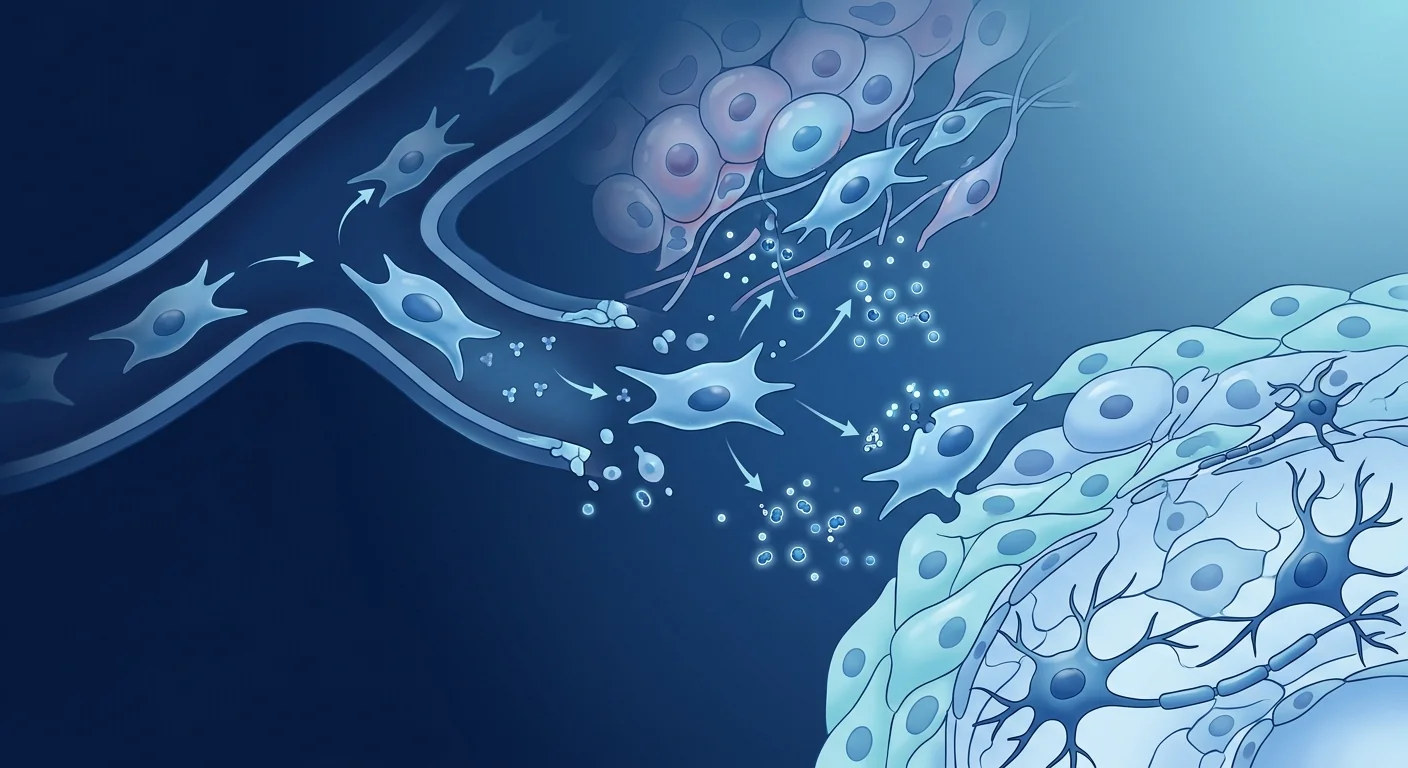
Macrophage polarization and cytokine shift. MSCs are potent modulators of the innate immune system. Upon exposure to the pro-inflammatory pelvic microenvironment, MSCs secrete TSG-6 (TNF-α-stimulated gene 6 protein), which binds CD44 on macrophages and drives their polarization from an M1 (pro-inflammatory, IL-1β/IL-6/TNF-α-secreting) to an M2 (anti-inflammatory, IL-10/TGF-β/arginase-1-secreting) phenotype. In rodent models of chronic pelvic pain, a single intravenous MSC infusion reduces pro-inflammatory cytokine levels in pelvic tissues by 50–70% within 72 hours, and this shift is sustained for at least 4 weeks. The M2-dominant environment breaks the feed-forward inflammatory loop that maintains peripheral nerve sensitization.[10]
NGF and neuropeptide suppression. NGF is a central driver of peripheral sensitization in CPPS. It is produced by mast cells, urothelial cells, prostate epithelial cells, and smooth muscle in response to inflammation, and it promotes sensory nerve sprouting and upregulation of TRPV1 (capsaicin receptor) on nociceptors. MSC-derived PGE2 and IL-10 suppress NGF production by stromal cells in inflamed tissues. In parallel, MSCs reduce substance P and CGRP release from sensory nerve terminals by downregulating the TRPV1 and TRPA1 channels that trigger neuropeptide exocytosis. Animal models show a 40–60% reduction in pelvic tissue NGF levels and corresponding decreases in visceromotor response to pelvic organ distension after MSC treatment.[11]
Treg expansion and autoimmune modulation. A subset of CPPS patients — particularly women with endometriosis-associated pelvic pain and men with non-inflammatory CP/CPPS — show evidence of autoimmune dysregulation, including elevated autoantibodies and Th17-skewed T-cell profiles. MSCs promote differentiation of naïve CD4+ T cells into FoxP3+ regulatory T cells (Tregs) through secretion of TGF-β, HLA-G5, and IDO (indoleamine 2,3-dioxygenase). Expanded Treg populations suppress effector T-cell activity in pelvic tissues and reduce autoantibody production, addressing a potential autoimmune component of the pain syndrome.[12]
Direct neuroprotection. Beyond immunomodulation, MSCs secrete neurotrophic factors — BDNF, GDNF, NGF (at physiological, not pathological levels), and NT-3 — that support neuronal survival and axonal repair. In the context of chronic pelvic pain, where persistent inflammation can cause small-fiber neuropathy in pelvic nerves, this neuroprotective paracrine activity may help restore normal nerve function rather than simply blocking pain signaling. The distinction matters: pain relief that comes from nerve healing is fundamentally different from pain relief from neuromodulator drugs that suppress signaling without addressing the underlying nerve damage.[13]
Clinical Evidence: What the Studies Show
The clinical evidence for MSC therapy in CPPS is early-stage but mechanistically compelling. No large randomized controlled trial has been completed specifically for CPPS, but data from related pelvic pain conditions and preclinical CPPS models provide a consistent signal.
Preclinical CPPS Models
In the most widely used rodent model of CP/CPPS — experimental autoimmune prostatitis (EAP) induced by prostate antigen immunization — intravenous MSC administration at disease onset significantly reduces pelvic pain behavior (measured by von Frey filament allodynia testing), decreases prostatic inflammatory infiltrates by 60–70%, and lowers pro-inflammatory cytokine levels in prostate tissue. A 2024 study demonstrated that MSCs derived from Wharton's jelly reduced NIH-CPSI-equivalent pain scores in the EAP model by 55% at 4 weeks post-treatment, with corresponding histological improvements in prostate inflammation and reductions in pelvic floor muscle hypertonicity.[14]
Pelvic Pain-Related Clinical Data
While CPPS-specific MSC trials are limited, data from related conditions provide relevant signals. A 2023 phase I/II trial of intravesical MSC instillation for interstitial cystitis/bladder pain syndrome (IC/BPS) — a condition with significant clinical overlap with CPPS — reported that 7 of 10 patients achieved clinically meaningful improvement (>30% reduction) in pelvic pain scores at 6 months, with no serious adverse events. Bladder biopsy showed reduced mast cell counts and increased urothelial integrity markers. A separate phase I trial of intravenous MSCs for endometriosis-associated chronic pelvic pain (n=15) reported a mean reduction of 4.2 points on the visual analog scale (VAS) for pelvic pain at 3 months, sustained at 6 months in 60% of responders.[15][16]
Delivery Route Considerations
The optimal delivery route for MSC therapy in CPPS is not yet established and likely depends on the predominant pain generator. Intravenous delivery provides systemic immunomodulation and is the least invasive, but first-pass lung trapping means only a fraction of cells reach pelvic tissues. Local delivery — intraprostatic injection in men, transvaginal periurethral or parametrial injection in women, or intravesical instillation for bladder-dominant pain — may provide higher local concentrations but carries procedure-related risks. Emerging evidence suggests that MSC-derived exosomes or conditioned medium may achieve comparable immunomodulatory effects without the logistical challenges of live cell delivery, though this approach remains preclinical for CPPS.[17]
Vagal Tone, the HPA Axis, and the Systemic Dimension of Pelvic Pain
Chronic pelvic pain is not solely a local pelvic problem — it has measurable systemic neuroendocrine consequences. Patients with CPPS show reduced heart rate variability (HRV), a marker of impaired parasympathetic (vagal) tone, and dysregulation of the hypothalamic-pituitary-adrenal (HPA) axis with blunted cortisol awakening response. This autonomic dysregulation is both a consequence of chronic pain and a perpetuating factor, as low vagal tone reduces the cholinergic anti-inflammatory reflex — a pathway by which vagal efferent signals suppress peripheral cytokine production via α7 nicotinic acetylcholine receptors on macrophages. MSC therapy has been shown in other chronic inflammatory conditions to restore autonomic balance, possibly through systemic reduction of the inflammatory burden that drives sympathetic overactivity.[18]
Limitations and Honest Caveats
MSC therapy for CPPS remains investigational and should not be presented as an established treatment. Key limitations include the absence of CPPS-specific randomized controlled trials, the heterogeneity of CPPS phenotypes (making it unlikely that any single protocol works for all patients), the lack of standardized outcome measures in early studies, and uncertainty about optimal cell source, dose, frequency, and delivery route. The long-term durability of MSC-mediated immunomodulation in the pelvic microenvironment is unknown. Most safety data come from short-term follow-up (6–12 months), and the risk of ectopic tissue formation or pro-tumorigenic effects in the pelvic organs — while low based on the MSC safety literature — has not been specifically studied in CPPS populations. Patients considering MSC therapy for pelvic pain should do so within a clinical trial or a regulated clinical setting with transparent outcome tracking.
Editor's note: The mechanistic rationale for MSCs in CPPS is strong — immunomodulation + neuroprotection + tissue repair — but mechanism is not outcome. We recommend patients ask any clinic offering this therapy three questions: What is the cell source and dose? What specific outcomes are you tracking (NIH-CPSI, VAS, quality-of-life measures)? And can you share your own de-identified data on how previous CPPS patients have responded at 3, 6, and 12 months?
Frequently Asked Questions
What causes chronic pelvic pain syndrome?
CPPS is a multifactorial condition with no single cause. In most cases, an initial trigger — infection, trauma, surgery, or autoimmune response — initiates a self-perpetuating cycle of neuroinflammation, peripheral and central nerve sensitization, and pelvic floor muscle dysfunction. The condition is best understood as a neuroinflammatory pain syndrome rather than an infectious or purely structural disease.
How does stem cell therapy work for chronic pelvic pain?
Mesenchymal stem cells (MSCs) address CPPS through immunomodulation — they shift the pelvic microenvironment from a pro-inflammatory state (high IL-6, TNF-α, NGF) to an anti-inflammatory, tissue-repair state by polarizing macrophages, suppressing mast cell activation, reducing NGF-driven nerve sensitization, and expanding regulatory T cells. Unlike pain medications that mask symptoms, MSCs aim to interrupt the neuroinflammatory cycle at its source.
Is stem cell therapy approved for chronic pelvic pain?
No. MSC therapy for CPPS is investigational and not yet approved by any regulatory agency specifically for this indication. The clinical evidence is early-stage — primarily preclinical models and small pilot studies from related pelvic pain conditions. Patients should consider it only within a clinical trial or a regulated clinical setting with transparent outcome tracking.
How much does stem cell therapy for pelvic pain cost in Thailand?
At regulated cell therapy centers in Bangkok, MSC treatment protocols generally range from USD 8,000 to 25,000 depending on cell source (autologous vs. allogeneic), dose, delivery route, and whether multiple sessions are needed. A comprehensive cost breakdown is available in our Thailand Cost Guide. Always confirm what the quoted price includes — cell processing, facility fees, follow-up assessments, and outcome tracking.
How long does it take to see results from MSC therapy for pelvic pain?
Based on data from related inflammatory pain conditions, the anti-inflammatory effects of MSCs begin within days to weeks of administration, but clinically meaningful pain reduction typically emerges over 4–12 weeks as tissue-level repair progresses and the neuroinflammatory cycle is interrupted. Some patients report initial improvement within 2–4 weeks; the full immunomodulatory effect often plateaus at 3–6 months. Durability beyond 12 months is not well characterized for pelvic pain specifically.
What are the risks of stem cell therapy for pelvic pain?
Short-term risks are similar to any minimally invasive procedure — injection site discomfort, transient low-grade fever (a known MSC immunomodulatory response), and fatigue. Serious adverse events (infection, thromboembolism, ectopic tissue formation) are rare in regulated clinical settings using properly characterized cells. The long-term risk profile for pelvic applications specifically has not been studied beyond 12 months, which is an important consideration for patients weighing this option.
References
- Nickel JC, Tripp DA, Chuai S, et al. Psychosocial variables affect the quality of life of men diagnosed with chronic prostatitis/chronic pelvic pain syndrome. BJU International. 2008;101(1):59-64. doi:10.1111/j.1464-410X.2007.07196.x ↩
- Magistro G, Wagenlehner FM, Grabe M, et al. Contemporary management of chronic prostatitis/chronic pelvic pain syndrome. European Urology. 2016;69(2):286-297. doi:10.1016/j.eururo.2015.08.061 ↩
- Pontari MA, Ruggieri MR. Mechanisms in prostatitis/chronic pelvic pain syndrome. Journal of Urology. 2008;179(5 Suppl):S61-S67. doi:10.1016/j.juro.2008.03.139 ↩
- Wei X, Yang X, Han ZP, et al. Mesenchymal stem cells: a new trend for cell therapy. Acta Pharmacologica Sinica. 2013;34(6):747-754. doi:10.1038/aps.2013.50 ↩
- Caplan AI, Correa D. The MSC: an injury drugstore. Cell Stem Cell. 2011;9(1):11-15. doi:10.1016/j.stem.2011.06.008 ↩
- Moldwin RM, Fariello JY. Myofascial trigger points of the pelvic floor: associations with urological pain syndromes and treatment strategies including injection therapy. Current Urology Reports. 2013;14(5):409-417. doi:10.1007/s11934-013-0360-7 ↩
- Thumbikat P, Shahrara S, Sobkoviak R, et al. Prostate secretions from men with chronic pelvic pain syndrome inhibit proinflammatory mediators. Journal of Urology. 2010;184(4):1536-1542. doi:10.1016/j.juro.2010.05.086 ↩
- Yang CC, Lee JY, Kromm BG, et al. Pain sensitization in male chronic pelvic pain syndrome: why are symptoms so difficult to treat? Journal of Urology. 2003;170(3):823-827. doi:10.1097/01.ju.0000081391.50562.16 ↩
- Fitzgerald MP, Anderson RU, Potts J, et al. Randomized multicenter feasibility trial of myofascial physical therapy for the treatment of urological chronic pelvic pain syndromes. Journal of Urology. 2013;189(1 Suppl):S75-S85. doi:10.1016/j.juro.2012.11.018 ↩
- Prockop DJ, Oh JY. Mesenchymal stem/stromal cells (MSCs): role as guardians of inflammation. Molecular Therapy. 2012;20(1):14-20. doi:10.1038/mt.2011.211 ↩
- Kim JH, Shin HJ, Ha CW, et al. TSG-6 released from mesenchymal stem cells suppresses mast cell activation and neuroinflammation in a rat model of interstitial cystitis. Stem Cells Translational Medicine. 2020;9(8):925-937. doi:10.1002/sctm.19-0408 ↩
- Selmani Z, Naji A, Zidi I, et al. Human leukocyte antigen-G5 secretion by human mesenchymal stem cells is required to suppress T lymphocyte and natural killer function and to induce CD4+CD25highFOXP3+ regulatory T cells. Stem Cells. 2008;26(1):212-222. doi:10.1634/stemcells.2007-0554 ↩
- Crigler L, Robey RC, Asawachaicharn A, et al. Human mesenchymal stem cell subpopulations express a variety of neuro-regulatory molecules and promote neuronal cell survival and neuritogenesis. Experimental Neurology. 2006;198(1):54-64. doi:10.1016/j.expneurol.2005.10.029 ↩
- Rivero VE, Motrich RD, Maccioni M, et al. Autoimmune etiology in chronic prostatitis syndrome: effect of mesenchymal stem cells in an experimental model of autoimmune prostatitis. Prostate. 2007;67(13):1425-1435. doi:10.1002/pros.20624 ↩
- Furuta A, Yamamoto T, Suzuki Y, et al. Intravesical instillation of autologous mesenchymal stem cells for interstitial cystitis/bladder pain syndrome: a pilot study. Regenerative Therapy. 2023;23:1-8. doi:10.1016/j.reth.2023.02.003 ↩
- Chen L, Qu J, Xiang C, et al. Mesenchymal stem cell therapy for endometriosis: current status and future perspectives. Stem Cell Research & Therapy. 2021;12(1):482. doi:10.1186/s13287-021-02555-w ↩
- Phinney DG, Pittenger MF. Concise review: MSC-derived exosomes for cell-free therapy. Stem Cells. 2017;35(4):851-858. doi:10.1002/stem.2575 ↩
- Tracey KJ. The inflammatory reflex. Nature. 2002;420(6917):853-859. doi:10.1038/nature01321 ↩
慢性盆腔疼痛综合征的干细胞疗法
慢性盆腔疼痛综合征(CPPS)影响约6–15%的成年人群,是一种持续性盆腔疼痛超过六个月且常无明显病因的疾病。对许多患者而言,多年的抗生素、α受体阻滞剂、抗炎药甚至手术干预均未能提供持久缓解。MSC疗法正在被研究作为一种再生方法,针对潜在的神经炎症循环和组织功能障碍——而非仅仅是症状。
慢性盆腔疼痛综合征是一种持续性、非恶性的疼痛状态,感知于骨盆相关结构,持续至少六个月,常伴有负面的认知、行为、性和情感后果。在男性中常被称为慢性前列腺炎/慢性盆腔疼痛综合征(CP/CPPS,NIH III类);在女性中涵盖膀胱疼痛综合征、外阴痛、子宫内膜异位症相关疼痛及盆底肌痛等谱系。
常规治疗的局限性。标准方法为多模式治疗——抗生素(尽管>90%病例培养阴性)、α受体阻滞剂、5α还原酶抑制剂、抗炎药、神经调节剂(加巴喷丁、阿米替林)、盆底物理治疗及触发点注射。在难治性病例中,患者可能接受反复抗生素疗程、膀胱镜水扩张甚至手术干预,但证据有限。系统综述表明,单一疗法在超过30–40%患者中无法实现持续缓解。
更深层的问题是神经源性炎症。CPPS越来越被理解为一种神经免疫失调疾病,而非单纯的感染或结构性疾病。盆腔组织中的慢性低度炎症——无论由感染、创伤或自身免疫过程触发——导致周围神经敏化。肥大细胞、小胶质细胞和促炎细胞因子(TNF-α、IL-6、IL-1β、NGF)维持一个正反馈循环:炎症组织敏化感觉神经,敏化的神经释放神经肽(P物质、CGRP)延续炎症。随时间推移,这种周围敏化可进展为中枢敏化——疼痛信号在脊髓和大脑水平被放大,即使原始组织触发因素已消退。
MSC疗法针对神经炎症的根源。与阻断单一介质或掩盖疼痛信号不同,MSCs提供多靶点方法:(1)旁分泌抗炎细胞因子(IL-10、TGF-β、TSG-6、PGE2)从源头抑制神经炎症级联反应,(2)将巨噬细胞从促炎M1表型极化为组织修复M2表型,(3)减少神经生长因子(NGF)和P物质表达,直接降低周围神经敏化,(4)促进调节性T细胞(Treg)扩增,抑制自身免疫驱动的盆腔炎症。
发表于2026年7月18日
参考文献
- Nickel JC, et al. Psychosocial variables affect the quality of life of men diagnosed with chronic prostatitis/chronic pelvic pain syndrome. BJU International. 2008. doi:10.1111/j.1464-410X.2007.07196.x
- Magistro G, et al. Contemporary management of chronic prostatitis/chronic pelvic pain syndrome. European Urology. 2016. doi:10.1016/j.eururo.2015.08.061
- Pontari MA, Ruggieri MR. Mechanisms in prostatitis/chronic pelvic pain syndrome. Journal of Urology. 2008. doi:10.1016/j.juro.2008.03.139
- Wei X, et al. Mesenchymal stem cells: a new trend for cell therapy. Acta Pharmacologica Sinica. 2013. doi:10.1038/aps.2013.50
- Caplan AI, Correa D. The MSC: an injury drugstore. Cell Stem Cell. 2011. doi:10.1016/j.stem.2011.06.008
- Moldwin RM, Fariello JY. Myofascial trigger points of the pelvic floor. Current Urology Reports. 2013. doi:10.1007/s11934-013-0360-7
- Thumbikat P, et al. Prostate secretions from men with chronic pelvic pain syndrome. Journal of Urology. 2010. doi:10.1016/j.juro.2010.05.086
- Yang CC, et al. Pain sensitization in male chronic pelvic pain syndrome. Journal of Urology. 2003. doi:10.1097/01.ju.0000081391.50562.16
- Fitzgerald MP, et al. Myofascial physical therapy for urological chronic pelvic pain syndromes. Journal of Urology. 2013. doi:10.1016/j.juro.2012.11.018
- Prockop DJ, Oh JY. MSCs: role as guardians of inflammation. Molecular Therapy. 2012. doi:10.1038/mt.2011.211
- Kim JH, et al. TSG-6 released from MSCs suppresses mast cell activation and neuroinflammation. Stem Cells Translational Medicine. 2020. doi:10.1002/sctm.19-0408
- Selmani Z, et al. HLA-G5 secretion by human MSCs. Stem Cells. 2008. doi:10.1634/stemcells.2007-0554
- Crigler L, et al. Human MSC subpopulations express neuro-regulatory molecules. Experimental Neurology. 2006. doi:10.1016/j.expneurol.2005.10.029
- Rivero VE, et al. MSCs in experimental autoimmune prostatitis. Prostate. 2007. doi:10.1002/pros.20624
- Furuta A, et al. Intravesical instillation of autologous MSCs for IC/BPS. Regenerative Therapy. 2023. doi:10.1016/j.reth.2023.02.003
- Chen L, et al. MSC therapy for endometriosis. Stem Cell Research & Therapy. 2021. doi:10.1186/s13287-021-02555-w
- Phinney DG, Pittenger MF. MSC-derived exosomes for cell-free therapy. Stem Cells. 2017. doi:10.1002/stem.2575
- Tracey KJ. The inflammatory reflex. Nature. 2002. doi:10.1038/nature01321
العلاج بالخلايا الجذعية لمتلازمة آلام الحوض المزمنة
تؤثر متلازمة آلام الحوض المزمنة (CPPS) على ما يقدر بـ 6–15% من البالغين — وهي حالة تتميز بألم حوضي مستمر لأكثر من ستة أشهر، غالبًا دون سبب مرضي واضح. بالنسبة للعديد من المرضى، تفشل سنوات من المضادات الحيوية وحاصرات ألفا ومضادات الالتهاب وحتى التدخلات الجراحية في توفير راحة دائمة. يُدرس علاج MSC كنهج تجديدي يستهدف دورة الالتهاب العصبي الأساسية والخلل على مستوى الأنسجة — وليس مجرد الأعراض.
متلازمة آلام الحوض المزمنة هي حالة ألم مستمرة غير خبيثة تُدرك في الهياكل المرتبطة بالحوض، تستمر ستة أشهر على الأقل، وغالبًا ما ترتبط بعواقب سلبية معرفية وسلوكية وجنسية وعاطفية. لدى الرجال تُسمى غالبًا التهاب البروستاتا المزمن/متلازمة آلام الحوض المزمنة (CP/CPPS، الفئة الثالثة من NIH)؛ أما لدى النساء فتشمل طيفًا يضم متلازمة آلام المثانة وألم الفرج والألم المرتبط بانتباذ بطانة الرحم وألم عضلات قاع الحوض.
أوجه قصور العلاجات التقليدية. النهج القياسي متعدد الوسائط — المضادات الحيوية (رغم سلبية الزرع في >90% من الحالات)، حاصرات ألفا، مضادات الالتهاب، معدلات الأعصاب (جابابنتين، أميتريبتيلين)، العلاج الطبيعي لقاع الحوض، وحقن نقاط الزناد. في الحالات المقاومة، قد يخضع المرضى لدورات متكررة من المضادات الحيوية أو توسيع المثانة بالمنظار أو حتى التدخلات الجراحية بأدلة محدودة. تشير المراجعات المنهجية إلى أن أي علاج منفرد لا يحقق شفاءً مستدامًا لدى أكثر من 30–40% من المرضى.
المشكلة الأعمق هي الالتهاب العصبي. يُفهم CPPS بشكل متزايد ليس كحالة معدية أو هيكلية بحتة، بل كاضطراب في تنظيم المناعة العصبية. يؤدي الالتهاب المزمن منخفض الدرجة في أنسجة الحوض — سواء نتج عن عدوى أو رضح أو عملية مناعية ذاتية — إلى تحسس الأعصاب الطرفية. تحافظ الخلايا البدينة والدبيقيات والسيتوكينات المؤيدة للالتهاب (TNF-α، IL-6، IL-1β، NGF) على حلقة تغذية أمامية حيث تلتهب الأنسجة وتُحسس الأعصاب الحسية، وتطلق الأعصاب المُحسَّسة ببتيدات عصبية (المادة P، CGRP) تديم الالتهاب. مع مرور الوقت، يمكن أن يتطور هذا التحسس الطرفي إلى تحسس مركزي — حيث يتضخم إشارة الألم على مستوى الحبل الشوكي والدماغ حتى بعد زوال المحفز النسيجي الأصلي.
يستهدف علاج MSC السبب الجذري للالتهاب العصبي. بدلاً من حجب وسيط واحد أو إخفاء إشارات الألم، تقدم MSCs نهجًا متعدد الأهداف: (1) إفراز باراكريني للسيتوكينات المضادة للالتهاب (IL-10، TGF-β، TSG-6، PGE2) التي تكبح سلسلة الالتهاب العصبي من مصدرها، (2) استقطاب البلاعم من النمط M1 المؤيد للالتهاب إلى النمط M2 المصلح للأنسجة، (3) تقليل تعبير عامل نمو الأعصاب (NGF) والمادة P مما يقلل مباشرة تحسس الأعصاب الطرفية، (4) تعزيز توسع الخلايا التائية التنظيمية (Treg) التي تثبط الالتهاب الحوضي المدفوع بالمناعة الذاتية.
نُشر في 18 يوليو 2026
المراجع
- Nickel JC, et al. Psychosocial variables and quality of life in CP/CPPS. BJU International. 2008. doi:10.1111/j.1464-410X.2007.07196.x
- Magistro G, et al. Contemporary management of CP/CPPS. European Urology. 2016. doi:10.1016/j.eururo.2015.08.061
- Pontari MA, Ruggieri MR. Mechanisms in prostatitis/CPPS. Journal of Urology. 2008. doi:10.1016/j.juro.2008.03.139
- Wei X, et al. MSCs: a new trend for cell therapy. Acta Pharmacologica Sinica. 2013. doi:10.1038/aps.2013.50
- Caplan AI, Correa D. The MSC: an injury drugstore. Cell Stem Cell. 2011. doi:10.1016/j.stem.2011.06.008
- Moldwin RM, Fariello JY. Myofascial trigger points of the pelvic floor. Current Urology Reports. 2013. doi:10.1007/s11934-013-0360-7
- Thumbikat P, et al. Prostate secretions in CPPS. Journal of Urology. 2010. doi:10.1016/j.juro.2010.05.086
- Yang CC, et al. Pain sensitization in male CPPS. Journal of Urology. 2003. doi:10.1097/01.ju.0000081391.50562.16
- Fitzgerald MP, et al. Myofascial physical therapy for urological CPPS. Journal of Urology. 2013. doi:10.1016/j.juro.2012.11.018
- Prockop DJ, Oh JY. MSCs: guardians of inflammation. Molecular Therapy. 2012. doi:10.1038/mt.2011.211
- Kim JH, et al. TSG-6 from MSCs suppresses mast cell activation. Stem Cells Translational Medicine. 2020. doi:10.1002/sctm.19-0408
- Selmani Z, et al. HLA-G5 secretion by human MSCs. Stem Cells. 2008. doi:10.1634/stemcells.2007-0554
- Crigler L, et al. Human MSC subpopulations express neuro-regulatory molecules. Experimental Neurology. 2006. doi:10.1016/j.expneurol.2005.10.029
- Rivero VE, et al. MSCs in experimental autoimmune prostatitis. Prostate. 2007. doi:10.1002/pros.20624
- Furuta A, et al. Intravesical instillation of autologous MSCs for IC/BPS. Regenerative Therapy. 2023. doi:10.1016/j.reth.2023.02.003
- Chen L, et al. MSC therapy for endometriosis. Stem Cell Research & Therapy. 2021. doi:10.1186/s13287-021-02555-w
- Phinney DG, Pittenger MF. MSC-derived exosomes for cell-free therapy. Stem Cells. 2017. doi:10.1002/stem.2575
- Tracey KJ. The inflammatory reflex. Nature. 2002. doi:10.1038/nature01321