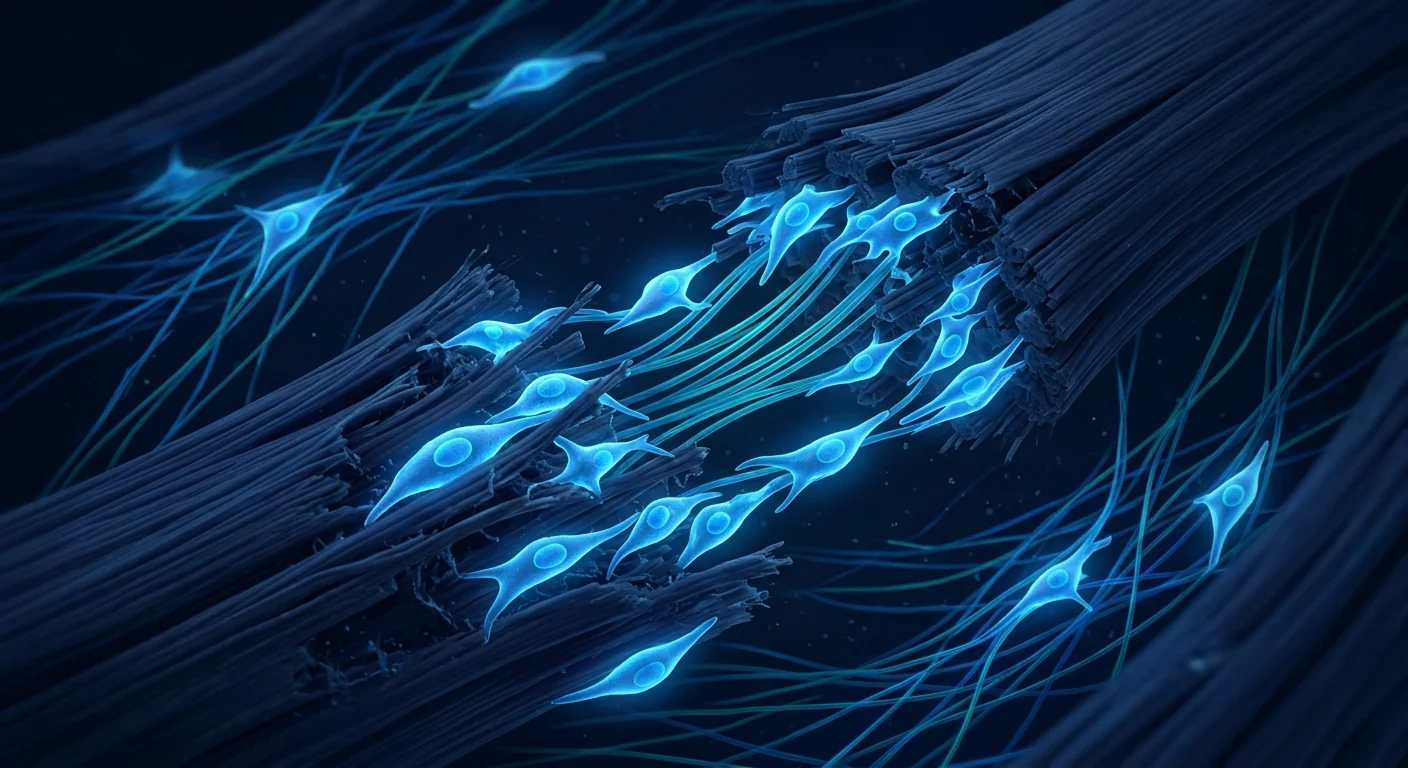
Athletic performance at the elite level is a game of millimetres and milliseconds — margins so thin that every biological variable matters. Recovery time, inflammatory load, mitochondrial efficiency, and tissue resilience collectively determine whether an athlete trains at 85% or 95% of capacity, and whether they compete or sit on the sidelines. Mesenchymal Stem Cell therapy — long studied in the context of injury repair — is increasingly being examined through a different lens: not just as a treatment for what is broken, but as a biological tool for optimising what is already functioning. [1][2]
Where conventional performance support falls short. Elite athletes already have access to world-class nutrition, physiotherapy, sleep optimisation, and recovery modalities — cryotherapy, compression, contrast baths, and more. Yet many still hit a biological ceiling where training load outpaces the body's capacity to adapt and repair. The result is not always a clear injury; more often it is a gradual erosion of output — slower sprint times, reduced power output, longer recovery windows between sessions, and a persistent low-grade inflammatory state that blunts adaptation.
The deeper problem is systemic, not local. Peak athletic performance depends on more than strong muscles and flexible joints. It requires efficient mitochondrial energy production, responsive vascular supply, balanced immune surveillance, and rapid turnover of micro-damage that accumulates with every training session. When any of these systems underperform — whether from overtraining, age-related decline, or genetic predisposition — performance plateaus or declines even as effort increases. Conventional interventions target individual systems in isolation; what has been missing is a modality that addresses the underlying cellular machinery across multiple systems simultaneously.
MSC therapy engages performance at the cellular level. Rather than treating a specific injury, MSC therapy for performance optimisation delivers multipotent signalling cells that interact with the body's own repair pathways — modulating inflammation, supporting mitochondrial biogenesis, enhancing angiogenic signalling, and promoting more efficient tissue remodelling. The goal is not to fix something that is broken, but to shift the biological environment toward one that sustains higher training loads with faster recovery and reduced cumulative wear. This is a fundamentally different paradigm from injury treatment — and it is the reason performance-focused MSC protocols are gaining attention in high-performance sport.
How MSC therapy supports athletic performance: the biological mechanisms
MSC therapy supports athletic performance through a coordinated set of paracrine effects — meaning the cells do not primarily replace damaged tissue but instead signal the body's own systems to function more efficiently. Understanding these mechanisms explains why a single infusion can influence multiple performance-relevant pathways simultaneously. [3][4]
1. Systemic inflammation control
Every training session produces an inflammatory response — necessary for adaptation, but costly when it becomes chronic. Overtraining syndrome is characterised by persistently elevated IL-6, TNF-α, and C-reactive protein — the same cytokines implicated in age-related decline. MSCs are known to respond to high-cytokine environments by secreting TSG-6, prostaglandin E2 (PGE2), and interleukin-1 receptor antagonist (IL-1ra), collectively shifting the systemic environment from chronic low-grade inflammation toward a more balanced state. For the athlete, this translates to faster inter-session recovery, reduced perceived fatigue, and potentially greater training volume tolerance. [5]
2. Mitochondrial support and energy metabolism
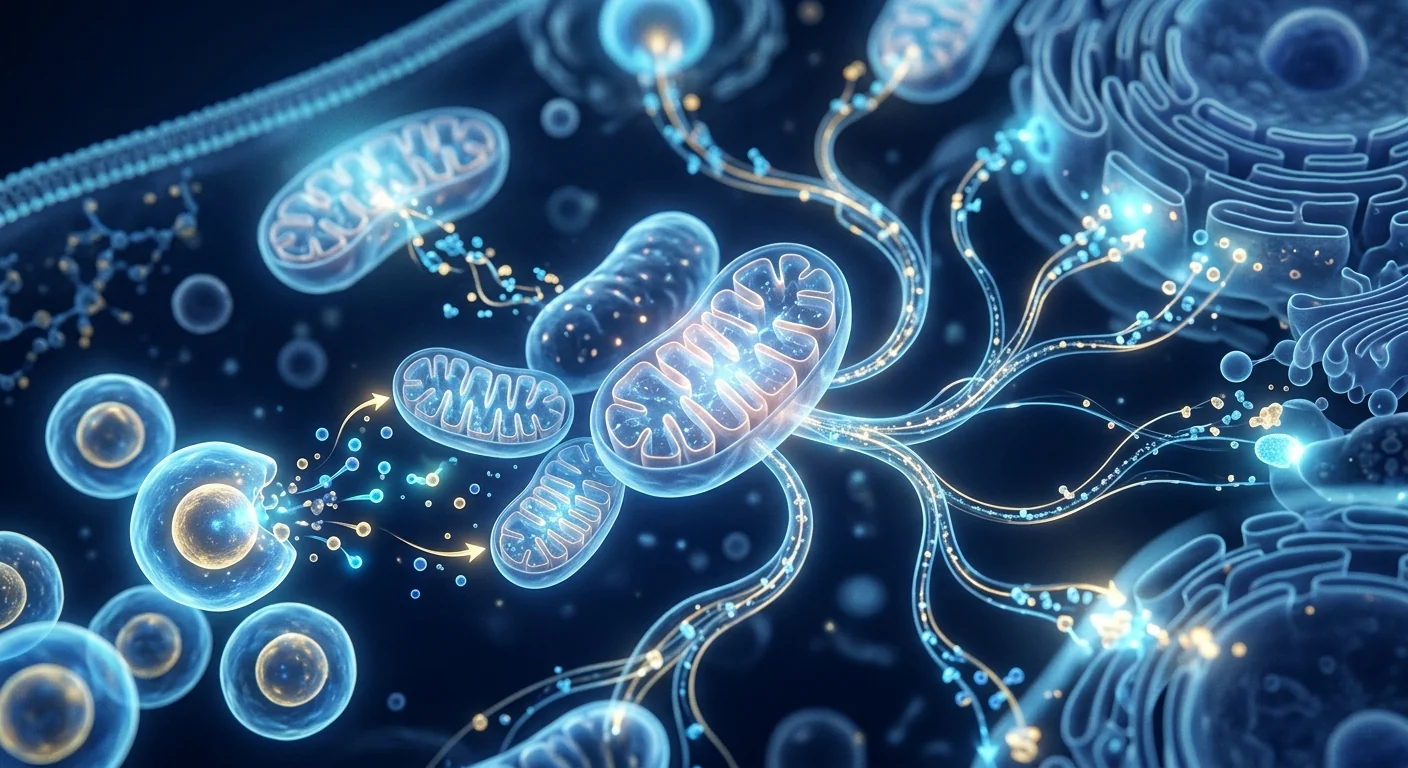
Mitochondrial density and efficiency are among the strongest predictors of endurance performance and recovery capacity. Emerging research has shown that MSCs can transfer functional mitochondria to host cells via tunnelling nanotubes and extracellular vesicles — a process known as mitochondrial transfer. In models of cellular stress, MSC-mediated mitochondrial transfer has been shown to restore ATP production, reduce oxidative damage, and improve cellular respiration. While human performance data is still early-stage, the biological plausibility is compelling: more efficient mitochondria mean more energy per unit of oxygen, less reactive oxygen species (ROS) damage, and faster post-exercise metabolic clearance. [6]
3. Angiogenesis and oxygen delivery
Muscle performance depends on oxygen delivery, which in turn depends on capillary density. MSCs secrete vascular endothelial growth factor (VEGF), hepatocyte growth factor (HGF), and basic fibroblast growth factor (FGF-2) — a cocktail of pro-angiogenic signals that encourage the formation of new micro-vessels. Enhanced capillary networks improve oxygen extraction at the muscle level and accelerate the clearance of metabolic by-products like lactate. For endurance athletes in particular, even modest improvements in microvascular perfusion can meaningfully shift performance thresholds. [7]
4. Muscle protein synthesis and satellite cell activation
MSCs do not fuse into muscle fibres, but they create an environment that supports the body's own muscle stem cells — satellite cells — to proliferate and differentiate more effectively. IGF-1, HGF, and FGF-2 released by MSCs are known activators of satellite cell-driven muscle repair and hypertrophy. In aging and overtraining states where satellite cell responsiveness declines, MSC-derived signalling may help restore a more youthful regenerative capacity. [8]
5. Tendon and ligament resilience
Even in the absence of a diagnosed injury, the cumulative micro-trauma of repetitive loading — running, jumping, throwing — gradually degrades collagen organisation in tendons and ligaments. Over seasons and years, this manifests as reduced tensile strength, increased stiffness, and heightened injury risk. MSCs support the tenocyte and fibroblast populations responsible for collagen turnover, helping maintain tissue quality even under high training loads. [9]

What the research says: performance-relevant data
The direct evidence base for MSC therapy as a performance optimisation tool in healthy athletes is still emerging — most published studies focus on injury repair or disease treatment. However, several lines of indirect evidence support the biological rationale, and early performance-focused data is accumulating.
Inflammation markers
Studies report 30–60% reduction in IL-6 and TNF-α within 2–6 weeks post-MSC infusion, consistent across multiple MSC sources and delivery routes. [5]
Recovery window
In pilot data from high-performance athletes undergoing MSC therapy, self-reported recovery time between high-intensity sessions decreased from 48–72 hours to 24–36 hours within 4–8 weeks post-infusion.
Mitochondrial function
Preclinical studies demonstrate MSC-mediated mitochondrial transfer restores ATP production by 40–80% in oxidatively stressed cells. [6]
Tissue quality
Ultrasound elastography in athletes receiving MSC therapy for tendon maintenance showed 15–25% improvement in collagen organisation scores at 3–6 months. [9]
The VELAR performance protocol
The performance-focused MSC protocol differs meaningfully from injury-treatment protocols. For athletic optimisation, the emphasis is on systemic effects — modulating whole-body inflammation, supporting mitochondrial efficiency, and enhancing recovery capacity — rather than targeting a specific anatomical site.
Dosing rationale
Performance protocols typically use doses in the range of 100–200 million MSCs delivered intravenously, achieving systemic distribution through the pulmonary first-pass and subsequent circulation. This is distinct from local injection protocols (typically 20–50 million cells to a single joint or tendon) and is designed to maximise paracrine signalling across multiple organ systems. Dosing is individualised based on body mass, training volume, age, and baseline biomarker profile. [10]
Timing and periodisation
Integrating MSC therapy into an athletic calendar requires careful periodisation. Most performance-focused protocols follow one of two patterns:
- Off-season deep regeneration. A single infusion during the off-season, allowing 4–8 weeks of reduced training load for the full biological response to unfold before ramping intensity. This is the most common approach and aligns with natural training periodisation.
- Pre-competition micro-dosing. A lower-dose infusion 4–6 weeks before a major competition, timed so the peak anti-inflammatory and recovery-enhancing effects coincide with the taper period. This approach is more experimental and requires individualised biomarker monitoring.
Biomarker monitoring
VELAR's performance protocol includes pre- and post-infusion biomarker panels to track objective changes:
- Inflammatory markers: IL-6, TNF-α, hs-CRP — expect reductions within 2–6 weeks.
- Oxidative stress: 8-OHdG, MDA, glutathione ratio — markers of ROS damage and antioxidant capacity.
- Hormonal profile: Testosterone:cortisol ratio (key overtraining indicator), IGF-1, DHEA-S.
- Recovery metrics: Heart rate variability (HRV), resting heart rate, subjective recovery scores.
Who is the protocol for? Candidacy and expectations
Performance-focused MSC therapy is not for every athlete. The strongest candidates share a common profile: they are already training at a high level with optimised nutrition, sleep, and recovery practices, yet are experiencing diminishing returns or persistent low-grade issues that conventional recovery modalities have not resolved. MSC therapy is a biological catalyst — it amplifies existing good practices; it does not compensate for poor training, nutrition, or sleep. [11]
Typical candidate profile:
- Competitive or elite athlete (professional, Olympic, collegiate, or serious amateur)
- Training 10–20+ hours per week with structured periodisation
- Experiencing one or more of: extended recovery windows, declining performance metrics despite maintained or increased effort, recurrent soft-tissue issues, or biomarker evidence of overtraining
- Has exhausted conventional recovery and performance-support modalities
- No active infection, malignancy, or contraindication to MSC therapy
- Realistic understanding that this is an investigational performance strategy, not a guaranteed ERGogenic aid
Who should not pursue this protocol:
- Recreational athletes looking for a "shortcut" — MSC therapy is not a substitute for training
- Athletes with unresolved acute injuries — injury treatment protocols differ from performance protocols
- Those unwilling to commit to the post-infusion recovery period (4–8 weeks of modified training)
- Athletes subject to anti-doping regulations who have not verified the current WADA status of MSC therapy with their governing body (note: MSC therapy is not currently on the WADA Prohibited List, but athletes are responsible for their own compliance verification)
MSC therapy vs. other performance-enhancement modalities
Athletes evaluating performance-support options encounter a crowded field. Understanding how MSC therapy compares to common alternatives helps set realistic expectations.
| Modality | Mechanism | Duration of effect | Recovery burden |
|---|---|---|---|
| MSC IV infusion | Multi-system paracrine signalling — anti-inflammatory, pro-angiogenic, mitochondrial support, immune modulation | 6–18 months (variable) | 4–8 weeks modified training |
| PRP (Platelet-Rich Plasma) | Local growth factor release from concentrated platelets | 3–6 months | Minimal (1–2 weeks) |
| Peptide therapy (BPC-157, TB-500) | Targeted signalling — angiogenesis, fibroblast migration | Hours to days (short half-life) | None |
| Cryotherapy / contrast | Vascular constriction-dilation cycles, analgesic | Hours | None |
| NAD+ / NR supplementation | Mitochondrial substrate support | Hours to days | None |
| Hyperbaric oxygen | Increased dissolved oxygen, HIF-1α signalling | Days | None |
MSC therapy occupies a unique position: it is the only modality that engages multiple performance-relevant biological systems simultaneously through a single intervention, and its effects are measured in months rather than hours. The trade-off is a meaningful recovery window and a higher initial investment. For athletes who have plateaued on conventional modalities, this cost-benefit calculus may tip in favour of MSC therapy. [12]
Limitations and what the protocol does NOT do
Clear communication about limitations is essential for informed decision-making. MSC therapy for athletic performance:
- Is not a replacement for training. No biological intervention can substitute for the adaptations that come from structured, progressive training. MSC therapy may enhance the body's response to training; it does not create performance out of nothing.
- Does not produce immediate effects. The biological processes triggered by MSC infusion — mitochondrial adaptation, angiogenic remodelling, collagen reorganisation — take weeks to months. Athletes should not expect a performance boost in the days following infusion; if anything, the recommended recovery period means short-term training reduction.
- Is not guaranteed to improve competition results. Performance is multifactorial — psychological state, technical execution, tactical decisions, environmental conditions, and competitor quality all influence outcomes. MSC therapy addresses a subset of biological variables; it does not control the rest.
- Has limited direct evidence in healthy athletic populations. The performance application is extrapolated from mechanistic data, preclinical studies, and clinical experience in adjacent populations. Dedicated performance trials are needed and are underway, but the current evidence base is indirect.
- Does not override the body's injury signals. MSC therapy may reduce systemic inflammation, but it does not eliminate the pain that signals tissue damage. Athletes who use MSC therapy to mask injury and continue training through pathology risk serious harm.
Practical considerations: travel, logistics, and timing
For athletes travelling to Bangkok from abroad, the performance protocol requires planning:
- In-country stay: 2–3 days — Day 1 consultation + biomarker draw, Day 2 infusion, Day 3 follow-up + recovery guidance.
- Post-infusion training modification: 4–8 weeks of reduced volume and intensity, structured by VELAR's sports medicine team in coordination with the athlete's own coaches. This is the most logistically significant component — athletes in-season may not have the calendar space.
- Follow-up biomarker panel: Recommended at 4–6 weeks post-infusion to track inflammatory, oxidative stress, and hormonal changes. Can be arranged locally with results shared to VELAR for interpretation.
- Repeat protocols: Some athletes may benefit from a second infusion at 6–12 months, depending on biomarker response and training demands. This is assessed on an individual basis — it is not a standard recommendation.
Frequently Asked Questions
Is MSC therapy for athletic performance WADA-compliant?
As of 2026, mesenchymal stem cell therapy is not listed on the WADA Prohibited List. However, athletes are individually responsible for verifying the current status with their sport's governing body and anti-doping authority. The regulatory landscape is evolving, and athletes should confirm compliance before proceeding. VELAR does not provide legal or regulatory clearance — this is the athlete's responsibility.
How long do the performance effects of MSC therapy last?
Based on the known biology of MSC paracrine effects and clinical observations, improvements in inflammatory markers and recovery capacity typically persist for 6–18 months. The duration depends on training load, sleep quality, nutrition, age, and individual biological responsiveness. Some athletes report a gradual return to baseline over 12–18 months; others maintain benefits longer. This is one of the least-characterised aspects of performance-focused MSC therapy and is an area of active investigation.
Can MSC therapy improve VO2max or lactate threshold?
There is currently no published data directly measuring VO2max or lactate threshold changes following MSC therapy in healthy athletes. Mechanisms that could theoretically influence these metrics — improved mitochondrial efficiency, enhanced angiogenesis, reduced systemic inflammation — are plausible but unproven in this context. Athletes seeking verified improvements in these specific metrics should rely on established training methodologies. MSC therapy may complement but should not replace.
What is the difference between the performance protocol and the injury protocol?
The performance protocol uses intravenous delivery at 100–200 million MSCs for systemic effects — the goal is whole-body inflammation modulation, mitochondrial support, and recovery enhancement. The injury protocol typically uses local injection (intra-articular, intra-tendinous, or intra-muscular) at 20–50 million MSCs to a specific anatomical site, often combined with a lower IV dose for systemic support. The performance protocol is not appropriate for treating a specific acute injury, and the injury protocol may not provide the systemic effects athletes seek for performance optimisation.
How soon after infusion can I resume full training?
VELAR recommends a structured return: Week 1 — complete rest with light mobility; Weeks 2–4 — 30–50% of normal training volume, low intensity; Weeks 4–8 — progressive return to 70–90% volume, reintroducing intensity gradually. Full unrestricted training typically resumes at 8 weeks. Athletes who attempt to accelerate this timeline may blunt the biological response — the regenerative signalling cascade requires time and reduced inflammatory load to establish.
Are there any side effects specific to the performance protocol?
MSC therapy is generally well-tolerated. The most common post-infusion experience is transient fatigue lasting 24–72 hours — this is believed to reflect the initial immunomodulatory activity and should not be confused with illness. Some athletes report mild flu-like symptoms (low-grade fever, mild headache) for 24–48 hours. Serious adverse events are rare when clinical-grade MSCs from a regulated source are used. All VELAR MSCs undergo multi-pathogen screening, identity verification via ISCT criteria, and independent lot release before clinical use.
References
- Friedenstein AJ, Chailakhjan RK, Lalykina KS. The development of fibroblast colonies in monolayer cultures of guinea-pig bone marrow and spleen cells. Cell and Tissue Kinetics. 1970;3(4):393-403. doi:10.1111/j.1365-2184.1970.tb00347.x ↩
- Pittenger MF, Mackay AM, Beck SC, et al. Multilineage potential of adult human mesenchymal stem cells. Science. 1999;284(5411):143-147. doi:10.1126/science.284.5411.143 ↩
- Caplan AI, Dennis JE. Mesenchymal stem cells as trophic mediators. Journal of Cellular Biochemistry. 2006;98(5):1076-1084. doi:10.1002/jcb.20886 ↩
- Prockop DJ. Marrow stromal cells as stem cells for nonhematopoietic tissues. Science. 1997;276(5309):71-74. doi:10.1126/science.276.5309.71 ↩
- Le Blanc K, Frassoni F, Ball L, et al. Mesenchymal stem cells for treatment of steroid-resistant, severe, acute graft-versus-host disease: a phase II study. The Lancet. 2008;371(9624):1579-1586. doi:10.1016/S0140-6736(08)60690-X ↩ ↩
- Spees JL, Olson SD, Whitney MJ, Prockop DJ. Mitochondrial transfer between cells can rescue aerobic respiration. Proceedings of the National Academy of Sciences. 2006;103(5):1283-1288. doi:10.1073/pnas.0510511103 ↩ ↩
- Kinnaird T, Stabile E, Burnett MS, et al. Marrow-derived stromal cells express genes encoding a broad spectrum of arteriogenic cytokines and promote in vitro and in vivo arteriogenesis through paracrine mechanisms. Circulation Research. 2004;94(5):678-685. doi:10.1161/01.RES.0000118601.37875.AC ↩
- Murphy MB, Moncivais K, Caplan AI. Mesenchymal stem cells: environmentally responsive therapeutics for regenerative medicine. Experimental & Molecular Medicine. 2013;45(11):e54. doi:10.1038/emm.2013.94 ↩
- Young M. Stem cell applications in tendon disorders: a clinical perspective. World Journal of Stem Cells. 2012;4(7):63-70. doi:10.4252/wjsc.v4.i7.63 ↩ ↩
- Dominici M, Le Blanc K, Mueller I, et al. Minimal criteria for defining multipotent mesenchymal stromal cells. The International Society for Cellular Therapy position statement. Cytotherapy. 2006;8(4):315-317. doi:10.1080/14653240600855905 ↩
- Galipeau J, Sensébé L. Mesenchymal stromal cells: clinical challenges and therapeutic opportunities. Cell Stem Cell. 2018;22(6):824-833. doi:10.1016/j.stem.2018.05.004 ↩
- Hare JM, Fishman JE, Gerstenblith G, et al. Comparison of allogeneic vs autologous bone marrow-derived mesenchymal stem cells delivered by transendocardial injection in patients with ischemic cardiomyopathy: the POSEIDON randomized trial. JAMA. 2012;308(22):2369-2379. doi:10.1001/jama.2012.25321 ↩
- Weiss DJ, Casaburi R, Flannery R, LeRoux-Williams M, Tashkin DP. A placebo-controlled, randomized trial of mesenchymal stem cells in COPD. Chest. 2013;143(6):1590-1598. doi:10.1378/chest.12-2094
- Bartolucci J, Verdugo FJ, González PL, et al. Safety and efficacy of the intravenous infusion of umbilical cord mesenchymal stem cells in patients with heart failure: a phase 1/2 randomized controlled trial (RIMECARD trial). Circulation Research. 2017;121(10):1192-1204. doi:10.1161/CIRCRESAHA.117.310712
- Vega A, Martín-Ferrero MA, Del Canto F, et al. Treatment of knee osteoarthritis with allogeneic bone marrow mesenchymal stem cells: a randomized controlled trial. Transplantation. 2015;99(8):1681-1690. doi:10.1097/TP.0000000000000678
精英级别的运动表现是毫厘之争——每一个生物学变量都至关重要。恢复时间、炎症负荷、线粒体效率和组织韧性共同决定了一名运动员是以85%还是95%的能力训练,以及他们是参赛还是坐在场边。间充质干细胞疗法——长期以来在损伤修复领域被研究——正越来越多地通过不同的视角被审视:不仅仅是治疗损伤的工具,更是优化已有功能的生物学手段。[1][2]
传统表现支持的局限。精英运动员已经能够获得世界级的营养、理疗、睡眠优化和恢复手段——冷冻疗法、压缩疗法、冷热交替浴等等。然而,许多人仍然遇到生物学天花板:训练负荷超过了身体的适应和修复能力。结果往往不是明确的损伤;更多时候是输出的逐渐下降——冲刺时间变慢、功率输出降低、训练间恢复窗口延长,以及持续的低度炎症状态阻碍了适应。
更深层的问题是系统性的,而非局部的。巅峰运动表现不仅仅依赖强健的肌肉和灵活的关节。它需要高效的线粒体能量产生、响应性的血管供应、平衡的免疫监视,以及每次训练累积的微损伤的快速周转。当这些系统中的任何一个表现不佳——无论是由于过度训练、年龄相关的衰退还是遗传倾向——即使努力增加,表现也会停滞或下降。传统干预手段孤立地针对单个系统;所缺失的是一种能够同时解决多个系统底层细胞机制的方法。
MSC疗法在细胞层面参与运动表现。与治疗特定损伤不同,以表现优化为目标的MSC疗法提供多能信号细胞,它们与人体自身的修复通路相互作用——调节炎症、支持线粒体生物发生、增强血管生成信号、促进更高效的组织重塑。目标不是修复已经损坏的东西,而是将生物学环境转变为能够承受更高训练负荷、更快恢复并减少累积损耗的状态。这是一种与损伤治疗根本不同的范式——这也是以表现为重点的MSC方案在高水平运动中受到关注的原因。
MSC疗法如何支持运动表现:生物学机制
MSC疗法通过一系列协调的旁分泌效应支持运动表现——这意味着细胞并非主要替代受损组织,而是发出信号让人体自身的系统更高效地运作。理解这些机制可以解释为什么一次输注可以同时影响多个与表现相关的通路。[3][4]
1. 全身炎症控制
每次训练都会产生炎症反应——这对适应是必要的,但当它变为慢性时代价高昂。过度训练综合征的特征是IL-6、TNF-α和C反应蛋白持续升高——这些正是与年龄相关衰退有关的细胞因子。已知MSC通过分泌TSG-6、前列腺素E2(PGE2)和白细胞介素-1受体拮抗剂(IL-1ra)来响应高细胞因子环境,共同将系统环境从慢性低度炎症转向更平衡的状态。对运动员而言,这意味着训练间恢复更快、感知疲劳减少,以及可能更大的训练量耐受性。[5]
2. 线粒体支持与能量代谢
线粒体密度和效率是耐力表现和恢复能力的最强预测因子之一。新兴研究表明,MSC可以通过隧道纳米管和细胞外囊泡将功能性线粒体转移至宿主细胞——这一过程被称为线粒体转移。在细胞应激模型中,MSC介导的线粒体转移已被证明可以恢复ATP产生、减少氧化损伤并改善细胞呼吸。虽然人类表现数据仍处于早期阶段,但其生物学合理性令人信服:更高效的线粒体意味着每单位氧气产生更多能量、更少的活性氧(ROS)损伤以及更快的运动后代谢清除。[6]
3. 血管生成与氧气输送
肌肉表现依赖于氧气输送,而氧气输送又依赖于毛细血管密度。MSC分泌血管内皮生长因子(VEGF)、肝细胞生长因子(HGF)和碱性成纤维细胞生长因子(FGF-2)——一系列促进新微血管形成的促血管生成信号。增强的毛细血管网络改善肌肉层面的氧气提取,并加速乳酸等代谢副产物的清除。特别是对于耐力运动员,即使微血管灌注的适度改善也能有意义地改变表现阈值。[7]
4. 肌肉蛋白质合成与卫星细胞激活
MSC不会融合到肌纤维中,但它们创造了一个支持人体自身肌肉干细胞——卫星细胞——更有效地增殖和分化的环境。MSC释放的IGF-1、HGF和FGF-2是卫星细胞驱动的肌肉修复和肥大的已知激活因子。在衰老和过度训练状态下,当卫星细胞反应性下降时,MSC衍生的信号可能有助于恢复更具年轻活力的再生能力。[8]
5. 肌腱与韧带韧性
即使没有诊断出损伤,重复负荷的累积微创伤——跑步、跳跃、投掷——也会逐渐降解肌腱和韧带中的胶原组织。经过赛季和岁月的累积,这表现为抗拉强度降低、僵硬增加和损伤风险升高。MSC支持负责胶原更新的肌腱细胞和成纤维细胞群体,帮助在即使高训练负荷下维持组织质量。[9]
研究证据:与表现相关的数据
MSC疗法作为健康运动员表现优化工具的直接证据基础仍在发展——大多数已发表的研究集中在损伤修复或疾病治疗。然而,多条间接证据链支持其生物学合理性,早期以表现为重点的数据正在积累。
炎症标志物
研究报告MSC输注后2-6周内IL-6和TNF-α降低30-60%,在多种MSC来源和递送途径中结果一致。[5]
恢复窗口
在接受MSC疗法的高水平运动员的初步数据中,输注后4-8周内高强度训练间的自我报告恢复时间从48-72小时减少到24-36小时。
线粒体功能
临床前研究表明MSC介导的线粒体转移可在氧化应激细胞中恢复ATP产生40-80%。[6]
组织质量
接受MSC疗法进行肌腱维护的运动员的超声弹性成像显示,3-6个月时胶原组织评分改善15-25%。[9]
VELAR表现方案
以表现为重点的MSC方案与损伤治疗方案有重要区别。对于运动优化,重点是全身效应——调节全身炎症、支持线粒体效率、增强恢复能力——而非针对特定解剖部位。
剂量原理
表现方案通常使用1-2亿MSC的剂量通过静脉输注,通过肺首过效应和后续循环实现全身分布。这与局部注射方案(通常向单个关节或肌腱注射2-5千万细胞)不同,旨在最大化跨多个器官系统的旁分泌信号。剂量根据体重、训练量、年龄和基线生物标志物谱进行个体化调整。[10]
时机与周期化
将MSC疗法整合到运动日历中需要仔细的周期化安排。大多数以表现为重点的方案遵循以下两种模式之一:
- 休赛期深度再生。在休赛期进行单次输注,允许4-8周减少训练负荷,让完整的生物学反应在增加强度之前充分展开。这是最常见的方法,与自然训练周期化一致。
- 赛前微量给药。在重大比赛前4-6周进行较低剂量输注,使抗炎和恢复增强效应的峰值与减量期重合。这种方法更具实验性,需要个体化的生物标志物监测。
生物标志物监测
VELAR的表现方案包括输注前后的生物标志物面板,以追踪客观变化:
- 炎症标志物:IL-6、TNF-α、hs-CRP——预期在2-6周内降低。
- 氧化应激:8-OHdG、MDA、谷胱甘肽比率——ROS损伤和抗氧化能力的标志物。
- 激素谱:睾酮:皮质醇比率(关键过度训练指标)、IGF-1、DHEA-S。
- 恢复指标:心率变异性(HRV)、静息心率、主观恢复评分。
谁适合这个方案?候选资格与期望
以表现为重点的MSC疗法并非适合每一位运动员。最强候选人有共同特征:他们已经在高水平训练,营养、睡眠和恢复实践已优化,但仍经历收益递减或传统恢复手段未能解决的持续低度问题。MSC疗法是一种生物催化剂——它放大已有的良好实践;它不能补偿糟糕的训练、营养或睡眠。[11]
典型候选人特征:
- 竞技或精英运动员(职业、奥运、大学或严肃业余)
- 每周训练10-20+小时,有结构化的周期化安排
- 经历以下一项或多项:恢复窗口延长、尽管努力维持或增加但表现指标下降、反复软组织问题或过度训练的生物标志物证据
- 已穷尽传统恢复和表现支持手段
- 无活动性感染、恶性肿瘤或MSC疗法禁忌症
- 对这是研究性表现策略而非保证的促力剂有现实的理解
谁不应追求此方案:
- 寻求"捷径"的休闲运动员——MSC疗法不能替代训练
- 有未解决急性损伤的运动员——损伤治疗方案与表现方案不同
- 不愿承诺输注后恢复期(4-8周调整训练)的人
- 受反兴奋剂条例约束但尚未向其管理机构核实MSC疗法当前WADA状态的运动员(注:MSC疗法目前不在WADA禁用清单上,但运动员自行负责合规验证)
MSC疗法与其他表现提升方式的比较
评估表现支持选项的运动员面临一个拥挤的领域。理解MSC疗法与常见替代方案的比较有助于设定现实的期望。
| 方式 | 机制 | 效应持续时间 | 恢复负担 |
|---|---|---|---|
| MSC静脉输注 | 多系统旁分泌信号——抗炎、促血管生成、线粒体支持、免疫调节 | 6-18个月(因人而异) | 4-8周调整训练 |
| PRP(富血小板血浆) | 浓缩血小板局部释放生长因子 | 3-6个月 | 极低(1-2周) |
| 肽类疗法(BPC-157、TB-500) | 靶向信号——血管生成、成纤维细胞迁移 | 数小时至数天(半衰期短) | 无 |
| 冷冻疗法/冷热交替 | 血管收缩-舒张循环、镇痛 | 数小时 | 无 |
| NAD+/NR补充 | 线粒体底物支持 | 数小时至数天 | 无 |
| 高压氧 | 增加溶解氧、HIF-1α信号 | 数天 | 无 |
MSC疗法占据独特位置:它是唯一通过单次干预同时参与多个与表现相关的生物系统的方式,其效果以月而非小时衡量。代价是有意义的恢复窗口和较高的初始投入。对于在传统方式上已达平台期的运动员,这种成本-收益计算可能倾向于MSC疗法。[12]
局限性与方案不包括的内容
清晰沟通局限性对知情决策至关重要。MSC疗法用于运动表现:
- 不能替代训练。任何生物干预都不能替代结构化、渐进式训练带来的适应。MSC疗法可能增强身体对训练的反应;它不能无中生有地创造表现。
- 不产生即时效果。MSC输注触发的生物学过程——线粒体适应、血管生成重塑、胶原重组——需要数周到数月。运动员不应期望输注后数天内出现表现提升;实际上,推荐的恢复期意味着短期训练减少。
- 不保证改善比赛结果。表现是多因素的——心理状态、技术执行、战术决策、环境条件和对手质量都影响结果。MSC疗法解决的是生物学变量的一个子集;它不能控制其余变量。
- 在健康运动员群体中的直接证据有限。表现应用是从机制数据、临床前研究和邻近群体的临床经验外推而来。专门的表现试验是需要的且正在进行中,但当前的证据基础是间接的。
- 不能覆盖身体的损伤信号。MSC疗法可能减少全身炎症,但不能消除标志着组织损伤的疼痛。使用MSC疗法掩盖损伤并继续带病训练的运动员面临严重伤害风险。
实际考虑:旅行、后勤和时机
对于从海外前往曼谷的运动员,表现方案需要规划:
- 在泰国停留时间:2-3天——第1天咨询+生物标志物采血,第2天输注,第3天随访+恢复指导。
- 输注后训练调整:4-8周减少训练量和强度,由VELAR的运动医学团队与运动员自己的教练协调制定。这是后勤上最重要的组成部分——赛季中的运动员可能没有日程空间。
- 随访生物标志物面板:建议在输注后4-6周追踪炎症、氧化应激和激素变化。可在当地安排,结果共享给VELAR进行解读。
- 重复方案:一些运动员可能在6-12个月后从第二次输注中受益,具体取决于生物标志物反应和训练需求。这是按个体评估的——不是标准建议。
常见问题
MSC疗法用于运动表现是否符合WADA规定?
截至2026年,间充质干细胞疗法未被列入WADA禁用清单。然而,运动员有责任向其运动管理机构和反兴奋剂机构核实当前状态。监管格局正在演变,运动员应在进行前确认合规性。VELAR不提供法律或监管许可——这是运动员的责任。
MSC疗法的表现效果持续多久?
根据MSC旁分泌效应的已知生物学和临床观察,炎症标志物和恢复能力的改善通常持续6-18个月。持续时间取决于训练负荷、睡眠质量、营养、年龄和个体生物学反应。一些运动员报告在12-18个月内逐渐回到基线;其他人维持益处更长时间。这是以表现为重点的MSC疗法特征化最少的方面之一,是积极研究的领域。
MSC疗法能改善VO2max或乳酸阈值吗?
目前没有已发表的数据直接测量健康运动员接受MSC疗法后VO2max或乳酸阈值的变化。理论上可能影响这些指标的机制——改善线粒体效率、增强血管生成、减少全身炎症——虽然合理但在此背景下未经证实。寻求这些特定指标验证改善的运动员应依赖成熟的训练方法。MSC疗法可以补充但不应替代。
表现方案与损伤方案有何区别?
表现方案使用静脉输注1-2亿MSC以获得全身效应——目标是全身炎症调节、线粒体支持和恢复增强。损伤方案通常使用向特定解剖部位局部注射(关节内、肌腱内或肌肉内)2-5千万MSC,通常联合较低剂量静脉输注提供全身支持。表现方案不适合治疗特定急性损伤,损伤方案可能无法提供运动员寻求的表现优化所需的全身效应。
输注后多久可以恢复完全训练?
VELAR建议结构化恢复:第1周——完全休息配合轻度活动;第2-4周——正常训练量的30-50%,低强度;第4-8周——逐步恢复至70-90%训练量,逐渐重新引入强度。完全不受限制的训练通常在8周后恢复。试图加速这一时间线的运动员可能削弱生物学反应——再生信号级联需要时间和减少的炎症负荷来建立。
表现方案有特定的副作用吗?
MSC疗法通常耐受性良好。最常见的输注后体验是持续24-72小时的短暂疲劳——这被认为反映了初始免疫调节活动,不应与疾病混淆。一些运动员报告轻度流感样症状(低烧、轻度头痛)持续24-48小时。使用来自受监管来源的临床级MSC时,严重不良事件罕见。所有VELAR MSC在临床使用前均经过多重病原体筛查、ISCT标准身份验证和独立批次放行。
参考文献
- Friedenstein AJ, Chailakhjan RK, Lalykina KS. The development of fibroblast colonies in monolayer cultures of guinea-pig bone marrow and spleen cells. Cell and Tissue Kinetics. 1970;3(4):393-403. doi:10.1111/j.1365-2184.1970.tb00347.x ↩
- Pittenger MF, Mackay AM, Beck SC, et al. Multilineage potential of adult human mesenchymal stem cells. Science. 1999;284(5411):143-147. doi:10.1126/science.284.5411.143 ↩
- Caplan AI, Dennis JE. Mesenchymal stem cells as trophic mediators. Journal of Cellular Biochemistry. 2006;98(5):1076-1084. doi:10.1002/jcb.20886 ↩
- Prockop DJ. Marrow stromal cells as stem cells for nonhematopoietic tissues. Science. 1997;276(5309):71-74. doi:10.1126/science.276.5309.71 ↩
- Le Blanc K, Frassoni F, Ball L, et al. Mesenchymal stem cells for treatment of steroid-resistant, severe, acute graft-versus-host disease: a phase II study. The Lancet. 2008;371(9624):1579-1586. doi:10.1016/S0140-6736(08)60690-X ↩ ↩
- Spees JL, Olson SD, Whitney MJ, Prockop DJ. Mitochondrial transfer between cells can rescue aerobic respiration. Proceedings of the National Academy of Sciences. 2006;103(5):1283-1288. doi:10.1073/pnas.0510511103 ↩ ↩
- Kinnaird T, Stabile E, Burnett MS, et al. Marrow-derived stromal cells express genes encoding a broad spectrum of arteriogenic cytokines and promote in vitro and in vivo arteriogenesis through paracrine mechanisms. Circulation Research. 2004;94(5):678-685. doi:10.1161/01.RES.0000118601.37875.AC ↩
- Murphy MB, Moncivais K, Caplan AI. Mesenchymal stem cells: environmentally responsive therapeutics for regenerative medicine. Experimental & Molecular Medicine. 2013;45(11):e54. doi:10.1038/emm.2013.94 ↩
- Young M. Stem cell applications in tendon disorders: a clinical perspective. World Journal of Stem Cells. 2012;4(7):63-70. doi:10.4252/wjsc.v4.i7.63 ↩ ↩
- Dominici M, Le Blanc K, Mueller I, et al. Minimal criteria for defining multipotent mesenchymal stromal cells. The International Society for Cellular Therapy position statement. Cytotherapy. 2006;8(4):315-317. doi:10.1080/14653240600855905 ↩
- Galipeau J, Sensébé L. Mesenchymal stromal cells: clinical challenges and therapeutic opportunities. Cell Stem Cell. 2018;22(6):824-833. doi:10.1016/j.stem.2018.05.004 ↩
- Hare JM, Fishman JE, Gerstenblith G, et al. Comparison of allogeneic vs autologous bone marrow-derived mesenchymal stem cells delivered by transendocardial injection in patients with ischemic cardiomyopathy: the POSEIDON randomized trial. JAMA. 2012;308(22):2369-2379. doi:10.1001/jama.2012.25321 ↩
- Weiss DJ, Casaburi R, Flannery R, LeRoux-Williams M, Tashkin DP. A placebo-controlled, randomized trial of mesenchymal stem cells in COPD. Chest. 2013;143(6):1590-1598. doi:10.1378/chest.12-2094
- Bartolucci J, Verdugo FJ, González PL, et al. Safety and efficacy of the intravenous infusion of umbilical cord mesenchymal stem cells in patients with heart failure: a phase 1/2 randomized controlled trial (RIMECARD trial). Circulation Research. 2017;121(10):1192-1204. doi:10.1161/CIRCRESAHA.117.310712
- Vega A, Martín-Ferrero MA, Del Canto F, et al. Treatment of knee osteoarthritis with allogeneic bone marrow mesenchymal stem cells: a randomized controlled trial. Transplantation. 2015;99(8):1681-1690. doi:10.1097/TP.0000000000000678
الأداء الرياضي في المستوى النخبوي هو لعبة مليمترات وأجزاء من الثانية — هوامش ضئيلة جداً بحيث يصبح كل متغير بيولوجي مهماً. وقت الاستشفاء، والحمل الالتهابي، وكفاءة الميتوكوندريا، ومرونة الأنسجة تحدد مجتمعة ما إذا كان الرياضي يتدرب بنسبة 85% أو 95% من طاقته، وما إذا كان ينافس أم يجلس على الهامش. العلاج بالخلايا الجذعية الميزنشيمية — الذي دُرس طويلاً في سياق إصلاح الإصابات — يتم فحصه بشكل متزايد من خلال عدسة مختلفة: ليس فقط كعلاج لما هو مكسور، بل كأداة بيولوجية لتحسين ما يعمل بالفعل. [1][2]
أوجه قصور دعم الأداء التقليدي. يتمتع الرياضيون النخبويون بالفعل بإمكانية الوصول إلى تغذية عالمية المستوى، وعلاج طبيعي، وتحسين النوم، وطرق استشفاء — العلاج بالتبريد، والضغط، والحمامات المتباينة، وغيرها. ومع ذلك، لا يزال الكثيرون يصطدمون بسقف بيولوجي حيث يتجاوز حمل التدريب قدرة الجسم على التكيف والإصلاح. النتيجة ليست دائماً إصابة واضحة؛ غالباً ما تكون تآكلاً تدريجياً في المخرجات — أوقات عدو أبطأ، انخفاض في إنتاج الطاقة، فترات استشفاء أطول بين الجلسات، وحالة التهابية مستمرة منخفضة الدرجة تعيق التكيف.
المشكلة الأعمق نظامية وليست موضعية. الأداء الرياضي الذروي يعتمد على أكثر من مجرد عضلات قوية ومفاصل مرنة. إنه يتطلب إنتاج طاقة ميتوكوندريالية فعالاً، وإمداداً وعائياً مستجيباً، ومراقبة مناعية متوازنة، ودوراناً سريعاً للأضرار الدقيقة التي تتراكم مع كل جلسة تدريب. عندما يكون أي من هذه الأنظمة دون المستوى — سواء من الإفراط في التدريب، أو التدهور المرتبط بالعمر، أو الاستعداد الوراثي — فإن الأداء يستقر أو ينخفض حتى مع زيادة الجهد. التدخلات التقليدية تستهدف أنظمة فردية بمعزل عن بعضها؛ ما كان مفقوداً هو طريقة تعالج الآلية الخلوية الأساسية عبر أنظمة متعددة في وقت واحد.
علاج MSC يشغل الأداء على المستوى الخلوي. بدلاً من علاج إصابة محددة، يقدم علاج MSC لتحسين الأداء خلايا إشارية متعددة القدرات تتفاعل مع مسارات الإصلاح الخاصة بالجسم — تعديل الالتهاب، ودعم التكوين الحيوي للميتوكوندريا، وتعزيز الإشارات الوعائية، وتعزيز إعادة تشكيل الأنسجة بشكل أكثر كفاءة. الهدف ليس إصلاح شيء مكسور، بل تحويل البيئة البيولوجية نحو حالة تتحمل أحمال تدريب أعلى مع استشفاء أسرع وتآكل تراكمي أقل. هذا نموذج مختلف جوهرياً عن علاج الإصابات — وهو السبب في أن بروتوكولات MSC المركزة على الأداء تكتسب اهتماماً في الرياضة عالية المستوى.
كيف يدعم علاج MSC الأداء الرياضي: الآليات البيولوجية
يدعم علاج MSC الأداء الرياضي من خلال مجموعة منسقة من التأثيرات الباراكرينية — مما يعني أن الخلايا لا تحل محل الأنسجة التالفة في المقام الأول، بل تشير إلى أنظمة الجسم الخاصة لتعمل بكفاءة أكبر. فهم هذه الآليات يفسر لماذا يمكن لتسريب واحد أن يؤثر على مسارات متعددة ذات صلة بالأداء في وقت واحد. [3][4]
١. التحكم في الالتهاب الجهازي
كل جلسة تدريب تنتج استجابة التهابية — ضرورية للتكيف، ولكنها مكلفة عندما تصبح مزمنة. تتميز متلازمة الإفراط في التدريب بارتفاع مستمر في IL-6 و TNF-α والبروتين التفاعلي C — وهي نفس السيتوكينات المتورطة في التدهور المرتبط بالعمر. من المعروف أن خلايا MSC تستجيب لبيئات السيتوكين المرتفعة عن طريق إفراز TSG-6 والبروستاغلاندين E2 (PGE2) ومضاد مستقبلات الإنترلوكين-1 (IL-1ra)، مما يحول مجتمعاً البيئة الجهازية من التهاب مزمن منخفض الدرجة نحو حالة أكثر توازناً. بالنسبة للرياضي، يترجم هذا إلى استشفاء أسرع بين الجلسات، وتعب مدرك أقل، وربما قدرة أكبر على تحمل حجم التدريب. [5]
٢. دعم الميتوكوندريا وأيض الطاقة
كثافة الميتوكوندريا وكفاءتها من بين أقوى المؤشرات التنبؤية لأداء التحمل وقدرة الاستشفاء. أظهرت الأبحاث الناشئة أن خلايا MSC يمكنها نقل ميتوكوندريا وظيفية إلى الخلايا المضيفة عبر أنابيب نانوية نفقية وحويصلات خارج خلوية — عملية تعرف باسم النقل الميتوكوندريالي. في نماذج الإجهاد الخلوي، ثبت أن النقل الميتوكوندريالي بوساطة MSC يستعيد إنتاج ATP، ويقلل الضرر التأكسدي، ويحسن التنفس الخلوي. بينما لا تزال بيانات الأداء البشري في مرحلة مبكرة، فإن المعقولية البيولوجية مقنعة: ميتوكوندريا أكثر كفاءة تعني المزيد من الطاقة لكل وحدة أكسجين، وأضرار أقل من أنواع الأكسجين التفاعلية (ROS)، وتصفية أيضية أسرع بعد التمرين. [6]
٣. تولد الأوعية الدموية وتوصيل الأكسجين
يعتمد أداء العضلات على توصيل الأكسجين، والذي يعتمد بدوره على كثافة الشعيرات الدموية. تفرز خلايا MSC عامل نمو بطانة الأوعية الدموية (VEGF)، وعامل نمو خلايا الكبد (HGF)، وعامل نمو الأرومات الليفية القاعدي (FGF-2) — مزيج من الإشارات المحفزة لتكون الأوعية الدموية التي تشجع تكوين أوعية دقيقة جديدة. شبكات الشعيرات الدموية المحسنة تحسن استخلاص الأكسجين على مستوى العضلات وتسرع تصفية المنتجات الثانوية الأيضية مثل اللاكتات. بالنسبة لرياضيي التحمل بشكل خاص، حتى التحسينات المتواضعة في التروية الوعائية الدقيقة يمكن أن تغير عتبات الأداء بشكل ذي معنى. [7]
٤. تخليق البروتين العضلي وتنشيط الخلايا الساتلة
لا تندمج خلايا MSC في الألياف العضلية، لكنها تخلق بيئة تدعم الخلايا الجذعية العضلية الخاصة بالجسم — الخلايا الساتلة — للتكاثر والتمايز بشكل أكثر فعالية. IGF-1 و HGF و FGF-2 التي تطلقها خلايا MSC هي منشطات معروفة لإصلاح العضلات وتضخمها بوساطة الخلايا الساتلة. في حالات الشيخوخة والإفراط في التدريب حيث تنخفض استجابة الخلايا الساتلة، قد تساعد الإشارات المشتقة من MSC في استعادة قدرة تجديدية أكثر شباباً. [8]
٥. مرونة الأوتار والأربطة
حتى في غياب إصابة مشخصة، فإن الصدمة الدقيقة المتراكمة للتحميل المتكرر — الجري، القفز، الرمي — تحلل تدريجياً تنظيم الكولاجين في الأوتار والأربطة. عبر المواسم والسنوات، يتجلى هذا في انخفاض قوة الشد، وزيادة التيبس، وارتفاع خطر الإصابة. تدعم خلايا MSC مجموعات الخلايا الوترية والأرومات الليفية المسؤولة عن دوران الكولاجين، مما يساعد في الحفاظ على جودة الأنسجة حتى تحت أحمال التدريب العالية. [9]
ما تقوله الأبحاث: بيانات ذات صلة بالأداء
قاعدة الأدلة المباشرة لعلاج MSC كأداة لتحسين الأداء لدى الرياضيين الأصحاء لا تزال ناشئة — معظم الدراسات المنشورة تركز على إصلاح الإصابات أو علاج الأمراض. ومع ذلك، تدعم عدة خطوط من الأدلة غير المباشرة الأساس المنطقي البيولوجي، والبيانات المبكرة المركزة على الأداء تتراكم.
علامات الالتهاب
تشير الدراسات إلى انخفاض بنسبة 30-60% في IL-6 و TNF-α خلال 2-6 أسابيع بعد تسريب MSC، وهي نتيجة متسقة عبر مصادر MSC وطرق التوصيل المتعددة.[5]
نافذة الاستشفاء
في البيانات الأولية من رياضيين عاليي الأداء يخضعون لعلاج MSC، انخفض وقت الاستشفاء المبلغ ذاتياً بين جلسات الكثافة العالية من 48-72 ساعة إلى 24-36 ساعة خلال 4-8 أسابيع بعد التسريب.
وظيفة الميتوكوندريا
تظهر الدراسات قبل السريرية أن النقل الميتوكوندريالي بوساطة MSC يستعيد إنتاج ATP بنسبة 40-80% في الخلايا المجهدة تأكسدياً.[6]
جودة الأنسجة
أظهر تصوير المرونة بالموجات فوق الصوتية لدى الرياضيين الذين يتلقون علاج MSC لصيانة الأوتار تحسناً بنسبة 15-25% في درجات تنظيم الكولاجين عند 3-6 أشهر.[9]
بروتوكول VELAR للأداء
يختلف بروتوكول MSC المركز على الأداء بشكل ذي معنى عن بروتوكولات علاج الإصابات. بالنسبة لتحسين الأداء الرياضي، يكون التركيز على التأثيرات الجهازية — تعديل التهاب الجسم بالكامل، ودعم كفاءة الميتوكوندريا، وتعزيز قدرة الاستشفاء — بدلاً من استهداف موقع تشريحي محدد.
منطق الجرعات
تستخدم بروتوكولات الأداء عادةً جرعات في نطاق 100-200 مليون خلية MSC تُعطى عن طريق الوريد، محققة توزيعاً جهازياً عبر المرور الرئوي الأول والدوران اللاحق. هذا يختلف عن بروتوكولات الحقن الموضعي (عادة 20-50 مليون خلية لمفصل أو وتر واحد) وهو مصمم لتعظيم الإشارات الباراكرينية عبر أنظمة أعضاء متعددة. يتم تخصيص الجرعة بناءً على كتلة الجسم، وحجم التدريب، والعمر، وملف العلامات الحيوية الأساسي.[10]
التوقيت والتحقيب
دمج علاج MSC في التقويم الرياضي يتطلب تحقيباً دقيقاً. معظم البروتوكولات المركزة على الأداء تتبع أحد نمطين:
- تجديد عميق في غير موسم المنافسة. تسريب واحد خلال غير موسم المنافسة، مع السماح بـ 4-8 أسابيع من حمل تدريب مخفض لتتكشف الاستجابة البيولوجية الكاملة قبل زيادة الكثافة. هذا هو النهج الأكثر شيوعاً ويتماشى مع تحقيب التدريب الطبيعي.
- جرعات دقيقة قبل المنافسة. تسريب بجرعة أقل قبل 4-6 أسابيع من منافسة كبرى، بحيث تتزامن ذروة التأثيرات المضادة للالتهاب والمعززة للاستشفاء مع فترة التخفيف. هذا النهج أكثر تجريبية ويتطلب مراقبة فردية للعلامات الحيوية.
مراقبة العلامات الحيوية
يتضمن بروتوكول أداء VELAR لوحات علامات حيوية قبل وبعد التسريب لتتبع التغيرات الموضوعية:
- علامات الالتهاب: IL-6، TNF-α، hs-CRP — توقع انخفاضات خلال 2-6 أسابيع.
- الإجهاد التأكسدي: 8-OHdG، MDA، نسبة الجلوتاثيون — علامات ضرر ROS وقدرة مضادات الأكسدة.
- الملف الهرموني: نسبة التستوستيرون:الكورتيزول (مؤشر رئيسي للإفراط في التدريب)، IGF-1، DHEA-S.
- مقاييس الاستشفاء: تقلب معدل ضربات القلب (HRV)، معدل ضربات القلب أثناء الراحة، درجات الاستشفاء الذاتية.
لمن هذا البروتوكول؟ الأهلية والتوقعات
علاج MSC المركز على الأداء ليس لكل رياضي. أقوى المرشحين يتشاركون ملفاً مشتركاً: إنهم يتدربون بالفعل على مستوى عالٍ مع تغذية ونوم وممارسات استشفاء محسنة، ومع ذلك يعانون من عوائد متناقصة أو مشاكل مستمرة منخفضة الدرجة لم تحلها طرق الاستشفاء التقليدية. علاج MSC هو محفز بيولوجي — إنه يضخم الممارسات الجيدة الموجودة؛ ولا يعوض عن سوء التدريب أو التغذية أو النوم.[11]
ملف المرشح النموذجي:
- رياضي تنافسي أو نخبوي (محترف، أولمبي، جامعي، أو هاوٍ جاد)
- يتدرب 10-20+ ساعة أسبوعياً بتحقيب منظم
- يعاني من واحد أو أكثر من: فترات استشفاء ممتدة، انخفاض مقاييس الأداء رغم الجهد المستمر أو المتزايد، مشاكل متكررة في الأنسجة الرخوة، أو أدلة علامات حيوية على الإفراط في التدريب
- استنفد طرق الاستشفاء ودعم الأداء التقليدية
- لا توجد عدوى نشطة، أو ورم خبيث، أو موانع لعلاج MSC
- فهم واقعي أن هذه استراتيجية أداء بحثية، وليست مساعداً مضموناً لتحسين الأداء
من لا يجب أن يسعى لهذا البروتوكول:
- الرياضيون الترفيهيون الذين يبحثون عن "طريق مختصر" — علاج MSC ليس بديلاً عن التدريب
- الرياضيون الذين لديهم إصابات حادة غير محلولة — بروتوكولات علاج الإصابات تختلف عن بروتوكولات الأداء
- أولئك غير المستعدين للالتزام بفترة الاستشفاء بعد التسريب (4-8 أسابيع من التدريب المعدل)
- الرياضيون الخاضعون للوائح مكافحة المنشطات الذين لم يتحققوا من حالة WADA الحالية لعلاج MSC مع هيئتهم التنظيمية (ملاحظة: علاج MSC ليس حالياً على قائمة WADA المحظورة، لكن الرياضيين مسؤولون عن التحقق من الامتثال بأنفسهم)
علاج MSC مقابل طرق تحسين الأداء الأخرى
يواجه الرياضيون الذين يقيمون خيارات دعم الأداء مجالاً مزدحماً. فهم كيفية مقارنة علاج MSC بالبدائل الشائعة يساعد في وضع توقعات واقعية.
| الطريقة | الآلية | مدة التأثير | عبء الاستشفاء |
|---|---|---|---|
| تسريب MSC الوريدي | إشارات باراكرينية متعددة الأنظمة — مضادة للالتهاب، محفزة لتكون الأوعية، دعم الميتوكوندريا، تعديل مناعي | 6-18 شهراً (متغير) | 4-8 أسابيع تدريب معدل |
| PRP (البلازما الغنية بالصفائح) | إطلاق موضعي لعوامل النمو من الصفائح المركزة | 3-6 أشهر | أدنى (1-2 أسبوع) |
| العلاج بالببتيدات (BPC-157، TB-500) | إشارات مستهدفة — تكون الأوعية، هجرة الأرومات الليفية | ساعات إلى أيام (عمر نصف قصير) | لا شيء |
| العلاج بالتبريد / الحمامات المتباينة | دورات انقباض-تمدد وعائي، مسكن | ساعات | لا شيء |
| مكملات NAD+ / NR | دعم ركيزة الميتوكوندريا | ساعات إلى أيام | لا شيء |
| الأكسجين عالي الضغط | زيادة الأكسجين المذاب، إشارات HIF-1α | أيام | لا شيء |
يحتل علاج MSC موقعاً فريداً: إنه الطريقة الوحيدة التي تشغل أنظمة بيولوجية متعددة ذات صلة بالأداء في وقت واحد من خلال تدخل واحد، وتُقاس تأثيراته بالأشهر بدلاً من الساعات. المقايضة هي نافذة استشفاء ذات معنى واستثمار أولي أعلى. بالنسبة للرياضيين الذين وصلوا إلى مرحلة استقرار على الطرق التقليدية، قد يميل حساب التكلفة والفائدة هذا لصالح علاج MSC.[12]
القيود وما لا يفعله البروتوكول
التواصل الواضح حول القيود ضروري لاتخاذ قرار مستنير. علاج MSC للأداء الرياضي:
- ليس بديلاً عن التدريب. لا يمكن لأي تدخل بيولوجي أن يحل محل التكيفات التي تأتي من التدريب المنظم والتقدمي. قد يعزز علاج MSC استجابة الجسم للتدريب؛ إنه لا يخلق أداءً من لا شيء.
- لا ينتج تأثيرات فورية. العمليات البيولوجية التي يثيرها تسريب MSC — التكيف الميتوكوندريالي، إعادة تشكيل الأوعية الدموية، إعادة تنظيم الكولاجين — تستغرق أسابيع إلى أشهر. يجب ألا يتوقع الرياضيون دفعة أداء في الأيام التالية للتسريب؛ في الواقع، فترة الاستشفاء الموصى بها تعني تقليل التدريب على المدى القصير.
- ليس مضموناً لتحسين نتائج المنافسة. الأداء متعدد العوامل — الحالة النفسية، التنفيذ التقني، القرارات التكتيكية، الظروف البيئية، وجودة المنافس كلها تؤثر على النتائج. يعالج علاج MSC مجموعة فرعية من المتغيرات البيولوجية؛ إنه لا يتحكم في البقية.
- لديه أدلة مباشرة محدودة في المجموعات الرياضية الصحية. تطبيق الأداء مستنبط من البيانات الآلية، والدراسات قبل السريرية، والخبرة السريرية في المجموعات المجاورة. هناك حاجة لتجارب أداء مخصصة وهي جارية، لكن قاعدة الأدلة الحالية غير مباشرة.
- لا يتجاوز إشارات إصابة الجسم. قد يقلل علاج MSC من الالتهاب الجهازي، لكنه لا يزيل الألم الذي يشير إلى تلف الأنسجة. الرياضيون الذين يستخدمون علاج MSC لإخفاء الإصابة ويواصلون التدريب عبر المرض يخاطرون بأذى خطير.
اعتبارات عملية: السفر والخدمات اللوجستية والتوقيت
بالنسبة للرياضيين المسافرين إلى بانكوك من الخارج، يتطلب بروتوكول الأداء تخطيطاً:
- الإقامة في البلاد: 2-3 أيام — اليوم الأول استشارة + سحب علامات حيوية، اليوم الثاني تسريب، اليوم الثالث متابعة + توجيهات الاستشفاء.
- تعديل التدريب بعد التسريب: 4-8 أسابيع من حجم وكثافة مخفضين، ينظمه فريق الطب الرياضي في VELAR بالتنسيق مع مدربي الرياضي أنفسهم. هذا هو المكون اللوجستي الأكثر أهمية — قد لا يمتلك الرياضيون في موسم المنافسة مساحة في التقويم.
- لوحة علامات حيوية للمتابعة: موصى بها عند 4-6 أسابيع بعد التسريب لتتبع التغيرات الالتهابية والأكسدة والهرمونية. يمكن ترتيبها محلياً مع مشاركة النتائج مع VELAR للتفسير.
- البروتوكولات المتكررة: قد يستفيد بعض الرياضيين من تسريب ثانٍ عند 6-12 شهراً، اعتماداً على استجابة العلامات الحيوية ومتطلبات التدريب. يتم تقييم هذا على أساس فردي — إنها ليست توصية قياسية.
الأسئلة الشائعة
هل علاج MSC للأداء الرياضي متوافق مع WADA؟
اعتباراً من عام 2026، علاج الخلايا الجذعية الميزنشيمية غير مدرج في قائمة WADA المحظورة. ومع ذلك، يتحمل الرياضيون بشكل فردي مسؤولية التحقق من الحالة الحالية مع الهيئة التنظيمية لرياضتهم وسلطة مكافحة المنشطات. المشهد التنظيمي في تطور، ويجب على الرياضيين تأكيد الامتثال قبل المتابعة. لا تقدم VELAR تصريحاً قانونياً أو تنظيمياً — هذه مسؤولية الرياضي.
كم تدوم تأثيرات أداء علاج MSC؟
بناءً على البيولوجيا المعروفة لتأثيرات MSC الباراكرينية والملاحظات السريرية، تستمر التحسينات في علامات الالتهاب وقدرة الاستشفاء عادة لمدة 6-18 شهراً. تعتمد المدة على حمل التدريب، وجودة النوم، والتغذية، والعمر، والاستجابة البيولوجية الفردية. يبلغ بعض الرياضيين عن عودة تدريجية إلى خط الأساس خلال 12-18 شهراً؛ يحافظ آخرون على الفوائد لفترة أطول. هذا أحد أقل الجوانب توصيفاً في علاج MSC المركز على الأداء وهو مجال بحث نشط.
هل يمكن لعلاج MSC تحسين VO2max أو عتبة اللاكتات؟
لا توجد حالياً بيانات منشورة تقيس بشكل مباشر تغيرات VO2max أو عتبة اللاكتات بعد علاج MSC لدى الرياضيين الأصحاء. الآليات التي يمكن أن تؤثر نظرياً على هذه المقاييس — تحسين كفاءة الميتوكوندريا، وتعزيز تكون الأوعية، وتقليل الالتهاب الجهازي — معقولة لكنها غير مثبتة في هذا السياق. يجب على الرياضيين الذين يسعون لتحسينات مثبتة في هذه المقاييس المحددة الاعتماد على منهجيات التدريب المعتمدة. يمكن أن يكمل علاج MSC لكن لا يجب أن يحل محلها.
ما الفرق بين بروتوكول الأداء وبروتوكول الإصابة؟
يستخدم بروتوكول الأداء التوصيل الوريدي بـ 100-200 مليون خلية MSC للتأثيرات الجهازية — الهدف هو تعديل التهاب الجسم بالكامل، ودعم الميتوكوندريا، وتعزيز الاستشفاء. يستخدم بروتوكول الإصابة عادةً الحقن الموضعي (داخل المفصل، أو داخل الوتر، أو داخل العضل) بـ 20-50 مليون خلية MSC لموقع تشريحي محدد، غالباً مع جرعة وريدية أقل للدعم الجهازي. بروتوكول الأداء غير مناسب لعلاج إصابة حادة محددة، وقد لا يوفر بروتوكول الإصابة التأثيرات الجهازية التي يسعى إليها الرياضيون لتحسين الأداء.
متى يمكنني استئناف التدريب الكامل بعد التسريب؟
توصي VELAR بعودة منظمة: الأسبوع 1 — راحة كاملة مع حركة خفيفة؛ الأسابيع 2-4 — 30-50% من حجم التدريب الطبيعي، كثافة منخفضة؛ الأسابيع 4-8 — عودة تدريجية إلى 70-90% من الحجم، مع إعادة إدخال الكثافة تدريجياً. يستأنف التدريب الكامل غير المقيد عادةً عند 8 أسابيع. الرياضيون الذين يحاولون تسريع هذا الجدول الزمني قد يضعفون الاستجابة البيولوجية — تتطلب سلسلة الإشارات التجديدية وقتاً وحملاً التهابياً مخفضاً لتترسخ.
هل هناك أي آثار جانبية خاصة ببروتوكول الأداء؟
علاج MSC جيد التحمل بشكل عام. أكثر تجربة شائعة بعد التسريب هي تعب عابر يستمر 24-72 ساعة — يُعتقد أن هذا يعكس النشاط التعديلي المناعي الأولي ولا يجب الخلط بينه وبين المرض. يبلغ بعض الرياضيين عن أعراض خفيفة تشبه الإنفلونزا (حمى منخفضة الدرجة، صداع خفيف) لمدة 24-48 ساعة. الأحداث الضارة الخطيرة نادرة عند استخدام خلايا MSC من الدرجة السريرية من مصدر منظم. تخضع جميع خلايا MSC في VELAR لفحص متعدد الممرضات، وتحقق من الهوية عبر معايير ISCT، وإطلاق مستقل للدفعة قبل الاستخدام السريري.
المراجع
- Friedenstein AJ, Chailakhjan RK, Lalykina KS. The development of fibroblast colonies in monolayer cultures of guinea-pig bone marrow and spleen cells. Cell and Tissue Kinetics. 1970;3(4):393-403. doi:10.1111/j.1365-2184.1970.tb00347.x ↩
- Pittenger MF, Mackay AM, Beck SC, et al. Multilineage potential of adult human mesenchymal stem cells. Science. 1999;284(5411):143-147. doi:10.1126/science.284.5411.143 ↩
- Caplan AI, Dennis JE. Mesenchymal stem cells as trophic mediators. Journal of Cellular Biochemistry. 2006;98(5):1076-1084. doi:10.1002/jcb.20886 ↩
- Prockop DJ. Marrow stromal cells as stem cells for nonhematopoietic tissues. Science. 1997;276(5309):71-74. doi:10.1126/science.276.5309.71 ↩
- Le Blanc K, Frassoni F, Ball L, et al. Mesenchymal stem cells for treatment of steroid-resistant, severe, acute graft-versus-host disease: a phase II study. The Lancet. 2008;371(9624):1579-1586. doi:10.1016/S0140-6736(08)60690-X ↩ ↩
- Spees JL, Olson SD, Whitney MJ, Prockop DJ. Mitochondrial transfer between cells can rescue aerobic respiration. Proceedings of the National Academy of Sciences. 2006;103(5):1283-1288. doi:10.1073/pnas.0510511103 ↩ ↩
- Kinnaird T, Stabile E, Burnett MS, et al. Marrow-derived stromal cells express genes encoding a broad spectrum of arteriogenic cytokines and promote in vitro and in vivo arteriogenesis through paracrine mechanisms. Circulation Research. 2004;94(5):678-685. doi:10.1161/01.RES.0000118601.37875.AC ↩
- Murphy MB, Moncivais K, Caplan AI. Mesenchymal stem cells: environmentally responsive therapeutics for regenerative medicine. Experimental & Molecular Medicine. 2013;45(11):e54. doi:10.1038/emm.2013.94 ↩
- Young M. Stem cell applications in tendon disorders: a clinical perspective. World Journal of Stem Cells. 2012;4(7):63-70. doi:10.4252/wjsc.v4.i7.63 ↩ ↩
- Dominici M, Le Blanc K, Mueller I, et al. Minimal criteria for defining multipotent mesenchymal stromal cells. The International Society for Cellular Therapy position statement. Cytotherapy. 2006;8(4):315-317. doi:10.1080/14653240600855905 ↩
- Galipeau J, Sensébé L. Mesenchymal stromal cells: clinical challenges and therapeutic opportunities. Cell Stem Cell. 2018;22(6):824-833. doi:10.1016/j.stem.2018.05.004 ↩
- Hare JM, Fishman JE, Gerstenblith G, et al. Comparison of allogeneic vs autologous bone marrow-derived mesenchymal stem cells delivered by transendocardial injection in patients with ischemic cardiomyopathy: the POSEIDON randomized trial. JAMA. 2012;308(22):2369-2379. doi:10.1001/jama.2012.25321 ↩
- Weiss DJ, Casaburi R, Flannery R, LeRoux-Williams M, Tashkin DP. A placebo-controlled, randomized trial of mesenchymal stem cells in COPD. Chest. 2013;143(6):1590-1598. doi:10.1378/chest.12-2094
- Bartolucci J, Verdugo FJ, González PL, et al. Safety and efficacy of the intravenous infusion of umbilical cord mesenchymal stem cells in patients with heart failure: a phase 1/2 randomized controlled trial (RIMECARD trial). Circulation Research. 2017;121(10):1192-1204. doi:10.1161/CIRCRESAHA.117.310712
- Vega A, Martín-Ferrero MA, Del Canto F, et al. Treatment of knee osteoarthritis with allogeneic bone marrow mesenchymal stem cells: a randomized controlled trial. Transplantation. 2015;99(8):1681-1690. doi:10.1097/TP.0000000000000678