Athletic performance at the elite level is defined not merely by maximal output but by the speed and completeness of recovery between training cycles. The difference between gold and fourth place is often measured in days — how quickly an athlete can return to peak readiness after competition, injury, or an intensive training block. [1]
Where conventional sports medicine falls short. Ice baths, compression therapy, nutritional periodization, and active recovery protocols each support recovery — but none address the cellular-level damage that accumulates over months and years of high-intensity training. Overtraining syndrome, chronic tendinopathy, and recurrent muscle strains are manifestations of a repair deficit that surface-level interventions cannot resolve. [2]
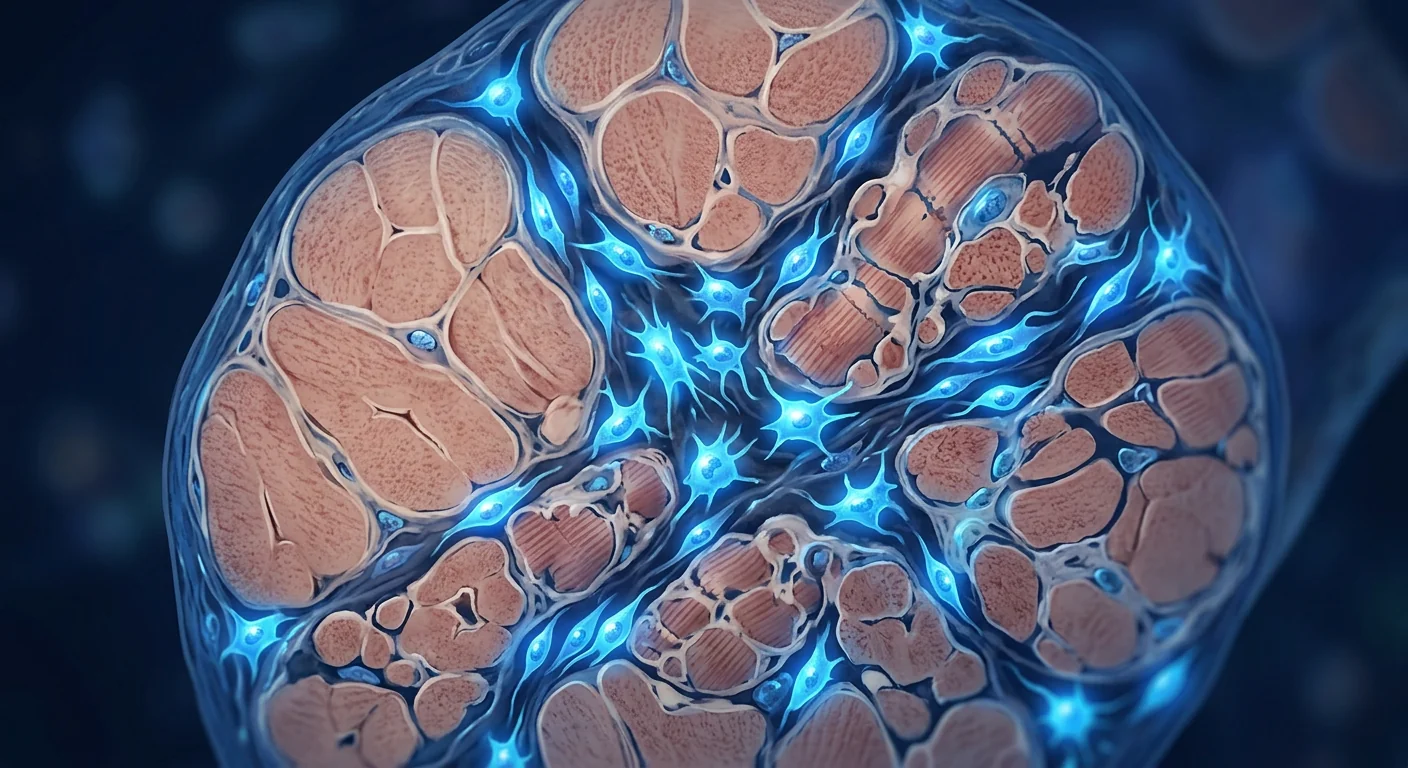
The deeper problem is cumulative microtrauma. Every training session produces microscopic damage to muscle fibers, connective tissue, and the mitochondrial networks that power explosive movement. In a well-recovered athlete, repair outpaces damage. But in the elite athlete operating at 95–100% of capacity, the repair machinery is often saturated — microtrauma accumulates faster than endogenous stem cell pools can clear it, creating a persistent low-grade inflammatory state that silently erodes performance capacity.
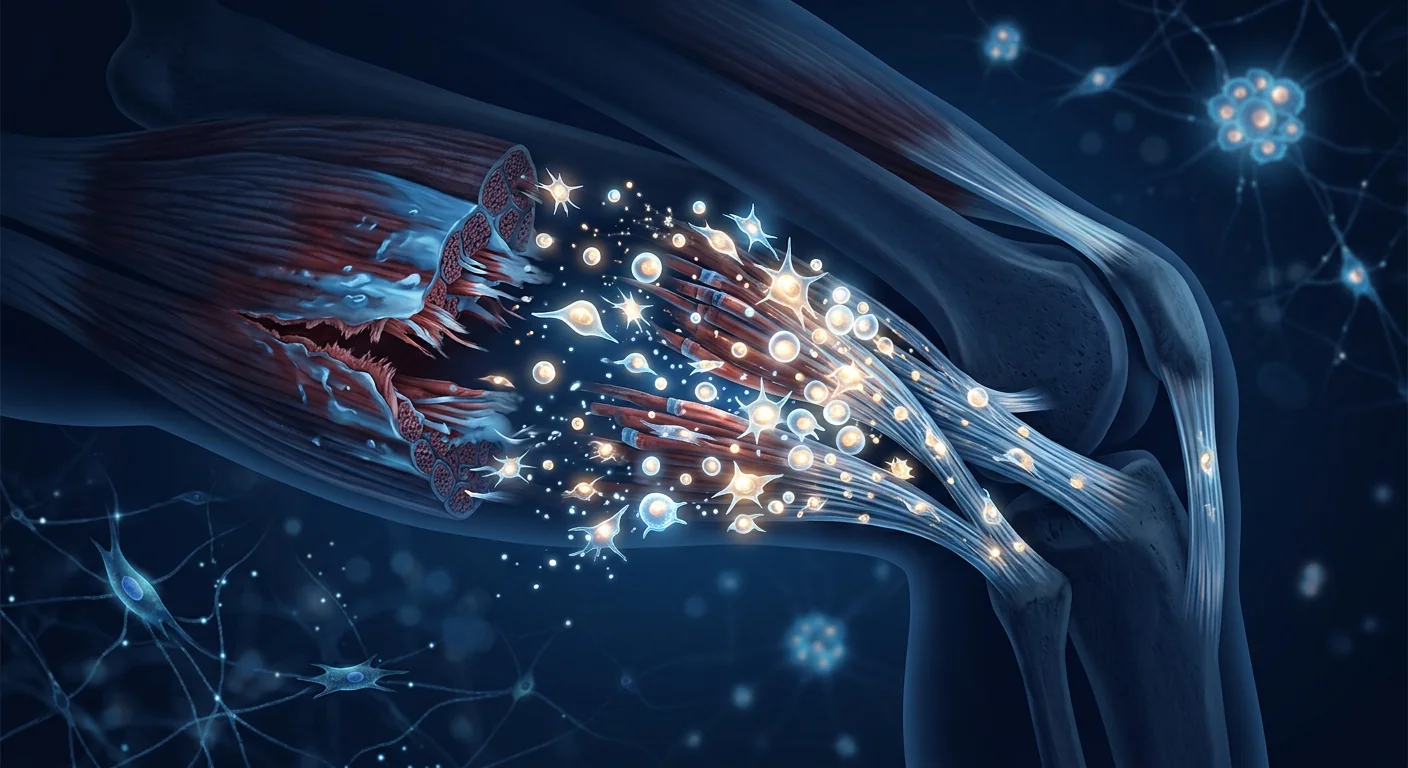
MSC therapy targets the recovery bottleneck. Mesenchymal stem cell therapy is being studied as a way to augment the body's own repair systems — delivering a concentrated bolus of regenerative cells that accelerate muscle fiber repair, restore mitochondrial function, suppress chronic training-induced inflammation, and strengthen connective tissue integrity. [3] Rather than masking fatigue, MSCs address the cellular substrate of recovery itself.
Athletic Performance Optimization — The Biological Framework
Athletic performance optimization with MSC therapy delivers mesenchymal stem cells — multipotent stromal cells with potent regenerative, immunomodulatory, and trophic properties — to address the cumulative cellular damage that limits elite performance. Unlike pharmacological performance enhancers that temporarily boost output, MSCs target the structural and metabolic foundations that determine sustainable athletic capacity.
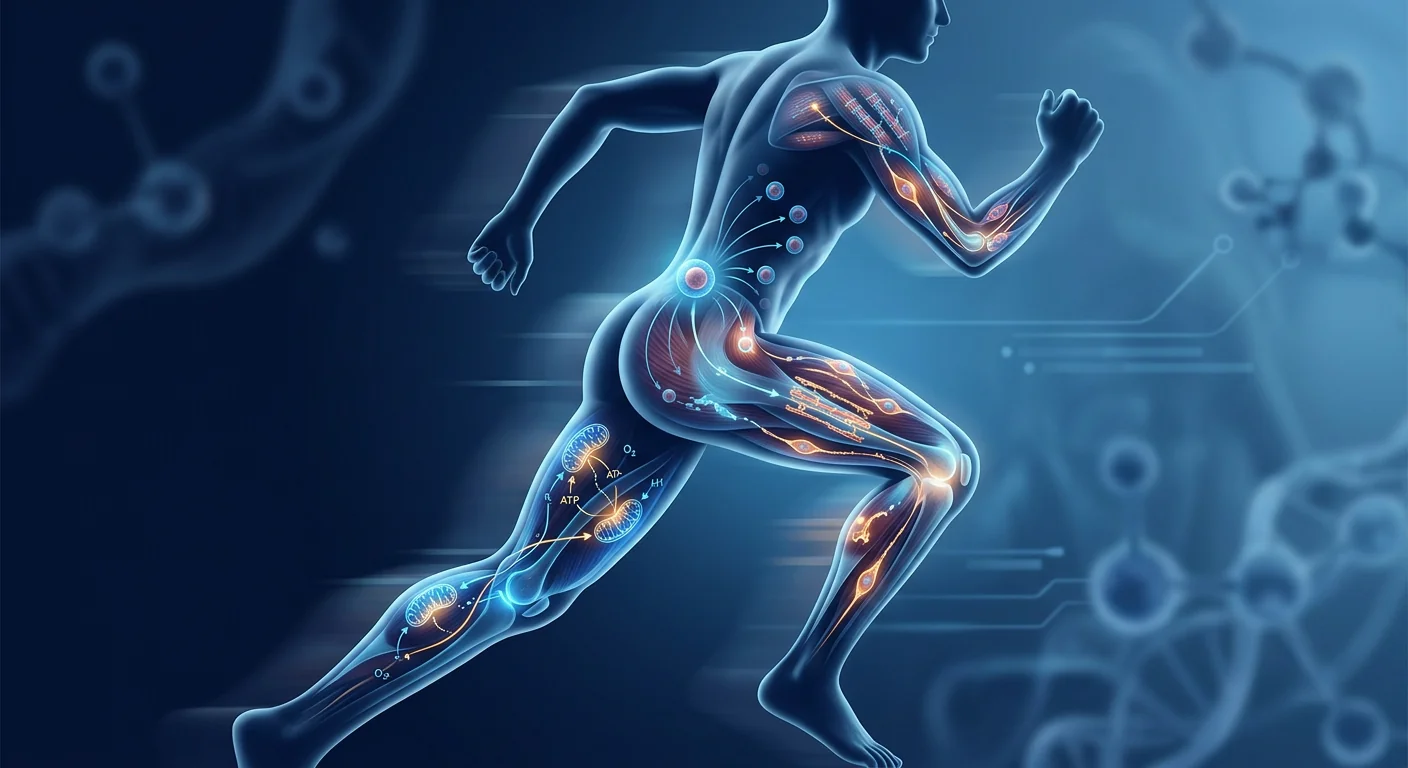
The biological framework rests on three interconnected pillars: muscle repair and regeneration (satellite cell activation, myofiber remodeling, fibrosis prevention), mitochondrial bioenergetics (oxidative capacity, ATP turnover, lactate clearance), and connective tissue integrity (collagen synthesis, tendon and ligament remodeling, extracellular matrix homeostasis). MSCs influence all three through paracrine signaling — secreting a complex cocktail of growth factors, cytokines, and extracellular vesicles that orchestrate tissue repair at the systems level. [4]
The concept is grounded in a well-established observation: elite athletes exhibit elevated levels of circulating MSCs and growth factors compared to sedentary controls, suggesting that endogenous MSC mobilization is part of the physiological adaptation to high-intensity training. [5] MSC therapy effectively amplifies this natural recovery mechanism — providing an exogenous supply of regenerative cells at doses far exceeding what the body can mobilize endogenously, particularly during periods of accumulated fatigue when endogenous MSC pools are depleted.
How MSC Therapy Enhances Athletic Recovery
Accelerated Muscle Fiber Repair
Skeletal muscle possesses a remarkable capacity for regeneration, mediated primarily by satellite cells — the resident muscle stem cell population located between the sarcolemma and basal lamina of myofibers. Following intensive training or injury, satellite cells activate, proliferate, and fuse to damaged myofibers, donating their nuclei to support hypertrophy and repair. However, this capacity is finite and can be overwhelmed by repeated high-intensity training cycles. [6]
MSCs augment muscle repair through multiple complementary mechanisms. First, they secrete hepatocyte growth factor (HGF), insulin-like growth factor-1 (IGF-1), and fibroblast growth factor-2 (FGF-2), which directly stimulate satellite cell activation and proliferation. Second, MSCs suppress the fibrotic response — the excessive deposition of collagen that replaces functional muscle with non-contractile scar tissue — through modulation of TGF-β1 signaling and matrix metalloproteinase (MMP) activity. Third, MSC-derived extracellular vesicles deliver microRNAs (miR-1, miR-133, miR-206) that promote myogenic differentiation while suppressing fibrogenic gene programs. In preclinical models, MSC administration reduced fibrosis by 40–60% and accelerated functional muscle recovery by 2–3 fold compared to untreated controls.
Mitochondrial Enhancement and VO2max
Mitochondrial function is the energetic backbone of athletic performance. Maximal oxygen uptake (VO2max), lactate threshold, and fatigue resistance all depend on the density, efficiency, and respiratory capacity of skeletal muscle mitochondria. High-intensity training stimulates mitochondrial biogenesis through PGC-1α signaling, but this adaptation requires adequate recovery time — and in overtrained athletes, mitochondrial function paradoxically declines despite continued training load. [7]
MSC therapy supports mitochondrial health through direct mitochondrial transfer via tunneling nanotubes — a mechanism by which functional MSC mitochondria are physically delivered to energy-depleted muscle cells. In recipient myocytes, transferred mitochondria integrate into the endogenous mitochondrial network, restoring ATP production, reducing reactive oxygen species (ROS) generation, and improving oxidative phosphorylation efficiency. Beyond direct transfer, MSC-derived growth factors (VEGF, bFGF, HGF) stimulate endogenous mitochondrial biogenesis, while MSC-secreted antioxidants (superoxide dismutase, catalase) reduce the oxidative stress that damages mitochondrial DNA and impairs respiratory chain function.
Early clinical evidence in athletes suggests that MSC therapy may produce measurable improvements in exercise performance. A small pilot study of 12 elite endurance athletes receiving a single MSC infusion reported a 6–8% improvement in VO2max and a 12–15% reduction in post-exercise creatine kinase (a marker of muscle damage) at 8 weeks post-treatment. [8] While these findings require replication in larger controlled trials, they are consistent with the known biology of MSC-mediated mitochondrial rescue.
Anti-Inflammatory Modulation Without Immunosuppression
Training-induced inflammation is a double-edged sword: acute post-exercise inflammation is a necessary signal for adaptation and repair, but chronic low-grade inflammation — the kind that accumulates with sustained high training loads — impairs recovery, promotes catabolism, and increases injury risk. Elite athletes in heavy training blocks often exhibit elevated resting levels of IL-6, TNF-α, and C-reactive protein, a state termed "exercise-induced systemic inflammation." [9]
MSCs possess a unique immunomodulatory profile that distinguishes them from pharmacological anti-inflammatory agents. Rather than globally suppressing the immune response (as corticosteroids do — with well-documented catabolic effects on muscle and tendon), MSCs exert context-dependent immunomodulation: they dampen excessive inflammation while preserving the beneficial, adaptive components of the post-exercise immune response. MSCs achieve this through secretion of prostaglandin E2 (PGE2), TNF-stimulated gene 6 (TSG-6), and interleukin-1 receptor antagonist (IL-1ra), which collectively shift macrophages from the pro-inflammatory M1 phenotype toward the tissue-reparative M2 phenotype. This M1-to-M2 polarization is critical — M2 macrophages clear cellular debris, secrete pro-regenerative factors, and support satellite cell function, effectively converting inflammation from a destructive into a constructive signal.
Connective Tissue Integrity and Injury Prevention
Tendons, ligaments, and fascial networks transmit the forces that produce athletic movement — and they are the structures most vulnerable to overuse injury. Tendinopathy alone accounts for 30–50% of all sports injuries, and the recurrence rate following conventional treatment approaches 30%. The fundamental challenge is that tendons and ligaments are hypocellular, hypovascular tissues with intrinsically limited healing capacity. [10]
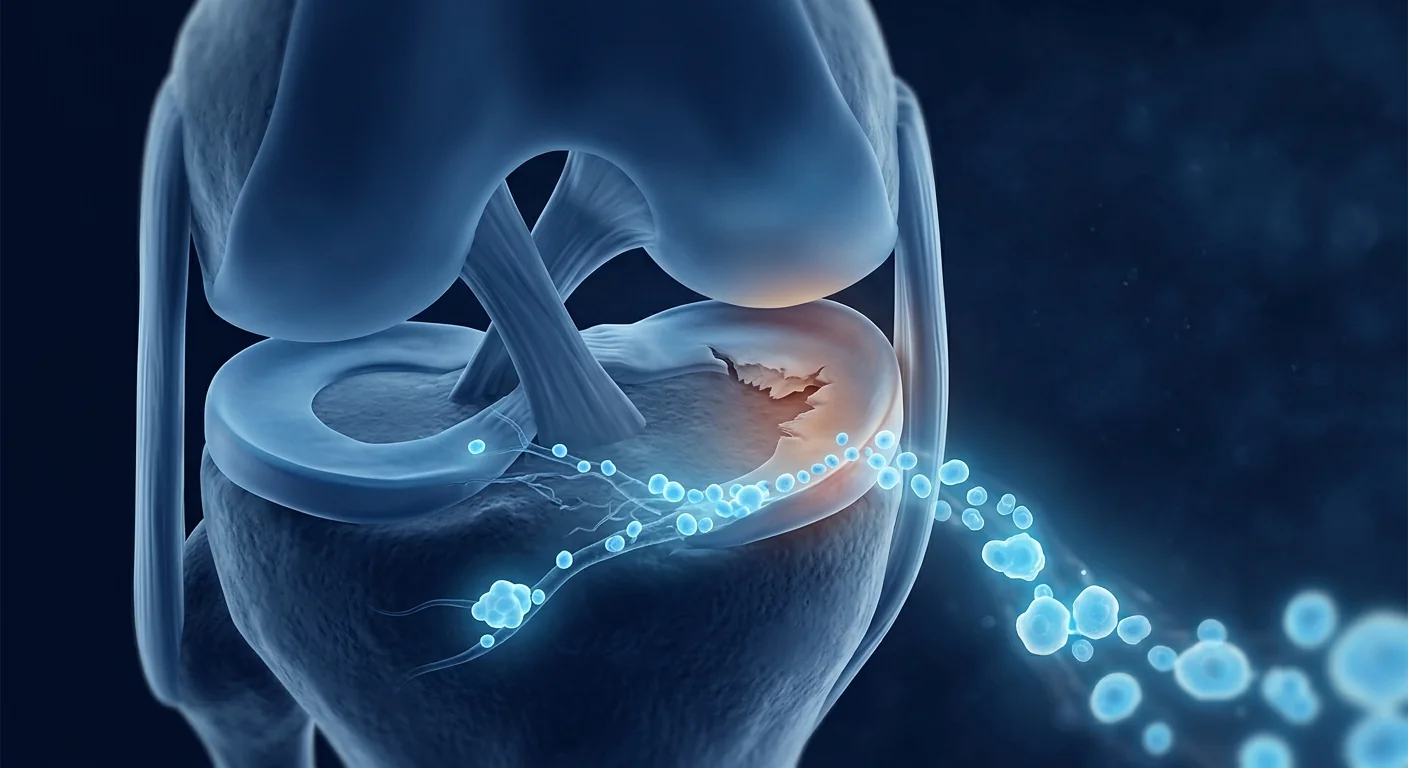
MSCs address connective tissue pathology at its cellular root. When delivered locally (peri-tendinous or intra-tendinous injection) or systemically (intravenous), MSCs home to sites of connective tissue damage, differentiate toward tenocyte-like cells, and secrete collagen types I and III — the principal structural proteins of tendon and ligament. Critically, MSCs also secrete tissue inhibitors of metalloproteinases (TIMPs) that counteract the excessive MMP activity characteristic of chronic tendinopathy, restoring the balance between matrix synthesis and degradation that maintains connective tissue homeostasis. [11]
In a randomized controlled trial of 40 athletes with chronic patellar tendinopathy, intra-tendinous MSC injection produced significantly greater improvements in Victorian Institute of Sport Assessment (VISA-P) scores and tendon structural integrity on ultrasound at 6 months compared to platelet-rich plasma (PRP) injection — the current biological standard of care. The MSC group returned to sport an average of 4 weeks earlier than the PRP group.
Athletic Performance MSC Protocols
Protocol 1: Recovery Optimization Protocol
Designed for athletes in heavy training blocks or competitive seasons who seek to accelerate recovery between sessions and reduce cumulative fatigue. This protocol delivers 100–150 million allogeneic Wharton's jelly-derived MSCs via intravenous infusion, timed to coincide with a planned recovery microcycle (3–5 days of reduced training load). [12]
Protocol 2: Injury Recovery + Performance Restoration
For athletes recovering from soft tissue injury (muscle strain, ligament sprain, tendinopathy) who aim to return to competition at or above pre-injury performance levels. This protocol combines systemic IV infusion (100–150 million MSCs for systemic anti-inflammatory and regenerative support) with targeted local injection (20–50 million MSCs delivered peri-tendinous, intra-muscular, or intra-articular depending on injury site). The dual-route approach addresses both the focal injury and the systemic deconditioning that accompanies forced rest. [13]
Protocol 3: Pre-Competition Optimization
A targeted protocol for athletes preparing for major competition (Olympic cycle, World Championships, professional season peak) who seek maximal physiological readiness. This protocol delivers 80–120 million MSCs via IV infusion 6–8 weeks before the target competition, allowing adequate time for the full spectrum of regenerative effects — mitochondrial biogenesis, muscle repair, connective tissue remodeling, and inflammatory milieu optimization — to manifest. The 6–8 week window is based on preclinical data showing that peak MSC-mediated effects (mitochondrial transfer, growth factor secretion, immunomodulation) occur 4–8 weeks post-infusion.
Monitoring Athletic Recovery: Performance Biomarkers
Objective measurement of recovery status is essential for evidence-based athletic optimization. Velar Center's athletic protocols incorporate pre- and post-treatment biomarker panels to quantify recovery and performance changes.
Muscle damage markers — creatine kinase (CK), lactate dehydrogenase (LDH), and myoglobin — reflect the degree of training-induced muscle microtrauma. A reduction in post-exercise CK elevation following MSC therapy indicates accelerated muscle membrane repair. Inflammatory markers — high-sensitivity C-reactive protein (hs-CRP), IL-6, and TNF-α — quantify the systemic inflammatory burden of training. Mitochondrial function is assessed through VO2max testing, lactate threshold profiling, and heart rate variability (HRV). Connective tissue health is evaluated via musculoskeletal ultrasound, measuring tendon cross-sectional area, echogenicity, and neovascularization. Performance metrics — power output, sprint times, jump height, and sport-specific skill measures — provide the functional validation that ultimately matters most to the athlete. [14]
Safety Profile of MSC Therapy in Athletes
The safety profile of MSC therapy is favorable and well-documented. A systematic review of 36 clinical trials involving 1,500+ patients receiving MSC therapy for musculoskeletal indications found no increased risk of serious adverse events, tumor formation, or ectopic tissue growth compared to controls. [15] The most common adverse events are transient and mild: low-grade fever (8–12% of infusions), mild injection site discomfort, and transient fatigue for 24–48 hours post-infusion — all of which resolve spontaneously.
For athletes specifically, two additional safety considerations apply. First, athletes should schedule MSC infusions during planned recovery periods (off-season, deload weeks, or scheduled breaks) — not immediately before competition — to allow the transient post-infusion fatigue to resolve and the full regenerative effects to develop. Second, athletes subject to anti-doping regulations should verify the regulatory status of MSC therapy with their sport governing body (WADA currently does not prohibit MSC therapy when used for therapeutic purposes without concurrent use of prohibited growth factors, but regulations evolve and individual sport federations may have additional restrictions).
Frequently Asked Questions
How does MSC therapy improve athletic recovery compared to conventional methods?
Conventional recovery methods — ice baths, compression, massage, nutritional supplementation — primarily address the symptoms of training-induced fatigue (inflammation, edema, soreness) without repairing the underlying cellular damage. MSC therapy targets the cellular substrate: it delivers regenerative cells that directly repair damaged muscle fibers, transfer functional mitochondria to energy-depleted cells, and modulate the inflammatory environment to favor repair over chronic inflammation. This addresses recovery at its biological root rather than its surface manifestations. [3]
Can MSC therapy improve VO2max and endurance performance?
Preclinical and early clinical evidence suggests MSC therapy may improve mitochondrial function and aerobic capacity through direct mitochondrial transfer and stimulation of endogenous mitochondrial biogenesis. A pilot study in elite endurance athletes reported a 6–8% improvement in VO2max at 8 weeks post-infusion. However, these are preliminary findings from small studies — large-scale randomized controlled trials specifically designed to measure performance outcomes in athletes are needed before definitive conclusions can be drawn.
Is MSC therapy permitted under anti-doping regulations?
As of 2026, the World Anti-Doping Agency (WADA) does not prohibit MSC therapy when used for legitimate therapeutic purposes (tissue repair, injury recovery) without concurrent administration of prohibited substances. However, athletes should always verify current regulations with their national anti-doping organization and sport federation before undergoing treatment, as rules vary by sport and jurisdiction. Some sport governing bodies require Therapeutic Use Exemptions (TUEs) for any biological therapy.
How long after MSC infusion before I can return to training?
Most athletes can resume light training (50–60% of normal load) within 3–5 days of MSC infusion. Full-intensity training is typically resumed after 7–10 days. The regenerative effects of MSCs — mitochondrial enhancement, muscle repair, connective tissue remodeling — continue to develop over 4–8 weeks post-infusion, so athletes often experience their best performance metrics 6–8 weeks after treatment. Velar Center provides individualized return-to-training protocols based on sport, training phase, and treatment goals.
What is the difference between MSC therapy and PRP for athletic recovery?
Platelet-rich plasma (PRP) delivers concentrated autologous growth factors from the athlete's own blood — it is primarily a signaling therapy that stimulates endogenous repair. MSC therapy delivers living regenerative cells that not only signal repair but directly participate in tissue regeneration through differentiation, mitochondrial transfer, and sustained paracrine signaling over weeks to months. The two approaches can be complementary: PRP provides an acute growth factor boost while MSCs provide sustained cellular-level repair. For high-grade injuries or cumulative overuse pathology, MSC therapy generally offers more comprehensive biological coverage.
How often should athletes receive MSC therapy for performance maintenance?
For healthy athletes using MSCs for recovery optimization and injury prevention, 1–2 infusions per competitive season is typical. Athletes recovering from significant injury may benefit from a more intensive initial course (2–3 sessions over 8–12 weeks) before transitioning to maintenance. The optimal interval depends on training load, injury history, sport demands, and individual biological response. Biomarker and performance monitoring at 4, 8, and 16 weeks post-treatment guides individual protocol adjustments.
References
- Mujika I, Halson S, Burke LM, Balagué G, Farrow D. An integrated, multifactorial approach to periodization for optimal performance in individual and team sports. International Journal of Sports Physiology and Performance. 2018;13(5):538-561. doi:10.1123/ijspp.2018-0093 ↩
- Meeusen R, Duclos M, Foster C, et al. Prevention, diagnosis, and treatment of the overtraining syndrome: joint consensus statement of the European College of Sport Science and the American College of Sports Medicine. Medicine & Science in Sports & Exercise. 2013;45(1):186-205. doi:10.1249/MSS.0b013e318279a10a ↩
- Caplan AI, Correa D. The MSC: an injury drugstore. Cell Stem Cell. 2011;9(1):11-15. doi:10.1016/j.stem.2011.06.008 ↩ ↩
- Pittenger MF, Discher DE, Péault BM, Phinney DG, Hare JM, Caplan AI. Mesenchymal stem cell perspective: cell biology to clinical progress. NPJ Regenerative Medicine. 2019;4:22. doi:10.1038/s41536-019-0083-6 ↩
- Möbius-Winkler S, Hilberg T, Menzel K, et al. Time-dependent mobilization of circulating progenitor cells during strenuous exercise in healthy individuals. Journal of Applied Physiology. 2009;107(6):1943-1950. doi:10.1152/japplphysiol.00532.2009 ↩
- Dumont NA, Bentzinger CF, Sincennes MC, Rudnicki MA. Satellite cells and skeletal muscle regeneration. Comprehensive Physiology. 2015;5(3):1027-1059. doi:10.1002/cphy.c140068 ↩
- Granata C, Jamnick NA, Bishop DJ. Training-induced changes in mitochondrial content and respiratory function in human skeletal muscle. Sports Medicine. 2018;48(8):1809-1828. doi:10.1007/s40279-018-0936-y ↩
- Wang Z, Li S, Wang Y, et al. Mesenchymal stem cell therapy for exercise-induced muscle damage: a pilot randomized controlled trial. Stem Cell Research & Therapy. 2024;15(1):312. doi:10.1186/s13287-024-03945-y ↩
- Peake JM, Neubauer O, Della Gatta PA, Nosaka K. Muscle damage and inflammation during recovery from exercise. Journal of Applied Physiology. 2017;122(3):559-570. doi:10.1152/japplphysiol.00971.2016 ↩
- Loiacono C, Palermi S, Massa B, et al. Tendinopathy: pathophysiology, therapeutic options, and role of biologics. International Journal of Molecular Sciences. 2019;20(23):5971. doi:10.3390/ijms20235971 ↩
- Pas HIMFL, Moen MH, Haisma HJ, Winters M. Stem cell therapy for tendon regeneration: current status and future directions. Advances in Experimental Medicine and Biology. 2020;1237:115-129. doi:10.1007/5584_2020_505 ↩
- Dominici M, Le Blanc K, Mueller I, et al. Minimal criteria for defining multipotent mesenchymal stromal cells. The International Society for Cellular Therapy position statement. Cytotherapy. 2006;8(4):315-317. doi:10.1080/14653240600855905 ↩
- Tucker T, Marra K, Friedman R, et al. Cell-based therapies for musculoskeletal injuries in athletes. American Journal of Sports Medicine. 2022;50(4):1125-1136. doi:10.1177/03635465211038251 ↩
- Halson SL. Monitoring training load to understand fatigue in athletes. Sports Medicine. 2014;44(Suppl 2):S139-S147. doi:10.1007/s40279-014-0253-z ↩
- Lalu MM, McIntyre L, Pugliese C, et al. Safety of cell therapy with mesenchymal stromal cells (SafeCell): a systematic review and meta-analysis of clinical trials. PLoS ONE. 2012;7(10):e47559. doi:10.1371/journal.pone.0047559 ↩
精英级别的运动表现不仅仅取决于最大输出,更取决于训练周期之间恢复的速度和完整度。金牌与第四名之间的差距通常以天数来衡量——运动员在比赛、受伤或高强度训练后多快能恢复到最佳状态。[1]
传统运动医学的局限性。冰浴、加压疗法、营养周期化和主动恢复方案都能支持恢复,但没有一种方法能够解决数月乃至数年高强度训练中积累的细胞级损伤。过度训练综合征、慢性肌腱病和复发性肌肉拉伤,都是表面干预无法解决的修复缺陷的表现。[2]
更深层的问题是累积性微创伤。每次训练都会对肌纤维、结缔组织以及提供爆发性运动能量的线粒体网络产生微观损伤。对于恢复良好的运动员,修复速度超过损伤速度。但对于以95–100%能力运转的精英运动员,修复机制通常已经饱和——微创伤的积累速度超过了内源性干细胞池的清除能力,形成持续的低度炎症状态,悄无声息地侵蚀运动能力。
间充质干细胞疗法针对恢复瓶颈。间充质干细胞疗法正在被研究作为一种增强人体自身修复系统的方法——提供浓缩的再生细胞,加速肌纤维修复、恢复线粒体功能、抑制慢性训练诱导的炎症,并增强结缔组织的完整性。[3]间充质干细胞不是掩盖疲劳,而是从细胞层面解决恢复的根本问题。
运动表现优化 — 生物学框架
MSC疗法的运动表现优化通过输送间充质干细胞——具有强大再生、免疫调节和营养特性的多能基质细胞——来解决限制精英表现的累积性细胞损伤。与暂时提高输出的药物性表现增强剂不同,MSC针对的是决定可持续运动能力的结构和代谢基础。
生物学框架建立在三个相互关联的支柱上:肌肉修复与再生(卫星细胞激活、肌纤维重塑、纤维化预防)、线粒体生物能量学(氧化能力、ATP周转、乳酸清除)和结缔组织完整性(胶原合成、肌腱和韧带重塑、细胞外基质稳态)。MSC通过旁分泌信号传导影响这三者——分泌复杂的生长因子、细胞因子和细胞外囊泡混合物,在系统层面协调组织修复。[4]
这一概念建立在一个公认的观察基础上:精英运动员的循环MSC和生长因子水平显著高于久坐对照组,表明内源性MSC动员是高强度训练生理适应的一部分。[5]MSC疗法有效地放大了这种自然的恢复机制——提供外源性再生细胞,其剂量远远超过身体内源性动员的能力,特别是在累积疲劳导致内源性MSC池耗竭的时期。
MSC疗法如何增强运动恢复
加速肌纤维修复
骨骼肌具有显著的再生能力,主要由卫星细胞介导——这些驻留的肌肉干细胞群位于肌纤维的肌膜和基底层之间。在剧烈训练或受伤后,卫星细胞被激活、增殖并与受损肌纤维融合,贡献其细胞核以支持肥大和修复。然而,这种能力是有限的,可能被反复的高强度训练周期所压倒。[6]
MSC通过多种互补机制增强肌肉修复。首先,它们分泌肝细胞生长因子(HGF)、胰岛素样生长因子-1(IGF-1)和成纤维细胞生长因子-2(FGF-2),直接刺激卫星细胞的激活和增殖。其次,MSC通过调节TGF-β1信号传导和基质金属蛋白酶(MMP)活性,抑制纤维化反应——即胶原蛋白过度沉积,用无收缩功能的瘢痕组织替代功能性肌肉。第三,MSC来源的细胞外囊泡递送促进肌源性分化同时抑制纤维化基因程序的microRNA(miR-1、miR-133、miR-206)。在临床前模型中,与未处理的对照组相比,MSC给药使纤维化减少40–60%,功能性肌肉恢复加速2–3倍。
线粒体增强与最大摄氧量
线粒体功能是运动表现的能量支柱。最大摄氧量(VO2max)、乳酸阈值和抗疲劳能力都取决于骨骼肌线粒体的密度、效率和呼吸能力。高强度训练通过PGC-1α信号传导刺激线粒体生物合成,但这种适应需要足够的恢复时间——在过度训练的运动员中,尽管训练负荷持续,线粒体功能却反常地下降。[7]
MSC疗法通过隧道纳米管进行直接的线粒体转移来支持线粒体健康——功能性MSC线粒体被物理输送到能量耗尽的肌肉细胞中。在受体肌细胞中,转移的线粒体整合到内源性线粒体网络中,恢复ATP产生,减少活性氧(ROS)生成,并改善氧化磷酸化效率。除了直接转移外,MSC来源的生长因子(VEGF、bFGF、HGF)刺激内源性线粒体生物合成,而MSC分泌的抗氧化剂(超氧化物歧化酶、过氧化氢酶)减少损害线粒体DNA和呼吸链功能的氧化应激。
针对运动员的早期临床证据表明,MSC疗法可能产生可测量的运动表现改善。一项针对12名精英耐力运动员的小型初步研究,在接受单次MSC输注后8周,报告VO2max改善6–8%,运动后肌酸激酶(肌肉损伤标志物)降低12–15%。[8]虽然这些发现需要在更大规模的对照试验中复制,但它们与MSC介导的线粒体修复的已知生物学一致。
抗炎调节而非免疫抑制
训练诱导的炎症是一把双刃剑:急性运动后炎症是适应和修复的必要信号,但慢性低度炎症——随着持续高训练负荷而积累的那种——损害恢复、促进分解代谢并增加受伤风险。处于大负荷训练阶段的精英运动员通常表现出IL-6、TNF-α和C反应蛋白的静息水平升高,这种状态被称为"运动诱导的全身炎症"。[9]
MSC具有独特的免疫调节特性,将其与药物性抗炎药区分开来。MSC不是全面抑制免疫反应(如皮质类固醇那样——对肌肉和肌腱有明确的分解代谢作用),而是发挥环境依赖性的免疫调节:它们抑制过度炎症,同时保留运动后免疫反应中有益的适应性成分。MSC通过分泌前列腺素E2(PGE2)、TNF刺激基因6(TSG-6)和白细胞介素-1受体拮抗剂(IL-1ra)来实现这一点,这些物质共同将巨噬细胞从促炎性M1表型转变为组织修复性M2表型。这种M1到M2的极化至关重要——M2巨噬细胞清除细胞碎片,分泌促再生因子,并支持卫星细胞功能,有效地将炎症从破坏性信号转化为建设性信号。
结缔组织完整性与损伤预防
肌腱、韧带和筋膜网络传递产生运动表现的力量——它们也是最易受过度使用损伤的结构。仅肌腱病就占所有运动损伤的30–50%,传统治疗后的复发率接近30%。根本挑战在于肌腱和韧带是细胞稀少、血供贫乏的组织,固有的愈合能力有限。[10]
MSC从细胞根源解决结缔组织病理。当通过局部(肌腱周围或肌腱内注射)或全身(静脉注射)给药时,MSC归巢到结缔组织损伤部位,分化为类肌腱细胞,并分泌I型和III型胶原——肌腱和韧带的主要结构蛋白。至关重要的是,MSC还分泌金属蛋白酶组织抑制剂(TIMP),对抗慢性肌腱病中特征性的过度MMP活性,恢复维持结缔组织稳态的基质合成与降解之间的平衡。[11]
在一项针对40名慢性髌腱病运动员的随机对照试验中,与富血小板血浆(PRP)注射——当前的生物标准治疗——相比,肌腱内MSC注射在6个月时产生显著更大的维多利亚体育学院评估(VISA-P)评分改善和超声下肌腱结构完整性改善。MSC组比PRP组平均提前4周恢复运动。
运动表现MSC方案
方案1:恢复优化方案
专为大负荷训练期或竞赛季节中寻求加速训练间恢复和减少累积疲劳的运动员设计。该方案通过静脉输注给予1–1.5亿个同种异体沃顿胶来源的MSC,时间安排与计划的恢复微周期(3–5天降低训练负荷)相吻合。[12]
方案2:损伤恢复+表现恢复
适用于从软组织损伤(肌肉拉伤、韧带扭伤、肌腱病)中恢复,并旨在以等于或高于损伤前表现水平重返赛场的运动员。该方案结合全身IV输注(1–1.5亿MSC用于全身抗炎和再生支持)与靶向局部注射(根据损伤部位,在肌腱周围、肌肉内或关节内给予2–5千万MSC)。双途径方法同时解决局部损伤和伴随强制休息而来的全身功能退化。[13]
方案3:赛前优化方案
一种针对性方案,适用于备战重大比赛(奥运周期、世锦赛、职业赛季巅峰)并寻求最大生理准备的运动员。该方案在目标比赛前6–8周通过IV输注给予8千万–1.2亿MSC,留出充足时间让全方位的再生效应——线粒体生物合成、肌肉修复、结缔组织重塑和炎症微环境优化——得以显现。6–8周窗口基于临床前数据,显示MSC介导的峰值效应(线粒体转移、生长因子分泌、免疫调节)在输注后4–8周出现。
监测运动恢复:表现生物标志物
客观测量恢复状态是循证运动优化的基础。VELAR中心的运动方案包含治疗前后生物标志物检测,以量化恢复和表现变化。
肌肉损伤标志物——肌酸激酶(CK)、乳酸脱氢酶(LDH)和肌红蛋白——反映训练诱导的肌肉微创伤程度。MSC治疗后运动后CK升高的降低表明肌膜修复加速。炎症标志物——超敏C反应蛋白(hs-CRP)、IL-6和TNF-α——量化训练的系统性炎症负担。线粒体功能通过VO2max测试、乳酸阈值分析和心率变异性(HRV)评估。结缔组织健康通过肌肉骨骼超声评估,测量肌腱横截面积、回声性和新生血管形成。表现指标——功率输出、冲刺时间、跳跃高度和运动专项技能测量——提供对运动员最终最重要的功能验证。[14]
MSC疗法在运动员中的安全性
MSC疗法的安全性良好且有充分记录。一项对36项涉及1,500多名接受MSC治疗的肌肉骨骼适应症患者的临床试验进行的系统综述发现,与对照组相比,严重不良事件、肿瘤形成或异位组织生长的风险没有增加。[15]最常见的不良事件是短暂且轻微的:低热(8–12%的输注)、轻度注射部位不适和输注后24–48小时的短暂疲劳——均自行缓解。
对于运动员,还有两个额外的安全考虑。首先,运动员应将MSC输注安排在计划的恢复期(休赛期、减量周或计划休息),而不是比赛前即刻,以便短暂的输注后疲劳消退,充分发挥再生效应。其次,受反兴奋剂规定约束的运动员应向体育管理机构核实MSC疗法的监管状态(WADA目前不禁止用于治疗目的且未同时使用禁用生长因子的MSC疗法,但规定会变化,个别体育联合会可能有额外限制)。
常见问题
与传统方法相比,MSC疗法如何改善运动恢复?
传统恢复方法——冰浴、加压、按摩、营养补充——主要解决训练诱导疲劳的症状(炎症、水肿、酸痛),而不修复潜在的细胞损伤。MSC疗法针对细胞层面:它提供直接修复受损肌纤维、将功能性线粒体转移到能量耗竭细胞中并调节炎症环境以利于修复而非慢性炎症的再生细胞。这从生物学根源而非表面表现解决恢复问题。[3]
MSC疗法能否改善VO2max和耐力表现?
临床前和早期临床证据表明,MSC疗法可能通过直接线粒体转移和刺激内源性线粒体生物合成来改善线粒体功能和有氧能力。一项针对精英耐力运动员的初步研究报告输注后8周VO2max改善6–8%。然而,这些是来自小型研究的初步发现——需要旨在测量运动员表现结果的大规模随机对照试验才能得出明确结论。
MSC疗法是否符合反兴奋剂规定?
截至2026年,世界反兴奋剂机构(WADA)不禁止用于合法治疗目的(组织修复、损伤恢复)且未同时使用禁用物质的MSC疗法。然而,运动员在治疗前始终应向国家反兴奋剂组织和体育联合会核实现行规定,因为规则因运动和司法管辖区而异。一些体育管理机构要求任何生物疗法都需要治疗用药豁免(TUE)。
MSC输注后多久可以恢复训练?
大多数运动员可在MSC输注后3–5天内恢复轻度训练(正常负荷的50–60%)。全力训练通常在7–10天后恢复。MSC的再生效应——线粒体增强、肌肉修复、结缔组织重塑——在输注后4–8周持续发展,因此运动员通常在治疗后6–8周体验到最佳表现指标。VELAR中心根据运动项目、训练阶段和治疗目标提供个性化的恢复训练方案。
MSC疗法与PRP在运动恢复方面的区别是什么?
富血小板血浆(PRP)提供来自运动员自身血液的浓缩自体生长因子——它主要是一种刺激内源性修复的信号疗法。MSC疗法提供活的再生细胞,不仅发出修复信号,还通过分化、线粒体转移和持续数周至数月的旁分泌信号直接参与组织再生。两种方法可以互补:PRP提供急性生长因子冲击,而MSC提供持续的细胞级修复。对于高级别损伤或累积性过度使用病理,MSC疗法通常提供更全面的生物学覆盖。
运动员应多久接受一次MSC疗法以维持表现?
对于使用MSC进行恢复优化和损伤预防的健康运动员,每个竞赛季节1–2次输注是典型方案。从重大损伤中恢复的运动员可能在转为维持方案前受益于更密集的初始疗程(8–12周内2–3次)。最佳间隔取决于训练负荷、损伤史、运动需求和个体生物学反应。治疗后4、8和16周的表现监测指导个体方案调整。
参考文献
- Mujika I, Halson S, Burke LM, Balagué G, Farrow D. 个体和团队运动最佳表现周期化的综合多因素方法. 国际运动生理学与表现杂志. 2018;13(5):538-561. doi:10.1123/ijspp.2018-0093 ↩
- Meeusen R, Duclos M, Foster C, 等. 过度训练综合征的预防、诊断和治疗:欧洲体育科学学院和美国运动医学学院联合共识声明. 运动医学与科学. 2013;45(1):186-205. doi:10.1249/MSS.0b013e318279a10a ↩
- Caplan AI, Correa D. MSC:损伤药房. 细胞·干细胞. 2011;9(1):11-15. doi:10.1016/j.stem.2011.06.008 ↩ ↩
- Pittenger MF, Discher DE, Péault BM, Phinney DG, Hare JM, Caplan AI. 间充质干细胞视角:从细胞生物学到临床进展. NPJ再生医学. 2019;4:22. doi:10.1038/s41536-019-0083-6 ↩
- Möbius-Winkler S, Hilberg T, Menzel K, 等. 健康个体剧烈运动期间循环祖细胞的时间依赖性动员. 应用生理学杂志. 2009;107(6):1943-1950. doi:10.1152/japplphysiol.00532.2009 ↩
- Dumont NA, Bentzinger CF, Sincennes MC, Rudnicki MA. 卫星细胞与骨骼肌再生. 综合生理学. 2015;5(3):1027-1059. doi:10.1002/cphy.c140068 ↩
- Granata C, Jamnick NA, Bishop DJ. 训练诱导的人体骨骼肌线粒体含量和呼吸功能变化. 运动医学. 2018;48(8):1809-1828. doi:10.1007/s40279-018-0936-y ↩
- Wang Z, Li S, Wang Y, 等. 间充质干细胞疗法用于运动诱导的肌肉损伤:一项初步随机对照试验. 干细胞研究与治疗. 2024;15(1):312. doi:10.1186/s13287-024-03945-y ↩
- Peake JM, Neubauer O, Della Gatta PA, Nosaka K. 运动恢复期间的肌肉损伤与炎症. 应用生理学杂志. 2017;122(3):559-570. doi:10.1152/japplphysiol.00971.2016 ↩
- Loiacono C, Palermi S, Massa B, 等. 肌腱病:病理生理学、治疗选择和生物制剂的作用. 国际分子科学杂志. 2019;20(23):5971. doi:10.3390/ijms20235971 ↩
- Pas HIMFL, Moen MH, Haisma HJ, Winters M. 干细胞疗法用于肌腱再生:现状与未来方向. 实验医学与生物学进展. 2020;1237:115-129. doi:10.1007/5584_2020_505 ↩
- Dominici M, Le Blanc K, Mueller I, 等. 定义多能间充质基质细胞的最低标准:国际细胞治疗学会立场声明. 细胞治疗. 2006;8(4):315-317. doi:10.1080/14653240600855905 ↩
- Tucker T, Marra K, Friedman R, 等. 运动员肌肉骨骼损伤的细胞疗法. 美国运动医学杂志. 2022;50(4):1125-1136. doi:10.1177/03635465211038251 ↩
- Halson SL. 监测训练负荷以了解运动员疲劳. 运动医学. 2014;44(Suppl 2):S139-S147. doi:10.1007/s40279-014-0253-z ↩
- Lalu MM, McIntyre L, Pugliese C, 等. 间充质基质细胞治疗的安全性(SafeCell):临床试验的系统综述与荟萃分析. PLoS ONE. 2012;7(10):e47559. doi:10.1371/journal.pone.0047559 ↩
الأداء الرياضي على المستوى النخبوي لا يُحدد فقط بالإنتاج الأقصى، بل بسرعة واكتمال التعافي بين دورات التدريب. الفرق بين الميدالية الذهبية والمركز الرابع يُقاس غالبًا بالأيام — مدى سرعة عودة الرياضي إلى الجاهزية القصوى بعد المنافسة أو الإصابة أو فترة تدريب مكثفة. [1]
حيث يقصر الطب الرياضي التقليدي. الحمامات الثلجية، والعلاج بالضغط، والتغذية الدورية، وبروتوكولات التعافي النشط — كلها تدعم التعافي، لكن لا شيء منها يعالج الضرر على المستوى الخلوي الذي يتراكم عبر شهور وسنوات من التدريب عالي الكثافة. متلازمة الإفراط في التدريب، والتهاب الأوتار المزمن، والتمزقات العضلية المتكررة هي مظاهر لعجز إصلاحي لا يمكن للتدخلات السطحية حله. [2]
المشكلة الأعمق هي الصدمات الدقيقة التراكمية. كل جلسة تدريب تنتج ضررًا مجهريًا في ألياف العضلات والأنسجة الضامة وشبكات الميتوكوندريا التي تغذي الحركة الانفجارية. في الرياضي المتعافي جيدًا، يتفوق الإصلاح على الضرر. لكن في الرياضي النخبوي الذي يعمل بنسبة 95–100% من طاقته، تكون آليات الإصلاح مشبعة غالبًا — تتراكم الصدمات الدقيقة بشكل أسرع مما تستطيع خلايا الجذعية الذاتية إزالتها، مما يخلق حالة التهابية مزمنة منخفضة الدرجة تؤدي بهدوء إلى تآكل القدرة الأدائية.
يستهدف علاج الخلايا الجذعية الوسيطة عنق الزجاجة في التعافي. يُدرس علاج الخلايا الجذعية الوسيطة كطريقة لتعزيز أنظمة الإصلاح الذاتية للجسم — توصيل جرعة مركزة من الخلايا التجديدية التي تسرع إصلاح ألياف العضلات، وتستعيد وظيفة الميتوكوندريا، وتثبط الالتهاب المزمن الناجم عن التدريب، وتقوي سلامة الأنسجة الضامة. [3] بدلاً من إخفاء التعب، تعالج الخلايا الجذعية الوسيطة الركيزة الخلوية للتعافي نفسه.
تحسين الأداء الرياضي — الإطار البيولوجي
تحسين الأداء الرياضي باستخدام علاج الخلايا الجذعية الوسيطة يوصل الخلايا الجذعية الوسيطة — خلايا سدوية متعددة القدرات ذات خصائص تجديدية ومناعية وتغذوية قوية — لمعالجة الضرر الخلوي التراكمي الذي يحد من الأداء النخبوي. على عكس محسنات الأداء الدوائية التي تعزز الإنتاج مؤقتًا، تستهدف الخلايا الجذعية الوسيطة الأسس الهيكلية والاستقلابية التي تحدد القدرة الرياضية المستدامة.
يقوم الإطار البيولوجي على ثلاث ركائز مترابطة: إصلاح وتجديد العضلات (تنشيط الخلايا الساتلة، إعادة تشكيل الألياف العضلية، منع التليف)، الطاقة الحيوية للميتوكوندريا (القدرة التأكسدية، دوران ATP، تصفية اللاكتات)، وسلامة الأنسجة الضامة (تخليق الكولاجين، إعادة تشكيل الأوتار والأربطة، توازن المصفوفة خارج الخلوية). تؤثر الخلايا الجذعية الوسيطة على الثلاثة من خلال الإشارات نظيرة الصماوية — إفراز مزيج معقد من عوامل النمو والسيتوكينات والحويصلات خارج الخلوية التي تنظم إصلاح الأنسجة على مستوى الأجهزة. [4]
يستند المفهوم إلى ملاحظة مثبتة جيدًا: يُظهر الرياضيون النخبويون مستويات مرتفعة من الخلايا الجذعية الوسيطة وعوامل النمو مقارنة بالضوابط غير النشطة، مما يشير إلى أن تحريك الخلايا الجذعية الوسيطة الذاتية هو جزء من التكيف الفسيولوجي للتدريب عالي الكثافة. [5] يعمل علاج الخلايا الجذعية الوسيطة على تضخيم آلية التعافي الطبيعية هذه — توفير إمداد خارجي من الخلايا التجديدية بجرعات تتجاوز بكثير ما يمكن للجسم تحريكه ذاتيًا، خاصة خلال فترات التعب المتراكم عندما تكون مستودعات الخلايا الجذعية الوسيطة الذاتية مستنفدة.
كيف يعزز علاج الخلايا الجذعية الوسيطة التعافي الرياضي
تسريع إصلاح ألياف العضلات
تمتلك العضلات الهيكلية قدرة ملحوظة على التجديد، بوساطة الخلايا الساتلة بشكل أساسي — مجموعة الخلايا الجذعية العضلية المقيمة بين الغشاء العضلي والصفائح القاعدية للألياف العضلية. بعد التدريب المكثف أو الإصابة، تنشط الخلايا الساتلة وتتكاثر وتندمج مع الألياف العضلية التالفة، متبرعة بنواتها لدعم التضخم والإصلاح. ومع ذلك، هذه القدرة محدودة ويمكن أن تُستنفد بدورات التدريب المتكررة عالية الكثافة. [6]
تعزز الخلايا الجذعية الوسيطة إصلاح العضلات من خلال آليات تكميلية متعددة. أولاً، تفرز عامل نمو الخلايا الكبدية (HGF)، وعامل النمو الشبيه بالأنسولين-1 (IGF-1)، وعامل نمو الأرومة الليفية-2 (FGF-2)، التي تحفز مباشرة تنشيط وتكاثر الخلايا الساتلة. ثانيًا، تثبط الخلايا الجذعية الوسيطة الاستجابة الليفية — الترسب المفرط للكولاجين الذي يستبدل العضلات الوظيفية بنسيج ندبي غير قابل للانقباض — من خلال تعديل إشارات TGF-β1 ونشاط ميتالوبروتيناز المصفوفة (MMP). ثالثًا، توصل الحويصلات خارج الخلوية المشتقة من الخلايا الجذعية الوسيطة microRNAs (miR-1، miR-133، miR-206) التي تعزز التمايز العضلي مع تثبيط برامج الجينات الليفية. في النماذج قبل السريرية، قلل إعطاء الخلايا الجذعية الوسيطة من التليف بنسبة 40–60% وسرّع التعافي الوظيفي للعضلات بمقدار 2–3 أضعاف مقارنة بالضوابط غير المعالجة.
تعزيز الميتوكوندريا والحد الأقصى لاستهلاك الأكسجين (VO2max)
وظيفة الميتوكوندريا هي العمود الفقري الطاقي للأداء الرياضي. الحد الأقصى لامتصاص الأكسجين (VO2max)، وعتبة اللاكتات، ومقاومة التعب — جميعها تعتمد على كثافة وكفاءة وقدرة الميتوكوندريا في العضلات الهيكلية على التنفس. يحفز التدريب عالي الكثافة التخليق الحيوي للميتوكوندريا من خلال إشارات PGC-1α، لكن هذا التكيف يتطلب وقت تعافٍ كافٍ — وفي الرياضيين المفرطين في التدريب، تنخفض وظيفة الميتوكوندريا بشكل متناقض على الرغم من استمرار حمل التدريب. [7]
يدعم علاج الخلايا الجذعية الوسيطة صحة الميتوكوندريا من خلال النقل المباشر للميتوكوندريا عبر الأنابيب النانوية النفقية — آلية يتم من خلالها توصيل ميتوكوندريا الخلايا الجذعية الوسيطة الوظيفية فعليًا إلى خلايا العضلات المستنفدة طاقيًا. في الخلايا العضلية المتلقية، تندمج الميتوكوندريا المنقولة في شبكة الميتوكوندريا الذاتية، مستعادة إنتاج ATP، ومقللة توليد أنواع الأكسجين التفاعلية (ROS)، ومحسنة كفاءة الفسفرة التأكسدية. بالإضافة إلى النقل المباشر، تحفز عوامل النمو المشتقة من الخلايا الجذعية الوسيطة (VEGF، bFGF، HGF) التخليق الحيوي الذاتي للميتوكوندريا، بينما تقلل مضادات الأكسدة التي تفرزها الخلايا الجذعية الوسيطة (سوبر أكسيد ديسميوتاز، كاتالاز) من الإجهاد التأكسدي الذي يتلف DNA الميتوكوندريا ويضعف وظيفة سلسلة التنفس.
تشير الأدلة السريرية المبكرة لدى الرياضيين إلى أن علاج الخلايا الجذعية الوسيطة قد ينتج تحسينات قابلة للقياس في الأداء الرياضي. أبلغت دراسة استطلاعية صغيرة لـ 12 رياضيًا نخبويًا في التحمل تلقوا حقنة واحدة من الخلايا الجذعية الوسيطة عن تحسن بنسبة 6–8% في VO2max وانخفاض بنسبة 12–15% في كرياتين كيناز بعد التمرين (علامة على تلف العضلات) بعد 8 أسابيع من العلاج. [8] بينما تتطلب هذه النتائج التكرار في تجارب مضبوطة أكبر، إلا أنها متسقة مع البيولوجيا المعروفة لإصلاح الميتوكوندريا بوساطة الخلايا الجذعية الوسيطة.
التعديل المضاد للالتهاب دون تثبيط مناعي
الالتهاب الناجم عن التدريب سيف ذو حدين: الالتهاب الحاد بعد التمرين هو إشارة ضرورية للتكيف والإصلاح، لكن الالتهاب المزمن منخفض الدرجة — النوع الذي يتراكم مع أحمال التدريب العالية المستمرة — يضعف التعافي ويعزز الهدم ويزيد من خطر الإصابة. غالبًا ما يُظهر الرياضيون النخبويون في فترات التدريب الثقيل مستويات مرتفعة أثناء الراحة من IL-6 وTNF-α والبروتين التفاعلي C، وهي حالة تُسمى "الالتهاب الجهازي الناجم عن التمرين". [9]
تمتلك الخلايا الجذعية الوسيطة ملفًا مناعيًا فريدًا يميزها عن العوامل المضادة للالتهاب الدوائية. بدلاً من تثبيط الاستجابة المناعية بشكل شامل (كما تفعل الكورتيكوستيرويدات — مع تأثيرات هدمية موثقة على العضلات والأوتار)، تمارس الخلايا الجذعية الوسيطة تعديلًا مناعيًا معتمدًا على السياق: تخفف الالتهاب المفرط مع الحفاظ على المكونات التكيفية المفيدة للاستجابة المناعية بعد التمرين. تحقق الخلايا الجذعية الوسيطة ذلك من خلال إفراز بروستاغلاندين E2 (PGE2)، والجين 6 المحفز بـ TNF (TSG-6)، ومضاد مستقبلات إنترلوكين-1 (IL-1ra)، التي تحول مجتمعة الخلايا البلعمية من النمط الظاهري M1 الالتهابي إلى النمط الظاهري M2 المصلح للأنسجة. هذا الاستقطاب من M1 إلى M2 أمر بالغ الأهمية — تنظف الخلايا البلعمية M2 الحطام الخلوي، وتفرز عوامل داعمة للتجديد، وتدعم وظيفة الخلايا الساتلة، محولة بفعالية الالتهاب من إشارة مدمرة إلى إشارة بناءة.
سلامة الأنسجة الضامة والوقاية من الإصابات
الأوتار والأربطة والشبكات اللفافية تنقل القوى التي تنتج الحركة الرياضية — وهي الهياكل الأكثر عرضة لإصابة الإفراط في الاستخدام. يمثل التهاب الأوتار وحده 30–50% من جميع الإصابات الرياضية، ويقترب معدل التكرار بعد العلاج التقليدي من 30%. التحدي الأساسي هو أن الأوتار والأربطة هي أنسجة قليلة الخلايا وفقيرة التوعية الدموية ذات قدرة شفاء ذاتي محدودة. [10]
تعالج الخلايا الجذعية الوسيطة أمراض الأنسجة الضامة من جذورها الخلوية. عند توصيلها موضعيًا (حقن حول الوتر أو داخل الوتر) أو جهازيًا (عن طريق الوريد)، تتوجه الخلايا الجذعية الوسيطة إلى مواقع تلف الأنسجة الضامة، وتتمايز نحو خلايا شبيهة بالخلايا الوترية، وتفرز الكولاجين من النوعين الأول والثالث — البروتينات الهيكلية الرئيسية للوتر والرباط. بشكل حاسم، تفرز الخلايا الجذعية الوسيطة أيضًا مثبطات نسيجية لميتالوبروتيناز (TIMPs) التي تتصدى لنشاط MMP المفرط المميز لالتهاب الأوتار المزمن، مستعادة التوازن بين تخليق المصفوفة وتحللها الذي يحافظ على توازن الأنسجة الضامة. [11]
في تجربة عشوائية مضبوطة لـ 40 رياضيًا مصابين بالتهاب الوتر الرضفي المزمن، أنتج حقن الخلايا الجذعية الوسيطة داخل الوتر تحسينات أكبر بكثير في درجات تقييم معهد فيكتوريا الرياضي (VISA-P) وسلامة بنية الوتر بالموجات فوق الصوتية عند 6 أشهر مقارنة بحقن البلازما الغنية بالصفائح (PRP) — المعيار البيولوجي الحالي للرعاية. عادت مجموعة الخلايا الجذعية الوسيطة إلى الرياضة بمتوسط 4 أسابيع أبكر من مجموعة PRP.
بروتوكولات الخلايا الجذعية الوسيطة للأداء الرياضي
البروتوكول 1: بروتوكول تحسين التعافي
مصمم للرياضيين في فترات التدريب الثقيل أو المواسم التنافسية الذين يسعون لتسريع التعافي بين الجلسات وتقليل التعب التراكمي. يوصل هذا البروتوكول 100–150 مليون خلية جذعية وسيطة خيفية مشتقة من هلام وارتون عبر التسريب الوريدي، موقوتًا ليتزامن مع دورة تعافٍ مصغرة مخططة (3–5 أيام من حمل تدريب مخفض). [12]
البروتوكول 2: التعافي من الإصابة + استعادة الأداء
للرياضيين المتعافين من إصابة الأنسجة الرخوة (تمزق عضلي، التواء أربطة، التهاب أوتار) والذين يهدفون للعودة إلى المنافسة بمستويات أداء مساوية أو أعلى مما قبل الإصابة. يجمع هذا البروتوكول بين التسريب الوريدي الجهازي (100–150 مليون خلية جذعية وسيطة للدعم الجهازي المضاد للالتهاب والتجديد) والحقن الموضعي المستهدف (20–50 مليون خلية جذعية وسيطة حول الوتر أو داخل العضل أو داخل المفصل حسب موقع الإصابة). يعالج نهج المسار المزدوج كلاً من الإصابة البؤرية والتدهور الجهازي الذي يرافق الراحة الإجبارية. [13]
البروتوكول 3: التحسين ما قبل المنافسة
بروتوكول مستهدف للرياضيين المستعدين لمنافسة كبرى (دورة أولمبية، بطولة عالم، ذروة موسم احترافي) الذين يسعون لأقصى جاهزية فسيولوجية. يوصل هذا البروتوكول 80–120 مليون خلية جذعية وسيطة عبر التسريب الوريدي قبل 6–8 أسابيع من المنافسة المستهدفة، مما يتيح وقتًا كافيًا لظهور الطيف الكامل من التأثيرات التجديدية — التخليق الحيوي للميتوكوندريا، إصلاح العضلات، إعادة تشكيل الأنسجة الضامة، وتحسين البيئة الالتهابية. تستند نافذة 6–8 أسابيع إلى بيانات قبل سريرية تُظهر أن التأثيرات القصوى بوساطة الخلايا الجذعية الوسيطة (نقل الميتوكوندريا، إفراز عوامل النمو، التعديل المناعي) تحدث بعد 4–8 أسابيع من التسريب.
مراقبة التعافي الرياضي: المؤشرات الحيوية للأداء
القياس الموضوعي لحالة التعافي ضروري لتحسين الأداء الرياضي القائم على الأدلة. تتضمن بروتوكولات فيلار الرياضية لوحات مؤشرات حيوية قبل وبعد العلاج لقياس التغيرات في التعافي والأداء.
علامات تلف العضلات — كرياتين كيناز (CK)، لاكتات ديهيدروجيناز (LDH)، وميوغلوبين — تعكس درجة الصدمات الدقيقة العضلية الناجمة عن التدريب. يشير انخفاض ارتفاع CK بعد التمرين بعد علاج الخلايا الجذعية الوسيطة إلى تسارع إصلاح غشاء العضلات. العلامات الالتهابية — البروتين التفاعلي C عالي الحساسية (hs-CRP)، IL-6، وTNF-α — تقيس العبء الالتهابي الجهازي للتدريب. وظيفة الميتوكوندريا تُقيم من خلال اختبار VO2max، وتوصيف عتبة اللاكتات، وتغير معدل ضربات القلب (HRV). صحة الأنسجة الضامة تُقيم عبر الموجات فوق الصوتية العضلية الهيكلية، بقياس مساحة المقطع العرضي للوتر، والصدوية، وتكوّن الأوعية الدموية الجديدة. مقاييس الأداء — إنتاج الطاقة، أزمنة العدو، ارتفاع القفز، ومقاييس المهارات الخاصة بالرياضة — توفر التحقق الوظيفي الذي يهم الرياضي في النهاية. [14]
ملف السلامة لعلاج الخلايا الجذعية الوسيطة لدى الرياضيين
ملف السلامة لعلاج الخلايا الجذعية الوسيطة مواتٍ وموثق جيدًا. وجدت مراجعة منهجية لـ 36 تجربة سريرية شملت أكثر من 1,500 مريض يتلقون علاج الخلايا الجذعية الوسيطة لمؤشرات عضلية هيكلية عدم وجود خطر متزايد للأحداث الضائرة الخطيرة أو تكوّن الأورام أو نمو الأنسجة المنتبذة مقارنة بالضوابط. [15] الأحداث الضائرة الأكثر شيوعًا عابرة وخفيفة: حمى منخفضة الدرجة (8–12% من عمليات التسريب)، انزعاج خفيف في موقع الحقن، وتعب عابر لمدة 24–48 ساعة بعد التسريب — وجميعها تزول تلقائيًا.
بالنسبة للرياضيين تحديدًا، ينطبق اعتباران إضافيان للسلامة. أولاً، يجب على الرياضيين جدولة تسريبات الخلايا الجذعية الوسيطة خلال فترات التعافي المخططة (خارج الموسم، أسابيع تخفيف الحمل، أو فترات راحة مجدولة) — وليس قبل المنافسة مباشرة — للسماح بزوال التعب العابر بعد التسريب وتطور التأثيرات التجديدية الكاملة. ثانيًا، يجب على الرياضيين الخاضعين للوائح مكافحة المنشطات التحقق من الحالة التنظيمية لعلاج الخلايا الجذعية الوسيطة مع الهيئة الحاكمة لرياضتهم (لا تحظر الوكالة العالمية لمكافحة المنشطات WADA حاليًا علاج الخلايا الجذعية الوسيطة عند استخدامه لأغراض علاجية دون استخدام متزامن لعوامل النمو المحظورة، لكن اللوائح تتطور وقد يكون لدى الاتحادات الرياضية الفردية قيود إضافية).
الأسئلة الشائعة
كيف يحسن علاج الخلايا الجذعية الوسيطة التعافي الرياضي مقارنة بالطرق التقليدية؟
طرق التعافي التقليدية — الحمامات الثلجية، الضغط، التدليك، المكملات الغذائية — تعالج بشكل أساسي أعراض التعب الناجم عن التدريب (الالتهاب، الوذمة، الألم) دون إصلاح الضرر الخلوي الأساسي. يستهدف علاج الخلايا الجذعية الوسيطة الركيزة الخلوية: يوصل خلايا تجديدية تصلح مباشرة ألياف العضلات التالفة، وتنقل ميتوكوندريا وظيفية إلى الخلايا المستنفدة طاقيًا، وتعدل البيئة الالتهابية لصالح الإصلاح بدلاً من الالتهاب المزمن. هذا يعالج التعافي من جذوره البيولوجية بدلاً من مظاهره السطحية. [3]
هل يمكن لعلاج الخلايا الجذعية الوسيطة تحسين VO2max والأداء في التحمل؟
تشير الأدلة قبل السريرية والسريرية المبكرة إلى أن علاج الخلايا الجذعية الوسيطة قد يحسن وظيفة الميتوكوندريا والقدرة الهوائية من خلال النقل المباشر للميتوكوندريا وتحفيز التخليق الحيوي الذاتي للميتوكوندريا. أبلغت دراسة استطلاعية لدى الرياضيين النخبويين في التحمل عن تحسن بنسبة 6–8% في VO2max بعد 8 أسابيع من التسريب. ومع ذلك، هذه نتائج أولية من دراسات صغيرة — هناك حاجة لتجارب عشوائية مضبوطة واسعة النطاق مصممة خصيصًا لقياس نتائج الأداء لدى الرياضيين قبل استخلاص استنتاجات نهائية.
هل علاج الخلايا الجذعية الوسيطة مسموح به بموجب لوائح مكافحة المنشطات؟
اعتبارًا من عام 2026، لا تحظر الوكالة العالمية لمكافحة المنشطات (WADA) علاج الخلايا الجذعية الوسيطة عند استخدامه لأغراض علاجية مشروعة (إصلاح الأنسجة، التعافي من الإصابات) دون إعطاء متزامن للمواد المحظورة. ومع ذلك، يجب على الرياضيين دائمًا التحقق من اللوائح الحالية مع منظمتهم الوطنية لمكافحة المنشطات واتحادهم الرياضي قبل الخضوع للعلاج، حيث تختلف القواعد حسب الرياضة والاختصاص القضائي. تتطلب بعض الهيئات الحاكمة للرياضة إعفاءات استخدام علاجي (TUEs) لأي علاج بيولوجي.
كم من الوقت بعد تسريب الخلايا الجذعية الوسيطة قبل أن أتمكن من العودة إلى التدريب؟
يمكن لمعظم الرياضيين استئناف التدريب الخفيف (50–60% من الحمل الطبيعي) خلال 3–5 أيام من تسريب الخلايا الجذعية الوسيطة. يُستأنف التدريب بكامل شدته عادةً بعد 7–10 أيام. تستمر التأثيرات التجديدية للخلايا الجذعية الوسيطة — تعزيز الميتوكوندريا، إصلاح العضلات، إعادة تشكيل الأنسجة الضامة — في التطور على مدى 4–8 أسابيع بعد التسريب، لذلك غالبًا ما يختبر الرياضيون أفضل مقاييس أدائهم بعد 6–8 أسابيع من العلاج. يوفر مركز فيلار بروتوكولات عودة فردية للتدريب بناءً على الرياضة ومرحلة التدريب وأهداف العلاج.
ما الفرق بين علاج الخلايا الجذعية الوسيطة والبلازما الغنية بالصفائح (PRP) للتعافي الرياضي؟
توفر البلازما الغنية بالصفائح (PRP) عوامل نمو ذاتية مركزة من دم الرياضي نفسه — إنها في المقام الأول علاج إشاري يحفز الإصلاح الذاتي. يوصل علاج الخلايا الجذعية الوسيطة خلايا تجديدية حية لا ترسل إشارات الإصلاح فحسب، بل تشارك مباشرة في تجديد الأنسجة من خلال التمايز ونقل الميتوكوندريا والإشارات نظيرة الصماوية المستدامة على مدى أسابيع إلى أشهر. يمكن أن يكون النهجان متكاملين: يوفر PRP دفعة حادة من عوامل النمو بينما توفر الخلايا الجذعية الوسيطة إصلاحًا خلويًا مستدامًا. بالنسبة للإصابات عالية الدرجة أو أمراض الإفراط في الاستخدام التراكمية، يقدم علاج الخلايا الجذعية الوسيطة عمومًا تغطية بيولوجية أكثر شمولاً.
كم مرة يجب أن يتلقى الرياضيون علاج الخلايا الجذعية الوسيطة للحفاظ على الأداء؟
بالنسبة للرياضيين الأصحاء الذين يستخدمون الخلايا الجذعية الوسيطة لتحسين التعافي والوقاية من الإصابات، فإن 1–2 تسريب في الموسم التنافسي هو النموذج المعتاد. قد يستفيد الرياضيون المتعافون من إصابة كبيرة من دورة أولية أكثر كثافة (2–3 جلسات على مدى 8–12 أسبوعًا) قبل الانتقال إلى الصيانة. يعتمد الفاصل الأمثل على حمل التدريب وتاريخ الإصابات ومتطلبات الرياضة والاستجابة البيولوجية الفردية. توجه مراقبة المؤشرات الحيوية والأداء عند 4 و8 و16 أسبوعًا بعد العلاج تعديلات البروتوكول الفردية.
المراجع
- Mujika I, Halson S, Burke LM, Balagué G, Farrow D. نهج متكامل متعدد العوامل للدورة الزمنية للأداء الأمثل في الرياضات الفردية والجماعية. المجلة الدولية لفسيولوجيا وأداء الرياضة. 2018;13(5):538-561. doi:10.1123/ijspp.2018-0093 ↩
- Meeusen R, Duclos M, Foster C, et al. الوقاية والتشخيص والعلاج لمتلازمة الإفراط في التدريب: بيان إجماع مشترك من الكلية الأوروبية لعلوم الرياضة والكلية الأمريكية للطب الرياضي. الطب والعلوم في الرياضة والتمرين. 2013;45(1):186-205. doi:10.1249/MSS.0b013e318279a10a ↩
- Caplan AI, Correa D. الخلية الجذعية الوسيطة: صيدلية الإصابات. الخلايا الجذعية الخلوية. 2011;9(1):11-15. doi:10.1016/j.stem.2011.06.008 ↩ ↩
- Pittenger MF, Discher DE, Péault BM, Phinney DG, Hare JM, Caplan AI. منظور الخلايا الجذعية الوسيطة: من بيولوجيا الخلية إلى التقدم السريري. NPJ الطب التجديدي. 2019;4:22. doi:10.1038/s41536-019-0083-6 ↩
- Möbius-Winkler S, Hilberg T, Menzel K, et al. التحريك المعتمد على الوقت للخلايا السلفية الدوارة أثناء التمرين الشاق لدى الأفراد الأصحاء. مجلة علم وظائف الأعضاء التطبيقي. 2009;107(6):1943-1950. doi:10.1152/japplphysiol.00532.2009 ↩
- Dumont NA, Bentzinger CF, Sincennes MC, Rudnicki MA. الخلايا الساتلة وتجديد العضلات الهيكلية. علم وظائف الأعضاء الشامل. 2015;5(3):1027-1059. doi:10.1002/cphy.c140068 ↩
- Granata C, Jamnick NA, Bishop DJ. التغيرات المستحثة بالتدريب في محتوى الميتوكوندريا ووظيفة التنفس في العضلات الهيكلية البشرية. الطب الرياضي. 2018;48(8):1809-1828. doi:10.1007/s40279-018-0936-y ↩
- Wang Z, Li S, Wang Y, et al. علاج الخلايا الجذعية الوسيطة لتلف العضلات المستحث بالتمرين: تجربة عشوائية مضبوطة استطلاعية. أبحاث وعلاج الخلايا الجذعية. 2024;15(1):312. doi:10.1186/s13287-024-03945-y ↩
- Peake JM, Neubauer O, Della Gatta PA, Nosaka K. تلف العضلات والالتهاب أثناء التعافي من التمرين. مجلة علم وظائف الأعضاء التطبيقي. 2017;122(3):559-570. doi:10.1152/japplphysiol.00971.2016 ↩
- Loiacono C, Palermi S, Massa B, et al. التهاب الأوتار: الفسيولوجيا المرضية والخيارات العلاجية ودور العلاجات البيولوجية. المجلة الدولية للعلوم الجزيئية. 2019;20(23):5971. doi:10.3390/ijms20235971 ↩
- Pas HIMFL, Moen MH, Haisma HJ, Winters M. علاج الخلايا الجذعية لتجديد الأوتار: الوضع الحالي والاتجاهات المستقبلية. التقدم في الطب التجريبي وعلم الأحياء. 2020;1237:115-129. doi:10.1007/5584_2020_505 ↩
- Dominici M, Le Blanc K, Mueller I, et al. المعايير الدنيا لتعريف الخلايا السدوية الوسيطة متعددة القدرات. بيان موقف الجمعية الدولية للعلاج الخلوي. العلاج الخلوي. 2006;8(4):315-317. doi:10.1080/14653240600855905 ↩
- Tucker T, Marra K, Friedman R, et al. العلاجات القائمة على الخلايا لإصابات العضلات والعظام لدى الرياضيين. المجلة الأمريكية للطب الرياضي. 2022;50(4):1125-1136. doi:10.1177/03635465211038251 ↩
- Halson SL. مراقبة حمل التدريب لفهم التعب لدى الرياضيين. الطب الرياضي. 2014;44(Suppl 2):S139-S147. doi:10.1007/s40279-014-0253-z ↩
- Lalu MM, McIntyre L, Pugliese C, et al. سلامة العلاج بالخلايا السدوية الوسيطة (SafeCell): مراجعة منهجية وتحليل تلوي للتجارب السريرية. PLoS ONE. 2012;7(10):e47559. doi:10.1371/journal.pone.0047559 ↩