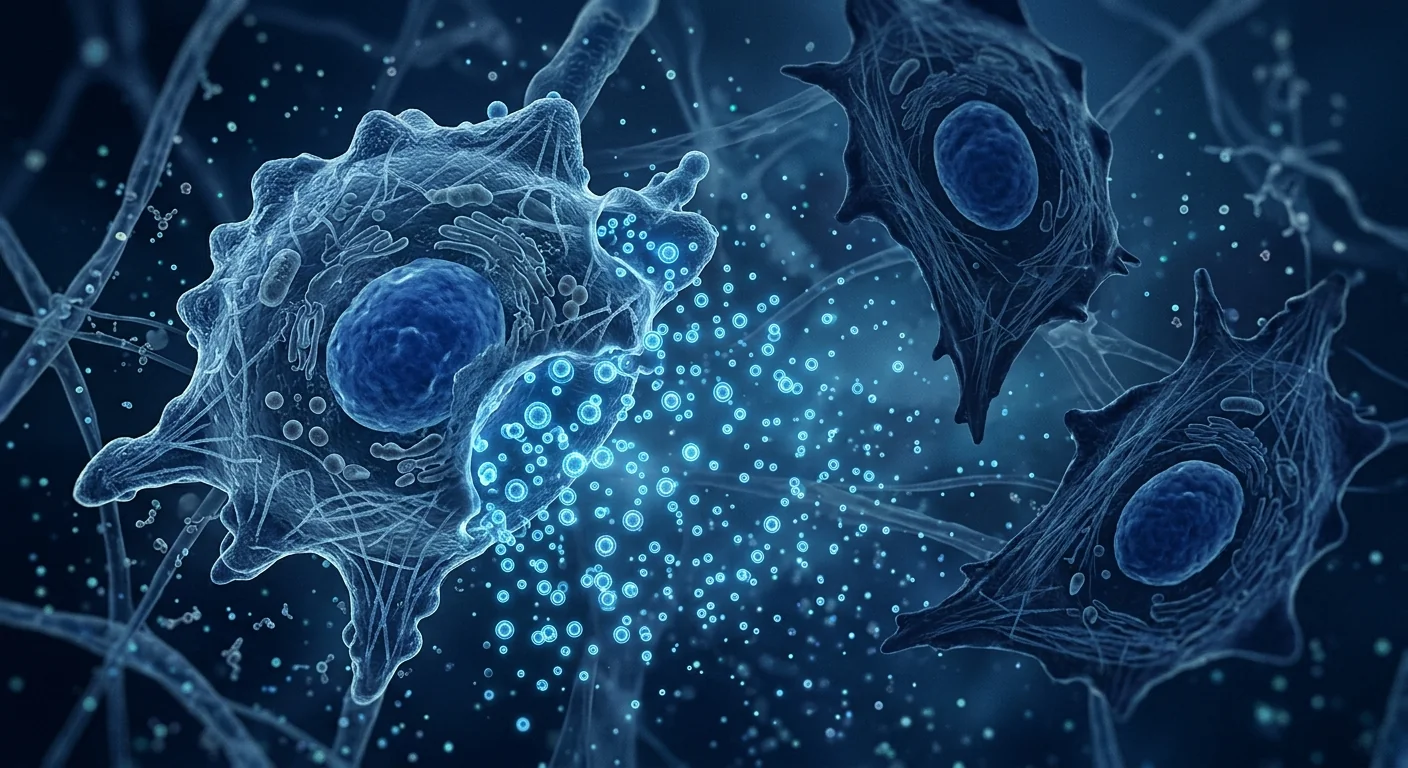
Two therapeutic approaches built on the same starting material — mesenchymal stem cells — but they work in fundamentally different ways. One delivers whole, living cells that can engraft, differentiate, and secrete signals continuously. The other delivers nanoscale vesicles — exosomes — packed with proteins, lipids, and nucleic acids that do the signaling without the cell. The choice between them is not about which is "better" in the abstract, but which biology matches the clinical need.
Exosomes are the messaging system, not the factory. MSC-derived exosomes are extracellular vesicles 30–150 nanometers in diameter — roughly one-thousandth the width of a human hair. They carry a curated cargo of growth factors, cytokines, microRNAs, and lipids that mirror the therapeutic profile of their parent MSCs. Unlike whole cells, exosomes cannot replicate, differentiate, or respond dynamically to their environment — they deliver their pre-packaged payload and are cleared. This makes them simpler to manufacture, store, and dose, but it also limits what they can achieve in conditions that require sustained, adaptive biological activity.
Whole MSCs are living therapeutic agents. A mesenchymal stem cell is a complete biological unit — it senses its microenvironment, migrates toward injury signals, secretes a broad spectrum of bioactive factors, differentiates into tissue-specific lineages, and modulates immune responses through direct cell-to-cell contact. Whole MSC therapy harnesses this entire repertoire. The trade-off is complexity: living cells require careful sourcing, expansion, characterization, cryopreservation, and quality control at every step. They are more demanding to manufacture but offer a breadth of therapeutic action that cell-free products cannot match.
Both approaches are grounded in real clinical evidence. MSC-derived exosomes are being investigated in acute organ injury, graft-versus-host disease, wound healing, and neuroprotection — conditions where a defined, time-limited signaling burst has biological logic. Whole MSCs have been studied in thousands of clinical trials across orthopaedics, autoimmunity, neurology, and cardiology, with decades of safety data behind them. The evidence bases are at different stages of maturity, but both are advancing rapidly. [1][2][3]
What Are MSC-Derived Exosomes?
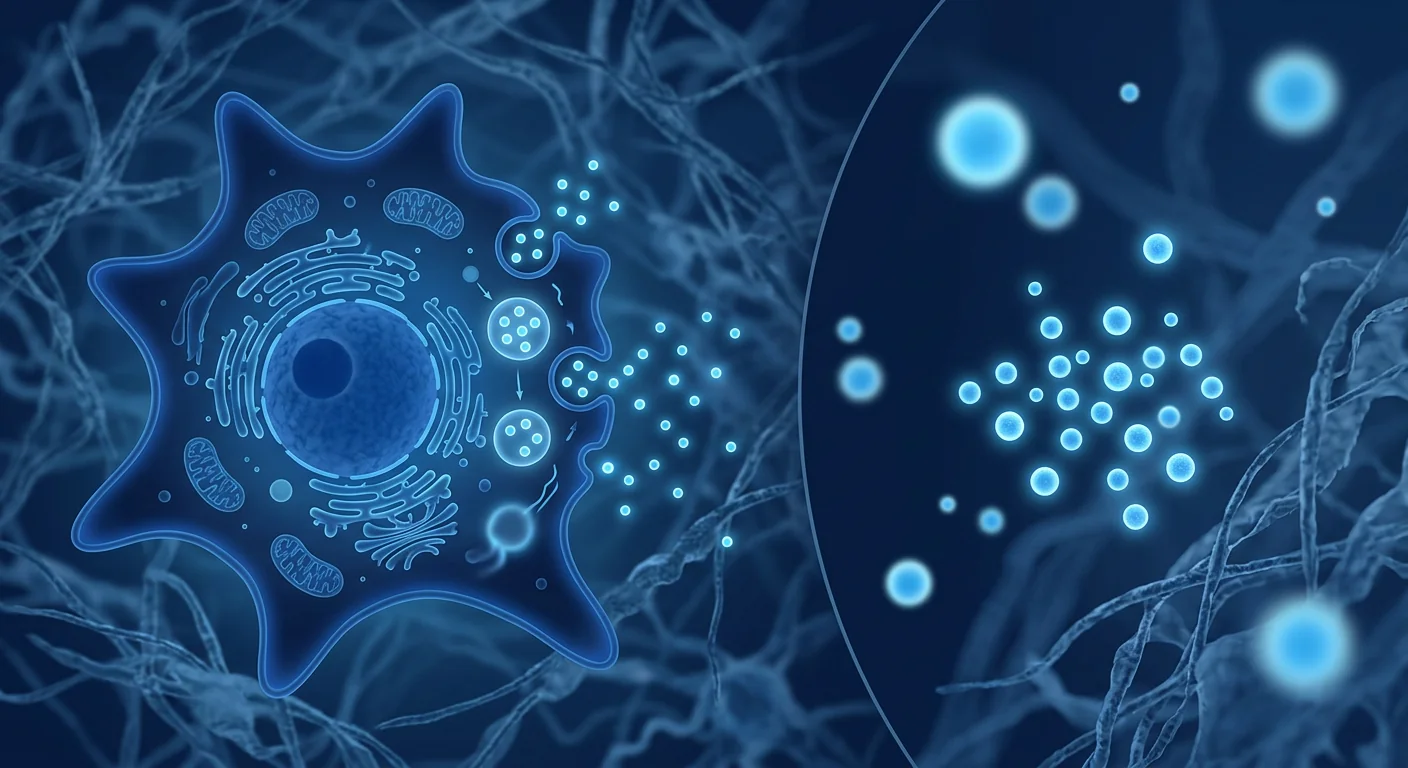
MSC-derived exosomes are nanoscale extracellular vesicles released by mesenchymal stem cells that carry a concentrated payload of therapeutic biomolecules. They are not miniature cells — they are lipid-bilayer packages, typically 30–150 nm in diameter, that contain proteins, messenger RNA (mRNA), microRNA (miRNA), cytokines, and growth factors. When MSCs are cultured in a laboratory, they secrete these vesicles into the growth medium, from which they can be harvested, purified, and concentrated into a therapeutic product. [4]
The cargo inside exosomes is not random. It reflects the physiological state of the parent MSC at the time of secretion. MSCs cultured under specific conditions — hypoxia, inflammatory priming, or genetic modification — can be prompted to release exosomes enriched in particular therapeutic factors. This "preconditioning" strategy is an active area of research aimed at tailoring exosome cargo for specific clinical indications.[5]
The mechanism of action is fundamentally paracrine — exosomes fuse with recipient cell membranes and deliver their cargo directly into the cytoplasm, where the miRNAs and proteins modulate gene expression, suppress apoptosis, reduce inflammation, and promote tissue repair. Because exosomes cannot replicate or persist indefinitely, their effects are self-limited, which is both a safety advantage (no risk of tumor formation or ectopic tissue growth) and a therapeutic limitation (effects may need repeat dosing).[6]
Exosomes at a Glance
- Size: 30–150 nm (1/1000th of a cell)
- What they carry: Proteins, miRNAs, mRNAs, lipids, cytokines
- Cannot: Replicate, differentiate, or respond dynamically to environment
- Key advantage: Cell-free — simpler manufacturing, storage, and regulatory path
- Key limitation: Single-dose signaling burst; no sustained engraftment
What Are Whole Mesenchymal Stem Cells?
Whole MSCs are living, multipotent stromal cells that integrate multiple therapeutic mechanisms — secretion, differentiation, immunomodulation, and homing — into a single biological agent. They are defined by three minimal criteria established by the International Society for Cell Therapy: adherence to plastic in culture, expression of specific surface markers (CD73, CD90, CD105), and the capacity to differentiate into osteoblasts, adipocytes, and chondroblasts in vitro.[7]
Unlike exosomes, whole MSCs are not merely signaling packages — they are living cells that sense their environment and adapt their behavior accordingly. When infused into a patient, MSCs home toward sites of injury and inflammation, guided by chemokine gradients. Upon arrival, they secrete a broad and dynamic cocktail of trophic factors, make direct cell-to-cell contact with immune cells, and in some contexts differentiate to replace damaged tissue. This multi-modal mechanism is what makes whole MSCs attractive for complex, chronic conditions where no single signaling pathway is sufficient.[8][9]
The source of whole MSCs matters enormously. Cells derived from umbilical cord Wharton's jelly are young, highly proliferative, and carry fewer epigenetic marks of aging compared to MSCs from adult bone marrow or adipose tissue. This is why many clinical programs — including VELAR's — preferentially use perinatal tissue as a starting material: it yields consistent, vigorous cells that can be expanded and banked under controlled conditions.[10]
Whole MSCs at a Glance
- Size: 15–30 μm (visible under light microscope)
- What they do: Secrete, migrate, differentiate, modulate immunity, make cell contact
- Can: Replicate, respond to environment, engraft (transiently)
- Key advantage: Multi-modal, sustained, adaptive therapeutic action
- Key limitation: Complex manufacturing; living-cell logistics (cryopreservation, viability)
Head-to-Head Comparison: Exosomes vs Whole MSCs
The difference between MSC-derived exosomes and whole MSCs is not incremental — it is categorical. One is a cell-free derivative; the other is a living cell product. This distinction shapes everything from how each is manufactured to which clinical scenarios each is best suited for. The table below summarizes the key differences.
| Feature | MSC-Derived Exosomes | Whole MSCs |
|---|---|---|
| Nature | Cell-free nanoscale vesicles | Living multipotent cells |
| Size | 30–150 nm | 15–30 μm |
| Can replicate? | No | Yes (in culture, limited in vivo) |
| Can differentiate? | No | Yes (osteogenic, chondrogenic, adipogenic) |
| Mechanism | Cargo delivery (paracrine only) | Secretion + differentiation + cell contact + homing |
| Duration of effect | Hours to days (single burst) | Days to weeks (sustained secretion) |
| Immunogenicity risk | Very low (no HLA expression) | Low (MSCs are immune-privileged) |
| Tumorigenicity risk | Effectively zero | Very low (MSCs are not pluripotent) |
| Storage | Lyophilized (freeze-dried) or frozen | Cryopreserved; must maintain viability |
| Regulatory classification | Often biological drug / biologic | Cell therapy / advanced therapy medicinal product |
| Manufacturing complexity | Moderate (conditioned medium processing) | High (cell culture, expansion, QC release) |
| Clinical evidence maturity | Early-phase (Phase I/II, ~200+ trials) | Established (Phase III, 1,400+ trials) |
| Best suited for | Acute injury, neuroprotection, topical wounds | Chronic degenerative, autoimmune, orthopaedic conditions |
When Exosomes May Be the Better Choice
MSC-derived exosomes are most compelling in clinical scenarios where a defined, time-limited signaling intervention is biologically sufficient. They excel when the therapeutic goal is delivering a concentrated burst of regenerative signals rather than sustaining a long-term biological presence. Several clinical contexts illustrate this logic clearly.[11]
Acute organ injury. In conditions such as acute kidney injury, acute lung injury, or myocardial infarction, the therapeutic window is narrow — measured in hours to days. Exosomes can be administered intravenously or locally, delivering a payload of anti-apoptotic and pro-angiogenic factors at precisely the right moment, without the logistical complexity of preparing and infusing living cells.[3]
Neurological and neuroprotective applications. Exosomes can cross the blood-brain barrier more readily than whole cells, making them attractive candidates for stroke, traumatic brain injury, and neurodegenerative conditions. Their small size allows them to reach neural tissue that whole MSCs — typically 200–300 times larger — cannot efficiently access.[12]
Topical and localized delivery. For wound healing, dermatological conditions, and some ophthalmic applications, exosomes can be formulated into creams, gels, or eye drops. This non-invasive delivery route is simply not possible with whole cells, and it opens therapeutic possibilities that cell-based approaches cannot address.
Patients who cannot receive living cells. Some patients have contraindications to cell-based therapies — hypersensitivity to cryopreservants, specific immunological concerns, or conditions where even the low immunogenicity of MSCs is a theoretical risk. Exosomes, being cell-free and lacking HLA surface expression, sidestep these concerns entirely.
When Whole MSCs Remain the Gold Standard
Whole MSCs are the better choice when the clinical need requires sustained, multi-modal biological activity over days to weeks. Conditions characterized by chronic inflammation, tissue degeneration, or immune dysregulation typically benefit from the full repertoire of MSC functions — not just the signaling fraction that exosomes provide.[8]
Chronic degenerative conditions. Osteoarthritis, degenerative disc disease, chronic kidney disease, and heart failure are all conditions where the pathology unfolds over months to years and involves multiple interacting cell types and signaling pathways. Whole MSCs can engraft transiently, secrete factors continuously, and respond to the evolving local environment — capabilities that a single-dose exosome bolus cannot replicate.
Autoimmune and inflammatory diseases. In rheumatoid arthritis, lupus, inflammatory bowel disease, and multiple sclerosis, the direct cell-to-cell immunomodulation that MSCs provide — including Treg induction, macrophage polarization from M1 to M2, and suppression of B-cell proliferation — goes beyond what exosome cargo alone achieves. Whole MSCs engage the immune system through both soluble factors and contact-dependent mechanisms.[9]
Orthopaedic and musculoskeletal repair. Bone, cartilage, tendon, and ligament injuries benefit from the combined trophic, anti-inflammatory, and differentiation capabilities of whole MSCs. While exosomes can deliver osteogenic and chondrogenic signals, they cannot differentiate into tissue-specific lineages or integrate into a repair site structurally. For conditions where cell replacement matters alongside signaling, whole MSCs have no cell-free equivalent.[13]
Conditions with an established whole-MSC evidence base. For indications where hundreds of clinical trials and decades of safety data support whole MSC therapy — graft-versus-host disease, osteoarthritis, Crohn's fistula, spinal cord injury — switching to exosomes would mean abandoning a mature evidence base for an emerging one. This does not make the switch wrong in principle, but it does mean the burden of evidence shifts heavily onto the newer approach.
Regulatory and Practical Considerations
The regulatory status of exosomes and whole MSCs differs markedly across jurisdictions, and this affects both availability and cost. In most countries, whole MSCs are regulated as cell therapy products or advanced therapy medicinal products (ATMPs), requiring compliance with Good Manufacturing Practice (GMP), rigorous donor screening, and batch release testing. This regulatory framework is well-established, with clear pathways in the EU, US, Japan, South Korea, and — increasingly — Thailand and Southeast Asia.
MSC-derived exosomes occupy a more ambiguous regulatory space. Because they are cell-free, non-replicating biological derivatives, they may be classified as biological drugs, medical devices (in some topical applications), or even as nutraceuticals in less regulated markets. This ambiguity cuts both ways: it can accelerate market access but also means that quality standards are less uniformly enforced. A 2018 position paper by the International Society for Extracellular Vesicles (ISEV) laid out minimal information guidelines for EV studies (MISEV2018) — a framework for research rigor that is increasingly cited by regulators but not yet codified into binding manufacturing standards.[4]
Cost implications are real and differ between modalities. Whole MSC manufacturing is expensive — cell culture facilities, QC release testing, cryopreservation, and cold-chain logistics are capital-intensive. Exosome manufacturing, while still requiring GMP facilities, can achieve economies of scale through bioreactor-based production and lyophilization (freeze-drying), which eliminates the need for cryogenic shipping and enables ambient-temperature storage. Over the medium term, exosome-based products could become meaningfully less expensive per dose — but that cost advantage has not yet materialized at commercial scale.
The VELAR Perspective
At VELAR Center, we view exosomes and whole MSCs as complementary tools, not competing ideologies. Our clinical practice today is built on whole MSC therapy — ethically sourced, donor-screened umbilical cord Wharton's jelly MSCs prepared under GMP conditions — because the evidence base, safety record, and multi-modal mechanism of whole cells match the chronic and complex conditions our patients bring. We are not opposed to exosomes; we are simply evidence-driven, and the evidence for whole MSCs across the indications we treat is substantially more mature.
That said, we follow the exosome literature closely. The pace of progress is high, and we expect exosome-based products to become clinically meaningful — first in acute indications like organ injury and neuroprotection, later in broader applications as manufacturing and characterization standards solidify. When the data warrant it, we will incorporate exosome protocols into our practice with the same rigor we apply to everything else: peer-reviewed evidence, transparent patient communication, and quality standards that do not compromise.
The most important thing a patient can do is not to choose between exosomes and whole MSCs based on marketing headlines, but to ask the right questions: What does the evidence say for my specific condition? How are these cells or vesicles sourced, characterized, and quality-controlled? What outcomes can I reasonably expect — and over what timeframe? A credible clinic should answer all three without hesitation.
Frequently Asked Questions
Are MSC-derived exosomes safer than whole MSCs?
Both have strong safety profiles in the published literature. Exosomes carry no risk of replication, tumor formation, or ectopic tissue growth — which is a theoretical advantage. Whole MSCs have been studied in over 1,400 clinical trials with no signal of tumorigenicity when properly manufactured and sourced. The safety question is less about "which is safer" and more about "which safety profile matches the clinical context."
Can exosomes replace whole MSCs for all conditions?
No. Exosomes capture the paracrine signaling component of MSC therapy but lack the differentiation, cell-contact immunomodulation, and adaptive environmental sensing that whole MSCs provide. For conditions requiring sustained, multi-modal therapy — chronic inflammation, tissue degeneration, orthopaedic repair — whole MSCs currently have stronger evidence. Exosomes are most promising for acute, time-limited interventions.
How are MSC-derived exosomes manufactured?
MSCs are cultured in bioreactors or flasks under controlled conditions. The conditioned medium — the liquid the cells have been growing in — is collected and processed through a series of purification steps, typically including ultracentrifugation, size-exclusion chromatography, or tangential flow filtration, to isolate the exosome fraction. The purified exosomes are characterized by particle size, concentration, and surface markers, then formulated for storage — often by lyophilization (freeze-drying).
Do exosomes require HLA matching like organ transplants?
No. MSC-derived exosomes express minimal to no HLA surface molecules, making them effectively non-immunogenic. This is one of their key advantages — they can be used as an "off-the-shelf" allogeneic product without the immune matching concerns that apply to whole-cell or organ transplants.
What does exosome therapy cost compared to whole MSC therapy?
As of 2026, exosome therapy is not consistently cheaper at the clinical-grade level. While manufacturing economies of scale are theoretically favorable, the purification and characterization requirements for clinical-grade exosomes are substantial. In Thailand and Southeast Asia, exosome therapy is typically priced in a similar range to whole MSC therapy, though prices vary widely by clinic, source, and quality standards. Always verify what exactly is being offered — "exosome therapy" is an unregulated term that covers everything from research-grade vesicles to properly manufactured clinical products.
Is exosome therapy approved by the FDA or Thai FDA?
As of 2026, no MSC-derived exosome product has full marketing approval from the US FDA or Thai FDA for a specific medical indication. Exosome products are being investigated in clinical trials and some are available through early-access or compassionate-use pathways. In Thailand, the regulatory framework for exosomes is evolving — patients should ask clinics to be transparent about the regulatory status of any exosome product they offer.
References
Cited Literature
- Lai RC, Arslan F, Lee MM, et al. Exosome secreted by MSC reduces myocardial ischemia/reperfusion injury. Stem Cell Research. 2010;4(3):214-222. doi:10.1016/j.scr.2009.12.003 ↩
- Phinney DG, Pittenger MF. Concise Review: MSC-Derived Exosomes for Cell-Free Therapy. Stem Cells. 2017;35(4):851-858. doi:10.1002/stem.2575 ↩
- Bruno S, Grange C, Deregibus MC, et al. Mesenchymal stem cell-derived microvesicles protect against acute tubular injury. Journal of the American Society of Nephrology. 2009;20(5):1053-1067. doi:10.1681/ASN.2008070798 ↩
- Théry C, Witwer KW, Aikawa E, et al. Minimal information for studies of extracellular vesicles 2018 (MISEV2018): a position statement of the International Society for Extracellular Vesicles and update of the MISEV2014 guidelines. Journal of Extracellular Vesicles. 2018;7(1):1535750. doi:10.1080/20013078.2018.1535750 ↩
- Zhang B, Yin Y, Lai RC, Tan SS, Choo ABH, Lim SK. Mesenchymal stem cells secrete immunologically active exosomes. Stem Cells and Development. 2014;23(11):1233-1244. doi:10.1089/scd.2013.0479 ↩
- Xin H, Li Y, Buller B, et al. Exosome-mediated transfer of miR-133b from multipotent mesenchymal stromal cells to neural cells contributes to neurite outgrowth. Stem Cells. 2012;30(7):1556-1564. doi:10.1002/stem.1129 ↩
- Dominici M, Le Blanc K, Mueller I, et al. Minimal criteria for defining multipotent mesenchymal stromal cells. The International Society for Cellular Therapy position statement. Cytotherapy. 2006;8(4):315-317. doi:10.1080/14653240600855905 ↩
- Pittenger MF, Discher DE, Péault BM, Phinney DG, Hare JM, Caplan AI. Mesenchymal stem cell perspective: cell biology to clinical progress. NPJ Regenerative Medicine. 2019;4:22. doi:10.1038/s41536-019-0083-6 ↩
- Shi Y, Wang Y, Li Q, et al. Immunoregulatory mechanisms of mesenchymal stem and stromal cells in inflammatory diseases. Nature Reviews Nephrology. 2018;14(8):493-507. doi:10.1038/s41581-018-0023-5 ↩
- Galipeau J, Sensébé L. Mesenchymal stromal cells: clinical challenges and therapeutic opportunities. Cell Stem Cell. 2018;22(6):824-833. doi:10.1016/j.stem.2018.05.004 ↩
- Kordelas L, Rebmann V, Ludwig AK, et al. MSC-derived exosomes: a novel tool to treat therapy-refractory graft-versus-host disease. Leukemia. 2014;28(4):970-973. doi:10.1038/leu.2014.41 ↩
- Wiklander OPB, Brennan MÁ, Lötvall J, Breakefield XO, El Andaloussi S. Advances in therapeutic applications of extracellular vesicles. Science Translational Medicine. 2019;11(492):eaav8521. doi:10.1126/scitranslmed.aav8521 ↩
- Spees JL, Lee RH, Gregory CA. Mechanisms of mesenchymal stem/stromal cell function. Stem Cell Research & Therapy. 2016;7(1):125. doi:10.1186/s13287-016-0363-7 ↩
- Mendt M, Kamerkar S, Sugimoto H, et al. Generation and testing of clinical-grade exosomes for pancreatic cancer. JCI Insight. 2018;3(8):e99263. doi:10.1172/jci.insight.99263 ↩
- Chen TS, Arslan F, Yin Y, et al. Enabling a robust scalable manufacturing process for therapeutic exosomes through oncogenic immortalization of human ESC-derived MSCs. Journal of Translational Medicine. 2011;9:47. doi:10.1186/1479-5876-9-47 ↩
两种疗法建立在同一起始材料——间充质干细胞(MSC)之上,但它们的工作方式截然不同。一种输送完整的活细胞,这些细胞可以定植、分化并持续分泌信号。另一种输送纳米级囊泡——外泌体——其中装载着蛋白质、脂质与核酸,无需活细胞即可完成信号传递。在二者之间做出选择,不是抽象地判断哪个"更好",而是哪一种生物学机制与临床需求相契合。
外泌体是信使系统,而非工厂。MSC来源的外泌体是直径30–150纳米的细胞外囊泡——大约相当于人类头发丝宽度的千分之一。它们携带着一整套经过筛选的货物:生长因子、细胞因子、microRNA与脂质,这些货物反映了其亲代 MSC 的治疗特征。与完整细胞不同,外泌体不能复制、不能分化,也无法动态响应其周围环境——它们释放预装的货物后即被清除。这使得它们更易于制造、储存与定量,但也限制了它们在需要持续、适应性生物活动的疾病中所能达到的效果。
完整MSC是活的治疗剂。一个间充质干细胞是一个完整的生物学单元——它感知自身微环境,沿损伤信号迁移,分泌广谱的生物活性因子,分化为组织特异性谱系,并通过直接的细胞间接触调节免疫反应。完整的 MSC 疗法利用了这全部的功能储备。其代价是复杂性:活细胞在每一步都要求严格的来源筛选、扩增、表征鉴定、冷冻保存与质量控制。它们的制造要求更高,但提供的治疗广度是脱细胞产品无法比拟的。
两种方法都基于真实的临床证据。MSC来源的外泌体正在急性器官损伤、移植物抗宿主病、伤口愈合与神经保护等方面开展研究——在这些情况下,一个明确的、有时间限制的信号爆发具有生物学逻辑。完整MSC已在数千项临床试验中进行了研究,涵盖骨科、自身免疫、神经病学与心脏病学领域,背后有着数十年的安全性数据。二者的证据基础成熟度处于不同阶段,但均在快速推进。[1][2][3]
什么是MSC来源的外泌体?
MSC来源的外泌体是由间充质干细胞释放的纳米级细胞外囊泡,携带着浓缩的治疗性生物分子货物。它们不是微型细胞——而是脂质双分子层包裹体,通常直径30–150纳米,内部含有蛋白质、信使RNA(mRNA)、microRNA(miRNA)、细胞因子与生长因子。当MSC在实验室中培养时,它们将这些囊泡分泌到生长培养基中,从中可以收获、纯化并浓缩成治疗性产品。[4]
外泌体内部的货物并非随机。它反映了亲代MSC在分泌时的生理状态。在特定条件下——低氧、炎症预激活或基因修饰——培养的MSC可被诱导释放富含特定治疗因子的外泌体。这种"预处理"策略是一个活跃的研究领域,旨在为特定临床适应症定制外泌体货物。[5]
其作用机制本质上是旁分泌——外泌体与受体细胞膜融合,将货物直接递送到细胞质中,miRNA与蛋白质在其中调节基因表达、抑制凋亡、减轻炎症并促进组织修复。由于外泌体不能复制或无限期存留,其效应是自限的,这既是安全优势(无肿瘤形成或异位组织生长风险),也是治疗局限(可能需要重复给药)。[6]
外泌体一览
- 大小:30–150 nm(细胞的千分之一)
- 所载内容:蛋白质、miRNA、mRNA、脂质、细胞因子
- 不能:复制、分化或动态响应环境
- 关键优势:脱细胞——更简单的制造、储存与监管路径
- 关键局限:单次信号爆发;无持续定植
什么是完整的间充质干细胞?
完整MSC是活的多能基质细胞,将多种治疗机制——分泌、分化、免疫调节与归巢——整合于一个生物学制剂之中。它们满足国际细胞治疗协会(ISCT)制定的三项最低标准:在培养中贴壁生长,表达特定表面标志物(CD73、CD90、CD105),以及具备在体外分化为成骨细胞、脂肪细胞与成软骨细胞的能力。[7]
与外泌体不同,完整MSC不仅仅是信号包——它们是活细胞,能感知所处环境并相应调整行为。当输注到患者体内时,MSC在趋化因子梯度的引导下归巢至损伤与炎症部位。到达后,它们分泌广谱且动态变化的营养因子,与免疫细胞进行直接的细胞间接触,并在某些情境中分化以替代受损组织。这种多模式机制正是完整MSC在复杂的慢性疾病中引人关注的原因——在这些疾病中,没有单一信号通路足以应对。[8][9]
完整MSC的来源至关重要。来源于脐带华通氏胶的细胞年轻、增殖力强,且与成人骨髓或脂肪组织来源的MSC相比,携带更少的衰老表观遗传标记。这正是许多临床项目——包括VELAR的——优先使用围产期组织作为起始材料的原因:它产生稳定、活力充沛的细胞,可在受控条件下扩增与储存。[10]
完整MSC一览
- 大小:15–30 μm(光学显微镜下可见)
- 功能:分泌、迁移、分化、免疫调节、细胞接触
- 能够:复制、响应环境、定植(短暂)
- 关键优势:多模式、持续、适应性的治疗作用
- 关键局限:制造复杂;活细胞物流(冷冻保存、活性维持)
并列比较:外泌体 vs 完整MSC
MSC来源的外泌体与完整MSC之间的差异不是渐进式的——而是类别性的。一个是脱细胞衍生物;另一个是活细胞产品。这一区别塑造了从制造方式到每种疗法最适合的临床场景的一切。下表总结了关键差异。
| 特征 | MSC来源外泌体 | 完整MSC |
|---|---|---|
| 本质 | 脱细胞纳米级囊泡 | 活的多能细胞 |
| 大小 | 30–150 nm | 15–30 μm |
| 能否复制? | 否 | 是(培养中,体内有限) |
| 能否分化? | 否 | 是(成骨、成软骨、成脂) |
| 机制 | 货物递送(仅旁分泌) | 分泌 + 分化 + 细胞接触 + 归巢 |
| 效应持续时间 | 数小时至数天(单次爆发) | 数天至数周(持续分泌) |
| 免疫原性风险 | 极低(无HLA表达) | 低(MSC具有免疫豁免特性) |
| 致瘤风险 | 实际为零 | 极低(MSC非多能干细胞) |
| 储存 | 冻干或冷冻 | 冷冻保存;必须维持活性 |
| 监管分类 | 通常为生物药/生物制品 | 细胞疗法/先进治疗药物产品 |
| 制造复杂性 | 中等(条件培养基处理) | 高(细胞培养、扩增、QC放行) |
| 临床证据成熟度 | 早期(I/II期,约200+试验) | 成熟(III期,1,400+试验) |
| 最佳适应症 | 急性损伤、神经保护、局部伤口 | 慢性退行性、自身免疫、骨科疾病 |
何时外泌体可能是更优选择
MSC来源的外泌体在临床场景中最具吸引力,即当一次有限的、有时间限制的信号干预在生物学上足够时。它们在治疗目标是递送一次浓缩的再生信号爆发,而非维持长期生物学存在的情况下表现出色。数个临床情境清晰地阐明了这一逻辑。[11]
急性器官损伤。在急性肾损伤、急性肺损伤或心肌梗死等情况下,治疗窗口很窄——以小时至天计。外泌体可经静脉或局部给药,在精确的恰当时机递送抗凋亡与促血管生成因子,无需准备和输注活细胞的复杂物流。[3]
神经与神经保护应用。外泌体比完整细胞更容易穿越血脑屏障,使其成为卒中、创伤性脑损伤与神经退行性疾病的有吸引力的候选疗法。其微小的尺寸使其能够到达完整MSC——通常大200–300倍——无法高效触及的神经组织。[12]
局部与定位给药。对于伤口愈合、皮肤病学适应症以及某些眼科应用,外泌体可配制成乳膏、凝胶或滴眼液。这种非侵入性给药途径对于完整细胞而言根本不可能实现,它开启了细胞疗法无法应对的治疗可能性。
无法接受活细胞的患者。一些患者对细胞疗法存在禁忌——对冷冻保护剂过敏、特定的免疫学顾虑,或者即使MSC免疫原性很低也构成理论风险的疾病。外泌体作为脱细胞产品且缺乏HLA表面表达,完全避开了这些顾虑。
何时完整MSC仍是黄金标准
当临床需求要求在数天至数周内获得持续、多模式的生物活性时,完整MSC是更优选择。以慢性炎症、组织退变或免疫失调为特征的疾病,通常受益于MSC的全部功能储备——而不仅仅是外泌体所提供的信号部分。[8]
慢性退行性疾病。骨关节炎、退行性椎间盘疾病、慢性肾病与心力衰竭,这些疾病的病理在数月至数年的时间内展开,涉及多种相互作用的细胞类型与信号通路。完整MSC可以短暂定植、持续分泌因子,并响应不断变化的局部环境——这些能力是单次外泌体推注无法复制的。
自身免疫与炎症性疾病。在类风湿关节炎、狼疮、炎症性肠病与多发性硬化中,MSC提供的直接细胞间免疫调节——包括Treg诱导、巨噬细胞从M1到M2的极化以及B细胞增殖抑制——超出了外泌体单独所能达到的。完整MSC通过可溶性因子与接触依赖机制双重途径与免疫系统互动。[9]
骨科与肌肉骨骼修复。骨、软骨、肌腱与韧带损伤受益于完整MSC的联合营养、抗炎与分化能力。虽然外泌体可以递送成骨与成软骨信号,但它们不能分化为组织特异性谱系,也不能在结构上融入修复部位。对于细胞替代与信号传递同样重要的疾病,完整MSC没有脱细胞等价物。[13]
监管与实际考量
外泌体与完整MSC的监管状况在不同司法管辖区之间差异显著,这影响了两者的可及性与成本。在多数国家,完整MSC被作为细胞疗法产品或先进治疗药物产品(ATMP)监管,要求符合药品生产质量管理规范(GMP)、严格的供者筛查与批次放行检测。这一监管框架已很成熟,在欧盟、美国、日本、韩国以及——日益——泰国与东南亚有清晰的路径。
MSC来源的外泌体处于一个更为模糊的监管空间。由于它们是脱细胞、不复制的生物衍生物,可能被归类为生物药、医疗器械(在某些局部应用中),甚至在监管较少的市场中被归为保健品。这种模糊性是一把双刃剑:它可以加速市场准入,但也意味着质量标准缺乏统一执行。2018年国际细胞外囊泡学会(ISEV)的立场文件为EV研究制定了最低信息指南(MISEV2018)——这是一个越来越被监管机构引用的研究严谨性框架,但尚未编入有约束力的制造标准。[4]
成本影响是真实的,且在不同形式之间有所不同。完整MSC的制造是昂贵的——细胞培养设施、QC放行检测、冷冻保存与冷链物流都是资本密集型的。外泌体制造虽然仍需要GMP设施,但可以通过基于生物反应器的生产与冻干技术实现规模经济,这消除了对低温运输的需求,并可实现常温储存。从中期来看,基于外泌体的产品每次剂量的成本可能变得显著更低——但这一成本优势在商业规模上尚未实现。
VELAR的观点
在VELAR中心,我们将外泌体与完整MSC视为互补的工具,而非相互竞争的意识形态。我们今天的临床实践建立在完整MSC疗法之上——符合伦理来源、经供者筛查、在GMP条件下制备的脐带华通氏胶MSC——因为完整细胞的证据基础、安全性记录与多模式机制与我们患者所面对的慢性、复杂疾病相符。我们不反对外泌体;我们只是以证据为导向,而对于我们所治疗的适应症,完整MSC的证据要成熟得多。
话虽如此,我们密切关注外泌体的文献。进展速度很快,我们预期随着制造与表征标准的巩固,外泌体产品将首先在急性适应症(如器官损伤与神经保护)中具有临床意义,随后在更广泛的应用中发挥作用。当数据支持时,我们将以与所有其他疗法同等的严谨性将外泌体方案纳入我们的实践:同行评审的证据、透明的患者沟通,以及不妥协的质量标准。
对患者而言,最重要的事情不是基于营销标题在外泌体与完整MSC之间做出选择,而是提出正确的问题:针对我的具体病情,证据怎么说?这些细胞或囊泡是如何获取、表征与质量控制的?我可以合理预期什么结果——在多长时间内?一家可信的诊所应当能够毫不犹豫地回答这三个问题。
常见问题
MSC来源的外泌体比完整MSC更安全吗?
两者在已发表的文献中都有良好的安全性数据。外泌体没有复制、肿瘤形成或异位组织生长的风险——这是一个理论上的优势。完整MSC已在超过1,400项临床试验中研究,当正确制造与来源时,没有致瘤信号。安全性的问题不是"哪个更安全",而是"哪种安全性特征与临床情境相匹配"。
外泌体能否在所有情况下替代完整MSC?
不能。外泌体捕获了MSC疗法的旁分泌信号成分,但缺乏完整MSC所提供的分化能力、细胞接触免疫调节与适应性环境感知。对于需要持续、多模式治疗的疾病——慢性炎症、组织退变、骨科修复——完整MSC目前有更强的证据。外泌体在急性、时间有限的干预中最有前景。
MSC来源的外泌体如何制造?
MSC在生物反应器或培养瓶中的受控条件下培养。条件培养基——即细胞在其生长的液体——被收集并通过一系列纯化步骤进行处理,通常包括超速离心、尺寸排阻色谱或切向流过滤,以分离外泌体组分。纯化的外泌体通过粒径、浓度与表面标志物进行表征鉴定,然后配制成储存形式——通常为冻干。
外泌体需要像器官移植那样进行HLA配型吗?
不需要。MSC来源的外泌体表达极少至不表达HLA表面分子,使其实际上具有非免疫原性。这是它们的关键优势之一——它们可以作为"即用型"异体产品使用,无需像全细胞或器官移植那样的免疫匹配顾虑。
外泌体疗法与完整MSC疗法的费用比较如何?
截至2026年,在临床级别上,外泌体疗法并未持续更便宜。虽然制造上的规模经济在理论上有利,但临床级外泌体的纯化与表征要求是相当可观的。在泰国与东南亚,外泌体疗法的价格通常与完整MSC疗法处于相似范围,尽管价格因诊所、来源与质量标准而异。务必核实所提供服务的具体内容——"外泌体疗法"是一个不受监管的术语,涵盖了从研究级囊泡到正规制造的临床产品的各种情况。
参考文献
引用文献
- Lai RC, Arslan F, Lee MM, et al. Exosome secreted by MSC reduces myocardial ischemia/reperfusion injury. Stem Cell Research. 2010;4(3):214-222. doi:10.1016/j.scr.2009.12.003 ↩
- Phinney DG, Pittenger MF. Concise Review: MSC-Derived Exosomes for Cell-Free Therapy. Stem Cells. 2017;35(4):851-858. doi:10.1002/stem.2575 ↩
- Bruno S, Grange C, Deregibus MC, et al. Mesenchymal stem cell-derived microvesicles protect against acute tubular injury. Journal of the American Society of Nephrology. 2009;20(5):1053-1067. doi:10.1681/ASN.2008070798 ↩
- Théry C, Witwer KW, Aikawa E, et al. Minimal information for studies of extracellular vesicles 2018 (MISEV2018). Journal of Extracellular Vesicles. 2018;7(1):1535750. doi:10.1080/20013078.2018.1535750 ↩
- Zhang B, Yin Y, Lai RC, Tan SS, Choo ABH, Lim SK. Mesenchymal stem cells secrete immunologically active exosomes. Stem Cells and Development. 2014;23(11):1233-1244. doi:10.1089/scd.2013.0479 ↩
- Xin H, Li Y, Buller B, et al. Exosome-mediated transfer of miR-133b. Stem Cells. 2012;30(7):1556-1564. doi:10.1002/stem.1129 ↩
- Dominici M, Le Blanc K, Mueller I, et al. Minimal criteria for defining multipotent mesenchymal stromal cells. Cytotherapy. 2006;8(4):315-317. doi:10.1080/14653240600855905 ↩
- Pittenger MF, Discher DE, Péault BM, Phinney DG, Hare JM, Caplan AI. Mesenchymal stem cell perspective. NPJ Regenerative Medicine. 2019;4:22. doi:10.1038/s41536-019-0083-6 ↩
- Shi Y, Wang Y, Li Q, et al. Immunoregulatory mechanisms of mesenchymal stem and stromal cells. Nature Reviews Nephrology. 2018;14(8):493-507. doi:10.1038/s41581-018-0023-5 ↩
- Galipeau J, Sensébé L. Mesenchymal stromal cells: clinical challenges and therapeutic opportunities. Cell Stem Cell. 2018;22(6):824-833. doi:10.1016/j.stem.2018.05.004 ↩
- Kordelas L, Rebmann V, Ludwig AK, et al. MSC-derived exosomes: a novel tool to treat therapy-refractory graft-versus-host disease. Leukemia. 2014;28(4):970-973. doi:10.1038/leu.2014.41 ↩
- Wiklander OPB, Brennan MÁ, Lötvall J, Breakefield XO, El Andaloussi S. Advances in therapeutic applications of extracellular vesicles. Science Translational Medicine. 2019;11(492):eaav8521. doi:10.1126/scitranslmed.aav8521 ↩
- Spees JL, Lee RH, Gregory CA. Mechanisms of mesenchymal stem/stromal cell function. Stem Cell Research & Therapy. 2016;7(1):125. doi:10.1186/s13287-016-0363-7 ↩
- Mendt M, Kamerkar S, Sugimoto H, et al. Generation and testing of clinical-grade exosomes for pancreatic cancer. JCI Insight. 2018;3(8):e99263. doi:10.1172/jci.insight.99263 ↩
- Chen TS, Arslan F, Yin Y, et al. Enabling a robust scalable manufacturing process for therapeutic exosomes. Journal of Translational Medicine. 2011;9:47. doi:10.1186/1479-5876-9-47 ↩
نهجان علاجيان مبنيان على نفس المادة الأولية — الخلايا الجذعية الوسيطة — لكنهما يعملان بطريقتين مختلفتين جوهرياً. أحدهما يوصل خلايا حية كاملة يمكنها أن تستقر وتتمايز وتفرز إشارات باستمرار. والآخر يوصل حويصلات نانوية — إكسوزومات — محمّلة بالبروتينات والدهون والأحماض النووية التي تؤدي وظيفة الإشارة دون الخلية. الاختيار بينهما لا يتعلق بأيهما "أفضل" من الناحية المجردة، بل بأي البيولوجيتين تناسب الحاجة السريرية.
الإكسوزومات هي نظام المراسَلة، وليست المصنع. الإكسوزومات المشتقة من MSC هي حويصلات خارج خلوية بقطر 30–150 نانومتر — تقريباً جزء من ألف من عرض شعرة الإنسان. وهي تحمل شحنة منتقاة من عوامل النمو والسيتوكينات والـ microRNA والدهون تعكس المظهر العلاجي للخلايا الأم MSC. وبخلاف الخلايا الكاملة، لا تستطيع الإكسوزومات التكاثر أو التمايز أو الاستجابة ديناميكياً لبيئتها — فهي توصل حمولتها المعبأة مسبقاً وتُزال. وهذا يجعلها أبسط في التصنيع والتخزين وتحديد الجرعة، لكنه يحدّ أيضاً مما يمكنها تحقيقه في الحالات التي تتطلب نشاطاً بيولوجياً مستداماً ومتكيّفاً.
الخلايا MSC الكاملة هي عوامل علاجية حية. الخلية الجذعية الوسيطة هي وحدة بيولوجية كاملة — تستشعر بيئتها الدقيقة، وتهاجر نحو إشارات الإصابة، وتفرز طيفاً واسعاً من العوامل النشطة بيولوجياً، وتتمايز إلى سلالات نسيجية متخصصة، وتعدّل الاستجابات المناعية عبر التلامس المباشر بين الخلايا. ويستغل علاج MSC الكامل هذا المخزون الوظيفي بأكمله. والمقايضة هي التعقيد: فالخلايا الحية تتطلب انتقاءً دقيقاً للمصدر، وتوسيعاً، وتوصيفاً، وحفظاً بالتجميد، وضبط جودة في كل خطوة. وهي أعلى تطلباً في التصنيع لكنها تقدم اتساعاً في الفعل العلاجي لا تستطيع المنتجات الخالية من الخلايا مضاهاته.
كلا النهجين قائم على أدلة سريرية حقيقية. تُدرس الإكسوزومات المشتقة من MSC في إصابة الأعضاء الحادة، وداء الطعم حيال الثوي، والتئام الجروح، والحماية العصبية — وهي حالات يكون فيها اندفاع إشاراتي محدود زمنياً له منطقه البيولوجي. أما MSC الكاملة فقد دُرست في آلاف التجارب السريرية عبر جراحة العظام والمناعة الذاتية وطب الأعصاب وطب القلب، مع عقود من بيانات السلامة وراءها. قواعد الأدلة في مراحل مختلفة من النضج، لكن كليهما يتقدمان بسرعة.[1][2][3]
ما هي الإكسوزومات المشتقة من MSC؟
الإكسوزومات المشتقة من MSC هي حويصلات خارج خلوية نانوية تفرزها الخلايا الجذعية الوسيطة وتحمل شحنة مركزة من الجزيئات الحيوية العلاجية. إنها ليست خلايا مصغرة — بل رزم ذات غلاف دهني ثنائي الطبقة، قطرها عادة 30–150 نانومتر، تحتوي على بروتينات و RNA رسول (mRNA) و microRNA (miRNA) وسيتوكينات وعوامل نمو. عندما تُزرع MSC في المختبر، تفرز هذه الحويصلات في وسط النمو، ومنه يمكن حصادها وتنقيتها وتركيزها إلى منتج علاجي.[4]
الحمولة داخل الإكسوزومات ليست عشوائية. إنها تعكس الحالة الفسيولوجية للخلية MSC الأم لحظة الإفراز. ويمكن حثّ MSC المزروعة تحت ظروف محددة — نقص الأكسجين، أو التهيئة الالتهابية، أو التعديل الجيني — على إطلاق إكسوزومات مثراة بعوامل علاجية معينة. واستراتيجية "التهيئة المسبقة" هذه مجال بحثي نشط يهدف إلى تخصيص حمولة الإكسوزومات لاستطبابات سريرية محددة.[5]
آلية الفعل نظيريّة (باراكرين) في جوهرها — تندمج الإكسوزومات مع أغشية الخلايا المتلقية وتوصل حمولتها مباشرة إلى السيتوبلازم، حيث تعدّل الـ miRNA والبروتينات التعبير الجيني، وتثبّط الاستماتة، وتخفّض الالتهاب، وتعزز ترميم النسيج. ولأن الإكسوزومات لا تستطيع التكاثر أو البقاء إلى أجل غير مسمى، فإن تأثيراتها محدودة ذاتياً، وهذا ميزة سلامة (لا خطر تشكّل أورام أو نمو نسيج منتبذ) ومحدودية علاجية في آنٍ (قد تحتاج التأثيرات إلى جرعات متكررة).[6]
الإكسوزومات في لمحة
- الحجم: 30–150 نانومتر (1/1000 من الخلية)
- ما تحمله: بروتينات، miRNA، mRNA، دهون، سيتوكينات
- لا تستطيع: التكاثر، أو التمايز، أو الاستجابة الديناميكية للبيئة
- الميزة الرئيسية: خالية من الخلايا — تصنيع وتخزين ومسار تنظيمي أبسط
- المحدودية الرئيسية: اندفاع إشاراتي بجرعة واحدة؛ لا استقرار مستدام
ما هي الخلايا الجذعية الوسيطة الكاملة؟
الخلايا MSC الكاملة هي خلايا سدوية حية متعددة القدرات تدمج آليات علاجية متعددة — الإفراز، والتمايز، والتعديل المناعي، والانجذاب — في عامل بيولوجي واحد. وهي محددة بثلاثة معايير دنيا وضعتها الجمعية الدولية للعلاج الخلوي (ISCT): الالتصاق بالبلاستيك في المزرعة، والتعبير عن واسمات سطحية محددة (CD73، CD90، CD105)، والقدرة على التمايز إلى بانيات عظم وخلايا دهنية وأرومات غضروفية في المختبر.[7]
بخلاف الإكسوزومات، فإن MSC الكاملة ليست مجرد رزم إشارات — إنها خلايا حية تستشعر بيئتها وتكيّف سلوكها وفقاً لذلك. وعند حقنها في المريض، تنجذب MSC نحو مواقع الإصابة والالتهاب، بتوجيه من مدروج كيموكيني. وعند وصولها، تفرز كوكتيلاً واسعاً وديناميكياً من العوامل المغذية، وتجري تلامساً مباشراً بين الخلايا مع الخلايا المناعية، وفي بعض السياقات تتمايز لتحل محل النسيج التالف. وهذه الآلية متعددة الأنماط هي ما يجعل MSC الكاملة جذابة للحالات المزمنة المعقدة حيث لا يكفي مسار إشاراتي واحد.[8][9]
مصدر MSC الكاملة مهم للغاية. فالخلايا المشتقة من هلام وارتون في الحبل السري يافعة وعالية التكاثر وتحمل علامات فوق جينية أقل للشيخوخة مقارنة بـ MSC من نخاع العظم أو النسيج الدهني للبالغين. ولهذا تفضل برامج سريرية كثيرة — بما فيها VELAR — استخدام النسيج المحيط بالولادة كمادة أولية: فهو ينتج خلايا ثابتة ونشيطة يمكن توسيعها وتخزينها تحت ظروف مضبوطة.[10]
الخلايا MSC الكاملة في لمحة
- الحجم: 15–30 ميكرومتر (مرئية بالمجهر الضوئي)
- ما تفعله: تفرز، تهاجر، تتمايز، تعدّل المناعة، تتلامس خلوياً
- تستطيع: التكاثر، الاستجابة للبيئة، الاستقرار (عابراً)
- الميزة الرئيسية: فعل علاجي متعدد الأنماط، مستدام، ومتكيّف
- المحدودية الرئيسية: تصنيع معقد؛ لوجستيات الخلايا الحية (الحفظ بالتجميد، الحيوية)
مقارنة مباشرة: الإكسوزومات مقابل MSC الكاملة
الفرق بين الإكسوزومات المشتقة من MSC والخلايا MSC الكاملة ليس تدريجياً — بل هو فرق نوعي. أحدهما مشتق خالٍ من الخلايا؛ والآخر منتج خلوي حي. وهذا التمييز يشكّل كل شيء: من كيفية تصنيع كل منهما إلى أي السيناريوهات السريرية يناسبها أكثر. ويوجز الجدول أدناه الفروق الرئيسية.
| الميزة | إكسوزومات MSC | خلايا MSC الكاملة |
|---|---|---|
| الطبيعة | حويصلات نانوية خالية من الخلايا | خلايا حية متعددة القدرات |
| الحجم | 30–150 نانومتر | 15–30 ميكرومتر |
| هل تتكاثر؟ | لا | نعم (في المزرعة، محدودة في الحي) |
| هل تتمايز؟ | لا | نعم (عظمي، غضروفي، دهني) |
| الآلية | توصيل الحمولة (نظيري فقط) | إفراز + تمايز + تلامس خلوي + انجذاب |
| مدة التأثير | ساعات إلى أيام (اندفاع واحد) | أيام إلى أسابيع (إفراز مستدام) |
| خطر المناعية | منخفض جداً (لا تعبير عن HLA) | منخفض (MSC ذات امتياز مناعي) |
| خطر التسرطن | معدوم فعلياً | منخفض جداً (MSC ليست متعددة القدرات الكاملة) |
| التخزين | مجفدة بالتجميد أو مجمدة | محفوظة بالتجميد؛ يجب الحفاظ على الحيوية |
| التصنيف التنظيمي | غالباً دواء بيولوجي | علاج خلوي / منتج طبي علاجي متقدم |
| تعقيد التصنيع | متوسط (معالجة الوسط المكيّف) | عالي (زرع خلوي، توسيع، فحص الجودة) |
| نضج الأدلة السريرية | مرحلة مبكرة (I/II، 200+ تجربة) | راسخة (المرحلة III، 1,400+ تجربة) |
| الأنسب لـ | الإصابة الحادة، الحماية العصبية، الجروح الموضعية | الحالات التنكسية المزمنة، المناعة الذاتية، جراحة العظام |
متى تكون الإكسوزومات الخيار الأفضل
تكون الإكسوزومات المشتقة من MSC أكثر إقناعاً في السيناريوهات السريرية حيث يكون تدخل إشاراتي محدد ومحدود زمنياً كافياً بيولوجياً. إنها تتألق عندما يكون الهدف العلاجي هو توصيل اندفاع مركز من الإشارات التجديدية بدلاً من الحفاظ على وجود بيولوجي طويل الأمد. وتوضح عدة سياقات سريرية هذا المنطق بوضوح.[11]
إصابة الأعضاء الحادة. في حالات مثل إصابة الكلى الحادة، وإصابة الرئة الحادة، أو احتشاء عضلة القلب، تكون النافذة العلاجية ضيقة — تقاس بالساعات إلى الأيام. ويمكن إعطاء الإكسوزومات وريدياً أو موضعياً، لتوصيل حمولة من العوامل المضادة للاستماتة والمحفزة لتكوين الأوعية في اللحظة المناسبة تماماً، دون التعقيد اللوجستي لتحضير وحقن الخلايا الحية.[3]
التطبيقات العصبية والحماية العصبية. يمكن للإكسوزومات عبور الحاجز الدموي الدماغي بسهولة أكبر من الخلايا الكاملة، مما يجعلها مرشحة جذابة للسكتة الدماغية، وإصابة الدماغ الرضية، والحالات التنكسية العصبية. حجمها الصغير يسمح لها بالوصول إلى نسيج عصبي لا تستطيع MSC الكاملة — الأكبر حجماً بـ 200–300 مرة — الوصول إليه بكفاءة.[12]
التوصيل الموضعي والسطحي. لالتئام الجروح، والحالات الجلدية، وبعض تطبيقات طب العيون، يمكن صياغة الإكسوزومات في كريمات، أو هلاميات، أو قطرات عينية. طريق الإعطاء غير الباضع هذا ببساطة غير ممكن مع الخلايا الكاملة، وهو يفتح إمكانيات علاجية لا تستطيع النهج الخلوية معالجتها.
متى تبقى MSC الكاملة المعيار الذهبي
تكون MSC الكاملة الخيار الأفضل عندما تتطلب الحاجة السريرية نشاطاً بيولوجياً مستداماً متعدد الأنماط على مدى أيام إلى أسابيع. الحالات التي تتميز بالالتهاب المزمن، أو تنكس النسيج، أو خلل التنظيم المناعي تستفيد عادة من المخزون الوظيفي الكامل لـ MSC — وليس فقط الجزء الإشاراتي الذي توفره الإكسوزومات.[8]
الحالات التنكسية المزمنة. الفصال العظمي، وداء القرص التنكسي، ومرض الكلى المزمن، وفشل القلب — كلها حالات يتكشف فيها المرض على مدى شهور إلى سنوات ويشمل أنواعاً خلوية ومسارات إشاراتية متعددة متفاعلة. تستطيع MSC الكاملة الاستقرار عابراً، وإفراز العوامل باستمرار، والاستجابة للبيئة المحلية المتطورة — قدرات لا تستطيع جرعة الإكسوزوم الواحدة تكرارها.
الأمراض المناعية الذاتية والالتهابية. في التهاب المفاصل الروماتويدي، والذئبة، وداء الأمعاء الالتهابي، والتصلب المتعدد، فإن التعديل المناعي المباشر عبر التلامس الخلوي الذي توفره MSC — بما فيه تحفيز الخلايا التائية التنظيمية (Treg)، واستقطاب البلاعم من M1 إلى M2، وتثبيط تكاثر الخلايا البائية — يتجاوز ما تحققه حمولة الإكسوزوم وحدها. تتفاعل MSC الكاملة مع الجهاز المناعي عبر العوامل الذوابة والآليات المعتمدة على التلامس معاً.[9]
إصلاح العظام والجهاز العضلي الهيكلي. تستفيد إصابات العظام والغضاريف والأوتار والأربطة من قدرات MSC الكاملة المغذية والمضادة للالتهاب والتمايزية مجتمعة. وبينما تستطيع الإكسوزومات توصيل إشارات مكونة للعظم والغضروف، فإنها لا تستطيع التمايز إلى سلالات نسيجية متخصصة أو الاندماج بنيوياً في موقع الإصلاح. وللحالات التي يهم فيها استبدال الخلايا إلى جانب الإشارات، ليس لـ MSC الكاملة نظير خالٍ من الخلايا.[13]
اعتبارات تنظيمية وعملية
يختلف الوضع التنظيمي للإكسوزومات وMSC الكاملة بشكل ملحوظ بين الولايات القضائية، وهذا يؤثر على التوافر والتكلفة. في معظم البلدان، تُنظم MSC الكاملة كمنتجات علاج خلوي أو منتجات طبية علاجية متقدمة (ATMP)، مما يتطلب الامتثال لممارسات التصنيع الجيدة (GMP)، وفحصاً صارماً للمتبرعين، واختبار إطلاق الدفعات. وهذا الإطار التنظيمي راسخ، بمسارات واضحة في الاتحاد الأوروبي والولايات المتحدة واليابان وكوريا الجنوبية — وبشكل متزايد — تايلاند وجنوب شرق آسيا.
تحتل الإكسوزومات المشتقة من MSC مساحة تنظيمية أكثر غموضاً. ولأنها مشتقات بيولوجية خالية من الخلايا وغير متكاثرة، فقد تُصنف كأدوية بيولوجية، أو أجهزة طبية (في بعض التطبيقات الموضعية)، أو حتى كمغذيات في الأسواق الأقل تنظيماً. وهذا الغموض سيف ذو حدين: يمكنه تسريع الوصول إلى السوق لكنه يعني أيضاً أن معايير الجودة أقل تطبيقاً موحداً. وقد وضعت ورقة موقف للجمعية الدولية للحويصلات خارج الخلوية (ISEV) عام 2018 إرشادات الحد الأدنى من المعلومات لدراسات EV (MISEV2018) — وهو إطار للدقة البحثية تستشهد به الهيئات التنظيمية بشكل متزايد لكنه لم يُقنن بعد في معايير تصنيع ملزمة.[4]
منظور VELAR
في مركز VELAR، ننظر إلى الإكسوزومات وMSC الكاملة كأدوات متكاملة، لا كأيديولوجيات متنافسة. ممارستنا السريرية اليوم مبنية على علاج MSC الكامل — خلايا MSC من هلام وارتون في الحبل السري، ذات مصدر أخلاقي ومفحوصة من المتبرع، محضّرة تحت ظروف GMP — لأن قاعدة الأدلة وسجل السلامة والآلية متعددة الأنماط للخلايا الكاملة تتطابق مع الحالات المزمنة والمعقدة التي يأتي بها مرضانا. لسنا معارضين للإكسوزومات؛ نحن فقط مدفوعون بالأدلة، والأدلة على MSC الكاملة عبر الاستطبابات التي نعالجها أنضج بكثير.
مع ذلك، نتابع أدبيات الإكسوزومات عن كثب. فوتيرة التقدم عالية، ونتوقع أن تصبح المنتجات القائمة على الإكسوزومات ذات مغزى سريري — أولاً في الاستطبابات الحادة مثل إصابة الأعضاء والحماية العصبية، ولاحقاً في تطبيقات أوسع مع ترسيخ معايير التصنيع والتوصيف. وعندما تبرر البيانات ذلك، سندمج بروتوكولات الإكسوزومات في ممارستنا بنفس الدقة التي نطبقها على كل شيء آخر: أدلة محكمة، وتواصل شفاف مع المريض، ومعايير جودة لا تقبل المساومة.
أهم ما يمكن أن يفعله المريض ليس الاختيار بين الإكسوزومات وMSC الكاملة بناءً على عناوين التسويق، بل طرح الأسئلة الصحيحة: ماذا تقول الأدلة لحالتي المحددة؟ كيف تم الحصول على هذه الخلايا أو الحويصلات وتوصيفها وضبط جودتها؟ ما النتائج التي يمكنني توقعها بشكل معقول — وفي أي إطار زمني؟ العيادة الموثوقة يجب أن تجيب عن الأسئلة الثلاثة دون تردد.
الأسئلة الشائعة
هل الإكسوزومات المشتقة من MSC أكثر أماناً من MSC الكاملة؟
لكلٍّ منهما سجل سلامة قوي في الأدبيات المنشورة. الإكسوزومات لا تحمل خطر التكاثر، أو تشكّل الأورام، أو نمو النسيج المنتبذ — وهذه ميزة نظرية. أما MSC الكاملة فقد دُرست في أكثر من 1,400 تجربة سريرية دون إشارة تسرطن عند التصنيع والمصدر السليمين. سؤال السلامة لا يتعلق بـ "أيهما أكثر أماناً" بل بـ "أي مظهر سلامة يناسب السياق السريري".
هل يمكن للإكسوزومات أن تحل محل MSC الكاملة في جميع الحالات؟
لا. تلتقط الإكسوزومات مكون الإشارات النظيرية لعلاج MSC لكنها تفتقر إلى التمايز، والتعديل المناعي بالتلامس الخلوي، والاستشعار البيئي التكيفي الذي توفره MSC الكاملة. وللحالات التي تتطلب علاجاً مستداماً متعدد الأنماط — الالتهاب المزمن، وتنكس النسيج، وإصلاح العظام — تملك MSC الكاملة حالياً أدلة أقوى. والإكسوزومات واعدة أكثر للتدخلات الحادة المحدودة زمنياً.
كيف تُصنع الإكسوزومات المشتقة من MSC؟
تُزرع MSC في مفاعلات حيوية أو قوارير تحت ظروف مضبوطة. ويُجمع الوسط المكيّف — السائل الذي كانت الخلايا تنمو فيه — ويُعالج عبر سلسلة من خطوات التنقية، التي تشمل عادة الطرد المركزي الفائق، أو الكروماتوغرافيا بإقصاء الحجم، أو الترشيح بالجريان العرضي، لعزل جزء الإكسوزومات. وتُوصف الإكسوزومات المنقاة بحجم الجسيمات والتركيز والواسمات السطحية، ثم تُصاغ للتخزين — غالباً بالتجفيد.
هل تحتاج الإكسوزومات إلى مطابقة HLA مثل زراعة الأعضاء؟
لا. تعبّر الإكسوزومات المشتقة من MSC عن القليل جداً إلى المعدوم من جزيئات HLA السطحية، مما يجعلها فعلياً غير مولدة للمناعة. وهذه إحدى مزاياها الرئيسية — يمكن استخدامها كمنتج خيفي "جاهز للاستعمال" دون مخاوف المطابقة المناعية التي تنطبق على زراعة الخلايا الكاملة أو الأعضاء.
المراجع
الأدبيات المستشهد بها
- Lai RC, Arslan F, Lee MM, et al. Exosome secreted by MSC reduces myocardial ischemia/reperfusion injury. Stem Cell Research. 2010;4(3):214-222. doi:10.1016/j.scr.2009.12.003 ↩
- Phinney DG, Pittenger MF. Concise Review: MSC-Derived Exosomes for Cell-Free Therapy. Stem Cells. 2017;35(4):851-858. doi:10.1002/stem.2575 ↩
- Bruno S, Grange C, Deregibus MC, et al. Mesenchymal stem cell-derived microvesicles protect against acute tubular injury. JASN. 2009;20(5):1053-1067. doi:10.1681/ASN.2008070798 ↩
- Théry C, Witwer KW, Aikawa E, et al. MISEV2018. Journal of Extracellular Vesicles. 2018;7(1):1535750. doi:10.1080/20013078.2018.1535750 ↩
- Zhang B, Yin Y, Lai RC, et al. Mesenchymal stem cells secrete immunologically active exosomes. Stem Cells and Development. 2014;23(11):1233-1244. doi:10.1089/scd.2013.0479 ↩
- Xin H, Li Y, Buller B, et al. Exosome-mediated transfer of miR-133b. Stem Cells. 2012;30(7):1556-1564. doi:10.1002/stem.1129 ↩
- Dominici M, Le Blanc K, Mueller I, et al. Minimal criteria for defining multipotent mesenchymal stromal cells. Cytotherapy. 2006;8(4):315-317. doi:10.1080/14653240600855905 ↩
- Pittenger MF, Discher DE, Péault BM, et al. Mesenchymal stem cell perspective. NPJ Regenerative Medicine. 2019;4:22. doi:10.1038/s41536-019-0083-6 ↩
- Shi Y, Wang Y, Li Q, et al. Immunoregulatory mechanisms of MSCs. Nature Reviews Nephrology. 2018;14(8):493-507. doi:10.1038/s41581-018-0023-5 ↩
- Galipeau J, Sensébé L. Mesenchymal stromal cells: clinical challenges. Cell Stem Cell. 2018;22(6):824-833. doi:10.1016/j.stem.2018.05.004 ↩
- Kordelas L, Rebmann V, Ludwig AK, et al. MSC-derived exosomes for GVHD. Leukemia. 2014;28(4):970-973. doi:10.1038/leu.2014.41 ↩
- Wiklander OPB, Brennan MÁ, Lötvall J, et al. Therapeutic applications of extracellular vesicles. Science Translational Medicine. 2019;11(492):eaav8521. doi:10.1126/scitranslmed.aav8521 ↩
- Spees JL, Lee RH, Gregory CA. Mechanisms of MSC function. Stem Cell Research & Therapy. 2016;7(1):125. doi:10.1186/s13287-016-0363-7 ↩
- Mendt M, Kamerkar S, Sugimoto H, et al. Clinical-grade exosomes. JCI Insight. 2018;3(8):e99263. doi:10.1172/jci.insight.99263 ↩
- Chen TS, Arslan F, Yin Y, et al. Scalable manufacturing of therapeutic exosomes. Journal of Translational Medicine. 2011;9:47. doi:10.1186/1479-5876-9-47 ↩