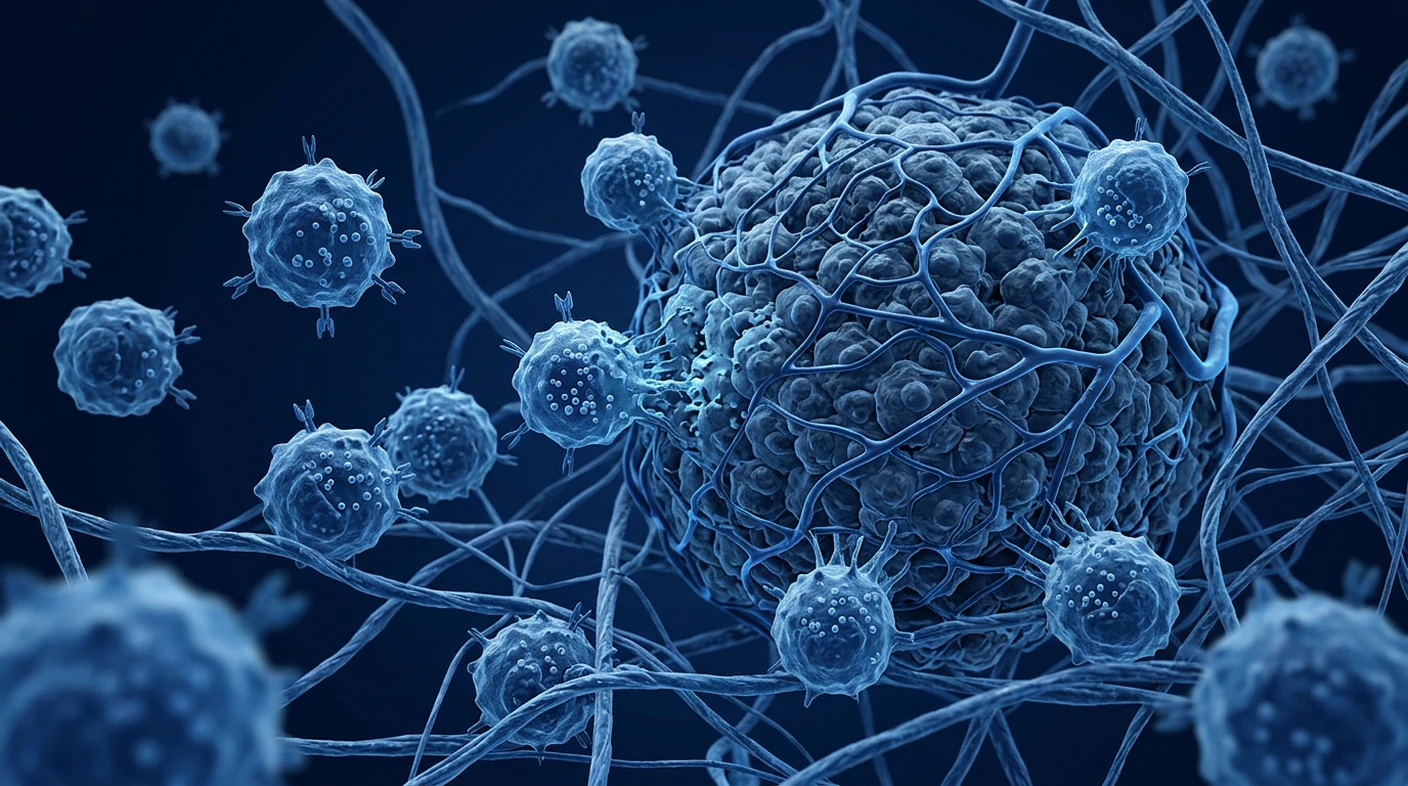
Adoptive cell therapy, the transfer of living immune cells to a patient to fight cancer, has been revolutionized by CAR-T cells. However, the success of CAR-T therapy has been largely confined to certain hematologic (blood) cancers. For solid tumors—which account for the vast majority of cancer cases—the path has been far more difficult. This has intensified research into alternative cell types, with natural killer (NK) cells emerging as a prominent candidate.
Crucially, NK cell therapy for solid tumors remains investigational. It is not an established standard of care, and its efficacy has not been proven in large, randomized clinical trials. This article provides a conservative, evidence-based overview of the science, the significant barriers that must be overcome, the current state of clinical research, and the safety considerations for this developing field.
The Innate Power of Natural Killer Cells
NK cells are a type of cytotoxic lymphocyte and a key component of the innate immune system. Unlike T cells, they do not require prior sensitization or specific antigen presentation to recognize and kill target cells. They employ a sophisticated surveillance system based on a balance of signals from activating and inhibitory receptors on their surface [1].
- Natural Cytotoxicity (Missing-Self and Stress Recognition): Healthy cells express Major Histocompatibility Complex class I (MHC-I) molecules, which engage inhibitory receptors on NK cells, delivering a "don't-kill-me" signal. Many cancer cells downregulate MHC-I to evade T cells. This "missing-self" state removes the inhibitory signal, licensing the NK cell to attack. Furthermore, stressed, infected, or transformed cells often upregulate activating ligands (such as MICA/B or ULBPs) that engage activating receptors like NKG2D on NK cells, tipping the balance toward cytotoxicity [2].
- Antibody-Dependent Cell-Mediated Cytotoxicity (ADCC): NK cells express the receptor CD16 (FcγRIIIA), which binds to the Fc portion of antibodies, such as cetuximab or trastuzumab, that are already coating a tumor cell. This engagement provides a powerful activating signal, directing the NK cell to release its cytotoxic granules (perforin and granzymes) and kill the antibody-tagged target. This mechanism links the innate power of NK cells to the specificity of targeted antibody therapies.
Once activated, NK cells kill target cells directly and also release cytokines like interferon-gamma (IFN-γ) and tumor necrosis factor-alpha (TNF-α), which can recruit and activate other immune cells, shaping a broader anti-tumor response.
Sources and Types of Therapeutic NK Cells
A major focus of clinical development is generating large numbers of functional NK cells for infusion. Unlike patient-specific (autologous) CAR-T cells, many NK cell products are being developed as allogeneic, "off-the-shelf" therapies derived from healthy donors, which offers significant logistical and cost advantages [6].
- Autologous NK Cells: Derived from the patient's own blood. While this avoids rejection, the patient's NK cells may be dysfunctional or exhausted due to the cancer and prior treatments.
- Allogeneic Donor NK Cells: Sourced from the peripheral blood of healthy, pre-screened donors, often from haploidentical (half-matched) relatives. These cells are generally more robust.
- Umbilical Cord Blood (UCB) NK Cells: UCB is a rich source of hematopoietic stem cells and progenitors that can be expanded into large numbers of NK cells. These cells are less mature but highly proliferative and may have a better safety profile regarding graft-versus-host disease (GvHD).
- NK Cell Lines (e.g., NK-92): NK-92 is an immortalized cell line that can be expanded indefinitely, providing a standardized, consistent product. However, because it is a cancer-derived line, it must be irradiated before infusion to prevent it from proliferating uncontrollably in the patient, which limits its persistence [9].
- Induced Pluripotent Stem Cell (iPSC)-derived NK Cells: iPSCs can be generated and then directed to differentiate into NK cells, creating a potentially unlimited and uniform source. This platform also allows for easy genetic engineering to create enhanced, next-generation products [14].
- Cytokine-Induced Memory-Like (CIML) NK Cells: Brief pre-activation of NK cells with a cocktail of cytokines (e.g., IL-12, IL-15, IL-18) can induce a "memory-like" phenotype, leading to enhanced persistence and more robust anti-tumor activity upon re-exposure to stimuli [7].
- Chimeric Antigen Receptor (CAR)-NK Cells: Like CAR-T cells, NK cells can be genetically engineered with CARs to recognize specific tumor-associated antigens, redirecting their potent killing ability with high precision [13].
Before infusion, patients typically undergo lymphodepleting chemotherapy (e.g., with cyclophosphamide and fludarabine). This conditioning regimen reduces the number of the patient's own immune cells, creating "space" for the infused NK cells to expand and reducing competition for essential growth factors like IL-15.
The Gauntlet: Why Solid Tumors Resist NK Cell Attack
While the biology is promising, the clinical reality is that solid tumors have evolved a formidable fortress of defenses. An infused NK cell must navigate a multi-step journey, and failure at any stage can lead to therapeutic failure [8].
Trafficking and Infiltration Failure
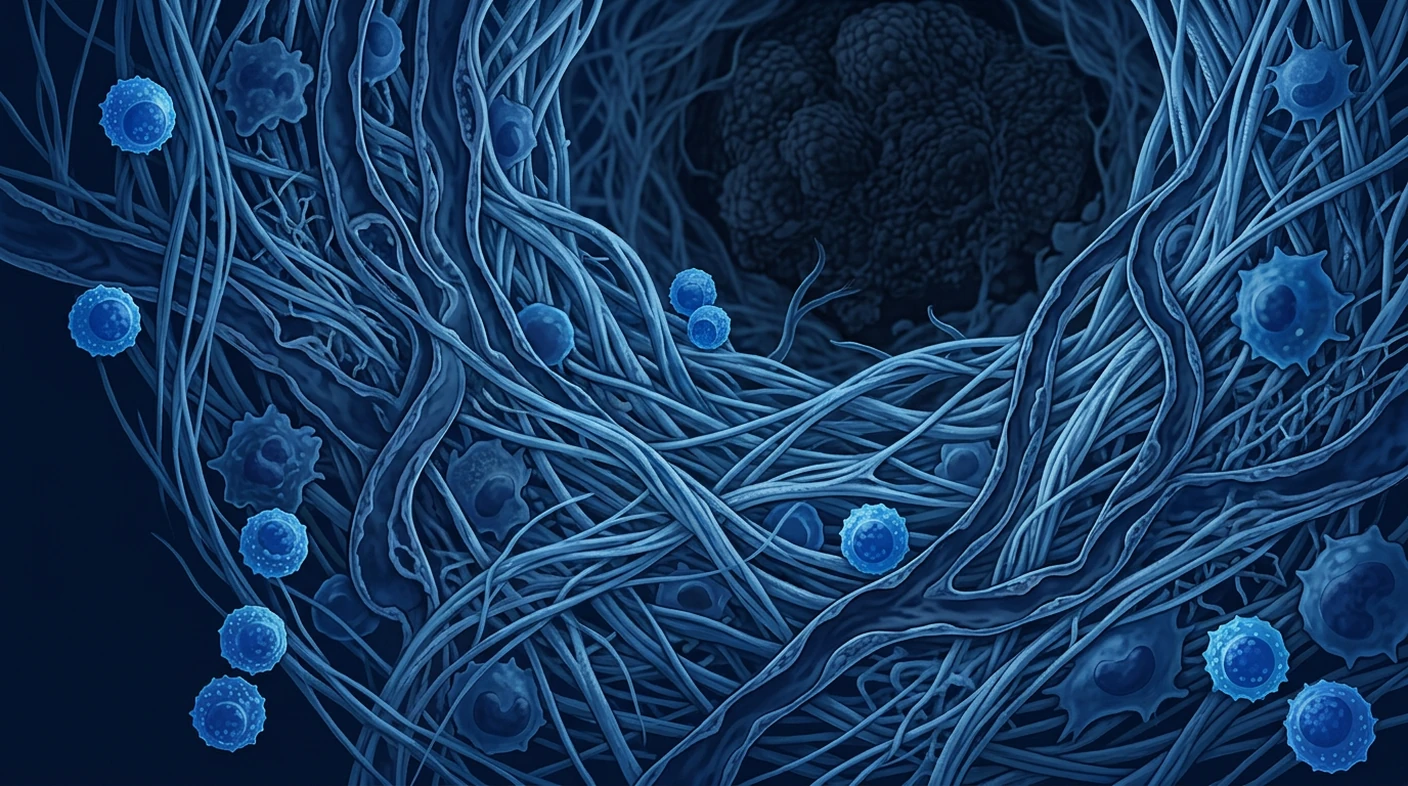
The first major hurdle is simply getting to the tumor. Systemically infused NK cells must exit the bloodstream and migrate through dense tissue to reach cancer cells. This process, known as trafficking, is often inefficient. Solid tumors frequently do not express the correct chemokines (homing signals) to match the chemokine receptors on standard expanded NK cells. This "chemokine-receptor mismatch" means the NK cells are not effectively recruited to the tumor site [4]. Even if they are recruited, abnormal tumor vasculature and a dense, fibrotic extracellular matrix (stroma) can form a physical barrier, preventing deep infiltration.
The Suppressive Tumor Microenvironment (TME)
Should NK cells successfully infiltrate the tumor, they enter a hostile microenvironment actively designed to shut them down. The TME is a complex ecosystem of cancer cells, blood vessels, immune cells, and signaling molecules that promotes tumor growth and suppresses anti-tumor immunity.
- Suppressor Cells: The TME is rich in immunosuppressive cell populations, such as regulatory T cells (Tregs) and myeloid-derived suppressor cells (MDSCs), which directly inhibit NK cell function.
- Soluble Factors: Tumors secrete a cocktail of inhibitory molecules. Transforming growth factor-beta (TGF-β) is a particularly potent suppressor that downregulates activating receptors like NKG2D and impairs NK cell cytotoxicity [12]. Other factors like prostaglandin E2 (PGE2) and indoleamine 2,3-dioxygenase (IDO) also contribute to an immunosuppressive milieu.
- Immune Checkpoints: While PD-1/PD-L1 is the most famous immune checkpoint axis, NK cells can also express other checkpoint receptors like TIM-3, LAG-3, and TIGIT, which can be engaged by ligands in the TME to induce an exhausted, non-functional state.
Metabolic Warfare and Hypoxia
Tumors are metabolically demanding, rapidly consuming glucose and other nutrients. This creates a nutrient-poor environment where NK cells struggle to compete. The high rate of glycolysis by tumor cells leads to the accumulation of lactate, which acidifies the TME and directly impairs NK cell metabolism and function. Additionally, adenosine, which accumulates in the hypoxic (low-oxygen) core of many tumors, can bind to A2A receptors on NK cells and deliver a powerful inhibitory signal [3]. Hypoxia itself also directly suppresses NK cell activity.
Limited In-Vivo Persistence and Expansion
For adoptive cell therapy to be effective, the infused cells must survive, expand, and persist long enough to eliminate the tumor. Many early NK cell products have demonstrated very poor persistence, often becoming undetectable within days or weeks of infusion. This is partly due to a lack of appropriate cytokine support; while high-dose IL-2 was used in early studies, it is highly toxic and preferentially expands suppressive Tregs. IL-15 is now recognized as a more critical cytokine for NK cell survival and function, but maintaining adequate levels in vivo remains a challenge [15].
Antigen Heterogeneity and Escape
Even for highly targeted approaches like CAR-NK cells, solid tumors pose a unique problem. Unlike blood cancers where the target antigen is often uniformly expressed, solid tumors are highly heterogeneous. Some cancer cells within the same tumor may not express the target antigen, allowing them to escape destruction and eventually regrow. This phenomenon, known as antigen escape, is a major cause of relapse after targeted therapies.
Engineering a Better Killer: Strategies Under Investigation
The field is now focused on developing "next-generation" NK cell products engineered to overcome these specific barriers. Most of these strategies are still in preclinical or early-phase clinical testing.
- Improving Homing and Delivery: To overcome the trafficking problem, researchers are engineering NK cells to express chemokine receptors (like CXCR2 or CCR4) that match the chemokines produced by specific tumors. Another approach bypasses systemic delivery altogether via local administration (e.g., intratumoral, intrapleural, or intraperitoneal injection), placing the cells directly into the site of disease.
- Enhancing Persistence with Cytokine Support: Strategies to provide durable IL-15 signaling are being actively explored. These include co-infusing IL-15 complexes, engineering NK cells to produce their own IL-15 ("armored" CAR-NKs), or creating iPSC-NK cells that secrete IL-15.
- Boosting Potency with CARs and Engagers: CAR-NK cells are being developed against a wide range of solid tumor antigens, including HER2 (glioblastoma, breast cancer), ROR1, and Mesothelin. Another approach uses Bi- or Tri-specific Killer Engagers (BiKEs/TriKEs)—molecules that act as a bridge, simultaneously binding to CD16 on an NK cell and a tumor antigen, potently directing the NK cell to kill the tumor.
- Disarming the TME: To make NK cells resistant to the TME, they are being engineered to be insensitive to TGF-β (e.g., by deleting the TGF-β receptor) or to secrete enzymes that degrade adenosine. Combining NK cell infusions with checkpoint inhibitor drugs (anti-PD-1/PD-L1) or drugs that target MDSCs is also a major area of clinical investigation.
Interpreting the Clinical Evidence in Solid Tumors
Despite immense preclinical enthusiasm, the clinical data for NK cell therapy in solid tumors remains preliminary and must be interpreted with extreme caution. The field is dominated by small, non-randomized, early-phase (Phase I) studies focused primarily on safety and feasibility.
A Cautious Look at a Recent Meta-Analysis
A 2024 systematic review and meta-analysis by Park et al. examined 31 prospective studies involving approximately 600 patients with various solid tumors [5]. In a subgroup of studies published from 2011–2020, the pooled objective response rate was 38.4% and the disease-control rate was 72.7%. These estimates must not be mistaken for proof that NK cells alone produced the outcomes: study designs, cancers, cell products, local therapies, and combination regimens varied substantially. The heterogeneity and absence of randomized comparators in most studies are the critical takeaway:
- Diverse products: The trials used a wide mix of NK cell sources (autologous, allogeneic, NK-92, CAR-NK).
- Variable regimens: Doses, infusion schedules, and lymphodepletion protocols varied dramatically.
- Frequent combinations: The majority of patients received NK cells in combination with other treatments like chemotherapy, radiation, or monoclonal antibodies. This makes it impossible to isolate the specific contribution of the NK cells to any observed responses.
- Mixed tumor types: Data from many different cancers (e.g., lung, colorectal, ovarian, glioblastoma) were grouped together.
- Early-phase endpoints: Most were Phase I trials without control groups, designed to assess safety, not to prove a survival benefit.
Therefore, the pooled response rates from this meta-analysis do not represent the efficacy of NK cell monotherapy. They are a signal that in some patients, under some conditions (often with concurrent therapy), anti-tumor activity can be observed. It underscores that we are still in the early stages of identifying which products, for which patients, and in which combinations, might be effective.
Notable Early-Phase Trials
Individual trial reports provide more specific, albeit small-scale, insights. For example, early Phase I studies of irradiated NK-92 cells, alone or with IL-2, showed the treatment was generally well-tolerated in patients with advanced renal cell carcinoma and melanoma, but clinical responses were minimal and transient [9]. A Phase I/II study using haploidentical donor NK cells combined with chemotherapy in patients with refractory ovarian and breast cancer found that the cells could be detected transiently but did not expand significantly, leading to limited clinical benefit [10]. More recently, a report on just three patients with colorectal cancer liver metastases described the local, intra-arterial delivery of NKG2D-CAR-NK cells, reporting some reduction in tumor markers and radiologic changes, but this is far too small to draw conclusions [11]. Numerous early-phase trials of CAR-NKs, such as those targeting HER2 in glioblastoma, are ongoing, but published data remains sparse. Trial registration is a sign of activity, not proof of efficacy.
| Observation from Early Trials | Cautious Interpretation & Limitations |
|---|---|
| Reports of "disease control" or stable disease in some patients. | This often includes patients whose tumors did not shrink but simply did not grow for a period. It is not equivalent to a tumor response and can be part of the natural history of some cancers. |
| A small percentage of patients show partial tumor shrinkage (partial response). | These responses are encouraging but often occur in patients also receiving chemotherapy or antibodies. It is difficult to attribute the effect solely to the NK cells. Durability of these responses is a key unknown. |
| Infused NK cells are generally safe with a lower rate of severe CRS and neurotoxicity compared to CAR-T cells. | This is a significant advantage, but "lower risk" does not mean "no risk." The safety profile can change with genetic engineering, higher doses, and different cytokine support regimens. |
| One meta-analysis reported a 38.4% objective response rate in a 2011–2020 subgroup. | This pooled estimate spans highly diverse, small, mostly non-randomized studies with frequent co-therapies. It is not a reliable predictor of benefit for an individual patient or a specific product, and it does not prove survival benefit. |
Safety and Risks of NK Cell Therapy
A key motivation for developing NK cell therapies is their generally favorable safety profile compared to T-cell therapies. Severe cytokine release syndrome (CRS) and immune effector cell-associated neurotoxicity syndrome (ICANS), which can be life-threatening with CAR-T cells, have been observed much less frequently and with lower severity in most NK cell trials to date. However, this does not mean the therapy is without risk.
- Infusion-related reactions: Fever, chills, and flu-like symptoms are common shortly after infusion.
- Lymphodepletion toxicity: The conditioning chemotherapy required before infusion carries its own risks, including profound cytopenias (low blood counts), which increase the risk of serious infections.
- Cytokine support toxicity: High-dose IL-2 is associated with significant toxicity (e.g., vascular leak syndrome). While newer regimens use IL-15, side effects are still possible.
- On-target, off-tumor toxicity: For engineered CAR-NK cells, there is a theoretical risk that the CAR could recognize the target antigen expressed at low levels on healthy tissues, leading to unintended damage.
- Graft-versus-Host Disease (GvHD): While allogeneic NK cells are thought to have a very low risk of causing GvHD compared to allogeneic T cells, it remains a theoretical concern, particularly with products that may have trace T-cell contamination.
The requirement to irradiate the NK-92 cell line to prevent malignant transformation inherently limits its persistence and, consequently, its potential for durable efficacy.
Frequently Asked Questions
Is NK cell therapy approved for solid tumors?
No NK-cell product appears on the U.S. FDA’s approved cellular and gene therapy list for solid tumors as of this article’s review date. Regulatory status differs by jurisdiction and exact product; patients should verify it with the relevant regulator and oncology team. The products discussed here remain investigational and should be accessed through appropriately registered clinical studies or regulated pathways.
How is NK cell therapy different from CAR-T cell therapy?
Both are forms of adoptive cell therapy. The main differences are the cell type (NK vs. T cell), the source (many NK products are "off-the-shelf" allogeneic, while most CAR-T are autologous), and the safety profile (NK cells have shown a lower risk of severe CRS and neurotoxicity to date).
Can any patient with a solid tumor join an NK cell trial?
No. Clinical trials have very strict inclusion and exclusion criteria based on cancer type, stage, prior treatments, organ function, and overall health. Most current trials are for patients with advanced or refractory cancers who have exhausted standard treatment options.
What is the difference between "unmodified" and "CAR-NK" cells?
Unmodified (or conventional) NK cells rely on their natural receptors to find and kill cancer cells. CAR-NK cells are genetically engineered with a Chimeric Antigen Receptor (CAR) that directs them to a specific antigen on the tumor surface, enhancing their specificity and killing power.
Does the evidence show NK cell therapy can cure solid cancers?
No. There is currently no evidence from large, controlled trials to suggest that NK cell therapy can cure solid cancers. The goal in current early-phase trials is to establish safety and look for early signals of anti-tumor activity, not to demonstrate cures.
Limitations and Medical Disclaimer
NK cell therapy for solid tumors is an experimental treatment that has not been proven to be safe or effective. The information in this article is for educational purposes only and is not a substitute for professional medical advice, diagnosis, or treatment. The field is evolving rapidly, and data from small, early-phase studies should not be interpreted as a guarantee of clinical benefit. No claims of cure or specific outcomes are made. Patients should discuss all standard-of-care treatment options and the possibility of enrolling in a formal clinical trial with their oncology team. Decisions about medical care should be made in consultation with a qualified healthcare provider who can assess an individual's specific situation.
References
- Vivier E, Raulet DH, Moretta A, et al. Innate or adaptive immunity? The example of natural killer cells. Science. 2011;331(6013):44-49. doi:10.1126/science.1198687 ↩
- Morvan MG, Lanier LL. NK cells and cancer: you can teach an old dog new tricks. Nat Rev Cancer. 2016;16(1):7-19. doi:10.1038/nrc.2015.5 ↩
- Bald T, Krummel MF, Smyth MJ, Barry KC. The NK cell–cancer cycle: advances and new challenges in NK cell–based immunotherapies. Nat Immunol. 2020;21(8):835-847. doi:10.1038/s41590-020-0728-z ↩
- Melaiu O, Lucarini V, Cifaldi L, et al. The Bull in a China Shop: The NK-Cell Stand-Off in the Tumor Microenvironment. Front Immunol. 2020;10:3038. doi:10.3389/fimmu.2019.03038 ↩
- Park H, Kim G, Kim N, Ha S, Yim H. Efficacy and safety of natural killer cell therapy in patients with solid tumors: a systematic review and meta-analysis. Front Immunol. 2024;15:1454427. doi:10.3389/fimmu.2024.1454427 ↩
- Shimasaki N, Jain A, Campana D. NK cells for cancer immunotherapy. Nat Rev Drug Discov. 2020;19(3):200-217. doi:10.1038/s41573-019-0052-1 ↩
- Myers JA, Miller JS. Exploring the NK cell platform for cancer immunotherapy. Nat Rev Clin Oncol. 2021;18(2):85-100. doi:10.1038/s41571-020-0426-7 ↩
- Daher M, Rezvani K. Next generation natural killer cells for cancer immunotherapy: the promise of genetic engineering. Current Opinion in Immunology. 2018;51:146-153. doi:10.1016/j.coi.2018.03.013 ↩
- Arai S, Meagher R, Swearingen M, et al. Infusion of the allogeneic cell line NK-92 in patients with advanced renal cell cancer or melanoma: a phase I trial. Cytotherapy. 2008;10(6):625-632. doi:10.1080/14653240802301872 ↩
- Geller MA, Cooley S, Judson PL, et al. A phase II study of allogeneic natural killer cell therapy in patients with recurrent ovarian and breast cancer. Cytotherapy. 2011;13(1):98-107. doi:10.3109/14653249.2010.515582 ↩
- Xiao L, Cen D, Gan H, et al. Adoptive Transfer of NKG2D CAR mRNA-Engineered Natural Killer Cells in Colorectal Cancer Patients. Mol Ther. 2019;27(6):1114-1125. doi:10.1016/j.ymthe.2019.03.011 ↩
- Hu Z, Xu X, Wei H. The Adverse Impact of Tumor Microenvironment on NK-Cell. Front Immunol. 2021;12:633361. doi:10.3389/fimmu.2021.633361 ↩
- Marofi F, Rahman HS, Thangavelu L, et al. Renaissance of armored immune effector cells, CAR-NK cells, brings the higher hope for successful cancer therapy. Stem Cell Res Ther. 2021;12:200. doi:10.1186/s13287-021-02251-7 ↩
- Li Y, Hermanson DL, Moriarity BS, Kaufman DS. Human iPSC-derived natural killer cells engineered with chimeric antigen receptors enhance anti-tumor activity. Cell Stem Cell. 2018;23(2):181-192.e5. doi:10.1016/j.stem.2018.06.002 ↩
- Carson WE, Giri JG, Lindemann MJ, et al. Interleukin-15 is a novel cytokine that activates human natural killer cells via components of the IL-2 receptor. J Exp Med. 1994;180(4):1395-1403. doi:10.1084/jem.180.4.1395 ↩
过继性细胞疗法,即将活的免疫细胞输注给患者以对抗癌症,已因CAR-T细胞而发生了革命性变化。然而,CAR-T疗法的成功主要局限于某些血液系统(血液)癌症。对于占绝大多数癌症病例的实体瘤而言,道路要艰难得多。这加剧了对替代细胞类型的研究,其中自然杀伤(NK)细胞已成为一个突出的候选者。
至关重要的是,用于实体瘤的NK细胞疗法仍处于研究阶段。它不是一种既定的标准治疗方法,其疗效尚未在大型、随机的临床试验中得到证实。本文对这一发展中领域的科学、必须克服的重大障碍、临床研究的现状以及安全考虑提供了一个保守的、基于证据的概述。
自然杀伤细胞的先天力量
NK细胞是一种细胞毒性淋巴细胞,是先天免疫系统的关键组成部分。与T细胞不同,它们不需要事先致敏或特定的抗原呈递来识别和杀死靶细胞。它们采用一种复杂的监视系统,该系统基于其表面激活和抑制受体信号的平衡[1]。
- 自然细胞毒性(“缺失自我”和应激识别):健康细胞表达主要组织相容性复合体I类(MHC-I)分子,这些分子与NK细胞上的抑制性受体结合,传递“别杀我”的信号。许多癌细胞下调MHC-I以逃避T细胞。这种“缺失自我”状态消除了抑制信号,使NK细胞得以攻击。此外,受应激、感染或转化的细胞通常会上调激活配体(如MICA/B或ULBPs),这些配体与NK细胞上的激活受体如NKG2D结合,使天平向细胞毒性方向倾斜[2]。
- 抗体依赖性细胞介导的细胞毒性(ADCC):NK细胞表达受体CD16(FcγRIIIA),该受体与已经包覆在肿瘤细胞上的抗体(如西妥昔单抗或曲妥珠单抗)的Fc部分结合。这种结合提供了一个强大的激活信号,引导NK细胞释放其细胞毒性颗粒(穿孔素和颗粒酶)并杀死抗体标记的靶标。这种机制将NK细胞的先天力量与靶向抗体疗法的特异性联系起来。
一旦被激活,NK细胞直接杀死靶细胞,并释放诸如干扰素-γ(IFN-γ)和肿瘤坏死因子-α(TNF-α)之类的细胞因子,这些细胞因子可以招募和激活其他免疫细胞,塑造更广泛的抗肿瘤反应。
治疗性NK细胞的来源和类型
临床开发的一个主要焦点是产生大量功能性NK细胞用于输注。与患者特异性(自体)的CAR-T细胞不同,许多NK细胞产品正被开发为同种异体的、“现成的”疗法,这些疗法源自健康捐赠者,这提供了显著的后勤和成本优势[6]。
- 自体NK细胞:来源于患者自身的血液。虽然这避免了排斥反应,但由于癌症和先前的治疗,患者的NK细胞可能功能失调或耗竭。
- 同种异体供体NK细胞:来源于健康、预先筛选的供体的外周血,通常来自半相合(半匹配)的亲属。这些细胞通常更强健。
- 脐带血(UCB)NK细胞:UCB是造血干细胞和祖细胞的丰富来源,可以扩增成大量的NK细胞。这些细胞不太成熟,但增殖能力强,并且在移植物抗宿主病(GvHD)方面可能具有更好的安全性。
- NK细胞系(例如,NK-92):NK-92是一种永生化细胞系,可以无限扩增,提供标准化、一致的产品。然而,由于它是一种癌症来源的细胞系,因此在输注前必须进行辐照,以防止其在患者体内失控增殖,这限制了其持久性[9]。
- 诱导性多能干细胞(iPSC)衍生的NK细胞:可以生成iPSC,然后引导其分化为NK细胞,从而创造一个潜在的无限和统一的来源。该平台还便于进行基因工程,以创建增强的下一代产品[14]。
- 细胞因子诱导的记忆样(CIML)NK细胞:用细胞因子混合物(例如IL-12、IL-15、IL-18)对NK细胞进行短暂的预激活,可以诱导“记忆样”表型,从而在再次暴露于刺激时增强持久性和更强的抗肿瘤活性[7]。
- 嵌合抗原受体(CAR)-NK细胞:与CAR-T细胞一样,NK细胞可以进行基因工程改造,携带CAR以识别特定的肿瘤相关抗原,从而以高精度重新定向其强大的杀伤能力[13]。
在输注前,患者通常会接受淋巴细胞清除性化疗(例如,使用环磷酰胺和氟达拉滨)。这种预处理方案减少了患者自身免疫细胞的数量,为输注的NK细胞的扩增创造了“空间”,并减少了对IL-15等必需生长因子的竞争。
重重关卡:为什么实体瘤能抵抗NK细胞的攻击
尽管生物学原理充满希望,但临床现实是实体瘤已经进化出了一套强大的防御堡垒。输注的NK细胞必须穿越一个多步骤的旅程,任何一个环节的失败都可能导致治疗失败[8]。
运输和浸润失败
第一个主要障碍仅仅是到达肿瘤。全身输注的NK细胞必须离开血流,并穿过致密的组织才能到达癌细胞。这个被称为运输的过程通常效率低下。实体瘤通常不表达与标准扩增的NK细胞上的趋化因子受体相匹配的正确趋化因子(归巢信号)。这种“趋化因子-受体不匹配”意味着NK细胞没有被有效地招募到肿瘤部位[4]。即使它们被招募,异常的肿瘤血管系统和致密的、纤维化的细胞外基质(基质)也可能形成物理屏障,阻止深度浸润。
抑制性肿瘤微环境(TME)
如果NK细胞成功浸润肿瘤,它们会进入一个旨在主动抑制它们的敌对微环境。TME是一个由癌细胞、血管、免疫细胞和信号分子组成的复杂生态系统,它促进肿瘤生长并抑制抗肿瘤免疫。
- 抑制性细胞:TME富含免疫抑制性细胞群,如调节性T细胞(Tregs)和髓源性抑制细胞(MDSCs),它们直接抑制NK细胞的功能。
- 可溶性因子:肿瘤分泌抑制性分子的混合物。转化生长因子-β(TGF-β)是一种特别有效的抑制剂,它下调NKG2D等激活受体,并损害NK细胞的细胞毒性[12]。其他因子如前列腺素E2(PGE2)和吲哚胺2,3-双加氧酶(IDO)也促成了一个免疫抑制的环境。
- 免疫检查点:虽然PD-1/PD-L1是最著名的免疫检查点轴,但NK细胞也可以表达其他检查点受体,如TIM-3、LAG-3和TIGIT,这些受体可以与TME中的配体结合,诱导耗竭的、无功能的状态。
代谢战争和缺氧
肿瘤在代谢上要求很高,迅速消耗葡萄糖和其他营养物质。这创造了一个营养贫乏的环境,NK细胞难以竞争。肿瘤细胞的高糖酵解率导致乳酸堆积,这使TME酸化,并直接损害NK细胞的代谢和功能。此外,在许多肿瘤的缺氧(低氧)核心中积累的腺苷可以与NK细胞上的A2A受体结合,并传递强大的抑制信号[3]。缺氧本身也直接抑制NK细胞的活性。
有限的体内持久性和扩增
为了使过继性细胞疗法有效,输注的细胞必须存活、扩增并持续足够长的时间以消除肿瘤。许多早期的NK细胞产品表现出非常差的持久性,通常在输注后数天或数周内就检测不到了。这部分是由于缺乏适当的细胞因子支持;虽然早期研究中使用了高剂量的IL-2,但它毒性很大,并优先扩增抑制性的Tregs。现在IL-15被认为是NK细胞存活和功能的更关键的细胞因子,但在体内维持足够的水平仍然是一个挑战[15]。
抗原异质性和逃逸
即使对于像CAR-NK细胞这样的高度靶向方法,实体瘤也带来了独特的问题。与靶抗原通常均匀表达的血液癌症不同,实体瘤具有高度异质性。同一肿瘤内的某些癌细胞可能不表达靶抗原,从而使它们能够逃脱破坏并最终重新生长。这种现象,即抗原逃逸,是靶向治疗后复发的一个主要原因。
打造更强杀手:正在研究的策略
该领域现在专注于开发“下一代”NK细胞产品,这些产品经过工程改造以克服这些特定障碍。这些策略中的大多数仍处于临床前或早期临床测试阶段。
- 改善归巢和递送:为了克服运输问题,研究人员正在对NK细胞进行工程改造,使其表达与特定肿瘤产生的趋化因子相匹配的趋化因子受体(如CXCR2或CCR4)。另一种方法完全绕过全身递送,通过局部给药(例如,瘤内、胸膜内或腹膜内注射),将细胞直接置于疾病部位。
- 通过细胞因子支持增强持久性:正在积极探索提供持久IL-15信号的策略。这些包括共同输注IL-15复合物,工程改造NK细胞以产生其自身的IL-15(“武装”CAR-NK),或创建分泌IL-15的iPSC-NK细胞。
- 通过CAR和接合器增强效力:正在开发针对多种实体瘤抗原的CAR-NK细胞,包括HER2(胶质母细胞瘤、乳腺癌)、ROR1和间皮素。另一种方法是使用双特异性或三特异性杀伤接合器(BiKEs/TriKEs)——这些分子充当桥梁,同时与NK细胞上的CD16和肿瘤抗原结合,有力地引导NK细胞杀死肿瘤。
- 解除TME的武装:为了使NK细胞对TME产生抵抗力,正在对它们进行工程改造,使其对TGF-β不敏感(例如,通过删除TGF-β受体)或分泌降解腺苷的酶。将NK细胞输注与检查点抑制剂药物(抗PD-1/PD-L1)或靶向MDSCs的药物相结合也是临床研究的一个主要领域。
解读实体瘤的临床证据
尽管临床前热情高涨,但实体瘤中NK细胞疗法的临床数据仍然是初步的,必须极其谨慎地解读。该领域主要由小型的、非随机的、早期(I期)研究主导,这些研究主要关注安全性和可行性。
对近期一项荟萃分析的冷静审视
Yilmaz等人于2024年进行的一项系统评价和荟萃分析,对已发表的文献提供了一个全面但需谨慎看待的概述[5]。该分析汇总了31项试验的数据,涉及约600名患有各种实体瘤的患者。虽然作者计算出汇总的总缓解率(ORR)为15%,疾病控制率(DCR)为48%,但这些数字绝不能被误解为疗效的证明。作者正确地强调了研究之间存在的极端异质性,这是最关键的启示:
- 产品多样:试验使用了各种NK细胞来源(自体、同种异体、NK-92、CAR-NK)。
- 方案各异:剂量、输注计划和淋巴细胞清除方案差异巨大。
- 频繁联合用药:大多数患者接受NK细胞的同时,还接受了化疗、放疗或单克隆抗体等其他治疗。这使得无法孤立地确定NK细胞对任何观察到的反应的具体贡献。
- 肿瘤类型混杂:来自许多不同癌症(如肺癌、结直肠癌、卵巢癌、胶质母细胞瘤)的数据被组合在一起。
- 早期终点:大多数是I期试验,没有对照组,旨在评估安全性,而不是证明生存获益。
因此,该荟萃分析得出的汇总缓解率并不代表NK细胞单一疗法的疗效。它们是一个信号,表明在某些患者中,在某些条件下(通常伴随其他治疗),可以观察到抗肿瘤活性。这强调了我们仍处于确定哪些产品、对哪些患者、以及以何种组合方式可能有效的早期阶段。
值得注意的早期试验
个别试验报告提供了更具体但规模较小的见解。例如,对经辐照的NK-92细胞(单独或与IL-2联用)的早期I期研究显示,在晚期肾细胞癌和黑色素瘤患者中,该治疗通常耐受性良好,但临床反应微乎其微且短暂[9]。一项使用半相合供体NK细胞联合化疗治疗难治性卵巢癌和乳腺癌患者的I/II期研究发现,细胞可以被短暂检测到,但没有显著扩增,导致临床获益有限[10]。最近,一份关于仅三名结直肠癌肝转移患者的报告描述了通过动脉内局部递送NKG2D-CAR-NK细胞,报告了一些肿瘤标志物的降低和影像学变化,但这规模太小,无法得出结论[11]。许多针对CAR-NKs的早期试验,如靶向胶质母细胞瘤中HER2的试验,正在进行中,但已发表的数据仍然稀少。试验注册是活跃的标志,而非疗效的证明。
| 早期试验的观察结果 | 谨慎的解读与局限性 |
|---|---|
| 部分患者报告“疾病控制”或疾病稳定。 | 这通常包括肿瘤未缩小但仅在一段时间内未增长的患者。这不等同于肿瘤缓解,并且可能是一些癌症自然病程的一部分。 |
| 少数患者出现部分肿瘤缩小(部分缓解)。 | 这些反应令人鼓舞,但通常发生在同时接受化疗或抗体治疗的患者中。很难将效果完全归因于NK细胞。这些反应的持久性是一个关键的未知数。 |
| 与CAR-T细胞相比,输注的NK细胞通常安全,严重CRS和神经毒性的发生率较低。 | 这是一个显著的优势,但“风险较低”不等于“没有风险”。安全性可能会随着基因工程、更高剂量和不同的细胞因子支持方案而改变。 |
| 汇总分析表明缓解率约为15%。 | 这是在高度多样化、小规模、非随机且频繁联合治疗的研究中得出的平均值。它不是个体患者或特定产品成功率的可靠预测指标,也未证明生存获益。 |
NK细胞疗法的安全性与风险
开发NK细胞疗法的一个关键动机是其与T细胞疗法相比通常具有更有利的安全性。在大多数NK细胞试验中,与CAR-T细胞可能危及生命的严重细胞因子释放综合征(CRS)和免疫效应细胞相关神经毒性综合征(ICANS)相比,其发生频率和严重程度要低得多。然而,这并不意味着该疗法没有风险。
- 输注相关反应:输注后不久,发热、寒战和流感样症状很常见。
- 淋巴细胞清除毒性:输注前所需的预处理化疗本身也带有风险,包括严重的血细胞减少(血细胞计数低),这增加了严重感染的风险。
- 细胞因子支持毒性:高剂量IL-2与显著毒性(如血管渗漏综合征)相关。虽然较新的方案使用IL-15,但副作用仍然可能发生。
- 靶向但脱靶的毒性:对于工程化的CAR-NK细胞,存在理论上的风险,即CAR可能识别健康组织上低水平表达的靶抗原,导致意外损伤。
- 移植物抗宿主病(GvHD):虽然同种异体NK细胞被认为引起GvHD的风险远低于同种异体T细胞,但这仍然是一个理论上的担忧,特别是对于可能含有微量T细胞污染的产品。
对NK-92细胞系进行辐照以防止恶性转化的要求,内在地限制了其持久性,从而也限制了其持久疗效的潜力。
常见问题
NK细胞疗法是否已获批用于实体瘤?
截至本文审查日期,美国FDA已批准的细胞与基因治疗清单中没有用于实体瘤的NK细胞产品。监管状态因司法管辖区和具体产品而异,患者应向相关监管机构和肿瘤科团队核实。本文讨论的产品仍属研究性治疗,应通过规范注册的临床研究或受监管路径获得。
NK细胞疗法与CAR-T细胞疗法有何不同?
两者都是过继性细胞疗法的形式。主要区别在于细胞类型(NK vs. T细胞)、来源(许多NK产品是“现成的”同种异体,而大多数CAR-T是自体的),以及安全性(迄今为止,NK细胞已显示出较低的严重CRS和神经毒性风险)。
任何实体瘤患者都可以参加NK细胞试验吗?
不可以。临床试验有非常严格的纳入和排除标准,基于癌症类型、分期、既往治疗、器官功能和总体健康状况。目前大多数试验是针对已用尽标准治疗方案的晚期或难治性癌症患者。
“非修饰”和“CAR-NK”细胞有什么区别?
非修饰(或常规)NK细胞依靠其天然受体来寻找和杀死癌细胞。CAR-NK细胞经过基因工程改造,带有一个嵌合抗原受体(CAR),该受体将其引导至肿瘤表面的特定抗原,从而增强其特异性和杀伤力。
证据是否表明NK细胞疗法可以治愈实体癌?
没有。目前没有来自大型对照试验的证据表明NK细胞疗法可以治愈实体癌。当前早期试验的目标是确立安全性并寻找抗肿瘤活性的早期信号,而不是证明治愈。
局限性和医疗免责声明
用于实体瘤的NK细胞疗法是一种实验性治疗,其安全性或有效性尚未得到证实。本文中的信息仅供教育目的,不能替代专业的医疗建议、诊断或治疗。该领域发展迅速,不应将小型、早期研究的数据解读为临床获益的保证。本文不作出任何关于治愈或特定结果的声明。患者应与他们的肿瘤治疗团队讨论所有标准的治疗方案以及参加正式临床试验的可能性。有关医疗保健的决定应与合格的医疗服务提供者协商作出,他们可以评估个人的具体情况。
参考文献
- Vivier E, Raulet DH, Moretta A, et al. Innate or adaptive immunity? The example of natural killer cells. Science. 2011;331(6013):44-49. doi:10.1126/science.1198687 ↩
- Morvan MG, Lanier LL. NK cells and cancer: you can teach an old dog new tricks. Nat Rev Cancer. 2016;16(1):7-19. doi:10.1038/nrc.2015.5 ↩
- Bald T, Krummel MF, Smyth MJ, Barry KC. The NK cell–cancer cycle: advances and new challenges in NK cell–based immunotherapies. Nat Immunol. 2020;21(8):835-847. doi:10.1038/s41590-020-0728-z ↩
- Melaiu O, Lucarini V, Cifaldi L, et al. The Bull in a China Shop: The NK-Cell Stand-Off in the Tumor Microenvironment. Front Immunol. 2020;10:3038. doi:10.3389/fimmu.2019.03038 ↩
- Park H, Kim G, Kim N, Ha S, Yim H. Efficacy and safety of natural killer cell therapy in patients with solid tumors: a systematic review and meta-analysis. Front Immunol. 2024;15:1454427. doi:10.3389/fimmu.2024.1454427 ↩
- Shimasaki N, Jain A, Campana D. NK cells for cancer immunotherapy. Nat Rev Drug Discov. 2020;19(3):200-217. doi:10.1038/s41573-019-0052-1 ↩
- Myers JA, Miller JS. Exploring the NK cell platform for cancer immunotherapy. Nat Rev Clin Oncol. 2021;18(2):85-100. doi:10.1038/s41571-020-0426-7 ↩
- Daher M, Rezvani K. Next generation natural killer cells for cancer immunotherapy: the promise of genetic engineering. Current Opinion in Immunology. 2018;51:146-153. doi:10.1016/j.coi.2018.03.013 ↩
- Arai S, Meagher R, Swearingen M, et al. Infusion of the allogeneic cell line NK-92 in patients with advanced renal cell cancer or melanoma: a phase I trial. Cytotherapy. 2008;10(6):625-632. doi:10.1080/14653240802301872 ↩
- Geller MA, Cooley S, Judson PL, et al. A phase II study of allogeneic natural killer cell therapy in patients with recurrent ovarian and breast cancer. Cytotherapy. 2011;13(1):98-107. doi:10.3109/14653249.2010.515582 ↩
- Xiao L, Cen D, Gan H, et al. Adoptive Transfer of NKG2D CAR mRNA-Engineered Natural Killer Cells in Colorectal Cancer Patients. Mol Ther. 2019;27(6):1114-1125. doi:10.1016/j.ymthe.2019.03.011 ↩
- Hu Z, Xu X, Wei H. The Adverse Impact of Tumor Microenvironment on NK-Cell. Front Immunol. 2021;12:633361. doi:10.3389/fimmu.2021.633361 ↩
- Marofi F, Rahman HS, Thangavelu L, et al. Renaissance of armored immune effector cells, CAR-NK cells, brings the higher hope for successful cancer therapy. Stem Cell Res Ther. 2021;12:200. doi:10.1186/s13287-021-02251-7 ↩
- Li Y, Hermanson DL, Moriarity BS, Kaufman DS. Human iPSC-derived natural killer cells engineered with chimeric antigen receptors enhance anti-tumor activity. Cell Stem Cell. 2018;23(2):181-192.e5. doi:10.1016/j.stem.2018.06.002 ↩
- Carson WE, Giri JG, Lindemann MJ, et al. Interleukin-15 is a novel cytokine that activates human natural killer cells via components of the IL-2 receptor. J Exp Med. 1994;180(4):1395-1403. doi:10.1084/jem.180.4.1395 ↩
العلاج الخلوي بالتبني، وهو نقل خلايا مناعية حية إلى المريض لمحاربة السرطان، قد أحدث ثورة بفضل خلايا CAR-T. ومع ذلك، اقتصر نجاح علاج CAR-T إلى حد كبير على بعض أنواع سرطانات الدم. بالنسبة للأورام الصلبة - التي تشكل الغالبية العظمى من حالات السرطان - كان الطريق أكثر صعوبة. وقد أدى ذلك إلى تكثيف الأبحاث حول أنواع الخلايا البديلة، حيث برزت الخلايا القاتلة الطبيعية (NK) كمرشح بارز.
بشكل حاسم، لا يزال علاج خلايا NK للأورام الصلبة قيد البحث. إنه ليس معيارًا علاجيًا ثابتًا، ولم تثبت فعاليته في تجارب سريرية كبيرة وعشوائية. يقدم هذا المقال نظرة عامة متحفظة ومبنية على الأدلة للعلم، والعوائق الكبيرة التي يجب التغلب عليها، والوضع الحالي للبحث السريري، واعتبارات السلامة لهذا المجال النامي.
القوة الفطرية للخلايا القاتلة الطبيعية
الخلايا القاتلة الطبيعية هي نوع من الخلايا الليمفاوية السامة للخلايا وعنصر أساسي في الجهاز المناعي الفطري. على عكس خلايا T، لا تتطلب تحسيسًا مسبقًا أو عرضًا محددًا للمستضد للتعرف على الخلايا المستهدفة وقتلها. إنها تستخدم نظام مراقبة متطور يعتمد على توازن الإشارات من المستقبلات المنشطة والمثبطة على سطحها [1].
- السمية الخلوية الطبيعية (التعرف على "الذات المفقودة" والإجهاد): تعبر الخلايا السليمة عن جزيئات معقد التوافق النسيجي الكبير من الفئة الأولى (MHC-I)، والتي تتفاعل مع المستقبلات المثبطة على خلايا NK، مما يرسل إشارة "لا تقتلني". تقوم العديد من الخلايا السرطانية بتخفيض تنظيم MHC-I للتهرب من خلايا T. هذه الحالة من "الذات المفقودة" تزيل الإشارة المثبطة، مما يسمح لخلية NK بالهجوم. علاوة على ذلك، غالبًا ما تزيد الخلايا المجهدة أو المصابة أو المتحولة من تنظيم الروابط المنشطة (مثل MICA/B أو ULBPs) التي تتفاعل مع المستقبلات المنشطة مثل NKG2D على خلايا NK، مما يرجح الكفة نحو السمية الخلوية [2].
- السمية الخلوية المعتمدة على الأجسام المضادة (ADCC): تعبر خلايا NK عن مستقبل CD16 (FcγRIIIA)، الذي يرتبط بالجزء Fc من الأجسام المضادة، مثل سيتوكسيماب أو تراستوزوماب، التي تغطي بالفعل خلية ورمية. يوفر هذا الارتباط إشارة تنشيط قوية، ويوجه خلية NK لإطلاق حبيباتها السامة للخلايا (بيرفورين وغرانزيمات) وقتل الهدف الموسوم بالجسم المضاد. تربط هذه الآلية القوة الفطرية لخلايا NK بخصوصية علاجات الأجسام المضادة الموجهة.
بمجرد تنشيطها، تقتل خلايا NK الخلايا المستهدفة مباشرة وتطلق أيضًا السيتوكينات مثل إنترفيرون-غاما (IFN-γ) وعامل نخر الورم ألفا (TNF-α)، والتي يمكنها تجنيد وتنشيط خلايا مناعية أخرى، مما يشكل استجابة أوسع مضادة للورم.
مصادر وأنواع خلايا NK العلاجية
يركز التطوير السريري بشكل كبير على توليد أعداد كبيرة من خلايا NK الوظيفية للتسريب. على عكس خلايا CAR-T الذاتية (الخاصة بالمريض)، يتم تطوير العديد من منتجات خلايا NK كعلاجات خيفية "جاهزة للاستخدام" مشتقة من متبرعين أصحاء، مما يوفر مزايا لوجستية وتكلفة كبيرة [6].
- خلايا NK الذاتية: مشتقة من دم المريض نفسه. بينما يتجنب هذا الرفض، قد تكون خلايا NK للمريض مختلة وظيفيًا أو منهكة بسبب السرطان والعلاجات السابقة.
- خلايا NK من متبرع خيفي: مصدرها الدم المحيطي لمتبرعين أصحاء تم فحصهم مسبقًا، غالبًا من أقارب متطابقين نصفيًا. هذه الخلايا تكون بشكل عام أكثر قوة.
- خلايا NK من دم الحبل السري (UCB): دم الحبل السري هو مصدر غني بالخلايا الجذعية المكونة للدم والسلائف التي يمكن توسيعها إلى أعداد كبيرة من خلايا NK. هذه الخلايا أقل نضجًا ولكنها عالية التكاثر وقد يكون لها ملف سلامة أفضل فيما يتعلق بمرض الطعم ضد المضيف (GvHD).
- خطوط خلايا NK (مثل NK-92): NK-92 هو خط خلايا مخلد يمكن توسيعه إلى أجل غير مسمى، مما يوفر منتجًا موحدًا ومتسقًا. ومع ذلك، نظرًا لأنه خط مشتق من السرطان، يجب تشعيعه قبل التسريب لمنعه من التكاثر بشكل لا يمكن السيطرة عليه في المريض، مما يحد من استمراريته [9].
- خلايا NK مشتقة من الخلايا الجذعية متعددة القدرات المستحثة (iPSC): يمكن توليد خلايا iPSC ثم توجيهها للتمايز إلى خلايا NK، مما يخلق مصدرًا محتملاً غير محدود وموحد. تتيح هذه المنصة أيضًا سهولة الهندسة الوراثية لإنشاء منتجات محسنة من الجيل التالي [14].
- خلايا NK شبيهة بالذاكرة مستحثة بالسيتوكين (CIML): التنشيط المسبق القصير لخلايا NK بمزيج من السيتوكينات (مثل IL-12، IL-15، IL-18) يمكن أن يحفز نمطًا ظاهريًا "شبيهًا بالذاكرة"، مما يؤدي إلى تعزيز الاستمرارية ونشاط أقوى مضاد للورم عند إعادة التعرض للمنبهات [7].
- خلايا NK ذات مستقبلات المستضد الخيمرية (CAR): مثل خلايا CAR-T، يمكن هندسة خلايا NK وراثيًا باستخدام مستقبلات CAR للتعرف على مستضدات مرتبطة بالورم محددة، وإعادة توجيه قدرتها القاتلة القوية بدقة عالية [13].
قبل التسريب، يخضع المرضى عادةً للعلاج الكيميائي المستنفد للخلايا الليمفاوية (مثل سيكلوفوسفاميد وفلودارابين). يقلل هذا النظام التكييفي من عدد الخلايا المناعية الخاصة بالمريض، مما يخلق "مساحة" لتوسع خلايا NK المحقونة ويقلل من المنافسة على عوامل النمو الأساسية مثل IL-15.
التحديات: لماذا تقاوم الأورام الصلبة هجوم خلايا NK
في حين أن البيولوجيا واعدة، فإن الواقع السريري هو أن الأورام الصلبة قد طورت حصنًا هائلاً من الدفاعات. يجب على خلية NK المحقونة أن تتنقل في رحلة متعددة الخطوات، والفشل في أي مرحلة يمكن أن يؤدي إلى فشل علاجي [8].
فشل الانتقال والارتشاح
العقبة الرئيسية الأولى هي ببساطة الوصول إلى الورم. يجب على خلايا NK المحقونة جهازيًا أن تخرج من مجرى الدم وتهاجر عبر الأنسجة الكثيفة للوصول إلى الخلايا السرطانية. هذه العملية، المعروفة بالانتقال، غالبًا ما تكون غير فعالة. لا تعبر الأورام الصلبة بشكل متكرر عن الكيموكينات الصحيحة (إشارات التوجيه) لتتناسب مع مستقبلات الكيموكين على خلايا NK الموسعة القياسية. هذا "عدم تطابق مستقبلات الكيموكين" يعني أن خلايا NK لا يتم تجنيدها بفعالية إلى موقع الورم [4]. حتى لو تم تجنيدها، فإن الأوعية الدموية الورمية غير الطبيعية والمصفوفة خارج الخلية الكثيفة والمليئة بالألياف (السدى) يمكن أن تشكل حاجزًا ماديًا، مما يمنع الارتشاح العميق.
البيئة المكروية المثبطة للورم (TME)
إذا نجحت خلايا NK في الارتشاح إلى الورم، فإنها تدخل بيئة مكروية معادية مصممة بنشاط لإيقافها. TME هي نظام بيئي معقد من الخلايا السرطانية والأوعية الدموية والخلايا المناعية والجزيئات الإشارية التي تعزز نمو الورم وتثبط المناعة المضادة للورم.
- الخلايا المثبطة: TME غنية بمجموعات الخلايا المثبطة للمناعة، مثل خلايا T التنظيمية (Tregs) والخلايا الكابتة المشتقة من النخاع الشوكي (MDSCs)، والتي تثبط بشكل مباشر وظيفة خلايا NK.
- العوامل القابلة للذوبان: تفرز الأورام مزيجًا من الجزيئات المثبطة. عامل النمو المحول بيتا (TGF-β) هو مثبط قوي بشكل خاص يخفض تنظيم المستقبلات المنشطة مثل NKG2D ويضعف السمية الخلوية لخلايا NK [12]. تساهم عوامل أخرى مثل البروستاجلاندين E2 (PGE2) والإندولامين 2,3-ديوكسيجيناز (IDO) أيضًا في بيئة مثبطة للمناعة.
- نقاط التفتيش المناعية: في حين أن محور PD-1/PD-L1 هو أشهر نقاط التفتيش المناعية، يمكن لخلايا NK أيضًا التعبير عن مستقبلات نقاط تفتيش أخرى مثل TIM-3 و LAG-3 و TIGIT، والتي يمكن أن تتفاعل مع الروابط في TME للحث على حالة منهكة وغير وظيفية.
الحرب الأيضية ونقص الأكسجة
الأورام متطلبة من الناحية الأيضية، وتستهلك الجلوكوز والمواد المغذية الأخرى بسرعة. وهذا يخلق بيئة فقيرة بالمغذيات حيث تكافح خلايا NK من أجل المنافسة. يؤدي المعدل المرتفع لتحلل السكر بواسطة الخلايا السرطانية إلى تراكم اللاكتات، مما يحمض TME ويعيق بشكل مباشر عملية التمثيل الغذائي ووظيفة خلايا NK. بالإضافة إلى ذلك، يمكن أن يرتبط الأدينوزين، الذي يتراكم في اللب منخفض الأكسجين (نقص الأكسجة) للعديد من الأورام، بمستقبلات A2A على خلايا NK ويوفر إشارة مثبطة قوية [3]. نقص الأكسجة نفسه يثبط أيضًا نشاط خلايا NK بشكل مباشر.
الاستمرارية والتوسع المحدودان في الجسم الحي
لكي يكون العلاج الخلوي بالتبني فعالاً، يجب أن تعيش الخلايا المحقونة وتتوسع وتستمر لفترة كافية للقضاء على الورم. أظهرت العديد من منتجات خلايا NK المبكرة استمرارية ضعيفة جدًا، وغالبًا ما تصبح غير قابلة للكشف في غضون أيام أو أسابيع من التسريب. يرجع هذا جزئيًا إلى نقص الدعم المناسب للسيتوكين؛ بينما تم استخدام جرعات عالية من IL-2 في الدراسات المبكرة، إلا أنها شديدة السمية وتوسع بشكل تفضيلي خلايا T التنظيمية المثبطة. يُعرف IL-15 الآن بأنه سيتوكين أكثر أهمية لبقاء خلايا NK ووظيفتها، لكن الحفاظ على مستويات كافية في الجسم الحي لا يزال يمثل تحديًا [15].
عدم تجانس المستضدات والهروب
حتى بالنسبة للنهج الموجهة للغاية مثل خلايا CAR-NK، تشكل الأورام الصلبة مشكلة فريدة. على عكس سرطانات الدم حيث يتم التعبير عن المستضد المستهدف بشكل موحد في كثير من الأحيان، فإن الأورام الصلبة غير متجانسة للغاية. قد لا تعبر بعض الخلايا السرطانية داخل نفس الورم عن المستضد المستهدف، مما يسمح لها بالهروب من التدمير والنمو مرة أخرى في النهاية. هذه الظاهرة، المعروفة باسم الهروب من المستضد، هي سبب رئيسي للانتكاس بعد العلاجات الموجهة.
هندسة قاتل أفضل: استراتيجيات قيد التحقيق
يركز المجال الآن على تطوير منتجات خلايا NK من "الجيل التالي" مصممة للتغلب على هذه الحواجز المحددة. لا يزال معظم هذه الاستراتيجيات في مرحلة الاختبار قبل السريري أو المرحلة السريرية المبكرة.
- تحسين التوجيه والتوصيل: للتغلب على مشكلة الانتقال، يقوم الباحثون بهندسة خلايا NK للتعبير عن مستقبلات الكيموكين (مثل CXCR2 أو CCR4) التي تتوافق مع الكيموكينات التي تنتجها أورام معينة. يتجاوز نهج آخر التوصيل الجهازي تمامًا عبر الإعطاء الموضعي (مثل الحقن داخل الورم أو داخل الجنبة أو داخل الصفاق)، ووضع الخلايا مباشرة في موقع المرض.
- تعزيز الاستمرارية بدعم السيتوكين: يتم استكشاف استراتيجيات لتوفير إشارات IL-15 دائمة بنشاط. وتشمل هذه التسريب المشترك لمجمعات IL-15، وهندسة خلايا NK لإنتاج IL-15 الخاص بها ("CAR-NKs المدرعة")، أو إنشاء خلايا iPSC-NK التي تفرز IL-15.
- تعزيز الفعالية باستخدام CARs والمشغلات: يتم تطوير خلايا CAR-NK ضد مجموعة واسعة من مستضدات الأورام الصلبة، بما في ذلك HER2 (الورم الأرومي الدبقي، سرطان الثدي)، و ROR1، و Mesothelin. يستخدم نهج آخر المشغلات القاتلة ثنائية أو ثلاثية الخصوصية (BiKEs/TriKEs) - وهي جزيئات تعمل كجسر، وترتبط في وقت واحد بـ CD16 على خلية NK ومستضد ورمي، وتوجه بقوة خلية NK لقتل الورم.
- نزع سلاح TME: لجعل خلايا NK مقاومة لـ TME، يتم هندستها لتكون غير حساسة لـ TGF-β (على سبيل المثال، عن طريق حذف مستقبل TGF-β) أو لإفراز إنزيمات تحلل الأدينوزين. يعد دمج حقن خلايا NK مع أدوية مثبطات نقاط التفتيش (مضادات PD-1/PD-L1) أو الأدوية التي تستهدف MDSCs أيضًا مجالًا رئيسيًا للتحقيق السريري.
تفسير الأدلة السريرية في الأورام الصلبة
على الرغم من الحماس الهائل قبل السريري، لا تزال البيانات السريرية لعلاج خلايا NK في الأورام الصلبة أولية ويجب تفسيرها بحذر شديد. يهيمن على هذا المجال دراسات صغيرة وغير عشوائية وفي مرحلة مبكرة (المرحلة الأولى) تركز بشكل أساسي على السلامة والجدوى.
نظرة متأنية على تحليل تلوي حديث
تقدم مراجعة منهجية وتحليل تلوي لعام 2024 أجراها Yilmaz وآخرون نظرة عامة شاملة، وإن كانت تحذيرية، على المشهد المنشور [5]. جمع التحليل بيانات من 31 تجربة شملت ما يقرب من 600 مريض يعانون من أورام صلبة مختلفة. بينما حسب المؤلفون معدل استجابة إجمالي مجمع (ORR) بنسبة 15٪ ومعدل سيطرة على المرض (DCR) بنسبة 48٪، يجب عدم الخلط بين هذه الأرقام ودليل على الفعالية. يسلط المؤلفون الضوء بحق على عدم التجانس الشديد عبر الدراسات، وهو الأمر الأكثر أهمية:
- منتجات متنوعة: استخدمت التجارب مزيجًا واسعًا من مصادر خلايا NK (ذاتية، خيفية، NK-92، CAR-NK).
- أنظمة متغيرة: اختلفت الجرعات وجداول التسريب وبروتوكولات استنفاد الخلايا الليمفاوية بشكل كبير.
- مجموعات متكررة: تلقت غالبية المرضى خلايا NK بالاشتراك مع علاجات أخرى مثل العلاج الكيميائي أو الإشعاعي أو الأجسام المضادة وحيدة النسيلة. هذا يجعل من المستحيل عزل المساهمة المحددة لخلايا NK في أي استجابات ملحوظة.
- أنواع أورام مختلطة: تم تجميع البيانات من العديد من أنواع السرطان المختلفة (مثل الرئة والقولون والمستقيم والمبيض والورم الأرومي الدبقي) معًا.
- نقاط النهاية في المرحلة المبكرة: كانت معظمها تجارب من المرحلة الأولى بدون مجموعات تحكم، مصممة لتقييم السلامة، وليس لإثبات فائدة البقاء على قيد الحياة.
لذلك، لا تمثل معدلات الاستجابة المجمعة من هذا التحليل التلوي فعالية العلاج الأحادي بخلايا NK. إنها إشارة إلى أنه في بعض المرضى، في ظل بعض الظروف (غالبًا مع العلاج المصاحب)، يمكن ملاحظة نشاط مضاد للورم. وهذا يؤكد أننا ما زلنا في المراحل المبكرة من تحديد المنتجات التي قد تكون فعالة، ولأي مرضى، وفي أي تركيبات.
تجارب المرحلة المبكرة البارزة
تقدم تقارير التجارب الفردية رؤى أكثر تحديدًا، وإن كانت على نطاق صغير. على سبيل المثال، أظهرت الدراسات المبكرة من المرحلة الأولى لخلايا NK-92 المشععة، وحدها أو مع IL-2، أن العلاج كان جيد التحمل بشكل عام في المرضى الذين يعانون من سرطان الخلايا الكلوية المتقدم وسرطان الجلد، لكن الاستجابات السريرية كانت ضئيلة وعابرة [9]. وجدت دراسة من المرحلة الأولى/الثانية باستخدام خلايا NK من متبرع متطابق نصفيًا مع العلاج الكيميائي في المرضى الذين يعانون من سرطان المبيض والثدي المقاوم للعلاج أنه يمكن الكشف عن الخلايا بشكل عابر ولكنها لم تتوسع بشكل كبير، مما أدى إلى فائدة سريرية محدودة [10]. في الآونة الأخيرة، وصف تقرير عن ثلاثة مرضى فقط يعانون من نقائل سرطان القولون والمستقيم في الكبد التسليم الموضعي داخل الشريان لخلايا NKG2D-CAR-NK، وأبلغ عن بعض الانخفاض في علامات الورم والتغيرات الإشعاعية، لكن هذا صغير جدًا لاستخلاص استنتاجات [11]. العديد من تجارب المرحلة المبكرة لخلايا CAR-NK، مثل تلك التي تستهدف HER2 في الورم الأرومي الدبقي، جارية، لكن البيانات المنشورة لا تزال نادرة. تسجيل التجارب هو علامة على النشاط، وليس دليلًا على الفعالية.
| الملاحظة من التجارب المبكرة | التفسير الحذر والقيود |
|---|---|
| تقارير عن "السيطرة على المرض" أو استقرار المرض لدى بعض المرضى. | يشمل هذا غالبًا المرضى الذين لم تتقلص أورامهم ولكنها ببساطة لم تنمُ لفترة. هذا لا يعادل استجابة الورم ويمكن أن يكون جزءًا من التاريخ الطبيعي لبعض أنواع السرطان. |
| تظهر نسبة صغيرة من المرضى تقلصًا جزئيًا للورم (استجابة جزئية). | هذه الاستجابات مشجعة ولكنها تحدث غالبًا في المرضى الذين يتلقون أيضًا العلاج الكيميائي أو الأجسام المضادة. من الصعب عزو التأثير إلى خلايا NK وحدها. استمرارية هذه الاستجابات هي مجهول رئيسي. |
| تعتبر خلايا NK المحقونة آمنة بشكل عام مع معدل أقل من متلازمة إطلاق السيتوكين الشديدة والسمية العصبية مقارنة بخلايا CAR-T. | هذه ميزة كبيرة، لكن "مخاطر أقل" لا تعني "لا مخاطر". يمكن أن يتغير ملف السلامة مع الهندسة الوراثية والجرعات العالية وأنظمة دعم السيتوكين المختلفة. |
| يشير التحليل المجمع إلى أن معدل الاستجابة يبلغ حوالي 15٪. | هذا متوسط عبر دراسات صغيرة وغير عشوائية ومتنوعة للغاية مع علاجات مشتركة متكررة. إنه ليس مؤشرًا موثوقًا للنجاح لمريض فردي أو منتج معين، ولا يثبت فائدة البقاء على قيد الحياة. |
السلامة والمخاطر لعلاج خلايا NK
أحد الدوافع الرئيسية لتطوير علاجات خلايا NK هو ملف السلامة المواتي بشكل عام مقارنة بعلاجات خلايا T. لوحظت متلازمة إطلاق السيتوكين الشديدة (CRS) ومتلازمة السمية العصبية المرتبطة بالخلايا المناعية المؤثرة (ICANS)، والتي يمكن أن تكون مهددة للحياة مع خلايا CAR-T، بشكل أقل تكرارًا وبشدة أقل في معظم تجارب خلايا NK حتى الآن. ومع ذلك، هذا لا يعني أن العلاج خالٍ من المخاطر.
- ردود الفعل المتعلقة بالتسريب: الحمى والقشعريرة وأعراض تشبه الإنفلونزا شائعة بعد فترة وجيزة من التسريب.
- سمية استنفاد الخلايا الليمفاوية: يحمل العلاج الكيميائي التكييفي المطلوب قبل التسريب مخاطره الخاصة، بما في ذلك نقص الكريات الشامل الشديد (انخفاض عدد خلايا الدم)، مما يزيد من خطر الإصابة بالتهابات خطيرة.
- سمية دعم السيتوكين: ترتبط الجرعات العالية من IL-2 بسمية كبيرة (مثل متلازمة تسرب الأوعية الدموية). بينما تستخدم الأنظمة الأحدث IL-15، لا تزال الآثار الجانبية ممكنة.
- سمية على الهدف وخارج الورم: بالنسبة لخلايا CAR-NK المهندسة، هناك خطر نظري من أن CAR قد يتعرف على المستضد المستهدف المعبر عنه بمستويات منخفضة على الأنسجة السليمة، مما يؤدي إلى تلف غير مقصود.
- مرض الطعم ضد المضيف (GvHD): في حين يُعتقد أن خلايا NK الخيفية لديها خطر منخفض جدًا في التسبب في GvHD مقارنة بخلايا T الخيفية، إلا أنه يظل مصدر قلق نظري، لا سيما مع المنتجات التي قد تحتوي على تلوث ضئيل بخلايا T.
إن شرط تشعيع خط خلايا NK-92 لمنع التحول الخبيث يحد بطبيعته من استمراريته، وبالتالي، من إمكانية فعاليته الدائمة.
الأسئلة المتكررة
هل تمت الموافقة على علاج خلايا NK للأورام الصلبة؟
حتى تاريخ مراجعة هذا المقال، لا تتضمن قائمة إدارة الغذاء والدواء الأمريكية للعلاجات الخلوية والجينية المعتمدة منتجًا من خلايا NK لعلاج الأورام الصلبة. تختلف الحالة التنظيمية حسب الدولة والمنتج المحدد، لذا ينبغي التحقق منها مع الجهة التنظيمية وفريق الأورام. تبقى المنتجات المذكورة هنا قيد البحث ويجب الوصول إليها عبر دراسات سريرية مسجلة أو مسارات منظمة.
كيف يختلف علاج خلايا NK عن علاج خلايا CAR-T؟
كلاهما من أشكال العلاج الخلوي بالتبني. الفروق الرئيسية هي نوع الخلية (NK مقابل T)، والمصدر (العديد من منتجات NK "جاهزة للاستخدام" خيفية، بينما معظم CAR-T ذاتية)، وملف السلامة (أظهرت خلايا NK خطرًا أقل للإصابة بمتلازمة إطلاق السيتوكين الشديدة والسمية العصبية حتى الآن).
هل يمكن لأي مريض مصاب بورم صلب الانضمام إلى تجربة خلايا NK؟
لا. للتجارب السريرية معايير إدراج واستبعاد صارمة للغاية تستند إلى نوع السرطان، والمرحلة، والعلاجات السابقة، ووظيفة الأعضاء، والصحة العامة. معظم التجارب الحالية مخصصة للمرضى الذين يعانون من سرطانات متقدمة أو مقاومة للعلاج والذين استنفدوا خيارات العلاج القياسية.
ما الفرق بين خلايا NK "غير المعدلة" و "CAR-NK"؟
تعتمد خلايا NK غير المعدلة (أو التقليدية) على مستقبلاتها الطبيعية للعثور على الخلايا السرطانية وقتلها. أما خلايا CAR-NK فهي مهندسة وراثيًا بمستقبل مستضد خيمري (CAR) يوجهها إلى مستضد معين على سطح الورم، مما يعزز خصوصيتها وقوتها القاتلة.
هل تظهر الأدلة أن علاج خلايا NK يمكن أن يشفي سرطانات الأورام الصلبة؟
لا. لا يوجد حاليًا أي دليل من تجارب كبيرة ومضبوطة يشير إلى أن علاج خلايا NK يمكن أن يشفي سرطانات الأورام الصلبة. الهدف في التجارب الحالية المبكرة هو إثبات السلامة والبحث عن إشارات مبكرة للنشاط المضاد للورم، وليس إثبات الشفاء.
القيود وإخلاء المسؤولية الطبية
علاج خلايا NK للأورام الصلبة هو علاج تجريبي لم يثبت أنه آمن أو فعال. المعلومات الواردة في هذا المقال هي لأغراض تعليمية فقط وليست بديلاً عن المشورة الطبية المتخصصة أو التشخيص أو العلاج. يتطور هذا المجال بسرعة، ولا ينبغي تفسير البيانات من الدراسات الصغيرة والمبكرة على أنها ضمان للفائدة السريرية. لا يتم تقديم أي ادعاءات بالشفاء أو نتائج محددة. يجب على المرضى مناقشة جميع خيارات العلاج القياسية وإمكانية التسجيل في تجربة سريرية رسمية مع فريق الأورام الخاص بهم. يجب اتخاذ القرارات المتعلقة بالرعاية الطبية بالتشاور مع مقدم رعاية صحية مؤهل يمكنه تقييم الوضع المحدد للفرد.
المراجع
- Vivier E, Raulet DH, Moretta A, et al. Innate or adaptive immunity? The example of natural killer cells. Science. 2011;331(6013):44-49. doi:10.1126/science.1198687 ↩
- Morvan MG, Lanier LL. NK cells and cancer: you can teach an old dog new tricks. Nat Rev Cancer. 2016;16(1):7-19. doi:10.1038/nrc.2015.5 ↩
- Bald T, Krummel MF, Smyth MJ, Barry KC. The NK cell–cancer cycle: advances and new challenges in NK cell–based immunotherapies. Nat Immunol. 2020;21(8):835-847. doi:10.1038/s41590-020-0728-z ↩
- Melaiu O, Lucarini V, Cifaldi L, et al. The Bull in a China Shop: The NK-Cell Stand-Off in the Tumor Microenvironment. Front Immunol. 2020;10:3038. doi:10.3389/fimmu.2019.03038 ↩
- Park H, Kim G, Kim N, Ha S, Yim H. Efficacy and safety of natural killer cell therapy in patients with solid tumors: a systematic review and meta-analysis. Front Immunol. 2024;15:1454427. doi:10.3389/fimmu.2024.1454427 ↩
- Shimasaki N, Jain A, Campana D. NK cells for cancer immunotherapy. Nat Rev Drug Discov. 2020;19(3):200-217. doi:10.1038/s41573-019-0052-1 ↩
- Myers JA, Miller JS. Exploring the NK cell platform for cancer immunotherapy. Nat Rev Clin Oncol. 2021;18(2):85-100. doi:10.1038/s41571-020-0426-7 ↩
- Daher M, Rezvani K. Next generation natural killer cells for cancer immunotherapy: the promise of genetic engineering. Current Opinion in Immunology. 2018;51:146-153. doi:10.1016/j.coi.2018.03.013 ↩
- Arai S, Meagher R, Swearingen M, et al. Infusion of the allogeneic cell line NK-92 in patients with advanced renal cell cancer or melanoma: a phase I trial. Cytotherapy. 2008;10(6):625-632. doi:10.1080/14653240802301872 ↩
- Geller MA, Cooley S, Judson PL, et al. A phase II study of allogeneic natural killer cell therapy in patients with recurrent ovarian and breast cancer. Cytotherapy. 2011;13(1):98-107. doi:10.3109/14653249.2010.515582 ↩
- Xiao L, Cen D, Gan H, et al. Adoptive Transfer of NKG2D CAR mRNA-Engineered Natural Killer Cells in Colorectal Cancer Patients. Mol Ther. 2019;27(6):1114-1125. doi:10.1016/j.ymthe.2019.03.011 ↩
- Hu Z, Xu X, Wei H. The Adverse Impact of Tumor Microenvironment on NK-Cell. Front Immunol. 2021;12:633361. doi:10.3389/fimmu.2021.633361 ↩
- Marofi F, Rahman HS, Thangavelu L, et al. Renaissance of armored immune effector cells, CAR-NK cells, brings the higher hope for successful cancer therapy. Stem Cell Res Ther. 2021;12:200. doi:10.1186/s13287-021-02251-7 ↩
- Li Y, Hermanson DL, Moriarity BS, Kaufman DS. Human iPSC-derived natural killer cells engineered with chimeric antigen receptors enhance anti-tumor activity. Cell Stem Cell. 2018;23(2):181-192.e5. doi:10.1016/j.stem.2018.06.002 ↩
- Carson WE, Giri JG, Lindemann MJ, et al. Interleukin-15 is a novel cytokine that activates human natural killer cells via components of the IL-2 receptor. J Exp Med. 1994;180(4):1395-1403. doi:10.1084/jem.180.4.1395 ↩


