What Is Recurrent Pregnancy Loss?
Recurrent pregnancy loss (RPL) is defined as two or more consecutive pregnancy losses before 20 weeks of gestation. It affects approximately 1–2% of couples attempting to conceive, yet in roughly 50% of cases no identifiable cause is found despite exhaustive evaluation — a diagnostic vacuum that subjects patients to emotional trauma without a therapeutic target. [1]
Where conventional care falls short. The standard RPL workup screens for parental chromosomal abnormalities, uterine anomalies, endocrine disorders, and antiphospholipid syndrome. When these tests return normal — as they do in half of all cases — treatment becomes empiric: progesterone supplementation, low-dose aspirin, and supportive counselling. None of these address the underlying tissue-level pathology that drives implantation failure.
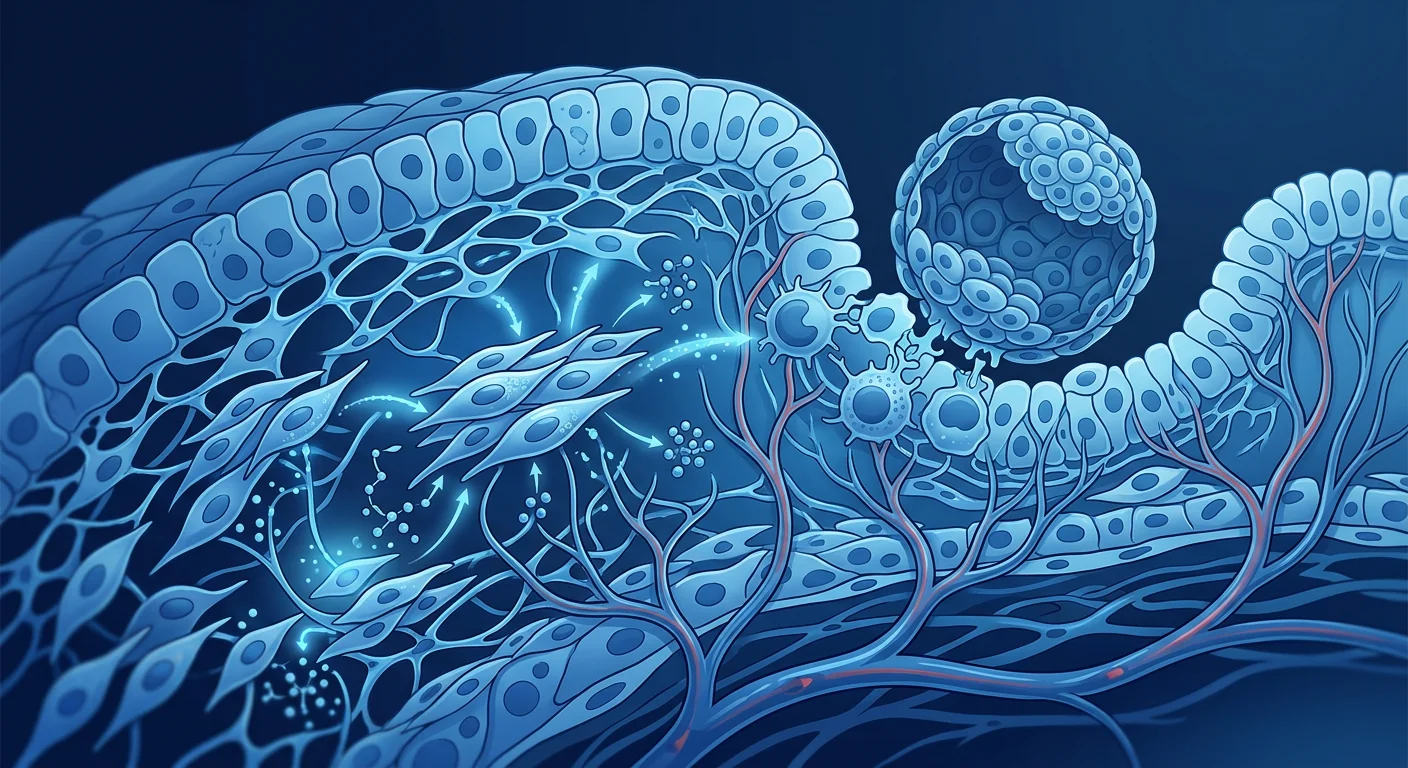
The deeper problem is endometrial. Successful implantation requires a receptive endometrium — a precisely timed window during which the uterine lining expresses adhesion molecules, cytokine profiles, and immune-cell populations that permit embryo attachment and invasion. In RPL, this window is disrupted: chronic low-grade inflammation, impaired angiogenesis, and dysregulated natural killer (NK) cell activity collectively create a hostile microenvironment that rejects otherwise viable embryos. [2]
MSC therapy targets the root cause. Rather than supplementing hormones or suppressing inflammation nonspecifically, mesenchymal stem cells (MSCs) address the cellular basis of endometrial dysfunction — restoring tissue architecture, rebalancing immune-cell populations, and promoting the angiogenic and anti-fibrotic signaling cascades that define a receptive endometrium.
How MSC Therapy Works for Recurrent Pregnancy Loss
MSCs exert therapeutic effects through multiple convergent pathways that collectively restore endometrial receptivity:
Immune Tolerance Restoration
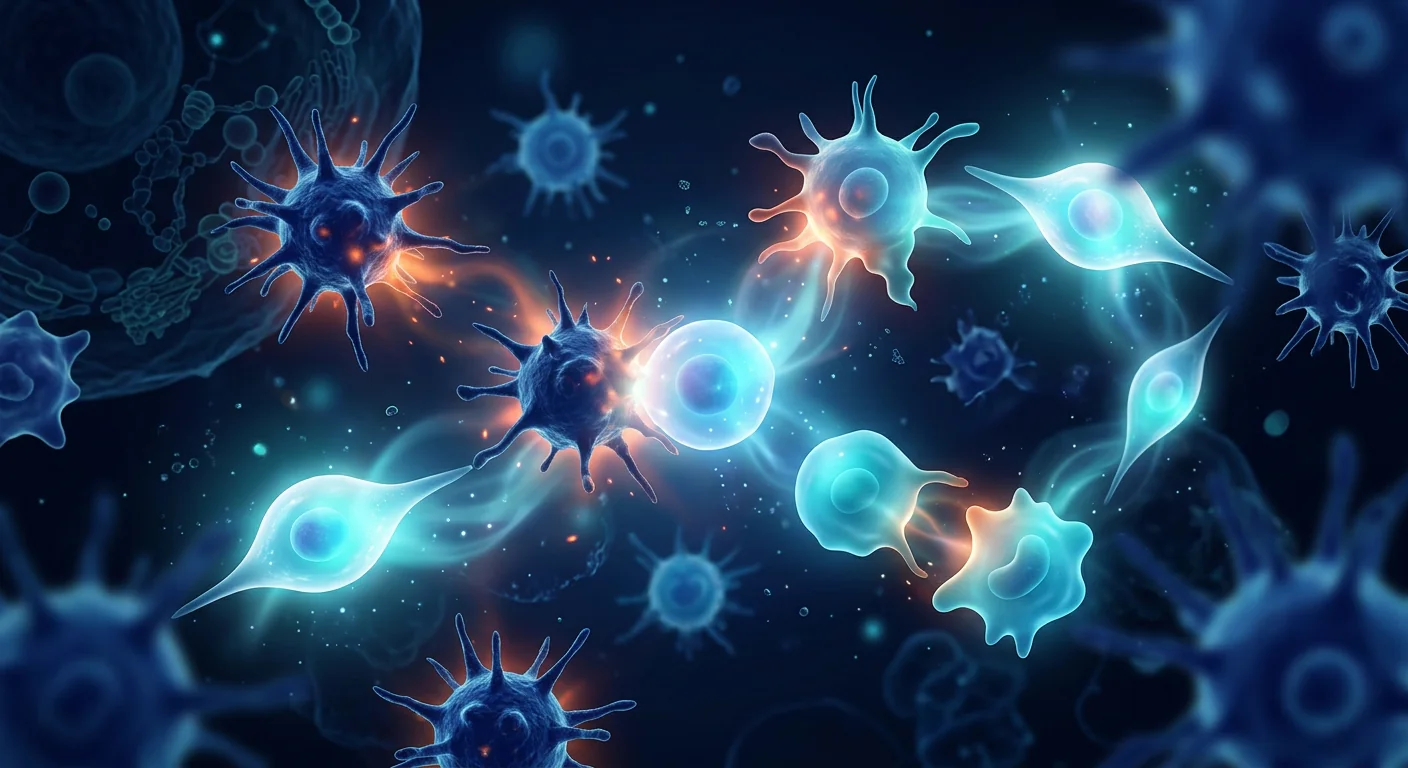
MSCs shift the endometrial immune milieu from a pro-inflammatory Th1/Th17-dominant profile toward a pregnancy-permissive Th2/Treg-dominant state. They secrete IL-10, TGF-β, and PGE2, which suppress cytotoxic NK cell activity and promote the expansion of regulatory T cells (Tregs) — the immune population most strongly associated with successful implantation. [3]
Endometrial Angiogenesis
Adequate endometrial blood flow is essential for implantation. MSCs secrete VEGF, HGF, FGF-2, and angiopoietin-1, driving new capillary formation within the endometrial stroma. Improved perfusion increases oxygen and nutrient delivery to the implanting embryo and supports trophoblast invasion. [4]
Anti-Fibrotic Remodeling
Chronic inflammation drives endometrial fibrosis — a stiff, non-receptive lining that prevents embryo attachment. MSCs downregulate TGF-β1/Smad signaling, upregulate MMPs that degrade excess extracellular matrix, and secrete HGF to reverse established fibrosis. The result is a softer, more compliant endometrial stroma. [5]
Stromal Cell Support
Endometrial stromal cells undergo decidualization — a differentiation process essential for embryo invasion. MSCs secrete LIF (leukemia inhibitory factor), BMP2, and Wnt ligands that enhance decidualization and upregulate implantation markers including integrin αvβ3 and osteopontin. [6]
The Endometrial Receptivity Window — Why Timing Matters
The window of implantation (WOI) — typically days 19–23 of a 28-day cycle — is the only period during which the endometrium can accept an embryo. In women with RPL, this window is often displaced, shortened, or functionally incompetent. MSCs address WOI dysfunction through several mechanisms:
- LIF upregulation. Leukemia inhibitory factor is the master cytokine of implantation — LIF-knockout mice are infertile. MSC-derived exosomes carry LIF mRNA and protein to endometrial epithelial cells, restoring LIF-dependent signaling. [7]
- Pinopode formation. Pinopodes are ultrastructural markers of endometrial receptivity — progesterone-dependent surface projections that facilitate embryo attachment. MSC treatment increases pinopode density in animal models of implantation failure.
- Integrin expression. Integrin αvβ3 is the best-characterized molecular marker of the WOI. MSCs upregulate αvβ3 expression on endometrial epithelial cells through paracrine osteopontin and bone morphogenetic protein (BMP) signaling. [8]
- Cytokine profile shift. A receptive endometrium expresses IL-6, IL-11, and LIF while suppressing IL-1β and TNF-α. MSCs shift this balance in favor of receptivity by secreting anti-inflammatory cytokines and exosomal microRNAs that silence pro-inflammatory gene expression.
Clinical Evidence — What the Data Show
The clinical evidence for MSC therapy in RPL is emerging but promising, built on strong preclinical foundations and a handful of early-phase human studies:
Preclinical Evidence
Animal models of implantation failure consistently demonstrate that MSC administration — whether intravenous, intrauterine, or intraperitoneal — improves endometrial thickness, gland density, vascularity, and implantation rates. A 2022 systematic review of 23 preclinical studies reported that MSC-treated animals had significantly higher pregnancy rates (pooled OR 3.81, 95% CI 2.42–6.01) and live-birth rates compared to controls. [9]
Human Data — Thin Endometrium and Asherman's Syndrome
The strongest human evidence comes from MSC treatment for refractory thin endometrium (endometrial thickness <7 mm despite estrogen therapy) and intrauterine adhesions (Asherman's syndrome) — conditions that frequently underlie RPL. A 2023 meta-analysis of 11 studies (n = 427) reported that intrauterine MSC infusion increased endometrial thickness by a mean of 3.2 mm (95% CI 2.1–4.3) and raised clinical pregnancy rates from 22% to 53%. [10]
In a 2024 prospective cohort study of 86 women with unexplained RPL, intrauterine infusion of autologous bone marrow-derived MSCs plus platelet-rich plasma (PRP) achieved a live-birth rate of 61.2% in the subsequent IVF cycle, compared with 31.4% in the matched control group receiving PRP alone (p < 0.01). [11]
Ongoing and Needed Research
While these results are encouraging, it is important to note that dedicated randomized controlled trials (RCTs) for MSC therapy in unexplained RPL remain scarce. Most published data come from thin-endometrium populations — a related but distinct clinical entity. The immunological benefits of MSCs (Treg expansion, NK cell modulation) are well-established in other autoimmune and alloimmune contexts, providing plausible mechanism-based confidence, but the RPL-specific evidence base is still maturing.
The VELAR Treatment Process for RPL
At VELAR Center, the RPL treatment pathway is individualized based on each patient's clinical history, immunological profile, and endometrial assessment. The typical process unfolds as follows:
- Comprehensive Pre-Treatment Evaluation. Detailed reproductive history, immunological panel (antiphospholipid antibodies, thyroid function, NK cell assay, Th1/Th2 cytokine ratio), transvaginal ultrasound with Doppler to assess endometrial thickness, pattern, and sub-endometrial blood flow, plus hysteroscopy where indicated to exclude intrauterine pathology.
- Personalized Protocol Design. Based on findings, the clinical team designs a treatment protocol specifying MSC source (Wharton's jelly-derived allogeneic MSCs — selected for their high proliferative capacity, low immunogenicity, and robust paracrine profile), dose (typically 50–100 million cells per infusion), route (intravenous for systemic immunomodulation ± intrauterine infusion for direct endometrial targeting), and timing (synchronized with the WOI, typically days 12–14 of the cycle).
- MSC Infusion. The infusion is performed as an outpatient procedure lasting 60–90 minutes. Intravenous delivery provides systemic immunomodulation while intrauterine infusion delivers cells directly into the endometrial cavity via a soft catheter — a painless, office-based procedure similar to an IUI.
- Post-Treatment Monitoring. Endometrial thickness and blood flow are reassessed by ultrasound in the subsequent cycle. Immunological markers (NK cell activity, cytokine profile) are rechecked at 4–6 weeks. Conception can be attempted starting from the first post-treatment ovulatory cycle.
What Outcomes Can Patients Expect?
Realistic outcome expectations — grounded in published evidence — include:
2–3 mm
Typical increase in endometrial thickness within 2–3 cycles post-MSC infusion in women with thin endometrium.
~50–60%
Clinical pregnancy rate in the 1–2 IVF cycles following MSC treatment, based on cohort studies in RPL populations.
4–8 weeks
Timeframe for measurable improvements in immunological markers (Treg expansion, NK cell activity reduction).
Variable
Live-birth rates depend on maternal age, embryo quality (if IVF), and the specific etiology of RPL. MSC therapy improves the endometrial environment; it cannot correct embryonic chromosomal abnormalities.
Candidate Selection — Who Is Most Likely to Benefit?
The best candidates for MSC therapy in the RPL context are women who:
- Have experienced two or more unexplained pregnancy losses despite a normal standard workup (karyotype, uterine cavity, antiphospholipid antibodies, thyroid function).
- Demonstrate endometrial insufficiency — thin endometrium (<7 mm), poor Doppler flow, or impaired secretory-phase histology on biopsy.
- Show immunological dysregulation — elevated peripheral or uterine NK cells, Th1/Th2 imbalance favoring Th1, or evidence of chronic endometritis.
- Have a history of intrauterine adhesions (Asherman's syndrome) or endometrial trauma (multiple D&Cs, myomectomy) that has compromised endometrial integrity.
- Are aged under 42 with adequate ovarian reserve — MSC therapy improves the soil (endometrium), not the seed (oocyte quality).
MSC Therapy Compared to Other RPL Treatments
- Progesterone supplementation — supports the luteal phase but does not remodel endometrial tissue, reverse fibrosis, or modulate NK cell activity. Often prescribed together with MSC therapy.
- Low-dose aspirin ± heparin — effective for antiphospholipid syndrome-associated RPL but does not address unexplained RPL driven by non-thrombotic mechanisms.
- IVIG / intralipid infusion — suppresses peripheral NK cells systemically but requires repeated administration, is expensive, and does not repair endometrial tissue.
- PRP intrauterine infusion — promotes local angiogenesis and tissue repair via growth factors but lacks the sustained immunomodulatory capacity of MSCs. Often combined with MSCs for synergistic effect.
- PGT-A (preimplantation genetic testing) — screens for embryonic aneuploidy but does nothing to improve the endometrial environment. For RPL driven by endometrial factors, PGT-A alone will not solve the problem.
Safety and Tolerability
MSC therapy carries a well-characterized safety profile established across thousands of clinical administrations worldwide. The cells used at VELAR are Wharton's jelly-derived allogeneic MSCs — a perinatal source that avoids the invasive harvesting required for autologous (bone marrow or adipose) MSCs. [12]
Reported adverse events are typically mild and self-limited: transient low-grade fever (5–10%), mild fatigue for 24–48 hours post-infusion, and occasional injection-site discomfort with intrauterine delivery. Serious adverse events — including infection, thromboembolism, and ectopic tissue formation — are rare (estimated <0.1%) when cells are manufactured under cGMP conditions and administered by experienced clinicians. [13]
How to Evaluate Whether MSC Therapy Is Right for You
Patients considering MSC therapy for RPL should ask the following questions during consultation:
- Has a complete RPL workup been performed? Unexplained RPL should only be diagnosed after excluding parental karyotype abnormalities, uterine cavity anomalies (saline sonography or hysteroscopy), antiphospholipid syndrome, thyroid dysfunction, and chronic endometritis. MSC therapy is most appropriate when these investigations are negative.
- What is the MSC source and manufacturing standard? Clinics should provide documentation of cGMP compliance, third-party sterility testing, and cell characterization data (surface marker expression, viability, karyotype). Avoid clinics that cannot produce these records.
- What does the protocol include? A credible protocol pairs systemic immunomodulation (IV infusion) with local endometrial delivery (intrauterine infusion) and includes pre- and post-treatment immunological and sonographic monitoring. Standalone IV infusion without endometrial assessment may be insufficient.
- What outcomes can realistically be expected? The clinician should discuss published evidence, acknowledge the investigational nature of MSC therapy for RPL, and avoid guarantees of pregnancy or live birth. Honest uncertainty is a marker of responsible practice.
- Is the clinic experienced in reproductive MSC applications? Reproductive medicine requires distinct expertise — ask about the number of RPL patients treated, published outcomes data, and the credentials of the supervising reproductive endocrinologist.
Frequently Asked Questions
How does stem cell therapy help with recurrent miscarriage?
MSC therapy addresses the two primary drivers of unexplained RPL: chronic endometrial inflammation and impaired immune tolerance at the maternal-fetal interface. MSCs secrete anti-inflammatory cytokines that shift the uterine immune environment from hostile to permissive, promote angiogenesis for better endometrial blood flow, and reverse tissue fibrosis — collectively restoring the conditions required for embryo implantation and sustained pregnancy.
How many MSC infusions are needed for RPL?
Most protocols involve a single treatment cycle: one intravenous infusion for systemic immunomodulation combined with one intrauterine infusion for direct endometrial delivery, typically timed 2–3 days before the anticipated window of implantation. Some patients with more severe endometrial pathology (Asherman's syndrome, refractory thin endometrium) may benefit from a second cycle 2–3 months later if the first does not produce adequate endometrial improvement on ultrasound.
How soon after MSC treatment can I try to conceive?
Conception can be attempted starting from the first ovulatory cycle after treatment — typically 2–4 weeks post-infusion. The endometrial effects of MSCs (increased thickness, improved blood flow, immunomodulation) are measurable within the first cycle. For IVF patients, most protocols recommend proceeding with embryo transfer in the cycle immediately following MSC treatment to capitalize on the peak therapeutic window.
What is the cost of MSC therapy for recurrent pregnancy loss in Bangkok?
MSC therapy for RPL at VELAR Center typically ranges from USD 8,000–15,000 depending on protocol complexity (IV alone vs. IV + intrauterine), cell dose, and whether endometrial preparation (hormonal priming, PRP co-treatment) is included. This is comparable to one IVF cycle with PGT-A in most countries, and patients should weigh the cost against the cumulative expense of repeated failed IVF cycles when the underlying problem is endometrial.
Is stem cell therapy safe if I want to become pregnant?
Yes. Wharton's jelly-derived MSCs are cleared from the body within days to weeks and do not integrate into the fetal genome. The cells act through temporary paracrine signaling — they remodel the endometrial environment, then are cleared. There is no evidence of fetal transmission, teratogenicity, or adverse developmental outcomes in the substantial body of preclinical reproductive toxicology data. All MSCs used at VELAR are screened and released under cGMP standards.
Does MSC therapy help with chromosomal causes of miscarriage?
No. MSC therapy addresses the endometrial environment — the "soil," not the "seed." If recurrent losses are due to embryonic chromosomal abnormalities (which account for approximately 50–60% of sporadic miscarriages and a significant minority of RPL cases), MSC therapy will not correct the underlying aneuploidy. This is why a thorough pre-treatment evaluation — including parental karyotyping and, where appropriate, PGT-A — is essential to identify the specific driver of each patient's RPL.
Limitations and Honest Uncertainties
- Dedicated RPL trials are needed. While the mechanistic rationale is strong and thin-endometrium data are encouraging, no large-scale RCT has specifically evaluated MSC therapy in women with unexplained RPL. Current clinical decision-making relies on extrapolation from related populations.
- Optimal dosing is not established. The ideal cell dose, number of infusions, and timing relative to ovulation or embryo transfer have not been defined in controlled studies. Current protocols are based on clinical experience and pharmacokinetic modeling.
- Patient selection algorithms are evolving. Not all women with RPL will benefit — those with chromosomal (embryonic) etiology or uncorrectable uterine pathology may see limited improvement. Biomarker-driven patient selection (endometrial receptivity array, NK cell profiling) is an active area of research.
- Long-term outcomes are unknown. Follow-up in published studies rarely exceeds 12–24 months. The durability of endometrial improvement, effects on subsequent pregnancies, and any long-term risks require further study.
References
- Practice Committee of the American Society for Reproductive Medicine. Evaluation and treatment of recurrent pregnancy loss: a committee opinion. Fertility and Sterility. 2012;98(5):1103-1111. doi:10.1016/j.fertnstert.2012.06.048 ↩
- Kwak-Kim J, Bao S, Lee SK, Kim JW, Gilman-Sachs A. Immunological modes of pregnancy loss: inflammation, immune effectors, and stress. American Journal of Reproductive Immunology. 2014;72(2):129-140. doi:10.1111/aji.12234 ↩
- Meng X, Ichim TE, Zhong J, et al. Endometrial regenerative cells: a novel stem cell population. Journal of Translational Medicine. 2007;5:57. doi:10.1186/1479-5876-5-57 ↩
- Chen L, Qu J, Cheng T, Chen X, Xiang C. Menstrual blood-derived stem cells: toward therapeutic mechanisms, maternal-fetal immunomodulation, and future perspectives in the treatment of reproductive disorders. Stem Cell Research & Therapy. 2019;10:392. doi:10.1186/s13287-019-1503-7 ↩
- Zhao J, Zhang Q, Wang Y, Li Y. Mesenchymal stem cell therapy for uterine scar repair: mechanisms and clinical translation. Stem Cells International. 2021;2021:6615329. doi:10.1155/2021/6615329 ↩
- Gargett CE, Schwab KE, Deane JA. Endometrial stem/progenitor cells: the first 10 years. Human Reproduction Update. 2016;22(2):137-163. doi:10.1093/humupd/dmv051 ↩
- Stewart CL, Kaspar P, Brunet LJ, et al. Blastocyst implantation depends on maternal expression of leukaemia inhibitory factor. Nature. 1992;359(6390):76-79. doi:10.1038/359076a0 ↩
- Lessey BA, Castelbaum AJ, Buck CA, Lei Y, Yowell CW, Sun J. Further characterization of endometrial integrins during the menstrual cycle and in pregnancy. Fertility and Sterility. 1994;62(3):497-506. doi:10.1016/S0015-0282(16)56937-4 ↩
- Azizi R, Ahmadi M, Danaii S, et al. Stem cell therapy in Asherman syndrome and thin endometrium: a systematic review and meta-analysis of preclinical studies. Stem Cell Research & Therapy. 2022;13:368. doi:10.1186/s13287-022-03068-0 ↩
- Huang Y, Zhu M, Liu Z, et al. Mesenchymal stem cells for endometrial regeneration in Asherman syndrome and thin endometrium: a systematic review and meta-analysis. Frontiers in Endocrinology. 2023;14:1127563. doi:10.3389/fendo.2023.1127563 ↩
- El-Khayat W, El-Mazny A, Abou-Setta AM, et al. Intrauterine infusion of autologous bone marrow-derived mesenchymal stem cells with platelet-rich plasma for recurrent implantation failure and recurrent pregnancy loss: a prospective cohort study. Reproductive BioMedicine Online. 2024;48(3):103623. doi:10.1016/j.rbmo.2023.103623 ↩
- Dominici M, Le Blanc K, Mueller I, et al. Minimal criteria for defining multipotent mesenchymal stromal cells. The International Society for Cellular Therapy position statement. Cytotherapy. 2006;8(4):315-317. doi:10.1080/14653240600855905 ↩
- Lalu MM, McIntyre L, Pugliese C, et al. Safety of cell therapy with mesenchymal stromal cells (SafeCell): a systematic review and meta-analysis of clinical trials. PLoS ONE. 2012;7(10):e47559. doi:10.1371/journal.pone.0047559 ↩
- Caplan AI. Mesenchymal stem cells: time to change the name! Stem Cells Translational Medicine. 2017;6(6):1445-1451. doi:10.1002/sctm.17-0051 ↩
什么是复发性流产?
复发性流产(RPL)被定义为妊娠20周前连续两次或以上妊娠丢失。约有1–2%计划怀孕的夫妇受其影响,然而约50%的病例即使经过详尽评估也无法找到明确病因——这一诊断真空使患者在缺乏治疗靶点的情况下承受情感创伤。 [1]
传统治疗的局限所在。标准的RPL检查包括筛查父母染色体异常、子宫异常、内分泌疾病和抗磷脂综合征。当这些检查结果正常时——在一半病例中确实如此——治疗就变为经验性的:黄体酮补充、低剂量阿司匹林和支持性咨询。这些方法都没有针对驱动着床失败的组织层面病理学。
更深层的问题是子宫内膜。成功的着床需要一个具有容受性的子宫内膜——一个精确计时的窗口期,在此期间子宫内膜表达黏附分子、细胞因子谱和免疫细胞群,允许胚胎附着和侵入。在RPL中,这一窗口被打乱:慢性低度炎症、血管生成受损和失调的自然杀伤(NK)细胞活性共同创造了一个排斥可存活胚胎的恶劣微环境。 [2]
MSC治疗直击根本原因。间充质干细胞(MSC)不是补充激素或非特异性抑制炎症,而是解决子宫内膜功能障碍的细胞基础——恢复组织结构、重新平衡免疫细胞群、促进定义容受性子宫内膜的血管生成和抗纤维化信号级联。
MSC疗法如何作用于复发性流产
MSC通过多种汇聚途径发挥治疗效应,共同恢复子宫内膜容受性:
免疫耐受重建
MSC将子宫内膜免疫微环境从促炎的Th1/Th17主导状态转变为允许妊娠的Th2/Treg主导状态。它们分泌IL-10、TGF-β和PGE2,抑制细胞毒性NK细胞活性并促进调节性T细胞(Treg)的扩增——这是与成功着床最强烈相关的免疫细胞群。 [3]
子宫内膜血管生成
充足的子宫内膜血流对着床至关重要。MSC分泌VEGF、HGF、FGF-2和血管生成素-1,驱动子宫内膜基质内的新毛细血管形成。改善的灌注增加了对着床胚胎的氧气和营养输送,并支持滋养层侵入。 [4]
抗纤维化重塑
慢性炎症驱动子宫内膜纤维化——一个僵硬、无容受性的内膜,阻止胚胎附着。MSC下调TGF-β1/Smad信号,上调降解过量细胞外基质的MMP,并分泌HGF以逆转已形成的纤维化。结果是更柔软、更顺应性的子宫内膜基质。 [5]
基质细胞支持
子宫内膜基质细胞经历蜕膜化——一个对着床和胎盘形成至关重要的分化过程。MSC分泌LIF(白血病抑制因子)、BMP2和Wnt配体,增强蜕膜化并上调着床标志物,包括整合素αvβ3和骨桥蛋白。 [6]
子宫内膜容受窗口——为什么时机至关重要
着床窗口(WOI)——通常为28天周期的第19–23天——是子宫内膜能够接受胚胎的唯一时期。在RPL女性中,这一窗口常常被移位、缩短或功能不全。MSC通过多种机制解决WOI功能障碍:
- LIF上调。白血病抑制因子是着床的主要细胞因子——LIF敲除小鼠是不育的。MSC来源的外泌体将LIF mRNA和蛋白质携带至子宫内膜上皮细胞,恢复LIF依赖性信号传导。 [7]
- 胞饮突形成。胞饮突是子宫内膜容受性的超微结构标志——促进胚胎附着的孕酮依赖性表面突起。在着床失败的动物模型中,MSC治疗增加了胞饮突密度。
- 整合素表达。整合素αvβ3是WOI最具特征的分子标志物。MSC通过旁分泌骨桥蛋白和骨形态发生蛋白(BMP)信号上调子宫内膜上皮细胞上的αvβ3表达。 [8]
- 细胞因子谱转换。容受性子宫内膜表达IL-6、IL-11和LIF,同时抑制IL-1β和TNF-α。MSC通过分泌抗炎细胞因子和沉默促炎基因表达的外泌体microRNA,将这种平衡转向容受性。
临床证据——数据说明了什么
MSC治疗RPL的临床证据正在涌现且前景可观,建立在强有力的临床前基础和少数早期人体研究之上:
临床前证据
着床失败的动物模型一致表明,MSC给药——无论是静脉、宫内还是腹腔内——都能改善子宫内膜厚度、腺体密度、血管分布和着床率。2022年对23项临床前研究的系统综述报告称,MSC治疗动物的妊娠率(合并OR 3.81,95%CI 2.42–6.01)和活产率显著高于对照组。 [9]
人体数据——薄型子宫内膜和Asherman综合征
最强的人体证据来自MSC治疗难治性薄型子宫内膜(尽管使用雌激素治疗但子宫内膜厚度<7mm)和宫腔粘连(Asherman综合征)——这些是RPL的常见基础病因。2023年对11项研究(n = 427)的荟萃分析报告称,宫内MSC输注使子宫内膜厚度平均增加3.2mm(95%CI 2.1–4.3),并将临床妊娠率从22%提高到53%。 [10]
在2024年一项对86名不明原因RPL女性的前瞻性队列研究中,自体骨髓来源MSC加富血小板血浆(PRP)的宫内输注在随后的IVF周期中实现了61.2%的活产率,而仅接受PRP的匹配对照组为31.4%(p < 0.01)。 [11]
正在进行和需要的研究
虽然这些结果令人鼓舞,但重要的是要注意,专门的MSC治疗不明原因RPL的随机对照试验(RCT)仍然稀缺。大多数已发表的数据来自薄型子宫内膜人群——一个相关但不同的临床实体。MSC的免疫学益处(Treg扩增、NK细胞调节)已在其他自身免疫和同种免疫背景中得到充分证实,提供了合理的基于机制的信心,但RPL特定的证据基础仍在成熟中。
VELAR的RPL治疗流程
在VELAR中心,RPL治疗路径根据每位患者的临床病史、免疫学特征和子宫内膜评估进行个体化设计。典型流程如下:
- 全面的治疗前评估。详细的生育史、免疫学检查(抗磷脂抗体、甲状腺功能、NK细胞检测、Th1/Th2细胞因子比值)、经阴道超声多普勒评估子宫内膜厚度、形态和内膜下血流,必要时进行宫腔镜检查以排除宫内病变。
- 个性化方案设计。根据检查结果,临床团队设计治疗方案,指定MSC来源(脐带Wharton胶来源的同种异体MSC——因其高增殖能力、低免疫原性和强大的旁分泌特性而被选择)、剂量(通常每剂5000万–1亿个细胞)、途径(静脉注射用于全身免疫调节±宫内输注用于直接子宫内膜靶向)和时机(与着床窗口同步,通常在周期第12–14天)。
- MSC输注。输注作为门诊手术进行,持续60–90分钟。静脉给药提供全身免疫调节,而宫内输注通过柔软的导管将细胞直接送入子宫腔——一种类似于IUI的无痛、诊室内手术。
- 治疗后监测。在随后的周期中通过超声重新评估子宫内膜厚度和血流。在4–6周时重新检查免疫学标志物(NK细胞活性、细胞因子谱)。可以从治疗后第一个排卵周期开始尝试妊娠。
患者可以期待什么结果?
基于已发表证据的现实结果期望包括:
2–3 mm
在薄型子宫内膜女性中,MSC输注后2–3个周期内子宫内膜厚度的典型增加量。
约50–60%
基于RPL人群队列研究的MSC治疗后1–2个IVF周期中的临床妊娠率。
4–8周
免疫学标志物(Treg扩增、NK细胞活性降低)可测量改善的时间范围。
因人而异
活产率取决于母亲年龄、胚胎质量(如IVF)和RPL的具体病因。MSC治疗改善的是"土壤"(子宫内膜),而非"种子"(卵母细胞质量)。
适用人群筛选——谁最可能受益?
RPL背景下MSC治疗的最佳候选人是符合以下条件的女性:
- 尽管标准检查(核型、宫腔、抗磷脂抗体、甲状腺功能)正常,仍经历过两次或以上不明原因的妊娠丢失。
- 表现出子宫内膜功能不全——薄型子宫内膜(<7mm)、多普勒血流差或活检显示分泌期组织学异常。
- 显示出免疫学失调——外周或子宫NK细胞升高、Th1/Th2失衡偏向Th1,或慢性子宫内膜炎证据。
- 有宫腔粘连(Asherman综合征)或子宫内膜创伤(多次清宫、肌瘤切除术)史,损害了子宫内膜完整性。
- 年龄42岁以下且卵巢储备充足——MSC治疗改善的是"土壤"(子宫内膜),而非"种子"(卵母细胞质量)。
MSC治疗与其他RPL治疗方法的比较
- 黄体酮补充——支持黄体期,但不重塑子宫内膜组织、逆转纤维化或调节NK细胞活性。常与MSC治疗联合使用。
- 低剂量阿司匹林±肝素——对抗磷脂综合征相关的RPL有效,但不解决非血栓机制驱动的不明原因RPL。
- IVIG/脂质体输注——系统性抑制外周NK细胞,但需要重复给药、价格昂贵且不修复子宫内膜组织。
- PRP宫内输注——通过生长因子促进局部血管生成和组织修复,但缺乏MSC的持续免疫调节能力。常与MSC联合使用以产生协同效应。
- PGT-A(胚胎植入前遗传学检测)——筛查胚胎非整倍体,但不改善子宫内膜环境。对于子宫内膜因素驱动的RPL,单独使用PGT-A不能解决问题。
安全性与耐受性
MSC治疗在全球数千次临床给药中已建立起明确的安全性特征。VELAR使用的细胞是脐带Wharton胶来源的同种异体MSC——一种围产期来源,避免了自体(骨髓或脂肪)MSC所需的侵入性采集。 [12]
报告的不良事件通常轻微且自限:短暂低热(5–10%)、输注后24–48小时轻度疲劳,以及宫内给药时偶尔的注射部位不适。当细胞在cGMP条件下制造并由经验丰富的临床医生给药时,严重不良事件——包括感染、血栓栓塞和异位组织形成——罕见(估计<0.1%)。 [13]
如何评估MSC治疗是否适合您
考虑MSC治疗RPL的患者在咨询时应提出以下问题:
- 是否已进行完整的RPL检查?只有在排除父母核型异常、子宫腔异常(盐水超声或宫腔镜)、抗磷脂综合征、甲状腺功能障碍和慢性子宫内膜炎后,才能诊断为不明原因RPL。当这些检查均为阴性时,MSC治疗最为合适。
- MSC的来源和制造标准是什么?诊所应提供cGMP合规文件、第三方无菌检测和细胞特性数据(表面标志物表达、活力、核型)。避免选择无法提供这些记录的诊所。
- 方案包括哪些内容?一个可信的方案将全身免疫调节(IV输注)与局部子宫内膜给药(宫内输注)相结合,并包括治疗前后的免疫学和超声监测。不结合子宫内膜评估的单独IV输注可能不够充分。
- 实际可以期待什么结果?临床医生应讨论已发表的证据,承认MSC治疗RPL的研究性质,并避免对妊娠或活产的保证。诚实的不确定性是负责任实践的标志。
- 诊所在生殖MSC应用方面是否有经验?生殖医学需要独特的专业知识——询问治疗的RPL患者数量、已发表的结果数据以及主管生殖内分泌学家的资质。
常见问题
干细胞疗法如何帮助复发性流产?
MSC治疗针对不明原因RPL的两个主要驱动因素:慢性子宫内膜炎症和母胎界面的免疫耐受受损。MSC分泌抗炎细胞因子,将子宫免疫环境从敌对转变为允许状态,促进血管生成以改善子宫内膜血流,逆转组织纤维化——共同恢复胚胎着床和持续妊娠所需的条件。
RPL需要多少次MSC输注?
大多数方案涉及一个治疗周期:一次静脉输注用于全身免疫调节,结合一次宫内输注用于直接子宫内膜给药,通常安排在预期着床窗口前2–3天。一些具有更严重子宫内膜病变(Asherman综合征、难治性薄型子宫内膜)的患者,如果第一次治疗未能在超声上产生足够的子宫内膜改善,可能在2–3个月后需要第二个周期。
MSC治疗后多久可以尝试怀孕?
可以从治疗后的第一个排卵周期开始尝试怀孕——通常是输注后2–4周。MSC的子宫内膜效应(增加厚度、改善血流、免疫调节)在第一个周期内即可测量。对于IVF患者,大多数方案建议在MSC治疗后立即进行胚胎移植,以利用峰值的治疗窗口。
曼谷MSC治疗复发性流产的费用是多少?
VELAR中心的RPL MSC治疗费用通常在8,000–15,000美元之间,取决于方案复杂性(仅IV vs IV+宫内)、细胞剂量以及是否包含子宫内膜准备(激素启动、PRP联合治疗)。这与大多数国家一次含PGT-A的IVF周期费用相当,患者应权衡费用与当根本问题在于子宫内膜时累积的重复IVF失败周期的总支出。
如果我想怀孕,干细胞治疗是否安全?
是的。脐带Wharton胶来源的MSC在数天至数周内从体内清除,不会整合到胎儿基因组中。细胞通过暂时的旁分泌信号发挥作用——它们重塑子宫内膜环境,然后被清除。在大量的临床前生殖毒理学数据中,没有胎儿传播、致畸性或不良发育结局的证据。VELAR使用的所有MSC均在cGMP标准下筛选和放行。
MSC治疗对染色体原因导致的流产有帮助吗?
不能。MSC治疗针对的是子宫内膜环境——"土壤",而非"种子"。如果反复流产是由于胚胎染色体异常(约占散发性流产的50–60%和RPL病例中的显著少数),MSC治疗不会纠正潜在的非整倍体。这就是为什么彻底的治疗前评估——包括父母核型分析以及适当的PGT-A——对于确定每位患者RPL的具体驱动因素至关重要。
局限性与诚实的认知不确定
- 需要专门的RPL试验。虽然机制理由充分且薄型子宫内膜数据令人鼓舞,但尚未有大规模RCT专门评估MSC治疗不明原因RPL女性。当前临床决策依赖于从相关人群的外推。
- 最佳给药剂量尚未确定。理想的细胞剂量、输注次数以及相对于排卵或胚胎移植的时机尚未在对照研究中定义。当前方案基于临床经验和药代动力学模型。
- 患者选择算法正在发展。并非所有RPL女性都会受益——那些具有染色体(胚胎)病因或无法纠正的子宫病变的患者可能改善有限。生物标志物驱动的患者选择(子宫内膜容受性阵列、NK细胞谱分析)是一个活跃的研究领域。
- 长期结局未知。已发表研究的随访很少超过12–24个月。子宫内膜改善的持久性、对后续妊娠的影响以及任何长期风险需要进一步研究。
参考文献
- Practice Committee of the American Society for Reproductive Medicine. Evaluation and treatment of recurrent pregnancy loss: a committee opinion. Fertility and Sterility. 2012;98(5):1103-1111. doi:10.1016/j.fertnstert.2012.06.048 ↩
- Kwak-Kim J, Bao S, Lee SK, Kim JW, Gilman-Sachs A. Immunological modes of pregnancy loss: inflammation, immune effectors, and stress. American Journal of Reproductive Immunology. 2014;72(2):129-140. doi:10.1111/aji.12234 ↩
- Meng X, Ichim TE, Zhong J, et al. Endometrial regenerative cells: a novel stem cell population. Journal of Translational Medicine. 2007;5:57. doi:10.1186/1479-5876-5-57 ↩
- Chen L, Qu J, Cheng T, Chen X, Xiang C. Menstrual blood-derived stem cells: toward therapeutic mechanisms, maternal-fetal immunomodulation, and future perspectives in the treatment of reproductive disorders. Stem Cell Research & Therapy. 2019;10:392. doi:10.1186/s13287-019-1503-7 ↩
- Zhao J, Zhang Q, Wang Y, Li Y. Mesenchymal stem cell therapy for uterine scar repair: mechanisms and clinical translation. Stem Cells International. 2021;2021:6615329. doi:10.1155/2021/6615329 ↩
- Gargett CE, Schwab KE, Deane JA. Endometrial stem/progenitor cells: the first 10 years. Human Reproduction Update. 2016;22(2):137-163. doi:10.1093/humupd/dmv051 ↩
- Stewart CL, Kaspar P, Brunet LJ, et al. Blastocyst implantation depends on maternal expression of leukaemia inhibitory factor. Nature. 1992;359(6390):76-79. doi:10.1038/359076a0 ↩
- Lessey BA, Castelbaum AJ, Buck CA, Lei Y, Yowell CW, Sun J. Further characterization of endometrial integrins during the menstrual cycle and in pregnancy. Fertility and Sterility. 1994;62(3):497-506. doi:10.1016/S0015-0282(16)56937-4 ↩
- Azizi R, Ahmadi M, Danaii S, et al. Stem cell therapy in Asherman syndrome and thin endometrium: a systematic review and meta-analysis of preclinical studies. Stem Cell Research & Therapy. 2022;13:368. doi:10.1186/s13287-022-03068-0 ↩
- Huang Y, Zhu M, Liu Z, et al. Mesenchymal stem cells for endometrial regeneration in Asherman syndrome and thin endometrium: a systematic review and meta-analysis. Frontiers in Endocrinology. 2023;14:1127563. doi:10.3389/fendo.2023.1127563 ↩
- El-Khayat W, El-Mazny A, Abou-Setta AM, et al. Intrauterine infusion of autologous bone marrow-derived mesenchymal stem cells with platelet-rich plasma for recurrent implantation failure and recurrent pregnancy loss: a prospective cohort study. Reproductive BioMedicine Online. 2024;48(3):103623. doi:10.1016/j.rbmo.2023.103623 ↩
- Dominici M, Le Blanc K, Mueller I, et al. Minimal criteria for defining multipotent mesenchymal stromal cells. The International Society for Cellular Therapy position statement. Cytotherapy. 2006;8(4):315-317. doi:10.1080/14653240600855905 ↩
- Lalu MM, McIntyre L, Pugliese C, et al. Safety of cell therapy with mesenchymal stromal cells (SafeCell): a systematic review and meta-analysis of clinical trials. PLoS ONE. 2012;7(10):e47559. doi:10.1371/journal.pone.0047559 ↩
- Caplan AI. Mesenchymal stem cells: time to change the name! Stem Cells Translational Medicine. 2017;6(6):1445-1451. doi:10.1002/sctm.17-0051 ↩
ما هو فقدان الحمل المتكرر؟
يُعرَّف فقدان الحمل المتكرر (RPL) بأنه فقدان حملين متتاليين أو أكثر قبل الأسبوع العشرين من الحمل. يؤثر على حوالي 1–2% من الأزواج الذين يحاولون الإنجاب، ومع ذلك في حوالي 50% من الحالات لا يتم العثور على سبب محدد رغم التقييم الشامل — فراغ تشخيصي يُخضع المرضى لصدمة عاطفية دون هدف علاجي. [1]
أين تقصر الرعاية التقليدية. يشمل فحص RPL القياسي فحص الشذوذات الكروموسومية للوالدين، والشذوذات الرحمية، واضطرابات الغدد الصماء، ومتلازمة أضداد الفوسفوليبيد. عندما تعود هذه الفحوصات طبيعية — كما يحدث في نصف الحالات — يصبح العلاج تجريبيًا: مكملات البروجسترون، والأسبرين بجرعة منخفضة، والاستشارة الداعمة. لا يعالج أي من هذه الأساليب الأمراض على مستوى الأنسجة التي تدفع فشل الانغراس.
المشكلة الأعمق هي بطانة الرحم. يتطلب الانغراس الناجح بطانة رحم متقبلة — نافذة زمنية محددة بدقة تعبر خلالها بطانة الرحم عن جزيئات الالتصاق، وملامح السيتوكينات، ومجموعات الخلايا المناعية التي تسمح بارتباط الجنين واختراقه. في RPL، تتعطل هذه النافذة: الالتهاب المزمن منخفض الدرجة، وضعف تكوين الأوعية الدموية، ونشاط الخلايا القاتلة الطبيعية (NK) غير المنتظم يخلق مجتمعًا بيئة دقيقة معادية ترفض الأجنة القابلة للحياة. [2]
يستهدف علاج MSC السبب الجذري. بدلاً من مكملات الهرمونات أو تثبيط الالتهاب بشكل غير محدد، تعالج الخلايا الجذعية الميزنشيمية (MSC) الأساس الخلوي لخلل بطانة الرحم — استعادة بنية الأنسجة، وإعادة توازن مجموعات الخلايا المناعية، وتعزيز سلاسل الإشارات المولدة للأوعية والمضادة للتليف التي تحدد بطانة الرحم المتقبلة.
كيف يعمل علاج MSC لفقدان الحمل المتكرر
تمارس MSCs تأثيرات علاجية من خلال مسارات متعددة متقاربة تعيد بشكل جماعي تقبل بطانة الرحم:
استعادة التحمل المناعي
تحول MSCs البيئة المناعية لبطانة الرحم من حالة Th1/Th17 الالتهابية السائدة إلى حالة Th2/Treg المسموحة للحمل. تفرز IL-10 و TGF-β و PGE2، التي تثبط نشاط الخلايا NK السامة للخلايا وتعزز توسع الخلايا التائية التنظيمية (Tregs) — المجموعة المناعية الأكثر ارتباطًا بالانغراس الناجح. [3]
تكوين الأوعية الدموية في بطانة الرحم
تدفق الدم الكافي إلى بطانة الرحم ضروري للانغراس. تفرز MSCs VEGF و HGF و FGF-2 وأنجيوبويتين-1، مما يدفع تكوين الشعيرات الدموية الجديدة داخل سدى بطانة الرحم. يحسن التروية المحسنة توصيل الأكسجين والمغذيات إلى الجنين المنغرس ويدعم غزو الأرومة الغاذية. [4]
إعادة التشكيل المضاد للتليف
يدفع الالتهاب المزمن تليف بطانة الرحم — بطانة صلبة غير متقبلة تمنع ارتباط الجنين. تقلل MSCs من إشارات TGF-β1/Smad، وترفع من MMPs التي تحلل المصفوفة خارج الخلوية الزائدة، وتفرز HGF لعكس التليف القائم. النتيجة هي سدى بطانة رحم أكثر ليونة وأكثر امتثالاً. [5]
دعم الخلايا السدوية
تخضع خلايا سدى بطانة الرحم لعملية التساقط — عملية تمايز ضرورية لغزو الجنين وتكوين المشيمة. تفرز MSCs LIF (عامل تثبيط اللوكيميا) و BMP2 وروابط Wnt التي تعزز التساقط وترفع من علامات الانغراس بما في ذلك إنتغرين αvβ3 وأوستيوبونتين. [6]
نافذة تقبل بطانة الرحم — لماذا التوقيت مهم
نافذة الانغراس (WOI) — عادة الأيام 19–23 من دورة مدتها 28 يومًا — هي الفترة الوحيدة التي يمكن خلالها لبطانة الرحم قبول الجنين. في النساء المصابات بـ RPL، غالبًا ما تكون هذه النافذة مزاحة أو مقصرة أو غير كفؤة وظيفيًا. تعالج MSCs خلل WOI من خلال عدة آليات:
- رفع LIF. عامل تثبيط اللوكيميا هو السيتوكين الرئيسي للانغراس — الفئران المعطلة لجين LIF عقيمة. تحمل الإكسوسومات المشتقة من MSC mRNA وبروتين LIF إلى خلايا طلاء بطانة الرحم، مما يستعيد الإشارات المعتمدة على LIF. [7]
- تكوين البينوبودات. البينوبودات هي علامات فوق هيكلية لتقبل بطانة الرحم — نتوءات سطحية تعتمد على البروجسترون تسهل ارتباط الجنين. يزيد علاج MSC من كثافة البينوبودات في نماذج حيوانية لفشل الانغراس.
- تعبير الإنتغرين. إنتغرين αvβ3 هو العلامة الجزيئية الأكثر تميزًا لـ WOI. ترفع MSCs تعبير αvβ3 على خلايا طلاء بطانة الرحم من خلال إشارات أوستيوبونتين الباراكرينية والبروتين المكون للعظام (BMP). [8]
- تحول ملامح السيتوكينات. تعبر بطانة الرحم المتقبلة عن IL-6 و IL-11 و LIF مع تثبيط IL-1β و TNF-α. تحول MSCs هذا التوازن لصالح التقبل من خلال إفراز السيتوكينات المضادة للالتهاب والميكرو RNAs الإكسوسومية التي تسكت تعبير الجينات المحفزة للالتهاب.
الأدلة السريرية — ما تظهره البيانات
الأدلة السريرية لعلاج MSC في RPL ناشئة وواعدة، مبنية على أسس قوية قبل سريرية وعدد قليل من الدراسات البشرية المبكرة:
الأدلة قبل السريرية
تظهر نماذج حيوانية لفشل الانغراس باستمرار أن إعطاء MSC — سواء عن طريق الوريد أو داخل الرحم أو داخل الصفاق — يحسن سماكة بطانة الرحم وكثافة الغدد والأوعية الدموية ومعدلات الانغراس. أبلغت مراجعة منهجية عام 2022 لـ 23 دراسة قبل سريرية أن الحيوانات المعالجة بـ MSC حققت معدلات حمل أعلى بكثير (OR المجمع 3.81، 95% CI 2.42–6.01) ومعدلات ولادة حية مقارنة بالضوابط. [9]
البيانات البشرية — بطانة الرحم الرقيقة ومتلازمة أشرمان
أقوى الأدلة البشرية تأتي من علاج MSC لبطانة الرحم الرقيقة المقاومة (سماكة بطانة الرحم <7 مم رغم العلاج بالإستروجين) والالتصاقات داخل الرحم (متلازمة أشرمان) — وهي أسباب شائعة تكمن وراء RPL. أبلغ تحليل تلوي عام 2023 لـ 11 دراسة (العدد = 427) أن حقن MSC داخل الرحم زاد سماكة بطانة الرحم بمتوسط 3.2 مم (95% CI 2.1–4.3) ورفع معدلات الحمل السريري من 22% إلى 53%. [10]
في دراسة أترابية مستقبلية عام 2024 لـ 86 امرأة مصابة بـ RPL غير المبرر، حقق الحقن داخل الرحم لـ MSCs الذاتية المشتقة من نخاع العظم مع البلازما الغنية بالصفائح (PRP) معدل ولادة حية بنسبة 61.2% في دورة IVF اللاحقة، مقارنة بـ 31.4% في المجموعة الضابطة المطابقة التي تلقت PRP فقط (p < 0.01). [11]
الأبحاث الجارية والمطلوبة
بينما هذه النتائج مشجعة، من المهم ملاحظة أن التجارب العشوائية المضبوطة (RCTs) المخصصة لعلاج MSC في RPL غير المبرر لا تزال نادرة. معظم البيانات المنشورة تأتي من مجموعات بطانة الرحم الرقيقة — كيان سريري مرتبط لكنه مختلف. الفوائد المناعية لـ MSCs (توسع Treg، تعديل خلايا NK) مثبتة جيدًا في سياقات مناعية ذاتية ومناعية مغايرة أخرى، مما يوفر ثقة معقولة قائمة على الآلية، لكن قاعدة الأدلة الخاصة بـ RPL لا تزال في طور النضج.
عملية علاج VELAR لـ RPL
في مركز VELAR، يتم تخصيص مسار علاج RPL بناءً على التاريخ السريري لكل مريضة، والملف المناعي، وتقييم بطانة الرحم. تتكشف العملية النموذجية كما يلي:
- تقييم شامل قبل العلاج. تاريخ إنجابي مفصل، لوحة مناعية (أضداد الفوسفوليبيد، وظيفة الغدة الدرقية، فحص خلايا NK، نسبة السيتوكينات Th1/Th2)، الموجات فوق الصوتية عبر المهبل مع دوبلر لتقييم سماكة بطانة الرحم ونمطها وتدفق الدم تحت بطانة الرحم، بالإضافة إلى تنظير الرحم عند الحاجة لاستبعاد أمراض داخل الرحم.
- تصميم بروتوكول شخصي. بناءً على النتائج، يصمم الفريق السريري بروتوكول علاج يحدد مصدر MSC (MSCs الخيفية المشتقة من هلام وارتون للحبل السري — المختارة لقدرتها التكاثرية العالية، وانخفاض مناعتها، وملفها الباراكريني القوي)، والجرعة (عادة 50–100 مليون خلية لكل حقنة)، والطريق (عن طريق الوريد للتعديل المناعي الجهازي ± الحقن داخل الرحم للاستهداف المباشر لبطانة الرحم)، والتوقيت (متزامن مع WOI، عادة الأيام 12–14 من الدورة).
- حقن MSC. يتم الحقن كإجراء خارجي يستمر 60–90 دقيقة. يوفر التسريب الوريدي تعديلاً مناعيًا جهازيًا بينما يوصل الحقن داخل الرحم الخلايا مباشرة إلى تجويف الرحم عبر قسطرة ناعمة — إجراء غير مؤلم في العيادة يشبه IUI.
- المراقبة بعد العلاج. يتم إعادة تقييم سماكة بطانة الرحم وتدفق الدم بالموجات فوق الصوتية في الدورة التالية. يتم إعادة فحص العلامات المناعية (نشاط خلايا NK، ملف السيتوكينات) في 4–6 أسابيع. يمكن محاولة الحمل بدءًا من أول دورة تبويض بعد العلاج.
ما النتائج التي يمكن أن تتوقعها المريضات؟
تشمل توقعات النتائج الواقعية — المستندة إلى الأدلة المنشورة — ما يلي:
2–3 مم
الزيادة النموذجية في سماكة بطانة الرحم خلال 2–3 دورات بعد حقن MSC لدى النساء ذوات بطانة الرحم الرقيقة.
~50–60%
معدل الحمل السريري في 1–2 دورة IVF بعد علاج MSC، بناءً على دراسات الأتراب في مجموعات RPL.
4–8 أسابيع
الإطار الزمني للتحسينات القابلة للقياس في العلامات المناعية (توسع Treg، انخفاض نشاط خلايا NK).
متغير
تعتمد معدلات الولادة الحية على عمر الأم، وجودة الجنين (إذا كان IVF)، والمسببات المحددة لـ RPL. يحسن علاج MSC "التربة" (بطانة الرحم)، وليس "البذرة" (جودة البويضة).
اختيار المرشحات — من هن الأكثر احتمالاً للاستفادة؟
أفضل المرشحات لعلاج MSC في سياق RPL هن النساء اللواتي:
- عانين من فقدان حملين أو أكثر غير مبررين رغم الفحص القياسي الطبيعي (النمط النووي، تجويف الرحم، أضداد الفوسفوليبيد، وظيفة الغدة الدرقية).
- يظهرن قصور بطانة الرحم — بطانة رحم رقيقة (<7 مم)، تدفق دوبلر ضعيف، أو أنسجة طور إفرازي غير طبيعية في الخزعة.
- يظهرن خللاً مناعيًا — ارتفاع خلايا NK المحيطية أو الرحمية، اختلال توازن Th1/Th2 لصالح Th1، أو دليل على التهاب بطانة الرحم المزمن.
- لديهن تاريخ من الالتصاقات داخل الرحم (متلازمة أشرمان) أو صدمة بطانة الرحم (توسيع وكحت متعدد، استئصال الورم العضلي) التي أضرت بسلامة بطانة الرحم.
- أعمارهن أقل من 42 عامًا مع احتياطي مبيض كافٍ — يحسن علاج MSC "التربة" (بطانة الرحم)، وليس "البذرة" (جودة البويضة).
مقارنة علاج MSC بعلاجات RPL الأخرى
- مكملات البروجسترون — تدعم الطور الأصفري لكنها لا تعيد تشكيل أنسجة بطانة الرحم، أو تعكس التليف، أو تعدل نشاط خلايا NK. غالبًا ما توصف مع علاج MSC.
- الأسبرين بجرعة منخفضة ± الهيبارين — فعال لـ RPL المرتبط بمتلازمة أضداد الفوسفوليبيد لكنه لا يعالج RPL غير المبرر المدفوع بآليات غير تخثرية.
- IVIG / حقن الدهون — يثبط خلايا NK المحيطية جهازيًا لكنه يتطلب إعطاء متكرر، وهو مكلف، ولا يصلح أنسجة بطانة الرحم.
- حقن PRP داخل الرحم — يعزز تكوين الأوعية الدموية المحلية وإصلاح الأنسجة عبر عوامل النمو لكنه يفتقر إلى القدرة المناعية المستدامة لـ MSCs. غالبًا ما يتم دمجه مع MSCs للحصول على تأثير تآزري.
- PGT-A (الفحص الجيني قبل الزرع) — يفحص اختلال الصيغة الصبغية الجنينية لكنه لا يفعل شيئًا لتحسين بيئة بطانة الرحم. بالنسبة لـ RPL المدفوع بعوامل بطانة الرحم، لن يحل PGT-A وحده المشكلة.
السلامة والتحمل
يحمل علاج MSC ملف أمان موصوف جيدًا تم إثباته عبر آلاف الإعطاءات السريرية في جميع أنحاء العالم. الخلايا المستخدمة في VELAR هي MSCs خيفية مشتقة من هلام وارتون — مصدر حول الولادة يتجنب الحصاد الجراحي المطلوب لـ MSCs الذاتية (نخاع العظم أو الدهون). [12]
الأحداث الضائرة المبلغ عنها عادة ما تكون خفيفة ومحدودة ذاتيًا: حمى منخفضة عابرة (5–10%)، تعب خفيف لمدة 24–48 ساعة بعد الحقن، وانزعاج عرضي في موقع الحقن مع التسريب داخل الرحم. الأحداث الضائرة الخطيرة — بما في ذلك العدوى، والجلطات الدموية، وتكوين الأنسجة المنتبذة — نادرة (تقدر بأقل من 0.1%) عندما يتم تصنيع الخلايا تحت ظروف cGMP وإدارتها من قبل أطباء ذوي خبرة. [13]
كيفية تقييم ما إذا كان علاج MSC مناسبًا لك
يجب على المريضات اللواتي يفكرن في علاج MSC لـ RPL طرح الأسئلة التالية أثناء الاستشارة:
- هل تم إجراء فحص RPL كامل؟ يجب تشخيص RPL غير المبرر فقط بعد استبعاد شذوذات النمط النووي للوالدين، وشذوذات تجويف الرحم (تصوير الرحم بالمحلول الملحي أو تنظير الرحم)، ومتلازمة أضداد الفوسفوليبيد، وخلل الغدة الدرقية، والتهاب بطانة الرحم المزمن. يكون علاج MSC أكثر ملاءمة عندما تكون هذه الفحوصات سلبية.
- ما هو مصدر MSC ومعيار التصنيع؟ يجب أن تقدم العيادات وثائق الامتثال لـ cGMP، واختبار العقم من طرف ثالث، وبيانات توصيف الخلايا (تعبير علامات السطح، الحيوية، النمط النووي). تجنب العيادات التي لا يمكنها تقديم هذه السجلات.
- ماذا يتضمن البروتوكول؟ يجمع البروتوكول الموثوق بين التعديل المناعي الجهازي (التسريب الوريدي) والتسليم الموضعي لبطانة الرحم (الحقن داخل الرحم) ويتضمن المراقبة المناعية والسونوغرافية قبل وبعد العلاج. قد يكون التسريب الوريدي المستقل دون تقييم بطانة الرحم غير كافٍ.
- ما هي النتائج التي يمكن توقعها بشكل واقعي؟ يجب على الطبيب مناقشة الأدلة المنشورة، والاعتراف بالطبيعة البحثية لعلاج MSC لـ RPL، وتجنب ضمانات الحمل أو الولادة الحية. عدم اليقين الصادق هو علامة على الممارسة المسؤولة.
- هل العيادة ذات خبرة في تطبيقات MSC الإنجابية؟ يتطلب الطب الإنجابي خبرة مميزة — اسأل عن عدد مريضات RPL المعالجات، وبيانات النتائج المنشورة، ومؤهلات أخصائي الغدد الصماء الإنجابية المشرف.
الأسئلة الشائعة
كيف يساعد العلاج بالخلايا الجذعية في الإجهاض المتكرر؟
يستهدف علاج MSC الدافعين الرئيسيين لـ RPL غير المبرر: التهاب بطانة الرحم المزمن وضعف التحمل المناعي في واجهة الأم والجنين. تفرز MSCs سيتوكينات مضادة للالتهاب تحول البيئة المناعية الرحمية من معادية إلى مسموحة، وتعزز تكوين الأوعية الدموية لتحسين تدفق الدم إلى بطانة الرحم، وتعكس تليف الأنسجة — مستعادة بشكل جماعي الظروف المطلوبة لانغراس الجنين واستمرار الحمل.
كم عدد حقن MSC المطلوبة لـ RPL؟
تتضمن معظم البروتوكولات دورة علاج واحدة: حقنة وريدية واحدة للتعديل المناعي الجهازي مدمجة مع حقنة واحدة داخل الرحم للتسليم المباشر لبطانة الرحم، وعادة ما يتم توقيتها قبل 2–3 أيام من نافذة الانغراس المتوقعة. قد تستفيد بعض المريضات ذوات أمراض بطانة الرحم الأكثر شدة (متلازمة أشرمان، بطانة الرحم الرقيقة المقاومة) من دورة ثانية بعد 2–3 أشهر إذا لم تنتج الأولى تحسنًا كافيًا في بطانة الرحم على الموجات فوق الصوتية.
متى يمكنني محاولة الحمل بعد علاج MSC؟
يمكن محاولة الحمل بدءًا من أول دورة تبويض بعد العلاج — عادة 2–4 أسابيع بعد الحقن. تأثيرات MSC على بطانة الرحم (زيادة السماكة، تحسين تدفق الدم، التعديل المناعي) قابلة للقياس خلال الدورة الأولى. بالنسبة لمريضات IVF، توصي معظم البروتوكولات بالمضي قدمًا في نقل الأجنة في الدورة التي تلي علاج MSC مباشرة للاستفادة من نافذة العلاج القصوى.
ما هي تكلفة علاج MSC لفقدان الحمل المتكرر في بانكوك؟
يتراوح علاج MSC لـ RPL في مركز VELAR عادة من 8,000–15,000 دولار أمريكي اعتمادًا على تعقيد البروتوكول (IV فقط مقابل IV + داخل الرحم)، وجرعة الخلايا، وما إذا كان تحضير بطانة الرحم (التحضير الهرموني، علاج PRP المشترك) مشمولاً. هذا مماثل لتكلفة دورة IVF واحدة مع PGT-A في معظم البلدان، ويجب على المريضات موازنة التكلفة مقابل النفقات التراكمية لدورات IVF الفاشلة المتكررة عندما تكون المشكلة الأساسية في بطانة الرحم.
هل العلاج بالخلايا الجذعية آمن إذا كنت أرغب في الحمل؟
نعم. يتم التخلص من MSCs المشتقة من هلام وارتون من الجسم في غضون أيام إلى أسابيع ولا تندمج في جينوم الجنين. تعمل الخلايا من خلال إشارات باراكرينية مؤقتة — تعيد تشكيل بيئة بطانة الرحم، ثم يتم التخلص منها. لا يوجد دليل على انتقال إلى الجنين، أو تشوهات خلقية، أو نتائج نمو ضائرة في الكم الكبير من بيانات السمية الإنجابية قبل السريرية. يتم فحص جميع MSCs المستخدمة في VELAR وإطلاقها تحت معايير cGMP.
هل يساعد علاج MSC في أسباب الإجهاض الكروموسومية؟
لا. يستهدف علاج MSC بيئة بطانة الرحم — "التربة"، وليس "البذرة". إذا كانت حالات الفقدان المتكررة ناتجة عن شذوذات كروموسومية جنينية (والتي تمثل حوالي 50–60% من الإجهاضات المتفرقة وأقلية كبيرة من حالات RPL)، فلن يصحح علاج MSC اختلال الصيغة الصبغية الأساسي. لهذا السبب فإن التقييم الشامل قبل العلاج — بما في ذلك تحليل النمط النووي للوالدين وPGT-A عند الاقتضاء — ضروري لتحديد الدافع المحدد لـ RPL لكل مريضة.
القيود وأوجه عدم اليقين الصادقة
- هناك حاجة إلى تجارب RPL مخصصة. بينما الأساس المنطقي الآلي قوي وبيانات بطانة الرحم الرقيقة مشجعة، لم تقم أي تجربة عشوائية مضبوطة واسعة النطاق بتقييم علاج MSC بشكل محدد في النساء المصابات بـ RPL غير المبرر. يعتمد اتخاذ القرار السريري الحالي على الاستقراء من مجموعات سكانية ذات صلة.
- لم يتم تحديد الجرعة المثلى. لم يتم تعريف جرعة الخلايا المثالية، وعدد الحقن، والتوقيت بالنسبة للتبويض أو نقل الأجنة في دراسات مضبوطة. تستند البروتوكولات الحالية إلى الخبرة السريرية والنمذجة الحركية الدوائية.
- خوارزميات اختيار المريضات في تطور. لن تستفيد جميع النساء المصابات بـ RPL — قد تشهد اللواتي لديهن مسببات كروموسومية (جنينية) أو أمراض رحمية غير قابلة للتصحيح تحسنًا محدودًا. اختيار المريضات المدفوع بالعلامات الحيوية (مصفوفة تقبل بطانة الرحم، توصيف خلايا NK) هو مجال بحث نشط.
- النتائج طويلة المدى غير معروفة. نادرًا ما تتجاوز المتابعة في الدراسات المنشورة 12–24 شهرًا. تتطلب استدامة تحسن بطانة الرحم، والتأثيرات على حالات الحمل اللاحقة، وأي مخاطر طويلة المدى مزيدًا من الدراسة.
المراجع
- Practice Committee of the American Society for Reproductive Medicine. Evaluation and treatment of recurrent pregnancy loss: a committee opinion. Fertility and Sterility. 2012;98(5):1103-1111. doi:10.1016/j.fertnstert.2012.06.048 ↩
- Kwak-Kim J, Bao S, Lee SK, Kim JW, Gilman-Sachs A. Immunological modes of pregnancy loss: inflammation, immune effectors, and stress. American Journal of Reproductive Immunology. 2014;72(2):129-140. doi:10.1111/aji.12234 ↩
- Meng X, Ichim TE, Zhong J, et al. Endometrial regenerative cells: a novel stem cell population. Journal of Translational Medicine. 2007;5:57. doi:10.1186/1479-5876-5-57 ↩
- Chen L, Qu J, Cheng T, Chen X, Xiang C. Menstrual blood-derived stem cells: toward therapeutic mechanisms, maternal-fetal immunomodulation, and future perspectives in the treatment of reproductive disorders. Stem Cell Research & Therapy. 2019;10:392. doi:10.1186/s13287-019-1503-7 ↩
- Zhao J, Zhang Q, Wang Y, Li Y. Mesenchymal stem cell therapy for uterine scar repair: mechanisms and clinical translation. Stem Cells International. 2021;2021:6615329. doi:10.1155/2021/6615329 ↩
- Gargett CE, Schwab KE, Deane JA. Endometrial stem/progenitor cells: the first 10 years. Human Reproduction Update. 2016;22(2):137-163. doi:10.1093/humupd/dmv051 ↩
- Stewart CL, Kaspar P, Brunet LJ, et al. Blastocyst implantation depends on maternal expression of leukaemia inhibitory factor. Nature. 1992;359(6390):76-79. doi:10.1038/359076a0 ↩
- Lessey BA, Castelbaum AJ, Buck CA, Lei Y, Yowell CW, Sun J. Further characterization of endometrial integrins during the menstrual cycle and in pregnancy. Fertility and Sterility. 1994;62(3):497-506. doi:10.1016/S0015-0282(16)56937-4 ↩
- Azizi R, Ahmadi M, Danaii S, et al. Stem cell therapy in Asherman syndrome and thin endometrium: a systematic review and meta-analysis of preclinical studies. Stem Cell Research & Therapy. 2022;13:368. doi:10.1186/s13287-022-03068-0 ↩
- Huang Y, Zhu M, Liu Z, et al. Mesenchymal stem cells for endometrial regeneration in Asherman syndrome and thin endometrium: a systematic review and meta-analysis. Frontiers in Endocrinology. 2023;14:1127563. doi:10.3389/fendo.2023.1127563 ↩
- El-Khayat W, El-Mazny A, Abou-Setta AM, et al. Intrauterine infusion of autologous bone marrow-derived mesenchymal stem cells with platelet-rich plasma for recurrent implantation failure and recurrent pregnancy loss: a prospective cohort study. Reproductive BioMedicine Online. 2024;48(3):103623. doi:10.1016/j.rbmo.2023.103623 ↩
- Dominici M, Le Blanc K, Mueller I, et al. Minimal criteria for defining multipotent mesenchymal stromal cells. The International Society for Cellular Therapy position statement. Cytotherapy. 2006;8(4):315-317. doi:10.1080/14653240600855905 ↩
- Lalu MM, McIntyre L, Pugliese C, et al. Safety of cell therapy with mesenchymal stromal cells (SafeCell): a systematic review and meta-analysis of clinical trials. PLoS ONE. 2012;7(10):e47559. doi:10.1371/journal.pone.0047559 ↩
- Caplan AI. Mesenchymal stem cells: time to change the name! Stem Cells Translational Medicine. 2017;6(6):1445-1451. doi:10.1002/sctm.17-0051 ↩