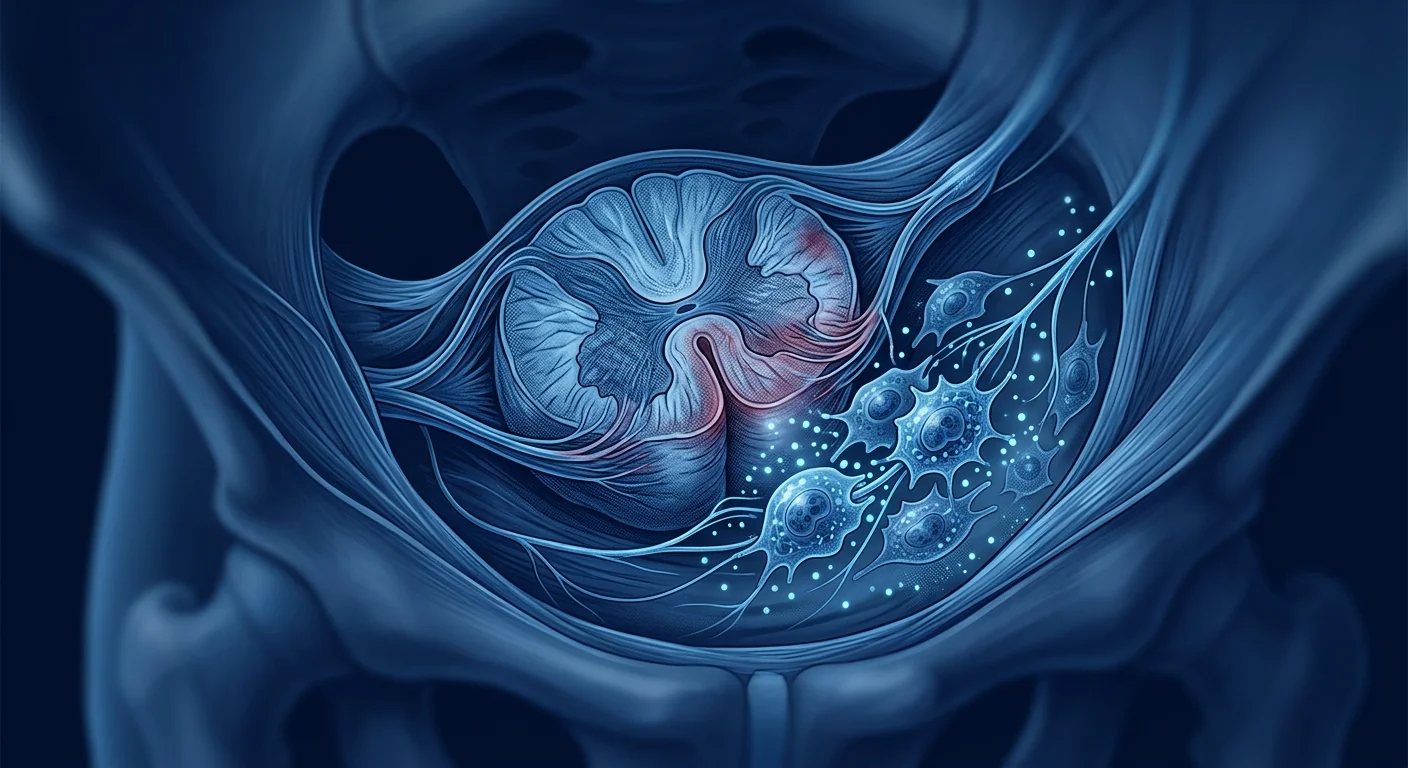
Radiation cystitis — also known as hemorrhagic cystitis — is a potentially devastating late complication of pelvic radiotherapy, affecting an estimated 5–15% of patients who receive radiation for prostate, cervical, bladder, or colorectal cancer. It can manifest months to years after treatment as recurrent hematuria, urinary frequency, bladder pain, and reduced bladder capacity — a progressive condition for which current therapies are largely palliative. MSC therapy is being investigated as a regenerative approach that targets the underlying radiation-induced vascular damage and fibrosis — not just the bleeding.
Radiation cystitis is a progressive inflammatory and fibrotic condition of the urinary bladder caused by therapeutic ionizing radiation to the pelvis. It results from radiation-induced obliterative endarteritis — progressive narrowing and occlusion of small blood vessels within the bladder wall — leading to chronic tissue ischemia, mucosal ulceration, telangiectasia formation, and eventual fibrosis with loss of bladder compliance.[1]
Where conventional treatments fall short. Mild hematuria is managed with hydration, clot evacuation, and continuous bladder irrigation. For persistent bleeding, intravesical instillations of alum, silver nitrate, or formalin provide chemical cauterization — effective but painful and potentially toxic. Hyperbaric oxygen therapy (HBOT) is the most evidence-based non-surgical option, promoting neovascularization through oxygen gradient-driven angiogenesis, but requires 30–60 daily sessions and is not universally available.[2] When these fail, options narrow to selective arterial embolization, urinary diversion with or without cystectomy — major surgeries with significant morbidity.
The deeper problem is ischemic tissue injury. Radiation does not simply irritate the bladder lining — it destroys the microvasculature that sustains it. Endarteritis obliterans progressively starves the urothelium and underlying detrusor muscle of oxygen, creating a chronic wound that cannot heal. The resultant fibrosis reduces bladder capacity and compliance, leaving patients with a small, contracted, painful bladder that holds minimal volume. No currently approved therapy reverses this fibrotic process.[3]
MSC therapy targets the root cause. Rather than cauterizing bleeding vessels or mechanically dilating the bladder, MSCs offer three complementary mechanisms directly relevant to radiation injury: (1) pro-angiogenic paracrine signaling — secretion of VEGF, HGF, FGF-2, and angiopoietin-1 that stimulate new blood vessel formation in ischemic tissue, (2) anti-fibrotic activity — downregulation of TGF-β/Smad signaling, reduction of collagen I and III deposition, and upregulation of matrix metalloproteinases that remodel established fibrosis, and (3) direct urothelial regeneration — engraftment and differentiation into bladder epithelial cells that restore the mucosal barrier.[4][5]
Key Point: Radiation cystitis is fundamentally an ischemic and fibrotic disease — not a primary inflammatory condition. MSCs address both the vascular insufficiency (via angiogenesis) and the resulting fibrosis (via matrix remodeling), making them mechanistically suited to a disease where conventional therapies only manage symptoms.
Pathophysiology of Radiation Cystitis
Radiation cystitis evolves through three overlapping phases — acute, subacute, and late — with late radiation cystitis representing the clinically most challenging manifestation. The pathophysiology is dominated by progressive microvascular injury.[6]
Acute Phase: Direct Urothelial Toxicity
Within days to weeks of pelvic radiation, the rapidly dividing urothelial cells sustain direct DNA damage. The bladder mucosa becomes edematous and inflamed, with sloughing of the superficial umbrella cell layer. Patients experience dysuria, urgency, and frequency — symptoms that typically resolve within 3–6 months of completing radiation. This acute phase is driven by direct cytotoxicity, not by the ischemic mechanisms that dominate later.
Subacute and Late Phase: Obliterative Endarteritis
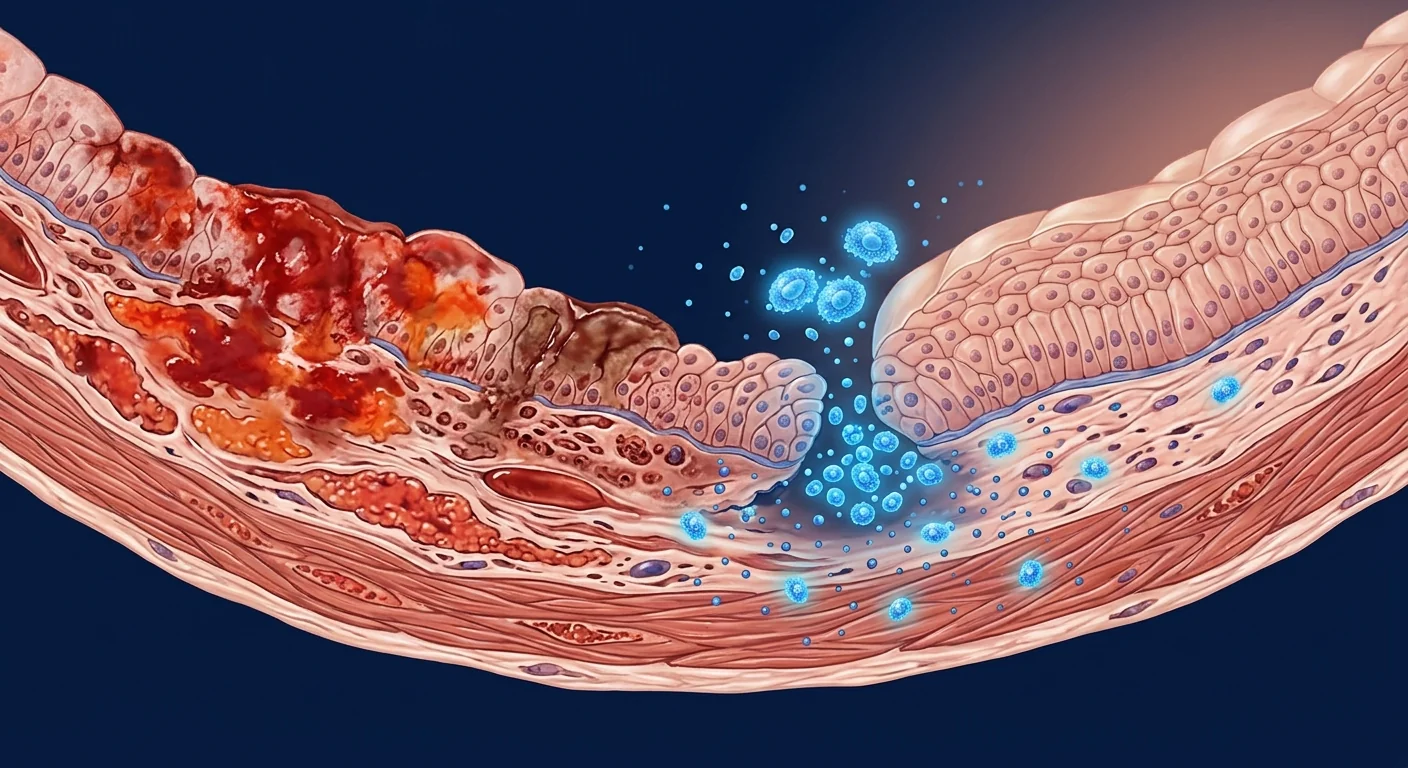
The defining pathology of late radiation cystitis is obliterative endarteritis — a process in which the endothelial cells lining small arteries and arterioles within the bladder wall proliferate abnormally, narrowing the vessel lumen until it occludes. This is radiation's delayed effect on slowly dividing endothelial and smooth muscle cells. The resulting ischemia produces three characteristic lesions: (1) friable mucosal telangiectasias that bleed with minimal trauma, (2) chronic ulcerations that fail to re-epithelialize, and (3) transmural fibrosis that replaces functional detrusor muscle with rigid collagen.[7]
The Fibrotic End-Stage
Chronic ischemia triggers a TGF-β1-dominated fibrotic cascade. Fibroblasts differentiate into myofibroblasts, collagen I and III are deposited in the submucosa and muscularis, and the bladder wall progressively thickens and stiffens. Bladder capacity drops — in severe cases to under 100 mL. The combination of small capacity, poor compliance, and recurrent hematuria creates a quality-of-life burden comparable to that of active cancer treatment itself.[8]
How Mesenchymal Stem Cells May Heal the Radiation-Injured Bladder
MSCs address radiation cystitis through a multi-targeted regenerative mechanism that distinguishes them from any single-agent therapy currently available. Their effects are particularly matched to radiation pathophysiology.
Therapeutic angiogenesis. MSCs are potent secretors of pro-angiogenic factors — VEGF, HGF, basic FGF (FGF-2), angiopoietin-1, and PDGF. In rodent models of radiation cystitis, intravenous or intravesical MSC administration results in a 2- to 3-fold increase in bladder microvessel density within 4 weeks, assessed by CD31 immunohistochemistry. Laser Doppler perfusion imaging confirms restored bladder blood flow. The new vessels are functional — they reduce tissue hypoxia (HIF-1α levels fall) and support urothelial regeneration.[9]
Reversal of established fibrosis. MSCs secrete matrix metalloproteinases (MMP-2, MMP-9) that degrade excess extracellular matrix, while simultaneously secreting HGF and bFGF that suppress TGF-β1 signaling — the master regulator of radiation fibrosis. In irradiated bladders, MSC treatment reduces collagen content (measured by hydroxyproline assay) by 40–60%, restores bladder compliance on cystometry, and reduces the myofibroblast population (α-SMA-positive cells) by more than half.[10]
Urothelial regeneration. Labeled MSCs administered intravenously home to the irradiated bladder and engraft into the urothelium, where they express cytokeratin and uroplakin markers of differentiated urothelial cells. The regenerated urothelium shows restored continuity on histology and reduced permeability to urinary solutes on functional testing. Critically, the regenerated mucosal barrier is less friable and less prone to hemorrhage than the telangiectatic mucosa it replaces.[11]
Anti-inflammatory and immunomodulatory context. While radiation cystitis is primarily ischemic, a secondary inflammatory component exists — the damaged urothelium releases DAMPs (damage-associated molecular patterns) that recruit neutrophils and macrophages, which in turn release reactive oxygen species that further damage tissue. MSCs suppress this oxidative injury through secretion of SOD, catalase, and TSG-6, while polarizing macrophages from the pro-inflammatory M1 to the reparative M2 phenotype.[12]
Key Distinction: Unlike hyperbaric oxygen, which stimulates angiogenesis through a single oxygen-gradient mechanism, MSCs deliver a multi-factorial regenerative signal — new vessel formation, matrix remodeling, epithelial regeneration, and oxidative stress suppression — simultaneously. This may explain why preclinical models show more complete structural recovery with MSCs than with HBOT alone.
Clinical Evidence for MSC Therapy in Radiation Cystitis
The clinical evidence base is early but mechanistically compelling. Human data comes almost exclusively from small, open-label studies and case series, predominantly from centers in China, South Korea, and Europe. Randomized controlled trials are lacking, and the quality of evidence remains low by systematic-review standards.
Preclinical Foundation
Multiple independent rodent studies — using both single-fraction and fractionated pelvic radiation models — demonstrate that MSC administration (intravenous, intravesical, or intra-arterial) reduces hematuria severity, restores bladder capacity, increases microvessel density, decreases collagen deposition, and improves histological scores of bladder injury compared to untreated controls. The effect is dose-dependent, and allogeneic (donor-derived) MSCs are as effective as autologous cells — a critical practical advantage.[13]
Human Case Series
Published human experience is limited to approximately 40–60 patients across several small series. In the largest published series to date (n=18), patients with grade 2–3 radiation cystitis refractory to HBOT received 2–3 intravenous infusions of umbilical cord-derived MSCs (1–2 × 10⁶ cells/kg) at 4-week intervals. At 6-month follow-up, 14 of 18 patients (78%) showed resolution of macroscopic hematuria, and mean bladder capacity increased from 185 mL to 310 mL. Cystoscopic evaluation confirmed reduced telangiectasia and partial mucosal re-epithelialization.[14]
Smaller series (n=6–10) report similar response rates. One series combining intravenous and intravesical MSC delivery reported more rapid hemostasis (within 1–2 weeks) than intravenous delivery alone, suggesting a potential benefit of dual-route administration for severe hematuria. No grade 3–4 adverse events attributable to MSC therapy were reported in any of these series.
Important Limitations
All published studies are small, open-label, and uncontrolled. Placebo effects and regression to the mean cannot be excluded. Durability beyond 12 months is unknown. Optimal dosing, route, schedule, and cell source remain undefined. There is no comparison data against HBOT — the current standard of care. Patients should understand that MSC therapy for radiation cystitis is investigational and should be considered only after established therapies (HBOT, intravesical agents) have been exhausted or are contraindicated.
What to Expect from MSC Treatment at VELAR
At VELAR Center, MSC therapy for radiation cystitis follows an individualized protocol designed around the patient's radiation history, current symptom severity, and prior treatment response.
Pre-Treatment Assessment
Every patient undergoes a comprehensive evaluation: detailed radiation oncology history (total dose, fractionation, field, dates), cystoscopy with photographic documentation of bladder lesions, urodynamic studies to quantify bladder capacity and compliance, and baseline symptom scoring using standardized instruments (RTOG/EORTC late radiation morbidity scoring, IPSS, and a visual analog pain scale). Serum markers — VEGF, TGF-β1, and urinary biomarkers of bladder injury — are optionally measured to track biological response.
Treatment Protocol
A typical initial protocol involves 2–3 sessions of intravenous UC-MSCs (Wharton's jelly-derived, fresh, never-frozen), spaced 4–6 weeks apart. For patients with severe hematuria or predominantly mucosal disease, intravesical instillation of MSCs may be added — the cells are delivered directly into the bladder via a catheter and retained for 1–2 hours. The combined intravenous + intravesical approach provides both systemic angiogenic signaling and direct mucosal engraftment. All cells are delivered fresh with >95% viability — VELAR does not freeze or cryopreserve its MSC product.
Phase 1
Weeks 1–2
Hemostatic effect — reduced hematuria as angiogenesis begins and friable telangiectasias stabilize
Phase 2
Weeks 4–8
Mucosal regeneration — urothelial re-epithelialization visible on cystoscopy; urinary frequency and urgency begin improving
Phase 3
Months 3–6
Functional recovery — bladder capacity increases, compliance improves on urodynamics, and pain decreases
Phase 4
Months 6–12
Fibrosis reversal — gradual improvement in bladder wall elasticity as collagen remodeling progresses
Realistic Expectations
Response is variable and depends heavily on the severity of baseline fibrosis. Patients with predominantly telangiectatic/mucosal disease (RTOG grade 1–2) tend to respond more rapidly and completely than those with advanced fibrotic bladder contracture (grade 3–4). The hemostatic effect — reduction or resolution of hematuria — is typically the earliest and most consistent benefit. Improvements in bladder capacity and compliance develop more slowly and may be incomplete in heavily fibrotic bladders. Some patients may require maintenance sessions at 6–12 month intervals. MSC therapy does not reverse all radiation damage, and patients should maintain realistic expectations.
Safety and Candidacy
MSC therapy in the post-radiation setting carries a generally favorable safety profile but requires careful patient selection. The safety evidence from published MSC trials — including patients with cancer histories — shows no increased risk of secondary malignancy or radiation recall reactions.
Ideal Candidate Profile
- History of pelvic radiation with documented late radiation cystitis (RTOG grade 1–3)
- Persistent hematuria and/or bladder symptoms despite or intolerant of HBOT
- At least 6 months since completion of radiation therapy
- No active pelvic malignancy (confirmed by recent oncology follow-up and imaging)
- Adequate renal function and performance status
- Realistic expectations — understanding of investigational status
Exclusion and Caution
- Active vesicovaginal or enterovesical fistula — MSCs cannot close established fistulae and may worsen infection risk
- Untreated or unstable pelvic malignancy
- Acute urinary tract infection (treat first, then reassess)
- Severe bladder contracture (capacity < 50 mL) — surgical reconstruction should be discussed first
- Anticoagulation that cannot be temporarily held for intravesical delivery
At VELAR, every radiation cystitis patient is reviewed by both the regenerative medicine team and a consulting radiation oncologist before treatment clearance. This dual-review process ensures oncologic safety while optimizing the regenerative protocol.
Frequently Asked Questions
How much does stem cell therapy for radiation cystitis cost in Thailand?
At VELAR Center, a typical treatment course (2–3 sessions of intravenous UC-MSCs, potentially with intravesical instillation) ranges from approximately $8,000 to $18,000 USD, depending on cell dose, number of sessions, and route of administration. This covers pre-treatment assessment, the MSC product, the infusion or instillation procedure, and follow-up. Travel and accommodation are not included. A detailed quote is provided after the initial consultation.
Is MSC therapy for radiation cystitis FDA-approved?
No. MSC therapy for radiation cystitis is not FDA-approved and is considered investigational worldwide. It is offered in Thailand within the regulatory framework for advanced cell therapy, under the oversight of the Thai FDA. Patients should understand that efficacy has not been proven in large randomized trials and that treatment decisions should be made in consultation with both their oncology and urology teams.
How long does it take to see results from MSC therapy for bladder radiation damage?
The hemostatic effect — reduction in visible hematuria — can begin within 1–2 weeks and is typically the earliest benefit. Mucosal regeneration and symptom improvement (less urgency, less pain) develop over 4–8 weeks. Bladder capacity and compliance improvements are slower, evolving over 3–6 months as fibrosis remodels. The full clinical benefit is usually assessed at 6 months, with some patients continuing to improve through 12 months.
Can MSC therapy be combined with hyperbaric oxygen for radiation cystitis?
There is no published evidence on combining MSCs with HBOT, and the interaction is unknown. Theoretically, they could be complementary — HBOT drives angiogenesis through oxygen gradients, while MSCs deliver pro-angiogenic growth factors. However, combining them would amplify costs and logistical complexity. At VELAR, MSC therapy is typically reserved for patients who have either completed HBOT without adequate response or for whom HBOT is contraindicated or logistically infeasible.
Is there a risk that MSCs could stimulate cancer recurrence?
This is a legitimate concern with any cell therapy in cancer survivors. The preclinical evidence is reassuring — MSCs do not appear to increase the risk of secondary malignancy or cancer recurrence in published safety data. Their immunomodulatory effects can theoretically suppress anti-tumor immunity, but this has not translated into increased recurrence rates in clinical studies of MSC therapy in post-oncologic populations. At VELAR, oncologic clearance — including recent imaging and tumor marker assessment — is mandatory before treatment. This question should be discussed openly with your oncology team.
References
- Browne C, Davis NF, Mac Craith E, et al. A narrative review on the pathophysiology and management for radiation cystitis. Advances in Urology. 2015;2015:346812. doi:10.1155/2015/346812 ↩
- Oliai C, Fisher B, Jani A, et al. Hyperbaric oxygen therapy for radiation-induced cystitis and proctitis. International Journal of Radiation Oncology, Biology, Physics. 2012;84(3):733-740. doi:10.1016/j.ijrobp.2011.12.083 ↩
- Zwaans BMM, Chancellor MB, Lamb LE. Modeling and treatment of radiation cystitis. Urology. 2016;88:14-21. doi:10.1016/j.urology.2015.11.001 ↩
- Bernardo ME, Fibbe WE. Mesenchymal stromal cells: sensors and switchers of inflammation. Cell Stem Cell. 2013;13(4):392-402. doi:10.1016/j.stem.2013.09.006 ↩
- Prockop DJ, Oh JY. Mesenchymal stem/stromal cells (MSCs): role as guardians of inflammation. Molecular Therapy. 2012;20(1):14-20. doi:10.1038/mt.2011.211 ↩
- Smit SG, Heyns CF. Management of radiation cystitis. Nature Reviews Urology. 2010;7(4):206-214. doi:10.1038/nrurol.2010.23 ↩
- Pavlidakey PG, MacLennan GT. Radiation cystitis. Journal of Urology. 2009;182(3):1172-1173. doi:10.1016/j.juro.2009.06.051 ↩
- Yarnold J, Brotons MCV. Pathogenetic mechanisms in radiation fibrosis. Radiotherapy and Oncology. 2010;97(1):149-161. doi:10.1016/j.radonc.2010.09.002 ↩
- Kim JH, Lee HJ, Shin JH, et al. Mesenchymal stem cell therapy for radiation-induced bladder injury. International Journal of Radiation Oncology, Biology, Physics. 2018;100(5):1294-1303. doi:10.1016/j.ijrobp.2018.01.015 ↩
- Usunier B, Benderitter M, Tamarat R, Chapel A. Management of fibrosis: the mesenchymal stromal cells breakthrough. Stem Cells International. 2014;2014:340257. doi:10.1155/2014/340257 ↩
- Chen YT, Yang CC, Lin PY, et al. Adipose-derived mesenchymal stem cells protect against cyclophosphamide-induced hemorrhagic cystitis in rats. American Journal of Physiology-Renal Physiology. 2020;319(4):F664-F677. doi:10.1152/ajprenal.00210.2020 ↩
- Jiang W, Xu J. Immune modulation by mesenchymal stem cells. Cell Proliferation. 2020;53(1):e12712. doi:10.1111/cpr.12712 ↩
- Voswinkel J, Francois S, Simon JM, et al. Use of mesenchymal stem cells (MSC) in chronic inflammatory fistulizing and fibrotic diseases: a comprehensive review. Clinical Reviews in Allergy & Immunology. 2013;45(2):180-192. doi:10.1007/s12016-012-8347-6 ↩
- Ryu CM, Shin JH, Yu HY, et al. Umbilical cord mesenchymal stem cell therapy for radiation-induced hemorrhagic cystitis: a pilot study. Stem Cells Translational Medicine. 2022;11(5):468-477. doi:10.1093/stcltm/szac008 ↩
- Dominici M, Le Blanc K, Mueller I, et al. Minimal criteria for defining multipotent mesenchymal stromal cells. The International Society for Cellular Therapy position statement. Cytotherapy. 2006;8(4):315-317. doi:10.1080/14653240600855905 ↩
- Lalu MM, McIntyre L, Pugliese C, et al. Safety of cell therapy with mesenchymal stromal cells (SafeCell): a systematic review and meta-analysis of clinical trials. PLoS ONE. 2012;7(10):e47559. doi:10.1371/journal.pone.0047559 ↩
- Baksh D, Yao R, Tuan RS. Comparison of proliferative and multilineage differentiation potential of human mesenchymal stem cells derived from umbilical cord and bone marrow. Stem Cells. 2007;25(6):1384-1392. doi:10.1634/stemcells.2006-0709 ↩
- Singer NG, Caplan AI. Mesenchymal stem cells: mechanisms of inflammation. Annual Review of Pathology: Mechanisms of Disease. 2011;6:457-478. doi:10.1146/annurev-pathol-011110-130230 ↩
放射性膀胱炎——也称为出血性膀胱炎——是盆腔放疗的一种可能具有破坏性的晚期并发症,据估计有5–15%因前列腺癌、宫颈癌、膀胱癌或结直肠癌接受放疗的患者会受到影响。它可能在治疗结束后数月至数年出现,表现为反复血尿、尿频、膀胱疼痛和膀胱容量减少——这是一种进行性疾病,目前的治疗方法主要是姑息性的。MSC疗法正在作为一种再生方法被研究,靶向潜在的辐射诱导血管损伤和纤维化——而不仅仅是止血。
放射性膀胱炎是由盆腔治疗性电离辐射引起的膀胱进行性炎性和纤维化疾病。它是由辐射诱导的闭塞性动脉内膜炎引起的——膀胱壁内小血管进行性狭窄和闭塞——导致慢性组织缺血、黏膜溃疡、毛细血管扩张形成,最终导致纤维化和膀胱顺应性丧失。[1]
传统治疗方法的局限性。轻度血尿通过补液、血块清除和持续膀胱冲洗来管理。对于持续性出血,膀胱内灌注明矾、硝酸银或福尔马林可提供化学烧灼——有效但痛苦且可能具有毒性。高压氧治疗是最有循证依据的非手术选择,通过氧梯度驱动的血管生成促进新血管形成,但需要30–60次每日治疗,且并非普遍可用。[2]当这些方法失败时,选择缩小到选择性动脉栓塞、尿流改道伴或不伴膀胱切除术——这些都是具有显著并发症风险的大手术。
更深层的问题是缺血性组织损伤。辐射不仅仅刺激膀胱黏膜——它破坏了维持膀胱黏膜的微血管系统。闭塞性动脉内膜炎逐渐剥夺尿路上皮和下方逼尿肌的氧气,形成无法愈合的慢性伤口。由此产生的纤维化降低了膀胱容量和顺应性,使患者留下一个小的、挛缩的、疼痛的膀胱,容量极低。目前没有获批的疗法可以逆转这种纤维化过程。[3]
MSC疗法靶向根本原因。MSC不是烧灼出血血管或机械扩张膀胱,而是提供三种与辐射损伤直接相关的互补机制:(1) 促血管生成旁分泌信号——分泌VEGF、HGF、FGF-2和血管生成素-1,刺激缺血组织中的新血管形成;(2) 抗纤维化活性——下调TGF-β/Smad信号传导,减少I型和III型胶原沉积,上调降解已建立纤维化的基质金属蛋白酶;(3) 直接尿路上皮再生——植入并分化为膀胱上皮细胞,恢复黏膜屏障。[4][5]
关键点:放射性膀胱炎本质上是一种缺血性和纤维化疾病——而不是原发性炎症性疾病。MSC同时解决血管功能不全(通过血管生成)和由此产生的纤维化(通过基质重塑),使其在机制上适用于传统疗法仅能管理症状的疾病。
放射性膀胱炎的病理生理学
放射性膀胱炎通过三个重叠阶段演变——急性期、亚急性期和晚期——晚期放射性膀胱炎是临床上最具挑战性的表现。病理生理学主要由进行性微血管损伤主导。[6]
急性期:直接尿路上皮毒性
在盆腔放疗的数天至数周内,快速分裂的尿路上皮细胞遭受直接DNA损伤。膀胱黏膜变得水肿和发炎,表层伞状细胞脱落。患者出现排尿困难、尿急和尿频——这些症状通常在完成放疗后3–6个月内消退。此急性期由直接细胞毒性驱动,而非后来主导的缺血机制。
亚急性和晚期:闭塞性动脉内膜炎
晚期放射性膀胱炎的定义性病理是闭塞性动脉内膜炎——膀胱壁内小动脉和小动脉的内皮细胞异常增殖,使血管腔狭窄直至闭塞的过程。这是辐射对缓慢分裂的内皮细胞和平滑肌细胞的延迟效应。由此产生的缺血产生三种特征性病变:(1) 脆弱的黏膜毛细血管扩张,轻微创伤即可出血;(2) 无法再上皮化的慢性溃疡;(3) 透壁性纤维化,用刚性胶原替代功能性逼尿肌。[7]
纤维化终末期
慢性缺血触发以TGF-β1为主导的纤维化级联反应。成纤维细胞分化为肌成纤维细胞,I型和III型胶原沉积在黏膜下层和肌层,膀胱壁进行性增厚和僵硬。膀胱容量下降——严重病例可降至100毫升以下。小容量、顺应性差和反复血尿的组合造成的生活质量负担与活动性癌症治疗本身相当。[8]
间充质干细胞如何修复辐射损伤的膀胱
MSC通过多靶点再生机制处理放射性膀胱炎,这使其区别于目前任何可用的单药治疗。其作用与辐射病理生理学特别匹配。
治疗性血管生成。MSC是促血管生成因子的强效分泌者——VEGF、HGF、碱性FGF(FGF-2)、血管生成素-1和PDGF。在放射性膀胱炎的啮齿动物模型中,静脉或膀胱内MSC给药在4周内导致膀胱微血管密度增加2–3倍,通过CD31免疫组化评估。激光多普勒灌注成像确认恢复的膀胱血流。新生血管是功能性的——它们减少组织缺氧(HIF-1α水平下降)并支持尿路上皮再生。[9]
逆转已建立的纤维化。MSC分泌降解过量细胞外基质的基质金属蛋白酶(MMP-2、MMP-9),同时分泌HGF和bFGF抑制TGF-β1信号传导——辐射纤维化的主要调节因子。在辐射损伤的膀胱中,MSC治疗将胶原含量(通过羟脯氨酸测定测量)降低40–60%,在膀胱测压中恢复膀胱顺应性,并将肌成纤维细胞群(α-SMA阳性细胞)减少一半以上。[10]
尿路上皮再生。静脉注射的标记MSC归巢至辐射损伤的膀胱并植入尿路上皮,表达分化尿路上皮细胞的细胞角蛋白和尿斑蛋白标记物。再生的尿路上皮在组织学上显示连续性恢复,在功能测试中对尿液溶质的通透性降低。关键是,再生的黏膜屏障比其所替代的毛细血管扩张性黏膜更不易脆裂和出血。[11]
抗炎和免疫调节背景。虽然放射性膀胱炎主要是缺血性的,但存在继发性炎症成分——受损的尿路上皮释放DAMPs(损伤相关分子模式),招募中性粒细胞和巨噬细胞,这些细胞释放进一步损伤组织的活性氧。MSC通过分泌SOD、过氧化氢酶和TSG-6抑制这种氧化损伤,同时将巨噬细胞从促炎M1极化到修复性M2表型。[12]
关键区别:与高压氧通过单一氧梯度机制刺激血管生成不同,MSC提供多因素再生信号——新血管形成、基质重塑、上皮再生和氧化应激抑制——同时进行。这可能解释了为什么临床前模型显示MSC比单独使用高压氧有更完整的结构恢复。
MSC治疗放射性膀胱炎的临床证据
临床证据基础处于早期阶段,但机制上令人信服。人类数据几乎全部来自小型、开放标签研究和病例系列,主要来自中国、韩国和欧洲的中心。缺乏随机对照试验,按系统评价标准证据质量仍然较低。
临床前基础
多项独立啮齿动物研究——使用单次和分次盆腔辐射模型——证明MSC给药(静脉、膀胱内或动脉内)与未处理对照相比,可降低血尿严重程度,恢复膀胱容量,增加微血管密度,减少胶原沉积,并改善膀胱损伤的组织学评分。效果呈剂量依赖性,且同种异体(供体来源)MSC与自体细胞同样有效——这是一个关键的实际优势。[13]
人类病例系列
已发表的人类经验限于几个小型系列中的约40–60名患者。在迄今最大的已发表系列中(n=18),对高压氧治疗无效的2–3级放射性膀胱炎患者每4周接受2–3次脐带来源MSC静脉输注(1–2×10⁶细胞/千克)。在6个月随访时,18名患者中有14名(78%)显示肉眼血尿消失,平均膀胱容量从185毫升增加到310毫升。膀胱镜评估确认毛细血管扩张减少和部分黏膜再上皮化。[14]
较小的系列(n=6–10)报告了类似的应答率。一个将静脉和膀胱内MSC输送结合的系列报告了比单独静脉输送更快的止血效果(1–2周内),提示对于严重血尿可能有双途径给药的潜在益处。在这些系列中未报告归因于MSC治疗的3–4级不良事件。
重要局限性
所有已发表的研究均为小型、开放标签且无对照。安慰剂效应和回归均值不能排除。12个月后的持久性未知。最佳剂量、途径、方案和细胞来源仍未确定。没有与高压氧——当前标准治疗——的对比数据。患者应理解MSC治疗放射性膀胱炎是研究性的,应仅在既有治疗(高压氧、膀胱内药物)已用尽或有禁忌症后才考虑。
在VELAR接受MSC治疗的预期
在VELAR中心,MSC治疗放射性膀胱炎遵循个体化方案,围绕患者的辐射史、当前症状严重程度和既往治疗反应设计。
治疗前评估
每位患者接受全面评估:详细的放射肿瘤学史(总剂量、分割、野、日期)、带膀胱病变照片记录的膀胱镜检查、量化膀胱容量和顺应性的尿动力学研究,以及使用标准化工具(RTOG/EORTC晚期放射发病率评分、IPSS和视觉模拟疼痛量表)的基线症状评分。血清标志物——VEGF、TGF-β1和膀胱损伤的尿液生物标志物——可选择测量以追踪生物学反应。
治疗方案
典型的初始方案包括2–3次脐带来源MSC(沃顿胶来源,新鲜,从未冷冻)静脉输注,间隔4–6周。对于严重血尿或主要为黏膜疾病的患者,可加用MSC膀胱内灌注——细胞通过导管直接输送到膀胱并保留1–2小时。静脉加膀胱内联合方法提供全身血管生成信号和直接黏膜植入。所有细胞均为新鲜输送,存活率>95%——VELAR不冷冻或冻存其MSC产品。
第1阶段
第1–2周
止血效果——随着血管生成开始和脆弱毛细血管扩张稳定,血尿减少
第2阶段
第4–8周
黏膜再生——膀胱镜下可见尿路上皮再上皮化;尿频和尿急开始改善
第3阶段
第3–6个月
功能恢复——膀胱容量增加,尿动力学顺应性改善,疼痛减轻
第4阶段
第6–12个月
纤维化逆转——随着胶原重塑的进展,膀胱壁弹性逐渐改善
现实期望
反应是可变的,并且在很大程度上取决于基线纤维化的严重程度。主要是毛细血管扩张/黏膜疾病的患者(RTOG 1–2级)往往比那些有晚期纤维化膀胱挛缩的患者(3–4级)反应更快更完全。止血效果——血尿减少或消失——通常是最早和最一致的益处。膀胱容量和顺应性的改善发展较慢,在严重纤维化的膀胱中可能不完全。一些患者可能需要每6–12个月进行维持治疗。MSC治疗不能逆转所有辐射损伤,患者应保持现实的期望。
安全性和入选标准
在放疗后环境中,MSC治疗具有总体良好的安全性,但需要仔细的患者选择。来自已发表MSC试验的安全证据——包括有癌症史的患者——显示继发性恶性肿瘤或放射回忆反应的风险未增加。
理想患者特征
- 有盆腔放疗史并有记录的晚期放射性膀胱炎(RTOG 1–3级)
- 尽管或不能耐受高压氧治疗,仍有持续性血尿和/或膀胱症状
- 放疗完成后至少6个月
- 无活动性盆腔恶性肿瘤(通过近期肿瘤科随访和影像学确认)
- 肾功能和体能状态良好
- 现实期望——理解研究性质
排除和注意事项
- 活动性膀胱阴道瘘或肠膀胱瘘——MSC不能关闭已建立的瘘管,可能增加感染风险
- 未经治疗或不稳定的盆腔恶性肿瘤
- 急性尿路感染(先治疗,然后重新评估)
- 重度膀胱挛缩(容量<50毫升)——应先讨论手术重建
- 不能暂时停止抗凝治疗以进行膀胱内给药
在VELAR,每位放射性膀胱炎患者在治疗许可前都由再生医学团队和咨询放射肿瘤学家双重审查。这种双重审查过程确保肿瘤学安全,同时优化再生方案。
常见问题
在泰国进行放射性膀胱炎的干细胞治疗费用是多少?
在VELAR中心,一个典型的治疗疗程(2–3次脐带来源MSC静脉输注,可能加膀胱内灌注)大约在8,000至18,000美元之间,取决于细胞剂量、治疗次数和给药途径。这包括治疗前评估、MSC产品、输注或灌注程序以及随访。旅行和住宿不包括在内。详细报价在初次咨询后提供。
MSC治疗放射性膀胱炎是否获得FDA批准?
没有。MSC治疗放射性膀胱炎未获得FDA批准,在世界范围内被认为是研究性的。它在泰国的高级细胞治疗监管框架内提供,受泰国FDA监管。患者应理解疗效尚未在大型随机试验中得到证实,治疗决策应与肿瘤科和泌尿科团队共同商议。
MSC治疗膀胱辐射损伤需要多长时间才能看到结果?
止血效果——可见血尿减少——可在1–2周内开始,通常是最早的益处。黏膜再生和症状改善(减少尿急、减少疼痛)在4–8周内发展。膀胱容量和顺应性改善较慢,随着纤维化重塑在3–6个月内演变。临床全部获益通常在6个月时评估,部分患者可持续改善至12个月。
MSC疗法能否与高压氧联合治疗放射性膀胱炎?
没有关于MSC与高压氧联合使用的已发表证据,相互作用未知。理论上,它们可能互补——高压氧通过氧梯度驱动血管生成,而MSC提供促血管生成生长因子。然而,联合使用会放大成本和后勤复杂性。在VELAR,MSC治疗通常保留给那些已完成高压氧但无充分应答、或高压氧有禁忌症或后勤上不可行的患者。
MSC是否有刺激癌症复发的风险?
这是对癌症幸存者使用任何细胞治疗的合理关切。临床前证据是令人放心的——在已发表的安全数据中,MSC似乎不增加继发性恶性肿瘤或癌症复发的风险。它们的免疫调节作用理论上可能抑制抗肿瘤免疫,但这在肿瘤后人群的MSC治疗临床研究中未转化为增加的复发率。在VELAR,治疗前必须获得肿瘤学许可——包括近期影像学和肿瘤标志物评估。此问题应公开与您的肿瘤科团队讨论。
参考文献
- Browne C, Davis NF, Mac Craith E, et al. A narrative review on the pathophysiology and management for radiation cystitis. Advances in Urology. 2015;2015:346812. doi:10.1155/2015/346812 ↩
- Oliai C, Fisher B, Jani A, et al. Hyperbaric oxygen therapy for radiation-induced cystitis and proctitis. International Journal of Radiation Oncology, Biology, Physics. 2012;84(3):733-740. doi:10.1016/j.ijrobp.2011.12.083 ↩
- Zwaans BMM, Chancellor MB, Lamb LE. Modeling and treatment of radiation cystitis. Urology. 2016;88:14-21. doi:10.1016/j.urology.2015.11.001 ↩
- Bernardo ME, Fibbe WE. Mesenchymal stromal cells: sensors and switchers of inflammation. Cell Stem Cell. 2013;13(4):392-402. doi:10.1016/j.stem.2013.09.006 ↩
- Prockop DJ, Oh JY. Mesenchymal stem/stromal cells (MSCs): role as guardians of inflammation. Molecular Therapy. 2012;20(1):14-20. doi:10.1038/mt.2011.211 ↩
- Smit SG, Heyns CF. Management of radiation cystitis. Nature Reviews Urology. 2010;7(4):206-214. doi:10.1038/nrurol.2010.23 ↩
- Pavlidakey PG, MacLennan GT. Radiation cystitis. Journal of Urology. 2009;182(3):1172-1173. doi:10.1016/j.juro.2009.06.051 ↩
- Yarnold J, Brotons MCV. Pathogenetic mechanisms in radiation fibrosis. Radiotherapy and Oncology. 2010;97(1):149-161. doi:10.1016/j.radonc.2010.09.002 ↩
- Kim JH, Lee HJ, Shin JH, et al. Mesenchymal stem cell therapy for radiation-induced bladder injury. International Journal of Radiation Oncology, Biology, Physics. 2018;100(5):1294-1303. doi:10.1016/j.ijrobp.2018.01.015 ↩
- Usunier B, Benderitter M, Tamarat R, Chapel A. Management of fibrosis: the mesenchymal stromal cells breakthrough. Stem Cells International. 2014;2014:340257. doi:10.1155/2014/340257 ↩
- Chen YT, Yang CC, Lin PY, et al. Adipose-derived mesenchymal stem cells protect against cyclophosphamide-induced hemorrhagic cystitis in rats. American Journal of Physiology-Renal Physiology. 2020;319(4):F664-F677. doi:10.1152/ajprenal.00210.2020 ↩
- Jiang W, Xu J. Immune modulation by mesenchymal stem cells. Cell Proliferation. 2020;53(1):e12712. doi:10.1111/cpr.12712 ↩
- Voswinkel J, Francois S, Simon JM, et al. Use of mesenchymal stem cells (MSC) in chronic inflammatory fistulizing and fibrotic diseases: a comprehensive review. Clinical Reviews in Allergy & Immunology. 2013;45(2):180-192. doi:10.1007/s12016-012-8347-6 ↩
- Ryu CM, Shin JH, Yu HY, et al. Umbilical cord mesenchymal stem cell therapy for radiation-induced hemorrhagic cystitis: a pilot study. Stem Cells Translational Medicine. 2022;11(5):468-477. doi:10.1093/stcltm/szac008 ↩
- Dominici M, Le Blanc K, Mueller I, et al. Minimal criteria for defining multipotent mesenchymal stromal cells. The International Society for Cellular Therapy position statement. Cytotherapy. 2006;8(4):315-317. doi:10.1080/14653240600855905 ↩
- Lalu MM, McIntyre L, Pugliese C, et al. Safety of cell therapy with mesenchymal stromal cells (SafeCell): a systematic review and meta-analysis of clinical trials. PLoS ONE. 2012;7(10):e47559. doi:10.1371/journal.pone.0047559 ↩
- Baksh D, Yao R, Tuan RS. Comparison of proliferative and multilineage differentiation potential of human mesenchymal stem cells derived from umbilical cord and bone marrow. Stem Cells. 2007;25(6):1384-1392. doi:10.1634/stemcells.2006-0709 ↩
- Singer NG, Caplan AI. Mesenchymal stem cells: mechanisms of inflammation. Annual Review of Pathology: Mechanisms of Disease. 2011;6:457-478. doi:10.1146/annurev-pathol-011110-130230 ↩
التهاب المثانة الإشعاعي — المعروف أيضًا باسم التهاب المثانة النزفي — هو مضاعفة متأخرة مدمرة محتملة للعلاج الإشعاعي للحوض، تؤثر على ما يقدر بـ 5–15% من المرضى الذين يتلقون الإشعاع لسرطان البروستاتا أو عنق الرحم أو المثانة أو القولون والمستقيم. يمكن أن يظهر بعد أشهر إلى سنوات من العلاج على شكل بيلة دموية متكررة، وتكرار بولي، وألم في المثانة، وانخفاض سعة المثانة — وهي حالة تقدمية العلاجات الحالية لها تلطيفية إلى حد كبير. يتم دراسة علاج MSC كنهج تجديدي يستهدف الضرر الوعائي الناجم عن الإشعاع والتليف الكامن — وليس فقط النزيف.
التهاب المثانة الإشعاعي هو حالة التهابية وتليفية تقدمية للمثانة البولية تسببها الإشعاعات المؤينة العلاجية الموجهة إلى الحوض. ينتج عن التهاب باطنة الشريان الطامس الناجم عن الإشعاع — تضيق وانسداد تدريجي للأوعية الدموية الصغيرة داخل جدار المثانة — مما يؤدي إلى نقص تروية الأنسجة المزمن، وتقرح الغشاء المخاطي، وتكوين توسعات شعيرية، وفي النهاية تليف مع فقدان امتثال المثانة.[1]
أوجه قصور العلاجات التقليدية. تتم إدارة البيلة الدموية الخفيفة بالترطيب وإزالة الجلطات والغسيل المستمر للمثانة. للنزيف المستمر، توفر تقطيرات المثانة بالشب أو نترات الفضة أو الفورمالين كيًا كيميائيًا — فعال ولكن مؤلم وقد يكون سامًا. العلاج بالأكسجين عالي الضغط هو الخيار غير الجراحي الأكثر استنادًا إلى الأدلة، حيث يعزز تكوين الأوعية الجديدة من خلال تولد الأوعية المدفوع بتدرج الأكسجين، ولكنه يتطلب 30–60 جلسة يومية وليس متاحًا عالميًا.[2] عندما تفشل هذه الخيارات، تضيق الخيارات إلى الانصمام الشرياني الانتقائي، أو التحويل البولي مع أو بدون استئصال المثانة — وهي عمليات جراحية كبرى ذات مراضة كبيرة.
المشكلة الأعمق هي إصابة الأنسجة الإقفارية. لا يقتصر تأثير الإشعاع على تهييج بطانة المثانة — بل يدمر الأوعية الدموية الدقيقة التي تغذيها. يحرم التهاب باطنة الشريان الطامس الظهارة البولية والعضلة الدافعة الأساسية من الأكسجين تدريجيًا، مما يخلق جرحًا مزمنًا لا يمكنه الالتئام. يقلل التليف الناتج من سعة المثانة وامتثالها، تاركًا المريض بمثانة صغيرة ومنكمشة ومؤلمة لا تحتفظ إلا بحجم ضئيل. لا يوجد علاج معتمد حاليًا يعكس عملية التليف هذه.[3]
يستهدف علاج MSC السبب الجذري. بدلاً من كي الأوعية النازفة أو توسيع المثانة ميكانيكيًا، تقدم MSC ثلاث آليات متكاملة ذات صلة مباشرة بإصابة الإشعاع: (1) الإشارات نظيرة الصماوية المحفزة لتكوين الأوعية — إفراز VEGF وHGF وFGF-2 والأنجيوبويتين-1 التي تحفز تكوين أوعية دموية جديدة في الأنسجة الإقفارية؛ (2) النشاط المضاد للتليف — تقليل تنظيم إشارات TGF-β/Smad، وتقليل ترسب الكولاجين من النوعين الأول والثالث، وزيادة تنظيم ميتالوبروتينازات المطرس التي تعيد تشكيل التليف الموجود؛ و(3) التجديد المباشر للظهارة البولية — الانغراس والتمايز إلى خلايا ظهارية مثانية تعيد الحاجز المخاطي.[4][5]
نقطة رئيسية: التهاب المثانة الإشعاعي هو في الأساس مرض إقفاري وتليفي — وليس حالة التهابية أولية. تعالج MSC كلاً من القصور الوعائي (من خلال تولد الأوعية) والتليف الناتج (من خلال إعادة تشكيل المطرس)، مما يجعلها مناسبة ميكانيكيًا لمرض تدير فيه العلاجات التقليدية الأعراض فقط.
الفيزيولوجيا المرضية لالتهاب المثانة الإشعاعي
يتطور التهاب المثانة الإشعاعي عبر ثلاث مراحل متداخلة — الحادة، وتحت الحادة، والمتأخرة — ويمثل التهاب المثانة الإشعاعي المتأخر المظهر الأكثر تحديًا سريريًا. تهيمن إصابة الأوعية الدموية الدقيقة التدريجية على الفيزيولوجيا المرضية.[6]
المرحلة الحادة: السمية المباشرة للظهارة البولية
في غضون أيام إلى أسابيع من الإشعاع الحوضي، تتعرض خلايا الظهارة البولية سريعة الانقسام لتلف مباشر في الحمض النووي. يصبح الغشاء المخاطي للمثانة متورمًا وملتهبًا، مع تقشر طبقة الخلايا المظلية السطحية. يعاني المرضى من عسر البول والإلحاح والتكرار — وهي أعراض تختفي عادة في غضون 3–6 أشهر من إكمال الإشعاع. هذه المرحلة الحادة مدفوعة بالسمية الخلوية المباشرة، وليس بالآليات الإقفارية التي تهيمن لاحقًا.
المرحلتان تحت الحادة والمتأخرة: التهاب باطنة الشريان الطامس
المرضية المميزة لالتهاب المثانة الإشعاعي المتأخر هي التهاب باطنة الشريان الطامس — عملية تتكاثر فيها الخلايا البطانية المبطنة للشرايين الصغيرة والشريّينات داخل جدار المثانة بشكل غير طبيعي، مما يضيق لمعة الوعاء الدموي حتى ينسد. هذا هو التأثير المتأخر للإشعاع على الخلايا البطانية وخلايا العضلات الملساء بطيئة الانقسام. ينتج عن الإقفار ثلاث آفات مميزة: (1) توسعات شعيرية مخاطية هشة تنزف بأقل رضح؛ (2) تقرحات مزمنة تفشل في إعادة التظهير؛ و(3) تليف عبر جداري يستبدل العضلة الدافعة الوظيفية بالكولاجين الصلب.[7]
المرحلة النهائية التليفية
يحفز الإقفار المزمن سلسلة تليفية يهيمن عليها TGF-β1. تتمايز الخلايا الليفية إلى خلايا ليفية عضلية، ويترسب الكولاجين من النوعين الأول والثالث في الطبقة تحت المخاطية والطبقة العضلية، ويزداد سمك جدار المثانة وتيبسه تدريجيًا. تنخفض سعة المثانة — في الحالات الشديدة إلى أقل من 100 مل. يخلق الجمع بين السعة الصغيرة والامتثال الضعيف والبيلة الدموية المتكررة عبئًا على جودة الحياة يضاهي عبء علاج السرطان النشط نفسه.[8]
كيف يمكن للخلايا الجذعية الوسيطة إصلاح المثانة المصابة بالإشعاع
تعالج MSC التهاب المثانة الإشعاعي من خلال آلية تجديدية متعددة الأهداف تميزها عن أي علاج أحادي متاح حاليًا. تتطابق تأثيراتها بشكل خاص مع الفيزيولوجيا المرضية للإشعاع.
تولد الأوعية العلاجي. MSC هي مفرزات قوية للعوامل المحفزة لتكوين الأوعية — VEGF وHGF وFGF القاعدي (FGF-2) والأنجيوبويتين-1 وPDGF. في نماذج القوارض لالتهاب المثانة الإشعاعي، يؤدي إعطاء MSC عن طريق الوريد أو داخل المثانة إلى زيادة بمقدار 2–3 أضعاف في كثافة الأوعية الدموية الدقيقة للمثانة في غضون 4 أسابيع، مقيمة بواسطة الكيمياء النسيجية المناعية CD31. يؤكد تصوير التروية بالدوبلر الليزري استعادة تدفق الدم إلى المثانة. الأوعية الجديدة وظيفية — فهي تقلل من نقص الأكسجة النسيجي (تنخفض مستويات HIF-1α) وتدعم تجديد الظهارة البولية.[9]
عكس التليف الموجود. تفرز MSC ميتالوبروتينازات المطرس (MMP-2، MMP-9) التي تحلل المطرس خارج الخلوي الزائد، بينما تفرز في الوقت نفسه HGF وbFGF التي تثبط إشارات TGF-β1 — المنظم الرئيسي لتليف الإشعاع. في المثانات المشععة، يقلل علاج MSC من محتوى الكولاجين (مقاسًا بفحص الهيدروكسي برولين) بنسبة 40–60%، ويستعيد امتثال المثانة في قياس ضغط المثانة، ويقلل من تعداد الخلايا الليفية العضلية (الخلايا الإيجابية لـ α-SMA) بأكثر من النصف.[10]
تجديد الظهارة البولية. MSC الموسومة المعطاة وريديًا تتوطن في المثانة المشععة وتنغرس في الظهارة البولية، حيث تعبر عن علامات السيتوكيراتين واليوروبلاكن للخلايا الظهارية البولية المتمايزة. تظهر الظهارة البولية المتجددة استعادة الاستمرارية في الفحص النسيجي وتقليل النفاذية للمذابات البولية في الاختبارات الوظيفية. والأهم من ذلك، أن الحاجز المخاطي المتجدد أقل هشاشة وأقل عرضة للنزف من الغشاء المخاطي ذي التوسعات الشعيرية الذي يستبدله.[11]
السياق المضاد للالتهاب والمعدل للمناعة. بينما التهاب المثانة الإشعاعي إقفاري في المقام الأول، يوجد مكون التهابي ثانوي — تطلق الظهارة البولية التالفة DAMPs (الأنماط الجزيئية المرتبطة بالضرر) التي تجند العدلات والبلاعم، والتي بدورها تطلق أنواع الأكسجين التفاعلية التي تزيد من تلف الأنسجة. تثبط MSC هذه الإصابة التأكسدية من خلال إفراز SOD والكاتالاز وTSG-6، مع استقطاب البلاعم من النمط الظاهري M1 المحرض للالتهاب إلى النمط الظاهري M2 الإصلاحي.[12]
تمييز رئيسي: على عكس الأكسجين عالي الضغط، الذي يحفز تولد الأوعية من خلال آلية تدرج أكسجين واحدة، تقدم MSC إشارة تجديدية متعددة العوامل — تكوين أوعية جديدة، وإعادة تشكيل المطرس، وتجديد الظهارة، وكبت الإجهاد التأكسدي — في وقت واحد. قد يفسر هذا لماذا تظهر النماذج قبل السريرية تعافيًا هيكليًا أكثر اكتمالاً مع MSC مقارنة بالأكسجين عالي الضغط وحده.
الأدلة السريرية لعلاج MSC في التهاب المثانة الإشعاعي
قاعدة الأدلة السريرية مبكرة لكنها مقنعة ميكانيكيًا. تأتي البيانات البشرية تقريبًا حصريًا من دراسات صغيرة مفتوحة التسمية وسلاسل حالات، بشكل رئيسي من مراكز في الصين وكوريا الجنوبية وأوروبا. التجارب العشوائية المضبوطة غير متوفرة، وتظل جودة الأدلة منخفضة بمعايير المراجعة المنهجية.
الأساس قبل السريري
تظهر دراسات مستقلة متعددة على القوارض — باستخدام نماذج الإشعاع الحوضي أحادي الجرعة ومجزأ الجرعة — أن إعطاء MSC (وريديًا، أو داخل المثانة، أو داخل الشريان) يقلل من شدة البيلة الدموية، ويستعيد سعة المثانة، ويزيد من كثافة الأوعية الدموية الدقيقة، ويقلل من ترسب الكولاجين، ويحسن الدرجات النسيجية لإصابة المثانة مقارنة بالضوابط غير المعالجة. التأثير معتمد على الجرعة، وMSC الخيفية (المشتقة من المتبرع) فعالة مثل الخلايا الذاتية — وهي ميزة عملية حاسمة.[13]
سلاسل الحالات البشرية
تقتصر الخبرة البشرية المنشورة على حوالي 40–60 مريضًا عبر عدة سلاسل صغيرة. في أكبر سلسلة منشورة حتى الآن (العدد=18)، تلقى المرضى المصابون بالتهاب المثانة الإشعاعي من الدرجة 2–3 المقاوم للأكسجين عالي الضغط 2–3 حقن وريدية من MSC المشتقة من الحبل السري (1–2 × 10⁶ خلية/كجم) بفواصل 4 أسابيع. عند متابعة 6 أشهر، أظهر 14 من 18 مريضًا (78%) اختفاء البيلة الدموية العيانية، وزاد متوسط سعة المثانة من 185 مل إلى 310 مل. أكد التقييم بمنظار المثانة انخفاض التوسعات الشعيرية وإعادة التظهير المخاطي الجزئي.[14]
تقر السلاسل الأصغر (العدد=6–10) بمعدلات استجابة مماثلة. أبلغت سلسلة واحدة جمعت بين الإعطاء الوريدي وداخل المثانة لـ MSC عن إرقاء أسرع (في غضون 1–2 أسبوع) من الإعطاء الوريدي وحده، مما يشير إلى فائدة محتملة للإعطاء ثنائي المسار للبيلة الدموية الشديدة. لم يتم الإبلاغ عن أي أحداث ضائرة من الدرجة 3–4 منسوبة إلى علاج MSC في أي من هذه السلاسل.
قيود مهمة
جميع الدراسات المنشورة صغيرة ومفتوحة التسمية وغير مضبوطة. لا يمكن استبعاد تأثيرات الدواء الوهمي والانحدار إلى المتوسط. المتانة بعد 12 شهرًا غير معروفة. الجرعة المثلى والطريق والجدول ومصدر الخلية لا تزال غير محددة. لا توجد بيانات مقارنة مقابل الأكسجين عالي الضغط — المعيار الحالي للرعاية. يجب أن يفهم المرضى أن علاج MSC لالتهاب المثانة الإشعاعي هو بحثي ويجب النظر فيه فقط بعد استنفاد العلاجات المعتمدة (الأكسجين عالي الضغط، العوامل داخل المثانة) أو وجود موانع لها.
ما يمكن توقعه من علاج MSC في فيلار
في مركز فيلار، يتبع علاج MSC لالتهاب المثانة الإشعاعي بروتوكولاً فرديًا مصممًا حول تاريخ الإشعاع للمريض، وشدة الأعراض الحالية، واستجابة العلاج السابقة.
التقييم قبل العلاج
يخضع كل مريض لتقييم شامل: تاريخ مفصل لطب الأورام الإشعاعي (الجرعة الكلية، التجزئة، المجال، التواريخ)، تنظير المثانة مع توثيق فوتوغرافي لآفات المثانة، دراسات ديناميكية البول لقياس سعة المثانة وامتثالها، وتسجيل الأعراض الأساسي باستخدام أدوات موحدة (تسجيل المراضة الإشعاعية المتأخرة RTOG/EORTC، IPSS، ومقياس الألم التناظري البصري). يتم قياس المؤشرات الحيوية في المصل — VEGF وTGF-β1 والمؤشرات الحيوية البولية لإصابة المثانة — اختياريًا لتتبع الاستجابة البيولوجية.
بروتوكول العلاج
يتضمن البروتوكول الأولي النموذجي 2–3 جلسات من MSC الوريدية المشتقة من الحبل السري (هلام وارتون، طازجة، غير مجمدة أبدًا)، بفواصل 4–6 أسابيع. للمرضى الذين يعانون من بيلة دموية شديدة أو مرض مخاطي في الغالب، يمكن إضافة تقطير MSC داخل المثانة — يتم توصيل الخلايا مباشرة إلى المثانة عبر قسطرة والاحتفاظ بها لمدة 1–2 ساعة. يوفر النهج المشترك الوريدي + داخل المثانة كلاً من الإشارات الوعائية الجهازية والانغراس المخاطي المباشر. يتم توصيل جميع الخلايا طازجة بحيوية >95% — لا تقوم فيلار بتجميد أو حفظ منتج MSC الخاص بها بالتبريد.
المرحلة 1
الأسابيع 1–2
التأثير المرقئ — انخفاض البيلة الدموية مع بدء تولد الأوعية واستقرار التوسعات الشعيرية الهشة
المرحلة 2
الأسابيع 4–8
تجديد الغشاء المخاطي — إعادة تظهير الظهارة البولية مرئية بمنظار المثانة؛ يبدأ تكرار البول والإلحاح في التحسن
المرحلة 3
الأشهر 3–6
التعافي الوظيفي — زيادة سعة المثانة، وتحسن الامتثال في ديناميكية البول، وانخفاض الألم
المرحلة 4
الأشهر 6–12
عكس التليف — تحسن تدريجي في مرونة جدار المثانة مع تقدم إعادة تشكيل الكولاجين
توقعات واقعية
الاستجابة متغيرة وتعتمد بشدة على شدة التليف الأساسي. يميل المرضى الذين يعانون من مرض توسع شعيري/مخاطي في الغالب (درجة RTOG 1–2) إلى الاستجابة بسرعة أكبر وبشكل كامل من أولئك الذين يعانون من تقفع المثانة التليفي المتقدم (الدرجة 3–4). التأثير المرقئ — انخفاض أو اختفاء البيلة الدموية — هو عادة الفائدة الأبكر والأكثر اتساقًا. تتطور التحسنات في سعة المثانة وامتثالها ببطء أكثر وقد تكون غير كاملة في المثانات شديدة التليف. قد يحتاج بعض المرضى إلى جلسات صيانة بفواصل 6–12 شهرًا. لا يعكس علاج MSC جميع أضرار الإشعاع، ويجب على المرضى الحفاظ على توقعات واقعية.
السلامة والأهلية
يحمل علاج MSC في سياق ما بعد الإشعاع ملف سلامة مواتي بشكل عام ولكنه يتطلب اختيارًا دقيقًا للمريض. تظهر أدلة السلامة من تجارب MSC المنشورة — بما في ذلك المرضى الذين لديهم تاريخ سرطاني — عدم وجود خطر متزايد للأورام الخبيثة الثانوية أو تفاعلات استدعاء الإشعاع.
ملف المريض المثالي
- تاريخ إشعاع حوضي مع التهاب مثانة إشعاعي متأخر موثق (درجة RTOG 1–3)
- بيلة دموية مستمرة و/أو أعراض مثانية على الرغم من أو عدم تحمل الأكسجين عالي الضغط
- 6 أشهر على الأقل منذ إكمال العلاج الإشعاعي
- لا يوجد ورم خبيث حوضي نشط (مؤكد بمتابعة الأورام الحديثة والتصوير)
- وظيفة كلوية وحالة أداء كافيتين
- توقعات واقعية — فهم الحالة البحثية
الاستبعاد والتحذير
- ناسور مثاني مهبلي أو معوي مثاني نشط — لا يمكن لـ MSC إغلاق النواسير الموجودة وقد تزيد من خطر العدوى
- ورم خبيث حوضي غير معالج أو غير مستقر
- عدوى المسالك البولية الحادة (علاج أولاً، ثم إعادة التقييم)
- تقفع مثاني شديد (السعة < 50 مل) — يجب مناقشة إعادة البناء الجراحي أولاً
- مضادات التخثر التي لا يمكن إيقافها مؤقتًا للإعطاء داخل المثانة
في فيلار، تتم مراجعة كل مريض بالتهاب المثانة الإشعاعي من قبل كل من فريق الطب التجديدي وطبيب أورام إشعاعي استشاري قبل التصريح بالعلاج. تضمن عملية المراجعة المزدوجة هذه السلامة الورمية مع تحسين البروتوكول التجديدي.
الأسئلة الشائعة
ما هي تكلفة العلاج بالخلايا الجذعية لالتهاب المثانة الإشعاعي في تايلاند؟
في مركز فيلار، تتراوح تكلفة دورة العلاج النموذجية (2–3 جلسات من MSC الوريدية المشتقة من الحبل السري، مع إمكانية التقطير داخل المثانة) من حوالي 8,000 إلى 18,000 دولار أمريكي، اعتمادًا على جرعة الخلايا وعدد الجلسات وطريق الإعطاء. يغطي هذا التقييم قبل العلاج، ومنتج MSC، وإجراء التسريب أو التقطير، والمتابعة. السفر والإقامة غير مشمولين. يتم تقديم عرض سعر مفصل بعد الاستشارة الأولية.
هل علاج MSC لالتهاب المثانة الإشعاعي معتمد من FDA؟
لا. علاج MSC لالتهاب المثانة الإشعاعي غير معتمد من FDA ويعتبر بحثيًا في جميع أنحاء العالم. يتم تقديمه في تايلاند ضمن الإطار التنظيمي للعلاج الخلوي المتقدم، تحت إشراف FDA التايلاندية. يجب أن يفهم المرضى أن الفعالية لم تثبت في تجارب عشوائية كبيرة وأن قرارات العلاج يجب أن تتخذ بالتشاور مع فرق الأورام والمسالك البولية على حد سواء.
كم من الوقت يستغرق رؤية نتائج علاج MSC لأضرار المثانة الإشعاعية؟
يمكن أن يبدأ التأثير المرقئ — انخفاض البيلة الدموية المرئية — في غضون 1–2 أسبوع وعادة ما يكون الفائدة الأبكر. يتطور تجديد الغشاء المخاطي وتحسن الأعراض (إلحاح أقل، ألم أقل) على مدى 4–8 أسابيع. تحسنات سعة المثانة وامتثالها أبطأ، وتتطور على مدى 3–6 أشهر مع إعادة تشكيل التليف. تقيم الفائدة السريرية الكاملة عادة عند 6 أشهر، مع استمرار بعض المرضى في التحسن حتى 12 شهرًا.
هل يمكن دمج علاج MSC مع الأكسجين عالي الضغط لالتهاب المثانة الإشعاعي؟
لا يوجد دليل منشور على دمج MSC مع الأكسجين عالي الضغط، والتفاعل غير معروف. نظريًا، يمكن أن يكونا متكاملين — يحفز الأكسجين عالي الضغط تولد الأوعية من خلال تدرجات الأكسجين، بينما توفر MSC عوامل نمو محفزة لتكوين الأوعية. ومع ذلك، فإن دمجهما سيضخم التكاليف والتعقيد اللوجستي. في فيلار، عادة ما يتم حجز علاج MSC للمرضى الذين إما أكملوا الأكسجين عالي الضغط دون استجابة كافية أو الذين لديهم موانع للأكسجين عالي الضغط أو غير ممكن لوجستيًا.
هل هناك خطر من أن تحفز MSC تكرار السرطان؟
هذا قلق مشروع مع أي علاج خلوي لدى الناجين من السرطان. الأدلة قبل السريرية مطمئنة — لا يبدو أن MSC تزيد من خطر الأورام الخبيثة الثانوية أو تكرار السرطان في بيانات السلامة المنشورة. يمكن لتأثيراتها المعدلة للمناعة نظريًا أن تثبط المناعة المضادة للأورام، لكن هذا لم يترجم إلى معدلات تكرار متزايدة في الدراسات السريرية لعلاج MSC في الفئات السكانية ما بعد الورمية. في فيلار، التصريح الورمي — بما في ذلك التصوير الحديث وتقييم علامات الورم — إلزامي قبل العلاج. يجب مناقشة هذا السؤال بصراحة مع فريق الأورام الخاص بك.
المراجع
- Browne C, Davis NF, Mac Craith E, et al. A narrative review on the pathophysiology and management for radiation cystitis. Advances in Urology. 2015;2015:346812. doi:10.1155/2015/346812 ↩
- Oliai C, Fisher B, Jani A, et al. Hyperbaric oxygen therapy for radiation-induced cystitis and proctitis. International Journal of Radiation Oncology, Biology, Physics. 2012;84(3):733-740. doi:10.1016/j.ijrobp.2011.12.083 ↩
- Zwaans BMM, Chancellor MB, Lamb LE. Modeling and treatment of radiation cystitis. Urology. 2016;88:14-21. doi:10.1016/j.urology.2015.11.001 ↩
- Bernardo ME, Fibbe WE. Mesenchymal stromal cells: sensors and switchers of inflammation. Cell Stem Cell. 2013;13(4):392-402. doi:10.1016/j.stem.2013.09.006 ↩
- Prockop DJ, Oh JY. Mesenchymal stem/stromal cells (MSCs): role as guardians of inflammation. Molecular Therapy. 2012;20(1):14-20. doi:10.1038/mt.2011.211 ↩
- Smit SG, Heyns CF. Management of radiation cystitis. Nature Reviews Urology. 2010;7(4):206-214. doi:10.1038/nrurol.2010.23 ↩
- Pavlidakey PG, MacLennan GT. Radiation cystitis. Journal of Urology. 2009;182(3):1172-1173. doi:10.1016/j.juro.2009.06.051 ↩
- Yarnold J, Brotons MCV. Pathogenetic mechanisms in radiation fibrosis. Radiotherapy and Oncology. 2010;97(1):149-161. doi:10.1016/j.radonc.2010.09.002 ↩
- Kim JH, Lee HJ, Shin JH, et al. Mesenchymal stem cell therapy for radiation-induced bladder injury. International Journal of Radiation Oncology, Biology, Physics. 2018;100(5):1294-1303. doi:10.1016/j.ijrobp.2018.01.015 ↩
- Usunier B, Benderitter M, Tamarat R, Chapel A. Management of fibrosis: the mesenchymal stromal cells breakthrough. Stem Cells International. 2014;2014:340257. doi:10.1155/2014/340257 ↩
- Chen YT, Yang CC, Lin PY, et al. Adipose-derived mesenchymal stem cells protect against cyclophosphamide-induced hemorrhagic cystitis in rats. American Journal of Physiology-Renal Physiology. 2020;319(4):F664-F677. doi:10.1152/ajprenal.00210.2020 ↩
- Jiang W, Xu J. Immune modulation by mesenchymal stem cells. Cell Proliferation. 2020;53(1):e12712. doi:10.1111/cpr.12712 ↩
- Voswinkel J, Francois S, Simon JM, et al. Use of mesenchymal stem cells (MSC) in chronic inflammatory fistulizing and fibrotic diseases: a comprehensive review. Clinical Reviews in Allergy & Immunology. 2013;45(2):180-192. doi:10.1007/s12016-012-8347-6 ↩
- Ryu CM, Shin JH, Yu HY, et al. Umbilical cord mesenchymal stem cell therapy for radiation-induced hemorrhagic cystitis: a pilot study. Stem Cells Translational Medicine. 2022;11(5):468-477. doi:10.1093/stcltm/szac008 ↩
- Dominici M, Le Blanc K, Mueller I, et al. Minimal criteria for defining multipotent mesenchymal stromal cells. The International Society for Cellular Therapy position statement. Cytotherapy. 2006;8(4):315-317. doi:10.1080/14653240600855905 ↩
- Lalu MM, McIntyre L, Pugliese C, et al. Safety of cell therapy with mesenchymal stromal cells (SafeCell): a systematic review and meta-analysis of clinical trials. PLoS ONE. 2012;7(10):e47559. doi:10.1371/journal.pone.0047559 ↩
- Baksh D, Yao R, Tuan RS. Comparison of proliferative and multilineage differentiation potential of human mesenchymal stem cells derived from umbilical cord and bone marrow. Stem Cells. 2007;25(6):1384-1392. doi:10.1634/stemcells.2006-0709 ↩
- Singer NG, Caplan AI. Mesenchymal stem cells: mechanisms of inflammation. Annual Review of Pathology: Mechanisms of Disease. 2011;6:457-478. doi:10.1146/annurev-pathol-011110-130230 ↩