For decades, Parkinson's disease has been described primarily as a dopamine deficiency. The clinical picture — tremor, rigidity, slowness of movement — reflects the loss of dopamine-producing neurons in a part of the brainstem called the substantia nigra. The dominant treatment paradigm has followed that logic: replace the missing dopamine with levodopa, supplemented by various agonists and adjuncts. This works, often well, often for many years. But it does not stop the underlying disease, and it does not address why those neurons are dying in the first place.
That is where the conversation is shifting. The biology underneath Parkinson's is now understood to involve chronic neuroinflammation, mitochondrial dysfunction, oxidative stress, and the toxic accumulation of misfolded alpha-synuclein. Each of these is a potential lever — and Mesenchymal Stem Cell therapy is one of the few tools currently studied that touches several of them at once.
What is going wrong inside a Parkinson's brain?
Several mutually reinforcing processes drive the disease. Understanding them clarifies what any therapy can plausibly help with:[1][2][3][4]
- Selective dopaminergic neuron loss — by the time motor symptoms appear, an estimated 50–70% of substantia nigra dopamine neurons are already lost
- Microglial activation and neuroinflammation — the brain's own immune cells stay chronically inflamed, accelerating loss of remaining neurons
- Mitochondrial dysfunction — the energy-producing machinery in dopamine neurons is impaired, predisposing them to death
- Oxidative stress — these cells generate disproportionate reactive oxygen species, which their failing mitochondria cannot cope with
- Alpha-synuclein aggregation — misfolded protein accumulates inside cells and may spread cell-to-cell
- Disturbed gut–brain axis — peripheral inflammation, particularly from the gut, may reinforce the central process
Standard therapy addresses the symptom (low dopamine signalling). It does not address most of these underlying processes. That is why progression continues even when patients are responding well to levodopa.
Where Mesenchymal Stem Cells could plausibly help
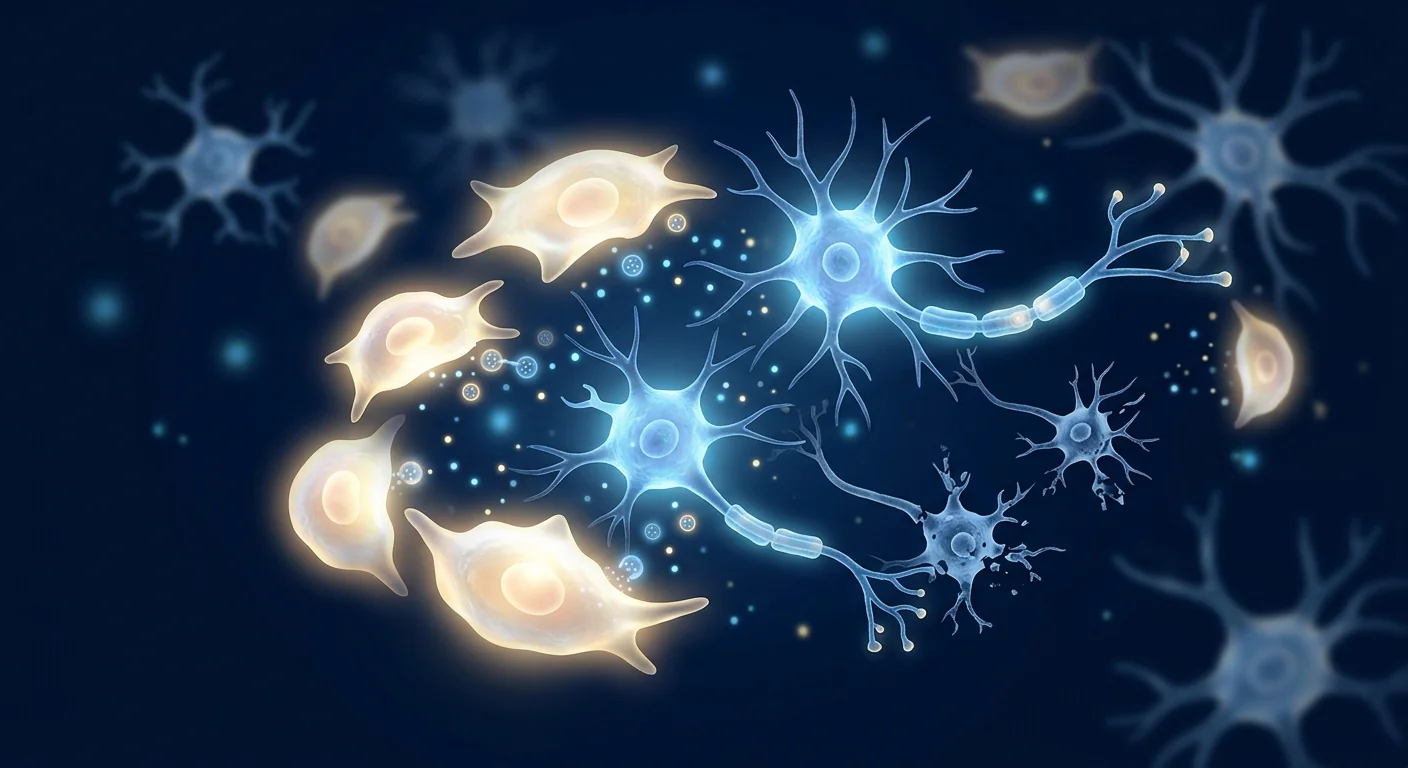
MSCs do not become dopamine neurons. They are not designed to replace lost cells. What MSC therapy is biologically positioned to influence is the cellular environment in which surviving neurons are still trying to function. Their relevant actions in Parkinson's biology include:
Calming chronic neuroinflammation
MSCs reduce the activity of pro-inflammatory microglia and shift them toward more regulatory phenotypes. They release factors such as TSG-6, PGE2, and IDO that interrupt the inflammatory feed-forward loop. In a disease where neuroinflammation accelerates ongoing neuronal loss, this is the most directly actionable target.
Mitochondrial support
Emerging research describes MSCs transferring healthy mitochondria to stressed neighbouring cells through tunneling nanotubes. In a disease centrally characterised by mitochondrial failure, this mechanism has obvious theoretical relevance — though the magnitude of clinical effect remains under active study.
Neurotrophic support
MSCs secrete factors including BDNF, GDNF, NGF, and VEGF that improve survival of stressed but living neurons. This is, again, about protecting the cells you still have rather than replacing the cells you have lost.
Modulating peripheral inflammation
Systemic MSC infusion reduces circulating inflammatory cytokines and supports immune regulatory cell populations. In light of the recognised gut–brain axis contribution to Parkinson's, this peripheral effect may matter more than was once appreciated.
What does the evidence honestly support?
Three things can be said responsibly about the published research landscape:
What is plausible: Modest improvement in non-motor symptoms (fatigue, sleep, mood, cognition) and stabilisation in some motor domains, particularly in patients treated earlier in the disease course. This pattern is consistent with what immunomodulation and neurotrophic support could realistically deliver.
What is not supported by current evidence: Restoration of substantially lost dopaminergic function, halt of disease progression, replacement of standard medications, or dramatic reversal of motor symptoms. Any clinic implying these outcomes is overpromising.
What is under active research: Optimal protocols (cell source, dose, route, frequency), patient selection, biomarker-guided personalisation, and combination with other interventions including standard neurology care.
The Honest Frame
MSC therapy is not a substitute for levodopa, dopamine agonists, MAO-B inhibitors, deep brain stimulation, or the rest of standard Parkinson's neurological care. It is best considered as a possible adjunct — one that targets the inflammatory and metabolic biology behind the disease while standard medications continue to manage the dopamine deficit.
Who is the strongest candidate?
Within realistic boundaries, the patients most likely to see meaningful response are those who:
- Are early to mid-stage in disease course — Hoehn-Yahr stages 1–3, before severe disability
- Are well-managed on standard medications with their primary neurology team
- Are seeking improvement at the margins — non-motor symptoms, energy, cognition, slowing of progression — rather than dramatic transformation
- Understand and accept the realistic envelope of what MSC therapy can biologically deliver
- Are committed to ongoing rehabilitation and neurology follow-up, not seeking to replace it
Patients with very advanced Parkinson's, complicated dyskinesias, or significant cognitive impairment may see less benefit, and some advanced indications may be better served by surgical interventions like deep brain stimulation in coordination with movement disorder specialists.
What treatment looks like
A Parkinson's-focused MSC programme at a regulated clinical centre typically follows a structured path:
- Comprehensive movement disorder assessment in coordination with the patient's neurologist — UPDRS scoring, current medication regimen, motor and non-motor inventory, recent imaging
- Baseline biomarker panel — inflammatory markers (hsCRP, IL-6, TNF-α), metabolic indicators, where indicated specialty markers
- Personalised MSC protocol — typically intravenous infusion across a structured 8–12 week cycle, dose calibrated to indication and body weight
- Continued neurology coordination — MSC therapy supplements rather than replaces existing care; medication adjustments remain the prerogative of the prescribing neurologist
- Outcome tracking — UPDRS, non-motor symptom scales (NMSS), and biomarker re-testing at scheduled milestones
Realistic expectations
The motor response is more variable than the non-motor response — a pattern that is consistent with biology. Calming inflammation can produce broad systemic improvement; replacing lost dopamine neurons cannot be achieved by current MSC protocols. Setting that expectation honestly before treatment is essential.
The right way to think about MSC therapy in Parkinson's is to ask whether it is biologically plausible to expect meaningful improvement at the margins — energy, cognition, slowing of progression — while standard medications continue to manage the core motor symptoms. The answer for the right patient, in the right disease stage, is increasingly a measured "yes". For the wrong patient, it is honestly "no".
— VELAR Clinical Team
The VELAR approach to Parkinson's
Parkinson's protocols at VELAR Center are designed in coordination with the patient's existing movement disorder neurologist — never as a replacement for that care. Each programme uses clinical-grade Wharton's jelly–derived MSCs (≥95% identity verification, >95% viability at delivery) delivered intravenously across a structured cycle, with comprehensive baseline and follow-up assessments using validated movement disorder rating scales (UPDRS, NMSS) and inflammatory bio-marker panels.
If you or a family member is exploring regenerative options for Parkinson's, the most useful first conversation is not about cells. It is about disease stage, current treatment, realistic targets, and whether MSC therapy is a sensible addition to the care framework you already have. That is the conversation we want to have with you.
References
- Uccelli A, Moretta L, Pistoia V. Mesenchymal stem cells in health and disease. Nature Reviews Immunology. 2008;8(9):726-736. doi:10.1038/nri2395 ↩
- Shi Y, Wang Y, Li Q, et al. Immunoregulatory mechanisms of mesenchymal stem and stromal cells in inflammatory diseases. Nature Reviews Nephrology. 2018;14(8):493-507. doi:10.1038/s41581-018-0023-5 ↩
- Spees JL, Lee RH, Gregory CA. Mechanisms of mesenchymal stem/stromal cell function. Stem Cell Research & Therapy. 2016;7(1):125. doi:10.1186/s13287-016-0363-7 ↩
- Galipeau J, Sensébé L. Mesenchymal stromal cells: clinical challenges and therapeutic opportunities. Cell Stem Cell. 2018;22(6):824-833. doi:10.1016/j.stem.2018.05.004 ↩
- Pittenger MF, Discher DE, Péault BM, Phinney DG, Hare JM, Caplan AI. Mesenchymal stem cell perspective: cell biology to clinical progress. NPJ Regenerative Medicine. 2019;4:22. doi:10.1038/s41536-019-0083-6 ↩
- Caplan AI. Mesenchymal stem cells: time to change the name! Stem Cells Translational Medicine. 2017;6(6):1445-1451. doi:10.1002/sctm.17-0051 ↩
- Dominici M, Le Blanc K, Mueller I, et al. Minimal criteria for defining multipotent mesenchymal stromal cells. Cytotherapy. 2006;8(4):315-317. doi:10.1080/14653240600855905 ↩
- Lalu MM, McIntyre L, Pugliese C, et al. Safety of cell therapy with mesenchymal stromal cells (SafeCell). PLoS One. 2012;7(10):e47559. doi:10.1371/journal.pone.0047559 ↩
- Naji A, Eitoku M, Favier B, Deschaseaux F, Rouas-Freiss N, Suganuma N. Biological functions of mesenchymal stem cells. Cellular and Molecular Life Sciences. 2019;76(17):3323-3348. doi:10.1007/s00018-019-03125-1 ↩
- Bronckaers A, Hilkens P, Martens W, et al. Mesenchymal stem/stromal cells as a pharmacological approach to accelerate angiogenesis. Pharmacology & Therapeutics. 2014;143(2):181-196. doi:10.1016/j.pharmthera.2014.02.013 ↩
- Wang Y, Chen X, Cao W, Shi Y. Plasticity of mesenchymal stem cells in immunomodulation. Nature Immunology. 2014;15(11):1009-1016. doi:10.1038/ni.3002 ↩
- Weiss DJ, Bertoncello I, Borok Z, et al. Stem cells and cell therapies in lung biology and lung diseases. Proceedings of the American Thoracic Society. 2011;8(3):223-272. doi:10.1513/pats.201012-071DW ↩
参考文献
- Uccelli A, Moretta L, Pistoia V. Mesenchymal stem cells in health and disease. Nature Reviews Immunology. 2008;8(9):726-736. doi:10.1038/nri2395 ↩
- Shi Y, Wang Y, Li Q, et al. Immunoregulatory mechanisms of mesenchymal stem and stromal cells in inflammatory diseases. Nature Reviews Nephrology. 2018;14(8):493-507. doi:10.1038/s41581-018-0023-5 ↩
- Spees JL, Lee RH, Gregory CA. Mechanisms of mesenchymal stem/stromal cell function. Stem Cell Research & Therapy. 2016;7(1):125. doi:10.1186/s13287-016-0363-7 ↩
- Galipeau J, Sensébé L. Mesenchymal stromal cells: clinical challenges and therapeutic opportunities. Cell Stem Cell. 2018;22(6):824-833. doi:10.1016/j.stem.2018.05.004 ↩
- Pittenger MF, Discher DE, Péault BM, Phinney DG, Hare JM, Caplan AI. Mesenchymal stem cell perspective: cell biology to clinical progress. NPJ Regenerative Medicine. 2019;4:22. doi:10.1038/s41536-019-0083-6 ↩
- Caplan AI. Mesenchymal stem cells: time to change the name! Stem Cells Translational Medicine. 2017;6(6):1445-1451. doi:10.1002/sctm.17-0051 ↩
- Dominici M, Le Blanc K, Mueller I, et al. Minimal criteria for defining multipotent mesenchymal stromal cells. Cytotherapy. 2006;8(4):315-317. doi:10.1080/14653240600855905 ↩
- Lalu MM, McIntyre L, Pugliese C, et al. Safety of cell therapy with mesenchymal stromal cells (SafeCell). PLoS One. 2012;7(10):e47559. doi:10.1371/journal.pone.0047559 ↩
- Naji A, Eitoku M, Favier B, Deschaseaux F, Rouas-Freiss N, Suganuma N. Biological functions of mesenchymal stem cells. Cellular and Molecular Life Sciences. 2019;76(17):3323-3348. doi:10.1007/s00018-019-03125-1 ↩
- Bronckaers A, Hilkens P, Martens W, et al. Mesenchymal stem/stromal cells as a pharmacological approach to accelerate angiogenesis. Pharmacology & Therapeutics. 2014;143(2):181-196. doi:10.1016/j.pharmthera.2014.02.013 ↩
- Wang Y, Chen X, Cao W, Shi Y. Plasticity of mesenchymal stem cells in immunomodulation. Nature Immunology. 2014;15(11):1009-1016. doi:10.1038/ni.3002 ↩
- Weiss DJ, Bertoncello I, Borok Z, et al. Stem cells and cell therapies in lung biology and lung diseases. Proceedings of the American Thoracic Society. 2011;8(3):223-272. doi:10.1513/pats.201012-071DW ↩
数十年来,帕金森病主要被描述为多巴胺缺乏。临床表现——震颤、僵硬、动作迟缓——反映了脑干一部分(称为黑质)中产生多巴胺的神经元的丧失。主流治疗范式遵循该逻辑:用左旋多巴替代缺失的多巴胺,辅以各种激动剂与佐剂。这通常有效,且常常持续多年。但它不能阻止潜在疾病,也不解决那些神经元为何死亡。
这就是对话正在转移的地方。如今对帕金森病背后生物学的理解涉及慢性神经炎症、线粒体功能障碍、氧化应激,以及错误折叠 α-突触核蛋白的毒性累积。每一项都是潜在的杠杆——而间充质干细胞疗法是目前研究的少数几种同时触及多项的工具之一。
帕金森患者的脑内出了什么问题?
多个相互强化的过程驱动该疾病。理解它们能厘清任何疗法可以合理帮助什么:
- 选择性多巴胺能神经元损失——当运动症状出现时,估计 50–70% 的黑质多巴胺神经元已经丧失
- 小胶质细胞激活与神经炎症——大脑自身的免疫细胞维持慢性炎症,加速剩余神经元的丧失
- 线粒体功能障碍——多巴胺神经元中的能量制造机器受损,使它们易于死亡
- 氧化应激——这些细胞产生过多的活性氧,而其衰竭的线粒体无法应对
- α-突触核蛋白聚集——错误折叠的蛋白质在细胞内累积,可能在细胞间扩散
- 受扰的肠脑轴——外周炎症(特别是来自肠道的)可能强化中枢过程
标准治疗解决症状(多巴胺信号低下)。它不解决这些底层过程的大部分。这就是为什么即使患者对左旋多巴反应良好,进展仍然继续。
间充质干细胞在哪里可能合理地帮助
MSC 不会变成多巴胺神经元。它们不是为了替代失去的细胞而设计的。MSC 疗法在生物上能影响的是仍试图发挥功能的存活神经元的细胞环境。其在帕金森生物学中的相关作用包括:
平息慢性神经炎症
MSC 减少促炎小胶质细胞的活性并将它们转向更具调节性的表型。它们释放的因子(如 TSG-6、PGE2 与 IDO)打断炎症的前馈循环。在神经炎症加速持续神经元损失的疾病中,这是最直接可操作的目标。
线粒体支持
新兴研究描述 MSC 通过隧道纳米管将健康线粒体转移到受压邻近细胞。在以线粒体衰竭为核心特征的疾病中,该机制具有明显的理论相关性——尽管临床效应的幅度仍处于积极研究中。
神经营养支持
MSC 分泌包括 BDNF、GDNF、NGF 与 VEGF 在内的因子,改善受压但仍存活的神经元的存活。这同样关乎保护您仍拥有的细胞,而非替代您已失去的。
调节外周炎症
系统性 MSC 输注减少循环炎症细胞因子并支持免疫调节细胞群。鉴于公认的肠脑轴对帕金森的贡献,这种外周效应可能比曾经认识到的更重要。
证据诚实地支持什么?
关于已发表研究领域可负责地说三件事:
什么是合理的:非运动症状(疲劳、睡眠、情绪、认知)的适度改善以及在某些运动域中的稳定,特别是在疾病早期治疗的患者。这一模式与免疫调节和神经营养支持实际可能交付的相一致。
当前证据不支持的:显著失去的多巴胺能功能的恢复、疾病进展的停止、标准药物的替代或运动症状的戏剧性逆转。任何暗示这些结果的诊所都过度承诺。
仍处于积极研究中的:最优方案(细胞来源、剂量、途径、频率)、患者选择、由生物标志物指导的个体化以及与包括标准神经病学护理在内的其他干预的组合。
诚实的框架
MSC 疗法不是左旋多巴、多巴胺激动剂、MAO-B 抑制剂、深部脑刺激或其余标准帕金森神经病学护理的替代品。它最好被视为可能的辅助——在标准药物继续管理多巴胺缺陷的同时,针对疾病背后的炎症与代谢生物学。
谁是最强的候选人?
在现实边界内,最有可能看到有意义反应的患者是:
- 处于早期至中期——Hoehn-Yahr 1–3 期,在严重残疾之前
- 在标准药物上得到很好的管理,由其主治神经病学团队
- 寻求边际改善——非运动症状、精力、认知、进展减缓——而非戏剧性变化
- 理解并接受 MSC 疗法的实际范围能够生物学上交付什么
- 致力于持续的康复与神经病学随访,而非寻求替代
处于非常晚期帕金森、复杂运动障碍或严重认知损害的患者可能受益较少,并且某些晚期适应症可能由运动障碍专家协调下的外科干预(如深部脑刺激)更好地服务。
治疗的样子
受监管临床中心的针对帕金森的 MSC 项目通常遵循结构化路径:
- 全面运动障碍评估,与患者的神经病学专家协调——UPDRS 评分、当前用药方案、运动与非运动清单、近期影像
- 基线生物标志物面板——炎症标志物(hsCRP、IL-6、TNF-α)、代谢指标,在适当时的专业标志物
- 个性化 MSC 方案——通常在结构化的 8–12 周周期内静脉输注,剂量按适应症与体重校准
- 持续神经病学协调——MSC 疗法补充而非替代现有护理;用药调整仍由处方神经病学专家决定
- 疗效追踪——UPDRS、非运动症状量表(NMSS)与生物标志物复测在既定里程碑
实际预期
运动反应比非运动反应更可变——这一模式与生物学一致。平息炎症可产生广泛的系统性改善;当前 MSC 方案不能替代失去的多巴胺神经元。在治疗前诚实地设定该预期至关重要。
思考帕金森中 MSC 疗法的正确方式是问:在标准药物继续管理核心运动症状的同时,是否有可能在边际——精力、认知、进展减缓——上获得有意义的改善是生物上合理的。对于合适的患者,在合适的疾病阶段,答案越来越是有度量的“是”。对错误的患者,答案诚实地是“否”。
——VELAR 临床团队
VELAR 的帕金森方法
VELAR Center 的帕金森方案与每位患者现有的运动障碍神经病学专家协调设计——绝非该护理的替代。每个项目使用临床级华通氏胶来源 MSC(身份验证 ≥95%、交付时活性 >95%)通过静脉输注在结构化周期内递送,并搭配使用经验证的运动障碍评分量表(UPDRS、NMSS)与炎症生物标志物面板的全面基线与随访评估。
如果您或家人正在探索帕金森的再生选项,最有用的第一次对话不是关于细胞。是关于疾病阶段、当前治疗、现实目标,以及 MSC 疗法是否是您已有护理框架的合理补充。那是我们想与您进行的对话。
لعقود، وُصِف مرض باركنسون بشكل أساسي بأنه نقص في الدوبامين. الصورة السريرية — الرعاش، التيبس، بطء الحركة — تعكس فقدان العصبونات المنتجة للدوبامين في جزء من جذع الدماغ يُسمى المادة السوداء. تبع نموذج العلاج المهيمن ذلك المنطق: استبدال الدوبامين المفقود بـ levodopa، مكمَّلاً بناهضات وعوامل مساعدة مختلفة. هذا يعمل، غالباً بشكل جيد، لسنوات عديدة في كثير من الأحيان. لكنه لا يوقف المرض الكامن، ولا يعالج سبب موت تلك العصبونات في المقام الأول.
هنا حيث يتغير الحوار. تُفهم البيولوجيا الكامنة وراء باركنسون الآن على أنها تشمل الالتهاب العصبي المزمن، خلل الميتوكوندريا، الإجهاد التأكسدي، والتراكم السام لـ alpha-synuclein المطوي بشكل خاطئ. كل واحد من هذه رافعة محتملة — وعلاج الخلايا الجذعية الوسيطة من بين الأدوات القليلة المُدرَسة حالياً التي تلامس عدة منها في وقت واحد.
ما الذي يحدث خطأ داخل دماغ مريض باركنسون؟
تدفع المرض عدة عمليات معززة بشكل متبادل. فهمها يوضح ما يمكن لأي علاج أن يساعد فيه بشكل معقول:
- الفقدان الانتقائي للعصبونات الدوبامينية — بحلول الوقت الذي تظهر فيه الأعراض الحركية، يكون 50–70% من العصبونات الدوبامينية في المادة السوداء قد فُقد بالفعل
- تنشيط الخلايا الدبقية الصغيرة والالتهاب العصبي — تظل خلايا المناعة الخاصة بالدماغ ملتهبة بشكل مزمن، مما يسرع فقدان العصبونات المتبقية
- خلل الميتوكوندريا — آلات إنتاج الطاقة في العصبونات الدوبامينية ضعيفة، مما يجعلها عرضة للموت
- الإجهاد التأكسدي — تولد هذه الخلايا أنواعاً من الأكسجين التفاعلية بشكل غير متناسب، والتي لا تستطيع ميتوكوندرياتها المتعطلة التعامل معها
- تجمع alpha-synuclein — يتراكم البروتين المطوي بشكل خاطئ داخل الخلايا وقد ينتشر من خلية إلى أخرى
- اضطراب محور الأمعاء-الدماغ — قد يعزز الالتهاب المحيطي، خاصة من الأمعاء، العملية المركزية
يعالج العلاج القياسي العَرَض (إشارات الدوبامين المنخفضة). إنه لا يعالج معظم هذه العمليات الكامنة. لهذا السبب يستمر التقدم حتى عندما يستجيب المرضى جيداً لـ levodopa.
أين يمكن للخلايا الجذعية الوسيطة المساعدة بشكل معقول
MSC لا تصبح عصبونات دوبامينية. لم تُصمَّم لاستبدال الخلايا المفقودة. ما يستطيع علاج MSC التأثير عليه بيولوجياً هو البيئة الخلوية التي لا تزال فيها العصبونات الباقية تحاول العمل. تشمل أفعالها ذات الصلة في بيولوجيا باركنسون:
تهدئة الالتهاب العصبي المزمن
تقلل MSC نشاط الخلايا الدبقية الصغيرة المؤيدة للالتهاب وتحولها نحو أنماط أكثر تنظيماً. تطلق عوامل مثل TSG-6 وPGE2 وIDO تقاطع الحلقة الالتهابية المتقدمة. في مرض حيث الالتهاب العصبي يسرع الفقدان العصبي المستمر، هذا هو الهدف الأكثر قابلية للتنفيذ مباشرة.
الدعم الميتوكوندري
تصف الأبحاث الناشئة MSC تنقل الميتوكوندريا الصحية إلى الخلايا المجاورة المُجهَدة عبر أنابيب نانوية نفقية. في مرض يتميز مركزياً بفشل الميتوكوندريا، لهذه الآلية أهمية نظرية واضحة — رغم أن حجم التأثير السريري يبقى قيد الدراسة النشطة.
الدعم العصبي المغذي
تفرز MSC عوامل تشمل BDNF وGDNF وNGF وVEGF تحسن بقاء العصبونات المُجهَدة لكن الحية. هذا، مرة أخرى، يتعلق بحماية الخلايا التي لا تزال لديك بدلاً من استبدال الخلايا التي فقدتها.
تعديل الالتهاب المحيطي
يقلل التسريب الجهازي لـ MSC السيتوكينات الالتهابية في الدورة الدموية ويدعم مجموعات خلايا مناعية تنظيمية. في ضوء المساهمة المعترف بها لمحور الأمعاء-الدماغ في باركنسون، قد يهم هذا التأثير المحيطي أكثر مما كان مُقدَّراً سابقاً.
ماذا تدعم الأدلة بصدق؟
يمكن قول ثلاثة أشياء بمسؤولية حول مشهد الأبحاث المنشورة:
ما هو معقول: تحسن متواضع في الأعراض غير الحركية (الإرهاق، النوم، المزاج، الإدراك) واستقرار في بعض المجالات الحركية، خاصة لدى المرضى الذين يُعالَجون في وقت مبكر من مسار المرض. هذا النمط متسق مع ما يمكن أن يقدمه تعديل المناعة والدعم العصبي المغذي بشكل واقعي.
ما لا تدعمه الأدلة الحالية: استعادة الوظيفة الدوبامينية المفقودة بشكل كبير، إيقاف تقدم المرض، استبدال الأدوية القياسية، أو عكس درامي للأعراض الحركية. أي عيادة تُلمح إلى هذه النتائج تُبالغ في الوعد.
ما يبقى قيد البحث النشط: البروتوكولات المثلى (مصدر الخلايا، الجرعة، المسار، التكرار)، اختيار المرضى، التخصيص الموجه بالمؤشرات الحيوية، والمزج مع تدخلات أخرى بما في ذلك الرعاية العصبية القياسية.
الإطار الصادق
علاج MSC ليس بديلاً عن levodopa، أو ناهضات الدوبامين، أو مثبطات MAO-B، أو التحفيز العميق للدماغ، أو بقية الرعاية العصبية القياسية لباركنسون. يُنظَر إليه بشكل أفضل على أنه مساعد ممكن — يستهدف البيولوجيا الالتهابية والأيضية وراء المرض بينما تستمر الأدوية القياسية في إدارة عجز الدوبامين.
من المرشح الأقوى؟
ضمن الحدود الواقعية، المرضى الأكثر احتمالاً لرؤية استجابة ذات معنى هم الذين:
- هم في مرحلة مبكرة إلى متوسطة من مسار المرض — مراحل Hoehn-Yahr 1–3، قبل العجز الشديد
- تتم إدارتهم بشكل جيد على الأدوية القياسية مع فريق طب الأعصاب الأساسي
- يبحثون عن تحسن على الهامش — أعراض غير حركية، طاقة، إدراك، إبطاء التقدم — بدلاً من تحول دراماتيكي
- يفهمون ويقبلون الإطار الواقعي لما يمكن لعلاج MSC تقديمه بيولوجياً
- ملتزمون بإعادة التأهيل المستمرة ومتابعة طب الأعصاب، لا يسعون لاستبدالها
المرضى الذين يعانون من باركنسون متقدم جداً، خلل حركي معقد، أو ضعف إدراكي كبير قد يرون فائدة أقل، وقد يُخدَم بعض المؤشرات المتقدمة بشكل أفضل بالتدخلات الجراحية مثل التحفيز العميق للدماغ بالتنسيق مع متخصصي اضطرابات الحركة.
كيف يبدو العلاج
برنامج MSC المتمحور حول باركنسون في مركز سريري مُنظَّم يتبع عادة مساراً منظماً:
- تقييم شامل لاضطرابات الحركة بالتنسيق مع طبيب الأعصاب لدى المريض — تسجيل UPDRS، نظام الأدوية الحالي، جرد الأعراض الحركية وغير الحركية، التصوير الحديث
- لوحة المؤشرات الحيوية الأساسية — علامات الالتهاب (hsCRP، IL-6، TNF-α)، المؤشرات الأيضية، علامات متخصصة حيث تُشار إليها
- بروتوكول MSC شخصي — عادة تسريب وريدي على مدى دورة منظمة من 8–12 أسبوعاً، الجرعة معايرة وفقاً للدلالة ووزن الجسم
- التنسيق العصبي المستمر — يكمل علاج MSC بدلاً من أن يحل محل الرعاية الحالية؛ تظل تعديلات الأدوية صلاحية طبيب الأعصاب الذي يصف
- تتبع النتائج — UPDRS، مقاييس الأعراض غير الحركية (NMSS)، وإعادة اختبار المؤشرات الحيوية في علامات مجدولة
التوقعات الواقعية
الاستجابة الحركية أكثر تباينًا من الاستجابة غير الحركية — نمط متسق مع البيولوجيا. تهدئة الالتهاب يمكن أن تنتج تحسناً نظامياً واسعاً؛ استبدال العصبونات الدوبامينية المفقودة لا يمكن تحقيقه ببروتوكولات MSC الحالية. وضع هذا التوقع بصدق قبل العلاج أمر ضروري.
الطريقة الصحيحة للتفكير في علاج MSC في باركنسون هي السؤال عما إذا كان من المعقول بيولوجياً توقع تحسن ذي معنى على الهامش — الطاقة، الإدراك، إبطاء التقدم — بينما تستمر الأدوية القياسية في إدارة الأعراض الحركية الأساسية. الإجابة للمريض المناسب، في مرحلة المرض المناسبة، هي بشكل متزايد "نعم" مُقاسة. للمريض الخطأ، إنها بصدق "لا".
— فريق VELAR السريري
منهج VELAR لباركنسون
تُصمَّم بروتوكولات باركنسون في VELAR Center بالتنسيق مع طبيب الأعصاب الحالي للمريض المتخصص في اضطرابات الحركة — لا أبداً كبديل عن تلك الرعاية. يستخدم كل برنامج MSC ذات الجودة السريرية المشتقة من هلام وارتون (تحقق من الهوية ≥95٪، حيوية عند التسليم >95٪) تُسلَّم وريدياً على مدى دورة منظمة، مع تقييمات أساسية وتالية باستخدام مقاييس تقييم اضطرابات الحركة المعتمدة (UPDRS، NMSS) ولوحات المؤشرات الحيوية الالتهابية.
إذا كنت أنت أو أحد أفراد العائلة يستكشف خيارات تجديدية لباركنسون، فإن أكثر محادثة أولى مفيدة ليست عن الخلايا. إنها عن مرحلة المرض، العلاج الحالي، الأهداف الواقعية، وما إذا كان علاج MSC إضافة معقولة لإطار الرعاية الذي لديك بالفعل. هذه هي المحادثة التي نريد إجراءها معك.