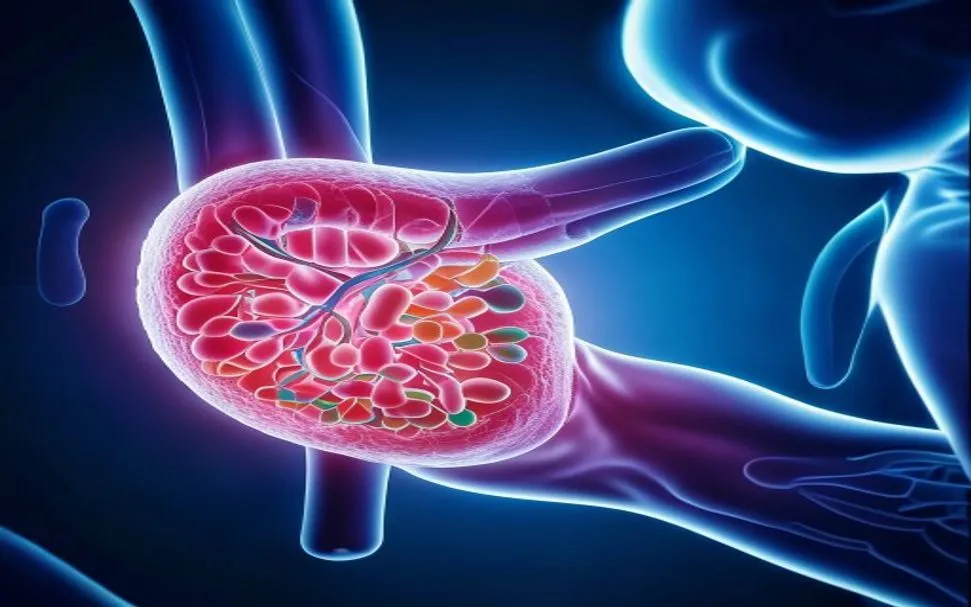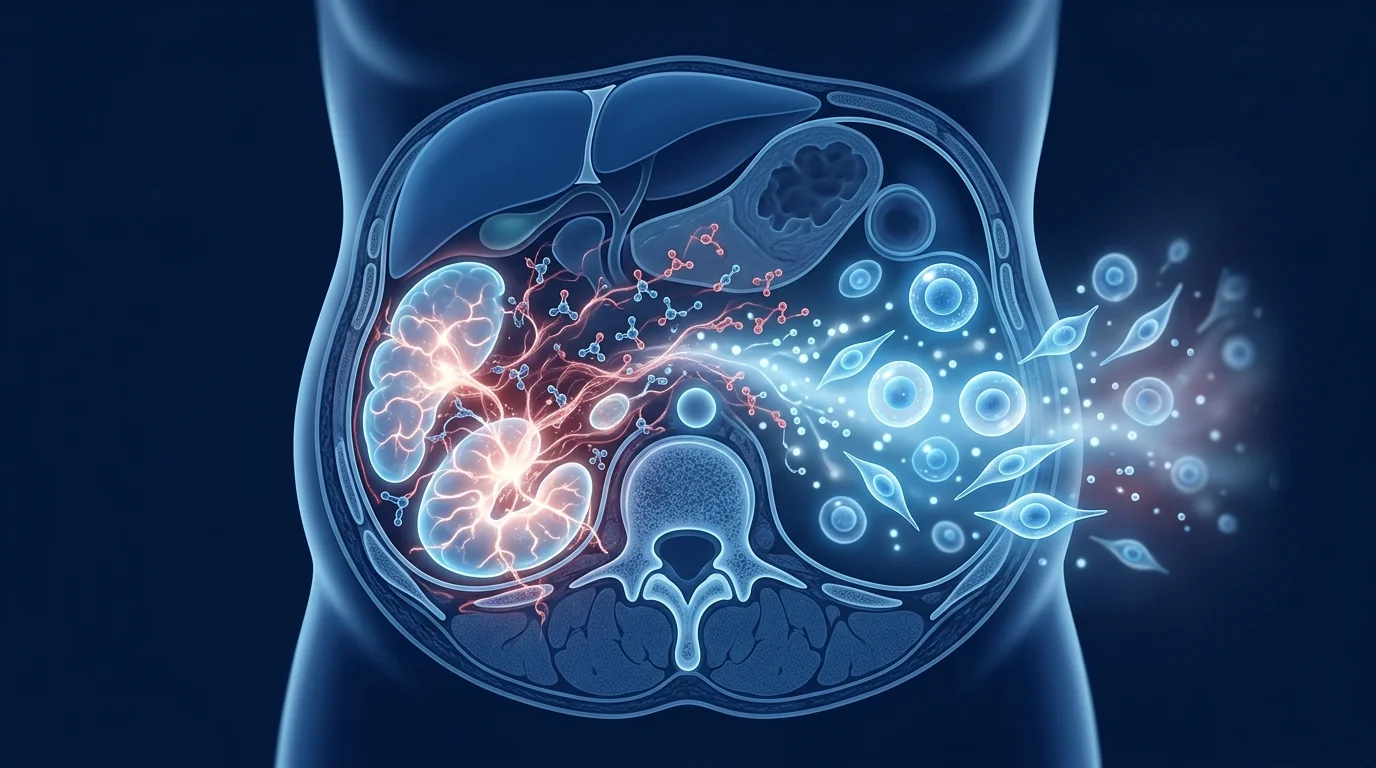
Obesity is rarely a simple matter of excess calories. It is a complex, chronic, relapsing disease driven by genetic, neurobiological, environmental, and metabolic factors — and at its core, it carries a persistent inflammatory signal that makes it biologically addressable by a therapy designed to modulate inflammation. That is the regenerative-medicine hypothesis for obesity: can Mesenchymal Stem Cell therapy reduce the adipose-driven inflammatory burden that makes weight loss so difficult and metabolic disease so inevitable?
Obesity is an inflammatory disease, not just a weight problem. The World Health Organization now classifies obesity as a chronic, relapsing disease affecting over 890 million adults worldwide. [1] The real driver of its complications — type 2 diabetes, cardiovascular disease, fatty liver, joint degeneration — is not simply the mechanical burden of carrying excess weight. It is the chronic, low-grade inflammatory state that emanates from dysfunctional, overloaded adipose tissue.
Where conventional approaches meet their limit. Diet, exercise, behavioural modification, pharmacotherapy (GLP-1 receptor agonists, SGLT2 inhibitors), and bariatric surgery are effective for millions. But weight regain is common, medication non-adherence is high, and even successful weight loss does not always reverse the deep inflammatory and metabolic dysfunction that obesity has etched into the body's tissues. [2]
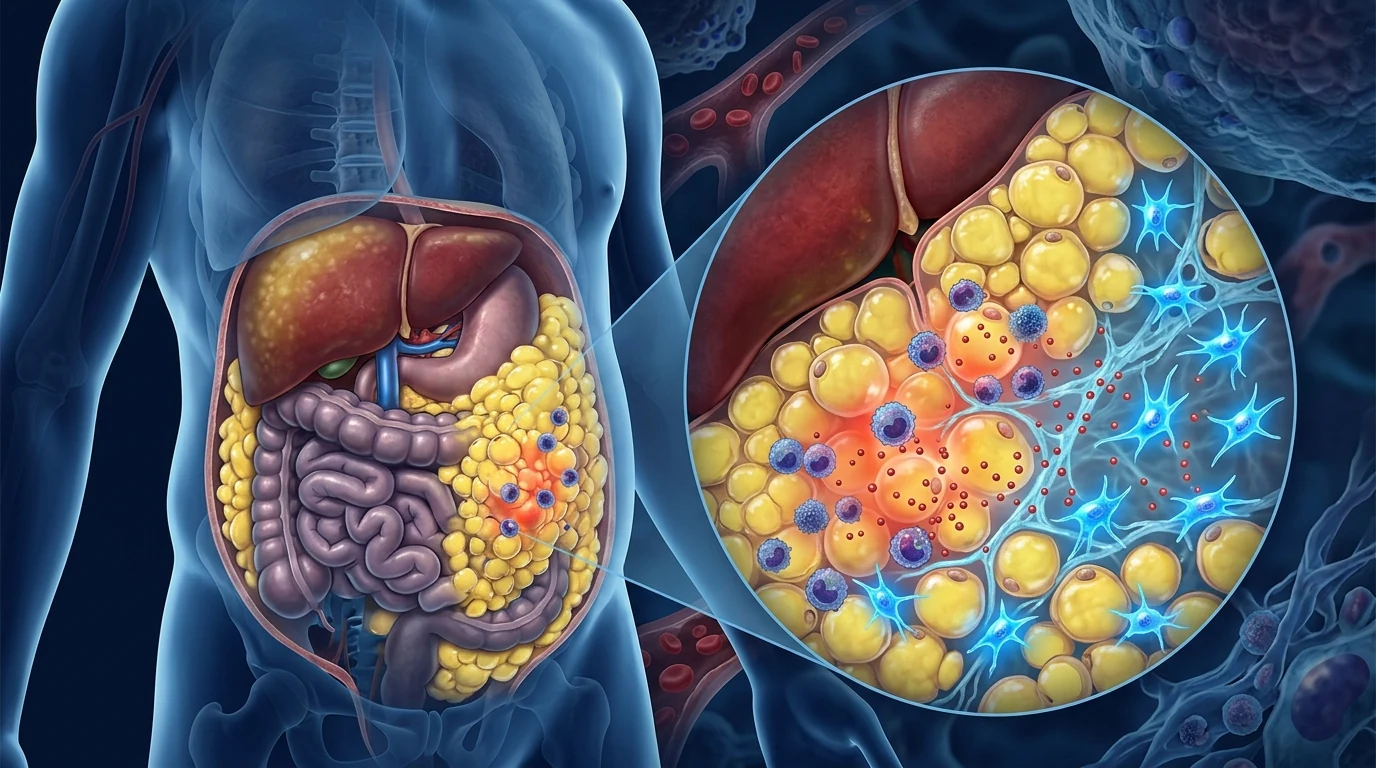
The tissue-level problem is adipose inflammation. As adipose tissue expands beyond its healthy capacity, adipocytes become enlarged and dysfunctional. They secrete pro-inflammatory cytokines — TNF-α, IL-6, leptin — and recruit macrophages that amplify the inflammatory cascade. The result is a systemic, low-grade inflammation that drives insulin resistance, endothelial dysfunction, dyslipidaemia, and progressive metabolic decline. [3]
MSC therapy targets that inflammatory substrate. Rather than bypassing the metabolic problem through caloric restriction or pharmacological appetite suppression, MSCs enter the inflamed tissue environment and modulate it — shifting the immune balance from pro-inflammatory to regulatory, reducing cytokine output, and supporting tissue-level repair.
What is obesity
Obesity is defined by the World Health Organization as abnormal or excessive fat accumulation that presents a health risk. Clinically, it is most often classified by body mass index (BMI ≥30 kg/m²), though the distribution of fat — particularly visceral (abdominal) adiposity — is a stronger predictor of metabolic complications than BMI alone. [4]
The condition is not a single disease entity but a heterogeneous syndrome with multiple phenotypes: metabolically healthy obesity (obesity without overt metabolic abnormalities), metabolically unhealthy obesity (with insulin resistance, dyslipidaemia, hypertension), and sarcopenic obesity (obesity with low muscle mass). Each phenotype has a different inflammatory burden and different regenerative-therapy considerations. [5]
Globally, obesity rates have tripled since 1975. Over 2.5 billion adults are overweight, and nearly 900 million live with obesity. The condition is the single strongest modifiable risk factor for type 2 diabetes, cardiovascular disease, several cancers, osteoarthritis, sleep apnoea, and premature mortality. [6]
Why obesity is more than a lifestyle problem
The biology matters. Once established, obesity alters appetite regulation (leptin resistance, ghrelin dysregulation), energy expenditure (reduced resting metabolic rate, adaptive thermogenesis decline), and adipose tissue function (fibrosis, hypoxia, immune cell infiltration). This means that sustainable weight loss requires addressing the biological drivers, not just the behavioural ones. [7]
What is actually going wrong in obese adipose tissue
To understand why MSCs are relevant to obesity, it helps to understand what is happening inside the dysfunctional adipose tissue itself. The most important mechanisms include:
- Adipocyte hypertrophy and dysfunction — as individual fat cells expand beyond their optimal size, they become hypoxic, stressed, and pro-inflammatory, secreting TNF-α, IL-6, MCP-1, and leptin while reducing adiponectin (the protective, insulin-sensitising adipokine)
- Macrophage infiltration and polarisation — adipose tissue macrophages shift from the anti-inflammatory M2 phenotype to the pro-inflammatory M1 phenotype, amplifying the cytokine cascade and creating a self-sustaining inflammatory loop [8]
- Adipose tissue hypoxia and fibrosis — as fat mass expands beyond its vascular supply, regions become hypoxic, triggering fibrotic remodelling that stiffens the tissue and further impairs metabolic function
- Altered adipokine profile — the balance shifts from protective factors (adiponectin, SFRP5) to detrimental ones (leptin, resistin, visfatin), directly contributing to systemic insulin resistance and vascular inflammation
- Lipid spillover and ectopic fat deposition — when subcutaneous adipose storage capacity is exceeded, lipids overflow into the liver, muscle, pancreas, and heart, driving fatty liver disease, muscle insulin resistance, and cardiometabolic decline
The unifying concept is that obesity is an inflammatory disease of adipose tissue — and that the inflammatory milieu itself is both the cause and the consequence of progressive metabolic decompensation. [9]
What MSCs may contribute to obesity management
MSCs are not a weight-loss therapy in any conventional sense. No reputable clinical evidence suggests that MSC infusions produce meaningful, sustained weight reduction on their own. What MSCs do is enter the inflammatory environment and modulate it — which, in the context of obesity, could improve the underlying metabolic conditions that make weight loss and metabolic health so difficult to achieve.
Anti-inflammatory recalibration of adipose tissue
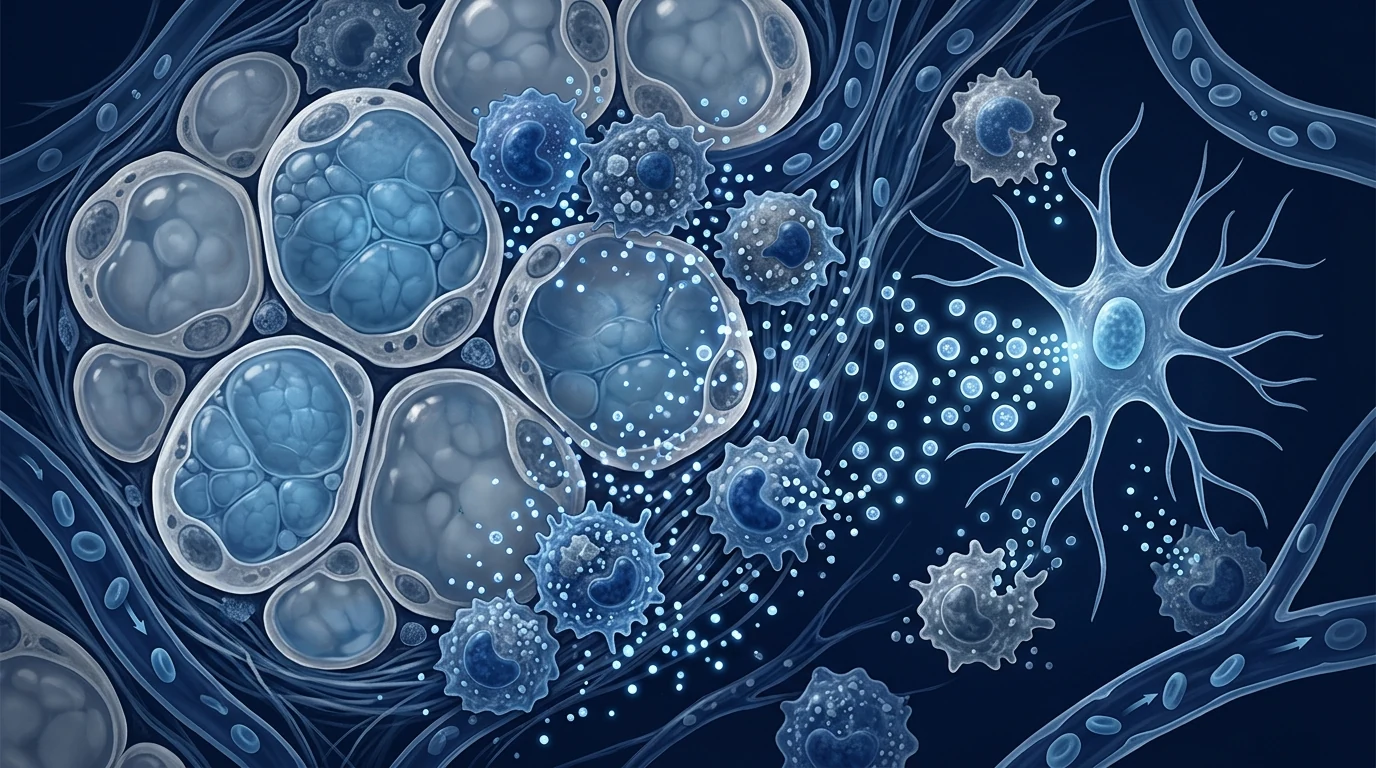
The chronic adipose inflammation that drives obesity's metabolic complications is the single most addressable target for MSC therapy. MSCs sense the inflammatory cytokine milieu and secrete TSG-6, PGE2, IDO, IL-10, and other factors that inhibit NF-κB signalling, reduce TNF-α and IL-6 output, and promote macrophage polarisation toward the anti-inflammatory M2 phenotype. [10] The downstream effect may be a measurable reduction in systemic inflammatory markers (hsCRP, IL-6) and a modest improvement in metabolic function.
Insulin-sensitivity improvement
By lowering the inflammatory tone in muscle, liver, and adipose tissue, MSCs can improve the signalling efficiency of insulin. This is particularly relevant in obesity, where insulin resistance is the central metabolic defect linking adipose dysfunction to type 2 diabetes and cardiovascular risk. [11]
Adipocyte health and metabolic function
MSC-derived paracrine factors may promote a healthier adipocyte profile — encouraging smaller, more insulin-sensitive fat cells and reducing the pro-inflammatory output of hypertrophic ones. Preclinical data show that MSC therapy in diet-induced obesity models reduces total fat mass and shifts the adipokine balance toward a more favourable profile (higher adiponectin, lower leptin). [12]
Endothelial repair and vascular support
Obesity is, among other things, a disease of the microvasculature. Adipose tissue hypoxia and systemic endothelial dysfunction are early and reversible drivers of metabolic decline. MSCs release VEGF, HGF, and angiopoietin-1, supporting microvascular integrity and improving perfusion in metabolically stressed tissues. [13]
What the evidence supports — and what it doesn't
An honest assessment of the published research landscape on MSC therapy for obesity:
What is plausible: Modest reduction in inflammatory markers (hsCRP, IL-6), modest improvement in insulin sensitivity (HOMA-IR), favourable shifts in adipokine profile (higher adiponectin, lower leptin), and possible mild improvement in metabolic parameters — particularly in patients who are still in the inflammation-driven phase of obesity and who combine MSC therapy with sustained lifestyle and medical management. Preclinical evidence consistently supports these effects. [14]
What is not supported by current evidence: Clinically meaningful weight loss from MSC therapy alone, reversal of established obesity, durable resolution of metabolic syndrome without ongoing lifestyle modification, or protection from cardiovascular events without medical management. Any clinic implying these outcomes is overstating what the biology and the current human trial data support.
What remains under active investigation: The optimal cell source (autologous adipose-derived MSCs face functional impairment in obesity; allogeneic Wharton's jelly MSCs may perform more consistently), dosing protocols, patient-stratification by obesity phenotype, long-term safety, and interaction with GLP-1 receptor agonists and bariatric outcomes.
The honest frame for obesity and MSC therapy
MSC therapy for obesity is, at present, an adjunctive and investigational protocol — a possible addition to structured weight management, not a replacement for it. Sustained caloric balance, regular physical activity, behavioural support, and guideline-directed medical therapy (including GLP-1 agonists and bariatric surgery where indicated) remain the foundation. Regenerative therapy is best considered for the inflammatory and metabolic complications of obesity, not as a weight-loss intervention itself.
Who is the strongest candidate
Within realistic boundaries, the patients most likely to see meaningful benefit are those who:
- Are in the earlier, inflammation-driven phase of obesity, before significant target-organ damage (advanced fatty liver, established cardiovascular disease)
- Have elevated inflammatory markers (hsCRP, IL-6) alongside elevated adiposity — a marker that the inflammatory substrate MSCs can target is present
- Are committed to structured weight management — MSC therapy amplifies metabolic improvement; it cannot substitute for the caloric and behavioural foundation of obesity treatment
- Have metabolically unhealthy obesity (insulin resistance, dyslipidaemia, raised inflammatory markers) rather than metabolically healthy obesity
- Are coordinating with their physician on any treatment and medication changes — particularly if taking GLP-1 agonists or other metabolic medications
Patients with long-standing, severe obesity and advanced target-organ damage are less likely to see substantial benefit from MSC therapy alone, though it may still play a supportive anti-inflammatory role in carefully selected cases.
MSC therapy for obesity — what treatment involves
An obesity-focused MSC programme at a regulated clinical centre typically follows this structure:
- Comprehensive metabolic and inflammatory assessment — body composition analysis (DEXA or BIA), fasting glucose, insulin, HbA1c, lipid profile, blood pressure, liver function and imaging (for NAFLD), inflammatory markers (hsCRP, IL-6), adipokine profiling (leptin, adiponectin)
- Obesity phenotype classification — identifying whether the patient's obesity is metabolically healthy or unhealthy, sarcopenic, or complicated by established metabolic disease
- Coordination with the patient's physician — MSC therapy supplements rather than replaces medical and surgical management; GLP-1 agonist dosing, bariatric planning, and metabolic medication adjustments remain with the prescribing physician
- Personalised MSC protocol — typically intravenous infusion of allogeneic Wharton's jelly-derived MSCs (≥95% identity, >95% viability at delivery) across a structured 8–12 week cycle
- Structured lifestyle and behavioural protocol — caloric balance, physical activity, sleep optimisation, and weight-management guidance designed to amplify and sustain the metabolic response
- Outcome tracking — repeat inflammatory and metabolic panels at 3, 6, and 12-month milestones, with body composition and cardiometabolic risk reassessment
Realistic expectations
Outcomes vary substantially by obesity phenotype, baseline inflammatory tone, lifestyle adherence, MSC quality, and dosing protocol. Some patients see measurable improvement in inflammatory markers within a few months; others build benefit gradually; a minority do not respond. A reputable clinic discusses this variability honestly during consultation, not after.
Safety considerations specific to obesity
Several considerations deserve particular attention in patients with obesity:
- Cardiovascular screening — obesity is a cardiovascular-risk condition by itself; medical clearance, ECG, and cardiovascular assessment are part of every consultation
- Concurrent medications — many patients are on GLP-1 agonists, metformin, statins, or antihypertensives; MSC therapy does not replace these, and any adjustment remains with the prescribing physician
- NAFLD status — patients with significant non-alcoholic fatty liver disease require careful protocol design and additional monitoring
- Cell quality — clinical-grade, ISCT-verified MSCs delivered under qualified medical supervision is a non-negotiable foundation. In obese patients with significant adipose dysfunction, allogeneic (donor-derived) MSCs may perform more predictably than autologous adipose-derived MSCs
- Obstructive sleep apnoea — if present and untreated, OSA should be addressed before initiating any elective regenerative therapy
The right way to think about MSC therapy in obesity is not "will this help me lose weight?" — biology cannot deliver that today. It is "is there a measurable reduction in my chronic inflammatory tone and an improvement in my metabolic health, alongside the structured weight management I am already pursuing?" For the right patient — one with obesity complicated by inflammation, insulin resistance, and metabolic dysfunction — the evidence increasingly suggests the answer is yes.
— VELAR Clinical Team
How MSC therapy fits with modern obesity treatment
Obesity care has been transformed by the arrival of highly effective GLP-1 receptor agonists (semaglutide, liraglutide, tirzepatide) that produce meaningful weight loss in a substantial proportion of patients. MSC therapy does not compete with these agents — it addresses a different layer of the problem. GLP-1 agonists reduce appetite and slow gastric emptying; MSCs address the inflammatory and metabolic environment of the tissue itself. The two may be complementary, but this has not yet been formally studied.
Bariatric surgery remains the most effective intervention for severe obesity, producing durable weight loss and metabolic remission. MSC therapy has been explored as a peri-operative adjunct — potentially improving metabolic outcomes and reducing inflammatory complications — but this is still an investigational application.
MSC therapy does not replace, compete with, or diminish the importance of lifestyle modification, pharmacological therapy, or surgical intervention. It addresses a biological dimension — chronic adipose inflammation — that is largely untouched by these other approaches. For the right patient, that makes it a reasonable addition to a comprehensive obesity management plan.
The VELAR approach to obesity and metabolic health
Obesity-focused protocols at VELAR Center are designed in coordination with each patient's existing physician and metabolic care team. Each programme uses clinical-grade Wharton's jelly\u2013derived MSCs (≥95% identity verification, >95% viability at delivery) delivered via personalised intravenous infusion, paired with a structured lifestyle and metabolic optimisation protocol and inflammatory and metabolic biomarker tracking at the 3, 6, and 12-month milestones.
If you are considering regenerative therapy as part of your obesity management plan, the most useful first conversation is not about cells. It is about your obesity phenotype, your inflammatory burden, your current treatment framework, and whether MSC therapy is a sensible addition to the lifestyle and medical foundation you already have. That conversation — honest, data-driven, in coordination with your existing team — is what we offer at VELAR.
References
- Bray GA, Kim KK, Wilding JPH. Obesity: a chronic relapsing progressive disease process. World Health Organization classification. doi:10.1111/obr.13413 ↩
- Serena C, Keiran N, Ceperuelo-Mallafre V, et al. Obesity and type 2 diabetes alters the immune properties of human adipose derived stem cells. Stem Cells. 2016;34(10):2559-2573. doi:10.1002/stem.2429 ↩
- Louwen F, Ritter A, Kreis NN, Yuan J. Insight into the development of obesity: functional alterations of adipose-derived mesenchymal stem cells. Obesity Reviews. 2018;19(7):888-904. doi:10.1111/obr.12679 ↩
- Silva KR, Baptista LS. Adipose-derived stromal/stem cells from different adipose depots in obesity development. World Journal of Stem Cells. 2019;11(3):147-166. doi:10.4252/wjsc.v11.i3.147 ↩
- Silva KR, Liechocki S, Carneiro JR, et al. Stromal-vascular fraction content and adipose stem cell behavior are altered in morbid obese and post bariatric surgery ex-obese women. Stem Cell Research & Therapy. 2015;6:72. doi:10.1186/s13287-015-0029-x ↩
- Liu GY, Liu J, Wang YL, et al. Adipose-derived mesenchymal stem cells ameliorate lipid metabolic disturbance in mice. Stem Cells Translational Medicine. 2016;5(9):1162-1170. doi:10.5966/sctm.2015-0239 ↩
- Saleh F, Itani L, Calugi S, Dalle Grave R, El Ghoch M. Adipose-derived mesenchymal stem cells in the treatment of obesity: a systematic review of longitudinal studies on preclinical evidence. Current Stem Cell Research & Therapy. 2018;13(6):466-475. doi:10.2174/1574888X13666180515160008 ↩
- Jaber H, Issa K, Eid A, Saleh FA. The therapeutic effects of adipose-derived mesenchymal stem cells on obesity and its associated diseases in diet-induced obese mice. Scientific Reports. 2021;11:6291. doi:10.1038/s41598-021-85917-9 ↩
- Boland L, Bitterlich LM, Hogan AE, Ankrum JA, English K. Translating MSC therapy in the age of obesity. Frontiers in Immunology. 2022;13:943333. doi:10.3389/fimmu.2022.943333 ↩
- Pham DV, Nguyen TK, Park PH. Adipokines at the crossroads of obesity and mesenchymal stem cell therapy. Experimental & Molecular Medicine. 2023;55:2235-2248. doi:10.1038/s12276-023-00940-2 ↩
- Uccelli A, Moretta L, Pistoia V. Mesenchymal stem cells in health and disease. Nature Reviews Immunology. 2008;8(9):726-736. doi:10.1038/nri2395 ↩
- Zang L, Hao H, Liu J, et al. Mesenchymal stem cell therapy in metabolic and inflammatory disease: a systematic review. Diabetology & Metabolic Syndrome. 2017;9:36. doi:10.1186/s13098-017-0233-1 ↩
- Bronckaers A, Hilkens P, Martens W, et al. Mesenchymal stem/stromal cells as a pharmacological and therapeutic approach to accelerate angiogenesis. Pharmacology & Therapeutics. 2014;143(2):181-196. doi:10.1016/j.pharmthera.2014.02.013 ↩
- Dominici M, Le Blanc K, Mueller I, et al. Minimal criteria for defining multipotent mesenchymal stromal cells. Cytotherapy. 2006;8(4):315-317. doi:10.1080/14653240600855905 ↩
- Galipeau J, Sensébé L. Mesenchymal stromal cells: clinical challenges and therapeutic opportunities. Cell Stem Cell. 2018;22(6):824-833. doi:10.1016/j.stem.2018.05.004 ↩
肥胖很少只是热量过剩。它是一种复杂的慢性复发性疾病,由遗传、神经生物学、环境和代谢因素共同驱动——其核心是一种持续的炎症信号,使其在生物学上可以被设计用于调节炎症的疗法所干预。这就是肥胖的再生医学假说:间充质干细胞疗法能否降低由脂肪驱动的炎症负担——正是这种炎症使减重如此困难、代谢疾病如此不可避免?
肥胖是炎症性疾病,而非单纯的体重问题。世界卫生组织已将肥胖归类为慢性复发性疾病,全球影响超过8.9亿成年人。[1]其并发症的真正驱动因素——2型糖尿病、心血管疾病、脂肪肝、关节退化——不仅仅是承载过量体重的机械负担,而是由功能障碍且过负荷的脂肪组织产生的慢性低度炎症状态。
传统方法的局限。饮食、运动、行为干预、药物治疗(GLP-1受体激动剂、SGLT2抑制剂)和减重手术对数亿人有效。但体重反弹很常见,药物依从性不高,即使成功减重也不总能逆转肥胖已烙印在身体组织中的深层炎症与代谢功能障碍。[2]
组织层面问题是脂肪炎症。当脂肪组织扩张超出健康容量,脂肪细胞变得增大且功能障碍。它们分泌促炎细胞因子——TNF-α、IL-6、瘦素——并招募巨噬细胞放大炎症级联。结果是一种全身性低度炎症,驱动胰岛素抵抗、内皮功能障碍、血脂异常和进行性代谢衰退。[3]
MSC疗法靶向该炎症基质。MSC并非通过热量限制或药理食欲抑制来绕过代谢问题,而是进入发炎的组织环境并进行调节——将免疫平衡从促炎转向调节性,减少细胞因子输出,并支持组织层面修复。
什么是肥胖
世界卫生组织将肥胖定义为危害健康的异常或过量脂肪积累。临床上最常通过体重指数(BMI≥30 kg/m²)分类,但脂肪分布——特别是内脏(腹部)脂肪——比BMI更能预测代谢并发症。[4]
该病症并非单一种疾病实体,而是一种具有多种表型的异质性综合征:代谢健康型肥胖(无显著代谢异常的肥胖)、代谢不健康型肥胖(伴胰岛素抵抗、血脂异常、高血压)和肌肉减少型肥胖(肥胖伴低肌肉量)。每种表型有不同的炎症负担和不同的再生疗法考量。[5]
全球范围内,自1975年以来肥胖率已翻三倍。超过25亿成年人超重,近9亿人患有肥胖。该病症是2型糖尿病、心血管疾病、多种癌症、骨关节炎、睡眠呼吸暂停和过早死亡的最强单一可改变风险因素。[6]
为什么肥胖超越生活方式问题
生物学至关重要。一旦确立,肥胖会改变食欲调节(瘦素抵抗、生长素释放肽失调)、能量消耗(静息代谢率降低、适应性产热下降)和脂肪组织功能(纤维化、缺氧、免疫细胞浸润)。这意味着可持续减重需要解决生物学驱动因素,而不仅仅是行为因素。[7]
肥胖脂肪组织实际出了什么问题
要理解MSC为何与肥胖相关,有助于理解功能障碍脂肪组织内部的状况。最重要的机制包括:
- 脂肪细胞肥大与功能障碍——当脂肪细胞膨胀超过最佳尺寸,它们变得缺氧、应激并产生炎症,分泌TNF-α、IL-6、MCP-1和瘦素,同时减少脂联素(保护性、胰岛素增敏的脂肪因子)
- 巨噬细胞浸润与极化——脂肪组织巨噬细胞从抗炎M2表型转变为促炎M1表型,放大细胞因子级联并形成自我维持的炎症循环[8]
- 脂肪组织缺氧与纤维化——当脂肪块扩张超出其血管供应,区域变得缺氧,触发纤维化重塑使组织硬化并进一步损害代谢功能
- 脂肪因子谱改变——平衡从保护因子(脂联素、SFRP5)转向有害因子(瘦素、抵抗素、内脂素),直接促进全身胰岛素抵抗和血管炎症
- 脂质溢出与异位脂肪沉积——当皮下脂肪储存能力被超过,脂质溢入肝脏、肌肉、胰腺和心脏,驱动脂肪肝疾病、肌肉胰岛素抵抗和心血管代谢衰退
统一概念是肥胖是一种脂肪组织的炎症性疾病——炎症环境本身既是进行性代谢失代偿的原因也是其结果。[9]
MSC对肥胖管理可能的贡献
MSC不是任何传统意义上的减重疗法。没有可靠临床证据表明MSC输注能单独产生有意义的持续性体重减轻。MSC真正做的是进入炎症环境并调节它——在肥胖的背景下,这可能改善那些使减重和代谢健康如此难以实现的潜在代谢条件。
脂肪组织的抗炎再校准
驱动肥胖代谢并发症的慢性脂肪炎症是MSC疗法最可处理的靶点。MSC感知炎症细胞因子环境并分泌TSG-6、PGE2、IDO、IL-10和其他因子,抑制NF-κB信号,减少TNF-α和IL-6输出,促进巨噬细胞向抗炎M2表型极化。[10]下游效应可能是全身炎症标志物(hsCRP、IL-6)的可测量降低和代谢功能的适度改善。
胰岛素敏感性改善
通过降低肌肉、肝脏和脂肪组织中的炎症水平,MSC可改善胰岛素的信号效率。这在肥胖中尤其相关,因为胰岛素抵抗是将脂肪功能障碍与2型糖尿病和心血管风险联系起来的核心代谢缺陷。[11]
脂肪细胞健康与代谢功能
MSC衍生的旁分泌因子可能促进更健康的脂肪细胞谱——鼓励更小、胰岛素敏感性更高的脂肪细胞,减少增大脂肪细胞的促炎输出。临床前数据显示,在饮食诱导肥胖模型中,MSC治疗减少了总脂肪量并将脂肪因子平衡转向更有利的方向(更高脂联素、更低瘦素)。[12]
内皮修复与血管支持
肥胖也是微血管疾病。脂肪组织缺氧和全身内皮功能障碍是代谢衰退的早期可逆驱动因素。MSC释放VEGF、HGF和血管生成素-1,支持微血管完整性并改善代谢应激组织中的灌注。[13]
证据支持什么——以及不支持什么
对肥胖MSC疗法发表研究领域的诚实评估:
什么是合理的:炎症标志物(hsCRP、IL-6)的适度降低、胰岛素敏感性(HOMA-IR)的适度改善、脂肪因子谱的有利变化(脂联素升高、瘦素降低),以及某些患者代谢参数的轻度改善——特别是那些仍处于炎症驱动的肥胖阶段且将MSC疗法与持续生活方式和医疗管理相结合的患者。临床前证据一致支持这些效应。[14]
当前证据不支持的:仅凭MSC疗法实现临床有意义的减重、已确立肥胖的逆转、无需持续生活方式改变的持久代谢综合征缓解,或在没有医疗管理的情况下保护心血管事件。任何暗示这些结果的诊所都过度声明了生物学与当前人体试验数据所支持的。
仍处于积极研究中的:最优细胞来源(自体脂肪来源MSC在肥胖中存在功能损伤;异体华通氏胶MSC可能表现更一致)、给药方案、按肥胖表型的患者分层、长期安全性,以及与GLP-1受体激动剂和减重手术结果的相互作用。
肥胖与MSC疗法的诚实框架
目前肥胖的MSC疗法是一种辅助性和探索性方案——结构化体重管理的可能补充,而非替代。持续的卡路里平衡、规律体力活动、行为支持和指南导向药物治疗(包括GLP-1激动剂和减重手术,如适用)仍是基础。再生疗法最好用于肥胖的炎症和代谢并发症,而非作为减重干预本身。
谁是最强的候选人
在现实边界内,最有可能看到有意义受益的患者是:
- 处于较早的炎症驱动肥胖阶段,在显著靶器官损伤(晚期脂肪肝、已确立心血管疾病)之前
- 炎症标志物升高(hsCRP、IL-6)伴肥胖升高——标志着MSC可靶向的炎症基质存在
- 致力于结构化体重管理——MSC疗法放大代谢改善;它无法替代肥胖治疗的卡路里和行为基础
- 患有代谢不健康型肥胖(胰岛素抵抗、血脂异常、炎症标志物升高)而非代谢健康型肥胖
- 正与其医师协调任何治疗与用药变更——特别是正在服用GLP-1激动剂或其他代谢药物时
患有长期严重肥胖和晚期靶器官损伤的患者,较不可能仅从MSC疗法看到实质性受益,但在仔细选定的病例中它仍可能扮演支持性抗炎角色。
肥胖的MSC疗法——治疗涉及什么
受监管临床中心的肥胖MSC项目通常遵循该结构:
- 全面代谢与炎症评估——体成分分析(DEXA或BIA)、空腹血糖、胰岛素、HbA1c、血脂谱、血压、肝功能与影像学(针对NAFLD)、炎症标志物(hsCRP、IL-6)、脂肪因子谱(瘦素、脂联素)
- 肥胖表型分类——确定患者肥胖是代谢健康还是不健康型、肌肉减少型,或已并发已确立代谢疾病
- 与患者医师协调——MSC疗法补充而非替代医疗和手术管理;GLP-1激动剂给药、减重手术计划和代谢用药调整仍由处方医师决定
- 个性化MSC方案——通常静脉输注异体华通氏胶来源MSC(身份验证≥95%,交付活性>95%),在结构化8–12周周期内进行
- 结构化生活方式与行为方案——卡路里平衡、体力活动、睡眠优化和体重管理指导,旨在放大并维持代谢反应
- 疗效追踪——在3、6和12个月里程碑重复炎症和代谢面板,并重新评估体成分和心血管代谢风险
实际预期
疗效因肥胖表型、基线炎症水平、生活方式依从性、MSC质量与给药方案而显著不同。一些患者在数月内看到炎症标志物的可测量改善;其他人逐渐建立受益;少数无反应。信誉良好的诊所在咨询期间诚实地讨论这一可变性,而非之后。
肥胖特有的安全性考量
肥胖患者中有几项考量值得特别关注:
- 心血管筛查——肥胖本身就是心血管风险疾病;医疗清除、心电图和心血管评估是每次咨询的一部分
- 并发用药——许多患者在使用GLP-1激动剂、二甲双胍、他汀类或降压药;MSC疗法不替代这些,任何调整仍由处方医师决定
- NAFLD状态——有显著非酒精性脂肪肝疾病的患者需要仔细的方案设计与额外监测
- 细胞质量——在合格医疗监督下递送的临床级、ISCT验证的MSC是不可妥协的基础。在脂肪功能障碍显著的肥胖患者中,异体(供体来源)MSC可能比自体脂肪来源MSC表现更可预测
- 阻塞性睡眠呼吸暂停——如果存在且未经治疗,OSA应在启动任何选择性再生疗法之前得到处理
思考肥胖中MSC疗法的正确方式不是\"这能帮我减重吗?\"——生物学今天无法做到。而是\"在我已经进行的有序体重管理之外,是否有我慢性炎症水平的可测量降低和代谢健康的改善?\"对合适的患者——肥胖并发炎症、胰岛素抵抗和代谢功能障碍的患者——证据越来越支持答案是肯定的。
——VELAR临床团队
MSC疗法如何融入现代肥胖治疗
高效GLP-1受体激动剂(司美格鲁肽、利拉鲁肽、替西帕肽)的到来已改变了肥胖护理,在相当比例的患者中产生有意义的减重。MSC疗法不与这些药物竞争——它处理问题的不同层面。GLP-1激动剂减少食欲并延缓胃排空;MSC处理组织本身的炎症和代谢环境。两者可能是互补的,但这尚未被正式研究。
减重手术仍然是严重肥胖最有效的干预手段,产生持久的减重和代谢缓解。MSC疗法已被探索作为围手术期辅助手段——可能改善代谢结果并减少炎症并发症——但这仍是探索性应用。
MSC疗法不替代、不竞争、也不贬低生活方式改变、药物治疗或手术干预的重要性。它处理一个生物学维度——慢性脂肪炎症——这是其他方法基本未曾触及的。对合适的患者,这使其成为全面肥胖管理计划的合理补充。
VELAR的肥胖与代谢健康方法
VELAR Center的肥胖方案与每位患者现有的医师和代谢护理团队协调设计。每个项目使用临床级华通氏胶来源MSC(身份验证≥95%,交付活性>95%)通过个性化静脉输注递送,搭配结构化的生活方式与代谢优化方案及在3、6与12个月里程碑的炎症与代谢生物标志物追踪。
如果您正在考虑将再生疗法作为肥胖管理计划的一部分,最有用的第一次对话不是关于细胞。是关于您的肥胖表型、炎症负担、当前治疗框架,以及MSC疗法是否是您已有生活方式和医疗基础的合理补充。那种对话——诚实的、数据驱动的、与您现有团队协调的——就是我们在VELAR提供的。
نادراً ما تكون السمنة مجرد زيادة في السعرات الحرارية. إنها مرض مزمن ومعقد ومتكرر تقوده عوامل جينية وعصبية بيولوجية وبيئية وأيضية — وفي صميمها، تحمل إشارة التهابية مستمرة تجعلها قابلة للمعالجة بيولوجياً بواسطة علاج مصمم لتعديل الالتهاب. هذه هي فرضية الطب التجديدي للسمنة: هل يمكن لعلاج الخلايا الجذعية الوسيطة (MSC) أن يقلّص العبء الالتهابي المدفوع بالأنسجة الدهنية الذي يجعل فقدان الوزن صعباً جداً والمرض الأيضي حتمياً جداً؟
السمنة هي مرض التهابي، وليس مجرد مشكلة وزن. تصنف منظمة الصحة العالمية السمنة الآن على أنها مرض مزمن ومتكرر يؤثر على أكثر من 890 مليون بالغ في جميع أنحاء العالم.[1] المحرك الحقيقي لمضاعفاتها — داء السكري من النوع 2، مرض القلب والأوعية الدموية، الكبد الدهني، تنكس المفاصل — ليس ببساطة العبء الميكانيكي لحمل الوزن الزائد. بل هو الحالة الالتهابية المزمنة منخفضة الدرجة التي تنبع من الأنسجة الدهنية المختلة والمثقلة.
أين تصل المقاربات التقليدية إلى حدها. النظام الغذائي، التمارين، التعديل السلوكي، العلاج الدوائي (ناهضات مستقبل GLP-1، مثبطات SGLT2)، والجراحة علاجية للسمنة فعالة للملايين. لكن استرجاع الوزن شائع، عدم الالتزام بالأدوية مرتفع، وحتى فقدان الوزن الناجح لا يعكس دائماً الخلل الالتهابي والأيضي العميق الذي نقشته السمنة في أنسجة الجسم.[2]
المشكلة على مستوى الأنسجة هي الالتهاب الدهني. عندما يتوسع النسيج الدهني إلى ما يتجاوز قدرته الصحية، تصبح الخلايا الدهنية متضخمة ومختلة. تفرز سيتوكينات مؤيدة للالتهاب — TNF-α وIL-6 واللبتين — وتجنّد البلاعم التي تضخّم الشلال الالتهابي. النتيجة هي التهاب جهازي منخفض الدرجة يقود مقاومة الأنسولين، خلل البطانة، خلل الدهون، والتدهور الأيضي التدريجي.[3]
علاج MSC يستهدف تلك المصفوفة الالتهابية. بدلاً من تجاوز المشكلة الأيضية عبر تقييد السعرات أو تثبيط الشهية الدوائي، تدخل MSC البيئة النسيجية الملتهبة وتُعدّلها — محولة التوازن المناعي من مؤيد للالتهاب إلى تنظيمي، ومقللة إخراج السيتوكينات، وداعمة للإصلاح على مستوى النسيج.
ما هي السمنة
تُعرّف السمنة من قبل منظمة الصحة العالمية على أنها تراكم دهون غير طبيعي أو مفرط يشكل خطراً صحياً. سريرياً، تُصنف غالباً بمؤشر كتلة الجسم (BMI ≥30 كغ/م²)، لكن توزيع الدهون — خصوصاً الشحوم الحشوية (البطنية) — هو متنبئ أقوى للمضاعفات الأيضية من BMI وحده.[4]
الحالة ليست كياناً مرضياً واحداً بل متلازمة غير متجانسة ذات أنماط ظاهرية متعددة: السمنة الصحية الأيضية (سمنة بدون تشوهات أيضية واضحة)، السمنة غير الصحية الأيضية (مع مقاومة الأنسولين، خلل الدهون، ارتفاع ضغط الدم)، والسمنة الهزيلة (سمنة مع كتلة عضلية منخفضة). كل نمط ظاهري له عبء التهابي مختلف واعتبارات علاج تجديدي مختلفة.[5]
عالمياً، تضاعفت معدلات السمنة ثلاث مرات منذ عام 1975. أكثر من 2.5 مليار بالغ يعانون من زيادة الوزن، وما يقرب من 900 مليون يعيشون مع السمنة. الحالة هي أقوى عامل خطر وحيد قابل للتعديل لمرض السكري من النوع 2، مرض القلب والأوعية الدموية، عدة سرطانات، الفصال العظمي، انقطاع التنفس أثناء النوم، والوفيات المبكرة.[6]
لماذا السمنة أكثر من مجرد مشكلة نمط حياة
البيولوجيا مهمة. بمجرد أن تثبت السمنة، فإنها تغيّر تنظيم الشهية (مقاومة اللبتين، خلل الجريلين)، إنفاق الطاقة (انخفاض معدل الأيض أثناء الراحة، انخفاض التوليد الحراري التكيفي)، ووظيفة النسيج الدهني (التليف، نقص الأكسجين، تسلل الخلايا المناعية). هذا يعني أن فقدان الوزن المستدام يتطلب معالجة المحركات البيولوجية، وليس فقط السلوكية.[7]
ما الذي يحدث خطأ بالفعل في النسيج الدهني للسمنة
لفهم سبب صلة MSC بالسمنة، يساعد فهم ما يحدث داخل النسيج الدهني المختل نفسه. تشمل الآليات الأكثر أهمية:
- تضخم الخلايا الدهنية وخلل وظيفتها — عندما تتوسع الخلايا الدهنية الفردية إلى ما يتجاوز حجمها الأمثل، تصبح ناقصة الأكسجين ومجهضة ومؤيدة للالتهاب، مفرزة TNF-α وIL-6 وMCP-1 واللبتين مع تقليل الأديبونكتين (العامل الدهني الوقائي المحسّن للأنسولين)
- تسلل البلاعم واستقطابها — تتحول بلاعم النسيج الدهني من النمط M2 المضاد للالتهاب إلى النمط M1 المؤيد للالتهاب، مما يضخّم الشلال السيتوكيني ويخلق حلقة التهابية ذاتية الاستدامة[8]
- نقص الأكسجين وتليف النسيج الدهني — عندما تتوسع كتلة الدهون إلى ما يتجاوز إمدادها الوعائي، تصبح المناطق ناقصة الأكسجين، مما يثير إعادة تشكيل ليفي يصلّب النسيج ويزيد ضعف الوظيفة الأيضية
- ملف العوامل الدهنية المتغير — يتحول التوازن من عوامل وقائية (أديبونكتين، SFRP5) إلى عوامل ضارة (لبتين، ريستستين، فيسفاتين)، مسهماً بشكل مباشر في مقاومة الأنسولين الجهازية والالتهاب الوعائي
- تسرب الليبيد وترسب الدهون غير الطبيعي — عندما تتجاوز سعة تخزين الدهون تحت الجلد، يفيض الليبيد إلى الكبد والعضلات والبنكرياس والقلب، مما يقود مرض الكبد الدهني، مقاومة الأنسولين العضلية، والتدهور القلبي الأيضي
المفهوم الموحد هو أن السمنة مرض التهابي للنسيج الدهني — وأن الوسط الالتهابي نفسه هو كل من سبب ونتيجة المعاوضة الأيضية التدريجية.[9]
ما قد تساهم به MSC في إدارة السمنة
MSC ليست علاجاً لفقدان الوزن بأي معنى تقليدي. لا توجد أدلة سريرية موثوقة تشير إلى أن تسريب MSC ينتج فقدان وزن ذا معنى ودائم بمفرده. ما تفعله MSC هو دخول البيئة الالتهابية وتعديلها — مما، في سياق السمنة، يمكن أن يحسن الظروف الأيضية الأساسية التي تجعل فقدان الوزن والصحة الأيضية صعبَي التحقيق.
إعادة معايرة مضادة للالتهاب للنسيج الدهني
الالتهاب الدهني المزمن الذي يقود مضاعفات السمنة الأيضية هو الهدف الأكثر قابلية للمعالجة لعلاج MSC. تستشعر MSC وسط السيتوكينات الالتهابي وتفرز TSG-6 وPGE2 وIDO وIL-10 وعوامل أخرى تثبط إشارات NF-κB، وتقلّل إخراج TNF-α وIL-6، وتعزز استقطاب البلاعم نحو النمط M2 المضاد للالتهاب.[10] التأثير المتلقي قد يكون انخفاضاً قابلاً للقياس في علامات الالتهاب الجهازية (hsCRP، IL-6) وتحسناً متواضعاً في الوظيفة الأيضية.
تحسين حساسية الأنسولين
من خلال خفض درجة الالتهاب في العضلات والكبد والنسيج الدهني، يمكن لـ MSC تحسين كفاءة إشارة الأنسولين. هذا مهم بشكل خاص في السمنة، حيث مقاومة الأنسولين هي الخلل الأيضي المركزي الذي يربط الخلل الدهني بمرض السكري من النوع 2 وخطر القلب والأوعية الدموية.[11]
صحة الخلايا الدهنية والوظيفة الأيضية
قد تعزز العوامل نظير الصماوية المشتقة من MSC ملفاً صحياً للخلايا الدهنية — تشجيع خلايا دهنية أصغر وأكثر حساسية للأنسولين وتقليل الإخراج الالتهابي للخلايا المتضخمة. تُظهر البيانات قبل السريرية أن علاج MSC في نماذج السمنة المستحثة بالنظام الغذائي يقلل كتلة الدهون الكلية ويحوّل توازن العوامل الدهنية نحو اتجاه أكثر ملاءمة (أديبونكتين أعلى، لبتين أقل).[12]
إصلاح البطانة والدعم الوعائي
السمنة هي، من بين أمور أخرى، مرض الأوعية الدقيقة. نقص الأكسجين في النسيج الدهني وخلل البطانة الجهازي هما محركان مبكران وقابلان للعكس للتدهور الأيضي. تطلق MSC عوامل VEGF وHGF وAngiopoietin-1، داعمة سلامة الأوعية الدقيقة ومحسنة التروية في الأنسجة المجهدة أيضياً.[13]
ما تدعمه الأدلة — وما لا تدعمه
تقييم صادق لمشهد الأبحاث المنشورة حول علاج MSC للسمنة:
ما هو معقول: انخفاض متواضع في علامات الالتهاب (hsCRP، IL-6)، تحسن متواضع في حساسية الأنسولين (HOMA-IR)، تحولات إيجابية في ملف العوامل الدهنية (أديبونكتين أعلى، لبتين أقل)، وتحسن محتمل خفيف في المعايير الأيضية — خاصة لدى المرضى الذين لا يزالون في مرحلة السمنة المدفوعة بالالتهاب والذين يجمعون علاج MSC مع إدارة نمط حياة وطبية مستدامة. تدعم الأدلة قبل السريرية هذه التأثيرات باستمرار.[14]
ما لا تدعمه الأدلة الحالية: فقدان وزن ذي معنى سريري من علاج MSC وحده، عكس السمنة القائمة، حل متلازمة الأيض الدائم دون تعديل مستمر لنمط الحياة، أو حماية من أحداث القلب والأوعية الدموية دون إدارة طبية. أي عيادة تقترح هذه النتائج تبالغ في ما تدعمه البيولوجيا وبيانات التجارب البشرية الحالية.
ما يبقى قيد البحث النشط: مصدر الخلايا الأمثل (MSC المشتقة من الدهون الذاتية تواجه ضعفاً وظيفياً في السمنة؛ MSC من هلام وارتون الخيفي قد تؤدي بشكل أكثر اتساقاً)، بروتوكولات الجرعات، تقسيم المرضى حسب النمط الظاهري للسمنة، السلامة طويلة المدى، والتفاعل مع ناهضات مستقبل GLP-1 ونتائج الجراحة علاجية للسمنة.
الإطار الصادق للسمنة وعلاج MSC
علاج MSC للسمنة، في الوقت الحالي، هو بروتوكول مساعد واستقصائي — إضافة محتملة لإدارة الوزن المنظمة، وليس بديلاً عنها. توازن السعرات المستمر، النشاط البدني المنتظم، الدعم السلوكي، والعلاج الطبي الموجه بالخطوط الإرشادية (بما في ذلك ناهضات GLP-1 والجراحة علاجية للسمنة حيثما أشارت إليها المؤشرات) تظل الأساس. يُنظَر إلى العلاج التجديدي بشكل أفضل لمضاعفات السمنة الالتهابية والأيضية، وليس كتدخل لفقدان الوزن بذاته.
من المرشح الأقوى
ضمن الحدود الواقعية، المرضى الأكثر احتمالاً لرؤية فائدة ذات معنى هم الذين:
- في مرحلة السمنة المبكرة المدفوعة بالالتهاب، قبل تلف الأعضاء المستهدفة الكبير (الكبد الدهني المتقدم، مرض قلب وعائي قائم)
- لديهم علامات التهابية مرتفعة (hsCRP، IL-6) إلى جانب الشحميات المرتفعة — علامة على أن المصفوفة الالتهابية التي يمكن لـ MSC استهدافها موجودة
- ملتزمون بإدارة وزن منظمة — يضخم علاج MSC التحسن الأيضي؛ لا يستطيع استبدال أساس السعرات والسلوك لعلاج السمنة
- لديهم سمنة غير صحية أيضياً (مقاومة الأنسولين، خلل الدهون، علامات التهابية مرتفعة) بدلاً من السمنة الصحية الأيضية
- ينسقون مع طبيبهم بشأن أي تغييرات في العلاج والأدوية — خاصة إذا كانوا يتناولون ناهضات GLP-1 أو أدوية أيضية أخرى
المرضى الذين يعانون من سمنة طويلة الأمد وشديدة مع تلف الأعضاء المستهدفة المتقدم هم أقل احتمالاً لرؤية فائدة جوهرية من علاج MSC وحده، رغم أنه قد يلعب دوراً داعماً مضاداً للالتهاب في حالات مختارة بعناية.
علاج MSC للسمنة — ما يتضمنه العلاج
برنامج MSC المتمحور حول السمنة في مركز سريري منظم يتبع عادة هذا الهيكل:
- تقييم أيضي والتهابي شامل — تحليل تكوين الجسم (DEXA أو BIA)، الجلوكوز الصائم، الأنسولين، HbA1c، ملف الدهون، ضغط الدم، وظائف الكبد والتصوير (لـ NAFLD)، علامات الالتهاب (hsCRP، IL-6)، ملف العوامل الدهنية (لبتين، أديبونكتين)
- تصنيف النمط الظاهري للسمنة — تحديد ما إذا كانت سمنة المريض صحية أو غير صحية أيضياً، هزيلة، أو معقدة بمرض أيضي قائم
- التنسيق مع طبيب المريض — يكمل علاج MSC الإدارة الطبية والجراحية بدلاً من أن يحل محلها؛ تبقى جرعة ناهضات GLP-1، تخطيط الجراحة علاجية للسمنة، وتعديلات الأدوية الأيضية مع الطبيب الواصف
- بروتوكول MSC شخصي — عادة تسريب وريدي لـ MSC خيفية من هلام وارتون (تحقق من الهوية ≥95٪، حيوية عند التسليم >95٪) على مدى دورة منظمة من 8–12 أسبوعاً
- بروتوكول نمط حياة وسلوك منظم — توازن السعرات، النشاط البدني، تحسين النوم، وإدارة الوزن المصممة لتضخيم الاستجابة الأيضية وحفظها
- تتبع النتائج — تكرار لوحات الالتهاب والأيض في علامات 3 و6 و12 شهراً، مع إعادة تقييم تكوين الجسم وخطر القلب والأيض
التوقعات الواقعية
تختلف النتائج بشكل كبير حسب النمط الظاهري للسمنة، درجة الالتهاب الأساسية، الالتزام بنمط الحياة، جودة MSC، وبروتوكول الجرعات. يرى بعض المرضى تحسناً قابلاً للقياس في علامات الالتهاب خلال بضعة أشهر؛ يبني آخرون الفائدة تدريجياً؛ أقلية لا تستجيب. تناقش العيادة ذات السمعة الجيدة هذا التباين بصدق أثناء الاستشارة، لا بعدها.
اعتبارات السلامة الخاصة بالسمنة
عدة اعتبارات تستحق اهتماماً خاصاً لدى مرضى السمنة:
- فرز القلب والأوعية — السمنة هي حالة خطر قلب وعائي بذاتها؛ التصريح الطبي، تخطيط القلب، والتقييم القلبي الوعائي جزء من كل استشارة
- الأدوية المتزامنة — كثير من المرضى على ناهضات GLP-1 أو ميتفورمين أو ستاتين أو مضادات ارتفاع الضغط؛ علاج MSC لا يستبدل هذه، وأي تعديل يظل مع الطبيب الواصف
- حالة NAFLD — المرضى الذين يعانون من مرض الكبد الدهني غير الكحولي الكبير يحتاجون إلى تصميم بروتوكول دقيق ومراقبة إضافية
- جودة الخلايا — MSC ذات الجودة السريرية المعتمدة من ISCT المُسلَّمة تحت إشراف طبي مؤهل أساس غير قابل للتفاوض. في مرضى السمنة الذين يعانون من خلل دهني كبير، قد تؤدي MSC الخيفية (من متبرع) بشكل أكثر قابلية للتنبؤ من MSC الذاتية المشتقة من الدهون
- انقطاع التنفس أثناء النوم الانسدادي — إذا كان موجوداً وغير معالج، يجب معالجة OSA قبل بدء أي علاج تجديدي اختياري
الطريقة الصحيحة للتفكير في علاج MSC للسمنة ليست "هل سيساعدني هذا على فقدان الوزن؟" — البيولوجيا لا تستطيع تقديم ذلك اليوم. بل "هل هناك تخفيض قابل للقياس في درجتي الالتهابية المزمنة وتحسن في صحتي الأيضية، إلى جانب إدارة الوزن المنظمة التي أسعى إليها بالفعل؟" بالنسبة للمريض المناسب — الذي يعاني من السمنة المعقدة بالالتهاب ومقاومة الأنسولين والخلل الأيضي — تشير الأدلة بشكل متزايد إلى أن الإجابة نعم.
— فريق VELAR السريري
كيف يتناسب علاج MSC مع علاج السمنة الحديث
لقد تحولت رعاية السمنة بوصول ناهضات مستقبل GLP-1 عالية الفعالية (semaglutide وliraglutide وtirzepatide) التي تنتج فقدان وزن ذا معنى في نسبة كبيرة من المرضى. لا ينافس علاج MSC هذه العوامل — إنه يعالج طبقة مختلفة من المشكلة. تقلل ناهضات GLP-1 الشهية وتبطئ إفراغ المعدة؛ تعالج MSC البيئة الالتهابية والأيضية للنسيج نفسه. الاثنان قد يكونان متكاملين، لكن هذا لم يُدرس رسمياً بعد.
تظل الجراحة علاجية للسمنة أكثر تدخل فعال للسمنة الشديدة، منتجة فقدان وزن دائماً وهدوءاً أيضياً. تم استكشاف علاج MSC كمساعد محيط بالجراحة — قد يحسن النتائج الأيضية ويقلل المضاعفات الالتهابية — لكن هذا لا يزال تطبيقاً استقصائياً.
لا يحل علاج MSC محل أو ينافس أو يقلل من أهمية تعديل نمط الحياة أو العلاج الدوائي أو التدخل الجراحي. إنه يعالج بُعداً بيولوجياً — الالتهاب الدهني المزمن — الذي لم تمسه هذه المقاربات الأخرى إلى حد كبير. بالنسبة للمريض المناسب، هذا يجعله إضافة معقولة لخطة إدارة سمنة شاملة.
منهج VELAR للسمنة والصحة الأيضية
تُصمَّم بروتوكولات السمنة في VELAR Center بالتنسيق مع طبيب كل مريض الحالي وفريق الرعاية الأيضية. يستخدم كل برنامج MSC ذات الجودة السريرية المشتقة من هلام وارتون (تحقق من الهوية ≥95٪، حيوية عند التسليم >95٪) تُلصَّم عبر تسريب وريدي شخصي، مقترنة ببروتوكول نمط حياة منظم وتحسين أيضي وتتبع المؤشرات الحيوية الالتهابية والأيضية في علامات 3 و6 و12 شهراً.
إذا كنت تفكر في العلاج التجديدي كجزء من خطة إدارة السمنة الخاصة بك، فإن أكثر محادثة أولى مفيدة ليست عن الخلايا. إنها عن النمط الظاهري للسمنة لديك، وعبئك الالتهابي، وإطار العلاج الحالي، وما إذا كان علاج MSC إضافة معقولة لأساس نمط الحياة والرعاية الطبية الذي لديك بالفعل. هذه المحادثة — صادقة، مدفوعة بالبيانات، بالتنسيق مع فريقك الحالي — هي ما نقدمه في VELAR.