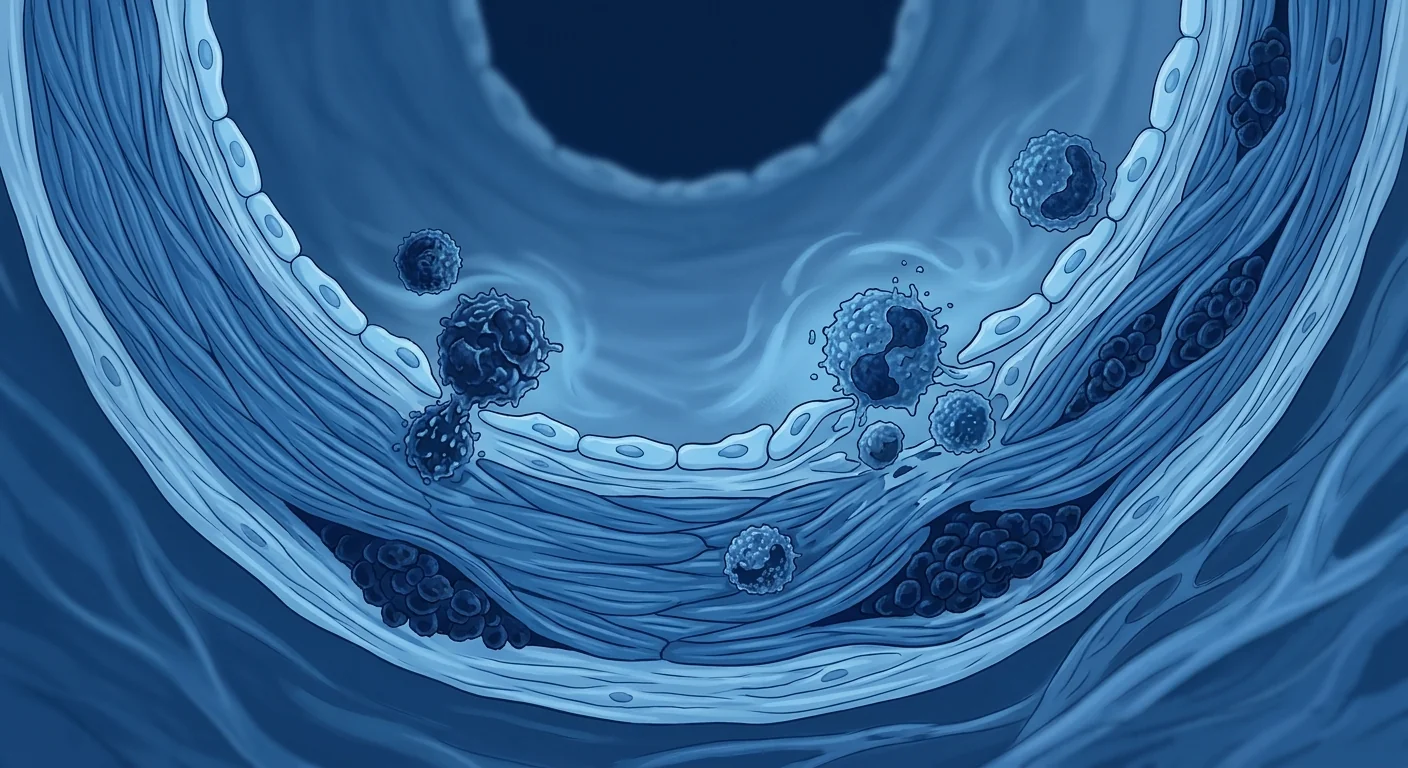
Glomerulonephritis (GN) — inflammation of the kidney's glomerular filtering units — affects over 100,000 people worldwide each year and remains a leading cause of end-stage renal disease. From IgA nephropathy to membranous GN, the underlying pathology shares a common thread: an immune system attack on the kidney that conventional immunosuppression can slow but rarely reverses. [1][2]
Where conventional treatment falls short. Corticosteroids, cyclophosphamide, mycophenolate mofetil, and calcineurin inhibitors form the backbone of GN management. They reduce inflammation by broadly suppressing immune activity — but at the cost of systemic toxicity, infection risk, and incomplete long-term renal protection. Many patients with aggressive GN progress to dialysis despite optimal medical therapy, and the side-effect burden of prolonged immunosuppression can be as debilitating as the disease itself.
The deeper problem is immune dysregulation, not just inflammation. GN is a disease of lost self-tolerance. Autoreactive B cells produce antibodies that deposit in the glomerular basement membrane. Complement activation follows. T-helper subsets skew pro-inflammatory. Regulatory T cells — the immune system's natural brakes — are often reduced in number or functionally impaired in GN patients. [3][4] Merely suppressing inflammation without restoring regulatory balance treats the proximate cause while leaving the underlying dysregulation untouched.
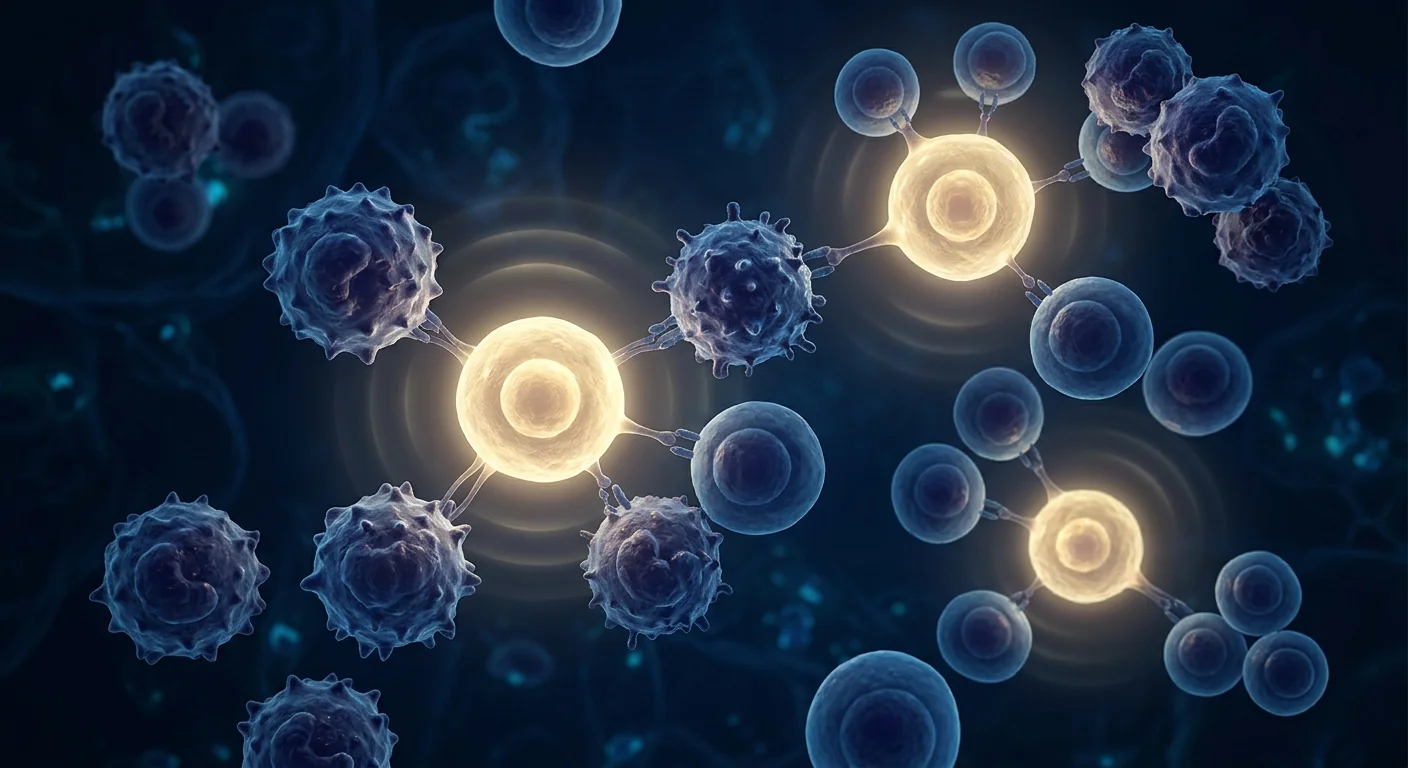
MSC therapy targets the immune axis directly. Rather than adding another immunosuppressant, mesenchymal stem cells offer a fundamentally different approach: rebalancing the immune response. MSCs secrete a rich cocktail of paracrine factors — TGF-β, IL-10, PGE2, IDO, HGF — that collectively suppress effector T-cell and B-cell proliferation, induce regulatory T cells, shift macrophages from the pro-inflammatory M1 phenotype to the reparative M2 state, and reduce complement-mediated injury. In GN, this multi-target immunomodulation could address the disease at the level of its immune pathogenesis rather than merely damping downstream inflammation. [5][6]
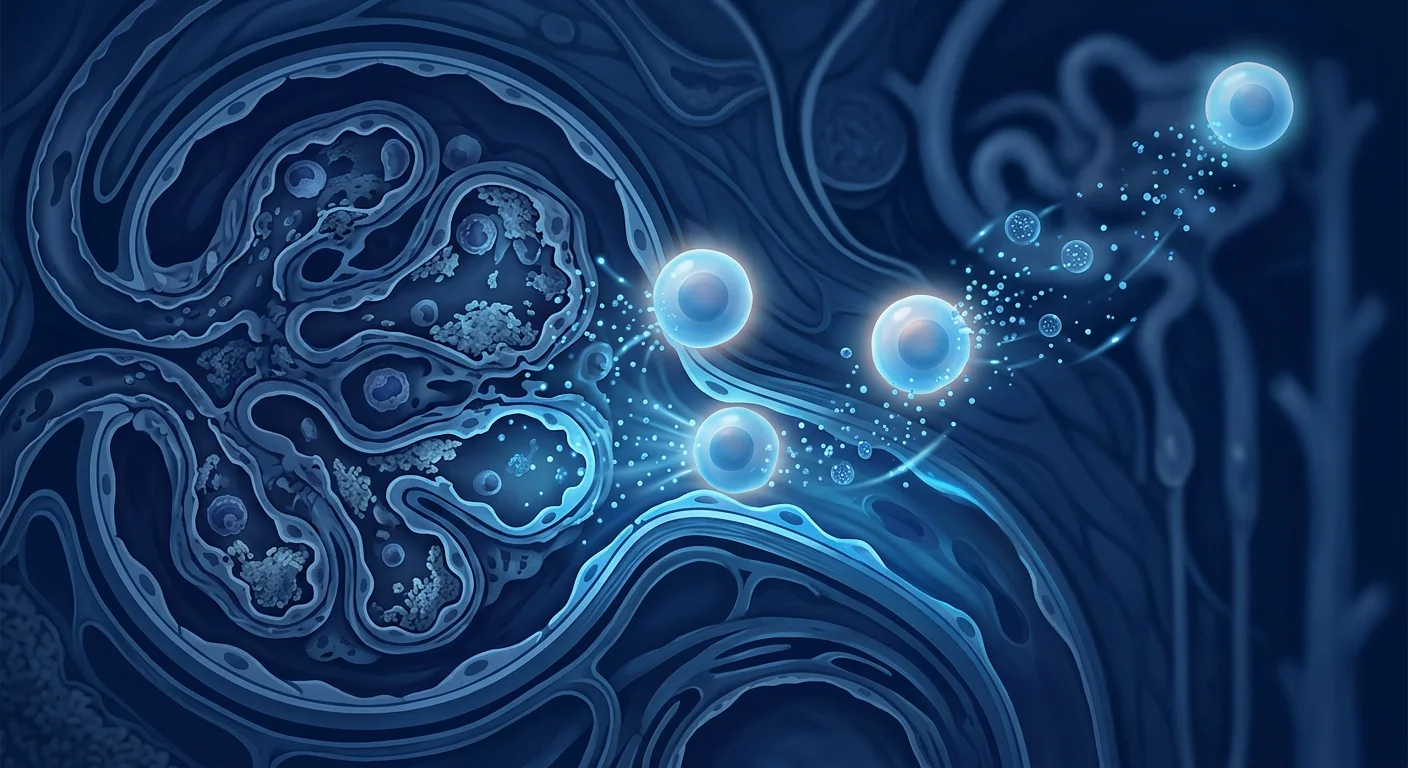
How MSCs work in glomerulonephritis
Mesenchymal stem cells exert therapeutic effects in GN through multiple interconnected mechanisms that collectively target the immune dysregulation at the heart of glomerular injury. Unlike conventional immunosuppressants that block a single pathway, MSCs engage the immune system across several fronts simultaneously.
Regulatory T-cell induction
A consistent finding across MSC studies in kidney disease is the expansion of CD4+CD25+FoxP3+ regulatory T cells. These Tregs actively suppress autoreactive immune responses and are a critical component of peripheral tolerance. In GN, Treg numbers and function are often impaired. MSC infusion has been shown to restore the Treg compartment through TGF-β-dependent and IDO-dependent mechanisms, re-establishing the immune checkpoint that normally prevents self-directed inflammation. [7]
M1-to-M2 macrophage polarization
Glomerular inflammation is driven in large part by classically activated M1 macrophages that secrete TNF-α, IL-1β, and reactive oxygen species. MSCs secrete prostaglandin E2 (PGE2) and TSG-6, which together reprogram infiltrating macrophages toward the alternatively activated M2 phenotype. M2 macrophages produce IL-10 and TGF-β, promote tissue repair, and actively resolve inflammation — a crucial pivot in diseases like crescentic GN where macrophage-driven injury determines renal outcome. [8]
Reduction of proteinuria and podocyte protection
Proteinuria — the hallmark of glomerular injury — reflects damage to podocytes, the specialized epithelial cells that form the glomerular filtration barrier. In animal models of GN, MSC therapy reduced proteinuria by 40–70%, an effect attributed to both the immunomodulatory actions described above and direct trophic support to podocytes via secretion of HGF, VEGF, and BMP-7. Preserving podocyte integrity is critical because podocyte loss is irreversible and drives progression to glomerulosclerosis. [9][10]
Anti-fibrotic action
Chronic GN inexorably progresses to tubulointerstitial fibrosis as TGF-β-driven matrix deposition replaces functional nephrons. MSCs paradoxically oppose this fibrosis. They secrete matrix metalloproteinases (MMPs) that degrade excess extracellular matrix, downregulate pro-fibrotic TGF-β signalling in resident fibroblasts, and promote the survival of tubular epithelial cells through anti-apoptotic factors. In experimental GN models, MSC-treated animals showed significantly less glomerulosclerosis and interstitial fibrosis than untreated controls. [11]
What the clinical evidence shows
The clinical data on MSC therapy for GN remain early-phase but are growing in both breadth and quality. The most compelling evidence comes from trials in lupus nephritis — the glomerular manifestation of SLE — where several research groups have reported encouraging results.
Lupus nephritis trials
The Nanjing group led by Sun L and colleagues has published the largest experience. In a series of open-label studies and one randomised controlled trial, allogeneic umbilical cord-derived MSC transplantation in patients with refractory lupus nephritis was associated with significant reductions in proteinuria, improvements in renal function, and sustained remission in a subset of participants over 12–24 months of follow-up. The infusions were generally well tolerated, with no excess of serious adverse events over standard care. [12]
However, a double-blind, placebo-controlled trial of MSC therapy for lupus nephritis did not demonstrate statistically significant superiority over optimised immunosuppression alone — though there were signals of benefit in the most refractory subgroups. This underscores the reality that MSC therapy, while biologically compelling, has not yet cleared the bar of definitive efficacy in GN. [13]
IgA nephropathy and other primary GN subtypes
Evidence in non-lupus GN — IgA nephropathy, membranous GN, focal segmental glomerulosclerosis (FSGS), and ANCA-associated GN — is more limited. Small pilot studies and case series have reported reductions in proteinuria and stabilisation of eGFR following MSC infusion in IgA nephropathy, but no randomised trial data are available. In FSGS and membranous GN, preclinical models are encouraging but clinical translation remains at the case-report level. [14]
What the evidence supports — honestly
MSC therapy for glomerulonephritis is investigational. The immunomodulatory rationale is strong, the preclinical data are robust, and early clinical experience — particularly in lupus nephritis — is encouraging. But randomised controlled trials demonstrating durable, reproducible benefit over standard care do not yet exist for any GN subtype. Responsible discussion must acknowledge both the biological promise and the evidential gaps.
Key clinical considerations
- Refractory disease is the focus. MSC research in GN targets patients who have not responded adequately to standard immunosuppression — not those with mild or well-controlled disease where conventional therapy suffices.
- Allogeneic UC-MSCs are preferred. Umbilical cord-derived MSCs are young, abundant, highly immunomodulatory, and avoid the concern that autologous MSCs from a GN patient may themselves carry disease-associated dysfunction.
- Delivery route matters. Intravenous infusion is the most studied route for GN. MSCs home to sites of inflammation, including the kidney, after IV administration — but first-pass lung trapping reduces the fraction that reaches glomeruli. Intra-arterial renal delivery has been explored in preclinical models.
- Durability is uncertain. Whether a single MSC infusion provides lasting benefit, or whether repeat dosing is needed for sustained remission, remains an open question — GN is a chronic, relapsing condition.
- Concurrent immunosuppression is not stopped. In all trials to date, MSC therapy was added to standard background immunosuppression — not administered as a replacement. Discontinuing prescribed GN medications in favour of experimental cell therapy would be dangerous.
Glomerulonephritis is precisely the kind of disease where false hope is most harmful. Patients who have failed conventional therapy are vulnerable. Our obligation is to present the science honestly — the mechanisms are real, the early signals are real, and the definitive proof is not yet there.
— VELAR Clinical Team
How to evaluate any offer responsibly
If you are considering stem cell therapy for glomerulonephritis, the following questions can help distinguish credible clinical programs from over-promising marketing. Ask whether the approach is part of a registered clinical trial. Ask about the cell source — umbilical cord, bone marrow, or adipose — and whether the cells are allogeneic. Request published data specific to your GN subtype, not just general MSC research. Determine how response will be measured: proteinuria quantification, eGFR trajectory, and renal biopsy findings are the standards. Be wary of any clinic that promises a cure, quotes success rates without citing a peer-reviewed source, or suggests stopping your prescribed immunosuppression.
Frequently Asked Questions
Can stem cell therapy cure glomerulonephritis?
No. MSC therapy is not a proven cure for any form of glomerulonephritis. Early clinical studies have shown signals of reduced proteinuria and disease activity in lupus nephritis, but definitive randomised controlled trial evidence is lacking. MSC therapy remains investigational.
How much does stem cell therapy for GN cost in Thailand?
At VELAR Center, MSC therapy protocols vary by individual clinical assessment. A consultation is required to determine candidacy and provide a personalised treatment plan with transparent pricing. Costs typically range from USD 8,000 to 18,000 depending on the protocol and cell dose, but this should be confirmed during consultation.
Is MSC therapy safe for patients with kidney disease?
Available safety data from controlled MSC trials in kidney disease — including lupus nephritis, CKD, and AKI — indicate that allogeneic MSC infusions are generally well tolerated with low rates of serious adverse events. The main risks are infusion-related reactions (fever, transient hypotension) and rare thromboembolic events. Long-term safety data beyond 5 years are limited.
Which type of GN responds best to MSC therapy?
Lupus nephritis has the strongest clinical evidence base, with multiple published trials. IgA nephropathy has small pilot studies. Membranous GN, FSGS, and ANCA-associated GN have only preclinical data and case reports. No GN subtype has proven efficacy from randomised controlled trials.
How is MSC therapy administered for kidney conditions?
Intravenous infusion is the standard route in all published GN studies. Cells are administered over 30–60 minutes as an outpatient procedure. Some preclinical work has explored intra-arterial renal delivery for higher kidney targeting, but this is not standard clinical practice.
Will I need to stop my current medications?
No. In every published trial, MSC therapy was added to existing immunosuppression, not used as a replacement. Stopping prescribed medications for GN could trigger a disease flare and cause irreversible kidney damage. Any treatment decision should be made in consultation with your nephrologist.
The VELAR perspective
At VELAR Center, our regenerative practice is grounded in conditions where the evidence base is most mature. We follow GN cell-therapy research closely and believe the immunomodulatory rationale for MSCs in glomerulonephritis is among the strongest in nephrology — the mechanisms are well characterised, the preclinical models are persuasive, and early clinical signals are genuinely interesting. But GN is a serious, progressive disease, and responsible care means never letting enthusiasm outpace evidence. MSC therapy for GN is investigational. It is not a replacement for standard nephrology care, ACE inhibitors, or immunosuppression. We offer it only within the context of honest clinical assessment, transparent data-sharing, and the recognition that controlled trials — not anecdotes — will ultimately determine its place in kidney medicine. If you want a candid conversation about what regenerative medicine can and cannot offer for glomerulonephritis today, that is exactly where a responsible consultation begins.
References
- Floege J, Amann K. Primary glomerulonephritides. The Lancet. 2016;387(10032):2036-2048. doi:10.1016/S0140-6736(16)00272-5 ↩
- Couser WG. Primary membranous nephropathy. Clinical Journal of the American Society of Nephrology. 2017;12(6):983-997. doi:10.2215/CJN.11761116 ↩
- Salama AD, Levy JB, Lightstone L, Pusey CD. Goodpasture's disease. The Lancet. 2001;358(9285):917-920. doi:10.1016/S0140-6736(01)06087-1 ↩
- Kitching AR, Holdsworth SR. The emergence of TH17 cells as effectors in crescentic glomerulonephritis. Journal of the American Society of Nephrology. 2011;22(11):1932-1934. doi:10.1681/ASN.2011090923 ↩
- Shi Y, Wang Y, Li Q, et al. Immunoregulatory mechanisms of mesenchymal stem and stromal cells in inflammatory diseases. Nature Reviews Nephrology. 2018;14(8):493-507. doi:10.1038/s41581-018-0023-5 ↩
- Naji A, Eitoku M, Favier B, Deschaseaux F, Rouas-Freiss N, Suganuma N. Biological functions of mesenchymal stem cells. Cellular and Molecular Life Sciences. 2019;76(17):3323-3348. doi:10.1007/s00018-019-03125-1 ↩
- Casiraghi F, Azzollini N, Cassis P, et al. Pretransplant infusion of mesenchymal stem cells prolongs the survival of a semiallogeneic heart transplant through the generation of regulatory T cells. Journal of Immunology. 2008;181(6):3933-3946. doi:10.4049/jimmunol.181.6.3933 ↩
- Choi JJ, Chae KH, Lee HS, et al. Mesenchymal stem cells can prevent the development of crescentic glomerulonephritis through macrophage polarization. Kidney Research and Clinical Practice. 2016;35(2):80-87. doi:10.1016/j.krcp.2016.04.006 ↩
- Zoja C, Garcia PB, Rota C, et al. Mesenchymal stem cell therapy promotes renal repair by limiting glomerular podocyte and progenitor cell dysfunction in adriamycin-induced nephropathy. American Journal of Physiology-Renal Physiology. 2012;303(9):F1370-F1381. doi:10.1152/ajprenal.00057.2012 ↩
- Xinaris C, Morigi M, Benedetti V, et al. A novel strategy to enhance mesenchymal stem cell kidney homing and improve kidney repair. Stem Cells. 2013;31(9):1843-1854. doi:10.1002/stem.1445 ↩
- Alfarano C, Roubeix C, Chaaya R, et al. Intraparenchymal injection of bone marrow mesenchymal stem cells reduces kidney fibrosis after ischemia-reperfusion in cyclosporine-immunosuppressed rats. Cell Transplantation. 2012;21(9):2009-2019. doi:10.3727/096368912X640448 ↩
- Sun L, Akiyama K, Zhang H, et al. Mesenchymal stem cell transplantation reverses multiorgan dysfunction in systemic lupus erythematosus mice and humans. Stem Cells. 2009;27(6):1421-1432. doi:10.1002/stem.68 ↩
- Deng D, Zhang P, Guo Y, Chen L, Zhang T. A randomised double-blind, placebo-controlled trial of allogeneic umbilical cord-derived mesenchymal stem cell for lupus nephritis. Annals of the Rheumatic Diseases. 2017;76(5):929. doi:10.1136/annrheumdis-2017-211167 ↩
- Peired AJ, Sisti A, Romagnani P. Mesenchymal stem cell-based therapy for kidney disease: a review of clinical evidence. Stem Cells International. 2016;2016:4798639. doi:10.1155/2016/4798639 ↩
肾小球肾炎的干细胞疗法:肾脏炎症的MSC治疗
肾小球肾炎(GN)——肾脏滤过单位的炎症——每年影响全球超过10万人,是终末期肾病的主要原因之一。无论是IgA肾病还是膜性肾病,其病理都有一个共同的特点:免疫系统攻击肾脏,传统的免疫抑制治疗只能减缓疾病进展,但很少能实现逆转。[1][2]
传统治疗的局限。糖皮质激素、环磷酰胺、吗替麦考酚酯和钙调磷酸酶抑制剂构成了GN治疗的基础。它们通过广泛抑制免疫活性来减轻炎症——但代价是全身性毒性、感染风险以及不完全的长期肾脏保护。许多侵袭性GN患者即使接受了最优药物治疗,仍进展至需要透析的阶段;长期免疫抑制的副作用可能与疾病本身一样令人困扰。
深层问题是免疫失调,而不仅是炎症。GN是一种自身耐受丧失的疾病。自身反应性B细胞产生抗体沉积于肾小球基底膜。补体级联反应随之激活。Th亚群向促炎方向偏移。调节性T细胞——免疫系统的天然制动器——在GN患者中常数量减少或功能受损。[3][4]仅仅抑制炎症而不恢复免疫调节平衡,只是处理了病因的表象,未能触及根本的免疫失调。
MSC疗法直接靶向免疫轴。与增加另一种免疫抑制剂不同,间充质干细胞提供了一种根本不同的方法:重新平衡免疫应答。MSC分泌丰富的旁分泌因子——TGF-β、IL-10、PGE2、IDO、HGF——协同抑制效应T细胞和B细胞增殖、诱导调节性T细胞、将巨噬细胞从促炎M1表型转化为修复性M2状态、减轻补体介导的损伤。在GN中,这种多靶点免疫调节可能从免疫发病机制层面处理疾病,而非仅仅抑制下游炎症。[5][6]
MSC在肾小球肾炎中的作用机制
间充质干细胞通过多种相互关联的机制在GN中发挥治疗作用,这些机制共同针对肾小球损伤核心的免疫失调。与传统免疫抑制剂阻断单一通路不同,MSC同时在多个方面与免疫系统相互作用。
调节性T细胞的诱导
MSC肾脏疾病研究中的一个一致发现是CD4+CD25+FoxP3+调节性T细胞的扩增。这些Treg主动抑制自身反应性免疫反应,是外周耐受的关键组成部分。在GN中,Treg的数量和功能通常受损。MSC输注已证明可通过TGF-β依赖性和IDO依赖性机制恢复Treg群体,重新建立正常情况下阻止自我导向性炎症的免疫检查点。[7]
M1向M2巨噬细胞极化转换
肾小球炎症在很大程度上由经典激活的M1巨噬细胞驱动,这些细胞分泌TNF-α、IL-1β和活性氧。MSC分泌前列腺素E2(PGE2)和TSG-6,共同将浸润的巨噬细胞重编程为替代激活的M2表型。M2巨噬细胞产生IL-10和TGF-β、促进组织修复、积极消除炎症——在急进性GN等巨噬细胞驱动的损伤决定肾脏预后的疾病中,这是一个关键的转变。[8]
蛋白尿减少和足细胞保护
蛋白尿——肾小球损伤的标志——反映了足细胞(形成肾小球滤过屏障的特化上皮细胞)的损伤。在GN动物模型中,MSC治疗将蛋白尿降低了40-70%,这一效果归因于上述免疫调节作用和通过分泌HGF、VEGF和BMP-7对足细胞的直接营养支持。保护足细胞完整性至关重要,因为足细胞丧失是不可逆的,会推动肾小球硬化的进展。[9][10]
抗纤维化作用
慢性GN不可避免地会进展为肾小管间质纤维化,TGF-β驱动的基质沉积替代功能肾单位。矛盾的是,MSC可以对抗这种纤维化。它们分泌基质金属蛋白酶(MMP)降解过多的细胞外基质,下调驻留成纤维细胞中的促纤维化TGF-β信号传导,并通过抗凋亡因子促进肾小管上皮细胞存活。在实验性GN模型中,MSC治疗组的动物肾小球硬化和间质纤维化显著少于未治疗对照组。[11]
临床证据
MSC治疗GN的临床数据仍处于早期阶段,但在广度和质量上都在增长。最有说服力的证据来自狼疮性肾炎的试验——狼疮的肾小球表现——多个研究团队报告了令人鼓舞的结果。
狼疮性肾炎试验
南京的孙凌云团队发表了最大规模的经验。在一系列开放标签研究和一项随机对照试验中,异基因脐带来源MSC移植治疗难治性狼疮性肾炎与蛋白尿显著减少、肾功能改善以及部分参与者在12-24个月随访中持续缓解相关。输注总体上耐受性良好,与标准治疗相比未出现严重不良事件的过度增加。[12]
然而,一项MSC治疗狼疮性肾炎的双盲安慰剂对照试验未能证明其优于最优免疫抑制单药治疗的统计学显著优势——虽然在最顽固的亚组中观察到了获益信号。这强调了这样一个现实:MSC治疗虽然在生物学上具有说服力,但在GN中尚未达到明确有效性的标准。[13]
IgA肾病和其他原发性GN亚型
非狼疮性GN——IgA肾病、膜性肾病、局灶节段性肾小球硬化(FSGS)和ANCA相关性GN——的证据更为有限。小型初步研究和病例系列报告了IgA肾病MSC输注后蛋白尿减少和eGFR稳定,但无随机试验数据。在FSGS和膜性肾病中,临床前模型令人鼓舞,但临床转化仍处于病例报告水平。[14]
证据支持什么——诚实地说
MSC治疗肾小球肾炎是研究性的。免疫调节的理论基础坚实,临床前数据充分,早期临床经验——尤其在狼疮性肾炎中——令人鼓舞。但对于任何GN亚型,证明持久、可重复优于标准治疗的随机对照试验尚未出现。负责任的讨论必须同时承认生物学前景和证据空白。
关键临床考量
- 重点在于难治性疾病。GN的MSC研究针对的是对标准免疫抑制治疗反应不充分的人群——而非轻度或控制良好的疾病,后者常规治疗已足够。
- 异基因UC-MSC是首选。脐带来源的MSC年轻、丰富、高度免疫调节,并能避免GN患者的自体MSC可能携带疾病相关功能障碍的风险。
- 给药途径很重要。静脉输注是GN研究最常用的途径。MSC在静脉给药后可迁移至包括肾脏在内的炎症部位——但肺首过截留会减少到达肾小球的比例。临床前模型已探索肾动脉内给药以获得更高的肾脏靶向。
- 持久性尚不确定。单次MSC输注是否能提供持久获益,还是需要重复给药才能维持缓解,仍是待解问题——GN是一种慢性、复发性疾病。
- 不停止同时进行的免疫抑制治疗。迄今为止所有试验中,MSC治疗都是在标准背景免疫抑制治疗的基础上添加的——而非作为替代。停用已处方的GN药物转用实验性细胞疗法是危险的。
肾小球肾炎正是虚假希望最具危害性的疾病类型。已对常规治疗失败的患者尤其脆弱。我们的责任是诚实地呈现科学——机制是真实的,早期信号是真实的,但定论性证据尚不存在。
— VELAR临床团队
如何负责任地评估任何治疗方案
如果您正在考虑干细胞治疗肾小球肾炎,以下问题可帮助区分可信的临床项目和过度承诺的营销。询问该方法是否属于注册临床试验的一部分。询问细胞来源——脐带、骨髓还是脂肪——以及细胞是否为异基因。要求提供针对您特定GN亚型的已发表数据,而不仅是一般MSC研究。明确如何衡量治疗反应:蛋白尿定量、eGFR轨迹和肾活检结果是标准。警惕任何承诺治愈、未引用同行评审来源即引用成功率、或建议您停止已处方的免疫抑制治疗的诊所。
VELAR的观点
在VELAR中心,我们的再生医学实践建立在证据基础最成熟的疾病领域。我们密切关注GN细胞治疗研究,并认为MSC治疗肾小球肾炎的免疫调节理论基础是肾脏病学中最强有力的之一——机制已被充分描述、临床前模型具有说服力、早期临床信号确实引人关注。但GN是一种严重、进展性疾病,负责任的医疗意味着永远不让热情超越证据。MSC治疗GN是研究性的。它不能替代标准肾脏病护理、ACE抑制剂或免疫抑制治疗。我们仅在诚实临床评估、透明数据分享以及认识到是对照试验——而非轶事——将最终决定其在肾脏医学中的地位的前提下提供该治疗。如果您希望就再生医学今天能为肾小球肾炎提供和不提供什么进行坦诚对话,这正是负责任咨询的起点。
参考文献
- Floege J, Amann K. Primary glomerulonephritides. The Lancet. 2016;387(10032):2036-2048. doi:10.1016/S0140-6736(16)00272-5 ↩
- Couser WG. Primary membranous nephropathy. Clinical Journal of the American Society of Nephrology. 2017;12(6):983-997. doi:10.2215/CJN.11761116 ↩
- Salama AD, Levy JB, Lightstone L, Pusey CD. Goodpasture's disease. The Lancet. 2001;358(9285):917-920. doi:10.1016/S0140-6736(01)06087-1 ↩
- Kitching AR, Holdsworth SR. The emergence of TH17 cells as effectors in crescentic glomerulonephritis. Journal of the American Society of Nephrology. 2011;22(11):1932-1934. doi:10.1681/ASN.2011090923 ↩
- Shi Y, Wang Y, Li Q, et al. Immunoregulatory mechanisms of mesenchymal stem and stromal cells in inflammatory diseases. Nature Reviews Nephrology. 2018;14(8):493-507. doi:10.1038/s41581-018-0023-5 ↩
- Naji A, Eitoku M, Favier B, Deschaseaux F, Rouas-Freiss N, Suganuma N. Biological functions of mesenchymal stem cells. Cellular and Molecular Life Sciences. 2019;76(17):3323-3348. doi:10.1007/s00018-019-03125-1 ↩
- Casiraghi F, Azzollini N, Cassis P, et al. Pretransplant infusion of mesenchymal stem cells prolongs the survival of a semiallogeneic heart transplant through the generation of regulatory T cells. Journal of Immunology. 2008;181(6):3933-3946. doi:10.4049/jimmunol.181.6.3933 ↩
- Choi JJ, Chae KH, Lee HS, et al. Mesenchymal stem cells can prevent the development of crescentic glomerulonephritis through macrophage polarization. Kidney Research and Clinical Practice. 2016;35(2):80-87. doi:10.1016/j.krcp.2016.04.006 ↩
- Zoja C, Garcia PB, Rota C, et al. Mesenchymal stem cell therapy promotes renal repair by limiting glomerular podocyte and progenitor cell dysfunction in adriamycin-induced nephropathy. American Journal of Physiology-Renal Physiology. 2012;303(9):F1370-F1381. doi:10.1152/ajprenal.00057.2012 ↩
- Xinaris C, Morigi M, Benedetti V, et al. A novel strategy to enhance mesenchymal stem cell kidney homing and improve kidney repair. Stem Cells. 2013;31(9):1843-1854. doi:10.1002/stem.1445 ↩
- Alfarano C, Roubeix C, Chaaya R, et al. Intraparenchymal injection of bone marrow mesenchymal stem cells reduces kidney fibrosis after ischemia-reperfusion in cyclosporine-immunosuppressed rats. Cell Transplantation. 2012;21(9):2009-2019. doi:10.3727/096368912X640448 ↩
- Sun L, Akiyama K, Zhang H, et al. Mesenchymal stem cell transplantation reverses multiorgan dysfunction in systemic lupus erythematosus mice and humans. Stem Cells. 2009;27(6):1421-1432. doi:10.1002/stem.68 ↩
- Deng D, Zhang P, Guo Y, Chen L, Zhang T. A randomised double-blind, placebo-controlled trial of allogeneic umbilical cord-derived mesenchymal stem cell for lupus nephritis. Annals of the Rheumatic Diseases. 2017;76(5):929. doi:10.1136/annrheumdis-2017-211167 ↩
- Peired AJ, Sisti A, Romagnani P. Mesenchymal stem cell-based therapy for kidney disease: a review of clinical evidence. Stem Cells International. 2016;2016:4798639. doi:10.1155/2016/4798639 ↩
العلاج بالخلايا الجذعية لالتهاب كبيبات الكلى: علاج كبيبات الكلى بالخلايا الجذعية الوسيطة
يؤثر التهاب كبيبات الكلى (GN) — التهاب وحدات الترشيح الكبيبية في الكلى — على أكثر من 100,000 شخص سنوياً حول العالم ويظل سبباً رئيسياً لمرض الكلى في مرحلته النهائية. من اعتلال الكلى بالغلوبولين المناعي A إلى الاعتلال الكبيبي الغشائي، تشترك الأمراض الكامنة في خيط مشترك: هجوم مناعي على الكلى يمكن للعلاج المثبط للمناعة التقليدي إبطاؤه لكن نادراً ما يعكسه. [1][2]
أوجه قصور العلاج التقليدي. تشكل الكورتيكوستيرويدات وسيكلوفوسفاميد وميكوفينولات موفيتيل ومثبطات الكالسينيورين العمود الفقري لعلاج التهاب كبيبات الكلى. تقلل الالتهاب عن طريق تثبيط النشاط المناعي على نطاق واسع — لكن بتكلفة السمية الجهازية وخطر العدوى وحماية كلوية غير كاملة على المدى الطويل. يتطور العديد من مرضى GN العدواني إلى غسيل الكلى رغم العلاج الطبي الأمثل، ويمكن أن يكون عبء الآثار الجانبية للتثبيط المناعي المطول موهناً مثل المرض نفسه.
المشكلة الأعمق هي خلل التنظيم المناعي، وليس الالتهاب فقط. GN هو مرض فقدان التحمل الذاتي. تنتج الخلايا البائية ذاتية التفاعل أجساماً مضادة تترسب في الغشاء القاعدي الكبيبي. يتبع ذلك تنشيط المتممة. تنحرف مجموعات Th المساعدة نحو الالتهاب. غالباً ما تكون الخلايا التائية التنظيمية — المكابح الطبيعية للجهاز المناعي — منخفضة العدد أو معطلة وظيفياً لدى مرضى GN. [3][4] مجرد تثبيط الالتهاب دون استعادة التوازن التنظيمي يعالج السبب المباشر بينما يترك خلل التنظيم الأساسي دون مساس.
يستهدف علاج MSC المحور المناعي مباشرة. بدلاً من إضافة مثبط مناعي آخر، تقدم الخلايا الجذعية الوسيطة نهجاً مختلفاً جوهرياً: إعادة توازن الاستجابة المناعية. تفرز MSC مزيجاً غنياً من العوامل نظيرة الصماوية — TGF-β و IL-10 و PGE2 و IDO و HGF — التي تثبط بشكل جماعي تكاثر الخلايا التائية والبائية المستجيبة، وتحفز الخلايا التائية التنظيمية، وتحول البلاعم من النمط الظاهري M1 المحرض للالتهاب إلى حالة M2 الإصلاحية، وتقلل من إصابة الكبيبات بوساطة المتممة. في GN، يمكن أن يعالج هذا التعديل المناعي متعدد الأهداف المرض على مستوى إمراضيته المناعية بدلاً من مجرد تثبيط الالتهاب النهائي. [5][6]
كيف تعمل MSC في التهاب كبيبات الكلى
تمارس الخلايا الجذعية الوسيطة تأثيرات علاجية في GN من خلال آليات متعددة مترابطة تستهدف بشكل جماعي خلل التنظيم المناعي في صميم إصابة الكبيبات. على عكس مثبطات المناعة التقليدية التي تحجب مساراً واحداً، تتفاعل MSC مع الجهاز المناعي عبر جبهات متعددة في وقت واحد.
تحفيز الخلايا التائية التنظيمية
النتيجة المتسقة عبر دراسات MSC في أمراض الكلى هي توسع الخلايا التائية التنظيمية CD4+CD25+FoxP3+. تقوم هذه Tregs بقمع الاستجابات المناعية ذاتية التفاعل بشكل نشط وهي مكون حاسم للتحمل المحيطي. في GN، غالباً ما تكون أعداد ووظيفة Treg معطلة. ثبت أن حقن MSC يستعيد حجرة Treg من خلال آليات معتمدة على TGF-β و IDO، معيداً تأسيس نقطة التفتيش المناعية التي تمنع عادة الالتهاب الموجه ذاتياً. [7]
تحويل استقطاب البلاعم من M1 إلى M2
يدفع التهاب الكبيبات بشكل كبير البلاعم M1 المنشطة كلاسيكياً التي تفرز TNF-α و IL-1β وأنواع الأكسجين التفاعلية. تفرز MSC البروستاغلاندين E2 (PGE2) و TSG-6، اللذين يعيدان معاً برمجة البلاعم المتسللة نحو النمط الظاهري M2 المنشط بديلاً. تنتج البلاعم M2 IL-10 و TGF-β، وتعزز إصلاح الأنسجة، وتحل الالتهاب بنشاط — وهو محور حاسم في أمراض مثل GN الهلالي حيث تحدد إصابة البلاعم النتيجة الكلوية. [8]
تقليل البيلة البروتينية وحماية الخلايا الرجلاء
تعكس البيلة البروتينية — السمة المميزة لإصابة الكبيبات — ضرر الخلايا الرجلاء، الخلايا الظهارية المتخصصة التي تشكل حاجز الترشيح الكبيبي. في نماذج GN الحيوانية، قلل علاج MSC البيلة البروتينية بنسبة 40-70%، وهو تأثير يُعزى إلى كل من الإجراءات المناعية الموصوفة أعلاه والدعم الغذائي المباشر للخلايا الرجلاء عبر إفراز HGF و VEGF و BMP-7. الحفاظ على سلامة الخلايا الرجلاء أمر بالغ الأهمية لأن فقدانها لا رجعة فيه ويدفع التقدم نحو التصلب الكبيبي. [9][10]
العمل المضاد للتليف
يتطور GN المزمن بشكل لا مفر منه إلى تليف أنبوبي خلالي حيث يحل ترسب المطرس بوساطة TGF-β محل النفرونات الوظيفية. تعارض MSC هذا التليف بشكل متناقض. تفرز ميتالوبروتينازات المطرس (MMPs) التي تحلل المطرس خارج الخلوي الزائد، وتخفض تنظيم إشارات TGF-β المحرضة للتليف في الأرومات الليفية المقيمة، وتعزز بقاء الخلايا الظهارية الأنبوبية من خلال عوامل مضادة للاستماتة. في نماذج GN التجريبية، أظهرت الحيوانات المعالجة بـ MSC تصلباً كبيبياً وتليفاً خلالياً أقل بكثير من الضوابط غير المعالجة. [11]
ما تظهره الأدلة السريرية
لا تزال البيانات السريرية حول علاج MSC لـ GN في مرحلة مبكرة لكنها تنمو من حيث الاتساع والجودة. تأتي الأدلة الأكثر إقناعاً من تجارب التهاب الكلى الذئبي — المظهر الكبيبي لمرض SLE — حيث أبلغت عدة مجموعات بحثية عن نتائج مشجعة.
تجارب التهاب الكلى الذئبي
نشرت مجموعة نانجينغ بقيادة صن ل وآخرين أكبر خبرة. في سلسلة من الدراسات مفتوحة التسمية وتجربة عشوائية محكومة واحدة، ارتبط زرع MSC المشتقة من الحبل السري الخيفي في مرضى التهاب الكلى الذئبي المقاوم بانخفاضات كبيرة في البيلة البروتينية، وتحسينات في وظائف الكلى، واستمرار الهجوع لدى مجموعة فرعية من المشاركين على مدى 12-24 شهراً من المتابعة. كانت الحقن جيدة التحمل عموماً، دون زيادة في الأحداث الضائرة الخطيرة مقارنة بالرعاية المعيارية. [12]
ومع ذلك، فشلت تجربة مزدوجة التعمية محكومة بالدواء الوهمي لعلاج MSC لالتهاب الكلى الذئبي في إثبات تفوق ذي دلالة إحصائية على التثبيط المناعي الأمثل وحده — رغم وجود إشارات فائدة في المجموعات الفرعية الأكثر مقاومة. يؤكد هذا حقيقة أن علاج MSC، رغم كونه مقنعاً بيولوجياً، لم يتجاوز بعد عتبة الفعالية المؤكدة في GN. [13]
اعتلال الكلى بالغلوبولين المناعي A وأنواع GN الأولية الأخرى
الأدلة في GN غير الذئبي — اعتلال الكلى بالغلوبولين المناعي A، والاعتلال الكبيبي الغشائي، والتصلب الكبيبي القطاعي البؤري (FSGS)، وGN المرتبط بـ ANCA — أكثر محدودية. أبلغت دراسات استطلاعية صغيرة وسلاسل حالات عن انخفاضات في البيلة البروتينية واستقرار eGFR بعد حقن MSC في اعتلال الكلى بالغلوبولين المناعي A، لكن لا تتوفر بيانات تجارب عشوائية. في FSGS والاعتلال الكبيبي الغشائي، النماذج قبل السريرية مشجعة لكن الترجمة السريرية لا تزال عند مستوى تقرير الحالة. [14]
ما تدعمه الأدلة — بصدق
علاج MSC لالتهاب كبيبات الكلى هو قيد البحث. الأساس المنطقي للتعديل المناعي قوي، والبيانات قبل السريرية متينة، والخبرة السريرية المبكرة — خاصة في التهاب الكلى الذئبي — مشجعة. لكن التجارب العشوائية المحكومة التي تثبت فائدة دائمة وقابلة للتكرار تفوق الرعاية المعيارية غير موجودة بعد لأي نوع فرعي من GN. يجب أن يعترف النقاش المسؤول بكل من الوعد البيولوجي والفجوات الدليلية.
اعتبارات سريرية رئيسية
- التركيز على المرض المقاوم. يستهدف بحث MSC في GN المرضى الذين لم يستجيبوا بشكل كافٍ للتثبيط المناعي المعياري — وليس أولئك المصابين بمرض خفيف أو مضبوط جيداً حيث يكفي العلاج التقليدي.
- تُفضل MSC المشتقة من الحبل السري الخيفي. خلايا MSC المشتقة من الحبل السري شابة ووفيرة وعالية التعديل المناعي، وتتجنب القلق من أن MSC الذاتية من مريض GN قد تحمل خللاً وظيفياً مرتبطاً بالمرض.
- طريق الإعطاء مهم. الحقن الوريدي هو الطريق الأكثر دراسة لـ GN. تهاجر MSC إلى مواقع الالتهاب، بما في ذلك الكلى، بعد الإعطاء الوريدي — لكن الاحتجاز الرئوي الأولي يقلل من الكسر الذي يصل إلى الكبيبات. تم استكشاف الإيصال داخل الشريان الكلوي في النماذج قبل السريرية للحصول على استهداف كلوي أعلى.
- الاستمرارية غير مؤكدة. ما إذا كان حقن MSC واحد يوفر فائدة دائمة، أو ما إذا كانت هناك حاجة لجرعات متكررة للهجوع المستمر، يبقى سؤالاً مفتوحاً — GN حالة مزمنة منتكسة.
- لا يتم إيقاف التثبيط المناعي المتزامن. في جميع التجارب حتى الآن، تمت إضافة علاج MSC إلى التثبيط المناعي الخلفي المعياري — وليس إعطاؤه كبديل. سيكون التوقف عن أدوية GN الموصوفة لصالح علاج خلوي تجريبي خطيراً.
التهاب كبيبات الكلى هو بالضبط نوع المرض حيث يكون الأمل الكاذب أكثر ضرراً. المرضى الذين فشلوا في العلاج التقليدي معرضون للخطر بشكل خاص. التزامنا هو تقديم العلم بصدق — الآليات حقيقية، والإشارات المبكرة حقيقية، والدليل القاطع غير موجود بعد.
— فريق VELAR السريري
كيفية تقييم أي عرض بمسؤولية
إذا كنت تفكر في العلاج بالخلايا الجذعية لالتهاب كبيبات الكلى، يمكن أن تساعد الأسئلة التالية في التمييز بين البرامج السريرية الموثوقة والتسويق المفرط في الوعود. اسأل ما إذا كان النهج جزءاً من تجربة سريرية مسجلة. اسأل عن مصدر الخلايا — الحبل السري، أو نخاع العظم، أو الدهون — وما إذا كانت الخلايا خيفية. اطلب بيانات منشورة خاصة بنوع GN الفرعي لديك، وليس فقط أبحاث MSC العامة. حدد كيف سيتم قياس الاستجابة: تحديد كمية البيلة البروتينية، ومسار eGFR، ونتائج خزعة الكلى هي المعايير. كن حذراً من أي عيادة تعد بالشفاء، أو تقتبس معدلات نجاح دون الاستشهاد بمصدر محكم، أو تقترح إيقاف التثبيط المناعي الموصوف لك.
منظور VELAR
في مركز VELAR، ترتكز ممارستنا التجديدية على الحالات التي تكون فيها قاعدة الأدلة أكثر نضجاً. نتابع أبحاث العلاج الخلوي لـ GN عن كثب ونعتقد أن الأساس المنطقي للتعديل المناعي لـ MSC في التهاب كبيبات الكلى هو من بين الأقوى في طب الكلى — الآليات موصوفة جيداً، والنماذج قبل السريرية مقنعة، والإشارات السريرية المبكرة مثيرة للاهتمام حقاً. لكن GN مرض خطير وتقدمي، والرعاية المسؤولة تعني عدم السماح أبداً للحماس بتجاوز الأدلة. علاج MSC لـ GN قيد البحث. إنه ليس بديلاً عن رعاية طب الكلى المعيارية، أو مثبطات ACE، أو التثبيط المناعي. نقدمه فقط في سياق التقييم السريري الصادق، ومشاركة البيانات الشفافة، والاعتراف بأن التجارب المحكومة — وليس القصص الفردية — هي التي ستحدد في النهاية مكانه في طب الكلى. إذا كنت تريد محادثة صريحة حول ما يمكن وما لا يمكن أن يقدمه الطب التجديدي لالتهاب كبيبات الكلى اليوم، فهذا بالضبط حيث تبدأ الاستشارة المسؤولة.
المراجع
- Floege J, Amann K. Primary glomerulonephritides. The Lancet. 2016;387(10032):2036-2048. doi:10.1016/S0140-6736(16)00272-5 ↩
- Couser WG. Primary membranous nephropathy. Clinical Journal of the American Society of Nephrology. 2017;12(6):983-997. doi:10.2215/CJN.11761116 ↩
- Salama AD, Levy JB, Lightstone L, Pusey CD. Goodpasture's disease. The Lancet. 2001;358(9285):917-920. doi:10.1016/S0140-6736(01)06087-1 ↩
- Kitching AR, Holdsworth SR. The emergence of TH17 cells as effectors in crescentic glomerulonephritis. Journal of the American Society of Nephrology. 2011;22(11):1932-1934. doi:10.1681/ASN.2011090923 ↩
- Shi Y, Wang Y, Li Q, et al. Immunoregulatory mechanisms of mesenchymal stem and stromal cells in inflammatory diseases. Nature Reviews Nephrology. 2018;14(8):493-507. doi:10.1038/s41581-018-0023-5 ↩
- Naji A, Eitoku M, Favier B, Deschaseaux F, Rouas-Freiss N, Suganuma N. Biological functions of mesenchymal stem cells. Cellular and Molecular Life Sciences. 2019;76(17):3323-3348. doi:10.1007/s00018-019-03125-1 ↩
- Casiraghi F, Azzollini N, Cassis P, et al. Pretransplant infusion of mesenchymal stem cells prolongs the survival of a semiallogeneic heart transplant through the generation of regulatory T cells. Journal of Immunology. 2008;181(6):3933-3946. doi:10.4049/jimmunol.181.6.3933 ↩
- Choi JJ, Chae KH, Lee HS, et al. Mesenchymal stem cells can prevent the development of crescentic glomerulonephritis through macrophage polarization. Kidney Research and Clinical Practice. 2016;35(2):80-87. doi:10.1016/j.krcp.2016.04.006 ↩
- Zoja C, Garcia PB, Rota C, et al. Mesenchymal stem cell therapy promotes renal repair by limiting glomerular podocyte and progenitor cell dysfunction in adriamycin-induced nephropathy. American Journal of Physiology-Renal Physiology. 2012;303(9):F1370-F1381. doi:10.1152/ajprenal.00057.2012 ↩
- Xinaris C, Morigi M, Benedetti V, et al. A novel strategy to enhance mesenchymal stem cell kidney homing and improve kidney repair. Stem Cells. 2013;31(9):1843-1854. doi:10.1002/stem.1445 ↩
- Alfarano C, Roubeix C, Chaaya R, et al. Intraparenchymal injection of bone marrow mesenchymal stem cells reduces kidney fibrosis after ischemia-reperfusion in cyclosporine-immunosuppressed rats. Cell Transplantation. 2012;21(9):2009-2019. doi:10.3727/096368912X640448 ↩
- Sun L, Akiyama K, Zhang H, et al. Mesenchymal stem cell transplantation reverses multiorgan dysfunction in systemic lupus erythematosus mice and humans. Stem Cells. 2009;27(6):1421-1432. doi:10.1002/stem.68 ↩
- Deng D, Zhang P, Guo Y, Chen L, Zhang T. A randomised double-blind, placebo-controlled trial of allogeneic umbilical cord-derived mesenchymal stem cell for lupus nephritis. Annals of the Rheumatic Diseases. 2017;76(5):929. doi:10.1136/annrheumdis-2017-211167 ↩
- Peired AJ, Sisti A, Romagnani P. Mesenchymal stem cell-based therapy for kidney disease: a review of clinical evidence. Stem Cells International. 2016;2016:4798639. doi:10.1155/2016/4798639 ↩