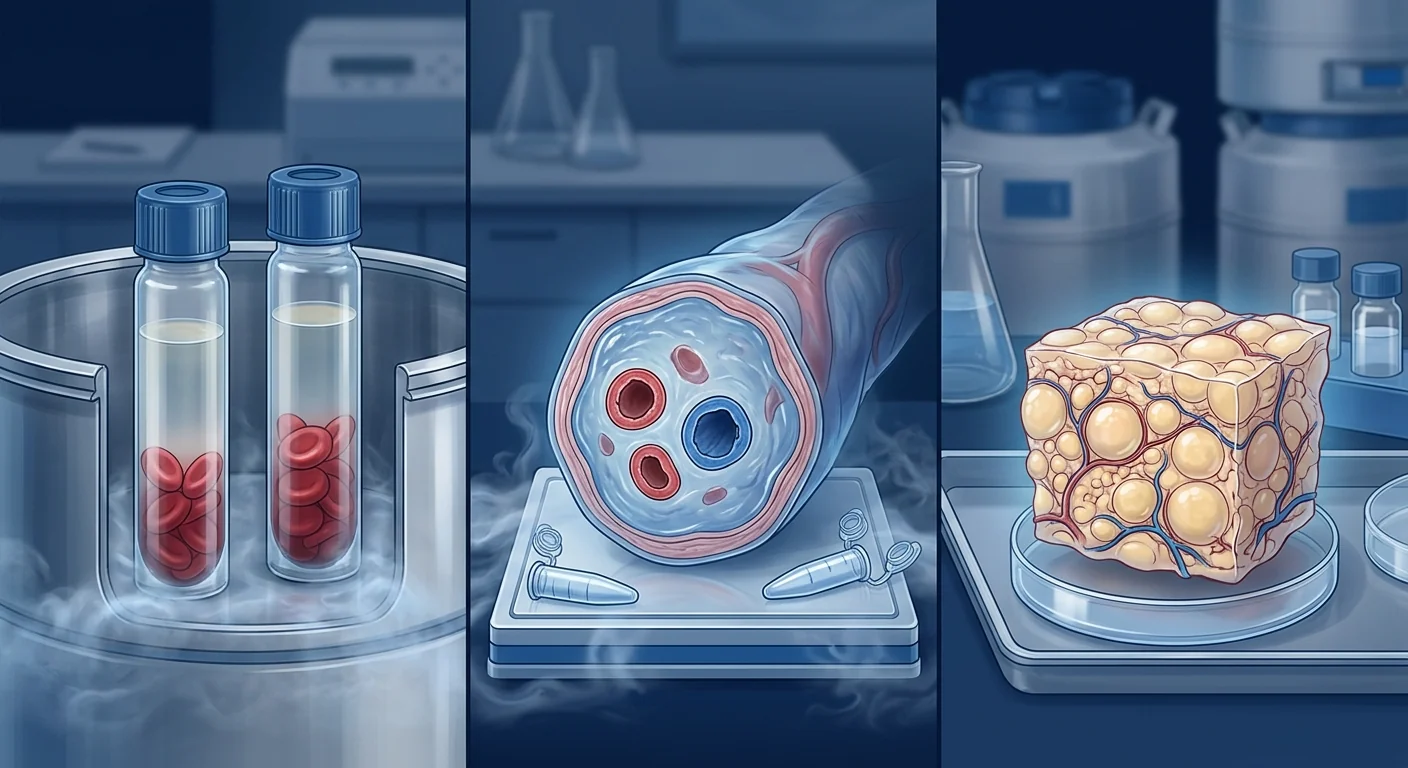
Stem cell banking is one of the most far-reaching decisions a family can make — a bet placed decades ahead on how regenerative medicine will evolve. But not all banking options are created equal. Cord blood, cord tissue, and adipose tissue each represent a fundamentally different type of biological asset, with distinct advantages in cell yield, expansion capacity, differentiation potential, and clinical applicability. Understanding these differences before signing a banking contract can mean the difference between a resource that serves multiple future indications and one that sits unused.
Cord blood banking is the most established option with a 30-year clinical track record. Since the first cord blood transplant in 1988, over 40,000 cord blood transplantations have been performed worldwide for hematological malignancies, bone marrow failure syndromes, and inherited metabolic disorders. [1] Cord blood is rich in hematopoietic stem cells (HSCs) — the progenitors of blood and immune cells — but contains relatively few mesenchymal stem cells (MSCs). For hematological reconstitution, cord blood is excellent. For tissue repair and immunomodulation, it is not the strongest starting material.
Cord tissue banking preserves Wharton's jelly-derived MSCs — younger, more proliferative, and more therapeutically versatile. Wharton's jelly, the gelatinous connective tissue within the umbilical cord, is a rich source of perinatal MSCs that exhibit higher proliferation rates, longer telomeres, and broader differentiation capacity than adult-tissue MSCs. [2] These cells express low levels of HLA class I and negligible HLA class II, making them immunoprivileged — suitable for allogeneic use without the need for strict HLA matching. For families thinking beyond hematological disease, cord tissue MSC banking represents the largest potential future therapeutic window.
Adipose tissue banking offers an autologous option — your own cells, banked later in life. Adipose-derived stem cells (ADSCs) are harvested from liposuction or mini-lipectomy, typically in adulthood, and can be cryopreserved for future autologous use. The major advantage is immunological compatibility — these are your own cells, eliminating rejection risk. The drawback is age: cells banked at 40 or 50 carry decades of accumulated DNA damage, shortened telomeres, and reduced proliferative capacity compared to perinatal sources. [3] ADSC banking is most relevant for adults who missed the perinatal banking window and want to preserve a therapeutic cell reserve for later decades.
Head-to-Head Comparison
| Feature | Cord Blood | Cord Tissue (Wharton's Jelly) | Adipose Tissue |
|---|---|---|---|
| Primary cell type | Hematopoietic stem cells (HSCs) | Mesenchymal stem cells (MSCs) | Mesenchymal stem cells (ADSCs) |
| Collection window | At birth only | At birth only | Any age (adult) |
| Cell age / telomere length | Neonatal — long telomeres | Neonatal — longest telomeres | Adult — shortened telomeres |
| MSC yield per gram | Very low (HSC-dominant) | High (MSC-rich) | Moderate to high |
| Expansion capacity in culture | Limited for MSCs | Excellent — 30+ population doublings | Good — 15–25 population doublings |
| Differentiation potential | Hematopoietic lineages | Osteogenic, chondrogenic, adipogenic, neurogenic | Osteogenic, chondrogenic, adipogenic |
| Immunoprivilege | Requires HLA matching | Low immunogenicity — allogeneic use possible | Autologous — no rejection risk |
| Clinical evidence base | >40,000 transplants; 30+ years | Growing — hundreds of MSC trials | Moderate — aesthetic and orthopaedic trials |
| Regulatory pathway | Well-established (FDA, EMA) | Evolving — advanced therapy frameworks | Evolving — point-of-care exceptions in some jurisdictions |
| Cost (banking + 20-year storage) | $1,500–$3,000 | $2,000–$4,000 | $2,500–$5,000 |
Practical Considerations: Collection, Processing, and Storage
Collection timing is everything for perinatal sources. Cord blood and cord tissue must be collected within minutes of delivery, before the umbilical cord is discarded. The process is non-invasive and painless for both mother and newborn, performed by the delivering obstetrician or a trained phlebotomist. A delayed cord clamping protocol (waiting 30–60 seconds before clamping) does not preclude banking — the residual blood in the placenta and cord is still sufficient for collection. [4] However, the collection kit must be on hand in the delivery room — this requires advance planning and coordination with the birthing facility.
Processing determines viability after thaw. Not all banks process tissue the same way. The gold standard is processing within 24–48 hours of collection in a cGMP-compliant cleanroom using closed-system automated processing. Manual processing in open systems carries a higher contamination risk. The critical metric is post-thaw viable cell recovery — top-tier banks consistently achieve >90% viability, while lower-quality operations may see recoveries below 70%. [5] When comparing banking providers, ask for their post-thaw viability data, not just their pre-freeze counts.
Cryopreservation technology has matured significantly. Modern controlled-rate freezing with 5–10% DMSO as a cryoprotectant, followed by storage in vapor-phase liquid nitrogen at -196°C, can theoretically preserve cell viability for decades. The oldest cryopreserved cord blood units successfully transplanted were stored for over 23 years with full hematopoietic reconstitution. [6] There is no evidence of a practical shelf-life ceiling — properly cryopreserved cells appear biologically stable indefinitely at liquid nitrogen temperatures.
Regulatory Landscape — Public vs Private Banking
Public cord blood banks collect donations for the common good. Units donated to public banks are listed on international registries and made available to any patient worldwide who matches. Donation is free, but you give up ownership — your child's cord blood becomes a public resource. Public banks perform stringent quality screening (infectious disease testing, maternal health history, cell count thresholds) and discard units that don't meet release criteria. The probability of a privately banked unit ever being used by the donor family is estimated at 0.04%–0.005% for hematological indications. [7]
Private banking preserves exclusive access — but at a cost. Private banks charge an upfront processing fee plus annual storage fees (typically $100–$200 per year). The units are reserved exclusively for the donor family. The value proposition shifts when the goal extends beyond hematological transplantation: if future MSC-based therapies for autoimmune disease, neurodegeneration, orthopaedics, or anti-aging become mainstream, the calculus changes dramatically. Private banking is best understood as biological insurance — you pay for the optionality, not the probability of need. [8]
Regulatory frameworks vary by jurisdiction and intended use. In Thailand, the Thai Food and Drug Administration (Thai FDA) regulates stem cell products under the Advanced Therapy Medicinal Product (ATMP) framework, aligned with ASEAN harmonization guidelines. Banking for personal future use is distinct from commercial cell manufacturing — stored cells typically require a separate regulatory approval pathway at the time of therapeutic application, depending on whether the cells are minimally manipulated (homologous use, often exempt) or substantially manipulated (requiring full ATMP licensure). [9]
Limitations and What We Don't Know Yet
Stem cell banking is not a guarantee of future therapeutic utility. Several important uncertainties remain. First, the clinical indications for MSC therapy are still expanding — many conditions currently in preclinical or early clinical research may prove responsive, but others may not. Second, cell dose requirements vary dramatically by indication, and a single banked unit may not yield enough cells for multiple treatments without expansion. Third, the regulatory pathway for using banked cells in future therapies is evolving — a banked unit stored today may need additional processing, characterization, or regulatory clearance before clinical use in 2040 or 2050. Fourth, banking companies vary significantly in quality — financial stability, processing standards, and long-term storage integrity are not guaranteed across all providers. Investigate a bank's accreditation (AABB, FACT-NetCord), audit history, and financial standing before committing.
Frequently Asked Questions
Can I bank both cord blood and cord tissue from the same birth?
Yes. Most private banks offer combined cord blood + cord tissue packages. Cord blood is collected from the umbilical vein after the cord is clamped and cut; cord tissue is collected from a segment of the umbilical cord itself. Both collections happen simultaneously from the same delivery and do not compete for tissue — they are complementary biological assets.
Is cord tissue MSC banking worth it if I already banked cord blood?
Cord blood alone preserves hematopoietic stem cells, not MSCs in meaningful quantities. Cord tissue MSC banking adds a completely different cell type — perinatal MSCs with broad differentiation capacity and immunomodulatory properties — that cord blood cannot provide. For families who can afford it, the combination is complementary, not redundant.
At what age should I consider adipose tissue banking?
The younger, the better — adipose-derived MSCs show measurable declines in proliferation rate, differentiation potential, and telomere length starting around age 35–40. Banking in your 30s captures cells that are significantly more potent than those banked in your 60s. If you missed the perinatal window, adipose banking in early adulthood is the next best option.
How long can stem cells remain viable in storage?
The best available evidence comes from cord blood: units cryopreserved for 23+ years have been successfully transplanted with full hematopoietic engraftment. At liquid nitrogen temperatures (-196°C), biological activity is effectively suspended — there is no known degradation mechanism. Most banks guarantee storage for 20–25 years, but the scientific consensus is that viability is indefinite under proper cryogenic conditions.
Can banked MSCs be expanded later if I need more cells?
Yes — this is one of the core advantages of perinatal MSC sources. Wharton's jelly MSCs can undergo 30+ population doublings in cGMP-compliant culture while maintaining karyotypic stability, telomerase activity, and trilineage differentiation. A single gram of Wharton's jelly can theoretically yield billions of therapeutic-grade MSCs after expansion. However, expansion is a regulated manufacturing process that must be performed by a licensed cell therapy facility at the time of therapeutic need — it is not a do-it-yourself step.
What happens to my banked cells if the banking company goes out of business?
This is a legitimate concern and an underappreciated risk in private banking. Reputable banks maintain business continuity plans, financial reserves, and arrangements with partner banks for transfer of stored units in the event of insolvency. Before selecting a bank, confirm their financial stability, ask directly about their insolvency contingency plan, and verify that your storage contract specifies your ownership rights and the protocol for unit transfer or release in the event of company closure.
Key takeaway. Cord blood is the proven workhorse for hematopoietic disease. Cord tissue (Wharton's jelly) MSCs represent the broadest future therapeutic optionality. Adipose banking is the fallback for adults who missed the perinatal window. The optimal strategy for most families: bank cord tissue for MSC-based regenerative applications, add cord blood if hematological disease runs in the family, and consider adipose banking in adulthood as a supplement. An informed choice today preserves the widest possible set of options for the medicine of tomorrow.
References
- Ballen KK, Gluckman E, Broxmeyer HE. Umbilical cord blood transplantation: the first 25 years and beyond. Blood. 2013;122(4):491-498. doi:10.1182/blood-2013-02-453175 ↩
- Taghizadeh RR, Cetrulo KJ, Cetrulo CL. Wharton's jelly stem cells: future clinical applications. Placenta. 2011;32(Suppl 4):S311-S315. doi:10.1016/j.placenta.2011.06.010 ↩
- Stolzing A, Jones E, McGonagle D, Scutt A. Age-related changes in human bone marrow-derived mesenchymal stem cells: consequences for cell therapies. Mechanisms of Ageing and Development. 2008;129(3):163-173. doi:10.1016/j.mad.2007.12.002 ↩
- Allan DS, Scrivens N, Lawless T, et al. Delayed clamping of the umbilical cord and cord blood banking: a survey of current practice. Journal of Obstetrics and Gynaecology Canada. 2016;38(11):1031-1037. doi:10.1016/j.jogc.2016.08.006 ↩
- Harris DT. Stem cell banking for regenerative and personalized medicine. Biomedicines. 2014;2(1):50-79. doi:10.3390/biomedicines2010050 ↩
- Broxmeyer HE, Lee MR, Hangoc G, et al. Hematopoietic stem/progenitor cells, generation of induced pluripotent stem cells, and isolation of endothelial progenitors from 21- to 23.5-year cryopreserved cord blood. Blood. 2011;117(18):4773-4777. doi:10.1182/blood-2011-01-330514 ↩
- Kaimal AJ, Smith CC, Laros RK Jr, Caughey AB, Cheng YW. Cost-effectiveness of private umbilical cord blood banking. Obstetrics & Gynecology. 2009;114(4):848-855. doi:10.1097/AOG.0b013e3181b8fc0d ↩
- Roura S, Pujal JM, Gálvez-Montón C, Bayes-Genis A. The role and potential of umbilical cord blood in an era of new therapies: a review. Stem Cell Research & Therapy. 2015;6:123. doi:10.1186/s13287-015-0113-2 ↩
- Chong MSK, Ng WK, Chan JKY. Umbilical cord lining stem cells: a decade of banking for the future. Stem Cells Translational Medicine. 2020;9(11):1310-1321. doi:10.1002/sctm.20-0152 ↩
- Dominici M, Le Blanc K, Mueller I, et al. Minimal criteria for defining multipotent mesenchymal stromal cells. The International Society for Cellular Therapy position statement. Cytotherapy. 2006;8(4):315-317. doi:10.1080/14653240600855905 ↩
- Kern S, Eichler H, Stoeve J, Klüter H, Bieback K. Comparative analysis of mesenchymal stem cells from bone marrow, umbilical cord blood, or adipose tissue. Stem Cells. 2006;24(5):1294-1301. doi:10.1634/stemcells.2005-0342 ↩
- Bieback K, Kern S, Klüter H, Eichler H. Critical parameters for the isolation of mesenchymal stem cells from umbilical cord blood. Stem Cells. 2004;22(4):625-634. doi:10.1634/stemcells.22-4-625 ↩
- Mazini L, Rochette L, Amine M, Malka G. Regenerative capacity of adipose derived stem cells (ADSCs): comparison with mesenchymal stem cells (MSCs). International Journal of Molecular Sciences. 2019;20(10):2523. doi:10.3390/ijms20102523 ↩
- Rao M, Ahrlund-Richter L, Kaufman DS. Concise review: cord blood banking, transplantation and induced pluripotent stem cells. Stem Cells Translational Medicine. 2012;1(4):290-298. doi:10.5966/sctm.2012-0003 ↩
- Butler MG, Menitove JE. Umbilical cord blood banking: an update. Journal of Assisted Reproduction and Genetics. 2011;28(8):669-676. doi:10.1007/s10815-011-9577-x ↩
干细胞储存是一个家庭所能做出的最具前瞻性的决定之一——这是对未来再生医学走向的数十年前瞻性押注。但并非所有储存选择都生而平等。脐带血、脐带组织和脂肪组织各自代表了一种根本不同类型的生物资产,在细胞产量、扩增能力、分化潜力和临床适用性方面各具独特优势。在签署储存合同之前了解这些差异,可能意味着一个能够服务多种未来适应症的资源与一个未被使用的储备之间的区别。
脐带血储存是最成熟的选择,拥有30年的临床记录。自1988年首次脐带血移植以来,全球已进行了超过40,000例脐带血移植,用于治疗血液系统恶性肿瘤、骨髓衰竭综合征和遗传性代谢疾病。[1]脐带血富含造血干细胞(HSC)——血液和免疫细胞的前体细胞——但含有的间充质干细胞(MSC)相对较少。对于造血重建,脐带血表现优异;而对于组织修复和免疫调节,它不是最佳的起始材料。
脐带组织储存保存了来自华通胶的MSC——更年轻、增殖能力更强、治疗用途更广泛。华通胶是脐带内部的胶状结缔组织,是围产期MSC的丰富来源,这些MSC表现出比成体组织MSC更高的增殖率、更长的端粒和更广泛的分化能力。[2]这些细胞表达低水平的HLA I类和几乎不表达HLA II类,使其具有免疫特权——适合异体使用,无需严格的HLA配型。对于那些考虑血液系统疾病以外应用的家庭,脐带组织MSC储存代表了最广泛的潜在未来治疗窗口。
脂肪组织储存提供了自体选择——您自己的细胞,在以后的生活中储存。脂肪来源干细胞(ADSC)通常从成年期的抽脂或微创脂肪切除术中获取,并可冷冻保存以供未来自体使用。主要优势是免疫兼容性——这些是您自己的细胞,消除了排斥风险。缺点是年龄因素:在40岁或50岁时储存的细胞带有数十年的累积DNA损伤、缩短的端粒和与围产期来源相比降低的增殖能力。[3]ADSC储存最适合错过围产期储存窗口的成年人,他们希望为未来的几十年保留一份治疗细胞储备。
三方比较
| 特征 | 脐带血 | 脐带组织(华通胶) | 脂肪组织 |
|---|---|---|---|
| 主要细胞类型 | 造血干细胞(HSC) | 间充质干细胞(MSC) | 间充质干细胞(ADSC) |
| 采集窗口 | 仅限出生时 | 仅限出生时 | 任何年龄(成人) |
| 细胞年龄/端粒长度 | 新生儿——端粒长 | 新生儿——端粒最长 | 成人——端粒缩短 |
| 每克MSC产量 | 极低(以HSC为主) | 高(富含MSC) | 中等至高 |
| 培养扩增能力 | MSC扩增有限 | 优异——30+群体倍增 | 良好——15-25群体倍增 |
| 分化潜能 | 造血谱系 | 成骨、成软骨、成脂、神经 | 成骨、成软骨、成脂 |
| 免疫特权 | 需要HLA配型 | 低免疫原性——可异体使用 | 自体——无排斥风险 |
| 临床证据基础 | >40,000次移植;30+年 | 增长中——数百项MSC试验 | 中等——美容和骨科试验 |
| 监管路径 | 成熟(FDA、EMA) | 发展中——先进疗法框架 | 发展中——某些地区的即时护理例外 |
| 费用(储存+20年保存) | 1,500–3,000美元 | 2,000–4,000美元 | 2,500–5,000美元 |
实践考虑:采集、处理与储存
对于围产期来源,采集时机至关重要。脐带血和脐带组织必须在分娩后几分钟内采集,在脐带被丢弃之前。这一过程对母亲和新生儿都是无创且无痛的,由接生产科医生或经过培训的采血员执行。延迟脐带结扎方案(夹闭前等待30-60秒)并不妨碍储存——胎盘和脐带中残留的血液仍然足以进行采集。[4]然而,采集工具包必须提前放置在产房——这需要提前规划并与分娩机构协调。
处理方式决定了冻融后的活性。并非所有储存库都以相同方式处理组织。黄金标准是采集后24-48小时内在符合cGMP的洁净室中使用封闭系统自动处理。手动开放系统处理具有更高的污染风险。关键指标是冻融后活细胞回收率——顶级储存库能够持续达到>90%的活性,而低质量运营可能看到低于70%的回收率。[5]在比较储存提供商时,要求查看他们的冻融后活性数据,而不仅仅是冻前计数。
冷冻保存技术已显著成熟。现代控制速率冷冻,使用5-10% DMSO作为冷冻保护剂,随后在-196°C的气相液氮中储存,理论上可以将细胞活性保存数十年。最古老的冷冻脐带血单位在储存超过23年后成功移植,实现了完全的造血重建。[6]没有证据表明存在实际的保质期上限——在液氮温度下,正确冷冻保存的细胞似乎可以无限期地保持生物学稳定。
监管格局——公共储存与私人储存
公共脐带血库为公共利益收集捐赠。捐赠给公共库的单位被列入国际注册表,可供全球任何匹配的患者使用。捐赠是免费的,但您放弃所有权——您孩子的脐带血成为一种公共资源。公共库执行严格的质量筛查(传染病检测、母体健康史、细胞计数阈值),并丢弃不符合放行标准的单位。私人储存单位被捐赠者家庭使用的概率估计为血液学适应症的0.04%–0.005%。[7]
私人储存保留独家访问权——但有成本。私人库收取前期处理费加上每年储存费(通常每年100-200美元)。这些单位仅供捐赠者家庭独家使用。当目标超越造血移植时,价值主张发生变化:如果未来基于MSC的疗法用于自身免疫疾病、神经退行性疾病、骨科或抗衰老成为主流,计算方式将发生巨大变化。私人储存最好理解为生物保险——您支付的是选择权,而不是需求的概率。[8]
监管框架因地区和预期用途而异。在泰国,泰国食品药品监督管理局(Thai FDA)根据先进治疗药品(ATMP)框架监管干细胞产品,与东盟协调指南保持一致。为个人未来使用而储存不同于商业细胞制造——储存的细胞在治疗应用时通常需要单独的监管批准路径,取决于细胞是最低限度操作(同源使用,通常免于批准)还是经过实质性操作(需要完整的ATMP许可)。[9]
局限性与我们尚不知道的
干细胞储存并非未来治疗效用的保证。几个重要的不确定性仍然存在。首先,MSC治疗的临床适应症仍在扩展中——许多目前处于临床前或早期临床研究的病症可能被证明有反应,但其他可能不能。其次,细胞剂量要求因适应症而差异很大,单个储存单位可能无法在不进行扩增的情况下产生足够的细胞用于多次治疗。第三,在2040年或2050年之前,使用储存细胞进行未来治疗的监管路径仍在演变——今天储存的单位在临床使用前可能需要额外的处理、鉴定或监管许可。第四,储存公司的质量差异显著——财务稳定性、处理标准和长期储存完整性并非在所有提供商中都得到保证。在承诺之前,调查储存库的认证(AABB、FACT-NetCord)、审计历史和财务状况。
常见问题
我可以从同一次分娩中同时储存脐带血和脐带组织吗?
可以。大多数私人银行提供脐带血+脐带组织组合套餐。脐带血从脐带夹闭和剪断后的脐静脉采集;脐带组织从脐带本身的一个片段采集。两种采集在同一分娩过程中同时进行,不会竞争组织——它们是互补的生物资产。
如果我已经储存了脐带血,脐带组织MSC储存还值得吗?
仅脐带血保存的是造血干细胞,而不是有意义的MSC数量。脐带组织MSC储存增加了一种完全不同的细胞类型——具有广泛分化能力和免疫调节特性的围产期MSC——这是脐带血无法提供的。对于能够负担得起的家庭,这种组合是互补的,而不是冗余的。
在什么年龄我应该考虑脂肪组织储存?
越年轻越好——脂肪来源的MSC在增殖率、分化潜能和端粒长度方面显示出可测量的下降,大约从35-40岁开始。在30多岁时储存可以捕获比60多岁时储存的细胞显著更强的细胞。如果您错过了围产期窗口,在成年早期进行脂肪储存是次优选择。
干细胞在储存中可以保持活性多久?
最佳可用证据来自脐带血:冷冻保存23年以上的单位已成功移植,实现了完全的造血植入。在液氮温度(-196°C)下,生物活动被有效悬浮——没有已知的降解机制。大多数储存库担保储存20-25年,但科学共识是,在适当的冷冻条件下,活性是无限期的。
储存的MSC以后可以扩增吗,如果我需要更多细胞?
可以——这是围产期MSC来源的核心优势之一。华通胶MSC可以在符合cGMP的培养中进行30次以上的群体倍增,同时保持核型稳定性、端粒酶活性和三系分化。一克华通胶理论上可以在扩增后产生数十亿个治疗级MSC。然而,扩增是一个受监管的制造过程,必须由获得许可的细胞治疗设施在治疗需求时执行——这不是一个自助步骤。
如果储存公司倒闭,我的储存细胞会怎样?
这是一个合理的担忧,也是私人储存中一个被低估的风险。信誉良好的储存库维持业务连续性计划、财务储备,并与合作伙伴银行安排转移储存单位以防破产。在选择储存库之前,确认其财务稳定性,直接询问其破产应急计划,并验证您的储存合同是否规定了您的所有权权利以及在公司关闭情况下单位转移或释放的协议。
关键要点。脐带血是经过验证的造血疾病主力。脐带组织(华通胶)MSC代表了最广泛的未来治疗选择。脂肪储存是错过围产期窗口的成年人的备选方案。对大多数家庭而言的最佳策略:储存脐带组织以用于基于MSC的再生应用,如果家族中有血液系统疾病则增加脐带血储存,并在成年期考虑脂肪储存作为补充。今天做出的明智选择为明天的医学保留了最广泛的选择集。
参考文献
- Ballen KK, Gluckman E, Broxmeyer HE. Umbilical cord blood transplantation: the first 25 years and beyond. Blood. 2013;122(4):491-498. doi:10.1182/blood-2013-02-453175 ↩
- Taghizadeh RR, Cetrulo KJ, Cetrulo CL. Wharton's jelly stem cells: future clinical applications. Placenta. 2011;32(Suppl 4):S311-S315. doi:10.1016/j.placenta.2011.06.010 ↩
- Stolzing A, Jones E, McGonagle D, Scutt A. Age-related changes in human bone marrow-derived mesenchymal stem cells: consequences for cell therapies. Mechanisms of Ageing and Development. 2008;129(3):163-173. doi:10.1016/j.mad.2007.12.002 ↩
- Allan DS, Scrivens N, Lawless T, et al. Delayed clamping of the umbilical cord and cord blood banking. Journal of Obstetrics and Gynaecology Canada. 2016;38(11):1031-1037. doi:10.1016/j.jogc.2016.08.006 ↩
- Harris DT. Stem cell banking for regenerative and personalized medicine. Biomedicines. 2014;2(1):50-79. doi:10.3390/biomedicines2010050 ↩
- Broxmeyer HE, Lee MR, Hangoc G, et al. Hematopoietic stem/progenitor cells from 21- to 23.5-year cryopreserved cord blood. Blood. 2011;117(18):4773-4777. doi:10.1182/blood-2011-01-330514 ↩
- Kaimal AJ, Smith CC, Laros RK Jr, Caughey AB, Cheng YW. Cost-effectiveness of private umbilical cord blood banking. Obstetrics & Gynecology. 2009;114(4):848-855. doi:10.1097/AOG.0b013e3181b8fc0d ↩
- Roura S, Pujal JM, Gálvez-Montón C, Bayes-Genis A. The role and potential of umbilical cord blood in an era of new therapies. Stem Cell Research & Therapy. 2015;6:123. doi:10.1186/s13287-015-0113-2 ↩
- Chong MSK, Ng WK, Chan JKY. Umbilical cord lining stem cells: a decade of banking for the future. Stem Cells Translational Medicine. 2020;9(11):1310-1321. doi:10.1002/sctm.20-0152 ↩
- Dominici M, Le Blanc K, Mueller I, et al. Minimal criteria for defining multipotent mesenchymal stromal cells. Cytotherapy. 2006;8(4):315-317. doi:10.1080/14653240600855905 ↩
- Kern S, Eichler H, Stoeve J, Klüter H, Bieback K. Comparative analysis of mesenchymal stem cells from bone marrow, umbilical cord blood, or adipose tissue. Stem Cells. 2006;24(5):1294-1301. doi:10.1634/stemcells.2005-0342 ↩
- Bieback K, Kern S, Klüter H, Eichler H. Critical parameters for isolation of MSCs from umbilical cord blood. Stem Cells. 2004;22(4):625-634. doi:10.1634/stemcells.22-4-625 ↩
- Mazini L, Rochette L, Amine M, Malka G. Regenerative capacity of adipose derived stem cells. International Journal of Molecular Sciences. 2019;20(10):2523. doi:10.3390/ijms20102523 ↩
- Rao M, Ahrlund-Richter L, Kaufman DS. Cord blood banking and transplantation. Stem Cells Translational Medicine. 2012;1(4):290-298. doi:10.5966/sctm.2012-0003 ↩
- Butler MG, Menitove JE. Umbilical cord blood banking: an update. Journal of Assisted Reproduction and Genetics. 2011;28(8):669-676. doi:10.1007/s10815-011-9577-x ↩
تخزين الخلايا الجذعية هو أحد أكثر القرارات بعيدة المدى التي يمكن للعائلة اتخاذها — رهان يُوضع قبل عقود على كيفية تطور الطب التجديدي. لكن ليس كل خيارات التخزين متساوية. يمثل دم الحبل السري ونسيج الحبل السري والنسيج الدهني كل منها نوعًا مختلفًا جوهريًا من الأصول البيولوجية، بمزايا متميزة في إنتاج الخلايا وقدرة التوسع وإمكانية التمايز وقابلية التطبيق السريري. فهم هذه الاختلافات قبل توقيع عقد التخزين يمكن أن يعني الفرق بين مورد يخدم مؤشرات مستقبلية متعددة ومورد يبقى غير مستخدم.
تخزين دم الحبل السري هو الخيار الأكثر رسوخًا مع سجل سريري يمتد 30 عامًا. منذ أول عملية زرع دم الحبل السري في عام 1988، تم إجراء أكثر من 40,000 عملية زرع دم الحبل السري في جميع أنحاء العالم للأورام الدموية الخبيثة ومتلازمات فشل نخاع العظم والاضطرابات الأيضية الموروثة. [1] دم الحبل السري غني بالخلايا الجذعية المكونة للدم (HSCs) — السلائف لخلايا الدم والمناعة — لكنه يحتوي على عدد قليل نسبيًا من الخلايا الجذعية الوسيطة (MSCs). لإعادة التكوين الدموي، دم الحبل السري ممتاز. لإصلاح الأنسجة والتعديل المناعي، فهو ليس أفضل مادة بدء.
تخزين نسيج الحبل السري يحافظ على الخلايا الجذعية الوسيطة المشتقة من هلام وارتون — الأصغر سنًا والأكثر تكاثرًا والأكثر تنوعًا علاجيًا. هلام وارتون، النسيج الضام الجيلاتيني داخل الحبل السري، هو مصدر غني بالخلايا الجذعية الوسيطة في الفترة المحيطة بالولادة التي تظهر معدلات تكاثر أعلى وتيلوميرات أطول وقدرة تمايز أوسع من الخلايا الجذعية الوسيطة للأنسجة البالغة. [2] تعبر هذه الخلايا عن مستويات منخفضة من HLA من الفئة الأولى ومستويات ضئيلة من HLA من الفئة الثانية، مما يجعلها ذات امتياز مناعي — مناسبة للاستخدام الخيفي دون الحاجة إلى مطابقة HLA صارمة. للعائلات التي تفكر خارج نطاق الأمراض الدموية، يمثل تخزين الخلايا الجذعية الوسيطة من نسيج الحبل السري أوسع نافذة علاجية مستقبلية محتملة.
يوفر تخزين النسيج الدهني خيارًا ذاتيًا — خلاياك الخاصة، المخزنة في وقت لاحق من الحياة. يتم حصاد الخلايا الجذعية المشتقة من الدهون (ADSCs) من شفط الدهون أو استئصال الدهون المصغر، عادة في سن البلوغ، ويمكن حفظها بالتبريد للاستخدام الذاتي المستقبلي. الميزة الرئيسية هي التوافق المناعي — هذه خلاياك الخاصة، مما يزيل خطر الرفض. العيب هو العمر: الخلايا المخزنة في سن 40 أو 50 تحمل عقودًا من تلف الحمض النووي المتراكم والتيلوميرات المقصرة وقدرة تكاثر منخفضة مقارنة بالمصادر المحيطة بالولادة. [3] تخزين ADSC هو الأكثر صلة بالبالغين الذين فاتتهم نافذة التخزين المحيطة بالولادة ويرغبون في الحفاظ على احتياطي خلايا علاجي للعقود اللاحقة.
مقارنة مباشرة
| الميزة | دم الحبل السري | نسيج الحبل السري (هلام وارتون) | النسيج الدهني |
|---|---|---|---|
| نوع الخلية الرئيسي | خلايا جذعية مكونة للدم (HSCs) | خلايا جذعية وسيطة (MSCs) | خلايا جذعية وسيطة (ADSCs) |
| نافذة الجمع | عند الولادة فقط | عند الولادة فقط | أي عمر (بالغ) |
| عمر الخلية / طول التيلومير | حديثي الولادة — تيلوميرات طويلة | حديثي الولادة — أطول تيلوميرات | بالغ — تيلوميرات مقصرة |
| إنتاج MSC لكل غرام | منخفض جدًا (يهيمن عليه HSC) | مرتفع (غني بـ MSC) | معتدل إلى مرتفع |
| قدرة التوسع في المزرعة | محدودة لـ MSCs | ممتازة — 30+ تضاعفًا سكانيًا | جيدة — 15-25 تضاعفًا سكانيًا |
| إمكانية التمايز | سلالات دموية | عظمي، غضروفي، دهني، عصبي | عظمي، غضروفي، دهني |
| الامتياز المناعي | يتطلب مطابقة HLA | مناعة منخفضة — استخدام خيفي ممكن | ذاتي — لا خطر رفض |
| قاعدة الأدلة السريرية | >40,000 عملية زرع؛ 30+ عامًا | متنامية — مئات تجارب MSC | معتدلة — تجارب تجميلية وعظمية |
| المسار التنظيمي | راسخ (FDA، EMA) | متطور — أطر العلاج المتقدم | متطور — استثناءات نقطة الرعاية في بعض المناطق |
| التكلفة (تخزين + 20 سنة حفظ) | 1,500–3,000 دولار | 2,000–4,000 دولار | 2,500–5,000 دولار |
اعتبارات عملية: الجمع والمعالجة والتخزين
توقيت الجمع هو كل شيء بالنسبة للمصادر المحيطة بالولادة. يجب جمع دم الحبل السري ونسيج الحبل السري في غضون دقائق من الولادة، قبل التخلص من الحبل السري. العملية غير جراحية وغير مؤلمة لكل من الأم والمولود، يقوم بها طبيب التوليد أو فني سحب دم مدرب. بروتوكول تثبيت الحبل المتأخر (الانتظار 30-60 ثانية قبل التثبيت) لا يمنع التخزين — الدم المتبقي في المشيمة والحبل لا يزال كافيًا للجمع. [4] ومع ذلك، يجب أن تكون مجموعة الجمع جاهزة في غرفة الولادة — وهذا يتطلب تخطيطًا مسبقًا وتنسيقًا مع منشأة الولادة.
المعالجة تحدد الصلاحية بعد الذوبان. لا تعالج جميع البنوك الأنسجة بنفس الطريقة. المعيار الذهبي هو المعالجة في غضون 24-48 ساعة من الجمع في غرفة نظيفة متوافقة مع cGMP باستخدام معالجة آلية بنظام مغلق. المعالجة اليدوية في أنظمة مفتوحة تحمل خطر تلوث أعلى. المقياس الحاسم هو استرداد الخلايا الحية بعد الذوبان — تحقق البنوك من الدرجة الأولى باستمرار >90% صلاحية، بينما قد تشهد العمليات منخفضة الجودة استردادًا أقل من 70%. [5]
نضجت تقنية الحفظ بالتبريد بشكل كبير. التجميد الحديث بمعدل متحكم به مع 5-10% DMSO كمادة واقية من التجميد، متبوعًا بالتخزين في نيتروجين سائل في طور البخار عند -196°C، يمكنه نظريًا الحفاظ على صلاحية الخلايا لعقود. أقدم وحدات دم الحبل السري المحفوظة بالتبريد التي تم زرعها بنجاح تم تخزينها لأكثر من 23 عامًا مع إعادة تكوين دموي كامل. [6] لا يوجد دليل على وجود سقف عملي لفترة الصلاحية — تبدو الخلايا المحفوظة بالتبريد بشكل صحيح مستقرة بيولوجيًا إلى أجل غير مسمى في درجات حرارة النيتروجين السائل.
المشهد التنظيمي — التخزين العام مقابل الخاص
تجمع بنوك دم الحبل السري العامة التبرعات للصالح العام. يتم إدراج الوحدات المتبرع بها للبنوك العامة في السجلات الدولية وتصبح متاحة لأي مريض في جميع أنحاء العالم يتطابق. التبرع مجاني، لكنك تتخلى عن الملكية — يصبح دم الحبل السري لطفلك موردًا عامًا. تقوم البنوك العامة بفحص جودة صارم (اختبار الأمراض المعدية، تاريخ صحة الأم، عتبات تعداد الخلايا) وتتخلص من الوحدات التي لا تستوفي معايير الإصدار. يقدر احتمال استخدام وحدة مخزنة بشكل خاص من قبل عائلة المتبرع بـ 0.04%–0.005% للمؤشرات الدموية. [7]
التخزين الخاص يحافظ على الوصول الحصري — ولكن بتكلفة. تفرض البنوك الخاصة رسوم معالجة مقدمة بالإضافة إلى رسوم تخزين سنوية (عادة 100-200 دولار سنويًا). الوحدات محجوزة حصريًا لعائلة المتبرع. يتغير عرض القيمة عندما يمتد الهدف إلى ما وراء زرع الخلايا المكونة للدم: إذا أصبحت العلاجات المستقبلية القائمة على MSC لأمراض المناعة الذاتية والتنكس العصبي والعظام أو مكافحة الشيخوخة سائدة، يتغير الحساب بشكل كبير. من الأفضل فهم التخزين الخاص كتأمين بيولوجي — تدفع مقابل الاختيارية، وليس احتمالية الحاجة. [8]
تختلف الأطر التنظيمية حسب المنطقة والاستخدام المقصود. في تايلاند، تنظم إدارة الغذاء والدواء التايلاندية (Thai FDA) منتجات الخلايا الجذعية تحت إطار المنتجات الطبية العلاجية المتقدمة (ATMP)، بما يتماشى مع إرشادات تنسيق الآسيان. التخزين للاستخدام الشخصي المستقبلي يختلف عن تصنيع الخلايا التجاري — تتطلب الخلايا المخزنة عادة مسار موافقة تنظيمية منفصل في وقت التطبيق العلاجي، اعتمادًا على ما إذا كانت الخلايا معالجة بشكل طفيف (استخدام متماثل، غالبًا معفى) أو معالجة بشكل كبير (تتطلب ترخيص ATMP كامل). [9]
القيود وما لا نعرفه بعد
تخزين الخلايا الجذعية ليس ضمانًا لفائدة علاجية مستقبلية. تبقى العديد من الشكوك المهمة. أولاً، المؤشرات السريرية لعلاج MSC لا تزال في توسع — العديد من الحالات الموجودة حاليًا في البحث قبل السريري أو السريري المبكر قد تثبت استجابتها، لكن أخرى قد لا. ثانيًا، تختلف متطلبات جرعة الخلايا بشكل كبير حسب المؤشر، وقد لا تنتج الوحدة المخزنة الواحدة خلايا كافية لعلاجات متعددة دون توسع. ثالثًا، المسار التنظيمي لاستخدام الخلايا المخزنة في العلاجات المستقبلية في تطور — قد تحتاج الوحدة المخزنة اليوم إلى معالجة إضافية أو توصيف أو تخليص تنظيمي قبل الاستخدام السريري في عام 2040 أو 2050. رابعًا، تختلف شركات التخزين بشكل كبير في الجودة — الاستقرار المالي ومعايير المعالجة وسلامة التخزين طويل الأجل ليست مضمونة عبر جميع مقدمي الخدمة. تحقق من اعتماد البنك (AABB، FACT-NetCord) وتاريخ التدقيق والوضع المالي قبل الالتزام.
أسئلة شائعة
هل يمكنني تخزين كل من دم الحبل السري ونسيج الحبل السري من نفس الولادة؟
نعم. تقدم معظم البنوك الخاصة حزمًا مشتركة لدم الحبل السري + نسيج الحبل السري. يتم جمع دم الحبل السري من الوريد السري بعد تثبيت الحبل وقطعه؛ يتم جمع نسيج الحبل السري من جزء من الحبل السري نفسه. تتم كلتا العمليتين في وقت واحد من نفس الولادة ولا تتنافسان على الأنسجة — إنها أصول بيولوجية متكاملة.
هل تخزين MSC من نسيج الحبل السري يستحق إذا كنت قد خزنت بالفعل دم الحبل السري؟
دم الحبل السري وحده يحفظ الخلايا الجذعية المكونة للدم، وليس MSCs بكميات ذات معنى. يضيف تخزين MSC من نسيج الحبل السري نوعًا مختلفًا تمامًا من الخلايا — MSCs في الفترة المحيطة بالولادة ذات قدرة تمايز واسعة وخصائص تعديل مناعي — لا يمكن لدم الحبل السري توفيرها. للعائلات التي تستطيع تحمل التكلفة، المزيج متكامل وليس متكررًا.
في أي عمر يجب أن أفكر في تخزين النسيج الدهني؟
كلما كان أصغر سنًا، كان أفضل — تظهر MSCs المشتقة من الدهون انخفاضات قابلة للقياس في معدل التكاثر وإمكانية التمايز وطول التيلومير بدءًا من حوالي سن 35-40. التخزين في الثلاثينيات يلتقط خلايا أقوى بكثير من تلك المخزنة في الستينيات. إذا فاتتك نافذة الفترة المحيطة بالولادة، فإن التخزين الدهني في بداية البلوغ هو الخيار الأفضل التالي.
كم من الوقت يمكن أن تبقى الخلايا الجذعية قابلة للحياة في التخزين؟
أفضل دليل متاح يأتي من دم الحبل السري: تم زرع وحدات محفوظة بالتبريد لأكثر من 23 عامًا بنجاح مع تطعيم دموي كامل. في درجات حرارة النيتروجين السائل (-196°C)، يتم تعليق النشاط البيولوجي بشكل فعال — لا توجد آلية تدهور معروفة. تضمن معظم البنوك التخزين لمدة 20-25 عامًا، لكن الإجماع العلمي هو أن الصلاحية غير محددة في ظل ظروف التجميد المناسبة.
هل يمكن توسيع MSCs المخزنة لاحقًا إذا احتجت المزيد من الخلايا؟
نعم — هذه إحدى المزايا الأساسية لمصادر MSC في الفترة المحيطة بالولادة. يمكن لـ MSCs من هلام وارتون الخضوع لأكثر من 30 تضاعفًا سكانيًا في مزرعة متوافقة مع cGMP مع الحفاظ على الاستقرار النووي ونشاط التيلوميراز والتمايز ثلاثي السلالات. يمكن لغرام واحد من هلام وارتون نظريًا إنتاج مليارات من MSCs بدرجة علاجية بعد التوسع. ومع ذلك، فإن التوسع هو عملية تصنيع منظمة يجب أن تقوم بها منشأة علاج خلوي مرخصة في وقت الحاجة العلاجية — إنها ليست خطوة يمكن القيام بها ذاتيًا.
ماذا يحدث لخلاياي المخزنة إذا أفلست شركة التخزين؟
هذا قلق مشروع وخطر غير مقدر بشكل كافٍ في التخزين الخاص. تحتفظ البنوك ذات السمعة الطيبة بخطط استمرارية الأعمال واحتياطيات مالية وترتيبات مع بنوك شريكة لنقل الوحدات المخزنة في حالة الإعسار. قبل اختيار بنك، تأكد من استقراره المالي، واسأل مباشرة عن خطة الطوارئ للإعسار، وتحقق من أن عقد التخزين الخاص بك يحدد حقوق ملكيتك وبروتوكول نقل الوحدة أو إطلاقها في حالة إغلاق الشركة.
الخلاصة الرئيسية. دم الحبل السري هو العمود الفقري المثبت للأمراض الدموية. تمثل MSCs من نسيج الحبل السري (هلام وارتون) أوسع اختيارية علاجية مستقبلية. التخزين الدهني هو البديل للبالغين الذين فاتتهم نافذة الفترة المحيطة بالولادة. الاستراتيجية المثلى لمعظم العائلات: تخزين نسيج الحبل السري للتطبيقات التجديدية القائمة على MSC، إضافة دم الحبل السري إذا كانت الأمراض الدموية منتشرة في العائلة، والنظر في التخزين الدهني في البلوغ كمكمل. اختيار مستنير اليوم يحافظ على أوسع مجموعة ممكنة من الخيارات لطب الغد.
المراجع
- Ballen KK, Gluckman E, Broxmeyer HE. Umbilical cord blood transplantation: the first 25 years and beyond. Blood. 2013;122(4):491-498. doi:10.1182/blood-2013-02-453175 ↩
- Taghizadeh RR, Cetrulo KJ, Cetrulo CL. Wharton's jelly stem cells: future clinical applications. Placenta. 2011;32(Suppl 4):S311-S315. doi:10.1016/j.placenta.2011.06.010 ↩
- Stolzing A, Jones E, McGonagle D, Scutt A. Age-related changes in human bone marrow-derived mesenchymal stem cells. Mechanisms of Ageing and Development. 2008;129(3):163-173. doi:10.1016/j.mad.2007.12.002 ↩
- Allan DS, Scrivens N, Lawless T, et al. Delayed clamping of the umbilical cord and cord blood banking. Journal of Obstetrics and Gynaecology Canada. 2016;38(11):1031-1037. doi:10.1016/j.jogc.2016.08.006 ↩
- Harris DT. Stem cell banking for regenerative and personalized medicine. Biomedicines. 2014;2(1):50-79. doi:10.3390/biomedicines2010050 ↩
- Broxmeyer HE, Lee MR, Hangoc G, et al. Hematopoietic stem/progenitor cells from 21- to 23.5-year cryopreserved cord blood. Blood. 2011;117(18):4773-4777. doi:10.1182/blood-2011-01-330514 ↩
- Kaimal AJ, Smith CC, Laros RK Jr, Caughey AB, Cheng YW. Cost-effectiveness of private umbilical cord blood banking. Obstetrics & Gynecology. 2009;114(4):848-855. doi:10.1097/AOG.0b013e3181b8fc0d ↩
- Roura S, Pujal JM, Gálvez-Montón C, Bayes-Genis A. The role and potential of umbilical cord blood in an era of new therapies. Stem Cell Research & Therapy. 2015;6:123. doi:10.1186/s13287-015-0113-2 ↩
- Chong MSK, Ng WK, Chan JKY. Umbilical cord lining stem cells: a decade of banking for the future. Stem Cells Translational Medicine. 2020;9(11):1310-1321. doi:10.1002/sctm.20-0152 ↩
- Dominici M, Le Blanc K, Mueller I, et al. Minimal criteria for defining multipotent mesenchymal stromal cells. Cytotherapy. 2006;8(4):315-317. doi:10.1080/14653240600855905 ↩
- Kern S, Eichler H, Stoeve J, Klüter H, Bieback K. Comparative analysis of MSCs from bone marrow, umbilical cord blood, or adipose tissue. Stem Cells. 2006;24(5):1294-1301. doi:10.1634/stemcells.2005-0342 ↩
- Bieback K, Kern S, Klüter H, Eichler H. Critical parameters for isolation of MSCs from umbilical cord blood. Stem Cells. 2004;22(4):625-634. doi:10.1634/stemcells.22-4-625 ↩
- Mazini L, Rochette L, Amine M, Malka G. Regenerative capacity of adipose derived stem cells. International Journal of Molecular Sciences. 2019;20(10):2523. doi:10.3390/ijms20102523 ↩
- Rao M, Ahrlund-Richter L, Kaufman DS. Cord blood banking and transplantation. Stem Cells Translational Medicine. 2012;1(4):290-298. doi:10.5966/sctm.2012-0003 ↩
- Butler MG, Menitove JE. Umbilical cord blood banking: an update. Journal of Assisted Reproduction and Genetics. 2011;28(8):669-676. doi:10.1007/s10815-011-9577-x ↩


