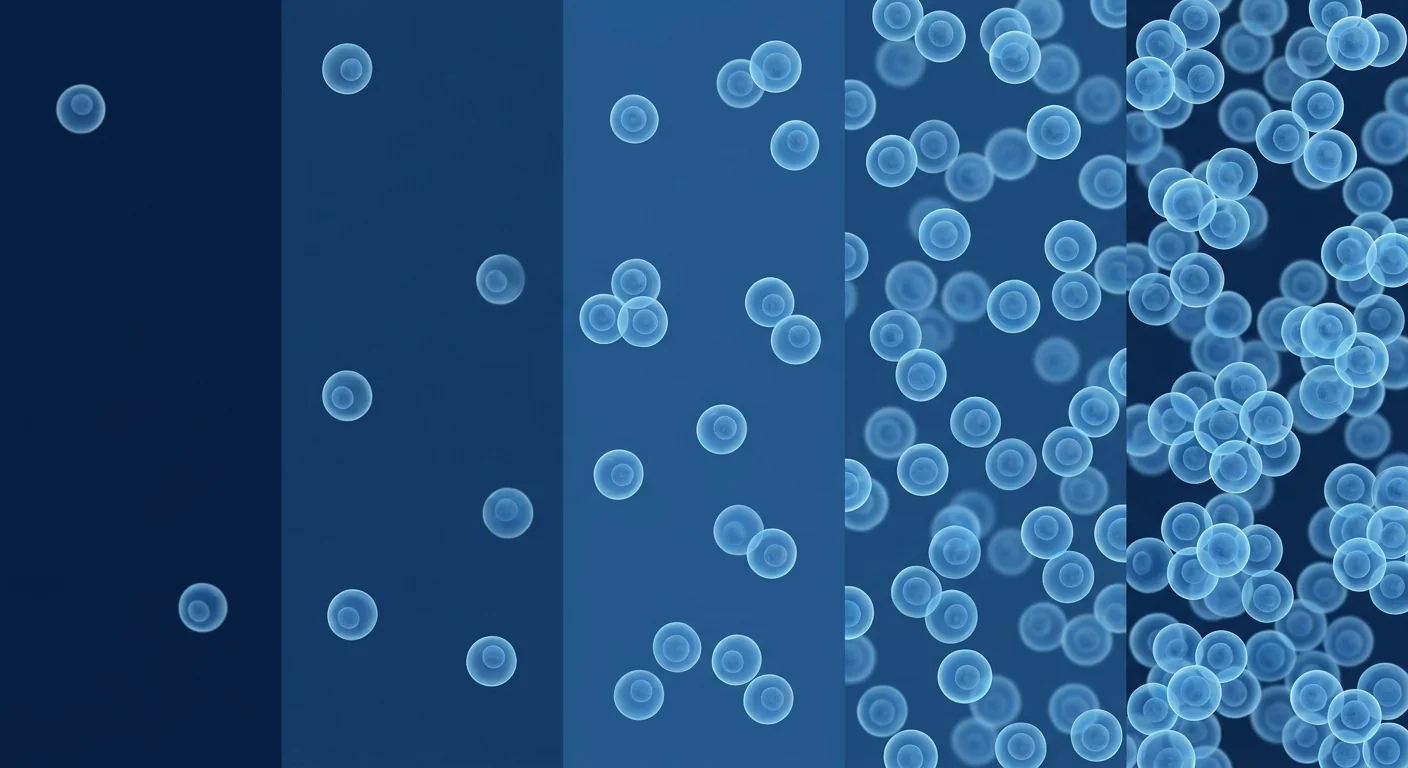
How many cells does it take to make a difference? That question — deceptively simple — sits at the center of every mesenchymal stem cell (MSC) treatment protocol, yet most patients never ask it. The dose, expressed as millions of cells per kilogram of body weight or as a total cell count per session, is not a minor technicality. It shapes safety, efficacy, cost, and the biological plausibility of the entire intervention. This article examines what clinical research has established — and what it has not — about MSC dosing, so you can understand why the number matters and how responsible clinics arrive at it.
Where the dose question begins. Unlike pharmaceutical drugs with well-characterized pharmacokinetics, living cells are a moving target. MSCs do not stay where you put them; they distribute, home to sites of injury or inflammation, secrete paracrine factors, and are cleared by the lungs, liver, and spleen over hours to days. Their therapeutic effect is believed to derive not from engraftment — most infused MSCs do not persist long-term — but from the transient burst of signalling molecules they release while present. This makes dose fundamentally different from drug dose: you are titrating duration and intensity of paracrine signalling, not a sustained plasma concentration. [1] [2]
The clinical dosing landscape. Published MSC trials span an enormous range — from roughly 0.5 million cells per kilogram to over 10 million cells per kilogram, and total doses from tens of millions to well over a billion cells per infusion. The most commonly studied range for intravenous allogeneic MSC therapy falls between 1 and 3 million cells per kilogram, typically administered as a single infusion or repeated over several sessions spaced weeks apart. This is the range where the majority of safety data have been collected and where a signal of efficacy has been observed across diverse indications including graft-versus-host disease, acute respiratory distress syndrome, osteoarthritis, and autoimmune conditions. [3] [4]
The honest headline
There is no universal MSC dose. The right dose depends on the condition being treated, the route of delivery, whether the cells are autologous or allogeneic, the patient's body weight, and the specific cell product. A clinic that quotes a single dose for every patient and every condition is not personalizing therapy — it is operating without evidence-based rationale. Responsible dosing requires condition-specific reasoning.
Why more is not always better
A natural assumption — that a higher cell dose produces a larger therapeutic effect — does not hold up well in MSC biology. Several high-profile studies have demonstrated a plateau or even a decline in efficacy beyond a certain dose threshold. The reasons are multifactorial.
Pulmonary trapping. After intravenous infusion, a substantial fraction of MSCs — often reported at 60–80% or more — is physically trapped in the pulmonary capillary bed within the first pass. This is a size-dependent phenomenon: MSCs are relatively large cells (15–25 μm in diameter) and the pulmonary microvasculature acts as a mechanical filter. At very high doses, pulmonary trapping can become clinically significant, with rare reports of pulmonary embolism-like events in animal models. The lungs clear most of these cells within 24–48 hours, but the transient sequestration limits how many cells actually reach target tissues. [5]
Immune clearance and clumping. At high concentrations, MSCs can aggregate — forming clumps that not only increase the risk of microvascular occlusion but also trigger complement activation and accelerated immune clearance. The very cells meant to be immunomodulatory can, when dosed aggressively, provoke the inflammatory response they are intended to suppress. This is one reason why most reputable protocols infuse cells slowly, over 30–60 minutes, rather than as a bolus, and why some protocols use anticoagulant additives in the infusion preparation. [6]
The paracrine ceiling. If MSCs work primarily through secreted factors — cytokines, growth factors, extracellular vesicles — then there is a biological ceiling beyond which adding more cells does not add more signalling. Once the local environment is saturated with the relevant paracrine molecules, additional cells contribute diminishing returns and may simply increase clearance burden without therapeutic benefit. This ceiling appears to vary by indication and delivery route, but the concept that dose and effect are not linearly related is now well accepted in the field. [7]
How different conditions call for different doses
Clinical evidence increasingly supports the idea that optimal dosing is condition-specific. The inflammatory burden, target tissue accessibility, and the mechanism through which MSCs are proposed to act all differ by disease.
Systemic Autoimmune / Inflammatory
Conditions like lupus, rheumatoid arthritis, and graft-versus-host disease typically benefit from intravenous delivery in the 1–3 million cells/kg range, often repeated every 4–8 weeks. The rationale: systemic inflammation requires systemic distribution, and the paracrine immunomodulatory effects do not require local engraftment.
Orthopedic / Local Injection
For knee osteoarthritis and focal cartilage defects, intra-articular injections commonly use 10–100 million total cells per joint — a much higher local concentration than what systemic delivery achieves in any single tissue. Because the cells are confined to the joint space, higher local numbers are both safe and mechanistically appropriate.
Neurodegenerative
ALS, Parkinson's, and multiple sclerosis trials have explored intrathecal or intravenous dosing. Intrathecal doses are typically lower — 0.5–2 million cells/kg — due to the confined CSF space and concerns about meningeal irritation. Intravenous protocols for neurodegeneration often mirror systemic inflammatory dosing.
Acute Injury / ARDS
In acute respiratory distress syndrome and acute organ injury, trials have used single high doses of 5–10 million cells/kg — the rationale being a one-time immune-modulating bolus to interrupt the cytokine storm, with less concern about chronic dosing schedules.
What the safety data say
The single most consistent finding across two decades of MSC clinical research is that allogeneic MSC therapy — across a wide range of doses and delivery routes — has a remarkably benign acute safety profile. Meta-analyses aggregating thousands of patients have not identified dose-dependent increases in serious adverse events, tumorigenicity, or ectopic tissue formation. The most commonly reported infusion-related events are mild and transient: low-grade fever, fatigue, headache, and transient injection-site discomfort. [8] [9]
What the safety data do not say. The absence of dose-dependent toxicity in published trials does not mean any dose is safe. Trials typically operate within conservative boundaries for good reason. Very high single doses (>15 million cells/kg) are essentially unstudied in humans. There are plausible concerns — pulmonary trapping, microvascular occlusion, pro-inflammatory cytokine release from dying cells — that have been observed preclinically and warrant caution. A responsible clinic stays within the evidence envelope, not at its speculative edges.
How responsible clinics determine your dose
When a clinic is following evidence-based practice, the dose is not arbitrary. It is the product of several converging inputs:
- Body weight. Most dosing is weight-based (cells/kg), so a 50 kg patient and a 100 kg patient with the same condition typically receive different total cell numbers.
- Condition and severity. Inflammatory burden, tissue volume, and the biological mechanism being targeted all inform the starting dose.
- Route of delivery. Intravenous, intra-articular, intrathecal, and local injection routes each have different safety ceilings and distribution kinetics.
- Cell source and passage number. Cells from different donors and at different culture passages may differ in potency; a lab that characterizes its cells rigorously may adjust dose accordingly.
- Prior response. In multi-session protocols, the clinical response to the first session informs the dose and timing of subsequent sessions.
- Viability at time of infusion. A dose of 100 million cells with 70% post-thaw viability delivers 70 million live cells. Responsible clinics report post-thaw viability as part of the Certificate of Analysis and adjust the drawn dose to deliver the target number of live cells. [10]
Questions to ask your provider about dosing
If you are considering MSC therapy, the following questions will tell you a great deal about the clinic's rigor. Ask what total cell dose and cells-per-kilogram dose they recommend for your specific condition, and on what evidence that number is based. Ask how they verify the viability of the cells they infuse — specifically the post-thaw viability percentage from the Certificate of Analysis — and how that viability affects the actual live-cell dose you receive. Ask whether the dose has been adjusted for your body weight and disease severity, or whether it is a standard number. Ask what happens at the higher and lower ends: at what dose have they seen diminishing returns, and at what dose do they consider the treatment unlikely to help. A clinic that cannot answer these questions with specific numbers and clinical reasoning is not practicing dose-informed medicine.
The single most revealing question a patient can ask is: "What is the post-thaw viability of my cells, and how does that translate to the live-cell dose I am actually receiving?" A clinic that has never thought about that question — or cannot answer it — is not controlling the one variable that most directly determines what reaches your bloodstream.
— VELAR Clinical Team
The VELAR approach to dosing
At VELAR Center, dosing is not a one-size-fits-all number. Every protocol begins with condition-specific reasoning grounded in published clinical data, adjusted for the individual patient's body weight, inflammatory status, and treatment history. Our cells are characterized for identity, viability, and sterility before release, and the viability percentage at release is reported transparently as part of the Certificate of Analysis — so the target live-cell dose is the dose you actually receive. We dose conservatively within the evidence envelope, titrate across sessions based on objective response, and are always prepared to explain the biological reasoning behind the number. If you would like to understand what a dosing protocol would look like for your specific condition — with honest expectations and no pressure — a consultation is where that conversation begins.
References
- Pittenger MF, Discher DE, Péault BM, Phinney DG, Hare JM, Caplan AI. Mesenchymal stem cell perspective: cell biology to clinical progress. NPJ Regenerative Medicine. 2019;4:22. doi:10.1038/s41536-019-0083-6 ↩
- Galipeau J, Sensébé L. Mesenchymal stromal cells: clinical challenges and therapeutic opportunities. Cell Stem Cell. 2018;22(6):824-833. doi:10.1016/j.stem.2018.05.004 ↩
- Kabat M, Bobkov I, Kumar S, Grumet M. Trends in mesenchymal stem cell clinical trials 2004–2018: Is efficacy optimal in a narrow dose range? Stem Cells Translational Medicine. 2020;9(1):17-27. doi:10.1002/sctm.19-0202 ↩
- Wang LT, Liu KJ, Sytwu HK, Yen ML, Yen BL. Advances in mesenchymal stem cell therapy for immune and inflammatory diseases. Journal of Biomedical Science. 2021;28(1):39. doi:10.1186/s12929-021-00737-3 ↩
- Fischer UM, Harting MT, Jimenez F, et al. Pulmonary passage is a major obstacle for intravenous stem cell delivery. Stem Cells and Development. 2009;18(5):683-692. doi:10.1089/scd.2008.0253 ↩
- Moll G, Rasmusson-Duprez I, von Bahr L, et al. Are therapeutic human mesenchymal stromal cells compatible with human blood? Stem Cells. 2012;30(7):1565-1574. doi:10.1002/stem.1111 ↩
- Caplan AI, Correa D. The MSC: an injury drugstore. Cell Stem Cell. 2011;9(1):11-15. doi:10.1016/j.stem.2011.06.008 ↩
- Lalu MM, McIntyre L, Pugliese C, et al. Safety of cell therapy with mesenchymal stromal cells (SafeCell). PLoS One. 2012;7(10):e47559. doi:10.1371/journal.pone.0047559 ↩
- Thompson M, Mei SHJ, Wolfe D, et al. Cell therapy with intravascular administration of mesenchymal stromal cells continues to appear safe. Stem Cells Translational Medicine. 2020;9(11):1313-1325. doi:10.1002/sctm.20-0121 ↩
- Dominici M, Le Blanc K, Mueller I, et al. Minimal criteria for defining multipotent mesenchymal stromal cells. Cytotherapy. 2006;8(4):315-317. doi:10.1080/14653240600855905 ↩
- Naji A, Eitoku M, Favier B, Deschaseaux F, Rouas-Freiss N, Suganuma N. Biological functions of mesenchymal stem cells. Cellular and Molecular Life Sciences. 2019;76(17):3323-3348. doi:10.1007/s00018-019-03125-1 ↩
- Shi Y, Wang Y, Li Q, et al. Immunoregulatory mechanisms of mesenchymal stem and stromal cells in inflammatory diseases. Nature Reviews Nephrology. 2018;14(8):493-507. doi:10.1038/s41581-018-0023-5 ↩
- Spees JL, Lee RH, Gregory CA. Mechanisms of mesenchymal stem/stromal cell function. Stem Cell Research & Therapy. 2016;7(1):125. doi:10.1186/s13287-016-0363-7 ↩
- Uccelli A, Moretta L, Pistoia V. Mesenchymal stem cells in health and disease. Nature Reviews Immunology. 2008;8(9):726-736. doi:10.1038/nri2395 ↩
- Wang Y, Chen X, Cao W, Shi Y. Plasticity of mesenchymal stem cells in immunomodulation. Nature Immunology. 2014;15(11):1009-1016. doi:10.1038/ni.3002 ↩
需要多少细胞才能产生差异?这个看似简单的问题,是每一项间充质干细胞(MSC)治疗方案的核心,却很少有患者问起。剂量——以每公斤体重百万细胞数或每次治疗的总细胞数表示——并非一个次要的技术细节,而是决定了治疗的安全性、有效性、成本以及整个干预措施的生物学合理性。本文审视了临床研究已经确立的和尚未确立的关于 MSC 剂量的认知,以便您理解为什么这个数字如此重要,以及负责任的诊所如何确定它。
剂量问题的起点。与药代动力学特征明确的小分子药物不同,活细胞是一个移动的靶标。MSC 不会停留在注射位置,而是会分布全身、归巢到损伤或炎症部位、分泌旁分泌因子,并在数小时到数天内被肺、肝和脾清除。它们的治疗效果被认为并非来源于植入——大多数输注的 MSC 不会长期存留——而是来源于它们在体内时短暂释放的信号分子。这使得剂量与药物剂量有着根本的不同:您是在滴定旁分泌信号的持续时间与强度,而非维持稳定的血药浓度。[1] [2]
临床剂量现状。已发表的 MSC 试验覆盖了极大的范围——从约每公斤 50 万细胞到超过每公斤 1000 万细胞,总剂量从数千万到超过十亿细胞每次输注。异体 MSC 静脉治疗最常见的剂量范围在每公斤 100 万至 300 万细胞之间,通常为单次输注或在数周间隔内重复多次治疗。这正是大多数安全性数据被收集的范围,也是跨多种适应症(包括移植物抗宿主病、急性呼吸窘迫综合征、骨关节炎和自身免疫性疾病)观察到疗效信号的区间。[3] [4]
诚实的标题
并不存在通用的 MSC 剂量。正确的剂量取决于所治疗的病症、递送途径、细胞是自体还是异体、患者体重以及特定的细胞产品。一家对每位患者和每种病情都报出相同剂量的诊所,并未进行个性化治疗——而是在没有循证依据的情况下运作。负责任的剂量制定需要针对具体病情的推理。
为什么更多并不总是更好
一个自然的假设——更高的细胞剂量产生更大的治疗效果——在 MSC 生物学中并不成立。几项重要研究已经证明,超过某一剂量阈值后,疗效会进入平台期甚至下降。原因涉及多个层面。
肺部滞留。静脉输注后,相当大比例的 MSC——通常报道为 60-80% 或更多——在首次通过时就被物理截留在肺毛细血管床中。这是一种尺寸依赖现象:MSC 是相对较大的细胞(直径 15-25 微米),肺微血管充当了机械过滤器。在极高剂量下,肺部滞留可能在临床上变得显著,动物模型中已有罕见的肺栓塞样事件的报道。肺部会在 24-48 小时内清除大部分这些细胞,但这种短暂的截留限制了最终到达靶组织的实际细胞数量。[5]
免疫清除与细胞聚集。在高浓度下,MSC 可能聚集成团——这不仅增加了微血管阻塞的风险,还会触发补体激活并加速免疫清除。这些本应发挥免疫调节作用的细胞,在激进剂量下反而可能激起它们本应抑制的炎症反应。这就是为什么大多数有信誉的方案会缓慢输注细胞,持续 30-60 分钟而非推注给药,以及为什么一些方案在输注制剂中使用抗凝添加剂的原因之一。[6]
旁分泌上限。如果 MSC 主要通过分泌因子——细胞因子、生长因子、细胞外囊泡——发挥作用,那么就存在一个生物学上限,超过这个上限后,添加更多细胞也不会增加更多的信号。一旦局部环境被相关的旁分泌分子饱和,额外的细胞只会产生递减的回报,并可能增加清除负担而无治疗收益。这个上限似乎因适应症和递送途径而异,但剂量与效应并非线性相关的概念在领域内已被广泛接受。[7]
不同病症需要不同剂量
临床证据日益支持最佳剂量因病情而异这一观点。炎症负担、靶组织可及性以及 MSC 发挥作用的机制因疾病而不同。
全身性自身免疫/炎症
狼疮、类风湿性关节炎和移植物抗宿主病等情况通常受益于每公斤 100-300 万细胞范围的静脉输注,常每 4-8 周重复一次。其原理是:全身性炎症需要全身性分布,而旁分泌免疫调节效应不需要局部植入。
骨科/局部注射
对于膝骨关节炎和局灶性软骨缺损,关节内注射通常每次关节使用 1,000 万至 1 亿总细胞——这是一种远高于全身输注在任何单一组织中所能达到的局部浓度。由于细胞被限制在关节腔内,较高的局部数量既安全又在机制上合理。
神经退行性疾病
ALS、帕金森病和多发性硬化的试验已探索鞘内或静脉给药。鞘内剂量通常较低——每公斤 50 万至 200 万细胞——因为 CSF 空间有限且对脑膜刺激有所顾虑。神经退行性疾病的静脉方案通常与全身炎症剂量相似。
急性损伤/ARDS
在急性呼吸窘迫综合征和急性器官损伤中,试验已使用每公斤 500 万至 1000 万细胞的高单次剂量——其原理是给予一次性的免疫调节冲击以打断细胞因子风暴,对长期给药计划关注较少。
安全性数据说了什么
二十年来 MSC 临床研究中最一致的发现是,异体 MSC 治疗——在广泛的剂量和递送途径范围内——具有极其良性的急性安全性特征。汇总数千名患者的荟萃分析未发现严重不良事件、致瘤性或异位组织形成的剂量依赖性增加。最常报告的输注相关事件是轻微且短暂的:低热、乏力、头痛和短暂的注射部位不适。[8] [9]
安全性数据没有说明什么。已发表试验中未发现剂量依赖性毒性,并不意味着任何剂量都是安全的。试验出于充分的理由通常在保守边界内进行。极高的单次剂量(每公斤超过 1500 万细胞)在人体中基本未被研究。存在合理的担忧——肺部滞留、微血管阻塞、来自垂死细胞的促炎性细胞因子释放——这些已在临床前研究中观察到,需要谨慎对待。负责任的诊所应保持在证据范围内,而非探索其边缘地带。
负责任的诊所如何确定您的剂量
当一家诊所遵循循证实践时,剂量并非任意而定,而是由多个汇聚因素决定的:
- 体重。大多数剂量是基于体重的(细胞/kg),因此同一病症的 50 kg 患者和 100 kg 患者通常接受不同的总细胞数。
- 病症与严重程度。炎症负担、组织体积以及 MSC 靶向的生物学机制都会影响起始剂量。
- 递送途径。静脉、关节内、鞘内和局部注射途径各自具有不同的安全上限和分布动力学。
- 细胞来源与传代次数。来自不同供体和不同培养传代的细胞可能在效力上存在差异;对细胞进行严格表征的实验室可能会相应调整剂量。
- 先前反应。在多次治疗方案中,对第一次治疗的临床反应会影响后续治疗剂量和时机的确定。
- 输注时活力。标称 1 亿细胞、解冻后活力 70% 的剂量实际递送了 7000 万活细胞。负责任的诊所在分析证书中报告解冻后活力并调整抽取剂量,以递送目标数量的活细胞。[10]
向提供者询问关于剂量的关键问题
如果您正在考虑 MSC 治疗,以下问题将充分揭示诊所的科学严谨程度。请询问他们针对您特定病情推荐的总细胞剂量和每公斤细胞剂量,以及该数值基于什么证据。询问他们如何验证所输注细胞的活力——特别是分析证书中的解冻后活力百分比——以及该活力如何影响您实际接受的活细胞剂量。询问该剂量是否已根据您的体重和疾病严重程度进行了调整,还是标准化的数字。询问在高低两端会发生什么:他们在什么剂量下观察到递减效应,以及在什么剂量下他们认为治疗不大可能有效。一家无法用具体数字和临床推理回答这些问题的诊所,并未实践以剂量为依据的医学。
患者可以提出的最具揭示性的一个问题是:"我的细胞解冻后活力是多少?这如何转化为我实际接受的活细胞剂量?"一家从未考虑过这个问题的诊所——或者无法回答——并未控制那个最直接决定什么能到达您血液循环的变量。
— VELAR 临床团队
VELAR 的剂量方案
在 VELAR 中心,剂量并非一刀切的数字。每项方案都始于基于已发表临床数据并针对具体病情的推理,再根据患者个人的体重、炎症状态和治疗史进行调整。我们的细胞在放行前经过了身份、活力和无菌性的表征,放行时的活力百分比作为分析证书的一部分被透明报告——因此目标活细胞剂量就是您实际接受的剂量。我们在证据范围内保守给药,并根据客观反应在疗程中调整剂量,随时准备解释该数字背后的生物学推理。如果您想了解针对您特定病情的剂量方案会是什么样子——带着诚实的期望,没有压力——一次咨询就是这一对话开始的地方。
参考文献
- Pittenger MF, Discher DE, Péault BM, Phinney DG, Hare JM, Caplan AI. Mesenchymal stem cell perspective: cell biology to clinical progress. NPJ Regenerative Medicine. 2019;4:22. doi:10.1038/s41536-019-0083-6 ↩
- Galipeau J, Sensébé L. Mesenchymal stromal cells: clinical challenges and therapeutic opportunities. Cell Stem Cell. 2018;22(6):824-833. doi:10.1016/j.stem.2018.05.004 ↩
- Kabat M, Bobkov I, Kumar S, Grumet M. Trends in mesenchymal stem cell clinical trials 2004–2018: Is efficacy optimal in a narrow dose range? Stem Cells Translational Medicine. 2020;9(1):17-27. doi:10.1002/sctm.19-0202 ↩
- Wang LT, Liu KJ, Sytwu HK, Yen ML, Yen BL. Advances in mesenchymal stem cell therapy for immune and inflammatory diseases. Journal of Biomedical Science. 2021;28(1):39. doi:10.1186/s12929-021-00737-3 ↩
- Fischer UM, Harting MT, Jimenez F, et al. Pulmonary passage is a major obstacle for intravenous stem cell delivery. Stem Cells and Development. 2009;18(5):683-692. doi:10.1089/scd.2008.0253 ↩
- Moll G, Rasmusson-Duprez I, von Bahr L, et al. Are therapeutic human mesenchymal stromal cells compatible with human blood? Stem Cells. 2012;30(7):1565-1574. doi:10.1002/stem.1111 ↩
- Caplan AI, Correa D. The MSC: an injury drugstore. Cell Stem Cell. 2011;9(1):11-15. doi:10.1016/j.stem.2011.06.008 ↩
- Lalu MM, McIntyre L, Pugliese C, et al. Safety of cell therapy with mesenchymal stromal cells (SafeCell). PLoS One. 2012;7(10):e47559. doi:10.1371/journal.pone.0047559 ↩
- Thompson M, Mei SHJ, Wolfe D, et al. Cell therapy with intravascular administration of mesenchymal stromal cells continues to appear safe. Stem Cells Translational Medicine. 2020;9(11):1313-1325. doi:10.1002/sctm.20-0121 ↩
- Dominici M, Le Blanc K, Mueller I, et al. Minimal criteria for defining multipotent mesenchymal stromal cells. Cytotherapy. 2006;8(4):315-317. doi:10.1080/14653240600855905 ↩
- Naji A, Eitoku M, Favier B, Deschaseaux F, Rouas-Freiss N, Suganuma N. Biological functions of mesenchymal stem cells. Cellular and Molecular Life Sciences. 2019;76(17):3323-3348. doi:10.1007/s00018-019-03125-1 ↩
- Shi Y, Wang Y, Li Q, et al. Immunoregulatory mechanisms of mesenchymal stem and stromal cells in inflammatory diseases. Nature Reviews Nephrology. 2018;14(8):493-507. doi:10.1038/s41581-018-0023-5 ↩
- Spees JL, Lee RH, Gregory CA. Mechanisms of mesenchymal stem/stromal cell function. Stem Cell Research & Therapy. 2016;7(1):125. doi:10.1186/s13287-016-0363-7 ↩
- Uccelli A, Moretta L, Pistoia V. Mesenchymal stem cells in health and disease. Nature Reviews Immunology. 2008;8(9):726-736. doi:10.1038/nri2395 ↩
- Wang Y, Chen X, Cao W, Shi Y. Plasticity of mesenchymal stem cells in immunomodulation. Nature Immunology. 2014;15(11):1009-1016. doi:10.1038/ni.3002 ↩
كم عدد الخلايا اللازمة لإحداث فرق؟ هذا السؤال — البسيط ظاهرياً — يقبع في قلب كل بروتوكول علاج بالخلايا الجذعية الوسيطة (MSC)، ومعظم المرضى لا يطرحونه أبداً. الجرعة، المُعبَّر عنها بملايين الخلايا لكل كيلوغرام من وزن الجسم أو كعدد إجمالي للخلايا في كل جلسة، ليست تفصيلة تقنية هامشية. إنها تُشكّل السلامة والفعالية والتكلفة والمصداقية البيولوجية للتدخّل بأكمله. تستعرض هذه المقالة ما أثبته البحث السريري — وما لم يثبته — حول جرعات MSC، لكي تفهم لماذا الرقم مهم وكيف تتوصل العيادات المسؤولة إليه.
أين تبدأ مسألة الجرعة. على عكس العقاقير الدوائية ذات الحرائك الدوائية المحددة جيداً، تشكل الخلايا الحية هدفاً متحركاً. فخلايا MSC لا تبقى حيث وُضعت؛ إنها تتوزع، وتتوجّه إلى مواقع الإصابة أو الالتهاب، وتفرز عوامل نظيرة صمّاوية، ويتم التخلّص منها في الرئتين والكبد والطحال على مدى ساعات إلى أيام. ويُعتقد أن تأثيرها العلاجي لا ينبع من الانغراس — فمعظم خلايا MSC المحقونة لا تبقى طويلاً — بل من الدفقة العابرة لجزيئات الإشارة التي تطلقها أثناء وجودها. وهذا يجعل الجرعة مختلفة جوهرياً عن جرعة الدواء: أنت تُعاير مدة الإشارات النظيرة الصمّاوية وشدّتها، لا تركيزاً ثابتاً في البلازما. [1] [2]
مشهد الجرعات السريرية. تغطي تجارب MSC المنشورة نطاقاً هائلاً — من نحو 0.5 مليون خلية لكل كيلوغرام إلى أكثر من 10 ملايين خلية لكل كيلوغرام، وجرعات إجمالية من عشرات الملايين إلى أكثر من مليار خلية في كل حقنة. ويقع النطاق الأكثر دراسةً للعلاج الوريدي بخلايا MSC الخيفية بين 1 و3 ملايين خلية لكل كيلوغرام، ويُعطى عادةً كحقنة وحيدة أو يتكرر على عدة جلسات تفصلها أسابيع. وهذا هو النطاق الذي جُمعت فيه غالبية بيانات السلامة والذي لوحظت فيه إشارة فعالية عبر مؤشرات متنوعة تشمل داء الطعم حيال الثوي، ومتلازمة الضائقة التنفسية الحادة، والفصال العظمي، والأمراض المناعية الذاتية. [3] [4]
العنوان الصادق
لا توجد جرعة MSC شاملة. فالجرعة الصحيحة تعتمد على الحالة المُعالَجة، وطريق الإيصال، وما إذا كانت الخلايا ذاتية أم خيفية، ووزن جسم المريض، والمنتج الخلوي تحديداً. والعيادة التي تقتبس جرعة واحدة لكل مريض وكل حالة لا تُخصّص العلاج — بل تعمل دون أساس قائم على الأدلة. والتجريع المسؤول يتطلب استدلالاً خاصاً بكل حالة.
لماذا ليس الأكثر دوماً أفضل
افتراض طبيعي — وهو أن جرعة خلايا أعلى تُحدث أثراً علاجياً أكبر — لا يصمد جيداً في بيولوجيا MSC. فقد أظهرت عدة دراسات بارزة ثباتاً في الفعالية بل وانخفاضاً بعد عتبة جرعة معينة. والأسباب متعددة العوامل.
الاحتباس الرئوي. بعد الحقن الوريدي، يُحتجز جزء كبير من خلايا MSC — يُبلَّغ عنه غالباً بنسبة 60-80% أو أكثر — فيزيائياً في السرير الشعري الرئوي خلال المرور الأول. وهذه ظاهرة تعتمد على الحجم: فخلايا MSC خلايا كبيرة نسبياً (قطرها 15-25 ميكرومتراً) وتعمل الأوعية الدقيقة الرئوية كمرشّح ميكانيكي. وعند جرعات عالية جداً، يمكن أن يصبح الاحتباس الرئوي ذا أهمية سريرية، مع تقارير نادرة عن أحداث شبيهة بالانصمام الرئوي في النماذج الحيوانية. وتُخلّص الرئتان الجسم من معظم هذه الخلايا خلال 24-48 ساعة، لكن الاحتجاز العابر يحد من عدد الخلايا التي تصل فعلاً إلى الأنسجة المستهدفة. [5]
التخليص المناعي والتكتّل. عند التراكيز العالية، يمكن لخلايا MSC أن تتجمّع — مكوّنةً كتلاً لا تزيد فقط من خطر انسداد الأوعية الدقيقة بل تحفّز أيضاً تنشيط المتمّمة وتُسرّع التخليص المناعي. فالخلايا ذاتها التي يُفترض بها أن تكون معدِّلة للمناعة يمكنها، عند تجريعها بقوة، أن تثير الاستجابة الالتهابية التي يُراد منها كبتها. وهذا أحد أسباب قيام معظم البروتوكولات ذات السمعة الجيدة بحقن الخلايا ببطء، على مدى 30-60 دقيقة، بدلاً من الحقن الدفعي، ولماذا تستخدم بعض البروتوكولات إضافات مانعة للتخثر في مستحضر الحقن. [6]
السقف النظير الصمّاوي. إذا كانت خلايا MSC تعمل أساساً عبر عوامل مُفرَزة — سيتوكينات، عوامل نمو، حويصلات خارج خلوية — فهناك سقف بيولوجي لا تؤدي إضافة المزيد من الخلايا بعده إلى إضافة المزيد من الإشارات. فحالما يتشبّع الوسط الموضعي بالجزيئات النظيرة الصمّاوية ذات الصلة، تُسهم الخلايا الإضافية بعوائد متناقصة وقد تزيد ببساطة عبء التخليص دون فائدة علاجية. ويبدو أن هذا السقف يختلف باختلاف المؤشر وطريق الإيصال، لكن مفهوم أن الجرعة والأثر ليسا مرتبطين خطياً بات الآن مقبولاً على نطاق واسع في هذا المجال. [7]
كيف تستدعي الحالات المختلفة جرعات مختلفة
تدعم الأدلة السريرية بشكل متزايد فكرة أن التجريع الأمثل خاص بكل حالة. فالحمل الالتهابي، وإمكانية الوصول إلى النسيج المستهدف، والآلية التي يُقترح أن تعمل بها خلايا MSC كلها تختلف باختلاف المرض.
المناعة الذاتية/الالتهابية الجهازية
حالات مثل الذئبة والتهاب المفاصل الروماتويدي وداء الطعم حيال الثوي تستفيد عادةً من الإيصال الوريدي في نطاق 1-3 ملايين خلية/كغ، ويُكرَّر غالباً كل 4-8 أسابيع. والأساس المنطقي: الالتهاب الجهازي يتطلب توزيعاً جهازياً، والتأثيرات المناعية النظيرة الصمّاوية لا تستلزم انغراساً موضعياً.
العظام/الحقن الموضعي
بالنسبة لفصال الركبة العظمي وعيوب الغضروف البؤرية، تستخدم الحقن داخل المفصل عادةً 10-100 مليون خلية إجمالاً لكل مفصل — وهو تركيز موضعي أعلى بكثير مما يحققه الإيصال الجهازي في أي نسيج مفرد. ولأن الخلايا محصورة في جوف المفصل، فالأعداد الموضعية الأعلى آمنة ومناسبة آلياً.
التنكس العصبي
استكشفت تجارب التصلب الجانبي الضموري وباركنسون والتصلب المتعدد التجريع داخل القراب أو الوريدي. والجرعات داخل القراب عادة أقل — 0.5-2 مليون خلية/كغ — بسبب حيّز السائل الدماغي الشوكي المحدود والمخاوف من التهيج السحائي. وغالباً ما تحاكي البروتوكولات الوريدية للتنكس العصبي جرعات الالتهاب الجهازي.
الإصابة الحادة/ARDS
في متلازمة الضائقة التنفسية الحادة وإصابة الأعضاء الحادة، استخدمت التجارب جرعات مفردة عالية تبلغ 5-10 ملايين خلية/كغ — والأساس المنطقي هو جرعة مناعية معدِّلة لمرة واحدة لمقاطعة عاصفة السيتوكين، مع اهتمام أقل بجداول الجرعات المزمنة.
ماذا تقول بيانات السلامة
أكثر النتائج اتساقاً عبر عقدين من أبحاث MSC السريرية هي أن علاج MSC الخيفي — عبر نطاق واسع من الجرعات وطرق الإيصال — يمتلك مظهر أمان حاد حميداً بشكل لافت. ولم تحدّد التحليلات التلوية التي جمعت آلاف المرضى زيادات معتمدة على الجرعة في الأحداث الضائرة الخطيرة، أو التسرطن، أو تشكّل نسيج منتبذ. والأحداث الأكثر شيوعاً المرتبطة بالحقن هي خفيفة وعابرة: حمى منخفضة الدرجة، إرهاق، صداع، وانزعاج عابر في موقع الحقن. [8] [9]
ما لا تقوله بيانات السلامة. غياب السمية المعتمدة على الجرعة في التجارب المنشورة لا يعني أن أي جرعة آمنة. فالتجارب تعمل عادةً ضمن حدود متحفظة لسبب وجيه. والجرعات المفردة العالية جداً (>15 مليون خلية/كغ) غير مدروسة أساساً لدى البشر. وهناك مخاوف معقولة — الاحتباس الرئوي، انسداد الأوعية الدقيقة، إطلاق سيتوكينات التهابية من الخلايا الميتة — لوحظت قبل سريرياً وتستدعي الحذر. والعيادة المسؤولة تبقى داخل غلاف الأدلة، لا عند حوافه التخمينية.
كيف تحدد العيادات المسؤولة جرعتك
عندما تتبع عيادة ممارسة قائمة على الأدلة، فالجرعة ليست اعتباطية. إنها نتاج عدة مدخلات متقاربة:
- وزن الجسم. معظم التجريع قائم على الوزن (خلايا/كغ)، لذا فمريض 50 كغ ومريض 100 كغ بالحالة نفسها يتلقيان عادةً أعداداً كلية مختلفة من الخلايا.
- الحالة وشدّتها. الحمل الالتهابي، حجم النسيج، والآلية البيولوجية المستهدفة كلها تُسهم في تحديد جرعة البداية.
- طريق الإيصال. الطرق الوريدية وداخل المفصل وداخل القراب والحقن الموضعي لكل منها سقوف أمان وحرائك توزيع مختلفة.
- مصدر الخلايا ورقم التمرير. الخلايا من متبرعين مختلفين وعند تمديدات زرع مختلفة قد تختلف في فاعليتها؛ والمختبر الذي يوصّف خلاياه بدقة قد يعدّل الجرعة تبعاً لذلك.
- الاستجابة السابقة. في بروتوكولات الجلسات المتعددة، تُسهم الاستجابة السريرية للجلسة الأولى في تحديد جرعة وتوقيت الجلسات اللاحقة.
- الحيوية عند وقت الحقن. جرعة من 100 مليون خلية بحيوية 70% بعد الذوبان تُسلّم 70 مليون خلية حية. والعيادات المسؤولة تُبلغ عن الحيوية بعد الذوبان كجزء من شهادة التحليل وتعدّل الجرعة المسحوبة لتسليم العدد المستهدف من الخلايا الحية. [10]
أسئلة لتطرحها على مزوّدك حول الجرعة
إذا كنت تفكر في علاج MSC، فالأسئلة التالية ستكشف الكثير عن دقة العيادة العلمية. اسأل عن الجرعة الخلوية الكلية وجرعة الخلايا لكل كيلوغرام التي يوصون بها لحالتك تحديداً، وعلى أي دليل يستند هذا الرقم. اسأل كيف يتحققون من حيوية الخلايا التي يحقنونها — تحديداً نسبة الحيوية بعد الذوبان من شهادة التحليل — وكيف تؤثر هذه الحيوية على جرعة الخلايا الحية الفعلية التي تتلقاها. اسأل ما إذا كانت الجرعة قد عُدّلت وفقاً لوزن جسمك وشدة مرضك، أم أنها رقم قياسي. اسأل ماذا يحدث عند الطرفين الأعلى والأدنى: عند أي جرعة لاحظوا عوائد متناقصة، وعند أي جرعة يعتبرون أن العلاج من غير المرجح أن يساعد. العيادة التي لا تستطيع الإجابة عن هذه الأسئلة بأرقام محددة واستدلال سريري لا تمارس طباً مستنداً إلى الجرعة.
السؤال الأكثر كشفاً الذي يمكن أن يطرحه المريض هو: "ما هي حيوية خلاياي بعد الذوبان، وكيف يترجم ذلك إلى جرعة الخلايا الحية التي أتلقاها فعلاً؟" العيادة التي لم تفكر يوماً في هذا السؤال — أو لا تستطيع الإجابة عنه — لا تتحكم في المتغير الوحيد الذي يحدد بشكل مباشر ما يصل إلى مجرى دمك.
— فريق VELAR السريري
نهج VELAR في التجريع
في مركز VELAR، التجريع ليس رقماً واحداً يناسب الجميع. يبدأ كل بروتوكول باستدلال خاص بالحالة مؤسس على بيانات سريرية منشورة، يُعدَّل وفقاً لوزن جسم المريض الفردي وحالته الالتهابية وتاريخه العلاجي. وتُوصَّف خلايانا من حيث الهوية والحيوية والعقامة قبل الإفراج عنها، وتُبلَّغ نسبة الحيوية عند الإفراج بشفافية كجزء من شهادة التحليل — بحيث تكون جرعة الخلايا الحية المستهدفة هي الجرعة التي تتلقاها فعلاً. ونحن نجرّع بشكل متحفظ داخل غلاف الأدلة، ونُعاير عبر الجلسات بناءً على الاستجابة الموضوعية، ومستعدون دوماً لشرح الأساس البيولوجي وراء الرقم. إذا أردت أن تفهم كيف سيبدو بروتوكول تجريع لحالتك تحديداً — بتوقعات صادقة ودون ضغط — فالاستشارة هي حيث يبدأ ذلك الحوار.
المراجع
- Pittenger MF, Discher DE, Péault BM, Phinney DG, Hare JM, Caplan AI. Mesenchymal stem cell perspective: cell biology to clinical progress. NPJ Regenerative Medicine. 2019;4:22. doi:10.1038/s41536-019-0083-6 ↩
- Galipeau J, Sensébé L. Mesenchymal stromal cells: clinical challenges and therapeutic opportunities. Cell Stem Cell. 2018;22(6):824-833. doi:10.1016/j.stem.2018.05.004 ↩
- Kabat M, Bobkov I, Kumar S, Grumet M. Trends in mesenchymal stem cell clinical trials 2004–2018: Is efficacy optimal in a narrow dose range? Stem Cells Translational Medicine. 2020;9(1):17-27. doi:10.1002/sctm.19-0202 ↩
- Wang LT, Liu KJ, Sytwu HK, Yen ML, Yen BL. Advances in mesenchymal stem cell therapy for immune and inflammatory diseases. Journal of Biomedical Science. 2021;28(1):39. doi:10.1186/s12929-021-00737-3 ↩
- Fischer UM, Harting MT, Jimenez F, et al. Pulmonary passage is a major obstacle for intravenous stem cell delivery. Stem Cells and Development. 2009;18(5):683-692. doi:10.1089/scd.2008.0253 ↩
- Moll G, Rasmusson-Duprez I, von Bahr L, et al. Are therapeutic human mesenchymal stromal cells compatible with human blood? Stem Cells. 2012;30(7):1565-1574. doi:10.1002/stem.1111 ↩
- Caplan AI, Correa D. The MSC: an injury drugstore. Cell Stem Cell. 2011;9(1):11-15. doi:10.1016/j.stem.2011.06.008 ↩
- Lalu MM, McIntyre L, Pugliese C, et al. Safety of cell therapy with mesenchymal stromal cells (SafeCell). PLoS One. 2012;7(10):e47559. doi:10.1371/journal.pone.0047559 ↩
- Thompson M, Mei SHJ, Wolfe D, et al. Cell therapy with intravascular administration of mesenchymal stromal cells continues to appear safe. Stem Cells Translational Medicine. 2020;9(11):1313-1325. doi:10.1002/sctm.20-0121 ↩
- Dominici M, Le Blanc K, Mueller I, et al. Minimal criteria for defining multipotent mesenchymal stromal cells. Cytotherapy. 2006;8(4):315-317. doi:10.1080/14653240600855905 ↩
- Naji A, Eitoku M, Favier B, Deschaseaux F, Rouas-Freiss N, Suganuma N. Biological functions of mesenchymal stem cells. Cellular and Molecular Life Sciences. 2019;76(17):3323-3348. doi:10.1007/s00018-019-03125-1 ↩
- Shi Y, Wang Y, Li Q, et al. Immunoregulatory mechanisms of mesenchymal stem and stromal cells in inflammatory diseases. Nature Reviews Nephrology. 2018;14(8):493-507. doi:10.1038/s41581-018-0023-5 ↩
- Spees JL, Lee RH, Gregory CA. Mechanisms of mesenchymal stem/stromal cell function. Stem Cell Research & Therapy. 2016;7(1):125. doi:10.1186/s13287-016-0363-7 ↩
- Uccelli A, Moretta L, Pistoia V. Mesenchymal stem cells in health and disease. Nature Reviews Immunology. 2008;8(9):726-736. doi:10.1038/nri2395 ↩
- Wang Y, Chen X, Cao W, Shi Y. Plasticity of mesenchymal stem cells in immunomodulation. Nature Immunology. 2014;15(11):1009-1016. doi:10.1038/ni.3002 ↩